
Leaving Bass Rock gannet colony
After skypointing to show
it’s ready
after one last dive, shorting the sea
(the crack, the pressured current fizzing)
after one last moment of great aloneness: a fleck
in oceans
after the last fish in its gut –
the fin and skin and bone of it – tears apart
it takes a final flight, blowing
Bass Rock into the feathery pieces we call
aura or
atoms we called
father or
Adam
©Lynn Davidson
This poem was was published in New Writing Scotland 35. Bass Rock is a rock/island in the Firth of Forth. It’s a huge gannet colony and has a long and interesting history of human habitation too.
Lynn Davidson writes poetry, fiction and essays. Her latest poetry collection Islander will be published by Shearsman Books and Victoria University Press in 2019. Lynn currently lives in Edinburgh.
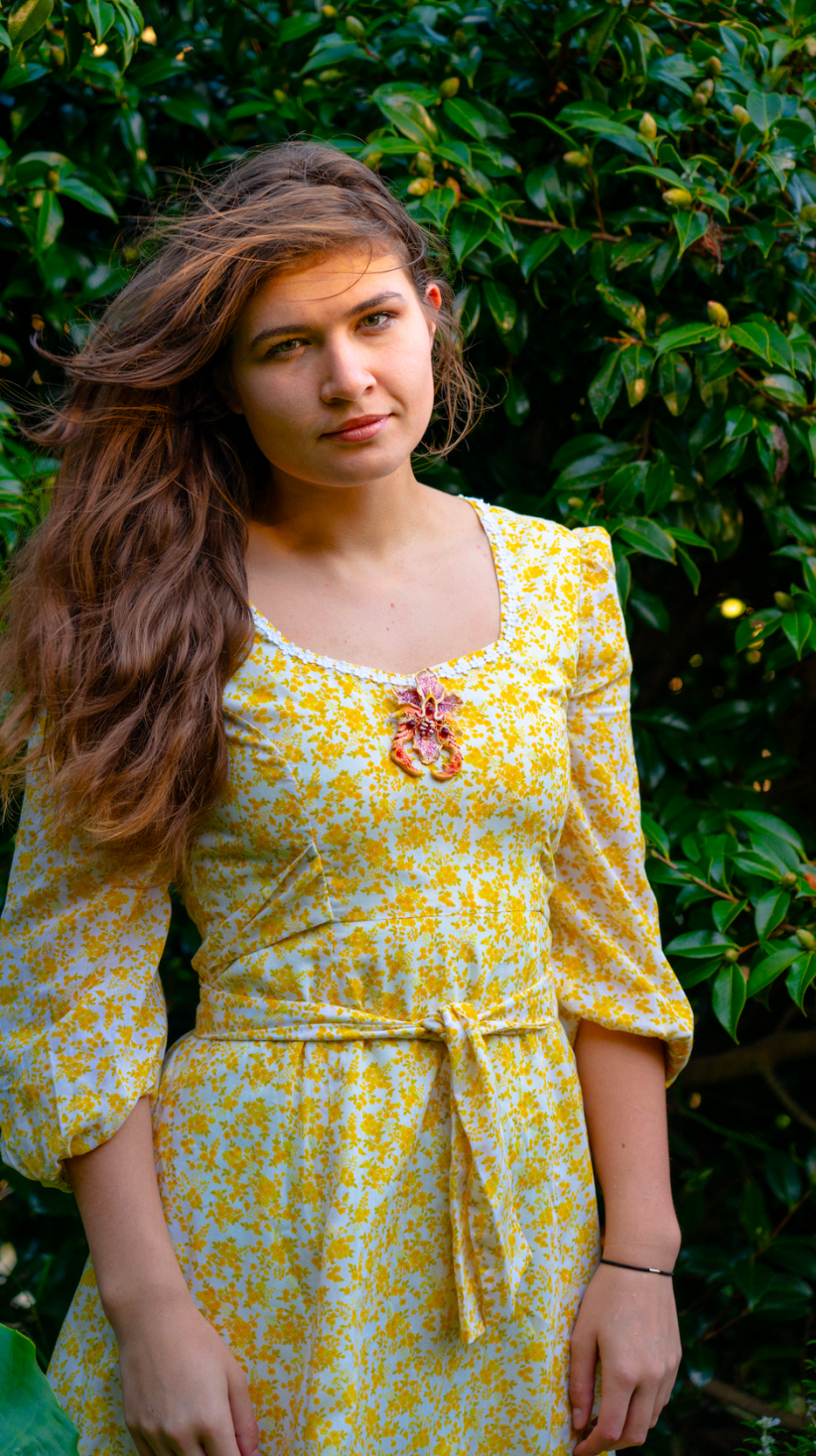
Photo credit: Mitchell Botting
‘Sighting’ was originally published in Starling 5
Rebecca Hawkes is a poet and painter who has traded the tussock-clad hills of the Canterbury high country for the suburban slopes of Wellington. More of her work can be found in Landfall, Mimicry, Sport, and elsewhere via her website.
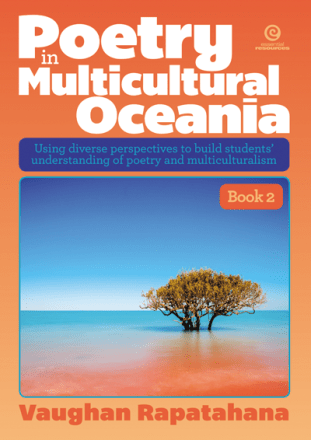
Poetry in Multicultural Oceania Book 2
edited by Vaughan Rapatahana, Essential Resource, 2018
‘mountains once roamed/ this land’ Apirana Taylor
Vaughan Rapatahana has edited a second collection of poems with associated activities to encourage the reading and writing of poetry and to further develop a student’s multicultural awareness. Vaughan is committed to drawing upon diverse poetry voices: Māori, Pākehā, Pasifika, Aboriginal Australian, Asian.
This issue includes: Mere Taito, Renee Liang, Apirana Taylor, Gregory Kan, Alan Jeffries, Simone Kaho, Paula Green, Michelle Cahill, Reihana Robinson, Alison Wong, Serie Barford, Michele Leggott, Selina Tusitala Marsh, Iain Britton, Makyla Curtis, Lionel Fogarty, Shasha Ali.
Each section includes the poem, a warm-up, focus on vocabulary, tips on reading aloud, consideration of the language and layout, questions to explore understandings and evaluations, followup suggestions.
The subjects are wide ranging but generally attached to identity issues.
I love the way this book will expose new and familiar poets to students and teachers and offer accessible and stimulating entries into poems. Bravo Vaughan for continuing to celebrate local poetry. This is an essential resource.
‘I am told that the wai of who/ is the water of our veins’ Makyla Curtis
Vaughan Rapatahana commutes between Hong Kong SAR, the Philippines and Aotearoa New Zealand. He is widely published in several genres in Māori, English and other languages. His latest poetry collection is ternion (erbacce-press, Liverpool, England). Vaughan has a PhD in existential philosophy from the University of Auckland. Vaughan has written commentaries for Jacket2 (University of Pennsylvania), including a 2015–2016 series and a new series currently in progress.
Essential Resource page
Teach Me, I Will Execute
Insert some sort of political comment here
about privilege and perspective and 1st wrlds and then
insert an uplifting hope inspo to combat fear
or else you’ll justify all the retiring folks who leer
that these tiring millennials are entitled ignorant young narcissists, so then
insert some sort of political comment here
that shows off all the things you care
about: communism, class, colour, climate, conditioning, but then
insert an uplifting hope inspo to combat fear,
and to validate why this collection deserves a share,
why it is relevant and should matter to humen,
insert some sort of political comment here
about the woes of the world and the villainies we [bare/bear]
and the news of the day, but bait the next click by then
inserting an uplifting hope inspo to combat fear.
You dried up old fruit! You withered old pear!
Complaining that hair doesn’t rhyme with beer! Okay then,
I’m inserting some sort of political comment here
but insert the uplifting hope inspo to combat yr fear yrslf.
©Charlotte Simmonds
Charlotte Simmonds is a Wellington writer, translator and, until the end of this year, also a historian of medicine. Her goals and aspirations are forestalling homelessness and escaping poverty.
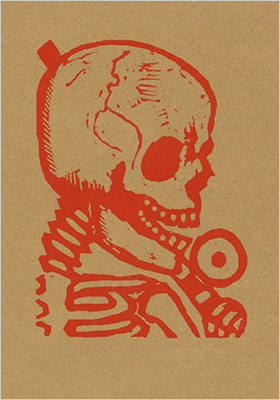
Min-a-rets is published by Compound Press and Issue 9 is edited by Craig Foltz
The editor’s motive was ‘to create a forum for an absurdist, collaborative experiment, roughly based on the surrealist Exquisite Corpse experiments from the 1920s’. In the collective approach to writing the second writer only sees the last line of the first writer.
In this instance:
28 writers got a line of text, a specific form and 7 days to produce a piece. The last line was handed onto the next writer. There were four groups each starting with the same first line: Among clouds of dust, only mountains – a garden
The writers come from New Zealand, USA, Taiwan, Australia and Sweden and include Joan Fleming, Nina Powels, Ya-Wen Ho, Steph Burt, Airini Beautrais, Lisa Samuels, Anna Jackson, Amy Brown, Sarah Jane Barnettt, Essa Ranapiri, Rebecca Hawkes.
Names were put in a hat to assign group and order.
Four poems, without attribution to individual writers, achieve a sweet and surprising fluency. It is like picking up a stitch from the previous writer and taking it wherever you fancy. Sometimes it is a shift in pattern, sometimes repetition.
Four distinctive poems like a game of whispers in the ear or the game where you draw a head, fold the paper over and let the next person continue with a modicum of clues. I was hungry to keep reading, motivated by the bridge between stanzas.
What a delight to read the hooked stitches: the surprising links and the wayward disconnections. I utterly adore this issue, both startling and sumptuous.
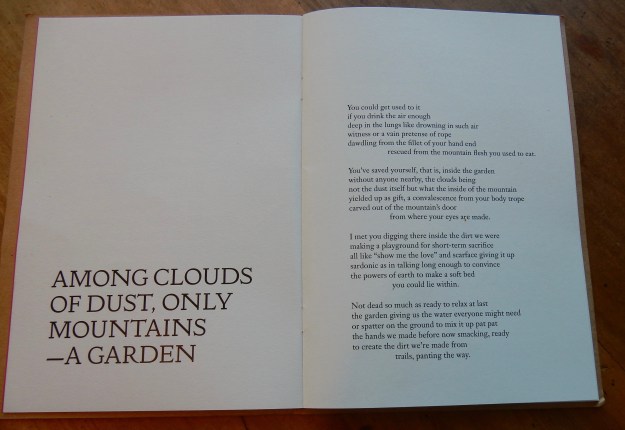
Compound Press page
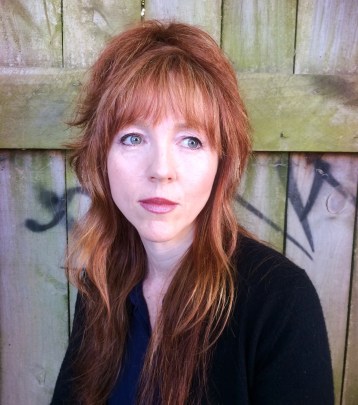
Tracey Slaughter is the author of deleted scenes for lovers an acclaimed collection of short stories (VUP, 2016). Her poetry and prose have received many awards including the international Bridport Prize (2014), two BNZ Katherine Mansfield Awards, and the Landfall Essay Prize 2015. Her poetry cycle ‘it was the seventies when me & Karen Carpenter hung out’ was shortlisted in the Manchester Poetry Prize 2014, and her poem ‘breather’ won Second Place in the ABR Peter Porter Poetry Prize 2018. She teaches at Waikato University where she edits the journal Mayhem.
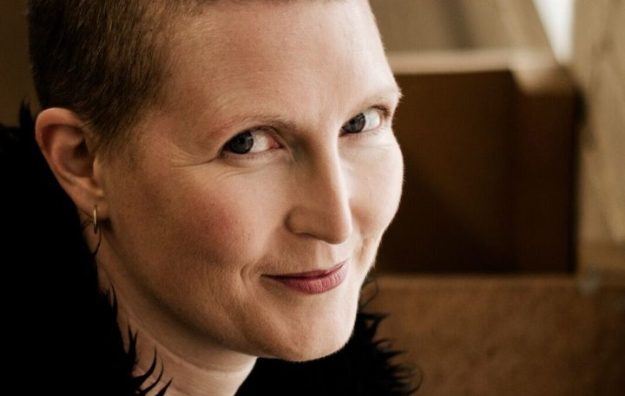
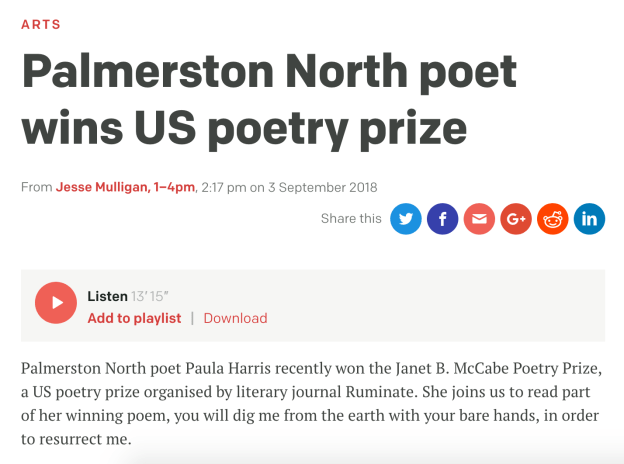
Listen here at RNZ National. Great interview! Really can’t get my ahead around a journal that says ‘this is not poetry’! We should be long over such restrictive attitudes to what a poem is.
Ahi kā
At the top of the road
there is wind,
railways crossing at the corner,
of an old wooden prefab where
wine gums and popsicles, and
our feet in jandals fill
the one room dairy that is decades gone
toward the motorway
past the tree where Uncle hung himself,
is the highway
the marae-way.
Eels peg the line, and
Chip-dog is lazy barking.
Over the split verandah, you cross
the musty lounge, dark with the 70’s
squeeze down the hall past rooms so
clumsy you can smell the cob
out the window, into the land
blazing beneath this ancient copper;
we scrub on the washboard
of someone else’s clothes,
the broken down wringer where
this Auntie’s house is on the left,
that Auntie’s house is on the right;
the whole damn road is a gauntlet of aunties.
Anahera Gildea (Ngāti Raukawa-ki-te-tonga) has worked extensively as a visual and performing artist, a writer, and a teacher. She has had her poems and short stories published in multiple journals and anthologies, and her first book ‘Poroporoaki to the Lord My God: Weaving the Via Dolorosa’ was published by Seraph Press in 2016. She holds a BA in Art Theory, Graduate Diplomas in Psychology, Teaching,
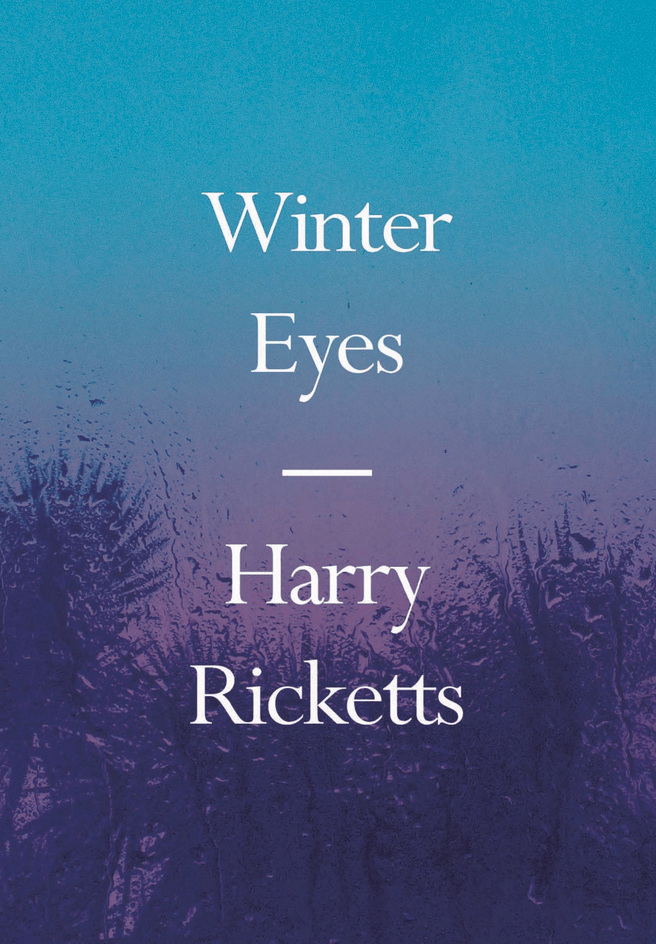
Harry Ricketts teaches English Literature and creative non-fiction at Victoria University of Wellington. He has published over thirty books, including eleven collections of poems. “Napier, Christmas 2017” is from his latest collection Winter Eyes (Victoria University Press, 2018).
 NZ Poetry Shelf