Category Archives: NZ poems

Poetry Shelf Monday poem: from Amy Brown’s Neon Daze

Excerpt from Neon Daze


8th December 2016


A friend warned me months ago

that my baby would start to smell

of other people – perfumes, creams,

colognes, sweat – your baby’s head

will press against strangers’ throats

and décolletage, held close and warm.

Sure enough I recognised the musky,

woody scent of our family friend in his hair

and skin yesterday long after she’d left.

Babies are olfactory creatures, happiest

emanating their own or their parents’

odour. We squirt Johnson’s shampoo

under the running tap for the manuka

sweetness it leaves behind his ears.

Now, he is strapped against me and

I am afraid the sunscreen on my chest

will distract from the baked tussock,

sandy fragrance fresh and familiar

as a wave [1], blue and white as the baby’s

eyes. We walk along Ocean Beach towards

Cape Kidnappers, which is only ever a haze

of coast in the distance, past macrocarpas,

painted black in the Dick Frizzell print

on my parents’ bedroom wall. We walk and

the baby’s sleeping cheek sticks to my skin.


—————————————————


[1] To Wave

To move to and fro, from the Old Norse vagr meaning billowing water. Waves, Robin, look! I told him today, both of us squinting into the glare of the mid-morning horizon, paddling along the edge of the Bass Strait. His right hand lifted and twisted back and forth, to and fro at the breakers.

I am wavering between then and now. This is our third time at Skene’s Creek. The first was the first weekend away with my partner – my first conventional weekend away with any partner. He booked a cabin whose view from the bedroom window was dense and private with eucalypts and which was all sea and sky from the balcony, where I sat typing away at my thesis with a beer while he barbecued us fresh fish. I had about $36 in my bank account then and was both luxuriating in and anxious about the incongruity of this experience. In the spa bath we sucked each other’s toes and played lavishly with the jets. The photos I took were all of us – our feet the same size and sandy, only distinguishable by my red nail polish; him on the swing, a joyful blur of beard and beer.

The second time we came to this beach we stayed at the same cabin, but the weather was miserable. I photographed the food we made and the special bottle of wine we drank and my partner’s back as he walked away from me in his red jacket along the deserted beach. We brought our yoga mats and held postures together while rain hung white in the trees, obscuring the sea. I had just got my period for the twelfth time of hoping it wouldn’t come and was allowing myself to drink the wine, which tasted of nothing. We still didn’t know why I wasn’t getting pregnant, or how to fix it, or how lucky we would be when the weeks of injections started.

This time we are staying in a family’s beach house. I move the bowls of shells and driftwood ornaments to higher ground. My partner blocks the steps from the deck to the wild garden with three chairs. We coax our toddler to not use the length of timber dowel locking the sliding door in place to drum on the glass coffee table. We find empty snail shells, stones of all varieties and point at the sulphur-yellow underside of the wings of the cockatoos, which shriek en masse as they fly. I photograph the baby in the hammock, the baby in the sea, the baby scooping sand into his bucket; his face is always behind a broad-brimmed sunhat patterned with leaves. After seven, when Robin is asleep, we play quiet games of Scrabble and Monopoly at the outdoor table, drinking wine and eating chocolate to keep warm. On every visit I’ve forgotten how cold the beach gets at night and pack inadequately. This time I bring socks but no shoes, and many T-shirts but no heavy jersey. Like an eighteen-month-old I wear socks and sandals and eccentric layers. To warm up after swimming in the sea, we all shower together. I show Robin how I wash my face by closing my eyes and dipping my head under the stream. Nick demonstrates how he washes his face, carefully with a flannel. We both applaud when Robin’s wet eyelashes open and he smiles.


9th December 2016


There are creases in the back

of my father’s tanned neck, like

Hemingway’s old man. He spends

two hours longer than usual out

in his boat, trying to catch enough

kahawai for our dinner. It is filleted,

barbecued and served with a Persian

marinade from a cookbook I gave

my mother two Christmases ago.

The recipe calls for dried rose petals.

She laid them out in the sun (and

later microwave, to speed the process)

herself, picked from her own garden.

She lets the baby take handfuls

of petals off the aging bunch in

the dining room. He scatters them

romantically across the floorboards.

Later, I find one still clutched, bruised

perfumed and bright as blood in his fist.


Amy Brown


Amy Brown lives in Melbourne, where she teaches literature and philosophy. Her first poetry collection, The Propaganda Poster Girl (Victoria University Press, 2008), was shortlisted for a Montana New Zealand Book Award in 2009. Her next work of poetry, The Odour of Sanctity (Victoria University Press, 2013) was the creative component of a PhD on contemporary epic poetry. Her next book, Neon Daze, will be released by Victoria University Press in 2019.


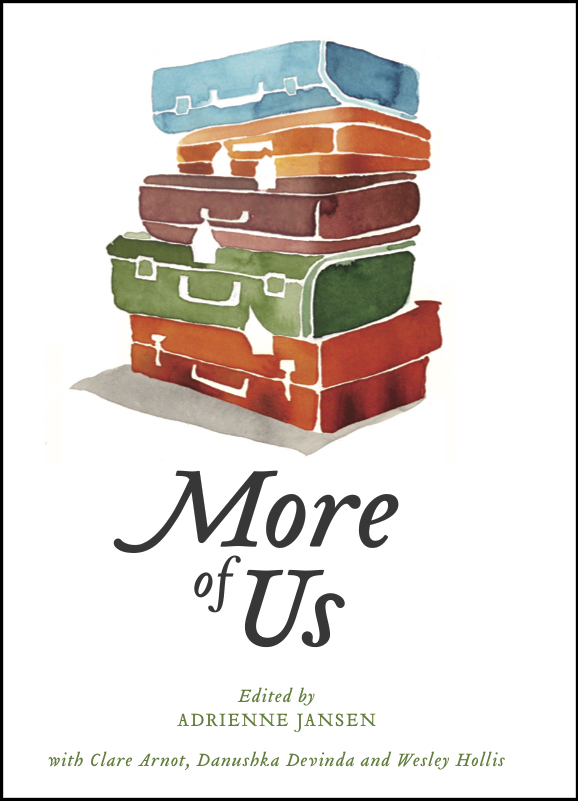
Two poems from More of Us, launched by Landing Press today on World Race Relations Day


more-of-us-cover-1.jpg


More of Us, edited by Adrienne Jansen with Clare Arnot, Danushka Devinda and Wesley Hollis, Landing Press 2019

46 writers from 29 countries, all now living in New Zealand, award-winning poets and high school students


The journey of football

Lebanon

In Lebanon my brother and I
used to play football on the street.
There were shops on the right
and houses on the left.
The shops were a dairy, Express (fast coffee),
a farouge that sold alive and dead chickens.
The houses were old, full of Syrian families.
We passed the ball between each other,
wasting time because the days were long.
The sun was shining with no cloud,
the birds were standing on the trees,
their heads were darting, but they were singing.
Then I joined them and started to sing,
‘I believe I can fly’.


New Zealand

I feel nervous, scared,
happy and strong.
I hear the whistle
and we are all running
to get the ball.
We are running like hedgehogs
to score a goal.
It starts to rain,
the wind bashes you back
if you try to run forward.
It is raining so hard
our clothes are all wet.
The grass is muddy and slippery.
I can see people falling.

It is cold, but it gives me a very good feeling.
It makes me forget everything hurting,
it makes me forget all the sad moments.
It makes me live here in this moment.

Mohammad El Fares


Mohammed: I’ve been in New Zealand for two years and I love playing
football. My high school teachers say I’m a very friendly
student who gets on well with everyone, and I’m happy
about that.


When we came here

I didn’t know how to sleep
in Aokautere’s silence,
the hush of darkness
was something I didn’t know
how to touch.

My childhood had been a field
of people. They didn’t feature
in our photo albums or come
round for tea. Instead they made
a clatter, rumble, shuttle, rush
just outside the window.

Kirsten le Harivel


Kirsten: I am a writer, programme manager and mother based on
the Kāpiti Coast. I was born in Scotland and am of Scottish,
English and French descent. I have an MA in Creative
Writing from Victoria University and run the annual
Kahini Kāpiti Writers’ Retreat and Kāpiti Workshop Series.


Landing Press page

Landing Press is a small cooperative press based in Wellington that focuses mainly on poetry.


Poetry Shelf Monday poem: 15.3.19


15.3.19


This poem can hold the sky for you to see

you will fall into the wide blue of hope

and the wide blue of the next day and the day before


and you will see beauty and you will pause

at the sight of the plunging kereru


but this poem is different because it struggles to hold


the surge of grief and the loss of words so so

so poetry feels helpless because


what good a poem in the face of massacre

what good a poem against the home made unsafe

what good a poem in my white skin

what good a poem when my skin is crying

what good a poem when we feel so bad

what good a poem for the bereft families

what good a poem when life’s fabric changes

what good a poem for intolerance

what good a poem against the racist taunt

what good a poem when mothers fathers

grandparents children friends are dead


or when the Muslim family is detained at the airport

or when the young girl in hijab is abused on her way to school

or when a detained Muslim poet shares his dream

or when you are told to go back where you came from


which is here

which is home

which is where

your children

are born


and so and so

this poem is holding out you     a fragile pronoun

not knowing who will fit and who will agree

you and you and you and we are in mourning


and so and then

when our children marched for the good of the planet

and when we will all march for the good of the planet

and when we will all march and we will all speak for the good

of the beating heart of the planet which is you and you and we


and I am writing heart and we will keep writing heart

because the heart of the planet depends on

kindness and respect and love and open arms


and in this surge of tears and voices speaking

as we stand and sit and bow and pray in solidarity

and I hear National Radio

and I cannot stop listening

to Mohamed Hassan’s podcasts


and a Sikh taxi driver speaks of human solidarity

and a Muslim looks at his neighbours laying flowers

and they are all lost for words and he speaks

and the white flowers are laid and the family gathers

and the families gather and a nation gathers

and candles are lit and vows are made to


make this place home to make this our home and to

stand against racism and this is yes you and you and your

and we are heart to heart and I am holding out words

yes these words after making salty bread and spreading butter

and trying to move through the day and writing words

like white flowers like a wreath of sadness

like human warmth like human peace like hope for we


Paula Green


Poetry Shelf conversation with Sugar Magnolia Wilson


Magnolia photo.jpg


The night sky is full of

stars but

we are more clever than

most – we know

they are just

      burned bones.


from ‘Spent’


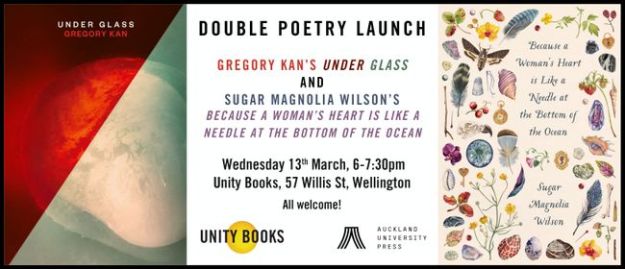
Sugar Magnolia Wilson is from Fern Flat, a valley in the far North. In 2012 she completed her MA in creative writing at the International Institute of Modern Letters at Victoria University of Wellington. Her work has appeared in a number of journals, both in New Zealand and overseas, and she co-founded the journal, Sweet Mammalian, with Morgan Bach and Hannah Mettner. Auckland University Press is launching Magnolia’s debut collection, Because a Woman’s Heart is Like a Needle at the Bottom of the Ocean on March 13th. The new collection is a reading treasure trove as it shifts form and musical key; there are letters, confessions, flights of fancy, time shifts, bright images, surprising arrivals and compelling gaps. Lines stand out, other lines lure you in to hunt for the missing pieces. There is grief, resolve, reflection and terrific movement.
 

Mags book.PNG


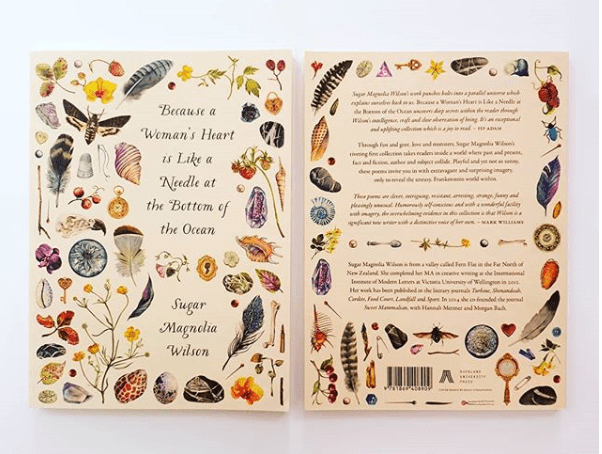
Paula: Tell me about the cover of your book. I just love it. I love the way it is rich in miniature things, a little like your poems are.

Magnolia: Isn’t it totally amazing? When I first received the email from Keely O’Shannessy with several cover design options, I was so blown away by it that I almost couldn’t see it. It was weird, like I was looking at running water in a stream or something and I felt like I might faint. I guess I’d never expected her to ‘get’ my work so completely or so quickly, I was prepared to have to go back and forth to fight for a cover I loved, but that never happened. My friend Kerry Donovan-Brown said it’s like someone took a blood sample from me, put it in a petri dish and looked at it under a microscope, and that the cover is what close up Magnolia Wilson blood looks like! Haha. I wish! Best compliment ever. It’s what my dream blood looks like. I wish my blood was jewellery.

And yes, rich in miniature things. One external review of my book mentioned that I seem to be obsessed with accumulation in my work, and it’s true. Lots of little collections of pins and clips, of food in bowls, jewellery, flowers. I grew up as an only child and I lived a rather sylvan kind of life. I loved to collect bits a pieces and when I was nine Mum, Dad and I travelled around the world (yes, lucky me), and I came home with a giant collection of buttons from different countries. I think it’s an innate desire to hang on to what is beautiful in life, to have proof that beautiful things happened, and is probably tied into grief somehow.


Paula: I first heard you read poems from this book at the National Library Poetry Day celebration and your ‘Dear Sister’ poems – they open the book – blew my socks off. The letter-writing voice drew me in, the sparkling detail, the mood and the mysteriousness. Where did this haunting sequence spring from?

Magnolia: I can kind of trace where they have come from, but like most creative stuff, the true meaning flutters off just before I can pin it down. So, ‘Pen Pal’ was written in 2012, and that’s a letter sequence, and I think that’s where I got the love for the freedom and mystery that epistolary poems allow, and in that same year I wrote a poem called Anne Boleyn, which is also in the book. I started writing the ‘Dear Sister’ sequence with the idea that is was Anne (pre-Henry) writing to her sister, Mary. But, I wasn’t trying to be factually correct I just sort of followed what the letter writer had to say. Slowly it morphed away from being Anne and simply became a woman from another time, struggling with a sense that she was immensely powerful but with no place to express that power. Hence the onset of a kind of ‘madness’ or, more accurately … going full Sybil / turning into a ‘witch’.


Paula: It is such a magnificent way of building a voice in a poem – fierce mixes with doubt, vulnerability, tenderness. This was poetry that I felt. Can you tell me a couple of poetry books that you have felt?

Magnolia: One of the first books of poetry ever gifted to me was Mary Oliver’s collection, American Primitive. My dad set off and travelled around the States after my mother passed away, and he must’ve come across it in his travels and sent it to me with the inscription, Magsie darling, I know you will love this. And I did! It makes me grieve for the majesty of the natural world. I love the way she honours the idea that beauty and love are inseparable from pain and the brutality of nature.

I also love that she is a Christian woman. Usually I would run a mile from a ‘Christian’ poet (probably because I am a bit basic in my thinking and have stereotyped Christians, as though there aren’t a billion different variations on what a Christian can be), but she was Christian in some kind of arcane, pagan way that I love – or that’s what I like to imagine, at least. Also, Mary Reufle’s poetry always makes me feel a lot of hard-to-put-words-to/liminal-space feelings. Her work is a kind of déjà vu. Also, Atsuro Riley’s collection, Romey’s Order, is completely beautiful and was a huge influence for my Pen Pal sequence – the tender, ever so delicate construction-work a child does to build their world.


Paula: Poetry may or may not be something you feel as either reader or writer; it might be a matter of music and mystery, story or ideas. Yet so often a poem knots a complex (scarcely visible) string of effects. Take your poem ‘Home Alone 2 (with you)’, for example. At the core of this poem are multiple loves (a movie, a lover, a mother) and a punch-gut moment. And the after effects last and the questions surface. This is the joy of poetry. You move in and out of self-exposure in the collection. Do you have limits? Is it a form of discovery?


Christmas time and we’ve been out all night.

You’ve been speaking mix of Korean and English,

the way you do when you’re drunk – and

because English is your second language

people can’t be sure if you’re

talking over their heads or if

you’re freestyling your own

kind of poetry.


from ‘Home Alone 2 (with you)’


Magnolia: Interesting. Yes, I definitely have limits. And not purposeful ones for creative constraint etc. They’re the limits of being the specific person that is me with my specific voice and set of issues, trying to write poetry. It’s 100 percent a form of discovery for me, a way of making sense of my world and of growing. I think going back to my interest in accumulation, of objects and imagery, I think maybe it’s a kind of armour.


The lake has a long memory a long

memory, a large imagination.


When my mother left the spring

on our land didn’t change. The water didn’t

stop didn’t stop bubbling up from below.

It didn’t cover itself in a shawl of blackbirds

to indicate grief.


Each litre of water that came up

was different from the next and the next

and each time and each time after that

when I took a drink a drink I became

a deep blue lantern teeming with invisible life.


from ‘The lake has a long memory’


In my poetry I definitely move between self-exposure/vulnerability and then away from it, and I tend to build my poems up and up with imagery like a larva building itself a protective pupa, in order to do its work within, safely. Lol. I think in my poems I build a space where I can work things through, maybe without confronting them directly. And I find that my poems keep on revealing things to me. ‘Muddy Heart’ is an old poem, but only two weeks ago I finally ‘got’ what it was saying. I read it out in an interview and suddenly I was like whoa! That’s what it means! It was so clear and I’d never seen it.

Maybe it’s totally obvious to the reader, I don’t know, but to me I only just got that it was about feeling abandoned by my father after my mum died. I think all creative work is like this, a process of many lives and many mini-deaths, which allow for new life and new understanding in turn.


Muddy heart


You’ll lie down one day on the field behind

your house and your heart will turn

to mud.


Dandelions will push up through the earth, your

blood mingling to a rich beet-coloured soil,

your bones some kind of ash like your father uses

around the strawberry plants.


Clover and pennyroyal will take seed on you.

You’ll call out in the fading light for your father,

who is, after all, just over the fence in the house – but you’ll

sound like the long grass, the frogs, the dogs herding cattle.

When eventually he comes looking for you,

how ever many years later


there will only be the green flush of land down toward

the road, the river and a patch of grass

where he will tend to st from now on.


Paula: It is such a layered sensual poem; I can feel the earth and smell a sharp kick of dandelions just as the image of the father in the fading light who ‘eventually comes looking for you’ is also a sharp heart-kick. And the potent last lines. I adore this poem. The main story might be missing but the feeling is acutely present.

What do you find hard when you write poetry? What gives you pleasure? Does doubt aid or hinder?

Magnolia: I think doubt is something I’m always struggling with in terms of writing. Before I did the IIML masters course, I never really thought much about writing, it was just something that happened to/for me from the age of nine! The IIML course was mostly a blessing and partially a curse. There’s a lot of shit poetry floating round in the world. Honing your editorial eye/ear is key if you want an audience for your work and want to grow as a writer, but, thinking critically about my work pushed me into a place where I felt like nothing was really good enough. I’m only now, seven years on, getting free from that thinking, I am no longer giving fucks.

I am a lyrical, image-laden, nostalgic, confessional poet and that’s totally fine. What I find hard when I write: getting started! I have so, so many failed starts at poems. For every one poem there are maybe 10 or 20 failures. What gives me pleasure: when the creative duende / spirit shows up, and writing just happens in a way that seems outside of my control. It doesn’t happen often but when it does it makes all of the failed attempts worth it.


Paula: Ah yes, I don’t think doubt ever leaves. But that mysterious hard-to-describe poem flow can be such a joy. Have you read any poetry books in the past few years that have given delight? Challenged you? Taken you outside your comfort zone. Given your pure reading uplift?

Magnolia: I’m more likely to love individual poems rather than have entire favourite collections. The poems that’ve struck me in some way or other recently (but aren’t necessarily ‘new’ works) have been: Kiki Petrosino – Witch Wife. Alice Te Punga Somerville – time to write (for Larry), Hannah Mettner, her whole book Fully Clothed and So Forgetful, Emma Barnes – all her poems but especially Ohio. Lynn Jenner – many poems, Rebecca Hawkes – the cave draws u in like a breath, Michael Steven – a sequence of poems he wrote about his son, August. Nina Powles – in the end we are humanlike. Jenny Bornholdt – Flight. Anna Jackson – her whole incredible chapbook, Dear Tombs, Dear Horizon. Faith Wilson – Lynette #1. Cynthia Arrieu-King – her whole book People are Tiny in Paintings of China. Alice Oswald – the whole collection Dart. Morgan Bach – her two new poems in Sport. SO MANY MORE.


Paula: Ok – books for me to track down there. I haven’t read that poem by Nina for a start. Where was it published? I love reading books outside my comfort zone, that are nothing like I will ever write in terms of style, form and content, but I also love those books that refresh my own writing preoccupations. What are key things when you write a poem? Could you narrow it down to three words?

Magnolia: The Nina one was published in The Shanghai Literary Review online.

Three words: really quite random! I don’t know how I write poems. It seems like a bizarre miracle every time it happens, and then I’m convinced I’ll never be able to write another one again.


Paula: I know that feeling – and the way you can pick up an old poem and it reveals new and surprising things to you (as you did with ‘Muddy Heart’). That feels like another miracle. Was there a poem in the collection that just arrived with ease and flow (almost in one sitting) and another that was much harder to form?

Magnolia: ‘The sleep of trees’ was a poem that was just ready and waiting to be written. There had been fragmented, short incarnations of it the year leading up to writing it, but they never worked, and then they all magnetically found their way into that poem, and it was written in about fifteen minutes. And then edited a bit over time.


this is the sleep of mothers – of

five thousand lit candles burning hot in the

dark hall of the body, eyes open

and flaming over the bars of a cot

the sleep of babies – restless turning

a sweet and angry clock

bending in space as it draws earthward, pushing

out and protesting against

                            the constraints

                                the boredoms

                                    the repetitions.

from ‘The sleep of trees’


‘Glamour’ also kind of wrote itself. Harder to write – Newton gully mixtape – trying to capture the feeling of growing up in the 80s and visiting fashionable Aucklanders, the party scene my parents were involved in, but the emptiness of the scene at the same time. Don’t think I nailed it – because of course, it was way more nuanced than that. Lots of love and happiness too.


Paula: Your collection offers poetic pleasure because it has music, space and heart and that makes it both open and fertile. I was flying home from Wellington musing on your book and was drawn to the two-part ‘Conversation with my boyfriend’ where you ‘translate’ your experience together from English into Korean, and from Korean into English, not as language translations but as experience translations. I was thinking then how every poem is a form of translation – so capturing the 80s scene is like a flickery translation. I guess if you think of poetry as translation it becomes something new and intriguing with fragile lines to the original experience-thought-feeling.


You are always full of rice because you eat rice and you love rice and

your skin feels like rice when we hug – our bodies mould together

and we are a bread yin and a rice yang and although traditionally

Korean people don’t eat bread you are more than hungry to have me.


from ‘English into 한글’ in ‘Conversations with my boyfriend’


We should always be filled with rice: cooking it and eating meals

together, and rice is important before we die, too. We hug and your

skin is learning to love rice, or, at least starting to star the healthy

map of rice. Traditionally, Korean people don’t eat bread, but there

are now many patisseries in larger cities, and many children long to

be pastry chefs, and I am not so sure about this.


from ‘한글 into English’ in ‘Conversations with my boyfriend’


I loved the way as I closed the book the two translations merged; yin overlaying yang, yang overlaying yin. Would you ever see a poem as translation or at times as performance/acting out or as walking into discovery (like some poets do) or as an opening of the writing valves into a mysterious process (as you indicated above) that is never the same and simply happens?

Magnolia: Love the fact that they close over one another! Hadn’t even noticed that. I think all of those things are true about poems – they are translation, performance, an act of discovery and totally mysterious. Art is a way to translate human experience and I think life is a constant act of translation, layer upon layer of meaning being filtered through our own specific set of circumstances, beliefs and experiences, that have been filtered through someone else’s before us, and will go through someone else’s after us. That’s why I am not really into black and white dichotomies – left vs right, Labour vs Nats, the right thing to say vs the wrong thing to say, male vs female. Life is way, way too nuanced and strange for such basic framing. Hannah Mettner passed on the most excellent quote about poetry to me, by the poet Robin Robertson and it sums up all my moods: I’ve always thought that writing poetry has very little to do with the intellect. It’s not something one can explain and chat about very easily: certainly not about the making of it. It’s very resistant to explanation. It comes from a place that is occult, in the sense of being hidden. It attends to some of our deepest anxieties and hopes in the same way that dreams do.


Auckland University Press page

Magnolia reads ‘Betty as a Boy’
 

1251989-557485-7.jpg


Poetry Shelf Monday Poem: essa may ranapiri


POMĪAHIAS & HIS LOVER’S GREAT ACCOMPLISHMENT

for Sam Duckor-Jones


Pomīahias is in the garage molding
little men into being
fingers slick with clay
drying gradual into dust
the light casts shadows to move
the roller door is open to let the air in

he admires all the fishing rods
his lover has hung from the wall

Maui has caught some big ones
in his day

he sits his tiny figure up on the shelf
with the others
he can see it on their faces
(scrunched fingernail detailing)
they all want something
he isn’t sure he’s allowed to give

could he be as brave to draw a world
over the horizon against its will?


©essa may ranapiri


essa may ranapiri (takatāpui; they/them/ theirs) is a poet from Kirikiriroa. They have words in Mayhem, Poetry NZ, Brief, Starling, THEM and POETRY Magazine, and their debut collection RANSACK will be published by Victoria University Press in 2019.


Poetry Shelf audio spot: Elizabeth Welsh reads from ‘The mountain-daughter’s last years’


EW_Headshot_01.jpg


from ‘The mountain-daughter’s last years’ in Over There a Mountain, Hoopla Series, Mākaro Press, 2018


Elizabeth Welsh is an academic editor, poet and short fiction writer. Over There a Mountain, her debut poetry collection, was published by Mākaro Press in 2018 as part of the Hoopla series. Her poetry and short fiction have been published in journals and anthologies in both New Zealand and the United Kingdom. In 2012, she won the Auckland University Press – Divine Muses emerging poet prize. She lives in Titirangi with her husband and daughter.


Going to Wild Dogs Under My Skirt in Auckland

Screen Shot 2019-03-06 at 1.56.46 PM.png

Photo credit: Raymond Sagapolutele


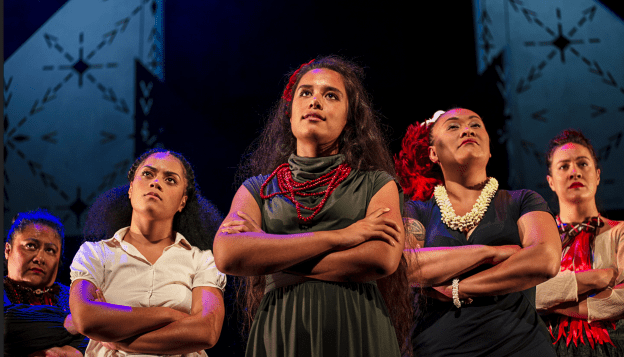
Last night I went to the opening night of Wild Dogs Under My Skirt (a Silo Theatre production) after a collision of a day (no not trucks and cars like last year) and was feeling like a wet dish rag. I had a lively poetry conversation with Vana Manasiadis as I ate tasty falafels in the Q theatre café before the show. And that felt good. My Wild Heart page proofs were back home looking amazing but demanding every inch of me for the next ten days. I was wondering where my next foot would go.

I am sitting in the dark when five women appear on stage; they sing and move and welcome us into the space and connections of their performance: the full cast (one is unable to make this season) is Vaimaila Urale Baker, Saane Green, Petmal Lam, Stacey Leilua, Joanna Mika-Toloa, Anapela Polata‘ivao. I have goosebumps. Their voices instil the room with exquisite musical harmony – a singing threshold that transports us into an hour or so of discomfort, pain, warmth and much laughter.


Tusiata Avia’s debut poetry collection, Wild Dogs Under My Skirt, has been with poetry fans since 2004; it has inspired young Pasifika women to tell their stories in poetry vessels, it has inspired poets to perform from the heart, to allow darkness and risk and edge. It has inspired us to write poetry that makes us laugh and weep at the same time. It is an Aotearoa classic and it is much loved.

The Wild Dog performance, steered by experienced and much lauded director and actor, Anapela Polata‘ivao, is simply astonishing. You are taken into the pages of a poetry book and then carried beyond, you are whisked on the lyrical echoes and gestures of a Tusiata performance and then born into the theatrical space and the wider world.


There are gods and wild dogs and the talk of sex and aunty’s advice on how to be a good Samoan girl and corned beef and chop suey and the tied up hair and the image of Jesus and always Jesus and the size of feet and a personalised alphabet and still Jesus and the palangi man and the dancing women and the dusky maidens and more sex and the women – always the women, how I love these women – poking fun and being deadly serious and strong.

We are taken into the raw and exposed and cutting and loved and beloved lives of Samoan women and for many in the audience it is a searing hit of recognition.

For me in white skin – my dish rag skin – it is a hit of pain – the influenza, the intolerable shootings, the shoddy treatment by NZ, the shame and but and and

it is also an utter uplift through the joy of words –it’s what Tusiata and the actors can do with words that transform your skin and heart and gut because they dance and they bite and they etch indelible stories on your legs and arms as though we are poetry tattooed.


Six chairs, props to a table or a church or a desiring man, become part of the poetry – for there is always poetry, intricate and moving. The live drums enlivening (Leki Jackson-Bourke), the soundtrack enlivening, the dancing bodies prompting rollercoaster emotions.

And the final piece, the fierce wild dog ending, the women growling teeth bared, cutting opening the issues that have shaped them, the love and the violence and place to call home, offering the bloodied past, the familiar home  ground, the love that binds, the love that binds women, the love that stands proud on this stage and sings out. Fiercely.


The song ‘Telesa’, composed and sung by Aivale Cole, is the end note – haunting, reverberating. Our bodies become echo chambers for every word, every gesture we have just absorbed. I feel like I have had a blood transfusion. I feel like I can take the next step.

Thank you, thank you, thank you.


You wan da Ode?

OK, I give you

Here my Ode to da life

Ia, da life is happy an perfek

Everybodys smile, everybodys laugh

Lot of food like Pisupo, Macdonal an Sapasui

Even da dog dey fat

You hear me, suga? Even da dog!


from ‘Ode to da life’

 Wild Dogs under My Skirt Victoria University Press, 2004


Screen Shot 2019-03-06 at 2.13.04 PM.png

Photo credit: Raymond Sagapolutele


Poetry Shelf Classic Poem: Elizabeth Smither picks Kendrick Smithyman


Cutty Sark


In company with Cutty Sark at sea

only once, on Himalaya off Brazil.

They sailed into the doldrums.

Day after day another sail came into sight,

would lose the wind, then idle.

Forty-two ships counted from the masthead.


Sent up with a glass at daybreak

to mark if anything stirred, reported

a clipper coming from the south carrying

canvas, the mate observing from the poop

later was first to say ’That’s Cutty Sark.’

They watched her through the day.

At last she was hull down, northing,

had sailed right through the might as well

have been derelict fleet, forty-plus of them,

some getting on for four weeks there.


That’s what poetry may be about, the impossible

part of it which achieves insubstantial

fact, as little material as Sybil Sanderson’s

G in alt or Fonteyn’s unpredicted change

(‘if you didn’t see why I did it when I did

it then it didn’t work’) not to be described;

when seen, if seen, in a kind of dumbshow

to strike dumbstruck any who looked out

hearing something beyond likely hearing,

seeing something not likely seen, gone

without leaving words for.


©Kendrick Smithyman from Imperial Vistas Family Fictions (AUP, 2002)


On the poem

If you’ve ever been aboard Cutty Sark at Greenwich your head will be full of

legends. The figurehead of Nannie, the witch, clutching the tail of a horse in

her fist; The fabulous races with its rival tea clipper, Thermopylae;  the romance

of sail before the advent of steam. Kendrick Smithyman has captured all this

and more in his wonderful poem.  It begins with the facts: location, doldrums,

number of ships becalmed. Then the manifestation, like an opera star, a

ballerina assoluta. Cutty Sark appears and those lovely nautical terms: ‘carrying

canvas’, ‘hull down, northing’; the other ships might as well be derelict; Cutty

Sark cuts right through them. The last stanza, the longest, turns to the mystery

of poetry, the sighting which not everyone sees, the thing ‘not to be described’

that strikes dumb anyone who is looking or hearing, something that is moving

away as fast as Cutty Sark.


Elizabeth Smither


Elizabeth Smither, an award-wi9nning poet and fiction writer, has published eighteen collections of poetry, six novels and five short-story collections, as well as journals, essays, criticism. She was the Te Mata Poet Laureate (2001–03), was awarded an Hon D Litt from the University of Auckland and made a Member of the New Zealand Order of Merit in 2004, and was awarded the Prime Minister’s Award for Literary Achievement in Poetry in 2008. She was also awarded the 2014 Janet Frame Memorial Award for Literature and the 2016 Sarah Broom Poetry Prize. Her most recent collection of poems, Night Horse (Auckland University Press, 2017), won the Ockham New Zealand Book Award for Poetry in 2018.


Celebrating the Ockham NZ Book Award poetry finalists

The Mary and Peter Biggs Award for Poetry
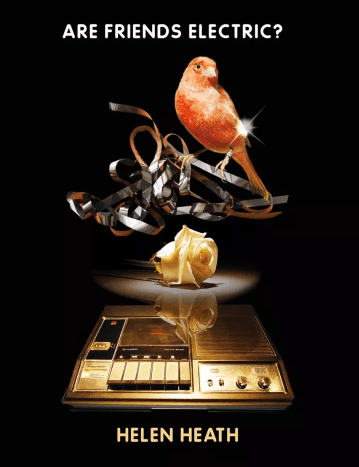
Are Friends Electric? by Helen Heath (Victoria University Press)
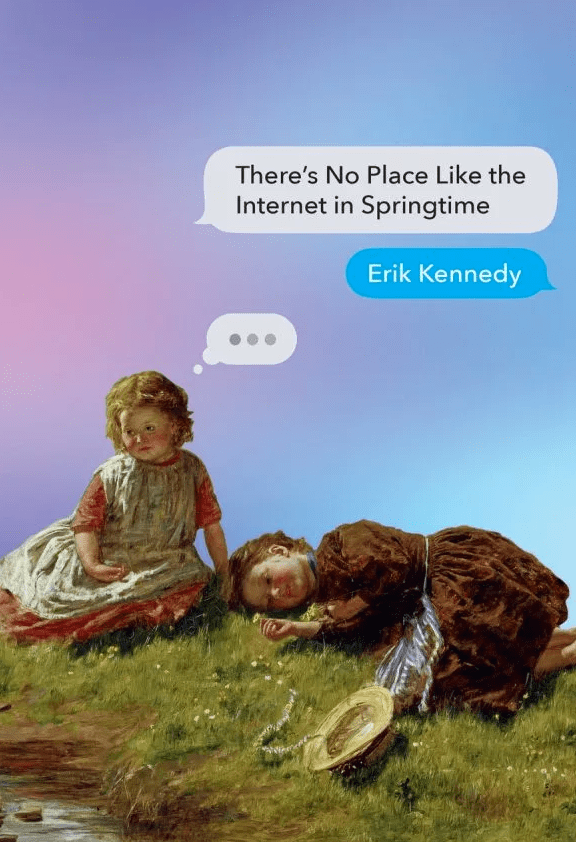
There’s No Place Like the Internet in Springtime by Erik Kennedy (Victoria University Press)
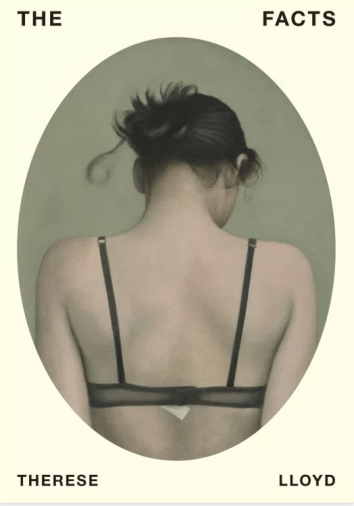
The Facts by Therese Lloyd (Victoria University Press)
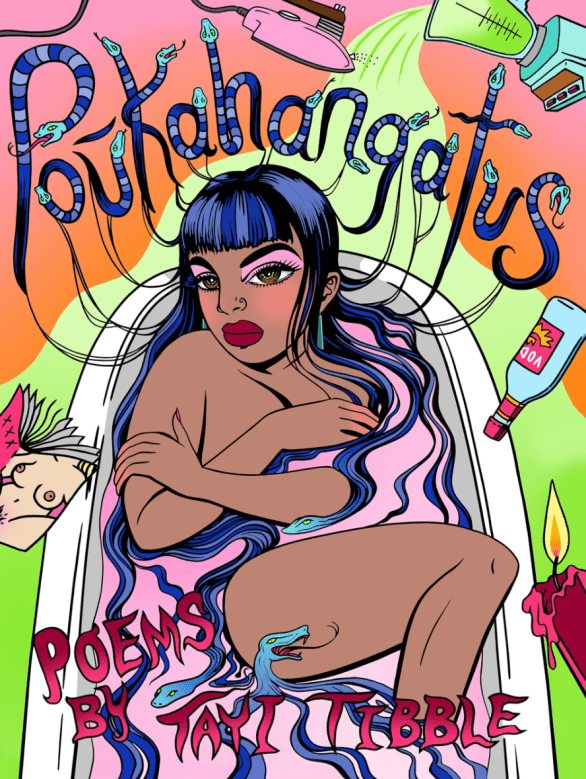
Poūkahangatus by Tayi Tibble (Victoria University Press)


Great to see we have new sponsors, Mary and Peter Biggs, for the Poetry Category at the Book Awards.

I have featured all four finalists on my blog because I have found much to love about these books – this therefore is a moment of celebration. Of course there are books not here that I loved immensely. Poetry Shelf is whole-heatedly devoted to celebrating local books and the fact that I don’t have time to feature all my poetry loves is testimony to the excellent poetry we publish – through both big and small presses. Victoria University Press is becoming a flagship for NZ poetry – publishing at least 9 books a year of high quality and diverse scope. I applaud them for that. And all the other publishers issuing standout poetry (there are many) and the booksellers who put local poetry books on their shelves.

Thank you!

Congratulations to the four finalists! And to VUP.


Screen Shot 2019-03-05 at 3.36.34 PM.png


Listen to Helen read two poems here

Helen’s book is a complex, satisfying read with enticing layers and provocative subject matter. It is a book of seeing, strolling, collecting; as though this poet is a bricoleur and   the book is a cabinet of curious things. What I love in the poems is the shifting voice, the conversational tones. The poems that link grief with the effect of technology upon our bodies get under my skin. Most importantly there is a carousel of voices that may or may not be invented or borrowed but that make you feel something.


I ask if you would like a body.

You say, ‘No I’m beyond bodies now,

I’m ready to be fluid, spilling out all over.

I’m ready to spread myself so thin that I’m

a membrane over the world.’ I’m not ready.

I take off my socks and shoes and walk

over a patch of grass very slowly.


from ‘Spilling out all over’


Screen Shot 2019-03-05 at 3.46.59 PM.png


Erik’s first-full length collection sparks with multiple fascinations, experience, thought, wit, politics, optical delights and aural treats. It is a book of harmonics and elastic thinking, and is a pleasure to read. The collection navigates eclectic subject matter but I was initially drawn to the interplay between a virtual world and a classical world. I began to muse on how poetry fits into movement between the arrival of the internet and a legacy of classical knowledge. I also love the idea of poetry reacting to collisions, intersections, juxtapositions. Interestingly when I was jotting down notes I wrote the words ‘detail’, ‘things’ and ‘juxtaposition’ but not just for the embedded ideas. Yes, the detail in the poems is striking in itself, but I was drawn to the ‘static’ or the ‘conversation’ or ‘kinetic energy’ between things as I read.


Two feet of snow at my parents’ place, in another season.

Here, the cicadas sing like Christian women’s choirs

in a disused cotton mill. Belief is a kind of weather.

I haven’t seen proper snow for three years.


from ‘Letter from the Estuary’


Screen Shot 2019-03-05 at 3.56.29 PM.png


Therese’s new collection resides in a captivating interplay of chords. You could say that any poetry book delivers chords whether aural, visual or thematic, and in the light of ideas and feelings. This book does it to a stunning degree. Once you start hunting for them – whether in harmony or not, between poems or within a single example – the rewards are myriad. At the core of the book the title poem, the standout-lift-you-off-your-feet poem, achieves a blinding intensity: raw, surprising, probing, accumulative, fearless. I particularly love the surprising turns of ‘Mr Anne Carson’. Therese’s collection takes you deep into personal experience that gets hooked up in the poetry of another (Anne Carson), in matted ideas and the need to write as a form of survival. It makes you feel as much as it makes you think. It is a riveting read.


For three months I tried

to make sense of something.

I applied various methods:

logic, illogic, meditation, physical exertion,

starvation, gluttony. Other things too

that are not necessarily the opposite of one another,

writing and reading for example.


from ‘The Facts’


screen-shot-2018-07-18-at-10-05-26-am.png


Tayi’s debut collection, Poūkahangatus, has already and understandably attracted widespread media attention. The poetry is utterly agile on the beam of its making; and take ‘beam’ as you will. There is brightness, daring and sure-footedness. The poems move in distinctive directions: drawing whanau close, respecting a matrilineal bloodline (I adore this!), delving into the dark and reaping the light, cultural time-travelling, with baroque detail and sinewy gaps. The collection charts the engagement of a young, strong woman with her worlds and words  – and the poetic interplay, the sheer joy and magnetism of the writing, is addictive. I treasure this book for its kaleidoscopic female relations and views of women; and the way women are the vital overcurrents and undercurrents of the collection. Above all I loved the kaleidoscopic effect of the book; the way it is edgy and dark and full of light. The way it catches living within popular culture and within family relations, the way it carries sharp ideas and equally sharp feelings.


Poūkahangatus

in 1995 I was born and Walt Disney’s Animated Classic Pocahontas was

released. Have you ever heard a wolf cry to the blue corn moon? Mum has.

I howled when my mother told me Pocahontas was real but went with John

Smith to England and got a disease and died. Representation is important.


from ‘Poūkahangatus’


I am not a journalist punting on a winner – I am a poetry fan and have read all these books several times – any one of these books deserves to win. A toast from me x.