Category Archives: NZ poems

Poetry Shelf Monday poem: Brian Turner’s ‘Between Shingle Creek and Fruitlands’


Between Shingle Creek and Fruitlands


Cast your mind back to the first time you came this way,

the road windy, corrugated, dusty,

the surface mostly the colour of yellow clay, cuttings

stained with the leer of water seeping.


On the left the ever-ascending slopes,

the Old Man Range, white flecks

in blue gullies near the summit,

and your young old man wondering when


we’d ever get to Alexandra, your mum complaining

about ‘the blessed dust’, both of them

cursing the ‘wash-board surface’ and you thinking

about the number of times she told your father


that ‘it didn’t matter’ when it clearly did. And that

was the way it always was with them,

it is with you, it is, period. Until, you might say,

something happens that’s never happened before.


Like love came back and sent hate packing

never to return, and peace of mind arrived

like a dove from afar, decided to stay, and you

no longer dreamed of what might have been.


Brian Turner


Brian Turner was born in Dunedin in 1944. His debut collection Ladders of Rain (1978) won the Commonwealth Poetry Prize. He has published a number of collections including Just This which won the NZ Post Book Award for Poetry in 2010. He has received the Prime Minister’s Award for Poetry (2009) and was NZ Poet Laureate (2003-5).  He lives in Central Otago.

In April 2019 Victoria University Press published Brian’s Selected Poems, a hardback treasury of poetry that gains life from southern skies and soil, and so much more. When I am longing to retreat to the beauty of the south, I find refuge in one of Brian’s poems. The economy on the line, the exquisite images, the braided rhythms. Read a poem and your feet are in the current of a gleaming river, your eyes fixed on a purple gold horizon line. His poetry presents his beloved home in shifting lights, but the range of his work offers so much more.

Brian became an Officer of the New Zealand Order of Merit for services to poetry and literature in the 2020 Queen’s Birthday Honours. He was to be the honoured writer at the Auckland Writers Festival year – he would have been on stage with John Campbell so am very sad to miss this event.


Poetry Shelf interview with poems and images: Eliana Gray’s Finland residency

Screen Shot 2020-06-03 at 10.55.15 AM


For all of February I was lucky enough to be selected to undertake a month-long residency in a tiny town in the middle of Finland called Sysma. The only outcomes were that I had to write a report of my time at the end for the cultural institute that sponsors the residency. I went to continue working on my second collection but mostly just wanted to see what would happen once I was there. I was given a room in a giant house on the edge of town near Finland’s second largest lake with a piano and a sauna. For the majority of the time I shared it with just one other person, who became my dearest new friend. The incredibly talented poet from Germany: Ricarda Kiel. Below is a small and disjointed account of this time.


Did you have any epiphanies? Life or writing?

 Both. Vigorously. The biggest epiphany had to do with my ideas of what ambition is, what constitutes work, how terrible capitalism is (as if we didn’t already know) and how I want to live my life. It sounds lofty, but can be summed up as this: Capitalism has fucked everything and jobs can kiss my ass. I’ve always enjoyed doing things that are valued weirdly by capitalism: youth work, music, poetry, sexual violence survivor support. Nobody wants to pay you to do these things. I used to think that the way to get around this was just to get very famous. You wanna do music Ellie? Well ok! You better be a popstar then. Ohh, you like doing poetry now do you? Well then, you better fucking hustle until you become the one poet that is allowed to make a living from poetry at any one time. I’ve now realised that, not only does doing the level of work required to become these things burn me the fuck out and strip me of my passion for whatever t is I’m doing. But also! I fucking hate attention! And I hate to be the centre of it! Even if by some weird reason I did become famous enough to make a living off my work I’d most likely become deeply unhappy as a result of it. I’d always thought that once I found my ‘area of work’ that working would no longer be a stress and a drain. That once I was employed in my preferred ‘career path’ I’d be happy. Big time lies my friends. Turns out it’s the working that sucks. My plan now is to work for as long as it takes to go bush with a goat and a veggie garden and then never be seen or heard from again.


Is there something you miss?

I miss everything to be honest. I miss waking up at six am and the soft blue light. I miss padding into the quiet kitchen before anyone else is up and staring at the snow with a cup of earl grey tea with oatmilk. I miss everything being made out of oats. I miss the white painted wood floors and the radiators and how the house we always warm even when outside was negative ten degrees. I miss watching the sunrise every morning. I miss noticing the changing trajectories and placings of icicles, ice and snow. I miss waking up to a fresh blanket of flakes and seeing where the birds had been. I miss how quiet and still everything feels underneath snow clouds. I miss how the snow refracts the light and absorbs the sound. I miss walking out onto the frozen lake everyday and dancing by myself. I miss the sense of romance that comes from playing by yourself in the snow. I miss the patterns ice makes from frozen water. I miss the woodpeckers and the hares. I miss seeing the stars from a different angle. I miss Marabou chocolate bars and cheap jars of lemon pesto. I miss the Finnish language and the adventure of a forgien supermarket. I miss Ricarda. I miss our quiet kitchen conversations and how we each needed a similarly small amount of human interaction. I miss walking with her to the abandoned house by the lake and trying to decipher the Finnish graffiti. I miss stargazing and crunching on the frosted moss. I miss the sheets of ice that push up onto the shores of Lake Paijanne and the blankets of pine needles. I miss getting naked and plunging my body beneath the icy water. I miss smiling as the blood rushes to the top of my skin. I miss the intense solitude of being in a place where no one knows you. I miss the comfort of an always warm, well-built house. Of knowing that Ricarda is just upstairs should I need her. That she’ll come knock on my door after nightfall and ask if I’m ok. That if I’m not we can talk about it and she’s so much smarter and calmer than me that it will always be ok.  I miss nightly saunas. I miss sitting naked with my new friend in the sauna as we sweat and discuss German history and politics. I miss living in a culture that isn’t terrified of the naked body. I miss my wonderful new friend. I miss the way my body feels so boneless after a sauna that I fall directly asleep. I miss my life in Sysma. I miss Ricarda. I miss not having a job. I miss having my writing be a valued part of my time. I miss being able to live my life in a way that only pleases me. I miss everything.


What books did you take?


Head Girl – Freya Daly-Sadgrove

Mayhem #7- edited by Tracey Slaughter

This gender is a million things that we are more than – edited by essa may ranapiri

Sport 47– edited by Tayi Tibble


I spent a lot of time picking which books I would take with me. It was a balance between bringing necessary inspiration and ensuring that my backpack could be carried by my back.

I took Head Girl because Freya is a beautiful genius but also because I was working on a review of it for the Minarets website. This is how I justified bringing a book by a single author.

The rest of the selection are all tomes filed with a breadth of writers from Aotearoa that I’m obsessed with. It made me feel so grateful for the glut of exciting work in this country. That I could take three volumes and have with me more poetry from my favourite poets than I could get through is such a blessing.

A lovely happening that spun off from my carrying these books is that I was able to lend them to my residency mate and new sweet friend Ricarda, an incredibly talented poet from Germany.

A big big heartfelt thank you to all the beautiful poets in these volumes for inspiring me and keeping me company during this residency.


Screen Shot 2020-06-03 at 10.55.56 AM


P o e m s


Pile of bodies like the dead


You look like spilled milk, celestial

Sitting on your bed in the early afternoon

We’ve been fucking for days


I passed out in the shower

Steam heat smothered my brain till it stopped working

slid me down the humid glass

Your hands all over

could have held me up

Against you, been fucking me for days


I wake up on the floor in the hallway and you’re yelling

dragging my hair back to the bedroom

I pretend you’re tender

Pretend I like it

not to notice you’re embarrassed cause


You know lonely men

shouldn’t fuck seventeen year olds


Airways unconstricted by age

we swallow up steam like we’re starving

And yeah I’m ready to try anything

look how hungry they’ve kept me


Like sitting at an empty birthday party

How pathetic to invite people

to enjoy yourself

Spend all your time stringing

balloons on a letterbox


Bag of homemade favours by the door

Everybody gets one

Except for you


new piece


I feel so fucking………mature

Fragrant flesh lobed and so

Ripe, it’s a little embarrassing


But so sweet!

The earnest growth of sugars

Both natural and bred

My body a sum of traits innate

And selected, curation not mine

And still authentic


How I swell

My pith extending

Cell walls expanding

Strain creating bitterness, as a warning

A balance to the sweetness, again


How beautiful I’ll be when I stop

Reach my peak of consumption

Aesthetic requirements fulfilled

Skin appropriately thickened, still porous

Still able to be hooked

Gripped between forefinger and thumb

Penetrated, peeled back


They’ll marvel at my outside

Puckered yes, but how shiny!

My skin: a good thickness

My pith present, inoffensive

But providing some necessary ‘grit’


I am beautiful

They tell me I’m beautiful

They hold me in their hands

They press me to their mouths

I am waiting for them to bite down


Screen Shot 2020-06-03 at 10.56.15 AM


‘The Top Ten Types Of Boys You’ll Date In College’


Shoes scraping the carpet thread

Bare. Your eyes, heavy-lidded

Rounded, like the cushions

Your skate shoes are dirty

Caked with dirt

You talk to me about Heidegger and

I couldn’t give less of a shit


Temporality temporalizes as a future

which makes present in the process of having been


You say, passing the bong as if its

The idea itself. As if we

Heavy-lidded, were so present

as to be dust. Settled

On everything without notice


Run our fingers through the air

And come up coated

You’re still looking at me


You’re still looking at me and

I can feel it

Like how you say you can feel it

When I roll my eyes behind your

Back but I know you’re lying because

I only ever roll my eyes

When you leave

The room


You’re cool

You’re dust

You’re reclusive

But you have so many FRIENDS

At least a thousand by my last count

Everyone is one of your boys


Understanding of being is itself a determination of being


You say

passing the bong

As if this isn’t

a worse version

Of the same joke ten minutes before


We still laugh, of course

We wouldn’t want you to be

Uncomfortable


Above your head there’s a poster

Tits out. BIG tits. Red bikini

Hair flying! Straddling

A motorcycling! She’s

Tougher than you, she’s

Seen some shit, man


I smile at her, but keep my lids low

So it still looks

Like I’m smiling

At you


Screen Shot 2020-06-03 at 10.56.25 AM


Eliana Gray is a poet from Ōtepoti. They like queer subtext in teen comedies and not much else. They have had words in: SPORT, Mimicry, Minarets, Mayhem and others. Their debut collection, Eager to Break, was published by Girls On Key Press (2019) and they are the 2020 writer in residence at both Villa Sarkia, Finland and St Hilda’s Collegiate, Ōtepoti.


Poetry Shelf noticeboard: online launch of Kevin Ireland’s new collection tonight at 6 pm

Screen Shot 2020-06-02 at 3.30.39 PM


You Tube link

Zoom link


Poetry Shelf in conversation with Oscar Upperton


Screen Shot 2020-05-28 at 10.30.51 AM


Oscar Upperton New Transgender Blockbusters Victoria University Press, 2020


Optimism is the idea that it not always will rain.

Leave home as soon as you are free,

for everyone comes back again—


just never board a train

without a member of family.

Optimism is the idea that it will not always rain,


that between sea and plain

will always sprout a city.

For everyone comes back again.


from ‘Dutch instruction’


Oscar Upperton was born in Christchurch in 1991, grew up in Whāngarei and Palmerston North, and now lives in Wellington. In 2019 he was awarded the Creative New Zealand Louis Johnson New Writer’s Bursary. His work has appeared in Sport, The Spinoff, Metro and Best New Zealand Poems. His debut collection New Transgender Blockbusters was one of two go-to poetry books for me in lockdown (Elizabeth Morton the other). It is fresh, witty, offbeat, surprising yet never loses sight of a lived-in world. As it says on the blurb: These poems are vitally human and consoling: they reframe the ordinary as something to yearn for’. This is the kind of book that I want to talk about with someone, the way the city and rural settings are both present, the way there is a degree of incantation at times, a sense of song, a jubilant relationship with words that might involve rhyme or repetition or silence. I am out of lockdown now but the world is still wobbly, I am still wobbly as both reader and writer, and I find this book the perfect retreat. Glorious is the word for it.


In conversation with Oscar Upperton


Paula: What poets, both here and overseas, have hooked your attention?

Oscar: I only really read Kiwi poets. I love Tayi Tibble’s writing. Also Jane Arthur and Ashleigh Young. My younger sibling Katrina Upperton is my favourite read at the moment though.


Paula: Poetry performers?

Oscar: I went on a road trip with my dad before the lockdown and read in Palmerston North, Whangārei and Kerikeri. I was lucky to see some awesome, awesome performers on that trip. I can’t name everyone (and some of the readings were private anyway) but I will single out Vera Hua Dong, who gave an amazing performance in Kerikeri. I’m looking forward to seeing her writing on the page in Ko Aotearoa Tātou when it comes out in August.


Years aren’t to blame. I was always old.

The garden gathers rain. I grew and grew

and broke the mould. I sat there in the rain.


from Garden beds’


Paula: Your book is like a breath of fresh air. I am drawn to the economy, the richness, the quirkiness, the surprise. What are key things when you write a poem?

Oscar: Thank you for all the compliments! I like to think I’m quirky. Sort of the manic pixie dream boy of New Zealand poetry.

Usually I start with a line or a sound I like, and just follow that. Or I start with an idea, like writing a poem with footnotes. I like to make up rules for myself, like this poem has to have every fourth line written backwards or in this poem the first word of every line rhymes. And I like to use prompts, like Pip Adam’s exercises from her podcast Better Off Read.


The dog is a book read over and over

The dog is a river that’s stopping for no one

The dog is a child who thinks hot is a colour


The book is a dog that’s waiting for water

The book is a river that cannot be forded

The book is a child who’s made out of silence


from ‘Song abut a child’


Paula: I like the appearance of lists in your poems, whether subtle or overt. What attracts you to poetry list making?

Oscar: It’s easy! Also I like repetition. Also I like juxtaposition. Like if you put one image beside another, unrelated image, what happens? Lists are useful for that.


Paula: Yes- I love the connections between things on a line and in the poem. That is where surprise and quirkiness can take root. I also like the musicality – the rhyme. Sometimes I am reminded of Bill Manhire’s poetry palette as I read your poems (final word in book might be referencing his poem ‘Kevin’). Any poets that feel like close writing relations?

Oscar: This is a funny question to me because some of my closest relations are poets (my dad Tim and my sibling Katrina) and they are probably the writers that I am the most similar to, for obvious genetic and environmental reasons. I definitely am very influenced by Bill Manhire. I like his relaxed approach to sound and rhythm, and how a lot of his poems are jokes or riddles. He seems to be having a lot of fun when he writes, and it’s infectious. I aspire to be like that.


Paula: I so see that in your writing! Your poetry seems assured to me, crafted with a deft hand, but do you suffer doubt as you write?

Oscar: Yes, all the time! But I chuck out poems or lines I don’t like, so I am usually happy with a poem by the time it is published. There are some lines in my poems I really don’t like. For example, I think the ending of ‘Child’s First Dictionary’ is really bad. And I even dedicated that poem to my sister! How rude.


We like mushrooms best when they taste of thieving.

At home we turn the Beatles up to eleven.

This bag of mushrooms was not a given.

We don’t like Kevin but we both like ‘Kevin’.


from ‘Two thieves’


Paula: Some poets currently favour massive self-exposure in poems – there are heart-punching examples I adore. I find your collection a complex weave of human experience that might be invented or real, intimate or restrained. How do you feel about revealing your private life in a poem?

Oscar: I have a lot of childhood poems in my book that I guess you could say are autobiographical, but they are more about mood or tone than describing a particular thing that happened. Although ‘Two thieves’ is entirely truthful.

I don’t think I’m interesting enough to merit too much self-exposure – all the poets I love who write about themselves, they seem to get out of the house much more often than I manage to. I’d much rather write about something I haven’t done or haven’t experienced, and I don’t tend to write in my own voice. The only poems I have written that I consider to be in my voice are ‘New transgender blockbusters’ and ‘Carmen’. I wrote them because I had two very specific emotional experiences (one after watching a terrible movie, one after listening to people talk about Carmen Rupe) and I was interested in the challenge of recording those experiences accurately. I like both those poems but I wouldn’t want to write a whole book like that.


A juggernaut is anything sour, sour cabbage.

Why do you hide your head beneath the bedclothes?

A juggernaut is anything at all, air and beans.

Why do you keen? Why throw yourself against the porch light?

A juggernaut is anything sitting on a rooftop not a bird.


from ‘Juggernaut’


Paula: Ha! Poetry is a way of writing yourself out of the house in any way or voice you care to invent. The blurb lists questions. ‘Juggernaut’ is a sequence of questions. I began musing on the idea of questions shadowing poems, like furtive ghosts that help bring something into being. What’s your take on poetry and questions?

Oscar: I like questions because they invite the reader in and suggest an answer without me actually having to come up with one. I don’t like being too definite or conclusive when I write, and questions are useful for that.


Paula: That is another plus about your poetry. In fact I could have used the word ‘openness’. Porous poetry that is like an open home for the reader. Was there a poem that was particularly tough to write?

Oscar: ‘Caroline’ was hard to write because it contains a lot of repetition. The same lines had to make sense in six different contexts, over six stanzas. I wrote it in Excel with formulas set up so that if I changed a line in one place the change would flow through the rest of the poem. It took ages and was a weird time but I really like that poem now.

‘Prudence’ was hard to write because it’s about a cat and therefore ran the risk of becoming too cute.


Last year’s trees are dropping.

They drop like sticky fruit.

They drop as the flies rise.

Last year I woke up differently.

This year is the same old mess.


from ‘Atlas’


Paula: Is there a particular poem – or two – where you feel you have nailed it?

Oscar: ‘Atlas’ is the first poem in the book because it’s my favourite. I wrote it about ten years ago, when I was at my peak.


Paula: Hmm! More peaks on the horizon please! Slowly we return to live poetry events. If you were to curate a session with poets from any time or place who would you invite?

Oscar: I would like to see Bashō and Sappho read. Also Robbie Burns. I wonder if they would be baffled by the experience of a modern poetry reading or if they would just go with it.


Paula: Wow. What a combination. I have no idea how Sappho would deliver a poem and we could get to see gaps filled if she moved beyond fragments. Finally there is more to life than writing poems. What else feeds you?

Oscar: Right now I’m helping out with an online writing workshop run by InsideOUT. Being the ‘teacher’ is super weird but has given me a new perspective on writing. And it is so cool to see what the writers are coming up with.


Victoria University Press page

Oscar in conversation with Karyn Hay RNZ


Poetry Shelf review: Elizabeth Morton’s This is your real name


Screen Shot 2020-05-27 at 12.47.57 PM


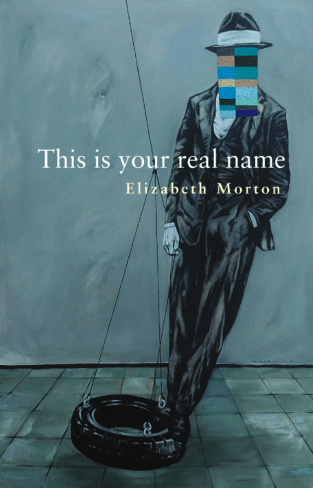
This is your real name, Elizabeth Morton, Otago University Press, 2020


There were days I spent gulping sky,

picking every star off the plate

with the stub of a thumb.


from ‘The eating of sorrow’


Elizabeth Morton grew up in Auckland. Her poetry has been published in various journals, both in New Zealand and internationally, and has achieved a number of award placements, including the 2015 Kathleen Grattan Award. Her terrific debut collection, Wolf, was published by Mākaro Press. She recently finished an MLitt in Creative Writing at the University of Glasgow with Distinction.

This book was one of two poetry collections that I kept returning to during lockdown (plus Oscar Upperton’s). I found I could drift in and out of a poem, I could write phrases on sheets of paper, but I couldn’t string sentences together, let alone articulate a reaction to a book. What I could say was I loved it.

The epigraph felt uncannily fitting: ‘For people who wait and people who are alone.’

I had written down the word ‘detail’. Elizabeth’s deft handling of detail forms the visible stitching of a poem. It offers hue and texture to the multiple poem threads. The detail is a gateway to threads that are personal, universal, engaged in storytelling, recollection, contemplation, association, inquiry.

There are reading footholds and there are wobbly boards, especially in poems that are a mix of real life, memory, fable, fiction, enigma.  The real is often elusive, but lands in shards, both striking and evocative. In ‘After’, two lines in particular catch this movement, and echo throughout the collection as a whole (and with me during lockdown):


Night comes apart, like everything else.

We know the landmarks for their hardness.


At the poem’s start, the speaker suggests closing one’s eyes is enough. Shutting one’s eyes is contemplative, an escape device, a pause. This is me in lockdown. I keep shutting my eyes and waiting. The poem features the last polar bear cage-pacing at Auckland Zoo and a butterfly caught on a truck’s windscreen. Two sad notes that alter the way we view the ‘you’ whom the poem addresses. It is the kind of poem you keep reading to absorb the dislocation, the absences, the mournings, the complexities. The ending catapults you back to the beginning which then returns to the eyes closing at the start. The ending:


When I open my eyes I’m in the same cage I was in yesterday.

I am the same yellow bear driving the same haulage truck

over ice sheets, thin as a prince’s hairline.

What night is this? We talk about the butterfly like it got away.

We talk abut you, like you are here. Like you never left.


Every poem works its magic on me – and the breathtaking effects are now heightened by lockdown. I am musing on how I have read this book before, during and after levels 3 and 4. I am writing this review in level 2, and I am wondering when everything I read and write won’t be touched by my Covid experiences. Yet this was the book that held my fuzzy attention.

Most of the poems are dense thickets, interconnected threads, offbeatness and misty bits to get lost in. The beginnings of poems are exquisite hooks:


You might make it, if you sprint.


from ‘Gap’


I’m not going to cry. All winter the television

sulks in the corner of our love. You put the lentils

in a colander to flush the ugly bits.


from ‘You can’t, always’


Here I am turning the pages of the book, writing a review with my thoughts and feelings close up, because I stall on every poem and want to set up a coffee club in a cafe so we can talk about how we move through the poem thickets. Take ‘Aubade with hold music’ for example. You start with the image of a phone booth: ‘The phone booth was skull-cracked, / and caulked with soggy directories.’ Again the uncanny link. The reference to all the people we never know reverberates acutely in lockdown because that’s how I feel about the global Covid statistics. And how I have often felt when I drive down streets and wonder at the lives of the people I see.

The poem moves about a phone call to a mother, but then a central cluster of lines ‘shake’ the phone booth and you wonder what is going on behind the scenes of the poem:


The morning smelled like fire,

like the sun projecting simple stories

against the warehouse brickwork

and I wonder whether you know

you are melting.


Yes I could say this poem is about a phone call, a phone call about to be made; there is a small boy with coins, there are the White Pages, but then there is this: ‘This poem sets you apart, and / you are a small forest pressed against the city’. So mysterious. So ripe with meaning and possibilities. Each poem is like a little forest. Each poem is like a little forest pressed against us. How can we not stall and wonder. These lines stand out.


Writing a poem is a political act.

I want you to know, what you feel

is more than politics.


This is the joy of poetry: you think a poem and you feel a poem. It might be political or personal or a dense thicket, with multiple pathways and myriad connections to a peopled world. Elizabeth’s subject matter is wide ranging. Stories appear like neon lights or fleeting shadows or veiled self exposures. Sometimes it feels like the sun is out and sometimes like pitch-black night. The reading rewards are glorious. Find the book, make a coffee, and then let me know what you think. I am ever so grateful for the arrival of this book.


Otago University Press page


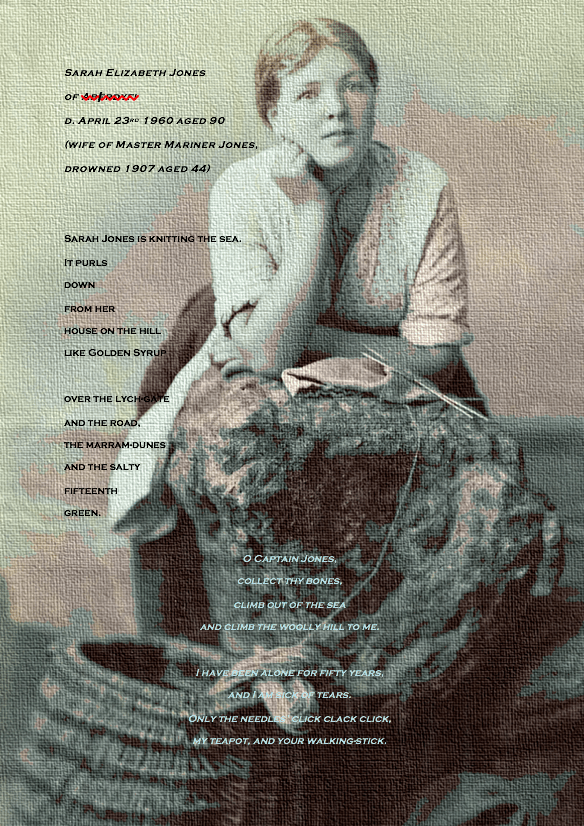
Poetry Shelf Monday poem: John Gallas’s ‘Sarah Elizabeth Jones’

Screen Shot 2020-05-21 at 11.41.45 AM


John Gallas is a NZ poet published by Carcanet. His 20 collections include The Song Atlas, Star City, The Little Sublime Comedy and 52 Euros. The Extasie (60 love poems) and Rhapsodies 1831 (translation of French poet Petrus Borel) to be published January and March 2021. He presently lives in Leicestershire. His a librettist, St Magnus Festival Orkney poet, Saxon Ship Project poet, Fellow of the English Association, tramper, biker and merry ruralist. Presently working on two sets of poem-prints (’18 Paper Resurrections’ and ‘Wasted by Whitemen’). ‘Unscythed’ written in Sefton, near Rangiora: home of bro.


Poetry Shelf Monday Poem: Fleur Adcock’s ‘Island Bay’


Island Bay


Bright specks of neverlastingness

float at me out of the blue air,

perhaps constructed by my retina


which these days constructs so much else,

or by the air itself, the limpid sky,

the sea drenched in its turquoise liquors


like the paua shells we used to pick up

seventy years ago, two bays

along from here, under the whale’s great jaw.


Fleur Adcock


Fleur Adcock was born in New Zealand but has lived in England since 1963, with regular visits to NZ. She lives in London, and has dual British and New Zealand citizenship. She was awarded an OBE in 1996, a CNZM in 2008 and the Queen’s Gold Medal for Poetry in 2006. Her poetry is published in Britain by Bloodaxe Books and in New Zealand by Victoria University Press. In 2019 her Collected Poems appeared from Victoria University Press, and later that year she received the Prime Minister’s award for Literary Achievement in Poetry.

Fleur: I wrote this poem when I was in New Zealand late last year. It feels unbelievable that I should have been able to walk freely along the coast of Island Bay basking in the sunshine and the wind, just because I felt like it; things are not like that here, and may never be again for someone of my age. But at least it’s spring, and I have my garden, and am allowed to go for walks in the local woods as long as I don’t travel on a bus to get there, or risk doing anything so audacious as my own shopping.


Poetry Shelf connections: Hana Pera Aoake’s video – ‘a eulogy to love’


https://vimeo.com/378275058


Hana Pera Aoake (Ngaati Raukawa, Ngaati Mahuta, Tainui/Waikato) is an INFP, Gemini heartthrob living on Kai Tahu land in Te wai pounamu. They are a writer, editor and artist in a stupid amount of debt (Liv, Laff, Luv), having completed an MFA in Fine Arts (first class) in 2018 from Massey University. They are a current participant in the Independent study program at the Maumaus des escola artes via a screen and an editor at both Tupuranga journal and Kei te pai press.


Poetry Shelf connections: Elizabeth Welsh’s ‘steady’


steady


day i

i am trying to imagine a body of water from the confines of our green space.

my neighbour reads an excessive number of library books on hydrotherapy,

and i become accustomed to skimming these surreptitiously before returning

them for her. there is a composure to the watery diagrams that i pore over,

searching for instructions beyond mere bodily mechanics, some sort of cure

for aloneness in one’s body. we must stay safe at home, i repeat, but it means

very little to you beyond a sibilant silkiness on your tongue. and sometimes,

although you don’t know it yet, harm can come from within too. these days,

our neighbour calls out to us from her bedroom window each morning

when we are once again wandering undirected in the early flinching bush

and your face breaks, like a wave at its apex, about to crash. to distract,

we lean in to green. you choose the seaweed stick of chalk, and we draw

pulsing trees together. later, finding a grove of wild ginger, you insist

it’s a treasure, protecting this weed with its pervasive rhizomatous roots,

shielding it with your splayed hands and then draping it over your shoulder

along with your foraged Hormosira banksii, claimed at mid-tide on our last

evening swim. everything equal in your mind, you stroke the leaves

and shrivelled olive beads sleepily, lulled by a saturated silence from

the deserted road above; watching you, i think of habits and how they form,

and hope we keep some or all of these we are forming. my pelagic fish,

the silt in your river of isolation came when you realised the sea was lost

to you, and you struggled to use those branching chains of water-filled veins

to withstand the ebbing tide


day ii

morning light hits shivering rimu fingers in a way i didn’t notice before,

like it’s plunging, trying to pick something up that’s lost at the bottom

of a council leisure centre pool; abandoned goggles, cap, stick, stone.

i want to find that thing we’ve forgotten, or maybe all the owners

of these churning lost things that help us stay buoyant or otherwise.

my maternal grandfather was a daily wild swimmer and treated it with

a reverence bordering on panic. it’s the alteration of body temperature

that releases, relieves. it made him feel sound of mind, but maybe not safe

of body, given the lacey shape of the fractured greywacke rocks he dove from

at the inlet they called home. i can visualise a breathlessness, and then

a bruised flying. and I wonder, is that how he felt? did the propulsion

into water, coupled with that numbing, knotty coldness, shake him wildly loose?

like him, you exercise an immersive love that demands return to one salty,

thrown-about body, tangling us up in green scribbles, circles and untraceable

starfish scratches. how deep you want to measure, to fill up every space

between us, the air we share. at breakfast, while slicing apple suns,

we discuss the air quality index and the Clean Air Act and what this means

for cities and transport and adverse health effects. afterwards, floating in

the bathwater on your back, eyes closed to me, i watch the soft depression

of your chest cavity and talk to you about the humming bee breath,

closing one ear to all surrounding sound


day iii

we bend and collect fallen kauri and tanekaha leaves to dry downstairs

for making into sheets of paper, and i feel like calming, wake-like

into the warmness of the leaf litter underneath peeled-bare branches,

sighing into all the worries of the basalt, granite and rock crust

that should be frustrated with us for failing to care. we do not

have kauri rot, and our ritual to ensure this has something of prayer to it.

understanding, you chastise any who visit, pointing to which boots

are allowed to be worn on your indecipherable map filled with rising

lines, eddies, swells. you are rooted deep to your watery west coast clay.

today, we read of the cormorants that have returned to Venice,

as the seaweed-thick fragile lagoon ecosystem is visible again, shorn

of tourism and motor transport disturbance. and while you flick through

photographs, I worry that we will forget too soon. you replay the narrative

again and again, hopping and spinning about and hot-headedly insisting

on mimicry. my body still baffles me after birth; refusing, uncooperative,

not at all one with my clamorous mind, it carries me along through

this time of confinement but feels weightless in a frightening way,

as though i am an alluvial river, and not at all certain how to halt

the erosion of these shores


day iv

stories are one thing we agree upon, resting flock-like on steaming

beds of compost mulch, chopping up rotting weeds and long, prickling

stalks from harvested Jerusalem artichokes. we argue over a pair

of turquoise-handled scissors like siblings until i take your

little finger and link it through mine, pleading silence while i weave

another marshy history. the blue hue of the ocean is largely constructed

from chlorophyll and disintegrating organic bodies, and this seems

to be the only likely truth i can hear. there are more snarled news reports

that i mute furtively, my fingers washing away a wider belly of current,

holding it back for just a little longer. i am selfish in this skimming

of possible narratives, but i want you to be a water-skating insect,

legs as flotation devices, ridged with grooves marked on tiny hairs

that trap air. please slide across this surface without pause; you will learn

to scull or drift through swampy nodes and puckers soon enough.

for now, all you have is the woven ribs of trees, and the light running deep,

keeping us very nearly afloat. sometimes, if i rise early and walk into

the aqueous-lit yawn of bush before you wake, i can hear our neighbour

singing, just ever so faintly


Elizabeth Welsh is a poet, papermaker and academic editor. She is the author of Over There a Mountain, published by Mākaro Press in 2018. Her poetry and short fiction has been published in New Zealand and the United Kingdom. She lives in Titirangi with her husband and daughter.



Poetry Shelf connections: two poems from Kay McKenzie Cooke


cricket during lockdown


The ragged monotone

of a cricket’s refrain

is childhood’s waist-high grass

and boredom. It is last chances,


eternity, the beige of neglected summer lawns.

Through an open window

I hear its shrill register

competing

with the sporadic wash

of reduced traffic noise

and my granddaughter’s tearful protests

against an afternoon nap.


This cricket’s front-leg click, rub, whirr,

is an irksome useless key

turning a music box

with a loose spring

that cannot be wound any tighter.

I find myself counting on it to be


today’s measure of time. Even when

everything turns, re-turns,

the cricket will keep

on. For now though, it is

my stop watch.


above the line


Above, a black-backed gull

grifts the high way

only gulls trawl,

a sky- valley current

that streams between

beach and harbour.


I look up, see its chest

feathers ironed white by light,

its black wings

rowing west

towards today’s catch:


fish entrails, road kill,

mud crab. I note

how it hauls its cargo

of intent, watch

until it disappears

behind the tips

of trees, envision


the movement, the trail

it leaves

behind, that caught

rude disturbance

of time’s dead air.


Kay McKenzie Cooke


Kay McKenzie Cooke is a Dunedin writer. The Cuba Press are publishing her fourth poetry collection which is scheduled for release in June 2020.