Category Archives: NZ poems

Poetry Shelf review: Fiona Farrell’s Nouns, verbs, etc

Nouns, verbs, etc. Fiona Farrell, Otago University Press, 2020

Once upon a time there was

a story.

It lived in the mouth of an

old woman.

It was a bad-tempered story

that kicked the door in and

threw plates. It did not behave

itself.

But she gave it shelter.

She had made it herself.

She had fed it with her own

blood. She had spat her own

stomach into its straining

beak. She knew why it cried.

from ‘The old woman’s story’

Fiona Farrell, much loved poet, novelist and nonfiction author, began writing poems in childhood, at times in ‘wonky capitals’ with the delicious ‘thump’ of end rhyme. She discusses her evolution as poet in the terrific preface to her selected poems published last year. There were comic poems that made her class laugh, the earnest poems of high school with elevated expectations of what a poem ought to be, and the kick in the gut when, at 19, a young man laughed at the poem she showed him. She stopped writing.

It’s so difficult in 2020 to convey just how it felt to be in this world where men, past and present, stood about booming to one another like so many kākāpō on a steep hillside.

from ‘Preface’

So many other women in the 1960s through to the 1970s were writing on scraps of paper in scraps of time getting scraps of attention and rarely making it onto the hallowed ground of men, their journals, their university course material, their poetry gigs.

Today I’ve embroidered relativity

polished the Acropolis

knitted Ulysses

and baked two trayloads of cantatas

for the kindy.

Now, if the baby sleeps another hour

I’ll just about have time

to whip up some of that

Instant Immortality.

from ‘Preface’

Fiona’s ‘Preface’ echoes so many women’s voices I read in my Wild Honey travels. I think of how long it took me, along with other women, to move from hidden notebooks to going public and getting published. For Fiona it was the death of her father, and his complicated presence in her life, that started her poetry pen moving again: ‘The way the simple act of choosing words can give the illusion, however temporary, of control when emotion threatens to overwhelm’ (‘Preface’). She showed the poem to someone she shared a teacher’s college office with and took up the suggestion to get it published.

Fiona’s Nouns, verbs, etc. (selected poems) includes extracts from her four collections: Cutting Out (1987), The Inhabited Initial (1999), The Pop-Up Book of Invasions (2007) and The Broken Book (2011). Interspersed between the extracts are clusters of uncollected poems and, at the end, my favourite endnotes ever, a suite of fascinations that complement the joys of reading the poems, unexpectedly, beautifully. Fiona said she heeded the positive response to the endnotes in The PopUp Book of Invasions.

Nouns, verbs, etc. is a Poetry Treasure House. Across decades of writing, the poems are guided by inquisitiveness, linguistic nimbleness, a freshness of voice that survives over time, an exposed heart, the presence of I and we, political undercurrents. There are human and humane attachments because the recurring revelation is that this poet cares. Poetry stands as a means of care: for self, for loved ones, for the world, for the present and the past, for the stretch and possibilities of languages. In particular Fiona has cared about women; in their daily lives, in a history of writing, in genealogies, in other places and other times, in the need to resist subjugation and erasure.

She sits in the dark

on the rough side of

Sunday. The wood is

bare down here, torn

from a tree. She gets

her woolly hat. The

table is saw scrawl

screw and scratch.

She brings a cushion

and some crackers.

The table is a bare

bivvy. Brace and

bruised knuckle.

She flings a sheet

over. She will

live here

for ever.

from ‘The table’ – The Broken Book

The poem Fiona wrote upon the death of her father signalled the way poetry can be a necessary part of our lives as both readers and writers. I know through the extraordinary number of letters and poetry I received during our various lockdowns how vital poems were, whether we were writing or reading.

Each of Fiona’s books, both poetry or prose, has been necessary reading for me, right from the goosebump discovery of The Skinny Louie Book in 1992 to a suite of books responding to the earthquakes in Christchurch. The Broken Book transmuted from a book of walking essays to an earthquake book where the essays were interrupted by poems like quake jolts. It was written because of the Christchurch quake, and it makes the everyday voices away-from-the-cameras visible, the living with damage and daily fear and little blessings palpable. Again poetry becomes necessary.

The PopUp Book of Invasions was prompted by Fiona’s writing residency in Donoughmore, Ireland, the manuscripts her book borrows its title from, and the layering of contemporary invasions along with those in her whakapapa and Aotearoa. She wrote: ‘It was a strange feeling, being there. I wrote to express that’ (from ‘Endnotes’).  Again the book becomes necessary reading.

I love the insertion of the unpublished poems in thematic clusters. There are a handful of love poems – so you get to enter a poetry love glade and imbibe the heat and shimmer and connectivity of love. I have no idea when the poems were written, but they feel so vital and fresh. Original. I want to quote from all of them but here is a taster:

They tied the knot.

It was a knot of their

own devising. They

went over and under,

over and under many

times, and it held. So

they could fly, tied

to earth by the knots

around their ties.

So they could always

find their way home.

from ‘Knot-tying for beginners’

Another cluster centres upon travel, upon home and not home, upon hills and mountains, lakes and harbours that anchor you into the guts and grit of the land, and then sets you drifting through place to people and back to the way place shapes and nourishes us. I especially love ‘Our trip to Tākaka’. I want to hear this poem read aloud, to hear the mood ripple through the understated repetitions and motion, the effect travel has upon us, the surprises that become part of our luggage, as we move along, and as we arrive back home.

Some poems carry whiffs of fable – I am picturing the poet blowing on the white page as though it were glass, with a fable presence making its subtle mark. There is always the everyday commonplace experience, relationships or objects in Fiona’s poetry, but there is also the way the poem transcends the realism and makes the ordinary glow.

The fathers swayed beneath us

walking like mountains on

their big legs. We looked

about, seeing the way ahead.

The fathers said hang on!

They held us by the ankles

lest we fall. And sometimes,

they flung us out into empty

air, and we were lost. We

squealed, flailed, knowing

already the pain of solid

ground. But the fathers

caught us on the downward

flight. Gathered us to the

knotting of old jerseys

smelling of fish and vege

gardens and Best Bets and

the whole wide place we’d

glimpsed from their tops.

from ‘The fathers’

Fiona Farrell’s poetry sparks language into dynamic combinations because, as the title of the book suggests, words have mattered to her – from the origins of words, to ancient languages, to codes and punctuation. In The Inhabited Initial endnotes – a collection that celebrates the organic states of words and languages – I discover the origin of the question mark and the punctuation mark. The original exclamation mark was a word that monastic monks inserted to denote moments of joy. I love this! Little glades of joy in the flow of a text. Nowadays the exclamation mark can be a form of shout and exhibitionism. Equally fascinating: Roman scribes used full stops to mark rest bays for breath in the flow of a text. I am thinking poets have a more open relationship with punctuation and how it adds to the reading of poetry.

Nouns, Verbs etc is a reading delight. It offers distinctive travel itineraries that set you drifting in unfamiliar skies, lingering in some poems as though you stall in the familiar rooms of your house, daydreaming between the lines, wondering at the power of nouns and verbs to provoke such intense feelings and connections. Let me raise my poetry glass and toast this glorious book (and loving Otago University Press production). Thank you Fiona, this necessary book is a gift.

FIONA FARRELL has published poetry, fiction, drama and non-fiction. Uniquely among New Zealand writers, she has received awards in all genres. Her poetry has been shortlisted for the New Zealand Book Awards and has been widely anthologised. Her first novel, The Skinny Louie Book, won the New Zealand Book Award for Fiction. Three later novels have been shortlisted for that award, and five have been longlisted for the prestigious International Dublin IMPAC Award. In 2013 she received the Michael King Award to write twinned books prompted by the Christchurch earthquakes and the city’s reconstruction. The non-fiction work, The Villa at the Edge of the Empire, was shortlisted for the 2017 Ockham NZ Book Awards. In 2018 she edited Best New Zealand Poems for the International Institute of Modern Letters. Farrell has received numerous awards, including the Prime Minister’s Award for Fiction and the ONZM for Services to Literature. She made Dunedin home in 2018.

Otago University Press page

Kete Books review by Renee Liang

ANZL review by Stephanie Johnson

Fiona Farrell: interview with Robert Kelly, Standing Room Only, Radio NZ

Readings and interview with Morrin Rout, Bookenz, Plains FM

Poetry Shelf interviews Fiona Farrell
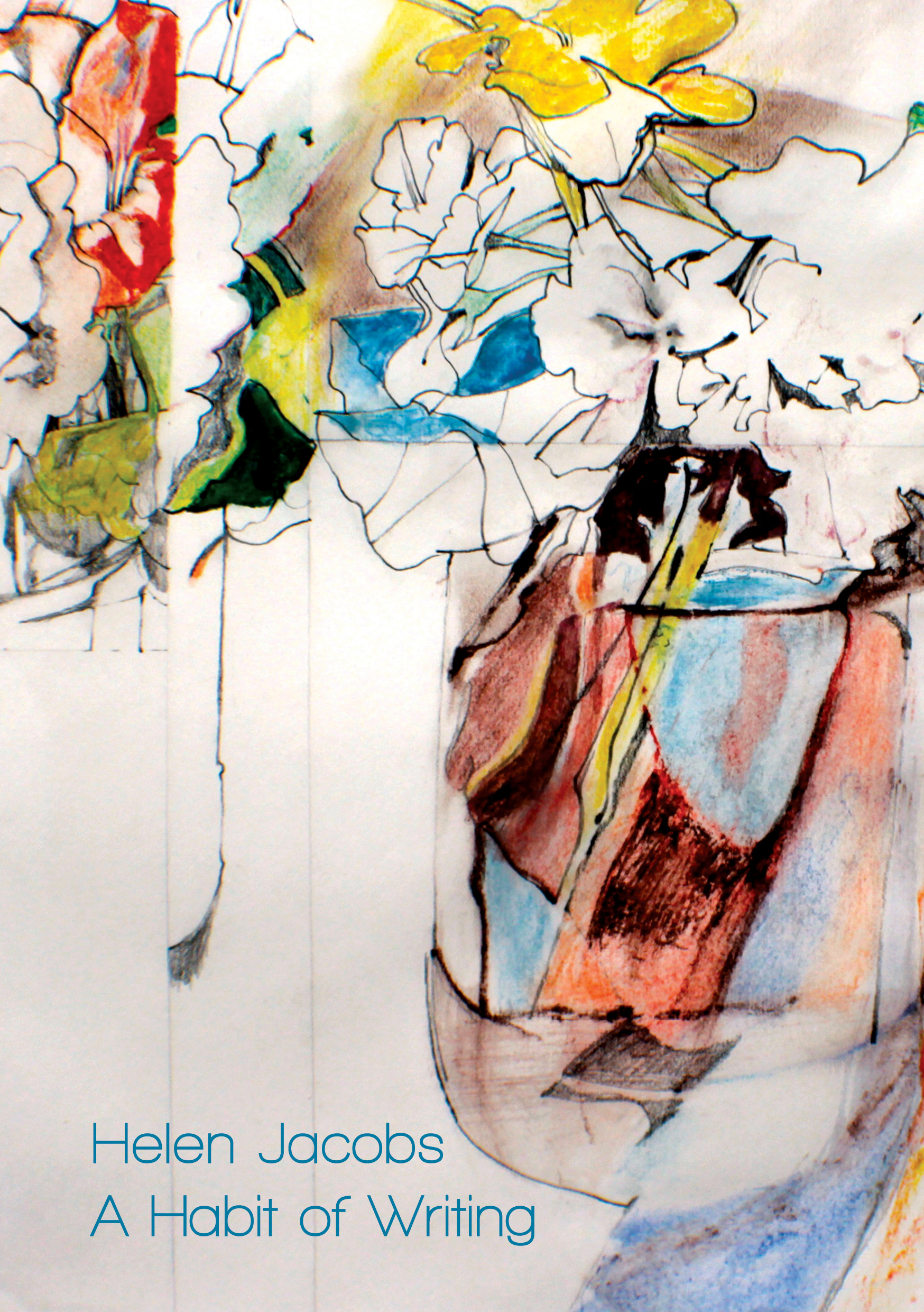
Poetry Shelf summer reviews: Helen Jacobs’s A Habit of Reading

Helen Jacobs, A Habit of Writing The Cuba Press, 2020

Flying

I am being ordinary

and flying on a word

as the mist of the morning

unfolds.

I am being ordinary

in a community

where all are old and ordinary

and I am flying on a word

to meet the sun.

Helen Jacobs

Helen Jacobs (the pen name of Elaine Jakobssen) was born in Pātea, Taranaki in 1929. She has published eight poetry collections, and contributed to numerous journals both in Aotearoa and offshore. During her time as Mayor of Eastbourne, Helen advocated for the local environment and local writers and artists. She worked at the Women’s Electoral Body and was appointed to the Planning Tribunal. Since her time in Christchurch she has been a longtime member of the Canterbury Poets Collective. Aged 91, she lives in a retirement village and is still writing.

Helen’s new collection A Habit of Writing is a delight. Here is a poet writing in old age, absorbing things, often small, but sometimes large, always captivating: an object, walking, a flower uncurling, the hills, the wind, a pot of utensils. Each poem slowly and exquisitely unfolds its subject with rivered fluency, with enviable economy.

These are poems to place on your tongue, one at a time, where they will slowly dissolve leaving vibrant aftertastes that last all day. I read the poems before I went to sleep and I got straight back when I woke up. Perhaps I am drawn to the state-of-being of a woman in her nineties, where relations with life and death shift a tad. Where age is a close companion. Words matter a lot. She reaches out for words. She writes. She celebrates.

Fluency

Fluency traipsed off with the years,

shuffled out imagery.

I look at the pots on the balcony

the plants static, consonants and vowels

straight up.

They do not speak in the wind.

Look to the hills. I do,

as the low cloud ends wisp

across the ridges.

This is a collection of miniature pieces that form a larger mosaic, a wider picture that holds up the poet’s lived-in world. I am acutely drawn into an experience of age that makes me see things a little differently. And that is good. When Helen was ‘young’ and in her sixties she would see the ‘oldies’ out on a bus excursion, and now when she is out on the retirement-village bus she sees the young go by on bicycles. Her steps might be slow. She might slowly examine a geranium leaf as she waters her pots. She might repeat her mother’s ritual and drink a glass of port wine at Christmas. A sonnet would never suit ‘the bowls we play’; free verse is the ticket. It is the ‘small things / as my time grows old’ she observes, that ‘remark the larger world.’

Here I am, a young one on Helen’s time scale, but I am drawn to the slow step, to the measured pace, the prolonged look, to the way a single object or activity can be both rich and comforting in reward. The poem ‘Thinking of lemons’ reminds me how we skate over the surface of things, places, people, experiences. How every person we brush against in the street has a story, a sequence of dreams and mishaps. How every view is on the move, and like a good book, or a good poem, reveals further lights and shadows.

Reading A Habit of Writing offers the utmost joy and comfort. This is a book to savour and to give away. Glorious.

Watercolours

You said, ‘Write me sonnets,’

perhaps –

If I squeeze the day,

wring the hours, spin-dry the minutes,

perhaps the drips will swell dry words.

There will be watercolours,

washes of light.

The Cuba Press author page

ODT review

Rachel McAlpine piece

Poetry Shelf Monday Poem: Chris Tse’s ‘Identikit’

Identikit

when asked to explain the lines that lead to now, you describe / 

the shape of your body as it hits water / the shape of cold water

shocking muscle / the shape of fleshy chambers forced to loosen

and acquiesce / the shape of your grandparents in their coffins /

the shape of coffins that are too small to contain entire lifetimes /

the soft and hard moments we can’t forget no matter how often we

turn our backs to the light / [you write this poem out of love / but

even love can be a blindfold] / the shape of you and your parents

standing in your grandparents’ driveway / after being kicked out

for talking to your aunty’s white boyfriend / your hand reaching

out to someone you don’t recognise in a dream / their silhouette

branded upon your brain / [you’ve tried to swallow the night and

all its inhabitants / but they weren’t designed for consumption] / the

night standing in for doubt / as you argue with your own memory /

waking up to the smell of 皮蛋瘦肉粥 / the shape of a bowl designed

to hold love / love that is never spoken of because to do so would

silence it / the shape of silence when you tell your parents you’ve

fallen in love with a white boy / the shape of that white boy pressed

against your body / both your hearts / shaped like hungry mouths /

the shape of your mouth biting into the world’s biggest egg / the

shape of years spent running before walking / your knees shredded

and bloody / even after you grew the thick skin they said you would

need in this lifetime / the years pass like a watched pot / but you imagine

steam rising from its wide open body / flashbacks to the shape of air

being forced into a lifeless body / some incisions are made to clean

blood, others to fast-forward a certain end / when your grandparents

spoke of life it was whatever came their way / no one back then had

time to hide behind the sky / to pull strings / to taste control / the shape

of control does not fit with the shape of effort / a grounded bird tries

to climb an invisible ladder to heaven / to correct a path the world

wouldn’t let it look upon / in case it traced a line too close to comfort /

we all fear the shape of comfort when it belongs to someone else /

forgetting that we all look the same buried six feet under / both your

grandparents appear before you on the night you learn how to take off

your blindfold / when you finally recognise the shape of acceptance /

and how it might fit among the ruins of your rejections / it goes like this: /

the fights, the kisses, the direct hits / unfolding yourself into a shape

the world doesn’t know how to contain / what doesn’t fit / what doesn’t

hold true / the shape of your name / the shape of a bowl that never

empties / all of these things fit together if you turn them the right way up /

you run your finger along the lip of the bowl and remember / what it

means to be laced in time and not know how to use your hands to feed

yourself / you count the years / you feel their shape flooding your

throat / making a noise / making a space for what’s to come

Chris Tse

Chris Tse is the author of the poetry collections How to be Dead in a Year of Snakes and HE’S SO MASC. He and Emma Barnes are co-editing an anthology of LGBTQIA+ and Takatāpui writers to be published by Auckland University Press in 2021. He also edits The Spinoff’s Friday Poem.

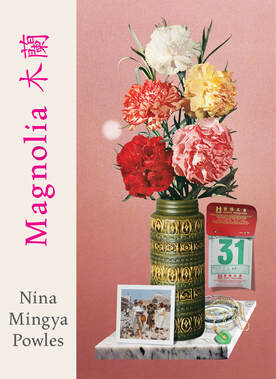
Poetry Shelf review: Nina Mingya Powles’s MAGNOLIA 木蘭

Nina Mingya Powles, MAGNOLIA 木蘭, Seraph Press, 2020

鸣 (míng), the cry of animals and insects, rhymes with tooth, which rhymes with precipice, which rhymes with the first part of my Chinese name.

I am full of nouns and verbs; I don’t know how to live any other way. I am a tooth-like thing. I am half sun half moon, and the scissors used to cut away the steamed lotus leaves. I am honey strokes spreading over the tiles.

Certain languages contain more kinds of rain than others, and I have eaten them all.

from ‘Fieldnotes on a downpour’

I have been a fan of Nina Mingya Powles’s poetry since her chapbook Girls of the Drift (2014) through to her glorious poetry boxset Luminescent (2017). The poems are probing, lyrical, self-inquisitive, with women placed centre stage. Her new collection Magnolia 木蘭was also published in the UK (Nine Arches Press) and was shortlisted for the 2020 Forward Prize for Best First Collection. In 2018 she was one of three winners of the inaugural Poetry Prize, and won the Nan Shepherd Prize for Nature Writing the following year.

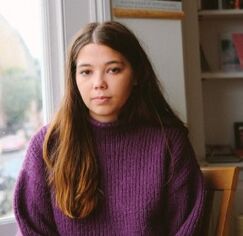
Currently living in London, Nina is a poet, zine-maker and nonfiction writer of Malaysian-Chinese and Pākehā descent. I have long been fascinated with the idea that poetry is way of writing home, whether home is physical, on the move, a state of mind, ancestral connections, familial relations, an anchor, an epiphany. And if poetry is a way of writing home it is also a way of writing to / for / with / by / underneath / inside / from (home). Magnolia is an organic version of this as it shifts languages on the tongue, layers sensual detail, raises identity questions, and moves from London to Shanghai to Aotearoa. Smells and tastes of elsewhere bring elsewhere closer to the point the paper is imbued with scent and living matter, and your reading taste buds pop.

there are only dream mountains high above the cloudline

I come from a place full of mountains and volcanoes

I often say when people ask about home

from ‘Night train to Anyang’

Senses are on alert as you read a Nina Powles poem, and I love the physical sensation as you read:

After Mulan saves China / fireworks rain down in waves of multi-coloured

stars

from ‘Girl warrior, or: watching Mulan (1998) / in Englsih with subtitles

Food is an exquisite presence, often connecting you to place, a particular memory or event, love, home. But sometimes Nina lingers on food for the sheer pleasure of food itself: it’s tofu for the love and sake of tofu, lotus leaves and sticky rice ‘sucked clean’. I have felt a similar addictive tastebud reaction reading the poetry of Ian Wedde, particularly The Commonplace Odes.

for the morning after a downpour

Layers of silken tofu float in the shape of a lotus slowly

opening under swirls of soy sauce. Each mouthful of dòufu

huā, literally tofu flower, slips down in one swallow. The

texture reminds me of last night’s rain: how it came down

fast and washed the city clean.

from ‘Breakfast in Shanghai’

Colour is equally vital, sometimes the hue of the land is evoked but, at other times, the tone of a particular painting is foregrounded. It makes a difference that I have stood in the Tate Gallery in London and felt the astonishing hum of Rothko’s colour palate, and have imbibed the colour in Agnes Martin’s equally heavenly paintings. I am curious that Nina’s poems, so active with colour, affect me as much as the artworks. It is as though the poem and the artwork are placed on my wrist like perfume and I feel the colour-pulse streaming through. Really the whole experience is both words and greater than words. Really it is as though a poem has the ability to hum inside us. Like colour.  

#fee10c | saffron: pigment in medieval manuscripts

If I could step inside any Rothko painting it would be Saffron

(1957), which is different from his other yellows because of the thin

bright line that divides the colour fields, not colour shapes or colour

squares or colour blocks, none of which are wide enough to contain

the light. A line dividing two yellow atmospheres glows along the

edges, an electric current. If you stare long enough it seems to get

bigger, slowly opening at one end until it forms a bright gap that

you could just fit through by putting each one of your limbs inside,

one by one, until you are swallowed by light and your skin is the

colour of sunflower petals right before they die and you are either

floating or drowning or both at the same time.

from ‘Colour fragments’

Reading Nina’s collection, I keep fine-tuning what a poem can do. One moment it is the origami bud unfolding in my palm to expose surprising petals of feeling. The next moment she retraces her steps though a city she once lived in; walking and writing through the city and subsequently the miniature poem version. We choose how we move through the poem as miniature city, me on tiptoe, slowly, slowly. This experience is deeply affecting in ‘Falling city’, where the poet lived when young, where she is falling in love, where things have changed and things have remained constant. Nina is seeing and imagining and writing Shanghai by walking; and by reading Shanghai writer Eileen Chang / Zhāng Àilíng, by reading Robin Hyde, by reading maps (‘each person has their own secret map’), visiting ramen bars, musing on ‘New Woman’.

18. What was Chang herself like? I don’t know, but I think she

understood this moment when the dream and the real begin to blur.

She understood how the sky in Shanghai contains many different

colours at once: “At the horizon the morning colours were a layer of

green, a layer of yellow, and a layer of red like a watermelon cut open.”

19. When reading her stories in translation it’s like trying to see

her from a great distance. Or through a thick pane of glass. I am

standing outside, peering into rooms where her ghost has been.

20. As autumn deepened I expected to see your face on the street

or in the subway station. After you left I thought I might feel sad

that this possibility could no longer exist. Instead after a while the

outlines of trees looked sharper, like a fog had lifted.

from ‘Falling city’

The shortish middle sequence, ‘Field notes on a downpour’, is a favourite. There is a hunger for words that fit, for Mandarin fluency, for her mother whose name means rain and language, together meaning ‘cloud tints’. In its intimacy, small details, flâneur pace, mother closeness, disappearances, its repeating motifs, particularly clouds and rain, its naming and its confessions, its love yearnings, this sequence is succulent poetry. And I keep musing on why I am so attracted to the making of poetry, whether writing it reading it, and that it maybe comes down to poems that move into and from the heart of the matter. I don’t mean it has to be full of feeling. I don’t mean it has to fit the facts or perceived realities. I mean it navigates poetic truths: that on certain occasions, in certain places, for a particular person, radiating multiple lights and nuances, this is how it is. In this crumpled and self-challenging world – poetry flicks on the human switch. I am musing this because Nina’s incandescent poetry navigates a bundle of vital questions on who and how and where she is. On what being a particular human in a particular place means to her. On when being asked where you come from digs deep. On needing to eat words. On feeling the rain in all its colours. On being in love.

In order to make learning Mandarin easier, I started to see the

characters as objects I could collect and keep close to me.

魔 (mó), spoken like a murmur, an evil spirit or demon.

One night you said my name in the dark and it came out like a ghost

鬼 from between two trees 林. A ghost that rhymes with a path

between rice fields which rhymes with a piece of steamed bread which

rhymes with paralysis of one side of the body which rhymes with thin

blood vessels.

In June the cicadas were so loud we thought the trees would swallow

us whole.

from ‘Field notes on a downpour’

I turn to the blurb on the back of the book and see so many of the words that have guided my reading: hunger, longing, home, mixed-race, languages, women, colour, rain. Magnolia 木蘭 is origami poetry – it will unfold in your body as you read. It is miniature-city poetry that will reinstate multiple existences of home. It is rain poetry that will fall as gleaming light and stomach nourishment and tattoo your skin. It is love poetry and disappearance poetry. It is heart poetry and human poetry that, in this extraordinary year, will get you contemplating your own downpours and magnolias, and in those musings discover poetry solace. Oh, and it has my favourite cover of the year: an image by Kerry Ann Lee (Allora, 2017), and it is lovingly produced by Helen Rickerby and Seraph Press. Glorious!

I want to know the names of the trees in all other languages too so

that I find out what they taste like to other people. But my mouth

can only hold so much.

from ‘Magnolia, jade orchard, she-wolf’

Nina Mingya Powles is a poet, zinemaker and non-fiction writer of Malaysian-Chinese and Pākehā heritage, currently living in London. She is the author of a food memoir, Tiny Moons: A Year of Eating in Shanghai (The Emma Press, 2020), poetry box-set Luminescent (Seraph Press, 2017), and several poetry chapbooks and zines, including Girls of the Drift (Seraph Press, 2014). In 2018 she was one of three winners of the inaugural Women Poets’ Prize, and in 2019 won the Nan Shepherd Prize for Nature Writing. Magnolia 木蘭 was shortlisted for the 2020 Forward Prize for Best First Collection. Nina has an MA in creative writing from Victoria University of Wellington and won the 2015 Biggs Family Prize for Poetry. She is the founding editor of Bitter Melon 苦瓜, a risograph press that publishes limited-edition poetry pamphlets by Asian writers. Her collection of essays, Small Bodies of Water, is forthcoming from Canongate Books in 2021. 

Seraph Press page

Poetry Book Society review

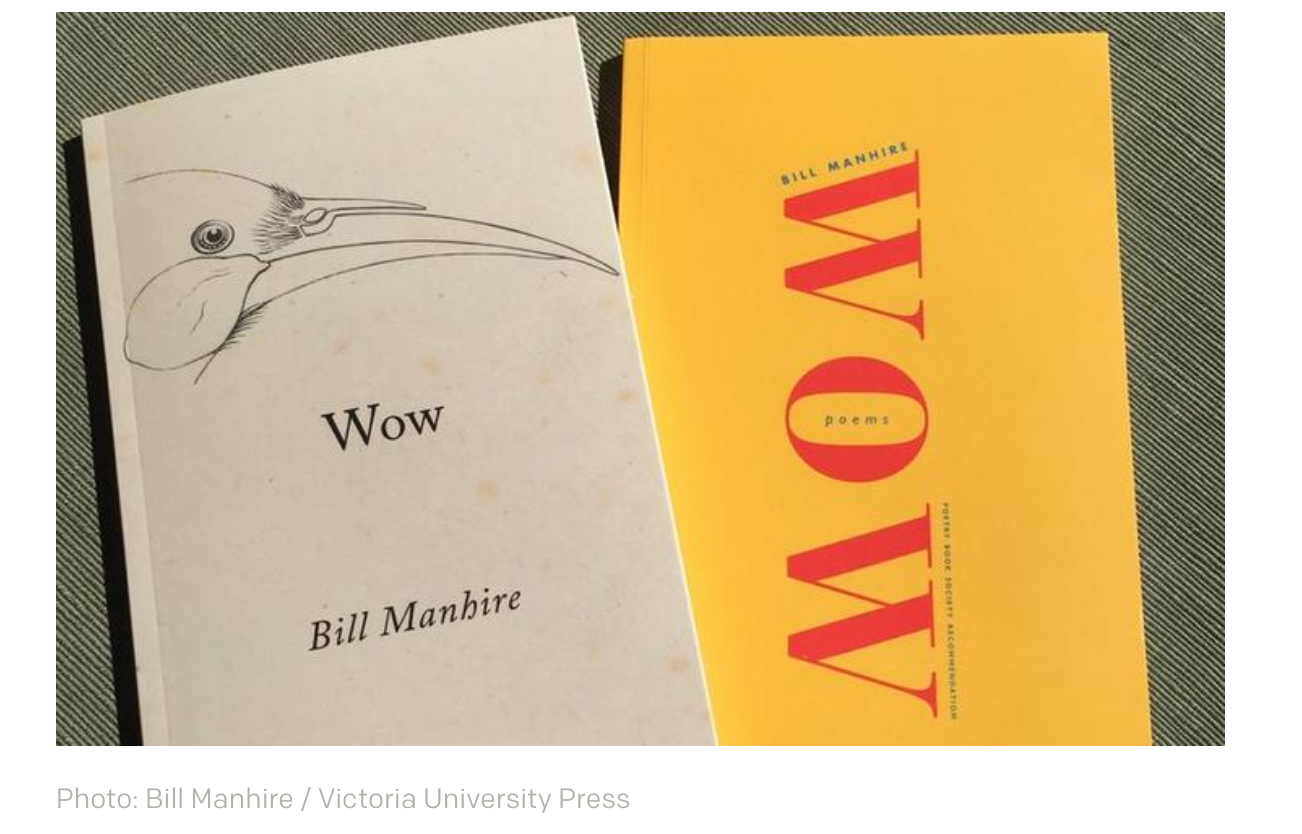
Poetry Shelf radio review of the year: Chris Tse reviews Bill Manhire’s Wow @ninetonoon

My favourite 2020 poetry review on the radio:

Chris Tse discusses Bill Manhire’s Wow with Kathryn Ryan on Nine to Noon. I loved how Chris said reading the collection reminded him of strolling through the emptied city in lockdown. Yes! Strolling through Bill’s poetry – everything sharpens, the birds are returning, it affects you on so many levels, the invisible is present, fleetingly, lyrically.

This is just wonderful! Listen here.

Poetry Shelf’s speaking room: Secondary school student Cadence Chung responds to NZQA with a poem

This poem is in response to NZQA using a poem by white supremacist and murderer Lionel Terry in a Level 2 History exam. Terry’s poem was part of a source which included testimonials from people who had received treatment at Seacliff asylum, which I feel disregarded his actions as ‘madness’, and extended sympathy to him. I also feel that the source didn’t properly contextualise Terry as a person, which downplayed the seriousness of his actions and views. Many other members of the Chinese New Zealander community also feel the same, and have lodged complaints against NZQA.

Shadows / shades

White: the colour of truth

the colour of enlightenment

the colour of the religion Lionel Terry

thought that he had found

in guns and Chows and murder.

The colour of purity

the colour of the purest skin

the colour of Terry’s hair

stripped bare with age

the colour of his chasteness

painted in portraits with white light

shining behind him, like a painting

of a god.

The truth: on September 24th, 1905

Lionel Terry shot Chinese man

Joe Kum Yung on Haining Street;

a cold, unremarkable Wellington night

(a Chinaman bleeding to death)

a man walking down the street

(a killer escaping his crime).

White, the colour of the starched

computer room, white screens

flickering with exam codes, white

clock on the ticking wall, time

sliding like a body to the ground.

White pages, neatly printed

with a poem by Lionel

Terry.

He pleads on the page

from Seacliff Asylum

for his case to be considered

that he is not insane

that murder is not always insanity.

The exam question asks me

for two different perspectives

on asylums.

I ask myself why I should have to

write about a murderer’s

perspective

a white supremacist’s

perspective

why I should have to slip myself

into such rotting, fetid

shoes.

All the exam says about him

is he was ‘known for his views on immigration

and racial segregation’.

Across the room, I catch eyes

with my friend

she gives me a loaded look

the whites of her eyes

wide

the edges of her white teeth

flickering on a grimace.

Red: thought to be the colour of blood

but that’s a little cliche

it’s more the colour of heat

the colour flickering behind

calculating eyes

searching for a Chinaman

the colour of fingers

closing in on a trigger

blood vessels beamed together.

Red, the colour of the pen

that grades work

the colour of a failed paper

the colour that means stop

or fail

or end.

The lucky colour in China

the colour of red envelopes

and paper lanterns

and prosperity and joy

and good things.

The colour of the borders

on the NZQA website

each letter rimmed in crimson.

I find the full poem online

the frothing frenzy of

Crowds of Russian Jews and Chows

that invade your peaceful land

and spread a few diseases of

an extra special brand.

I find it strange that this part

had been cropped out of the exam

and by strange, I mean

all too predictable

and by all too predictable

I mean so, so tiring.

Black: The colour of yesterday’s blood

the colour Joe Kum Yung

would have left on the streets

for lonely citizens to clean up

the colour of the ink on the page

the colour of a shadow: Terry’s

manifesto was called The Shadow

about the dark and lecherous men

with black hair and eyes

taking over the country

ruining it

burning it

shouldn’t be allowed in

(should be killed).

The colour of the scribble

my friend made under Terry’s poem

I HATE U in bold teenage chicken-scratch

the dark stains of the numbers

on the clock

ticking away

the bloated body of the fly

beating against the window.

My father’s hair is black

his eyes are black

mine are too

our mouths rounded in

the Kiwi accent

yet people still ask us

where we’re from.

He scrolls through Terry’s Wikipedia page

face screwed up

a contortion of black lines.

He was a real piece of shit,

this Lionel guy, he says. What were they

thinking, putting him in the exam?

His thick fingers pause on the photos

the charming headshot

or the one of him playing cricket

or the portrait where he’s bearded

and anointed, imposing

on my father’s eyes, and I think,

here’s another Chinese man

who has the taste of Lionel Terry

in his mouth

and here I am, another Chinese person

with my name now linked

to his.

Yellow, the yellow peril, yellow fever

yellow on the outside

white on the inside

yellow, the colour of piss

the smell of the streets

yellow, the supposed colour

of cowardice

the colour Joe Kum Yung

was killed for

the colour I am trying to bear

with pride.

The colour of the sun

shining when I left the exam room

the colour of something

on the horizon

the colour of the sunset

the promise of a new day’s kiss

a hope that something better

will come

from all of these shadows and shades

of bruises

Cadence Chung

Cadence Chung is a student at Wellington High School, who is tentatively trying to be a poet. She first started writing poetry during a particularly boring Maths lesson when she was nine. Outside of poetry, she enjoys singing, songwriting, reading old books, and perusing antique stores.

Poetry Shelf Monday Poem: Sophia Wilson’s ‘Foreign’

Foreign

We have given ourselves to the westerly —

endured ferocious welcome: swoop, pound, shriek.

There are other inhabitants: thorny and bawdy, 

clutch-clambering boundary lines, colonising dreamscapes:

gorse, thistle, ragwort, broom — invasive as their forebears.

The bulk of mountain in whose lap we land —

magnificent, fresh rebellion, is both protector and destroyer;

the one on whom we depend for passage of rain-bellied clouds —

for we have settled in its rain shadow.

In summer we draw water painstakingly from

a small vein — scarce, essential source,

undergo marathons — days bent,

sweat-sewn, hack and pull, rip and carve

corridors through thorn’s terrain

to impregnate, in gorse’s womb, a softer future:

kōwhai, kānuka, shining karamū.

The toll — toil-weathered spine, skin, skeins,

old age peering through our cobwebbed pane.

Sophia Wilson

Sophia Wilson has writing recently published, or forthcoming in Love in the Time of COVID (A chronicle of a pandemic), NZ Poetry Society Anthology, Blackmail Press, Flash Frontier, Landfall, Australian Poetry Anthology, Mayhem, Intima, Poetry New Zealand, Not Very Quiet and elsewhere. She is based in Woodside, Otago.

The poem is from the sequence ‘Attempting to Land’, runner up in the 2020 Kathleen Grattan Prize for a Sequence of Poetry. Judge Siobhan Harvey’s words re the sequence: ‘Stunning. A beautifully crafted ode to migration.’

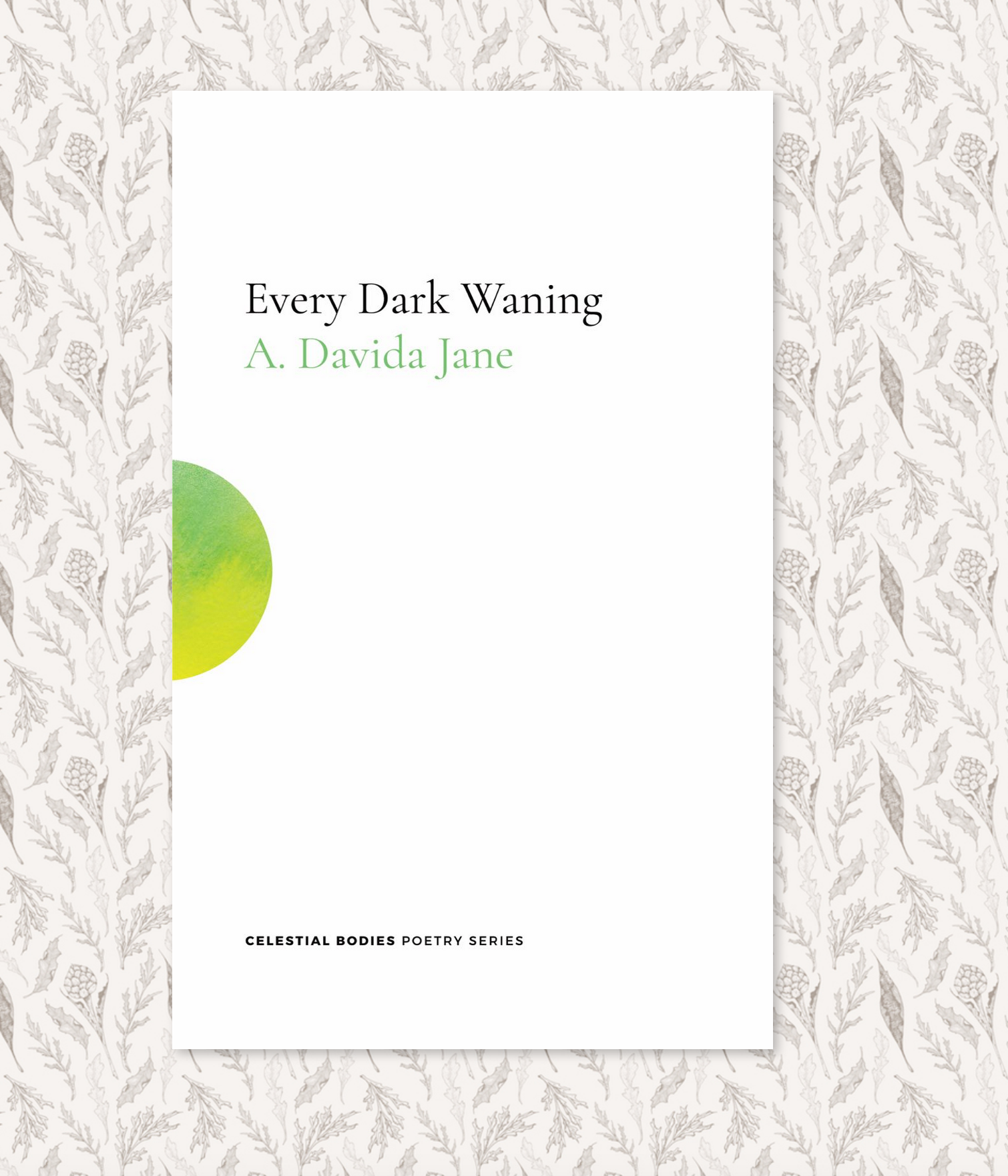
Poetry Shelf reading room: A. Davida Jane’s Every Dark Waning

A Davida Jane, Every Dark Waning, Platypus Press, England (2016, second edition 2018)

Platypus Press author page

I keep trying to build a dam—

I keep coming up rainstorm,

I keep coming up flood.


from ‘A Study in Restoration’

So many poetry books escape my attention, and then a trail of lucky connections leads me to a new discovery. I find the online journal The Starling is an excellent lead to poets under 25. This year I discovered the poetry of Ash Davida Jane and invited her to send me a Monday Poem (‘Undergrowth‘), write a response to a much-loved book (Paige Lewis’s excellent collection Space Struck), and muse on a poetry topic (‘An Ecopoetics of the Future’). I managed to get a copy of her debut collection, Every Dark Waning, from Unity Books in Te Whanganui-a-Tara where she works. And it filled me with poetry delight.

I especially loved the first section which pulls in the stars, sky, water, fire, breath and breathing. These poems are both dark edged and light fringed. Maybe the poet is talking from a deep secret place that misses things, that feels pain, is full of feeling. The dark core of the poems is deeply mysterious. It will grip your arm or your lungs and you will stay. There are many selves but the poet is the most present: ‘The poet is the most / honest part of me.’ (from ‘An Attempt at an Explanation’). The poet reappears in ‘Apollo 11’:

The stickiness of the

atmosphere traps in

all the words I never

wrote down, and the poet

in me flinches as I soar

into outer space.

And later, in ‘The House of Pindar’, in this book where poetry is both reticent and confessional:

You burn every house in me

but the poet’s—raze them to

the ground and salt them so

they’ll never grow back.

Only the writer remains.

Why do I love this book so much? Maybe its the sharp edges, the nightmares and the monsters, the things that are held in reserve, the way writing poetry and being a poet is so vital, life-saving perhaps, and the way my attention is directed to things I want to retain, to put away for a cloudy day. This from ‘Upturned’:

did you see me tuck the

view into the back of my

mind, putting it away for a

cloudy day when the stars

aren’t there and i can’t think

of a reason to get out of bed.

today, i needed a reason

to get out of bed, and

the moon was the only thing

that came close.

Ash Davida Jane is a poet and bookseller from Te Whanganui-a-Tara. She has a Master of Arts from the International Institute of Modern Letters. Some of her recent work can be found in Peach Mag, Turbine | Kapohau, Best New Zealand Poems, and Scum. How to Live with Mammals is due to be published by Victoria University Press in 2021.

Poetry Shelf Monday poem: Ruby Solly’s ‘Pōria’


Pōria


A Judas bird

is the first bird you trap.

Not for its meat,

or feathers,

but for its song.


The Judas bird

has its foot folded by its captor.

pushed gently through the pōria;

a ring that it can put on

but not take off.

This is it kare,

you are wearing this pounamu

for life.


The Judas bird

cannot help but sing.

Sings for her supper,

sings for her sleep,

sings for her sisters,

sings for you,

sings for me.


The Judas bird

sees its sisters fly closer

and closer,

as they fly from the mind’s eye into her vision.

The singing growing more frantic,

higher and lower,

bigger and quicker.

Then the pull of the snare, the thud of the rock.

The tiny sound of air passing through vocal chords

not meaning to sound

but doing so against their best efforts.

An accordion pushed closed with none of its keys down.

We call it a last breath, but really it should be called

a last exhale.


The Judas bird watches

its sisters be eaten

and she tries not to sing.

Every bird sound is singing,

a scream is singing, a warning is singing.

She holds it in, the notes rising to her throat like a vapour.

Her mouth full of pitches,

that can’t help but spill from the corners of her beak.


The Judas bird wishes

the dawn would not break.

But every morning she finds herself singing.

Small arrows of notes pierce the air

as she releases more and more from her quiver.

Even a cry is song.


The Judas bird

sings true and long.

But she has learnt to lessen herself,

to bow to not just the loftiest mountain,

but the smallest grain of sand,

to the dirt under the fingernails

of those who tether her.

She is teaching herself

to song without resonation.

With no harmonics,

no above or below.

Like dropping a stone into a pond

and having it sink with no ripples.

No evidence of its movements

to tell the land

that it is gone.


Ruby Solly


Ruby Solly is a Kai Tahu musician, taonga puoro practitioner, music therapist and writer living in Wellington. She has played with artists such as Yo-Yo Ma, Whirimako Black, Trinity Roots, and The New Zealand String Quartet as both a cellist, and a player of traditional Māori instruments (ngā taonga puoro). She has also worked as a session musician and recording artist with groups such as So Laid Back Country China, Jhan Lindsay, Strowlini Orchestra, and many other artists around Wellington. In 2019 she completed a Masters thesis in the therapeutic potential of taonga puoro in mental health based music therapy, while working in schools, hospitals, prisons and with private clients from iwi around the motu. She also has experience as a composer with pieces commissioned by the New Zealand School of Music in association with SOUNZ, as well as in film work in association with Someday Stories, and the Goethe Institute with Wellington Film Society.

Ruby is also a published poet and has been published in journals associated with many of New Zealand’s universities such as LandfallSportTurbine, and Mayhem. She has also exhibited poetry in Antarctica, America and New Zealand, and was a runner up for the 2019 Caselberg Trust International Poetry Prize. Additionally, Ruby is a script writer and has found success with her film Super Special which shares knowledge about Māori views of menstruation through narrative. The film aired on Māori TV, and will also air at the LA Women Film Fest.

In 2020, Ruby released her debut album Pōneke and in early 2021 her first book Toku Papa is being released by Victoria University Press.

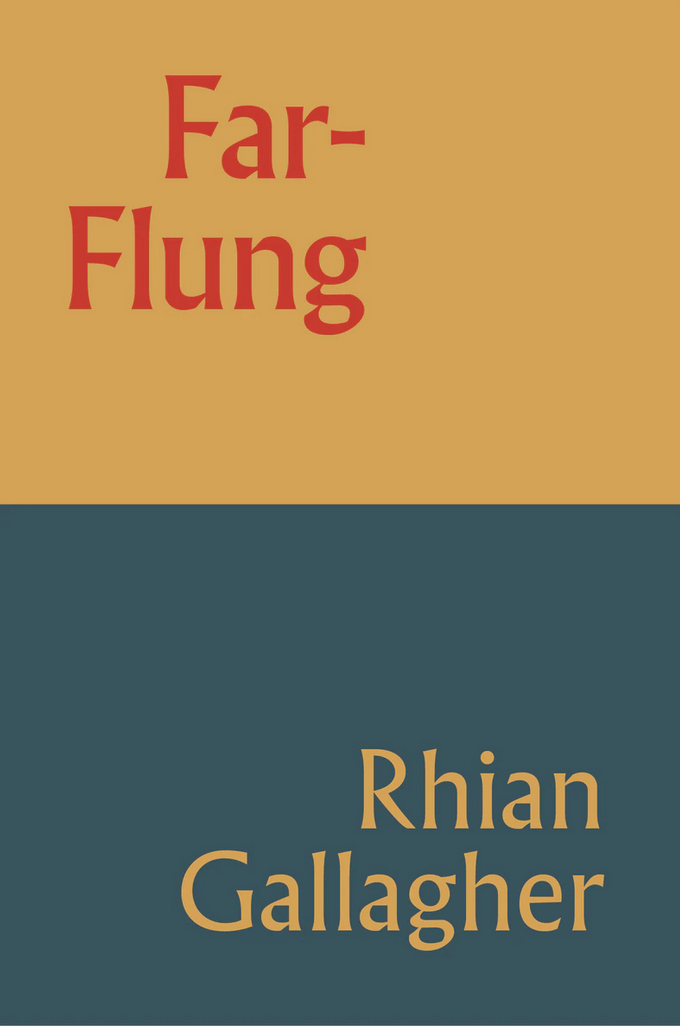
Poetry Shelf review: Rhian Gallagher’s Far-Flung

Rhian Gallagher,Far-Flung Auckland University Press, 2020

Into the Blue Light

for Kate Vercoe


I’m walking above myself in the blue light

indecently blue above the bay with its walk-on-water skin

here is the Kilmog slumping seaward

and the men in their high-vis vests

pouring tar and metal on gaping wounds

the last repair broke free; the highway

doesn’t want to lie still, none of us

want to be where we are


exactly but somewhere else

the track a tree’s ascent, kaikawaka! hold on

to the growing power, sun igniting little shouts

against my eyeballs

and clouds came from Australia

hunkering over the Tasman with their strange accent


I’m high as a wing tip

where the ache meets the bliss

summit rocks exploding with lichen and moss –

little soft fellas suckered to a groove

bloom and bloom – the track isn’t content

with an end, flax rattling their sabres, tussocks

drying their hair in the stiff south-easterly;

the track wants to go on

forever because it comes to nothing

but the blue light. I’m going out, out

out into the blue light, walking above myself.


Rhian Gallagher, from Far-Flung


Rhian Gallagher’s debut poetry book, Salt Water Creek (Enitharmon Press) was shortlisted for the Forward Prize First Collection, while her second book Shift was awarded the 2012 New Zealand Post Book Award for Poetry. She has received a Canterbury History Foundation Award, The Janet Frame Literary Trust Award and in 2018 she held the University of Otago Burns Fellowship. This year I welcomed the arrival of Far-Flung (Auckland University Press). It is a glorious book, a book to slowly savour.

Far-Flung is in two sections. The first section, with deep and roving attachments, navigates place. Think of the shimmering land, the peopled land, the lived-upon and recollected land, with relationships, experiences, epiphanies and upheavals. Think of the past and think of the present. Think of school classrooms, macrocarpa and our smallest birds. Think of a nor-west wind and Donegal women. These poems exude a delicious quietness, a stalled pace, because this is poetry of contemplation, musings upon a stretching home along with ideas that have shaped, and are shaping, how the world is.

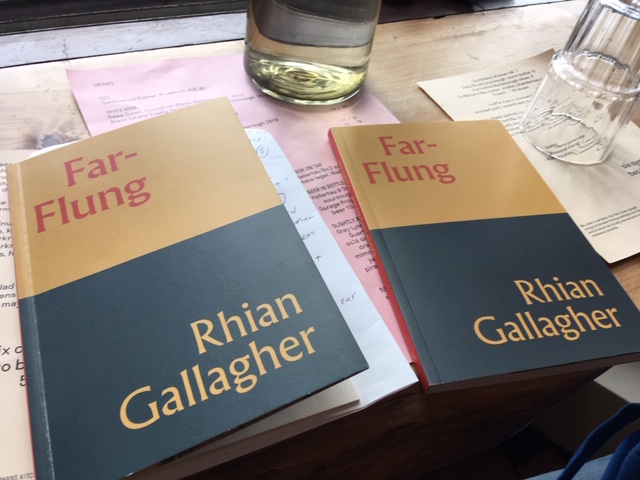
The other day I turned up in an Auckland café to meet poet Anna Jackson for lunch, and we both brought along Far-Flung to read (if we got to wait for the other). I read the opening lines aloud to Anna when she arrived, and then she started reading the book. We were lost in the book. I am now imagining how perfect it would be to have a weekly poetry meeting with a friend, where you sit and read the exact same book over lunch. Perhaps I am returning to the afternoon-tea poems from my debut book Cookhouse, where I thought I would take afternoon with poets I loved (in the shape of a poem) for the rest of my life. That didn’t exactly happen (in the shape of a poem), but I guess I have been engaging with poetry in Aotearoa ever since.

Rhian’s opening poem ‘Into the Blue Light’ is a form of poetry astonishment. Let’s say awe, wonder, uplift. The spiritual meets the incandescent meets the hot sticky tar of the road repairs, and the ever-moving scene, with its biblical overtones (‘the bay with its walk-on-water skin’), references a fidgety self as it much as it scores physical locations. I keep coming back to the word ‘miracle’, and the way we become immune to the little and large miracles about us. Miracle can be a way of transcending the burdensome body, daily stasis, the anchor of here and there, the shadow of death, and embrace light  and engage in light-footed movement. This is definitely a poem to get lost in. You don’t need to know what it is about or the personal implications for both poet and speaker. Perhaps this is what astonishment poems can do: they draw us into the blue light so that we may walk or drift above ourselves.

The second poem, ‘The Speed of God’, underlines the range of a nimble poet whose poetic craft includes the lyrical, the political, the personal and the reflective. Here Rhian wittingly but bitingly muses on the idea that God made the world too fast to get men right.


Or maybe if he’d made man and said, ‘You learn how to
live with yourself and do housework and then I might think
about woman.’

The second section of the book focuses upon voices from Dunedin’s Seacliff Lunatic Asylum and is in debt to research along with imaginings. The Lunatic Act of 1882 defines a lunatic within legal parameters rather a medical diagnosis. The institution was more akin to a prison than a place of healing, with those incarcerated granted no legal rights.  As a national inspector of lunatic asylums, hospitals and charitable institutions, Dr Duncan MacGregor ‘feared New Zealand was being overrun by a flood of immigrants from lowly backgrounds’.

Rhian’s ‘The Seacliffe Epistles’ sequence is unbearably haunting. The endnotes acknowledge the sources, many poems in debt to inmate’s letters. Reading the poignant poetry, I am reminded of the way we still haven’t got everything right yet. We still have the dispossessed, the muted, the disenfranchised, the underprivileged. And that is another haunting seeping into the crevices of the book.

Far-Flung showcases multiple bearings of self, place, and across time. There is the child smelling the ‘gum trees in the gully’, rhyming her way across a wheat field, as letters and words start to produce sound and sense. From those tentative beginnings, words now offer sumptuous music for the ear, groundings for the heart, little portholes into our own contemplative meanderings. As Vincent O’Sullivan says on the back of the book: ‘I can think of no more than a handful of poets, whose work I admire to anything like a similar degree.’ This is a glorious arrival, a book of exquisite returns that slowly unfold across months.

Rhian Gallagher’s first poetry book Salt Water Creek (Enitharmon Press, 2003) was shortlisted for the Forward Prize for First Collection. In 2007 Gallagher won a Canterbury History Foundation Award, which led to the publication of her book Feeling for Daylight: The Photographs of Jack Adamson (South Canterbury Museum, 2010). She also received the 2008 Janet Frame Literary Trust Award. Gallagher’s Shift (AUP, 2011) won the 2012 New Zealand Post Book Award for Poetry. In 2018, she held the University of Otago Robert Burns Fellowship.

Auckland University Press page