Category Archives: NZ author

Poetry Shelf Friday talk spot:Rebecca Hawkes on the poem as a snowglobe to contain the Anthropocene


_20190506_135411.JPG


At the moment it feels like pretty much every bright future I’d hoped for is at stake. On a grand scale the triple threats of economic precarity, bigoted populist political bullshit, and environmental degradation aren’t, uhhhh, great. And given human carelessness with our pollution, poisons, and climate apocalypse, basking in the glory of nature isn’t really cutting it anymore as a source of solace. Even David Attenborough is freaking out.

And still, to not be helpless, I turn to poetry. How else to process a planet-sized grief?

Ecopoetry as political activism and/or aesthetic impulse isn’t a new idea. But right now I’m interested in how others write about the effects humans have on nature, and how that affects us.

A poem that floats to the surface of my mind regularly, naming the current epoch, is ‘The Anthropocene‘ from Helen Heath’s Ockham winning (!!!!!!!!!) Are Friends Electric? The poem stars a tui and lyrebird mimicking the technological music of the species that destroys their native forests – cellphone trill, car alarm, camera shutter, chainsaw. Chainsaws in birdsong! I think of this too often.

Speaking of mimics, the new issue of Mimicry I just received contains two back-to-back poems on the drift of plastics through the furthest reaches of the ‘natural’ environment. Rhys Feeney’s ‘current mood’ and Erik Kennedy’s ‘Microplastics in Antarctica’ work to process the sheer scale of human junk, and model ways to respond to the guilt and arrogance of that phenomenon.

From Feeney:

“you thought you
were a god / but this sushi container
will outlive you /”

From Kennedy:

“Scratch the scalp of civilisation
and bits of it go all over the place.
Concerned about those embarrassing flakes?
You should be.”

Feeney’s poem is inspired by Pip Adam’s The New Animals which is great because I’d wanted to shoehorn that novel (with its hypnotic trajectory towards a widening gyre of sea-garbage) into this discussion somehow. Having dipped a toe in prose, it’s worth noting that my own poetry on nature (and the work of local poets like Gregory Kan and essa may ranapiri) has been influenced by Jeff Vandermeer’s novels too – testing out new ways to live in a changed world.

Poems about what people do to the environment, and what that means for us, help me work out how to rage and cope as well. When I’m overwhelmed, picking up a poem can help. Poems can help us look at the impact we have on our planet – but in a container compact as a snowglobe, enough to hold in two hands. A poem asks you to sit mesmerised by something and turn it over to see how it shifts. Shake the poem and watch what happens to the tiny landscape in the swirling glitter.

Showing off the capacity of a poem to be both moving and scientifically informative is a knack shared by Heath and Kennedy – their poems often incorporate research, like the press release that kicks off ‘Microplastics in Antarctica’. And ecopoetry is not always straightforwardly scientific – take Lucie Brock-Broido’s dreamy elegy ‘For a Snow Leopard in October‘. But each poem is also a way to pick up something about what’s happening to our world and ourselves. To write like this is a way to stake out what’s real and important. What vision of the world we should hold on to, what kind of mark we want to leave – from the Great Pacific Garbage Patch to the snow leopard vanishing.


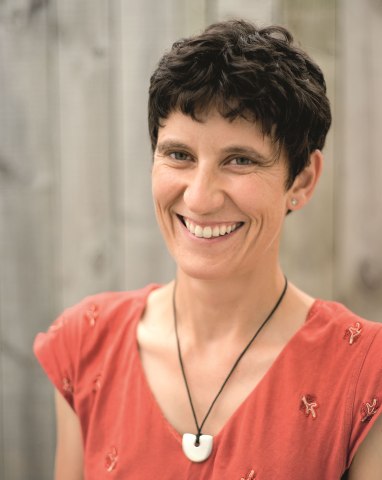
Rebecca Hawkes is a poet, painter, and reluctant corporate ladder ascender. She’s from a high country farm near Methven and is now making it biggish in the small-medium city of Wellington. Find Rebecca’s poems scattered through journals like Starling, Sport, and Sweet Mammalian – or on her website. A collection of her writing will be published in August 2019 in the revival issue of the AUP New Poets series, alongside the work of Carolyn DeCarlo and Sophie van Waardenberg.

Poetry Shelf classic poem: Tracey Slaughter picks Fleur Adcock’s ‘Composition for Words and Paint’


Composition for Words and Paint


This darkness has a quality

that poses us in shapes and textures,

one plane behind another,

flatness in depth.


Your face; a fur of hair; a striped

curtain behind, and to one side cushions;

nothing recedes, all lies extended.

I sink upon your image.


I see a soft metallic glint,

a tinsel weave behind the canvas,

aluminium and bronze beneath the ochre.

There is more in this than we know.


I can imagine drawn around you

a white line, in delicate brush-strokes:

emphasis; but you do not need it.

You have completeness.


I am not measuring your gestures;

(I have seen you measure those of others,

know a mind by a hand’s trajectory,

the curve of a lip).


But you move, and I move towards you,

draw back your head, and I advance.

I am fixed to the focus of your eyes.

I share your orbit.


Now I discover things about you:

your thin wrists, a tooth missing;

and how I melt and burn before you.

I have known you always.


The greyness from the long windows

reduces visual depth; but tactile

reality defies half-darkness.

My hands prove you solid.


You draw me down upon your body,

hard arms behind my head.

Darkness and soft colours blur.

We have swallowed the light.


Now I dissolve you in my mouth,

catch in the corners of my throat

the sly taste of your love, sliding

into me, singing;


just as the birds have started singing.

Let them come flying through the windows

with chains of opals around their necks.

We are expecting them.


Fleur Adcock


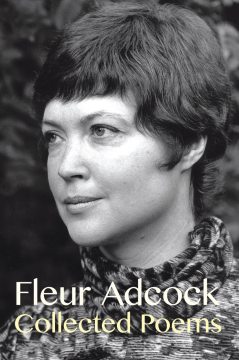
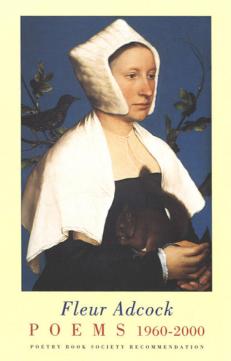
From Poems 1960-2000 (Bloodaxe Books, 2000). Subsequently published in Collected Poems (Victoria University Press); originally published in Tigers (Oxford University Press, 1967). Posted with kind permission from Bloodaxe Books and Victoria University Press.


Note from Tracey Slaughter:


When I read Fleur Adcock’s ‘Composition for Words and Paint’ I get a feeling like I’ve just stepped from glaring sunlight into a dim cool room, a blinking transition where objects shift their edges, textures and sensations blur. Things cross the retina that shouldn’t coexist – heat and cool, shade and sheen, disorientation and sharp awareness – as the dazzled eye tries to pull focus on outlines, shadows, glints. I’ve read it so many times now I could start to break down how its sheer mastery does this to me – but first I’d rather just surrender, step over that threshold, and let it return me to that liminal space it evokes, that experience of sensory eclipse.

Charted in a present tense aquiver with nowness, it’s a poem that wants to keep you in that state of dissolve, that hazy receptivity. Stanza through stanza as it tracks the movements of lovers drawing close in an intimate room, it guides the senses through concrete details that both cloud and illuminate, define and veil, observing the couple’s actions through sustained brushstrokes of metaphorical paint. It’s a poem that watches the act of love with an eye for its composition on the canvas, using the artist’s gaze to render the encounter in visual strokes and shapes, bringing bodies to slow light through questions of perspective, surface, angle, plane. As if conducting an ekphrastic exercise, analysing imagery already framed, it envisages the elements of this love scene in terms of its visual field, lining up the lovers in a studied play of light, curve, pose, dark, parallel, emphasis, depth. But if it employs the methodical and intricate tone of the artist approaching the canvas at the same time it applies the motif of paint to evoke the flooded senses of the lover lost in the work-at-hand’s erotic experience. Issues of surface, extension, colour, focus are at once used to underline the artist’s trained gaze and to wash the scene with a sensuous physical impression of the lovers’ work in progress. ‘I sink upon your image’ the speaker says – the borders of the canvas collapse. It pivots on a repeated play on ‘drawing,’ a practice which moves both brush and body – from a white line sketched around a figure, a head is drawn back, another tantalisingly down – using the term to figure both the tactile capture of the painted line and the gestural seduction of bodies, the pull and call of the lovers pacing and exploring each other in the shaded room. In that elided term, the hand that draws cannot sustain its ‘measured’ distance, it’s too coated in the palette of touch, too absorbed in lust for each line it envisages. Each brushstroke shivers on the painter’s own skin as it orders and colours objective space. It’s part of the mystery I love in Adcock’s language throughout the piece, that it can be at once controlled and lush, clinical and intoxicating – when I read it over I’m always searching for how it extracts such pulse from precision, such glistening intensity from poised restraint. Heat and chill, dark and gleam, it always keeps me blinking for how she keeps that threshold so skilfully blurred.

From an eye scrutinizing the shades and planes of love, the perspective slips to a place where the deeply implicated speaker can only ‘melt and burn’; I imagine that Adcock must have known the work of other women trying to depict female desire around this era: I always hear a tinge of Plath and Sexton in that phrasing. Perhaps there’s an echo of those poets present in the voice of this piece too, its commanding first-person, an ‘I’ intent on fixing and tracing the interaction with ‘you’ in a potent, honed, hypnotic tone. The slow processional sound of each line moves like brush or fingertip savouring the detail, like an entranced hand lingering on the contours of all it draws to light, tasting and positioning each syllable that ‘discovers’ the body with its palpable paint. It is unconventional glints of the lover that are touched upon too, the odd raw details an ordinary love-poem would read as flaws lifted into luminosity – flashes like ‘thin wrists, a tooth missing’ stand in contrast to the points of perfection a love ode would usually pick out, but the ‘tactile reality’ of this encounter sets them alight with ache and lustre. The final blur is ultimately the blur of fusion, of bodies merged and dissolved in such a close-up all sense of scale is lost from the visual field: ‘We have swallowed the light.’ The paint of the scene now spills into the speaker’s throat as she drinks in the lover: it’s a slyly rapturous depiction of orality which could have been a terrible paean to pleasure, but which Adcock’s lyric language manages to sculpt to a sultry and mutual release. Could any other poet pull off the miracle of birdsong ‘flying through the windows’ at climax? Sometimes I wonder if there’s a tint of darkness caught in the opal chains around the necks of those birds – but if there is, it is set against the tender domination of the voice, its soft imperative immediacy: ‘Now I dissolve you.’ It’s been said that a love poem always appeals as much to the reader as it does to the lover, using its language to pull and lure their senses too into a sweet-talking thrall. Consider me dissolved. ‘Composition for Words and Paint’ always has me at ‘This darkness…’


Bloodaxe Books page

Victoria University Press page


Tracey Slaughter‘s latest work is the poetry collection Conventional Weapons (VUP, 2019). She is the author of the acclaimed short story collection deleted scenes for lovers (VUP, 2016), and her work has received numerous awards, including the 2015 Landfall Essay Competition and the 2014 Bridport Prize. She works at the University of Waikato, where she edits the journal Mayhem.

Fleur Adcock, a New Zealand poet, editor and translator, resides in Britain. She has published numerous poetry collections, her most recent being The Land Ballot (2014) and Hoard (2017). This year Victoria University Press published her Collected Poems. She has won many book awards and has received notable honours including an OBE (1986), the Queen’s Gold Medal for Poetry (2006) and a CNZM for services to literature (2008).


Adcock_Collected__47517.1544061847.jpg     5582f5dd597e7.jpg

Poetry Shelf Monday Poem: Aimee-Jane Anderson-O’Connor ‘Signal’


Signal


The crossing signal twitches

like it’s filled with hot

crickets

and they whisper

touch touch touch

and so you reach out

press the cold metal button

press the cold metal

just to say:

I’m here,

I’m here, please,

let me cross safely.


Aimee-Jane Anderson-O’Connor was awarded the 2018 Charles Brasch Young Writers’ Essay Prize, and the 2017 Monash Prize for Emerging Writers. Her poem ‘Instructions’ was named by The Spinoff as the best poem of 2018. Her work has appeared in a number of literary journals, including Starling, Mayhem, Poetry New Zealand, Landfall, Mimicry, Turbine, and Min-a-rets. She writes thanks to some of the best people on this great watery rock.

Poetry Shelf Friday talk spot: Johanna Aitchison on anagram poems


Anagram Poems


Like many obsessions, my preoccupation with anagrams began by accident. I am writing my doctoral thesis at the moment, and had been struggling with my topic: alter egos in elliptical poetry. To put it bluntly: all of the alter ego poetry that I was writing for the creative section of my thesis was terrible; not so terrible that it was not even recognisable as poetry, but that uglier low level kind of terrible you get when you’re mining an area that has been all mined out and the work that results is simply boring. So I was on the lookout for inspiration, trawling for ideas that were more interesting than my thesis “starter idea”, when U.S. poet Dora Malech’s latest collection of poetry, Stet (2018), landed on our veranda in an Amazon package. My first thought on reading the poems was, “Huh?”; second thought, “What even is this?”; and then a series of thoughts that tumbled out on top of each other such as, “How does she do this?” “This is amazing!”, and “Wow, I’m so jealous, I wanna write anagram poems, too.”

Stet is a book of poetry which is composed primarily of anagrams, with a side of erasures. Malech states that she is influenced by the German artist and poet, Urnica Zurn, who wrote a series of vivid and disquieting anagram poems in the 1950s , as well as the French school of poetry Oulipo, which uses various restrictive forms to enable creativity, of which the anagram is one.

Thus began my obsession with this form–and the way that you can mine a single sentence or word or, in the case of the third section of Malech’s book, an entire poem (she writes a series of poems which are anagrams of the Sylvia Plath poem “Metaphors”)–and resulting questions (some of which Malech explores in Stet), such as:  How can lyric subjectivity survive within such a tight machine? Is this kind of poetry too sterile and fragmented to really connect with a reader? I am at the beginnings of my explorations in this area, so don’t have any firm answers yet. But writing anagram poems (in which, for example, an entire poem may be made out of a single line, re-arranged) is kind of like build-your-own-nightmare. You get to choose the particular brand of nightmare, and that ambit of it, but within very tight parameters. To put it more another way, it’s like performing back flips in a very tight space; but if you pull it off, the thrill is real.


Johanna Aitchison


Johanna Aitchison is a doctoral student at Massey University, Palmerston North, examining anagrams and erasures in hybrid poetry. Her most recent volume of poems, Miss Dust (2015), was described by reviewer Sarah Quigley as “Emily Dickinson for the 21st century”. Her poetry has appeared in anthologies such as Best New Zealand Poems 2008 and 2009, and Best of Best New Zealand Poems (2011). She was a 2015 resident at the International Writing Program at the University of Iowa and the 2012 Visiting Artist at Massey University.


Poetry Shelf audio spot: Chris Tse reads ‘wish list – permadeath’


Chris Tse’s ‘wish list – permadeath’ was recently published in Queen Mob’s Teahouse: Teh Book (Dostoyevsky Wannabe, 2019).


Chris Tse is the author of two collections of poetry published by Auckland University Press: How to be Dead in a Year of Snakes (winner of the Jessie Mackay Award for Best First Book of Poetry) and HE’S SO MASC. His work has recently appeared or is forthcoming in Best New Zealand Poems 2018, Queen Mob’s Teahouse: Teh Book (Dostoyevsky Wannabe, 2019), The Spinoff and Peril. Chris and Emma Barnes are currently co-editing an anthology of contemporary LGBTQIA+ Aotearoa New Zealand writers.


Poetry Shelf Classic Poem: Helen Heath picks Vana Manasiadis’s ‘Talking Tectonics’


Talking Tectonics


You know, even if I hadn’t come on the plane, on a bus, in a taxi,

I’d get here at some point – cos that clever tektonos, that shifty carpenter,

poet, boat-builder in the sky, he’s been scheming all the while; been doing

a bit of backyard DIY, a bit of God-honest labouring and jack-hammering

on the boundary – right under that picket fence between the plates,

between the kanuka and manuka.


There’s a paratekstosyni afoot, a volcanic and magnanimous change,

a winching and an earthmoving: those alpine ridges, those glaciers,

plains and Hutt Valleys, they’re slap-hugging the rest of the North Island

goodbye – Ya old mudpool, ya long drawn out beach, ya tall and flashy

neighbour, I’m off to the Arctic Ocean – I hear you’re off to the Pontos –

never heard of it.


And all this in broad daylight, Yiayia – can you believe it?


This is what I know: Oceanus gave birth to Styx, the Arcadian spring into which Achilles

was dipped; from which Alexander got sick; whose water Iris drew and took to the Gods

so that it might witness oaths. Or, Styx was the river mortals crossed.


Or, the ocean is what I’m standing in – one tiptoe on the Pacific rim

and one not.


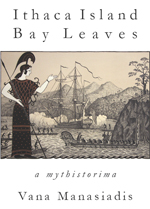
Vana Manasiadis from Ithaca Island Bay Leaves: A Mythistorima, Seraph Press, 2009


From Helen Heath:

One of the things that draws me to Vana’s work is our shared Greek heritage. I feel a deep affinity to this part of my genetic make-up; my ancestors’ homeland, the island of Ithaca in Greece, plays a big role in my debut collection, Graft.

However, I feel awkward claiming Greek heritage because I am only 1/8th Greek and my family wasn’t close to the Wellington Greek community when I was young. I barely know any Greek language and the Greek alphabet does my head in. I suffer from imposter syndrome, although I’m frequently told I look very Greek.

Vana, on the other hand, has more Greek heritage, she speaks Greek and has lived in Greece. In my mind, she far more authentically Greek than me. However, because she is pale skinned and strawberry blonde, she experienced prejudice from members of the Wellington Greek community. As Vana says. “The criteria of inclusion were missing: we didn’t look stereotypically Greek.”

Vana’s collection: Ithaca Island Bay Leaves: A Mythistorima (Seraph Press, SSS), which this poem appears in, weaves her Greek heritage with her New Zealand experience. In it, I feel her working towards a different understanding – moving between worlds and time frames, inclusion and exclusion, reinvention and fragmentation. There is uncertainty and otherness, but also, she gives me hope for a new kind of belonging.

Vana’s new collection, The Grief Almanac A Sequel, was launched in May. by Seraph Press.

μπράβο – Bravo Vana!


Helen Heath is a poet and essayist from the Kapiti Coast, Wellington. Her debut collection of poetry Graft (VUP) won the NZSA Jessie Mackay Best First Book for Poetry award in 2013 and was the first book of fiction or poetry to ever be shortlisted for the Royal Society of NZ Science Book Prize. Her latest collection of poems – Are Friends Electric?  (VUP) – is about people, animals and technology, and won Best Poetry Book at the 2019 Ockham Book Awards.

Vana Manasiadis is a New Zealand Greek writer, editor and translator who spent many years in Greece and Europe, and is now based back in Auckland Tāmaki Makaurau. She is the author of acclaimed collection  and her writing has appeared in a many outlets including 99 Ways into New Zealand Poetry (Vintage, 2010) and Essential New Zealand Poems: Facing the Empty Page (Random NZ, 2014). As co-editor of the Seraph Press Translation Series, she has co-edited Tātai Whetū: Seven Māori Women Poets in Translation (2018) and edited and translated from the Greek for Ναυάγια/Καταφύγια: Shipwrecks/Shelters: Six Contemporary Greek Poets (2016). The Grief Almanac: A Sequel was published May,  2019 (Seraph Press).


_7558891.jpg

Poetry Shelf audio Spot: Dallas Karangaroa (16) performs ‘Homeless’

Dallas Karangaroa (16) is part of a teen writing group run by Alisha Tyson at Hutt Central Library. His extraordinary poem takes you apart and then somehow, miraculously, wonderfully, puts you back together again. It’s stonishing! I hope to see more poetry from this young poet.


Poetry Shelf Monday poem: Lola Ridge’s ‘After the Storm’


After the Storm


The wrinkled forehead of the sky

Doth chase the sunbeams as they fly,

Like pale nuns in retreat;

Each drooping, half-averted eye,

Wet-lashed with rain drops; and the sweet

Moist earth is surfeited:

A pale, weak invalid, the day,

Hath risen from her bed.


And I am tired & my brain

Is drowsed with murmur of the rain;

Too dull I am for mirth,

Yet too indifferent for pain:

The shadows ride upon the earth—

Grey pickets of the night,

That drive before them on the plain

The fugitives of light.


Lola Ridge


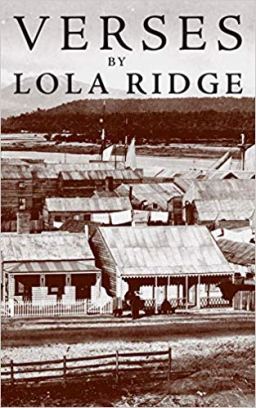
from Verses Quale Press, 2019 (with introduction by Michele Leggott)


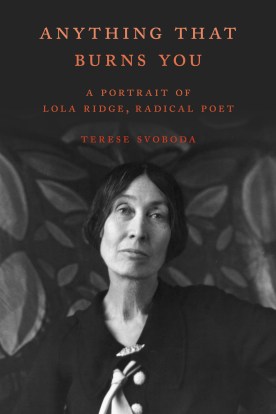
Lola Ridge (Rose Emily Ridge) (1873-1941) was born in Dublin and travelled to Australia with her mother when she was three years old. When she was six the Ridges moved to NZ and her mother married a gold miner in Hokitika. After a failed marriage to a gold-mine manager on the West Coast, Lola moved with her mother and son to Sydney, where she studied at the Academie Julienne. After her mother’s death in 1907, she moved to USA under a new name, eventually marrying fellow radical David Lawson and establishing herself as a poet, painter and political activist within a prestigious circle of poets. Her collection The ghetto and other poems (1918) cemented her place on the New York scene, and she published four further volumes of poetry. Terese Svoboba has published a biography on Lola: Anything that Burns You: A Portrait of Lola Ridge (2016). Verses is a selection of her Antipodean poems.


Quale Press author page


51K47mRStYL._SX311_BO1,204,203,200_.jpg   lola-ridge-cover.jpg


The 2019 Sarah Broom Prize session @AWF: a celebration of poetry

DSCN9651.jpg

Rarotonga-based poet Jessica Le Bas is the winner of the Sarah Broom Poetry Prize 2019. 

Sarah Broom website here with poems by the finalists and winner


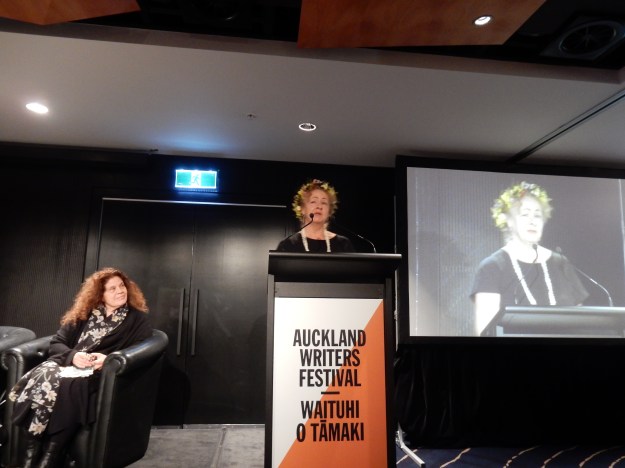
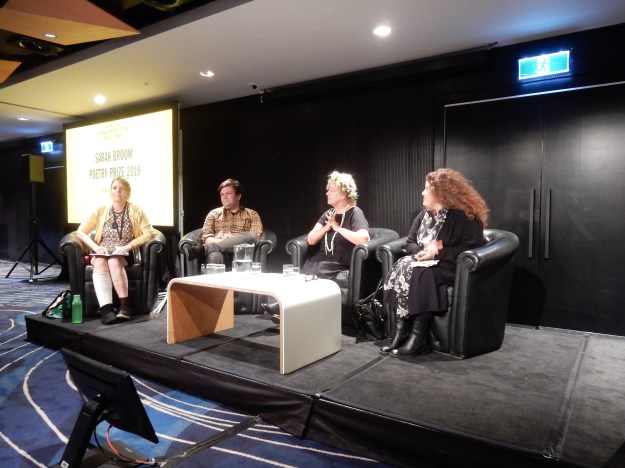
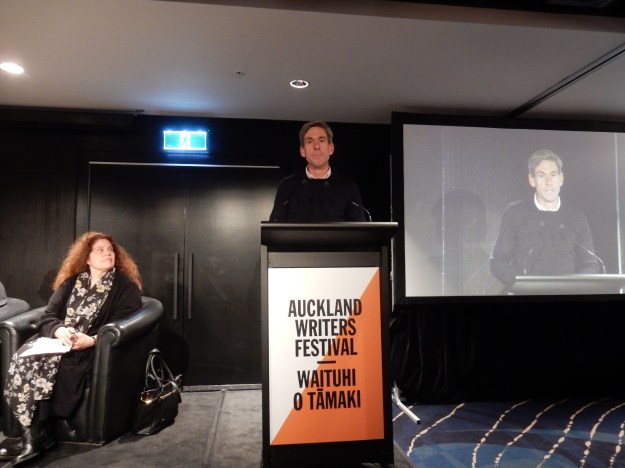
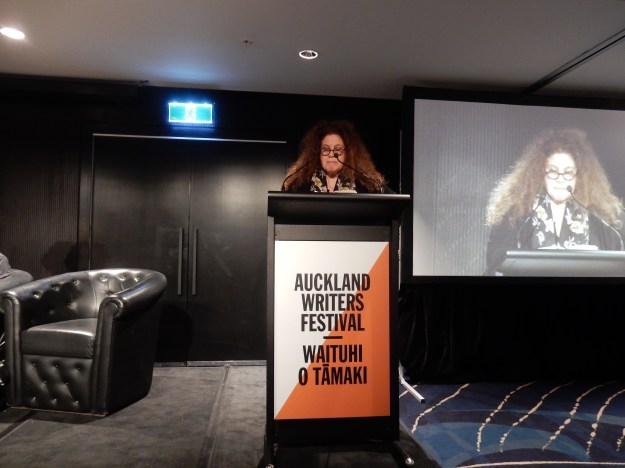
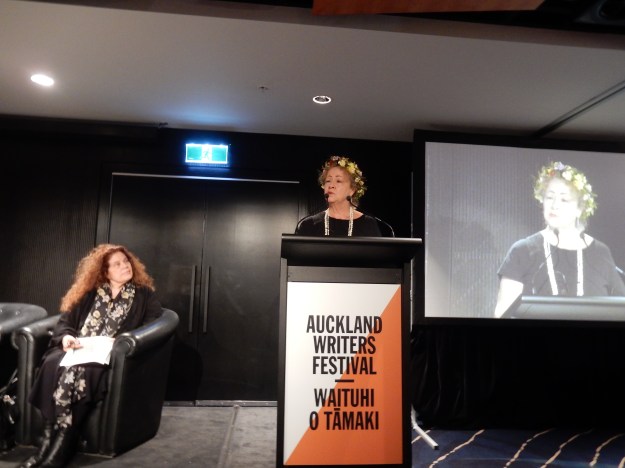
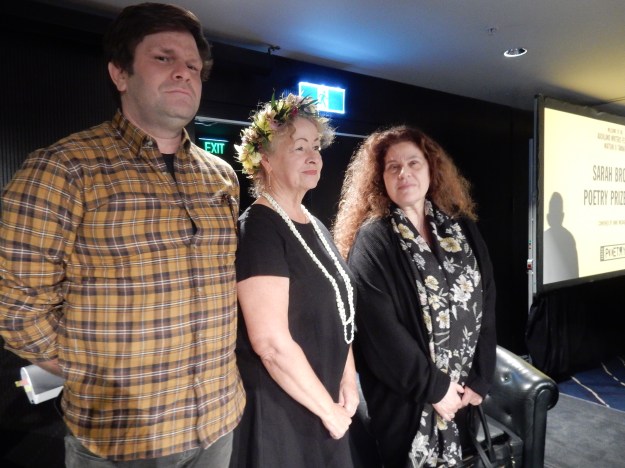
On Saturday I had the honour of mc-ing the Sarah Broom Prize session, having acted as Prize Director for the past year. I welcomed international judge, Anne Michaels, the finalists, Michael Steven, Jessica Le Bas and poet Vana Manasiadis standing in for London-based Nina Mingya Powles, the Prize founder and Sarah Broom’s husband, Michael Gleissner, and their family, and a room packed to the rafters with poetry fans.


DSCN9653.jpg


In 2014 when Michael established the award he told me he had created a financial prize to support writing time for a poet, as his wife Sarah had enjoyed. But the Sarah Broom Prize is more than this. It allows us to shine increased light on NZ poetry, local poets get to be read by an international judge and the finalists get to read at Auckland Writers Festival. This is a gift for our poetry communities and we are immensely grateful to you, and to the hardworking Sarah Ross and Greg Fahey. The Sarah Broom Trust has launched a new website and new plans for the future.  This year there were over 320 entries. For the past six years The Sarah Broom Trust has worked in partnership with the Auckland Writers Festival.


DSCN9625.jpg


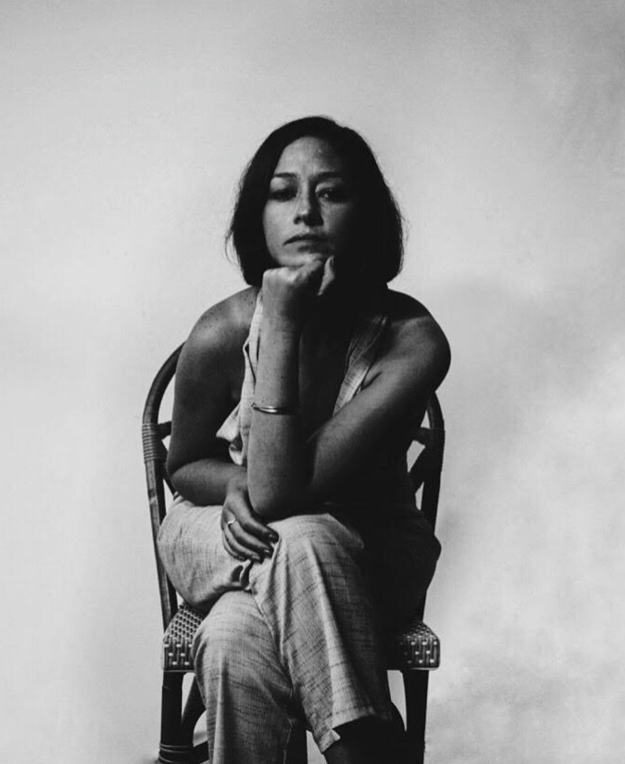
Sarah Broom (1972 -2013)


Sarah-Broom-800x1003.jpg


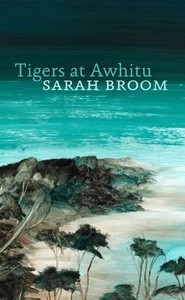
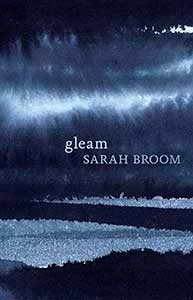
The prize also enables an annual return to Sarah’s poetry and this is a joy. Sarah’s debut, Tigers at Awhitu, appeared post her Cambridge doctorate, at a time she dedicated her life to motherhood, poetry and managing lung cancer. Her second collection, Gleam, was published posthumously. I have found her poems shine with cadence and craft, exquisite wisdom and subtle movements. She wrote poetry for the well and for the dying; the world is to be cherished. Love is always intensely present. I carry her poetry next to my heart.

I read two of her poems:  ‘anchor’ and ‘river come gently’ from Gleam Auckland University Press, 2013.


1449006921535-1.jpg     1403058023482.jpg


The finalists

Nina Mingya Powles, of Pākehā and Malaysian-Chinese heritage is the author of field notes on a downpour (2018),  two from Seraph Press Luminescent and Girls of the Drift She is the poetry editor of The Shanghai Literary Review and founding editor of Bitter Melon 苦瓜, a new poetry press. Her prose debut, a food memoir, will be published by The Emma Press in 2019. Poetry Shelf interview

Jessica Le Bas has published two collections of poetry with AUP, incognito and Walking to Africa and with Penguin, a novel for children, Staying Home. She currently lives in Rarotonga, working in schools throughout the Cook Islands to promote and support writing. Poetry Shelf  interview here

Michael Steven is the author of four chapbooks and Walking to Jutland Street, a collection published by OUP, longlisted for the 2019 Ockham New Zealand Book Awards. He was recipient of the 2018 Todd New Writer’s Bursary. He lives in West Auckland. Poetry Shelf interview


The Judge, Anne Michaels


DSCN9631.jpg


Anne Michaels, poet and fiction writer, Toronto Poet Laureate, author of the beloved Fugitive Pieces among other splendid things, has produced breath-taking poetry. Poems that take up residency in your body, that savour silence alongside revelation, that tend to musical pitch and luminosity, that take you deep into human experience, both physical and imagined. These are some of her poetry treasures. [I held up All We Saw, Poems (her first three collections) and her magnificent children’s book, The Adventures of Miss Petitfour that I urged  Kate De Goldi to read if she hasn’t already]. When I was in A & E on Sunday my daughter brought me Anne’s Infinite Gradations to reread. It transported me beyond injury, beyond hospital walls to the most glorious writing on poetry and art I know, on what it feels or means to write poetry or make art. So many lines felt utterly relevant in the wake of the Christchurch mosque attacks when we collectively asked and keep asking ‘what good poetry’ and collectively seek kindness, empathy and connection.

Let me share a few favourites.


We write and we read in order to hold another person close.

Sometimes language is the rescuer.

Poetry is the lonely radical precious expression of a single life.

Poetry suspends time. Poetry is time. Poetry gives us time.

We belong where love finds us.


Poetry Shelf interview with Anne Michaels


Anne Michaels spoke on poetry and the finalists entries – she has also selected two highly recommended poets – Jess Fiebig and Wen-Juenn Lee.

Anne told the audience it it was an honour to judge the prize – and that she paid absolute attention to every entry. She said the poems provided a glimpse of New Zealand one could never have in any other way, and that questions arose on home, exile, language, belonging. She saw the poems as kinds of ‘seeking voices’, and that poets are a tribe with a shared love of the word, a compulsion to write, solidarity – and that we are all in it for the enterprise of it.

Anne wanted everyone who entered a poem to understand and feel to their very soul that they are part of this enterprise. She then introduced each of the finalists (I have included her comments on highly recommended):


DSCN9633.jpg

Jessica Le Bas (winner)

Jessica Le Bas’s poems are alive with detail acutely observed. In the poet’s disciplined language and perception is a kind of tenderness – for the natural world, and for human frailty. It is a poetic vision that understands how inextricable hope and despair, beauty and loss: of a cracked mango, Le Bas wisely advises, “eat it now”. In these poems, the world is passionately perceived.


DSCN9635.jpg

DSCN9638.jpg


Nina Mingya Powles (finalist)

These poems express both the power of memory and the grace of a present moment. They are a deeply felt exploration of language – how it separates us and holds us close; how it can become, sometimes, the only home we have. The best compassion is born of clear seeing, and this is the compassion that imbues Nina Mingya Powles’s poems – expressed with a generous, gentle, authority. These are poems of beautiful depth.


DSCN9641.jpg

Michael Steven (finalist)

These poems speak of intimate encounters, often wordless, and of communions – through music, plums shared along a path, a circling hawk, a gravestone. There is a quietude in these poems that reminds us just how loud the world has become, and how valuable those moments, the “tiny benefactions” that gently restore our attention to what’s important.


Jess Fiebig (highly commended)

By not turning away from a moment, these poems insist on understanding, finding meaning where it hurts. These poems are full of compassionate detail, direct and wondering, and “finding treasures” in plain sight.


Wen-Juenn Lee (highly commended)

These are poems of witness – vivid and fierce, seeking a kind of justice. In their passion to name what it means to live in exile – from a place, from a language – these deeply felt poems assert the right to be seen and known, not forgotten. Their seeking is a kind of restoration. Wen-Juenn  reads ‘Prologue’ for Poetry Shelf


DSCN9648.jpg


In announcing the winner Anne underlined how she loved all three poets, and she urged the audience to follow their careers, to buy their books and to spread the word.


At the beginning I asked, what good  poetry? I took up from Anne’s point and finished by saying, as this session so beautifully demonstrated, that we read and write to hold things close: life, love, loss, people, experience, knowledge, connections. Friends and strangers come up to me afterwards and said that this session was full of heart and soul. I agreed.

Grateful thanks to the Sarah Broom Trust and to the Auckland Writers Festival.

I wish you all the best for future years.


DSCN9657.jpg


Poetry Shelf audio spot: Grace Teuila Taylor performs ‘I am a slow rising of my mother’s baking’


Screen Shot 2019-05-16 at 8.23.54 AM.png


Grace Teuila Taylor is of Samoan, English, Japanese heritage born and raised in South Auckland. Mother, Poet, Daughter, Theatre Maker, Performer and advocate for families affected by dementia. Grace has two published works with ala press (Hawaii), Afakasi Speaks (2013), and Full Broken Bloom (2017). Writer of Auckland Theatre Company commissioned poetic theatre show My Own Darling (2015 & 2017). Director of Auckland Theatre Company shows SKIN (2014) & MOUTH: TEETH: TONGUE (2016) and Hawaiian based poetry theatre show OUR WOMEN BODIES (2016). She won the CNZ Emerging Pacific Artist Award (2014) and the Auckland Mayoral Writers Grant (2016). Grace has been part of the leadership for the spoken word poetry movement in Aotearoa: co-founder of South Auckland Poets Collective and the first youth poetry slam in Aotearoa RISING VOICES. She held the International Writer in Residence at the University of Hawaii, Manoa in Spring 2018.