Category Archives: NZ author

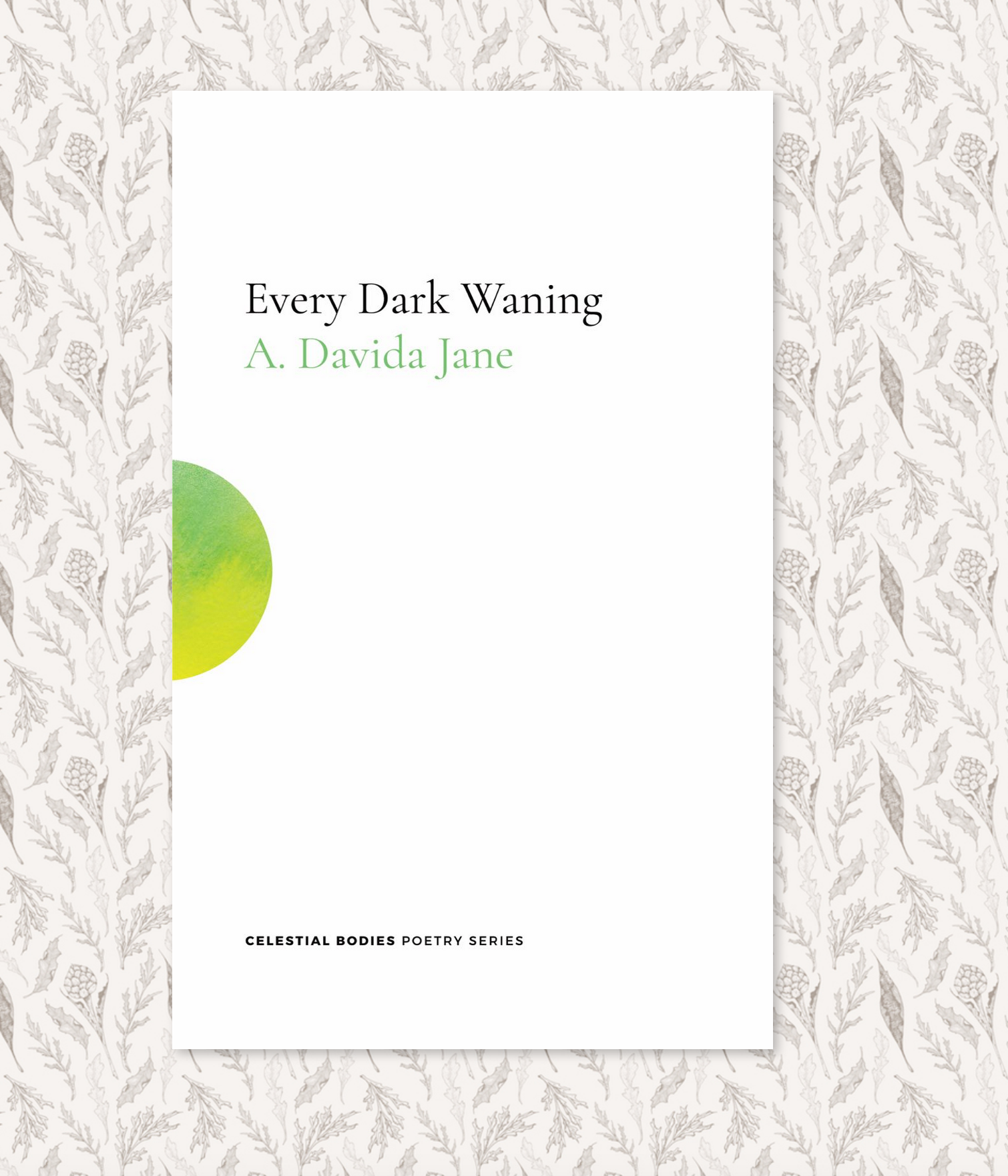
Poetry Shelf reading room: A. Davida Jane’s Every Dark Waning

A Davida Jane, Every Dark Waning, Platypus Press, England (2016, second edition 2018)

Platypus Press author page

I keep trying to build a dam—

I keep coming up rainstorm,

I keep coming up flood.


from ‘A Study in Restoration’

So many poetry books escape my attention, and then a trail of lucky connections leads me to a new discovery. I find the online journal The Starling is an excellent lead to poets under 25. This year I discovered the poetry of Ash Davida Jane and invited her to send me a Monday Poem (‘Undergrowth‘), write a response to a much-loved book (Paige Lewis’s excellent collection Space Struck), and muse on a poetry topic (‘An Ecopoetics of the Future’). I managed to get a copy of her debut collection, Every Dark Waning, from Unity Books in Te Whanganui-a-Tara where she works. And it filled me with poetry delight.

I especially loved the first section which pulls in the stars, sky, water, fire, breath and breathing. These poems are both dark edged and light fringed. Maybe the poet is talking from a deep secret place that misses things, that feels pain, is full of feeling. The dark core of the poems is deeply mysterious. It will grip your arm or your lungs and you will stay. There are many selves but the poet is the most present: ‘The poet is the most / honest part of me.’ (from ‘An Attempt at an Explanation’). The poet reappears in ‘Apollo 11’:

The stickiness of the

atmosphere traps in

all the words I never

wrote down, and the poet

in me flinches as I soar

into outer space.

And later, in ‘The House of Pindar’, in this book where poetry is both reticent and confessional:

You burn every house in me

but the poet’s—raze them to

the ground and salt them so

they’ll never grow back.

Only the writer remains.

Why do I love this book so much? Maybe its the sharp edges, the nightmares and the monsters, the things that are held in reserve, the way writing poetry and being a poet is so vital, life-saving perhaps, and the way my attention is directed to things I want to retain, to put away for a cloudy day. This from ‘Upturned’:

did you see me tuck the

view into the back of my

mind, putting it away for a

cloudy day when the stars

aren’t there and i can’t think

of a reason to get out of bed.

today, i needed a reason

to get out of bed, and

the moon was the only thing

that came close.

Ash Davida Jane is a poet and bookseller from Te Whanganui-a-Tara. She has a Master of Arts from the International Institute of Modern Letters. Some of her recent work can be found in Peach Mag, Turbine | Kapohau, Best New Zealand Poems, and Scum. How to Live with Mammals is due to be published by Victoria University Press in 2021.

Poetry Shelf Monday poem: Ruby Solly’s ‘Pōria’


Pōria


A Judas bird

is the first bird you trap.

Not for its meat,

or feathers,

but for its song.


The Judas bird

has its foot folded by its captor.

pushed gently through the pōria;

a ring that it can put on

but not take off.

This is it kare,

you are wearing this pounamu

for life.


The Judas bird

cannot help but sing.

Sings for her supper,

sings for her sleep,

sings for her sisters,

sings for you,

sings for me.


The Judas bird

sees its sisters fly closer

and closer,

as they fly from the mind’s eye into her vision.

The singing growing more frantic,

higher and lower,

bigger and quicker.

Then the pull of the snare, the thud of the rock.

The tiny sound of air passing through vocal chords

not meaning to sound

but doing so against their best efforts.

An accordion pushed closed with none of its keys down.

We call it a last breath, but really it should be called

a last exhale.


The Judas bird watches

its sisters be eaten

and she tries not to sing.

Every bird sound is singing,

a scream is singing, a warning is singing.

She holds it in, the notes rising to her throat like a vapour.

Her mouth full of pitches,

that can’t help but spill from the corners of her beak.


The Judas bird wishes

the dawn would not break.

But every morning she finds herself singing.

Small arrows of notes pierce the air

as she releases more and more from her quiver.

Even a cry is song.


The Judas bird

sings true and long.

But she has learnt to lessen herself,

to bow to not just the loftiest mountain,

but the smallest grain of sand,

to the dirt under the fingernails

of those who tether her.

She is teaching herself

to song without resonation.

With no harmonics,

no above or below.

Like dropping a stone into a pond

and having it sink with no ripples.

No evidence of its movements

to tell the land

that it is gone.


Ruby Solly


Ruby Solly is a Kai Tahu musician, taonga puoro practitioner, music therapist and writer living in Wellington. She has played with artists such as Yo-Yo Ma, Whirimako Black, Trinity Roots, and The New Zealand String Quartet as both a cellist, and a player of traditional Māori instruments (ngā taonga puoro). She has also worked as a session musician and recording artist with groups such as So Laid Back Country China, Jhan Lindsay, Strowlini Orchestra, and many other artists around Wellington. In 2019 she completed a Masters thesis in the therapeutic potential of taonga puoro in mental health based music therapy, while working in schools, hospitals, prisons and with private clients from iwi around the motu. She also has experience as a composer with pieces commissioned by the New Zealand School of Music in association with SOUNZ, as well as in film work in association with Someday Stories, and the Goethe Institute with Wellington Film Society.

Ruby is also a published poet and has been published in journals associated with many of New Zealand’s universities such as LandfallSportTurbine, and Mayhem. She has also exhibited poetry in Antarctica, America and New Zealand, and was a runner up for the 2019 Caselberg Trust International Poetry Prize. Additionally, Ruby is a script writer and has found success with her film Super Special which shares knowledge about Māori views of menstruation through narrative. The film aired on Māori TV, and will also air at the LA Women Film Fest.

In 2020, Ruby released her debut album Pōneke and in early 2021 her first book Toku Papa is being released by Victoria University Press.

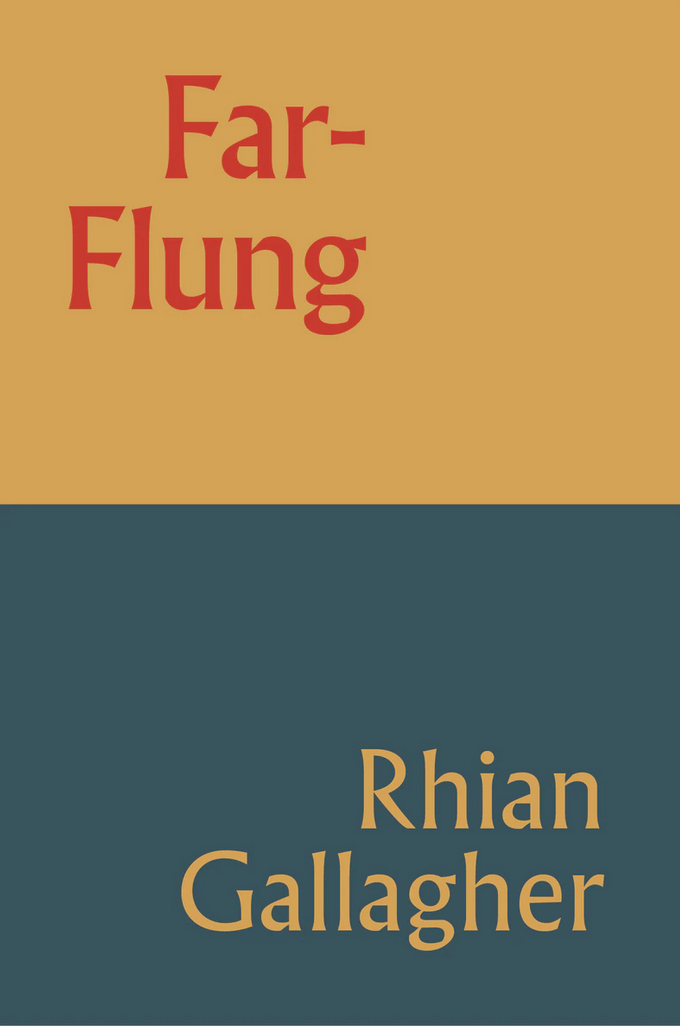
Poetry Shelf review: Rhian Gallagher’s Far-Flung

Rhian Gallagher,Far-Flung Auckland University Press, 2020

Into the Blue Light

for Kate Vercoe


I’m walking above myself in the blue light

indecently blue above the bay with its walk-on-water skin

here is the Kilmog slumping seaward

and the men in their high-vis vests

pouring tar and metal on gaping wounds

the last repair broke free; the highway

doesn’t want to lie still, none of us

want to be where we are


exactly but somewhere else

the track a tree’s ascent, kaikawaka! hold on

to the growing power, sun igniting little shouts

against my eyeballs

and clouds came from Australia

hunkering over the Tasman with their strange accent


I’m high as a wing tip

where the ache meets the bliss

summit rocks exploding with lichen and moss –

little soft fellas suckered to a groove

bloom and bloom – the track isn’t content

with an end, flax rattling their sabres, tussocks

drying their hair in the stiff south-easterly;

the track wants to go on

forever because it comes to nothing

but the blue light. I’m going out, out

out into the blue light, walking above myself.


Rhian Gallagher, from Far-Flung


Rhian Gallagher’s debut poetry book, Salt Water Creek (Enitharmon Press) was shortlisted for the Forward Prize First Collection, while her second book Shift was awarded the 2012 New Zealand Post Book Award for Poetry. She has received a Canterbury History Foundation Award, The Janet Frame Literary Trust Award and in 2018 she held the University of Otago Burns Fellowship. This year I welcomed the arrival of Far-Flung (Auckland University Press). It is a glorious book, a book to slowly savour.

Far-Flung is in two sections. The first section, with deep and roving attachments, navigates place. Think of the shimmering land, the peopled land, the lived-upon and recollected land, with relationships, experiences, epiphanies and upheavals. Think of the past and think of the present. Think of school classrooms, macrocarpa and our smallest birds. Think of a nor-west wind and Donegal women. These poems exude a delicious quietness, a stalled pace, because this is poetry of contemplation, musings upon a stretching home along with ideas that have shaped, and are shaping, how the world is.

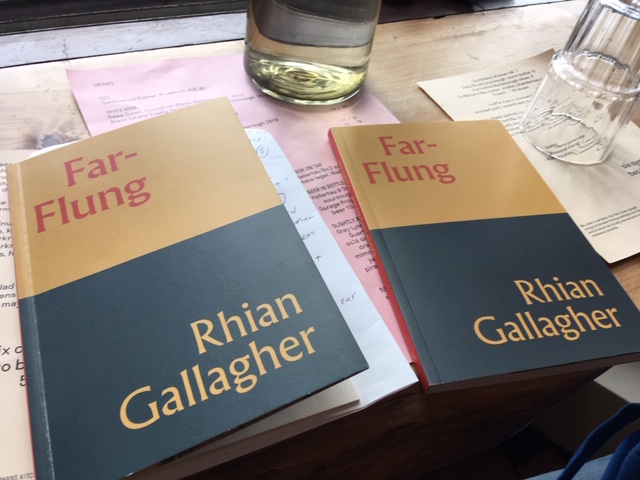
The other day I turned up in an Auckland café to meet poet Anna Jackson for lunch, and we both brought along Far-Flung to read (if we got to wait for the other). I read the opening lines aloud to Anna when she arrived, and then she started reading the book. We were lost in the book. I am now imagining how perfect it would be to have a weekly poetry meeting with a friend, where you sit and read the exact same book over lunch. Perhaps I am returning to the afternoon-tea poems from my debut book Cookhouse, where I thought I would take afternoon with poets I loved (in the shape of a poem) for the rest of my life. That didn’t exactly happen (in the shape of a poem), but I guess I have been engaging with poetry in Aotearoa ever since.

Rhian’s opening poem ‘Into the Blue Light’ is a form of poetry astonishment. Let’s say awe, wonder, uplift. The spiritual meets the incandescent meets the hot sticky tar of the road repairs, and the ever-moving scene, with its biblical overtones (‘the bay with its walk-on-water skin’), references a fidgety self as it much as it scores physical locations. I keep coming back to the word ‘miracle’, and the way we become immune to the little and large miracles about us. Miracle can be a way of transcending the burdensome body, daily stasis, the anchor of here and there, the shadow of death, and embrace light  and engage in light-footed movement. This is definitely a poem to get lost in. You don’t need to know what it is about or the personal implications for both poet and speaker. Perhaps this is what astonishment poems can do: they draw us into the blue light so that we may walk or drift above ourselves.

The second poem, ‘The Speed of God’, underlines the range of a nimble poet whose poetic craft includes the lyrical, the political, the personal and the reflective. Here Rhian wittingly but bitingly muses on the idea that God made the world too fast to get men right.


Or maybe if he’d made man and said, ‘You learn how to
live with yourself and do housework and then I might think
about woman.’

The second section of the book focuses upon voices from Dunedin’s Seacliff Lunatic Asylum and is in debt to research along with imaginings. The Lunatic Act of 1882 defines a lunatic within legal parameters rather a medical diagnosis. The institution was more akin to a prison than a place of healing, with those incarcerated granted no legal rights.  As a national inspector of lunatic asylums, hospitals and charitable institutions, Dr Duncan MacGregor ‘feared New Zealand was being overrun by a flood of immigrants from lowly backgrounds’.

Rhian’s ‘The Seacliffe Epistles’ sequence is unbearably haunting. The endnotes acknowledge the sources, many poems in debt to inmate’s letters. Reading the poignant poetry, I am reminded of the way we still haven’t got everything right yet. We still have the dispossessed, the muted, the disenfranchised, the underprivileged. And that is another haunting seeping into the crevices of the book.

Far-Flung showcases multiple bearings of self, place, and across time. There is the child smelling the ‘gum trees in the gully’, rhyming her way across a wheat field, as letters and words start to produce sound and sense. From those tentative beginnings, words now offer sumptuous music for the ear, groundings for the heart, little portholes into our own contemplative meanderings. As Vincent O’Sullivan says on the back of the book: ‘I can think of no more than a handful of poets, whose work I admire to anything like a similar degree.’ This is a glorious arrival, a book of exquisite returns that slowly unfold across months.

Rhian Gallagher’s first poetry book Salt Water Creek (Enitharmon Press, 2003) was shortlisted for the Forward Prize for First Collection. In 2007 Gallagher won a Canterbury History Foundation Award, which led to the publication of her book Feeling for Daylight: The Photographs of Jack Adamson (South Canterbury Museum, 2010). She also received the 2008 Janet Frame Literary Trust Award. Gallagher’s Shift (AUP, 2011) won the 2012 New Zealand Post Book Award for Poetry. In 2018, she held the University of Otago Robert Burns Fellowship.

Auckland University Press page

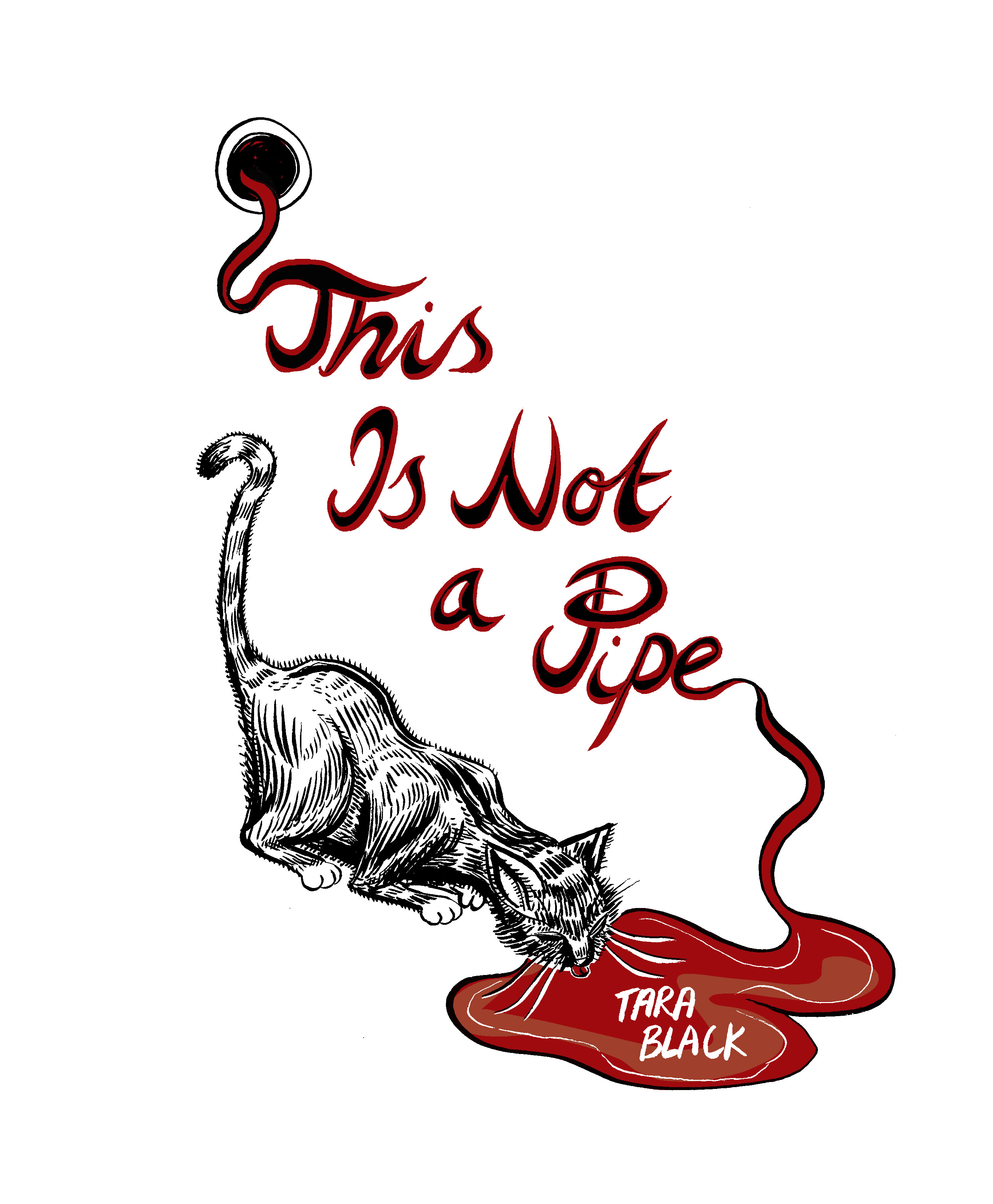
Poetry Shelf Lounge: Dylan Horrocks and Tara Black discuss This Is Not a Pipe

Tara Black makes comics and sits in the front row of book events so she can draw the writers. Her work appears on The SaplingStasis Journal and her website, taracomics.comThis Is Not a Pipe is her first book.  

Dylan Horrocks is the author of the modern classic Hicksville (1998; new edition VUP 2010), and Sam Zabel and the Magic Pen (VUP 2014).

Victoria University Press page

Photo credit: Ebony Lamb

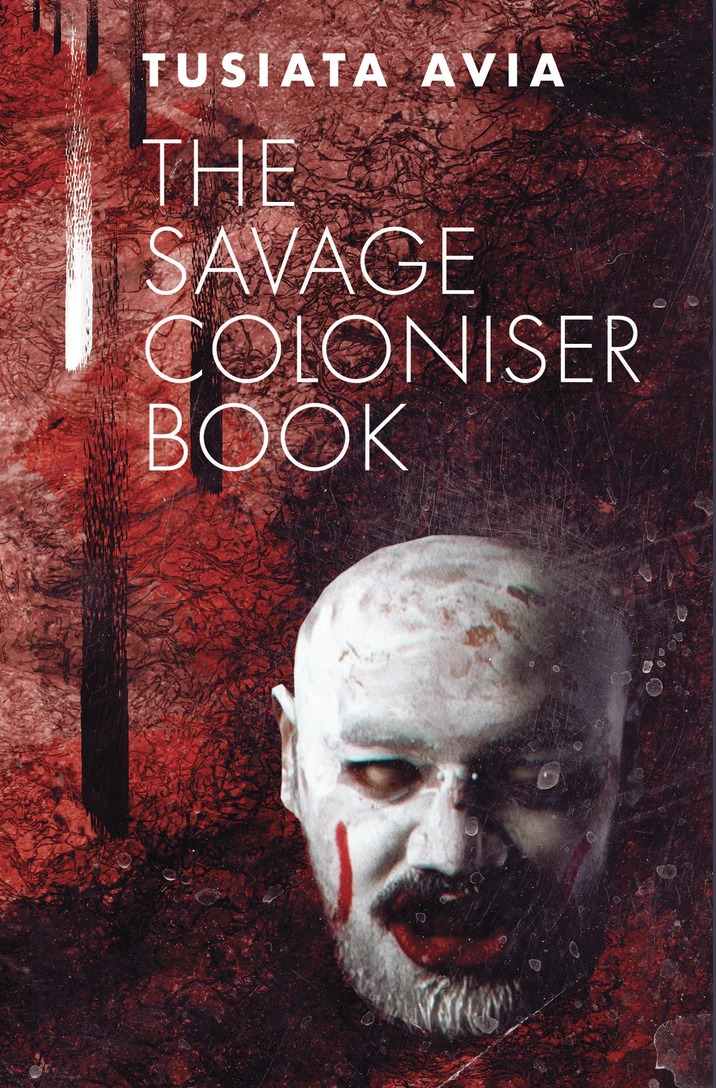
Poetry Shelf review: Tusiata Avia’s The Savage Coloniser Book

Tusiata Avia, The Savage Coloniser Book, Victoria University Press, 2020

I have just read Selina Tusitala Marsh’s brilliant review of The Savage Coloniser Book at the Academy of New Zealand Literature, and if you read one book review this year, from first line to last line, read this. It pays sublime tribute to Tusiata Avia’s book at a personal level and at a wider level. This is a taster:

The Savage Coloniser Book poetically documents our wounds, and by doing this provides poetic catharsis. Avia goes through the wound – colonisation, slavery, genocide and racism – and back through it several times. It’s an uncomfortable read in many places. Some might avert their eyes, refuse to lift off their own bandages to see, but it’s a wound that belongs to all of us and one shared by people of colour the world over. These are wounds that leak into our day-to-day lives, whether you’re paying in a bookshop or praying in a mosque, whether you are having coffee with blithely racist friends or standing in a protest line.

Tusiata Avia places herself – her ravaged heart, her experience, wounds, scars, thinking, feeling, her urge to speak, sing, perform, make poetry, no matter the price, the energy needed, holding history out, with tempered rage, with unadulterated rage, quietly, loudly, singing, shining, her heart on the travesties, the coloniser, the colonised, on the Pākehā who crossed lines into abuse, and into the light there, right there the unspeakable abuse that needs to be heard, whacking Captain Cook from his pedestal, sighting Ihumātao, the Australian bush fires, ‘The white fella houses go up in smoke. // They start living in caravans / like they’re the dispossessed’, and the refugees, in lines of sight, heart lines ear lines, ah the point of the blade when you hear the Manus Island refugees, the plundering of lives and loves and dreams and ways of being across time, the plundering of the land, the living growing nurturing land, ‘you might even have to remove a mountain’ to get to the ore, Jacinda’s house colonised by a Polynesian family, worried daughter listening to Jacinda and her daily Covid briefing, translating for worried mother, worried daughter, finding her mother’s Broadsheets, the gutted woman, the abortioned woman, her lovers, her daughter who wants her mother to be more specific, but she is disabled with epilepsy, saying thingy to beloved daughter, disinfectant wiping surfaces for her beloved mother, in the time of Covid, in the time of reckoning, the near death, again the near death, epilepsy on the floor, her passed father a presence, the white people who claim white as colour, and more, and worse, and notes for the critic with their suffocating paradigms and agendas, racism, and standing in the room with the white people who are finding it hard to be white and just won’t shut up, and she places a prayer, a prayer for water, her daughter, the stars, lungs, child, air, the reader and more – in her poems, in these necessary poems.

dear Tusiata

hold your book to my ear

hold your book to my eye

hold your book to my lungs

hold your book in my bloodstream

hold your book up for my forebears

hold your book up for my friends and family

hold your book in my heart

hold your book, hold your book

love Paula

Selina Tusitala Marsh’s review at ANZL

Poetry Shelf: Tusiata‘s ‘Love in the Time of Primeminiscinda’ (The Savage Coloniser Book)

Tusiata reads ‘Massacre’ (The Savage Coloniser Book)

Leilani Tamu review at KeteBooks

Faith Wilson review at RNZ National

Victoria University Press page

‘Protest is telling the truth in public … We use our bodies, our words, our art and our sounds both to tell the truth about the pain we endure and to demand the justice that we know is possible.’ DeRay Mckesson, On the Other Side of Freedom  (quoted at front of book)

Poetry Shelf noticeboard: Nina Mingya Powles’s live (from London) book launch

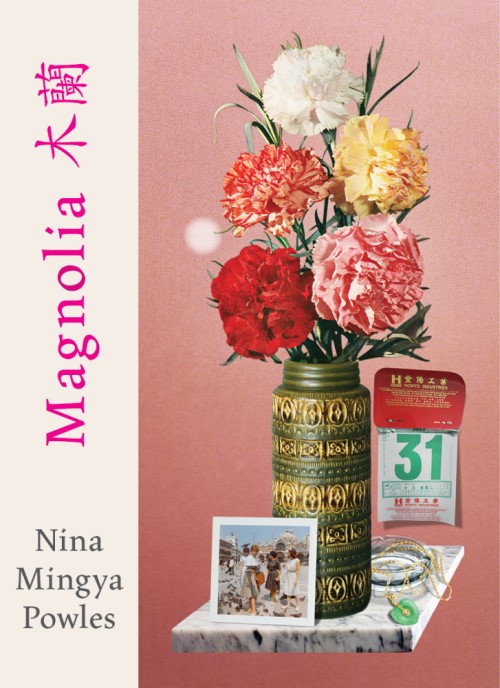
Help us celebrate the launch of Magnolia 木蘭 by Nina Mingya Powles in the time of covid! Nina is stuck in lockdown in London, from where she will do an Instagram Live reading to celebrate the publication of the New Zealand edition of her fabulous new poetry collection.

Join us on Wednesday 2 December at 9 pm NZ time on Nina’s Instagram page. (It will also be available to view later, but live is best!) To view the video you’ll need to have an Instagram account.

If Instagram isn’t your thing, or even if it is, you can also look forward to the real-life launch we’re planning with Nina in March!! Details TBC.

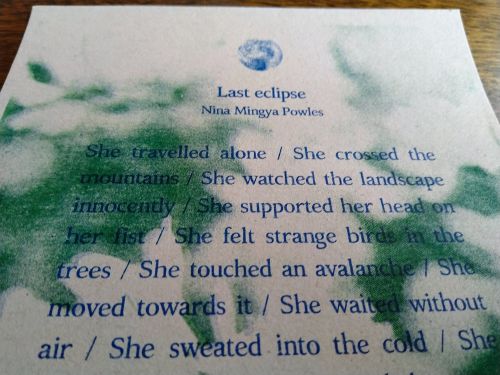
You can buy Magnolia 木蘭 from good bookshops, or direct from us. First 100 direct orders will also get a limited edition risograph print made by Nina herself of one of the poems in the collection.

About Magnolia 木蘭

Home is not a place but a string of colours threaded together and knotted at one end.

Shanghai, Aotearoa, Malaysia, London—all are places poet Nina Mingya Powles calls home and not-home; from each she can be homesick for another. A gorgeous bittersweet longing and hunger runs through the poems in this new collection from one of our most exciting poetic voices.

In Magnolia 木蘭 Powles explores her experience of being mixed-race and trying to find her way through multiple languages: English, Mandarin, Hakka, Māori. Powles uses every sense to take us on a journey through cities, food and even time, weaving her story with the stories of women from history, myth and film.

The gorgeous cover features an artwork by Kerry Ann Lee.

The UK edition of Magnolia 木蘭 was shortlisted for the Forward Prize for best first collection.

“This is a book of the body and the senses, whether the million tiny nerve endings of young love; the hunger that turns ‘your bones soft in the heat’; the painterly, edible, physical colour of flowers and the fabric lantern in the pattern of Maggie Cheung’s blue cheongsam; or ‘the soft scratchings of dusk’. These are poems of ‘warm blue longing’ and understated beauty, poems to linger over, taste, and taste again. As Powles searches for home she leaves an ‘imprint of rain’ in your dreams.”
—Alison Wong

About the author

Nina Mingya Powles is a poet, zinemaker and non-fiction writer of Malaysian-Chinese and Pākehā heritage, currently living in London. She is the author of a food memoir, Tiny Moons: A Year of Eating in Shanghai (The Emma Press, 2020), poetry box-set Luminescent (Seraph Press, 2017), and several poetry chapbooks and zines, including Girls of the Drift (Seraph Press, 2014). In 2018 she was one of three winners of the inaugural Women Poets’ Prize, and in 2019 won the Nan Shepherd Prize for Nature Writing. Magnolia 木蘭 was shortlisted for the 2020 Forward Prize for Best First Collection. Nina has an MA in creative writing from Victoria University of Wellington and won the 2015 Biggs Family Prize for Poetry. She is the founding editor of Bitter Melon 苦瓜, a risograph press that publishes limited-edition poetry pamphlets by Asian writers. Her collection of essays, Small Bodies of Water, is forthcoming from Canongate Books in 2021.

Poetry Shelf Monday Poem: Sue Wootton’s ‘At Moeraki’

At Moeraki

Midweek. Midwinter. The village

is pared back. At dusk

the houses on the hill go black.

Only here and there a window shines

and a slippered lighthouse keeper shuffles

between chair and cupboard, bath and bed.

In the bay the fishing boats lilt at anchor.

Beneath their hulls the ocean shifts in sleep.

Ale-bellied, full, we take our tavern talk outside,

searching for it on the stone stoop beneath the stars.

Still they are lost, the words we want

for that thing on the wall inside and what it did

although they knock and knock, these words,

behind the tongue. The boat ramp stinks of brine.

The moon rises slow and golden from the headland.

Old eye. The dock is matted with weed and slime. 


Queen’s shilling. Shanghai. Press gang. Cosh.

The words we’ve been casting for are caught.

Deckloads of the disappeared come up now on the hook.

The bay’s awash with them, awash.

Sue Wootton

Sue Wootton ( suewootton.com ) lives in Ōtepoti Dunedin. Her debut novel, Strip (Mākaro Press), was longlisted in the 2017 Ockham NZ Book Awards, and the following year her poetry collection The Yield (Otago University Press) was a finalist in the poetry category of these awards. She is co-editor of the e-zine Corpus: Conversations about Medicine and Life, found at corpus.nz


The poem ‘At Moeraki’ was shortlisted for the 2019 University of Canberra Vice Chancellor’s International Poetry Prize.

Poetry Shelf review: Bill Manhire’s Wow

Bill Manhire, Wow, Victoria University Press, 2020

Excuse me if I laugh.

The roads are dark and large books block our path.

The air we breathe is made of evening air.

The world is longer than the road that brings us here.

from ‘The Armchair Traveller’

Over my decades of reading New Zealand poetry, some poets stand out. To my discovery of Hone Tuwhare in my secondary-school library in the early 1970s, I add the joy of reading Jenny Bornholdt, Bernadette Hall, JC Sturm, Michele Leggott, Emma Neale, Tusiata Avia, Cilla McQueen, Anna jackson, Bill Manhire. So many other poets have given me goosebumps across the decades, poets who have made me pick up a pen and write, who have hooked my attention and then kept me listening. What is it that makes a particular poet, such as Bill Manhire, our first national poet laureate, a favoured return over years? For me it starts with music, moves through heart, silence, mystery, ideas, wit. I seem to favour bridges into poetry thickets, and these thickets might appear within a handful of words or a book-long sequence.

At WORD Christchurch a few weeks ago, I went to some excellent sessions. I have already written about the miracle of being there in the time of Covid, along with my festival highlights – but how fitting one favourite was the Bill Manhire / John Campbell conversation celebrating Bill’s new collection, Wow. John discussed the lasting effect of being in a Bill Manhire class at university and reading his poetry. I carried away such warmth and enthusiasm for poems and what poetry can do. John launched the conversation by explaining Bill’s impact on him: ‘A light went on in my head and heart which has never gone out’. This line has stuck with me. Poetry turns on internal lights. Gifts us an internal galaxy system. Coincidentally the house lights are always up in WORD sessions so it felt like a living-room or café conversation without the usual audience / speaker barrier at work. I kept wanting to join in! Afterwards fans lined up with the book to get signed and I pictured the queue of people racing home to find their own Wow enthusiasms. I will barely scrape the surface of how many paths through the collection.

Wow, co-published by Carcanet in the UK and Victoria University Press here, is one of four winter recommendations by the Poetry Book Society, an organisation TS Eliot and friends founded in 1953.

I begin with Wow’s preface: ‘they’ve cleared away / the clearings’.

The mystery is potent. The image haunting. I was sitting in my Ōtautahi hotel room, looking out at the parking-lot clearings, with Wow in hand, and I couldn’t stop leapfrogging from city clearings to bush clearings to mental clearings to poem clearings. And I couldn’t stop wondering what replaces the clearing, and the word bounced about in my head so much it lost sense. And then it became vital: we need clearings. We need clearings in the city, and the bush, and in our heads. Maybe we need clearings in poems, where the the light and dark intermingle, and the glints sit next to the ominous.

Thickets and clearings. The first poem is a song of the extinct huia, a fitting call onto the book’s musical terrain, and to uncertain and unsettling presents and futures. Such a poignant note to enter a collection with:

I lived among you once

and now I can’t be found

I’m made of things that vanish

a feather on the ground

from ‘Huia’

Turn the page and ‘Untitled’, a short poem, is an altogether different form of song. The dark edges are prominent, the silence (the unspoken, the withheld) a hook. This poem is the complete Manhire package: you get music, silence, mystery, dark edges, light turns.

Untitled

This book about extinct birds is heavier than any bird:

heavier than the dark bird eating my heart,

page after page of abandoned wings.

I lift it up and sit it on my lap

and listen to it purring.

Bill Manhire

John invited Bill to read the four-lined ‘A Really Nice Trip’, where the speaker visits several ‘Pleasant’ places: ‘Then we went all the way out to Pleasant Point.’ The audience laughed and loved it, and I pictured everyone picturing a mindstream of pleasant places. The poem is a wee joke. The poem turns up in reviews and on festival stages. The poem is also like a clearing for our own pleasant places, in my case, reeking of summer and green tea in a flask. Ah such a tongue-in-cheek, underrated word that scoots over how a Valley or a Flat or a Point can be satisfying, pleasing, a downright pleasure.

Yes! Bill is the maestro of ordinariness (a bit like Jenny Bornholdt is too) where an economy of words releases any number of treats. There is comfort in the ordinary – that pleasant place – that is sometimes so ordinary it becomes unreal, super-real. This kind of poetic ordinariness makes pinpricks on your eyelids, and you settle back in your chair or hammock as the armchair traveller, the poetry traveller, and it is altogether wonderful. I quoted the first stanza from ‘The Armchair Traveller’ at the start of this review, because it is this one of those classic Manhire poems that is going to haunt like ‘Kevin’ haunts you, or ‘The Ladder’ or ‘Erebus Voices’ or ‘Hotel Emergencies’ or ‘The Victims of Lightning’. Here is the last verse:

Time now to let the story take its course,

just settle back and let the driver drive.

Bliss is it late at night to be alive,

learning to yield, and not to strive.

from ‘The Armchair Traveller’

‘The Armchair Traveller’ is a poetry thicket at its very best – you get the light and dark, the mystery, the silence and the exquisite music. There is comfort but there is also discomfort. Perhaps the comfort –for me even in the darkest threats – is expanded by Bill’s fondness for rhyme and repetition. At times the rhyme resembles an incantation, a list, or repeating sounds, an insistent beat, but at other times, rhyme feeds the mysterious business of being human. ‘Warm Ocean’ is full of repetition and rhyme, assonance and alliteration, a sweet concatenation of musical effects and human connections, both within hearing and at a whisper.

Don’t play the music don’t play the music

says the man

who walks around town saying

over and over don’t play the music

all songs being made

as we know from things that hurt

ice that melts flames that fall from the sky

yes all of that and more

and the father goes on singing

long after his daughter leaves the church

from ‘Warm Ocean’

Yes! Wow offers multiple impacts as you read. Three poems in a row are heart catchers: ‘Knots’, ‘Our Teacher’, ‘The Sky’. Things are missed and missing. So poignant. Such treasures. How to tear yourself apart from the magical movement of ‘The Sky’? Impossible:

A man comes by with coal in a wheelbarrow,

muttering, muttering. He wants

to sell us warmth, his feet don’t leave the ground.

We think that we will always miss the sky.

It says look up whenever we look down.

from ‘The Sky’

Read Wow and you get story and song, light and dark, the surreal, constant surprise, but there is also always wit and humour. I laughed out loud at the indignant woman who thought she had phoned the cattery to get her vegetarian cat named Coleslaw back, and the bemused listener couldn’t get a word in edgeways. ‘The Lazy Poet’ is hilarious as it overlays cricket and poetry (‘He wonders about the word “thicket” …/ then turns on the cricket’) until ‘rain stops play’. I also laughed out loud at ‘The Deerculler’s Wife’, as it signals a poem that might be drowning, or yelling to get attention, or even blowing a yellow whistle.

Like many poets, Bill uses a roving speaker, who may or may not be autobiographical, invented, borrowed, an amalgamation of voices, experiences, imaginings. In a blog he wrote for Carcanet, he talks about the action between the speaker in the poem and the person who writes, and the way characters, one in particular, who keep turning up in his poetry. This nimble voice keeps us on our reading toes. Bill’s vagabond ‘I’ is best friends with an inquisitive and acquisitive eye and ear as it gathers in the world, real or imagined.

Wow will haunt you – so many of these poems have joined my list of memorable poetry encounters (see my list above to add to). The baby in the title poem says ‘wow’ while the big brother says ‘also’. This new collection sparks both the ‘wow’ moments and the ‘also’ moments. Get lost in its glorious thickets and then find your way out to take stock of the ordinary (and out-of-the-ordinary) world about you.

Bill closed his WORD session by reading ‘Little Prayers’, written in response to the Christchurch terrorist attack, 15 March 2019. This is a poem to hold in your heart. I will leave you with the opening verse, in the hope you will open the book, in your armchair or hammock, and begin reading:

Let the closing line be the opening line

Let us open ourselves to grief and shame

Let pain be felt and be felt again

May our eyes see when they cease crying

Let the closing line be the opening line

from ‘Little Prayers’

Bill Manhire’s most recent books include Some Things to Place in a Coffin (2017), Tell Me My Name (with Hannah Griffin and Norman Meehan, 2017) and The Stories of Bill Manhire (2015). He was New Zealand’s inaugural poet laureate, and founded and until recently directed the International Institute of Modern Letters at Victoria University of Wellington. He has edited major anthologies, including, with Marion McLeod, the now classic Some Other Country: New Zealand’s Best Short Stories (1984).

Victoria University Press page

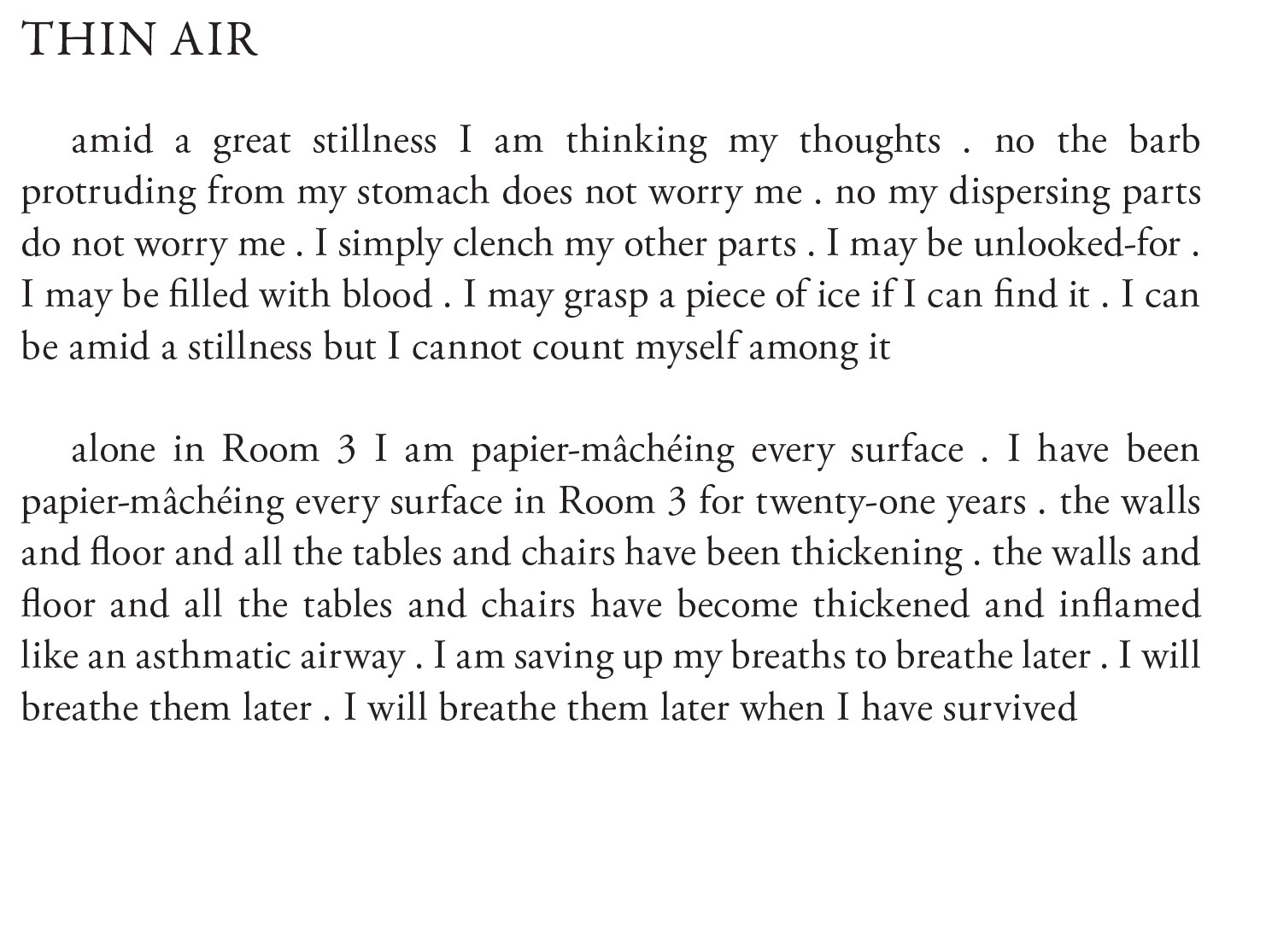
Poetry Shelf plays favourites: Freya Daly Sadgrove’s ‘THIN AIR’

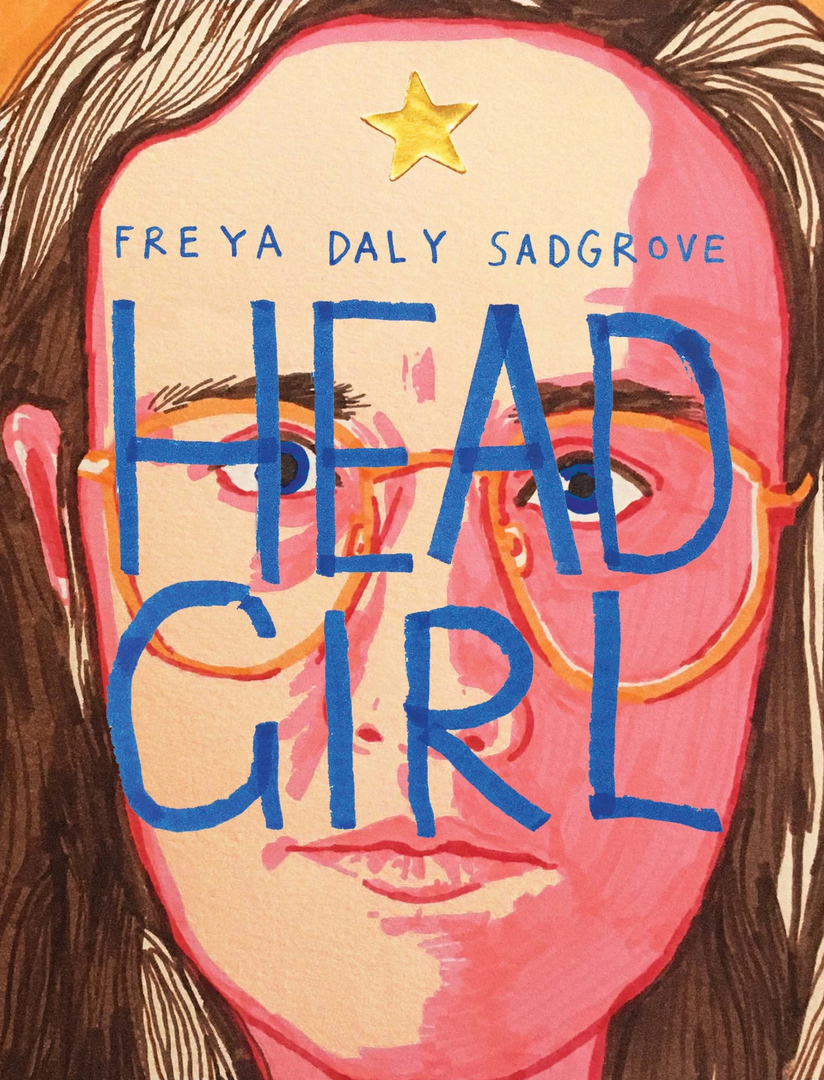
Freya Daly Sadgrove (Head Girl, Victoria University Press, 2020)

Freya Daly Sadgrove’s debut collection, Head Girl, arrived in the world in February, and like a number of local poetry books missed a featured spot on Poetry Shelf as Covid affected my concentration and ability to write. I read Head Girl when it came out and was in the grip of its searing self exposures, the cracking lines, the glints, the lightning, the darknesses, the dread, the anger. This is poetry that tears, that is torn apart, that is so utterly alive it hurts. Freya was part of my Wild Honey session at Christchurch’s WORD festival and unsurprisingly was an audience hit.

During one of Auckland’s Covid lockdowns, I decided to share poems that have haunted me from new books – the kind of poem that pulls you back because on each reading it grips. I am thinking of how I play a new album I love over and over – thinking of the way Reb Fountain and Nadia Reid’s new music has been on repeat this year.

Freya’s ‘THIN AIR’ has got under my skin, oxygenating my blood with its surprising skids and smashes. Like the skid and smash from ‘stillness’ to ‘barb’. Like the terror of asthmatic ways and the stench of papier-mâchéing. Like the word ‘breathe’ and the word ‘survived’. But I find I don’t want to dissect these poems for you. These welcome poem hauntings. They just are. Little poem magnets. Little vitamin shots. Little head trips. Nebuliser albums.

Freya Daly Sadgrove is a writer, performer and theatre maker from Pōneke. She has a Master of Arts from the International Institute of Modern Letters, and her work has appeared in various publications in Aotearoa, Australia and the US. Head Girl is her first book. She is also the architect of Show Ponies, an ongoing poetry extravaganza that appeared at both VERB literary festivals in Pōneke this year.

Poetry Shelf Monday Poem: Lynn Davidson’s ‘They don’t know what is coming’

They don’t know what is coming

for the women of North Berwick 1589


Their tongues are behind their teeth.

Their thoughts are not elaborate.

Evening has come and they are in their gardens.


One is pulling carrots

Another stands between her arms

And still another adjusts her waistband.


They are in the ordinary evening

The way a cup is under a tap,

To catch ordinary water.


It feels good to be free of the house

Now that the storm has passed.


The women are in their gardens.

The women are in their gardens.

The women are in their gardens


And evening is a weightless place

Where anything can happen.


A three-days moon

Nicks the sky.


Lynn Davidson

Writer Lynn Davidson, after living in Edinburgh for the past four years, has returned home to New Zealand. Her latest poetry collection Islander is published by Shearsman Books in the UK and Victoria University Press in New Zealand. She had a Hawthornden Fellowship in 2013 and a Bothy Project Residency at Inshriach Bothy in the Cairngorms in 2016. Lynn has a doctorate in creative writing, teaches creative writing, and is a member of 12, an Edinburgh-based feminist poetry collective. Her website