
Clytemnestra Takes a Bath
Woman — cast your tyrannical spell upon the water,
heart of red dwarf star, fizzing wonder,
and to the seething foam pour your oils, aromatic offerings,
libations of rose petals. Let candles blaze in the dark,
a ring of ensnaring flame.
Woman — run the bath red,
drop by crimson drop, let the red tide flow
unsheathe the cold steel, let it slide in long strokes
and when it nicks it oozes,
draw it quick down beneath the scarlet waters,
and keep it there.
Woman — I know you,
you own the distant scream or two of flesh
dragged against white marble,
the sound behind the door of a call:
in another life, you betrayed a kingdom of nothing,
wrenched off an eagle’s wings, sprayed its black blood wide,
assumed the form of a snake.
Clytemnestra — in this life, relax;
the day is beginning.
Untangle the net of your dressing gown from the bathroom floor,
wrap your blushed flesh in silk,
apply a plaster to that bright-ooze, shaving cut,
and let the crimson bathwater all the way out.
Breathe deep, dry off, moisturise.
Fish the rose petals from the teeth of the bathtub’s drain
with your hands.
Hebe Kearney
Hebe Kearney is from Christchurch but now calls Auckland her home. She is currently studying to complete her Honours in Classics and Ancient History at the University of Auckland. She couldn’t stop writing poems if she tried, and her work has appeared in Starling, The Three Lamps and Oscen.

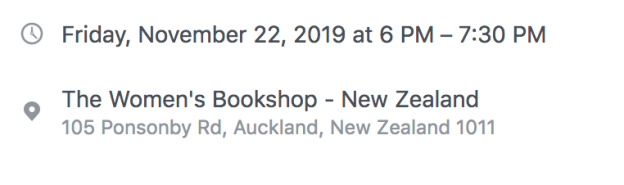
I am off on a Storyline’s National Festival Tour of schools on the East Coast of the South Island with Eileen Merriman, Vasanti Unka and Phillipa Werry. We are doing ‘What’s My Story?’: an evening event in Christchurch where we discuss our work. Come and say hello!
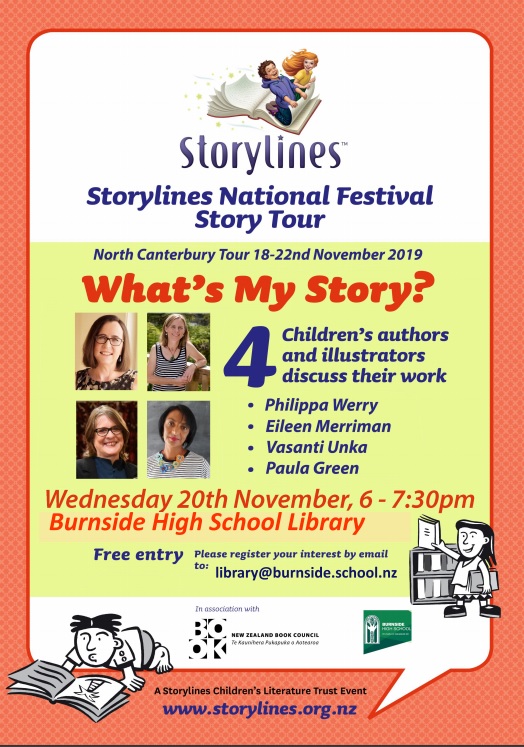
I wish that trapdoor to Wellington was still working – VERB’s LitCrawl has the most eclectic and appealing range of poets I have seen in eons and if I could be there in a flash I would. On Saturday night the range of voices is stunning. But it starts now!
This WOW! is on today:
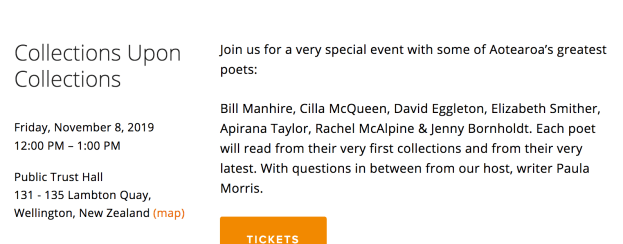
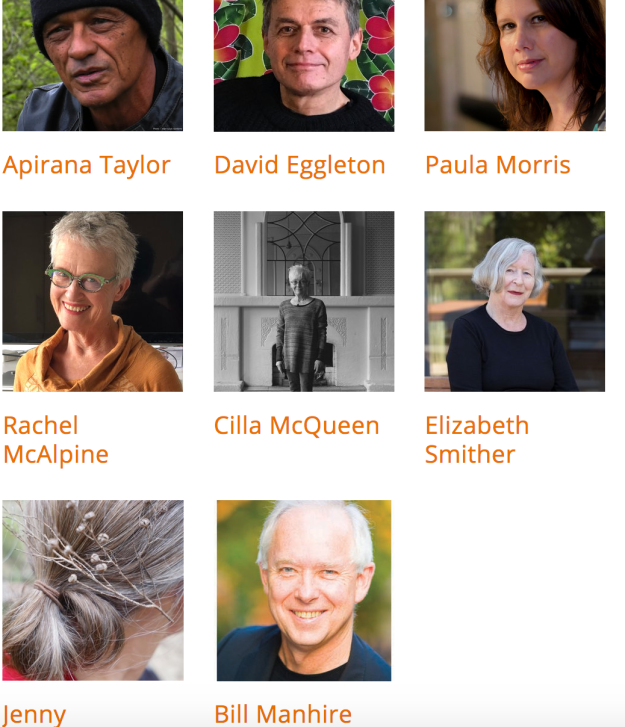
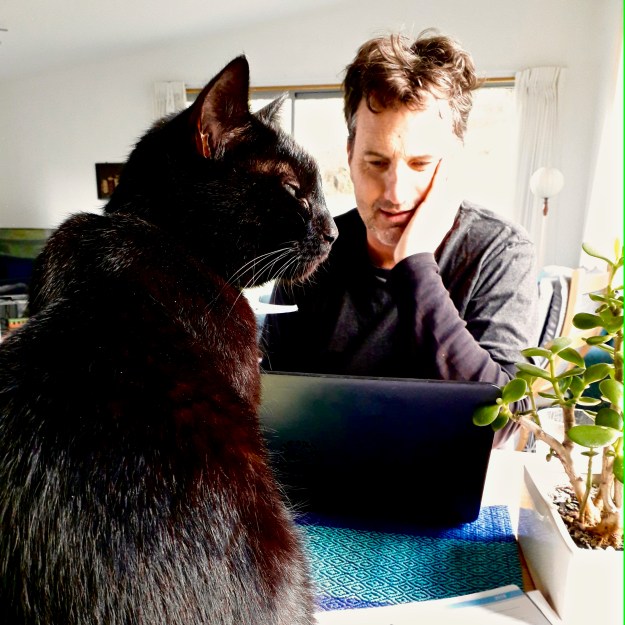
Otago University Press media release: Unpredictable powers of non-human world inspire winning collection
Lyttelton poet Philip Armstrong has won the 2019 Kathleen Grattan Award with his poetry manuscript ‘Sinking Lessons’.
‘Sinking Lessons’ was described by judge Jenny Bornholdt as an ‘accomplished, engaging collection of poems that displays literary skill and a sharp intelligence at work.’
‘There’s great affection for life of all kinds – human and the natural world – coupled with an awareness of the fragility of existence,’ she says.
Philip Armstrong says the poems in his collection are shaped by two main themes: the sea and the agency of the non-human world in general.
‘I grew up in a house beside the Hauraki Gulf, and for the last two decades I’ve lived within sight of Lyttelton Harbour, and the sights and sounds and smells of salt water make their way into my poetry whether I intend it or not’.
‘The other theme linking these poems is my attempt to recognise the active, mobile, lively, unpredictable capacities of the non-human world, from animals and plants through to waste matter and refuse, through to land forms and weather patterns.’
The biennial poetry award from Landfall and the Kathleen Grattan Trust is for an original collection of poems, or one long poem, by a New Zealand or Pacific permanent resident or citizen. Landfall is published by Otago University Press.
Philip Armstrong receives a $10,000 prize and a year’s subscription to Landfall, and Otago University Press will publish his collection in 2020.
For more information about Kathleen Grattan and the history of the award
About Philip Armstrong
Philip Armstrong works at the University of Canterbury, teaching literature (especially Shakespeare), human–animal studies, and creative writing (including poetry).
He has written a number of scholarly books (two on Shakespeare, and two on animals in literature) as well as a book for a general audience (about sheep in history and culture). In 2011 he won the Landfall Essay Prize for a piece about the Canterbury earthquakes, entitled ‘On Tenuous Ground’. ‘Sinking Lessons’ is his first collection of poetry.
Full details here
The Michael King Writers Centre Trust is looking forward to welcoming and hosting a diverse cohort of writers who during their time in Devonport’s Signalman’s House, will work upon an exciting and eclectic range of topics to include: two memoirs; seven novels and short story collections; three children’s books; two theatre plays; two collections of poetry, and four non-fiction projects.
The presitigous University of Auckland/MKWC Residencies were awarded to Pip Adam, Albert Belz, Tom Doig and Penelope Jackson.
Other established writers to receive residencies include current Poet Laureate David Eggleton, Hera Lindsay Bird, Jeff Evans, Rachael King, Bren MacDibble, Tina Makereti, Joshua Pomare, Max Rashbrooke and Tania Roxborogh.
Emerging writers awarded a residency are Aroha Awarau, Jane Arthur, Rose Carlyle, Megan Dunn, Amy McDaid, Tru Paraha and Maria Samuela.
Situation
Kākā have been screaming across the sky.
I’ve been thinking up jokes to tell myself.
One of the dogs pisses on the floor as soon as I leave the room.
The other dog follows me around the house.
There are a lot of dogs in the neighbourhood.
I am sure they know how to behave.
They don’t bark so much.
I’ve been preoccupied with what others think again.
I’ve been trying not to let people down.
Nights are not long enough.
Lately there’s been more sun than I would’ve expected.
I keep the weather report open in its own tab and check it often.
The internet has most of the answers I’m looking for.
Some of my questions come up at inconvenient times.
Some are just hard to explain.
Like, when people say ‘I want you inside me’
do they sometimes mean cannibalism?
Or that they want to inject your fluids into their veins?
Or do they only ever mean something plainly sexual?
Don’t laugh, it’s not always obvious, and
sometimes desire can make us hungry or violent.
Maybe healthy emotional behaviour wasn’t modelled to us as children.
So we bite. We draw blood. We take things that aren’t ours, I don’t know.
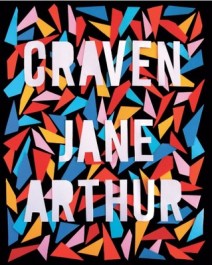
Jane Arthur, Craven, Victoria University Press, 2019
Jane Arthur was the recipient of the Sarah Broom Poetry Prize in 2018, judged by Eileen Myles. She has worked in the book industry for over fifteen years as a bookseller and editor, and has a Master of Arts in Creative Writing from the IIML at Victoria University of Wellington. Born in New Plymouth, she lives in Wellington with her family. Her first poetry collection, Craven, was published in September 2019 by Victoria University Press.
Victoria University Press page
 NZ Poetry Shelf