My body became clay Wefting into golden brown Drying before becoming wet
I climb the slippery urupa In leather healed boots Stumbling through fog eyes
My body became a grave Tugging at the weeds Seeping onto the curved mound
I notice the shifts of the soil Returning down deeper into the whenua Between the two tī kouka trees
My body became a mokomoko A tohu of things to come Perhaps there was a makutu
I think of disease as being dis-ease There is utu between all things But i flood a river
My body became a whisper Images of water without rhythm A camera shutter that would not turn
Hana Pera Aoake
Hana Pera Aoake (Ngāti Mahuta, Ngāti Hinerangi, Waikato/Tainui) is an artist, writer and sweaty milf. They are the author of three books of poetry(ish) and have three more in the works including a collection of essays and manifestos, On how to be, which is being published by Discipline in Naarm later this year. Mostly they are a PhD student researching industrial poisoning and Māori labour histories in the eastern Bay of Plenty.
Yesterday I spent the morning in a Kafkaesque rabbit hole trying to sort my new post box as the Swanson lobby is now closed. I have ended up with two boxes in two different places and like so many other people finding it impossible to sort with NZ Post. So fingers crossed my public postal address will eventually get sorted.
Meanwhile I am loving the newsletters Nelson’s VOLUME sends out.
I am currently listening to the audio book of Arundhati Roy’s memoir, Mother Mary Comes to Me. It is so deeply engaging. Highly recommended.
a week of poetry highlights
This week so many of you responded to the poetry of others on the blog – so many emails and messages, you taking time to share thoughts on why a poem or a feature mattered and hooked you. Wow! Thank you.
ONE.
Poetry Shelf celebratesthe Bill Manhire Honoured Writer session at AWF 2026. I am so grateful to the Auckland Writers Festival for posting the video of the session. So many poetry gold nuggets. The video of Hannah singing ‘Making Baby Float’ was incredible. And hearing the audio clip of Bill read.
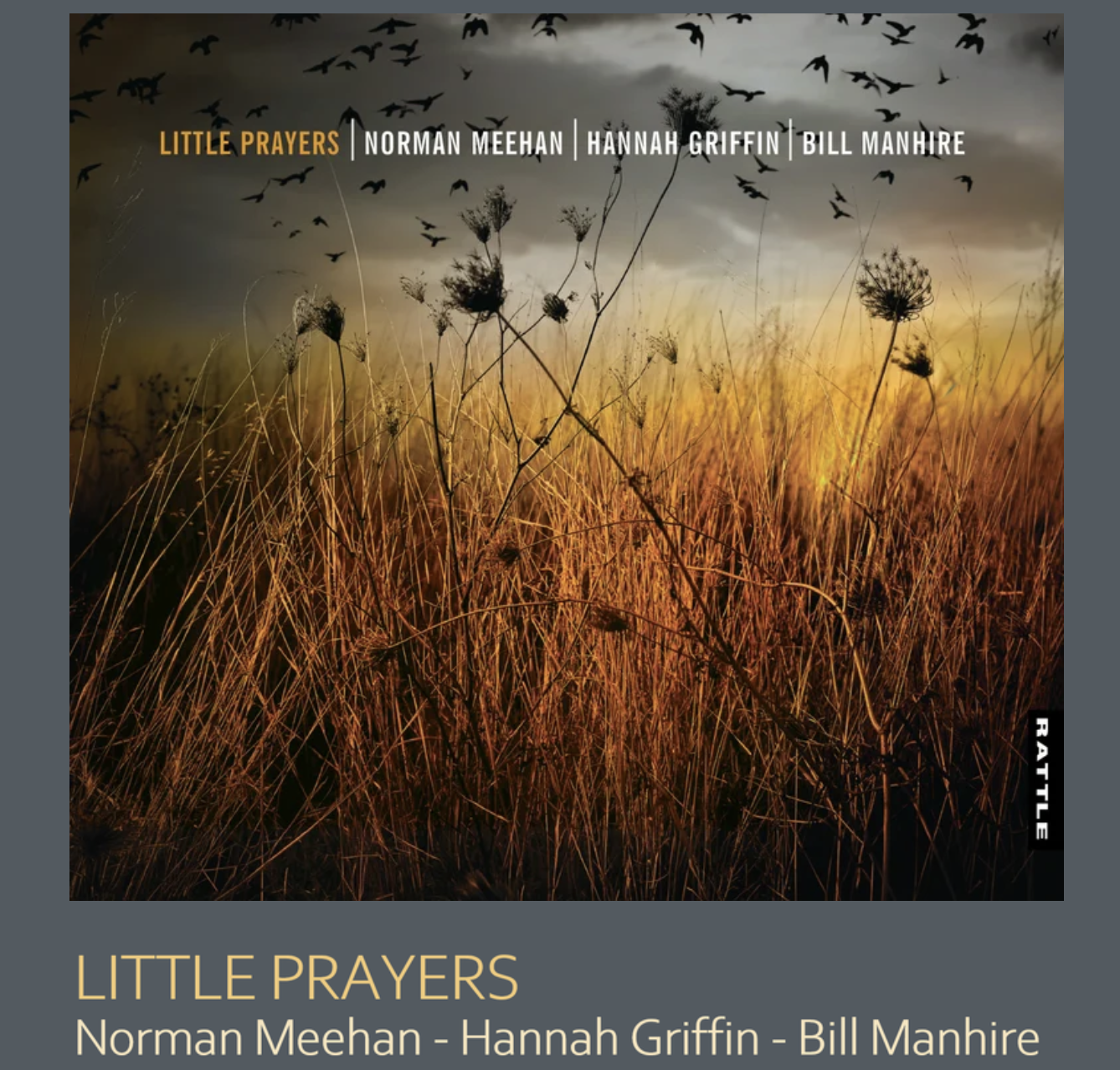
Bill’s Little Prayers will be released this Saturday, June 13 at 6.00 pm at a concert in the Hall of Memories as part of the 2026 LõemisFestival. Tickets are available HERE.
TWO.
The girl who was swallowed by ice and snow by Bernadette Hall and Kathryn Madill. I also utterly loved spending time with this Antarctic collaboration between Bernadette and Kathryn (a book and an exhibition). Go here.
Kerrin P Sharpe’s poem, ‘Requiem for a Pony’ in Poetry Shelf Speaks Out To For With got a whole a universe of love.
FIVE:
As did the Monday Poem: ‘car music’ by Amy Marguerite
Open invitation:
From today until June 27th you have an open invitation to send me poems that would work well in my series: Poetry Shelf Speaks OUT TO FOR WITH. A chance to get political, to challenge, to grieve, to muse, to connect, to find hope. Over to you. paulajoygreen@gmail.com
It leads down to the river where you can sit all day imagining the slow walk home.
Bill Manhire from Lyrical Ballads, THWUP, 2026
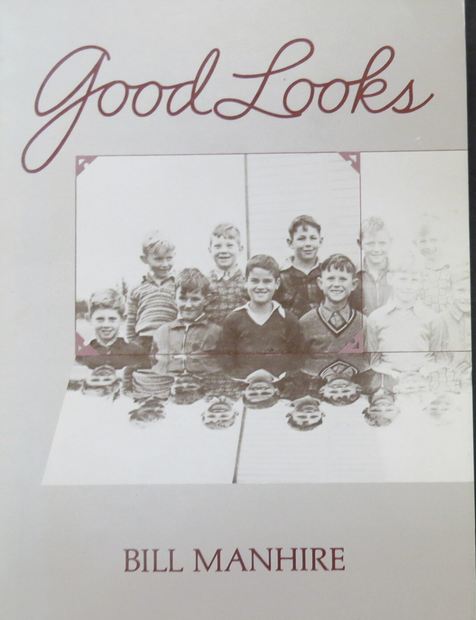
My must-go-to event at the Auckland Writer’s Festival was the 2026 Honoured Writer session. I was utterly gutted not to go, and extremely grateful to the festival for making the session video available. I have travelled with Bill Manhire’s poems for a long time, his collections are my go-to destinations for poetry that offers musicality, movement, intricacy, economy, agility, wit, surprise, storytelling, deep-seated feeling, his heart and mind engaging with what is close at hand along with the beating heart of the wider world, both physical and imagined. I get to feel his poetry, I get to think his poetry, I get to head off into extraordinary states of reading where poems simply and utterly and complexly shine. Think poetry with wings.
Bill has published some of my all-time favourite nz poems – poems which dance and tremble and echo on the page, poems that dance and tremble and echo in the ear / air. To hear Bill perform his poetry is an utterly breathtaking experience.
Thought I’d offer my provisional top-ten Bill poems as a reading starting point for you, and yes, every day the list shifts a little to suit my mood.
a provisional top ten
‘It Is Nearly Summer’ How to Take off Your Clothes at a Picnic, Wai-te-ata Press, 1977
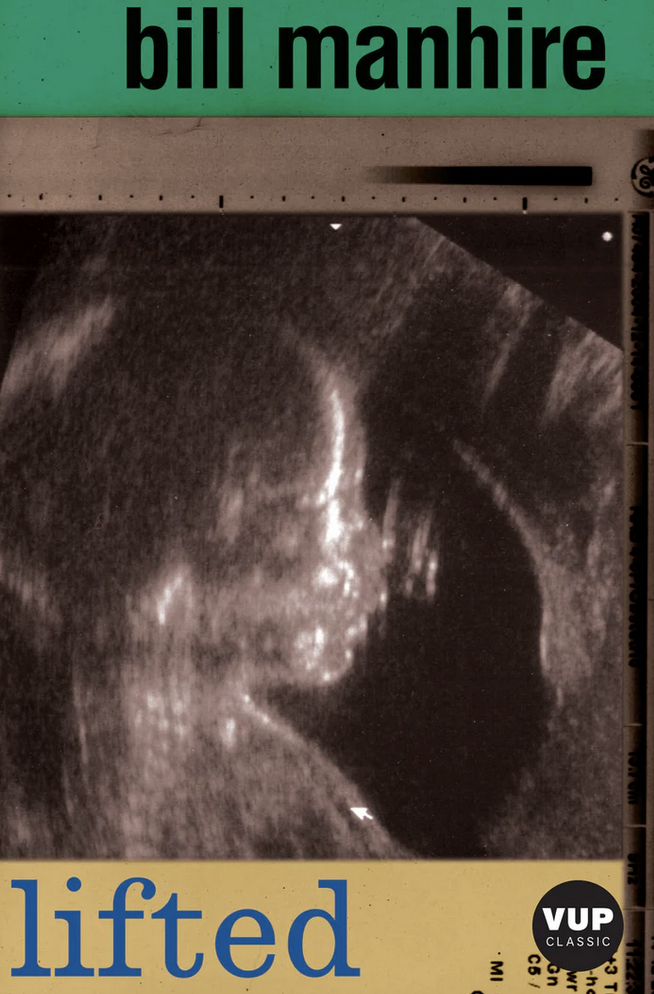
‘The Ladder’ Lifted, THWUP, 2005
‘Making Baby Float’ TheVictims of Lightning, VUP, 2010
‘1950s’ TheVictims of Lightning, VUP, 2010
‘Erebus Voices’ Lifted, THWUP, 2005
‘Hotel Emergencies’ Lifted, VUP, 2005
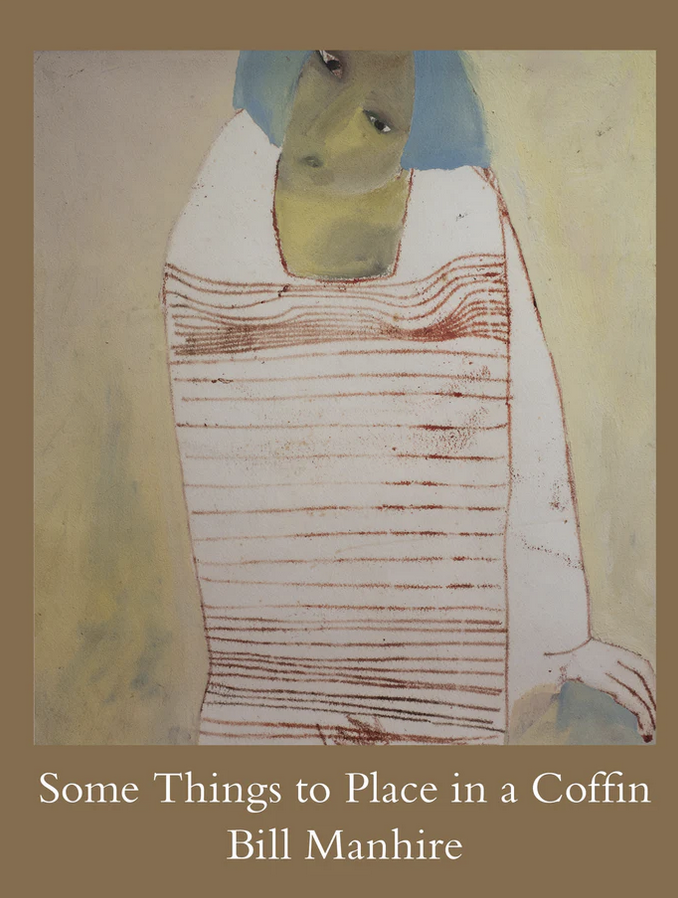
‘My World War 1 Poem’ Some Things to Place in a Coffin, VUP, 2017
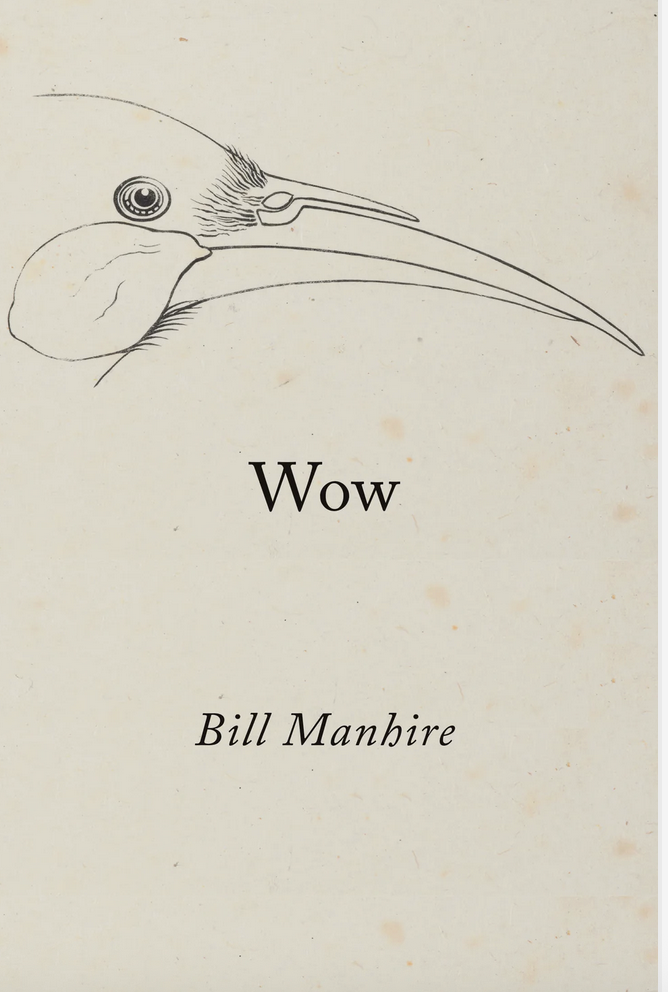
‘Little Prayers’ Wow, VUP, 2020
‘Kevin’ Lifted, VUP, 2005
‘A Lullaby’ TheVictims of Lightning, THWUP, 201
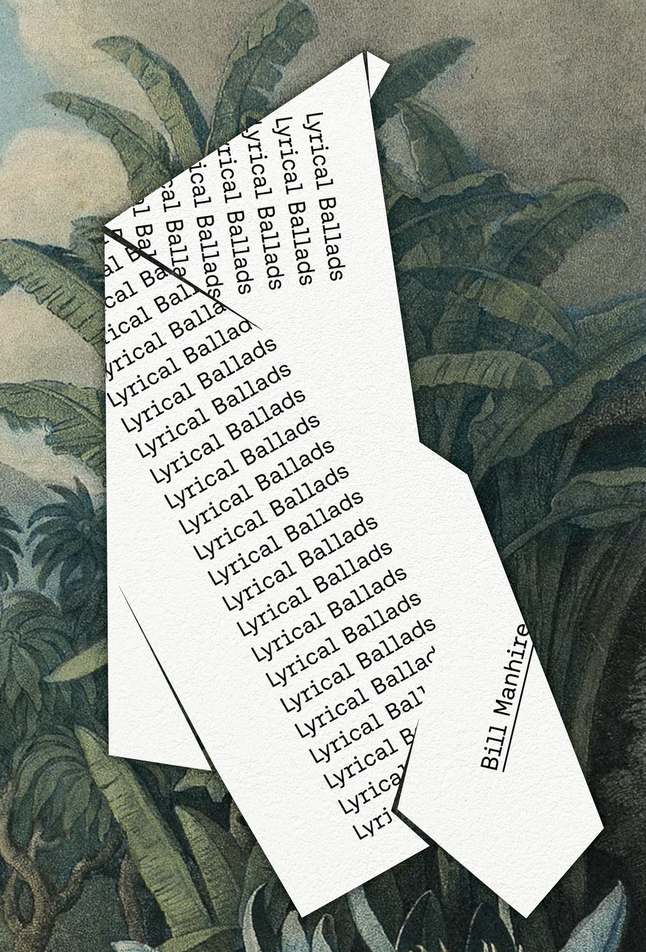
Plus this year, there’s the arrival of Bill’s new poetry collection Lyrical Ballads iTHWUP 2026). Spend a weekend sojourn with this remarkable book.
I wrote on Poetry Shelf: And of course there’s the ink steeped in music, with rhyme and repetitions, loops, the exquisite lyricism that audio-marks each ballad. My dream is to sit in the Titirangi hall again and listen to Bill read us the whole book as we sit spell bound, before moving to the side room to the spread the locals have put on, to return with plates of food balancing on our knees, and to talk poetry and life until our voices are hoarse.
Is it possible to consider this collection in the light and possibilities of tracing paper, where each poem is a set of overlaid sheets, where story is overlaid upon song, which is overlaid upon the personal, which is overlaid upon philosophy and contemplation, and where every layer is embued with humanity, what it means to be human and humane, kind and caring, and every layer is shining through and adding myriad possibilities? What will the insects sing next? What will I hear in the kissing room? What do I picture when I picture the bend in the road?”
After the rain
we climb out onto the roof
& tiptoe right to the edge
we want to see where the water
shakes its wings
Bill Manhire from Lyrical Ballads, THWUP, 2026
The Honoured Writer Session
Publisher Fergus Barrowman chaired the session with Ian Wedde, Norman Meehan, Emily Perkins and Elizabeth Knox, each choosing a poem to read and to use as a prompt to talk poetry. While Bill was unable to attend the session, we got to hear him read courtesy of a laureate event.
Anna Rawhiti-Connell, deputy chair of AWF, introduced the session with some scene-setting words. Bill was gifted a pounamu that carried the warmth and gratitude of the people in the room.
Anna: “To try and quantify the generative and multi generational impact of Bill Manhire’s work and leadership across the decade would be akin to dropping a hefty scroll on the stage, having it unfurl, roll up the aisle onto Queen Street and float out onto the Waitematā”
I am picturing testimonies from writers, students, readers on the scroll, and I am agreeing with Peter Simpson: “Bill has done more for poetry in nz than any other writer.”
Gaza
The dead boy tries to open his eyes. He wants to se the world he is leaving. But there is nothing to see here, nothing and nothing, and anyway he is gone. His parents held him while he died but they are both dead, too. Or he held them, no one remembers.
Bill Manhire from Lyrical Ballads
a highlight WOW exchange
Elizabeth spoke first and it was edge of the seat for me as she read and identified two key words: lightness and buoyancy: “The poetry is lighter than air and can carry great loads. When you enter a Bill poem you don’t know whether you are going to be carried up, and you’re always carried up, into sunshine, or whether you’re going to end up in the dark storm clouds. He’s got this buoyancy that takes you somewhere, but there might be rain there.”
Emily added negative space: “it can feel like buoyancy but it can feel very weighted and full of subtext, and you enter a poem, and it might just turn a corner, and in fact it probably will definitely turn a corner and you’ll find yourself somewhere totally new. The one I am going to read has a very intentionally enigmatic quality. One of the things the poems do for me they just work on the level of sound and you want to let that happen and not worry too much at them with the front of your mind.”
Elizabeth: “They’re not twist surprises he’s built into the poem, the place he’s going to take you to, but he’s done it, so you don’t see it until you end up there, and it’s always amazing every time. It’s like WOW! Like the title of that book of his.”
Ian: “I always like the way there’s a kind of self deprecation in the way that Bill writes, where he establishes his presence and then just gently removes it and leaves the presence to what the poem is doing and it’s a very subtle process and its a very understated one, but it’s also at a very basic level an immensely skillful one.”
Norman: “I’d been setting ee cummings poetry as music twenty-five years ago and said to Fergus I’d like to work with something closer to home. The great thing about asking a publisher a question like that is you leave his office with a box full of books. What I found with Bill’s work there was a musicality in how these poems performed themselves on the page and as I read them it suggested music to me and there were some that leapt of the page so a poem like Kevin, it was instantly telling me stories about the kind of music it wanted to live with.”
You get a clip of Bill reading at the National Library Poets Laureate event (28 November 2025). He reads the hilarious and serious poem, ‘Too Many Draculas’ . He also reads ‘Gaza’, with its ache and heart smash: “One of the things that the Poet Laureate position did for me and I think maybe does for other people too is it made me a little braver about using poetry as a thing where you could say what you thought about public events, things in the world, rather than things that just happened to be in your muddled brain and heart.”
The session ends with a video clip of Norman and Hannah Griffin singing Making Baby Float. Extraordinary.
Little Prayers will be released this Saturday, June 13 at 6.00 pm at a concert in the Hall of Memories as part of the 2026 Lõemis Festival. Tickets are available HERE.
Hannah Griffin (vocals) Norman Meehan (piano) Martin Riseley (violin) Zephyr Wills (viola) Brenton Veitch (cello) Bill Manhire (texts)
Following the horrific events in Christchurch in 2019, Bill wrote “Little Prayers”, a poem that surprised him. “I want to say I didn’t know I had it in me, but of course I didn’t have it in me—it was always out there in the world. My work was to catch it, edit it hard, and get the choreography right.”
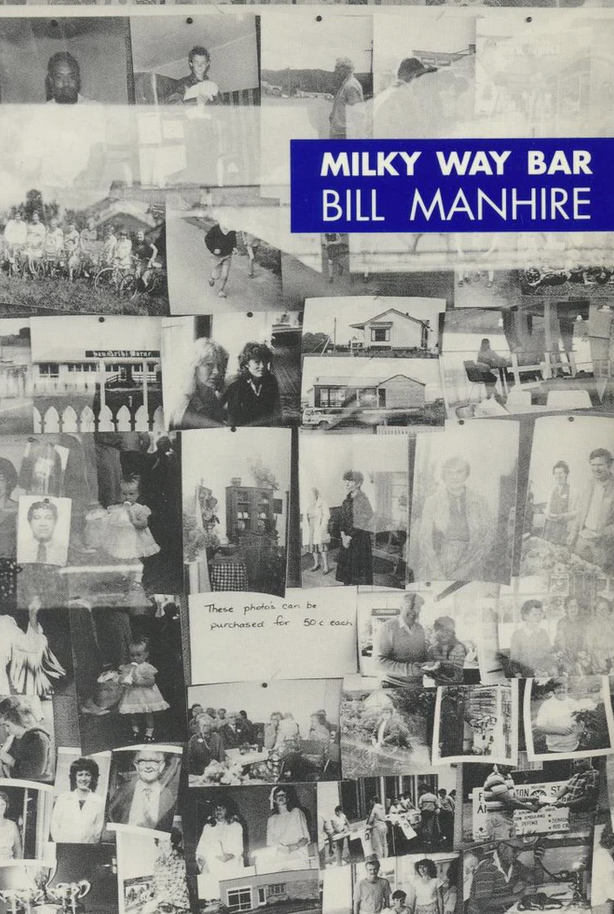
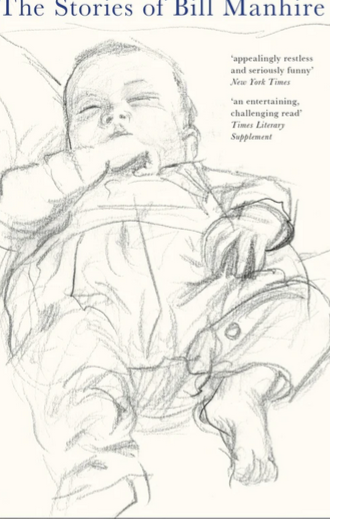
Bill Manhire (CNZM’)s latest book, Lyrical Ballads (2026). His books include Wow (2020), Some Things to Place in a Coffin (2017), Tell Me My Name (with Hannah Griffin and Norman Meehan, 2017) and The Stories of Bill Manhire (2015). He has won the New Zealand Book Award for Poetry five times, and was New Zealand’s inaugural Poet Laureate. He founded and directed the International Institute of Modern Letters at Te Herenga Waka—Victoria University of Wellington. He has edited major anthologies of New Zealand literature, including, with Marion McLeod, the now classic Some Other Country: New Zealand’s Best Short Stories (1984). In 2018 Manhire was awarded an Icon Award Whakamana Hiranga from the Arts Foundation.
Winter is here, and so is Writers on Mondays! From 6 July to 28 September 2026, Writers on Mondays is celebrating Aotearoa’s literary culture with a series of free lunchtime events.
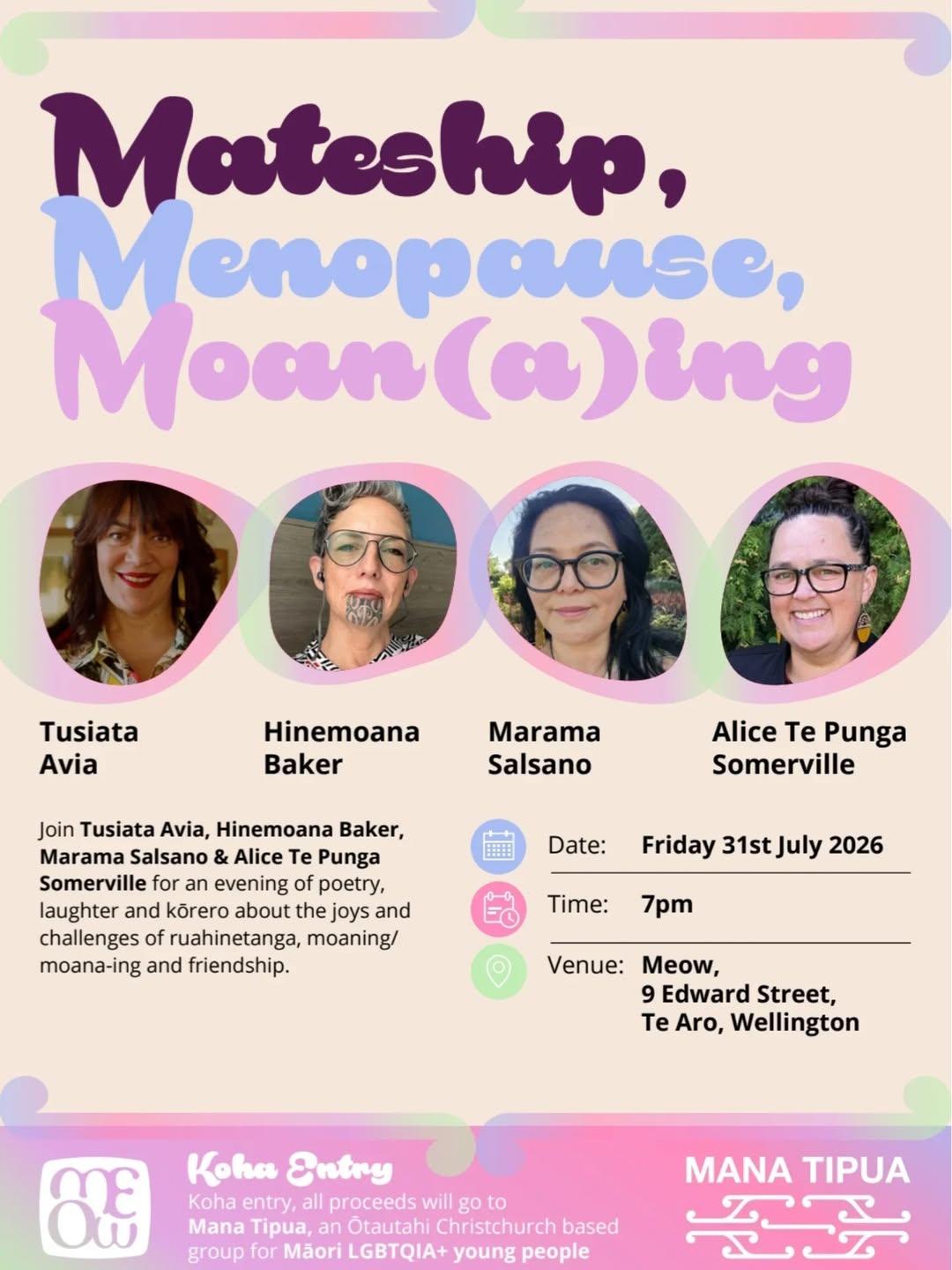
This free event series run by Te Herenga Waka—Victoria University of Wellington’s International Institute of Modern Letters (IIML) in conjunction with Te Papa, Meow, and Circa Theatre, invites audiences to hear from some of Aotearoa’s most celebrated writers.
Award-winning writers and exciting pairings are sure to spark lively conversations in this year’s programme, held from 12.15‒1.15 pm each Monday throughout July, August, and September.
Ingrid Horrocks, winner of the 2026 Jann Medlicott Acorn Prize for Fiction for her short story collection All Her Lives, and Laurence Patchett whose Have This Heart comprises “ten new stories, every one of them a winner” (Harry Ricketts, RNZ), discuss the art of short fiction. Tim Corballis joins 2018 Acorn Prize winner pip adam, 2026 IIML Emerging Māori Writer in Residence Terri Te Tau, to discuss speculative fiction and writing the strange present and possible futures in their new novels. There’s also a treat in store for readers of all ages, with the fantastic Rachael King and Claire Mabey speaking about their newest novels for young people.
2026 is a big year for memoir, and Writers on Mondays features the thrilling pairing of memoirists Noelle McCarthy and Kate Camp. Expect big laughs and a compelling discussion about their new books (Stakes and Leather & Chains), the 1980s, hungry girls, and vampires. Beloved novelist Elizabeth Knox will discuss her acclaimed memoir, Night, Ma. We also celebrate the Year of the Horse with another great pairing, of Abby Letteri and Marty Smith, whose works of non-fiction take very different approaches but hold the horse at heart.
Poetry offerings explore some big questions this year. Tusiata Avia, lauded poet and current IIML Writer in Residence will consider what poetry is for, and how to make it accessible to wider audiences. Airini Beautrais, Helen Rickerby, and Haro Lee will join Chris Tse to discuss blending forms of poetry and memoir, writing uneasy times, and making pasts and futures come alive. The 2025 edition of Ōrongohau | Best New Zealand Poems will be celebrated with readings from an all-star line-up of local poets.
Local writers Joseph Trinidad and Shariff Burke are making waves with their debut works. Shariff’s collection of short stories,Childish Palate, explores Te Whanganui-a-Tara through what he describes as “the emotional truth of outsiders”. Joseph’s prize-winning essay collection, Lucky Creatures, is described by Lana Lopesi as a “vibrant intervention into the literary landscape”.
For a glimpse of the emerging talent from the IIML’s Master of Arts workshops, scriptwriting students will have their words brought to life in lunchtime performances at Circa Theatre, while the next wave of novelists, poets, and creative nonfiction writers will read in special evening events at Meow.
Writers on Mondays will run from 12.15‒1.15 pm each Monday from 6 July to 28 September 2026 at Te Papa and Circa Theatre, with two special evening sessions at Meow. Admission is free and all are welcome. The series is supported by the Letteri family.
Come celebrate Aotearoa writers with us at Writers on Mondays—we look forward to seeing you there.
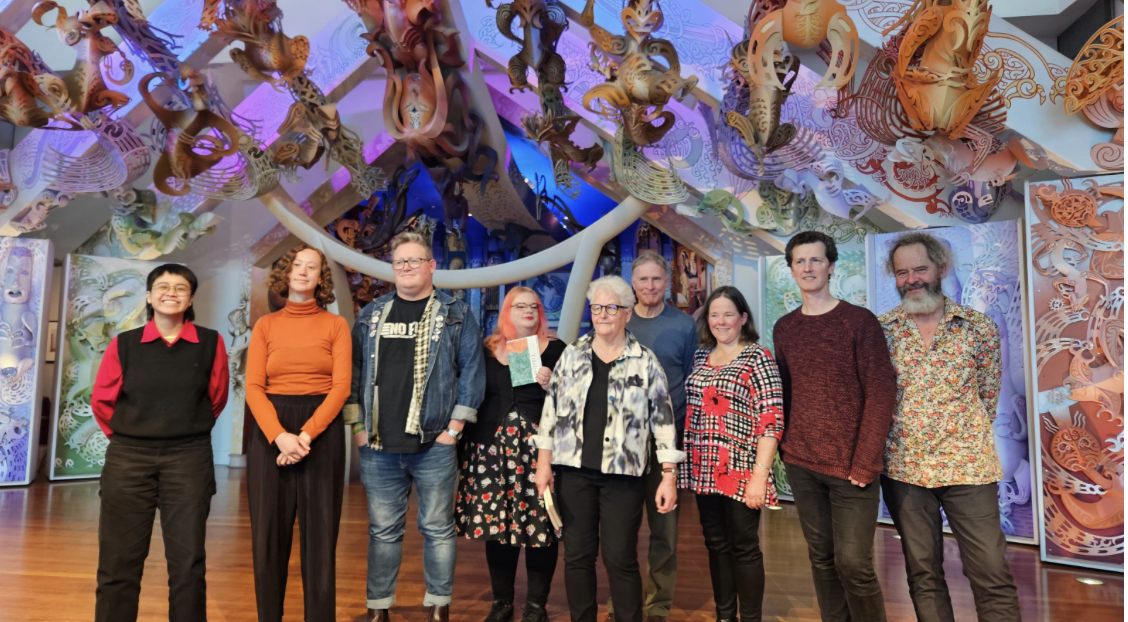
Image details:Ōrongohau | Best New Zealand Poems 2024 contributors and editor at a session from the 2025 Writers on Mondays series at Te Papa Tongarewa. Left to right: Zephyr Zhang, Stacey Teague, Simon Sweetman, Helen Rickerby (reading for Kiri Piahana-Wong), Robin Peace, James Brown and Philomena Johnson, with BNZP 2024 editor Nick Ascroft and Te Herenga Waka University Press publisher Fergus Barrowman (reading for Vincent O’Sullivan). Photo by Caoimhe McKeogh.
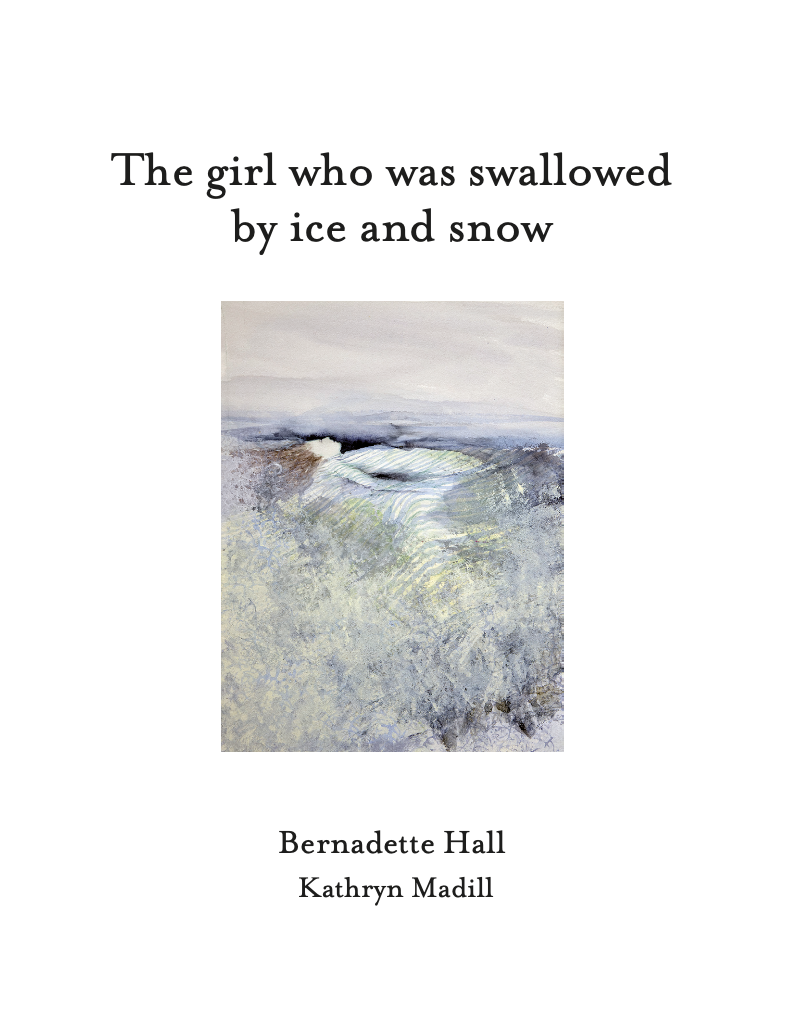
The girl who was swallowed by iceand snow Bernadette Hall and Kathryn Madill The Tuirau Arcade, 2026
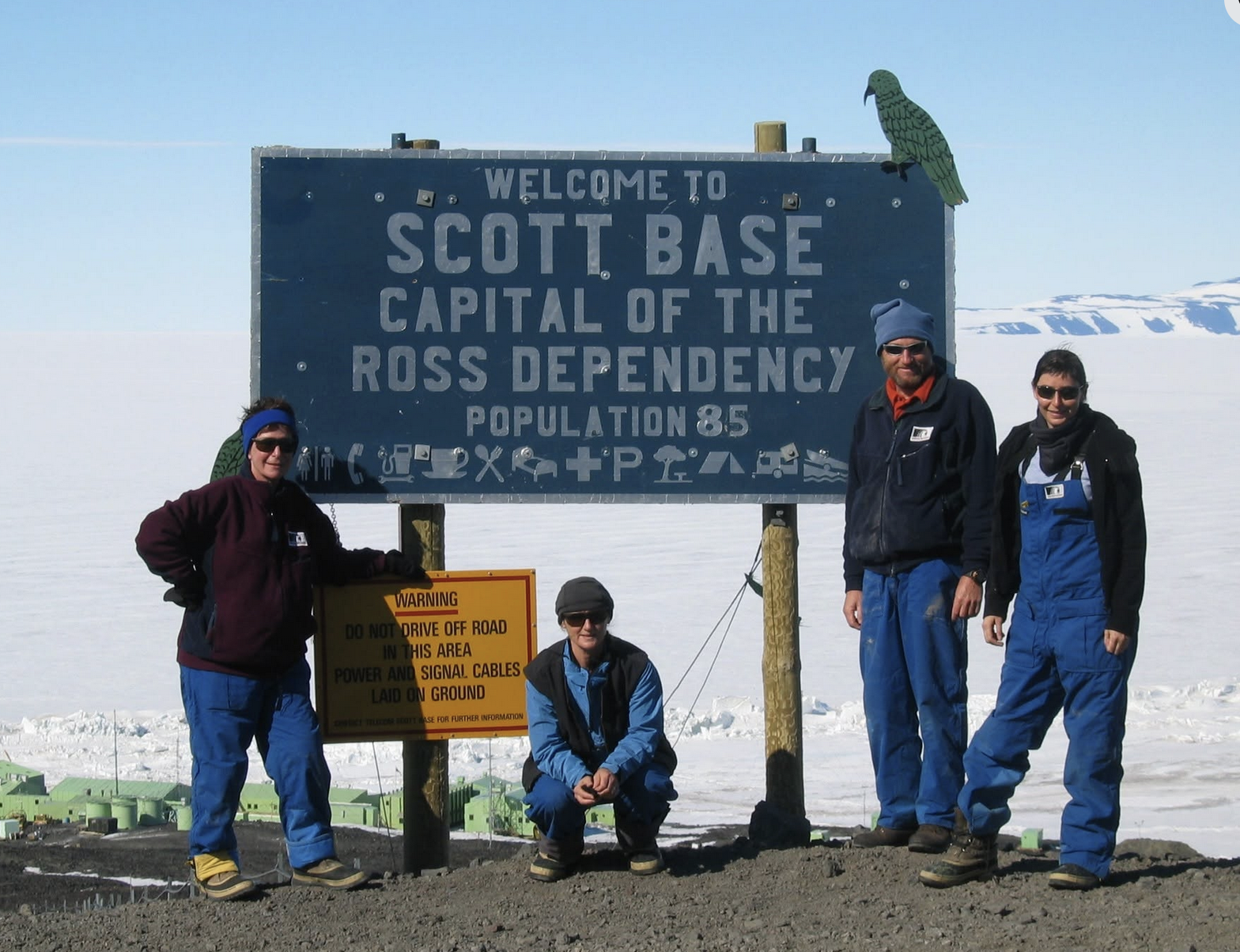
Bernadette Hall and Kathryn Madill shared an Artists in Antarctic Award in 2004, a memorable experience that drew them into creative collaborations and an enduring and close friendship.
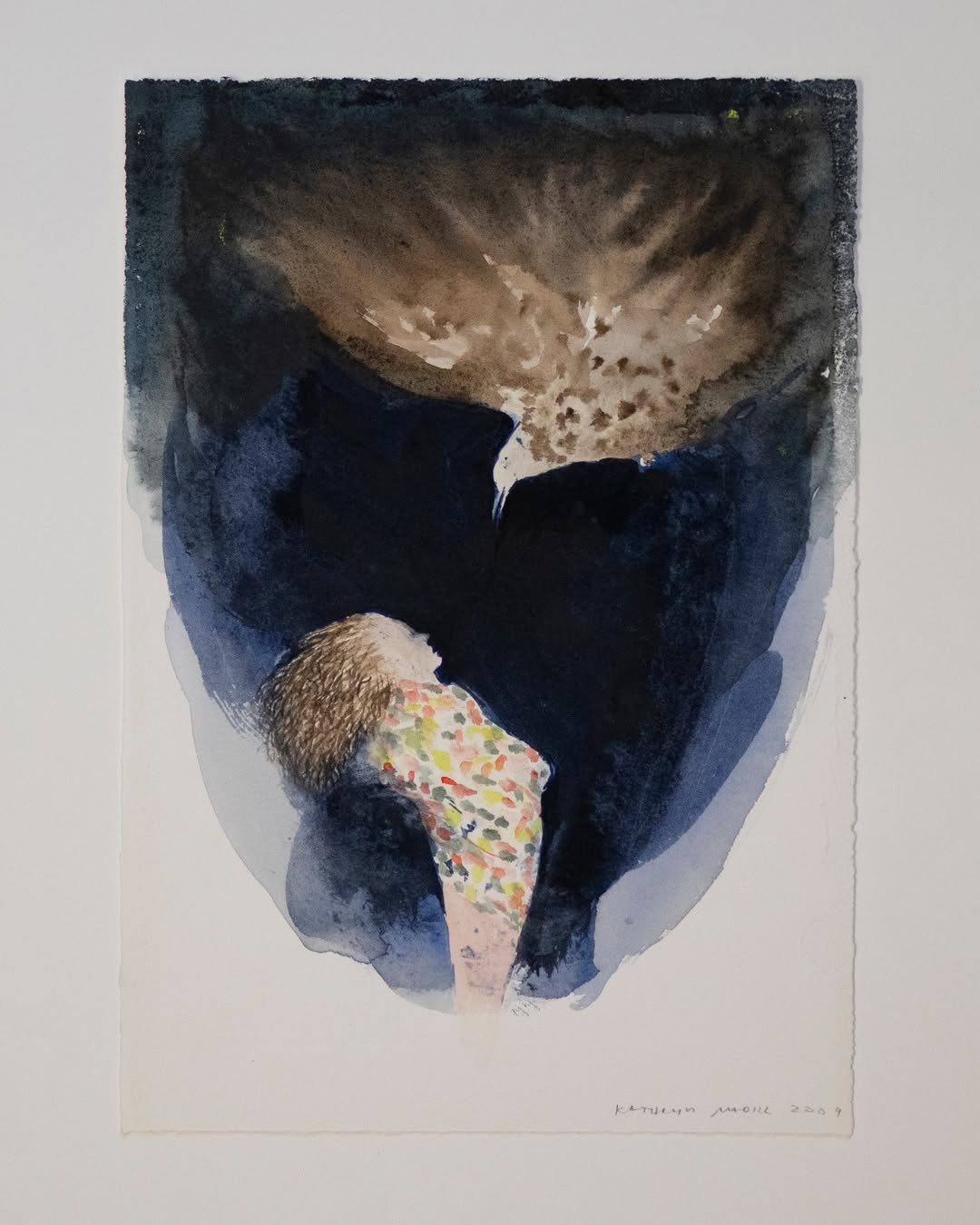
The girl who was swallowed by iceand snow is an ice-aching poem exhibition story fable haunting collaboration with text by Bernadette and paintings by Kathryn. An exhibition was displayed from 17 March to 13 April 2026 at City Art Depot Gallery, Christchurch.
Sometimes I pick up a book, and it is perfect timing, a book that fills the gap or ache or hunger of now. I open the The girl who was swallowed by iceand snow, and get that electric connection, this is the book I need to be reading, this slender book that opens out into thickets of discovery, recognition, delight.
Sul is sixteen, born on a Sunday, she is full of grace, but for some self-smashing, self-unacccountable reason, she plunges into a crippling state of silence. A state of frozen ice. But then, after days and months entrapped, upon hearing her name called in the middle of the night, she moves. She begins walking moving walking moving with ice limbs through garden forest beach.
Sul is moving with a comfort quilt draped across her shoulders, through a radically changed world, with horrifying things sliding off a banquet table, with no desire, just ice. And here we are in the mysterious terrain of fable, with a tugging desire to be walking, to be naming things, with a moon ladder, with the world’s fabled beginnings, with the fingertap of the dead and death, in some scenes.
And yes we are in the terrain of fable when a rescue Ice Warden cares for Sul, with uncertain and maybe unstable time passing, and dear Sul is fed snow berries and sea lettuce and stories.
The Ice Warden takes her to the sharpest ice shard imaginable, figuratively, and literally, there in the Antarctica scene, to a frozen ice hut, to an ice bridge collapsed, to scrapping sled dogs and to where men are trapped in blizzard death, trapped in stagger and collapse, and the death-watch Ice Warden unwittingly offers a turning point, an epiphany moment for dear Sul.
More than anything, I am busting through ice to care for and be cared for, for Sul to be cared for and to care for. For you to care for and be cared for. Musing within this precious moment on how to care for the person next to me, how to be held in warm embrace, how to recognise what I want and need when desire is a big thin unstable wedge.
Bernadette’s writing is a visual canvas, painterly with detail, economical, lyrical, rich in effect. The sentences exude an exquisite honeyed fluency, even when writing of ice and shards and death and the dead, uncertain times and timings. The sublime rhythm and simplicity accentuates the haunting, the fablesque, the real world.
Kathryn’s artwork, comprising watercolours and monoprints, is a dark-light visionary narrative, also lyrical with haunting rhythms, and if you place your ear tenderly against an image, you will hear the mysterious haunting dream. The pitch black intimate night of the painting. I am, for example, drawn deep into the empty chair, the velvety red smudges, the suspended moon. The rippling paint texture catching the intimate interior world of Sul.
I am shimmering and shivering and thawing and dreaming beyond and within the layers of this extraordinary wee book. Thank you.
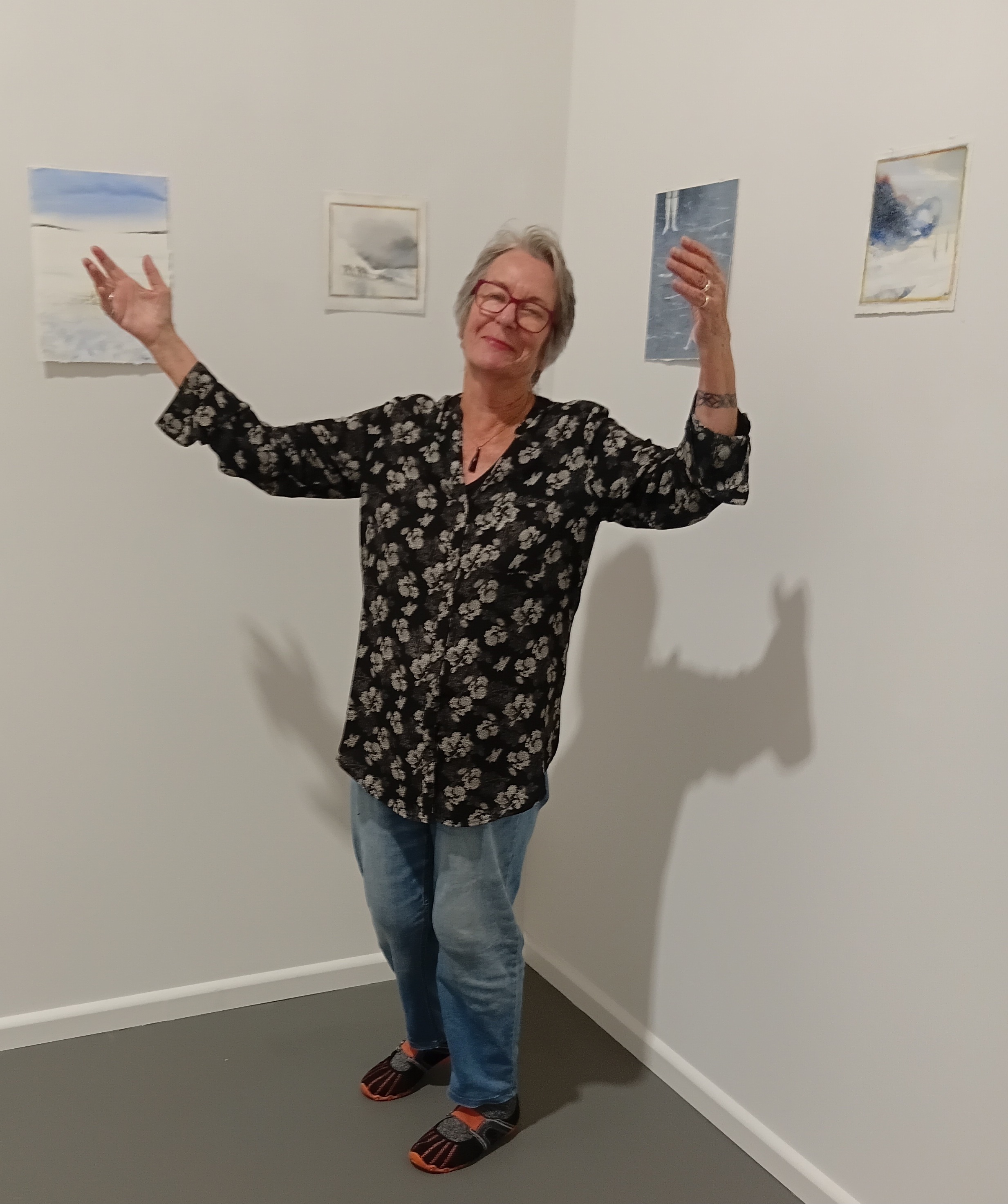
The photo was taken in the City Art Depot in Otautahi Christchurch
“On March 17 at the City Art Gallery in Ōtautahi Christchurch, my YA short story ‘The Girl Who Was Swallowed by Ice and Snow’ will be launched. It is a collaboration with the Dunedin artist, Kathryn Madill, 1,800 words from me and 17 paintings from her. Set in an Antarctic dreamscape, it explores the phenomenon of silence, the kind of silence the young can vanish into. To save themselves. As I did when my dad died in front of me when I was 16 years old. His Irish heart giving out. So it has taken me 22 years to make this artwork. How wonderful to celebrate the making now with Kathryn.” Bernadette Hall
Bernadette Hall is Otago born and bred. Following a long and much enjoyed career as a high school teacher in Dunedin and Christchurch, she has for the last eighteen years lived in a renovated bach at Amberley Beach in the Hurunui, North Canterbury, where she has built up a beautiful garden. Fancy Dancing is her eleventh collection of poetry. In 2015 she collaborated with Robyn Webster on Matakaea, Shag Point, an art /text installation exhibited at the Ashburton Art Gallery. In the same year she was awarded the Prime Minister’s Award for literary achievement in poetry. In 2017 she was made a Member of the New Zealand Order of Merit for services to literature in Aotearoa New Zealand.
Dunedin artist Kathryn Madill is an established New Zealand artist. Her paintings, drawings and prints explore fragments of literature, legend and landscape. Within these delicate works, we find poised moments of human experience stalled against the grey of day, the dark of night, the barren contours of a desolate landscape. Madill has been a consistent exhibitor at City Art Depot since our first exhibition in 2001.
The exhibition: The girl who was swallowed by ice and snow, City Art Depot Gallery, Christchurch, 17 March to 13 April 2026 exhibition link. gallery
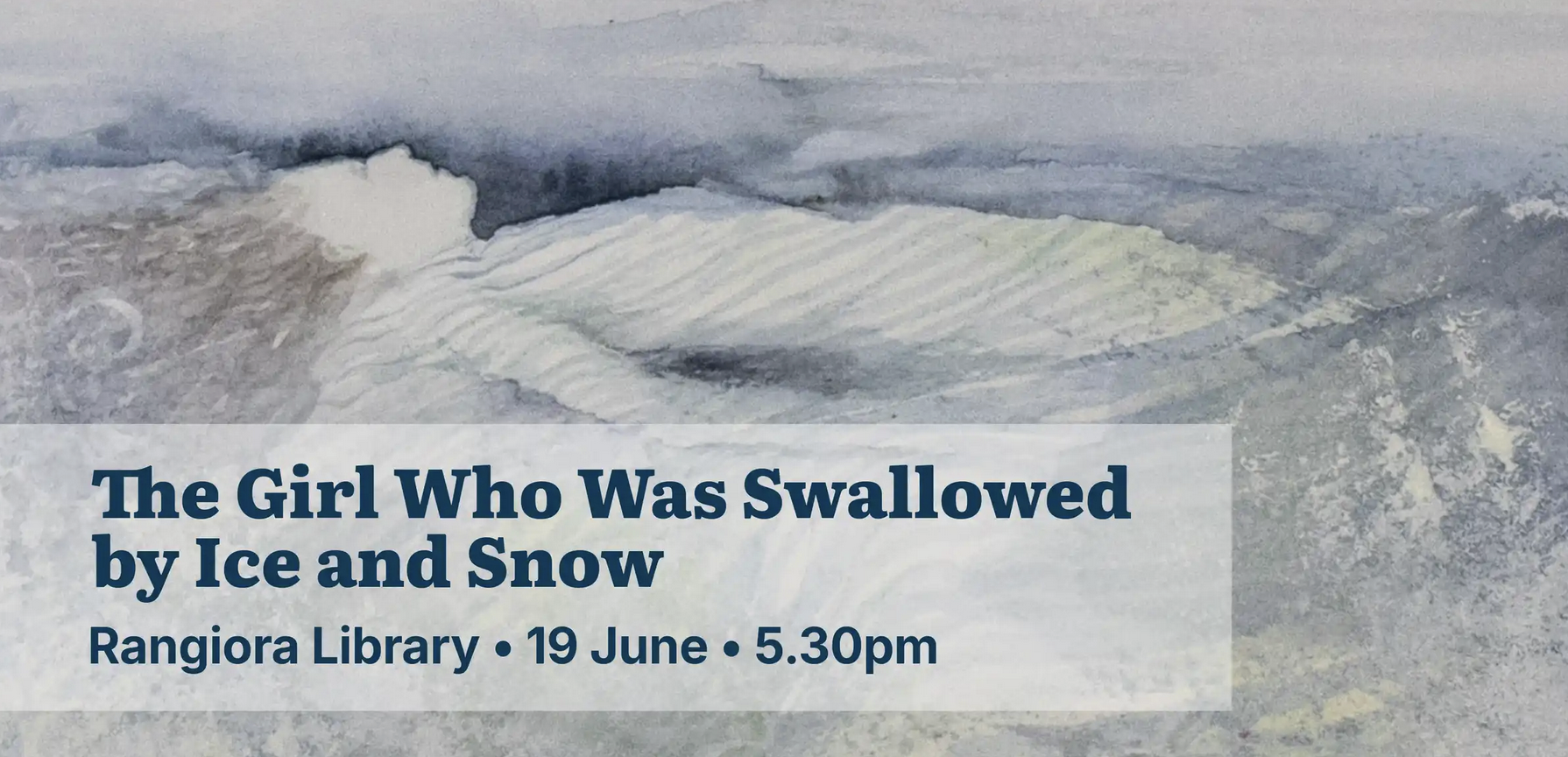
An event: Waimakariri Libraries invite lovers of stories and beautiful art to enjoy a lively book talk to celebrate ‘The girl who was swallowed by ice and snow’, a book written by Bernadette Hall with accompanying artworks Kathryn Madill.
This special event features images of the original artworks by Kathryn Madill, and a reading from the book by Bernadette Hall. This beautiful book is 20 years in the making, with roots that go back to their shared 2004 residency in Antarctica.
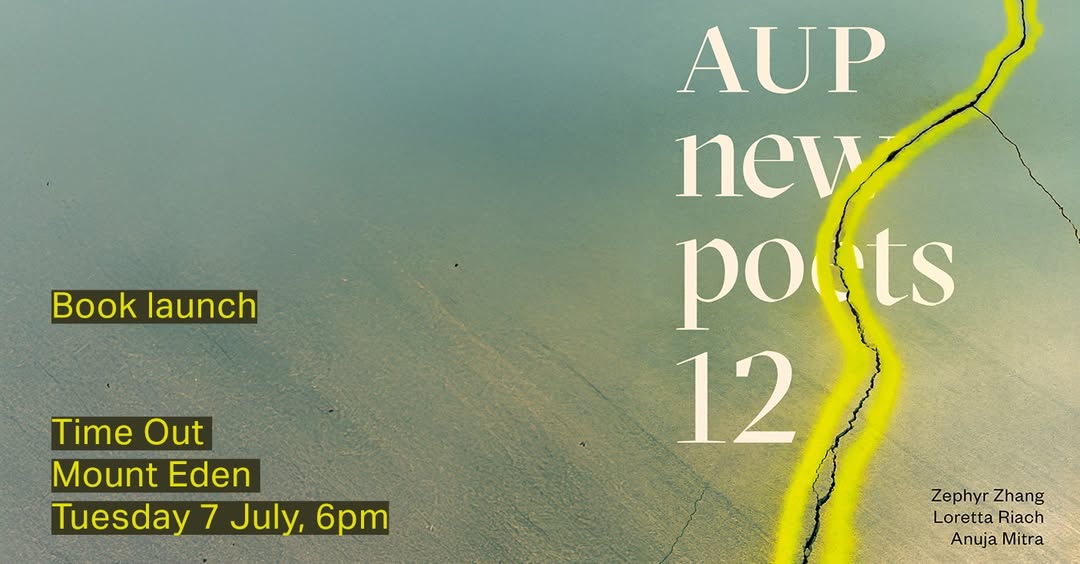
Join us to celebrate the publication of AUP New Poets 12, featuring collections by Zephyr Zhang, Loretta Riach and Anuja Mitra.
‘‘AUP New Poets 12 carries on the high standard set by the series and gives a fuller canvas to three young poets who I know we will read much more from in the years to come. Open-hearted, funny and extremely current, Anuja Mitra, Loretta Riach and Zephyr Zhang all write engrossing collections that deliver on the promise of their appearances in local and international journals.’ — Francis Cooke
Tuesday 7 July 6pm
Time Out Bookstore 432 Mount Eden Road Auckland
Come along for readings and light refreshments. Series editor Anne Kennedy will be launching the book, which will be available to purchase courtesy of our generous hosts and the authors available to sign your copy.
Join Zarah Butcher-McGunnigle for the New Zealand launch of two powerful and innovative collections, Leaves Fall Off to Create Drama and Autobiography of a Marguerite, both published in April by Giramondo.
The launch will be hosted by Hana Pera Aoake, and feature readings from Hana, JM Francis, Josephine Kitsen and Siobhan Harvey, as well as the author herself.
Copies of Zarah’s books will be on hand for purchase, with light refreshments available.
This event is free, but please register your attendance via Humanitix. We hope to see you there!