Brass Band to Follow, Bryan Walpert, Otago University Press, 2021
Bryan reads ‘In the lull’
Bryan reads ‘Brass Band to Follow’
Bryan Walpert is the author of four collections of poetry—Etymology, A History of Glass, Native Bird and most recently Brass Band to Follow (Otago UP). He is also the author of a novella, Late Sonata, winner of the Viva La Novella prize (Australia); a collection of short fiction, Ephraim’s Eyes; and two scholarly books: Poetry and Mindfulness: Interruption to a Journey and Resistance to Science in Contemporary American Poetry. A novel, Entanglement, is forthcoming with Mākaro Press in October. His work has appeared in New Zealand, Australia, UK, U.S., and Canada and has been recognized by, among others, the Montreal International Poetry Award, the New Zealand International Poetry Competition, the Royal Society of NZ Manhire Award Creative Science Writing Award (fiction), The Rattle Poetry Prize (US), and the James Wright Poetry Award (U.S). He is a Professor in Creative Writing at Massey University, Auckland. More on Bryan can be found at bryanwalpert.com.
The NZSO is throwing open the doors and inviting you to join us for a variety of free events for all ages.
Sat, 10 July, 10.30am-5.30pm Michael Fowler Centre
ALL EVENTS ARE FREE TO ATTEND
Open Doors is proudly supported by
Note some events require online registration due to limited spaces, see link below for details.
Storytime Live & Instrument Petting Zoo 10.30–11.30am Join us for a short performance of NZSO Storytime live –a selection of kiwi children’s book favourites accompanied live by members of the National Youth Orchestra.
Children of all ages can the explore the Instrument Petting Zoo, getting up close with various instruments and musicians of the National Youth Orchestra.
Words and Music 12.30pm – 1.30pm
With Stravinsky influenced by literature in much of his musical works, and Shostakovich’s Leningrad inspiring works of both non-fiction and fiction, NZSO with panelists Ariana Tikao, Tayi Tibble and Sam Duckor Jones partner withVerb Wellington to explore the connection between the two art forms through a discussion with New Zealand writers on how music has influenced their work.
I found Meg, passing a quiet half hour in the second-hand bookshop while the women sang carols for the farmers market. There were lots of people but no sales. Seagulls appeared passably natural in pothole puddles where I sat to read Campbell’s poetry next to children banging drums. A boy’s boss offered to pay him twenty dollars for getting up at seven, working till noon. His mum talked her up to thirty, ‘If you want him back.’ ‘I haven’t sold a thing,’ the stall keeper said. ‘Neither has he,’ the mum parried.
Rachel J Fenton
Rachel J Fenton’s poetry has been published in Landfall, English, The Rialto, Magma, and widely anthologised, and her chapbook Beerstorming with Charlotte Brontë in New York is published by Ethel Zine and Micro Press.
It’s a week when I feel on edge about everything: the news a back slap of global and local misdeeds, COVID spread, Hong Kong oppression, petty political point scoring, exploiting the system for the good of the individual rather than the good of the whole, the maltreatment of children in care, my internet and landline going down amplifying my aloneness, the strength of the bubble, the weakness of the border, the need to acknowledge how well our Government has done when you keep things in perspective, the fact I haven’t planted the boadbean seeds yet, the fact I am not getting enough sleep, the night-time nag the future is uncertain. And yet I make a pot of leek, cauliflower and corn soup with harissa, and I am reading the edges in Iona Winter’s wonderful gaps in the light, and somehow, in some remarkable miraculous way, I feel joy. Posting poems with some kind of edge feels entirely fitting.
The poems
Thresh/hold
It looked inviting
that blue promise
so I stepped through
but the door unframed
my thought, unhinged
my indoor-outdoor flow.
Now all’s astray, I don’t
know why I came or where
to go. I am misplaced,
a left-hand mitten dropped
on concrete, getting
wet, that splits the sense
of keeping warm right
down the middle. I’m
hot and cold, I’m black
and blue, my fine boot on
the other foot but on this one
somebody else’s shoe.
Chris Price
from Beside Herself Auckland University Press, 2016, suggested by Amy Brown
The poem that is like a city
This poem is like a city. It is full of words.
Doing words. And being words. And words
that compare one thing to another thing
and words that hold everything together.
This poem has a high rise at its centre
with a view across the plains to the hills.
It has a CBD and CEOs and a thousand
acronyms whirring like wheels, This
poem is going places. It also has small
prepositions where people pause, drink
coffee and read the paper. They go to
and from and sit before and behind.
They walk across the park. Crunching
like gerunds on white gravel while
watching dogs splashing. Ducks quack
and rise. Like inflections? At the end of
phrases? The way we do here? This
poem is a crowded street where words
clatter in several languages and every
thing you see or touch has many names.
This poem is written in the gold leaf of
faith and in the red capitals of SALE
and BUY NOW and all the people walk
among the words as if they were trees
and ornament and would never fall off
the edges of their white page,
This poem jolts at the caesura and all
the words slide sideways, slip from
the beam in dusty slabs, The children
who were learning how to say hello
tap goodbye goodbye in all their
voices , reaching in the dark for the
mother tongue. There is no word in
English for this. No word in any city.
This poem is palimpsest, scraped
clean each morning and dumped
in the harbour. But at night it rises.
The moon buttons back the dark on
towerblock, mall and steeple. Cars
boom hollow on a phantom avenue,
cups fill with froth and nothing and
an empty bus wheezes up Colombo
Street. Stops for the children who
perch waiting like similes for
chatter and flight, tapping their
abbreviations.
Ths pm is lk
a brkn cty
all its wds r
smshd to
syllbyls.
Each syllbl
a brck.
Fiona Farrell
from The Broken Book Auckland University Press, 2011
On discovering your oncologist is a travel agent
There is a choice, he says. The shorter route, without add-ons,
the ‘no frills’, no-treatment way would be faster, more direct.
You’d arrive at your destination ahead of time, having avoided the
pitfalls of travelling: no missed connections, lost luggage or jet lag.
The longer route would provide a wider panorama, more stopovers,
new experiences. You’d wear an ID tag on your wrist. There would be
regular appointments, hours spent in waiting rooms scrutinizing food
and fashion magazines, art on walls. There would be needles, tubes
and drains, a slow-playing drama with a diverse cast of characters
constantly checking your name and number, oxygen levels, pulse,
temperature, blood pressure. There would be drugs and delirium;
you would cross time zones, travel in all weathers, meet strangers,
make new friends, embrace old ones. You would need time
and fortitude. You have to decide, now, so that plans can be set
in place. There’s no map for the journey, no certainty about what lies
ahead. No clear directions. No estimated time of arrival.
The ground you stand on is shaky, the horizon hazy, both routes
daunting from a distance. One thing is certain. There’s no going
back. That’s not an option. Your name is on the passenger list.
You must pack your own bags and choose which way you will go.
Elizabeth Brooke-Carr
from Wanting to Tell You Everything Caselburg Press, 2020
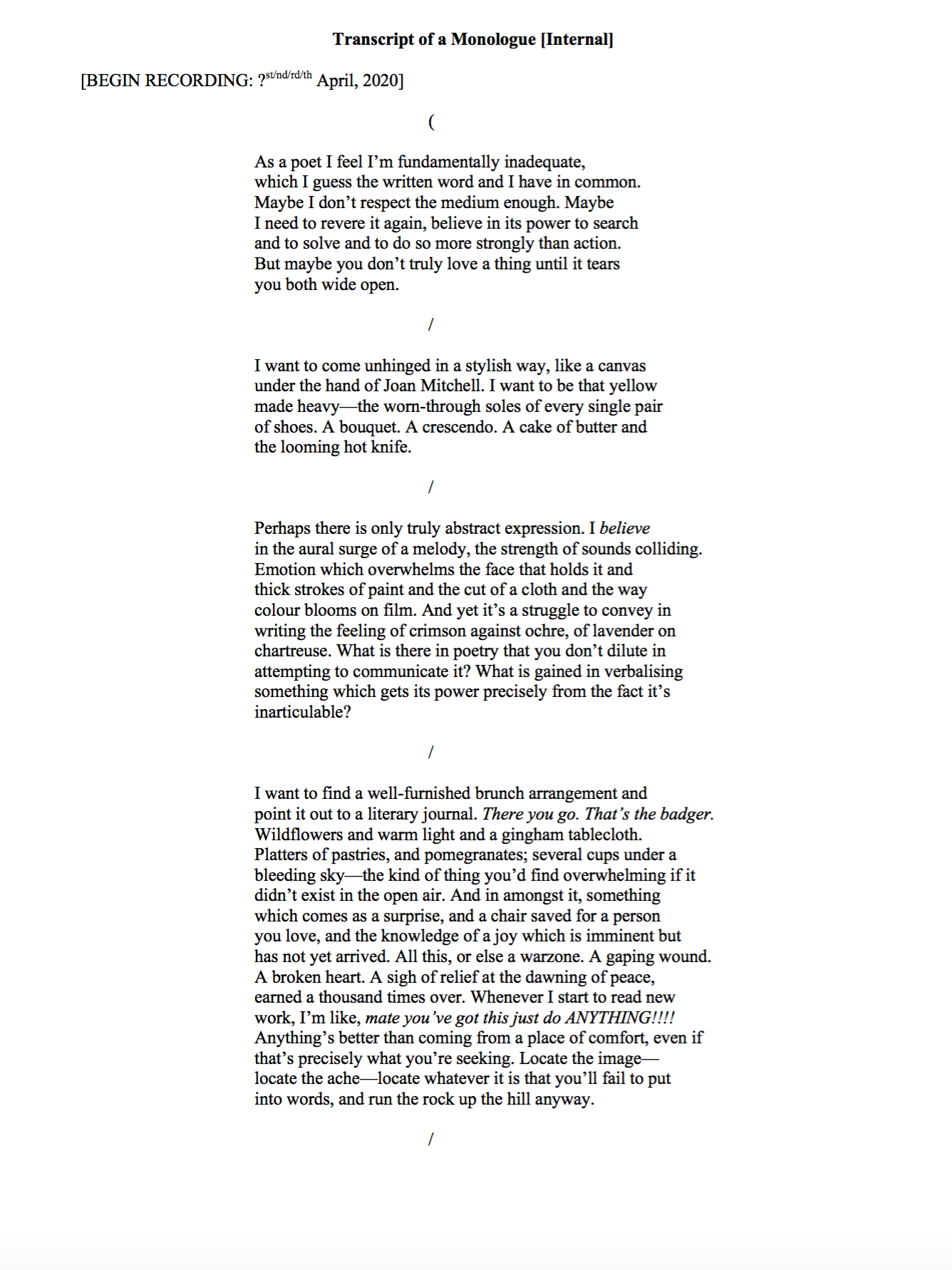
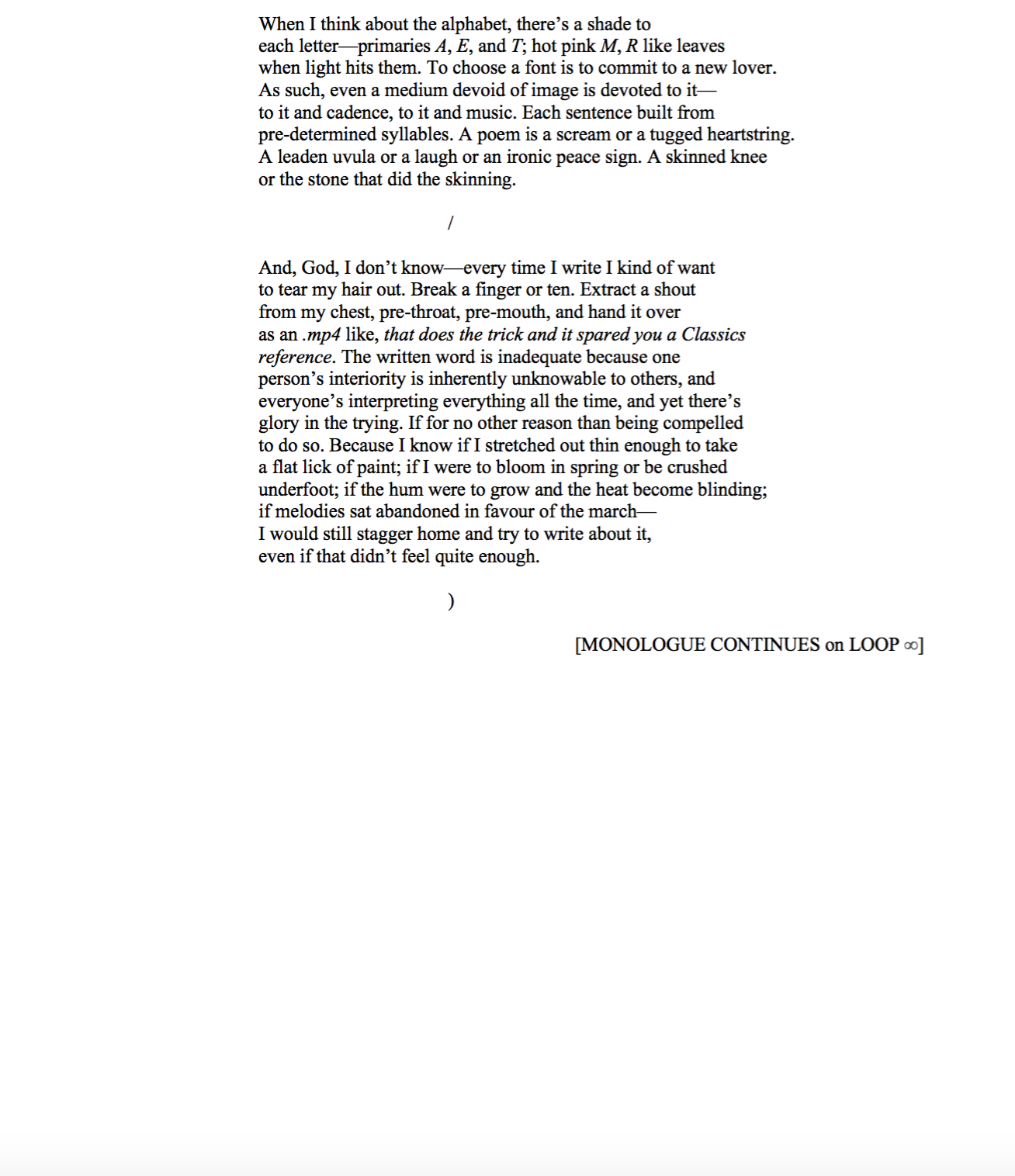
Transcript of a Monologue [Internal]
Tate Fountain
Seams
In time all cities blur and connect
as each street remembers
another, remembers the downward
pressure on your temple
as the plane rises, rises, as the lights
of one city are gurgled by fog, and what’s left
is one more night between time zones.
What glow here. What unbreakable seams.
You know the earth, like your body, can’t take this,
won’t last, and yet tonight you need too much to get home.
What else do you need too much?
Another plane slips across darkness before the cloud shifts and again
a city—its networked wide grids, grips of colour, unreal green
of some outskirts’ stadium before that black cloud pours back in.
Did you use your time on earth to save
what you wanted? Did you use anyone
the way you should? What song
will you sing as the light leaves,
as the mask’s lowered over your eyes?
Alice Miller
This poem first appeared in The Poetry Review and also the collection, What Fire (Pavilion, 2021).
The Tape
–for Chris Mead–
Tonight big squalls
lift off the sea channel
below the dark cliff
at the end of our section.
Pine branches thrash
against the garage,
television aerials rattle
on the neighbour’s rooftop.
My parents snore
in their room upstairs.
Under the bedcovers,
I put the C-60 tape,
handed to me by Matt Klee
at Engineering class,
into my blue Walkman.
When I hit the Play button,
spools click and spin.
There’s feedback,
distortion in reverse,
the blistering wail of a Stratocaster;
the louche yet gentle voice
of a prophet.
I sat bolt upright–
it’s as if god has spoken
to me directly.
And this is the first time
I feel the power
of language as poetry.
Michael Steven
from Walking to Jutland Street Otago University Press, 2018
Edgeland
Awks: you winged Auk-thing, awkward, huddling;
you wraparound, myriad, amphibious,
stretchy, try-hard, Polywoodish
juggernaut; you futurescape, insectivorous,
Akarana, Aukalani, Jafaville, O for Awesome,
still with the land-fever of a frontier town —
your surveyors who tick location, location, location,
your land-sharks, your swamp-lawyers, your merchant kings,
your real estate agents who bush-bash for true north,
your architecture that fell off the back of a truck,
your shoebox storerooms of apartment blocks,
your subdivisions sticky as pick and mix lollies;
you fat-bellied hybrid with your anorexic anxieties,
your hyperbole and bulimia, your tear-down and throw-up,
the sands of your hour-glass always replenished,
your self-harm always rejuvenated, unstoppable;
you binge-drinker, pre-loader, storm-chaser,
mana-muncher, hui-hopper, waka-jumper,
light opera queen, the nation’s greatest carnivore;
cloud-city of the South Pacific, it’s you the lights adore.
David Eggleton
from Edgeland, Otago University Press, 2018, chosen by Jenny Powell
Precarious
the first time I listened to Jupiter sound waves on the internet
I saw myself from a great distance as
a solitary beam of light flaring
in a dark suburban street
the other residences curtained and sombre
in this aching utopia
that is not paradise –
someone I know says their recurring nightmare
is of waking up to find a huge new planet
in the sky
nearly close enough to touch:
as a spinning ball in so much unconquerable dark
the Earth is ridiculously easy to finish off
Anuja Metra
from Starling, Issue 2.
It’s worth almost anything
That feeling right before everything bursts
Sitting on the bench in Cathedral Park
The one down the path from the tree we used to pile in
Hang loud like different primates
Bottles loose, lips curved almost grimace
If not for the laugh of our throats stretched wide
We’re a spectacle
A performance
We’re so goddamn tantalizing
Anyone would twist themselves into knots to get to us and they do
Guess it’s all that big trans energy Sam was talking about
Sam always knows what she’s talking about cause she’s a witch
Who looks like a car painted with cartoon flames
Super powerful, you know?
You’re playing dead on the bench
You’re playing dead cause you want to die
But also cause you want to kiss me
You want me to lean my face close to your face
In jest to check if you’re breathing
You want me to pause two beats too long
That’s when you’ll open your eyes
And we’ll look at each other right before
The scene cuts
Sitting on the couch at my parent’s house
Just ~vibrating~ the air
watching Wild Things
For the plot, you know
You’re Neve Campbell, obviously
I’m Denise Richards and when all of this is over
Neither of us will be women
Speaking of things we’re afraid to admit . . .
How about my entire adolescence, hmm??
Bottle stoppered too afraid to drink
The litany of dropped glances and
Unsatisfied thoughts-
You dipped out before it finished
Cause well, cause you know why
I’m sticking it out for the memories only
Cause when you left you were everywhere
But I’m scared if I go too there’ll be no one
To remember all the stupid bullshit
That happened just to you and me
Was it gulab jamun in your Wellington depression flat?
Was it hands pressed hard into fully clothed thighs?
Mum is at Disneyland again—she goes regularly these days,
favouring evenings it might storm. This is the first time she’s
brought me along, and I’m the memory of my ten-year-old self,
looking for the roller coaster, stopping Snow White to ask the
way. But Mum insists we work our way up from the carousel,
facing each level of fear as we progress. I’m on the upward swoop
of a pink and gold pony with sequinned reins when Mum says,
I’m worried you’re addicted to drugs. I stagger as I dismount, and
Mum looks suspicious, but leads us expertly to the cup and saucer
ride, winking at the guard and bypassing the line. Everyone has
pain, she says, gripping the bar that’s keeping us in. The veins and
sunspots on her hands pop like fortune’s marks. It’s easy to forget
she’s getting old too. It’s difficult to keep looking at her—I’m
concentrating on keeping my stomach inside my body, and my
lunch inside of that. This is like the year of bad tampon ads when
I was twelve or thirteen, and we still watched TV as a family—
just don’t move and it’ll stop soon … If I let go of the bar now
I would whoosh out of here so far and fast that I would go
into orbit. Mum might look for me at dusk from the porch back
home, and watch me get smaller and smaller and brighter and
brighter as my outer layers burned off. I would see her there and
be unable to wave, my arms pressed to my sides by the speed. I’d
try shouting things like, What do you knowabout pain?! and, I’m
afraid! and finally, I love you! as I grew smaller and smaller and she
grew older and older and everything just kept spinning.
Hannah Mettner
from Fully Clothed and So Forgetful Victoria University Press, 2017
Outcast
for Audre
I’m a darling in the margins
but you said
benobody’s darling / be an outcast
take the contradictions of your life
and wrap around / you like a shawl
to parry the stones / keep you warm
I keep what you said
pinned by brass tacks
against every wall ‘cos
I’m a darling by nature
traitor to the rebel
show me a mould
I’ll fill it, an unmade bed
I’ve already made it
draw me a paper road I’ll sign it
over to whoever says
they need it diverted for a better cause
but you said
be nobody’s darling
and that which casts me out
is cast about me
that which warms my flesh
guards my bones
and when I found
it to be true
the part about freedom
your shawl
became a fall of Huka curls
plunging black through suburban streets
a grey beach cottage firing
paua spirals under its eaves
his hand pressing want under
the wake table
a cocooning quilt pulled back under
the slim promise of sun
a brown woman walking
genealogy swimming her calves
a green dress worn on a blue blue day
because she can
it’s become a map
to get us beyond the line
the justified edge
that breaking page
it’s become a map in my arms
to get us beyond the reef
Selina Tusitala Marsh
from fast talking PI Auckland University Press, 2009
The poets
Elizabeth Brooke-Carr (1940 – 2019) was a Dunedin poet, essayist, short story writer, teacher and counsellor. Her writing appeared in newspapers, online journals and anthologies. She was awarded the New Zealand Society of Authors’ 75th Anniversary Competition and the Dunedin Public Libraries competition Changing Minds: Memories Lost and Found. She received a PhD from the University of Otago.
David Eggleton is the Aotearoa New Zealand Poet Laureate 2019 – 2022. His most recent book is The Wilder Years: Selected Poems, published by Otago University Press.
Fiona Farrell publishes poetry, fiction, drama and non-fiction. In 2007 she received the Prime Minister’s Award for Fiction, and in 2012 she was appointed an Officer of the New Zealand Order of Merit for Services to Literature. Her most recent publication, Nouns, verbs, etc.Selected Poems (OUP 2020) has been warmly reviewed as ‘a Poetry Treasure House…a glorious book’ (Paula Green, Poetry Shelf), and ‘an excellent retrospective…remarkable for drawing small personal realities together with the broad sweep of history.” (Nicholas Reid, The Listener). After many years in remote Otanerito bay on Banks Peninsula, she now lives in Dunedin.
Eliana Gray is a poet, youth worker and arts facillitator. They like queer subtext, collaborative writing and making sure people have a nice time. They have had words in: SPORT, Landfall, Poetry NZ, Mayhem, and others. Their debut collection, Eager to Break, was published by Girls On Key Press in 2019, and in 2020 they undertook residencies in both Finland and Ōtepoti.
Tate Fountain is a writer, performer, and academic based in Tāmaki Makaurau. She has recently been published in Stuff, Starling, and the Agenda, and her short fiction was highly commended in the Sunday Star-Times Short Story Competition (2020).
Selina Tusitala Marsh (ONZM, FRSNZ) is the former New Zealand Poet Laureate and has performed poetry for primary schoolers and presidents (Obama), queers and Queens (HRH Elizabeth II). She has published three critically acclaimed collections of poetry, Fast Talking PI (2009), Dark Sparring (2013), Tightrope (2017) and an award-winning graphic memoir, Mophead (Auckland University Press, 2019) followed by Mophead TU (2020), dubbed as ‘colonialism 101 for kids’.
Hannah Mettner (she/her) is a Wellington writer who still calls Tairāwhiti home. Her first collection of poetry, Fully Clothed and So Forgetful, was published by Victoria University Press in 2017, and won the Jessie Mackay Award for best first book of poetry at the 2018 Ockham New Zealand Book Awards. She is one of the founding editors of the online journal Sweet Mammalian, with Sugar Magnolia Wilson and Morgan Bach.
Alice Miller’s third poetry collection, What Fire, came out in May 2021 from Pavilion. She is also the author of the novel More Miracle than Bird (Tin House, 2020). She lives in Berlin.
Anuja Mitra lives in Auckland. Her writing has appeared in Takahe, Mayhem, Cordite Poetry Review, Starling, Sweet Mammalian, Poetry Shelf and The Three Lamps, and will appear in the AUP anthology A Clear Dawn: New Asian Voices from Aotearoa New Zealand. She has also written theatre and poetry reviews for Tearaway, Theatre Scenes, Minarets and the New Zealand Poetry Society. She is co-founder of the online arts magazine Oscen.
‘Thresh/hold’ was first published in Chris Price’s Beside Herself (Auckland University Press, 2016). Her next book, an essay in collaboration with photographer Bruce Foster, is forthcoming in Massey University Press’s kōrero series of ‘picture books for adults’ later this year.
Michael Steven is an Auckland poet. His current research interests include microbes and organic gardening – growing food and rongoā using no-till and KNF farming methods. Recent writing appears in Kete, Photoforum, Poetry New Zealand Yearbook 2021, and Õrongohau|Best New Zealand Poems 2020.
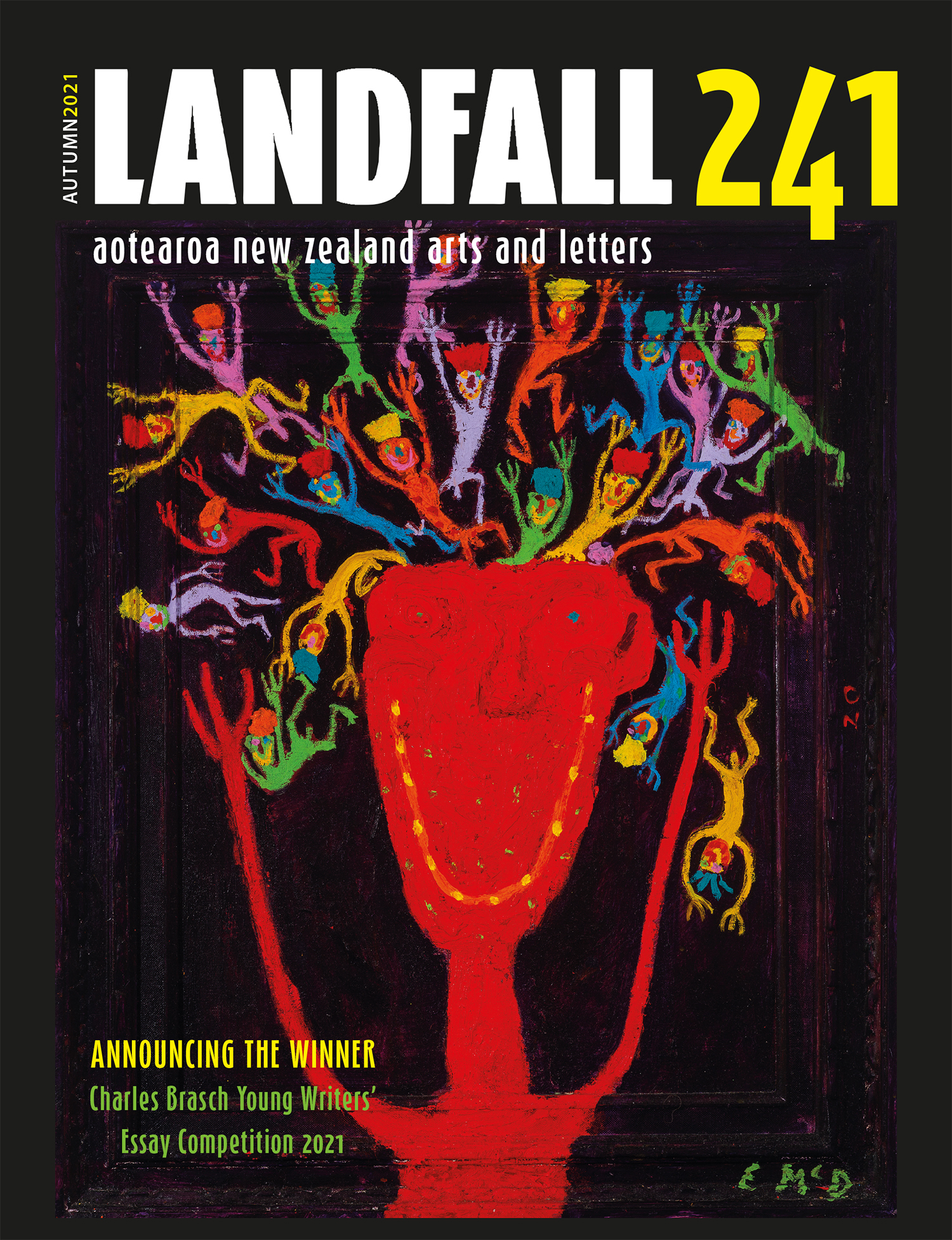
Landfall 241, edited by Emma Neale, reviews editor Michelle Elvy
Otago University Press, 2021
As Landfall 241 is the final issue edited by Emma Neale, Poetry Shelf takes a moment to toast the stellar work she has done as editor over the past few years. Like the other Landfalls under her watch, the latest issue is a vital compendium of poetry, fiction, reviews, essays and artwork. I am delighted to see a range of familiar and unfamiliar voices, emerging poets and those established, and to traverse wide-ranging subject matter and styles. The winners of the Charles Brasch Young Writers’ Essay Competition are announced and the artwork is sublime, distinctive, eye-catching.
Bridget Reweti’s stereoscopic photographs invert Allen Curnow’s ‘Unknown Seas’ to become ‘Known Seas’. If you hold the double images at the right distance and look though to the horizon you get a sense of spatial depth. It got me considering how I ‘hold’ a poem and experience multiple shifting depths. The way a poem pulls you into space in myriad ways. The way you float through layers, in focus out of focus, absorbing the physical, the intangible, the felt.
I made a long list of poems that held my attention as I read. Alison Glenny’s extract from ‘Small Plates’ haunted me with its off-real tilts:
The poets move together in flocks. One finds a new song and the others take it up. Developers move in and the poets rise together to find a new perch. The night is a forest with missing eaves. So much wood to build boxes for poems to live in. Each leaf a quarrel over the exact placement of the moon.
In the end I assembled a Landfall reading comprising voices I have rarely managed to hear, if ever, at events. It is so very pleasing to curate a reading from my rural kitchen and feel myself drawn to effervescent horizons as I listen. The print copy is equally rewarding!
The poets in Landfall 241: Joanna Aitchison, Philip Armstrong, Rebecca Ball, David Beach, Peter Belton, Diana Bridge, Owen Bullock, Stephanie Burt, Cadence Chung, Ruth Corkill, Mary Cresswell, Alison Denham, Ben Egerton, Alison Glenny, Jordan Hamel, Trisha Hanifin, Michael Harlow, Chris Holdaway, Lily Holloway, Claudia Jardine, Erik Kennedy, Brent Kininmont, Wen-Juenn Lee, Wes Lee, Bill Manhire, Talia Marshall, Ria Masae, James McNaughton, Claire Orchard, Joanna Preston, Chris Price, Tim Saunders, Rowan Taigel, Joy Tong, Tom Weston
Cadence Chung reads ‘that’s why they call me missus fahrenheit’
Claudia Jardine reads ‘Field Notes on Elegy’
Ria Masae reads ‘Papālagi’
Stephanie Burt reads ‘Kite Day, New Brighton’
Tim Saunders reads ‘Devoir’
Jordan Hamel reads ‘Society does a collective impersonation of Robin Williams telling Matt Damon “It’s not your fault” repeatedly in Good Will Hunting‘
Rowan Taigel reads ‘Mothers & Fathers’
Trisha Hanifin reads ‘Without the Scaffold of Words’
The Poets
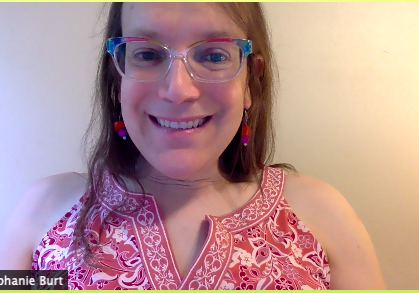
Stephanie Burt is a professor of English at Harvard and has also taught at the University of Canterbury. Her most recent books include Callimachus (Princeton University Press, 2020) and Don’t Read Poetry: A book about how to read poems (Basic, 2019).
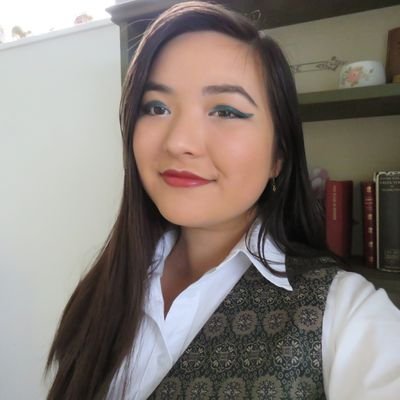
Cadence Chung is a student at Wellington High School. She first started writing poetry during a particularly boring Maths lesson when she was nine, and hasn’t stopped since. She enjoys antique stores, classic literature, and tries her best to be an Edwardian dandy.
Jordan Hamel is a Pōneke-based writer, poet and performer. He was the 2018 New Zealand Poetry Slam champion and represented NZ at the World Poetry Slam Champs in the US in 2019. He is the co-editor of Stasis Journal and co-editor of a forthcoming NZ Climate Change Poetry Anthology from Auckland University Press. He is a 2021 Michael King Writer-in-Residence and has words published in The Spinoff, Newsroom, Poetry New Zealand, Sport, Turbine, Landfall, and elsewhere.
Trisha Hanifin has a MA in Creative Writing from AUT. Her work has been published in various journals and anthologies including Bonsai: Best small stories from Aotearoa New Zealand (Canterbury University Press, 2018). In 2018 she was runner up in the Divine Muses Emerging Poets competition. Her novel, The Time Lizard’s Archeologist, is forthcoming with Cloud Ink Press.
Claudia Jardine (she/her) is a poet and musician based in Ōtautahi/Christchurch. In 2020 she published her first chapbook, The Temple of Your Girl, with Auckland University Press in AUP New Poets 7 alongside Rhys Feeney and Ria Masae. For the winter of 2021 Jardine will be one of the Arts Four Creative Residents in The Arts Centre Te Matatiki Toi Ora, where she will be working on a collection of poems.
Talia Marshall (Ngāti Kuia, Ngāti Rārua, Rangitāne ō Wairau, Ngāti Takihiku) is currently working on a creative non-fiction book which ranges from Ans Westra, the taniwha Kaikaiawaro to the musket wars. This project is an extension of her 2020 Emerging Māori Writers Residency at the IIML. Her poems from Sport and Landfall can be found on the Best New Zealand Poems website.
Ria Masae is a writer, spoken word poet, and librarian of Samoan descent, born and raised in Tāmaki Makaurau. Her work has been published in literary outlets such as, Landfall, takahē, Circulo de Poesia, and Best New Zealand Poems 2017 and 2018. A collection of her poetry is published in, AUP New Poets 7.
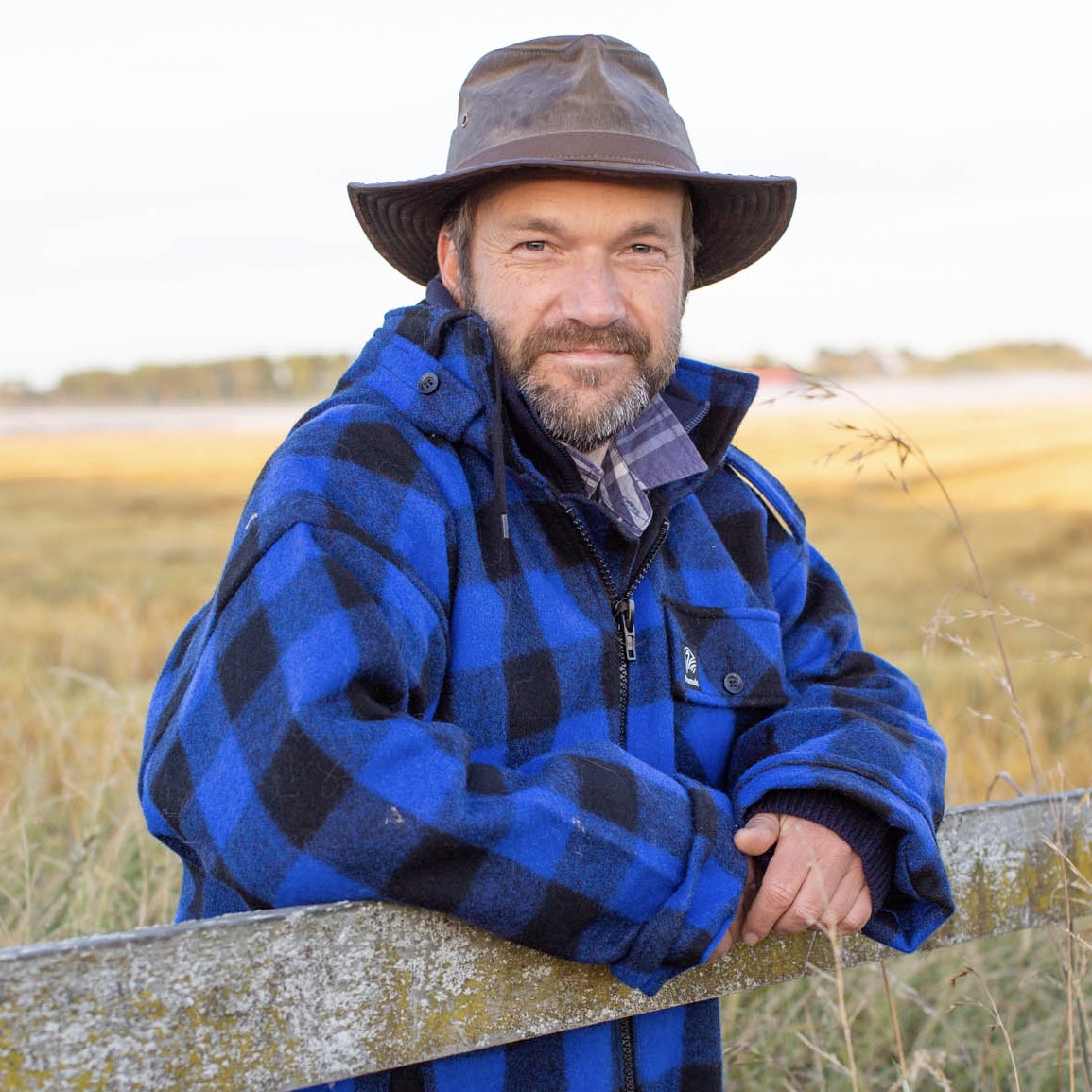
Tim Saunders farms sheep and beef near Palmerston North. He has had poetry and short stories published in Turbine|Kapohau, takahē, Landfall, Poetry NZ Yearbook, Flash Frontier, and won the 2018 Mindfood Magazine Short Story Competition. He placed third in the 2019 and 2020 National Flash Fiction Day Awards, and was shortlisted for the 2021 Commonwealth Short Story Prize. His first book, This Farming Life, was published by Allen & Unwin in August, 2020.
Rowan Taigel is a Nelson based poet and teacher. Her poetry has been published in Landfall, Takahe Journal, Shot Glass Journal, Aotearotica, Catalyst, After the Cyclone (NZPS Anthology, 2017), Building a Time Machine (NZPS Anthology, 2012), and she has been a featured poet in A Fine Line, (NZPS). Rowan received a Highly Commended award for the 2020 Caselberg International Poetry Competition with her poem ‘Catch and Kiss’. She can often be found in local cafes on the weekend reading and writing poetry over a good coffee.



 NZ Poetry Shelf