Monthly Archives: September 2019

Emma Neale’s introduction for Wild Honey’s Dunedin celebration


p-4

Just back from a wonderful visit to Dunedin. We got to celebrate Wild Honey last night thanks to Massey University Press, Kay Mercer and Dunedin Libraries, and Bronwyn Wylie-Gibb and the University Book Shop. There was a great turn out of poetry fans, and a set of readings that prompted both laughter and tears. We even got to hear Fiona Farrell sing! The occasion felt even more precious because that afternoon local poet, Elizabeth Brooke-Carr, had passed away, and so many local poets were together. Jenny Powell read one of Elizabeth’s poems as a tribute.

Heartfelt thanks to the readers: Sue Wootton, Carolyn McCurdie, Fiona Farrell, Kay McKenzie Cooke, Diane Brown, Jenny Powell, Eliana Gray, Emer, Lyons and Emma Neale.

Wild Honey continues to place women’s poetry under a warm and receptive light. I was humbled by the joy, the warmth and the generosity in the room. I am humbled by the way it continues to be an open home.

Emma Neale’s introduction was so good I want to share it with you – plus a few photos taken by Kay.


p-9


Wild Honey introduction


Tena kotou katoa

Ko Emma Neale toku ingoa ….            


What a fabulous, upbeat reason for us all to be together tonight. It is very happily my role to introduce Paula Green to you all and talk a little about Wild Honey.

I noticed at around page 200 of Wild Honey that in my reading habits, I was inadvertently reflecting the structuring principle of the book. For those of you who haven’t looked into it yet — the book gathers small communities of women poets in separate rooms of a capacious imaginary house: so we move from the Foundation Stones of 19th-century authors Jesse Mackay and Blanche Baughan and of early 20th century writer Eileen Duggan, through to spaces such as the study, the music room, the hearth, the hammock and the garden, where Paula reflects on the thematic concerns, the psychological spaces, the poetic techniques, and also the lives of the writers she gathers there.

I realised last week that I’ve been carrying the book with me into every nook and cranny of my own house – brushing my teeth while reading it – burning dinner while cooking from it, or rather, by miming cooking while actually travelling deep into the passageways and chambers of the book itself. I didn’t twig to all this until I found myself nearly braining the family rabbit with it, as I tried to dish out pellets and straw to him in his outside hutch while Wild Honey was still tucked under one arm. Clearly this potentially book- and rabbit-wrecking approach is a mark of how compelling the prose is – capable of supplanting a cell-phone as the glued-to object to stare at. I suspect this won’t just be true of fellow poetry obsessives: the prose is pellucid, generous, and welcoming.

The book embraces myriad voices; it’s receptive to multiple styles, and it actively celebrates the writers it discusses. It doesn’t pit one writer against another, try to champion one above another, or upbraid writers for perceived political derelictions, but it listens attentively to what each writer has to say, and aims to capture and characterise the tone of their preoccupations. It’s a history of women’s poetry here in Aotearoa, yet one that is also a memoir of reading, as Paula laces the analysis with vivid personal responses and descriptions of how reading other women’s work has bolstered and boosted her — not only as a professional writer, herself interested in aesthetic questions, but as a person moving through time, dealing with love and loss, memory and projection, physical injury and philosophical problems, seized by the beauty of the natural world, shocked by social toxicity …  it’s a vast and varied coastline of human experience.

I think it’s important to say that even as we encounter generations of writers here, learn of their preoccupations and savour the sensuous aspects of their expression, one of the delights of reading this book is finding Paula’s own poetic signature throughout. It travels with you like a piwakawaka flitting along at shoulder height on a hiking trail – so you can start to feel kind of blessed and graced yourself with the ability to communicate in the same free, light and spirited way … until you actually try to express all the things this book achieves.

Wild Honey is so embracing, so capacious, that what I would really like to do before starting the readings and our conversation, is to ask everyone here —but particularly the poets —  to both congratulate and thank Paula for her diligence, her energy, her curiosity, her own creative gifts and above all tonight for her generosity. You can whoop, clap, dance, sing, stomp your feet – pull out a clarinet or a trombone if you have one — just make a bloody great non-library- like racket.

Introducing …. Paula!


PS The welcome racket was splendid! – pg
Poetry Shelf Booksellers’ Spot: VOLUME reviews Ashleigh Young’s How I Get Ready


Screen Shot 2019-09-03 at 2.36.48 PM

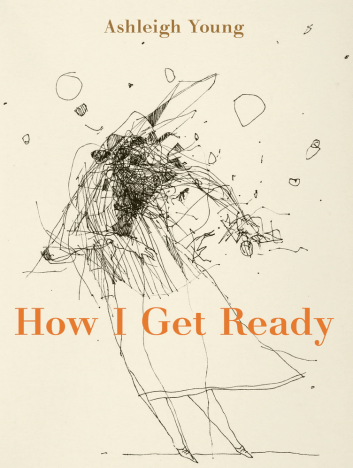
How I Get Ready by Ashleigh Young (Victoria University Press, 2019)

reviewed by Thomas Koed of VOLUME


Every time, when reading or when writing, that we come to the end of a sentence or, in poetry, a line, we come to a point at which our continuation, the continuation of the text, our continued inhabitation of the text or vice-versa, is suddenly less certain, less than certain, perhaps quite uncertain, there is a break, a space, a moment of hesitation or panic — or relief — before we continue, before the text continues, before we jolt back onto the rails of the text and hurtle on, or feel our way along, towards the next uncertainty. All text is, under all else that it is, an essay in the movement through time, an essay in the prolongment of the self, so to call it, an essay in continuation, a triumph of audacity over doubt.

The poems in Ashleigh Young’s new collection can be read as hesitations arrayed upon racks of words. They often have unpunctuated breaks — spaces — within a line, in addition to line breaks, stanza breaks, full stops, commas and all the rest, creating almost a stammer, a poetry of hesitation, of feeling for the right word or phrase or sense or image to continue.


But he had

this way of talking, like his voice doesn’t quite know


how to come out of his face. Why does he have to stare

at the ground, when he is among friends? You can have patience

with someone’s struggles for a length of time

but not for much longer than one minute.


But it is, as well, despite and because of this, a poetry of continuation, of the overcoming of impediments and doubts. It is not for nothing that the image of Young riding — wriding — her bicycle appears in so many of these poems: the momentum of the riding/writing carries her and us on through the gaps under which yawn uncertainty and anxiety. We hesitate, take notice, and are carried on. As with Young’s memorable and subtle essay collection Can You Tolerate This?, How I Get Ready touches, when passing, subjects that would just cause pain if approached head-on, and Young’s humour is at once playful (has poeticism ever been more subtly satirised than with the words “the leaf-blowered path”?) and sensitively descriptive of the masses with which it avoids collision. The momentum of the poems also holds together — and sometimes only just holds together — the closely noticed image-fragments that comprise them, an experience like riding a bicycle over a scattering of acorns and noticing the tiny explosions as each one is crushed by the bicycle’s tyres (the ‘I’ of the poems is too close to see other than what she sees), and the poems, like the experiences they embody (whether they record them or induce them), are often precarious, just pulling together, or almost pulling apart.


Which one of you is going to

stand up

in full sentences

and which one is going to

do the helpless dance.


This precarity is sometimes perhaps due to the tendency of an internal state to overwhelm and external circumstance, even though this is often paradoxically experienced as an external circumstance threatening to overwhelm an internal state. This disjuncture between the ‘internal’ and the ‘external’ provides much of the vigorous tension in many of the poems — some of which intensify towards a panic which is left unresolved, unresolvable, but left behind — and it is Young’s frankness about the chaotic tendencies of images, of noticing, together with her awareness of the performative approaches that make life liveable, that point a hesitant way towards a poetry and a life that is both possible and authentic. The last and title poem of the book, ‘How I Get Ready’, deals with the “pure, bitter difficulty” of getting ready to go out into the world, of Young’s going-out clothes “ironed smooth, laid out like a disappearance.” Her continued existence in that world is uncertain:


I can see I am not getting ready at all; if anything

I am getting unready.

Ashleigh Young will be appearing at the VOLUME MAPUA LITERARY FESTIVAL on 21 September. The full programme is available here.


Poetry Shelf noticeboard: Gregory O’Brien (AUP) and Jenny Bornholdt (VUP) book launch


Screen Shot 2019-09-03 at 5.12.57 PM.png


You are warmly invited to the joint VUP and AUP launch of

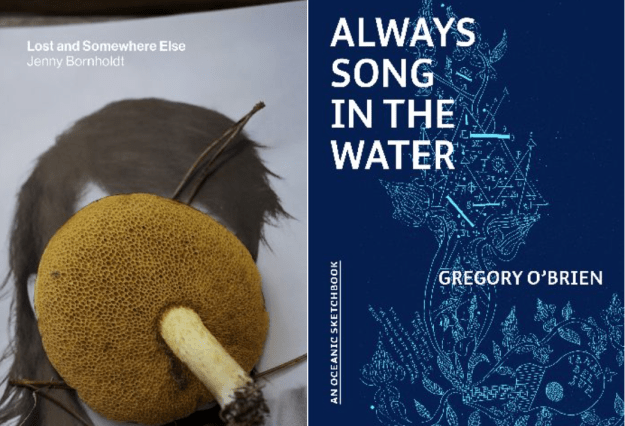
Lost and Somewhere Else
by Jenny Bornholdt (VUP)
&
Always Song in the Water: An Oceanic Sketchbook
by Gregory O’Brien (AUP)

on Thursday 19 September, 6pm–7.30pm
at Unity Books, 57 Willis St, Wellington

Both books will be launched by Chlöe Swarbrick, MP.


Poetry Shelf review: Emma Neale’s To the Occupant

To_the_occupant.jpg

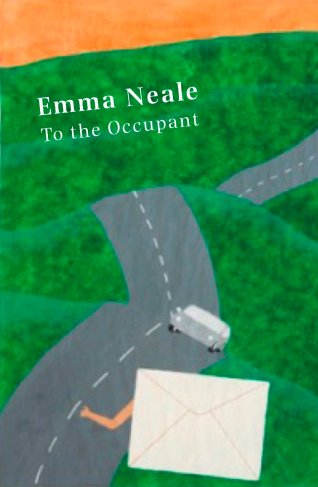
Emma Neale, To the Occupant, Otago University Press, 2019


Emma Neale has published five novels and five poetry collections, edited several anthologies and is the current editor of Landfall. She has won numerous awards including The Kathleen Grattan Award for her collection Truth Garden (2011). Her novel Billy Bird was shortlisted for the NZ Book Awards (2017). Emma’s new poetry collection To the Occupant is a textured reading experience; it is both visually and aurally ornate while never losing touch with its humane core.

The complex melodies, an Emma Neale trademark, employ diverse harmonies and counterpoints, and are always the first glorious reading effect. Take ‘Morning Song’ for example. The poem resembles an ode to a grandfather, the familial figure shining bright with life in  memories that stand out: drying dishes, hearing his whistle, spotting hidden cigarettes. Cat Steven’s song ‘Morning Has Broken’ is like the poem’s axle as grandfather details spin off the fragments of song.


Better warble down the past’s wind

mine is the sunlight, mine is the morning.

We grinned, raised eyebrows at its no-fail return;

praise with elation, praise every morning

the tune all whiskered trill, all rheumy-eyed wink

as he’d pop a dishcloth over his shoulder,

a clown’s epaulette; praise for the sweetness


The melody favours compound words (sun-speckled kitchen), chords built upon assonance, alliteration, repetition, clipped words next to those drawn out (‘it meant Gramps and damp tea towels; thin coffee cups and saucers / glazed with flowers that could be owls’). But there is more to the grandfather than the daily occurrences and to his happy song whistled; behind the gladness is past trauma, a lucky escape.  Herein lies the second joy of a Neale poem – moving through both the aural and the visual to the humane core.

The subject matter is always on the move: poems carry you from a season of teenagers, to politics of the homeless to mother anxiety. You shift from a fable to everyday vignettes, from old diaries to tightly held secrets. The younger son enters the kitchen with a secret in ‘Small Wonder’; he barely holds it in he is so desperate to tell his mother.


He pushes in hard at the sides of his mouth

as the blue-green fire of his irises

brims and flickers, swells and burns.


Such tension, such mother promises, as she bends in close and listens, and by not telling us, by sharing the intensity of the moment rather than the revelation, it makes the promise even sweeter. She will:


protect the pale-pink nimbus

of his secret

as it buds, opens.


Again a single poem transports me through music that works on my body, the sharp visuals move to the human core that makes a poem matter.

Emma’s collection is the sort that demands a summer sojourn; you can sunbathe at leisure within the light and dark of each poem. At times I am reminded of Elizabeth Smither’s ability to achieve both movement and stillness within the same poetic terrain, with the physical world exposing byways to an internal state of being, to the subconscious even. In ‘Doorway’, we stop to absorb a scene:


On the pavement outside the famous patisserie

a slender, chignon-haired woman sits inside her fortress


of backpack, tote bags, suitcases

which she arranges and rearranges


with the worn sobriety of a new mother

or a nurse in a recovery-ward hover.


Increasingly open-cast politics is finding its way into our poetry – poets might adopt strident voices or weave in opinions and grievances at more of a whisper, and I welcome all of this, whatever the tone or poetic form. In ‘Withdrawn’, Emma describes a scene where the poem’s speaker gives a ‘thin young man / in a sleeping bag’ a pack of bread rolls:


with our conscience burning holes

in the sleek, fat satin of our well-fed hearts


I read of the ‘big old drunk’ who knocks his paper cup of coins over and I am sent skating back to the first verse and the way the unfolding scene makes me ache and ponder at the ‘glaring discrepancies’. This is what a poem can do.


It is not within the scope of this poem

to discuss the failure of successive governments

to address the glaring discrepancies

between all the different weights and shades

of human pain —


Emma’s breathtaking new collection is wide in scope and reading impact. She is one of my favourite New Zealand poets because she never fails to fill me with joy, awe and musings at what poetry can do. This book is a sumptuous word treat.


Otago University Press author page


Poetry Shelf Monday poem: Jennifer Compton’s ‘A Farm in the King Country’


A Farm in the King Country


On the shelf beside the brick chimney piece

in the farmhouse lounge room (off the hall)


a room that was out of the usual run of things

(a lofty box, a sash window, a retreating echo)


I came across a copy of Faces In The Water

(with a dangerous cover) written by a certain


Janet Frame. A woman by her name, and why

would they lie? And from the words written


on the back, she was one of us. Had I never

laid my hands/eyes upon a book by a NZer


before? (No, never.) I read, sitting on the rump

of a dusty sofa, as the other people were doing


something useful outside. Finding chook eggs

in the orchard, milking the house cow, hoeing


cabbages, rendering horse fat to clean harness.

And the stink of her menstrual blood shook me


out of my orbit. (Forever.) Outside this wooden

box a mountain and her sisters claimed ground.


Jennifer Compton was born in Wellington and now lives in Melbourne. Recent work has been published in Antipodes, Cicerone, Not Very Quiet, Poetry New Zealand, Rabbit, Styluslit, The Frogmore Papers, The Moth, and Verity La. Her next book of poetry, ‘the moment, taken’, nears completion.

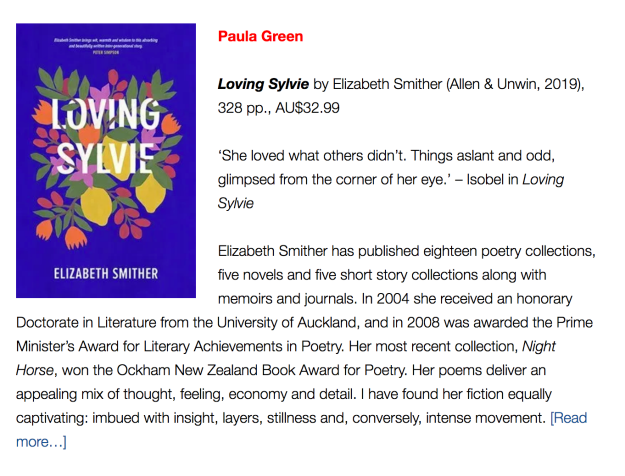
Poetry Shelf noticeboard: Paula Green reviews Elizabeth Smither’s Loving Sylvie at Landfall on line

Read review here

‘The writing is euphonious, restrained and utterly revealing. Each character is scripted in chiaroscuro, the light and dark flickering as the women come into mesmerising view. Smither is one of my much-admired literary elders; I salute her ability to make narrative humane and to make me feel the world.’

Screen Shot 2019-09-01 at 10.11.52 AM.png