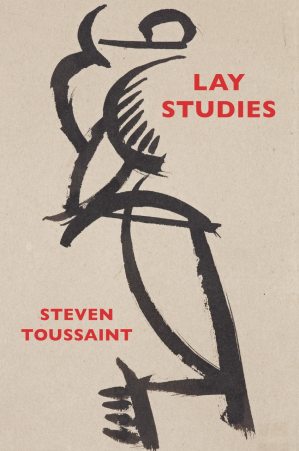
The same differently
and always already:
after writing laïcité
new laity like birdsong.
from ‘Pickstock Improvisations’
Steven Toussaint, born in Chicago, immigrated to New Zealand in 2011. He has studied poetry at the Iowa Writers’ Workshop, the International Institute of Modern Letters and philosophical theology at the University of Cambridge. He has published a chapbook of poems, Fiddlehead (Compound Press, 2014), and a debut collection, The Bellfounder (The Cultural Study Society, 2015). His writing has also recently appeared in Poetry, Commonweal, The Spinoff, Sport, and The Winter Anthology. He has been recognised in the past few years by residencies at The University of Waikato, the Michael King Writers’ Centre and with a Grimshaw Sargeson Fellowship. He is currently pursuing graduate study in philosophical theology at Emmanuel College, Cambridge. Victoria University Press recently published his second full poetry collection, Lay Studies.
Steven’s poetry entrances me on multiple levels; initially through the exquisite musical pitch and counterpoints, and then in the way heart and mind are both engaged. His sumptuous poetic terrain is physical, elusive, stretching, kinetic, mysterious, difficult, beautiful. Hearing the poetry read aloud is utterly transporting (listen to Steven read ‘Aevum Measures’).
The conversation
Paula: When did you first start writing poetry? Did you read poems as a child?
Steven: Poetry wasn’t a big part of my childhood. It didn’t feature in my family’s reading life, and it seemed to be a genre that teachers avoided whenever possible. But Bob Dylan sang about Verlaine and Rimbaud and made a music video with Allen Ginsberg. So when I was sixteen I sought these poets out at the Borders Books in Orland Park, Illinois. As a consequence, my first writings were Beat pastiche. I didn’t show them to anyone. Many of my friends were in punk rock bands and wrote lyrics, which seemed like a more socially defensible practice somehow. I didn’t know any other poets until I went to university.
Are you still listening
to poets
who listened
to Coltrane
laughed and framed
vocations around that
brazen ascesis?
from ‘Yes or No’
Paula: Can you pick a few key moments in your life as a poet? What poets have affected you both as a reader and a writer?
Steven: There are far too many to list exhaustively, especially as your word ‘affected’ includes, alongside my favourite writers, a number of poets who have inspired me negatively or ambivalently – just as important a list in terms of shaping my sense of poetic possibility. But certain writers and moments stand out.
Early on, Ginsberg loomed large. In my first teenaged fumbles, I tried to imitate his long, anaphoric lines without truly appreciating their provenance in Whitman and Blake. As an undergraduate at Loyola University in Chicago, I was introduced to literary modernism and came to admire the economy of expression in Ezra Pound and William Carlos Williams. I learned that Ginsberg knew them personally and considered them as father-figures. This was my first intimation that poetry had its own version of apostolic succession.
In my years at Loyola, I was impressionable and soaked up as much knowledge as I could from teachers, visiting writers, and friends about the cottage industry of independent poetry publishing in the US: hundreds of small presses and little magazines, each with its own house style and canon of influences. I tried on a lot of hats. This continued and intensified at the Iowa Writers’ Workshop. I wrote under the sign of Frank O’Hara for a time. David Berman, Frank Stanford, and Alice Notley came and went as models. I didn’t really know what I was doing. I’d encounter new poets and find myself unconsciously emulating them. My familiarity with the landscape of contemporary poetry was growing but I didn’t have a strong enough foundation in the sources.
It wasn’t until near the end of my MFA that I began to read the ‘Objectivist’ and Black Mountain poets seriously and began to discern a set of basic, shared assumptions about what a poem should be. Despite wide variations in style, each of these poets committed him- or herself to a rigorous interpretation of Pound’s concept of melopoeia: The poem, aside from everything else it may be, is first and foremost a sonic event in language. These writers self-consciously traced a common lineage back to Pound and Williams, and further back to Elizabethan, Medieval, Roman and Greek lyricists. I wanted in!
Pound, H.D., Louis Zukofsky, Lorine Niedecker, George Oppen, Robert Creeley, and Robert Duncan became especially important to me, and I began to seek out contemporary poets who shared this pantheon. Ronald Johnson, Gustaf Sobin, Karin Lessing, and Frank Samperi are probably the most conspicuous tutelaries of my first book, The Bellfounder. And to this day, many of my favourite living American poets descend from this tradition, among them John Taggart, Nathaniel Mackey, Fanny Howe, Pam Rehm, Peter O’Leary, Joseph Donahue, Jennifer Moxley, Devin Johnston, and David Mutschlecner.
Since moving to New Zealand in 2011, my horizons have broadened. It’s easy to take one’s national biases for granted, even easier if you’re an American. My interactions with NZ writers, often with strikingly different tastes and canons, have both tempered my prejudices and forced me to reflect critically on why I value certain poetic qualities over others. The ‘Pound tradition,’ for example, hasn’t made nearly as big an impact here as it has in the US. Michele Leggott is my favourite exception. Her poetry – not to mention her critical work on Zukofsky, Lola Ridge, Eileen Duggan, and Robin Hyde – has taught me a great deal about what a ‘late modernism’ in New Zealand might absorb from domestic traditions, a major consideration as I wrote Lay Studies. John Dennison’s poetry, whose sources are mostly homegrown (Bethell, Curnow, Baxter), has been equally important.
Work and study opportunities have taken my wife and me in recent years to the UK for extended periods of time. From Black Mountain I inherited a partisan prejudice against T.S. Eliot, which had made much of contemporary British poetry unintelligible to me. But I have been steadily reassessing Eliot’s work and consider myself a reluctant convert. As such, I’ve lately been exploring a tributary of British poetry whose wellsprings are the history of that land and its ancestral religion. David Jones’s The Anathemata and his essays on sacramental poetics have become indispensable resources. So too the work of Kathleen Raine, C.H. Sisson, Christopher Logue, Rowan Williams, Thomas A. Clark, Alice Oswald, and Toby Martinez de las Rivas. But the greatest revelation has been Geoffrey Hill: a staggering, dangerous genius who has blown my preconceived notions about poetry to smithereens.
I have been narrating my shifting loyalties within modern poetry, but I find that my work begins to asphyxiate whenever I am too long away from Dante, the Provençal troubadours, and the English Metaphysicals.
Paula: Fascinating. I too find my relationships with certain poets and ways of writing poetry shift over time. Two words stand out for me here – ‘sonic’ and ‘asphyxiated’ – because they are key to my reading of your new collection Lay Studies. The aural experience is paramount yet so too is the way the writing is oxygenated, given life. When I listened to ‘Aevum Measures’ I was breathless, in a trance-like state, and felt like I was in a church. The music was the first arrival on my body, the first poetry joy, with the rippling currents of chords and sonic play. Cadence oxygenated me as reader. Were these two factors – sound and breath – significant as you wrote?
Steven: Absolutely. At heart, I’m a student of Pound’s ‘A Retrospect’ and Charles Olson’s ‘Projective Verse.’ Both of these manifesti, in different ways, ask the writer to strive for an ‘absolute rhythm’ (Pound’s term), a way of discovering one’s own meaning, in a particular poem, by listening attentively, obediently to ‘the acquisitions of [one’s] ear and the pressure of [one’s] breath’ (Olson). Pound elsewhere called this ‘the tone leading of vowels.’ The syllable becomes the basic unit of composition, and the test of the poet’s integrity rests on the integrity of the line (‘the dance of the intellect’ among syllables) and its relationship with other lines. With practice – by writing, by reciting, and especially by studying great poets – I have tried to learn how to intuit whether this integrity is present, in my own work and in the work of others: Does the lineation possess that subtle sense of necessity, vitality, earnestness? Or do the moves feel arbitrary, enervated, ‘counterfeit’? These questions are my first principles of composition, my ‘bullshit detector’ or ‘examination of conscience.’
‘Aevum Measures’ isn’t dogmatically Olsonian. It’s written in a fairly regular iambic tetrameter/dimeter, what Olson calls ‘closed’ or ‘non-projective’ verse (with special digs at Eliot). And yet, he may have overlooked the fact that certain ‘hieratic’ or ‘high’ emotions, thoughts, and ends announce themselves to consciousness in ancient accents, declaring their continuity with older forms. Pound understood this, I think, his ‘metronome’ proscriptions notwithstanding. I hadn’t decided on the metric scheme or the repetition of the line ‘abide more tritone idle mode’ in advance. These events emerged ‘organically’ in the process of composition, a teleological tug that made itself heard gradually as a regular pulse.
abide more tritone idle mode
the dominant’s a leaky still
for quiet divination
for every thought
a finger on
the fret-
board’s shifting centre
where nothing dearer
than the pure heart’s
purring minor
requires demonstration
from ‘Aevum Measures’
Paula: When I listen to the ‘regular pulse’ of ‘Aevum Measures’, I am not dissecting its craft, I am feeling its craft like I feel music before I react to other features. The reading experience might be viewed as transcendental – an uplift from the physical world and from routine. I am suggesting I let myself go in the poem. Does this make sense? And is it, on another level, a way of being spiritual in a ransacked world?
Steven: It makes a lot of sense, and I am gratified to hear that you could lose yourself in the music of the poem. What you describe sounds somewhat like Keats’ notion of ‘negative capability.’ That is to say, if the sonic architecture of the poem is doing its job, then the reader is ‘capable of being in uncertainties, Mysteries, doubts, without any irritable reaching after fact and reason’ at the semantic level. Not that the semantic level – what the poem is literally ‘about’ – is insignificant. The music would be thin and feeble without varied syntax, rich diction, logical continuity and metaphor. And yet, the poem’s semantic sense is ‘heightened,’ elevated out of the ‘horizontal’ realm of mere communication, information, or transaction by its participation in ‘vertical’ patterns of sound whose ‘meaning’ is intuitively felt, as a kind of felicity, but cannot be rationally reduced or summarised away.
And you hit the nail on the head when you point to the spiritual implications of this phenomenon. Walter Pater said that all art ‘aspires to the condition of music.’ Over the past several years, I’ve come around to a different a view. While writing Lay Studies, I fell under the influence of a number of Christian theologians of an Augustinian-Thomistic persuasion, especially Catherine Pickstock, to whom one of the poems in the book is dedicated. She suggests that liturgical doxology is the art toward which all others strive, a gesamtkunstwerk performing the narrative of salvation history. As such, the worshipper willingly submits herself to a mode of expression, praise, that is both recollective and anticipatory. The rhythm of liturgy – interpreted as a gratuitous gift, contoured by procession, repetition, and return – offers an implicit critique of the violence, entropy, and fatal self-enclosedness of historical time. I believe poetry can approach liturgy by analogy. A training in prosody might help us to see the world, ourselves, and our speech-acts sacramentally, as vertically conditioned by grace.
Must be a stumbler, bleeder,
as some floccus remains here, carded
into ragged sleeves by barbed wire.
I believe in a God who can learn
to work new spindles, new pupils
uncomprehending the reasons
light rosins in winter, and still
spill clumsily, bleeding.
from ‘Agnus Dei’ 97
Paula: Abstract thought and spiritual layerings are so important in the collection – yet so too is physical detail. What attracts you to the arrival of the physical in a poem?
Steven: Chesterton said ‘the greatest of poems is an inventory.’ I’m not sure about that, but I think I know what he was talking about. The poems I most love to read, and try my best to write, are taken up with thingness. By this, I mean they attend to concrete particulars, of the world and of the mind. I mean also that the poem itself can be understood as a thing, a made thing, with a physical, substantial reality of its own.
We seem recently to have entered a phase in the cycle of literary fashion that favours self-expression over thingness. Or maybe the self has become poetry’s privileged thing. On this understanding, the poem is treated as a dispatch from an essential core of selfhood. I tend to think of poetry instead as a species of artefacture, closer to sculpture or musical composition than self-portraiture or memoir. Not that those two understandings are totally incompatible. It’s more a question of emphasis.
And it extends from what I was speaking of before with respect to a liturgical or sacramental understanding of poetry. I follow David Jones here: The poet is a ‘sign-maker’; she uses signs in a particular way, applying uniquely poetic formal pressures upon them, so that they become, in a sense, what they signify. The poetic sign isn’t merely a communiqué; it makes the thing it represents really present. This intensified attention to particular words, particular things – in their horizontal and vertical relationships, in their present and historical denotations and connotations – can be seen as a kind of custodianship. Jones writes that ‘Poetry is to be diagnosed as “dangerous” because it evokes and recalls, is a kind of anamnesis of, i.e. is an effective recalling of, something loved.’ Poetry, as an exercise in loving attention to what is real and lasting, proposes an ethos inimical to a culture of disposability and distraction. These concerns were at the forefront of my mind during the composition of Lay Studies.
So, I suppose the ‘abstract and spiritual layerings’ of the work are indivisible from its ‘physical’ layer. I only have access to the one though the other. To answer your question in an entirely different way, I write poems (hopefully) to be read out loud, declaimed even! The most ‘abstract’ poem becomes a physical reality when recited.
The subtlest consolations
arrive in waves
one had neglected
to observe.
The way children
when they sing
forget to breathe.
from ‘Pickstock Improvisations’
Paula: I find the traffic between the abstract, the spiritual and the physical in your poems both prolific and productive. I also pick up on the phrase ‘loving attention’ because to me that it is a key in your work. Complexity and diverse acts of re-collection are shaped by attentiveness.
Reading the collection is a tonic.
Do you ever wonder, as I do at times, what good poetry is in a world under threat? Does doubt affect you?
Steven: We are living through a time of crisis, and all forms of cultural expression are being subjected to tests of utility. But I think there is a danger in overlooking how this very utilitarian calculus (‘What good is poetry?’) threatens the integrity of language.
Poetry is like a crucible in which the language of the day is subjected to enormous pressures, revealing its volatile constituents: latent histories of usage, repressed subtexts, forgotten connotations, contemporary clichés and dead metaphors, and new possibilities for utterance. Composition is an intuitive negotiation between the intellect, the imagination, and the ear. The will to ‘say something’ is chastened by the demands of form, which can act as an important counterforce to the unchecked ego and its fragile certainties. When poetry is weaponised, as just another mallet in the activist’s bag, I fear it forsakes this more primary function: to keep our language honest.
When I first read your question, I interpreted it as a question about quality: What makes for good poetry in a time of crisis? For me, this is the more important question to ask ourselves now. The past few years have produced some brilliant examples of poetry with explicit political content. They have also produced examples of tin-ear sloganeering, unctuous virtue-signalling, and gross oversimplification of the political paradoxes of our time.
As I suggested before, I think the difference is one of integrity. Good poetry has structural integrity, is well-made. But I also use the word in the sense of ‘responsibility.’ Robert Duncan wrote, ‘Responsibility is to keep / the ability to respond.’ I’d modify that slightly and say good poetry helps its readers to become response-able. It hones faculties we need in order to respond well to the world. And I would say that good poetry makes itself vulnerable to response; it trusts in the reader’s intelligence and curiosity and invites readerly collaboration in the form of further creation and genuine feedback. I think the reason why Dante’s Commedia or Denise Levertov’s post-conversion lyrics from the 1980s, to name just two examples, have served as interlocutors in Lay Studies is because I have detected within those poems this kind of ‘good faith.’ They don’t foreclose or pre-empt my freedom of interpretation. They possess what I would call an active ambivalence as opposed to the passive ambivalence of political quietism (I owe this distinction to long conversations with Auckland-based art critic Anthony Byrt). They are rife with doubt, contradiction, tenuous discovery, and yet both attest to the need to keep making, speaking, and acting in the face of such overwhelming provisionality. We throw the word ‘brave’ around a lot today, but the poems that seem to me to be truly risking something tend to exhibit this character.
Victoria University author page
Karyn Hay in conversation with Steven on RNZ National





 NZ Poetry Shelf