Monthly Archives: May 2019

Poetry Shelf interviews the 2019 Sarah Broom Poetry Prize Judge: Anne Michaels

between your touch

and my cry

between the sea

and the dream of the sea


from ‘Sea of Lanterns’, All We Saw, Bloomsbury, 2017


Anne Michaels lives in Toronto where she is the city’s Poet Laureate. Her internationally bestselling novel, Fugitive Pieces (1996), was awarded the Orange Prize and the Guardian Fiction Prize among other awards. The Winter Vault (2009), her second novel, was awarded the Commonwealth Writers’ Prize and was shortlisted for the IMPAC Dublin Literary Award. She has written a number of highly acclaimed poetry collections, including the collaborative Correspondences (2013), which was shortlisted for the Griffin Poetry Prize and the selected volume Poems (2000). I read Fugitive Pieces when it first came out and the poetic layerings took my breath away. It moved into the room in my head for books that haunt and stay with me. I have since fallen in love with Anne’s poetry: the melodies, the intensities, the insistent refrain of love.

Anne is appearing at the 2019 Auckland Writers Festival. She is presenting the finalists (and winner) of the Sarah Broom Poetry Prize, appearing in conversation with Michael Williams and on a WWII panel.

Friday 17 May, 10 – 11 am, ASB Theatre, Aotea Centre: A Life’s Work: Anne Michaels

Saturday 18 May, 1 -2 pm, Waitākere Room, Aotea Centre: Sarah Broom Poetry Prize 2019

Sunday 19 May, 11.30 – 12.30 pm, Limelight Room, Aotea Centre: The Aftermath with Vincent O’Sullivan, Maria Tumarkin and Kirsten Warner introduced by Catriona Ferguson.
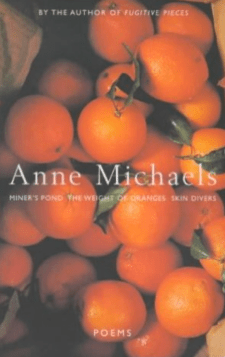
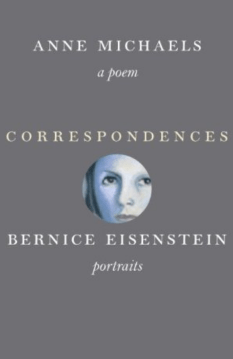
 

Screen Shot 2019-05-05 at 11.41.50 AM.png  Screen Shot 2019-05-05 at 11.41.20 AM.png


Anne kindly agreed to an interview for Poetry Shelf.


Somewhere rain is falling

Somewhere a man is repairing the night, one word at a time


from ‘Somewhere Night Is Falling’, All We Saw


Paula: If you were to map your poetry reading history, name 3 or 4 books that would act as key co-ordinates?

Anne:

T.S. Eliot’s Four Quartets.

Rilke – Selected Poems (translated by Stephen Mitchell).

And the poetry of Nazim Hikmet (translated by Randy Blasing, Mutlu Konuk), Pablo Neruda (translated by Ben Belitt and Alastair Reid), Osip Mandelstam (various translators), Anna Akhmatova (various translators)


Paula: For me your poetry is the kind of poetry that lingers, demanding to be read and then to be read again. The musicality, repetition, the silences and white space, the luminous detail, the layered feeling, the loss, the love – all etch a pattern on the skin. I call it goosebumps. What do you want your poems to do?

Anne: By its very nature, a poem witnesses and, in that witnessing, seeks a kind of justice – not only for the lives or events described by the poem, but witnesses also the reader’s life. Witnesses both what is painful and what is inexpressibly beautiful. I long for a poem to answer an experience, to honour what must be remembered, to honour what cannot be expressed. I long for a poem to name a mystery, to break us open, to wake us. Every poem is part of a greater collaboration, a collaboration of writer to writer, writer and reader, adding its small witnessing to what it means to be alive. To give each other courage. There is no witnessing that does not include the listener. Even if that listener is only the page itself. And I long for the poem to listen to the reader.
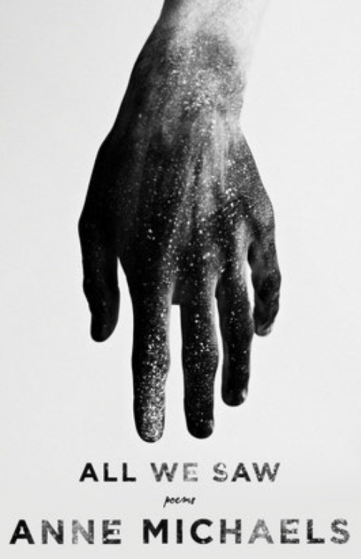
 

Screen Shot 2019-05-05 at 11.41.27 AM


Paula: Your collection, All We Saw, carries me deep into humanity, into humanness. The poem, ‘Somewhere Night is Falling’, came at me in waves, prodding me to to feel the wider scope of life and living. I am deeply moved by it and I hope you read this in Auckland. Actually ‘To Write’ hit me in a similar way. What surprised you as you wrote this collection? What questions arose?


and where

you are

is where you have

always been,

looking to the edge of paper   that torn edge

of sea


from ‘All We Saw’, All We Saw


Anne: Within a short span, most of those closest to me died, intimates of 30 years or more, and my parents. I wanted to understand what language there could possibly be for desire so extreme it is rendered chaste. When desire is forced to become grief. No words are restrained or spare enough to express the difference between silence and muteness. All my work is an attempt to render language chaste and these poems especially. I wanted to know how we might find a place in ourselves to assert that “death must give/not only take from us”.


Paula: There is no blueprint for writing poems. What might act as a poem trigger for you?

Anne: A poem can emerge from what haunts us, what insists: an event or a life that insists on being spoken, a question that has no answer. A poem should give more than it takes – i.e. open us in such way that we are left asking a deeper question. Language itself is inconsolable – it exists in time and yet longs to express what is beyond our grasp: what is lost, what is incomprehensible, what might be, what is ineffable. I write to hold another human being close.


Paula: You are the 2019 Judge of the Sarah Broom Poetry Prize. As a reader what draws you into a poem?

Anne: I am immediately drawn by a disciplined use of language – discipline, rather than manipulation – by a poet who knows a line is not a sentence. A poet who uses language to manipulate will never escape their own certainty; but discipline, however, requires a profound humility – to content, to technique – and an essential respect for and acknowledgement of the inexpressibility of experience. A poet who acknowledges the innate failure of language reaches beyond the self. I am drawn by clarity, not cleverness. I am drawn by a poet unafraid of emotion – the absolute asceticism of emotion – a poet who understands that emotion is somehow irreducible.


in that turning of the page

inside out, in the scarf

of shadow, in the message

passing


you wanted death to give

not only take from us


from ‘Late August’, All We Saw


Anne Michaels’s website.

Listen to Anne in conversation with Kim Hill on RNZ National

Sarah Broom Prize


Sarah Broom Prize finalists: Jessica Le Bas, Nina Mingya Powles, Michael Steven

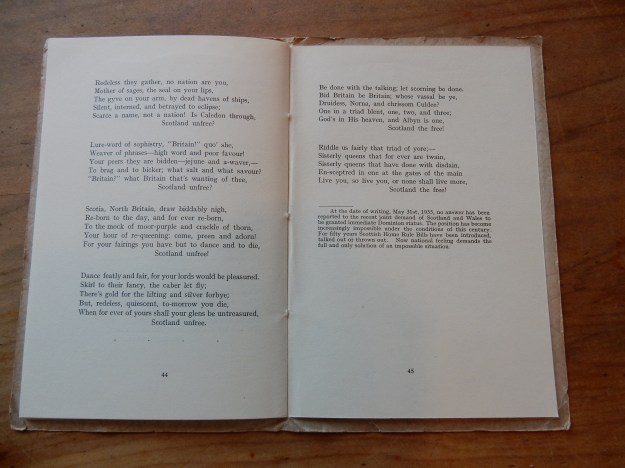
Poetry Shelf Monday Poem: Jessie Mackay’s ‘Scotland Unfree’


Scotland Unfree


Two hundred long winters and thirty forbye

Have narrowed to nought since you first were unqueened, —

When cold, cunning usury made you the teind*

To Empery’s coffer, black treason unweened,

Undreamed of where yonder your mightiest lie,

Scotland unfree.


But they hear, but they heave, blessed mounds on the heath,

That house their true clay for you, mourner and mother,

Mounded for God and for you, not another,

Hear the moor-sloganing, brother to brother,

Hear it from Orkney to Tweed and to Leith,

Scotland unfree!


Mother of martyrs, now hear ye the living;

Mother of makers, world-marches away,

Who set your high mark, in their bold hodden gray,

On masterless wild and blue, bounteous bay, —

Palms for your honour, brave air, but, the giving,

Scotland unfree!


Hear you the living that fare never forth

From your guerdonless thrift in the halted out-flowing.

Too long your life-river, all-hoping, unknowing,

Gold-ribboned the seas from the dawn to down-going

Of sums that had set for your cradling North.

Scotland unfree.


Gold ribbons you gave to the seas of the west.

The world had your best of divine discontent.

Your parasites battened; despoiled and forspent,

‘Twas the babes of your breast, ’twas your children that went;

No steading in life, and no anchor of rest,

Scotland unfree!


What now and what more, when the world is at halt? —

When winds of all destinies clash in the blue?

The gadflies of battles are stinging anew,

Meanly to risk, or unhallowedly rue,

The redeless old nations in fear and at fault,

Scotland unfree.


Redeless they gather, no nation are you,

Mother of sages, the seal on your lips,

The gyve on your arm, by dead havens of ships,

Silent, interned, and betrayed to eclipse;

Scarce a name, not a nation! Is Caledon through,

Scotland unfree?


Lure-word of sophistry, “Britain!” quo’ she,

Weaver of phrases—high word and poor favour!

Your peers they are bidden—jejune and a-waver,—

To brag and to bicker; what salt and what savour?

“Britain?” what Britain that’s wanting of thee,

Scotland unfree!


Scotia, North Britain, draw biddably nigh,

Re-born to the day, and for ever re-born,

To the mock of moor-purple and crackle of thorn,

Your hour of re-queening: come, preen and adorn!

For your fairings you have but to dance and to die,

Scotland unfree!


Dance featly and fair, for your lords would be pleasured.

Skirl to their fancy, the caber let fly;

There’s gold for the lifting and silver forbye;

But, redeless, quiescent, to-morrow you die,

When for ever of yours shall your glens be untreasured,

Scotalnd unfree.


Be done with the talking, let scorning be done.

Bid Britain be Britain; whose vassal be ye,

Druidess, Norna, and chrissom Culdee?

One in a triad blent, one, two, and three;

God’s in His heaven, and Albyn is one,

Scotland the free!


Riddle us fairly that triad of yore;—

Sisterly queens that for ever are twain,

Sisterly queens that have done with disdain,

En-sceptred in one at the gates of the main

Live you, so live you, or none shall live more,

Scotland the free!


* Tribute

Note from Jessie: At the date of writing, May 31st, 1935, no answer has been reported to the recent joint demand of Scotland and Wales to be granted immediate Dominion status. The position has become increasingly impossible under the conditions of this century. For fifty years Scottish Home Rule Bills have been introduced, talked out or thrown out. Now national feeling demands the full and only solution of an impossible situation.


Jessie Mackay,  Vigil and Other Poems, Whitcombe & Tombs, 1935


DSCN9617.jpg


DSCN9618.jpg

‘Scotland Unfree’ is the final poem in Jessie Mackay’s final book, Vigil and Other Poems.


Jessie Mackay (1864 – 1938)  We have a poetry prize honouring Jessie Mackay’s legacy: the Jessie Mackay Best First Book Award for Poetry in our national book awards.  Jessie was born in Rakaia, Canterbury and grew up on several remote sheep stations. She trained as a teacher, taught briefly and then devoted her life to politics and poetry. Jessie wrote countless letters to newspapers and articles on issues such as the plight of women, the vote for women, prohibition, ending the war and Scottish Home Rule. The latter affected her deeply as her Scottish parents spoke of their beloved homeland and the cruel land clearances. Perhaps this is why she revealed such a concern for Māori issues in a number of poems: the fact that land, language, stories and culture make a people. To take them away is to dispossess them. Cruelly. Unforgivably. Pākehā might write poems differently now, after decades of interrogating colonialism; perhaps less likely to borrow myth but, like Jessie, many poets are showing history in a new light  (such as Parihaka).  Jessie often drew us to the women’s point of view.

Towards the end of her life over 300 admirers presented Jessie with a testimonial letter that praised her outstanding humanitarian work and contributions to New Zealand literature. On her death the media sung her praises yet you are hard pressed to find her work in anthologies and we have no Jessie Mackay in print. When I first started reading her work it felt like a foreign country but the more time I spent in the archives, and the more time I spent with her writing, the more she moved me.

The first chapter in my forthcoming book, Wild Honey: Reading New Zealand Women’s Poetry, seeks to draw Jessie’s poetry closer. I am moved by her political stamina and by her battle to be heard as a woman writing. I have picked one of her Scottish poems to post as it feels very timely. What would she think? What would she think about Brexit and our own local tragedies? She would be weeping with her feet in the southern stream, and she would be speaking out. She would be writing poetry.

My book is out in August with Massey University Press.

This year’s poetry finalists in the Ockham New Zealand Book Awards will be appearing at the Auckland Writers Festival Award event: Tuesday 14 May, 7 pm- 8.30 pm, ASB Theatre, Aotea Centre.

The finalists: Helen Heath, Therese Lloyd, Erik Kennedy, Tay Tibble


Screen Shot 2019-05-05 at 9.31.56 AM.png  dscn9615-e1557006520698.jpg

Poetry Shelf noticeboard: Time to create our National Poetry Day

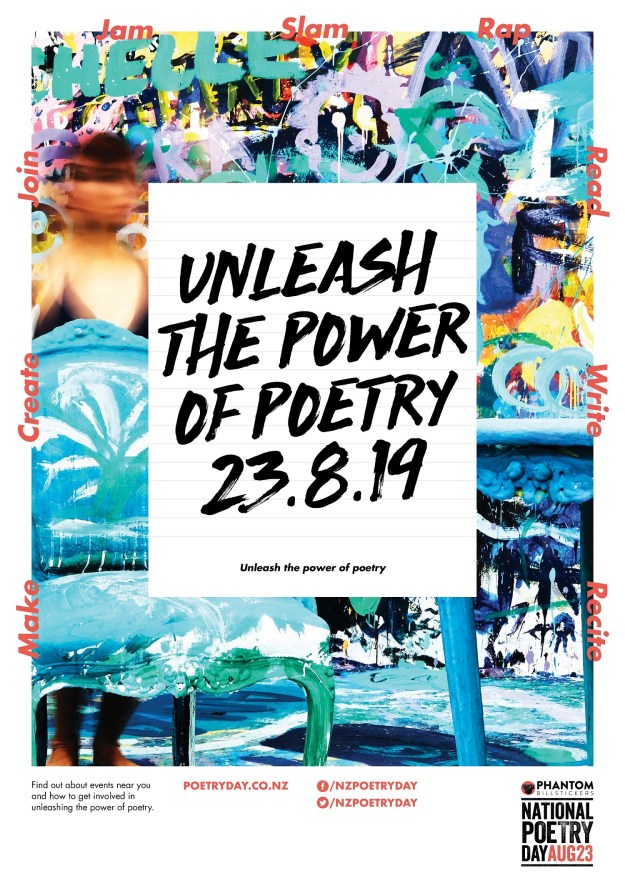
Phantom Billstickers National Poetry Day 2019 Poster.jpg

Acclaimed poet and poetry champion Paula Green is a big fan of the day. ‘Phantom Billstickers National Poetry Day is an inventive, invigorating, heart-warming showcase of the width and depth of our poetry communities,’ she says. ‘From beloved poetry elders to emerging poets, words open and spark in every nook and cranny, on airwaves, social media and street corners. This nationwide festival connects us through the power and joy of words.’

The feast of poetry around the country – from installations to open mike performances and competitions – includes appearances from Poet Laureates, spoken-word stars, and award-winning younger writers like Hera Lindsay Bird and Courtney Sina Meredith. Venues range from theatres, cafes, bars, libraries, schools, museums, marae, community centres and bookshops to pavements, parks and public transport.

The deadline for event organisers to register and apply for seed-funding is Wednesday 22 May 2019 at 5:00pm. Events can be registered online via this link

Held every year on the fourth Friday of August, National Poetry Day is a popular fixture on the nation’s cultural calendar. Phantom Billstickers have sponsored National Poetry Day for the past four years and support the celebrations with a nationwide poetry street poster campaign.

The Poetry winner at this year’s Ockham New Zealand Book Awards – announced on Tuesday 14 May 2019 at the Auckland Writers Festival – will star in event(s) on Phantom Billstickers National Poetry Day. The shortlisted writers for the Mary and Peter Biggs Award for Poetry are: Helen Heath (Wellington), Erik Kennedy (Christchurch), Therese Lloyd (Wellington) and Tayi Tibble (Wellington).

Find Phantom Billstickers National Poetry Day on social media


National Poetry Day has been running continuously since 1997 and since 2014, has been administered by the New Zealand Book Awards Trust. It has a mandate to celebrate discovery, diversity, community and pushing boundaries, and to ensure their longevity and credibility. The Trust also governs and manages the country’s two major literary awards – The Ockham New Zealand Book Awards and the New Zealand Book Awards for Children & Young Adults. New Zealand Book Awards Trust.

Phantom Billstickers is a street poster company which has consistently helped New Zealanders express themselves since 1982. Recognising and supporting home-grown talent has always sat comfortably alongside its commercial campaign work. Phantom actively promotes New Zealand music, art, poetry and culture around in public spaces here and overseas. Phantom Billstickers.


image002.jpg


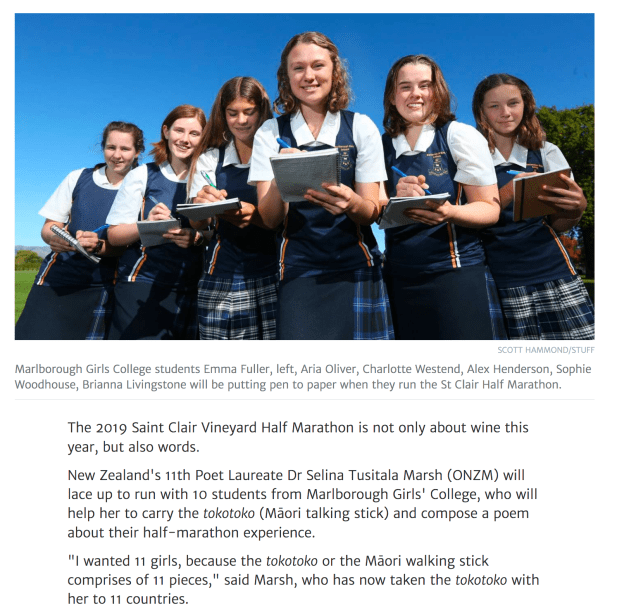
Poetry Shelf notice board: NZ Poet Laureate to compose poem with students during Saint Clair Vineyard Half Marathon

Full article here

Look forward to seeing the poetry that comes out of this Selina!

Screen Shot 2019-05-05 at 12.46.14 PM.png


Poetry Shelf poses a question to poets: Why write poetry?


This is an occasional series where I invite a group of poets to respond to the same question. First up: Why write poetry? I selected this question because a number of writers have mused upon the place of poetry when facing catastrophes that devastate our human roots. I pondered that question. I then asked myself why I have written poetry for decades regardless of whether it is published or applauded. It is what I love to do. It is my way of making music and feeling and translating and being happy no matter the life challenges. I also feel poetry is thriving in Aotearoa; at all ages, in multiple forms and in myriad places, many of us are drawn to write poems.


Albert Wendt

I write poetry because I can’t stop doing it: it demands that I do it, and it is ‘language’ that I feel most passionately about. When I’ve deliberately tried not to write poetry, I’ve ended up feeling unfinished, incomplete. When the poetry is shaping itself well in my tongue and throat, I feel healed, and healing.


Emer Lyons

I talk too much. A male Irish poet visited last year and said my poetry had none of the “jerkiness” of my personality. In writing poetry I find silence and the ability to give that silence space. After drinks with two men from the university last week, the one I had just met sent me a message on Twitter to ask me if I, like him, had Borderline Personality Disorder. Speaking in non sequiturs is not nearly as convincing as writing in them. As women, there are expectations about how we should speak, how we should take up space, how we should be more silent, more stable. Writing poetry is a minor release from social constraints, and the voluntary application of others. I can bind my breasts and write sonnets. On the page, I can be enough.


Erik Kennedy

I write poetry for the same reason that architects draw up concepts for floating cities: 1) to see what a better future might look like before it is possible, 2) to make the blueprints of progress public so that others can avoid making the mistakes that I have.


Therese Lloyd

Poetry remains mysterious to me. It’s such a strange beast and to be honest, sometimes I wish I had been bitten by the fiction bug instead. But I’ve been writing poetry for a long time. I think the first poem I ever wrote was when I was about 6. The poem was about fireworks and I remember the last line was “beautiful but dangerous”. Even at 6 years old I had a dark turn of mind! It may be a total cliché, but for me, poetry is a way to figure out how I feel about something. Writing poetry, especially that first thrilling draft, is an exercise in bravery. I love the feeling of having only the slightest inkling of what might appear on the page, and then to be surprised (sometimes pleasantly) by the string of lines that emerge.

Why write poetry? Because it’s confounding and liberating in turn. Because, as Anne Carson so famously says:

It is the task of a lifetime. You can never know enough, never work enough, never use the infinitives and participles oddly enough, never impede the movement harshly enough, never leave the mind quickly enough.


Michele Leggott

Why write poetry? To sound distance and make coastal profiles, to travel light and lift darkness. I go back to what I wrote about these and other calibrations: A family is a series of intersecting arcs, some boat-shaped, others vaults or canopies, still others vapour trails behind a mountain or light refracted through water. None is enclosed, all are in motion, springing away from one another or folding themselves around some spectral inverse of the shape they make against sea or sky.


essa may ranapiri

I write poetry because I love what poetry can be and can do. With poetry you can create these rather dense language objects that have the ability to confront many realities very quickly without sacrificing complexity. It is a space where I feel the English language can be at its most decolonised and queer and wonderful. And it also a space I feel most comfortable exploring the language of my tīpuna te reo Māori, a language I have only really just started learning. Poetry’s capacity for fragmentation and error, gives me permission to try out who I am and who I want to be. It also encourages in me a radical imagination about the society we live in and the societies that we could live in. A poem can be built in a day and take years to understand, it can both encapsulate and be the moment. A poem can give people who are marginalised a space to really embody their voice, make the air vibrate with their wairua, and in so doing provide an opportunity for community for those that struggle to find it wherever they are.


Bernadette Hall:

Why write poetry? Why not write poetry? Why should a poem choose you to be its vehicle? ‘Poetry is a terminal activity, taking place out near the end of things’ wrote John Berryman in a review article in 1959. I feel a great excitement when I read his words. An enchantment.  Since childhood, I have been immersed in language that’s not my own. In fact it’s dead. Or so the old school rhymes used to say about it, about Latin. And every now and then, a kind of ‘speech’ would emerge, in my native tongue, English, well out of the range of my everyday talking, things I would write down on paper. Secrets. Janet Frame has been quoted apparently as saying that her writing wasn’t her. Which would give you a huge amount of freedom, wouldn’t it, that embracing and distancing at the same time.  Berryman went on to say of poetry, ‘And it aims …at the reformation of the poet, as prayer does.’  The re-formation. No wonder I’m hooked.


Cilla McQueen

It seems healthy for thoughts to have an outlet into the real world.

Thinking is in the poem and is the poem.

You attend to the material and the spiritual. You perceive humanity, see inside yourself and other people, listen to the language of insight, catch words from the deep layers of consciousness.

Writing something down in concentrated form is mental exercise. The elastic syntax inside language asks for attention and skill so that it can be used with subtlety, to contain many shades of meaning and feeling.

Writing is a pleasure. Whether it ends up as a poem or not doesn’t really matter.

Words can unblock. The complete absorption in writing, in silent concentration, can provide a psychic release. A poem both releases energy and generates it.

The act of writing can be a refuge and comfort, also a way of talking things out in order to understand. The page is always listening, a patient companion in times of solitude or loneliness.

Don’t know what I’d do without it. I’ve spent most of my writing life thinking about poetry, but am still wary of defining it (this is part of its charm).


Albert Wendt has published many novels, collections of poetry and short stories, and edited numerous anthologies. In 2018, along with four others, he was recognised as a New Zealand Icon at a medallion ceremony for his significant contribution to the Arts.

Emer Lyons is an Irish writer who has had poetry and fiction published in journals such as TurbineLondon GripThe New Zealand Poetry Society AnthologySouthwordThe Spinoff and Queen Mob’s Tea House. She has appeared on shortlists for the Fish Poetry Competition, the Bridport Poetry Prize, the takahé short story competition, The Collinson’s short story prize and her chapbook Throwing Shapes was long-listed for the Munster Literature Fool For Poetry competition in 2017. Last year she was the recipient of the inaugural University of Otago City of Literature scholarship and is a creative/critical PhD candidate in contemporary queer poetry.

Erik Kennedy is the author of Twenty-Six Factitions (Cold Hub Press, 2017) and There’s No Place Like the Internet in Springtime (Victoria University Press, 2018), and he selected the poetry for Queen Mob’s Teahouse: Teh Book (Dostoyevsky Wannabe, 2019). Originally from New Jersey, he lives in Christchurch, New Zealand. There’s No Place Like the Internet in Springtime is shortlisted for the 2019 Ockham and New Zealand Book Awards – he will be appearing at the Auckland Writers Festival in May.

Therese Lloyd is the author of the chapbook many things happened (Pania Press, 2006), Other Animals (VUP, 2013) and The Facts (VUP, 2018). The Facts has been shortlisted for the 2019 Ockham New Zealand Book Awards and she will be appearing at the Auckland Writers Festival in May.

Michele Leggott has published eight collections of poetry, most recently Vanishing Points (Auckland University Press) and has edited and co-edited a number of anthologies including the poetry of Robin Hyde.She was the inaugural Poet Laureate (2007-9) under National Library administration and in 2013 received the Prime Minister’s Award for Poetry. She founded the New Zealand Electronic zPoetry Centre and is professor of English at the University of Auckland. She recently contributed the introduction to Verses, a collection of poetry by Lola Ridge (Quale Press).

essa may ranapiri is a poet from kirikiriroa, Aotearoa and are part of the local writing group Puku. rir |Liv.id. They have been published in many journals in print and online, most recently in Best New Zealand Poems 2018. Their first collection of poetry ransack is being published by Victoria University Press in July 2019.

Bernadette Hall lives in a renovated bach at Amberley Beach in the Hurunui, North Canterbury. She has published ten collections of poetry, the most recent being Life & Customs (VUP 2013) and Maukatere, floating mountain (Seraph Press 2016). In 2015 shereceived the Prime Minister’s Award for Literary Achievement in Poetry. In 2016 she was invested as a Member of the New Zealand Order of Merit for services to literature.  In 2017 she joined with three other Christchurch writers to inaugurate He Kōrero Pukapuka, a book club which meets weekly at the Christchurch Men’s Prison.

Cilla McQueen is a poet, teacher and artist; her multiple honours and awards include a Fulbright Visiting Writer’s Fellowship 1985,three New Zealand Book Awards 1983, 1989, 1991; an Hon.LittD Otago 2008, and the Prime Minister’s Award for Literary Achievement in Poetry 2010. She was the National Library New Zealand Poet Laureate 2009 -11.  Recent works include The Radio Room (Otago University Press 2010), In A Slant Light (Otago University Press, 2016), and poeta: selected and new poems (Otago University Press, 2018).


Poetry Shelf noticeboard: Charles Olsen’s essay in Cordite responds to the Christchurch mosque attacks

On Being Sanguine: Two Years of Panic and a Response to Terror in Christchurch


Self-portrait by Charles Olsen in Wellington, NZ (1991)

One Sunday, when I was an art student in London, I got on my bicycle and left my parents’ vicarage in Surrey for my room in Murray Mews, going along the River Thames and through London’s parks: Bushy Park, Richmond Park, Hyde Park and Regents Park. I was stung by a bee or wasp somewhere around Shepperton which got my blood up and I raced towards the city, perhaps a little too fast for my own good; a reaction to adversity.

*I didn’t know how to respond to the Christchurch shooting. It was so out of the blue. By chance a few days after the attack happened to be the launch in Wellington of a collection of poems by migrant and refugee poets in New Zealand called More of Us from Landing Press. It includes my poem ‘When you least expect’, about a series of terrorist bombings near places I was staying in London, Cairo and Madrid. The most devastating for me was back in 2004 where I live in Madrid, about six months after I’d moved to Spain. A series of explosions on the local train network during the morning rush hour killed 193 people and injured around 2,000. I was on a train heading out of Atocha station as the backpacks containing the bombs were abandoned on packed trains heading towards Atocha. I must have heard one of the explosions in the distance lost in the noise of the train but it was only when I arrived at 8.00am at the company where I gave English classes and found my students huddled around the radio and online, searching for the news, that I learned what had occurred. They were surprised I’d managed to get to work. We didn’t have the class that day and I made my way into Torrejón de Ardoz and found where to catch a bus back into Madrid.

Charles Olsen, 1 May 2019


Read the whole piece here


‘”I didn’t know how to respond to the Christchurch shooting. It was so out of the blue. By chance a few days after the attack happened to be the launch in Wellington of a collection of poems by migrant and refugee poets in New Zealand called More of Us from Landing Press.”


Poetry Shelf noticeboard: Voicing Māori issues for the world through slam poetry

details and video  here


Screen Shot 2019-05-02 at 12.57.14 PM.png

Colonisation, cultural oppression, abuse, depression and mental illness- some of the issues that the four young wahine Māori of slam poetry group Ngā Hine Pūkorero are taking to the world.

The group are representing Australasia at the 2019 Brave New Voices (BNV) Youth Poetry Festival in the United States, the largest international Youth Poetry Slam Festival in the world.

Matariki Bennet (Te Arawa) says, “There are a number of issues throughout Aotearoa that afflict Māori like poverty, mental illness, depression.  Most of the time the only thing that is seen by the world is the beauty on the surface.”

Ngā Hine Pūkōrero use waiata, karakia and te reo Māori throughout their poetry to confront stereotypes and voice the challenges that their generation face.

Arihia Hall (Tūwharetoa, Ngāti Tūkorehe) says, “It’s too easy for youth to be affected by depression and relinquish our culture and our language because we want to make a living in this world.”

After being crowned gland-slam champions at the Aotearoa and Trans-Tasman poetry slam competitions, the group are now fundraising to travel to LA for the BNV competition.

Te Rina Wichman-Evans (NgāPuhi, Ngāti Whātua) says, “[People] need to know that they’re not the only ones facing challenges, that there are different challenges around the world, including Aotearoa…such as with Māori language and learning the history of other cultures, while our own history is overlooked,” says Manaia Tuwhare-Hoani (NgāPuhi, Ngāti Wai).

This is the first time anyone from Australasia will compete at BNV.

“We’ve seen the strength of our grandmothers, our aunties, our mothers, we’ve learnt how to carry ourselves as strong women in this world of men,” says Matariki Bennet.

The group has set up a Givealittle page to fundraise for the trip in June.

Poetry Shelf noticeboard: Whiskey and Words

details here


Wellingtonians are invited to develop their palate for poetry at Poquito Cafe & Bar on Sunday the 23rd of June.

Whisky & Words offers an array of spirited delights from Poquito Cafe & Bar and some of Wellington’s most exciting poets. On the night, each poet will present a whisky from the night’s tasting flight and perform a poem inspired by their drink (plus a few of their best pieces). You will be served a range of five whiskys and five poets and are sure to find some new favourites of both! There will also be nibbles.

Whisky & Words is produced and MC’d by local poetry legend and whisky lover Kate Spencer (NZ Fringe Tour Award Winner, 2019). Her curated line-up features more than a tipple of talent; with poetry from Jordan Hamel (NZ Slam Poetry Winner 2018) Alayne Dick, Sharn Maree, Tarns Hood (Wellington Slam Poetry Finalists 2018) and Sara Hirsch (UK Slam Champ 2013).

There are only 32 tickets for this winter warmer, so get in quick.

Screen Shot 2019-05-02 at 4.53.35 PM.png

Poetry Shelf audio spot: Erik Kennedy reads ‘Another Beautiful Day Indoors

Erik Kennedy - Frankton Library, 2 March 2019 - websize.jpg


Erik Kennedy reads ‘Another Beautiful Day Indoors’;  it originally appeared in The Moth, No. 35, Winter 2018


Erik Kennedy is the author of Twenty-Six Factitions (Cold Hub Press, 2017) and There’s No Place Like the Internet in Springtime (Victoria University Press, 2018), and he selected the poetry for Queen Mob’s Teahouse: Teh Book (Dostoyevsky Wannabe, 2019). Originally from New Jersey, he lives in Christchurch, New Zealand.


Poetry noticeboard: time to submit writing to Sport and to Poetry NZ


Poetry NZ

Please submit work for our single annual issue only between the dates of 1st May and 31st July each year. The reason for this policy is to avoid a long wait before your work is accepted or rejected. You should hear back from us within, at most, three months of the date of submission.

Editor: Johanna Emeney

Deadline: July 31

Details here


Sport

Deadline: June 1

Editor: Tayi Tibble

Submit to: Victoria-Press@vuw.ac.nz

Details here