Monthly Archives: September 2018

Two speeches: Elizabeth Knox and Paula Green launch Anna Jackson’s award-winning novella


41946219_888009048075281_8779317979461451776_n.jpg

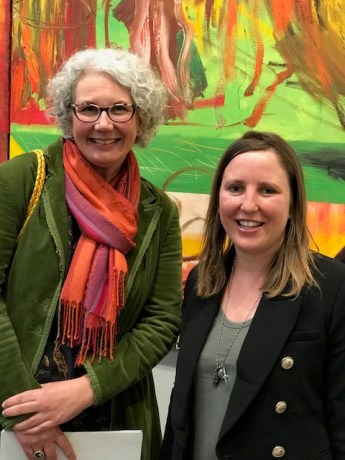
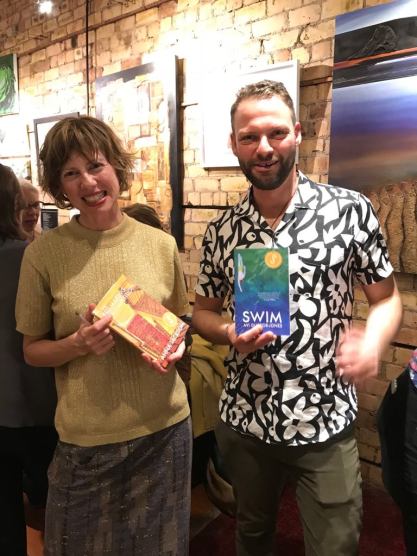
Anna Jackson with co-winner Avi Duckor-Jones at Time Out Bookstore


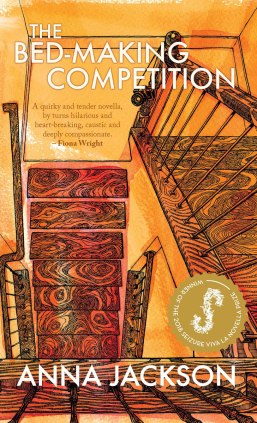
Anna Jackson recently won the 2018 Viva La Novella Prize with The Bed-Making Competition. The competition is open to Australasian writers but this is the first year a New Zealander has won – in fact two did. Avi Duckor-Jones also won with Swim. Both books were published by Australia’s Seizure Press and were recently launched in Wellington (by Elizabeth Knox) and in Auckland (by me).

I adore this book so it gives me great pleasure to share our launch speeches.


from Elizabeth Knox at Unity Books, Wellington:

Tena Kotou katoa

I am delighted to be launching Anna’s prize-winning novella The Bed Making Competition.  I’m a fan of novellas, a lovely, free, slippery form, partly because no one has yet decided what a well-made novella is supposed to look like, whereas there are plenty of confident and confidently expressed opinions about novels and short stories.  Like novels, a novella tells a sustained story, but in a way that somehow makes it more permissible to leave things out.  The Bed Making Competition gives us five chapters in the lives of two sisters, Brigid and Hillary.  Each chapter is a point of shared or solitary personal crises—solitary in the case of Hillary’s Goldilocks episode at a flat in Christchurch. The longest chapter is the duration of a pregnancy, the shortest a single day and a little run of events that consolidates a character, a relationship, a world view. Years intervene between each of the episodes—for instance Brigid is pregnant with a first child in the central one, then has two growing children in the next. Over and over I had the pleasure of surprise in coming back to the small configuration of sister, friends, parents, partner, children and seeing the changed circumstances, and changed selves, and the work of an almost Elizabethan sense of fortune in their lives—fickle fortune, an artist of whimsy and unease.  I kept wanting to know more, and having to intuit much, and being rewarded by the book’s feeling for the mysteriousness of what happens to people over the course of a lifetime.  These characters make their beds and have to lie in them; they move their beds around to make room for more beds; they climb into bed with a beloved sister and are as happy as a puppy in a basket; or they find themselves in the wrong bed in the wrong house, or bedless at bedtime and sitting on a suitcase.

This is a book about a sibling relationship. All sibling relationships entail some degree of competition.  Hillary and Brigid for the most part aren’t competing for anyone else’s attention—maybe a little for Brigid’s best friend Julia, and Brigid is ever ready to cede even a best friend for a sister’s needs—but never for their parent’s attention—and always for each other’s.  I could say that the novella charts a power relationship between sisters, except “power relationship” doesn’t quite describe the oscillations in their orbits of each other as the gravity of one becomes greater than the gravity of the other, and then swaps back again—back and forth over half a lifetime. The Bed-Making Competition is essentially about this dance, Hillary and Brigid circling each other, taking turns at being the heavier gravitational body. The younger sister waits for the older to come out of her bedroom and listen to her story, waits to have mysterious things explained to her, or for a lead in how behave with their parents, how to feel about being left by mother and father, and with father’s credit card.  Later each waits for the return of remembered moment of glorious closeness.  The novella gets that sense of loving too much, or of not being loved enough, that rises and falls in relationships between sisters.  It gets the necessity of wooing a sister.  Of all other relationships changing at the sudden presence of sister who has been absent too long. It gets being asked to be responsible, to manage a sister’s crisis for the happiness of helpless and aging parents, to manage it as if there’s some managerial magic in just being a sister. What the book doesn’t do is resentment, or disavowal—”I am not my brother’s keeper.”—only the helplessness of being able to do only so much.

This is a book very much about the changing nature of strong relationships.  And it’s serious about those things, but serious with lightness, and an appreciation of mess, mayhem, oddity.  The characters in this book never complain, they’re observant, rueful, they have notions about how to improve their lot – often peculiar and experimental notions.

The story is book-ended by abandonment and death—a mother runs away, followed by a father trying to retrieve her—and then then, in time, that mother is on her deathbed.  The meaningful deathbed exchange the mother and daughter have isn’t about the past, but a conversation conducted as if both of them have a present and future.  The scene is so true to the book’s understanding of people, and true to life, I found it really moving.  This book is moving, and also productive of anxiety. I really worried about the characters at various points.  Books that make me worry about their characters are my favourite kind of books.  The Bed Making Competition is a fine example one of those, a book that mostly caresses its readers and smooths their fur and sometimes startles them into electrified wakefulness by brushing their fur up the wrong way. So, welcome everyone to this caressing and startling book. And thank you Anna.


Elizabeth Knox
 

Bedmaking-front-cover-sml.jpg


from Paula Green at Time Out Bookstore, Auckland:

Kia ora koutou katoa

Last night I had a poet anxiety dream about launching this book. I am extremely glad I am not standing on this stepladder in a crumpled cotton dress and muddy gumboots. And I have a little speech written on this piece of paper that I haven’t left it at home.

Auckland University Press launched Anna’s terrific Pasture and Flock: New and Selected Poems earlier this year – a book that reveals a poetic curiosity in the world, lilting lines that absorb sumptuous detail, intimate attachments to people, places and ideas, an enviable ability to make words and thus poems move and surprise. I loved it.

What a treat to share Anna’s award-winning novella with you this evening when it delivers such similar joys. This is a book of two sisters, Hillary and Bridgid, two shifting voices that we follow through chronological and geographical jumps. The narrative exposes fragility, envy, attachment, yearnings, detachment along with various internal aches and hungers when life throws you off kilter or keeps you on some kind of vital track of living. As teenagers for example the two sisters get inebriated, drink champagne on swings, thrash the credit card, when the father goes in pursuit of the mother who has walked out. They get to eat pizza without salad.

There is so much to love about this book, this small package that is rich in effect.

I adore the way voice pulls you through Anna’s textured writing: it builds character, scene incident, development, and most importantly sister relations.

The details are both sensual and sumptuous: whether of food clothes people or setting. They establish an architecture of the domestic, of family, that is both intimate and revealing.

Little scenes stand out: such as in the art gallery where the prices and titles of Bridgid’s work get mixed up in her small corner of the gallery. Her partner gets most space.

Larger scenes stand out such as when Hillary goes to stay with Bridgid in London. Or the Goldilocks scene in the flat in Christchurch. But you have to read these for yourself!

I was hungry for this book as I read it. I am reminded of reading the honeyed fluency of Katherine Mansfield or Virginia Woolf. The way the novella resembles stream of consciousness but it is ever so beautifully and distinctively crafted. You get caught up in the writing currents and you don’t want to stop reading. It gives me great pleasure to declare this gorgeous book launched and to invite you to read it yourself. Congratulations on the award Anna and on this immensely satisfying read that startles and surprises as much as it draws you into points of recognition.

Paula Green


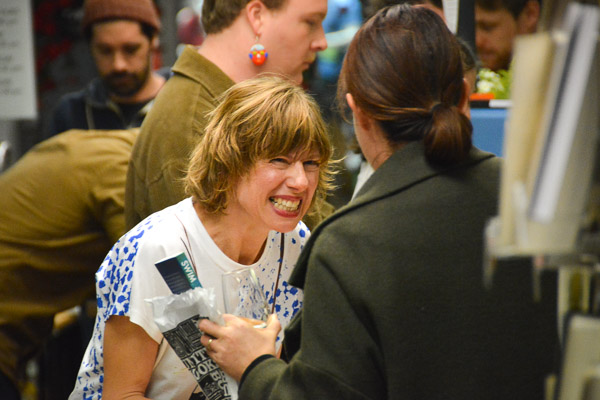
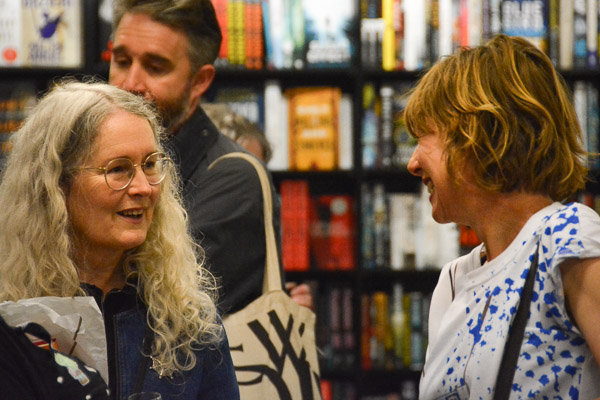
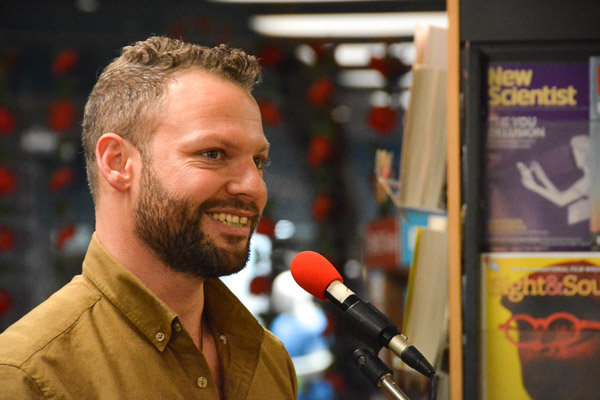
Some photos from the Unity Book launch
DSC_1168-3.JPG

DSC_1208-9.JPG

DSC_1239-13.JPG

DSC_1198-7.JPG


Auckland Writers Festival Launches Literary Foundation


Screen Shot 2018-09-17 at 9.33.15 PM.png

A new Foundation established by the Auckland Writers Festival aims to strengthen Aotearoa’s literary landscape.

The Mātātuhi Foundation, launched this evening, will provide opportunities for New Zealand writers to develop and promote their works and for readers to increase their engagement with the work of local writers and will fund activities that contribute to literacy in this country.

Auckland Writers Festival Chair, Pip Muir says the launch of the Mātātuhi Foundation is the next step in the realisation of a long-held dream.

“When the Festival began almost 20 years’ ago, meetings were held around a kitchen table. Since then, the appetite to engage with writers from New Zealand and around the world has grown exponentially and with it the opportunity to deepen our commitment to our literary landscape.

“It is absolutely fantastic that the Festival has reached a point where it can further contribute to the national reading and writing community. We are thrilled to be able support the nation’s literature with the launch of this ground-breaking initiative.”

The Foundation will operate independently of the Auckland Writers Festival Trust and initially aims to make up to ten one-off grants of $2000 – $5000 per year whilst building an endowment platform to support its long-term endeavours.

Inaugural Committee members are professional director and senior finance executive Anne Blackburn (Chair), writer and academic Paula Morris, Festival Trust Board Chair and lawyer Pip Muir, Auckland Writers Festival Director Anne O’Brien and country head of Chartered Accountants Australia and New Zealand and Book Council board member Peter Vial.

Ms Blackburn says she relishes the opportunity to work with an organisation that supports New Zealand literature. “I very much look forward to receiving applications from groups that seek to engage more readers and also from our writers, whose words and ideas enrich our lives.”

Applicants are invited to submit expressions of interest twice a year, with deadlines of 31 October and 31 May.

For further information please contact Penny Hartill, hPR, 021 721 424, penny@hartillpr.co.nz

Poetry Shelf Monday Poem: Lynn Davidson’s ‘Leaving Bass Rock gannet colony ‘


Leaving Bass Rock gannet colony


After skypointing to show

it’s ready


after one last dive, shorting the sea

(the crack, the pressured current fizzing)


after one last moment of great aloneness: a fleck

in oceans


after the last fish in its gut –

the fin and skin and bone of it – tears apart


it takes a final flight, blowing

Bass Rock into the feathery pieces   we call


aura or

atoms    we called


father or

Adam


©Lynn Davidson


This poem was was published in New Writing Scotland 35. Bass Rock is a rock/island in the Firth of Forth. It’s a huge gannet colony and has a long and interesting history of human habitation too.

Lynn Davidson writes poetry, fiction and essays. Her latest poetry collection Islander will be published by Shearsman Books and Victoria University Press in 2019. Lynn currently lives in Edinburgh.


Winners of the 2018 NEW VOICES – Emerging Poets Competition Announced


IMG_0716.jpg

Judge Elizabeth Morton and winner Gillian Roach


Gillian Roach is this year’s winner of the NEW VOICES – Emerging Poets Competition.

Post-graduate student of the Masters in Creative Writing, AUT. Roach is an Auckland poet and fiction writer who recently completed the Masters In Creative Writing course at AUT. She studied English Literature and Language at Victoria University and has a diploma in journalism.

Her poem ‘A boy says he has no say’ was described by this year’s judge Elizabeth Morton as, “a delicate poem, with an enviable lightness of touch. The movement from one stanza to the next is gentle‚ and the suburban scenes, with hedges and lemon tree‚ are delightfully familiar. But this is also a poem with grit and a sadness ostensible if you rub away at the props. The deeper unfoldings are not explicit‚ but it is clear there is a turn of darkness here – ‘disappointment’‚ the neighbours ‘gathered in mourning’ and the ‘dead duck head down in murky summer’‚ the ‘small sadness … neither fruit nor bud’. This poem is a gut-punch, and kept igniting questions. Each time I read it I felt closer to its truth.

Runner-up: PATRICIA HANIFIN (ex student of AUT, lives in Auckland)

Has had work published in Turbine, Flash Frontier, Headland and others. In 2014, she was runner up in National Flash Fiction Day (NZ) competition. She’s recently completed a novel, Ghost Travellers.

Morton described her poem On being silent too long as, visceral and urgent, thick with the fluids and salts that flesh entails. It is a poem of the untouched and unspoken, of the once ineffable backlog of words that come flooding out with a sort of violent energy. There are old tropes re-fangled and sutured together to create something vital and fabulist – there are wolves at the door, salt in the wounds, a crown of thorns. This poem commands attention and wears its fierceness like a medallion.

Elizabeth Morton said she was “gobsmacked by the attention and craft of the sixty poems in the menagerie. There were critters of all types – long, squat, form-driven and free-range. There were beasts of poems, poems that slunk and yowled, poems that tipitoed, and many poems that pounced in the last couple of lines, leaving me whiplashed, winded, awestruck. I found lines that could be printed on t-shirts. I found time-travel – both back and forward – nostalgic reminiscence, to climate change and apocalypse. There were poems that spoke to their creators – poems that had seen terrible things, poems that asserted a finger in the face of dissension and adversity, poems that coexisted with pain. There were poems I wanted to talk to over a cup of tea. There were poems I wanted to hug. There were so many poems that were vulnerable, took risks, ached at my heart – and yet many of these were left without placings, without chairs to sit. There are so many good poems standing awkwardly by the door because I just couldn’t keep adding commendations.”

Highly Commended

Lincoln Jaques – Undertaking a Master of Creative Writing Student, AUT
Sarah Scott – from Wellington is studying for her Masters in Art History at the University of Auckland
Commended

Savannah Mouat – Studying Pschycology at Massey University’s Albany Campus.

Daniel Nissen-Ellison – Studying Art and English at the University of Auckland.

Lydia Chai – is studying law at the University of Auckland

Give Words: ‘The Spanish Connection’

NPD-Stamp-Lockup-2Col-CMYK-2018.jpg


For all the winning poems go here

Report from judge, Charles Olsen:

It’s the hospice, the old provincial hospice.
A decrepit building with blackened roof tiles,
Where in summer in the eves swifts nest
And the caw of crows sharpens winter nights.’

– Opening lines of The Hospice, Antonio Machado (Translation by Charles Olsen)

This poem caught my attention as I was reading the Spanish poet Antonio Machado’s Campos de Castilla for the first time having just been awarded the III Antonio Machado Poetry Residency in Segovia and Soria in Spain, more of which later. So I decided to choose from it the five words for this year’s Given Words competition: decrepit, window, nest, cast and snow. Each participant had from the beginning of August until National Poetry Day 24th August to write a poem that included the five words. Over 120 poets of all ages took up the challenge so I had my work cut out making a selection of my favourites and deciding on the winners.

I find it interesting how the same five words can lead to such a diverse range of poems and I am particularly drawn to those where you hardly even realize the five words are there and also those where the words are not used in an obvious way. These are both true of the piece I chose for ‘Best Poem’, the peculiar Processional with it’s otherworldly use of the five words beginning with ‘the baying of nests’ and the sensations it leaves hanging in the air like the ‘decrepit forms’ in the wake of this quasi-religious funerary procession.


Here is Processional by Craig McGeady:


Processional

Matching coveralls and wide brimmed hats
three marching in funerary procession
heads bowed beneath the baying of nests
as if that for which they mourn
is yearning from the other side of silence.

The first balances a weed-eater on his shoulder
the second pushes a mower, the third
carries a broom of brambles, as they follow
a stoic path between turning trees
ignorant of the leaves that catch upon their brims.

They wade through waves of decrepit forms
whose flesh once echoed sunlight
while brethren maddeningly cling to bitter boughs
shaken by unceasing winds, announcing
winter on the verge of snow.

Their steps slow, time is a window to the past
the heady cast of sweat and stench
of nests before abandonment took hold
heavily, those final steps are taken
to darkened doors and the silence of home.


For ‘Best Poem by Under-16s’ I chose Seasons Poem which deftly sets the scene with all five words, opening with snow as a cast ‘keeping the broken bones of earth/while they heal’. Although, as in many of the poems sent in, a nest is a nest, a window is a window and snow is snow, each element has its own particular place in the story as it gently unfolds with the change of the season. This is Seasons Poem by Jemma Prileszky, aged 13:


Seasons Poem

winter is here
the snow today is like a big cast
keeping the broken bones of earth
while they heal
a decrepit bird’s nest sits in frost
at the base of a black tree
from the window, a boy sees three eggs
pale blue as a frozen sea
slowly freezing while the unknown bird
is away
he doesn’t want to watch
turns away
asks the air if mother will return
to save her children
spring is here
the cold shell of winter broken
life bursts from newly healed wounds
a black tree is no longer black
instead shimmers pink as its flowers
ruffle in the breeze
the boy wades through ankle-deep grass
content
boots shuffle
cicada hum
something cracks underfoot
carefully hidden by snow long-forgotten
at the tree’s base
lies the nest
icy ocean eggs have disappeared
along with the cold
something new here
besides the nest
surrounded by delicate spring snowdrops
an ivory skeleton
of the mother bird
she’d been there all along


It was a difficult task choosing just two winners and I encourage you to take time to read the rest of the selected poems on Given Words – they all contain the same five words but each has it’s own story to tell.

So now, as we get closer to autumn in Spain, I’m about to head off to start my residency in the Spanish cities of Segovia and Soria, where Antonio Machado lived and worked, looking for inspiration to write my own poems. Everyone is telling me to make sure I pack warm clothes because – although we like to think of Spain as a hot Mediterranean climate – it can get bitterly cold in the winter months and you realise why the old houses have stone walls over a metre thick and wooden window shutters to keep out the cold (as well as the baking sun). I will be sharing photos from the residency on Instagram: @colsenart, like the one above of the beautiful River Duero passing through Soria that I took during the book fair in August, and my plan is to spend time walking in the countryside and the cities, meeting people and taking time to paint and film alongside my writing. So, as well as finding inspiration in Machado’s descriptions of the Castilian countryside and the people who live there I’m sure something of the two poems above with their descriptions of the changing seasons and the way people interact with their environment will also stay with me during the residency. And I’m going to have a go with the five words myself…

About the winners

Craig McGeady is from Greymouth and lives with his wife and two daughters in Xuzhou, China. He is a teacher at the China University of Mining and Technology. His writing runs the gamut of length and form thanks to a homeroom teacher with a penchant for Michael Moorcock. Poetry first came to him in study classes in the small prefab classrooms on the fringes of Fraser High School in Hamilton. craigmcgeady.wordpress.com

Jemma Prileszky is a thirteen-year-old high school student. Her main interest and hobby is writing and she is always scribbling or typing; busy capturing new ideas. She has been attending The School for Young Writers in Christchurch for the past four years. When her fingers are aching from typing or holding her pen she relaxes with her pets, including her gorgeous whippets Kirby and Pip and her rescue cat Miss Maple.

The winners’ prizes were kindly provided by Massey University Press and Mākaro Press.

Dunedin writer Sue Wootton is the recipient of the NZSA Peter & Dianne Beatson Fellowship 2018

Sue_Wootton-300dpiBW-546x600.jpg


Sue Wootton will use the fellowship to work on an historical novel. She says: ‘I’m proud and delighted to be the recipient of the 2018 Peter and Dianne Beatson Fellowship. It’s really invigorating to receive this vote of confidence in my project, and wonderful to know that I can now dedicate a sustained stretch of time to work on my second novel, which begins during the 1948 polio epidemic and explores the effects of this on one NZ family’.

Sue Wootton’s poetry, fiction and essays are widely published in New Zealand and internationally, and her work has been recognised in a number of awards and competitions, including the International Hippocrates Prize for Poetry and Medicine, the Caselberg Poetry Prize, the Gwen Harwood Poetry Prize, the University of Canberra Vice Chancellor’s Prize, the BNZ Katherine Mansfield Short Story Competition and the NZ Poetry Society International Competition. Her debut novel, Strip (Mākaro Press), was longlisted for the fiction prize in the 2017 Ockham NZ Book Awards, and her fifth poetry collection, The Yield (Otago University Press) was a finalist in the 2018 poetry category of these prestigious national awards.

Selection panel convener David Hill commented: ‘Sue Wootton is a versatile and much-admired writer, with a growing track record in both poetry and prose. Her sample of work is distinguished by writing that is both adventurous and accessible.’


Full details here


Poetry Shelf audio spot: Rebecca Hawkes reads ‘Sighting’


Screen Shot 2018-07-23 at 11.04.47 AM.png


Photo credit: Mitchell Botting 


‘Sighting’ was originally published in Starling 5


Rebecca Hawkes is a poet and painter who has traded the tussock-clad hills of the Canterbury high country for the suburban slopes of Wellington. More of her work can be found in Landfall, Mimicry, Sport, and elsewhere via her website.


image.png


image.png


University of Waikato invites applications for the position of Writer in Residence

Screen Shot 2018-09-12 at 1.55.11 PM.png

Each year the University of Waikato invites applications for the position of Writer in Residence, tenable for twelve months from January. The salary is $52,000 jointly funded by the University of Waikato and Creative New Zealand, the Arts Council of New Zealand Toi Aotearoa.

The position is open to poets, novelists, short story writers, dramatists, and writers of serious non-fiction. The appointment will be made on the basis of a proven track record of publications of high quality, and on the strength of the applicant’s Residency proposal.

The Writer is expected to live in Hamilton during the tenure of the award. There are no teaching or lecturing duties attached to the award, the sole purpose of which is to give the Writer the freedom to write. It is expected the Writer will participate in the cultural life of the University. The Writer will be able to make use of the Michael King Writers’ Retreat in Opoutere for up to two weeks (current market value $3,000).

Enquiries can be made to Assoc. Prof. Sarah Shieff, telephone 07 838 4466 extension 8425 or email: sarah.shieff@waikato.ac.nz

Closing date: 12 October 2018 (NZ time)

Vacancy number: 380360

For more information and to apply visit here

Four highly talented wāhine at Adam Art Gallery Te Pātaka Toi

Screen Shot 2018-09-11 at 6.14.23 PM.png

Adam Art Gallery Te Pātaka Toi
Victoria University of Wellington
Gate 3, Kelburn Parade
Tel: 04 463 6835
Email: adamartgallery@vuw.ac.nz
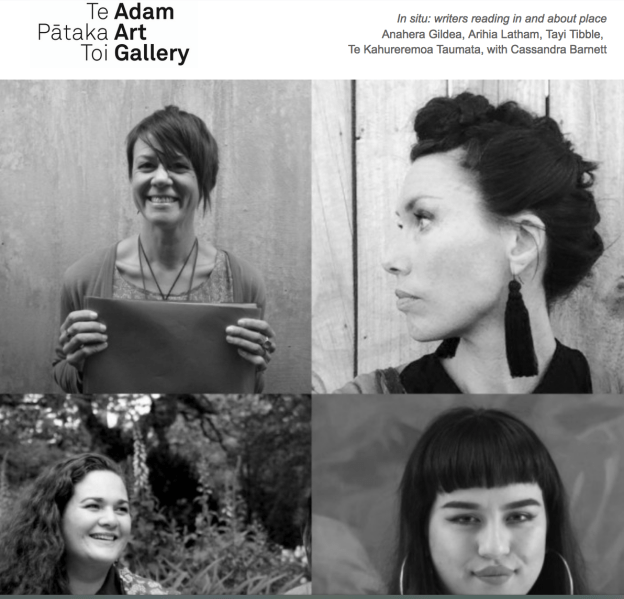
www.adamartgallery.org.nzClockwise from top left: Anahera Gildea, Arihia Latham, Tayi Tibble, Te Kahureremoa Taumata

In situ: writers reading in and about place
Friday 14 September, 6pm
Adam Art Gallery
Refreshments provided
Please join us for an evening of live readings generously organised by writer and art theorist Cassandra Barnett, who will moderate the evening. This series of readings uses the occasion of the exhibition The earth looks upon us / Ko Papatūānuku te matua o te tangata as an opportunity to hear from four highly talented wāhine.

We are pleased to host Wellington-based writer Anahera Gildea (Ngāti Raukawa-ki-Te-Tonga, Kāi Tahu, Te Āti Awa, Ngāti Toa, Ngāi Te Rangi), author of Poroporoaki to the Lord My God: Weaving the Via Dolorosa (Seraph Press, 2016); poet and short story author Arihia Latham (Ngāi Tahu, Kāi Tahu); singer, songwriter and storyteller Te Kahureremoa Taumata (Ngāti Kahungungu, Ngāti Tuwharetoa); and Tayi Tibble (Te Whānau-ā-Apanui/Ngāti Porou), who recently published her first collection of verse titled Poūkahangatus though Victoria University Press.