Monthly Archives: April 2018

Flash in Aotearoa: NFFD judges in conversation


Screen Shot 2018-03-30 at 9.58.13 AM.png

Still time to enter!


The 2018 National Flash Fiction Day competition runs through April 30.

Send your best 300-word story * Cash prizes

Three categories: Adult, Youth and a Te reo Māori Prize


‘Compressed forms tend to make poets of us all, because the fewer words you have to work with the more work you want each of those words to do. So yes, perhaps poets start with a bit of an advantage since they are already familiar with using distilled language and constrained form. But the ‘fiction’ aspect of flash demands a commitment to the idea of story: the passage of time, development of character, something that happens, a transformative moment. And whereas the basic building block of poetry is the line, in flash fiction it is usually the sentence. Which is a good place to suggest that Jac Jenkin’s ‘Settlement’ (2016) is a terrific example of the overlap between prose poetry and flash fiction. It’s carefully crafted with the line and the sentence in mind. It pops with concrete imagery (“one femur has a spiral crack; its neck has been gnawed by rodent teeth”), has rhythm, uses alliteration (“am I fleshed or flayed?”), and speaks as much from the white space between the words as from the words themselves.’ Sue Wootton


We are pleased to share insights from this year’s judges.

Sue Wootton and Tracey Slaughter (Adult judges)

Tim Jones and Patrick Pink (Youth judges)

Vaughan Rapatahana (Te reo Māori Prize judge)


NFFD 2018 in Auckland, Christchurch, Dunedin, Northland, Wellington

Meet the judges * share stories * celebrate the shortest form

Competition entry details here.

nationalflash.org
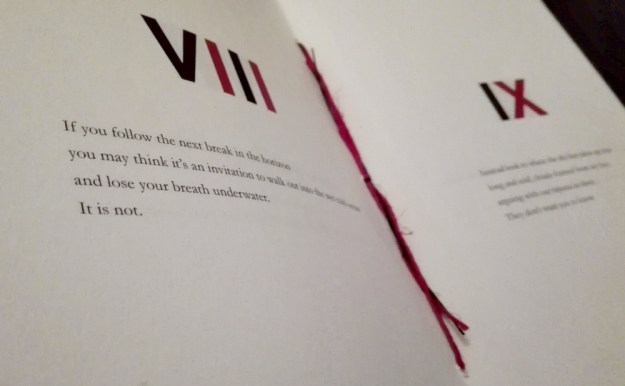
 

Anahera Gildea at Pantograph Punch: Kōiwi Pāmamao – The Distance in our Bones

full article here –  it is a must read!

‘When a poem uses both te reo Māori and English, references to te ao Māori are often glossed over by readers. Anahera Gildea explores why, and calls for more educated readers of Māori writing.

          Ko Papatūānuku kei raro
Ko Ranginui kei runga
Ko ngā tāngata kei waenganui
Tīhei mauriora.

          He uri ahau nō Ngāti Raukawa-ki-te-tonga
Ko Anahera Gildea tōku ingoa.

The feeling of my brain unfolding exponentially when I encounter an outstanding poem is the feeling of being woke. As a poet, and a hungry reader of poetry, I find there is nothing that quite matches that moment when comprehension meets complexity meets cognitive dissonance and the whole lot gallops into the glorious sublime – taking me for a ride on the splendid and wingéd uninmaginable.

You may have noticed I used the word ‘woke.’ It’s a borrowed term that’s now made its way into general usage, but originated in the African American vernacular. It gained popularity with the Black Lives Matter movement in 2013, but its modern usage is thought to have emerged from Erykah Badu’s 2008 song “Master Teacher” with the repeated refrain, “I stay woke.” Its meanings have evolved and transitioned as different communities have gotten hold of it, ranging from a decree to question the dominant paradigm, a statement of raised consciousness, a self-ascribed expression of socially conscious allyship, through to a trivialising piss-take.’

Anahera Gildea


Poroporoaki-feature.jpg

Monday Poem: Emma Neale’s ‘Called’


Called

(2015)


It is October in Dunedin.

Rhododendrons fan out flamenco skirts;

magnolias, magnanimous with their moon-cool glow,

light the path south so the sun stirs us early;

although the river, the creek boulders,

the city’s cinched green belt, still hold the cold

like an ice store’s packed down snow.


The days shiver with filaments

of ua kōwhai: soft rain that dampens paths,

shakes loose carpets of white stamens, yellow flowers

bruised and trodden like flimsy, foil cornets.

School holidays send out falling, silvery arcs

of children’s sky-flung laughter; our bodies drink it in

as if love’s parched ground sore needs this watering.


Yet the radio stays hunched in the kitchen corner,

hard grey clot in the light’s fine arteries

muttering its tense bulletins

and as if they sense this late spring still harbours

frost’s white wreck, or some despotic harm abroad

seeps too near, our sons more than anything want

their old games: secret codes, invisible ink, velvet cloaks;

hide ’n’ seek in public gardens’ clefts and coves—


and again, again, can we tell them again


the chapters of how they first appeared

in the long, blurred myths we are entangled in;

kingfisher-blue wells of their eyes a-gleam

as if they know how much all adults withhold.

They want us to go back deeper, to when

we both were star-spill, sea-flume, spirits,

only belatedly woman, man, climbing up from a shore

feathered in sand black and soft as ash,

driven by some gravid magnetism towards each other


in case we changed to birds, lizards, trees,

or back to sea-salt borne by wind;

an urge clear as hunger coursing the cells’ deep helix

to complete this alteration, half bury and re-germinate

the fleet molecules of self, so we could run our mortal hands

the right, kind way along the children’s plush skins,

learn, pulse on pulse, their true, human names.

Yes, we must go back and back; as if to swear

even to this dread epoch’s wild, original innocence.


©Emma Neale


Emma Neale received the inaugural NZSA/Janet Frame Memorial Award, the Kathleen Grattan Award for an unpublished poetry manuscript (The Truth Garden), the University of Otago Burns Fellowship and the NZSA/Beatson Fellowship. Her poetry has been shortlisted for the Sarah Broom Poetry Award and the Bridport Poetry Prize, and her poetry collection, Tender Machines, was long-listed in the 2016 Ockham New Zealand Book Awards. Her novel, Billy Bird, was short-listed for the Acorn Prize in the 2017 Ockham New Zealand Book Awards and long-listed for the International Dublin Literary Award. She is the current editor of Landfall.


From the blogs: Rachel McAlpine on the perils of being regarded as a confessional poet


Full post at Write into Life  here

Interesting reading – especially when trouble turns up because a reader believes your fictions!


‘If you intend to be a poet and to publish your work, it’ll be a lot of fun but be prepared for three things:

  • many people will assume that all your poems relate true facts about your actual life
  • some people will completely misunderstand your poems, even taking the opposite meaning from your intention
  • once in a while, this can lead to trouble.

That’s the deal!

I’m pretty sure that most people believe that any poem that seems to be about a real person is about a real person. And particularly if you write in a confessional style, people will naturally assume that you are confessing the truth about yourself.

I try to make you believe all my poems are true

This phenomenon is a mixed blessing. I’ve often been labelled a poet of the confessional school, and yes yes yes, I do want people to plunge into my poems and suspend disbelief.  Sometimes my poems are true — in fact I hope they all seem that way, and that you can’t tell the difference.’


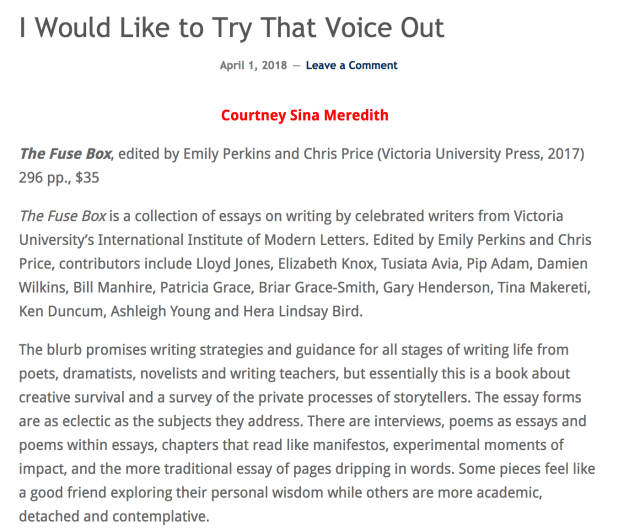
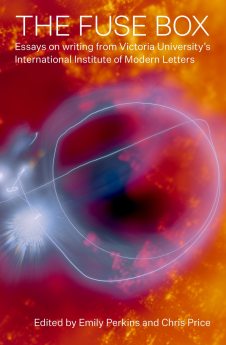
Courtney Sina Meredith pitches highlights from The Fuse Box at Landfall Review Online

Screen Shot 2018-04-01 at 4.14.10 PM.png


I now have to track down a copy of this book! Thanks Courtney.


Full review here


The_Fuse_Box__77194.1496025579.jpg