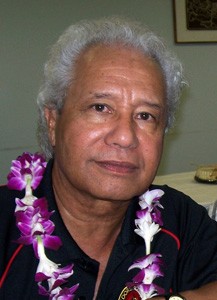
Talofa, Everyone,
I’m giving a poetry reading at the THIRSTY DOG TAVERN, 469 Karangahape Road, Auckland, on Tuesday 3 April, starting at 8 pm. Musicians will also be performing.
COME AND ENJOY THE EVENING WITH US. Ia manuia le aso.
Al Wendt

Talofa, Everyone,
I’m giving a poetry reading at the THIRSTY DOG TAVERN, 469 Karangahape Road, Auckland, on Tuesday 3 April, starting at 8 pm. Musicians will also be performing.
COME AND ENJOY THE EVENING WITH US. Ia manuia le aso.
Al Wendt
A lot of authors born in Taranaki have left the province on a permanent basis, to become successful or dead. The successful ones are Anthony McCarten and Stuart Hoar from New Plymouth; Dinah Hawken, Gaelyn Gordon, and Fiona Kidman from Hawera; June Opie from Mokau; Fleur Beale from Inglewood; Shonagh Koea from Eltham; Graeme Lay from Opunake, also Jackie Sturm, quondam wife of James K Baxter, and a much nicer human being to deal with; and Sylvia Ashton-Warner from Stratford. The dead one was Frank S Anthony of Midhirst, who wrote his gentle, innocent Me and Gus stories of dairy farms up skinny shingle roads and tongue-tied young men in hairy sports-coats, then sailed for England with a suitcase – a suitcase – of manuscripts, and died from TB in a Bournemouth boarding house in 1927.
See full feature here
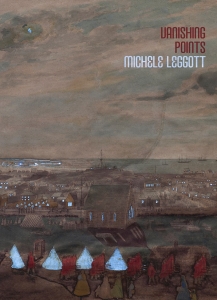
Lots of poets have connections to Taranaki but I would spotlight Michele Leggott who was born and raised in Stratford and whose latest book Vanishing Points offers numerous returns. I am going to talk about this glorious book with Michele at some point this year for my blog. I loved it. One of my top poetry reads in 2017.
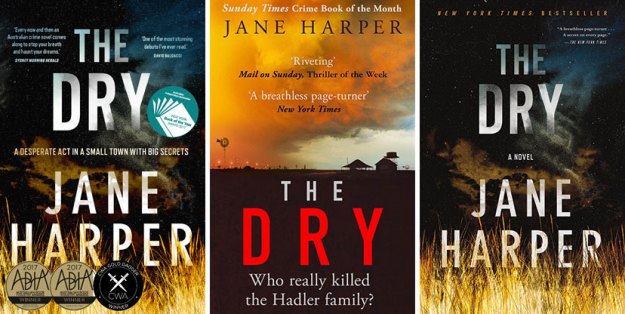
Jane Harper is coming to AWF this year. I will miss her session as it clashes with mine but her debut novel is a top read. Now based in Melbourne, Jane has worked as a print journalist in both the UK (her first home) and Australia. The Dry won the 2015 Victorian Premier’s Literary Award for an an unpublished manuscript and was an international bestseller. Her second novel, Force of Nature, awaits me – I got it in the revitalised Paradox Books in Devonport this week.
This is what Ron Rash says on the back cover: ‘The Dry is a marvelous novel that once begun is hard to put down, and once finished even harder to forget’.
Federal Agent Aaron Falk goes back to his small home town after the shocking murder of his childhood best friend and his family. He enters a spider’s web of suspicion and recrimination that is sticky with revelation and side swerves. To be snared in a weblike plot, with no idea of how things will unfold, with writing that is both fluid and evocative, is utterly satisfying. On the one hand you get a thrilling story, but on the other hand, you move deep into the humanity of place. People struggle to survive; they mourn, they fight, they deceive, they aid and they love.
I read this book in one afternoon and for the rest of the day it stuck to everything I did. Highly recommended.
Jane Harper website here

I encouraged locals to vote on this so delighted to see some of my picks made the list: Tusiata Avia, Jenny Bornholdt and Hera Lindsay Bird.
This seems like a very timely time to have my book on reading New Zealand women’s poetry in the production pipeline.
You can see the full PBS list here
She’s a runner, a writer, a fighter, a scholar, a mother and a teacher. She’s also New Zealand’s Poet Laureate. Dr Selina Tusitala Marsh is a dynamic academic who wants to bust open people’s ideas of poetry and where it belongs because – she says – poetry belongs everywhere.
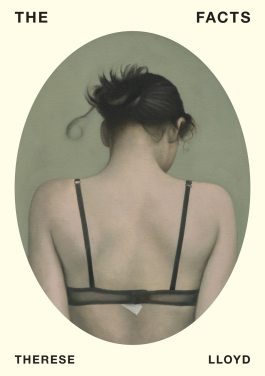
Therese Lloyd The Facts Victoria University Press 2018
For three months I tried
to make sense of something.
I applied various methods:
logic, illogic, meditation, physical exertion,
starvation, gluttony. Other things too
that are not necessarily the opposite of one another,
writing and reading for example.
But the absurdity of the thing
made all attempt at fact-finding evaporate;
a sort of invisible ink streamed from my pen
the more data I wrote down: facts are things driven,
as Anne Carson says, into a darkening landscape where other people
converse logically.
from ‘The Facts’
Therese Lloyd’s new collection resides in a captivating interplay of chords. You could say that any poetry book delivers chords whether aural, visual or thematic, and in the light of ideas and feelings. This book does it to a stunning degree. Once you start hunting for them – whether in harmony or not, between poems or within a single example – the rewards are myriad.
Hera Lindsay Bird endorses the book on the back cover: ‘The Facts is mesmerisingly beautiful, and shocking in its intensity. This is already one of my favourite New Zealand books. It won’t make you feel better.’
I didn’t read the back until I had read the poems as I like to start a book with a clean reading slate (if that is possible). I am thinking of the way reading this book sets up an arc between comfort and discomfort; we are the interlopers into what Therese chooses to let us see.
We enter a collection in debt to a doctoral thesis (IIML), and I am curious about the ideas picked up in the academic component.
This might be the first cluster of chords: shifts between ideas and feelings provoked by the writings of poet Anne Carson and the experience of a broken marriage and a toxic love affair. This might be an impetus to navigate relations with art, in itself forging a chord with Anne.
I am absorbing the chords as though they flicker between light and dark – and the poem resembles a cinematic space with the external world, and its pressing demands, blacked out so it is just you and the poem. This what flicks for me:
love notlove
truth lies
Carson LLoyd
facts notfacts
pain joy
mother daughter
daughter husband
daughter lover
presence absence
beginning end
end beginning
beauty beauty
deep breath shallow breath
here there
intimacy distance
heart mind
sweet sour
slow stalling
debris order
miracle incidental
share notshare
exposure kept hidden
where you live where you don’t live
mixed clarity
see see
poet poem
poem story
At the core of the book the title poem, the standout-lift-you-off-your-feet poem, achieves the blinding intensity that Hera speaks of: raw, surprising, probing, accumulative, fearless, cutting, detail rich, lucid, testing. On either side the poems offer more subtle chords. Yet any element in my list for ‘The Facts’ might drive a poem. I particularly love the surprising turns of ‘Mr Anne Carson’.
Therese’s collection takes you deep into personal experience that gets hooked up in the poetry of another, in matted ideas and the need to write as a form of survival. It makes you feel as much as it makes you think. It is a riveting read.
I moved all the holiday reading
to the spare room
to keep the literature and the art books
pure
I say squarely in the middle
of the fluffed-up sunroom sofa, I am
careful
not to disturb the cushions
cushion—a curious word
its function of support
is ancillary to its attractiveness
and that’s why cushions have covers
in colourful fabric—I become
an ornament
another word I like
because everything here is decoration
everything here is placed
The story of the things here is not new
from ‘Mr Anne Carson’
Victoria University Press page
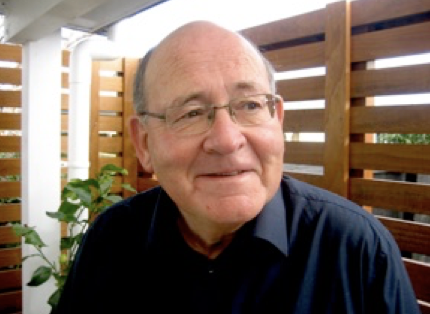
Congratulations on your short-list placing!
Thank you!
What poetry books have you read in the past year?
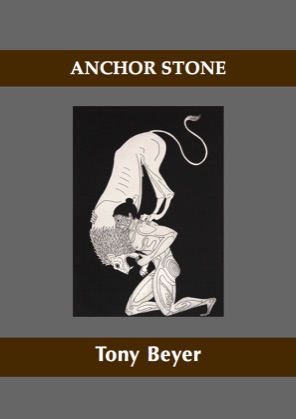
My favourite NZ books in 2017 were Stu Bagby’s Pockets of Warmth (Antediluvian Press) and John Gibb’s Waking by a River of Light (Cold Hub Press). Recent publication of their respective collected poems has sent me back volume by volume through Galway Kinnell and A. R. Ammons, admired late US poets. Also a delight to have Alistair Te Ariki Campbell’s Collected Poems – VUP’s finest ever publication!
What other reading attracts you?
Very interested lately in female North American long-form poets, specifically Rachel Blau du Plessis, Beverly Dahlen, Daphne Marlatt and Eleni Sikelianos. I read a lot of European and Asian fiction in translation. Non-fiction usually includes Victorian and ancient history.
Name some key starting points (or themes) for your collection.
Finding myself unexpectedly between teaching engagements and having to re-think my assumed identity. The New Pacific Studio fellowship in late 2011, when I was encouraged to be creatively selfish. Since then I seem to have established a modus operandi that keeps me writing whatever else is going on.
Did anything surprise you as the poems came into being?
There was a strong awareness that these were some of the poems I had waited a long time to be able to write.
Find up to 5 individual words that pitch your book to a reader.
Right here now and always.
Which poem particularly falls into place for you?
‘Li Bai’ focuses many of the concerns in the book about environment, identity, time, culture and memory, etc. ‘The characters’ probably does the same in a more succinct, oblique manner. I suppose my basic allegiance is to poetry.
What matters most when you write a poem?
I want to tell the truth and communicate with others. The work is more important than I am.
What do you loathe in poetry?
Reductive expectations.
Where do you like to write poems?
Everywhere.
What are strengths and lacks in our poetry scenes?
Strengths: the new work appearing from younger poets, inventing the future and guaranteeing there will be one; growing bilingual and multilingual awareness has enriched our Pacific possibilities and commands response. Both factors indicate our unique position and opportunities in the Anglosphere.
Have you seen a festival poetry session (anywhere) that has blown you off your seat (or had some other significant impact)?
Have not attended festivals.
If you could curate a dream poetry session at The Auckland Writers Festival which poets would be there and who would mc or chair it?
NZ now: Airini Beautrais, Sarah Jane Barnett, David Howard and Erik Kennedy, MC’d by Stu Bagby.
For all time: Tomas Tranströmer, Charles Olson, Lauris Edmond and C. P. Cavafy, chaired by William Carlos Williams.
Lola Ridge and others: Terese Svoboda Terese has put Lola back in the spotlight (amongst many other writing projects including poetry of her own). This is must hear for me.
Standing Upright Here Elizabeth Caffin and John Newton celebrate Allen Curnow’s biography and Collected Poems with Patrick Evans.
Tightrope: Selina Tusitala Marsh Selina is in conversation with Adam Dudding
Homage to the River Airini Beautrais
Afterglow: Eileen Myles in conversation with Ian Wedde
Portrait of an Artist Mongrel: Rowley Habib
Considering the Women: Choman Hardi in conversation with me (excited!)
Sad Girls: Lang Leav with Courtney Sina Meredith
The Art of the Poem: Airini Beautrais, James Brown, Choman Hardi with Terese Svoboda
NZ Poets in mixed sessions: Tusiata Avia, Janet Charman, Anna Livesey, Elizabeth Smither, Briar Wood
NZ poets in the O’Connell street literary mayhem: Morgan Bach, Airini Beautrais, Anne Kennedy, Karlo Mila, Vivienne Plumb, Jessie Puru, Briar Wood and others
Best Best Showcase of spoken word poets John Carr, Jessie Fenton, Daren Komali, Vanessa Crofskey and Alex Wheatle (UK), Renee Taylor (US) and mc Te Karere Scarborough
Sarah Broom Poetry Award with judge Eileen Myles and me as mc (3 shortlisted poets)
Some international poets I am really keen to hear and a scattering of local poets chiefly drawn from the Ockham NZ Book Award poetry longlist.
|
Wednesday 28 March – 5:30 pm – 7 pm |
|
|
Piko Cafe, 55 Wellesley Street East, AUT Campus |
Piko Café |
|
Free event Join us for M4 – AUT Master’s Reading featuring a great line-up of celebrated Master of Creative Writing alumni and guests READERS: C. K. Stead Mike Johnson Elizabeth Allen, Elizabeth Ho Elizabeth (Libby) Kirkby-McLeod Jacquie McRae Kirsty Powell Brendaniel Weir and Jenny White RSVP to Farina Ibnul: farina.ibnul@aut.ac.nz to secure your place. A cash bar and light snacks are available. All welcome |
|
Please
please do not leave items in the women’s changing room
they’ll miss you
what you keep forgetting is that
because of social understandings regarding head lice
you are all your hairbrush has
please do not leave items in the women’s changing room
there are enough variables in life as there are
if you’ll be pretty
if you’ll be rich
etcetera era
please do not leave items in the women’s changing room
unless of course,
you really want to
all you have are your thoughts and your actions
(apparently)
please do not leave items in the women’s changing room
there have been reports of theft
so please do not leave
©Sharon Lam
Sharon Lam was born in Hong Kong and grew up in Tokyo, Singapore, Christchurch and London before moving to Wellington to study architecture. In 2017 she was an MA student at the IIML, focusing on fiction. Along with Starling, her work has appeared in The Pantograph Punch, Headland, and The White Pube.
 NZ Poetry Shelf