Monthly Archives: December 2016

A week of poems: Bill Manhire’s ‘Mrs Zeus’


Mrs Zeus

In her dream she lived in a high apartment
with a few small children. She looked down at the rain.
Gulls fought over bread, over the alphabet.
Her new husband walked to work every day.
Lucky man – he hated driving.
She had only married him to change her name.
Mrs Acorn! She would always be first in the queue.


© Bill Manhire 2016


To celebrate the year’s end: a week of poems on Poetry Shelf

I have had a fabulous year on both my blogs – even in a year when I was on a blog budget with my head down writing and researching  a big book.

My time in the archives researching our early women poets has been utterly addictive. Such discoveries, such a joy.

This year has seen a feast of New Zealand poetry from small presses and big presses and everything in between.

Even though next year is another blog budget year, I have a few new things I want to add with a little help. This blog wouldn’t work without you reading it, sharing it, contributing and picking up on books to read and events to attend.

So a very big thank you! And happy summer days. I intend delving into the blog’s annual list and tracking down a few books that caught my attention.

Fabulous @RadioNZ interview: Kathryn Ryan with Word Up winner Ruby Esther


Kathryn Ryan talks to young Auckland comic, Ruby Esther who won the Word Up competition with her spoken word piece, ‘I Normally Write Funny Poems’.

You can hear the winning poem here.

You can hear the interview here.

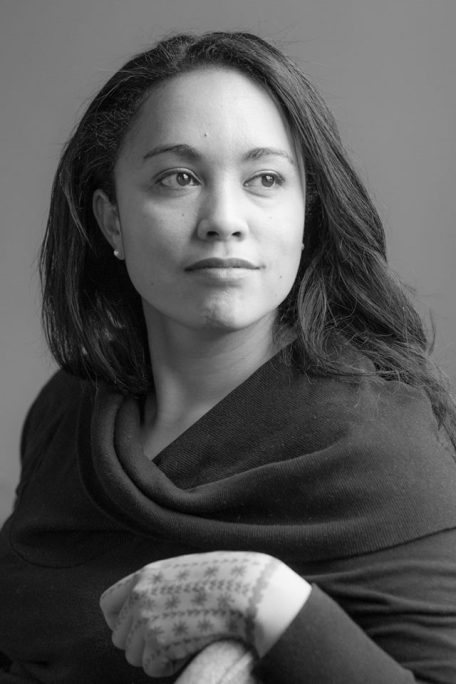
‘I keep my own hours ‘: Courtney Sina Meredith is back from Iowa with a new poem

14707033_10157570511925307_686770299160142700_o.jpg

Photo credit: Thomas Langdon


I keep my own hours

I write on the side

I take it easy on myself

I make excuses

I follow the rules

The law of nature

The loss of appetite

I come undone

Just like you

I sit in the long grass

I take my time

I take notes

In lectures

At readings

In lieu of feeling

I take notes

I cite wars

Just like you

I open my arms

I follow through

I know the script

We are reading from

I sit by the river

I pick every petal

The river loves me

The river doesn’t love me

Just like you


© Courtney Sina Meredith 2016


Courtney Sina Meredith is just back from her stint as a writer-in-residence for the prestigious International Writing Progamme’s Fall Residency at the University of Iowa.

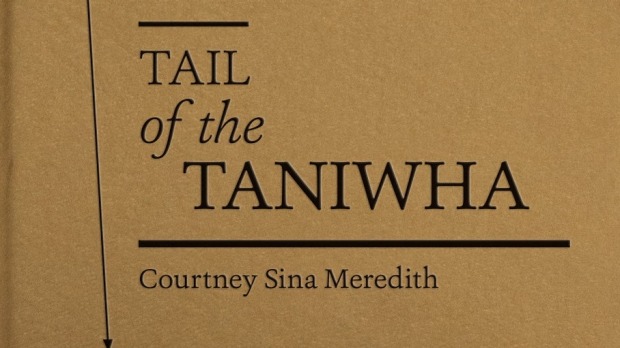
Her terrific Tale of the Taniwha is long-listed in the fiction section of The Ockham New Zealand Book Awards this year. In my SST review I sang the book’s  praises:

‘Writing becomes a way of self-recognition for Meredith.  It is song, idea, heart, family. The stories come out of a Pasifika heritage, a female heritage, and that matters. This book, marvellous and memorable, affected me as both a writer and a person. It offers me points of self-recognition. With this book, Meredith joins our very best writers.’

The sun is shining, the wind is blustering and I felt in the mood for a new CSM poem and Courtney obliged with this bitter sweet gem. I adore it. Thank you!

1472076053148.jpg

Becoming Invisible: An Interview with Mary Ruefle in The Paris Review

When I spoke with Mary Ruefle on the phone recently, she’d just moved into a new house and had spent the morning putting screws into the back of a mirror. “I had my toolbox out and one of the screws was deficient,” she told me, “so I had to find another and it was just endless … You need two people for this sort of thing, but I did it myself.” It’s a statement akin to many in her new collection, My Private Property, a mélange of essays, stories, and prose poems, in which small objects often become vehicles for profound reflection. Ruefle, best known for her poetry, begins much of her work this way—she muses on ordinary things like keys or clouds, yellow scarves or golf pencils, until those descriptions unfurl and beget larger, existential meditations on sadness and boredom, on language and lullabies and autonomy in old age. Our conversation was like that, too, always unraveling toward some arresting observation.

To work with Ruefle is to enjoy the pleasures of another age; she rarely uses a computer. I mailed her the transcript of our interview, and she returned it with scrawls of red ink and typewriter marks. The last page had been touched by a lit cigarette, leaving a small orbicular burn in the right margin with a stale, nimbus-like ring around it—punctuating, with great finality, the end of our conversation.

INTERVIEWER

In your poem “A Half-Sketched Head,” you wrote, “If we were thermometers, no one would want to be thirty; everyone would want to be seventy-eight.” My Private Property returns to this theme of getting older and embracing old age. Take “Pause,” your essay on menopause. You write about a feeling most women experience as they age, the feeling of becoming invisible, of becoming more and more like a ghost because we’re no longer noticed in the same way we once were. But you settle on this, that “being invisible is the biggest secret on earth, the most wondrous gift that anyone could ever have given you.” What do you mean?

RUEFLE

Well, thematically, aging and death become one in the same for writers, and very often you lose young readership because you’re no longer interested in the things young people are interested in. The time for exuberance, energy, endless curiosity, endless activity within a body of work, that drops away and everything becomes bittersweet. But this becoming invisible—all women talk about it. There’s a period of transition that’s so disorienting that you’re confused and horrified by it, you can’t get a grip on it, but it does pass. You endure it, and you are patient, and it falls away. And then you come into a new kind of autonomy that you simply didn’t have when you were young. You didn’t have it when your parents were alive, you didn’t have it back when you were once a woman to be seen. It’s total autonomy and freedom, and you become a much stronger person. You’re not answerable to anyone anymore. For me, it was a journey of shedding the sense of needing to please someone—parents, children, partners.

Full interview here.

The Pantograph Punch: Sarah Jane Barnett remembers ten moments in Aotearoa NZ Literature 2016

DSCN6046


Sarah Jane Barnett remembers ten moments in Aotearoa NZ Literature 2016, and some of them make her shudder.

During 2016 many things happened: Atholl Anderson, Marilyn Duckworth, and David Eggleton won the Prime Ministers’ Award for Literary Achievement; Jenny Bornholdt finally released a selected works after nine collections and nearly thirty years of publishing her work; there was New Zealand’s first residency at a hotel. None of these made my ten moments of 2016 – a list that I’ve resisted calling ‘top’ – because that’s how strange and outstanding this year has been.

For Sarah’s list of ten moments see here.


nzepc launches its fourth Six Pack Sound

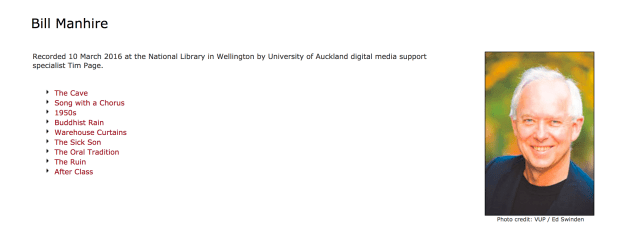
Poets Jenny Bornholdt, Janet Charman, Owen Connors, Andrew Johnston, Bill Manhire and Chris Price contribute dazzling audio recordings of recent work and comment on their Six Pack selections. They join a gallery of recorded performances by poets working in Aotearoa New Zealand and the Pacific region. Click, listen and browse Six Pack Sound’s growing sampler of remarkable poetic voices.

See here.

Screen Shot 2016-12-12 at 12.27.12 PM.png

In the New Yorker: Emily Dickinson’s scrap poetry


The poems of Emily Dickinson began as marks made in ink or pencil on paper, usually the standard stationery that came into her family’s household. Most were composed in Dickinson’s large, airy bedroom, with two big windows facing south and two facing west, at a small table that her niece described as “18-inches square, with a drawer deep enough to take in her ink bottle, paper and pen.” It looked out over the family’s property on Main Street, in Amherst, Massachusetts, toward the Evergreens, her brother’s grand Italianate mansion, nestled among the pines a few hundred yards away. Dickinson had a Franklin stove fitted to a bricked-up fireplace to keep her warm, which meant that she could write by candlelight, with the door closed, for as long as she wanted. In much of the rest of the house, the winter temperature would have been around fifty degrees. Though she usually composed at night, Dickinson sometimes jotted down lines during the day, while gardening or doing chores, wearing a simple white dress with pockets for her pencils and scraps of paper. A younger cousin recalled her reciting the “most emphatic things in the pantry” while skimming the milk.

For Dan Chiasson’s complete article in The New Yorker see here.