Monthly Archives: December 2015

Poetry Shelf, Poet’s Choice: Maria McMillan makes her picks

9781408866511    9781408866511

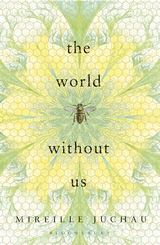
I loved Australian writer Mireille Juchau‘s barely speculative novel The World Without Us. It’s an insightful portrayal of disturbance on many levels, and the workings of survival. It is wonderfully grounded, if that makes sense, full of palpable place and people, and so lush it highlights how sparse much contemporary writing (the stuff I come across anyway) is.

I decided to try and read all the writers coming to Writers Week as part of the NZ Festival next year. My hands down favourite pick so far is Nnedi Okorafor. I read both Who Fears Death and its prequel The Book of Phoenix. Both are vivid, splendid affairs melding existing and imagined dystopias.

At the Paekākāriki annual book fair I  found two treasures from my childhood. You talk to practically any New Zealander my age and we were all petrified by a TV series whose name none of us can remember which had a girl trapped in a house surrounded by giant watching stones that were getting closer. The series was based on Marianne’s Dreams by Catherine Storr, which was my first find. Marianne is in bed sick and draws frightening pictures which come true. The second was Ruth Park‘s marvellous Playing Beatie Bow. A time slip novel set in Sydney. I don’t remember many friends knowing about it here but apparently when it was released in Australia in 1980 it was huge. I read this book multiple times as a child, and can now resume the practice.

Maria McMillan

Poetry Shelf, Poet’s Choice: Airini Beautrais makes some picks


1415925155755    7485719

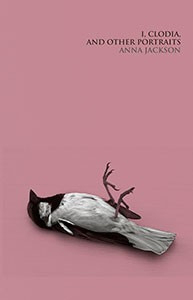
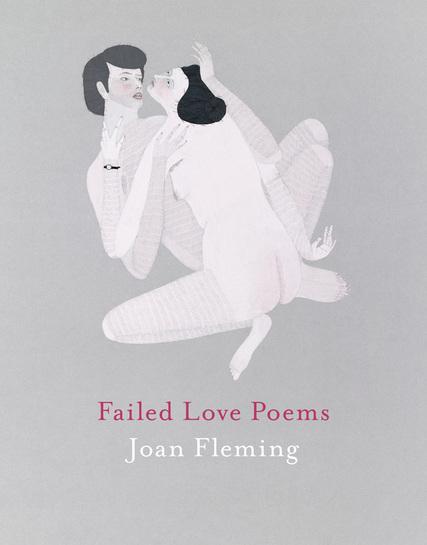
Once again it’s been a thesis-related year of reading. I’m looking forward to catching up on all the great local poetry which has been coming out over the past year. Books I have enjoyed which came out towards the end of last year or early this year include Anna Jackson‘s I, Clodia, Fleur Adcock‘s The Land Ballot, Kerry Hines‘s Young Country and Chris Tse‘s How to be dead in a year of snakes. One of the books I’m most looking forward to reading is Joan Fleming‘s Failed Love Poems. What a fantastic title. I really loved her first collection too.

The giant of my reading list this year has been four translations of the Divine Comedy. The one I liked best so far was Allen Mandelbaum‘s California Dante, partly because it was a beautiful production with amazing, simple ink drawings. Of course there are a whole heap more one ought to read. I think I will have to learn Italian next. I am turning 33 on New Year’s Eve and am conceptualising how I might make a Divine Comedy cake – or maybe a Purgatorio cake with 9 layers.

This obsession was generated by a chapter I was writing on John Kinsella‘s Divine Comedy: Journeys through a Regional Geography (University of Queensland Press, 2008). Kinsella imagines heaven, hell and purgatory as co-existing in modern-day Australia, and politicians are skewered Dante-style. It’s a bold, perhaps over-bold project, but if not compared too heavily to its model, an interesting work in its own right. Kinsella’s anarchist, environmentalist, pacifist politics are evident throughout, as is a sense of wonder at nature but also unease at living in a colonised, modified landscape. I spent a lot of time making tables and mapping Kinsella’s work against Dante – I doubt if anyone else will ever do this, but it was a fascinating exercise.

Airini Beautrais

Poetry Shelf interviews Serie Barford: ‘Each poem or short story is a co-ordinate that can be located and mapped within one of seven embroidered panels’


OLYMPUS DIGITAL CAMERA

 
Serie Barford is of Samoan and European descent and lives in Aotearoa.  Her poetry and short stories have been published in literary online anthologies such as Snorkel, Trout, Blackmail Press, Cordite Poetry Review and Jacket and in recent print editions such as Maui Ola (AUP:2013), Pacific Identities and Wellbeing (Routledge 2013), Essential New Zealand Poems (Random House:2014) and Whispers and Vanities (Huia:2014).  Her third poetry collection, Tapa Talk, was published by Huia in 2007 and her fourth collection, Entangled Islands, was released by Anahera Press in December 2015.  Serie was the recipient of the 2011 Seresin Landfall Residency.

To celebrate the arrival of her new collection, Serie agreed to answers a few questions for Poetry Shelf.


Did you write as a child? What else did you like to do?

I clearly remember the first poem I wrote outside of a classroom setting. I was at primary school and had spent the night with my paternal grandmother. I wrote a poem about the rain and her flooded garden. Her spontaneous delight kick-started my love affair with poetry. A few weeks later I declared, “When I grow up I’m going to write books!”

I had a teacher who favoured Donald Grave’s writing principles. She facilitated a process that encouraged students to write authentically. We were allowed to go to sleep or write freely every Friday afternoon. Our journals were collected and locked in a cupboard when the bell rang. We were told “your words are safe with me.” The teacher scribbled personal responses to our ramblings. By the end of the year we were writing as quickly as we could to maximise our precious hour. She was a sympathetic audience and we trusted her with stories from our lives. Many years later I met this teacher again and told her how important the writing hour had been to the class. She laughed and said, “I just wanted peace and quiet on a Friday afternoon!”

Those Friday afternoon writing sessions were the closest school ever came to validating the storytelling environment of my home. I still like to write conversationally and shares stories as if they’re anecdotal recounts.

I also liked the family picnics, parties and meals that the maternal (Samoan) side of my family shared all the time. I still get a “buzz” when I walk into a crowded room and know that everyone present has a familial story that relates us by blood or association.

I started relating to other people’s poetry when I discovered a slim volume entitled Some Modern Poetry from Western Samoa in the Wesley bookshop in Apia in 1975. It was edited by Albert Wendt. I was hooked by the opening stanza of Rupert Petaia’s poem:

Kidnapped

I was six when

Mama was careless

she sent me to school

alone

five days a week


One day I was

kidnapped by a band

of Western philosophers

armed with glossy-pictured

textbooks and

registered reputations

‘Holder of B.A.

and M.A. degrees……..

These days I refer to Albert as my “literary papa’ and I still have this book on my bookshelf. It cost 50 sene (cents) at the time. I won a ‘Special Prize for English’ when I was in Form Five (Year 11) and was presented with a handsome edition of The Poems of John Keats. We didn’t study non-European poetry when I was at school and we weren’t rewarded for our scholastic achievements with “other voice” books. John Keats resides on a varnished shelf beside Whetu Moana, Mauri Ola and other books with a South Pacific focus.


What poets inspired you when you started writing poetry as an adult?

I wasn’t inspired by any of the poets I studied at varsity until I encountered their work years later in non-institutional settings. One day my Samoan grandmother asked me at the dinner table, “What did they teach you today?” I couldn’t say that the professor had talked about cocks and sexual desire and sexual politics because my maternal family hadn’t left their beloved homeland and made huge sacrifices so that I could study poetry about orgasms. We were studying Adrienne Rich’s Reforming the Crystal.
I am trying to imagine 
how it feels to you
to want a woman

trying to hallucinate 
desire
centered in a cock
focused like a burning-glass

desire without discrimination:
to want a woman like a fix
To put this in context, my grandmother was born in 1912, was a teenage bride and the blooded sheet from her wedding night was proudly paraded through the village by her mother the next morning. My grandmother was the daughter of a taupou (a ceremonial female village virgin) and had witnessed public deflowerings of taupou when she was a child. We talked openly about such matters. But the poetry and sexual politics I studied in Stage I English in 1979 was a world away from our dinner table and only increased my sense of isolation at university.

I was inspired and supported by poets I met at the Poetry Live evenings during the 1980s and early 1990s. This was the first time I’d heard Maori and Pasifika poets live. I listened to John Pule, David Eggleton, Robert Sullivan, Albert Livingstone Refiti, Michael O’Leary, Emily Karaka, Haare Williams and Apirana Taylor, as well as many other wonderful poets. Through them I learned to appreciate poets such as Hone Tuwhare, Alistair Te Ariki Campbell, Sam Hunt and James K. Baxter.

In 1984 I bought a couple of volumes of poetry while I was waiting for a bus in Los Angeles; Relearning the Alphabet by Denise Levertov and The Women and the Men by Nikki Giovanni. I read and reread their poems as I flew from LA to Alaska to Dusseldorf and felt inspired to write. I returned to Aotearoa-New Zealand a few weeks later with a clutch of poems that appeared in Plea to the Spanish Lady, the first of two experimental collections published by Hard Echo Press.

I only read “other voice” writers while I was struggling with identity issues but now that I have found my personal voice and tūrangawaewae (standing place) I have eclectic tastes, although I’m still drawn to to the works of Polynesian writers when I want to be nourished and swamped by a sense of familiarity and belonging.


Your poetry is so evocative. As reader, it is as though you can absorb a poem through senses, bite into flavor and smell the poem’s very essence. What kinds of things do you want your poetry to do?

I like my poetry to feel ‘alive’ and hope that it will continue to contribute to the canon of Pasifika literature and writing in general that is flowing from the South Pacific and connecting us to people around the world. I imagine the universe as an infinite tapa canvas with tusili’i (fine, wavy lines) connecting disparate beings and ecosystems. I’m fascinated by the Samoan concept of ‘Ia te’u le va’ – to take care of/cherish relationships across Spacetime. In ‘Connections’ a poem from Tapa Talk (Huia:2007) I wrote:


there’s no such thing as empty space

just distances between things


made meaningful by fine lines

connecting designs and beings

in the seen and unseen worlds


distances can be shortened

made intimate or dangerous


or lengthened

until the connections weakens

finally withers away

I want my writing to explore and express connections and disconnections by positioning myself and my audience within various communities of belonging, as if we are plotted on a sociogram. Each narrative maps my emotional, physical, intellectual and spiritual journey through Spacetime. By engaging with my journey the audience fixes itself upon my (metaphorical) tapa canvas. We are connected long enough to hongi. To mingle breath. To experience the human condition on the same page for a few seconds.
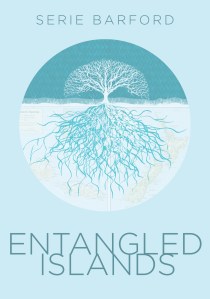
 

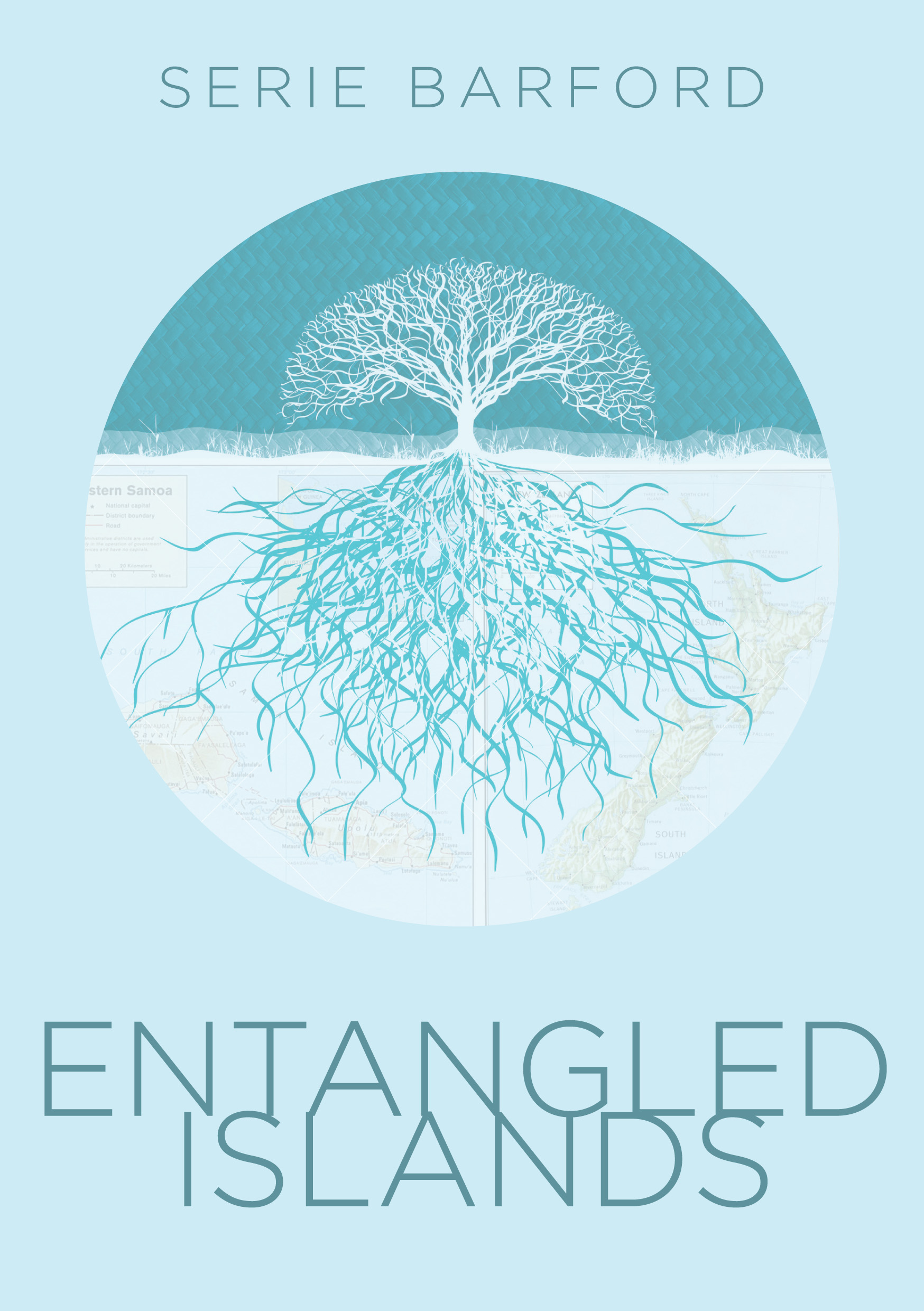
Entangled-Islands-Cover-hi-res   Entangled-Islands-Cover-hi-res


Your new collection, Entangled Islands, is like an album of anecdotes and occasions transcribed lyrically. It feels both political and personal. What was important to you as you wrote?

Entangled Islands is attentive to liminal zones and explores blurred boundaries where states of being and historical events co-exist with political and personal pou whenua – posts that mark territorial boundaries or places and events of significance.

I chose the motif of a fala su’i, a woven pandanus mat fringed with wool, to represent a Spacetime matrix. Each poem or short story is a co-ordinate that can be located and mapped within one of seven embroidered panels. Each panel is a chapter. Entangled Islands begins with the arrival of a life force and ends with a life force returning to its namesake – Sirius/Takurua. The audience traverses Spacetime with the me, the narrator, guiding them over trails and revealing pou whenua that stand upon the matrix mat demanding attention, understanding and empathy.

I have exercised a certain amount of poetic license because traditional fala su’i are fringed but not embroidered like the Cook Island tivaevae. However, descendants of Polynesian migrants are fusing tradition and innovation, and I was inspired by an embroidered fala su’i that was for sale at a festival. It was a syncretic creation and did not look out of place in cosmopolitan Aukilani (Auckland).

Entangled Islands explores and reinforces the concept of Ia teu le va. Albert Wendt describes the Va as the between-ness that relates or holds separate entities and things together in the unity-in-all; the space that is context, giving meaning to things.


I love the title. It can signify knots, webs, even braid. I got a sense of tangles that are personal and tangles that implicate communities, history, patches of the world. Tell me about the tangles you trace.

The introduction explains that “ ‘Entangled Islands’ was the first in a series of exhibitions held at the Auckland War Memorial Museum to mark the WWI centenary period. Damon Salesa’s speech on opening night referred to the colonial, genealogical and spatial entanglements that resulted from New Zealand’s occupation of Western Samoa … Our family history is entangled with colonial expansion, suppression, intermarriage, migration and migrants’ dreams of a better life for their children on the islands where they live.”


Anahera Press


Poetry Shelf, Poet’s Pick: Carolyn McCurdie makes her picks


Hoopla Native bird webHoopla Native bird web


There has been so much poetry I’ve loved this year, but of course there are always some poems that anchor me, enlarge and challenge me, more than others. I have read no collection that did not give in this way. But some stand out.

Two NZ collections:

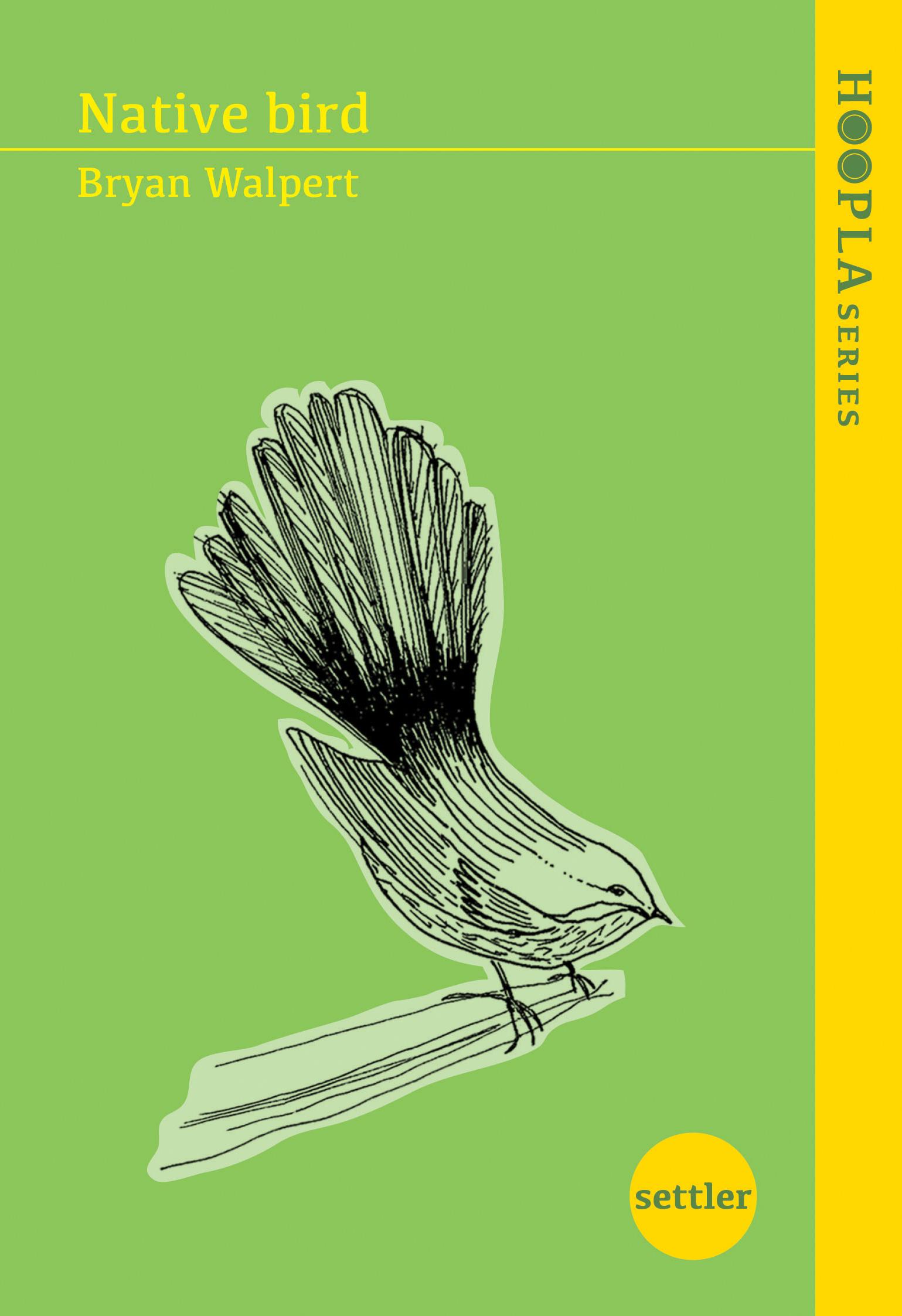
Native Bird by Bryan Walpert, Makaro Press 2015

Using metaphors of birds, the poet explores various tricky territories: being an immigrant, a father, a husband. Placed throughout the book are five poems with the title: ‘A Beginner’s Guide to Birding.’ The tone is quiet, meditative, often self-deprecating and full of clever word play, a joking that invites the reader in. These are warm, engaging poems. And beautiful. From the title poem, its context, a tramp through forest:

Gravity sings its sweet siren song –

sit, sit, sit –


Tender Machines by Emma Neale, Otago University Press 2015

Some of the tenderness here is that of all protective layers being stripped back. These poems are brave. They reach out and talk with the ‘subsonic heart’ (Alchemy, p21) as it grapples with the frazzle of life with a toddler, a teenager, with technology, with adult love and estrangement, and with poverty and privilege, a hurting planet. Yet the voice is alight with irrepressible dance and laughter. The poems plant their two feet, wave their cardboard sword, and swashbuckle.

From ‘Ross Creek’ p59:

for despair and anger

to burn again and again

right back to love –

it takes courage.


Two collections from elsewhere:

Tonight No Poetry Will Serve by Adrienne Rich, W.W. Norton 2011

It was the title of this book that hit me between the eyes and made me buy it. But for just those nights, poems like these are what you might reach for. From ‘Turbulence’ p24:

In the event put on

the child’s mask first. Breathe normally.


Cumulus by Robert Gray, John Leonard Press, 2012

The poet has collected these from his eight volumes as all that he wants to retain. I find their power overwhelming and can read them only slowly, a few at a time. Here is the Australian landscape as if from its core, the this-ness, here-ness, now-ness of sky, river, tree and surf, of street and rain against the window. From ‘Cyclone’ p253:

like the vast doom

drums of Japan,

on this tin-roofed

town.


418MHC3lAEL._SX346_BO1,204,203,200_   418MHC3lAEL._SX346_BO1,204,203,200_


Carolyn McCurdie


Poetry Shelf, Poet’s Choice: Johanna Emeney makes her picks

1449100161547  Hoopla Native bird web

My favourite book of 2015 is Max Porter’s Grief is the Thing with Feathers. Richly allusive, elegiac, lyrical, this short work is the one I have recommended most to friends. It is in no way a literary snob of a book, but it has many layers and is extremely clever. You will want to read it two or three times. Especially if you are a Dickinson or Hughes fan—although the style is nothing like that of either poet.

Bryan Walpert’s Native Bird is a beautiful collection. Poignant and tender, the poems have a narrative thread that follows the story of new New Zealanders learning how things work. Bryan is adept at making words work overtime. He turns ambiguity against itself, avoiding the easy double-meaning, and surprising the readers with another they hadn’t thought of. Most impressive are the meta-poems, in which it is as if the poem is being written and read at once. Poems like “Objective Correlative” and “Manawatu Aubade” are examples.

Lastly, two journals I would recommend are Poetry London www.poetrylondon.co.uk edited by Ahren Warner and Poetry New Zealand edited by Jack Ross. Both feature a nice balance of new poetry, essays and reviews, and are committed to featuring new as well as renowned poets. Ruth Arnison’s poem “Not Talking” in Poetry NZ Yearbook 2, November 2015 is one of the best, most heart-breaking, poems I have read all year.

Johanna Emeney


Poetry Shelf Review: Diane Brown’s Taking My Mother to the Opera – a rollercoasting, thought provoking, detail clinging, self catapulting, beautiful read

otago115898     otago115898

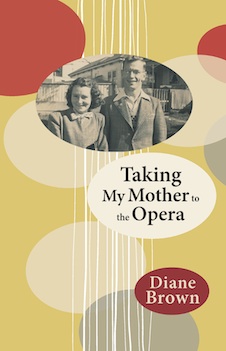
Diane Brown Taking My Mother to the Opera Otago University Press 2015

Otago University Press is producing beautifully designed poetry books with striking covers and internal designs that are both fresh and inviting. Diane Brown’s new book is no exception. The nifty look could be out of the fifties or sixties with its limited palette, the oval shapes and the time-pinning, parental photograph. Gorgeous. Being a child of the sixties, there is a nostalgic hue that draws me in. Plus the book is that rare poetry species – hard cover with a yellow ribbon. The book is about to be reprinted.

Diane’s new work could be flagged as narrative poetry, poetic narrative or as poetry as memoir. The writing is fluid, fluent, daring, exposing, moving. Diane steps back into her earlier self, the daughter-self, as she builds portraits of both her mother and father, and her shifting relations with them. Yet the adult writing self is never far away. The memoir is in debt to hand-me-down anecdotes, photograph albums and the potager plot of memory. We read of memory’s failings and fadings, in the light of mother, father and poet-daughter. Over lifetimes, memory has been weeded and fertilized to suit, unwittingly in the main. The poet is acutely aware of how tough and provisional a recuperation of the past is:


Too late to ask permission,

it’s up to me to tease out

some sort of narrative


from the missing story,

to add the words

I never thought to ask.


This memoir is like a poetic version of family archives; the hidden box where a cluster of things unlock family stories. What makes this family box retrieved from the dark so potent is the unsparing eye. Diane delves deep into parental enigmas. How can we ever know the adult? Stepping back into the shoes of the child, Diane steps back into things done and not-done, said and not-said, observed not-observed. Forbidden from the beach on Sundays, her mother is ‘alone in a studio/ in her velvet dress, blue/ possibly, with sunburst// embroidery, wishing/ she wasn’t.’ We get physical details, but then the melancholy arm’s length:


She’s maintained this one-way

conversation all her life, keeping


her own counsel, allowing

no disclosures, either of anger

or of love to husband and children.


Diane’s memoir, then, transcends the photograph album and exposes miniature wounds (the mother not at the school gate, the fact you cannot eat poems), mysteries (mother) and allegiances (with father). The poet has lifted veils and allowed space for rankles, reflections, sympathies. As detail and miniature stories accumulate, the memoir sharpens. It is as though we intrude on a personal endeavor to get to the truth of the past (for each participant). Lots of billowy white space to explore. Admissions. It is hard not to bring your own luggage to the scene.

The memoir is a sharply rendered portrait of time and place — haunting in the detail that drags me back to my childhood and adolescence. I loved that. Yet what makes this memoir stick is the complicated, heart-trembling knot that is on the one hand mother and on the other hand father. It carries you across generations to a time where parental expectations were different (as both mother/father and of daughter). It reminds you of the elusiveness of mother/father. We know what they shown us, less so what they have not. In the final part of the book, the parents age, become frail, face death. This introduces new questions, new writing drives, different parental versions:


I want to call him back,

have him describe changes


in the town and tell me

all the things I never thought

to ask. But too late,


he’s swimming downstream

with flowers in the current

and not looking back.


To enter so deeply into behind-the-curtains stories of family life is brave. That the family portrait depends on economy rather than over-statement heightens the emotional kick. You get the arc of the poet’s life where it intersects the parents, but there is so much that flickers in fleeting traces. Absence heightens the focus. As writer, daughter and mother, the book raised many issues for me, issues that I explored in great detail in my doctoral thesis, issues that I want to return to in my new book. For now, Diane’s new book is a beautiful read — a rollercoasting, thought provoking, detail clinging, self catapulting, beautiful read.


from ‘A Black and White Story’


Not the opera, Dad says,

we never went to the opera, but the flowers sound right.


Ive always bought your mother flowers, why wouldn’t I?

Best woman in the world.


Mum, who doesn’t believe in poetry

or any other form of declaration, mutters,

Actions not words, behind his back.


Not tuned in to cynicism, Dad refuses to hear. It doesn’t occur to him

his memory might be fading.


*


There may have been a time

when they attended Madame Butterfly,

Mum wearing her good dress,


the green tulle with a flared skirt; behind her ears, a dab of Evening in Paris, from the deep blue bottle.


Dad in white shirt and striped tie, heart soaring. There are no photos of this so perhaps I am spinning


the parent tale we all want to read at bedtime—love uncomplicated and just for you.


© Diane Brown 2015


Poetry Shelf, Poets’ Choice: Cilla McQueen and Brian Turner make some picks

418MHC3lAEL._SX346_BO1,204,203,200_

My pick is Emma Neale’s Tender Machines (OUP). Emma’s poetry is resonant on many levels and repays close reading. In her supple, expert language, she takes a loving look at the human condition in a collection which has depth, wisdom and insight.

Cilla McQueen


Being_Here_cover__66009.1423089464.140.215  Being_Here_cover__66009.1423089464.140.215   Being_Here_cover__66009.1423089464.140.215

Mostly I read poetry and non-fiction, and a lot of the latter is to to do with environmental issues in an effort to understand and do something about the disgusting rate at which we’re destroying the place. Recently I read Michael McCarthy‘s The Moth Snowstorm, which Helen Macdonald termed ‘a deeply affecting memoir and a heartbreaking account of ecological impoverishment’. I concur. Much of what McCarthy writes about mirrors what’s happened and continues to here, in NZ, and elsewhere.

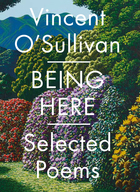
Three of the volumes of poetry that I’ve read and liked most in the past year are Robin Robertson‘s The Wrecking Light, Vincent O’Sullivan‘s Being Here, and Emma Neale‘s Tender Machines. Robertson doesn’t pussy-foot around, covers a lot of ground, can be caustic, blunt, wry and shattering. O’Sullivan ranges widely both in tone and content. Apart from the wry and sly ways he approaches things I like the ways in which he highlights human absurdities. As I hear him, it’s not as if we’re too much troubled by human absurdity, it’s that we’re not troubled enough. In Emma Neale’s Tender Machines she grapples with long-standing human predicaments, the difficulties we have personally keeping a lot of the ‘ongoing human symphony’ playing while trying to work out how to silence our dreadful ‘inner racket’.

I’d like to be able to buy and read far more NZ poetry than I do these days. Back in the 1960s, when I began trying to write poems, it was possible to be familiar with nearly all of the volumes of poems by NZ writers. Not now; the result is great gaps in one’s reading. Does it matter? I don’t know.

Brian Turner

Poetry Shelf, Poet’s Choice: Rachel Bush makes her pick

c52510c0-ccf5-4568-88dc-14eed8f6eafe     c52510c0-ccf5-4568-88dc-14eed8f6eafe


I was hooked by the couplet that begins the first poem in Ocean and Stone by Dinah Hawken (Victoria University Press 2015).

‘Here I am an old woman, sitting alone / on an outside chair in Maoriland,’ she writes. I am captivated by this concise and evocative sketch of herself. That word ‘Maoriland’ with all its nuances and baggage still turns over and over in my mind.

Dinah  writes beautifully about children, particularly in this book  about her grandchildren. There is none of the cuteness that can mar writing about little children. Hers are tiny in stature, but total and convincingly human beings.

She can be very funny, for instance when she writes about ‘the bloke’ who disrupts the lake and everyone peacefully round it by tuning a loud speed boat for hours on end. We all know him, alas.

She writes particularly well about the natural world. I find it difficult to say without sounding as though I am attributing to her some wise conventional pieties. And the very last thing she does is write things that sound good and ‘nice’. If I had to pick a favourite poem, today  I might choose ‘A screen is a screen’. Partly it’s a poem about climate change, but there is no hefty lecturing about it. The ubiquity of screens in our daily lives is countered with the strength and vitality of one bare tree, and with a the way a sense of community and family can  enrich our lives.

Rachel Bush

Poetry Shelf, Poet’s Choice: Emma Neale’s favourite poetry reads 2015


otago108004   7485719


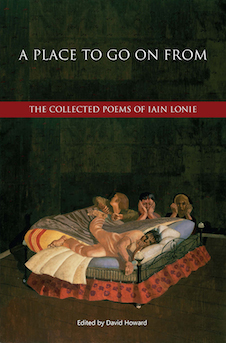
My poetry treasures for this year:  Some people say they’ve travelled, or fallen in love, or moved house, as the measure of a year’s alterations: for me, 2015 was the year I read Iain Lonie’s A Place to Go On From: The Collected Poems. The depth and frankness with which this plumbs love, grief and staring into the void is so unstinting that reading it has felt like a life event. As an act of scholarship from the editor David Howard and the author of the introduction Damian Love, it deserves to be celebrated.
I also loved seeing the fresh direction Joan Fleming has gone in with Failed Love Poems and how quickly she takes up new role models (eg Mary Ruefle, erasure poetics) and rearranges and ‘re-aspirates’ these.

Because as a student I always used to write far too much and get reprimanded for exceeding the word limit, I have to add here Bones in the Octagon by Carolyn McCurdie – see particularly her poem about the Brothers Grimm – and oh please just one more to add – two Hungarian poets have dazzled me this year: Ágnes Nemes Nagy and Ferenc Juhász.

Emma Neale

Bones in the octagon front cover copy

Poetry Shelf, Poet’s Choice: Bill Manhire selects some favourite reads of 2015

23282023

The late R.F. Langley is still one of the secrets of recent poetry in English, though Carcanet’s new Complete Poems (edited by Jeremy Noel-Tod) will be doing something to bring him out of the shadows.  He looks a bit remote and narrow on the page – but in fact the poems are full of hidden rhymes: listen to him hard, sound him on the tongue, and you realise he’s one of the most musical poets going.  And if poems are, as someone said, acts of attention, then he’s also one of the most attentive you’re ever likely to come across.

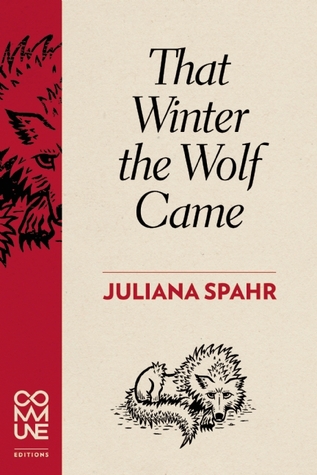
I like how Commune Editions, the publisher of Juliana Spahr’s That Winter the Wolf Came,  describe themselves: ‘purveyor of poetry & other antagonisms’.  There are plenty of antagonisms in this new book, which builds its effects into something bigger than the simple arithmetic of its individual poems. A poem called ‘Turnt’, online at the Poetry Foundation, gives a reasonable sense of how Spahr goes about things.

Though I’m late to the party, I’ve been reading Dan O’Brien’s 2013 collection, War Reporter (CB editions, 2013), which voices itself through the persona of the Pulitzer Prize-winning reporter Paul Watson – so that you’re both in the action and out of it at the same time.  As with Wilfred Owen et al, it will never be an easy time to read work like this – but just at the moment it feels especially challenging.

Finally, Zaffar Kunial is a poet I like a lot, though he hasn’t published a full collection yet.  He has the wonderful/weird distinction of once having worked as a writer for Hallmark Cards. Here’s a link to why – or part of why – I like his work. The page also includes a link to his poem ‘The Word’. It’s small and tidy, but is a sort of Tardis poem: bigger on the inside than the outside.

Bill Manhire