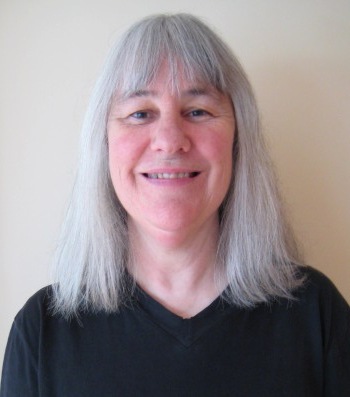
Kerrin P Sharpe lives in Christchurch where she teaches Creative Writing in schools and at The Hagley Writers’ Institute. In 2008 she was awarded The New Zealand Post Creative Writing Teacher’s Award from the Institute of Modern Letters. She was a student in Bill Manhire’s original writing composition class at Victoria University in 1976. Last year, Victoria University Press launched There’s A Medical Name for This. Her previous collection with VUP was entitled Three Days in a Wishing Well (2012). I gave her latest poetry collection a glowing review earlier this year (link below) — it was one of my standout poetry reads of 2014.
Did your childhood shape you as a poet? What did you like to read? Did you write as a child? What else did you like to do?
As a child I was raised on a rich diet of fairy tales and Enid Blyton stories. I loved Noddy and Big Ears and the stories of the Far Away Tree which my father read to me at bed time. I wrote stories and won a few competitions at school. What else did I do? Like most children I loved riding my bike and helping my brothers build treehouses.
When you started writing poems, were there any poets in particular that you were drawn to (poems/poets as surrogate mentors)?
At Wellington Teachers’ College (as it was then) and at Victoria University I discovered the poetry of Sam Hunt, Gary McCormack and Bill Manhire and they introduced me to a whole new world of words and images that I loved. I was fortunate to be taught at Victoria by Bill Manhire: it was he in the end who was responsible for lighting the poetry writing fire in me. He encouraged what became a lifelong passion for poetry and creative writing and in a way he was and is my poetry writing “hero”. One of the funny, eccentric quirks that I developed around this time (and which my husband still reminds me of) was wearing a special black hat upside down when I was writing poetry. It seemed to work and I did it for many years!
I love the way your poems can be strange and slightly surreal in part but always lay anchors down in an acute realness. What are some key things for you when you write a poem?
When I write I try to ask myself:
- What is this poem trying really trying to tell me?
- What is the ‘right’ point of view for this poem?
- For me every poem has a “trigger”- some idea, story or image or suchlike that triggers the creative process and commences the creation and birth to a new poem. But there is also a point in writing one of my poems that I ask myself, “Is it time now to move on from the ‘trigger’? Where is the life of the poem taking me?”
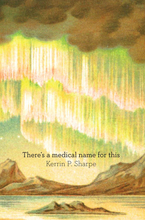
Your latest collection, There’s a Medical Name for This, contains a number of poems that astonished me. Not often I say this! In my review I suggested it wasn’t just a handful of poems that did so, and that it was ‘not in a flaming extravagant way, but in ways that are at more of an alluring whisper. These poems are imbued with little droplets of incident, image, tension.’ Is there a book that has astonished you like this?
Yes there is Anthony Doerr’s The Shell Collector which does just that every time I go back to it. It is a collection of short stories and I feel the characters are always waiting there on standby for me to re-enter their astonishing and enchanting world. All I have to do is to open the collection and read one of the stories and I am back in their world discovering new things I had never even noticed before. It’s wonderful!
Characters are important in these poems. I see them as an amalgam of invention and autobiography and yet more than that. They are shoes to be filled. What did you want the characters to do in the poems? Where did you draw them from?
I believe characters are central to the success of a poem. I keep reminding myself that they want to be heard but their role is always to show, to hint, to suggest, even to foreshadow but never to “tell” – and sometimes I forget that – to my peril!
Often the characters in my poems are drawn from my past, people I knew many years ago who remain alive in my imagination. Sometimes my characters come from people I have read about; sometimes from figures in history (often obscure people whose lives interest and intrigue me). I often write in restaurants and I hear fascinating snippets of conversations that soon pop into one of my poems. I also often meet the most interesting characters in places like MacDonald’s; I’m amazed at the variety of people who come in and the meetings they have there. There are some fascinating characters that I just can’t wait to slip into my poems. They always get changed in the poems of course with different overlays of imagination but the original characters are so interesting.
I finished my review with these words: To read these poems is to be a pilgrim – tasting the sweet and sour bite of the land, feeling the lure of travel and elsewhere, entering the space between here and there that is utterly mysterious, facing a terrific moment of epiphany. Would you agree that this is poetry of movement and that movement highlights both light and dark?
I am so pleased you picked up on the pilgrim motif in many of my poems. I want the reader in my poems to be like a pilgrim, journeying through light and darkness ending up in some curious way like the Godwit in one of my poems, in the place where they originally began their journey but all the richer in experiences from the pilgrimage.
Subject matter is eclectic in this collection (ponies, illness, birds, snow, familial relations). Are there motifs and topics you find yourself returning to, again and again?
I like to steal from myself both lines and motifs and even topics. Themes like injustice and war are important to me. I also find myself returning again and again to the sea, the stars and to the horse.
I particularly loved the earthquake poem at the start of the book. How have the earthquakes affected your life as a writer, your process of writing?
The Christchurch earthquakes were a frightening time for all of us who went through them. They never seemed to stop; one after shock after another. It made me feel so impermanent and I found myself driven for a time to write with great urgency, almost as if every moment was a last chance.
What do you want readers to take away from these new poems?
Sometimes I would like to know why someone walks into a bookshop, picks up my book and reads it. What are they looking for and what do they find when they read my poems?
For me, I would like my readers to take away images and lines from my poems that creep into their minds and suddenly emerge when they least expect it. I would like the images and lines they take from my poems to make important connections with their own lives.
Do you have filters at work as you write? A need to conceal for the sake of the poem and for the sake of self?
With me poems generally spring from an initial “trigger” that gets the creative process going. As I write I begin to fictionalise situations very early on and “flashes of truth” emerge in the poem. Sometimes, as I write, I reverse situations so that they are the opposite of what might initially have triggered the poem. I suppose in a way these are all filters that are at work when I am writing. Some of the filters are consciously applied; others are perhaps more instinctive.
Do you think it makes a difference when the pen is held by a woman?
Men and women often see things differently and no doubt their writing expresses this, but in writing, the differences between men and women in my experience are less significant to writing than the differences that arise from our own unique individual experiences of life.
I gave you a glowing review of your latest book. How do you manage reviews that aren’t so positive (if you have ever had any!)?
Sometimes I think my poetry is perhaps a little unconventional both in the things I write about and my style of writing. I’m a little difficult to pin down and categorise as a writer – perhaps I’m a little eccentric! So it doesn’t entirely surprise me if a reader or critic finds my poetry a little unusual. Generally however reviewers have been very kind to me and that has been very reassuring.
You have taught Creative Writing at a number of age levels. What rewards do you reap from this experience?
I love teaching creative writing and have taught all levels from young children through to adults. Some of my happiest writing experiences have been with young children; we can all be a little crazy and creative together and I find their freshness and freedom with words so exciting. They enter new worlds so easily and with so much trust in a way that only children can do.
I agree! What irks you in poetry?
Sometimes I read poetry that doesn’t seem to be saying anything. It is almost as if it has been written to a formula; it has no inner passion or feeling. Sometimes I also see poems that are too obviously modelled on someone else’s writing – they don’t feel authentic.
What delights you?
I like images in a poem that move, grow and develop as you read further into the poem developing greater layers of meaning and resonance and constantly delighting you as you uncover greater and lovelier insights. Sometimes there are lines in a poem that stand out for you and which you come back to over and over again; they resonate in your mind and you find yourself repeatedly quoting the lines to yourself. It reminds you again of the power of poetry to open the door to a rich inner life where things are different.
What poets have mattered to you over the past year? Some may have mattered as a reader and others may have been crucial in your development as a writer.
I keep coming back to poets like Bill Manhire, Bernadette Hall, Frankie McMillan, Vincent O’Sullivan, Sarah-Jane Barnett, Jenny Bornholdt and Siobhan Harvey. We have a lot of very good poets in New Zealand and many of them like the ones I have mentioned are so encouraging and supportive. Without them I would never have grown as a poet.
What New Zealand poets are you drawn to now?
Over the last year I have especially enjoyed new collections from Caoilinn Hughes, Marty Smith and Chris Tse.
Name three NZ poetry books that you have loved.
Three that spring to mind are:
Lifted by Bill Manhire
There Are No Horses in Heaven by Frankie McMillan
Your own book: Making Lists for Francis Hodgkins by Paula Green
What about poets from elsewhere?
I like:
Ruth Pradel – an English poet and academic who has a great gift for the analysis of poetry
Tomas Transtomer – A Swedish master I admire
Mary Ruefle – an American poet whose powerful imagery is outstanding
Ted Hughes – his interweaving of nature and poetry is still unsurpassed and his poetic craft is superb
Any other reading areas that matter to you?
I like reading about creative writing and how other writers go about writing poetry. I find it fascinating reading about their daily work routines, how they overcome “writing block”, what they think about the world of creative writing — in fact anything that gives me insights into the “secrets of the dark arts” of writing good poetry.
I have found Kevin Brophy’s Creative Writing and Richard Hugo’s Triggering Town two of the best books around and I keep coming back to them.
Some poets argue that there are no rules in poetry and all rules are to be broken. Do you agree? Do you have cardinal rules?
I must admit I regularly break most of the rules! I don’t use capital letters and rarely use formal punctuation. However there are some “rules” I still abide by. I am careful with words that end in “-ing”. I rarely use “but”. I am vigilant about line lengths and line breaks. I still believe that the purpose of a poem is to “show” not “tell”.
Do you find social media an entertaining and useful tool or white noise?
Much to everyone else’s frustration I have no interest whatsoever in social media and I don’t use technology unless I really have to. I continue to handwrite my poems with sharpened pencils and writing journals!
The constant mantra to be a better writer is to write, write, write and read read read. You also need to live! What activities enrich your writing life?
I’m happily married to my best friend and critic and we do a lot together. My four grown-up children and their lives and challenges are a huge part of my life. And of course my creative writing students bring joy and interest to each day.
Finally if you were to be trapped for hours (in a waiting room, on a mountain, inside on a rainy day) what poetry book would you read?
I always take Bill Manhire’s Selected Poems when I’m travelling or waiting somewhere. They keep me inspired and wanting to be a creative writer.
My review of There’s a Medical Name for This
Victoria University Press page



 NZ Poetry Shelf