Yadayada, or Don’t Worry, It all Adds Up (Feb 17th, then)
The bunting and cicadas cleared, The Herald having sailed the middle island for the natives’ trade in blankets for curly iron gall, I snuggled into the basement with rats and worms, snails sliming my finest parchment (historians only mention the rats but I know the rest.) I had been nuzzling and gnawing muzzles in the far north, and in the King Country I purged my mind of all sovereign thoughts of a beautiful crown as my pillow was smoothed by whiskery rat down.
Oh for a koauau to share this basement with. I am bent down with worry, and hunger. Low, small. A worm. A crawler. Me down. The governor up. These words echo like a dreamt inferno. I trusted my treasured words to hate! I promised feasts for all, with open hearts and flowing wine! I played sly, turned my new in-laws into dogs thinking I’d fly with the birds. But now I am a moth eaten by moths. I am a rag for a strop designed to pacify, and closely shave, hell.
Robert Sullivan
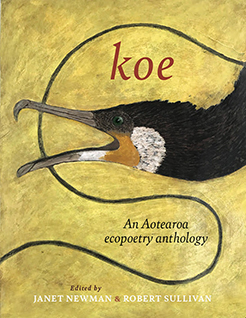
Robert Sullivan is Aotearoa New Zealand’s 14th Poet Laureate. He belongs to Ngāpuhi (Ngāti Manu, Ngāti Hau / Ngāti Kaharau) and Kāi Tahu (Kāti Huirapa ki Puketeraki) iwi and is also of Irish descent. He has won many literary awards. His most recent books are Hopurangi / Songcatcher (AUP) which was shortlisted for the Mary and Peter Biggs Award at the 2025 Ockham Book Awards, Koe: An Aotearoa Ecopoetry Anthology coedited with Janet Newman (Otago University Press 2024) and a collection of essays coedited with Anna Jackson and Dougal McNeill, Te Whāriki: Reading Ten New Poets from Aotearoa (AUP 2025). Robert is Associate Professor in Creative Writing at Massey University. He lives in Ōamaru.
To launch Poetry Shelf 2026, our current Poet Laureate Robert Sullivan has written a sequence called “Tidbits of Te Tiriti”. He wrote these Te Tiriti Tidbits in the voice of Te Tiriti o Waitangi. There will be one published each day for this Waitangi Day weekend, and then a fifth one today, on Feb 17th, which is the day his Ngāti Manu tūpuna signed Te Tiriti.
I’m pretty sure Prince Tui Teka met Billy T. And Sir Howard Morrison met Billy T. I met Sir Howard once. But Māui T. T. a T. never met Billy T. So I’m e-introducing them.
Robert Sullivan
Robert Sullivan is Aotearoa New Zealand’s 14th Poet Laureate. He belongs to Ngāpuhi (Ngāti Manu, Ngāti Hau / Ngāti Kaharau) and Kāi Tahu (Kāti Huirapa ki Puketeraki) iwi and is also of Irish descent. He has won many literary awards. His most recent books are Hopurangi / Songcatcher (AUP) which was shortlisted for the Mary and Peter Biggs Award at the 2025 Ockham Book Awards, Koe: An Aotearoa Ecopoetry Anthology coedited with Janet Newman (Otago University Press 2024) and a collection of essays coedited with Anna Jackson and Dougal McNeill, Te Whāriki: Reading Ten New Poets from Aotearoa (AUP 2025). Robert is Associate Professor in Creative Writing at Massey University. He lives in Ōamaru.
To launch Poetry Shelf 2026, our current Poet Laureate Robert Sullivan has written a sequence called “Tidbits of Te Tiriti”. He wrote these Te Tiriti Tidbits in the voice of Te Tiriti o Waitangi. There will be one published each day for this Waitangi Day weekend, and then a fifth one on Feb 17th, which is the day his Ngāti Manu tūpuna signed Te Tiriti.
Inside the city a house Inside the house a room Inside the room a cupboard Inside the cupboard a drawer Inside the drawer a box Inside the box a necklace Inside the necklace a story Inside the story a city hope
Some years I invite you to share your favourite reads of the year, especially poetry, especially when poetry doesn’t get much attention in the end-of-year lists and book stacks that we are seeing across all forms of media. This year has sizzled and simmered and shone with local poetry: new collections along with live performances. So many collections document and explore tough stuff: illness, heartbreak, despair, suicidal thoughts, global wars and inhumanity, our government inflicting more and more damage on planet and people. And so many collections deliver love, a multi-stranded love and a deep love of what words can do, whether exuberant or sweetly nuanced.
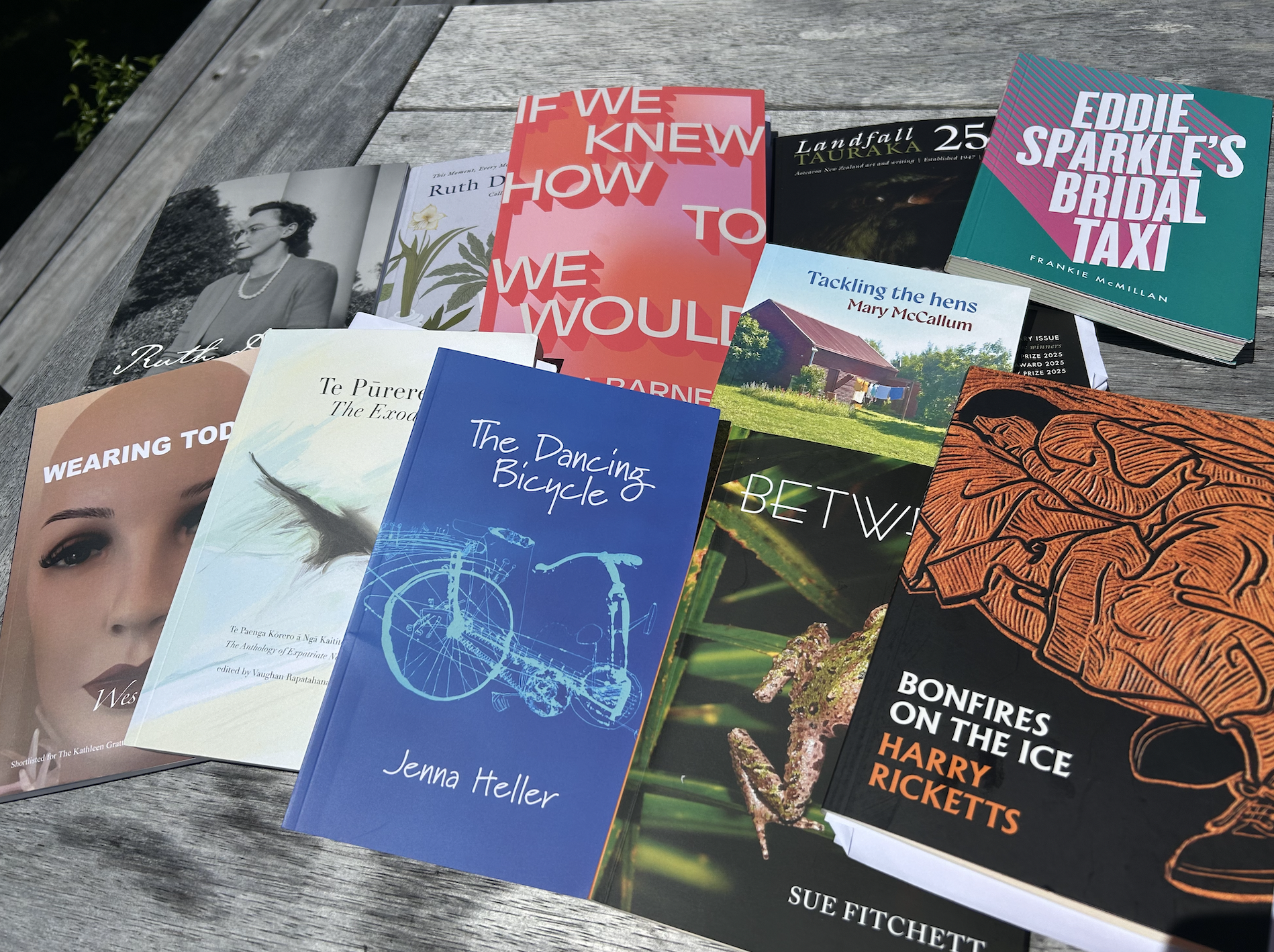
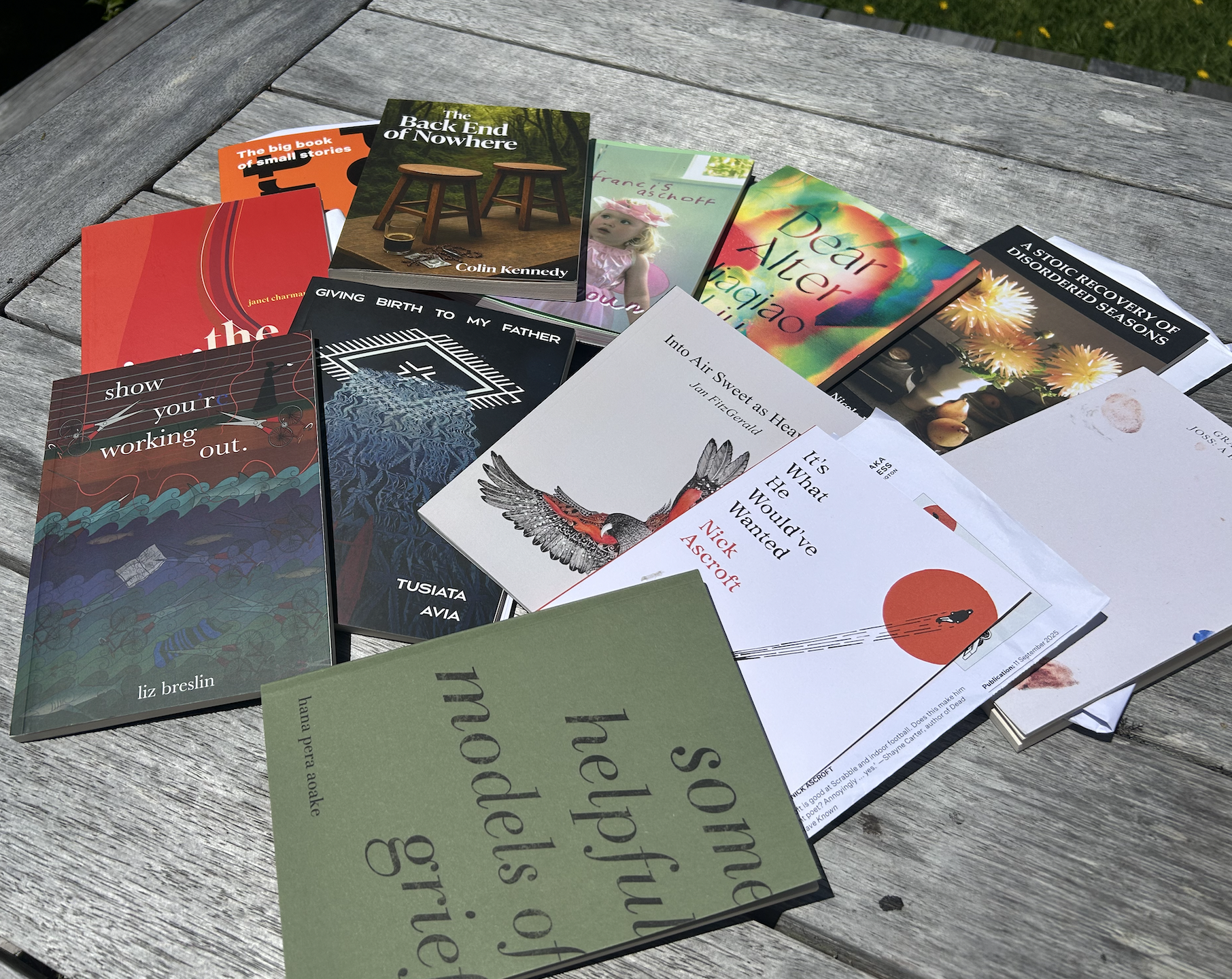
Every poetry book I have picked up, lingered over and reviewed (see photos below in the side bar and you will discover my reviews), I have utterly loved. Sadly for me, there is still a stack of books on my desk I’m itching to get to (see photos below), books by poets I love, books by poets new to me. This week I made the hard decision to return to reviewing these books after Poetry Shelf and I have rebooted, after we all get through the busy season where it is hard to read more than shopping lists.
I want to share a couple of highlights with you, but first a wee update. I am standing at a fairytale door, a threshold onto my new road. What specialists call my new normal, not the normal I enjoyed when I was travelling all over the country, visiting schools, doing events and author tours, reading and writing all day long. I have had a bone marrow transplant that has gifted me the miracle of life, thanks to an anonymous donor and an incredible medical team, but it comes with scars. Looks like I will always have to use my energy jar carefully, to manage my daily physical challenges with various aids. But I sure in heck find enjoyment and delight in every day.
Poetry Shelf has made such a difference in year that I have tagged both my worst and best. So many poets contributing, so many poetry fans reading and sharing. So many thoughtful caring emails, especially those responding to The Venetian Blind Poems, especially those responding to features and audio that have resonated with you. Poetry Shelf is nothing without you, without readers and writers connecting across generations, cultures, the length and the breadth of the country.
Creating three new series this year has been a special highlight for me. I have included links to one of them, Poetry Cafe Readings, because hearing these poets read has been such a gift. This will be back next year, along with the Speaking Out ( check out the Gaza poems) and Playing Favourites series, plus some new ideas. I have included a link to the fabulous Te Whāriki anthology where some of the contributors selected a favourite poetry book of 2025. And to a handful of special moments on the bogs.
Thank you so much everyone for your incredible support.
Some Special Poetry Shelf Moments
Celebrating the poetry of Brian Turner (1944- 2025)
Celebrating Dinah Hawken, winner of Prime Minister’s Award for Poetry
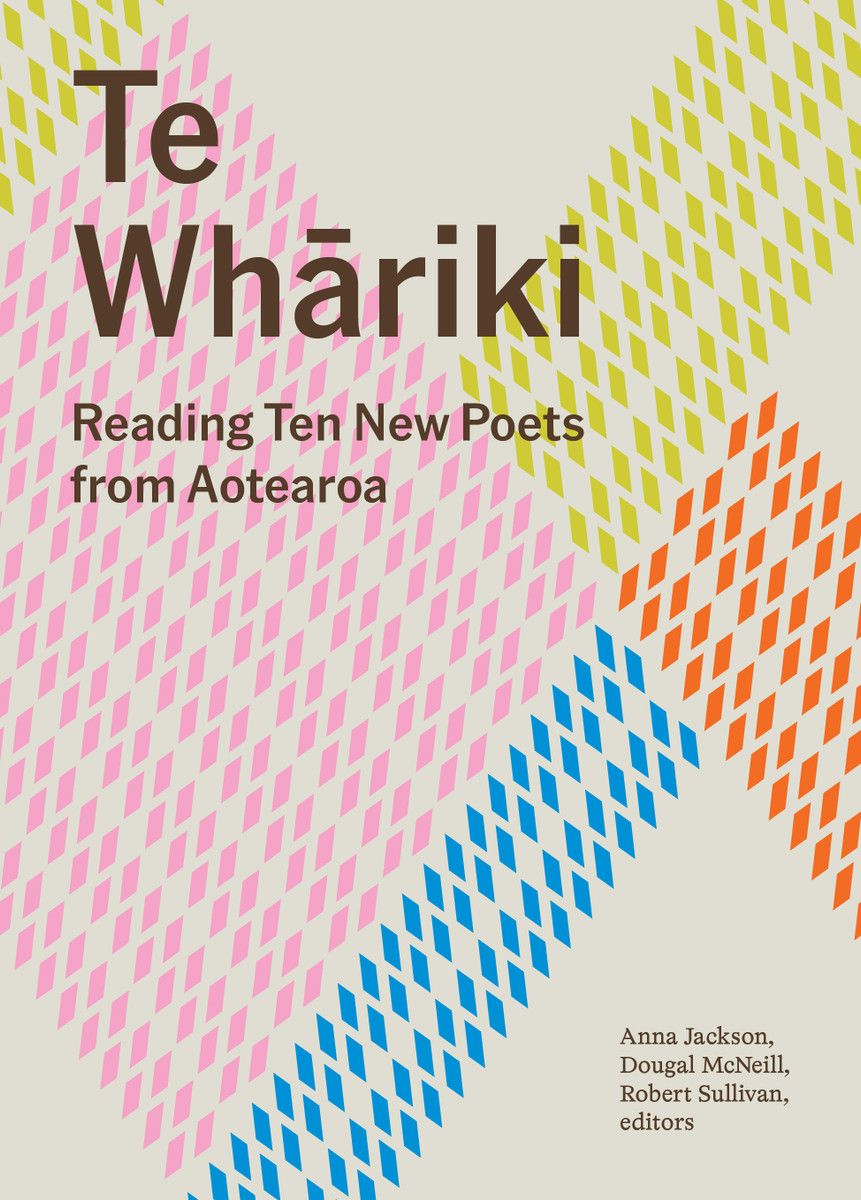
Feature on Te Whāriki: Reading Ten New Poets from Aoteatoa, edited by Anna Jackson, Dougal McNeill and Robert Sullivan (Auckland University Press, 2025)
Poetry Shelf Cafe and Summer readings Poets read and talk poetry for around twenty minutes
Write name in side bar and check out my review Many of the books I reviewed included readings
Books on my must-read pile
I often ask poets in interviews what words matter to them as they write – but today I am asking you what words matter as you live each day. I am thinking: kindness, self-care, connections, hope and joy. Over the next month or so I am going to read novels, watch movies, listen to music, tend the vegetable garden, and bake and cook.
Sending aroha to you all along with a huge bouquet of sweet and salty Te Henga ocean air.
Junction Box
sitting here at the junction box of war and peace and flowing waters hearing the soundtrack of bush haven hearing the dawn bugle the flyover the kōrero the silence searching in the manukā for remedy cables mourning every raised weapon every sacrifice every empty stomach displaced refugee every cruel act the weasel words from weasel politicians jamming our children in square learning boxes slamming our hospitals in low voltage budgets cramming our planet in polluted circuits extinction coils feeling in this breaking dawn the connecting calls for peace picturing protest placards holding voices of resistance past and present picturing aid workers risking life to nurse and feed and shelter picturing a global jigsaw puzzle of greed and smash and grab for how long have we imagined peace have we called for peace for how long have we imagined blue sky transformation today we are standing here holding our currents of hope and yes today we are joining in calls for peace calling calling calling
25 April 2025 Paula Green
widening the gap
in the wild night of storm the wind is widening the gap or is it the roar of a government hellbent on building
a ravine between the rich and the poor Māori and Pakeha in every choice they make. A school curriculum has lost
sight of the prismatic stories that shape us, sums that include x-factor joy, and I am stuck on this freight train
in the widening gap because I see no end to damage and despair and I’m filling an ocean with tears crying over lessons that slam the door
in the face of poverty or another language or the tangata whenua and this rumble gap is the distance between sick earth and well earth
between building roads and restoring our hospitals and schools and here I am holding my fragile torch to the widening gap
in my sodden socks no idea where to shine the light next yet except maybe on all those protestors from the 1960s who are stomping
in the streets even louder now with their dreams our dreams where women are heard where Māori are heard my bones breaking and I am blowing
all around to resist persist hope dream begging to fill this gap with precious care to build glorious people-friendly bridges out of knowledge and foresight.
This evening, on 27 November, the National Library is celebrating 60 years of the Library with a ‘Laureates line up’ — a rare gathering of nearly all living New Zealand Poets Laureate. Enjoy readings from legends like Elizabeth Smither, Jenny Bornholdt, Michele Leggott, Cilla McQueen, Ian Wedde, Karl Stead, Selina Tusitala Marsh, David Eggleton, Chris Tse, and Robert Sullivan, with Fergus Barrowman as MC.
6pm – 8pm, National Library, Wellington
It is also a chance to celebrate our new Poet laureate, Robert Sullivan. From my extended shelf of favourite poems by Robert, I have chosen a poem that has travelled with me for a long time. I posted this poem last year to launch my ongoing Playing Favourites series. The comments I wrote in 2024 still stand. This is why poetry matters. This is why honouring a poet who has gifted us so much through his sublime poetry collections matters.
Robert also reads a few poems.
I highly recommended Robert’s most recent collection, Hopurangi / Songcatcher (AUP) which was shortlisted for the Mary and Peter Biggs Award at the 2025 Ockham Book Awards. I wrote: “I often use the word ‘breathtaking’ when I am tagging a poetry collection I love, and yes, poetry can take your breath away, but after reading Robert Sullivan’s sublime new collection, Hopurangi—Songcatcher: Poems from the Maramataka, I am musing on the idea, ‘breath-enhancing’.’ — Paula Green, Poetry Shelf
This is a day to celebrate poetry, to listen to poets, to read poems, and to advance the connecting and vital strength of words.
a reading
a poem
Voice carried my family, their names and stories
Their names and fates were spoken. The lands and seas of the voyage were spoken. Calls of the stroke at times were spoken. Celestial guidance, sightings, were spoken. Prescriptions – medical and spiritual – were spoken. Transactions – physical and emotional – were spoken. Family (of), leaders (to), arguments, were well spoken. Elders (of), were well spoken. Burials were spoken. Welcomes at times were spoken. Futures lined up by pasts, were spoken. Repeating the spoken were spoken. Inheritance, inheritors, were spoken. Tears at times were spoken. Representations at first were spoken. The narrator wrote the spoken. The readers saw the spoken! Spoken became unspoken. [Written froze spoken.]
Robert Sullivan from voice carried my family, Auckland University Press, 2005
When Robert Sullivan’s poetry collection, Star Waka, entered the world in 1999, it felt like a significant arrival. This was a poet who sang from his past present future, his ancestors friends loved ones. His collection voice carried my family particularly resonated with me, and it is a book I draw from my shelves when I crave nourishment.
This poem. This poem in particular, that speaks even more deeply to me today, when voice brings us together across the motu, bringing us together through stories, songs, history, aroha and the respect that matters.
This poem that reminds me, so acutely, so vitally, how much voice matters, how much a poem can matter – when the world our nation and our people hang by a fragile thread. When I hang by a fragile thread.
Today this poem, this precious poem, is a poem to hold close.
Robert Sullivan is Aotearoa New Zealand’s 14th Poet Laureate. He belongs to Ngāpuhi (Ngāti Manu, Ngāti Hau / Ngāti Kaharau) and Kāi Tahu (Kāti Huirapa ki Puketeraki) iwi and is also of Irish descent. He has won many literary awards. His most recent books are Hopurangi / Songcatcher (AUP) which was shortlisted for the Mary and Peter Biggs Award at the 2025 Ockham Book Awards, Koe: An Aotearoa Ecopoetry Anthology coedited with Janet Newman (Otago University Press 2024) and a collection of essays coedited with Anna Jackson and Dougal McNeill, Te Whāriki: Reading Ten New Poets from Aotearoa (AUP 2025). Robert is Associate Professor in Creative Writing at Massey University. He lives in Ōamaru.
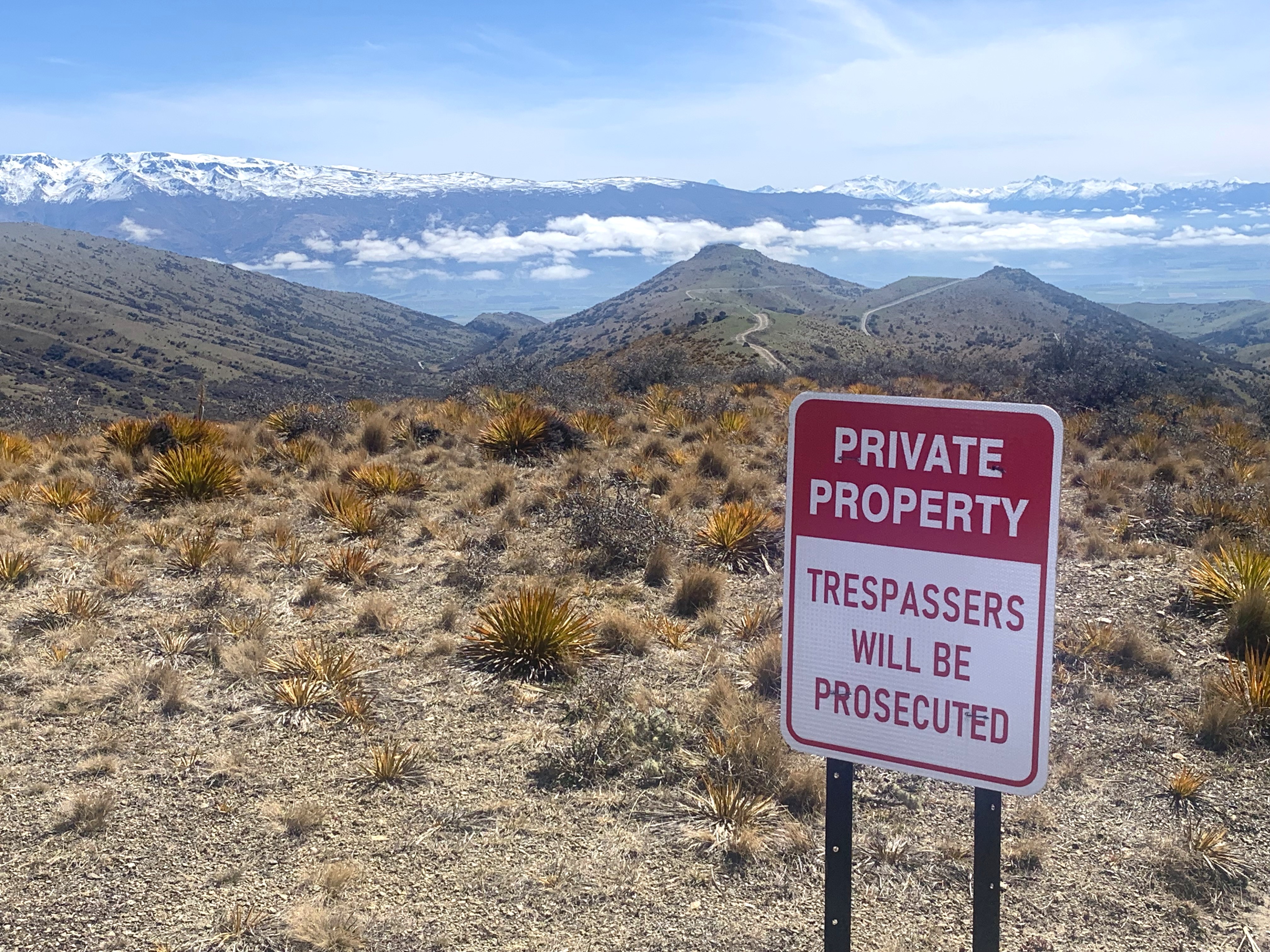
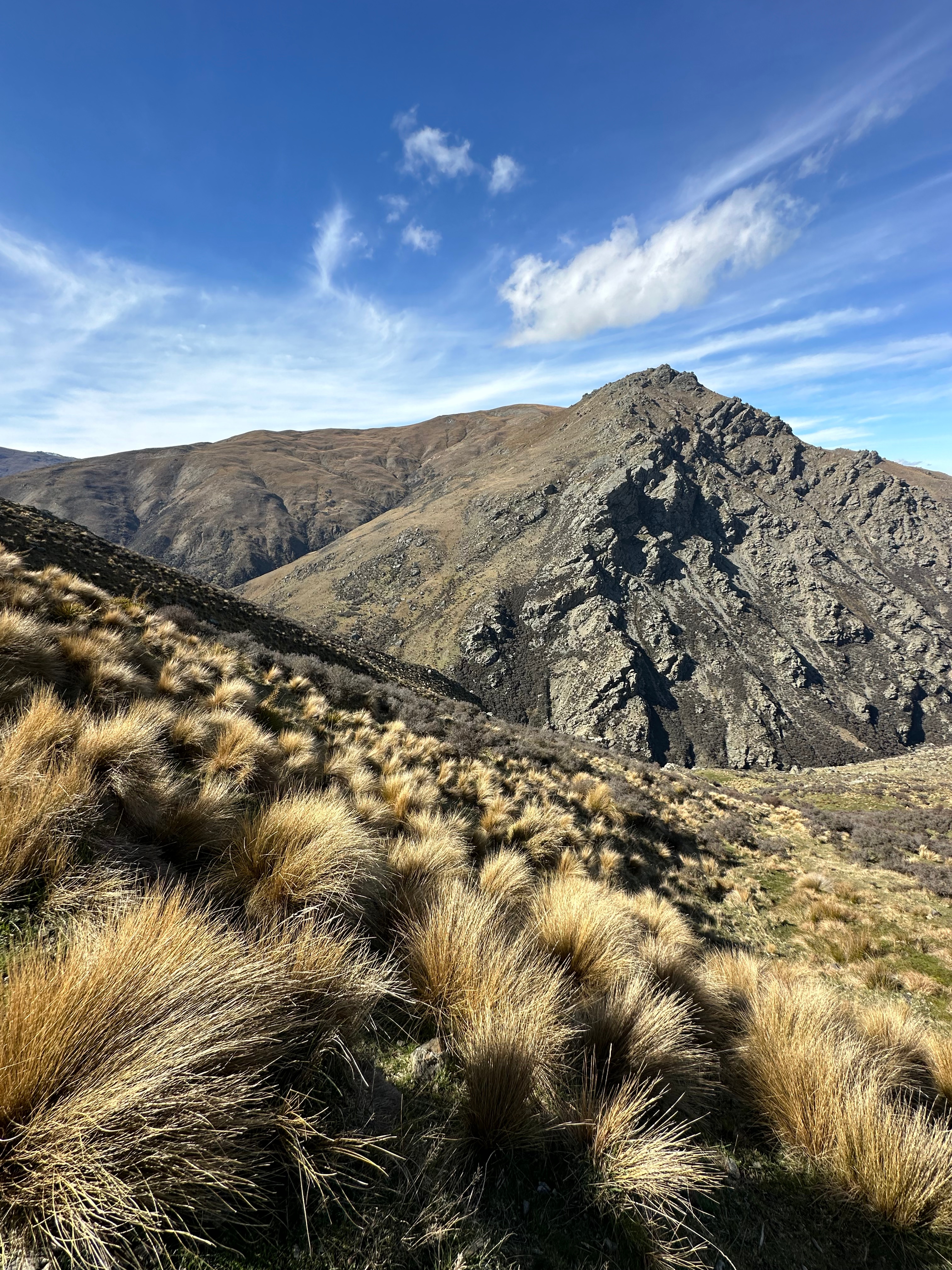
Summit, Thomson Gorge Road (looking towards Mount Aspiring). Photo: Gregory O’Brien, October 2025
Backcountry
Now and ever the mountain river.
A fantail flits. Moss over branch, the trees hurry.
Undying stone continues the rhyme: there is no time.
Richard Reeve from Generation Kitchen (Otago University Press, 2015)
At the end of September, Gregory O’Brien sent me the media release for an online fundraising art show he was curating.
Nine well-established New Zealand artists have gifted works to raise funds in opposition to the proposed Bendigo-Ophir gold mine in Central Otago. The artists – all strongly opposed to the open pit mine – have come together under the banner “No-Go-Bendigo”, and are offering 100% of the funds raised towards fighting the fast tracked mine. All have been deeply affected by the majesty and singular character of the region—as the statements on the exhibition website underline. They all wanted to make a strong stand.
Dick Frizzell, Enough Gold Already, 2025, limited edition of 12 screenprints, 610 x 860mm,
The artists who have contributed are Bruce Foster, Dick Frizzell, Elizabeth Thomson, Eric Schusser, Euan Macleod, Grahame Sydney, Gregory O’Brien, Jenna Packer and Nigel Brown. The works they have gifted for sale can be seen here.
Exhibition organiser Gregory O’Brien, said that the group of artists from all over the country was highly motivated to help. “The proposed desecration of a heritage area for purely monetary gain is an outrage to all of us, as it is to the citizens of Central Otago and to all New Zealanders.” He said that the initial group of nine artists have already heard from other artists enthusiastic to help “during the next round”. “Painters, photographers, writers, film-makers, choreographers and other arts practitioners from within Central Otago and further afield are incensed at the churlishness of both the mining consortium and the Government’s ruinous ‘Fast Track’ (aka ‘Highway to Hell’) legislation. The environmental cost of such a cold-blooded, extractive exercise is simply too high, as is the social impact and down-stream legacy.”
When Gregory said that this was just the beginning, at the end of the exhibition media release, I knew Poetry Shelf had to become involved. My new Poetry Protest series was the perfect opportunity – knowing that poetry speaks out and for and because of issues in myriad ways. Gregory, Richard Reeve and I invited a number of poets based in the area (and beyond) to contribute a poem. Jenny Powell’s poem catches sight of the Dunstan Range, David Kārena-Holmes has penned an aching lament, Emma Neale writes of her local blue swallows that can also be found near Benigo. And then there are poets with miners in the family history such as Jeffrey Paparoa Holman and Diane Brown. Twenty three poets have gathered on this occasion but there are so many poets in Aotearoa singing out in defence of the land. Some poets chose poems from collections, while others wrote poems on the spot, often out of anger and frustration.
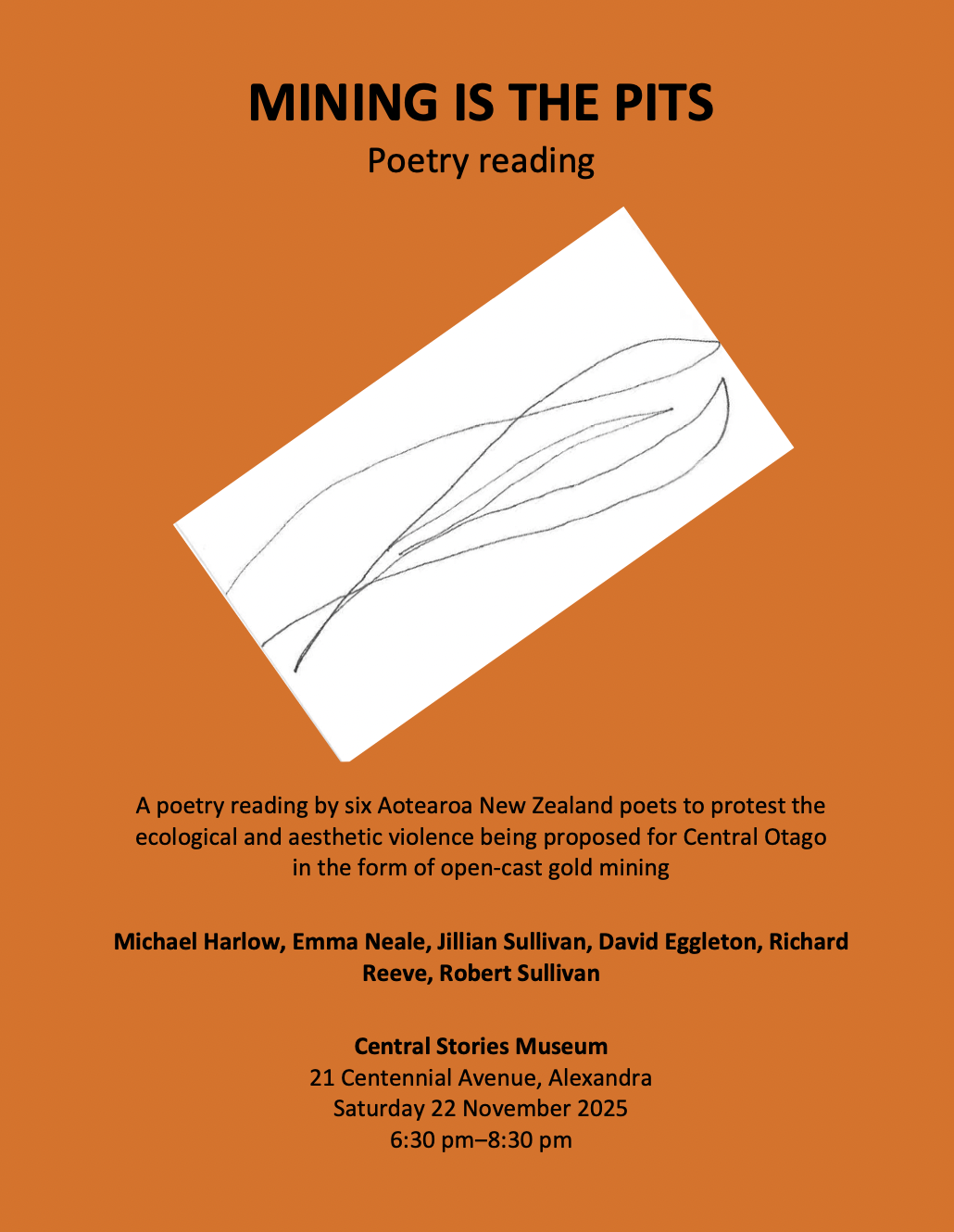
Richard Reeve, who is organising an anti-mining poetry reading in Alexandra in November (see poster), has written an introduction for the post. He sent me a suite of poems, both new and old, that touch multiple cords of beauty and outrage. I have included an older poem to head the post, and a longer new poem after his introduction. I have also included an extract from a recent media release by Sam Neill.
An enormous thank you to Gregory and Richard for co-curating this post, to all the poets who contributed, and to everyone who continues to read and write poetry. Today is a day of significant strikes by nurses, doctors and teachers in Aotearoa, a day with a major weather event still unfolding and widespread power outages, and the continuing heartslamming news from overseas.
To be able to connect with readers and writers who care, matters so very much, as I sit here weeping with a strange mix of sadness and gladness, beauty and outrage.
Thank you.
Thomson Gorge Road Photo: Richard Harvey, October 2025
For Freddy – Ora pro nobis
A little while ago now, Lord Byron in his book-length poem The Prophecy of Dante mused, “Many are poets who have never penned / Their inspiration, and perchance the best”. By this he meant that even non-literary types can have poetic experiences. That of course begs the question, What do we mean when we talk about poetry? Is poetry, as some sceptics would suggest, purely prose with line-breaks, or does the concept embrace something more than words on a page to encompass the wider spectrum of lived experience?
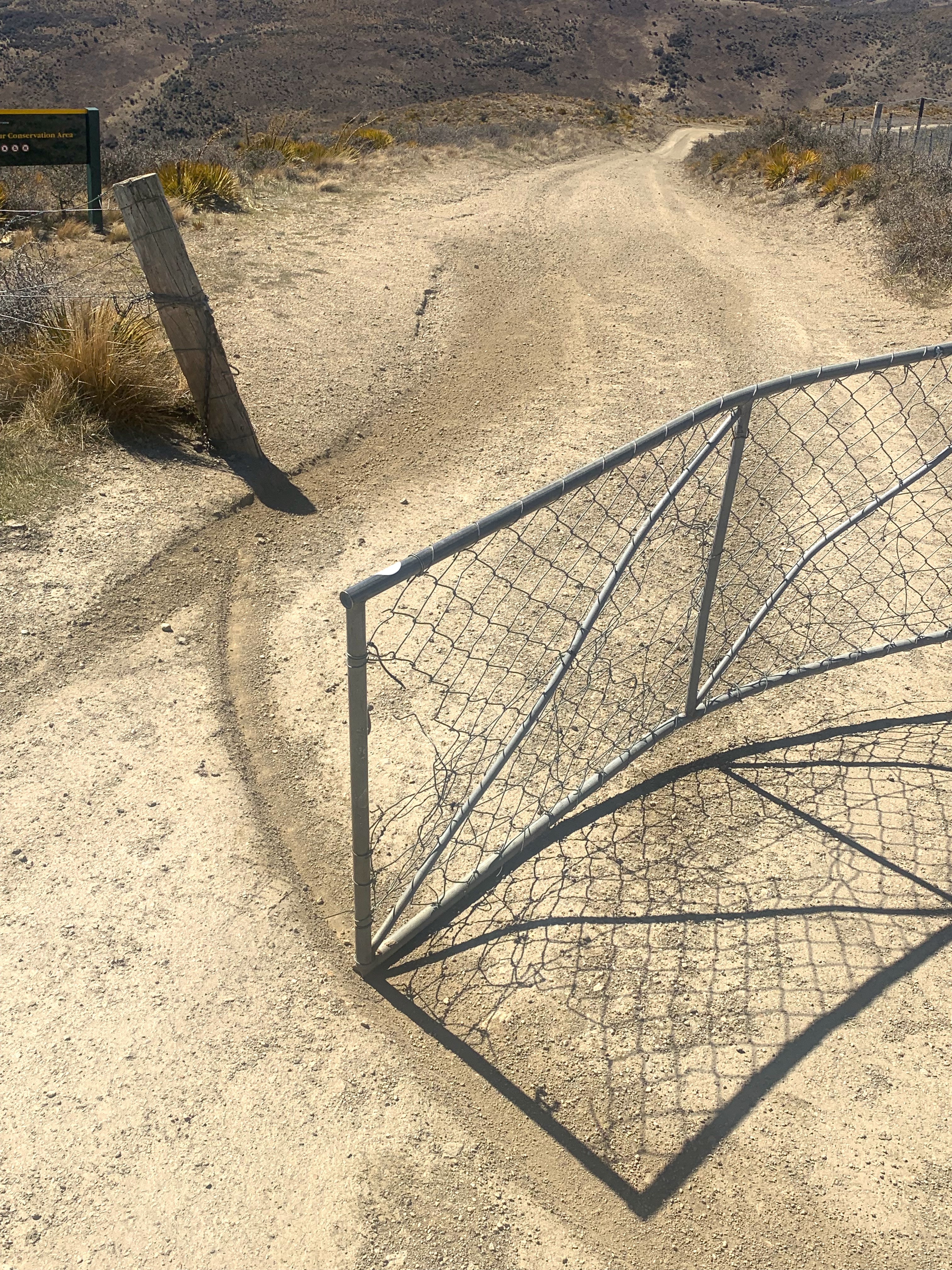
Thomson Gorge Road in Central Otago is a place many would say has its own poetry, whether the subject of poems or not. A backcountry dirt road stretching from Matakanui near Omakau in the east to Bendigo near Tarras in the west, it cuts through a pass in the Dunstan Mountains that divides the Manuherikia Valley from the Upper Clutha Basin. Thomson Gorge Road is hawk country. Tussock country. The road is notorious for the sheer number of gates one has to open when using it as an alternative to the highway that skirts the base of the mountain range south to Alexandra and the Cromwell Gorge. The gates, livestock, steep winding track, stream crossings and mud mean Thomson Gorge Road is certainly not the fastest route from Omakau to Wanaka, even though more direct than the highway. Nevertheless, people travel it regularly enough.
Indeed, those who travel the road are off on an adventure. Punctuated with heritage sites associated with the colonial period (mine-shafts, abandoned huts, battery sites and so on), and before that significant to Southern Māori travelling the pounamu routes west to east, the passage exemplifies the interconnected complex of geophysical frontiers, native-vegetation-clad landforms and cultural touchstones that makes Central Otago uniquely important in our national psyche. The scenery is magnificent, encompassing in the course of the journey expansive views of two of the three great basins of Central Otago. Just as with the Hawkdun Mountains to the north or the Clutha-Mata-au River and Old Man Range to the south, Thomson Gorge Road is an essential component of wild Central Otago’s fabric, part of our collective heritage as a nation.
Despite this, flagged on by Minister of Resources Shane Jones and his “fast-track” legislative reforms, an Australian gold mining company – Santana Minerals – is now seeking permission to establish a giant open-cast gold mine not far from the crest of Thomsons Saddle, in an area situated within an officially designated Outstanding Natural Landscape and already subject to a conservation covenant. If consented, the base of the mine where huge volumes of tailings and toxic waste are to be stored will be only 6-7 kilometres from the Clutha-Mata-au River. In light of Minister Jones’ fast-track legislation, the general public have no right of input on the outcome of the proposal even though the open-cast mine is widely regarded as offensive, a public health risk and indeed a brutal and crass affront to the values of the region.
Those protesting the mine include not only poets and artists but also people who have no great interest per se in the literary arts or perhaps even the fine arts. Some have limited exposure to literature. Others likely know very little at all about Byron or indeed Cilla McQueen, Jillian Sullivan, Liz Breslin, Michael Harlow and others who have contributed poems to this edition of Poetry Shelf. Like the poets, they nevertheless understand intuitively and deeply that no amount of trumpeting by Santana or Minister Jones of the alleged financial value of the gold deposit will annul the violence being proposed to the fine poem – or fine wine, or fine painting, or good day on a bike – that is wild Central.
In this issue, Gregory O’Brien uses as an epigraph to his contribution, ‘Thomson Gorge Road Song’, Minister Jones’ now infamous comments to the effect that the days of deifying New Zealand wilderness are over:
We are not going to sit around and read poetry to rare lizards, whilst our current account deficit goes down the gurgler … If there is a mining opportunity and it’s impeded by a blind frog, goodbye Freddy.
Au contraire, Minister. In this issue we proudly dedicate poems to skinks, hawks, backcountry streams, tussocks, snow melt. We wilfully and without reservation pledge our heart and soul to Freddy. For, as Annabel Wilson asks in her poem ‘Gorge’, What would the real Santana – St Anna, mother of Mary – say? “Sancta Ana, ora pro nobis.” Pray for us, St Anna. God help us if we cannot as a people do better than this.
Richard Reeve – 20.10.25
Clutha Gold
People! Keep an eye on the prize before you. Emerging nugget, the stuff “Black Peter” knew about, Bombay gentleman
who struck gold in 1857 at Tuapeka, scooping glinting gravel from the riverbed with his cup years before Gabriel Read
saw flecks “shining like the stars in Orion on a frosty night”, gold confirmed in Otago, a decade after New South Wales,
the glory – not to say reward – bestowed on the well-dressed candidate (not the half-caste from Bombay whose honesty gave rise to no reward).
People! Keep an eye on the prize. Yes. The cycle trail we journey in a meditative state, pausing to assess, for instance,
the scarification of the land above Beaumont Gorge, native scrub scraped off just wherever possible given the steepness,
elsewhere, feral trees spilling out of the radiata along the tops, sprouting under cliffs that once were waymarks to Māori
travelling up river from the coast along mahika kai routes. If we are honest with ourselves, it is carnage. Chaos, plunder:
we ogle the fate of our kind who would move mountains not far from here, nevermind scrub, in pursuit of the shiny stuff,
at so-called “Bendigo” in the Dunstan Mountains, Kura-matakitaki, where men and women with geology degrees feverishly
calculate potential returns from the sparkling core samples extracted under permit from the mountainback,
their CEO crowing future profits in the billions, regional growth, speculation to accelerate the pulse of offshore investors.
Without cash, their fabled open-cast mine may not proceed. Or it may. Certainly, the carnage we see from the riverbank
tells a story the trail people wouldn’t want us to focus on, namely, the irrepressibility of our activity, humans in time
destined to be extracted from the view just like the mountains, the land sliced up by farming, forestry, mining, infrastructure,
enterprise that in the end failed to save us from ourselves. Those, at least, are the signs. What happens remains to be seen,
and we are getting ahead of ourselves. The end isn’t quite yet. There is still sunlight and shadow, glitter of today’s fine day.
The prize is this deep blue vein of the motu, Clutha, Mata-au, river that gave a pseudonym to Janet, a colour to Marilynn,
incrementally digging out its passage through culture, resolving its way to the sea. We cycle from name to name,
past livestock, old gardens unravelling with age like memories, derelict barns at the edge of paddocks, willow clusters;
the prize presumably is us, steering our contraptions along the edge of a signature, at Beaumont saying goodbye
to the river, the trail now mostly following the highway, gold country but no longer river country, dead Black Peter
ghosting the great disenfranchisements evident from the trail as we ride through a converted landscape, sheep country
at Bowler’s Creek, pine plantations on the hills above Lawrence, wholly transformed land, just riparian planting in the valleys
to give any indication of a time before now. The age of birds, rivers, podocarps, sunlight, snow-melt, flax. Winking boulders
in which the ore retained its secret, faithful to the long moment before our century of hard-hatted Ministers of Resources
tapping rocks and denouncing the catastrophe of the economy (no mention of the slow-motion catastrophe of the land,
what is obvious all around us yet routinely overlooked by those in rapid transit from name to name, place to place).
People! Anyway. Yes. Keep an eye on the prize before you, we get that. And riding into Lawrence is certainly gold,
the sun setting on our handlebars, sheep laughing as we pass, the fields outside town home to sun-drunk ducks, goats, horses,
good sorts in the only environment they have ever known, lifestyle blocks, drained, fenced paddocks, previously bog
that before the man-driven fire was once primaeval forest. Hard to believe, the gaudy general store on the main drag
now also extinct; also extinct the ironmongers, breweries, lions that roamed the township, in its origins displaced by mining creep
to the present location. Not yet extinct the beauty of the town. Rusted colonial rooftops pepper the view, seasoned by exotic trees.
Truth is, nature was always ahead of us. To the bitter end. Whatever control any of us dreamed we had was an illusion.
Night colonises the shadows. Worn out, we pull up at the car. We are the gift that keeps on giving, despite the prognosis.
Clutha Gold was awesome, we say. At the Night ‘n Day, we gorge. And it is a fact, we are happy. Good work people! Keep it up!
Richard Reeve
TOXIC
It’s unbelievable, really. Unbelievable. Why would you visit this kind of environmental catastrophe onto a region that is thriving, that is in the midst of what many of us think of as a renaissance? The future of Central Otago lies in its bike trails, vineyards, cafes, in good farming practice, and a diverse and growing population of people, young and old, who genuinely care about the future of where we live.
All aspects of life in the province will be permanently affected by the toxic presence of a mine at Thomson Gorge. The initial mining proposal (and it will only get bigger, you can be sure of that) includes four mining pits, one of which will be a kilometre long and two or three hundred metres deep. All fouling our water, risking arsenic and cyanide pollution among other poisons. Don’t even mention the mad noise, the carbon, the ruin of our rivers, land and air pollution, the road traffic, the dust… the incalculable environmental cost.
Of one thing you can be certain: If the Thomson Gorge Mine goes ahead, there will be further mining proposals to follow. Watch out, Bannockburn. Watch out, Central. Remember this – ‘fast track’ can mean hasty and fatal mistakes.
Coming in here with their bogus claims, their invented figures (’95 per cent of the locals support the mine’– come off it!), these people should be ashamed. Those of us who love Central Otago are going to fight this. Because, make no mistake, this mine would be the ruin of our region, and importantly its future.
Sam Neill – 22nd October 2025
Near turn-off to Thomson Gorge Road, Tarras Photo: Gregory O’Brien, October 2025
Reading Poetry to Rare Lizards
SONG FOR THE TUSSOCK RANGE ‘I will up my eyes unto the hills …’ – Psalm 121
Deep Stream, Lee Stream, Taieri River and their tributary waters – all your lovely water-daughters, Lammerlaw and Lammermoor – dear to me and ever dearer, Lammerlaw and Lammermoor!
Deep Stream. Lee Stream, Taieri river – where I wandered in my childhood with a fishing bag and flyrod – Lammerlaw and Lammermoor, dear to me and ever dearer, Lammerlaw and Lammermoor!
Deep Stream, Lee Stream, Taieri River – let no profiteers deface these windswept, wild, beloved places – Lammerlaw and Lammermoor, dear to me and ever dearer, Lammerlaw and Lammermoor!
David Kārena-Holmes
AT WEST ARM, LAKE MANAPOURI
Tourists on tourist buses enter ‘The Earth’s Arsehole’* (blasted, grouted, |as though the Earth itself were buggered) to view the powerhouse in the bowels, where all the weight of thunderous water that once was the glorious Waiau river, flowing freely South to the sea, is prisoned now in pipes and turbines to serve the mercilessness of man.
And so, it seems, the mythic grief of Moturau and Koronae (whose tears, in legend, filled this lake) is vented in a cry transformed, exhaled as an electric current from generators underground, to howl through cables strung on pylons, gallows-grim, from here to Bluff.
Are we who turn on lights at evening, or use the smelted aluminium, exploiters of anguish, buggerers of the Earth?
David Kārena-Holmes *The site of this power project was, in the construction period, known to the workers (as is, no doubt, commonly the case in such environments) as ‘The arsehole of the Earth’. Most, or all, of the the power has gone to supply an aluminium smelter at Bluff.
Swoon
Skylark ripples the edge of silence, icy hollows mirror its hover, lines of dry grass quiver.
Winter’s travelling light transforms the field of shaded frost to shallow melt, and then, again.
Mountains drift into distance, curve in whiteness. On either side, hills and sky swoon at vision’s end.
Jenny Powell
Leave the arthropod alone
I saw a centipede in the crack of a rock flipped the grey shape to view the earth underneath, watched tiny legs scurry to safety, skittering from my unwanted gaze
I found a story in the hem of my coat picked it apart, ripping the seam stitch by stitch till the torn fabric, this undoing, was all I could see
I peered through a telescope at the southern sky’s gems winced at the big-man voice next to me, joking about ladies who covet – if only we could own them, if a man would get them for us, we’d be happy
I light the quiet fire of this poem: a resilient critter, a seam that holds, the sparkling truth lightyears from man’s reach – these things shining in the untouched crux
Michelle Elvy
A Faustian Bargain
Can I speak as a descendent of Cornish tin miners? Hunger led them to flee to Australia and Kawau Island, where they survived and profited in minor ways, digging up gold and copper. None owned a mine, some died of the dust, and in 1867 my great-great grandfather died in a mine collapse in Bendigo, Victoria leaving a widow, and nine children, one unborn. Is the tiny opal in my wedding ring handed down from him?
Can I speak, knowing nothing of this heritage before I shifted south and my husband took me to the old schoolhouse site in Bendigo, Central where we camped on the hard dryland. Born in Tamaki Makaurau, in view of the Waitemata I took time to love this new land, the forbidding mountains, cold lakes and rivers, shimmering tussocks, and now vineyards and tourists annoying as they may be bringing a more benign form of riches.
Can I speak, knowing my ancestors left their toxic tailings, their dams of arsenic and lead still poisoning the water 150 years later? Too late for apologies or compensation, the best I can do is speak up, say, beware these salesmen with their promises of jobs, and millions to be made. Once the land is raped, its gold stored safely in a vault for nothing more than speculation, the money men will walk away leaving land that feeds no one,
water that will slake no thirst.
Diane Brown
An Anti-Ode to Mining in Central Otago
There’s Lord Open Cast, pompous in yellow smog. Corporate blokes raise another hair of the dog, and pump more pollution for the water-table. Dirty dairying brings bloody algal bloom; so much cow urine until nitrogen’s poison, that the arse has dropped out of the rivers.
Yes, the day looks perfect with road tar heat; gorsebush fires flame above the lakeside beach. Spot mad scrambles of rabbits gone to ground, as orchards totter and grape-vine soils erode; while every avenue is twisting itself around, looking for the fastest way out of town.
Roadside lupins in Ophir echo purple sunsets. Bendigo’s carbon offerings are burnt by nightfall. A hundred per cent pure express their distance, when smell of decayed possum chokes the air. Don’t let land’s dirge be your billy-can of stew, the petrol reek of your tail-finned septic tank.
Tailings will anchor environs turned unstable. Once hymns were sung to hum of the tuning fork, as the ruru called out, Morepork, morepork; now drills hit post-lapsarian pay-dirt, just where Rūaumoko rocks an iron cradle, and the raft of Kupe fades to a roof of stars.
They would mine hills hollow because earth shines gold. Clouds packed in sacks, a bale-hook making way. Hear creeks burble and croon in violin tones, over lost honey-thunder of long-gone bees. Join the boom and bust of prize pie in the sky; chase lizards of rain running down bulldozed trees.
David Eggleton
The Underside
Under the house the dust is dry as an archaeologist’s brush, stippled by the motionless rain of those particulars that make our bodies, my body groping, stooped and short-sighted, under the loom of joists and time.
In this lumber room of mothlight and clotted webs are countless lives burrowing down and flitting between.
There is a workbench, joyously scarred. There are bedsprings for sleeping bones. There are scaffolding planks, rusty bricks, the cheek of the hill that holds us up. There is fire and there are stars beneath this upturned palm on which the piles of our home tremble.
And beyond, the astringent glory of brindled hills that calls me to dwell on the underside: this drowning-fear that has us scrabbling up the ladder of never enough, forgetting the ground it foots upon. This lapse in listening to the depositions of the earth.
Megan Kitching
nothing to do with you
For a cup of coffee, you would strike the heart
with an axe, mine stone for its marrow.
Maim what rolls on into sky. Screw
metal poles into quiet land, warp and crush
its offer of light and air.
*
For greed, on whenua
nothing to do with with you, you would trammel
quilted, southern ground, leave a trail of stains,
thrust twisted iron nto its soft belly.
*
Rocks the wind or sun cannot move, sleep on.
Tussock-backed they carry soft gold
sound we can hear for miles.
From somewhere, a farmer
calls his dogs. Somewhere the blaring throats
of young bulls we cannot see.
Under our feet the gravel coughs. Fallen apples
form a wild carpet below a crooked tree.
*
The mist freezes where it wafts, solid
lace. Cold, bloodless and beautiful. Still for days
on end, the sun a smear across the sky’s white mouth.
Bulrushes stuck fast in frozen ponds.
Willows and poplars as wan as horse-hair.
*
In summer, the grasshopper screams. In summer
the road floats grey. Purple lupins
and orange poppies dribble paint.
When we stop the car we hear overhead
a pair of paradise ducks, their alternating cries
the unfenced sound of a mountain tarn.
*
Seized by the sun, valleys do not resist
the line and fall of riverbeds and trees.
On whenua nothing to do with you, somewhere
the sound of a tiny bird. Somewhere, lovely light,
the sound of nothing, of no one, of the air.
*
Kay McKenzie Cooke This poem, ‘nothing to do with you’, differs slightly from the original published in the book Made For Weather (Otago University Press, 2007).
Burn
It’s Brian Turner rolling around in the bed of a dry burn. Ghost poet Brian Turner galloping the fence line, hunched over a hockey stick. Brian Turner, order of merit, spectral at a precipice, rubbing scree in his beard. Brian Turner opens his mouth and out comes the roar of the sun. The broom fries. The hawks microwave. Ghost poet Brian Turner teleports up and kicks at the plateau with a heel. To the living, the clouds are invisible. But, squirting over stones, the skinks have Brian Turner’s tiny eyes. Tussock have his hands, the wind his keys. The hilltops had hoped to be rid of him. And they are.
Nick Ascroft
Otago: A Ballad (golden version)
Another golden Aussie in his big golden truck, crossing the water to try his golden luck.
Rips up the golden tussock. Digs a golden hole. Finds a lot of rock and a bit of golden gold.
While Shane and all his buddies stand around and cheer in a land called Desolation. No vision. No idea.
But they take their golden pennies, buy a house, a car, a yacht. And they sail away on a plastic sea, to nowhere you would want to be.
On this barren rock they’ve scraped blood red, trashed and burned and left for dead.
Leaving us nowhere to run. Circling round and round the sun.
Ripped out our heart. our breathing space.
This golden land that was our place.
Fiona Farrell
Mine i.m. Pike River miners 19 November 2010
Son, there was a time when you were mine Brother, when the shining day was ours Friend, there was an hour when all went well Darling, for a moment we were love Father, you were always close at hand Human, we were people of the light.
And now, the mountain says ‘he’s mine’‚ And now, the rivers say ‘he’s ours’‚ And now, the darkness says ‘my friend’‚ And now, the silence says ‘my love’‚ And now, the coal says ‘father time’‚ And now, we wait for the day to dawn.
Jeffrey Paparoa Holman from Blood Ties, Selected Poems (Canterbury University Press, 2017)
This is something of a raw topic for me, given my background as a miner’s son, growing up in a mining town. I’ve just looked in my copy of Blood Ties, Selected Poems, from 2017, and there is a section there with twenty poems related to mining and miners, much of it related to my growing up in Blackball. There are three poems there that speak to Pike River, a sore wound at the moment, with the film’s premiere in Greymouth last night. I have a family member who could not face going. Her father died in the Strongman Mine explosion in 1967, when nineteen miners lost their lives. JPH
The Blue Language
In our local park, five welcome-swallows swoop and dart for midges, their red chests swell as they sing their high, sky dialect; the thin vowels in their lyric glint as if rung from glass bells blown in South Pacific blue.
The quintet shifts, leans in the italics of speed: moves now like mobile acrostics, now a faithful, swaying congregation every bone adoring air
until an unseasonal despotic wind flings them out of sight — scatters twigs, dirt, smashed tail-light, laundry, leaves and newspapers like those that reported how, across Greece,
thousands of migratory swallows dropped on streets, balconies, islands and a lake, small hearts inert as ripped sheet music.
In our throats, the wild losses dilate, squat like rock salt in a browning rose
a grief clot, untranslatable.
Emma Neale
Note: There is a shadow of the phrase ‘the green language’ here; also known as la langueverte; in Jewish mysticism, Renaissance magic, and alchemy, this was a name for the language of birds; often thought to attain perfection and offer revelation. Also see ‘High winds kill thousands of migratory birds in disaster over Greece’, Guardian, April 2020.
Is the whole world going into Mutuwhenua? I’m looking at No Other Place to Stand (te whenua, te whenua engari kāore he tūrangawaewae) and it gets me wondering about the end of the whole blimmin’ world. Blimey. What will I do then? Can’t swim in ash. Can’t plant akeake. Can’t eat mushrooms like our tūpuna, the ones that grew on trees and used for rongoā, or practice as children on gourds the tā moko tattoo patterns of our tūpuna with plant juices from tutu and kākāriki (pp. 98–100 of Murdoch Riley’s Māori Healing and Herbal). Soot from kauri was rubbed into tattoos to make them black forever.
Robert Sullivan from Hopurangi / Songcatcher: Poems from the Maramataka (Auckland University Press, 2024)
E hoa mā, please buy No Other Place to Stand:An Anthology of Climate Change Poetryfrom Aotearoa New Zealand Edited by Jordan Hamel, Rebecca Hawkes, Erik Kennedy and Essa Ranapiri (Auckland University Press, 2022)
Mining Lament
I went to see the golden hill but it had all been mined away all that’s left is an empty bowl of yellow gorse and rutted clay
But it had all been mined away except a clay bluff topped with stone in yellow gorse and rutted clay one stubborn relic stands alone
Only a clay bluff tipped with stone remains of the hill the painter saw one stubborn relic stands alone of a rounded hill of golden ore
Remains of the hill the painter saw rutted clay and a stumbling stream a rounded hill of golden ore sluiced away with a sluicing gun
Rutted clay and a stumbling stream all that’s left is an empty bowl sluiced away with a sluicing gun I went to see the golden hill
(after a painting by Christopher Aubrey, c. 1870of Round Hill, Aparima, Southland)
Cilla McQueen from The Radio Room (Otago University Press, 2010)
Thomson Gorge, Gregory O’Brien, Oct 2025
Old Prayer
Hawk, as you lift and flare above the river’s slide, take us not in thy talons. Take us not from the bank or branch or wrench us from the earth, lifted by calamitous wings. Fix us not with your eye. Take us not up the way you raise the sparrow and the finch. Leave us as the covey of quail in the willow. Leave us be.
Jenny Bornholdt from Lost and Somewhere Else (Victoria University Press, 2019)
Gorge
Somewhere
in deep time, this collection of
chemical / isotopic / insoluble
composition signatures rises
and falls —
and falls —
falls —
rises
No one still, silent surface
along this space
in this intense South,
Gwondwana: floods, grey-washed
avalanches, rumbling glaciers, slips
hot water rushing through cracks
engorging crystalline schist
with veins of quartz
layers of platy mineral grains
{ graphite, pyrite, arsenopyrite }
Variations roaring through endless seasons
myriad manifolds must melt
surfaces scrape
gales salve
escarpment creep
alps keen, pine, take
Glaciers loose from time
Ice must, is—
grey, weathering—
heat, rousing—
Mata Au quickening—
Give, heave, cleave, groan
water milky blue, rock particles
scattering sunlight beginning and beginning and
Fast track to hammer / / Fast track to tamper \ \ Fast track to “explore”, drill, dredge, bore / / Fast track to gorge gorge gorge \ \ Fast track to contamination / / Fast track to hollowed out \ \ Fast track to haunted / / Fast track to dust \ \ Fast track to coarse-veined lies / / Fast track to nowhere \ \ Fast track to what would the real Santana, St Anna, say? / / / Sancta Ana, ora pro nobis.
Annabel Wilson
a suitable machine for the millions for/after Hannah Hayes
forge and smithy durability before cheapness do the work of a dozen men
colonise settle, spin the wheel first cost, last cost, stop
the machine if necessary check up press and guard before
you start up all cut, all shaped all mannered the same two
tubes snug one turns another turns one turns a way
to make it work invention is the mother on two
wheels and everything is material or it is
immaterial floating, dust between us
Liz Breslin from show you’re working out, (Dead Bird Books, 2025)
Stone
After all, stones remember the opening and closing of oceans the thrust of volcanoes; they remember, in their sediments, ancient creatures and trees, rivers, lakes and glaciations. After all stone is the firmness in the world. It offers landfall, a hand-hold, reception. It is a founding father with a mother-tongue. You can hear it in the gravity of your body. You can hear it with the bones of your body. You can hardly hear it. See that line of coast… See the ranges ranging… they seem to be saying after you, after you, after all…
Dinah Hawken from Ocean and Stone (Victoria University Press, 2015)
Māori Point Road, Tarras
You and not I, notice the change in light at this time. On my side, it’s all busted rough-chewed grass, stink of silage, black bulls in drenched paddocks. Rusted mailboxes punctuate the long gravel line. Drenched sheep. We are haunted by the chortle of a trapped magpie, the Judas bird made to betray. The black glove comes down once a day.
On your side, twilight bathes paddocks Steinlager green, all the way to those wedding cake Buchanans, the white crown in the distance. The human need to see shapes in things: a rock that looks like a wing. We carry on, not speaking. We carry on not speaking. You know I want to ask you something.
Annabel Wilson
Substratum
We are so vulnerable here. Our time on earth a time of how to keep warm and how to be fed and how to quell our most anxious thoughts which come back and back to connection.
How do we stay here on this earth which is right below our feet? Soil, clay, substrates of rock, magma, lava, water, oil, gas; the things we want to bring up and use, the things we want to use up.
If all we ever wanted was to know we would be warm and fed and listened to, would we be kinder? Would we in turn listen? Would we understand the importance of those close to us and the importance of what is under us?
We have the far sight. And we are what the shamans warned against.
Jillian Sullivan Previously published in Poems4Peace, Printable Reality
Deserts, for Instance
The loveliest places of all are those that look as if there’s nothing there to those still learning to look
Brian Turner from Just This (Victoria University Press, 2009)
Ōpawaho Heathcote River
As a child we fished and swam the Ōpawaho Now Ōpawaho is muddy full of silt unswimmable unfishable for days after rain
as cars leach poisons, some factories spill metals, subdivisions and farms without 20 metre wide riparian plantings spread, as shallow rooting pine forests get blown and burn Opawaho’s waters grow thick with mud sediment and poisons
For our tamariki to swim and play safely in our river we want 20 metre wide riparian plantings on each side of any stream or creek flowing into the awa where the awa flows muddy we can plant raupo
build flax weirs to stop sediment with holes to let fish through lay oyster shells on the river floor Any other ideas let us know
Ōpawaho pollution is our mamae pain Her harikoa joy brings smiles to the faces of our people Her rongoa healing restores our wetland home
Kathleen Gallagher
Great Men (after Brecht)
‘Great Men say dumb things.’
And then they do them. When that plumped-up someone is trying to talk to you about themselves and they are using ‘fat word’ you can be sure they are as spindle-shanked in heart as anyone can be. ’The dumbness of their third-rate ideas’ not even a tattered wonder. And you know that whenever they are smooth-talking about peace, they are preparing the war-machine. Just to show you how dumb they really are, they keep talking to each other about how they are going to live forever.
Michael Harlow from Landfall 243, 2022
Poet’s note: Bertolt Brecht was a Poet, Playwright, and Theatre Director. He was renowned for The Three Penny Opera, and his most famous plays Mother Courage and Children, and The Caucasian Chalk Circle. His most famous quotation: ’Terrible is the Temptation to be Good’. As a Marxist and Poet he was noted for his social and political criticism.
Thomson Gorge Road Song
“Those people who have sought to deify our wilderness … those days are over. We are not going to sit around and read poetry to rare lizards, whilst our current account deficit goes down the gurgler… If there is a mining opportunity and it’s impeded by a blind frog, goodbye Freddy”. (Shane Jones, Minister of Resources, May 2025)
Stand me a while in this warming stream then stay me with flagons, apples—
the sustainable industries of each numbered morning. Or bury me in arsenic, in heavy metals,
blanket me in blackened earth and scatter my ashes beside the Mata-Au,
in the bright orange of its contaminated flow. Bury but do not forget me under what was once
a greenwood, then lay that ailing tree to rest beside me. Steady and sustain me, streets
of the noble town of Alexandra, strike up your municipal band and
bring on the blossom princesses of early spring. Forget if you can this season’s toxic bloom.
Bury me in sodium cyanide, then set me adrift as toxic dust, carry me high above
your ruined waters, your tailings. Bury me in spurious claims, the cheery sighing
of cash registers, volatile stocks and the non-refundable deposits of a town that goes boom. Lay me down
in bedrock and slurry, in overburden and paydirt, fast-track me to the next life.
Bury me under the freshly laid asphalt of Thomson Gorge Road
in gravel and aggregate—bury me there, beneath your highway to hell, but please don’t take me
all the way with you, Minister Jones. Play instead this song on every stringed instrument of the province: on the wiring of
O’Connell’s Bridge, each note strung out on vineyard wiring and well-tempered,
rabbit-proof fencing. Sing me this open-cast, sky-high song above Rise & Shine Valley,
bury me in the company of the last native frog of Dunstan, the last attentive lizard,
lay me to rest, this once quiet road my pillow, sing me this song but do not wake me.
thinks about driving to Waihao to fetch some uku to make a koauau. It’s at Waihao Box where you said the local boaties couldn’t stand walking around your group of mana whenua collecting uku for taonga pūoro. I want to play taonga pūoro like you. It’ll improve my poetry readings where I need to lean against the fourth wall to be heard.
It ain’t easy. I still can’t click my fingers properly let alone make a clay flute in my head. It’s the idea that some non-Māori boaties are out there waiting to troll me for holding up their kayak adventure when this billy goat wants a koauau journey for healing. Āuē. I’m still in my dressing gown. If only Tangaroa would be my valet. Tomorrow it’s Mutuwhenua. I don’t even know the tides.
Robert Sullivan
Robert Sullivan belongs to the Ngāpuhi and Kāi Tahu iwi. He has won awards for his editing, poetry, and writing for children. Tunui Comet is his eighth collection of poetry. Robert’s an Associate Professor of Creative Writing at Massey University. He is a great fan of all kinds of decolonisation.
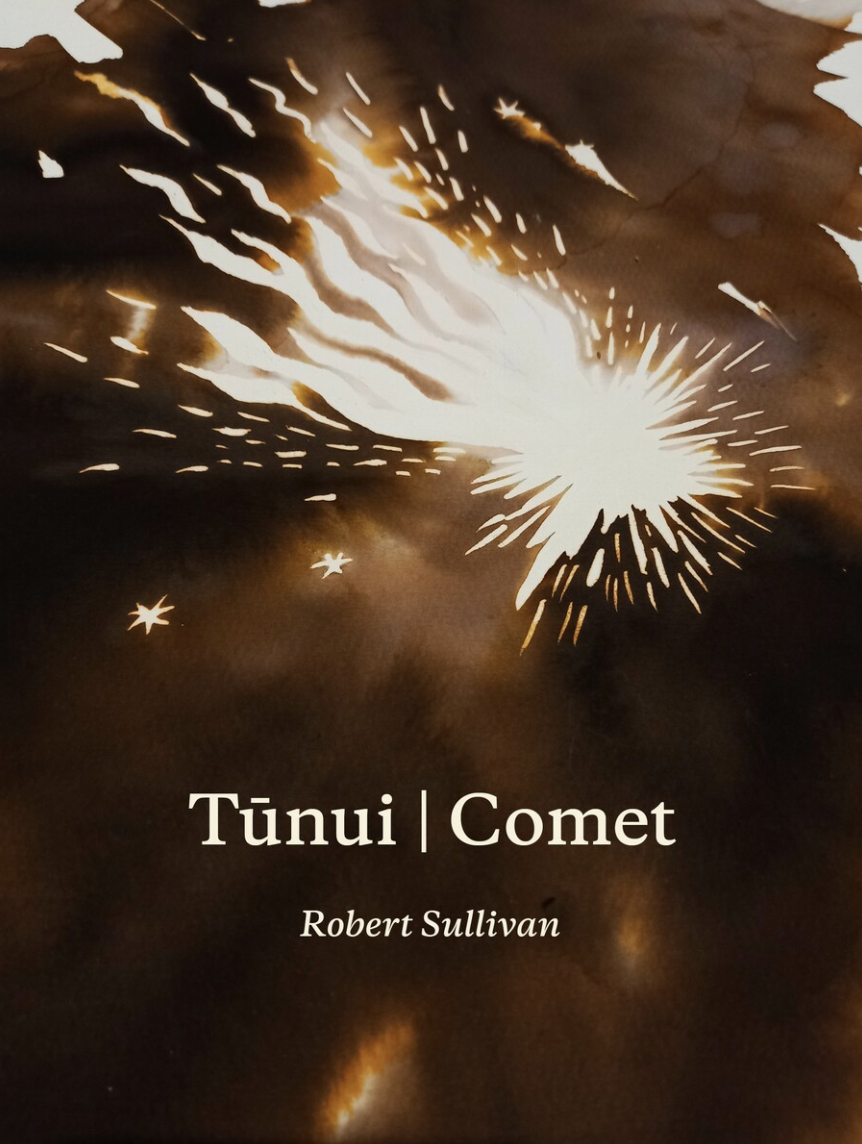
Tūnui | Comet, Robert Sullivan, Auckland University Press, 2022
6.
I’d written ‘Decolonisation Wiki Entries’ because it reminded me of buses in Honolulu
at the airport and Waikiki. The open-air buses aren’t like decolonisation though. Decolonisation
is not worrying about cultural identity, and not translating and not having to explain
things like a family and hapū do such as wānanga because the wānanga is the explanation
or learning mōteatea by our ancestors, or prophecies of our spiritual tūpuna, or sadness
at the fighting on the other side. These decolonisations make up life.
from ‘Te Tāhuhu Nui’
Robert Sullivan belongs to the iwi Ngāpuhi Nui Tonuand Kāi Tahu. His debut collection, Star Waka (Auckland University Press, 1999), marked the arrival of a significant poet, and has been numerously reprinted. Robert has published a number of collections since, and with Reina Whaitiri edited Puna wai Kōrero, an anthology of Māori poetry, and with Reina and Albert Wendt, Whetu Moana and Mauri Ola, anthologies of Polynesian poetry in English.
Robert’s new collection, Tūnui | Comet, stands on the shoulders (hearts, lungs, mind) of everything he has written and edited to date. Voice has carried his poetry, his family, his whakapapa. Voice is the weave that remembers the touchstones of his previous collections: Tāmaki Makaura, the Far North, colonisation, Cook, family. I have never forgotten his premise that voice carries us. And voices carries this collection, all that it holds close, all that it challenges. It is there in ‘Kawe Reo / Voices Carry’:
Voice carries us from the foot of Rangipuke / Sky Hill / Albert Park to the Wai Horotiu stream chuckling down Queen Street carrying a hii-haa-hii story—from prams and seats with names and rhymes, words from books and kitchen tables.
In writing poetry, Robert is speaking to for with from. He is conversing and he is voyaging, and his writing is the river flowing, the currency of water and air vital. Each poem sits in generous space on the page, each poem given ample room in which to breathe, in an open font, allowing space for the reader to pause and reflect.
The collection weaves in past, present, and future – who he is, was and will be – mythologies, histories. There is the drive to write in te reo Māori, to nourish the language’s roots, to write poems without English translations, to insist upon a need to speak and grow with his own language.
Robert acknowledges he writes within a community of poets who have shaped him. He carries a history of reading, of considering the work of others, particularly Māori and Pasifika poets. There’s a homage to Alistair Te Ariki Campbell. An imagined barbecue with Hone Tuwhare. A reminder the notDeclaration of Independence was actually yes, an assertion of mana by the rangatira (for Moana Jackson). There’s walking on Moeraki sand to remember Keri Hulme’s place names.
Voicing: colonisation decolonisation. The poem ‘Decolonisation Wiki Entries’ reminded me of the caution I bring to facts and figures, to encyclopaedic entries, to the way statistics can be hijacked, research findings manipulated. I am reminded of the hidden narratives, the misrepresented experiences, the sidelined voices.
2. Ruapekapeka
I have visited once and seen a hilly field from memory—hard to take the scene in without props. There was a church service and worshippers fled out beyond. Never swarmed the bunkers and trenches. Flicked between ancestor Wynyard and out neighbouring great chief Kawiti. I do not know the buried knives. We gathered in this hill of ash, dead bees and pollen. We left carvings in the earth and flowers there.
from ‘Decolonisation Wiki Entries’
Tūnui | Comet is poetry of acknowledgement. It is poetry of challenge. And it is profoundly moving. In ‘A.O.U’, the poem sings a mihi for Ihumātao. In ‘Feather’s’, the speaker is wearing blood and mud splattered trousers at Parihaka (‘we’re a little band of brothers /marching hundreds strong’) and the feather is in flight:
Whiteness of the mountain the ploughs and feathers the children’s singing witness
I say challenge, do I mean voice? Voicing different versions. Wanting to wrap Old Government House in Treaty pages and lavalavas and knock on the door and ‘say open sesame’. Or stepping back into the sailing boots of Captain James Cook and twisting the eyeglass to imagine afresh the what if.
Or what if I stayed in Aotearoa and shared our science, our medical knowledge, our carpentry and animal husbandry, our love of books and conservation values? What if we had gained the friendship, love and trust of the Natives, and returned that equally at the time, not needing to constantly gaslight and to make amends?
from ‘Cooking with Gas’
Reading Robert’s intricate, sweetly crafted poetry affects me on so many levels. There is aroha in the pen’s ink, there is fortitude and insight, there is history and there is future. There is uplift, and the need to refresh the eyeglass, the mouthpiece. Read the excellent reviews of Anton Blank and David Eggleton (links below); they celebrate the arrival of a new book by a significant poet in multiple ways, and how it inspires on so many levels. My head is all over the show now, and reviews are getting harder and harder to write, but I hold this book out to you. It is a beacon of light on the horizon, and I am grateful for its presence.
Auckland University Press page Anton Blank review at ANZL David Eggleton review at Kete Books
shiny coins, and we’d piled them up on the bus floor
so a young boy with his parents sitting opposite us
dived into them before I could scoop them back.
I had asked the bus driver if he could let a passenger know
that they might miss their bus stop now that
we had changed direction, but he instead quoted
a lengthy passage of Shakespeare I think
in which he quoted owls do cry.
Robert Sullivan
Robert Sullivan lives in Oamaru. He belongs to Ngāpuhi (from Kāretu and Omanaia), and Kāi Tahu (Karitāne). His seven collections of poetry includeCaptain Cook in the Underworld, Shout Ha! to the Skyand the best-selling Star Waka. He co-edited three major anthologies of Pacific and Māori poetry. His PhD, Mana Moana, examines the work of five other indigenous Pacific poets. His eighth collection, Tūnui / Comet will be published by AUP later this year.
What would you like to see more of in Aotearoa poetry from your point of view as a poet? In other words is there sufficient recognition, publishing scope, critical space given to poets who craft their work in ‘different’ ways?
I’d love to see new voices find publication from a wide range of styles and personal backgrounds so that we reflect our diverse community in terms of race, class, gender, sexuality, and beyond to be as inclusive as possible. Poets have never had greater access to media and to publishing than now, although our mainstream publishers no longer have deep pockets. It’s always a writer’s task to convince, or make curious, or satisfy, or entertain a readership, and it’s a lyric poet’s task to evoke the particulars of being and a sense of the flow state that created the feelings attached to being ‘somewhere’ at the time. A poem might be on the fridge next to a flat roster, or on the edge of a windswept cliff facing the ghosts of Kapiti Island. There are so many other kinds of poetry I wouldn’t know where to begin, except to encourage that too.
Paula: I am dead keen to see a new book of poetry – love the new ones.
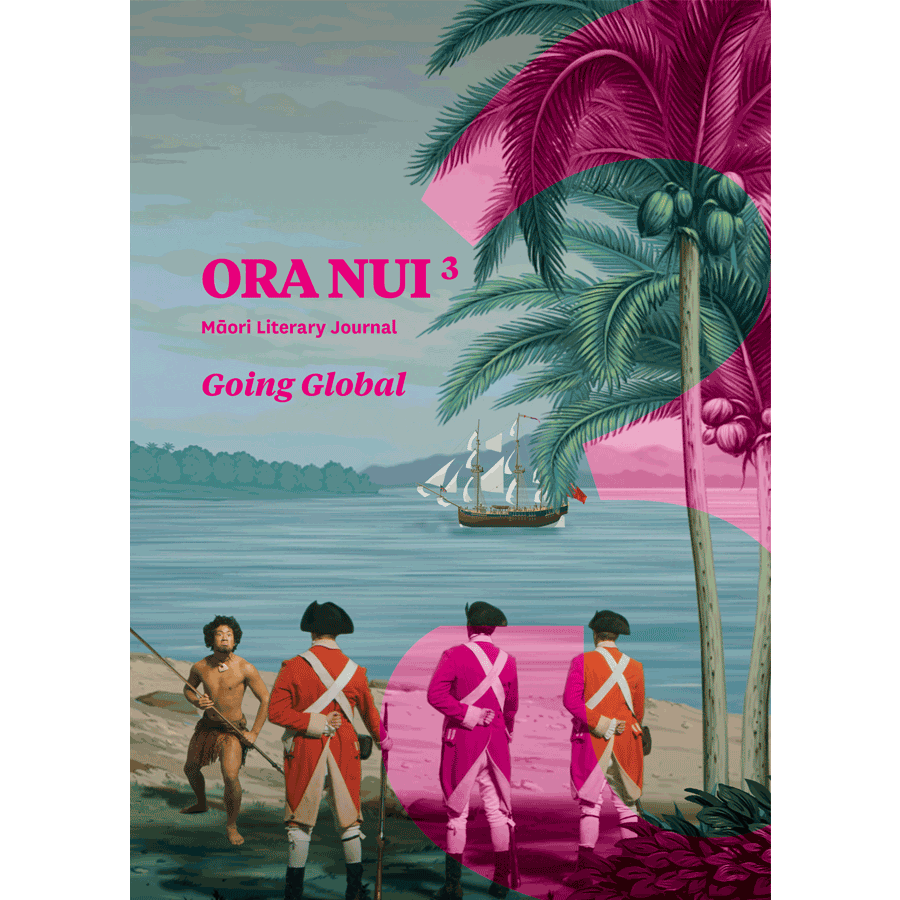
Ora Nui is a journal edited by Anton Blank devoted to Māori experimental literature; writing that pushes the borders of identity as much if not more than it pushes the ‘how’ of writing. The latest issue draws upon issues of identity, nationhood and migration and includes a diversity voice. Amy Leigh Wicks and Jan Kemp, for example, place European perspectives alongside those of Vaughan Rapatahana, Reihana Robinson, Robert Sullivan, Jacqueline Carter, Apirana Taylor and Marino Blank.
I think Ora Nui takes apart the whole notion of experimental and transforms it; I am thinking of writing that is testing something out, that might be tethered or prompted by experience, that doesn’t necessarily demolish stylistic traditions, and might have productive talks with them. Experimental writing is often aligned with the avantgarde, however this journal refreshes the experimental page. The journal promotes conversation that tests who and how we are and gives space for voices – some with traditions of marginalisation – to speak from the local and converse with the global. Anton Blank writes: This collection is a glorious celebration of diversity and change.
The cover showcases an image from from Lisa Reihana’s astonishing art installation, Pursuit of Venus (she has assured me we will get to see this again in New Zealand). I have propped the journal on a shelf so I can fall back into her mesmerising work. The image is the perfect gateway into writing that navigates questions of identity and belonging from multiple vantage points.
What I love about this journal though is the utter feast of voices and sumptuous artworks – I cannot think of anything that has challenged, inspired or awed me in such diverse and distinctive ways. The poetry is symphonic in its reach and shifting keys. Here is a small sample of some of the poetry treats – I am till reading! I have just flicked to the back and got hooked on the lines of Robert Sullivan’s fruit poem, Reihana Robinson, Apirana Taylor, Briar Wood …. and then still sipping breakfast coffee, back to the dazzling currents of Reihana (especially ‘What is a nation?’). I just bought a book of Reihana’s poetry – I am so hoping there is more in the pipeline.
Jacqueline Carter‘s poetry often tenders a political edge. The poems included here underline her ability to get you rethinking things. These poems dig deep and resonate on so many levels.
‘The paepae
of the city’s children
is littered
with waewae tapu
people
who haven’t
been welcomed on
people
in fact
who aren’t welcome at all’
from ‘Aotea Square’ (you just have to read the whole poem!!)
Rangi Faith pays homage to Janet Frame as he imagines the seat she sits in on a train; I have never read a portrait of Janet quite like this, and I love it.
‘When I was six years old
& running around the backyard
of our brick house in King Street,
a train steamed across the old airport
between us and the sea
carrying Janet Frame the poet.’
from ‘Janet Frame Passes through Saltwater Creek’
Rangi moves further south to pull Hone Tuwhare into a luminous rendering of place.
‘this place was always good for a waiata
to sing softly, or loudly if you preferred,
andto drum your tokotoko in time
to the incoming tide
on the earth’s Jurassic skin.’
from ‘To Hone at Kaka Point Seven Years On’
This is my first encounter with Teoti Jardine‘s poetry and I am struck by its clarity, its fluidity, its striking images.
.My Great Great Grandmother
wove her korowai with clouds.
and braided bull kelp lines
to hold the tide.’
from ‘Kuihi’
Kiri Piahana-Wong ‘s lyrical poetry holds the personal close, with both movement and stillness, little pockets of thought. I was drawn to her recounting Hinerangi’s broken heart and death.
‘On the day I died
it rained. Not just any rain,
but rain accompanied by
a sapping, brutal wind
from the southwest, the
kind that wrenches doors
from their hinges,
breaks down trees
and fences.’
from ‘On the day I died’
Two essays really struck a chord with me:
Dr. Carla Houkamau’s ‘Māori identity and personal perspective’
Paula Morris’s ‘Of All Places: A Polemic on “International Book Prizes”‘
This is a substantial journal, a necessary journal, a must-read issue, and I have still so much left to savour. Bravo, Anton Blank for getting this writing and this artmaking out where we can see it. I wish I could linger and share my engagement with every piece but must get back to writing my big book. I now have some new women to bring into my writing house. Thank you.












 NZ Poetry Shelf