Tag Archives: poetry shelf monday poem

Poetry Shelf Monday poem: Sudha Rao’s ‘Manuhiri’

check layout 22/ 7


Manuhiri

(Visitor)

1

Her grandmother told her she was a child of Manu,

manushi, daughter of humanity, blessed

to be a visitor when she crossed the sea.


The wooden gate is a threshold with arms outstretched

in protection, the slow wash of green waters rhythm.

Rising notes of another tongue is the wailing of her mother tongue.


Her back, a billowing canvas is taking shape –

her grandmother’s tapping, tapping the geo-graphy of her

in colours of the monsoon rain.


She is dusk, light with all the distance around her.

She crosses the threshold and offers her grandmother’s verses,

a garland of old earth sounds for the new.


2

Blissful waters surround pain washed up over and over again.

She sits among silent voices, bodies twitching to utter

shame for carrying skin, coloured by others.

What’s a brown skinned woman to do

at the gates of a marae? The solidarity of colour

bears differentiation.

He opened to a stance defying rule, he said I am

connected to islands by water, I am connected to you

by colonisation.

The gates opened enough for her to raise her head.


3

Nga Mihi

Korihi Te manu, takiri mai i Te ata 

Ka ao, ka ao, ka awatea

Tihei Mauri ora

Kua tau tenei manu hei manu, hei manuhiri, hei manu hari 

Ko te takahanga waewae, ko te rere o te kupu

Ka tangi te ngakau, he roimata aroha

Ki te manawhenua, no koutou tonu te whenua nei.

He awe ko toku mama, he awe ko toku papa 

Ma te huruhuru te manu ka rere 

Ka rere i te ao, ka rere i te po, ka rere ki toku whenua ake 

Ma Te ahi ka te manu ka ora. 

Tena koutou katoa.


4

When the kuia holds her hand, a sacred place ignites.

You are a seed of the old banyan tree swept

from your grandmother’s lap.

Transplanted here, I see birds’ nests, singing insects and shoots bearing the weight

of you. I see strong branches making light of your path –

see how they are dropping roots –

she feels the earth quiver under her feet.


5

Across the table, she hears raging clouds roving

to make wave upon wave to become sea overhead. White peaks roughed up on waters

below are screeching

gulls. How can she say that she is a visitor

on a  warm beach with sand beads

sketching a canvas stretched in her head?


6

She is a mirror of herself.

She is not a mirror of herself.

She is a scooped grain of memory,

of a love-song for a life lived

between her worlds.


1  The mihi for Manuhiri was prepared for me by Matt Gifford. It is made of two parts – the first is Māori proverb, the second part of the speech is an introduction of me to the hosts at the marae. The translation is as follows:


Nga Mihi (speech)

Part One – Maori proverb

Korihi Te manu, takiri mai i Te ata

Ka ao, Ka ao, ka awatea

Tihei Mauri ora

The bird sings, the morning has dawned

The day has broken

Ah! There is life.

Part Two – my speech introducing myself Matt references me as bird

Kua tau tenei manu hei manu, hei manuhiri, hei manu hari

Ko te takahanga waewae, ko te rere o te kupu

Ka tangi te ngakau, he roimata aroha

Ki te manawhenua, no koutou tonu te whenua nei.

This manu (bird) has descended as a manu (bird), as a visitor, as a dancing visitor

Through its dancing feet and its flowing words

Its heart cries, the tears of love

For you the home people, this is your land.

He awe ko toku mama, He awe ko toku papa

Ma te huruhuru te manu ka rere

Ka rere i te ao, ka rere i te po, Ka rere ki toku whenua ake

Ma Te ahi ka te manu ka ora.

My mother is a feather, my father is a feather

And it’s by their feathers this manu (bird) takes flight

Taking flight to the day, and flight to the night, From its own home land

Where the home fire burns, and gives this manu (bird) life.


Originally from South India, Sudha Rao lives in Wellington and has had a long standing involvement with the arts, primarily as a dancer. In 2017, Sudha graduated with a Masters in Creative Writing from the International Institute of Modern Letters, Victoria University, Wellington. Since 2012, Sudha’s poems have appeared in various journals and anthologies. These include two editions of Blackmail Press (2012 and 2014); an anthology of New Zealand writing, Sunset at the Estuary (2015) and in the UK anthology Poets’ quest for God (2016);  Landfall, Otago University, Dunedin (2018),and an anthology of migrant voices called More of us published in March 2019. In 2014, one Sudha’s poems was on the Bridport Poetry Competition’s shortlist. Excerpts of her prose work, has appeared in Turbine (2018) which comprised part of her MA thesis Margam and other excerpts were read in two sessions on national radio RNZ (2018). Sudha is part of a collective of Wellington women poets called Meow Gurrrls, who regularly post poems on YouTube


.
Poetry Shelf Monday Poem: Elizabeth Morton’s ‘You can’t, always’


You can’t, always


I’m not going to cry. All winter the television

sulks in the corner of our love. You put the lentils

in a colander to flush the ugly bits. You peel oranges

to their pith and talk about your past like it was mine too.

You say it was sunnier in Queens than it could ever be in

an unhappy kitchen with a lover made of feathers.

I want to tell you about the way a man can look down

a corridor, the way a hunter visits his scope. There are things

too big to ever fold into your hands. A barbule is enough

to demonstrate how even soft things fall down,

like small people from towers that trade in shadows.

When I say I need you, it clambers up a stairwell in my throat

like you were the only window left in 110 levels of pain.

I’m not going to say I get it. You toss the lentils

in a brine pot and power-up the television.

You say we spend too much of life watching

the kind of comedies that make you sad. Like Home Improvement

and The Cosby Show that make you think of time

and the way we were happy in Queens

before small people sat on window ledges, before

the hunter’s scope settled on an ordinary bird.

I’m not going to cry. All morning chopping onions,

watching Bill Cosby hug his wife in Brooklyn Heights

before he was a rapist, and before you first registered

towers on the skyline by their absence.

When I say I need you I am a soft thing falling

on something familiar, and it is violence

in the way dispassionate surgery is violence

or the way The Cosby Show is what you get

before you get what you never wanted.


I’ll take what I can.


Elizabeth Morton


Auckland writer, Elizabeth Morton, is published in New Zealand, Australia, Ireland, the UK, Canada and the USA. She was feature poet in the Poetry New Zealand Yearbook 2017, and is included in Best Small Fictions 2016. Her first poetry collection, Wolf, was published with Mākaro Press in 2017. She is completing a MLitt at the University of Glasgow, usually in her pyjamas.


Poetry Shelf Monday poem: Louise Wallace’s ‘it’s winter’


it’s winter


sit facing the toilet which look

it’s fine it’s fact it’s winter according

to the new seasonal fruit so shock

your life before it shocks you change

your partner change your wardrobe

your secret your small revelation

nurturing doubt hear the room hear

the strange thin levels that sound

a bit full in your mouth your vocals

their once serene chords like stone tight

like a budget ripe as the bulky

citrus fruit sharp and untrue


Louise Wallace  from… ‘Like a heart’


Louise Wallace is the author of three collections of poetry published by Victoria University Press, most recently Bad Things. She was the 2015 Robert Burns Fellow at the University of Otago, and is the founder and editor of Starling. Louise lives in Dunedin with her husband and their young son.


Poetry Shelf Monday Poem: Marcus Sellwood’s ‘Aotea Square’


Aotea Square


Finally just us two

reclining on the shores of Aotea square

The absolute epicentre

of any bonafide

Auckland urban romance


I’m convincing you the pavers

could almost be sand

If you squint hard enough anyway

But I’ll say any old guff

just to make you smile


The sun’s evaluating the skyline

It’s making me drowsy

or you’ve doped me with the pretzels

I swear the odd gradient of these steps

is identical to a beach on the tip of the Coromandel

I can’t quite remember the name of

or perhaps I never knew to begin with


Your polygamy story soon jolts me out of my reverie

En masse the city dwellers

are lying around sun-drunk

sprawled all over my fake foreshore

in their suitably fake sunglasses

half watching the Chinese cultural festival

cryptically splash at our feet


We’ve got gigs across town from one another

so we’re play-acting

sulky besotted teenagers being torn asunder

by unspecified forces

much larger than our-tragic-selves


The IMAX sign looks down frowning, unconvinced

and for heaven’s sake, it would know!


Marcus Sellwood


Marcus Sellwood is a musician and occasional poet. He was born in central Auckland and has lived his whole life there. He likes to write about his experiences of the fast-changing city.


Poetry Shelf Monday Poem: Maringikura Mary Campbell’s ‘How we loved’


How we loved

for Meg and Te Ariki Campbell


i always wondered why
the dogs never pissed inside the house
How the house gripped onto the hill
the wind
and how we never fell
How you lived even though
you wanted to die, my mother
How we loved and hated
but mostly loved
How we doubted the sincerity
of those whose lives seemed easier
How we hated the Nats
because they hated the poor
How we tolerated those who voted for National
because they thought their wealth would rub off on
them
How our family, our mokopuna, surpassed all others
and how every time we looked at each other we saw
out Tupuna
staring right back at us
How we loved our parents right to the end
of their lives and ours
My beloved parents
How we loved.


Maringikura Mary Campbell


Maringikura Mary Campbell lives in the family home in Pukerua Bay. She is a mother of three and has one mokopuna whom she adores. She published Maringi in 2017. She also published Smells like Sugar – poems by rangatahi young people in psychiatric care and What it takes to fly – poems by mental health consumers from around New Zealand.

You can listen to Maringikura Mary Campbell read another poem (for her grandmother), ‘Ethell Mary’, here


Poetry Shelf Monday Poem: Kim Meredith’s ‘Summer’


Summer


I have eyes for the cake

rising slowly in the oven.

The sweet smell of vanilla

escaping, but there is talk

about the pond teeming

with Goldfish. Go see the fish.

Every visit goes like this.


Now my mother joins my

aunt, looking back and forth

to her sister and the gaggle

of us, her head nodding toward

the kitchen door that leads out

to the lush garden and pond.


On the steps I hear the kettle

whistling over my aunt laughing

as the two relax, swapping secrets

of forbidden love. Our ears deaf to

their native tongue.


Outside amongst the hedges we

reach between branches of Camellias

searching for treasure. The winner –

the first to hold up a fist with a cicada

singing for release.


The clouds move at great pace

animals drift in and out of view.

In the distance the wind carries

the sound of intermittent sobbing.

I cock my head to the left and

hear only the cicadas singing

freely on the wind.


Kim Meredith


Kim Meredith was raised in Glen Innes, Auckland; her works have appeared in journals and collections. She has collaborated with artists in New Zealand and overseas. A multi-media artist she is part of Auckland duo Marvellous with Kingsley Melhuish performing poetry and music, their compositions narrate urban sketches of New Zealand life. She is a businesswoman and also teaches at a Music Tertiary School.


Poetry Shelf Monday Poem: Anna Livesey’s ‘Little words’


Little words


Dear heart, a word —

which word? Shall we choose something

secret and unexpected?


Don’t say ‘moon’, everyone knows

that code of longing. Don’t say ‘talk’, the running sound

of every banal conversation.


Don’t say ‘bread’ or ‘wine’ or ‘salt’ —

those easy gestures towards

humanity and history.


Don’t say ‘love’ — that hollow ‘o’ so easy to look through.

One might say ‘bird’ or ‘house’ or ‘hand’ —

nearer sounds to the one we are looking for.


There is always ‘silence’

or ‘question’ — don’t say these words,

too large to qualify.


Let us sit quietly.


Let us shape a small word that holds us.

Let that little word

be ‘name’.


Anna Livesey


Anna Livesey is a poet, corporate strategist, stand-up comic, policy analyst, literary curator-at-large, podcaster, shouting yogi and early morning raver. Born and raised in Wellington, Anna studied at Victoria University where she completed a BA in English and an MA in Creative Writing. Anna also holds Masters degrees in Public Policy and Business Administration.

Anna has published three poetry collections to date: Good Luck (2003), The Moonmen (2010), and Ordinary Time (2017). She currently lives in Auckland with her husband and two children.


Poetry Shelf Monday poem: Liz Breslin’s ‘getting away from it all with the feminists’


getting away from it all with the feminists


she is self sufficient, thank you very much

she has packed tea bags, brandy, chocolate, honey, wine, scroggin, olives, crackers, cheese, 30 second oats, a jar of ready espresso-ed coffee, double-wrapped, a home-made mix of potato mash, French onion soup power, salt, pepper, hand-chopped spring onion and bacon flakes, toilet paper, sanitiser, matches, candles, firelighter, New Yorker, cook pot, gas canister, three-prong burner, spork, mug, a whole, firm salami and

she is carrying a sleeping bag for all seasons, a midweight puffer jacket, a water-resistant shell. she wouldn’t be conned into buying something tagged waterproof for twice the price. very few things are truly impermeable, this she knows. she has her beanie, her sunnies, her sun hat, her thermals, the nagging start of a blister and a throb in the nub of her back. a deep breath. keeping it light. they are on a ridge, just emerged from the bush, and he turns back and offers his hand and

she is distracted by a twitch in his southwest forearm and a hint of tannin sweat and the glint of the sun refracting on his teeth and that little chinlip tuft he hasn’t quite shaved and

she hasn’t even stumbled when he says if you feel yourself falling remember there’s time to decide which way you’re going to jump


Liz Breslin writes plays, poems, stories and a fortnightly column, ‘Thinking Allowed’, for the Otago Daily Times. Her poetry collection, Alzheimer’s and a spoon (OUP), was listed as one of The Listener’s Top 100 Books of 2017. At home on the page and on the stage, Liz’s recent performances include ‘Love in a time of netball’ at the sold-out Wanaka season of Tall Tales and True, and a stint as the back end of Jill the Cow for her 2018 pantomime, Jac and the Beansprouts. In 2019 she’s heading to Dunedin, Vancouver and Krakow to read, write and perform. Her website


Poetry Shelf Monday Poem: Aimee-Jane Anderson-O’Connor ‘Signal’


Signal


The crossing signal twitches

like it’s filled with hot

crickets

and they whisper

touch touch touch

and so you reach out

press the cold metal button

press the cold metal

just to say:

I’m here,

I’m here, please,

let me cross safely.


Aimee-Jane Anderson-O’Connor was awarded the 2018 Charles Brasch Young Writers’ Essay Prize, and the 2017 Monash Prize for Emerging Writers. Her poem ‘Instructions’ was named by The Spinoff as the best poem of 2018. Her work has appeared in a number of literary journals, including Starling, Mayhem, Poetry New Zealand, Landfall, Mimicry, Turbine, and Min-a-rets. She writes thanks to some of the best people on this great watery rock.

Poetry Shelf Monday Poem: Ashleigh Young’s ‘If So How’


If So How


Opportunity I love you

Windows and watermelons march down the street

—Robert Winner, ‘Opportunity’


Please detail any future opportunities

you secured as a direct result of the project


oooOOOooo


I have a feeling I will be stabbed

and I wanted to tell someone.


Sometimes my neighbour’s crying

sounds like music and sometimes it sounds like confession.


At eel o’clock

the air fills with ferns and gelatinous dark . . .


I get opportunities

and release them back into the water,

their colours autocorrecting to grey . . .


Sometimes my crying feels like paperwork and

sometimes it feels like an argument

bleeding through my earplugs.


The opportunity never to do this again;

the opportunity never to be this again.


oooOOOooo


Did you meet with any people

(including festival directors)

who could have an impact

on future

opportunities for you


oooOOOooo


I was walking on the street one morning

and, yes, festival directors were winking in the snow.

One of the festival directors hid under a car

when a group of school children approached,

and I crouched down to see if he would come out,

and I saw that the festival director had lifted his body

right up into the undercarriage of the car, as if possessed.


oooOOOooo


Did the event help to increase

your long-term international

market profile

If so how


oooOOOooo


You leave the room for a moment

and when you come back, not only


has the jug come to the boil

but someone has died.


The lesser greens start to fray as

a new jag of green comes out of the soil.


I’m in over my head.

I remember praying


because I dreaded school

and the future


and I prayed to be hit in the head by a cricket ball

and to spend my last days alive hurtling


back through all of the profiles of my life. How? as if pushing

into a row of warm office shirts on the line


helplessly ensnarled

and some part of me (neck?) increasing within them,


their tiny frayed parts,

and all the workplaces they might represent.


oooOOOooo


Have you identified

any further markets

or future audience development

opportunities

as a result of this tour/event


oooOOOooo


I will go on a tour

of my future


I will identify

which of my selves


to plant in the cool damp soil

and which of my selves


to boil alive

and which of my audiences


to take down with me.


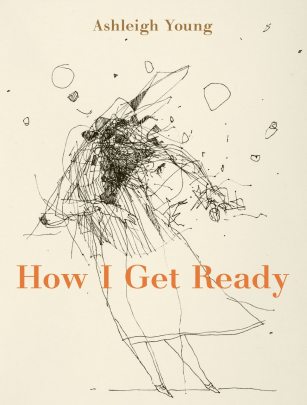
Ashleigh Young   (from How I get Ready, Victoria University Press, 2019)


Ashleigh Young lives in Wellington and works as an editor at Victoria University Press. She is the author of Magnificent Moon (poems), Can You Tolerate This? (essays), and How I Get Ready (poems). She writes a fortnightly column in Canvas magazine and is the poetry editor at The Spinoff.

Victoria University page

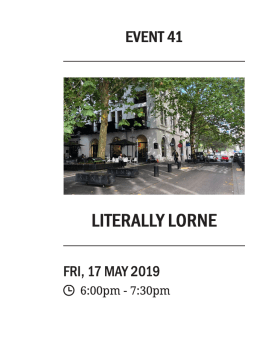
Ashleigh appears at Auckland Writers Festival event Literally Lorne on Friday May 17th.

How_I_Get_Ready__24131.1548903146.jpg   Screen Shot 2019-05-13 at 7.45.01 AM.png