Tag Archives: Poet Laureate

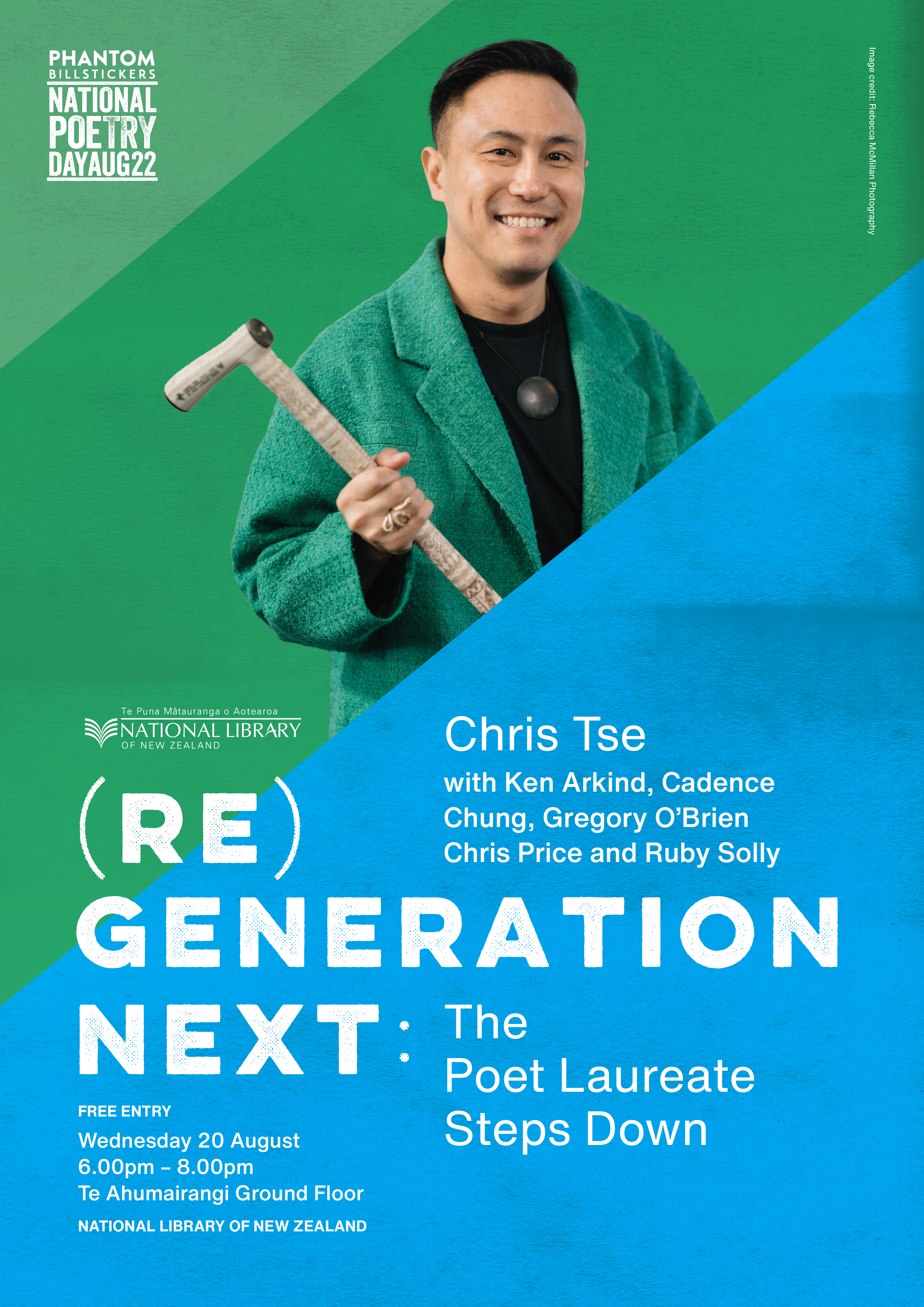
Poetry Shelf noticeboard: (RE) Generation Next – The Poet Laureate Steps Down event

Aotearoa New Zealand Poet Laureate Chris Tse marks the end of his term in this exciting evening with fellow poets Ken Arkind, Cadence Chung, Gregory O’Brien, Chris Price, and Ruby Solly.

Reflections on the future

Join Chris at the National Library to mark the end of his time in the role with his reflections on the future of Aotearoa New Zealand poetry and readings from special guests. 

Chris will be joined by poets Ken Arkind, Cadence Chung, Gregory O’Brien, Chris Price, and Ruby Solly. 

 I left the doors to the past and the future unlocked …

Chris Tse’s three-year term as Aotearoa New Zealand Poet Laureate ends on Phantom Billstickers National Poetry Day, when the next Poet Laureate will be announced. 

Phantom Billstickers National Poetry Day

About the speakers

Chris Tse (he/him) was born and raised in Lower Hutt, New Zealand. He studied film and English literature at Victoria University of Wellington, where he also completed an MA in Creative Writing at the International Institute of Modern Letters. In 2022, he was named the 13th New Zealand Poet Laureate. His poetry, short fiction, and non-fiction have been recorded for radio and widely published in numerous journals, magazines and anthologies. He has published several collections of poetry and his latest book Super Model Minority (2022) was longlisted for the Ockham New Zealand Book Awards 2023.

Ken Arkind is an American poet, author, performer, and educator originating from Steamboat Springs in Colorado. He holds the 2006 title of the American National Poetry Slam Champion and the 2010 title of Nuyorican Poets Cafe Grand Slam Champion. Ken now resides in Auckland and is a recent graduate from the Manukau Institute of Technology’s Creative Arts Programme.

Cadence Chung (she/they) is a poet, student, and musician from Wellington, currently studying at the New Zealand School of Music. Her poems started being published in her junior years of high school, and her debut chapbook anomalia was published by We Are Babies Press in April 2022. Her writing takes inspiration from antique stores, Tumblr text posts, and dead poets.

Gregory O’Brien is a poet, painter, author, curator, and editor. His most recent poetry publication is a collection of poems and paintings, House and contents (2022). Other recent publications include a book-length meditation on the Pacific, Always song in the water (2019) and the Ockham award winning book Don Binney: Flight Path (2023).

Chris Price’s poetry collections include Husk (Jessie Mckay Best First Book of Poetry, 2002), The Blind Singer (2009) and Beside Herself (2016). She has also published Brief Lives (2006), an eccentric ‘biographical dictionary’ that samples the lives of both real and fictional characters. Her latest book is The Lobster’s Tale, a lyric essay in conversation with the photographs of Bruce Foster (2021). Chris is a former editor of Landfall, has been a Katherine Mansfield Menton Fellow (2011) and in 2024 held a Bogliasco Fellowship in Italy. She convenes an MA workshop (Poetry and Creative Nonfiction) at the International Institute of Modern Letters.

Ruby Solly (Kāi Tahu, Waitaha, Kāti Māmoe) is a writer, musician, taonga pūoro practitioner, and music therapist living in Pōneke on the old riwai plantation of her Kāti Māmoe ancestors. She has been published in journals such as Landfall, Sport, and Starling, as well as had poetry published in America and Antarctica as well as Aotearoa. Her first book Tōku Pāpā was published by Te Herenga Waka University Press in 2021.
National Library’s Peter Ireland on the tokotoko event for our Poet Laureate at Matahiwi


Selina with fue - 2 FLS.JPG

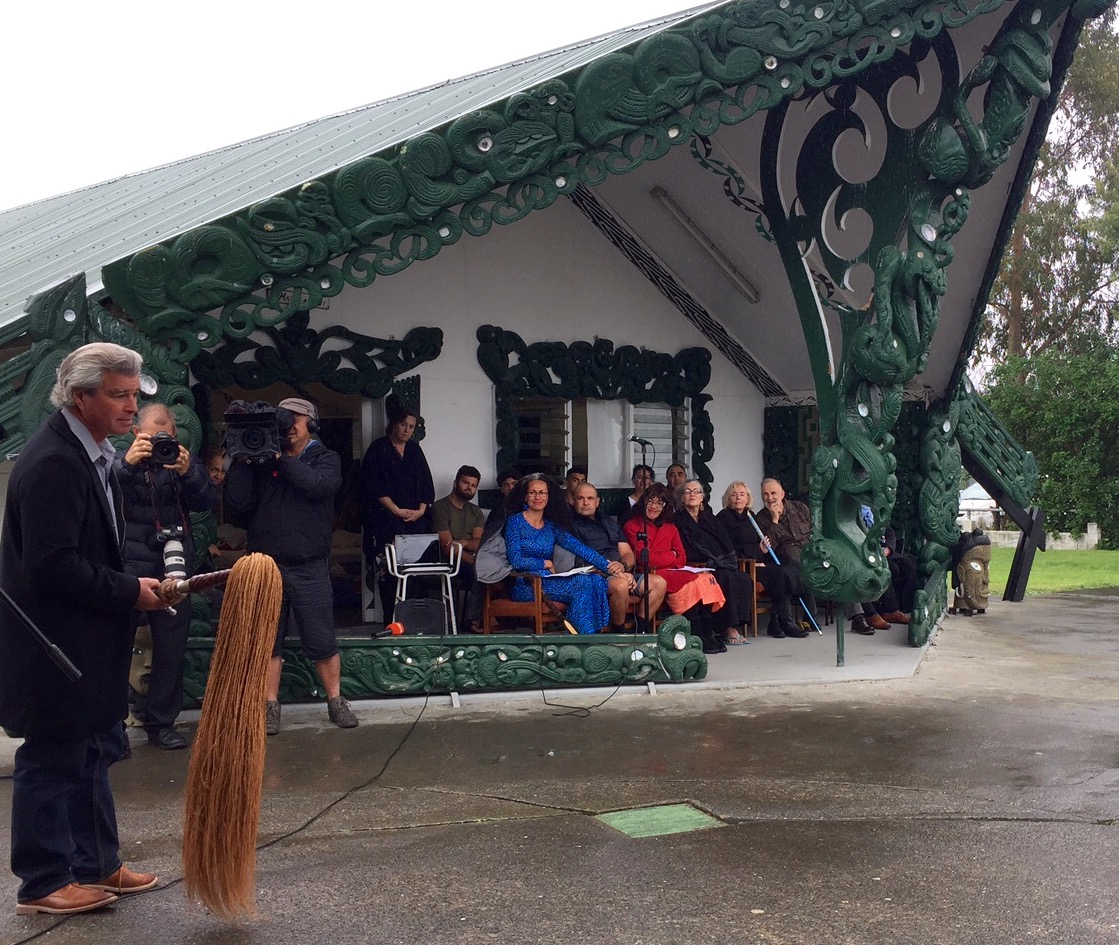
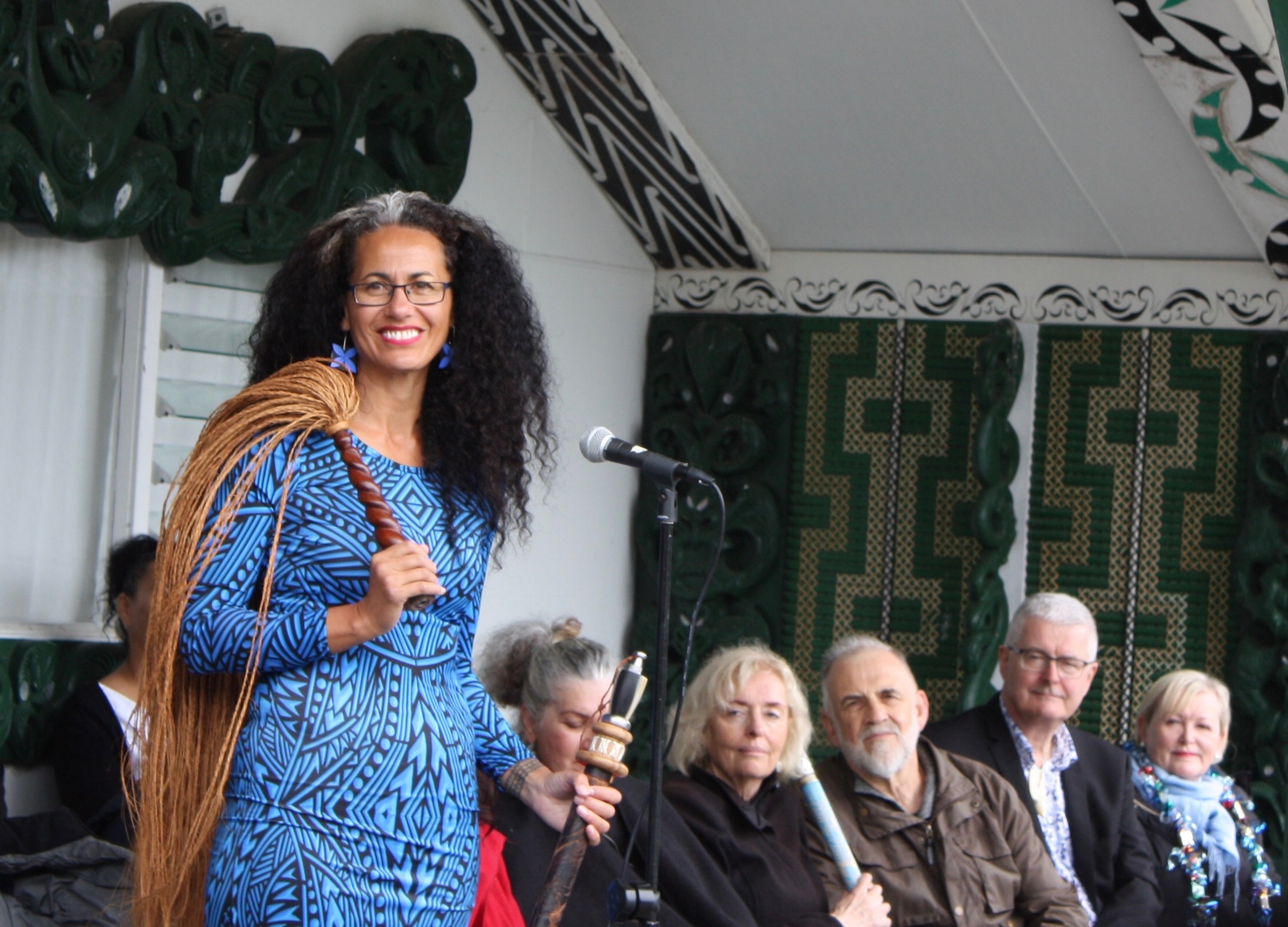
Poet Laureate, Selina Tusitala Marsh, with fue and ‘Tusitala.’ Photographer: Fiona Lam Sheung


Poet Laureate, Matahiwi, tokotoko


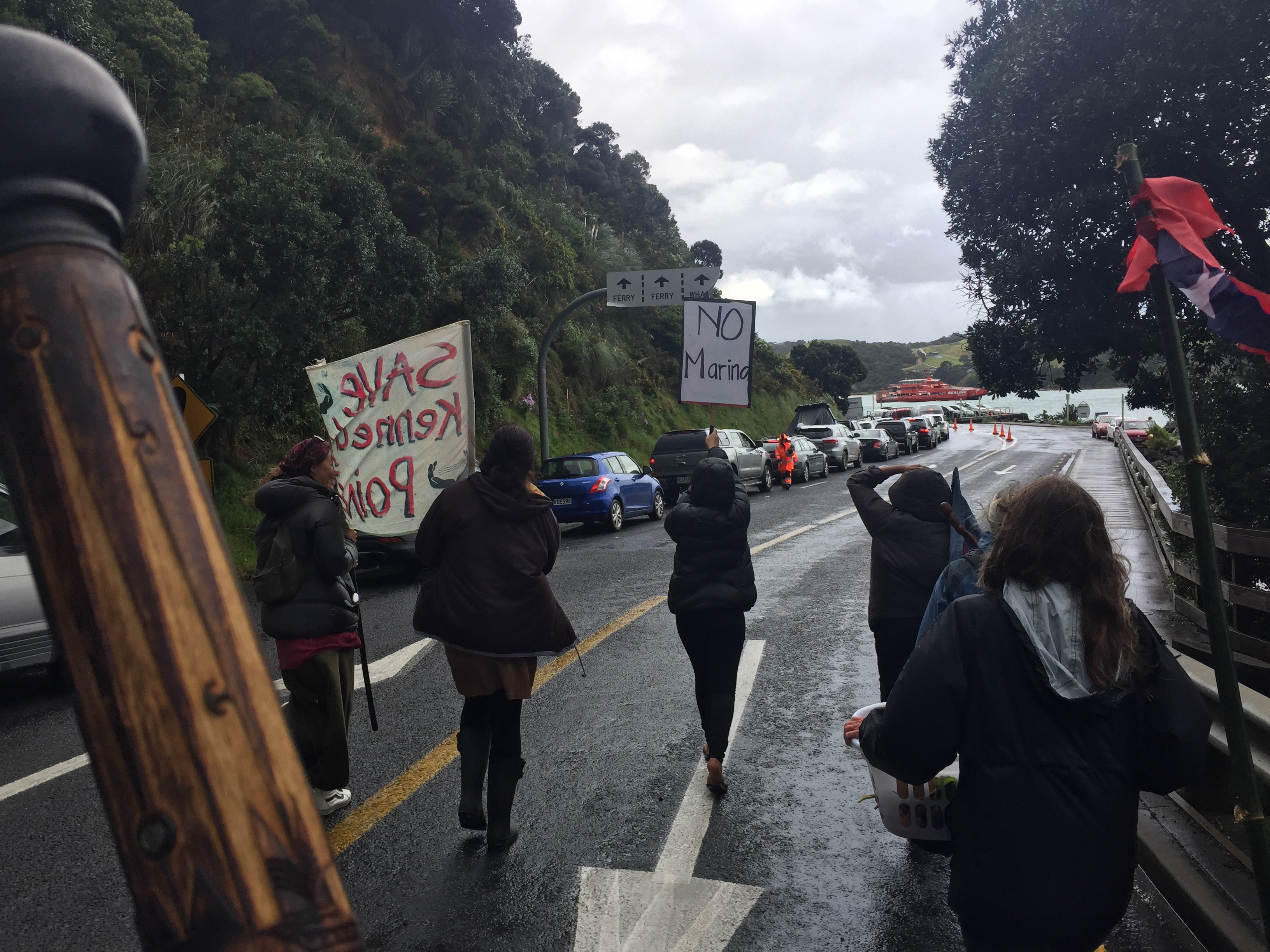
Last weekend at Matahiwi marae near Clive, Selina Tusitala Marsh received her very own tokotoko. Since her appointment as Laureate in August last year she has been inseparable from the National Library’s matua tokotoko, loaned in anticipation of Jacob Scott creating hers. During that time Selina has shared this taonga with ‘three thousand pairs of hands’ from students of St Joseph’s school in Otahuhu – on the tokotoko’s first public outing – to those of Barack Obama on his recent visit to New Zealand. It’s been on protest marches, on half marathons and has even been dunked in a river – by accident, I think. All of this is a far cry from the tokotoko’s more sedate duties of sitting in a display case at the Auckland office of the National Library, and there can be no going back now! This preamble to last weekend speaks volumes for where Selina has taken the work of the Poet Laureate; it’s ‘out there’ like never before.

John Buck of Te Mata Winery in Hawkes started all this off in 1996 when he initiated the Te Mata Estate Laureate Award. Together with the honour, each Laureate received a tokotoko and a generous stipend of wine – and still do. The National Library took over responsibility for the Laureate in 2007 and Michele Leggott was the first Laureate appointed by the Library. Michele joined Selina last weekend with friends and fellow poets Tusiata Avia and Serie Barford. Selina’s family and the National Library were there in good numbers. It was quite a party all in all.


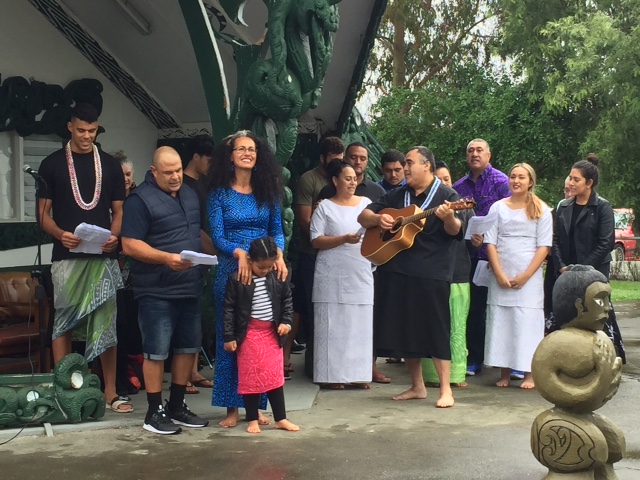
Selina and aiga on paepae EJ.JPG

Selina and family with Luka her brother with the guitar, leading a waiata. Photographer: Elizabeth Jones

Jacob - EJ.jpg

Jacob Scott having just unveiled ‘Tusitala’ before presenting it to Selina. Photographer: Elizabeth Jones


Selina has been working closely with Jacob on the creation of her tokotoko and was amazed, as we all were, with what Jacob has made. Selina’s tokotoko – ‘Tusitala’ – is carved out of maire, our heaviest indigenous wood, sharing that distinction with the matua tokotoko, to which it has other carved features in common. It is splendidly crowned with a fue or Samoan orator’s fly whisk – and clearer of the air of any unsympathetic spirits. To aid in what will undoubtedly be a lot of travel, the tokotoko is made in several sections and the fue, which was a gift to Selina from His Highness Tuiatua Tupua Tamasese Efi, unscrews off the top.

I’m restricting myself to korero about the tokotoko because it is central to the way Selina thinks of her part in the Laureate story, and it feels right to allow Selina first go at capturing the spirit of the weekend. There was poetry aplenty, there was the most talented lot of students performing in Selina’s honour, and cool days on the edge of spoiling rain held at bay I’m sure by the warmth and breadth of Selina’s smile. There was Poets’ Night Out, the public reading on Saturday night in Havelock North, another round of pizza at Pipi café, kaumatua Tom Mulligan presiding with his special brand of manaakitanga and pride in what the Laureate means for Matahiwi. It was thrilling, exhausting, scintillating, as words blazed a trail across the firmament of poetry – and I badly need for it all to happen again this weekend. Most of all there was warmth and celebration and aroha by the bucketful. To close, a salute to Selina, our brilliant ‘Fast Talking PL.’


Tokotoko for Penguins 4 from 4.jpg

Matua tokotoko in foreground joining protest against new marina on Waiheke on penguin nesting ground. Photographer unidentified.


Peter Ireland, 20 April 2018


Peter Ireland has ‘minded’ the Poets Laureate for the National Library since 2007. They seem not to have minded.


Māori television clip

NZ Herald and Hawkes Bay Today clip


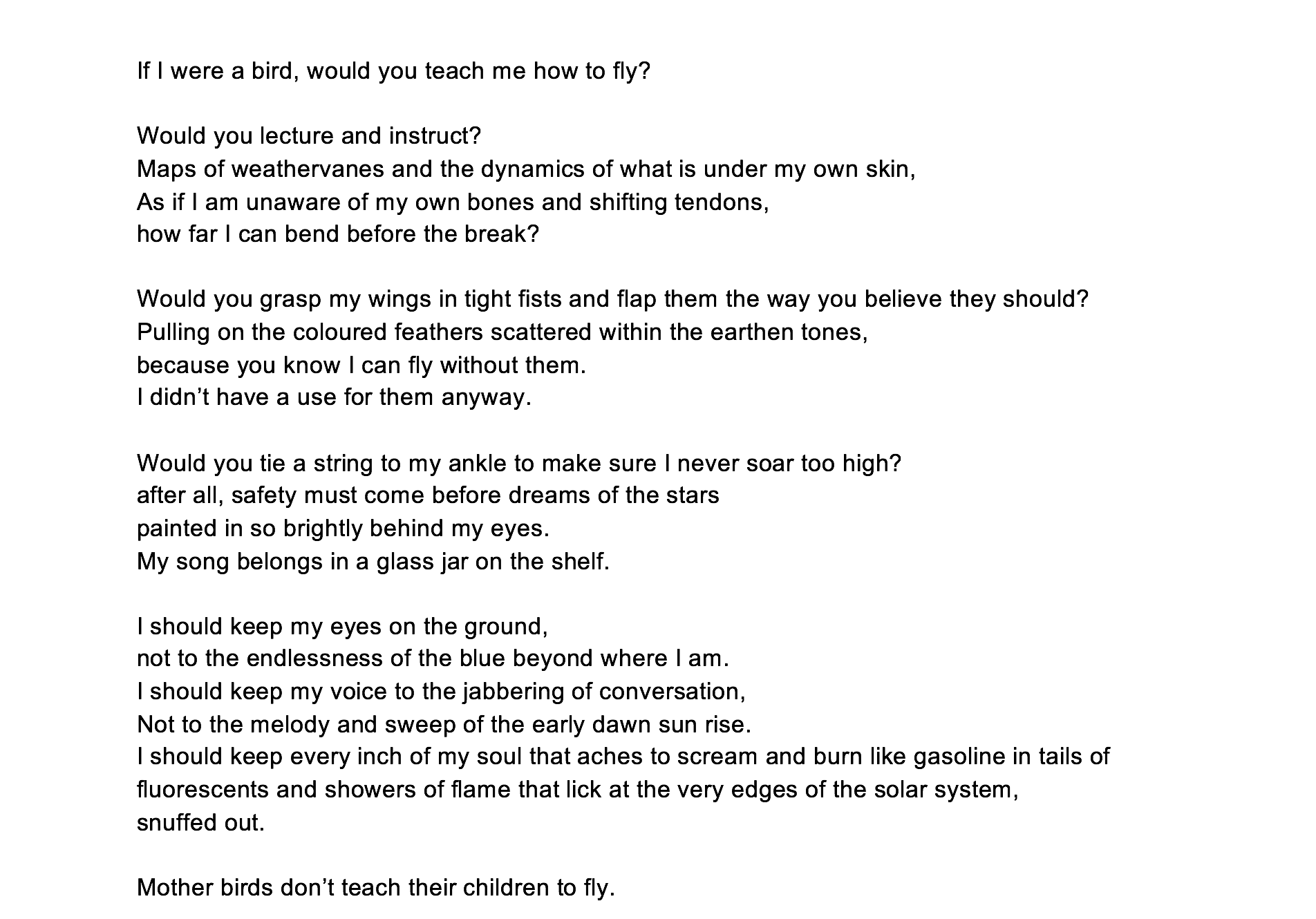
Michaela’s poem for The Poet Laureate event

Local student, Michaela Tripp, was sick at The Poet Laureate event in Napier so her friend Sarah read the poem on the marae. We were so thrilled to hear it,  I wanted to share the poem.I really like the idea that our New Zealand Poet Laureates have the freedom to do whatever they like during their tenure.  They don’t have to write on particular topics. Thanks Michaela.


Screen Shot 2016-04-11 at 3.55.21 PM.png

Poetry Shelf congratulates our new Poet Laureate

k4a

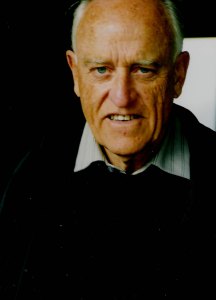
Photo credit: Marti Friedlander

CK Stead is our new Poet Laureate.


I was in the thick of stand-still, rush-hour traffic on the way to a South Auckland School this morning when I heard the news and it gave me a much needed boost. Poetry has always been a primary love in the broad spectrum of Karl’s work. His poetry catches your attention on so many levels because his poems become a meeting ground for intellect, heart, experience, musicality, craft, acumen, a history of reading and thought, engagement with the world in all its physical, human and temporal manifestations.

I am delighted to celebrate this result.


Here is a snippet from an interview I did with Karl for Poetry Shelf last year:

Your poems are delightfully complex packages that offer countless rewards for the reader—musicality, wit, acute intelligence, lucidity, warmth, intimacy, playfulness, an enviable history of reading, irony, sensual detail, humour, lyricism. What are key things for you when you write a poem?

It has to be a meeting of words and feeling, in which the words are at the very least equal in importance, and the feeling can be of any kind, not just one kind. I like wit, think laughter can be tonic, but of course it doesn’t fit all occasions.

There were a number of significant poets in NZ from the 1940s onwards and you have interacted with many of them (Curnow, Mason, Glover, Baxter and so on). Were there any in particular whose poetry struck a profound chord with you?

Curnow was always the most important for me. But when I was young Fairburn’s lyricism seemed very attractive; Glover at his rare best (the Sing’s Harry poems); Mason likewise (‘Be Swift O sun’); Baxter – especially in his later poems: they have all been important to me.

Do you think your writing has changed over time? I see an increased tenderness, a contemplative backward gaze, moments where you poke fun at and/or revisit the younger ‘Karls,’ a moving and poetic engagement with age, writerly ghosts and death. Yet still there is that love and that keen intelligence that penetrates every line you write.

You are very kind! I certainly feel ‘older and wiser’ in the sense that things don’t matter so much, one accepts the fact of human folly and one’s own share in it. Indignation doesn’t stop, but there is a kind of weary acceptance, and laughter. I still feel embarrassment – especially when looking back – but I recognize that as not only a safeguard against social mistakes, but also as another manifestation of ego, as if one feels one should be exempt from folly.

There have been shifting attitudes to the ‘New Zealand’ label since Curnow started calling for a national identity (he was laying the foundation stones that we then had the privilege to use as we might). Does it make a difference that you are writing in New Zealand? Does a sense of home matter to you?

When I was young I was a literary nationalist. Now I regard nationalism as a form of tribalism and the result of genetic programming no longer suitable or safe in the modern world. So I have changed a lot. But I still recognize regional elements as important, even essential, in the poetic process. I think Curnow himself became more a regional poet and less a nationalist one; but the arguments that had swirled around all that had had the effect of committing him to positions which he didn’t want to resile from, so he remained the committed nationalist, perhaps after the need had passed.

What irks you in poetry? What delights you?

I suppose any kind of excess, of language or of feeling; and solemnity – especially the sense that poetry is taking itself too seriously and asking for special respect.

There are many kinds of delight in poetry, but almost all of them involve economy. If an idea or an experience or a scene or a personality or whatever can be conveyed as well in 10 words as in 20, those 10 words will be full of an energy which the more relaxed and expansive version lacks. They will be radio-active.

Name three NZ poetry books that you have loved.

Singling out living poets might be invidious, but here are three by poets now dead: You will know when you get there (Curnow); Jerusalem Sonnets (Baxter); Pipe Dreams in Ponsonby (David Mitchel).

The full interview here.