Tag Archives: NZ poet

Poetry Shelf Interviews Sam Sampson–I try to forget that I’m writing a poem and hopefully an intuitive intelligence takes over


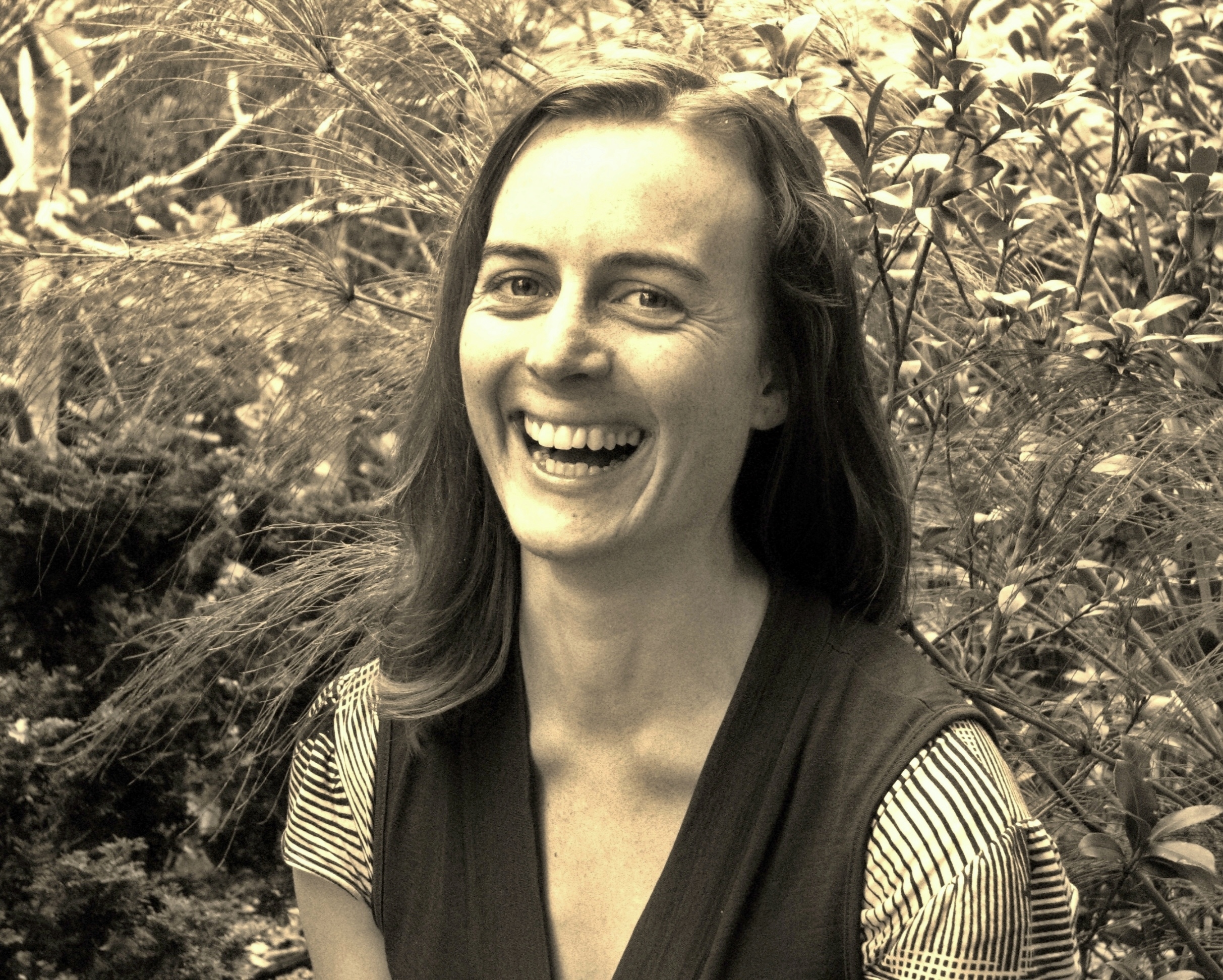
Sam Sampson June 2014

Photo Credit: Roland Vink

Auckland University Press recently published Sam Sampson’s second poetry collection, Halcyon Ghosts. To celebrate this, Sam agreed to answer some questions for Poetry Shelf. I will post a review shortly.


Did your childhood shape you as a poet? What did you like to read? What else did you like to do?

I’m not sure my childhood shaped me as a poet. I had a pretty ordinary white middle-class NZ upbringing, living out in the wops (as the Waitakeres were called in those days). But now, looking back at the books, plus audio and visual stimulus, maybe there is a correlation to what I’m up to now.

Early on I was introduced to nursery rhymes from both grandmothers, and from books that survive, a combination of traditional fairy tales and fables. I also remember being an avid listener of the radio (1ZB stories) on a Sunday morning.

My paternal grandmother (Nana) lived in Mt Albert and had retained all of my father’s exercise books, school prizes, and books, and these were stored in my father’s childhood bedroom. This is were I started my extramural reading, primarily the standard Anglo-fare of children of my father’s generation: Enid Blyton’s The Famous Five, The Secret Seven, and J.M. Barrie’s Peter Pan In Kensington Gardens (with pictures by Arthur Rackham), Daniel Defoe’s Robinson Crusoe

As much as these stories peppered my imagination there was the environment I grew up in at the bottom of South Titirangi Rd in West Auckland. There were the kauri, the tea-tree, the wood pigeons, tui…the Manukau (Jenkins Bay) on one side, and Little Muddy Creek on the other. As a child I had a magical upbringing. I swam in Little Muddy Creek, kayaked over to the dairy at Laingholm to buy ice cream, climbed trees, went fishing with uncles and friends…swam, surfed at Karekare, Piha, Anawhata, Whites, Whatipu, Bethells….


When you started writing poems as a young adult, were there any poets in particular that you were drawn to (poems / poets as surrogate mentors)?

I didn’t start out writing poems but song lyrics, which I suppose were early poems of a sort. A number of the songwriters I admired had either published prose, or poems, so I started to search out poets and thinkers they referenced.

In my late twenties I started sending poems out to poets and magazines. I flatted in a house where the owners had gone overseas and left an extensive library at our disposal. I remember reading Wallace Stevens (being transfixed by ‘The Man with the Blue Guitar’), William Carlos Williams, Hans Magnus Enzensberger, Walt Whitman, James K. Baxter, Stephen Spender, Michael Ondaatje, and The Penguin Book of New Zealand Verse (edited by Ian Wedde and Harvey McQueen). It was here I discovered the poems of Allen Curnow and started to seek out his work, partly I think because of the discursive line he wrote, but also because of his distinctive and recognisable images of Karekare on Auckland’s West Coast, which had been familiar to me right through childhood. Later, after discovering my great-uncles were early members of the Karekare Surf Patrol, and my grandfather (a mechanic) repaired the surf club trucks, this gave a gravitas of sorts to the environs I grew up in and anchored the familial with Curnow’s type of philosophical topography.

In 1999 I sent an early batch of poems to Allen Curnow and received back a reply, where he wrote, amongst other things, that I’d sent him quite a remarkable variety of ‘contruptions’ (Auden’s word). Now, for me I was overwhelmed that Allen Curnow had taken the time to read my work and respond, but I couldn’t work out this mysterious word of Auden’s: ‘contruptions’ – was it like an interruption contrariwise, a continuing interruption, or disruption – or some other fantastical Auden word? At the Auckland Readers and Writers Festival in May of 2001 I went to hear Allen Curnow read, and afterwards, queued to get my copy of Early Days Yet signed. When I reached the signing table I introduced myself, and as he was a little hard of hearing, repeated loudly and a number of times that he’d said my poetry was a series of contruptions (Auden’s word). He looked at me quizzically, and said, you mean ‘contraptions’…. it was then I realised his spidery, looping handwriting had turned the ‘a’ to a ‘u’. For two years I’d imbedded the notion of my poetry as being christened by Allen Curnow as a series of contruptions. Today it seems appropriate; maybe my work is a series of ‘contruptions’, somewhere in between a contraption, a disruption, an inter-ruption.


That is wonderful! Like a mishearing. Did university life (as a student) transform your poetry writing?

Yes, it was an immersive shock to the system. Not so much in the area of poetry writing but more the eclectic mix and match of subject matter. At the time I did my BA, and MA (I combined both papers in Philosophy and Ethnomusicology) I was lucky enough to have full year papers and this left enough time to explore a subject, to read books associated with the syllabus. This journey of discovery was the reason I found my way to literature, and especially to philosophers and poets.

While studying, I took a part-time job as a roadie and stage assistant for the local orchestra (The Auckland Philharmonia). For eight years I had access to a wonderful roster of orchestral rehearsals and performances. I couldn’t tell you exactly how it influenced my work, but talking and listening to musicians, conductors, and composers gave me a sense of how music could lift the notes off the page. I felt that as poetry is built around shifts of tempo and modulations of pitch, every gesture was connected to meaning and is an intuitive way of sound sculpting. This is not to say I felt poetry (my poetry especially) should ever purely be of the sound poetry tradition. I felt meaning inherently tied at the initial compositional stage, but this structure could be extended, until in some cases only a shimmer of the original meaning was left behind.


You have an MA in Philosophy and I do see philosophical undercurrents in your poetry — you are unafraid of embedded ideas. How do you view the relationship between philosophy and poetry in your own writing?

I started writing poetry in the last couple of years at university. I was more interested in Philosophy than taking papers in the English department (my degree has no papers from that department) although saying this, I was interested in philosophers who also wrote poetry and prose – especially the Continental Philosophy tradition, which articulated different formulations of the phenomenal and noumenal world…of empirical and non-empirical knowledge…


I love the way your poems exude joyfulness. In the power of words to delight and astound. To take us to unexpected places, poetry as an archaeological dig. What are key things for you when you write a poem?

I’ve always been interested in writing a poetry that evokes the joy of being found. But maybe joy could be extended to light…the refracted light in language that is unearthed. Sound is important for me in a poem, as is meaning and the shape of the text. I think as children we delight in this full range of possibilities and somewhere along the educational spectrum are conditioned toward a certain code of intelligence. I try to forget that I’m writing a poem and hopefully an intuitive intelligence takes over, and to use that wonderful John Ashbery analogy, a bucket is lowered down into a kind of underground stream flowing through the mind and is brought back to the surface. I try to let the language propel itself, not to worry initially about specific meaning, and when re-writing, to delight in unexpected slippage. As James Joyce said, when asked: ‘Aren’t there enough words for you in English?’ he replied: ‘Yes, there are enough, but they aren’t the right ones.’


Do you think your writing has changed since your debut collection?

Yes, definitely the writing has changed but carries over frames and referents from the last collection…my flow is going with time…as Leigh Davis wrote. I see myself as writing one book of poetry, with of course variations within the body of work.

Looking at this book I see a synchronicity, what others have called an analytic lyricism. I can join more dots when looking at the book as a whole, but saying that, I’m not sure how to describe the poems. It seems reasonable primary facts have been lost, other facticities I have created to replace forgotton fact, certain memories I have erased, or chosen to omit. When trying to chart poems, frames of reference will only take me so far, and images make me believe there was an event connected to each and every poem. I hope in this body of language I’ve let the subjects find themselves and inadvertently resurrected the dead. The dead here, I take to mean, not just those that have passed away during the writing of this book, but also the language that has been unearthed, the unearthed vestiges.

In coaxing this book into existence my maternal grandmother died, my daughter was born, and at the end of January, I took my father home to die. This book means something, but at the moment I’m too close to it, and I’m just not sure what, or even if it will ever be accessible to me.

People have told me my poetry will alter, not by any act of will, but because of a process, a process whereby living inevitably reconfigures one’s relationship to the world and to one’s sense of mortality and life. This book is a type of reel, a reel of life… in my beginning is my end… and the halcyon ghosts that manifest in this circuitry of life, live beyond their deaths – where names displaced by light / are dark but not lost….


Michael Hulse recently queried the status of certain poems in a review he did for New Zealand Books. In his mind, some poems weren’t in fact poems. How would you define poetry?

I’m not sure, as I haven’t seen that particular review. I know Michael and he is a very good poet and critic. I know from my perspective everything I set up to write as a poem, is a poem. I’m thinking here in the area of the conceptual arts, where Duchamp’s Fountain (porcelain urinal) is in fact an artwork when placed in the context of the gallery. I admire the work Kenny Goldsmith is doing with his ‘Uncreative Writing’ model, although I find it hard to produce pure conceptual work along those lines (I wrote a little more about this if anyone is interested: A Response). So to answer your question, I think it depends on the framework you set-up for ‘poetry’, and to my mind anything is possible.

Alternatively, I was reminded of what Allen Curnow said in an interview in the collection, Look Back Harder (1987):

…when one thinks or hopes one had brought off a poem of one’s own uncontaminated, it looks, at first, so utterly unlike anything one has ever read that one is worried about it – this can’t be poetry at all, it’s a curious sort of uncouth gangling kind of thing, and yet this is how it turned out. What has usually happened is that poem is definitely one’s own. This doesn’t necessarily mean it’s good, only it’s one’s own.


At times dislocating in the sway between deeply familiar and disconcertinly not so. You have turned to the shape poem in your new collection. When I first opened your book, it felt like I was entering a field of beauty — in the formation of the poems on the page and the phrases snared in the corner of my eye. What fascinated you about shape poems?

As I see and hear the world through poetry, I let it take shape – so to me all poems are shape poems. The shapeliest in the book is the title poem ‘Halcyon Ghosts’, which is in counterpoint to photographer Harvey Benge’s Birds. Harvey’s bird series seemed to open up the possibilities of a type of presentational immediacy, and more generally, a formation, or frame for language. In this instance the words articulate, and are mimetic in loosely following the flight path of migrating birds (the bird’s the word) but in my work I hoped to disrupt the reader by starting the poem on the recto (right) page, then moving the poem to a more traditional left-right reading pattern. The words loosely follow nature (birds), until the last frame, where my stanza becomes nature: the words and birds are both committed and identically. (I was reminded here of the wonderful Ed Harris Pollock movie, when Jackson Pollock asked by his partner Lee Krasner on why he didn’t paint, or imitate nature, his response: ‘I am nature’.)


I love the phrase on the back of your book, ‘thirteen shapes of knowing.’ Can you expand upon this?

Thirteen, consciously, and unconsciously, became an important touchstone throughout the book. There are thirteen poems in the book, the cover still La lampada della nonna (Grandmother’s Lamp) was produced in 1913, there are references to thirteen lunar cycles, thirteen ways of looking at a blackbird, the sun travelling thirteen degrees across the sky, McCahon’s number poems, Rothko’s number titled poems, plus many of the stanzas add up to thirteen; for example: ‘The Tombstone Epitaph’ is written in XIII stanzas…thirteen ways, or cinematic vignettes of looking at the famous gunfight at O.K. Corral, and the subsequent pursuit of the Earp gang.

Throughout Halcyon Ghosts, I also looked to number thirteen as a graphical representation, which I hoped may move the reader to see the poem as more than just a semantic meandering, and as much, a symbolic, or figurative representation of this numerical value.

Just to continue with the numerological, or repetitive arrangement of the book; this book is dedicated to my maternal grandmother, and my daughter. My daughter Lucia, was born on Friday 13th, at 1:13 in the morning, in Room 13 at Auckland Hospital; my grandmother was born in London, on March 13th, 1920, and died in Auckland, on December 13th, 2009. The idea of repetition, of a loosely constructed numerical frame is part of the circuitry that makes up this book. I hoped the poems were both spontaneous and exacting – a reel of real…a dancing in chains.

Coincidentally, Halcyon Ghosts was launched on Friday 13 June and my last book Everything Talks, was also launched on Friday 13 June, six years earlier.


What NZ and international poets have mattered to you over the past year?

Much of my reading is grazing online journals and blogs, reading what’s there in front of me. The books on a small shelf next to my desk are books I revisit, or recent purchases…(on the shelf at this moment): Barbara Guest; Paul Muldoon; Wallace Stevens; John Ashbery; Gustaf Sobin; Geoffrey Hill; Peter Cole; John Cage; C.K.Stead; Michael Palmer; Murray Edmond; Anne Kennedy; Ian Wedde; T.S.Eliot; John Keats; Alice Miller; Samuel Beckett; Eliot Weinberger; Keith Waldrop; Leigh Davis; Zach Savich; Elisa Gabbert.


The constant mantra to be a better writer, is to write, write, write and read, read, read. You also need to live! What activities enrich your writing life?

At the moment it’s a busy bustling lifestyle, looking after my nearly four-year-old girl (who now insists the next book must contain at least one ‘dinosaur’ poem!). The beginning of this year was particularly demanding, working towards this publication and caring for my father who died in January.

In the summer months I try to spend as much time at the West Coast beaches and Waitakere Ranges. I love swimming in the ocean, and through November–April, I swim with a couple of friends at Cornwallis Beach at the Manukau Harbour entrance. There’s something invigorating about bobbing about in the ocean five hundred or so metres offshore and looking back. I’m also a keen sea kayaker and in March was lucky enough to spend four days kayaking in the Coromandel, in and around Cathedral Cove, and then in late April, four nights kayaking the magical Tutukaka coastline…Rocky Bay…Matapouri Bay…Whale Bay….


Yes, do try a dinosaur poem for her! Finally if you were to be trapped for hours (in a waiting room, on a mountain, inside on a rainy day) what poetry book would you read?

I was trapped in a hospital waiting room waiting for my mother who had an appointment. I think I was there for about five hours and luckily had just received in the mail the second volume of Robert Creeley’s Collected Poems 1975–2005 that starts with the poem, ‘Wellington, New Zealand’. It was a great read, but I prefer his first Collected (1945–1975) more for the radical and influential shifts in register.

But if trapped for hours anywhere, I would have to say the magnificent Collected Poems of Barbara Guest. In the introductory essay by Peter Gizzi, he quotes Barbara Guest:

The most important act of a poem is to reach further than the page so that we are aware of another aspect of art…. what we are setting out to do is delimit the work of art so that it appears to have no beginning and no end, so that it overruns the boundaries of the poem on the page.


Thanks for such generosity of response Sam.

Auckland University Press page

Sam’s website
Poem Friday: Cliff Fell’s ‘Once’ absorbs the pitch and shfts of Dante

188257_258223857536748_215928848432916_1103068_3434173_n


Once

Once when I was living in Florence

cycling home in the early hours

I heard an owl high in the campanile

and took a wrong turn down a wooden ramp,

an excavation in the Piazza Signoria—

and found myself in the city beneath the city

cycling between small ancient houses,

through alleys vaulted by the world of light

and the paving stones I knew.

They say we go into the ground

to know where Death will take us,

but I had entered this other world

in lively wonder— for I was in love with poetry

and the spectral light it casts over

the past and present and perhaps even the future,

though it is hard to say for sure what light

poems will cast over the time that is yet to come

or even that they will survive.

I only knew and cared that I was alive

in the catacombs and tumble

of a lost city, and that what I thought an alley

was really a thoroughfare leading to the river

between small shop fronts

such as you might find today

in cities like Herat or the Byculla backstreets

of Bombay— Mumbai as we must say.

Now I had to dismount to push the bike

and it seemed I had been heading

somewhere beneath the Uffizzi

for I had come to the waterside, though still

on a stratum below this world—

I could hear cars moving above me

on the via Lungarno,

the swish of their tyres on the cobble street,

close to the corner of Pontevecchio

and the nook where Dante once waited, alone and forlorn,

hoping to catch a glimpse of Beatrice,

as the pall-bearers carried her away.

Nothing ever happens twice,

and yet as I stood in the dank and must

of that underworld scene,

in what was once the Etruscan city,

I felt those old stones tensing up,

as though they could sense the poet in the shadows

waiting for the cortege to pass him once more,

and then to pass again.


Cliff Fell lives near Motueka. His latest publication is the illustrated poem, The Good Husbandwoman’s Alphabet, which is available in good bookshops or through messaging him on his Facebook page.

Cliff’s note: I can’t remember now exactly why or how I came to write ‘Once’,  but I think it must have been after a trawl through old notebooks and finding an entry from my Florence diary, where I lived in 1983 and ’84. I know it all sounds imagined, but in fact it’s based on a real event. I really did take a wrong turn on a bicycle down an archaeological excavation ramp in the Piazza della Signoria and find myself in the Etruscan city. Perhaps I didn’t get as far as the river, though. And there was an owl, too – but that was in the Piazza San Carmine, where I lived in my little car, an Allegro, through the autumn of 1983.

Paula’s note: Reading this poem I was taken right into the throbbing heart of Firenze with the shining detail of place, but I was also taken into the heart of Dante’s Inferno. It as though the narrating voice has absorbed the pitch and shifts of Dante as he (whichever) journeys deep into the underworld. This air of another poem accentuates the way Cliff’s poem is rich in strata. It is a physical journey located in time and place, but the poem also layers other travels. The old poet standing in the shadows awaiting his Beatrice is companion to the new poet on his bicycle (new world, contemporary time, young, alive). There is the way the movement into wrong turns and unexpected places yields mnemonic connections, and the way this physical and cerebral movement can be likened to the process of writing. The writing trope fits the poet perfectly (and I am also reminded of the freewheeling link between cycling and writing a poem). The way when you write a poem you stumble, take wrong turns, enter dark and light, emerge from dark and light, notice that things are not always as they initially seem. Each line of Cliff’s poem is handled with a deft touch, and each line takes you into the translucent sheen and surprise of the world with one stroke and into the lyrical beauty of Dante with another.

Zarah Butcher McGunnigle’s Autobiography of a Marguerite– out of illness, lacework poems, kinetic poems

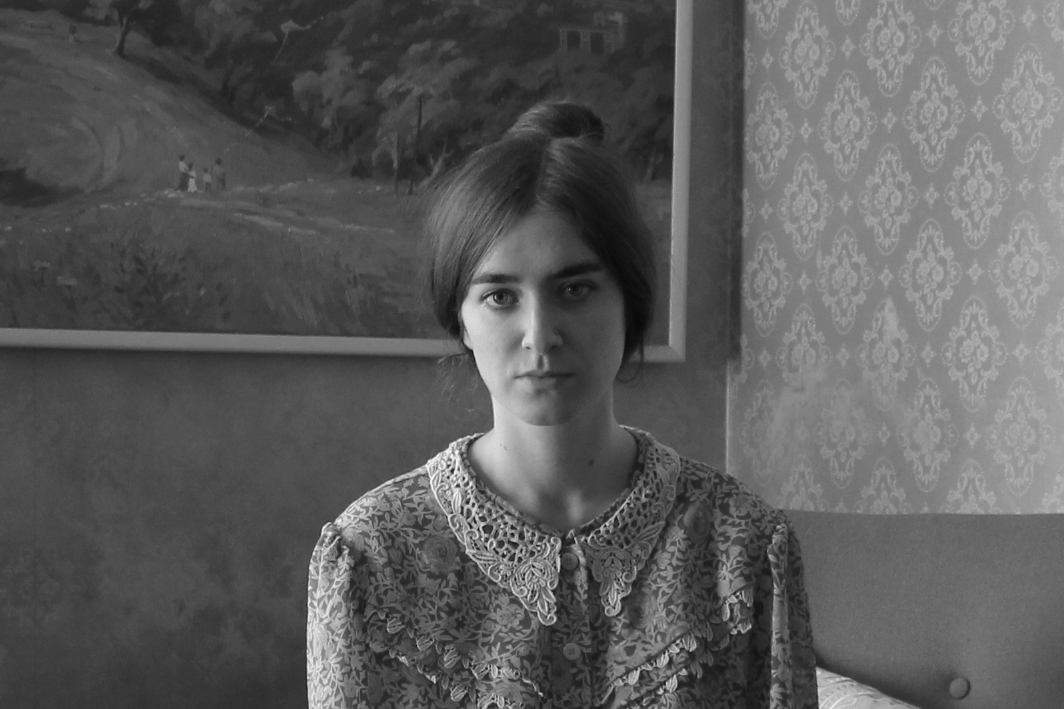
ZarahButcher-McGunnigle_1

Photo courtesy of Hue & Cry Press

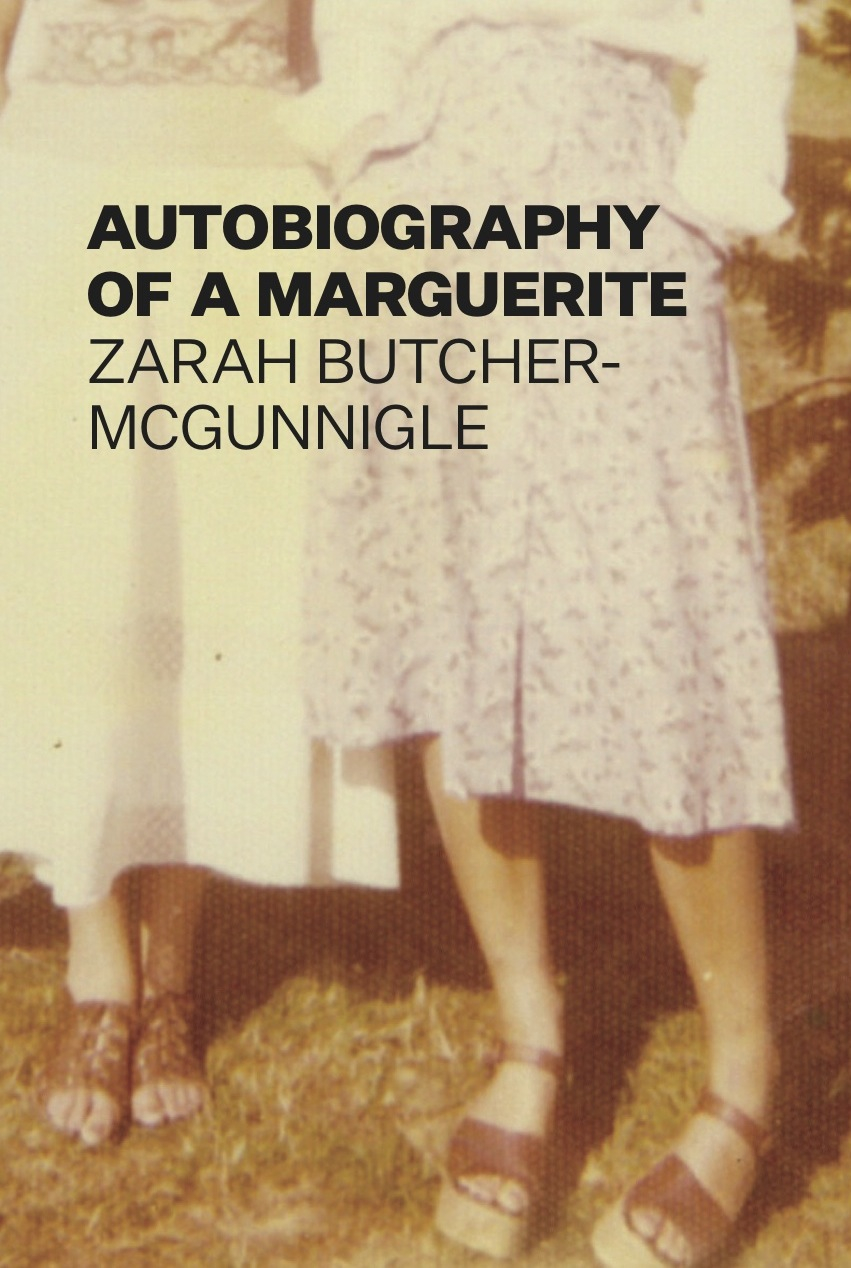
Zarah Butcher-McGunnigle’s debut collection, Autobiography of a Marguerite (Hue & Cry Press, 2014) sent me in search of a new terms to describe the effect it had upon me. This book-length poem is poetry in pieces—poems that piece together an experience of illness, family relations and the need to write. Yet as much as there are threads and mood and revelation, this is lacework poetry. You see enough to experience the whole, and more importantly, to acquire new ways of reading and writing poems.

The book is in three parts and each part works a little differently in terms of writing choices. The first part consists of prose-like poems. The poems in the second part are given more breathing space, but they are interrupted, wonderfully so, by footnotes (and not conventional footnotes, I might add). In the final part, there is a return to poetic prose, or prose-like poetry, that is offset by photographs that take you back to mother and daughter (amongst other things).

It is a book of illness, anonymous illness, as the details of diagnosis are only ever hinted at. This is poetry of the gap, of the hinted at, and of silence. Names are left off the line. Questions are laid down as statements (no question marks) as though answers are elusive (as indeed they so often are in illness). The silence and the gap suggest that illness is unfathomable at times, hard to tell, exhausting to tell—so much better to divert and filter so it becomes poetic lacework. In the second part, sentences are truncated and left hanging on the line as though the poet is breathless, weary of the full story. To me it is also akin to memory—the way it is spasmodic, episodic, shard-like. If this is lacework, it is a lacework of beginnings. And then life—lifegoes on, uncomfortably, differently with the arrival of illness, as the narrator moves in and out of family and school routines, friendships, her writing.

Each section is full of poetic rewards, but I was particularly taken with the middle section where footnotes interrupt and introduce a different way of reading. Astonishing. These footnotes are taken from books by Marguerite Duras and Marguerite Yourcenar. You physically move your head in and out, up and down—crossing an unexpected bridge between Zarah’s line and the line of a Marguerite (you never know which one). That movement across the bridge is glorious—it produces a tremble and ripple of connections and meaning. This poetry is unlike anything I have seen. I am calling it kinetic poetry. There is the movement across the little footbridges, but there is also the way each discrete line vibrates. Like a little earth tremor. And in these little vibrations, there are miniature collisions between this line and that. Side stepping. Side dancing. Side tracking.

There is so much to love about this book. A thousand movements to take you elsewhere and then return you to the moment, to the page. There is the watch that is often looked at but is not on the wrist—as though illness is a state of not-time, unreal-time, faked-time, thwarted time, longed-for time. Or there is the way the delicious word play takes me to Gertrude Stein  (‘poured system’ then ‘Poor system’; ‘weekend’ then ‘weak end of’). It comes back to the way a word stretches to accommodate the nuances and implications of a body ill at ease. Or the way the mother, a Marguerite, flickers and trembles like the narrating I (‘Her mother used to say I don’t know what I’d do without you’ and its footnote ‘You’re right, this is not normal weather for this time of year’). Where does she begin and where does she move to next? Her illness, her illness. Her discomfort, her discomfort. The way words puff out with the need to get things right (‘the filling is not always filling,’ ‘is progress slower than you expected or slower than you hoped’). And the way in illness, and in the memory and physical deposits of illness, writing is vital. An essential anchor. A lifeline.

So much more to write and think which means it is a book of returns.

I just loved this book. Thanks to Hue & Cry Press I have a copy of this book for someone who likes or comments on this post.


Rachel O’Neill has  an illuminating interview with Zarah here.

Zarah’s Hue & Cry author page here .


AutobiographyofaMarguerite_cover  AutobiographyofaMarguerite_cover   AutobiographyofaMarguerite_cover

Poem Friday: Rata Gordon’s ‘Thumb in a House’ meaning and narrative spin on tiptoe surprisingly

IMG_1694 - Copy

Photo credit: Amber McLennan


Thumb in a House

pinching flakes for gold

fish two piglets nose

my palm pink cheeks in

the light of a hut

bamboo poles and sheets

with pansies and holes


blue rope swing a stick

to sit on dust up

my nose when a car

speeds past a red streak

in our dog’s fur where

the neighbor shot her


polar bears live in

the toilet’s white ice

rabbits as big as

your thumb in a house

boat floating in the

hall the cat ate my

mouse and a fantail


swam through the window

to say our granddad

has gone somewhere else

but warm pajamas

by the fire a sip

of rain before bed


Rata Gordon is a seventh generation New Zealander who lives in Grey Lynn. Her life at the moment involves writing, drawing, dancing, and planting trees. Rata’s poems have appeared in LandfallDeep South and JAAM (forthcoming).

Rata’s note: This poem is built from memories of my childhood home in Waimauku, West Auckland. I wrote it while I was in Begnas tal, a wee village in Nepal. I noticed that the physical distance from home made some things float to the surface that I hadn’t thought about for years.

It was an exercise piece for Whitireia’s Online Creative Writing Diploma and was my first attempt at a syllabic poem. I enjoyed the way that the syllabic constraints broke up and stitched together my memories in strange ways. It seemed like a good match for swift and bewildered childhood perception.

Paula’s note: The title of this poem hooked me. Incongruous. Puzzling. The accumulation of detail is the second hook. Sensual. Vibrant. Strange. Earthy. I love the way the lack of punctuation amplifies the momentum of the poem—both the ambiguity and the surprise. This is the gold nugget in this poem. The way each line break holds you back and then in delivering you smashes your expectation. Glorious. For example, follow this thread: ‘the cat ate my/ mouse and a fantail/ swam through the window.’ Constant little dance flurries in your head as the meaning and narrative spin on tiptoe surprisingly. There is also a elastic stretch between home and elsewhere (‘warm pajamas’ and ‘hut/bamboo poles’). You stall and you pirouette as you read, but there is a honeyed fluency. Just wonderful!

Poetry Shelf review: Michele Leggott’s Heartland–these poems settle beneath your skin

leggott-michele-2014-cTim-Page

Photo credit: Tim Page

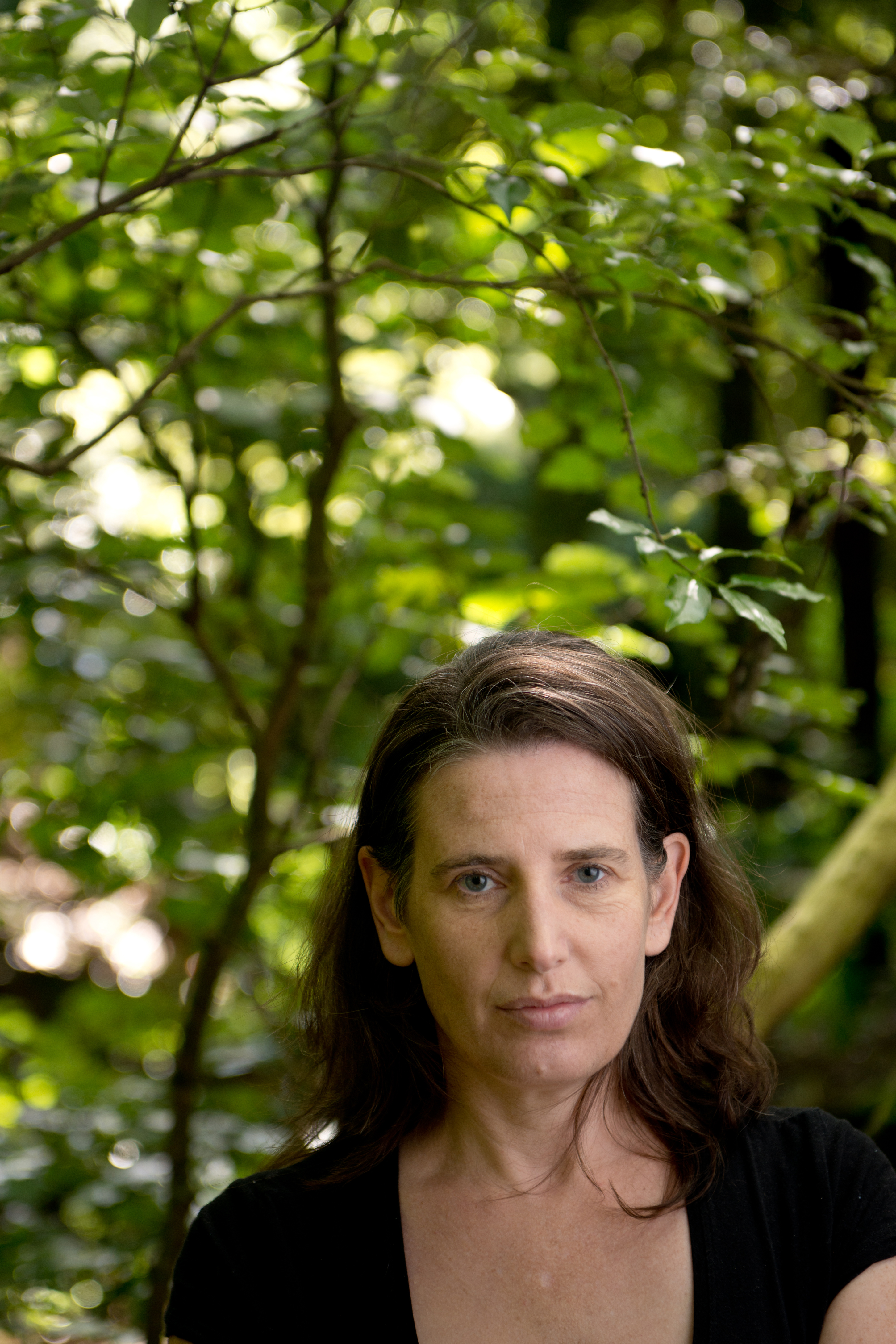
Michele Leggott was the inaugural NZ Poet Laureate under the National Library scheme (2007), was made a Member of the New Zealand Order of Merit for her services to poetry (2009) and last year received The Prime Minister’s Award for Literary Achievement in Poetry. She is an award-winning poet, was a founding director of the New Zealand Electronic Poetry Centre and is currently a professor in The University of Auckland’s English Department. She has published several anthologies (including the substantial edition of Robin Hyde poems). She has contributed much to New Zealand poetry, not just in the books she writes, but through the work she does in the wider, poetry communities.

cp-heartland   cp-heartland  cp-heartland

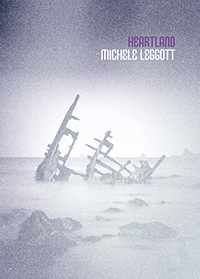
Michele’s new collection, Heartland, is a companion to Mirabile Dictu—same shape (marking a departure from the landscape format of her previous books) and same preoccupations. These two new books are inextricably linked to the poetry that comes before, but there is a shift in the way the poetry opens out to you. Her previous work was linguistically difficult, musically fluent and offered semantic lacework that drew you to sources signposting an astonishing range of reading and interests. These early collections have been amongst my all-time favourite poetry experiences in the New Zealand context. The difficulty was a lure for me, and once you entered the mesh of poetic possibilities, the rewards were immense. Her new books exhibit the same delight in language, a keenly tuned ear and an ability to stroll through worlds both physical and cerebral, and absorb points of fascination.

The blurb suggests ‘Heartland steps on from Mirabile Dictu, tracing the idea of family as a series of intersecting arcs, some boat-shaped, others vaults or canopies, still others vapour trails behind a mountain or light refracted through water.’ However family is shaped and traced by the poet, this book draws family from the shadows to centre stage—into the heart of the matter. Familial stories become the vital substance of a poem. Mythological sidetracks, traces of poet forbears, intellectual musings deliver the reader back to the intimate family fold. This is arms-open-wide poetry, that then draws you in close to the stories and legends  that form and sustain a family (families). Voyagers, settlers, husbands and wives, men who went to war, women who stayed behind, missing relatives, rediscovered relatives, close family, extended family, the loving husband, the sons.

Yet, as with any poetry collection by Michele, the moment you begin to say it is this, is the moment you recognise it as more than this. What makes these poems settle beneath your skin is the way Michele writes the world. The critical role of the ear is evident, not just in the aural honey generated in each line but in the way the poet listens to the world. Poems arrive differently it seems, in the dark, before they become light. The very first poem leads you to the ear: ‘my friend you are a voice/ against a dark red wall.’ In a number of poems Michele is travelling, both at home and abroad, back in time, through the poetic lines of others, and as a traveller, she is highly attuned to sound of things, to dialogue, to the pitch of weather and the rhythm of an anecdote. Her poems are, in part, resonant soundtracks of the travelled world: ‘the grass ghosts singing/ in our ears,’ ‘black wings crying,’ ‘dog snuffling,’ ‘swans clattering/ into the sky,’ ‘soft sound of light on stone’ ‘shattering glass,’ ‘a museum flicking past my inattentive ear.’ Her poems are also traces of the visible world filtered through memory, and the eyes and archives of others: ‘the joker in the orange vest,’ ‘a line of fish skeletons at our feet,’ ‘late light on the cliffs,’ ‘the valley fell away/ in a green tilt,’ ‘hello to the brick veneer.’

Then there is the elegant beauty, that sweet aural treat, in the bare bones of the line, where sounds lift and connect as melody: ‘thick drift of leaves,’ ‘blood red or pitch black because of the ash cloud,’ ‘to look at heaven from the end of a dark wharf,’ ‘begin the talk that catches its tail.’ Repetition is like a refrain in several poems (‘experiments [our life together]’ and ‘talking to the sky’), where the repetition produces song and/or a sumptuous list poem. Rhythm shifts and settles like the moveable rhythms of the traveller in the magnificent sequence, ‘Many Hands.’   Line breaks hold you back at times, and then produce little startles with a shift in expectation. There are the abundant caesurae (takes me to Louise Glück and her love of interruption)—little pauses in the line that stall you or that signal tremors and trembles of the narrating self, and the self that has stepped into the shoes of others, of extended family. A moment of inward breath, breath held.

The rewards of these poems are multiple—from the acute observation to the infectious musicality and the internal beating heart. And to that you need to add wit and humour. You fall upon little jokes or wry twists on a line, surprisingly, wonderfully (the names of the train-wreck couple , or the dogs for example). There is, too, the open debt to the poets who have nourished her. Michele goes hunting for the graves of poet Lola Ridge’s parents, and, in that hunt, brings Lola to our attention again. Michele gets to see the statue of Henry Lawson, but there is no statue of Lola. Ah, that long line of invisible women. Michele is always ready with her torch.

The collection is replete with standout poems, poems that force you to stay awhile because you hit that spot where poetry is a conduit to joy—the way place is as evocative as people. ‘Olive’ is a poem that particularly resonated for me. The poem interlaces two events linked in time but that produce myriad connections. On the day of the Greymouth mine explosion, the delivery of Michele’s guide dog, Olive, is postponed. It is an utterly moving poem—poignant on so many levels. The subterranean terror and blackness is alongside the poet’s lack of vision; the guide dog that is a lifeline is alongside the tenuous hope of the outside world; lost in the dark reverberates both ways; the song that lifted from the valley alongside the song that is this poem, sits alongside the song that guides the poet’s heart, her ink and drive to write.

from ‘Olive’

my dog how can you move with such grace

through these days   pulling sea and sky along

with you under the red-flowering trees     mixing it

up and down the road with all comers     this is not peace

but motion   ten thousand people looking up

the valley to a dip in the ranges while someone sings

You’ll Never Walk Alone not peace but motion

what is her name they ask me and I say

she has been here since the start       her name is Olive


Michele’s new collection is testimony to the powers of a poem to move and catch you in ways that can be as plain as day and as mysterious as night. You are caught on the musical coat tails of a line, lifted into the heart of what matters, taken outside and inside, into the slipstream of family, along the contours of home and nothome, within the beating pulse of story. This is a terrific reading experience.


nzepc page

New Zealand Book Council page

Auckland University Press

My review of Mirabile Dictu

Rachel Blau duPlessis on Heartland


The Marguerites: Rachel O’Neill interviews poet Zarah Butcher-McGunnigle for Poetry Shelf

ZarahButcher-McGunnigle_1

Photo of Zarah courtesy of Hue & Cry Press

Rachel O’Neill has interviewed Zarah Butcher-McGunnigle for Poetry Shelf to mark the arrival of their two debut poetry collections (Hue & Cry Press). I will be launching both books on

Thursday  6pm 12 June 2014
RM GALLERY, 1st Floor, 307 K Road, Auckland, Entrance on Samoa House Lane

AutobiographyofaMarguerite_cover   AutobiographyofaMarguerite_cover   AutobiographyofaMarguerite_cover


The Marguerites: an interview with poet Zarah Butcher-McGunnigle

A book-length poem is no easy feat, and Zarah Butcher-McGunnigle has achieved this coup magnificently in Autobiography of a Marguerite, creating a visceral and emotionally sparky long poem haunted and stalked and befriended by a host of Marguerites as well as other identities shaped by illness, crumbling and strikingly intimate family relationships, and language in which the adults’ voices break like teenagers, while the ‘young people’ make a note to have more snacks in their bedrooms to survive the strange new flow of time.


Rachel O’Neill [RO]: Who was the first Marguerite? Did any of the Marguerites beget a Marguerite?

Zarah Butcher-McGunnigle [Z B-M]: The first Marguerite was a thirteen year old who sat in front of my grandmother at school. My grandmother admired the girl’s blue eyes and black hair, and she said to herself that when she was older she was going to have a daughter with blue eyes and black hair and she would name her Marguerite. And, as my grandmother has told me various times, that is exactly what happened – her first child was a daughter with blue eyes and black hair, and she named her Marguerite. Coincidentally, there is a Marguerite Duras novel called Blue Eyes, Black Hair, and I used this as one of my source texts for my book. My mother is actually embarrassed about the fact that her name appears in the title of my book. When someone, like a colleague, asks her what the title of my book is, my mother says she can’t remember.

[RO]: Can you describe three things that interested you about the process of putting this collection together?

[Z B-M]: When I first read this question, I wrote: pain, identity, burden. Then I wrote: texture, experience, subversion, non-linearity. I was interested in working on a book-length poem or project rather than writing individual poems that I’d put together at the end in a collection. So I guess I don’t really see the book as a ‘collection’ as such. I wanted the book to be more of an experience. I was interested in autobiographical writing, but I also wanted to write poems that were more ‘language-centred’. In the early stages, my supervisor said there was too much situation, and not enough story – that I needed more structure, more narrative, and more from the outside word. So I tried to adjust the balance. I wanted the pieces to speak to each other and cumulate meaning as the book progressed, but I also had to think about ways to counter the risk of repeating or pushing too hard at certain ideas [when exploring things in long sequences].

[RO] What happens when you start to make objects and subjects out of memory?

[Z B-M]: “It’s the beginning of forgetting.” “The room is empty. The only furniture is two chairs and a table.” “She switches on the lights. And lies herself down in the middle of the light, where she has dragged the sheets.”

You miss out details or you put too many details in. You miss out details because you know the back story and forget that the reader doesn’t, or you put in unnecessary details because you get distracted by the memory and try to recreate or represent a particular situation, rather than focusing on a feeling.

You can get lost inside the memory and become exhausted, trying to navigate it from the inside. You can decide to alter a memory and write something that isn’t ‘true,’ but then later that something can turn out to be ‘true,’ or more accurate to ‘real life’ than you thought.

[RO]:Can you tell us a little about your use of footnotes in the book? Are they apertures to things outside of the main text or do they point to the holes already blistering the so-called main story?

[Z B-M]: The footnotes function both as openings to things outside of the main text as well as pointing to holes in the main story. The footnotes interrupt the ‘absorptive’ flow of the confessional narrative, but their tone is more lyrical than academic or explanatory. They add another layer of time and identity. All of the footnotes come from novels by Marguerite Duras and Marguerite Yourcenar, so a Marguerite comments on the life of another Marguerite. The footnotes act as a kind of fragmented (auto)biography of the books they come from, while adding details to another redacted autobiography… and the autobiography is a story within a story. The footnotes exist in a different time space than the main text… and the narrator who is writing the autobiography put the footnotes there as part of a way of reinterpreting the past in the present, sometimes adding metaphorical details, sometimes adding self-aware notes like, ‘Cheap melodrama’. I also see the footnotes as another voice, another monologue, in the play of Marguerite’s life. Or maybe like experimental stage directions. The reader experiences both being a witness and an actor (like the narrator) because they have to participate in piecing together the main narrative text as well as welding the footnotes to the text.  The form (the half-finished sentences + the footnotes) is a kind of performance of the process of remembering, and reinterpreting the past.

[RO]: What draws you to reflect on moments of miscommunication and the scary moments of real understanding?

[Z B-M]: Because something has to be at stake – for me as the writer, and for the reader. “‘Pain is not interesting,’ but it is.” And your whole life script can be based on a few moments of miscommunication.

[RO] Does illness mean you locate yourself in time differently? And what was your motivation for giving visibility to illness in the book?

[Z B-M]: I think so, yes. Because illness is a way of measuring time… (Oh, I used to swim every week back then, before I got sick… We moved here a year after I got so sick, so that must be seven years ago, now… That was the summer your father got so ill he almost died…). I’m talking about chronic illness in particular. And in my experience, you can feel both as if you’ve lost time and as though you’re stuck in time. You remain [the age you were when you were diagnosed]… you didn’t have the chance to live in a way like other people did [at that age] to have the experiences other people did, because of your illness. If you have to spend months at home resting, you can feel as if you are wasting time or losing time. And the trauma that illness may bring can also lead to not being able to remember a period of time very well, as a defence mechanism… so you look back [on your life] and you say, ok, I remember going to the hospital and I remember sitting in the lounge for a while, but I don’t know what else happened during those five months. Illness also means you locate yourself in time differently because the way you use your time and the way you view the future will most likely change. Maybe the future seems much more uncertain and frightening now that you are ill. The symptoms you have are not just concerning because they are happening right now, but because of what they mean for how your life will be from this point on. Time passes, and you are still sick, so you have to get used to it, or you have to get used to not getting used to it.

Thinking and talking and writing about illness seems interesting and important to me. In particular, how illness shapes the way someone sees themselves, and how others see them. How does a person deal with their illness? How do other people react, and how does the reaction of others alter the way someone deals with their illness? Does illness become part of a performance? Is illness (socially) rewarded or punished? What value do we give illness x or y? How does it affect relationship dynamics? I guess I want people to think about these things… as well as perhaps gain more understanding and empathy for people they know with a chronic illness. It seems also important to give visibility to chronic illnesses because they are often ‘invisible’… in that there may be no physical signs apparent to friends or people on the street, and so when people do find out, they often say things like, ‘Oh, but you don’t look like someone who would have [x, y, z]…you look too young to have it!’ or ‘But you look fine! You don’t look sick… ’.

Early on though, I realised I didn’t want to write about a journey of a particular illness, with all the medical details and experiences. I wanted to explore the social aspect of illness in relation to identity and family, and I wanted to use illness as a concept, to illustrate the struggle for autonomy and a sense of self, tying it in with a relationship where the daughter struggles to separate herself from her mother. And although I don’t name an illness, I do mention that it is an autoimmune illness – another detail which symbolises/highlights the struggle for a sense of self. The immune system is a boundary between you and the outside world, and the first task of the immune system is distinguishing self from non-self. Autoimmunity occurs when the immune cannot recognise what is self and non-self, and begins to attack its own tissues. In the book, it is sometimes difficult to distinguish the mother and the daughter, particularly in the second section with the footnotes. The footnotes could also be seen as a kind of autoimmune illness, attacking the main body of the text, the other Marguerites.

[RO]: What was the last boring thing you did that also gave you a lot of satisfaction?

[Z B-M]: Probably… responding to a couple of emails that had been in my ‘flagged’ pile for ages. Going through my inbox and flagging emails is also kind of satisfying.


Zarah Butcher-McGunnigle’s work has appeared in a wide range of publications, including Hue & Cry, the publisher behind this book. You can get a taste for her work by checking out Best New Zealand Poems 2011 and 2012 and the latest issue of Hue & Cry. She was awarded the Biggs Poetry Prize from the International Institute of Modern letters for her manuscript, the first rendition of Autobiography of a Marguerite. You can find out more about the book here or pick up a copy at the Auckland launch.

Rachel O’Neill’s first book of poems One Human in Height was published by Hue & Cry Press in 2013. See Hue & Cry author page here. Paula’s review of Rachel’s debut collection here.


Poetry Shelf interviews Maria McMillan on Tree Space and other things. ‘Maybe there’s a new Poem space for every poem’

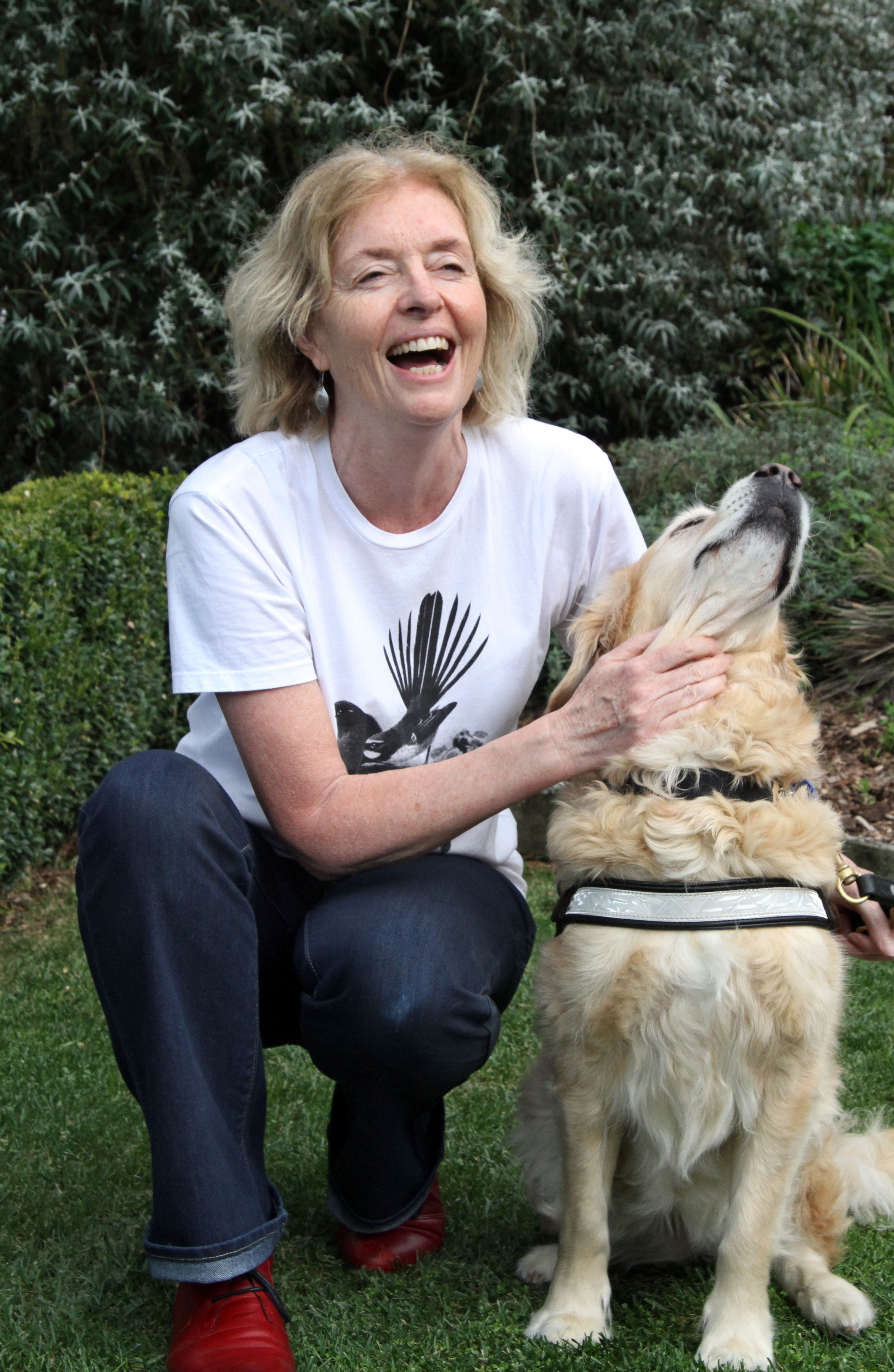
Maria McMillan

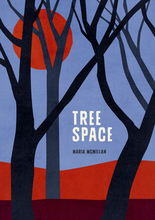
Maria McMillan lives on the Kapiti Coast. She is a writer, activist and information architect (fascinating bio!). In 2013, Seraph Press published a limited edition of her chapbook, The Ropewalk. In a review I said of this book: ‘I love the grace, the phrasings, the syntax — the flecks of life and the speckles of fiction that move you out of routine into the sheer pleasure of poetry.’ For the full review go here. Victoria University Press released her new collection, Tree Space, on June 6th. To celebrate the arrival of this terrific collection, Maria agreed to answer some questions for Poetry Shelf. I will post a review of the new collection shortly.

Thanks to Victoria University Press I have a copy of the book to someone who likes or comments or this post or my forthcoming review.

TREE_SPACE__40939.1398819236.220.220    TREE_SPACE__40939.1398819236.220.220    TREE_SPACE__40939.1398819236.220.220

Did your childhood shape you as a poet? What did you like to read? Did you write as a child? What else did you like to do?

I think it must have in the sense that words and books and thinking were all considered important in my family. I wasn’t musical or sporty but I read and that was more than okay. In fact I think I spent most of my childhood hidden behind closed curtains lying on the strip of sun that fell on to the wide windowsill of our sitting room. My mother would play piano, or someone would be playing Bowie, or Kiss or Split Enz, there’d be the rain-like clatter of my father’s typewriter. I and usually one or two other people around the house would be reading.

There were bookshelves in all the rooms and there was always something to read. I read mostly novels and loved almost all of them. My sisters were a few years older so I had this wonderful back catalogue of all those subversive 60s and early 70s piccolo and puffin and others. But also I’d come across the plain hard-covered books of my mother’s childhood, often a dirty orange I think with the crisscrossed mull showing through the spine and the sort of title you could feel with your fingers. There were lots of other books too, some common, some obscure that I never saw in other people’s houses. So I had and adored E. Nesbit books, Noel Streatfeild, Madeline L’Engle, Elizabeth Goudge but also the Anne of Green Gable books, and Girl of the Limberlost and those funny NZ versions of the English boarding school books of the 1940s. We also had stacks of Tintin and Asterix comics. We all read the Moomin books, so it was a house with Hattifatteners floating around it and, when seasons changed, the sound of Snufkin’s flute. Even as adults my siblings and I describe people we’ve met in relation to the Moomin character they most resemble.

We’d get books for Christmas and birthday presents too and my brother and I were usually allowed to choose one or two novels through the Scholastic Book Club. Some of my favourites came that way; The Velvet Room, a fantastic depression-era tale by Zilpha Snyder was one I read and reread. I think Playing Beatie Bow, came that way too, and I remember the jolt of realising it was the same Sydney and written by the same Ruth Park as Poor Man’s Orange and Harp in the South – old books I’d discovered of my mother’s. I feel lucky too that I came into my teenage years just as Margaret Mahy was writing for that age group. The Changeover was particularly lovely and important. So many. Books were just there.

When you started writing poems as a young adult, were there any poets in particular that you were drawn to (poems/poets as surrogate mentors)?

A bit earlier than that, for my seventh birthday I got a gorgeous anthology of children’s verse. My mother was getting me to read out poems and I chose that Robert Louis Stevenson’s From a Railway Carriage ‘Faster than fairies, faster than witches / Bridges and houses, hedges and ditches…’ and understanding and loving how it sounded like a train on its tracks. When my mother said I could read another one I just asked to read that one again. I loved how exciting it was and the sounds bounding and rattling over one another. That feels important.

Mum had Fleur Adcock’s Selected Works and as a young adult that became perhaps my favourite of all poetry books. I loved that Adcock was intensely emotional but writing intelligently and in a restrained almost detached way. I had no idea how she did it but I could see how the carefulness of her craft was key to its potency.

How does being an activist impact on your writing?

I think the process of reconciling my activist self and my writing self has been huge and will probably keep being huge. I used to write a lot of protest poems, urgent, angry and furiously important to me. I don’t think they were very good as poems, but I also miss and I guess try to honour some of the compulsion and passion that drove me to write them.

I think for me beginning to learn properly the craft of poetry has been about understanding what poetry can and can’t handle as a medium or – I should say – what my poetry can and can’t handle – many others are writing overtly political poems that are wonderful.

I have, over the years felt and thought so much about the world and what I think is wrong and right about it that I can’t address that stuff directly in verse without the lines shrivelling up. Sometimes I blog about that stuff, I‘ve had fun with indignant press releases, and I get into some satisfyingly hard core online arguments, I just can’t bring it off in the sort of poetry I want to be writing.

Another idea has been helpful through all of this – I can’t remember where I first came across it. That is, if you’re experiencing or thinking about something intensely, it’s going to come into your poetry no matter what you’re writing about. If your best friend has died, you can write about something completely different, say a cat, and the poem will still be about your grief over your friend. That’s useful because I don’t want to be writing bad political poetry but I also don’t want to be carving off a writing part of me from an activist part of me. I just have to have faith that the things that are important to me are there in what I write. And everyone who has read Tree Space has mentioned the ethical and political dimension to the work, so it must be there.

I think this whole issue of how to be a politically engaged writer is ongoing for me. I think if you understand about injustice, the most important work you have to do in your life is to challenge it. I don’t yet know how that fits with writing, but I also do want to write, and if I’m not writing directly about injustice, then I worry I’m wasting my time.

There’s other parts of me which recognise that genuine original creativity is the best and most exhilarating sort of liberation. It’s the great challenge to the oppressive forces that silence and control people. I’ve mentioned Madeline L’Engle already. I loved that scene in A Wrinkle in Time when Meg goes to another planet and there’s a town there where her father is hostage and the whole place is controlled by an enormous brain. Meg walks into it, and every street has a row of identical houses, each with a perfectly mowed lawn and every lawn has an identically dressed child and they’re all bouncing a ball in time with each other. It’s a wonderful and petrifying scene. When Meg faces off the huge all controlling brain she resists it by recalling ideas, poetry, knowledge and feelings. On good days I think poetry is inherently good and subversive just because it’s there standing up against mass produced lies and violence.

Does it make a difference that the writing pen is held by a woman?
 
Yes and no. Yes because I think our life experiences are still very gendered. I had parents who brought me up absolutely to believe that girls could do anything, and women should be financially independent and have control over their own bodies and minds. Despite all that, coming into adulthood as a young woman is I think a world away from coming into adulthood as a young man. Learning the rules of adulthood for us are, and I’d guess even more so for young women today, about valuing ourselves and each other according to male approval. It’s also about learning of the vulnerability that comes with sexual maturity. It seemed that for years in my late teens getting to know women friends was about them disclosing to me their stories of rape or abuse or eating disorders. It’s really confusing that all this physical and emotional desire to explore sex and sexuality, celebrational and exciting stuff, comes packaged with these rather frightening realisations. Those experiences and the other experiences of womanhood in what is still  a sexist society are profound and different and inevitably impact the knowledge base that I (and I’d guess other women) bring to writing, and as someone interested in those things it particularly impacts my writing preoccupations and subject matter.

No in the sense that I don’t think style or rigour, intellect or emotional depth, frivolity or darkness are split along sex lines. The differences and similarities between individual writers are far more interesting and complex than that. What does make a difference sometimes is the reception given to women and men as writers. Eleanor Catton has mentioned being asked what she feels rather than what she thinks. I think too there’s a presumption that women must write about emotionally intelligent characters and not tackle hard violent things. I think some critics of Pip Adam’s novel, I’m Working on a Building, couldn’t get over the fact a woman writer was discussing characters and situations more conventionally depicted by a bloke.

Your poems offer delight on many levels. For me, the first delight is the musicality. I love the surprising rhythms that shift from liquid honey to addictive syncopation and the accumulation of startling phrases. The glorious juxtapositions. What are key things for you when you write a poem?

Thank you. I do read my poems out to myself as I write them, unless it’s somewhere public where that would just be weird. But given a quiet room somewhere I will say the words over and over without even noticing (damn maybe I am doing it in public places). It’s a very integrated thing, so writing the words and saying them out loud and editing are all part of the same movement. It is all about the sound. That was never a conscious decision, it’s just what I’ve come to realise I do. It may be the same for all poets but by the time I get to the end of writing a poem I may have read out loud each line thirty or so times and rearranged and tweaked and added words and ditched bits based on what it sounds like to me. Then I’ll read the whole thing out again and again alter things until I’m satisfied.

I think I’m always looking to remain interested in my poem from start to finish. I know that if I, with all my self-interest, can’t retain enthusiasm no-one else will be able to. There’s something as well where I want each line to be as full as it possibly can be without collapsing. Because my style tends to be quite sparse that’s an interesting challenge. What other ways can a line hold weight if it isn’t with strings of bedazzling nouns and dense adjectives?

I’m also getting increasingly impatient with craft for its own sake. I get nervous of aiming for poems that are good or competent or clever. I want to write poems that need to be written, poems that tell stories, or untell them, poems that belong in the world as well as the world of poetry. I’d prefer to write bad important poems than good trivial ones.

Michael Hulse recently queried the status of certain poems in a review he did for New Zealand Books. In his mind, some poems weren’t in fact poems. How would you define poetry?

This question got me excited. I know lots of people spend decades thinking about this question but I haven’t really so it’s fun to come up with my own answer. Here’s a three part hypothesis cobbled together from my and other people’s ideas, no lab testing yet, unlikely to be replicable, I eagerly await its disproval.

(1)         Sound must be a central concern of a poem. Not that a poem has to be musical or sound pleasant, it could be discordant or jarring, but some of the poem’s force must be delivered through how it sings, how it moves the air. Even if it’s not read out loud there’s that strange alchemy where we know a poem’s cadence and rhythms without moving our lips. How it alters or attunes to our breath.

(2)         A poem must have integrity. All of it must occupy the same planet and must abide by that planet’s physical and psychic laws. Bits can still rebel against other bits of the poem, in fact that’s good and necessary. I think what I mean is all the parts of the poem must talk to each other, even if they’re shouting. It needs to all be a thing and the same thing.

(3)         A poem must have a beginning and an end, I’m not quite convinced about the beginning. I was intrigued when Mary Reufle was in New Zealand and distinguished between her poems and her poetic writing. It made sense but I wasn’t sure why. Now I think it was probably this third point. Her poetic writing might sound lovely and have internal coherence but it might just float there being poetic. A poem needs a conclusion. It needs to come to something. It must, by the end, engage with something other than itself, the sound it makes, and the space it takes up on the page.

I think you could write a bad poem which meets these three criteria but it would still be a poem, and, I think any good poem would have to meet these criteria.

I love the title poem. You write: ‘To understand tree space you must search all tree space which is/ impossible.’ Wonderful! What did you learn about tree space?

When scientists, who have some data, genetic or observational, about different species and they are trying to figure out how those species are related, they have to contend with the fact there’s a whole lot of different possibilities. You can depict those possibilities through family trees, showing where a population branched off and became a new species, when in turn another species branched off that, and so on. The imagined terrain that contains all possible family trees, some bushy with lots of divisions and subdivisions, and some stark is called Tree space. It’s so vast that it’s impossible for a scientist to look at all the trees and figure out, given their data, which is the most likely tree – the tree most likely to be a correct depiction of how different species evolved. There’s a computer algorithm that searches Tree space. The papers talk of high ground, and clusters of more likely trees, branch swapping and jumping to the next tree. When I learnt, through my partner, of Tree space I was besotted, all that gorgeous language and metaphors that felt like a real physical place you could wander through. I love the bush, and Tree space felt rich with that meaning too, like a thing I always knew about but didn’t have a word for.

This set me thinking about poem space! Can you shift that line to the context of poetry?

I love that idea. And it’s true isn’t it, because we can never understand everything about poetry, can we? You never understand how to write poems, only the poem you’ve just finished.

It fits too because there’s a certain element of poetry that’s unknowable chance and guesswork. Not to diminish the skill involved, some people are brilliant at sitting very quietly at the right spot, in the right weather and holding the net in the right way. But those seemingly random often transformative elements of poetry I find incomprehensible in the best possible way. So I like the idea that we might search and search Poem space to try and understand it but it’s futile. It seems important to keep searching though.

Maybe there’s a new Poem space for every poem, and as poets we have to search it all to find the best possible poem. That’s a slightly frightening and tiring thought but it feels right too. All that reading out loud to ourselves, word swapping, adding new branches and so on.

Maria McMillan blog

Victoria University Press page

Seraph Press page

Poem Friday: Chris Tse’s ‘The saddest song in the world’ sweeps you into folds of sadness that in turn become folds of joy

Chris Tse - author photo - 2014 - resized

Photo credit: Sklee

Today, two sections from a longer, unpublished poem by Chris Tse.


The saddest song in the world

1.

I can fit the saddest song in the world in my carry-on.

I can fit the saddest song in the world in my right-side brain.


But I can’t fit it in my lungs or hold on to it with confidence

when underwater.                 And I can’t fit the saddest song


on one side of a 90-minute cassette tape without

an uncomfortable silent interlude cutting into its breath.


There is only so much space I can allocate to the saddest

song in the world;                   the weight is unbearable.


4.

Once, a lover exhaled my name in ecstasy and transformed it

into the saddest song in the world       all bolting nerves


and tender skin       pulling at the roar of the avalanche

in me.     By morning his name had taken another form


one freed from the haze of giddy crush     though it still rings in me

a stubborn joy.       The room in which we sung each other’s names


is now an altar with no idol.           Likewise, when I was once lost

in the company of foreign tongues       every new word shared


to describe the sorrow of joy   shook me like the saddest song

in the world.   A list of first loves.   An index of loss.


The saddest song in the world was kind enough to pull me back

into comfort               its reassurances a cool blade of sound.


© Chris Tse.doc

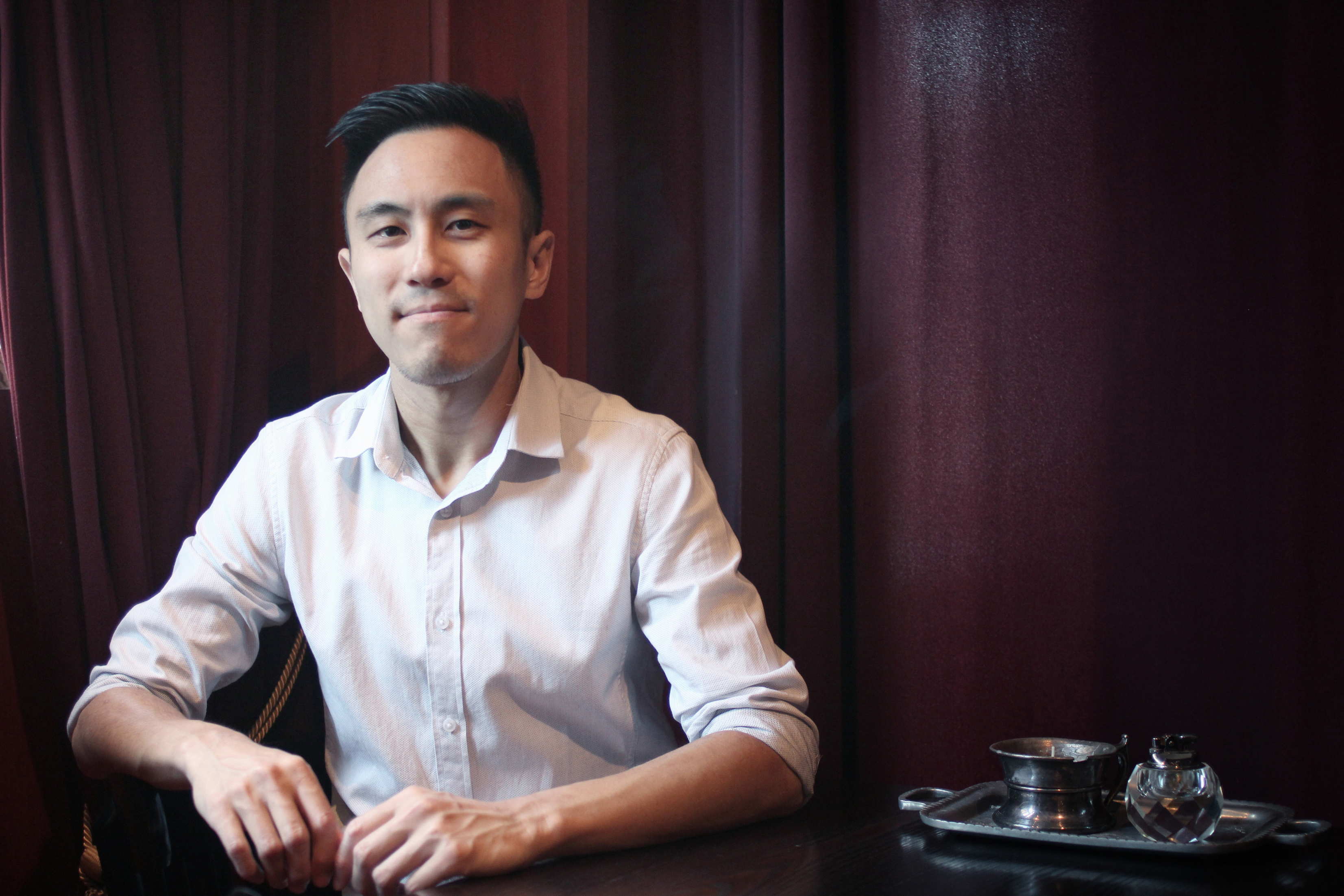
Chris lives and works in Wellington. His first full-length poetry collection, How to be Dead in a Year of Snakes, will be published by Auckland University Press in September.

Chris’ note: I have a playlist on my iPod of my all-time favourite songs (embarrassing fact: the playlist is called “Awescool”). The majority of these songs are touched with tragedy and sadness, so it’s been a personal quest of mine to find the saddest song in the world (any leads will be gratefully accepted). Many of the poems that I’m writing at the moment explore the role of music in our lives and its relationship to memory. I’m particularly interested in how music functions as a conduit for shared experiences. With that in mind, this poem ponders what ‘the saddest song’ (in whatever form it might take) could mean to different people.

Paula’s note: With no idea of its genesis, when I originally read this poem, it read like an extraordinary incantation of sadness. It struck me as part list poem, building delicious momentum in surprising pieces and productive links, and as part song, exuding bitter-sweet lyricism. For me, the first section became more than how and where you carry sad songs, because it exploded into how and where you carry sadness. The song (the poem) became a bridge to melancholic luggage for a cast of characters. As you absorb the rhythms and details of each section, there is an ambiguous sway between invention and the real. You get pulled through memory, anecdote, confession, epiphany, and it is this glorious movement that diverts you from sadness as a distancing abstraction. Music has the power to mimic and affect you, and so too does poetry. I love the surprise and the fresh touch of this poem, the way it sweeps you into folds of sadness that in turn become folds of joy. How does the poem’s genesis change my reading? I am not sure. I love the mission. I love the way that mission becomes poetry.

Siobhan Harvey’s Cloudboy—You read these poems and something in you shifts

photo

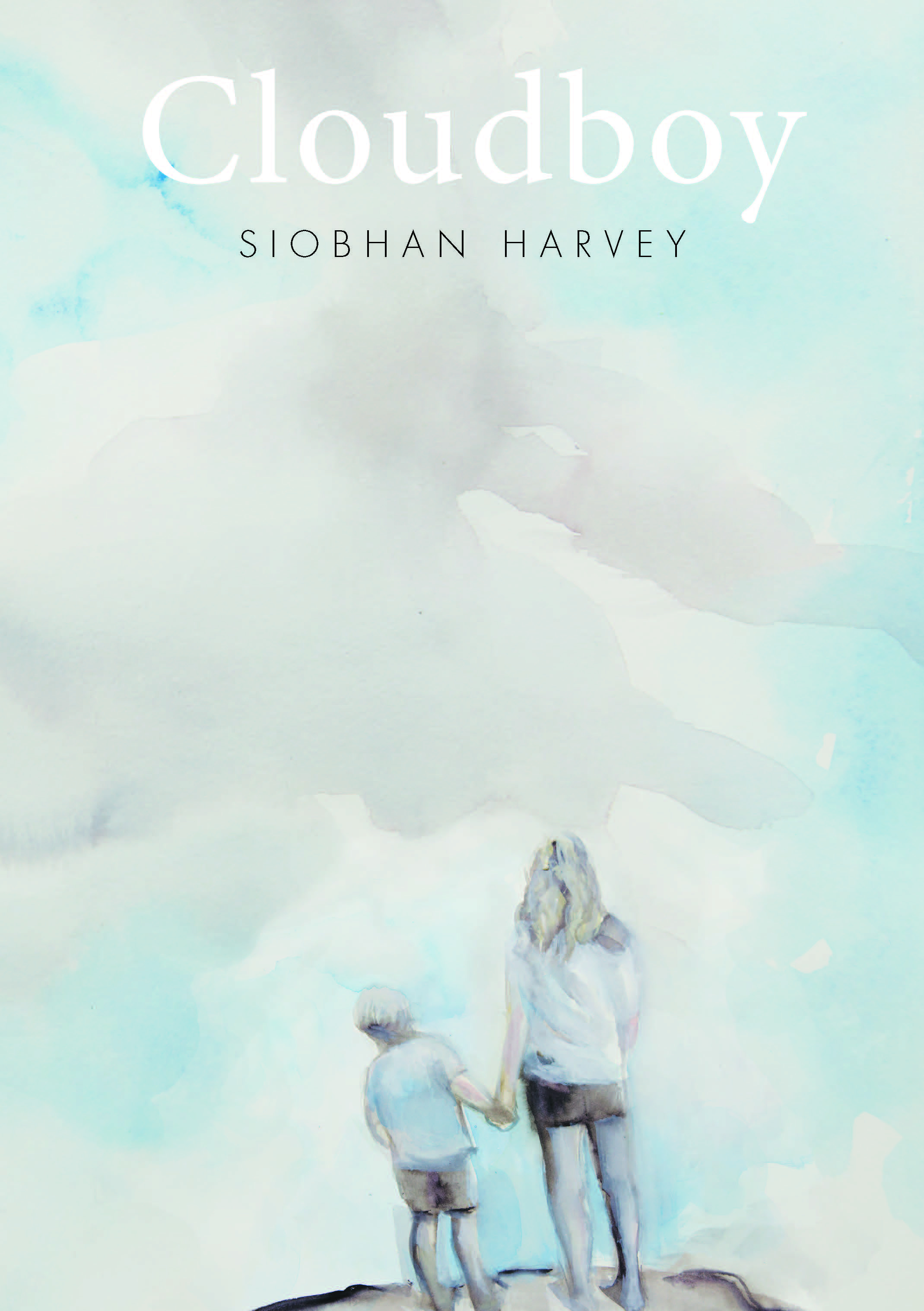
Siobhan Harvey’s new poetry collection, Cloudboy (Otago University Press, 2014), won the Kathleen Grattan Award for Poetry in 2013. The collection navigates Siobhan’s experience as the mother of an autistic young son. Without knowledge of this governing theme, the title of the collection summons something fablesque, fairytale-like and wondrous and conjures an ability to read clouds as well as exist in the clouds. Either way, the title is a magical entry point. With knowledge of the book’s genesis however, the title is even more resonant. Poignant. There is a sense that the tough, earthy detail is going to be tempered by threads of the ethereal. The beautiful cover painting by Allie Eagle was painted specifically for the book.

harvey_cover-1    harvey_cover-1

When I think of clouds, I think of the ephemeral, but that notion slips into a fertile chain of thought—to an ability to be full, to add beauty to an ever changing skyscape, to cast shadows, to release life-sustaining water. The first section of poems is entitled ‘The Autistic Child Considered as a Cloud,’ and it is as though the boy is filtered thorough these cloud attributes (or clouds are filtered through the boy’s attributes). The poem ‘Stratus’ brings together acute personal detail: ‘Just out of our reach is the Cloudboy, we know,/ who dances in heavy rain, wets himself, mutters/ complaints like madness, and is a bogeychild/ other mothers warn their darlings about.’ This is real. This is uncomfortable. This is at a distance from most of us. It is as though he is aloft with ice crystals forming about him.

Sometime the collection feels like a survival kit for the mother as she writes into and out of her son and her patience—he, fathomable, unfathomable, close, distant, complicated, much and ever loved. The poetry seeps and grows and amasses what it must be like to be the anchor, to be constantly motivated by care and concern. How then to translate such an experience into poetry? These poems offer insights into the autistic experience, yet it is not a matter of judging the autistic condition or the choices the poet made in how to represent it. As John Marsden said in his stimulating presentation to school students at the Auckland Writers Festival—we need to learn ‘to throw rule books up in the air and to find the way that suits us as writers,’ to be marvellously creative and not depend upon paradigmatic choices or models that constrain (are we becoming more and more regulated at every educational turn and less able to take risks in writing endeavours at any level?).

Siobhan offers poetry—a multi-pronged engagement with her subject matter—that unsettles and resettles rhythms, images, juxtapositions, syntax, motifs, stable ground. Tropes radiate out from the son. Each poem has a white-hot heart that grips you tight and shifts the way you see things. There is the lyrical lift of line and the difficult narrative thread. This, a musical tapestry (yes ear and eye hooked!) at the beginning of ‘Arcus’:

‘Arcus is a coal-lick Cloudboy slinking its way

back to the nights its mother, pregnant

with being, prowled from cold bed

in dead of dusk to drop before bunker, hands clasped

to dark gold, her lap-lap-lapping drawing out

tastes of liquorice, truffle and salty balsamic

beneath the comfortless cry of morepork and moon’

Siobhan shows us the ability of poetry to take you deep into human experience that is fugitive, unrepresentable, unfathomable. You read these poems and something in you shifts; the way we face both the difficult child and the mother of the difficult child. The way we exist within systems that encourage us to conform, contain, confine, manage and control. The way we have notions of the child as a platonic ideal; ever unattainable, this perfect version, in the swamping dark. Cloudboy, like the sky itself, is changeable and hard to grasp; he doesn’t fit here but he fits perfectly there. He knows this and misses that with his ‘hungry mind.’ He frustrates and confuses and absorbs. He becomes more than an idea (the austistic child), he comes aching real through the vital detail Siobhan gathers: ‘On day one, he sits in a chiton, of white tape/ reading Republic.’ ‘His hair was a hat shaped/ from the fleece of karakul sheep.’ ‘Studying Aberhart, Cloudboy takes up a camera, empties land/ of everyone except his mother’ ‘These are the rare days/ when the child is quiet and compliant,/ when there’s no translation of Russian/ or Sanskrit, no constant questioning, no/ forceful negotiations at the dinner table/ (I only eat broccoli at weekends …) no devouring soap,/ being Superman, writing acrostic poems’.

The poems move through experiences that demand the fortitude of the mother, but there are also moments of joy. Touchingly so: ‘the sound of Cloudboy singing will be more/ than enough to lay down the lines of this poem.’ Siobhan’s new collection is a collection that takes daring and necessary flight in order to lay down loving anchors, and it reminds me why poetry matters. There are a thousand ways this experience could be transformed into poetry. This is just one of them and it moved me profoundly.


NZ Book Council page

Poetry Archive page

Otago University page

Otago University Press page


Poem Friday: Vivienne Plumb’s ‘As much gold as an ass could carry’ deliciously fablesque

Viv Final

This week an unpublished poem from Vivienne Plumb.


As much gold as an ass could carry.

One endless summer when I was fourteen

I began to speak with a great arrogance

as wide as a river mouth, imagining I was

witty and charming and full of my own cream.


I refused to continue laying the fire

or to cook supper in the tiny croft-house.

Instead, I was dreaming of ten-foot palaces, a crop of corn,

my own chambermaid, and as much gold as an ass

could carry.


I was sent to learn how to cut willows

and weave, but I allowed the meats

in my basket

to become cold and infested with worms.


I breast-stroked far away

in my twenty-league boots, under the delusion

I was moving fast, when in truth

I had remained stock still.


© Vivienne Plumb.doc


Vivienne Plumb presently holds the 2014 Ursula Bethall writing residency at University of Canterbury. She is a poet, a fiction writer, and a playwright, and has recently completed a Doctor of Creative Arts. New published work includes Twenty New Zealand Playwrights (with Michelanne Forster) published by, and available through Playmarket (N.Z.), and a collection of short fiction, The Glove Box, (Spineless Wonders, Sydney).


Author’s note: The language of this poem was influenced by the language and content of stories such as those the Grimm Brothers collected. The poem attempts to give some instruction in a similar way to those kind of stories, where the advice was hidden in the text, such as Little Red Riding Hood (i.e: watch out for lone wolves). Apart from that, the piece is also about youth: the narrator wants to ‘breast-stroke far away’ but will later discover that for all her wild swimming she ‘remained stock still’; as how can we truly get away from what we actually carry inside us? The title, As much gold as an ass can carry, reflects our youthful dreams, so full of ‘cream’ and conjecture.

Note from Paula: When I first read this poem it struck me as deliciously fablesque—a poem that would fit perfectly in Italo Calvino’s mammoth and brilliant collection of Italian folk tales. Vivienne’s poem has the momentum and structure of a folk tale where the morals and messages lurk in the seams. You have, for example, to keep your eye on the world, on the small details in order to nourish the bigger picture (otherwise your meat will rot in its basket). And then, the old proverb: less haste, more speed. Yet what elevates this poem into something exquisitely more, is the layered movement— not just in the semantic and visual reverberations but also in the aural kicks and echoes. Take the phrase, ‘full of my own cream.’ It’s semantically and visually surprising (gives flesh to the girl on the cusp of womanhood) and aurally active (the ‘eam’ and ’em’ sounds leapfrog through the poem like aural glue or a vital backbone: summer, imagining, charming, dreaming, chambermaid, much, become, moving, remained). That phrase just bounces and bounds at the end of the line. The poem also stands as a rite of passage—the young girl exhibits the youthful need to flounder and laze, to break away from constraint into the magical, dangerous unknown. I loved, too, the way Vivienne is unafraid of tropes (‘a great arrogance as wide as a river mouth’). I loved the confounding somersaults that verge on oxymora; the breaststroker in her twenty-league boots, the girlhood activity that leads to stasis. Glorious!