To get away from the all too much of myself, I push out on a walk through winter-scoured streets, wish I’d timed it better—say, for when school was out:
local footpath turned small carnival, the glossy new brush tips of children’s voices stretched high to glaze the clouds in lickable colours
like that afternoon I saw twins slow toe-to-heeling as if a pint glass quaked on a tray on their heads, as they carried matchstick galleons stapled to paper seas;
or the time the street stopped around the concentration of another boy, skipping: his avid focus like a pianist entering flow;
or even the day I saw the small girl at her front gate, her cries green and broken as she held a savaged nest that let float feathers like petals of black blood.
But now the air tightens on the edge of snow. It is close to dusk. There is nobody much about.
A younger self roams under my ribs. Hungry, scavenging along a basalt sea cliff, it shuffles to the edge of desolate.
An ice-knuckled wind rakes the tops of skeletal trees so I glance across — see, through a rental’s window, a large room filled with balloons.
Pearly, silver, or ballet-slipper pink, they press up against the ceiling.
Newly discovered star cluster, they glow like silk in firelight
or like dozens of bubbles risen to a cava glass’s rim,
where they quiver, words that flew the coop of the heart yet still long to leap from the tip of the tongue.
In an instant, I’m warmed, laughing quietly to no-one at the ludicrous lengths, the sweet excess
that love can go to and I’m swept up, sailing clear
along the night’s opened channel, mind reset by a stranger’s rosy zodiac.
Emma Neale
Emma Neale is a writer and editor who lives in Ōtepoti/Dunedin. Her collection Liar, Liar, Lick, Spit won the Mary and Peter Biggs Prize for Poetry at the Ockham New Zealand Book Awards for 2025; the year she was also awarded the Janet Frame Prize. Her new novel, Maybe Baby, is due out from Bateman Books in May 2026.
Summit, Thomson Gorge Road (looking towards Mount Aspiring). Photo: Gregory O’Brien, October 2025
Backcountry
Now and ever the mountain river.
A fantail flits. Moss over branch, the trees hurry.
Undying stone continues the rhyme: there is no time.
Richard Reeve from Generation Kitchen (Otago University Press, 2015)
At the end of September, Gregory O’Brien sent me the media release for an online fundraising art show he was curating.
Nine well-established New Zealand artists have gifted works to raise funds in opposition to the proposed Bendigo-Ophir gold mine in Central Otago. The artists – all strongly opposed to the open pit mine – have come together under the banner “No-Go-Bendigo”, and are offering 100% of the funds raised towards fighting the fast tracked mine. All have been deeply affected by the majesty and singular character of the region—as the statements on the exhibition website underline. They all wanted to make a strong stand.
Dick Frizzell, Enough Gold Already, 2025, limited edition of 12 screenprints, 610 x 860mm,
The artists who have contributed are Bruce Foster, Dick Frizzell, Elizabeth Thomson, Eric Schusser, Euan Macleod, Grahame Sydney, Gregory O’Brien, Jenna Packer and Nigel Brown. The works they have gifted for sale can be seen here.
Exhibition organiser Gregory O’Brien, said that the group of artists from all over the country was highly motivated to help. “The proposed desecration of a heritage area for purely monetary gain is an outrage to all of us, as it is to the citizens of Central Otago and to all New Zealanders.” He said that the initial group of nine artists have already heard from other artists enthusiastic to help “during the next round”. “Painters, photographers, writers, film-makers, choreographers and other arts practitioners from within Central Otago and further afield are incensed at the churlishness of both the mining consortium and the Government’s ruinous ‘Fast Track’ (aka ‘Highway to Hell’) legislation. The environmental cost of such a cold-blooded, extractive exercise is simply too high, as is the social impact and down-stream legacy.”
When Gregory said that this was just the beginning, at the end of the exhibition media release, I knew Poetry Shelf had to become involved. My new Poetry Protest series was the perfect opportunity – knowing that poetry speaks out and for and because of issues in myriad ways. Gregory, Richard Reeve and I invited a number of poets based in the area (and beyond) to contribute a poem. Jenny Powell’s poem catches sight of the Dunstan Range, David Kārena-Holmes has penned an aching lament, Emma Neale writes of her local blue swallows that can also be found near Benigo. And then there are poets with miners in the family history such as Jeffrey Paparoa Holman and Diane Brown. Twenty three poets have gathered on this occasion but there are so many poets in Aotearoa singing out in defence of the land. Some poets chose poems from collections, while others wrote poems on the spot, often out of anger and frustration.
Richard Reeve, who is organising an anti-mining poetry reading in Alexandra in November (see poster), has written an introduction for the post. He sent me a suite of poems, both new and old, that touch multiple cords of beauty and outrage. I have included an older poem to head the post, and a longer new poem after his introduction. I have also included an extract from a recent media release by Sam Neill.
An enormous thank you to Gregory and Richard for co-curating this post, to all the poets who contributed, and to everyone who continues to read and write poetry. Today is a day of significant strikes by nurses, doctors and teachers in Aotearoa, a day with a major weather event still unfolding and widespread power outages, and the continuing heartslamming news from overseas.
To be able to connect with readers and writers who care, matters so very much, as I sit here weeping with a strange mix of sadness and gladness, beauty and outrage.
Thank you.
Thomson Gorge Road Photo: Richard Harvey, October 2025
For Freddy – Ora pro nobis
A little while ago now, Lord Byron in his book-length poem The Prophecy of Dante mused, “Many are poets who have never penned / Their inspiration, and perchance the best”. By this he meant that even non-literary types can have poetic experiences. That of course begs the question, What do we mean when we talk about poetry? Is poetry, as some sceptics would suggest, purely prose with line-breaks, or does the concept embrace something more than words on a page to encompass the wider spectrum of lived experience?
Thomson Gorge Road in Central Otago is a place many would say has its own poetry, whether the subject of poems or not. A backcountry dirt road stretching from Matakanui near Omakau in the east to Bendigo near Tarras in the west, it cuts through a pass in the Dunstan Mountains that divides the Manuherikia Valley from the Upper Clutha Basin. Thomson Gorge Road is hawk country. Tussock country. The road is notorious for the sheer number of gates one has to open when using it as an alternative to the highway that skirts the base of the mountain range south to Alexandra and the Cromwell Gorge. The gates, livestock, steep winding track, stream crossings and mud mean Thomson Gorge Road is certainly not the fastest route from Omakau to Wanaka, even though more direct than the highway. Nevertheless, people travel it regularly enough.
Indeed, those who travel the road are off on an adventure. Punctuated with heritage sites associated with the colonial period (mine-shafts, abandoned huts, battery sites and so on), and before that significant to Southern Māori travelling the pounamu routes west to east, the passage exemplifies the interconnected complex of geophysical frontiers, native-vegetation-clad landforms and cultural touchstones that makes Central Otago uniquely important in our national psyche. The scenery is magnificent, encompassing in the course of the journey expansive views of two of the three great basins of Central Otago. Just as with the Hawkdun Mountains to the north or the Clutha-Mata-au River and Old Man Range to the south, Thomson Gorge Road is an essential component of wild Central Otago’s fabric, part of our collective heritage as a nation.
Despite this, flagged on by Minister of Resources Shane Jones and his “fast-track” legislative reforms, an Australian gold mining company – Santana Minerals – is now seeking permission to establish a giant open-cast gold mine not far from the crest of Thomsons Saddle, in an area situated within an officially designated Outstanding Natural Landscape and already subject to a conservation covenant. If consented, the base of the mine where huge volumes of tailings and toxic waste are to be stored will be only 6-7 kilometres from the Clutha-Mata-au River. In light of Minister Jones’ fast-track legislation, the general public have no right of input on the outcome of the proposal even though the open-cast mine is widely regarded as offensive, a public health risk and indeed a brutal and crass affront to the values of the region.
Those protesting the mine include not only poets and artists but also people who have no great interest per se in the literary arts or perhaps even the fine arts. Some have limited exposure to literature. Others likely know very little at all about Byron or indeed Cilla McQueen, Jillian Sullivan, Liz Breslin, Michael Harlow and others who have contributed poems to this edition of Poetry Shelf. Like the poets, they nevertheless understand intuitively and deeply that no amount of trumpeting by Santana or Minister Jones of the alleged financial value of the gold deposit will annul the violence being proposed to the fine poem – or fine wine, or fine painting, or good day on a bike – that is wild Central.
In this issue, Gregory O’Brien uses as an epigraph to his contribution, ‘Thomson Gorge Road Song’, Minister Jones’ now infamous comments to the effect that the days of deifying New Zealand wilderness are over:
We are not going to sit around and read poetry to rare lizards, whilst our current account deficit goes down the gurgler … If there is a mining opportunity and it’s impeded by a blind frog, goodbye Freddy.
Au contraire, Minister. In this issue we proudly dedicate poems to skinks, hawks, backcountry streams, tussocks, snow melt. We wilfully and without reservation pledge our heart and soul to Freddy. For, as Annabel Wilson asks in her poem ‘Gorge’, What would the real Santana – St Anna, mother of Mary – say? “Sancta Ana, ora pro nobis.” Pray for us, St Anna. God help us if we cannot as a people do better than this.
Richard Reeve – 20.10.25
Clutha Gold
People! Keep an eye on the prize before you. Emerging nugget, the stuff “Black Peter” knew about, Bombay gentleman
who struck gold in 1857 at Tuapeka, scooping glinting gravel from the riverbed with his cup years before Gabriel Read
saw flecks “shining like the stars in Orion on a frosty night”, gold confirmed in Otago, a decade after New South Wales,
the glory – not to say reward – bestowed on the well-dressed candidate (not the half-caste from Bombay whose honesty gave rise to no reward).
People! Keep an eye on the prize. Yes. The cycle trail we journey in a meditative state, pausing to assess, for instance,
the scarification of the land above Beaumont Gorge, native scrub scraped off just wherever possible given the steepness,
elsewhere, feral trees spilling out of the radiata along the tops, sprouting under cliffs that once were waymarks to Māori
travelling up river from the coast along mahika kai routes. If we are honest with ourselves, it is carnage. Chaos, plunder:
we ogle the fate of our kind who would move mountains not far from here, nevermind scrub, in pursuit of the shiny stuff,
at so-called “Bendigo” in the Dunstan Mountains, Kura-matakitaki, where men and women with geology degrees feverishly
calculate potential returns from the sparkling core samples extracted under permit from the mountainback,
their CEO crowing future profits in the billions, regional growth, speculation to accelerate the pulse of offshore investors.
Without cash, their fabled open-cast mine may not proceed. Or it may. Certainly, the carnage we see from the riverbank
tells a story the trail people wouldn’t want us to focus on, namely, the irrepressibility of our activity, humans in time
destined to be extracted from the view just like the mountains, the land sliced up by farming, forestry, mining, infrastructure,
enterprise that in the end failed to save us from ourselves. Those, at least, are the signs. What happens remains to be seen,
and we are getting ahead of ourselves. The end isn’t quite yet. There is still sunlight and shadow, glitter of today’s fine day.
The prize is this deep blue vein of the motu, Clutha, Mata-au, river that gave a pseudonym to Janet, a colour to Marilynn,
incrementally digging out its passage through culture, resolving its way to the sea. We cycle from name to name,
past livestock, old gardens unravelling with age like memories, derelict barns at the edge of paddocks, willow clusters;
the prize presumably is us, steering our contraptions along the edge of a signature, at Beaumont saying goodbye
to the river, the trail now mostly following the highway, gold country but no longer river country, dead Black Peter
ghosting the great disenfranchisements evident from the trail as we ride through a converted landscape, sheep country
at Bowler’s Creek, pine plantations on the hills above Lawrence, wholly transformed land, just riparian planting in the valleys
to give any indication of a time before now. The age of birds, rivers, podocarps, sunlight, snow-melt, flax. Winking boulders
in which the ore retained its secret, faithful to the long moment before our century of hard-hatted Ministers of Resources
tapping rocks and denouncing the catastrophe of the economy (no mention of the slow-motion catastrophe of the land,
what is obvious all around us yet routinely overlooked by those in rapid transit from name to name, place to place).
People! Anyway. Yes. Keep an eye on the prize before you, we get that. And riding into Lawrence is certainly gold,
the sun setting on our handlebars, sheep laughing as we pass, the fields outside town home to sun-drunk ducks, goats, horses,
good sorts in the only environment they have ever known, lifestyle blocks, drained, fenced paddocks, previously bog
that before the man-driven fire was once primaeval forest. Hard to believe, the gaudy general store on the main drag
now also extinct; also extinct the ironmongers, breweries, lions that roamed the township, in its origins displaced by mining creep
to the present location. Not yet extinct the beauty of the town. Rusted colonial rooftops pepper the view, seasoned by exotic trees.
Truth is, nature was always ahead of us. To the bitter end. Whatever control any of us dreamed we had was an illusion.
Night colonises the shadows. Worn out, we pull up at the car. We are the gift that keeps on giving, despite the prognosis.
Clutha Gold was awesome, we say. At the Night ‘n Day, we gorge. And it is a fact, we are happy. Good work people! Keep it up!
Richard Reeve
TOXIC
It’s unbelievable, really. Unbelievable. Why would you visit this kind of environmental catastrophe onto a region that is thriving, that is in the midst of what many of us think of as a renaissance? The future of Central Otago lies in its bike trails, vineyards, cafes, in good farming practice, and a diverse and growing population of people, young and old, who genuinely care about the future of where we live.
All aspects of life in the province will be permanently affected by the toxic presence of a mine at Thomson Gorge. The initial mining proposal (and it will only get bigger, you can be sure of that) includes four mining pits, one of which will be a kilometre long and two or three hundred metres deep. All fouling our water, risking arsenic and cyanide pollution among other poisons. Don’t even mention the mad noise, the carbon, the ruin of our rivers, land and air pollution, the road traffic, the dust… the incalculable environmental cost.
Of one thing you can be certain: If the Thomson Gorge Mine goes ahead, there will be further mining proposals to follow. Watch out, Bannockburn. Watch out, Central. Remember this – ‘fast track’ can mean hasty and fatal mistakes.
Coming in here with their bogus claims, their invented figures (’95 per cent of the locals support the mine’– come off it!), these people should be ashamed. Those of us who love Central Otago are going to fight this. Because, make no mistake, this mine would be the ruin of our region, and importantly its future.
Sam Neill – 22nd October 2025
Near turn-off to Thomson Gorge Road, Tarras Photo: Gregory O’Brien, October 2025
Reading Poetry to Rare Lizards
SONG FOR THE TUSSOCK RANGE ‘I will up my eyes unto the hills …’ – Psalm 121
Deep Stream, Lee Stream, Taieri River and their tributary waters – all your lovely water-daughters, Lammerlaw and Lammermoor – dear to me and ever dearer, Lammerlaw and Lammermoor!
Deep Stream. Lee Stream, Taieri river – where I wandered in my childhood with a fishing bag and flyrod – Lammerlaw and Lammermoor, dear to me and ever dearer, Lammerlaw and Lammermoor!
Deep Stream, Lee Stream, Taieri River – let no profiteers deface these windswept, wild, beloved places – Lammerlaw and Lammermoor, dear to me and ever dearer, Lammerlaw and Lammermoor!
David Kārena-Holmes
AT WEST ARM, LAKE MANAPOURI
Tourists on tourist buses enter ‘The Earth’s Arsehole’* (blasted, grouted, |as though the Earth itself were buggered) to view the powerhouse in the bowels, where all the weight of thunderous water that once was the glorious Waiau river, flowing freely South to the sea, is prisoned now in pipes and turbines to serve the mercilessness of man.
And so, it seems, the mythic grief of Moturau and Koronae (whose tears, in legend, filled this lake) is vented in a cry transformed, exhaled as an electric current from generators underground, to howl through cables strung on pylons, gallows-grim, from here to Bluff.
Are we who turn on lights at evening, or use the smelted aluminium, exploiters of anguish, buggerers of the Earth?
David Kārena-Holmes *The site of this power project was, in the construction period, known to the workers (as is, no doubt, commonly the case in such environments) as ‘The arsehole of the Earth’. Most, or all, of the the power has gone to supply an aluminium smelter at Bluff.
Swoon
Skylark ripples the edge of silence, icy hollows mirror its hover, lines of dry grass quiver.
Winter’s travelling light transforms the field of shaded frost to shallow melt, and then, again.
Mountains drift into distance, curve in whiteness. On either side, hills and sky swoon at vision’s end.
Jenny Powell
Leave the arthropod alone
I saw a centipede in the crack of a rock flipped the grey shape to view the earth underneath, watched tiny legs scurry to safety, skittering from my unwanted gaze
I found a story in the hem of my coat picked it apart, ripping the seam stitch by stitch till the torn fabric, this undoing, was all I could see
I peered through a telescope at the southern sky’s gems winced at the big-man voice next to me, joking about ladies who covet – if only we could own them, if a man would get them for us, we’d be happy
I light the quiet fire of this poem: a resilient critter, a seam that holds, the sparkling truth lightyears from man’s reach – these things shining in the untouched crux
Michelle Elvy
A Faustian Bargain
Can I speak as a descendent of Cornish tin miners? Hunger led them to flee to Australia and Kawau Island, where they survived and profited in minor ways, digging up gold and copper. None owned a mine, some died of the dust, and in 1867 my great-great grandfather died in a mine collapse in Bendigo, Victoria leaving a widow, and nine children, one unborn. Is the tiny opal in my wedding ring handed down from him?
Can I speak, knowing nothing of this heritage before I shifted south and my husband took me to the old schoolhouse site in Bendigo, Central where we camped on the hard dryland. Born in Tamaki Makaurau, in view of the Waitemata I took time to love this new land, the forbidding mountains, cold lakes and rivers, shimmering tussocks, and now vineyards and tourists annoying as they may be bringing a more benign form of riches.
Can I speak, knowing my ancestors left their toxic tailings, their dams of arsenic and lead still poisoning the water 150 years later? Too late for apologies or compensation, the best I can do is speak up, say, beware these salesmen with their promises of jobs, and millions to be made. Once the land is raped, its gold stored safely in a vault for nothing more than speculation, the money men will walk away leaving land that feeds no one,
water that will slake no thirst.
Diane Brown
An Anti-Ode to Mining in Central Otago
There’s Lord Open Cast, pompous in yellow smog. Corporate blokes raise another hair of the dog, and pump more pollution for the water-table. Dirty dairying brings bloody algal bloom; so much cow urine until nitrogen’s poison, that the arse has dropped out of the rivers.
Yes, the day looks perfect with road tar heat; gorsebush fires flame above the lakeside beach. Spot mad scrambles of rabbits gone to ground, as orchards totter and grape-vine soils erode; while every avenue is twisting itself around, looking for the fastest way out of town.
Roadside lupins in Ophir echo purple sunsets. Bendigo’s carbon offerings are burnt by nightfall. A hundred per cent pure express their distance, when smell of decayed possum chokes the air. Don’t let land’s dirge be your billy-can of stew, the petrol reek of your tail-finned septic tank.
Tailings will anchor environs turned unstable. Once hymns were sung to hum of the tuning fork, as the ruru called out, Morepork, morepork; now drills hit post-lapsarian pay-dirt, just where Rūaumoko rocks an iron cradle, and the raft of Kupe fades to a roof of stars.
They would mine hills hollow because earth shines gold. Clouds packed in sacks, a bale-hook making way. Hear creeks burble and croon in violin tones, over lost honey-thunder of long-gone bees. Join the boom and bust of prize pie in the sky; chase lizards of rain running down bulldozed trees.
David Eggleton
The Underside
Under the house the dust is dry as an archaeologist’s brush, stippled by the motionless rain of those particulars that make our bodies, my body groping, stooped and short-sighted, under the loom of joists and time.
In this lumber room of mothlight and clotted webs are countless lives burrowing down and flitting between.
There is a workbench, joyously scarred. There are bedsprings for sleeping bones. There are scaffolding planks, rusty bricks, the cheek of the hill that holds us up. There is fire and there are stars beneath this upturned palm on which the piles of our home tremble.
And beyond, the astringent glory of brindled hills that calls me to dwell on the underside: this drowning-fear that has us scrabbling up the ladder of never enough, forgetting the ground it foots upon. This lapse in listening to the depositions of the earth.
Megan Kitching
nothing to do with you
For a cup of coffee, you would strike the heart
with an axe, mine stone for its marrow.
Maim what rolls on into sky. Screw
metal poles into quiet land, warp and crush
its offer of light and air.
*
For greed, on whenua
nothing to do with with you, you would trammel
quilted, southern ground, leave a trail of stains,
thrust twisted iron nto its soft belly.
*
Rocks the wind or sun cannot move, sleep on.
Tussock-backed they carry soft gold
sound we can hear for miles.
From somewhere, a farmer
calls his dogs. Somewhere the blaring throats
of young bulls we cannot see.
Under our feet the gravel coughs. Fallen apples
form a wild carpet below a crooked tree.
*
The mist freezes where it wafts, solid
lace. Cold, bloodless and beautiful. Still for days
on end, the sun a smear across the sky’s white mouth.
Bulrushes stuck fast in frozen ponds.
Willows and poplars as wan as horse-hair.
*
In summer, the grasshopper screams. In summer
the road floats grey. Purple lupins
and orange poppies dribble paint.
When we stop the car we hear overhead
a pair of paradise ducks, their alternating cries
the unfenced sound of a mountain tarn.
*
Seized by the sun, valleys do not resist
the line and fall of riverbeds and trees.
On whenua nothing to do with you, somewhere
the sound of a tiny bird. Somewhere, lovely light,
the sound of nothing, of no one, of the air.
*
Kay McKenzie Cooke This poem, ‘nothing to do with you’, differs slightly from the original published in the book Made For Weather (Otago University Press, 2007).
Burn
It’s Brian Turner rolling around in the bed of a dry burn. Ghost poet Brian Turner galloping the fence line, hunched over a hockey stick. Brian Turner, order of merit, spectral at a precipice, rubbing scree in his beard. Brian Turner opens his mouth and out comes the roar of the sun. The broom fries. The hawks microwave. Ghost poet Brian Turner teleports up and kicks at the plateau with a heel. To the living, the clouds are invisible. But, squirting over stones, the skinks have Brian Turner’s tiny eyes. Tussock have his hands, the wind his keys. The hilltops had hoped to be rid of him. And they are.
Nick Ascroft
Otago: A Ballad (golden version)
Another golden Aussie in his big golden truck, crossing the water to try his golden luck.
Rips up the golden tussock. Digs a golden hole. Finds a lot of rock and a bit of golden gold.
While Shane and all his buddies stand around and cheer in a land called Desolation. No vision. No idea.
But they take their golden pennies, buy a house, a car, a yacht. And they sail away on a plastic sea, to nowhere you would want to be.
On this barren rock they’ve scraped blood red, trashed and burned and left for dead.
Leaving us nowhere to run. Circling round and round the sun.
Ripped out our heart. our breathing space.
This golden land that was our place.
Fiona Farrell
Mine i.m. Pike River miners 19 November 2010
Son, there was a time when you were mine Brother, when the shining day was ours Friend, there was an hour when all went well Darling, for a moment we were love Father, you were always close at hand Human, we were people of the light.
And now, the mountain says ‘he’s mine’‚ And now, the rivers say ‘he’s ours’‚ And now, the darkness says ‘my friend’‚ And now, the silence says ‘my love’‚ And now, the coal says ‘father time’‚ And now, we wait for the day to dawn.
Jeffrey Paparoa Holman from Blood Ties, Selected Poems (Canterbury University Press, 2017)
This is something of a raw topic for me, given my background as a miner’s son, growing up in a mining town. I’ve just looked in my copy of Blood Ties, Selected Poems, from 2017, and there is a section there with twenty poems related to mining and miners, much of it related to my growing up in Blackball. There are three poems there that speak to Pike River, a sore wound at the moment, with the film’s premiere in Greymouth last night. I have a family member who could not face going. Her father died in the Strongman Mine explosion in 1967, when nineteen miners lost their lives. JPH
The Blue Language
In our local park, five welcome-swallows swoop and dart for midges, their red chests swell as they sing their high, sky dialect; the thin vowels in their lyric glint as if rung from glass bells blown in South Pacific blue.
The quintet shifts, leans in the italics of speed: moves now like mobile acrostics, now a faithful, swaying congregation every bone adoring air
until an unseasonal despotic wind flings them out of sight — scatters twigs, dirt, smashed tail-light, laundry, leaves and newspapers like those that reported how, across Greece,
thousands of migratory swallows dropped on streets, balconies, islands and a lake, small hearts inert as ripped sheet music.
In our throats, the wild losses dilate, squat like rock salt in a browning rose
a grief clot, untranslatable.
Emma Neale
Note: There is a shadow of the phrase ‘the green language’ here; also known as la langueverte; in Jewish mysticism, Renaissance magic, and alchemy, this was a name for the language of birds; often thought to attain perfection and offer revelation. Also see ‘High winds kill thousands of migratory birds in disaster over Greece’, Guardian, April 2020.
Is the whole world going into Mutuwhenua? I’m looking at No Other Place to Stand (te whenua, te whenua engari kāore he tūrangawaewae) and it gets me wondering about the end of the whole blimmin’ world. Blimey. What will I do then? Can’t swim in ash. Can’t plant akeake. Can’t eat mushrooms like our tūpuna, the ones that grew on trees and used for rongoā, or practice as children on gourds the tā moko tattoo patterns of our tūpuna with plant juices from tutu and kākāriki (pp. 98–100 of Murdoch Riley’s Māori Healing and Herbal). Soot from kauri was rubbed into tattoos to make them black forever.
Robert Sullivan from Hopurangi / Songcatcher: Poems from the Maramataka (Auckland University Press, 2024)
E hoa mā, please buy No Other Place to Stand:An Anthology of Climate Change Poetryfrom Aotearoa New Zealand Edited by Jordan Hamel, Rebecca Hawkes, Erik Kennedy and Essa Ranapiri (Auckland University Press, 2022)
Mining Lament
I went to see the golden hill but it had all been mined away all that’s left is an empty bowl of yellow gorse and rutted clay
But it had all been mined away except a clay bluff topped with stone in yellow gorse and rutted clay one stubborn relic stands alone
Only a clay bluff tipped with stone remains of the hill the painter saw one stubborn relic stands alone of a rounded hill of golden ore
Remains of the hill the painter saw rutted clay and a stumbling stream a rounded hill of golden ore sluiced away with a sluicing gun
Rutted clay and a stumbling stream all that’s left is an empty bowl sluiced away with a sluicing gun I went to see the golden hill
(after a painting by Christopher Aubrey, c. 1870of Round Hill, Aparima, Southland)
Cilla McQueen from The Radio Room (Otago University Press, 2010)
Thomson Gorge, Gregory O’Brien, Oct 2025
Old Prayer
Hawk, as you lift and flare above the river’s slide, take us not in thy talons. Take us not from the bank or branch or wrench us from the earth, lifted by calamitous wings. Fix us not with your eye. Take us not up the way you raise the sparrow and the finch. Leave us as the covey of quail in the willow. Leave us be.
Jenny Bornholdt from Lost and Somewhere Else (Victoria University Press, 2019)
Gorge
Somewhere
in deep time, this collection of
chemical / isotopic / insoluble
composition signatures rises
and falls —
and falls —
falls —
rises
No one still, silent surface
along this space
in this intense South,
Gwondwana: floods, grey-washed
avalanches, rumbling glaciers, slips
hot water rushing through cracks
engorging crystalline schist
with veins of quartz
layers of platy mineral grains
{ graphite, pyrite, arsenopyrite }
Variations roaring through endless seasons
myriad manifolds must melt
surfaces scrape
gales salve
escarpment creep
alps keen, pine, take
Glaciers loose from time
Ice must, is—
grey, weathering—
heat, rousing—
Mata Au quickening—
Give, heave, cleave, groan
water milky blue, rock particles
scattering sunlight beginning and beginning and
Fast track to hammer / / Fast track to tamper \ \ Fast track to “explore”, drill, dredge, bore / / Fast track to gorge gorge gorge \ \ Fast track to contamination / / Fast track to hollowed out \ \ Fast track to haunted / / Fast track to dust \ \ Fast track to coarse-veined lies / / Fast track to nowhere \ \ Fast track to what would the real Santana, St Anna, say? / / / Sancta Ana, ora pro nobis.
Annabel Wilson
a suitable machine for the millions for/after Hannah Hayes
forge and smithy durability before cheapness do the work of a dozen men
colonise settle, spin the wheel first cost, last cost, stop
the machine if necessary check up press and guard before
you start up all cut, all shaped all mannered the same two
tubes snug one turns another turns one turns a way
to make it work invention is the mother on two
wheels and everything is material or it is
immaterial floating, dust between us
Liz Breslin from show you’re working out, (Dead Bird Books, 2025)
Stone
After all, stones remember the opening and closing of oceans the thrust of volcanoes; they remember, in their sediments, ancient creatures and trees, rivers, lakes and glaciations. After all stone is the firmness in the world. It offers landfall, a hand-hold, reception. It is a founding father with a mother-tongue. You can hear it in the gravity of your body. You can hear it with the bones of your body. You can hardly hear it. See that line of coast… See the ranges ranging… they seem to be saying after you, after you, after all…
Dinah Hawken from Ocean and Stone (Victoria University Press, 2015)
Māori Point Road, Tarras
You and not I, notice the change in light at this time. On my side, it’s all busted rough-chewed grass, stink of silage, black bulls in drenched paddocks. Rusted mailboxes punctuate the long gravel line. Drenched sheep. We are haunted by the chortle of a trapped magpie, the Judas bird made to betray. The black glove comes down once a day.
On your side, twilight bathes paddocks Steinlager green, all the way to those wedding cake Buchanans, the white crown in the distance. The human need to see shapes in things: a rock that looks like a wing. We carry on, not speaking. We carry on not speaking. You know I want to ask you something.
Annabel Wilson
Substratum
We are so vulnerable here. Our time on earth a time of how to keep warm and how to be fed and how to quell our most anxious thoughts which come back and back to connection.
How do we stay here on this earth which is right below our feet? Soil, clay, substrates of rock, magma, lava, water, oil, gas; the things we want to bring up and use, the things we want to use up.
If all we ever wanted was to know we would be warm and fed and listened to, would we be kinder? Would we in turn listen? Would we understand the importance of those close to us and the importance of what is under us?
We have the far sight. And we are what the shamans warned against.
Jillian Sullivan Previously published in Poems4Peace, Printable Reality
Deserts, for Instance
The loveliest places of all are those that look as if there’s nothing there to those still learning to look
Brian Turner from Just This (Victoria University Press, 2009)
Ōpawaho Heathcote River
As a child we fished and swam the Ōpawaho Now Ōpawaho is muddy full of silt unswimmable unfishable for days after rain
as cars leach poisons, some factories spill metals, subdivisions and farms without 20 metre wide riparian plantings spread, as shallow rooting pine forests get blown and burn Opawaho’s waters grow thick with mud sediment and poisons
For our tamariki to swim and play safely in our river we want 20 metre wide riparian plantings on each side of any stream or creek flowing into the awa where the awa flows muddy we can plant raupo
build flax weirs to stop sediment with holes to let fish through lay oyster shells on the river floor Any other ideas let us know
Ōpawaho pollution is our mamae pain Her harikoa joy brings smiles to the faces of our people Her rongoa healing restores our wetland home
Kathleen Gallagher
Great Men (after Brecht)
‘Great Men say dumb things.’
And then they do them. When that plumped-up someone is trying to talk to you about themselves and they are using ‘fat word’ you can be sure they are as spindle-shanked in heart as anyone can be. ’The dumbness of their third-rate ideas’ not even a tattered wonder. And you know that whenever they are smooth-talking about peace, they are preparing the war-machine. Just to show you how dumb they really are, they keep talking to each other about how they are going to live forever.
Michael Harlow from Landfall 243, 2022
Poet’s note: Bertolt Brecht was a Poet, Playwright, and Theatre Director. He was renowned for The Three Penny Opera, and his most famous plays Mother Courage and Children, and The Caucasian Chalk Circle. His most famous quotation: ’Terrible is the Temptation to be Good’. As a Marxist and Poet he was noted for his social and political criticism.
Thomson Gorge Road Song
“Those people who have sought to deify our wilderness … those days are over. We are not going to sit around and read poetry to rare lizards, whilst our current account deficit goes down the gurgler… If there is a mining opportunity and it’s impeded by a blind frog, goodbye Freddy”. (Shane Jones, Minister of Resources, May 2025)
Stand me a while in this warming stream then stay me with flagons, apples—
the sustainable industries of each numbered morning. Or bury me in arsenic, in heavy metals,
blanket me in blackened earth and scatter my ashes beside the Mata-Au,
in the bright orange of its contaminated flow. Bury but do not forget me under what was once
a greenwood, then lay that ailing tree to rest beside me. Steady and sustain me, streets
of the noble town of Alexandra, strike up your municipal band and
bring on the blossom princesses of early spring. Forget if you can this season’s toxic bloom.
Bury me in sodium cyanide, then set me adrift as toxic dust, carry me high above
your ruined waters, your tailings. Bury me in spurious claims, the cheery sighing
of cash registers, volatile stocks and the non-refundable deposits of a town that goes boom. Lay me down
in bedrock and slurry, in overburden and paydirt, fast-track me to the next life.
Bury me under the freshly laid asphalt of Thomson Gorge Road
in gravel and aggregate—bury me there, beneath your highway to hell, but please don’t take me
all the way with you, Minister Jones. Play instead this song on every stringed instrument of the province: on the wiring of
O’Connell’s Bridge, each note strung out on vineyard wiring and well-tempered,
rabbit-proof fencing. Sing me this open-cast, sky-high song above Rise & Shine Valley,
bury me in the company of the last native frog of Dunstan, the last attentive lizard,
lay me to rest, this once quiet road my pillow, sing me this song but do not wake me.
The Venetian Blind Poems, Paula Green, The Cuba Press, 2025
When I wrote Wild Honey: Reading New Zealand Women’s Poetry (MUP, 2019), I built a house, dividing the book into rooms, and then moving through open doors and windows to the wider world. The book was neither a formal history nor a theoretical overview of New Zealand’s women’s poetry but a way of collecting, building recouping valuing the poetic voices of women in Aotearoa. As I moved through the rooms in the house the themes accumulated: politics, poetics, love, the domestic, self, relations, illness, death, location, the maternal, home, voice.
The book came out in 2019, not that long ago, and I was interested to read ‘The sickbed’ chapter again. I began the chapter by saying inquisitive audiences often ask, ‘Why write poetry?’. I still claim the answers are myriad: it makes us feel good, we are addicted to wordplay, we can squeeze writing a poem in between domestic chores, parenting, scholarly endeavour, work commitments. We might crave public attention, awards, good reviews. We might simply have to write. Our poetry might reflect a love of music, storytelling, suspense, wit, surprise, attraction to the unsayable or beauty. We might write poems at the kitchen table, in our head as we walk, run, dream or dillydally. We might favour condensation and pocket size writing or expansion and long sequences. We might write from a sick bed.
My collection Slipstream (AUP, 2010) came out of my breast cancer experience. I refer to it in Wild Honey: ‘poetry was an energy boost, a way to enhance my sense of wellbeing’. As I wrote, at least a year after the experience, I did not feel I was writing poems – nothing on the page earned the label ‘poem’ in my view — but I was conscious that the white space, the juxtapositions, the assembled lists and the melody were reaching for the poetic. I did not want to summon the dark, middle of the night slumps, but rather to show illness can change the way you see the day as well as live the day.
The Venetian Blind Poems is a little different in that I wrote it in the moment, in hospital and then back home on the recovery road. But I recognised similar motivations to write.
My new collection has been out in the world for a fortnight now, and it feels so very special. To be in Motutapu Ward and the Day Stay Ward this week, signing copies for nurses, hearing them read fragments aloud, reminded me that poetry is an incredible way of connecting. I am still in a thicket of appointments as I fine tune the road ahead, but this fortnight feels like like my time in hospital, when so many poets sent me a poem in a card. The emails you have sent me these past two weeks, so thoughtful and caring, have shone fresh light on how and why poetry is a gift. On why we write and sometimes publish poetry. I will treasure your emails for a long time (and reply soon)!
More than anything, The Venetian Blind Poems is a way of saying thank you to the doctors and nurses who have given, and are giving so much. I offer an enormous bouquet of thanks to Mary McCallum and Paul Stewart at The Cuba Press, for the beautiful book, and for inviting such terrific responses to post on social media by poets who have read it.
Now its back to normal transmission! I have new ideas for Poetry Shelf bubbling like my sour dough starter, manuscripts to finish, a treasury of books to review, emails to answer, a few more appointments, and most excitingly, I am ready to get my secret seedling idea off the ground: Poetry Shelf Goes Live. Yes! Soon I will be back in the world organising live poetry events around the country.
A cluster of illness poems
The waiting game
begins with someone calling your name before you wait to have your blood taken in a windowless room. Wait for the stultifying thoughts of red and disease to pass. Wait for the phone call, for relief to wash over you. And while you are waiting I recommend you dance like the memory of sweat easing down his throat; roll open like the drum beat of your limbs in sync; tear through your wildest nights, still lit in hopeful neon; cry like the Christmas you lost your last grandparent; and sing like the forgotten violin slowly coming undone in your muscle memory. If you do not allow yourself to sleep in peace with your worries, you will find yourself awake at the bottom of a very deep, very secret lake.
Chris Tse Turbine, 2014
A Final Warning
I walked past the stars the silence of grandfathers
I was going somewhere but where
I went left at first then right then way off course then back to somewhere
near the middle did this mean I was ready to die
well they’ve been testing me for everything I think I’ve got the lot
Bill Manhire from Honk Honk, The Anchorstone Press, 2022
The Night Shift
I wake on the ward, afloat on ketamine, fentanyl, see sky-blue morphine swifts roost nearby in pleated paper thimbles
and some uneasy instinct tugs my gaze to a scuff mark on the lino floor. Coal-dark, it smolders. I stall.
A voice reassures me it’s just a graze left by the wheel of some routine machine: IV, PCA line, heart monitor screen.
Yet as I ease deep-cut core and leaden legs over the distant side of the high bed I can’t shake this need to stare
not quite in fear: not quite.
For last night, creatures came. They arrived en masse, nodded, swayed, pressed into each dimmed cubicle,
their copper eyes bright-candled, lips pouched over strong, proud teeth, their heads bowed in silent inspection;
marmalade lions with oxen feet, crested birds with antlers, candy-pink teats, all crowded, crowded round each bed
as the window in time was fast contracting, and they wanted us to see before our minds sealed tough with the fibers of logic, denial.
Their fur packed tight as green florets on catkins. Their horns, colossal black spikes, gleamed like grand pianos. Such mass and strength in their embedded weaponry,
yet still, they withheld their crush and maim.
The breath and bunt of their herded skulls said we are the unbroken in you, don’t be afraid, and I saw through the seep of dawn
that soon like guardians they will gather each one of us, our failing forms absorbed into their warm, strong-walled veins
until we too watch each figure on the bed as something invisible shifts in the intricate balance of matter and spirit.
So it is awe, not dread, that asks me to leave the ground undisturbed where they gathered, to skirt carefully the sign one left like a scorched hoof print as if they had stood in fire to show they bear time’s pyre for us,
our wild sentries, our wild sentries.
Emma Neale from Liar, Liar, Lick, Spit, Otago University Press, 2024
(A lifetime of sentences)
Soon, I could leave my body without prompts. The artist’s concept of the birth of a star, or I broke my name until the fibres separated and lost their coats. My thirst for windows kept me indoors. My gaze wandered across the suburbs of childhood, faces stammering with shyness, bodies masquerading as furniture. Initial mass and luminosity determine duration, but my sensibility comes to require an object. Here, the word “system” implies a level of certainty that is unwarranted. Some of those memories were not written by me, so they are memos, at home on my desk, but still authoritative. Now, instead of a pupil, there’s a screensaver. It was late. The room was empty. A lifetime of sentences which at first glance seem superfluous, but whose value is later understood. One thing leads to a mother. Soon enough, a flock of children came running and tapped on the glass. When I reached the bottom of the stares, I looked up.
Zarah Butcher-McGunnigle selected by Kiri Pianaha Wong and was published a fine line and also Best NZ Poems 2011
it is a wedding cavalcade in which I take your day of birth and marry it with ten pink tulips to mine look, behind us on the road sadness and unutterable joy leaping over the rocks how we were those people in the crowd unmindful of everything except stepping along together under our parasols what’s wrong with that? see, the road is still there still ahead and behind losing its mind and leaping over the rocks with its train of clowns who are careless careless careless and will never behave any differently believing themselves arm in arm with all they need to sustain life on a distant planet choogaloo, this is all you need tulips and a parasol to keep off the bigger bits of debris falling out of the sky don’t be sad there is every chance we are just now resident in two minds regarding each other tenderly, quizzically, uproariously as a wedding cavalcade
Michele Leggot from Milk & Honey, Auckland University Press, 2005
What’s the time, Mr Wolff-Parkinson-White?
Press palm against skin feel its breathless sprinting
count 230 beats in a minute count six sibling arguments count four gecko squawks
gulp two glasses of water phone the absent dad three times return to the couch
count 194 beats—and whoah with the flutter of a moth it slows down to a jog
steady rhythm of 75
Fire heart Sea heart Earth heart
Calm waters as a child now more fire than earth chased by a white wolf
Want to feed my child ruby corn raspberries red meat cherry tomatoes pomegranate bursts sugar and acid enough to woo a rebel
The heart heals itself between beats, reassures Elizabeth Smither
Mikaela Nyman
Amy Marguerite picked a poem from Shira Erlichman’s Odes to Lithium, a book I now have on order! But sadly I didn’t manage to get permission to post the poem but you can listen to Shira read it here.
Self-Affirming Mantra
I was searching my symptoms online. Disturbed sleep led to fatigue which led to post-viral condition and also to alcohol abuse and liver disease and unthinkable cancers which all led to conclusions about society and how one operates in it, how someone can be rational and maladaptive at the same time, how resilience is just a word in a PowerPoint, how years of work go into the manufacture of one unit of anxiety (a person), and how each unit, although similar to others in many ways, is unique, the product of a freakish and golden permutation of inputs, which led me back to my usual searches for wars and politicians and racing drivers and recipes and animals and islands and colours.
I went out into the day with my symptoms. The sun made the swans look like harps. I appreciated the silhouettes of buildings. I scrumped apples from over a fence. My symptoms were still with me but also not with me. I was loving them. I was setting them free.
Erik Kennedy from Poto | Short (Te Herenga Waka University Press, 2025)
rooster crow / blackbird song / power saw / cat meow/
child’s lilt / father’s laughter / late autumn cicadas
ticking like they’ve all thrifted
matching gold fob watches
from a fancy second-hand store/
in absentminded rapture
at the sudden busking backyard orchestra
I pour luke-yikes! coffee down my sky blue T-shirt
as goof-struck at this thunderclap
of unlikely love for the bunged-up world
as that teenage boy who cycled past me once
in the briefest time I was green and goldening:
he smiled as he turned around to see
whether my face agreed
with his behind-view reckons
then hit the fender of a parked car
so I could just keep
awkwardly walking and blushing on
confusingly new with happeous pity,
piteous happy.
Emma Neale
Emma Neale, the author of six collections of poetry and six novels, received the Lauris Edmond Memorial Award for a Distinguished Contribution to New Zealand Poetry in 2020. Her most recent novel, Billy Bird (2016) was short-listed for the Acorn Prize at the Ockham New Zealand Book Awards and long-listed for the Dublin International Literary Award. Her first collection of short stories, The Pink Jumpsuit (Quentin Wilson Publishing, 2021, was also long-listed for the Acorn Prize. She lives in Ōtepoti/Dunedin, New Zealand, where she works as a freelance editor.
Let us praise the small evasions: the missed call the slight sore throat, the prior engagement; the short works of fiction that act like the turn of a key, the snib of a front door’s fly screen which mean we can try to forge the silence that ferries us to the hinterland of the wildest interior.
Emma Neale
Emma Neale is the author of six novels, six collections of poetry, and a collection of short stories. Her novel, Billy Bird (2016) was short-listed for the Acorn Prize at the Ockham New Zealand Book Awards and long-listed for the Dublin International Literary Award. Emma has received a number of literary fellowships, residencies and awards, including the Lauris Edmond Memorial Award for a Distinguished Contribution to New Zealand Poetry 2020. Her first collection of short stories, The Pink Jumpsuit (Quentin Wilson Publishing, 2021) was long-listed for the Acorn Prize at the Ockham New Zealand Book Awards. The mother of two sons, Emma lives in Ōtepoti/Dunedin, where she works as a freelance editor.
The Pink Jumpsuit, Emma Neale, Quentin Wilson Publishing, 2021
Rather than do my annual list where I invite loads of poets to pick favourite books, I opted for a much smaller feature. I have invited authors whose work I have loved (a book of any genre, a poem, a website) to share favourites. No easy task as I have read so many books I have loved in the past year: poetry, fiction, nonfiction, children’s, local and international. On Friday 17th I will post the feature but, between then and now, I am posting some authors who have produced longer contributions.
Emma Neale’s collection of short fictions is one of my favourite reads of the year. In my short review, I wrote:
Any book by Emma Neale underlines what a supreme wordsmith she is. At times I stop and admire the sentences like I might admire the stitching of a hand-sewn garment.
Like Emma free-falling into memory, sideways skating after looking at ‘Wanderlust’, I am free-falling and sideways skating with this glorious book. I am free-falling into the power of truths, diverted by fiction, the dark the light, the raw edge of human experience, and this matters, this matters so very much.
Emma Neale, a Dunedin based writer and editor, is the author of six novels and six collections of poetry. Her most recent collection is To the Occupant (Otago University Press). In 2020 she received the Lauris Edmond Memorial Award for a Distinguished Contribution to New Zealand Poetry.
Emma Neale’s Picks
Poetry
I’m disoriented when I realise how few full poetry collections I’ve read this year. Lockdown, and then major surgery, altered my reading habits more dramatically than I was aware of until I sat down to look at my (scrappy) reading journal. I feel a bit like the dreamy kid who hasn’t done all her homework: there are so many 2021 titles that I haven’t managed to read yet. But books should last so much longer than their year of publication, shouldn’t they?
Selima Hill’s Gloria: Selected Poems(Bloodaxe Books) stands out, for its gorgeously bewildering fusion of the surreal, the direct, the subversive and sharp; she writes tiny, acid drop poems that sting you awake with their dark and often tragic accounts of male-female relationships and family, and their sardonic skewering of contemporary consumerist culture.
The Selected Poems of Tomaž Šalamun – edited by Charles Simic (The Ecco Press), with an introduction by Robert Hass, was a new discovery for me: I ordered it on the strength of the opening poem ‘History’ – which is wacky, subversive, swerves from apparently self-aggrandising to irreverent and bitterly self-mocking with rapid, comically dislocating speed.
Pascale Petit’s Tiger Girl (Bloodaxe Books) in which many poems explore her grandmother’s Indian heritage, and the natural world in subcontinental jungles, was a delight to read, as her work is exuberant with metaphor and simile, even when she deals with grim psychologically tough material. I feel like she is a bit of a soulmate poet, as she doesn’t necessarily agree that less is more. Lush is more, here, and there are times I just want to soak up to my chin in the warmth and prismatic light of this generous, capacious voice.
Between us Not Half a Saint, co-authored by Rushi Vyas and Rajiv Mohabir (Gasher). This collection astonished me with its discipline, the dialogue between the two poets, the way it manages to embrace the political and the spiritual; how well the dialogue about responsibility, power, identity, territory, belief, self vs ‘community’ operates.
Siobhan Harvey’s Ghosts(Otago University Press)was an intellectually and emotionally challenging editing job I was lucky enough to work on; the poetry often stretched the ‘literal-minded’/logic-tracking compartment of my editing brain while we were at the dialogue stage of author-and-editor; and I think (I hope!) it made me a more open reader. The final book, which includes a profound personal essay, is intensely philosophical, and another striking achievement from the author of Cloudboy.
Prayers for the Living & the Dead by Lindsay Rabbit (SP) was a refreshingly sparse, quiet, and reflective collection: somehow it helped to still the babble, clamour, the torrent of words from other non-literary sources pouring in to my head and home this year.
The Wilder Years: Selected Poems by David Eggleton (Otago University Press) – as I said at the Dunedin Writers and Readers festival event on the politics of poetry: David’s work ranges from the piercingly lyrical, to epic postcolonial tsunamis of language, that exhibit a zany abundance of imagination and, I think, an extraordinary capacity to hold wild contraries together, in work that often has the spring and salt of satire. The poems condense such a vast general knowledge, comment on so many social phenomena, that often when reading his work I’ve thought, ‘David is basically the internet’.
I’m still reading both How to Live with Mammals, by Ash Davida Jane (VUP), and Rangikura by Tayi Tibble (VUP). In the first, I’m enjoying the interleaving of vulnerability, humour, intriguing facts slipped in like quick sparkles of energy, a youthful spritz and yet a piercing nostalgia for the planet as it once was, a filmic sense of what it’s like to be young and in love and still frightened of how it all trembles on the brink of loss and collapse. With the second, I’m finding it shares some of the qualities of Ash Davida Jane’s work, and yet the unpredictable power dynamics of desire, the history of imperialism, colonialism, and the dance of contemporary and mythic references are a bright, looping needle-and-thread running through it all.
Bird Collector, by Alison Glenny (Compound Press) seems both somehow more humorous and more absurd than The Farewell Tourist, yet it still has a kind of atmosphere of loss and melancholy. Elliptical answers to elusive questions; nostalgia for an impossible past; large tracts of knowledge erased; definitions from a dreamlike dictionary; the melancholy of lost, exquisite creatures, moments, and even of self-recognition …. this collection is intriguing. As I’ve said elsewhere, ‘it reads as if a Victorian composer, carrying her valise of new operetta libretti, collided in the street with a watchmaker, his briefcase of sketches for a new time-keeping device, and a genderfluid astronomer toting the patent forms for a mechanised orrery made of blown egg shells and bird skulls. Their papers, shuffled together by misdirected desires, unspoken and even unconscious intentions, lead to an entirely new work — a sheaf of pages where the negative space of silence speaks as pressingly as the shape of song.’
Bird Collector increases the absurd humour and the sense of literary pastiche found in The Farewell Tourist, as it both flirts with voices of disembodied wisdom and scholarship, and exposes so much of what is surreal in human behaviour, by creating an alternative, credible epoch and society that seems bound by strange rules, to contain weird and uncanny juxtapositions, yet is as riven by unpredictable desires and sudden disappearances as our own. A plangent strain of loss might rise from the pages: yet when we wake from their trance, we’ve seen such entertainingly strange and marvellous things.
Prose
I’ve written elsewhere about how much I Ioved Charlotte Grimshaw’s The Mirror Book (Penguin), and Doireeann Ni Ghríofa’s A Ghost in the Throat (Tramp Press) this year; both psychologically profound and lyrically composed books, which explore the construction of identity, and the sometimes subtle (but often glaringly overt) cross-tides of internalised and institutionalised misogyny. They variously examine narcissism, parenthood, motherhood, marriage, and in Ni Ghríofa’s work, the erasure of women’s experiences historically: in the sense that archival records of their lives, in the past, weren’t kept as clearly or as diligently as those of men. The books are very different stylistically, yet in my mind, they mirror or ghost each other.
Another memoir that I rate really highly this year is Deborah Levy’s Real Estate (Penguin), for its exploration of ideas of independence and motherhood after children have left home; singledom after a long marriage; and the politics of heterosexual relationships. One of the paragraphs that beams out illumination runs:
Is it domestic space, or is it just a space for living? And if it is a space for living, then no one’s life has more value than another, no one can take up most of that space or spray their moods in every room or intimidate anyone else. It seems to me that a space for living is more gendered and that a space for living is more fluid. Never again did I want to sit at a table with heterosexual couples and feel that women were borrowing their space. When that happens, it makes landlords of their male partners and the women are their tenants.
Local fiction that I’ve lost myself in this year includes Sue Orr’s intricate, sensitive, thoughtful Loop Tracks (VUP); some of the quiet, elegant stories in Elizabeth Smither’s The Piano Girls (Quentin Wilson Publishing), others in Tracy Slaughter’s The Devil’s Trumpet(particularly the extended piece published as the novella-in-flash, If there is no shelter) (VUP) and Kirsten McDougall’s comic eco-thriller, She’s a Killer (VUP), which I’m celebrating for its tense and ominous cameo from a blissfully unaware-yet-also-wary four year old, towards the end … argh!!! Do not drink strong coffee immediately just before this scene.
I came late to Catherine Chidgey’s Remote Sympathy (VUP), which was published last year: but it absolutely knocks it out of the book-park for me in terms of New Zealand fiction I’ve read lately. It’s skilfully constructed, managing several different narrative voices; it somehow deals with traumatic, terrifying cruelty with a superlatively light hand, which enables us to keep looking at the heart and mind of evil. Chidgey has a gift for choosing the right metaphor or simile to encapsulate a situation at exactly the right moment: the way she balances plot and poetry is exquisite for the reader. For me as a writer, it makes me want to throw up my hands and quit and yet at the same time it makes me want to work even harder. It’s a bittersweet confusion to have.
I’ll limit my raves to two other novels I read this year. One is David Vann’s Halibut on the Moon (Text Publishing), an immensely strong fictionalised version of the last days of his father’s life before he committed suicide. It is a remarkable achievement, as we want to keep reading, even though the main character’s actions and desires are often deeply repellent. There’s such compassion in the narrative, somehow, and I found myself comparing it to the unlikeable narrators in two other books I read this year: Eileen, by Ottessa Moshfegh (Penguin) and First Love by Gwendolyn Riley (Allen & Unwin); both books I failed to engage with fully. I think Vann’s novel is so effective because we see all the other characters in Jim’s family so clearly struggling with him, and trying to bring him back to some kind of moral centre. The way Vann handles a painfully direct, honest, bitter, revealing conversation between the suicidal Jim, and his lifelong-monosyllabic father, is cooly devastating, for the way it pulls in massive unspoken, suppressed intergenerational trauma for indigenous (Cherokee) people.
Oh really only one other rave?? Okay, Susanna Clark’s Piranesi (Bloomsbury). A wonderful, crisply written, strange fantasy about a character who lives in a mysterious labyrinth that contains various classical marble statues, and whose vast chambers fill and drain with ocean tides. He is trying to piece together his own identity through reading shredded notebooks and trying to recall the oblique dialogues he has with the one other inhabitant of the labyrinth. At one point I thought perhaps the labyrinth was the delusion of a man terrifyingly trapped by another man … but … if I say any more, I will tear and mangle the magic for other readers.
The Pink Jumpsuit, Emma Neale, Quentin Wilson Publishing, 2021
Emma Neale, novelist and poet, has recently released her first collection of shorter prose pieces. Short fictions and tall truths, we read on the cover, and that gets me musing on the way fiction might draw upon the truth of experience while also liberating imagination. Perhaps the fiction that affects me most embodies kernels of human truth no matter how the fiction stretches and concertinas. And that is exactly what The Pink Jumpsuit does – and it affects me deeply.
The title of the book, and the title of a short story inside, references the cover work by Sharon Singer (‘Wanderlust’, 2019). The painting is itself like a short fiction and a tall truth, with its bounding enigma, accruing questions, miniature narrative. The rough texture of the acrylic on canvas renders everything a little more vulnerable, a great deal more mysterious. The diminutive figure, standing stock still in an ambiguous setting against an ambiguous dark, is a whirlpool of determination, despair, resignation, hope. Emma’s story references the painting in an epigraph and admits: ‘”Wanderlust” somehow leads me away from any specific narrative I think the artist might be trying to tell, and tips me sideways, Alice-wise, into a free-fall of memory.’ Emma’s story pivots on an awkward gift (‘a slim-fit boiler suit in a light denim fabric’) that the father gives the mother on his return home. This genius heart-smacking story traverses gift giving, relations rupturing, the way silences are like the packed suitcases on the figure’s head in ‘Wanderlust’, and the way we may never truly know anyone (if indeed ourselves). The story heads back towards the painting and you go keeling through the what you have heard so far and what you see when you fall into the wanderlust image. Then there’s the cracking hit of the final line.
Decades ago I bought an American anthology Sudden Fiction: American Short-Short Stories (1987) and it felt fresh and rich in writing possibilities. I loved the idea of fiction suddenness, was excited by the ultra short. Years later we have flash fiction, short fiction, prose poems (and more I am sure) jostling and connecting and opening wide the short story paradigm. Emma’s collection returned me to the notion of suddenness as an appealing reading effect. Read Emma’s collection and you most definitely experience the sudden as you jolt or gasp or shudder. Then again, think of this collection as a deftly composed piece of music, because the reading effects are multiple. You will also imbibe the slower paced, enjoying a story like a slow-release tablet on the tongue (or in the heart say).
Suddenness goes hand-in-hand with the power of the twist. The twist in the tail or the gut or the heart of a story. Take Emma’s ‘Worn once’, the best break-up story ever (reviewers seem drawn to this story!). I refuse to tell you what happens and dilute the effects as you read. Or take ‘Party games’, the child’s birthday written on extreme-nightmare setting, and experience the sudden jolt. Ah, these stories have to be read to be delighted in. Creepiness might creep up on you, the sharp edges and debris of living, the tidal slap of despair, fear, wonder, joy.
Any book by Emma Neale underlines what a supreme wordsmith she is. At times I stop and admire the sentences like I might admire the stitching of a hand-sewn garment.
Like Emma free-falling into memory, sideways skating after looking at ‘Wanderlust’, I am free-falling and sideways skating with this glorious book. I am free-falling into the power of truths, diverted by fiction, the dark the light, the raw edge of human experience. and this matters, this matters so very much.
First time I have done this on the blog! I would like to give at least one copy of The Pink Jumpsuit away to someone who writes a poem / sudden fiction / short short fiction (300 words or so max) jump-started by Sharon Singer’s ‘Wanderlust’. I would love to post some pieces on the blog. Send to paulajoygreen@gmail.com by 2nd November.
Emma Neale, a Dunedin based writer and editor, is the author of six novels and six collections of poetry. Her most recent collection is To the Occupant (Otago University Press). In 2020 she received the Lauris Edmond Memorial Award for a Distinguished Contribution to New Zealand Poetry.
The moon has shone in poems for centuries and I can’t see a time when it won’t. Aside from the beauty allure that transfixes you in the dead of night – for me there is the way the connective light shines down on us all – both transcendental and sublime. When I read a moon poem that I love, it feels like I am cupping the moon in the palm of my hand to carry all day. Moon poem bliss. So many moon poems to love. So hard to choose. As with all my themes, it is not so much poetry about the moon, but poetry with a moon presence.
I am grateful to all the poets and publishers who have and are supporting my ongoing season of themes.
Eleven poems about the moon
Last summer we were under water
for K.
and we asked what are you doing there, moon?
our bodies neck-deep in salt and rain
each crater is a sea you said & dived under
the sun before I could speak water rushing
over your skin the place where chocolate
ice cream had melted and dried there like a
newly formed freckle on the surface of
us and the islands crumpling apart softly
over sea caves somewhere opening
my mouth in to the waves to save you are
you are you are
Nina Mingya Powles
from Magnolia 木蘭, Seraph Press, 2020
Soon, Moon
It’s not you, moon, it’s me:
the way I look to you as if
you’ll choose to be muse
then look back at my battered
corner-alley of a blue mood
and find only eye rhymes
for human-ugly and you:
lost hubcap, squashed yoghurt pot,
metal sewer lid; all the zeros
on the street numbers of the richest
most forbidding houses; the fierce interrogations
of their security lights and satellite disks;
the white flowers like hung-head hoodies
on the roadside gang of onion weed.
Even the pale, shucked hull
of mandarin peel dropped in the street
seems like eco-graffiti that cusses
we’re a pack of greedy moon-calves,
fancy apes with glitter-baubles,
guzzlers at Earth’s thin, sweet milk
who can’t see our hungers
will turn her into your mirror, darkly.
Emma Neale
from TenderMachines, Otago University Press, 2015
Tapa Talk
I’m a shadow catcher
I walk and fly in worlds
between worlds
but you were born in
the light of a bright moon
when the doors of heaven
were open to the songs of stars
your lips are trochus shells
fully parted in sleep
your eyes are nets
that draw me in
to your arms
your Leo heart
is a starfish freshly
plucked from heaven
your familiar body
the midrib of a coconut leaf
adorned with pandanus blooms
your laughter
a banana pod
burst open
and right now
dawn crawls over you
like a centipede
at last I understand
you’re the translation
of an ancient text
and the tapa on the wall
is the gallery of motifs
I found in your sleeping form
that tapa could be you
lying next to me
breathing into the first light
and you, darl
could be the tapa
hanging on the wall
Serie Barford
from Tapa Talk, Huia Press, 2007
Moon
for Ruth
You tell me you are a moth drawn to the moon and I see you, a rare white puriri unable to rest in the perfect green of your sisters. You rise from the forest wings lifting and sighing. You are heavy with prescience and you have only a few nights.
Alison Wong
from Cup, Steele Roberts, 2006
From Above
The twinkly stars disinterestedly
staring back, it tickles your thinking,
the sum of you, the multiplicated product
of all your hysterical episodes, and function,
fluctuated, fractal, of your moods and vacuities.
The people you’ve wrung out your guts for
like the sponge end of a squeegee, that’ve ticked
and tocked through a month, three months,
six months, a year of rinse cycles,
the faces who’ve written their looks
into your programming, all the undeletable,
second-guessed significations, the gestures
of their lips, their fingers’ commands,
it leaves you spinning, dehydrating
the evening to a dusty, distant simile.
I feel like a moon, punched all over with
old bruises, but whole, orbiting on,
pressing on, whole.
Nick Ascroft
from Back with the Human Condition, Victoria University Press, 2016
Madrigal
The moon rose out of the sea
and climbed above Mihiwaka.
How terrible, lonely far off
it seemed, how resolute and cold
in a vast nest of stars.
I stood leaning on a gatepost
listening to the mysterious wind
bending the pines a long time
before I set off down the hill
feeling like a stranger
returning to the place
where he was born.
And the moon came after me,
sat on my shoulder
and followed me inside.
All night it lay glowing
in the bones of my body,
a private pain, given over
to everything; all night
the moon glowed as a body glows
in a halo of moonlight,
and in the half-light of dawn
I heard the moon sing a madrigal
for those who live alone.
Brian Turner
from Ancestors, John McIndoe, 1981, picked by Richard Langston
Moon
‘Look,’ I said,
‘there’s the bloodied moon
over Paekakariki.
She’s tilting crazily
(one ear lopped off),
skimming the bright sea,
colliding with the hill-side.
I am afraid of madness –
the moon worries me.’
‘All the best people
are mad,’ you said.
And I laughed, agreeing,
so we welcomed her as she
moved along the coast
towards where we lay,
warm, in our bed.
Meg Campbell
from The Way Back: Poems, Te Kotare Press, 1981
The night sky on any day in history
I want you to look into an oncoming night. Is it a little green? Does it have the cool orange beginnings of streetlights? Tip your head back as someone with a nosebleed might. Survey the lower sky. Are there chimneys making mini city silhouettes? Satellite dishes, their smooth, grey craters turned in one direction?
You might insist you hear a nightingale. Might see, at a distance, the huge screen advertising an upcoming concert by the Beach Boys. You could spend your time watching trains pull their strings of yellow windows along in lines.
Or you might come here, where I am where I stand upon the rarely silent floor looking up at the rectangle moon of our neighbour’s window.
Kate Camp
from How to be Happy Though Human: New and Selected Poems, Victoria University Press, 2020
Gregorian
Will you have me count off the days in your calendar, like some kind of self-soothing tool? Have we all been sold the latest gadget, to take our focus away from what’s happening out there? Distracted from colours changing in the trees, the moon continuing her cycle above, and the ocean’s repetitive lull. Do you dream about the world ending, or worry yourself down to the quicks in your nail beds, devouring hoarded tins of peaches and complaining because you can’t get into Farro Foods for poshos — when most people have to queue to buy an overpriced bottle of milk and a loaf of white bread to feed their children? I don’t care if your fancy-arsed store didn’t have the brand of cereal you desired. No, I will not post social media diaries of daily activities (like you who never bothered before and kept us at a distance with your academic nonsense, avoiding the reality our communities were already fucked); the thesaurus that kept you safe now serves as a doorstop, your words have dried up, and you’re resorting to colloquialisms. I doubt you will ever have a sense of life as it is for the minorities (who are really the majorities if you look at the world’s pyramid charts on the distribution of wealth); most of us struggle week to week, day to day, to survive everything you have created, and I don’t need to use your learned words of ‘capitalism’ and ‘eco fascism’ to know what I’m on about — without those labels we are connected regardless, through tissue, blood and ether, going back to wherever it is that we came from, whenever it was the beginning, if there ever was one. A painful silence echoes through these unspoken things, I see you in your ‘bubble’ wittering on about the importance of connection; but have you checked on your elderly neighbours to see what they might need? Or are you inside, behind your locked doors and twitching bespoke drapes, waiting for something to arrive?
Iona Winter
The Woman in the Moon
I was dancing in the shadow of the moon
under dark trees strung with party lights; a band
played waltzes; I can still feel the warmth of your hand
on the small of my back
while my fingers curled round your neck,
knowing your pulse through my long red gloves.
I hoped we were dancing into love;
we’d turn under those lit trees forever.
My hair was piled high, we looked to a future
I thought. If only I’d followed your eyes,
caught where they rested: that other light,
an ivory candlestick, skin so pale
drawing you in like a moth. Of course you fell.
Looking back, I see now, the obvious clue
I was dancing in the shadow of the moon.
Janis Freegard
from Kingdom Animalia: the Escapades of Linnaeus (Auckland University Press, 2011).
Moon of love
Under the moon of love, I shimmy
on silver over waves, flirt with light,
hang with cloud, under the moon of love.
Under the cloud of the moon of love, rain
shower blessing my lunatic stroll.
In every way guided by stars, under
the moon cloud of love.
Shine on the man I am
in this moon, reflect on the heart
of my inner space. Show me the night
shadow my day, shine on the man
in the moon of love.
You marvellous moon, I’m making
all your promises. Luminous moon, promise
me, promise you moon of love.
Michael Giacon
from Fast Fibres 6 2019, Olivia Macassey pick
Nick Ascroft dangles from the Wellington skyline on his e-bike, kid in the child-seat, and a look in the eyes that says: surmountable. His most recent collection of poems is Moral Sloth (VUP 2019).
Serie Barford was born in Aotearoa to a German-Samoan mother and a Palagi father. She was the recipient of a 2018 Pasifika Residency at the Michael King Writers’ Centre. Serie promoted her collections Tapa Talk and Entangled Islands at the 2019 International Arsenal Book Festival in Kiev. Her latest poetry collection, Sleeping With Stones, will be launched during Matariki, 2021.
Kate Camp’s most recent book is How to Be Happy Though Human: New and Selected Poems published by VUP in New Zealand, and House of Anansi Press in Canada.
Meg Campbell (1937-2007) was born in Palmerston North, and was educated at Carncot, Marsden School and Victoria University. In 1958 she married poet, Alistair Te Ariki Campbell, and lived with him and his son in Pukerua Bay on the Kāpiti Coast. She worked in a number of libraries and a bookshop, and published six poetry collections.
Wellington-based Janis Freegard is the author of several poetry collections, most recently Reading the Signs (The Cuba Press), as well a novel, The Year of Falling (Mākaro Press). She was the inaugural Ema Saikō Poetry Fellow at New Zealand Pacific Studio and has previously won the Katherine Mansfield Short Story Prize and the Geometry/Open Book Poetry Prize. She grew up in the UK, South Africa and Australia before her family settled in Aotearoa when she was twelve.
Michael Giacon was born in Auckland and raised in a large Pakeha-Italian family. He was the NZ Poetry Society featured summer poet 2021, and his work has featured in the recent editions of Landfall and the New Zealand Poetry Yearbook. He is currently finalising a manuscript for publication.
Emma Neale is a writer and editor. Her most recent collection is To the Occupant (O. In 2020 she received the Lauris Edmond Memorial Award for a Distinguished Contribution to New Zealand Poetry.
Nina Mingya Powles is a poet and zinemaker from Wellington, currently living in London. She is the author of Magnolia 木蘭, a finalist in the Ockham Book Awards, a food memoir, Tiny Moons: A Year of Eating in Shanghai, and several poetry chapbooks and zines. Her debut essay collection, Small Bodies of Water, will be published in September 2021.
Brian Turner was born in Dunedin in 1944. His debut collection Ladders of Rain (1978) won the Commonwealth Poetry Prize. His writing includes biography, poetry, sports writing and journalism and has won many awards. Just This won the NZ Post Book Award for Poetry (2010). He was the Te Mata Poet Laureate (2003-2005) and received the Prime Minister’s Award for Poetry in 2009. He lives in Central Otago.
Iona Winter (Waitaha/Kāi Tahu) lives in Ōtepoti Dunedin. Her hybrid work is widely published and anthologised in literary journals internationally. Iona creates work to be performed, relishing cross-modality collaboration, and holds a Master of Creative Writing. She has authored three collections, Gaps in the Light (2021), Te Hau Kāika(2019), and then the wind came (2018). Skilled at giving voice to difficult topics, she often draws on her deep connection to land, place and whenua.
Alison Wong is the coeditor of the first anthology of creative writing by Asian New Zealanders. A Clear Dawn: New Asian Voices from Aotearoa New Zealand (AUP, 2021) will be launched at the Auckland Writers Festival on 15 May and at Unity Books Wellington on 27 May 6 pm. There will also be events at the Napier and Dunedin public libraries on 3 and 10 June respectively. Alison’s novel, As the Earth Turns Silver (Penguin/Picador, 2009) won the NZ Post Book Award for fiction and her poetry collection Cup (Steele Roberts, 2006), which includes ‘Moon’, was shortlisted for the Jessie Mackay Award for best first book of poetry. She was a poetry judge at the 2018 Ockham New Zealand Book Awards.
You’re quite some guest, you know, buddy. Wet towels tossed in loose crumples like botched thank-you notes; toast crumbs Hanselled in pockets of your room; thoughts and plans kept schtoom behind that door-sized don’t disturb sign. The other occupants only ever hear you from behind the clam-shell of your walls; as if your murmured conversations always hide private, no-tell pearls.
Sometimes, true, they glimpse you in the front foyer as you knock storm-strewn camellias, tea-bag brown, from your shoes; shake rain, wood-smoke, and leaf-lint from your lapels. Or with their arms laden with laundry, linen, they might pass you in the corridor’s electric fritz and hum, where your fleet nod and smile flash up like ID, for security scans that you hope run glitch-free, let you back into your own hushed interior.
They carry on: attend to quiet comforts. Not after-dinner mints on pillows; white cloths folded into mute swans; not single malt, strong, campfire peaty and dry, in doll-sized phials. They store and preserve the apple-fall of small realisations. Such as, when you leave, how polite this son will be, as he acknowledges transient strangers in the world’s anonymous spaces.
Emma Neale
Emma Neale is the author of six novels and six collections of poetry. Her most recent novel, Billy Bird (2016) was short-listed for the Acorn Prize at the Ockham NZ Book Awards and long-listed for the Dublin International Literary Award. Emma has received a number of literary fellowships, residencies and awards, the most recent of which is the Lauris Edmond Memorial Award for a Distinguished Contribution to New Zealand Poetry 2020. Her first collection of short stories, Party Games, is due out late 2020/early 2021. Emma lives and works in Ōtepoti/Dunedin, and she is the current editor of Landfall, New Zealand’s longest-running literary journal.

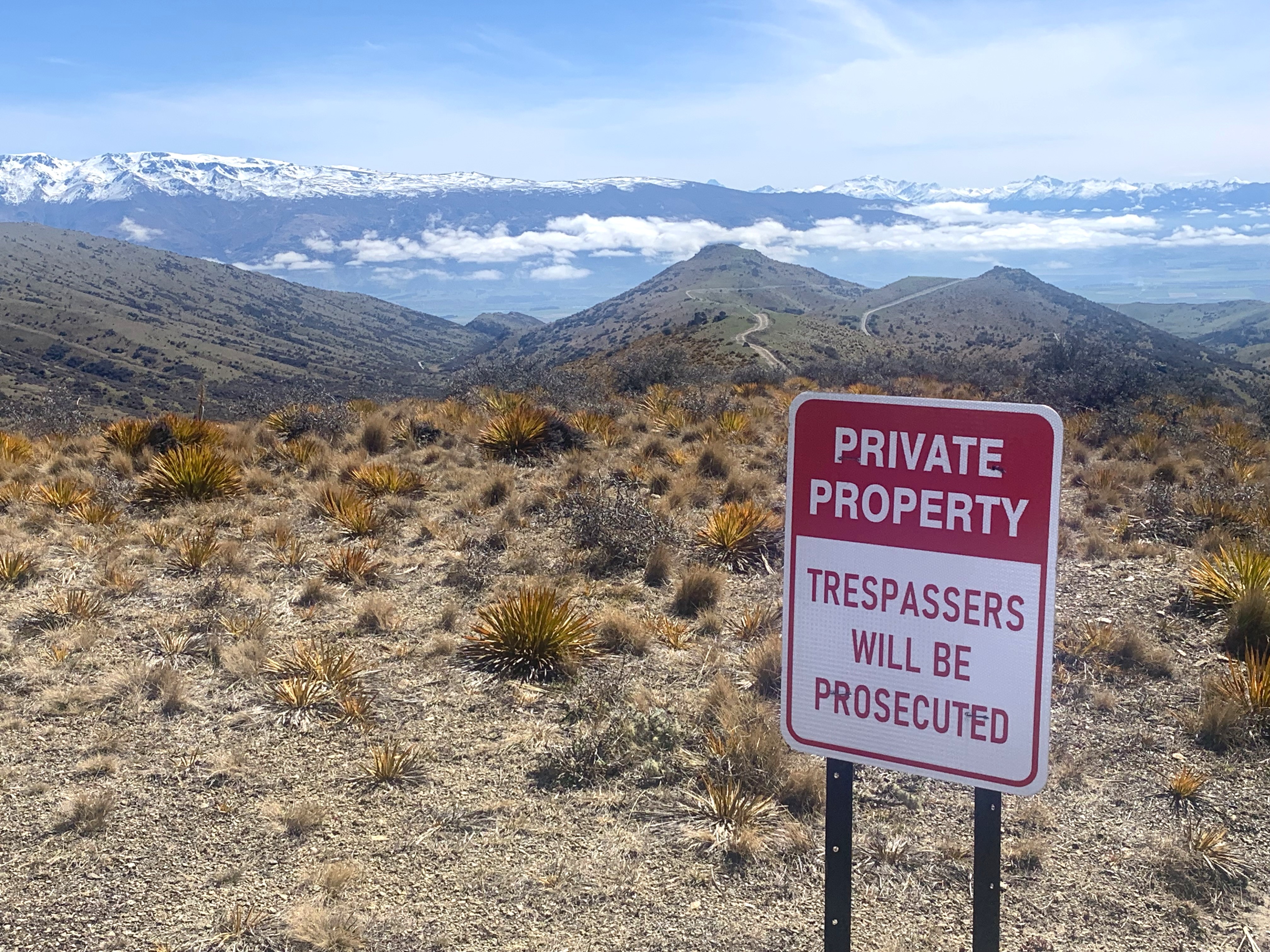
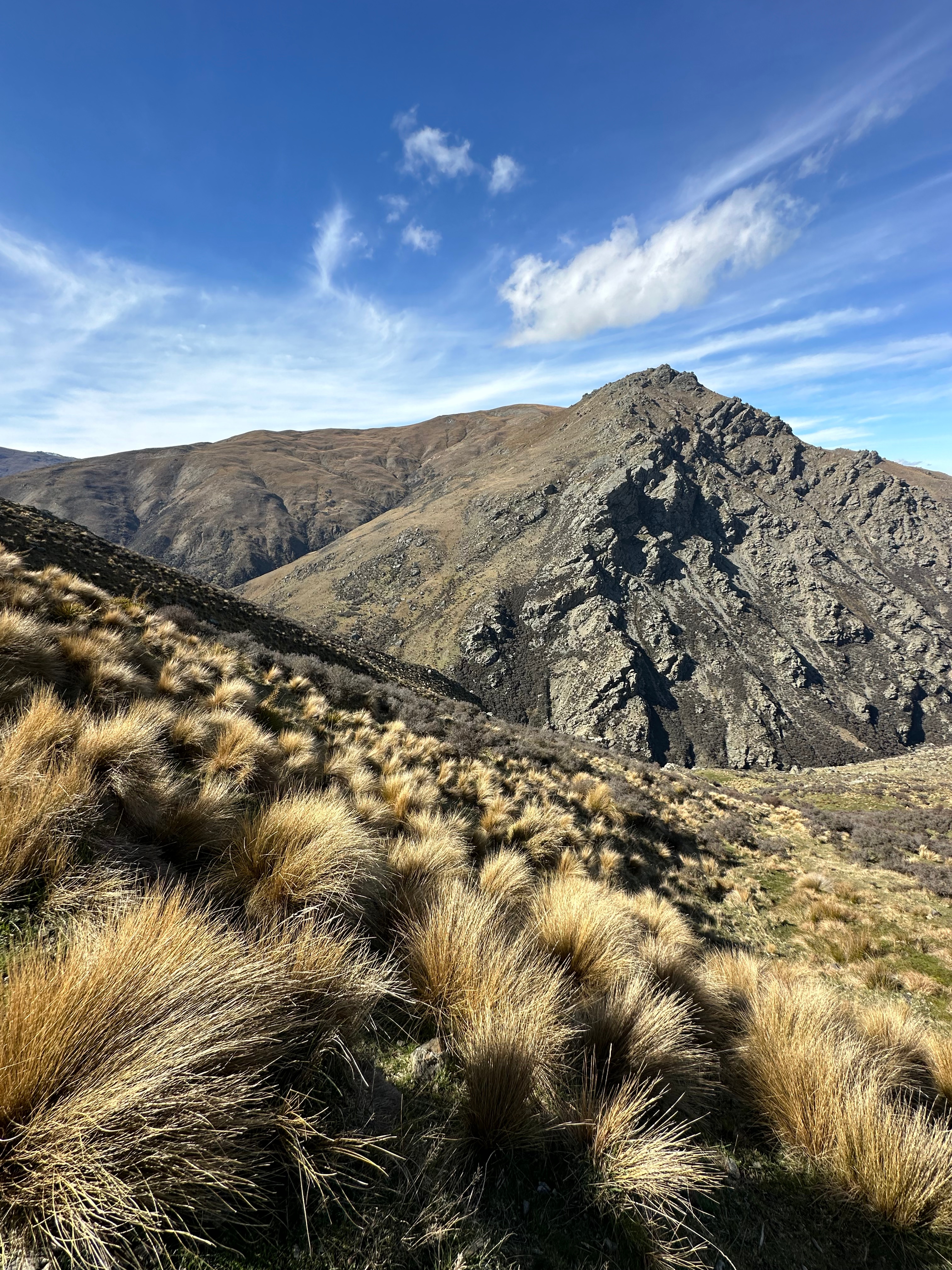
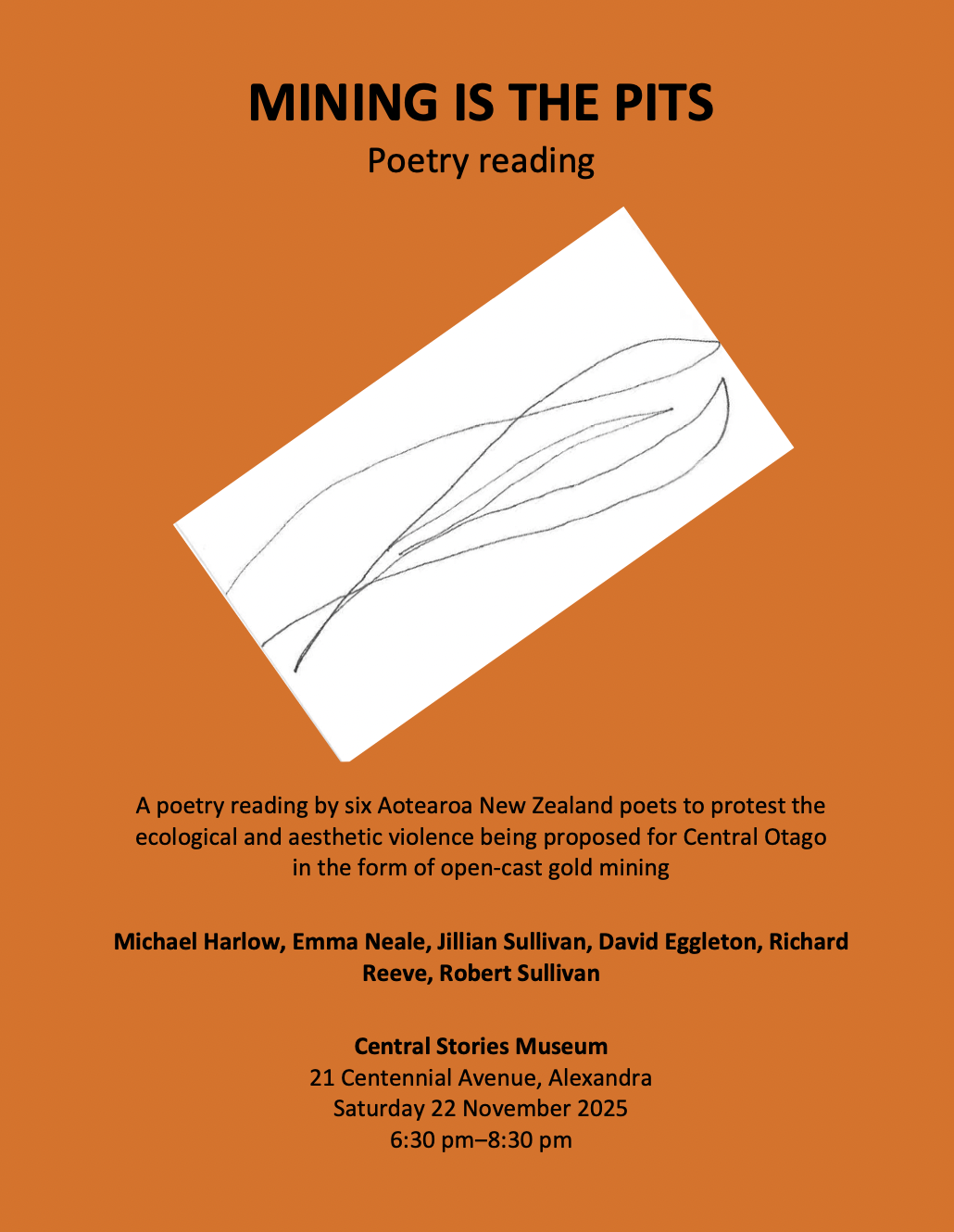
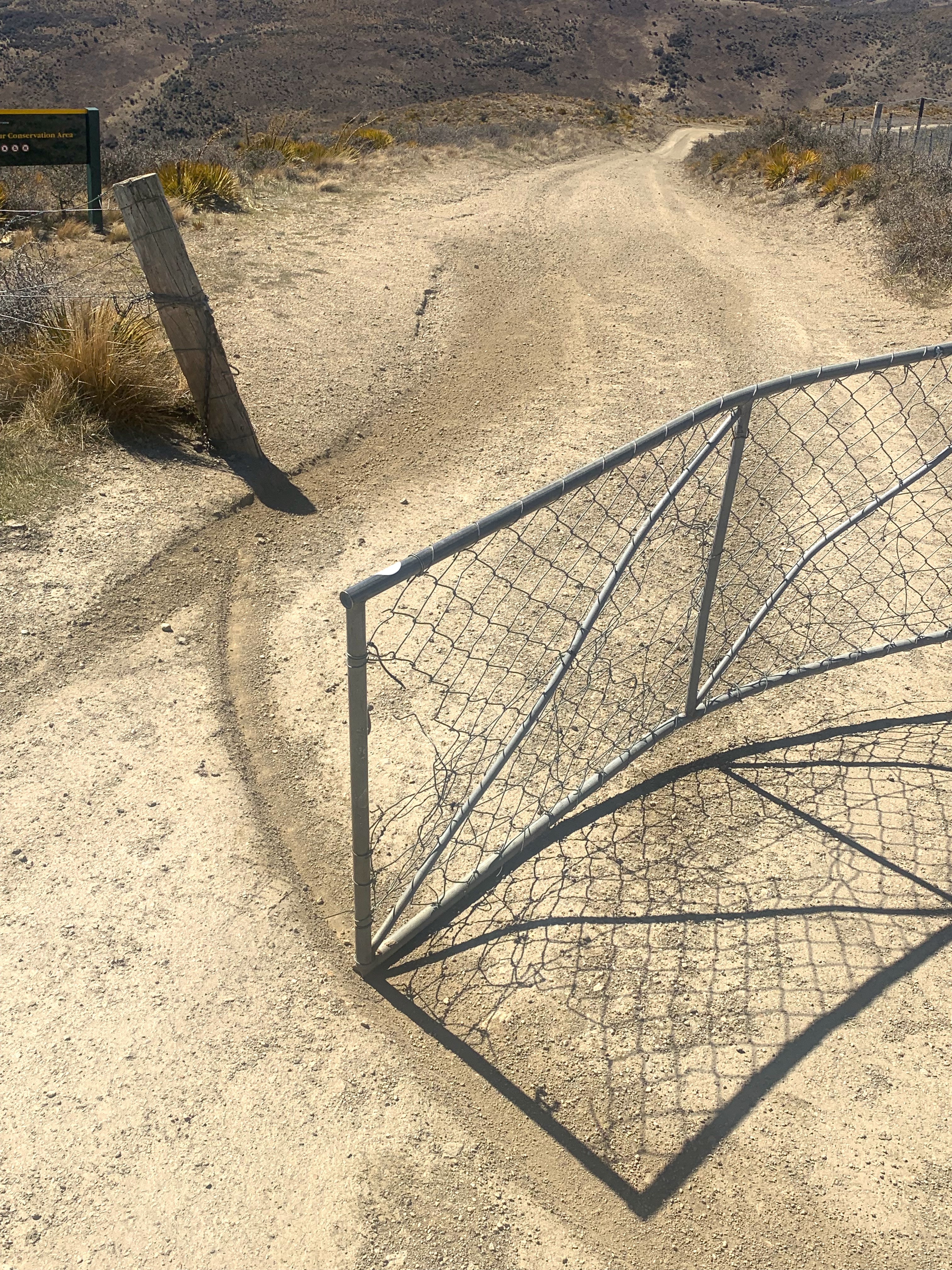

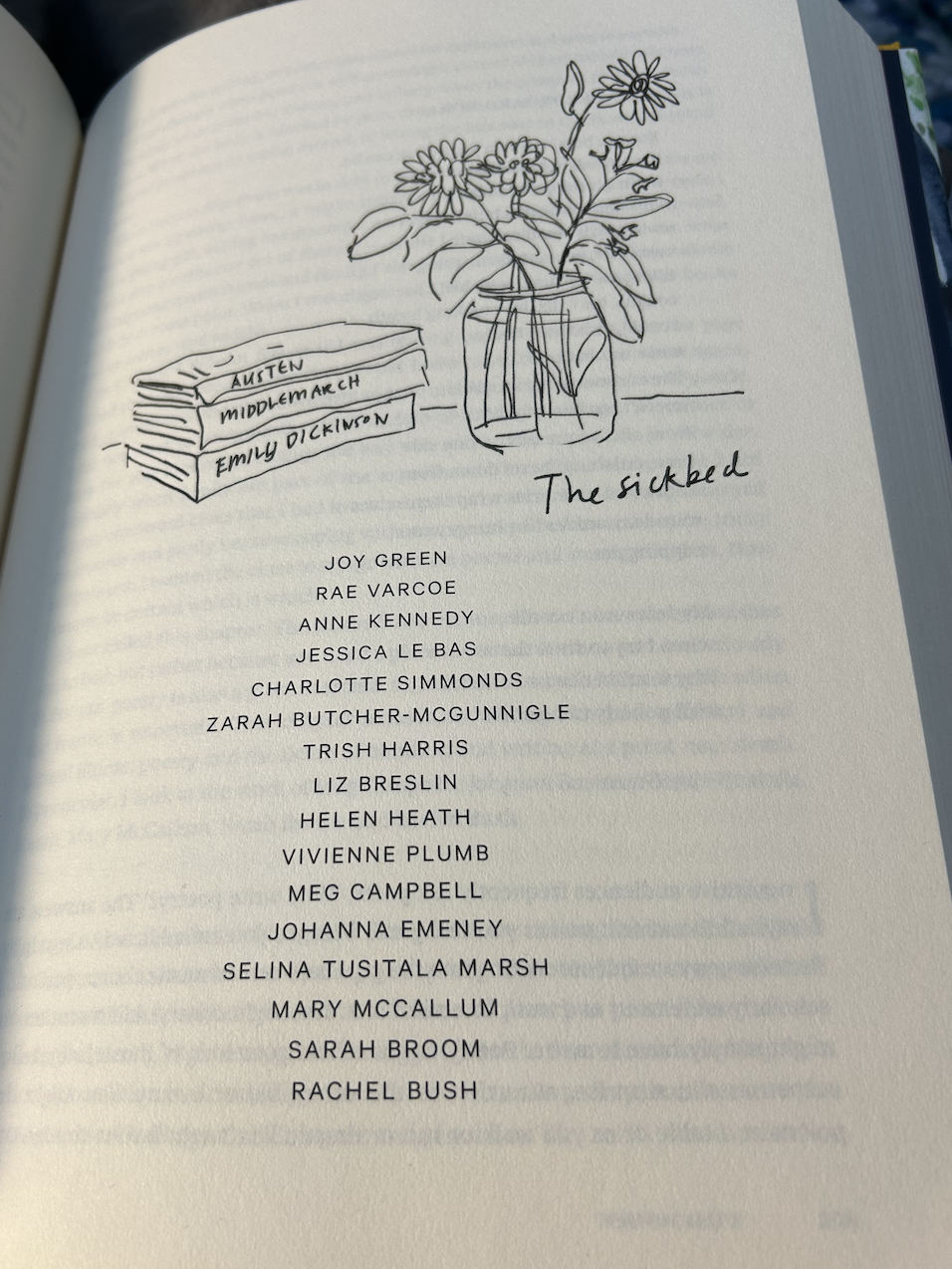
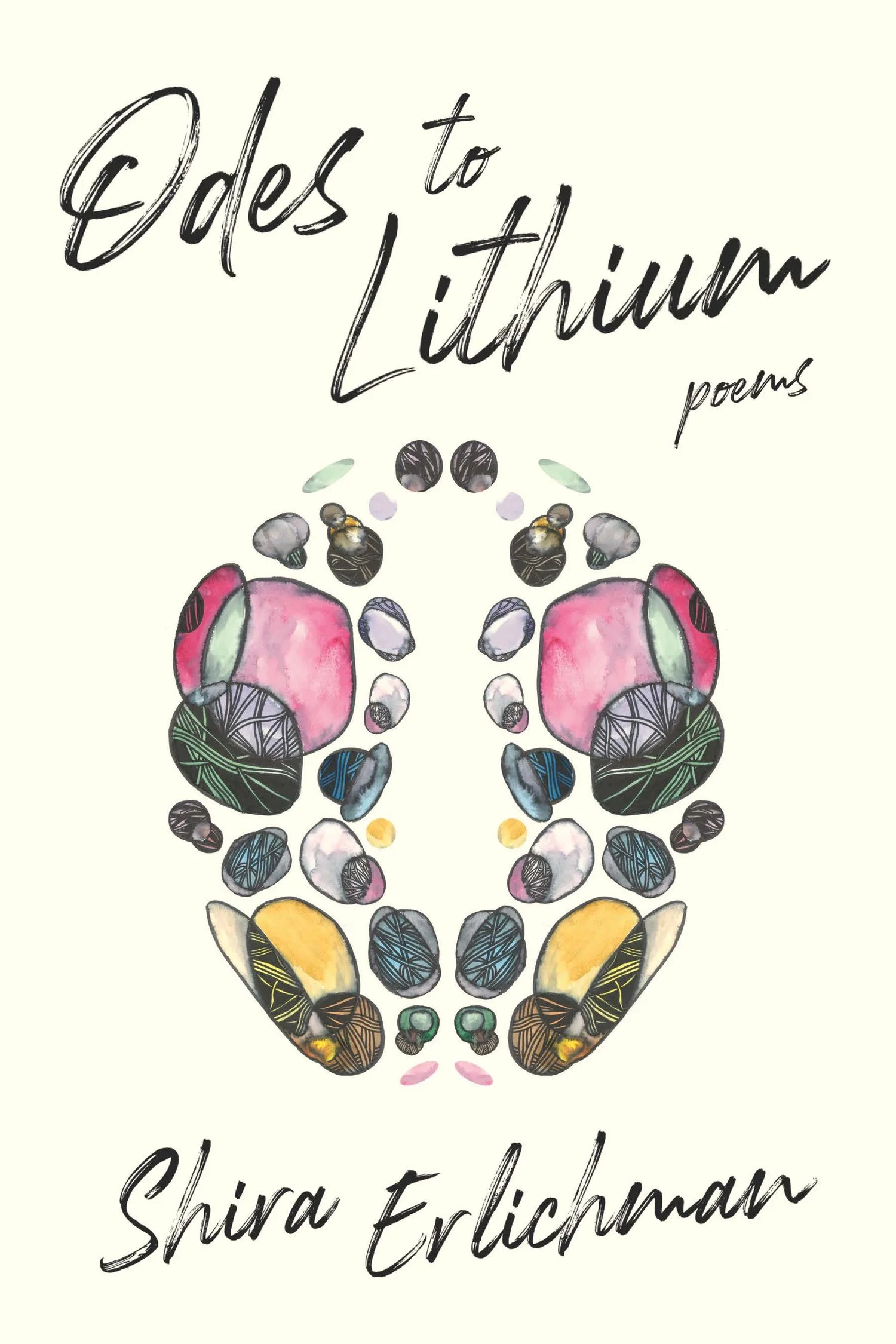
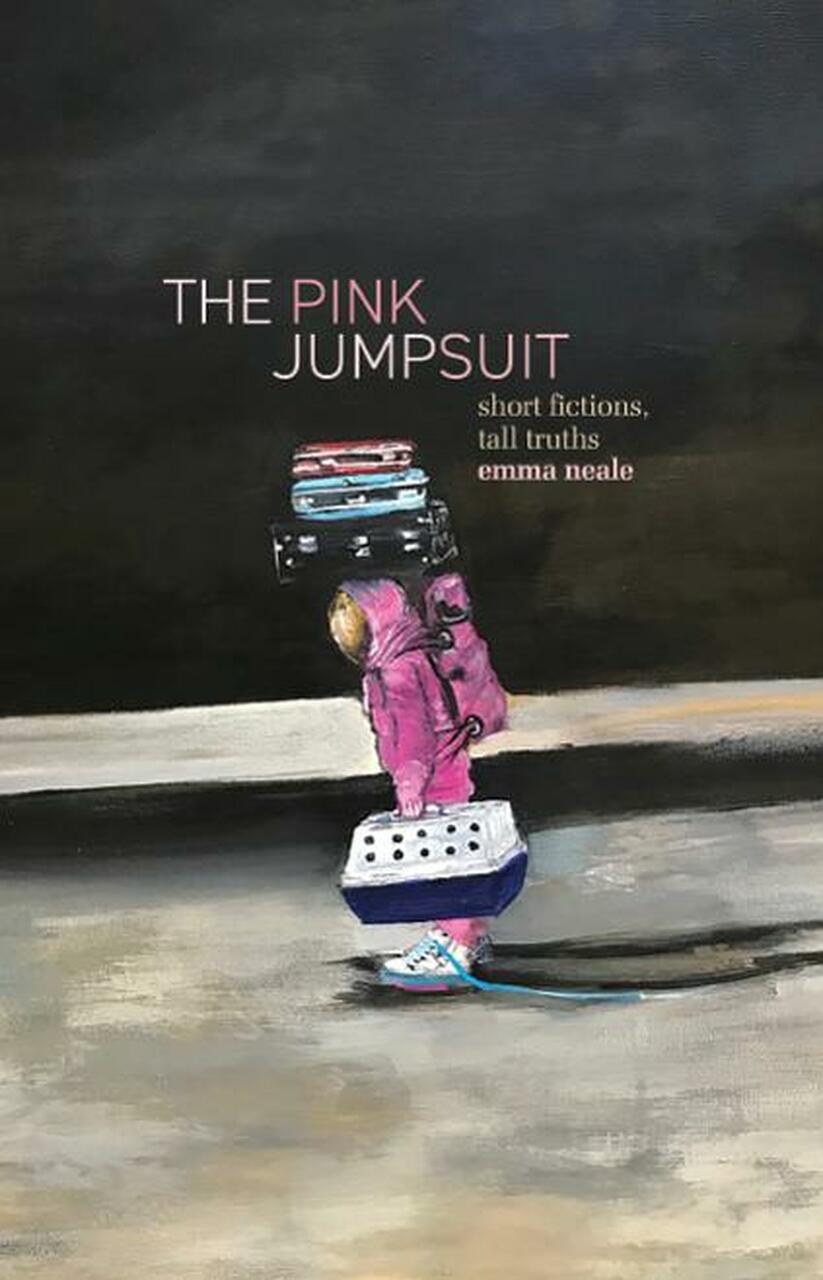
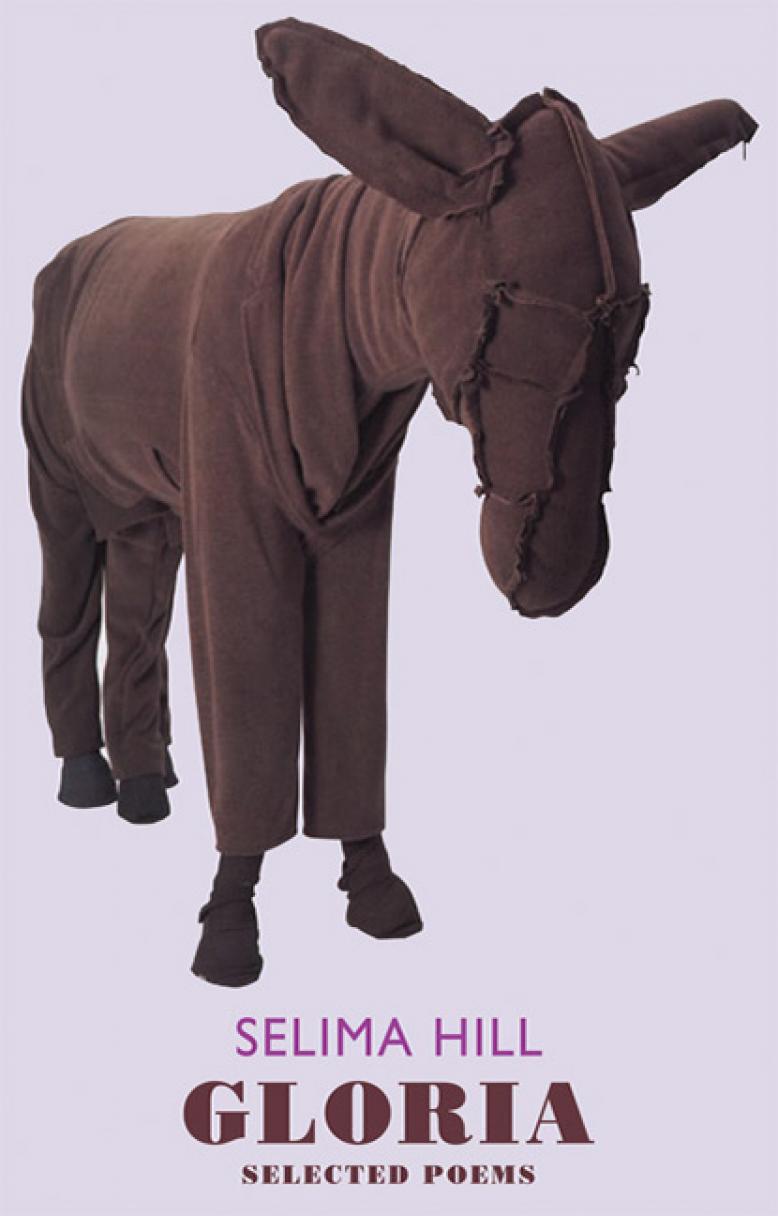
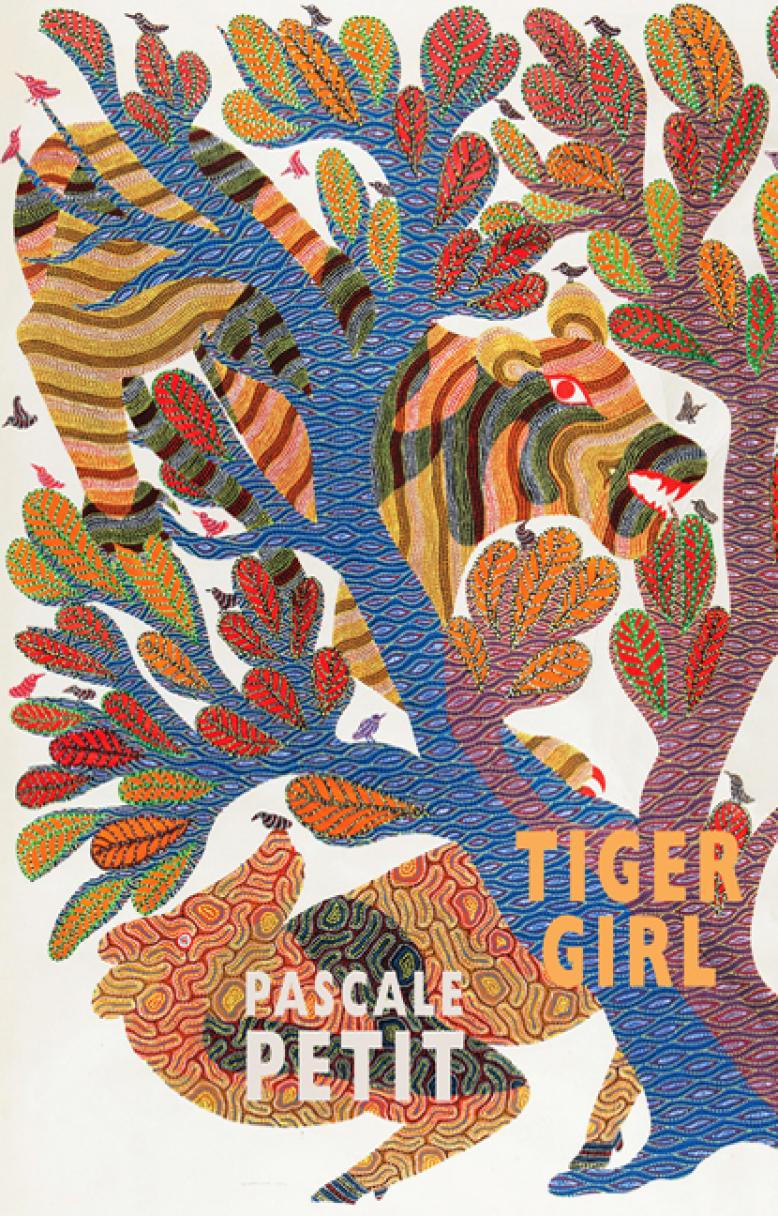
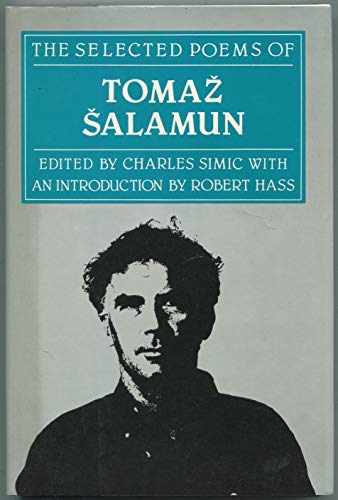
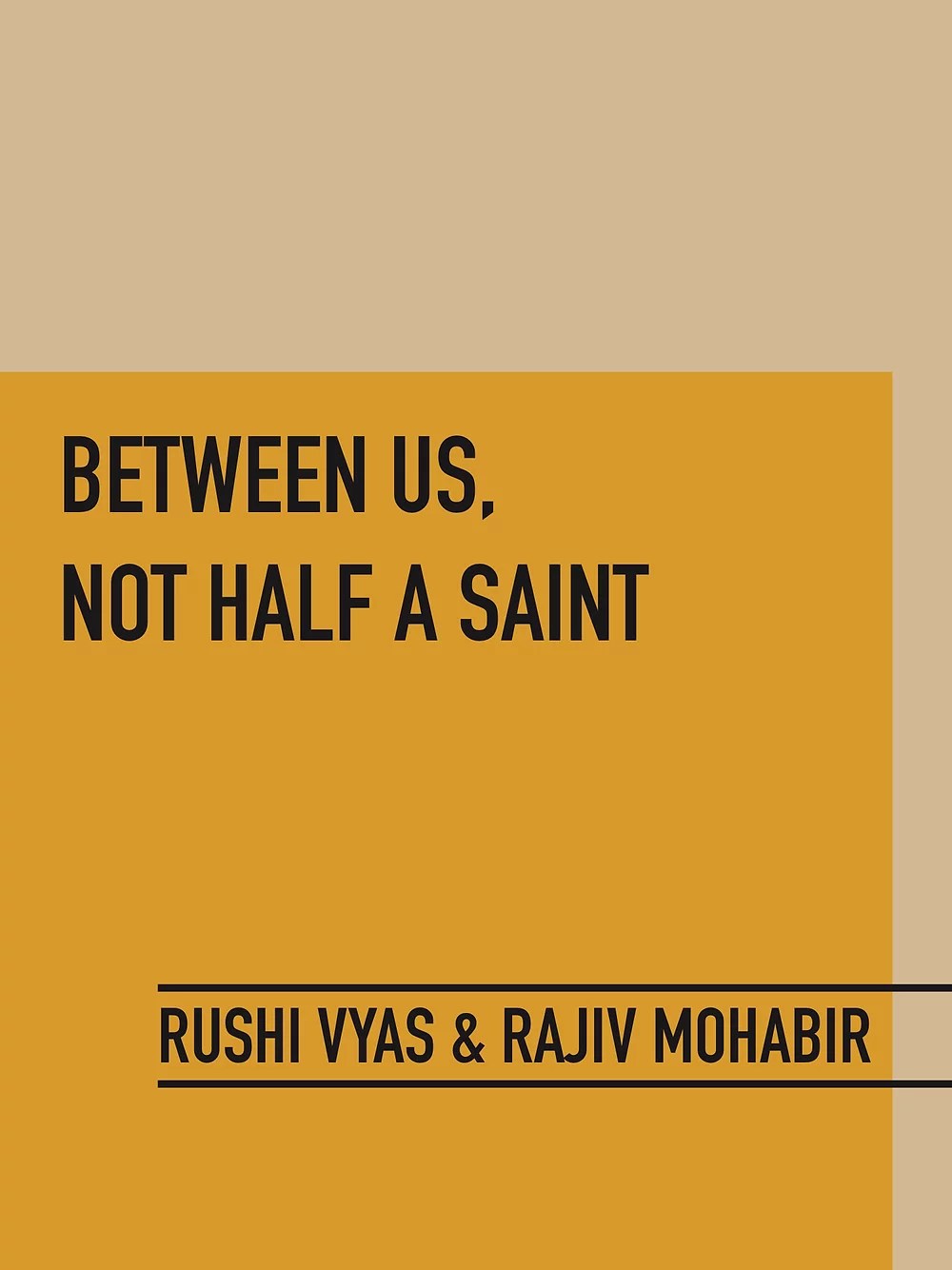
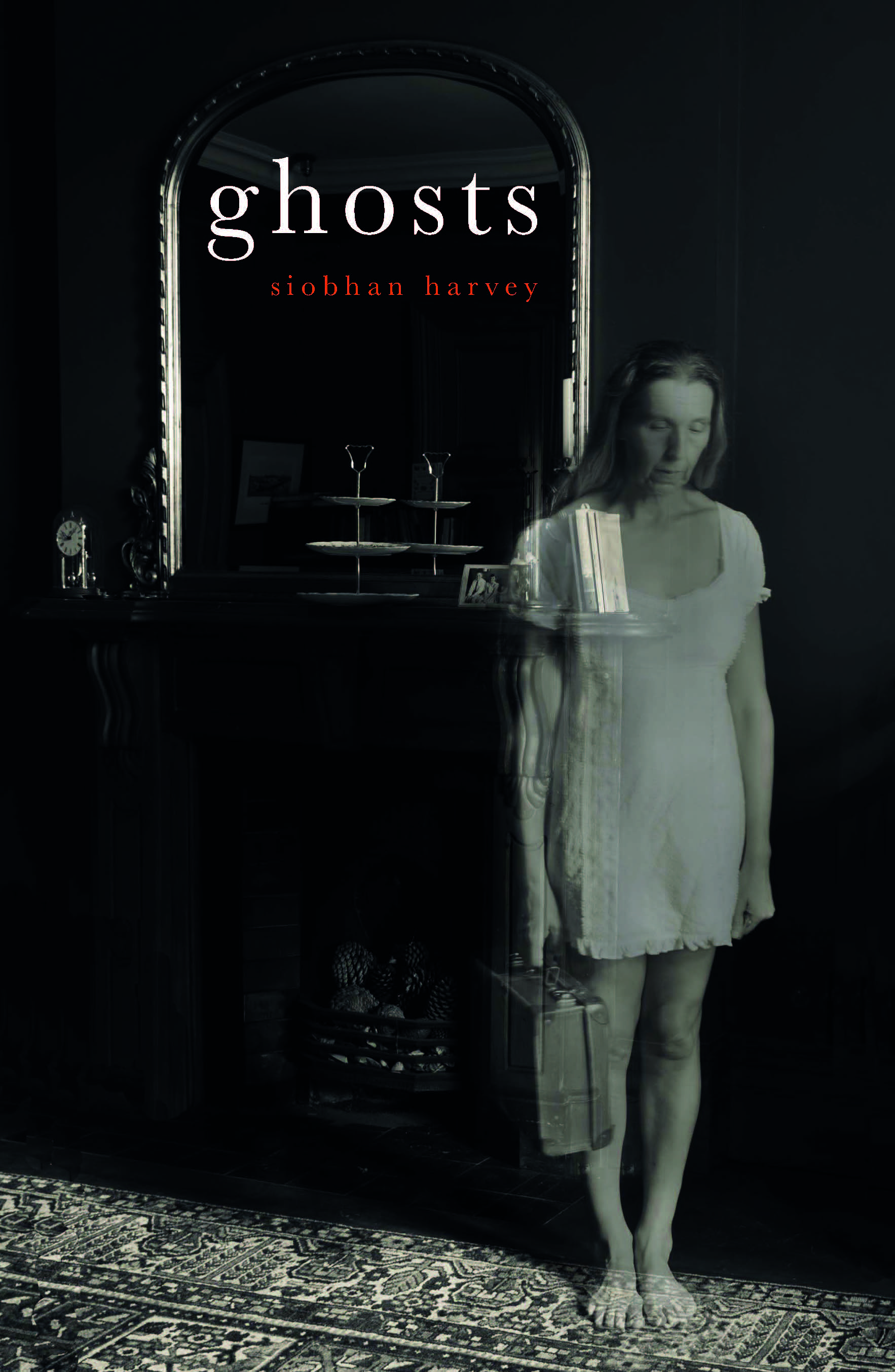
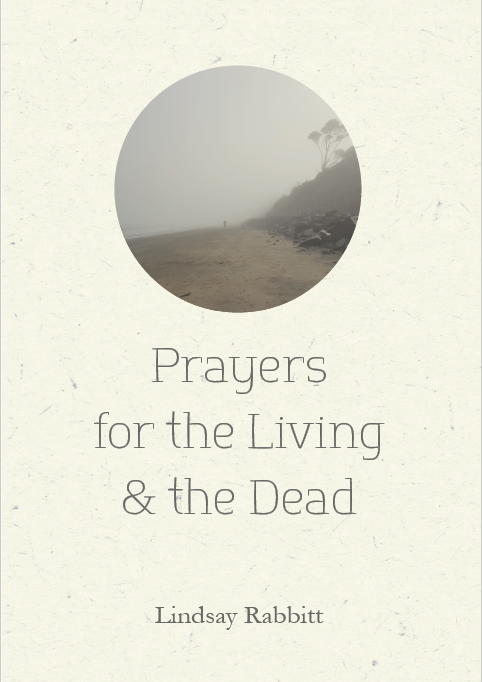
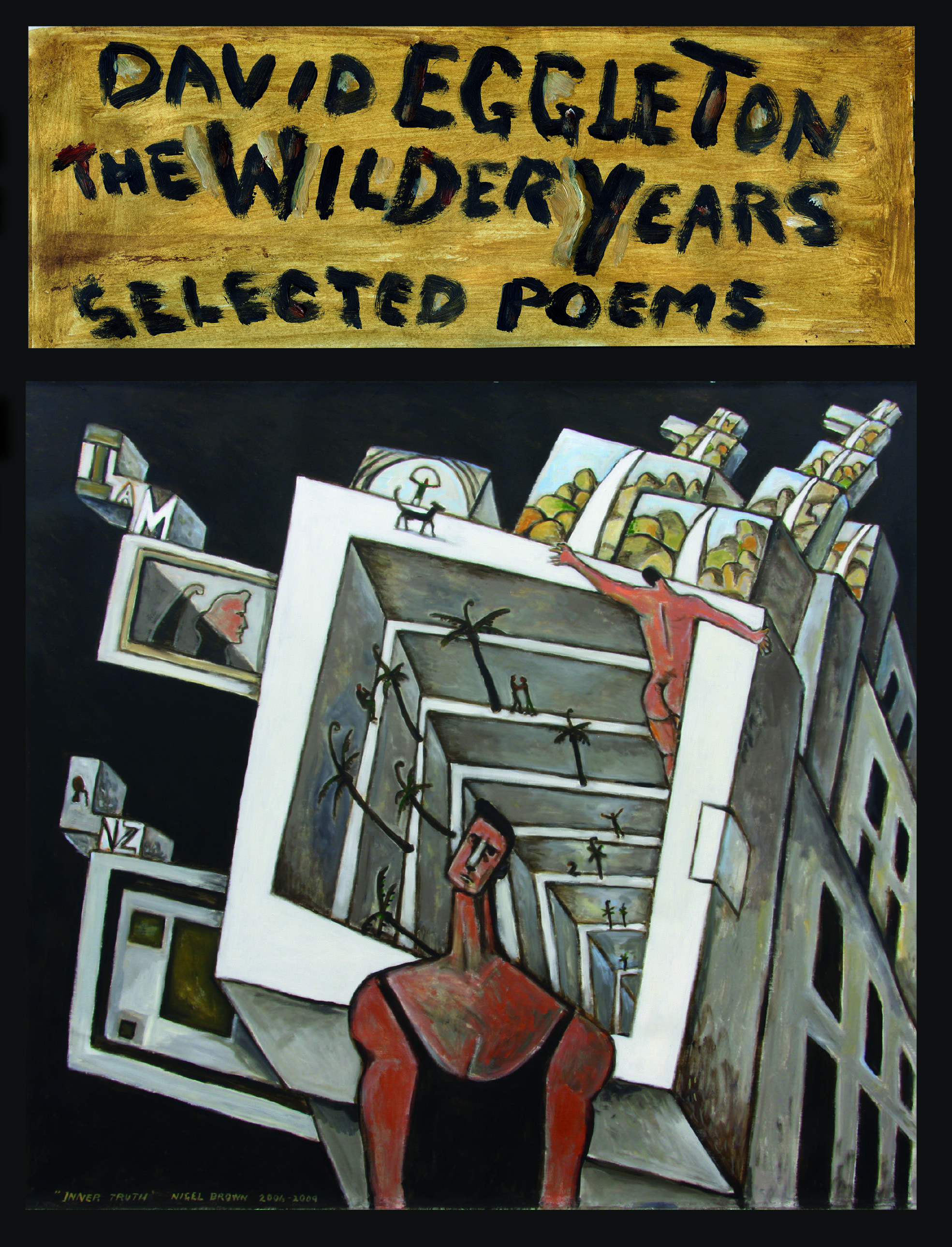
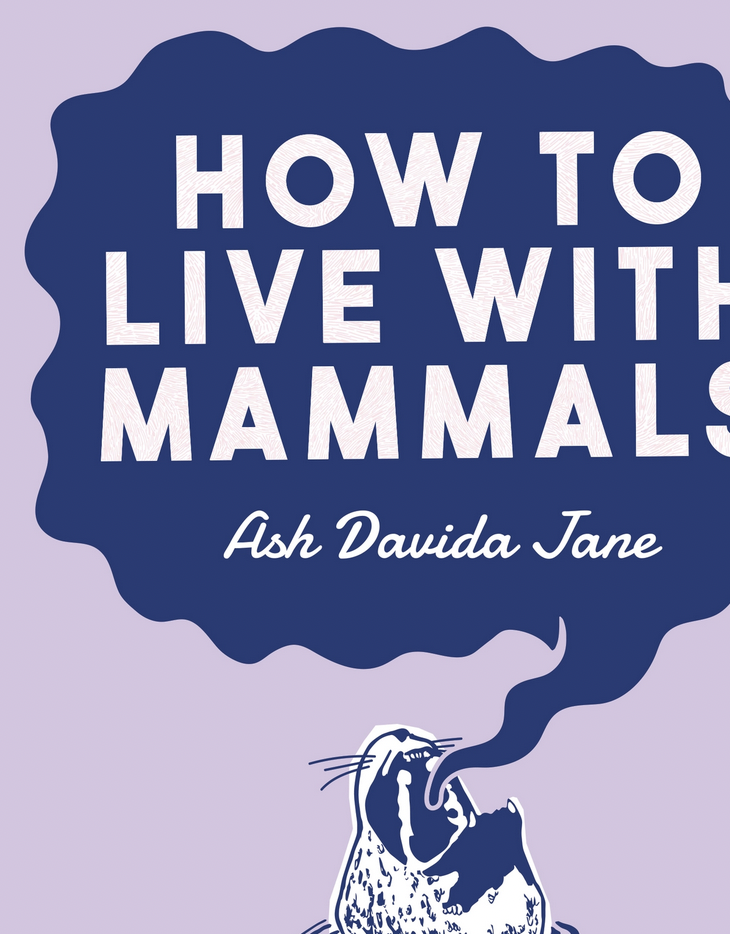
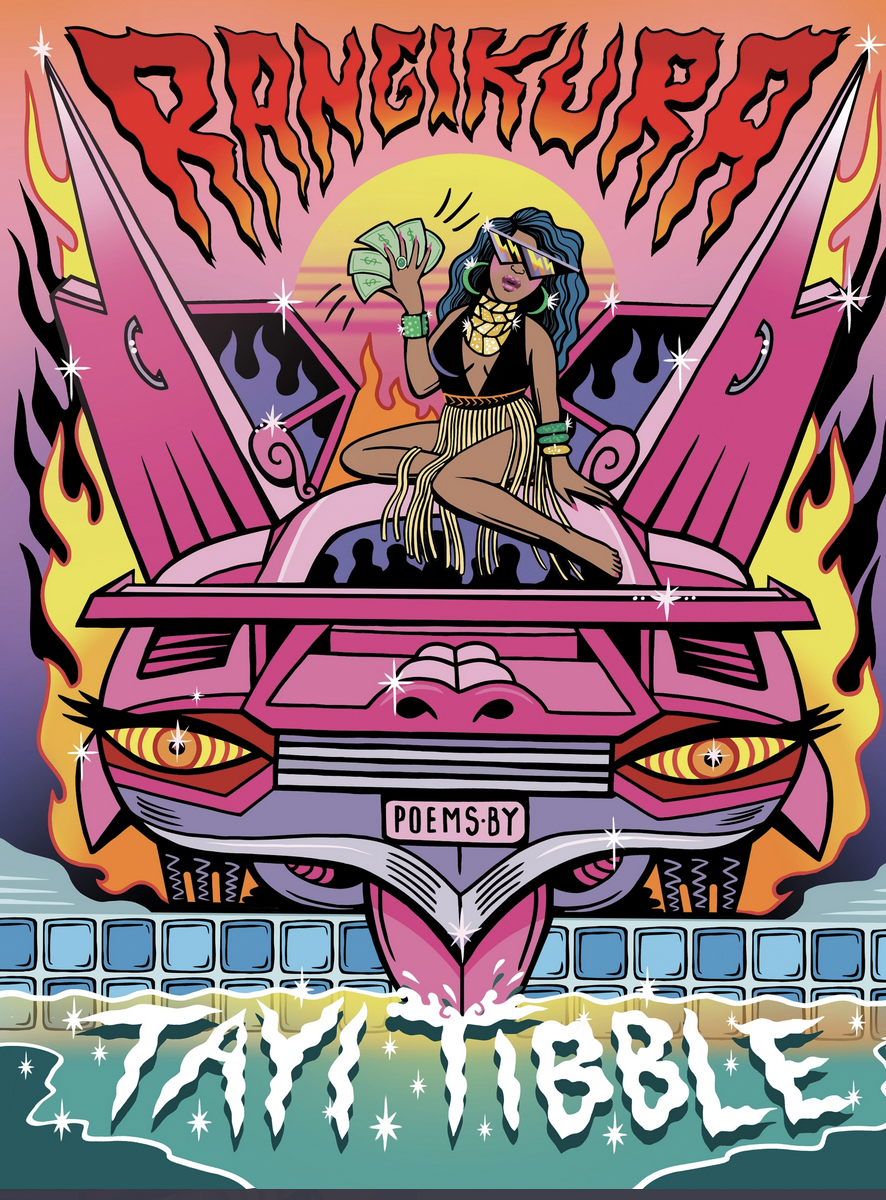
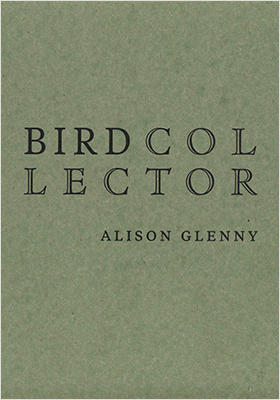
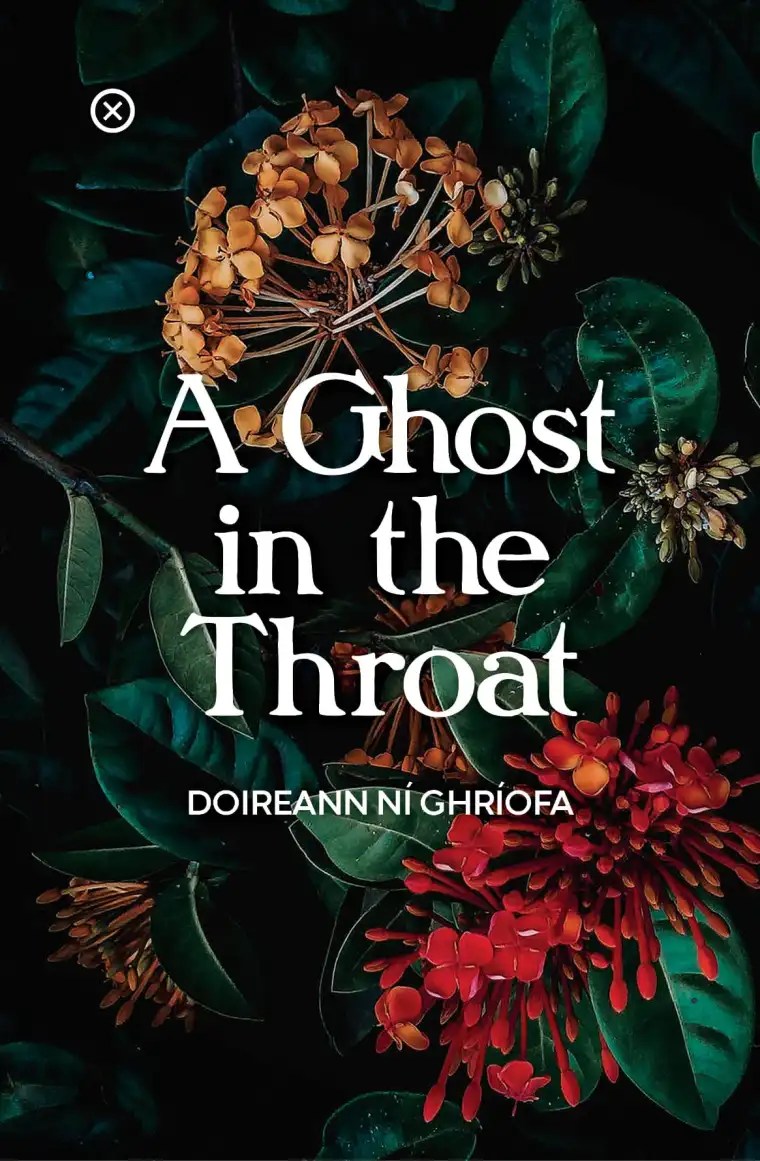
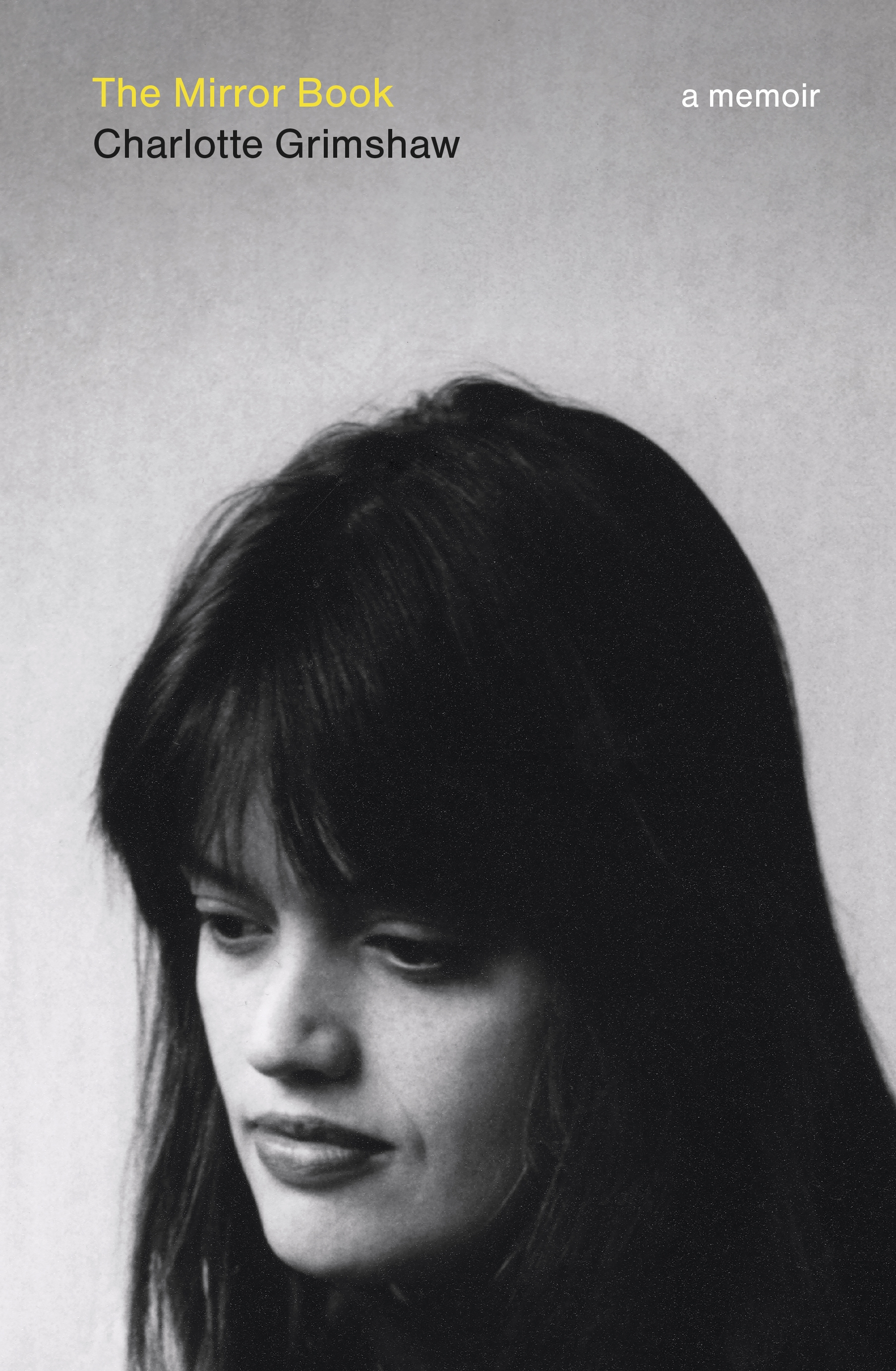
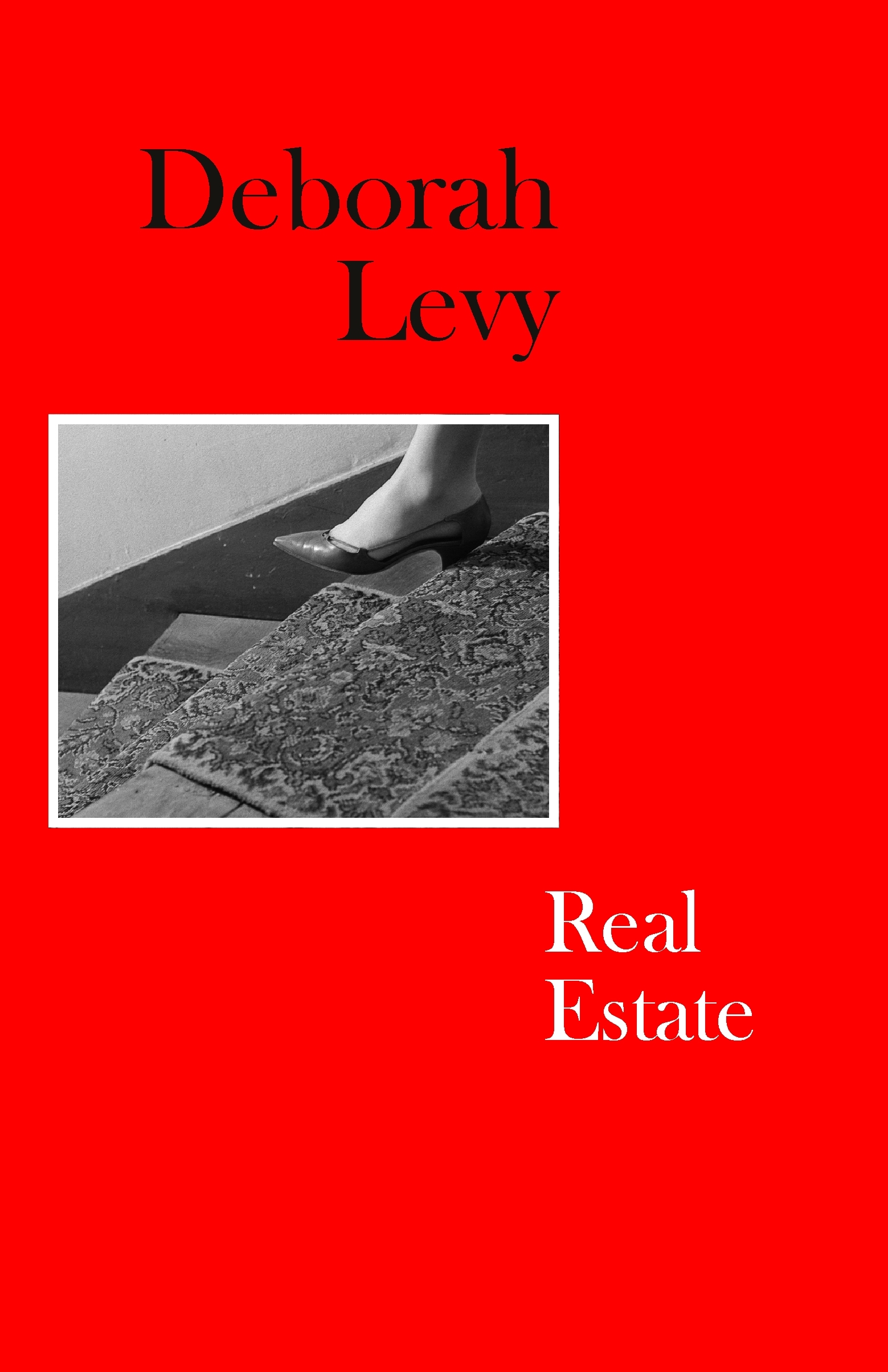
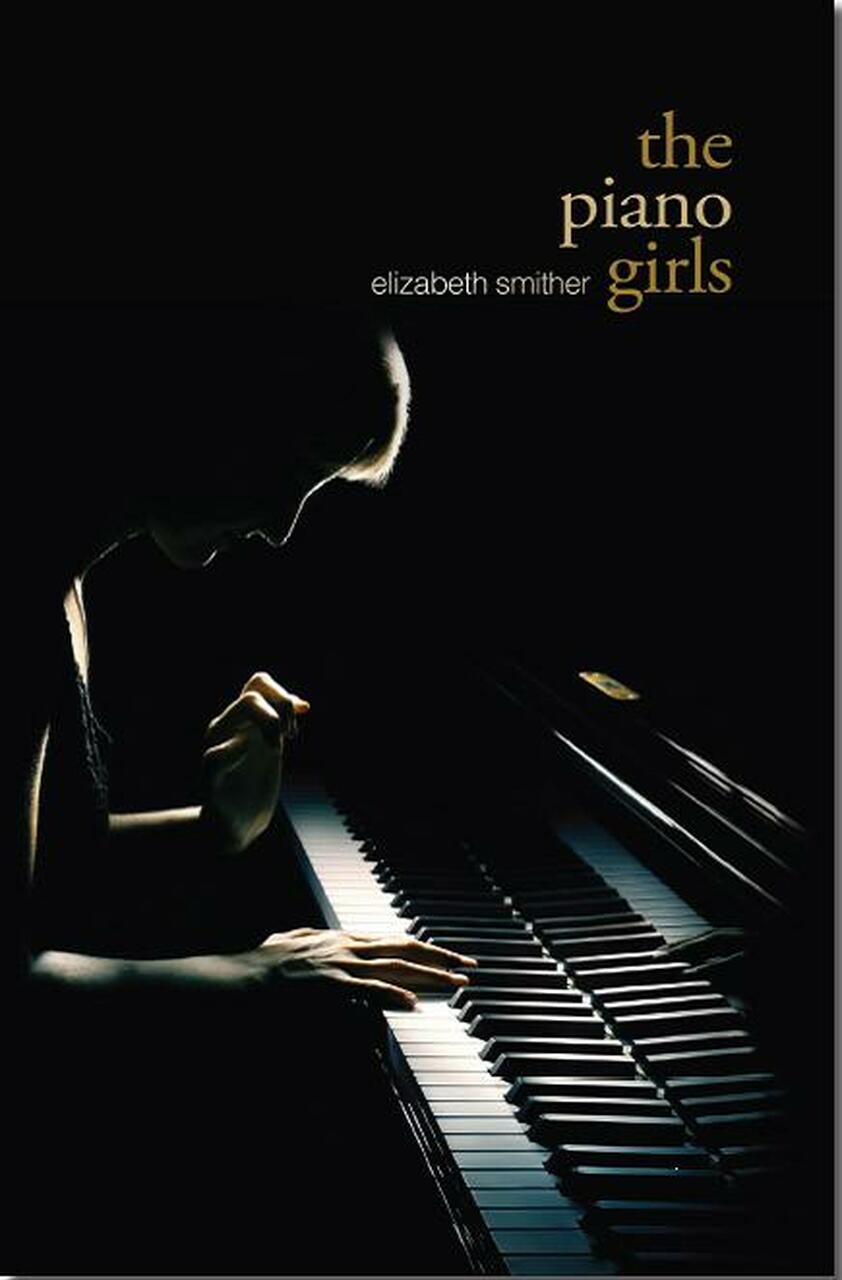
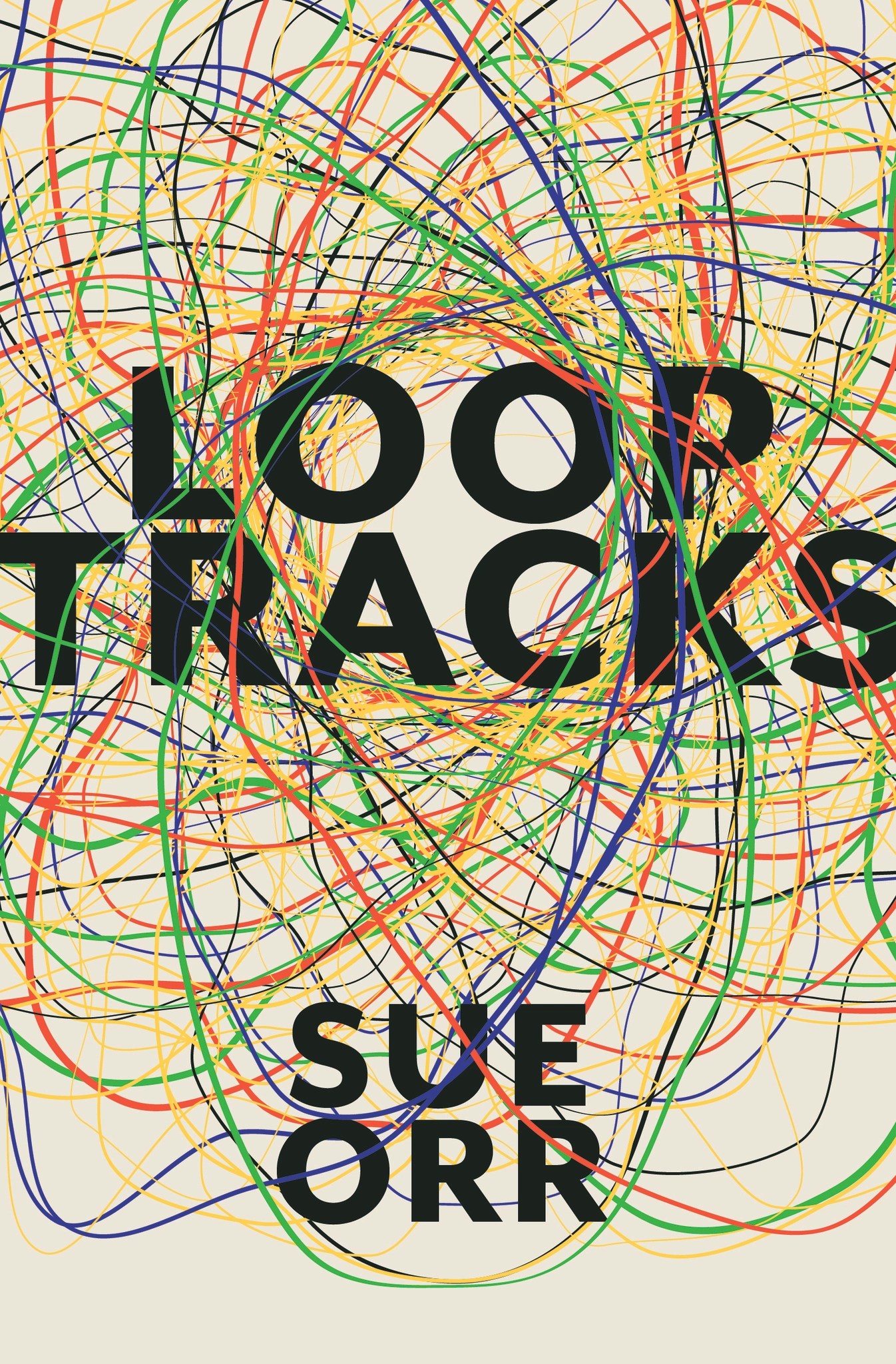


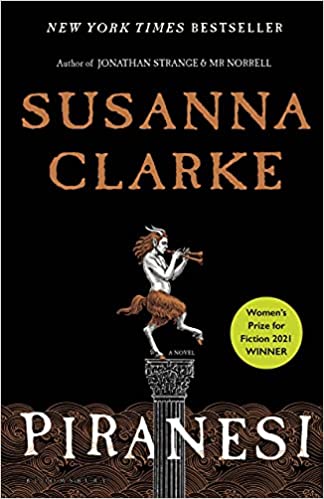
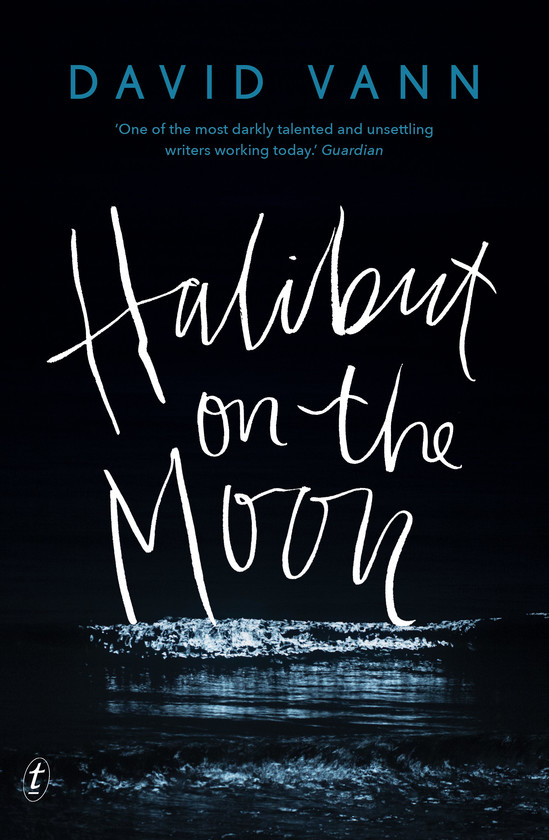
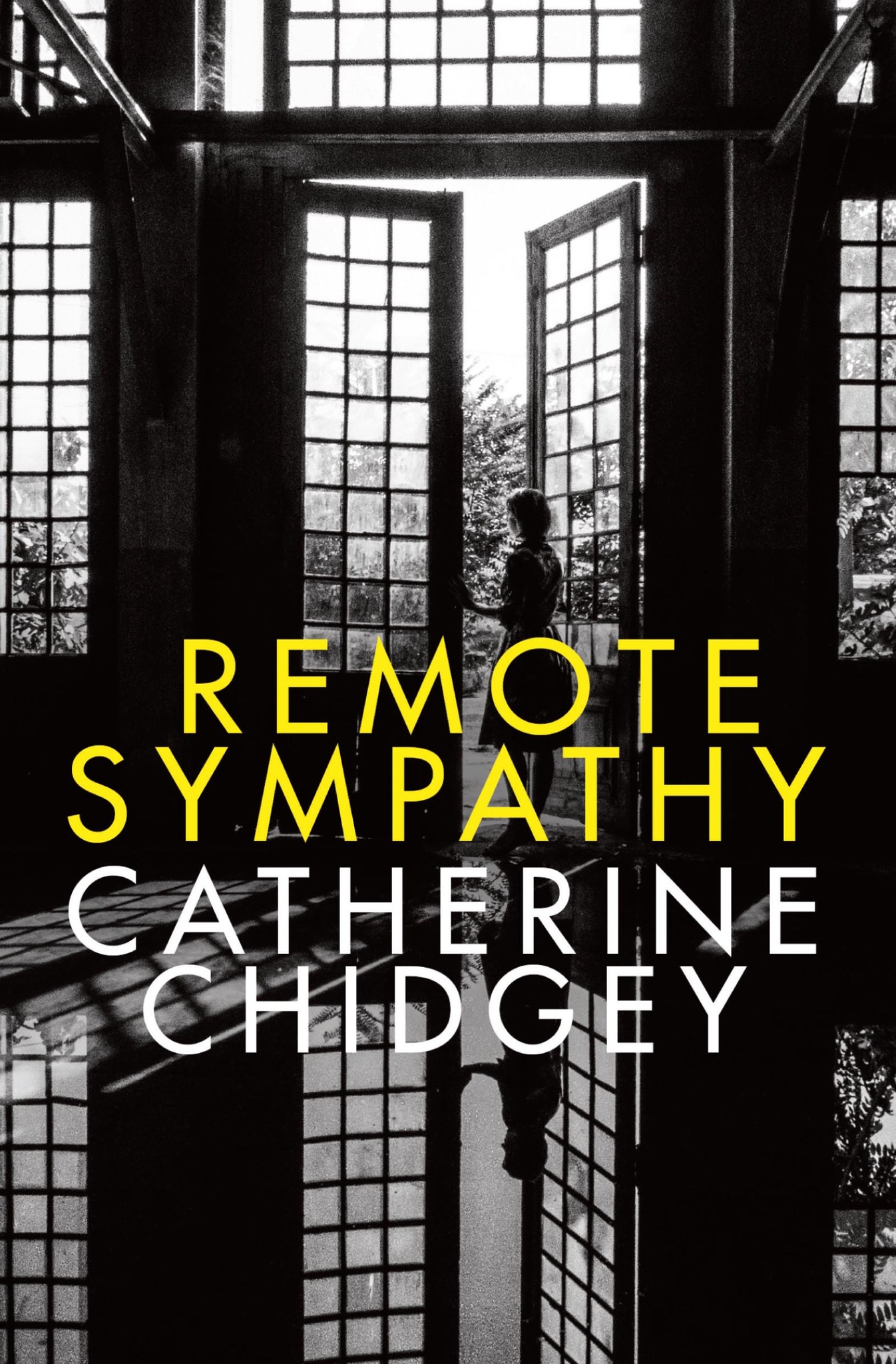
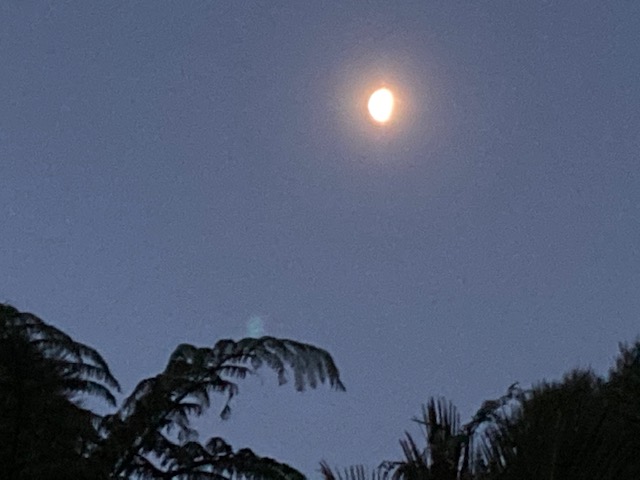
 NZ Poetry Shelf