Full details here

Full details here
Like thumbprints, the moulding of the mountains
made by light and shade, the long spine
like folded paper, the crane of peace perhaps
but we are a long long way from that.
from ‘Tears and Wounds’ in The Lustre Jug (VUP, 2007)
Some poets you carry with you. Every new book is a significant arrival. The poetry of Bernadette Hall has been like that for me. Her writing touches so many levels, from heart to ear to eye to cheek. Her writing relishes warmth, connection, observation, experience. Living. Reading. Questioning. Ideas. As I travelled through Bernadette’s books again, looking for poem extracts to add to our conversation, I realised what a tough job I had set myself. I wanted to quote everything.
Needing a word
for the little jumps
on the surface of things
(that certain
blurring of the edges
like the sea’s turning back
or the gulls hitched up on elastic)
I’m still hanging around
My sleeves ripple like flags
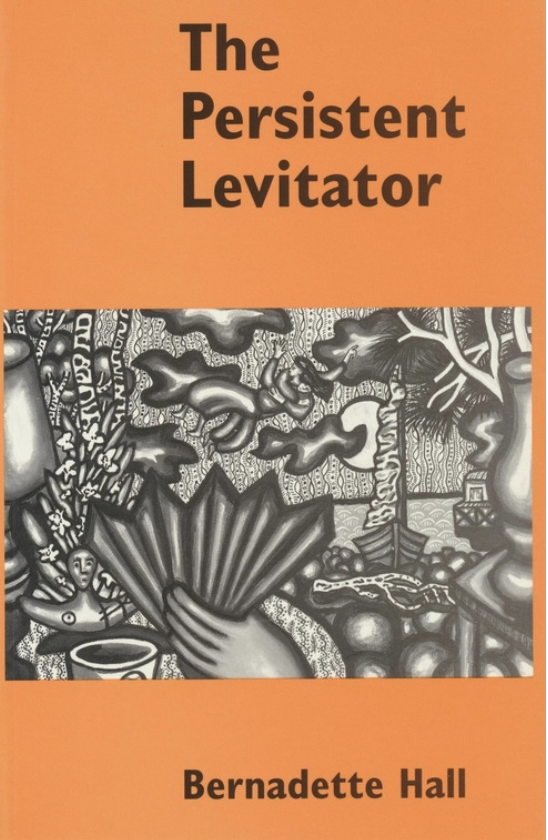
from ‘the persistent levitator’ in The Persistent Levitator (VUP, 1994)
Paula: Thank you so much for agreeing to an email conversation with me. I have been fan of your poetry for a long time, so this feels like a much needed outing. I have no idea how it will unfold but I am picturing the two of us sitting down on the beach watching the waves roll in as we talk about books and poetry, about reading and writing. With a flask of tea. The sky is blue and the sun is shining but there’s a nip in the air because, after all, it is autumn.
It is so long since we have seen each other, such corrugated and challenging times for everyone. Books and writing have been an essential part of my day. Have you read anything, any genre, in the past year that has lifted you? Anchored you? Taken you apart and reassembled you?
Bernadette: A gorgeous afternoon here today, dear Paula. A slight tremor in the leaves of the trees that crowd around my little writing room. I like being backed into a small, dimmed space like this. As if I’m underground. I’ve spent much of the last few weeks way up on a high ladder, pruning dead wood out of olive and plum trees and a peach. And a hedge which I think is called taupata. I’m much in love with all this, being way up there in the air. My body knowing what it has to do. Shifting, balancing, rebalancing. No thinking. No talking. No words.
And then of course I do come back. To this place. To the big white desk. To the walls that are covered with books and paintings. The door open to the gravel path that goes one way to the front of the cottage and the other way to the street. And the world is full of suffering and outrage and there are words, words, words, and there are screams and there’s weeping and there’s the ripping shrieks of missiles. And all the while the glaciers are melting. I’m not writing much at the moment. I haven’t got words for it. But I am reading. Voraciously, hungrily, reading and rereading. Mostly non-fiction. Some fiction. Not so much poetry. For poetry hurts. And I can’t say why.
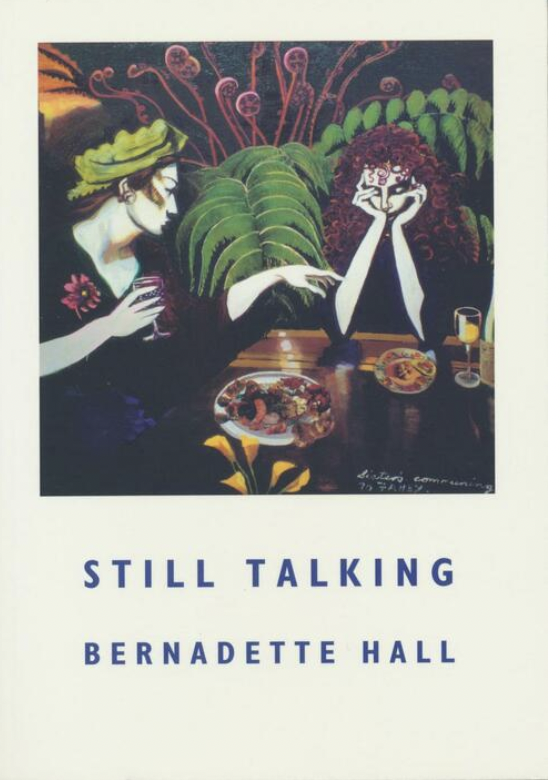
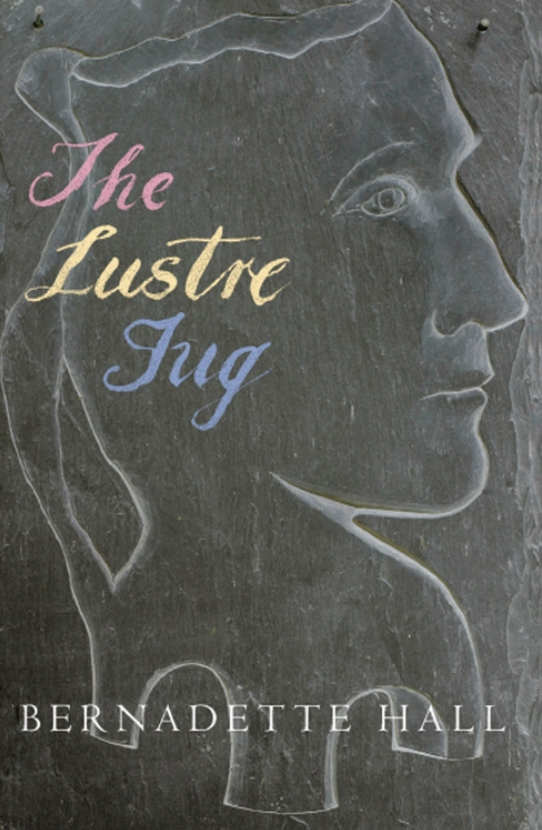
Paula: To picture you pruning and then in your writing space is a welcome image in my head. I agonised over whether to reboot my blogs in 2022, but it came down to a love of words, books and writing connections. I have been thinking about the poets who have mattered so much to me since my debut collection in 1997. The way the lines of certain poets sung to me: This is what poetry can do. Were there poets important to you in your poetry beginnings?
Bernadette: I am so grateful to you, dear Paula, as a poetry connector. Every time you set me a little task, I feel the jolt of a writing impulse and am grateful. In the late 1970’s, not long after the birth of my third child, I joined a writing group run by John Dickson in Dunedin. That’s where I met the Americans, most memorably, John Berryman:
My daughter’s heavier. Light leaves are flying.
Everywhere in enormous numbers turkeys will be dying
and other birds, all their wings.
from ‘Dream Song 385’
So, the scene is Thanksgiving. And the little child recurs. What resonates with me in Berryman’s work is not the whole but fleeting lines like these. The final stanza in this particular poem is one I go back to again and again. It reassures me that poetry is my place.
My house is made of wood and it’s made well,
unlike us. My house is older than Henry;
that’s fairly old.
If there were a middle ground between things and the soul
or if the sky resembled more the sea,
I wouldn’t have to scold
my heavy daughter.
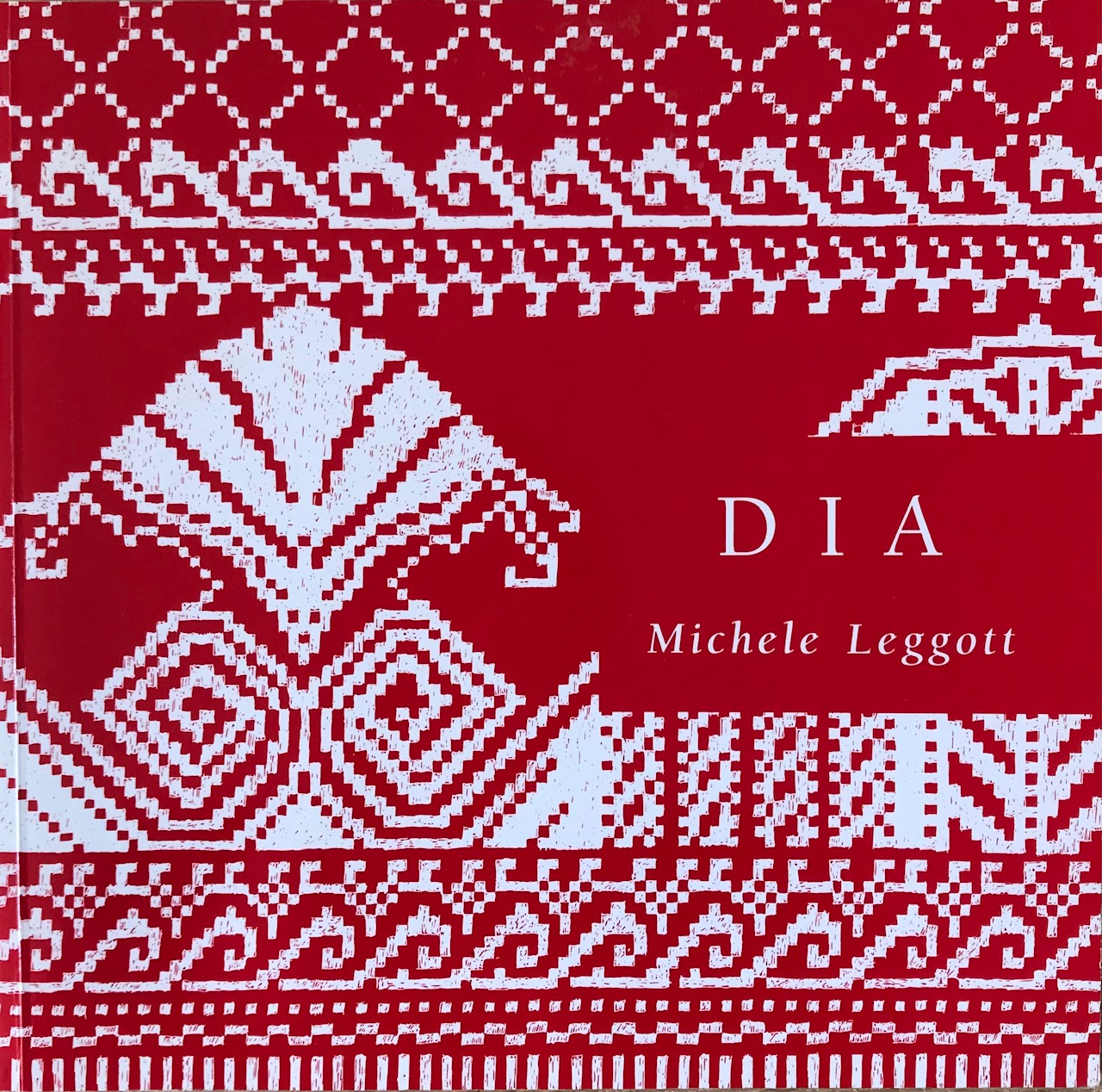
When it comes to New Zealand poetry, my hand reaches time and time again to DIA by Michele Leggott (AUP, 1994), where the unsayable is said and gorgeously:
the heart in its cage stands up
desiring fine instruments what shall we play?
laughter startles the sublime lyric c’est
le pays du desire and I its best gesture
wake in tears
from ‘CIRCLE’ in DIA (AUP, 1994)
I’m currently reading, and re-reading as I go because it’s difficult, a substantial piece of non-fiction, On Equilibrium by John Ralston Saul, published in 2001. When it comes to imagination, he describes it as ‘a rhythm of the body.’ So it’s something that’s there, ‘in our intellect, our perception, our body as a whole, our relationship to others, to what we create, to rooms, to atmospheres.’ What do you reckon? Thrilling, eh?
Paula: I love that! Imagination as a body rhythm. This week, I posted a review of Janet Charman’s fabulous new collection, The Pistils, and found myself navigating its ideas, heart and physicality through rhythm. I find both head and heart reactions, body reactions to the world, to a poem. Body music. You got me thinking how a poem is a set of rooms and corridors, atmospheres and relationships. How essential rhythm is as you write (and read).
I can remember analysing one of your poems (‘Rathcoola rain’) at Hagley Institute with a group of students. In your company! I opened the music of the poem as a way of walking through its ‘rooms and corridors, its atmospheres and relationships’. Its ideas, its physical reach. Your poems have always struck me in this way. What was important to you when you were writing poems at that time?
The rain is like mice scrabbling in the ceiling.
It’s like the crackling of plastic,
the first licking of flames in a handful of wood shavings,
the complicit turning of pages in hundreds of Mass books
It is slight and light and insistent.
from ‘Rathcoola rain’ from The Lustre Jug (VUP, 2009)
Bernadette: Survival! I needed an ‘island’ where I could just be. A secret place where words which I didn’t know were inside me might find their way out. A place, I guess, of instinct and intuition. A private, solitary space. For truth-telling. As far as I could feel it.
Paula: I think it’s how I work. A secret island where I’ve no idea what paths I will track and what will fall upon the notebook page. Especially now when writing is a survival aide. Are you able to write at the moment?
Bernadette: More prose than poetry at the moment. Bits and pieces. Though there is one new one, a love poem in precarious times.
On adding up the loves of our lives
When I walked into the room
my garden walked in with me.
When he walked into the room
his cat walked in with him.
I heard them whispering in the night.
‘Don’t worry, little man,’ I heard him say.
‘I’m sure the sea-wall will hold.’
Paula: Ah so lovely! I am writing both poetry and prose but not sure how I feel about publication. Do I want or need this? I am on my third draft of a children’s novel and love having this place of retreat. I also write a tiny poem each day to go with my Wordle result. It is automatic writing that taps into an autobiography of the everyday, found poetry, surreal tracks, the imagined, the felt. What draws you to prose? A patchwork quilt of prose?
Bernadette: Or a rag-bag! Prose is often something I’ve been invited to do. It’s like a job that makes sense before I begin. I think the poems come from a deeper, more unpredictable place. Or rather, the ordinary, lived experiences that are at the base of a poem shift of their own accord into a darker, less rationally controlled space. It doesn’t always happen, of course. So you learn to be patient, don’t you. You sort of despair yet over the years you begin to understand that that emptiness is actually part of the process. ‘You go back and back to the same leaping off place.’ When a poem fills itself up, you feel amazed and jubilant. I don’t write all the time. I come and go. I’m a Sagittarian, I have enthusiasms.
Tell me about your love of children. The way you have celebrated their poetry in beautiful books. Year after year you have exerted yourself encouraging, teaching, travelling round the country, all for the sake of young writers. In the same way, your Poetry Shelf has been essential and much loved as a connector and an instigator nation-wide for years. How did you find the time? Could you share with us one of your tiny poems and a children’s poem?
A man with two shopping bags
and a dog on the lead
makes it down the street
A kererū sleeps
on the telephone wire
at the top of our long drive
A tiger reads War and Peace
to a family of little giraffes
under our carpet
Paula Green, April 24 (WORDLE poem)
The Glass Door
Open the glass door
and the whole world changes
after the splatter splatter rain
and the tiger tiger wind
and the pepper pepper hail
and the nose biting cold
the grounds steams like little dumplings
the birds sing like my warbling aunt
the cat rolls over on her tummy
and I hide in the shiny grass.
from Groovy Fish and other poems (Scholastic, 2019)
Paula: I have always loved writing for children. Walk into a classroom and poetry can liberate the most reluctant writer through word play. You don’t need rules or models. Imagination sets sail. The real world counts. It’s fun but you also navigate important ideas such as friendship, difference, what we want and need in the world. The joy of engaging with children, as they make poems matter, is beyond words.
And yes, poetry comes out of a deep unpredictable place. So private, so intimate, so vulnerable. It’s an energy source. It fits into little and larger pockets of time.
I have connected with your writing, but also in the way you have mentored younger writers. How they hold you in such deserved esteem. Did your teaching/mentoring and writing feed each other? How did you find the time? I am thinking poetry time finds us!
Under Erebus
A woman is standing under Erebus
She has wrapped all her gifts around her,
including caritas.
A bulky mammal able to feed her young.
See the red flag with its purple shadow,
the flagged road curving towards tomorrow.
There is shelter here, off to the right,
a bunch of metal rods and a cloth.
You wonder if it’s going to be enough.
Bernadette Hall, from The Ponies (VUP, 2007)
Bernadette: You’ve hit the nail on the head when it comes to the dual highway of exhilaration when that liberation of words happens between like minds. So often it’s been blissful, talking up a storm, one on one, with someone who’s on the track, as it were. In love with language, compelled to make something out of that desire. Gifted yet unsure. Open, honest, trusting. It’s a huge honour to be trusted in that way. By someone giving some part of themselves away. So the creative intimacy, the vulnerability you refer to is somehow shared. Hopefully along with laughter. And cake and good coffee!
Do you remember the little poem I sent you for your birthday book a few years ago? It’s so slight and mysterious. Yet somehow it seems to pull together all I want to say about writing poetry. Maybe the very word emporium is along the lines of Janet Frame’s Mirror City. And our job is to entrust ourselves to it. Daniella Bagozzi, a fabulous Christchurch teacher, translated the little poem into Italian for you. That’s another string to your bow, isn’t it. That lovely operatic language.
On entering the emporium
I understand now why the children fuss and stir
looking for some light relief.
Even a little bird will do, hopping oddly along a bench.
Paula: Well that was a special arrival – turning my laptop on when I turned 60 and falling upon a suite of poems as a birthday gift. Helen Rickerby made it into a beautiful book. These gestures seem even more important now.
And the idea of an emporium hooks. Michele Leggott used it on the flap of Mirabile Dictu (Auckland University Press, 2009): ‘If the effect is a kind of poetic emporium I would be very pleased, having learned that the word reached us through the Greek emporos, traveller or merchant, from poros, a journey, a prosperity, passing from one thing to another.’
Italian! We both spent time in another language. I enrolled at the University of Auckland for one year, but I loved Italian so much, I kept going back until there were no more degrees left. It was the beauty of the language, it was stepping into a wondrous literature from the Renaissance through to contemporary times. Above all, it was admiration for what the women were doing with pens and paintbrushes across the centuries. It has shaped me as a poet, an anthologist and a blogger!
Bernadette: Many moons ago, dear Paula, you asked me what I’d found enthralling in my recent reading. We’ve covered quite a lot of ground between then and now. And somehow you took me back in time. I’m thinking how lucky I was to spend four years within the Classics haven at Otago University, starting in 1964. The poet Iain Lonie was my tutor. Hearing him and Judith read their poems in a performance was breath-taking. Having Prof. Kenneth Quinn share with a couple of us the manuscript of his emerging translation of the lyrics of Catullus was challenging, as people say today. He asked for our opinions, this English phrase or word or another, and he repeated over and over that we had to be ‘sensitive’ to language. He clearly thought we weren’t. It certainly got me thinking. Vincent’s ‘The Dark is Light Enough’, his brilliant portrait of Ralph Hotere, published in 2020, fills up so many gaps for me. I gobbled it up eagerly, twice through. So this is what was going on under my nose in Dunedin at that time. I played cello in the uni. orchestra conducted by Bill Southgate. I went to plays at the Globe Theatre. But I was shy, my sphere sequestered. I didn’t get to know the movers and shakers.
A month ago I was enthralled by Jane Campion’s film, The Power of the Dog. Enthralled even more when I went on to read Thomas Savage’s 1967 novel republished in 2001 with an afterword by Annie Proux. My edition dated 2021. Thank goodness I entered the story this way, film then text with room for so much richness and complexity fully realised on the page.
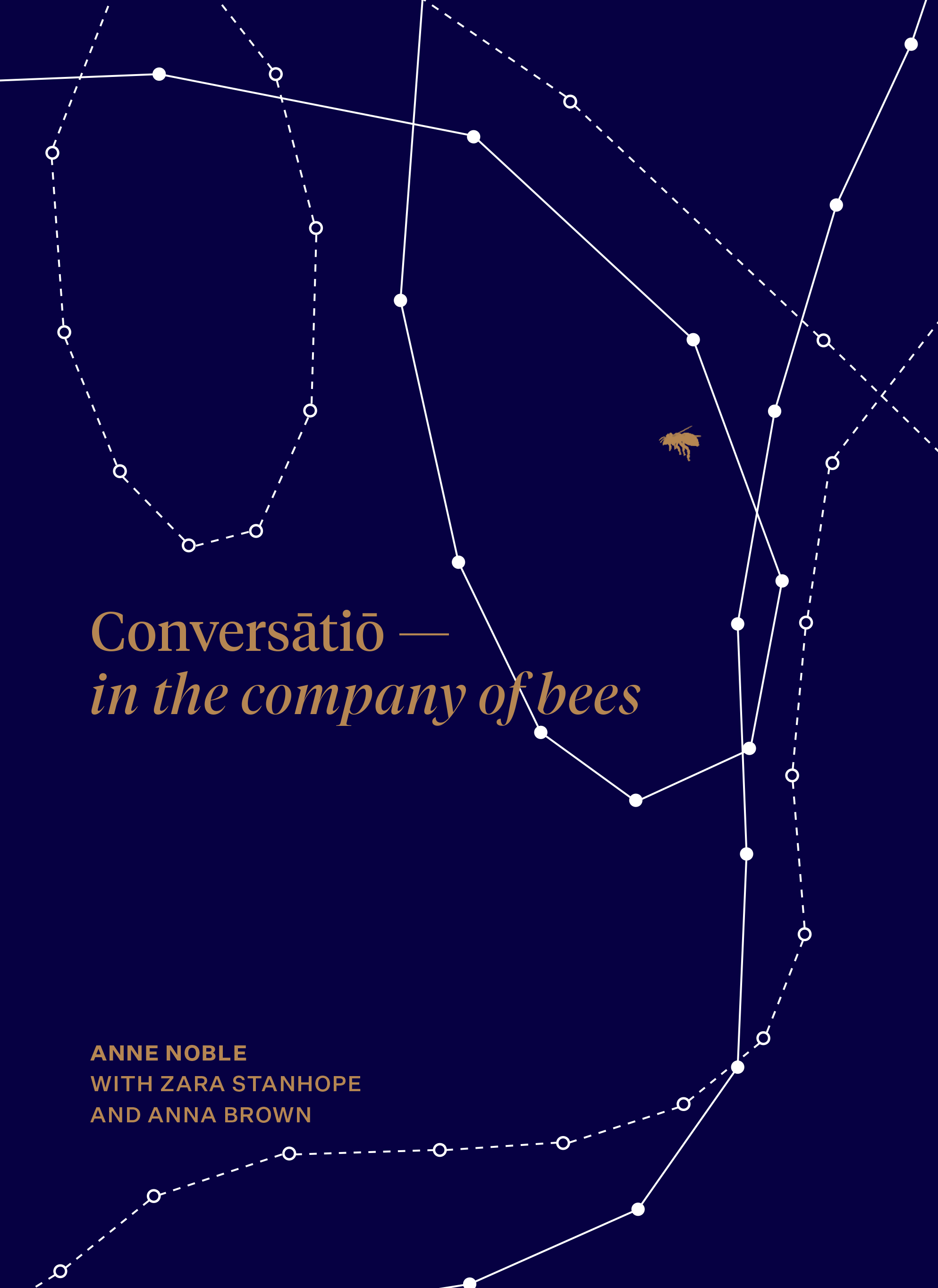
Bernadette: I have two other current enthralments. Conversātiō – in the company of bees by Anne Noble with Zara Stanhope and Anna Brown (Massey University Press, 2021). It’s exquisite, a life-changer, rich in language and in image. It’s majorly desirable, it reignites in me a passion for making, poetry along with my beloved bee-garden.
You have linked my writing with music, Paula. I’m not conscious of that myself, but here’s a quotation from Zara’s essay: ‘ Music is a language of its own that touches nerves and ignites our sensory imaginary. Sound is felt.’ And I’m thinking ah yes, the sound of words. But what about ideas, what are the words saying?
Paula: Absolutely! Music leads to ideas, feeling, the physical world, sensations. Maybe music enhances the other effects and arrivals in a poem. I too loved Anne’s book. So beautifully crafted at the level of image, word and book production.
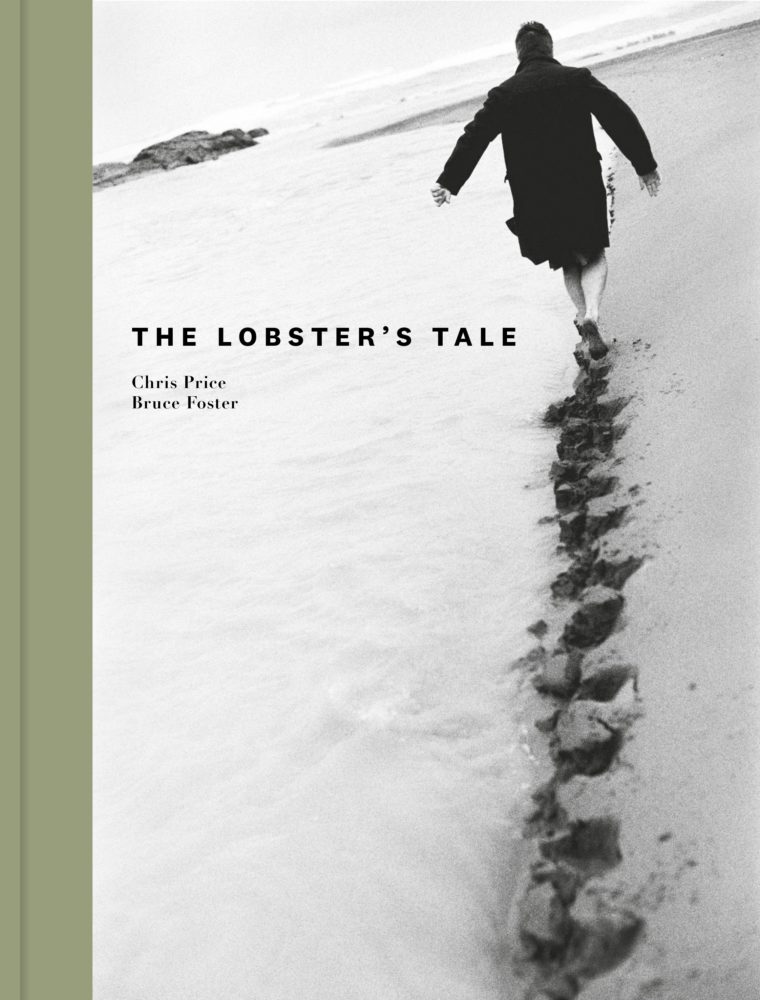
Bernadette: And finally there’s The Lobster’s Tale, text by Chris Price and photos by Bruce Foster (Massey University Press, 2021). I’ve just got my hands on it. I’ve not read it yet, just dipped in a little, stroked the paper, turned the beautiful pages. ‘Look to the life that goes on in your blind spot, the light that will eat you alive. Ahead remains a narrowing gap no creature can thread solo, by exercise of will or control, but only in collaboration: you might choose to carry each other as the kōura in berry carries eggs below her tail…..’ Already I know that this is something I need, it’s come at the perfect time, it will fill me up. And I am really grateful.
ii
Slowly the place takes shape. We are homeless
and dissolving in the silky water-laden air.
The dream was of my mouth full of crushed
glass, quite different from that other one
of stealing envelopes and being pursued by a monkey,
by a donkey, by a monkeydonkey and to be honest,
who cares. I met Joanna at 6.00pm
and we went to see SMOKE. Now that’s a film
and a half. My stars say you must abandon
complexity as if to have more than one word
in your mouth at a time is a vice. ‘You have to make
a choice,’ says the gum tree, pushing itself
up out of the lumpy asphalted playground.
‘Otherwise there’s nothing but bird noise in the aviary.’
Bernadette Hall, from ‘Fancy Dancing’, in Fancy Dancing (VUP, 2020)
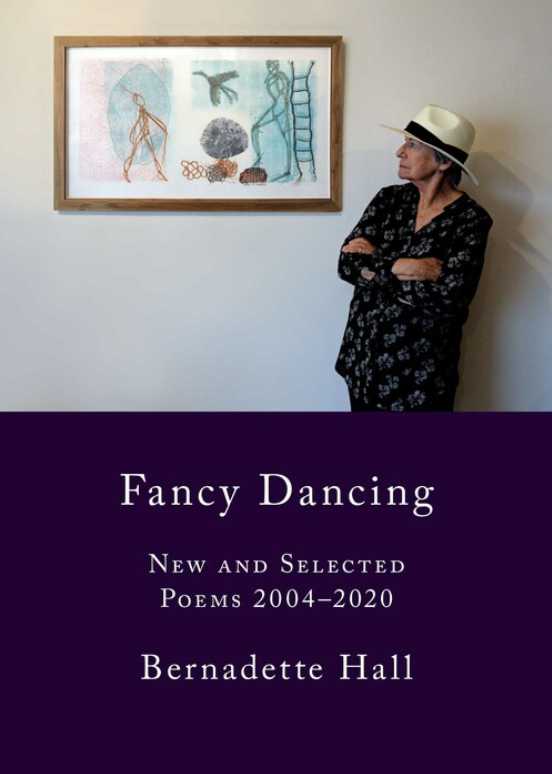
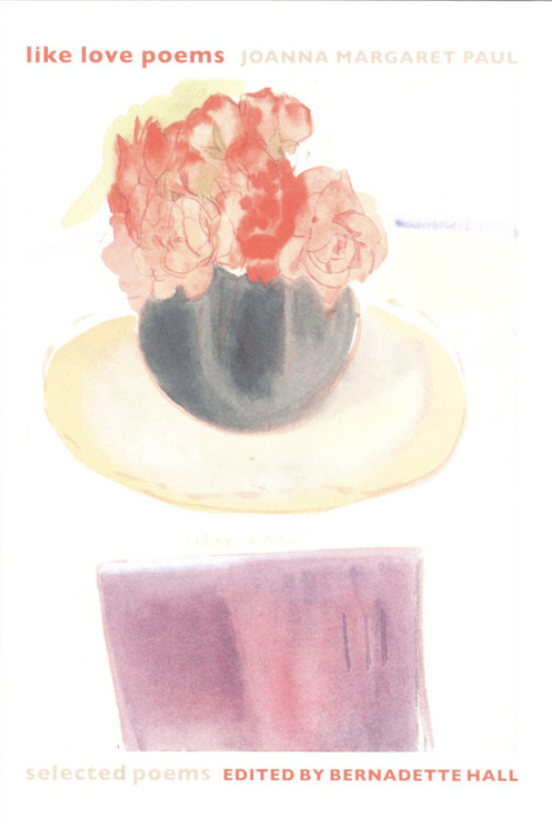
Bernadette Hall is Otago born and bred. She gained an MA in Latin at Otago University She taught at high schools in Dunedin and Christchurch, and for the last eighteen years has lived in a renovated bach at Amberley Beach in the Hurunui, North Canterbury, where she has built up a beautiful garden. In 2008 Bernadette co-founded the Hagley Writers’ Institute in Christchurch. She was involved with the Institute as a tutor, a supervisor, and eventually the Patron, retiring from that role a couple of years ago. She has written eleven collections of poetry, including Fancy Dancing: New and Selected Poems 2004 – 2020 (VUP). She edited Like Love Poems (VUP), a gorgeous edition of poems by Joanna Margaret Paul and brought the poetry of Lorna Staveley Anker our attention in The Judas Tree (CUP). In 2015 she collaborated with Robyn Webster on Matakaea, Shag Point, an art /text installation exhibited at the Ashburton Art Gallery. She received the Prime Minister’s Award for literary achievement in poetry (2015) and was made a Member of the New Zealand Order of Merit for services to literature in Aotearoa New Zealand (2017).
Te Herenga Waka University Press page
Poetry Shelf review: Fancy Dancing

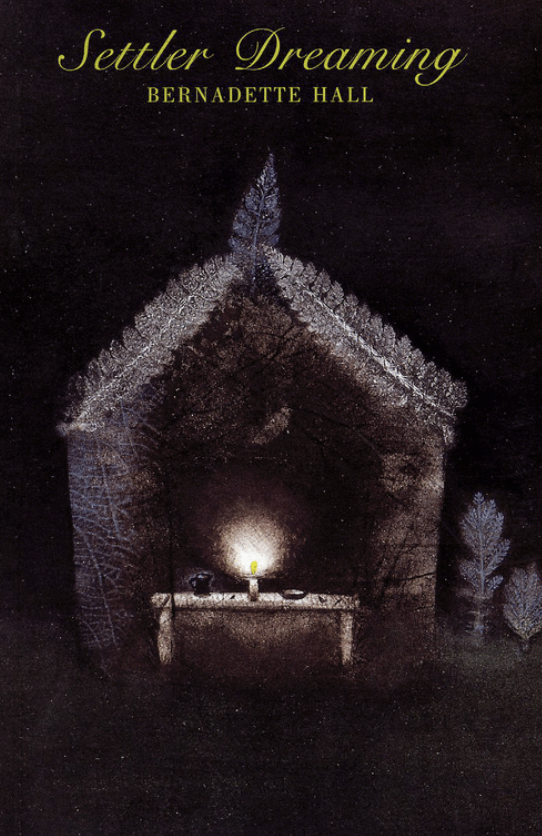
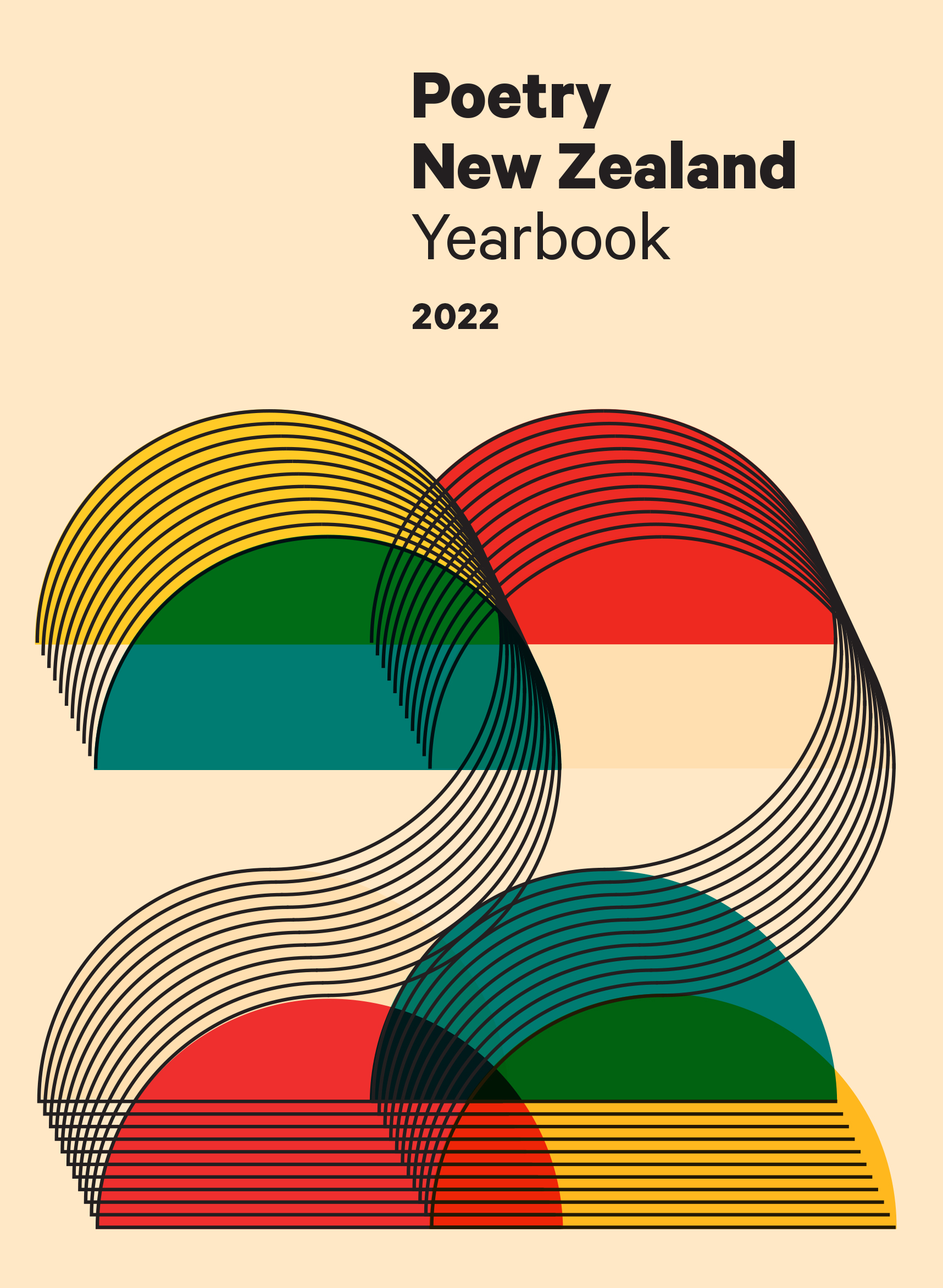
Poetry New Zealand Yearbook is now edited by Tracey Slaughter, supported by the University of Waikato and published by Massey University Press. The latest issue continues to showcase poetry, essays, reviews and a feature poet. It also runs an annual poetry competition for secondary students.
Tracey Slaughter’s introduction sidesteps the traditional literary journal’s editorial ‘opening’ and riffs on the theme of breakage. I adore it! The end of a line provides infinite fascinations: either as a rest stop or an open valve, but Tracey draws us to the way the line itself may be punctured with white space. It is not just the visual hit, prolonged breath or a shift in rhythm, it’s ‘Switch your senses on’. Tracey’s editorial is an invigorating piece on reading and writing poetry. It’s a rush to the senses, and inspired me to to create my second Paragraph Room (coming up soon!).
As an electrified proposition on reading poetry, it also applies to our entry into Poetry New Zealand 2022:
‘Bring it all. Waste nothing. Use everything you are to open the poems in this book.’
Celebration time: there is a succulent and diverse wave of young poets in Aotearoa New Zealand. You meet them on Starling, on social media, in the IIML secondary school poetry competition, and through publishers such as We Are Babies. Holding an annual competition for secondary school students in Aotearoa, PNZYB adds to the increased visibility of emerging voices.
The four First Prize winners (from Y11 to Y13) are nestled in the alphabetical order of the contributors. Good to see them sit alongside the selected poets rather than as a competition adjunct. Unlike most writing competitions, there is no judge’s report. Were there common themes, styles? Leanings towards politics or the personal or both? What the four published poems underline is these new writers are an unmissable destination. You get heart, you get garden-fresh, breathtaking music, thunderbolt surprise, word nimbleness. The names to watch: Ocean Jade, Caitlin Jenkins, Sarah-Kate Simons and Jade Wilson. I am lost for words … these poets are so darn good.
get some air. the haze of summer is ripe and all i could ever want
is to rest my head into its shoulder, rendered to its shallow fever
until i can find a warmth to keep safe. for now,
my head is tilted north through your slack-jawed window
with patient wind threading into my skin
Ocean Jade from ‘Route Back Home’
when the world wants our faces to kiss the concrete
we’ll still be safe in the arms of papatūānuku
cause when things go south —
we’ll deal with them like south —
with the love our roots nourish us in …
bronze skin mona lisa
Caitlin Jenkins from ‘South’
Wes Lee is the featured poet. Her most recent collection is By the Lapels (Steele Roberts, 2019). She was a finalist for the Sarah Broom Poetry Prize (2018) and was awarded the Poetry New Zealand Prize the following year. Tracey provides two terrific paragraphs as entry points into both the poems and an interview she has with Wes. Wes’s poems leave her in awe: ‘accosted, exhilarated, struck’. Tracey writes: ‘The scenes glimpsed within a Wes Lee poem are often low-key, incidental, domestic, yet under the surreal pressure of the poet’s eye the ordinary detonates and homely details seethe and seize.’ Indeed. The poems walk on a precarious edge of living. They scratch and lash, they tilt you as read. You body surf on currents of memory, trauma, the personal.
A highlight for me is reading the essay of poet and journalist, Maryana Garcia’s ‘A Clearer Dawning”. Maryana writes of being selected for the AUP antholgy A Clear Dawn: New Asian Voices from Aotearoa New Zealand, and on standing in the wings about to read at the book launch at the Auckland Writers Festival. The essay is sorting buttons, reciting vowels and diphthongs, a moving ledger of plus and minuses in the family’s move to New Zealand several decades ago (bomb checks v Lola’s cloth cupboard, smog v the best mangoes in the world). It is self doubt as a poet. We should all have a folder marked ‘Dietritus’! It is the way memory is hooked when you least expect it (by the fabric feel of the anthology’s cover). More than anything, it is in keeping with A Clear Dawn‘s stated aim: that Asian poets, like all poets, write about anything in a thousand inspiring ways.
I stared at my poetry folder, asked myself which poems I felt at home with. The answer was: none. Tabs closed. Tabs opened. I blinked again. Then I clicked on a folder I’d called, in a fit of creative frustration, Dietritus.
Maryana Garcia from ‘A Clearer Dawning’
Derek Schulz’s essay steps off from a brilliant Alice Oswald quotation (‘poetry is the great unsettler’) to opening windows on Emily Dickinson’s poetry. I kept arguing and agreeing with the essay which is far more satisfying than skim reading and moving onto the next page.
Sometimes you fall upon a piece of writing at exactly the right time. Sue Wootton’s extraordinary ‘This Damned Helplessness’ chimes so deeply when I am currently equating 2022 to climbing Mt Everest, when I am in training for a high risk adventure and not at all sure what views I will see. Caught in the gap between so many things. Sue considers climbing a first mountain and a second mountain, each with different views, and then perhaps imaginary mountains (Dream, Day, Night, Fact, fiction, Science, Culture, Body, Soul). More importantly, she traverses (connects with) how to exist, survive, flourish in the space between disparate things. Say Science and Culture. The first mountain view and the second mountain view. What is said and what is misheard. She uses her past experience as a physiotherapist to consider storytelling, gap navigation, treating pain, broken self narratives, bridges, patient involvement, re-composition. I am barely scratching the surface of this intricate tapestry of thought. It’s a satisfying neighbourhood of quotations and responses to other writers, physicians, thinkers, patients. Beautifully written, supremely thought provoking, it’s an empathetic plea to speak from both mountains. Yes, extraordinary, humble writing.
My issue of Poetry New Zealand Yearbook 2022 is already well thumbed as I lily-pad hop the poems (one poem per poet) along with the continued solid devotion to reviewing poetry books published in Aotearoa. This is a journal I am drawing out over months not days. To savour and sidestoke in. There are unfamiliar names and recognisable favourites. Under Tracey’s inspired editorship, Poetry New Zealand Yearbook is something I look forward to. Rejuvenating. Rejuvenating. Rejuvenating.
take this night
quickly like a pill / the pull
of space cracking / ankle joints
from the stretch up
in its dark belly
gurgling acid starlight
Hebe Kearney from ‘night comes on’
she lay on the pavement
squinting at clouds
and never made out
my father roosting
in cranes and carillons
even her dress pressed
with paintings of the domes
of Budapest made
her giddy sun downing
giddy this way
and that
Kerrin P. Sharpe from ‘the scaffolding of wings’
didn’t matter that our Chinese faces
spoke white/all of us knew the routineness
of string/mā má mǎ mà/knotted our xīn
into snake bites/left our tongues parched/
dead nailed until the bell rang three.
Wen-Juenn Lee from ‘chinese class’
Massey University Press page
10 Questions with Tracey Slaughter
Tracey Slaughter teaches creative writing at the University of Waikato, where she edits the journals Mayhem and Poetry New Zealand Yearbook.
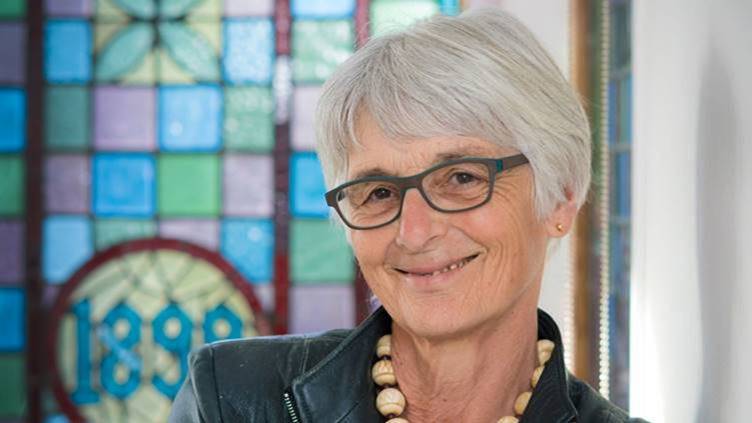
Te Herenga Waka—Victoria University of Wellington’s Stout Research Centre for New Zealand Studies is hosting a series of events to honour the legacy and work of Emerita Professor Lydia Wevers.
The seminar series begins on Wednesday 27 April and runs every Wednesday evening until 8 June.
“Lydia is remembered as an academic mentor, an astute and acute ally, an avid gardener, a passionate walker, and a generous host. And above all, as a reader in the fullest sense of the word,” says Professor Brigitte Bönisch-Brednich from the School of Social and Cultural Studies at Te Herenga Waka, who has helped to programme the series.
The series aims to explore how we read here in Aotearoa New Zealand. “While we often imagine reading as a solitary activity, many of us read as Lydia Wevers read: surrounded by family, community, and culture,” says Professor Bönisch-Brednich.
“‘Reading’ New Zealand through the lens of writers, columnists, journalists, librarians, booksellers, and academic colleagues will help us explore our understanding of our country through the lens of reading and writing.”
The variety of speakers shows the impact Professor Wevers had on those she knew and worked with during her rich life. “Professor Wevers’ contribution to both academic life here at the university and the lives of her friends and readers was immense. I am very much looking forward to us coming together to celebrate her legacy and life in this way,” says Professor Sarah Leggott, Acting Pro-Vice-Chancellor of the Faculties of Humanities and Social Sciences, and Education.
The events in the series are listed below. Follow the links for further information about each seminar:
27 April—The Infrastructure of reading
Chair: Chief Librarian Chris Szekely from the Alexander Turnbull Library. Panel: Juliet Blyth from Read NZ, Annette Beattie from the Wairarapa library service, and David Hedley from Hedley’s Books in Masterton.
4 May—Cultures of reading
Chair: Associate Professor Nikki Hessel from the English programme at Te Herenga Waka—Victoria University of Wellington. Panel: Professor Ingrid Horrocks from Massey University and Dr Tina Makereti from the International Institute of Modern Letters.
11 May—Writing and reading for/in public
Chair: Anna Fifield, editor of the Dominion Post. Panel: Robert Kelly from Radio NZ and TVNZ, journalist Rebecca Macfie, and Professor Marc Wilson from the Psychology programme at Te Herenga Waka—Victoria University of Wellington.
18 May—Women ‘readings’ of Aotearoa New Zealand
Chair: Writer and publisher Kate De Goldi. Panel: Emeritus Professor Harry Ricketts, writer Linda Burgess, and Te Herenga Waka’s Professor Brigitte Bönisch-Brednich from the School of Social and Cultural Studies.
25 May—Reading the short story
Chair: Dr Dougal McNeill from the English programme at Te Herenga Waka—Victoria University of Wellington. Panel: publisher Fergus Barrowman from Te Herenga Waka University Press, Professor Jane Stafford from the English programme, and poet Khadro Mohamed. NB: This event is 5 pm–6.30 pm.
1 June—Being Pākehā
Chair: Dr Amanda Thomas from the Environmental Studies programme at Te Herenga Waka—Victoria University of Wellington. Panel: Associate Professor Maria Bargh from Te Kawa a Māui and Dr Sara Salman from the Institute of Criminology.
8 June—Honouring Lydia Wevers’ legacy
Chair: Professor Rawinia Higgins, Deputy Vice-Chancellor (Māori) at Te Herenga Waka—Victoria University of Wellington. Panel: Professor and author Witi Ihimaera, Te Herenga Waka’s Acting Vice-Chancellor Professor Jennifer Windsor, Acting Pro Vice-Chancellor Faculty of Humanities and Social Sciences Professor Sarah Leggott, Professor Simon Keller from the Philosophy programme, and Professor David O’Donnell from the Theatre programme.
Each afternoon will start with a short reflection on Lydia Wevers’ reading of the chosen theme, before the panellists take this theme in new directions.
All seminars except that on 25 May run from 4.30–5.30 pm, and will be held at room 103, Maclaurin Lecture Theatre, Kelburn campus, Wellington.
Register to attend any of these events, online or in-person, using this link

The Pistils Janet Charman, Otago University Press, 2022
little lapping waves
to inundate
the shoes of makers
whose texts
i’ve addressed
and assessed
in the dark inland towns
of my imagination
the large waves of the fire siren
call me out
in the middle of the night
from ‘welling’
I started reading Janet Charman’s poetry when I emerged from my poetry cocoon with Cookhouse, my debut collection, and she knocked my socks off. First up it was Janet’s musical ear: an elasticity with words, linguistic play, surprising syntax. And then, so essential when my academic research focused on women and writing, her feminist core. Not an adjunct, nor a side track, but an essential feminist core. When I walked across the university threshold onto Simmonds Street, with my PhD and carton of books, I walked out of the academy into life as a poet. And a hunger to immerse myself in an Aotearoa New Zealand context. To discover the women who had written before me, who were writing alongside me, and who would write ahead of me. Janet Charman was busting out of the men’s canon and opening up notions of ‘she’, ‘i’, ‘we’, ‘you’, ‘they’. The ink in her pen and her preferences were placed centre stage, whether in trousers or skirts, folding nappies or building houses.
Janet’s new collection The Pistils opens with a terrific sequence, ‘High days and holy days’. Twelve poems that mark holidays or significant occasions (Waitangi Day, Parihaka Day Guy Fawkes Night, Wahine Day, Matariki, Picnic Days). Each poem contributes to a life – within a sequence of panels. Bare bones. Ample white space. A miniature narrative of excavation. Remember when. Remember how. Remember why. The sequence opens scenes, moments, places – and we enter the collection grounded.
winds drain to the horizon
tides
lap below the wrought-iron railing
here
we are sheltered in the hollow of the year
the hollow of the day
blowflies
loll and bang the afternoon to a close
the windows
from ‘1. Northland Panels‘ from ‘high days and holy days’
Move into the heart of the book, and the mind leaps and bounds along the rhythm of the line. Exquisitely crafted. Scored. Composed. In ‘Mrs Valentine’s instructions’, the rhythm of revelation shapes memory. On the next page, in ‘hometime’, attention to the sound of the line is equally arresting. Memory is translated into music and image. It is a portrait of the child but it is also a portrait of the mother. In parings and traces. Surprising arrivals. It is religion and Freud, a mother lost in a novel, it is fingers worn to the bone, the news on the radio, family dinners, walking home. Life and death. It is home.
and the mother weighting at the top of the hill
her red roof tile her front windows
black blank shine
her white two-storeyed weatherboard authority of home time
—untangle the latch race the path
hunt through the house to find her where she sits
adrift in a novel
or conducting her day in some regimen of intellectual longing
with Freud and Jung in the sunroom
—on three sides light pulses in
Father Son and the Holy Ghost
summer on summer through glass the great gum nods
from ‘hometime’
Rhythm is so important. It renders Janet’s poetry fully charged, and accumulates life, detail, confession, insight, opinion, grief, reflection. It feels real, it feels personal, it feels political. The mother is a constant presence, in the shadows and in the light, a vital connection. Rhythm accommodates the feminist spotlight on life. The stamen and the pistil, the difficulty of childbirth and a baby in an incubator, a war memorial, waste management, Pakehā privilege, an aging body image, a breast removed, James K Baxter’s rape boast, literary criticism, sex, grief, having breakfast while watching John Campbell rather than listening to National Radio because your beloved has gone. It is the rhythm of mourning. Ah. So many layers.
i waited into the summer for my diagnosis
saw how a benign White Island
only became Whakaari
for the pakehā
after an eruption with deaths
from ‘bra dollars’
I speak of rhythm in such glowing terms but it is of course part of a sonic festival. Janet’s poetry strikes the ear (as Rebecca Hawke’s debut collection does). This leaning in to listen is rewarding: the leapfrogging alliteration, assonance, short lines, slightly longer lines, punctuating breath, free flowing currents. Again Janet’s agile music enhances my engagement with her roving subject matter. With the sharp edges and the necessary subterranean questions. How to live? How to live and love on planet Earth? How to speak against subjugation based on gender or skin colour? How to see your parents? How to go on when your beloved is no longer there? How to continue probing and resisting? How to be yourself? Ah. Such layerings.
Reading Pistil is exhilarating. I am loving this book because it is vulnerable and open, it is edgy and crafted, and because it shines a light on how it is for women. We still need that persistent light. We still need poetry that misbehaves as much as it makes music on the line. The poems call out and call for, stand out and stand for. It is a stunning collection.
Janet Charman is one of New Zealand’s sharpest and most subversive writers. In 2008 she won the Montana Book Award for Poetry for her sixth collection, Cold Snack. In 2009 she was a Visiting Fellow at the International Writers’ Workshop of Hong Kong Baptist University. In 2014 she appeared as a Guest Reader at the Taipei International Poetry Forum. Her collection 仁 Surrender (2017, OUP) chronicles her writing residencies in Hong Kong and Taiwan. This is her ninth collection of poetry.
Otago University Press page
Interview: Janet Charman on Standing Room Only with Lynn Freeman Listen
Review: Sophie van Waardenberg for Academy of New Zealand Literature Read
Review: Chris Tse for Nine to Noon Listen
Peace
(after John Lennon and Yoko Ono)
Can we still give peace a chance?
Can we walk to the end of our home road
and give peace a chance?
Can we teach our children to give
peace a chance?
Can we swim in wild oceans
to give peace a chance?
Can we feed the hungry and nurse
the sick to give peace a chance?
Can we share wealth and knowledge
to give peace a chance?
Can we stand on mountain tops and breathe in clean air
to give peace a chance?
Can we sign petitions and sing songs
to give peace a chance?
Can we love our neighbours
to give peace a chance?
Can we listen harder and hold hands
to give peace a chance?
Can we place sixties flowers on millennium borders
to give peace a chance?
Can we praise good leaders
to give peace a chance?
Can we plant our gardens
to give peace a chance?
Can we refuse supremacy
to give peace a chance?
Can we call out greed and ignorance
to give peace a chance?
Can we teach our hearts
to give peace a chance?
Can we stand together
to give peace a chance?
Can we stand strong together
to give peace a chance?
Can we stand strong and creative together
to give peace a chance?
Can we stand strong and creative and live together
to give peace a chance?
Can we still give peace a chance?
Can we still give peace a chance?
Can we still give peace a chance?
Can we still give peace a chance?
Paula Green
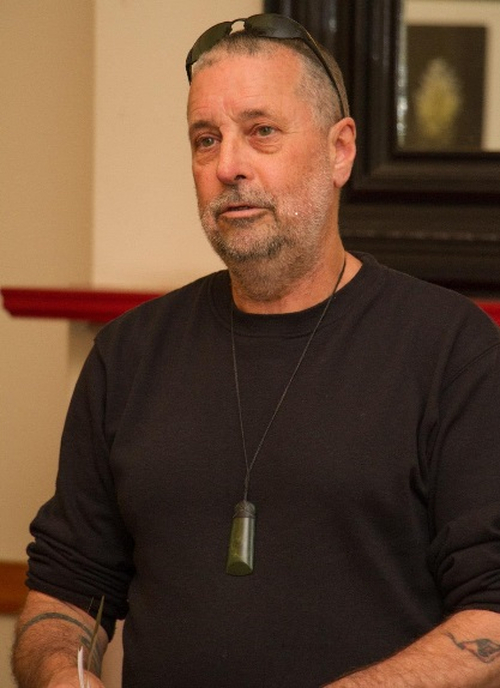
Vaughan Rapatahana, Te Ātiawa, commutes between Aotearoa New Zealand, Hong Kong and the Philippines. He writes across genres, in both te reo Māori and English, and his work has been translated into multiple languages. He has published eight poetry collections and has a PhD from the University of Auckland (a thesis on Colin Wilson). His collection Atonement was nominated for a National Book Award in Philippines (2016). He was awarded the inaugural Proverse Prize in 2016. He appeared at Poetry International Festival at London’s Southbank (2019) and at Medellin Poetry Festival Poetry (2021).
Vaughan reads at Medellin Poetry Festival Colombia
Paula: In 2022 I am running a series of email conversations with poets whose work has engaged me, often over a period of time. In these jagged and uncertain days, it is a welcome chance to talk books, writing, reading, hearts and minds. And in our case, an opportunity to discuss your two new books (ināianei/now, cyberwit, 2021; mō taku tama, Kilmog Press, 2021). Has reading offered uplift, solace, diversion? Have certain books really stuck?
Vaughan: Tēnā koe mō tēnei Paula. Reading has certainly offered ‘busyness’, if there is such a word. I am fortunate to be involved in several projects right now and am doing a lot of reading. Of poetry, of short stories, flash fiction, creative non-fiction in both my main languages – te reo Māori rāua ko te reo Ingarihi. I have been very aware that ngā wāhine Māori especially are right at the forefront of current Aotearoa New Zealand writing. And I am impressed. Very impressed. Several collections have recently been published. Tupuranga Journal, Kei te Pai Journal, Saltwater Love Journal, Te Whē, Awa Wāhine, Atua Wāhine have all impressed me greatly, while I know that Cassandra Barnett has a new collection (which I have read) and Anahera Gildea and Alice Te Punga Sommerville also have collections out this year. And Briar Wood of course. I am also looking forward to Robert Sullivan’s new poetry collection, which I have just received. And Michael Steven’s too, eh. Then essa may ranapiri will impress us all with their own new set! Wow, this country has a mighty rich vein of poets.
Reading becomes religion.
Paula: If you made a roadmap of your own poetry writing, are there any significant presences, guides, lamps that you would mark?
Vaughan: To be honest, I did not get into poetry writing until about 2007, when I started to get into the craft more. I was well into my fifties. I do recall getting good advice from my old schoolmate, David Eggleton, and from James Norcliffe – we first met in Brunei Darussalam last century – about the poems I was learning to write back then.
I had always been very aware of Sam Hunt, as a poet, and had a few dealings with him over the years before I got serious about writing poetry myself. To a degree he and James K Baxter had kept poetry in the public eye for a long period. Two distinctive Cancerians, eh. To digress, I remember drinking at the Kiwi Hotel with Baxter. Way back when. Hone Tūwhare was also a favourite of mine. And Jacquie Sturm became one, when I ‘discovered’ her work. There are a couple of her poems that really impressed and – probably – motivate the ‘political’ poetry I often find myself writing. And Hinewirangi too. I knew of her Moana Press collections and got what she was saying. As I noted earlier I am also very impressed by the wave of wāhine Māori poets right now. I won’t name more names as there are several, but I am sure you will see a lot of their work over the next few years.
But, on reflection, you know, the poet who really drove me, from waaaaay back when I never wrote poems, was Sylvia Plath. Too many pained shared echoes for me and I can always read some of her lines and be instantaneously moved.
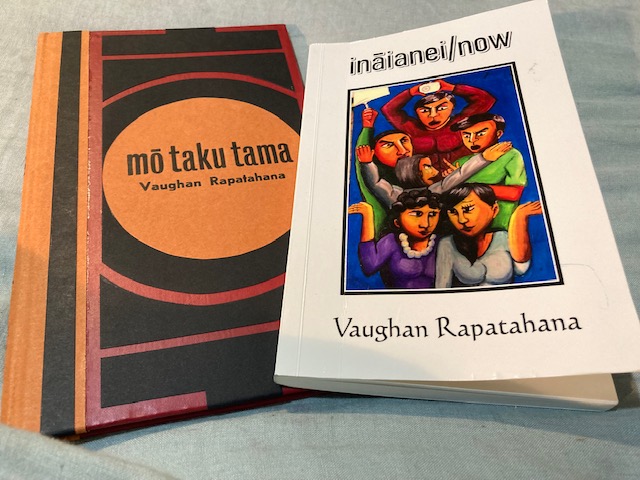
ināianei/now, cyberwit, 2021 and mō taku tama, Kilmog Press, 2021
Paula: I think, among many things, I am drawn to your poetry because of the strong presence of te reo Māori. Yes it is music that adds to the poems, but it is also individual words that are like gold beacons on a musical staff – maunga, kōrero, manaaki whenua, manaaki tāngata, whakarongo. They take me back to growing up in Tai Tokerau. It is like being welcomed onto the marae that is poetry. What does it mean for you?
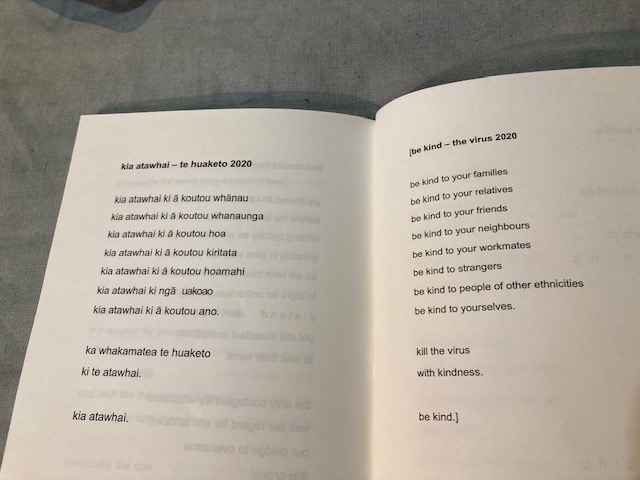
Vaughan: E tuhituhi ana ahau ki tāku reo tuatahi ināianei, i te reo Māori. Nā te aha? Nā te mea e pīrangi ana ahau kia whakapuaki whakatepe ngā mea katoa i tāku hinengaro, i tāku mānawa, i tāku wairua. Kāore e taea e au te tino whakapuaki ahau i tētahi atu reo.
[I now write in my first language, the Māori language. Why? Because I want to fully express everything in my mind, in my heart, in my soul.
I cannot express myself fully in another language.]
I think that the sentences above express why I now write a good deal of the time in te reo Māori. While at the same time utilising te reo Ingarihi [English] to twist back upon itself as a sometime circumlocutive, certainly dominating, even duplicitous tongue – or at least its fiscally motivated agents!
Paula: Thank you. Your two new collections, ināiane/now (2021) and mō taku tama (2021) both pulse with vital heart. Especially because you bring a deep-seated pain to the surface of your writing: the tragic loss of your son. The second collection gathers poems you have written to and for him since his death. The first includes some. At times I feel like a trespasser but, at other times, I am reminded why poetry matters to me. A poem can draw me deep into human experience and affect how I live and write my own life. This is what your poetry does. I am reminded of the gift of reading Iona Winter’s Gaps in the Light, who also tragically lost her son. mō taku tama is such a loving tribute and so beautifully crafted by Kilmog Press. The poetry says your grief. How was it, choosing to write this? Putting it out in the world?
Vaughan: Tēnā koe mō tēnei pātai. A good question.
I write in the introduction to mō taku tama (for my son) that composing poetry about him, his far too early demise, and my resultant various mixed feelings about this, keeps him alive – at least for me. In the end that collection, despite the sorrow imbued across the pages, is a celebration.
For Blake was a great guy and I miss him, even although I do often sense his presence. I want others to share not so much my grief , but my love for a wonderful son.
And I guess that I will at times write more poems which relate to him.
Thank you to Dean at Kilmog Press too. He mahi tino pai tēnei.
talking to my son in a funeral home
[tiwhatiwha pō tiwhatiwha te ao:
gloom and sorrow prevail, night and day]
I spoke more authentically
to you
during those thirty
estiolated minutes
than I ever did
when you were alive.
the stark room,
shaped more like a coffin
than what you lay in
quite composed,
unmoved by
my ascesis of angst,
my agenda of guilt.
the wooden floor
an eavesdropper
bouncing back a farrago
of belated apologies,
an echolation
of mea culpa.
those faded walls,
the fake flowers in a neutral vase
and the box of tissues
supplicating for the tears
I could no longer summon
during that one-sided
confession to myself.
Paula: I was thinking about the way you bring knitting into a couple of poems. I especially love ‘knitting a poem’ (read here). What we knit into poetry and ‘what exists beyond it’, and took me back to Blake. I have an uncertain year ahead and your beautiful two books made me hold my daughters closer. What do you think of the idea of poetry to keep us warm? Of poetry that is craft and heart gift? Or a different thought, a net even?
Vaughan: Yes, I guess we – as poets anywhere – are knitting and weaving and sewing together a final tapestry of sorts. It could be a long shawl to warm us up, to keep us snug. It could be some showy patterned piece to display our cleverness. It could be a blanket to stir up a fiery blaze within us – perhaps about an injustice. Equally it could be a fire retardant blanket created to quell raging conflagrations also within us.
I think many of my own poems have elements of these. In the end though, I guess I do like to knit poetry into a coverall that – although it may be angry and sad and clever-dick at times – shares emotions, stirs up thinking, yet can comfort and console even in times of doubt and disaster. After all, eh –
ko taku mahi
kia tuhituhi te tika
kia wewete ngā roimata
mō katoa ō tātou ki te tangi.
nō te mea,
ki muri ngā roimata anake tātou kia kata.
[it is my task
to write the truth
to release the tears
for all of us to cry.
because
only after the tears
can we laugh.]
Paula: Oh I love that riff on knitting and poetry, that ends with ‘coverall’! Did any poems surprise you when they reached the page? Were there some poems where you felt the stars aligned?
Vaughan: Yes, sometimes – but not often – a poem will arrive, if not ‘fully formed ‘at least well on the way. This usually happens when I am emotionally connected and the emotions have been brewing for some time. The stars aligned for example when I wrote ‘to my wife overseas during lockdown’ and ‘sixteen years’ (both in ināianei/now). I was surprised by the strength of my own feelings and the words just tumbled tightly onto the pages. Almost in perfect alignment.
Other poems are a travail. I can spend a lot of time and make several return trips to a poem before I am content with it. Especially if there is historical research associated with the kaupapa.
And then there are poems which never get completed. Despite many revisits. I guess that they just do not want to be written. Yet, anyway.
Paula: I sometimes think this is how it is as reader too. Sometimes the stars align, you cross the bridge and you are in the poem, and it is utterly wonderful. At other times you cannot sight the bridge and it is travail. But then the next day, the stars do align and you find your way into the poem.
Your poems are personal, but there is also a strong political spine. It seems to be a growing trend in Aotearoa. I welcome this. How important is this presence in your poetry? How does it connect with the poetics? How to write political poetry is wide open!
Vaughan: I don’t consciously write ‘political’ poems. Not in the sense of mainstream party political discourse.
However, when I feel, see, research injustice, whether contemporary or historical I write poetry that depicts the injustice and calls for recompense, recognition, realisation. In this way the poems are personal too. And so, important.
In the end, then, I write poetry from inside, and bugger the (political) ramifications.
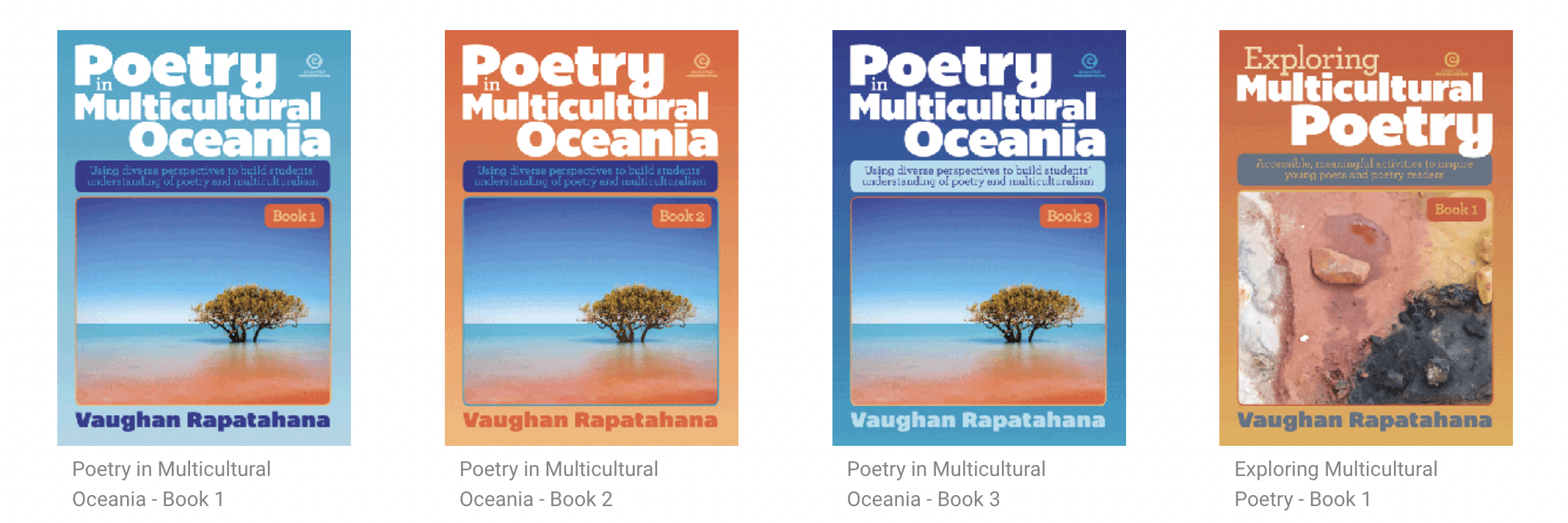
Paula: Yes! The political is most definitely personal. You have produced a number of excellent teaching resources (including Poetry in Multicultural Oceania 1-3, Exploring Multicultural Poetry, Te Whakaako Toikupu: Teaching Poetry, Essential Resources) that open up poetry bridges for secondary school students. What prompted you to do this? And what are your aims?
Vaughan: You know – or maybe you don’t! – I was never any ‘good’ at poetry when I was at school.
I only started to ‘get’ it much later when I was overseas teaching English as a foreign language and I needed to somehow simplify the ordeal of comprehending how a poem was structured and only then any comprehension of what it might be ‘all about’ came through.
So all of these poetry teaching resources, commencing in Brunei Darussalam last century and carrying through Hong Kong SAR, to Aotearoa New Zealand and beyond nowadays, are designed to assist an EFL/ESL/poetry lost student – whether adult or at school somewhere – to open the poetry car door, start the engine, and then career down the highway of comprehension, switching gears up to appreciation and then writing their own. Not an automatic this vehicle: you got to work on the gears a bit, eh.
More than this, I want multiculturalism presented as part of the entire package. This country is increasingly multicultural and I am fortunate to have many international poetry contacts to draw on when sourcing material. It is also why I produce bilingual resources, i roto i te reo Māori rāua ko te reo Ingarihi. Such as Te Whakaako Toikupu.
There you go, then. These resources started off to help me work out poetry was ‘all about’ and then grew well beyond.

Paula: Such important resources. I have been wondering about our own personal poetry resources, the poems we have written over time. The poems that stick, whether sweet or sharp. I sometimes wonder: how did I write that? Can you share one of your poems that has stood out for you, for whatever reason?
And thank you Vaughan, for this warm and generous poem kōrero.
Vaughan: Sure, here is a poem. Sort of says a lot about what we have been talking about –
he waiata kai
at times,
writing a poem
is like beans on toast.
easy to apply,
in cheap
economic actions
& reasonably tasty.
especially if
garnished
with melted chyrons;
some cognoscenti cheese.
never anodyne
if served hot,
straight from the pot,
eaten with relish
& digested in
short, sharp bites.
the aftertaste
l I n g e r s
well after
you’ve scanned
the can
in the cupboard,
the lines
on the page.
Cyberwit author page
Essential Resources page
Read NZ page
Vaughan reading his poetry on Youtube
NZEPC recordings of Vaughan’s poems
Five Poems about Auckland
I
a grey clingfilm
swathes the Sky Tower.
apartments lean in
to cradle daffodils
small yellow eyes sleeping.
a giant D frames the sky.
II
rain like sudden laughter
splashes chalk
against bus stops
umbrellas walk
upside-down.
III
stiletto-clattered sidewalks
breathe cappuccino fumes
strum the beating heart
of a man feeding pigeons
in the square.
IV
rub sushi licked salt
into kimchi kebabs smoked
with fish and chip pie
and bubble milk tea. serve with
pizza with everything on top.
V
they say it’s the sun, the blue sky
the lick of pōhutakawa flaming up the beach.
I say it’s drinking too much
of the limpid green harbour, sweet
abalone soup.
Auckland
I wrote these well before pandemic times, but recently found them, plus a recording I’d made for a ‘Poetry Walk’ put together by a friend, poet Anna Kaye Forsyth. Now, reading them back, I’m struck by their simple naïveté: they were written in a world where, in Aotearoa at least, there was a feeling we were safe. Isolated from the world’s contagions.
I guess that illusion has been well and truly stripped away, along with my habitual wanderings through Albert Park, foraging on familiar pathways to my favourite food places or bookshops. We’ve lost many of those physical shops – everywhere are glass-fronted gaps. But we’ve also lost the ability to roam without attention to physical proximity, clean air, fellow roamers who might be hoarding contagion. These days I circumscribe a wide berth around others, stitching over social awkwardness with looks or a smile wide enough to show in the eyes.
But reading these poems back, I also see how it’s only us that’s changed: the physical world remains the same. The light, the colour of the sea. The way the features of the land stab into the sky and warm our hearts. There is still so much to enjoy in our world.
Renee Liang
You can listen to the poems here
Renee Liang is a poet, playwright, paediatrician, medical researcher and essayist. She is the Asian Theme Lead and a named investigator on landmark longitudinal study Growing Up In NZ. As an established writer, Renee has collaborated on visual arts works, film, opera and music, produced and directed theatre works, worked as a dramaturge, taught creative writing and organized community-based arts initiatives such as New Kiwi Women Write, a writing workshop series for migrant women, and The Kitchen, a new program nurturing stories in local kitchens. Her work The Bone Feeder, originally a play, later adapted into an opera, was one of the first Asian mainstage works to be performed in NZ. Renee has written, produced and toured eight plays. In 2018 she was appointed a Member of the NZ Order of Merit for services to the arts, and won Next Woman of the Year for Arts and Culture.
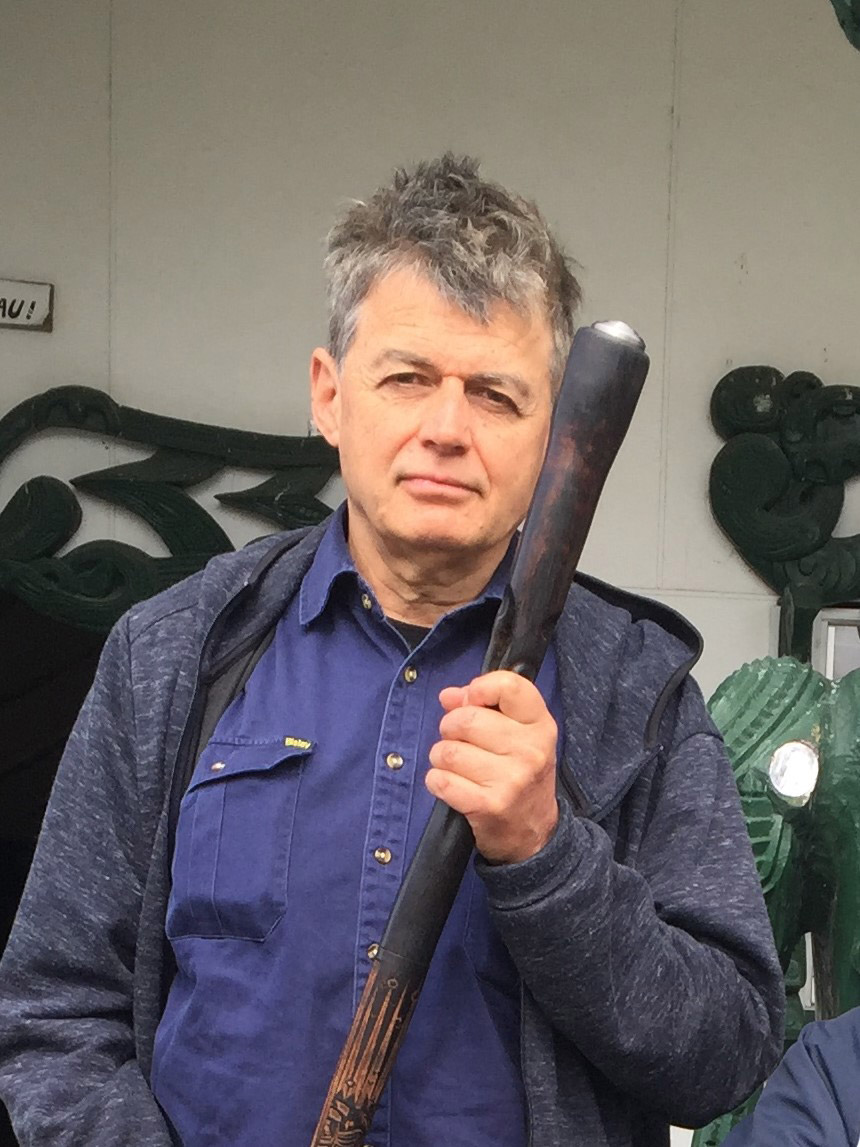
David Eggleton at Matahiwi marae, 2021
Image credit: Lynette Shum
Wild Indigo: five poets reading the weather
Celebrated Aotearoa poets join current Poet Laureate David Eggleton to explore the spirit of Oceania in our time of climate crises. Join us in person or online for an evening of poetry.
New Zealand Poet Laureate David Eggleton with Selina Tusitala Marsh, Gregory O’Brien, Dinah Hawken and Kate Camp read the weather. An event which doubles as the closing of the exhibition Trouble in Paradise: climate change in the Pacific. The title of the reading is from David’s poem, ‘A report on the weather’.
Where: Free event – National Library Auditorium,
Molesworth Street, Wellington
When: 5.30 for 6pm start, Friday 29 April 2022
Also streaming live at:
https://dia-nz.zoom.us/webinar/register/WN_q6xepQuSQiqydReP_8HabQ
More details here
David Eggleton is the Aotearoa New Zealand Poet Laureate 2019 – 2022. His most recent book is The Wilder Years: Selected Poems (Otago University Press, 2021). Recent poems online can be found at the New Zealand Poet Laureate blog.
Selina Tusitala Marsh was recently made a full Professor at the University of Auckland. She is currently working on Mophead: KNOT Book 3, the latest in her series of award-winning graphic memoirs. In KNOT Book, Selina helps loosen and untie the real-life knotty questions kids of all ages send her by answering with Moppy creative exercises.
Kate Camp is a poet, essayist and literary commentator, born in 1972 and currently living in Wellington. Widely anthologised and critically acclaimed, she is the author of seven collections of poetry with Te Herenga Waka University Press: Unfamiliar Legends of the Stars (1998), Realia (2001), Beauty Sleep (2005), The Mirror of Simple Annihilated Souls (2010), Snow White’s Coffin (2013), The Internet of Things (2017), and How to Be Happy Though Human: New and Selected Poems (2020), published simultaneously in Canada and the United States by House of Anansi Press. Her memoir You Probably Think This Song Is About You is published in 2022.
Dinah Hawken was born in Hawera in 1943 and now lives in Paekakariki. Her first book won the Commonwealth Poetry Prize for ‘best first-time published poet’ in 1987 and her ninth collection Sea-light was published by Te Herenga Waka University Press in 2021. It was long-listed for the Ockham New Zealand Book Awards.
Gregory O’Brien‘s most recent book is a collection of poems and paintings, HOUSE & CONTENTS (Auckland University Press, March 2022). Other recent publications include his book-length meditation on the Pacific, ALWAYS SONG IN THE WATER (2019) which is the basis for an exhibition at the New Zealand Maritime Museum, Auckland, early next year. Currently, he is completing a monograph on the painter Don Binney, to be published in summer 2022-23.
‘…your weather patterns of wild indigo,
your blue starfish, your purple thunderheads,
your forked stabs of lightning,
your hammering rain
shape-shift in the lagoons of your latitudes…’
David Eggleton, from ‘A report on the weather’
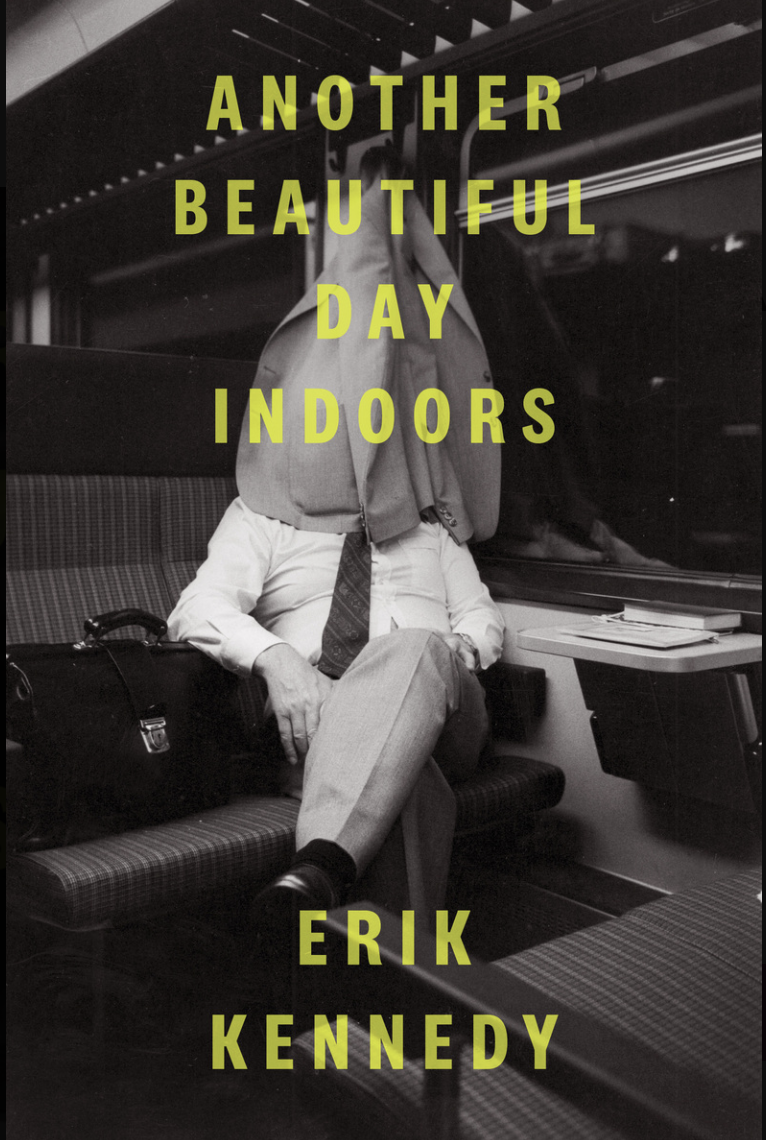
Another Beautiful Day, Erik Kennedy, Te Herenga Waka University Press, 2022
(Cover photograph: Max Oettli, ‘BLS train, Switzerland: man with jacket over head (dark)’, Museum of New Zealand Te Papa Tongarewa (O.048413).
If I was capable of learning lessons
or believed in human nature
I could learn some lessons
about human nature
from the bits of themselves
people have lost
on the pavement
or in a hallway
from ‘Picking up Pieces of Paper Other People Have Dropped’
Erik Kennedy’s exuberant new poetry collection is in debt to life! I am talking reading, imagining, reacting, engaging. In a recent piece in The New York Times, Elisa Gabber asks what poetry is: ‘I think poetry leaves something out’. That is of course a starting point for discussion. Poem omissions amplify what is present. No question. The bits and pieces on the page strive for cohesion, fragmentation or some miraculous alchemy in between. Bill Manhire suggested in my recent paragraph room on poetry: ‘What do I want from poetry in 2022? I still want the poem itself. I want the thing that can’t be paraphrased.’ And Amy Marguerite says: ‘Poetry should be there for you, even if it isn’t touched, even if it is resisted, it should be there like a shoulder, or a spine.’
Is writing about a poetry collection a distillation or an opening out? An impossible reach to paraphrase? A joy?
Another Beautiful Day‘s opening poem, ‘Out on the Pleasure Pier’, serves the reader well. It is a terrific and surprising threshold into a collection that plants vignettes, conversation, essential ideas while giving the poems space. Think the white page, room to breathe and pause, masked appearances, the unspoken. Already I am asking myself if reading Eric’s book is akin to a jaunt on the pleasure pier. I can run with that. The details are pungent, jagged, funny, deadly serious, surprising. Anything can happen. Just like the pleasure pier. Here is the first stanza:
Out on the pleasure pier on that benign afternoon,
the air heavy with the blossom of vinegar and old tyres,
you asked what was the closest I had come to death.
Erik Kennedy is perhaps the wittiest poet on the block. The collection is infused with all the big worries – climate change, capitalism, wastage, consumerism, violence – because silence is a form of consent. Even in a poem. The poet cannot stay mute when the world is so awry and I love that. I find myself recalling: for decades Italian writers wanted political messages to be clear in their work (in the face of fascism, women’s subjugation, climate change, corrupt power and so on). We have scant history of political writing in Aotearoa New Zealand, and perhaps jaundiced responses by critics. Even when you rightly claim the personal as political. But new generations are changing this – out of personal experience, and out of concern for the world and crippling hierarchies that perpetuate cultural / gender / class ignorance. This new wave of poetry is political, and it is so much more than that.
The Vegan Poem, or It’s Not
a Conversion Narrative Because
I Was Already Converted
Whatever you do, don’t watch
the shocking undercover video
of how we treat the things we eat.
It’s all shit and squeals and pus and teats.
The only thing spared is the status quo.
When I watched the video
(so you don’t have to)
I turned grey and shadow-beaten
like a hill beset by gusty westerlies.
I shrivelled like fridge celery,
leaking a long slick of sympathy.
I willed myself through my anger,
a crab plodding through treacle
towards the crab-fighting ring.
If I never do anything else,
let me do no harm, I say,
in my best breathless ethicist voice,
and I mean it, come hell
or high water or a wasting disease.
Today, once again, caring seems
to be the less debilitating option,
but it’s hard to believe there’s hope
for any animal-affirming utopia
when people hate even each other
with the violence of a sneeze.
Erik writes with infectious humour, yet he is also deadly serious. What good is poetry that lands beauty but neglects its vulnerability? Ha! What a hornet’s nest this line of questioning is. Some days I crave a beauty poem as self tonic and I am full of gratitude for the person who wrote it. Other days I want poetry’s harsh spotlight on the ruinous state of play. And then again, agile movement where a poem is a thousand things. Erik makes me laugh out loud, do a wry inside grin, muse on microplastics, being a vegan, satellite insurance, pandemics, killing the planet, roads rolling out clogged traffic and pollution.
The middle section of poems in the book resembles a compendium of curious vignettes. I am thinking: no ideas but in vignettes. I am searching for a word where the real becomes ultra real (not magic realism), as though you have amped the focus and the volume, and everything is strange and larger than life (not tripping). And then you are transported back to the gritty real, the need to work and eat and love.
Reading a poetry book at the moment affects me like a necessary excursion. I have travelled and picnicked and dream-drifted within the dazzling pages of Another Beautiful Day Indoors (the title fits my current self isolation), and in my travels poetry is restoring empty larders. This is a book that offers foyers, resting bays, overhead bridges for you to furnish, linger in, traverse. Read it. Think it. Feel it.
I get so distracted by the excitement of
‘not going back to the way things were’
that I accidentally went back to the way
things were. I meant to continue working remotely
but instead I book a commercial flight
whenever I go to the office or the supermarket.
I thought I was letting nature heal
but I find myself chasing bees away from flowers
wearing a hornet onesie. I’m only human—
extravagantly, embarrassingly human—
using my breadfruit-weight brain and opposable thumbs
to keep things the same or change them,
whichever one benefits me personally.
from ‘Post-Pandemic Adaption’
Erik Kennedy lives in Ōtautahi Christchurch. He recently co-edited No Other Place to Stand, an anthology of climate change poetry from Aotearoa and the Pacific (Auckland University Press, 2022). His poetry chapbook Twenty-Six Factitions was published with Cold Hub Press in 2017, and his first full collection, There’s No Place Like the Internet in Springtime, was shortlisted for the Mary and Peter Biggs Award for Poetry in 2019.
Te Herenga Waka University Press page
Poetry Shelf: poem ‘Lives of the Poets’
Poetry Shelf: poem ‘We’re Nice to Each Other After the Trauma’
Poetry Shelf: Erik reads ‘Another Beautiful Day Indoors’
Poetry Shelf: Erik reads ‘To a Couple Who Had Their Rings Brought to the Altar by Drone at Their Garden Wedding’
 NZ Poetry Shelf