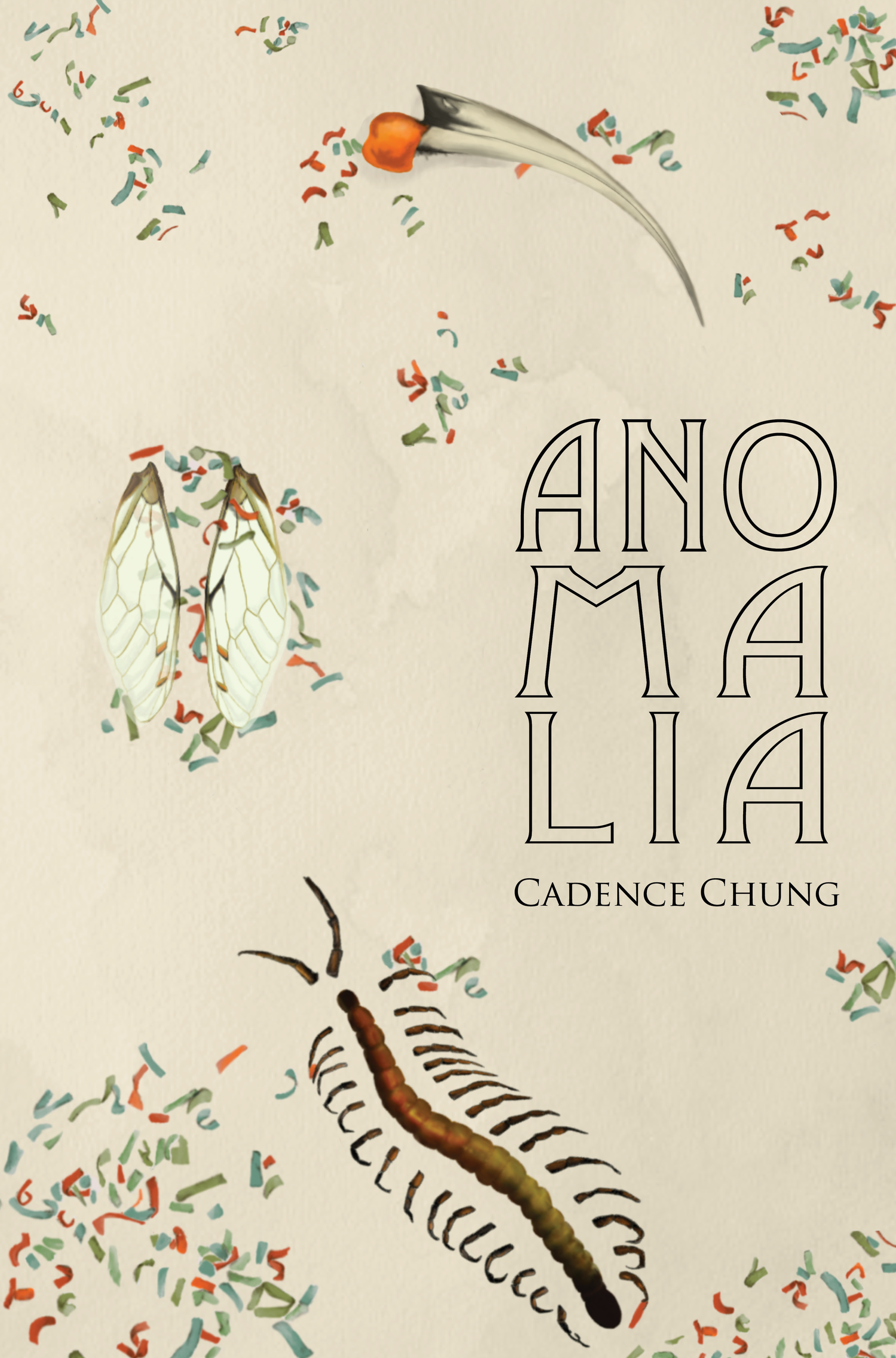
anomalia, Cadence Chung, We Are Babies Press, 2022
scrapes and yellow bruises on her knees, she is learning the terrain, learning that some things cut and some things stain, she is learning that the sky above is full of balls of light that you can’t touch or feel or taste she is getting used to the injustice of it all.
from ‘specimen ‘332: the astronomer’
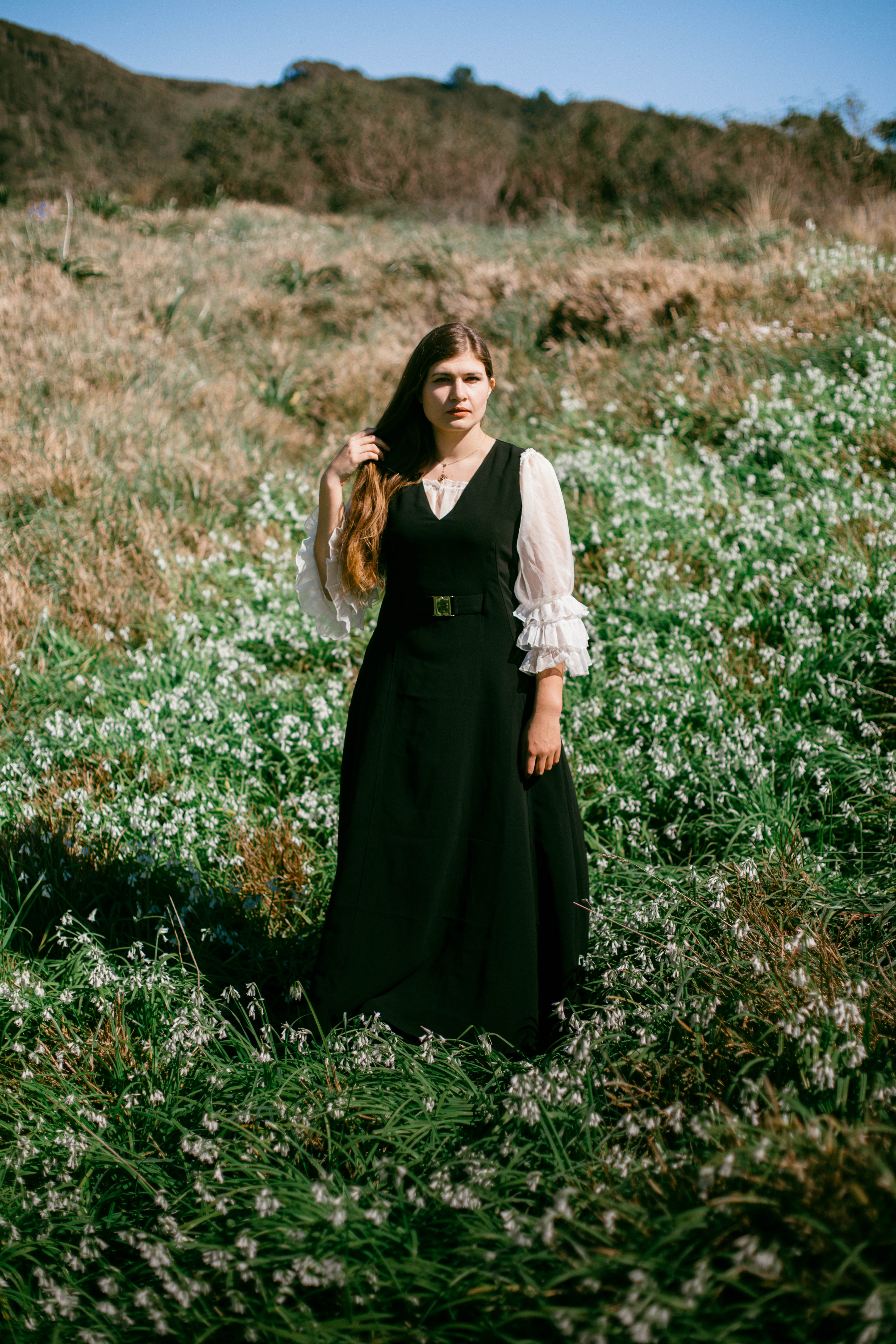
anomalia is Cadence Chung’s debut collection, and was written during her final year of secondary school in Wellington. She has been writing since she was young, and began publishing in her teens. Cadence has made two demo albums and her musical Blind Faith was staged at her secondary school in 2021. She hit the poetry headlines with ‘Shadows / shades’, a poem she wrote in response to NZQA using a poem by white supremacist and murderer Lionel Terry in a Level 2 History exam.
The collection’s opening poem, ‘abstract’, underlines how anomalia heightens a sense of the imprecise, the irregular. Stare at a word long enough, say it often enough, and it slips into the unfamiliar, the unpredictable, the unsteady. The word ‘abstract’ may reference a summary that acts as prelude or doorway. It may be ideas that stand as theoretical window. Or the removal that signals a clearance from expected settings. The word/idea/flashpoint bounces me back to the title of the book, and I am musing on how a word wobbles on the line, how this thought or that gesture, this appearance or that choice, deviates from expectation.
Poetry is a perfect place to contest everyday anomalies. The word may wobble on the line, but the word on the line can emit light, can resist subjugation. And Cadence’s poetry demonstrates this.
Poetry is a perfect place to celebrate the present tense, to make use of the gerund, the present participle, in order to keep moving: to keep searching, collecting, surrendering, dissecting, loving, pretending, existing, recurring.
Cadence’s collection is a curious curiosity cabinet with its recurring motifs and themes: cicada, vivisect, blood, science, anxiety, specimens, antique shops, milk(y), love. But it is more than that. It is more than physicality. Cadence has probed into the tender flesh of being human, with scalpel and penetrating lens, and laid the seeping wounds and insights into the clearing that is poem.
There is the insistent and constant need to classify, sort, catalogue or vivisect the specimen. The specimen may be a gathered object, a body’s organ, but I also see it as self. The poet is driven to sort, classify, catalogue, vivisect self. It is the beating heart, the fragile state. It is elusive and unknowable. Self is placed in display cabinet. Self becomes cabinet. Self becomes poem. And if the specimen is dismembered, split open, if the self is vivisected, this is poetry of pain, hurt, danger, vulnerability.
The floating and ambiguous ‘me’ is more than body parts. It is astonishing to peer into the glass cabinet of the poem and hit the sharp edge of anomaly. Where the most important things (I love you) are incommunicable. Where sorrow is easily categorised but matches no category. Where uncertainty is a certainty. Where life is sonnets and getting tender about mushrooms, a flirting moon. And life is ‘patching together / every scrap and semblance i know of’. Also from the poem ‘that’s why they call me missus fahrenheit’: ‘Because everything’s too bitter / to not suck on the sweet bits’.
Oh and scientist poet, poet scientist, becomes dissident. They long to subvert the results, the order – and gore becomes glitter cluster. From ‘anatomy’: ‘keep trying to understand the strange strange anatomy / of existence’.
The collection has hooked onto my skin, down my breathing passages. The poetry is provisional anchor. Searchlight. Distress signal. Gritty field. Self reflection.
anomalia is a breathtaking debut.
like i have admired everything in my life with recklessness and without hesitation
how could i not? when there are drawers full of herbs pictures of distant towns
ripped waistcoats long-gone family crests love letters to dispense from heart-covered machines
for a penny each how could i not? when i am so used to being collected
like dust between pages like sludge in a gutter like eyeliner on skin left to sit
how could i not? when i am lonely so everything reminds me of love
Before Cara Delevingne there was me bushy-browed and proud ready to walk down the catwalk at Burwood Primary (down by the silver birches where we played tree tag).
My eyebrows were so big and black they could knock out the scrawny blonde kid at Intermediate, the one who followed me and hit my legs with a stick as I walked away the one who called the only other brown girl in our class skidmark.
My eyebrows were so wild they could radiate waves of anger to the stranger at the bus stop who said, “just smile, it’s not the end of the world”.
My eyebrows were so thick they punched through my voice spoke so loudly that our Social Studies classroom rumbled and everyone turned to listen.
In my dreams I have a sidekick – with my beastly brows and Kajol’s unibrow we are unstoppable.
Watch out tweezers and threaders and assorted brow shapers we refuse to be plucked or trimmed into shape. We bow only to the brow goddess for long luscious fluffy brows.
Neema Singh
Neema Singh is a poet from Otāutāhi. Her work appears in Ko Aotearoa Tātou: We Are New Zealand(2020) and A Clear Dawn: New Asian Voices from Aotearoa New Zealand (2021) and she is currently working on her first collection of poetry. Neema is an experienced secondary school English teacher and holds a Master of Creative Writing from The University of Auckland.
although the flighty vampires suckling so obscenely are the only creatures that really belong in this scene not the dogs or the willows or the girl or the gorse with its raptures of yellow
that invasive stellation annexing the slopes to wrestle black beech at the bush boundary the smells of pollinated combat mingling by the water sultry as marzipan and honeydew casting a heady spell
over the colonised valley the weeds like her very presence here a legacy of other people’s blood and money though she has yet to understand this history is her own still finding a place in her bones let alone the land
from ‘Noonday gorsebloom’
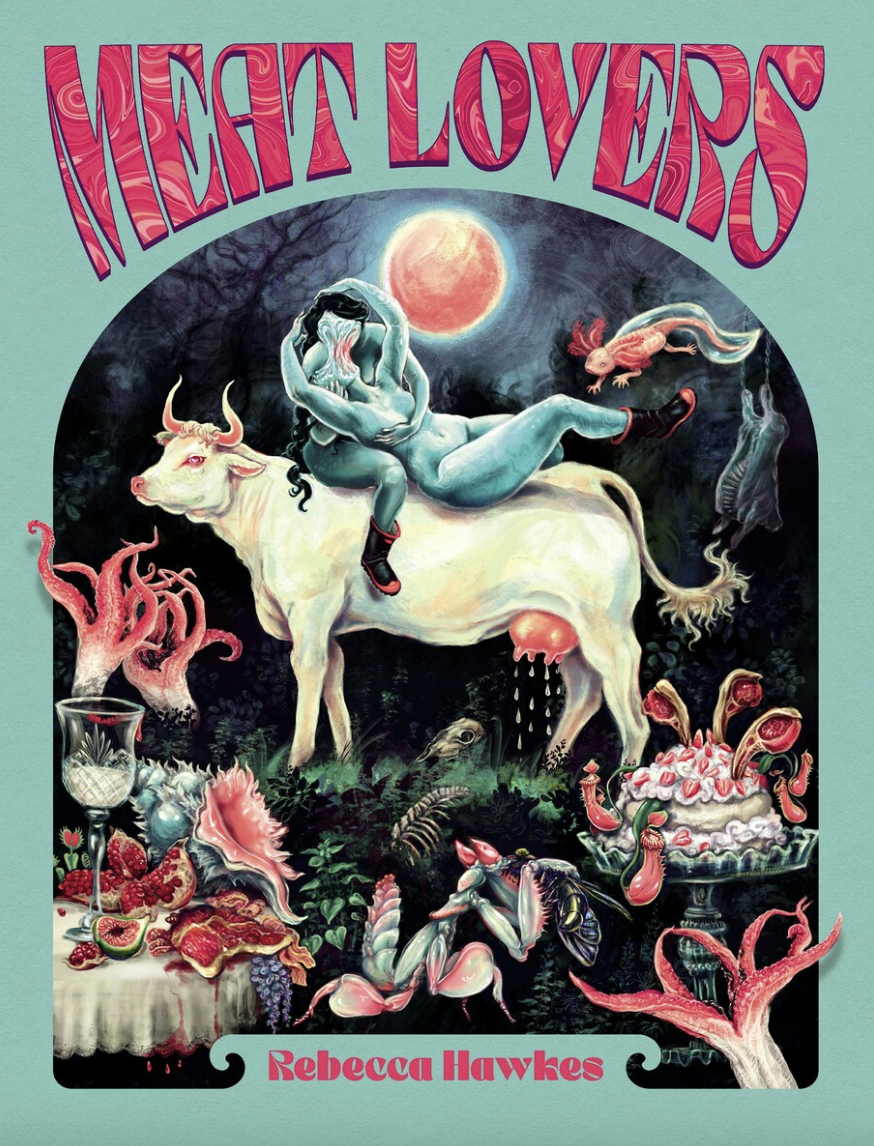
Rebecca Hawkes caught my attention in AUP New Poets 5 (Anna Jackson’s reboot of the series). I became an instant and avid fan. Rebecca’s debut full collection Meat Lovers is now out in the world and is attracting a solar system of love. Freya Daly Sadgrove wrote this for the blurb: ‘Rebecca Hawkes is the unmatched empress of viscera. Thrillingly, perverse, utterly compelling – you eat these poems like overripe peaches, or your own tongue.’
To celebrate poetry, and the arrival of Meat Lovers, Rebecca and I have an ongoing email conversation over the past month or so.
Paula: Before we discuss your sublime debut collection, these are strange and challenging times. I am finding books help. Writing helps. I just read Rachel O’Neill’s stunning Requiem for a Fruit and it was such an uplift. Inspiring. Have you read any books lately that have stuck with you?
Rebecca: Lately I’ve been disappearing into gaming a fair amount -dystopian epic sequel Horizon Forbidden West just came out and I’ve been abandoning our world for the tragic beauty of that story. I’ve also been reading a lot, enjoying the first releases in the bounty of local poetry arriving this year. The Surgeon’s Brain by Oscar Upperton stuck in my craw, as an incisive testament to an extraordinary life. It’s a powerful reminder of the ongoing need for rediscovery of queer history, and how we continue to fight for our place in the record. It inhabits the character of James Barry, a brilliant transgender military surgeon in the 1800s. Oscar’s work is precise and immersive – it felt like being dropped right into Barry’s whirring mind at various moments throughout his storied life. Reading the book is like speedrunning a novelised biography in a way that fits my fractured attention span, while also having plenty of room to breathe with Barry through his gnarliest thoughts.
I’ve also just read Chris Tse’s much anticipated Super Model Minority. Rainbows and rage, passion and pride, it meets my pent-up energy in the pandemic. This book evolves Chris’ previous work reckoning with racist and homophobic violence, and the radical possibilities of joy in a doomscroller’s world.
I’ve also been lucky to receive a copy of I got you babe, the first publication by new publishing collective Taraheke/Bushlawyer. I’m so glad to see this in the world. I got you babe includes poems and essays by the five writers, holding their power and care and grief. Importantly, it places the forthcoming anthology No Other Place To Stand (which I’ve been co-editing with essa, Erik and Jordan for the past few years), in a richer, wider ecosystem of critical and creative work around climate, capitalism and colonisation. As we get closer to the anthology launching at last (it has gone to print!), it’s daunting how little has changed since the start of this project and the pandemic – the poems sent to us in 2020 have only become more (alarmingly) prescient. The critical urgency of I got you babe is a breath of fresh air.
2022 is, despite all the overall horribleness of Current Events, set to be a killer year for poetry. I’m eager for the new books by Anahera Gildea, Michaela Keeble, Anne-Marie Te Whiu, Erik Kennedy, Jordan Hamel, essa may ranapiri, Cadence Chung, Khadro Mohamed, Michael Steven… My bundle from Titus Books just arrived and I’m reading Chris Holdaway’s Gorse Poems tonight!
Meatlovers Rebecca Hawkes, Auckland University Press, 2022
Paula: How was it, writing your sublime Meat Lovers?
Rebecca: Well, I’ve been working towards Meat Lovers for some while. After Softcore coldsores came out in AUP New Poets 5 in 2019, I wanted to do more with some of the down-home-on-the-farm poems, and build a more cohesive full-length collection set firmly in the rural gothic. The title Meat Lovers came early on. It led to the eventual bisected structure of the book, the two halves of one cracked geode. But getting there was a meandering process…
I bloody love to write a poem, any poem, as a wry joke or full-throated cry. The puzzle and thrill of tinkering with verse ‘til it moves on its own steam and I get to watch the poem skitter off in its own chosen direction is reason enough to keep writing them. And each poem is only one weeny little fragment in the churning vortex / hot mess of whatever’s going on in my head, so a lot of them live in completely different parts of my world that would never touch outside of a word document. A lot of poems therefore ended up on the cutting-room floor for this manuscript, as I had to corral a more cohesive set of little machines that could work as a pack for a more focused sequence. I had so many ‘spare’ poems that there were more than enough for another rather different manuscript – which in a funny turn of events was a runner-up in the Kathleen Grattan Award at OUP last year. Maybe I could have published that altogether more playful and girl-gamerish book first instead, but Meat Lovers holds the work I was most compelled to delve into, mining some darker recesses of my home and heart, and way to still live in some places from my past that I can never really return to.
Once I’d gold-panned for the vibes/themes of this book (food, farming, foolish love) and gathered my first set of poems, structuring it was the challenge – I’d never tried to be so purposeful in a manuscript order before this. I’m grateful for the early eyes of friends like Rebecca K Reilly and essa ranapiri who helped me zero in on what really mattered for the shape of this work. And then of course I kept on writing fresh poems and trying to find places for the new darlings, even as the manuscript really needed to be pruned. How has writing this book been? What is it ever like to make art, to do something freeing but also serious, disarmingly ironic but nonetheless excruciatingly sincere? At turns it has been deep work and easy fun, therapy and tomfoolery, surfing the ecstasy of creation or gruelling arduous labour. Writing the book was humbling, cos making art always kicks my ass, but obviously it’s me doing the kicking as well as my buttcheek with the boot print on it.
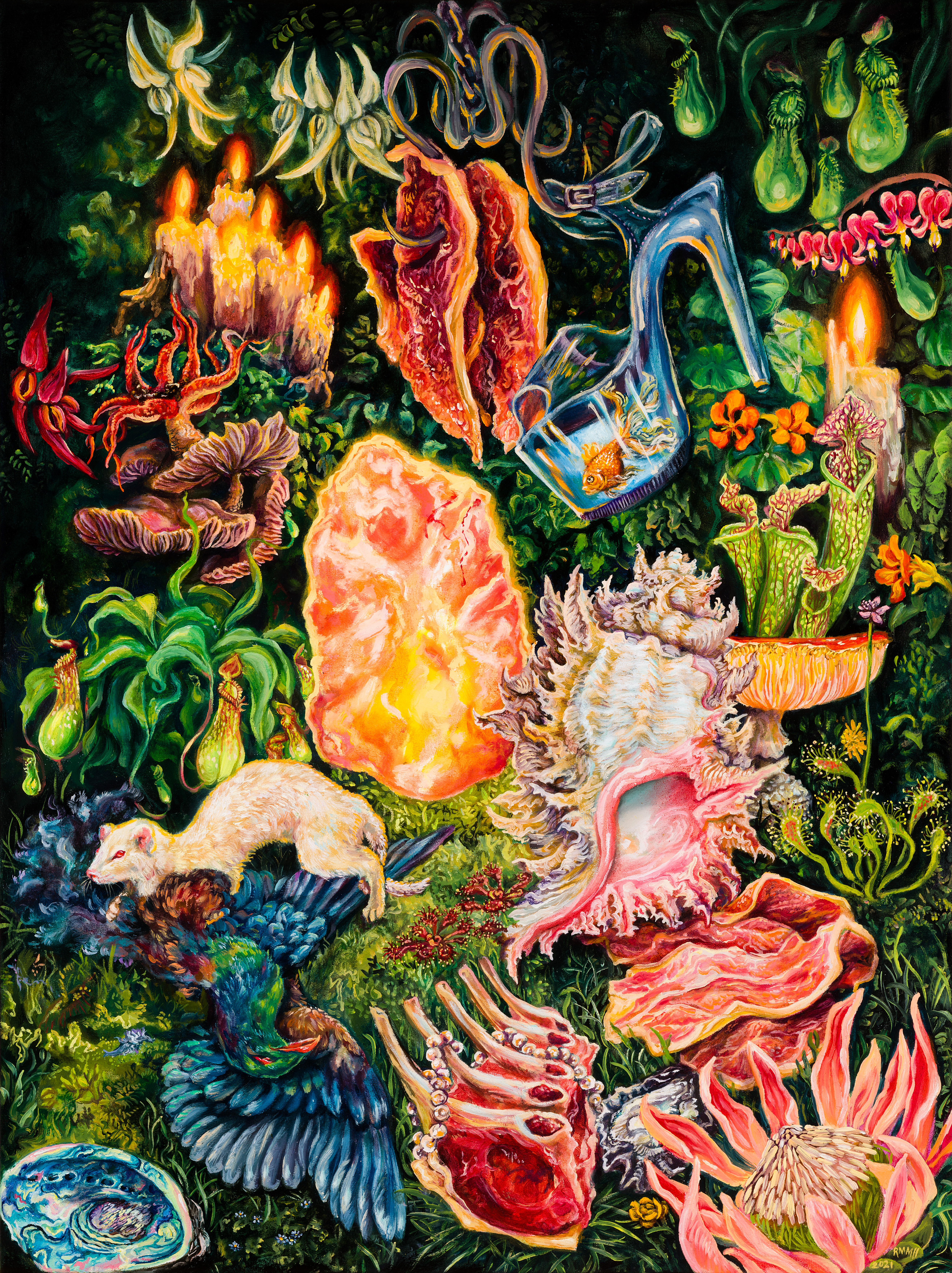
‘Frenzy’, Rebecca Hawkes, 2021
Paula: Love the idea that incongruous things in the world co-exist in the neighbourhood of the page! And love how we can never pin the writing process down to one easy answer. Yet for me it is the best thing in this wild and challenging and complicated world. Energy boosting. Heart easing. Body uplifting. Whether reading or writing. I get a similar reaction when I look at your paintings. I have lived with an artist for over thirty years and we inhabit a shared space, but also private and utterly necessarily separate spaces each day. How is it for you both painting and writing? Reading your poems and sinking into your art it is a yin and yang experience for me – the one electrified by the other.
Rebecca: For me the painterly and poetic forms are so intertwined, you could never ask me to choose one, or to go without them. That was why it was so important to me to do my own cover art, even if digital painting isn’t my main medium… and even though what I mostly see in my own paintings is how much learning I still have to do! My necessary poetry-space is laptop-sized and portable, so it’s a more readily accessible art than the ritual of setting up paints and solvents, and then cleaning brushes when I’m bleary-eyed past my bedtime. Sometimes I go months without having – or making – time to paint. But I somehow find the hours when exhibitions are coming up, like right now …
When I’m not both writing and painting I’m not my whole self. They’re things I’ve always done. As a child I constantly drew chimeras, collaging together the most interesting limbs from my gen 1 and 2 Pokémon handbooks and the dinosaurs I was obsessed with – an Arcanine head and mane on a Houndoom’s punk pup frame, equipped with the wings of a Charizard and an Ankylosaurus club tail for bashing. What’s it called when you’re a horse girl but for dragons? I was that. For me a dragon is still the ideal animal, an impossible assemblage of apex attributes, wise and prideful and wild… While my art subjects are often less creaturely now, dragon-building is still basically how I approach both paintings and poems. I rip little shreds of potent detail out of life or dreams, and solder them together to make something that has its own new roar.
Painting is where I most keenly feel the gap between the work I aspire to make and the limits of my capability. I’m not a planner, working out decent compositions in thumbnail sketches. Instead I dive right in with colour and a couple of starting images, then see what happens. Same for poetry, but with poems nobody can see the smudged under-layers lurking beneath the surface of the finished piece… Word docs are forgivingly blank behind the text, so no-one sees my orphanage of random lines, loose chimera limbs waiting to be assembled.
Right now I’m in that horrible gulf between expectation and reality where I’m blocking in a painting, waiting for images to emerge from the mess, knowing that every mistake will be baked in forever, making slapstick attempts to shield the hideous draft with my whole body when friends visit. But when I am actually at work on a painting I let go of all that shame. I get so absorbed I might forget to breathe, eat, drink, urinate – lost in flow-focus, crouched over my canvas between the TV and the couch. As you say, artists need necessary space, to focus and to dream… but I find I get by with surprisingly little of it.
When I paint I kneel on the carpet because there is no space in my apartment for a studio (see: me having feelings about this when I went to see Hilma af Klint’s stupendous body of work), and because painting is a kind of prayer activity anyway. It’s an act of faith, isn’t it, to scratch out some small artwork in response to the shabby miracle of the world? Writing is like that too, a deeply interior creative practice that requires me to be open, curious, trusting and responsive to whatever drifts up from my subconscious. Don’t get me wrong I don’t think my processes are all that spiritually glorious, or my artwork particularly accomplished, but when the going’s good it is transporting, and as I give my energy over to a work it breathes life back into me. Am I a pompous loon, indulging in surrender to my own bad art, while the signals of my partner’s PS4 controller and sounds of gamer swordplay beam through my body as he slays monsters in Elden Ring? Sure. But I can’t not do it.
In painting and poems I’m meditative and open, but also working hard in pursuit of something that mainly eludes me – but maybe I’ll get it next time, and this is what keeps me growing (I hope) as an artist. It also keeps me hungry for others’ work. Yes to everything you said about the energising and uplifting nature of sinking into others’ art! Reading outside of myself is crucial to my writing, and looking carefully at other people’s visual art is essential to my painting. Even though making my own art is a solitary act, if I was in a vacuum without others’ work to delight in and explore, I doubt I’d make much of anything. Do you feel this with poetry?
Paula: Absolutely. The sheer joy that the poetry of others gives me is immeasurable. I thrive on it. Like an extreme vitamin boost. For me, the process of writing is intimate, secret, unfathomable, but it is in debt to writing communities past and present. Thus my continued drive to keep Poetry Shelf alive. And I know the doubt, that aching gap between reality and expectation, I don’t know if it ever goes away. I don’t know if I can ever bear to be published again, aside from children’s books. Tell me about your connections to poetry communities. I am thinking of Show Ponies for a start! I asked Chris Tse if he was a social poet, a hermit poet or something in between!
Rebecca: I totally agree on writing being a personal activity but also inextricable from communities around and before us! Even the solitary work of writing is not completely alone… I’m always reading so my writing is inevitably in conversation with other people’s work, and eventually a handful of trusted first-readers who are the unfortunate recipients of my little jokes. Often my poems are elaborate jokes for my friends. I don’t mean to diminish the poetry by saying that… But my Wellington poet-pals are the people whose response most matters to me, and whose support buoys me along, people I trust completely with my beautiful dark twisted fripperies. I also tend to be most motivated to write when there’s a deadline, which is often some event where I know (or hope) people will show up. So even though I’ve written alone for most of my life, I’d characterise myself as a social poet these days, and am so grateful to be part of a lively community.
Show Ponies is its own beast – Freya is the horsepower behind that. But it reflects the creative connections that are possible in a community like ours, where people are good sports with open hearts. There’s a lot of trust involved in doing something big and silly. It’s as vulnerable and sincere as any earnest confessional poem. But a bunch of poets who aren’t afraid of looking like fools together is a powerful thing. To manifest your popstar destiny you have to commit to the bit!
Rebecca: I’ve missed in-person events dearly through the pandemic, and it feels miraculous that Chris and I got to launch our books to people live and in the flesh. I’m interested in what you said here about bearing to be published. Stacey Teague recently asked posted on Twitter I’m trying to figure out why I should try to get my manuscript published and what motivates other people to get their books published and several people have just said “so you can have a party!” which obviously is something you can just do (well, depending on relative pandemic risk) without all the work of writing and vulnerability of publishing at all. For my sins, I was one of the people who’d said ‘party’ right away. But the launch party for a book is so important to me, bringing all someone’s solitary work into a shared public sphere – where the book now exists as its own object and something that will literally belong to other people, outside of the writer’s brain and screens. Aside from getting to celebrate the launch, the meticulously considered process of putting a manuscript together and then having the book itself exist in hard-copy for real has been so rewarding. I’ve been publishing poems around the place for ages, but this first book feels so precious. It’s been a very different process from blatting out last-minute poems and has taught me so much more about this craft. But the blessing of poems is that we can do whatever we want with them, right? There is no requirement to write books, or to publish the poems in any format.
lambs explode onto the scene like popcorn kernels such freshly detonated fluff antigravity mammals no heart leaps higher than the skipping lambs flocked in dozens barely touching the ground for the joy full fortnight in which they invent their limbs before they settle down to their true vocation grazing themselves into flesh factories babies babies babies babies the loin the chop the shank the juicy vacuum-sealed rack and great value barbecue meat pack stunned slit hung bled gutted skinned
from ‘Hardcore pastorals’
Paula: Exactly! I was out on a rare road trip across the harbour bridge this morning and it felt like the route was lined with poems! Just the sensation of travelling got miniature poems roaming in my head. Who knows what I will do with them!
I reviewedMeat Lovers for Kete Books and absolutely loved it. First up I loved its music. Like I really love it like I might love a breathtaking album. Do you play a musical instrument? What music do you have on repeat at the moment?
Rebecca: Gosh this is so lovely of you to say! Alas I can’t claim to be a musician. I hammered away on the piano as a child and can mimic several convincing barn animal noises… Maybe I could have a go at being a heavy metal singer, but realistically that’s because my friends are just staggeringly supportive at karaoke.
I’m charmed by the sounds of words, which I guess is why I like lush OTT poetry – where it’s permissible to load up the adjectives just because they’re delicious, and make subtle music in that way. I truly was trying to think of Meat Lovers as a concept album, actually, with a Side A and Side B, and poems that can be heard alone but build something bigger when they’re experienced in order.
Lately I’m revving songs about sad cowboys and/or the devil. I love a broody lyric. Orville Peck, Nadine Shah, The Veils, Warren Zevon, Julia Jacklin, that sort of thing. The song I was trying to keep up with while running today was Sinnerman (Nina Simone), and the song I’m looping now to tune out and write this is called I just wanna lie in bed and drink my wine (various artists), which is a mood, and just before that it was Head alone (Julia Jacklin)
you have one job which is to hold
this disturbingly large moth battering the woven basket of your fingers
every instinct whining to close your fingers and crush it
or open your palms set the fluttering insect loose free your hands for other tasks
but this is your job the having and the holding
from ‘Poem about my heart’
Paula: I also love the way your collection has heart. If I pick up a collection at the moment and it is devoid of heart it feels like a remote unreachable island. Yours mattered to me. What matters to you when you write? Does heart matter?
Rebecca: For these poems, certainly. This book is one big folded stained paper heart, clumsy and earnest. It’s anchored in my foundational love for the land I grew up on, gratitude for the life my parents gave me, and care for the animals we lived with – and also the felt complications in all those things. Then there’re my attempts to write about the frustrations and discoveries, failure and bliss of eros and romance – about which there’s nothing new to say under the sun but when has that ever stopped a poet? To be honest, usually when I write I try not to worry about whether a poem has heart. Something I’m doing as play might well turn into something true, but only if I don’t try too hard!
In both writing and reading, different modes call to me at different times, from the sentimental to disaffected… Recently I was bowled over by Frank: Sonnets by Dianne Seuss, which is an often devastating book – poems of desperation, poverty, motherhood, addiction – but often dryly funny. Just observing things, reporting without telling a reader what to feel. Her poems often have a sting in the tail that makes my guts churn, like this one. I’m drawn to gutting poems, just as I am doleful music.
In poems I’m interested in humour and irony and the sardonic, too – how the heartfelt can be reprocessed into more distanced ways of engaging with our feelings. In editing No Other Place to Stand, I was really interested in the poems that did this. The causes, effects, and injustices of climate change, colonialism and capitalism evoke big primary emotions – Fear, Anger, Grief, Hope, Etcetera – so sometimes the only way into these subjects without getting washed away by those feelings can be to approach through slant wit. Those poems have their place in the body of climate writing alongside the activist battle cries, mourning songs, and stirring polemics that they sit with in the book. Sidling away from pure emotion doesn’t imply a lack of care to me, necessarily – the poems are still being written! And the more I learn about the pressures facing our planet and peoples, the less inclined I am to believe there’s any one right way to respond in our heads and hearts. Plus the sentimental can be treacherous too – I was trying to be careful with this in writing my book, not glorifying my nostalgia or delivering undue condemnations, especially in how I speak about aspects of farming life.
it’s not real cottagecore unless you are up to the elbow in it blindly groping down the blood-slick canal as another contraction ripples around your knuckles the cow is lain on her side licking a mud angel
your hand clutching at the calf’s limp hoof head torch slipping over your brow as you affix the chain and brace yourself to pull and pull until an amniotic spill
when the calf’s head breaches unbreathing still you pull and bring the whole body wetly into the cold world you drag the whole darkness drenched newborn around so the mother can lick
caked salts from her motionless baby
from ‘Sparkling bucolic’
Paula: So few women have returned to the farm in their poetry. I am thinking Ruth Dallas and Marty Smith. Ruth had a nostalgic yearning for rural life so wrote farm poems from her Dunedin home to make up for not being there! Marty grew up on a farm and returns to farmland inHorse with Hat. Your return is electrified by edgy realism, razor-edged fantasy, the whole glorious mash of childhood, ‘a rural gothic’. What pulled you back?
Rebecca: Can any of us grow out of our childhoods? The longer I spend away from the farm the more strongly I feel how that land, that life, has shaped me. I have loads of long-winded thoughts about how we live and work and eat and consume and produce on these colonised islands. In my poems it was important for me to write critically and lovingly about these things – to challenge the assumptions I absorbed about the ordinary/natural state of the world as a child, while also celebrating the gifts of my upbringing, the cruelly beautiful lessons and earthing sensory experiences and many ways of relating to other animals. I carry all this with me –I am never without it. I’m glad you registered that not all the book is straight reporting on my life though – there’s plenty of fantasy and fiction in there. Let poets tell lies!
I think often about Ruth Dallas’ Milking Before Dawn. And Marty’s book made an enormous impression on me – she really encouraged me not to worry too much about being macabre! Rural gothic, as you say, is where I’m most at home. And I was so blessed to journey ‘home’ to the farm through these poems, as well as honour previous selves formed in that place – the girl encountering a mythical panther, the adolescent queen of weed-killers, the teen rapt in agonies finding reasons to fight in the rampant gorse in the riverbed… And I hope some of this work rings true for other queer rural kids, farmhands with a taste for verse, or anyone else seeking poems with bloody dirt still fresh under their fingernails.
Paula: When I first held a copy of my debut collection I burst into tears. There was an overwhelming gap between the poetry in my head and the object I held. I can’t explain it. Something to do with a physical thing and a mental thing. Your collection has just been launched into the world – in a venue with friends and family! How is the book’s arrival for you?
Rebecca: Agh, the tears! The gap between the final proof PDF being sent off to print and the arrival of the first book was hardest for me. I’m always spelunking new depths in the elaborate limestone cave system of my self-doubt (though thankfully have enough robust arrogance to keep making art regardless). Downing tools was difficult because I knew that from here on, the book wouldn’t get any better. I wanted this book to have a wholeness between the art and writing and fussed over it for aaaaages. But at some point the endless incrementally different PDFs became a blur, so it was time to end my meddling. The months away were tough because it was when the book was most abstracted from me, just some soulless files in the ether that I couldn’t ever touch again.
But then receiving that first copy of the book was magic. Tearing into the courier package with my teeth in the work elevator to find this actual book, its own thing, with its own weight and colour and scent, an actual living object in the world freed of my brain and screens… My favourite part of the physical book is the inner covers, with a meaty marbling that I learned to do on a version of Photoshop Elements so ancient that I actually own the program (rather than subscribing annually to “creative cloud”, ew). The pinkness peeps out when the book is read, and radiates onto the creamy paper of the pages. I loved the book so much from first sight, and am so grateful to everyone at AUP for helping manifest it. And the urge to tinker further has ceased. I accept it for what it is, now – a polaroid snippet of part of my work. I no longer worry that it doesn’t contain everything I could ever put on the page, or that the gap between the work preserved in the book and the work I’m presently more interested in making will only get wider.
Launching with Chris was a dream come true. I admire his work so much, and it’s inspiring to see how his poetic interests have developed from book to book. As fellow Show Ponies, we both love the energy of a real crowd, especially in a space like Meow. We were on the same buzz about wanting to share a live event with our loved ones and communities. There’s something so special about Wellington’s poetry scene – the city is big enough for stuff to happen, but small enough to hold a close-knit community. I’m shriekingly aware that we are not post-pandemic and there was still risk looming over the event (not least cos we were both meant to fly to the Brisbane Writers’ Festival a few days later), but I’m glad we were able to gather, for my dearest mum and Razz to travel there, for Chris and I to thrive on costumes and theatrics, to demand that a handful of people offered us some obligatory praise, and, most importantly, to perform our dramatic recital of Dragula by Rob Zombie.
Rebecca Hawkes grew up on a sheep and beef farm near Methven and now maintains a tenuous work/work balance in Wellington city. With poems widely published in Aotearoa journals, Rebecca’s debut chapbook ‘Softcore coldsores’ was published in AUP New Poets 5 for the reignition of the series in 2019. Meat Lovers is her first full-length collection. Rebecca is an editor for literary journal Sweet Mammalian and the climate change poetry anthology No Other Place to Stand (Auckland University Press, forthcoming). She is a founding member of popstar poets’ performance posse Show Ponies and haphazard coordinator of the Pegasus Books poetry reading series.
I usually do a poetry post to celebrate the Ockham New Zealand Book Awardsbut need to restock my energy jar today. My mind is all over the show. I woke at 4 am and couldn’t stop thinking about Tayi Tibble reading her mother poem from Rangikura (‘My Mother Meets My Father in an Alternate Koru’). The sun was nowhere ready to come up and I was electrified body and soul, replaying the poem in my head. I was lead back to Tayi’s sublime book. I wanted to whisper in all your sleeping ears: read this collection, please read this collection. I have written about it here.
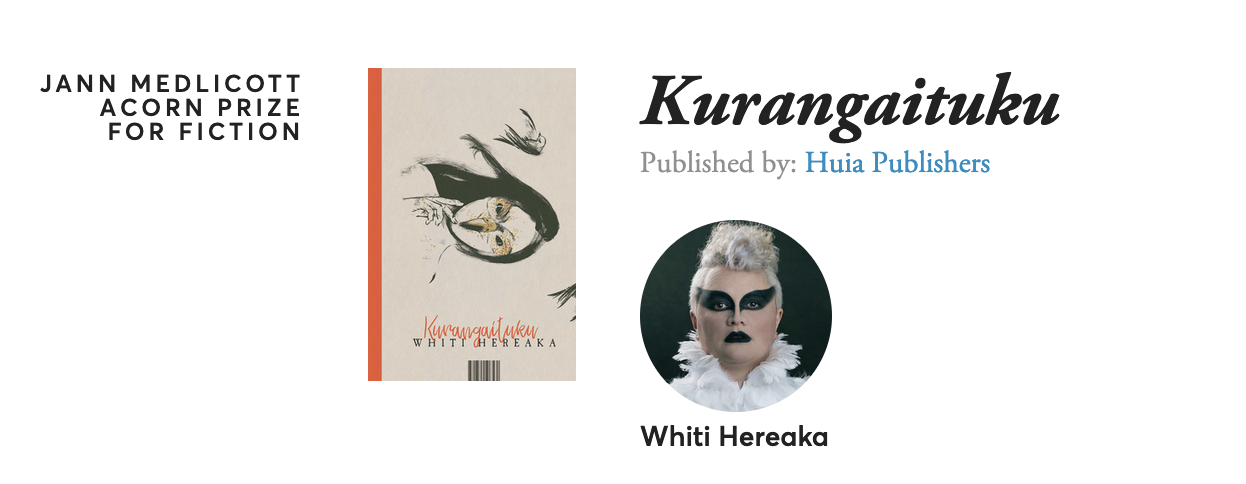
I was also blown apart hearing Whiti Hereaka read from Kurangaituku. I so wanted to write about her path-carving, heart-boosting book last year, but every time I tried, words failed me. I wanted to hold the book out to you and say, read it. Say, this is what an extraordinary book can do. This is the kind of risks we can take as writers, not at the expense of reading connections, nor at the expense of human connections. Far from it. So to see this superlative book awarded the supreme fiction prize is something special.
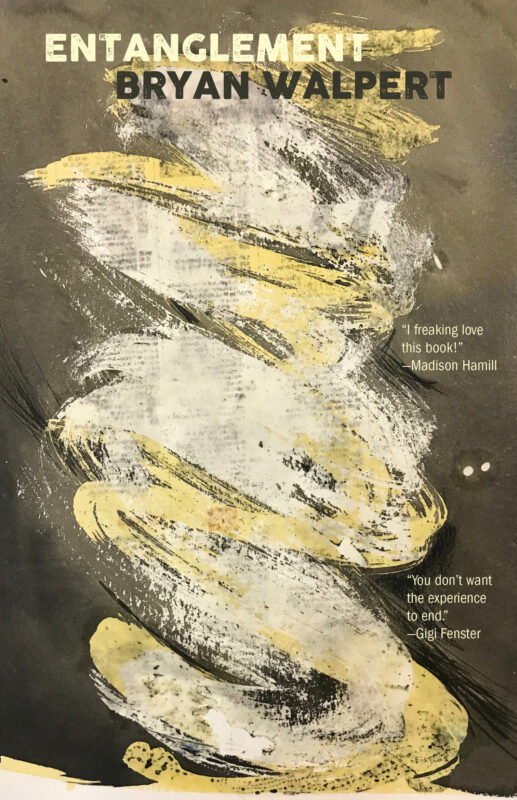
I also loved hearing Bryan Walpert read from Entanglement, to hear the musical pitch of his narrative enthralled me, and supported my review.
What a joy to see Nicole Titihuia Hawkins’ Whai win best first book of poetry. And it is also a fine acknowledgement of an excellent new poetry press, We Are Babies. I adored Nicole’s book (from my review):
I have things to share about Nicole Titihuia Hawkin’s debut collection Whai, but one part of me wants you to find a quiet nook and find your own bridges and poem trails. I love it so much – the way from the first page the rhythm pulls me in, a rhythm that is life and that is writing. We are welcomed into a space that is whanau, marae and connection. That is breathing the past, the present and the future. That is fed upon potatoes from warm earth, and by words that are nourished on warm tongues. It is discomfort, it is scars and it is let down. It is to be held close and it is to sing. Oh so much to sing, with waiata the energy force, the structure, the passed-down precious melody that sings mother father ancestors, the earth, sings names and naming, singing out in protest, singing in te reo Māori.
Every year I seem to mourn and celebrate. I know how awards can impact on writers, even those with a fleet of publications under their belts. But especially young writers who have launched a debut publication into the world. Ruby Solly’s Tōku Pāpā was an arrival that struck me deeply: “This precious book – that in its making, its stands, rests and journeys from and towards so much – is the reason why I cannot stop reading and sharing thoughts on and writing my own poetry. The book is a gift and like so many other readers I am grateful.” I was so glad it made the longlist.
I started reading Joanna Preston’s book Tumble yesterday (Poetry winner) and noted it is a collection of visual and aural uplift. Metaphors surprise and enhance the physical. The speaker steps into other scenes, situations, voices, memories, always observing, maintaining stillness as much as movement. It is deftly crafted with both economy and richness.
Last year was the only time I have ever felt personally invested in an award night. When Wild Honey didn’t win, I was able to say fuck in a loud voice, get the champagne out of the fridge, and tell my family I would be really sad for one night, but would be okay in the morning. And I was. Really really sad not to win. And then really really glad the next morning when I picked up my pen and start writing.
At 7 am I drove into the city today for an appointment and I couldn’t stop thinking about books that have affected me over the past year. I wish the awards would be streamed every year, because so many readers and writers tuned in across the country last night. I was reminded how short readings are like the best holiday imaginable. AND! I decided I wanted to put in a pitch for audio books from Tayi, Whiti and Bryan because I didn’t want them to stop.
Listening in last night was a rare treat. Grateful thanks to the Ockhams, to all the authors, the publishers and booksellers. 🌷💜
May we pick up our pens and start writing today, and may we open the next book on our piles and begin reading. Or simply open a window and go drifting in the clouds. Kia kaha.
The Surgeon’s Brain, Oscar Upperton, Te Herenga Waka University Press, 202B
A life needs rinsing out, once in awhile.
from ‘Code name’
Oscar Upperton has followed New Transgender Blockbusters, his terrific debut poetry collection, with a book that is equally sublime.
The Surgeon’s Brain is the story of Dr James Barry, a biography say, that is in debt to research, imagining, poetry, more imagining. According to the collection’s blurb, Dr Barry was “a pistol toting dueller, an irascible grudge holder, a vegetarian, an obsessive cleaner – and a brilliant military surgeon who served throughout the British empire, travelled the world with a small menagerie of animals, and advocated for public health reform. Barry was also a transgender man living in the Victorian era when ‘transgender’ was unknown in Western thought.”
Oscar’s new book is essential reading. Marvellous, startling, heart-jolting reading. Poetry, in my view, is a perfect process in which to take risks, to step into the shoes of another, to challenge historical misconceptions and regulations, to enable words to sing. The Surgeon’s Brain does all this and more. It strikes a mark, and then another, and lights up on so many levels. The story is divided into three sections: ‘Dura Mater | Tough Mother’, ‘Arachnoid Mother | Spider Mother’, ‘Pia Mater | Tender Mother’. A baby born, a life lived, a life goes missing. At one point, the doctor admits:
I am not a writer. I am a soldier. I am a surgeon.
Sometimes I write reports. I write in straight lines and use straight language. I would never dream of writing a poem.
from ‘Well’
And here is the doctor speaking from the straight lines of a poem. He is infused in the ink of the excavating poet. And the straight lines of poetry are judder bars, potholes, side roads, scenic views, the unforeseen, the exhilarating downhill cycle ride. And if the doctor only ever wrote reports, would never dream of writing poems, the young girl dreamed of busting apart the straight lines of a girl’s future. She sews herself into another gender. She makes the physical garment and codpiece that renders her man, and he steps into a different set of expectations and outcomes. He studies, passes exams and practices as a surgeon. Dr Barry, for example, is the first surgeon to perform a caesarean where both mother and baby survive.
The rules are different now. I travel unchaperoned; I enter public houses; I attend a university. Once I hid my hair and people would talk to me differently, but now they listen differently too. Before they didn’t listen but now their ears are opened. I am worth teaching now. I can be of use beyond myself. There is no question of my right to board a ship, or take a room. It is as though I were a ghost and I have now been give form.
from ‘The rules’
It is joy reading this as story, moving through beginnings middles and endings, but it is not pure delight. It is discomfort, corrugated musings, because the world has not yet dismantled the structures and behaviours that denigrate and deny women. That perpetrate blind ignorance of all genders as opposed to equity and openness. I carry a degree of mourning as I read, thinking of heart-numbing dichotomies: men women slave master rich poor literate illiterate hungry full. Yes Victorian times, yes 21st century.
It is joy reading The Surgeon’s Brain as poetry, moving through the lilt and economy of voice. And yes, it is voice, think speaking voice: confessing, exploring, refining. It is the musicality of conversation that is poetry. It is images and it is wisdoms. Fluidity and fluencies. Tenderness. It is the arrival along the plainness of line that forms another stitching of self. The poem as self-dress. Precious buttons and warm threads. Lines stand out and it is like you are gut-winded. Here I am falling in to a hole in the world, like we might fall into a hole in the poem, into a life. And I am imagining the floor of the poem. And it is this:
Mamma fell ill; an ill wind blasted; a will drawn up; the trapdoor swung down: a rope ladder descending into darkness; a hole in the floor of the world—
from ‘The idea’
So much to say about The Surgeon’s Brain. I wish we were in a cafe, having invented a poetry bookclub so we could share espresso and our favourite lines. Quoting this bit, and warm musing on that bit. I want to share how the doctor builds a room in his head with a bookshelf and chair, dust in the air and London light. We could talk hesitantly about the rooms we build in our own heads, for whatever reasons, that help keep us safe and on track, strengthened.
I want to tell you as you sip your coffee about a particular poem (‘Journey to the university’) that has a shadow version in the footnotes, little refinements, because we cannot take a face or an action or a statement for granted. Because behind this poem is another shadow poem, and behind that another.
Or the forest. I am thinking of the power of metaphor to get us along the straight line. Through the living of the life, the reading of the poem. How this life and this book is effervescent with metaphor.
Some things I keep secret even from myself. I’ve never seen a forest but sometimes I walk in one in my dreams, great black trees with twisted branches and underfoot wet earth and spiders’ nests. This is a forest that covers the world,
and in it live three things: the red foxes that dislike rain, the innumerable silver spiders, and me, numerable I think, but when I turn to regard the path behind me I am there. Each step of me is frozen in place, curls of earth sticking to the soles of my feet.
Some things I keep secret even from myself. I didn’t want done to me the things that were done to me. But the sun rises and you say, well. Only you don’t say it. You never say it
from ‘Into the forest’
But most of all I want to share the well. The well that ends ‘Well’, the straight line poem I have already mentioned (aside from the appearance/echo in ‘Into the forest’ above). I will leave you with the well, leave this metaphor for you to become entangled in, and say as an opener, how Oscar’s quiet and extraordinary poetry collection taps into another life, and how in doing so, it also taps into your life, my life. You and me and poetry are in this upheavalled world together. And know that as you read thorough marvel and wonder, mourning and wound, poetry is the lamp we can hold high and share.
I am a well. Or there is a well in my mind, clean stones, broad wooden bucket, rope. The water at the bottom of this well is so clear and cold it makes men drunk. It is black, because it takes the darkness with it when it is pulled from the well.
I would like to intoxicate. I would like to be a well-frequented well.
from ‘Well’
Oscar Upperton’s first poetry collection was New Transgender Blockbusters (VUP, 2020). In 2019 he was awarded the Creative New Zealand Louis Johnson New Writer’s Bursary. His work has been featured in Sport, The Spinoff, Metro and Best New Zealand Poems.
Surrender: Poems, michaela keeble, Karaheke | Bush Lawyer, 2022
there are so many rivers inside me i may as well be a continent
the rivers when i run are running
when i tilt this way, that way the rivers slow down and change direction
from ‘mother, crab’
I have about thirty poetry books in a stack on my desk, a stack of children’s books and a stack of novels. I pick a book and start reading, and I am delighted at how many books I fall in love with. Deeply. Last week it was a picture book, The Lighthouse Princess by Susan Wardell and Rose Northey (Penguin), along with Entanglement by Bryan Walpert (Mākaro Press). Is it a matter of contagious charisma? Are the books touching a human chord with language that electrifies me?
I picked up michaela keeble’s poetry collection Surrender and it stuck to my white skin like honey, like biddy bids, like a lattice of ideas and confessions that resonate. Michaela is a white Australian, living in Aotearoa with her partner and children, who has worked as an editor, writes fiction and poetry, and works in multiple ways towards anticolonial social justice, including climate justice. Her book is published by Taraheke | Bush Lawyer, ‘a new publishing collective of indigenous women and their allies from Aotearoa and so-called Australia’.
you give my poem a gift you give my poem a ledge a place to be seen to rest
i greet your poem, a place the way i greet each voice within and around me i pick up a pen
from ‘revision is a kind of faith’
michaela’s book is cradled in a nest of other books. You can follow the thread to other writers, to books she has read, to your own reading connections. The short lines, self exposure, the lower case ‘i’, the vital political currents lead me to Janet Charman. I read the word ‘intertidal’, and I am back in the pages of Kiri Piahana-Wong.
The white space around each poem establishes essential breathing room, new starts. It is writing out of white and not forgetting, searching for the ‘white tongue’, the ‘shame tongue’, seeking and discovering syllables, medicine, stories, communication lines, dialogue, metaphors. What does the ‘half tide’ stand for? Or the conference poem or the guilt poem? Or the throat or the river? The country? Or the person writing and reading next to you? What does the metaphor stand for, instead of, against?
The poems face the earth, the sick earth, the beloved earth, the damaged state of affairs where hierarchies continue to gulf and elevate the privileged. They rattle complacency, my steady feet on the ground. Where I am? Who am I am? How I am?
white poem goes on holiday white poem escapes heat nice white holiday package nice white plastic travel shop nice big white plane nice carbon got the budget
from ‘white poem goes on’
And while the collection navigates an imperative of wider human stories, especially of belonging, it also brings an intimate core to the surface. A writing self. A mother father daughter. And there is pain. Heartache. Grief. The mother becomes ill. The mother is no longer here. The daughter becomes ill. Heart and wound and writing move close to the bone. So yes, wherever the poems lead me, there is heart, there is searing heart, and I feel this book turns interior ignition keys.
i’m still here but now i’m made of fire
if this wind ever turns i’ll return a message
send my searing selves to the sky
honour the hard seams of m of my mother’s cloths
from ‘hard seams’
Pronouns form the book’s structure: you, me / other, self / we, us / her, she, they. Check what Emma Barnes said recently in my second Paragraph Room. We cannot take pronouns for granted. Making the ‘i’ lower case links back to feminist calls to dismantle authority. Decades later, each pronoun embraces community, communities, connection, connections, personal narratives. And that is important here. In the poem ‘even Alice’, the ‘you’ is personal, an intimate and known ‘you’, but I am drawn into its shape. The occasion is a gathering of writers on the marae to hear Joy Harjo read.
This need for community, this need to write and to speak, to be private and to share. That is exactly what Surrender does, in writing so sweetly crafted the hairs lift on my skin. The lines economical, yet satisfyingly rich. Pip Adams wrote on the cover: ‘One of the most welcome and important collections I’ve read.’ I agree. This book is both humble and extraordinary, and I love it to the moon and back.
i remember who else read: Briar and Api and that other poet Rob from Paekākāriki
even Alice Te Punga Somerville was there i remember washing dishes i remember thinking
read poetry for community
to be a poet with community
from ‘even Alice’
Michaela Keeble is a white Australian writer living in Aotearoa with her partner and children. Her chapbook intertidal about change underway in our oceans was published in early 2020 and she has a children’s book, co-authored with her son Kerehi Grace and illustrated by Tokerau Brown, forthcoming from Gecko Press in 2022. Watch out for Paku Manu Ariki Whakatakapōkai!
Michaela’s anticolonial poetry has been published and anthologised widely, including in Intimate Relations: Communicating in the Anthropocene (Lexington Press, 2021), No Other Place to Stand (AUP, 2022); and Not Very Quiet (Recent Work Press, 2021). Her poetry & fiction have appeared in Pantograph Punch, Capital, The Spinoff, Newsroom, Cordite, Plumwood, Westerly & elsewhere.
Michaela is a guest poet at the 2022 Brisbane Writers Festival. Find out more at her writer’s website.
Every day, my power company offers customers an hour of free power— at an off-peak time, of course, so before bed I make sure I turn on the dishwasher, get a load of washing in, charge my laptop and phone, vacuum, and maybe, if I remember, use the dryer for no real reason other than to heat my towel so the winter air doesn’t slice through me
after a shower, and by then I’ve done pretty well on the savings for the night, so I boil the jug for a cup of tea, marking the end of the day by blowing on the white knots of steam; and because I rushed home from work to get dinner on early and set my alarm—as usual—for 8:55 p.m., ready to vault through the house, there’s still time in the hour of power, so I boil the jug again to soak the pots and pans, put the electric blanket on and even
blow dry my hair, and I’m starting to get on a bit of roll by this point,
so I do my ironing in advance for a change, pop tomorrow’s roast in the slow cooker and stream an entire Netflix series so I have something to talk about at work tomorrow; and it’s about now I’m hoping I’m not bothering the upstairs neighbours too much, or worse, if they’re contracted with Electric Kiwi themselves and are saving more than I am, so I turn the shower on just to leave it running go down to the garage for last year’s Christmas decorations
and line the fence with fairy-lights, restart the chest freezer that hasn’t been used in years, play my stereo as loud as it goes; and even after all that there’s still time in the hour of power, and I’m not a handyperson by any means but I get the electric saw going—finally getting around to that bookcase I started over lockdown— and as I’m buzzing away, part of me wonders if I should really write a list next time of all the things to use and save money on
until I run out of cords and power sockets to plug into
and the whole house swells, swells; and the only thing stopping me now is if the fuse box blows (which my landlord wouldn’t be happy about) but at least I’d finally have some peace and quiet, and all the spaces would be flooded with darkness and I could creep upstairs into my bedroom, tracing my hands along the wall, until I’m under the duvet and everything is still.
Tim Grgec
Tim Grgec is a writer and public servant based in Te Whanganui-a-Tara. His first poetry collection, All Tito’s Children (Te Heranga Waka Press, 2021), is a verse biography of the Yugoslavian dictator Josip Broz Tito. He was the 2018 recipient of the Biggs Family Prize for Poetry.
Ideas for my blog drop into my head like golden peaches. The next thing I know I am sending out invitations, poets are getting on board, and the Poetry Shelf community is engaged. I recently adored Tracey Slaughter’s editorial to Poetry New Zealand Yearbook 2022. Rather than introduce the poets, she spoke to the idea of breakage in poetry. More than that, she offered a vital plea for us to bring everything when we enter the issue. I felt galvanised,on so many levels, by her piece. I compiled a list of words with links to writing and reading poetry, and invited a few poets to pick a word and write a paragraph in response. I am hoping to do one more Paragraph Room before early June. You can read the first Paragraph Room here.
With thanks to all the contributors, and to the ongoing supporters of Poetry Shelf. It means a lot.
Refuge
I’ve been thinking about writing as a refuge, as a place of safety and freedom, which means thinking about my poetry’s relationship to me and to the world. I’ve recently written what I used to disparagingly call poetry-as-therapy, a neighbour of poetry-as-refuge. There are lots of contradictions. I like to think of poetry as a place of freedom, somewhere you can write about anything in whatever way you like. But of course it isn’t. For example, I believe you should be careful how you use people who might recognise themselves in your poems. And although I like using personas because I like to imagine what it might be like to be somebody else, I’m not entitled to take on any voice I like. So can you write about what you don’t know or only about what you know? And where is the imagination in all this?
There are no easy answers, but there is a solution. You have the absolute freedom of your head. You can dream, try things, be someone else, make a mess, bore yourself, shock yourself, disgrace yourself at the keyboard. It’s what I like most about writing … the act of writing. When it comes to publishing, however, you leave your refuge and enter the world.
James Brown
music
it begins with a bird, one that claps its beak together, another that seems about to vomit, a shriek that is countermanded by a note so pure Mozart might have approved. It’s Radio NZ concert and it’s how I feel about writing. There is music and there are preambles: Handel’s first performance of ‘Messiah’ was dangerously short of seats so gentlemen were instructed to leave their swords at home and ladies to jettison their hoop petticoats. On which side does a sword go; what if a gentleman encountered a brigand on the way home; would love be less encumbered minus a hoop? The bird and then imagination and then the music. I used to admire those who scorned a room of one’s own and could write with children galloping around the dining room table, but now I realise I need music. Perhaps I am thinking of the music in poetry – not the obvious end rhymes – but the mysterious, not-quite rhymes that surprise you and lead you on like notes in pursuit of a theme. There is so much to think about, so much humour. Rachmaninoff’s big hands (another preamble) or the way some composers (Rachmaninoff is one) pummel and pulverise the end of a symphony as if they are beating it to death. Sometimes, thinking of music and poetry together, I say to myself my favourite rhyme from ‘The Owl and the Pussy-Cat’.
“Dear Pig, are you willing to sell for one shilling Your ring?” Said the Piggy, “I will.”
It’s that willing and shilling and will and the subtler pig and ring that never fail to enchant me.
Elizabeth Smither
Grief
I haven’t written much poetry in the last five years, but what I have written has been suffused with grief. Every creative practitioner goes through ebbs and flows, and I have been going through a poetic ebb. Poetry has been a place where I have been spending time alone, working through grief. The grief of losing family members, the grief of relationship breakups, the grief of dealing with trauma. Old griefs surface amongst the more recent ones and it feels like walking through a weird forest or a very biodiverse swamp. After pursuing a writing career for over 20 years I am only just getting to a point where I feel comfortable in this space. I have found poetic forms useful for providing emotional distance but also as a kind of packaging or container I can put things into and observe them. I don’t know when and how this work will find a home in the world – dark formalism is a very acquired taste – but for now it is enough that it functions as reflective practice.
Airini Beautrais
Time Travel
I love the idea of poetry as time travel. How amazing that we can sing our words onto a page and a minute or a day or a century later someone can read it and the song will flow into them. The song will sound subtly different to each listener, but it will still spark and ignite and fizz and I as the writer will speak directly to you, the reader. That’s the magic of poetry. In a time when seemingly it’s harder for us to listen to others, here is a room – a space – where two consenting people can touch, across space and time. That is something to hold on to.
Renee Liang
grief
I went past the word ‘grief’ near the top of the list and got stuck on it, I couldn’t concentrate on the other words and kept going back to it. I have been writing a lot of grief-ridden poems lately, trying to process ‘losing’ my father to dementia, as well as this communal grief we are all experiencing to some extent, for the way of living and connecting we used to have, and the way covid has put a stop to a lot of that life. At first that stop felt temporary, but now, two years on, it does not seem to be leaving. Poems are a sort of beacon in that darkness. I often think of a poem by James Brown called ‘Beyond Repair’, that I read as a young writer and loved. Although the poem was about a broken umbrella, there was a sadness sitting underneath it that I felt moved by. There are plenty of great celebratory poems, or f-you poems, or / or / or, but poems about grief seem to come from a deep and obviously painful place in the physical body. By writing poems about grief, I hope to reach people grieving. And as someone grieving, I want to read poems to see that I’m not alone. Poems are a place of kinship that you don’t have to be in the same room (or even the same time) as someone else to experience.
Louise Wallace
Fragment
In a way, all poems are made of fragments. Each line is created by a sort of breaking, making the poem a form fissured with cracks. Some poetry is literally fragmented; only sections survive. Lots of ancient poetry is like this; it is as if we possess a handful of sea glass rather than a complete bottle. I like the mystery of never quite knowing the whole. Because, I think, mystery is important to poetry, too. Good poetry is about what you know and can read, sure, but it is also about what is hidden, implied, unknown. What is lurking outside the text and exerting pressure on it. Poetry, to me, is always about what we know and what we cannot simultaneously. At once complementary and oppositional. So give me sea glass over a bottle any day; give me a fragment; give me a poem.
Hebe Kearney
Knot
I am fascinated by the presence of knots in both corporeal bodies and bodies of words. The innumerable ways knots are tied and undone in/through people and poetry constantly impresses me. I often catch myself chewing over everyday reversals/oppositions and getting quite furious at how quickly I diagnose their nature or belonging as ‘oppositional’. Every bit of me doesn’t want to arrive at these conclusions but I do, but I am always ready to interrogate my arrivals and departures. Humans seem to have some chronic compulsion—some biological compulsion—to disentangle, to cling to the asynchronous over the synchronous, but unless this compulsion is actually going to save our lives, I believe we ought to reassess it. There is a blend about almost everything: it is possible to be dreaming and not dreaming, truly overjoyed and truly miserable at once. Perhaps Maggie Nelson’s keen awareness of mutual inclusivity in The Argonauts best articulates how I feel about the responsibility of people, and the page, to examine a chronically loose knot: “I had spent a lifetime devoted to Wittgenstein’s idea that the inexpressible is contained—inexpressibly!—in the expressed.” Poetry is special for the way it knits so intricately together the forces and feelings we aren’t sure how to make sense of (and often we still don’t know how to make sense of them after the poem, only feel we know them better) but for poetry to do such work it requires first a person to acknowledge this work as necessary, and more, to need this work to be necessary. I am thinking now of essa may ranapiri’s ransack. I am thinking of Anna Jackson’s Actions and Travels. I am thinking about the way I want my writing to always be honest about the knot: the deep-rooted (I accidentally typed deep-rotted, hmm) drive to disentangle, and the desire, the urgency, to keep the braid. My current MA project aspires to gallop through and around the knot. I wonder where I will arrive, where I will depart, and why, and why not?
Amy Marguerite
Time
I find it essential to be on time for everything (including the present assignment). If I’m invited anywhere, I count backwards to find the latest moment I can leave in order to be at my destination punctually. Occasionally I try to factor in a bit of fashionable lateness, but mostly in vain. Time in poetry, though, is a horse of a different colour. I wrote a poem while travelling in the Lake District with my family in 1981. The first two lines ran:
We built a man of slates, and after years, revisited, the rock had grown a face.
I liked them, but I wasn’t really sure what they meant. Perhaps for that reason, what came next was less satisfactory – to me, and to others. The poem stayed with me, though, and fifteen or so years later I made a concerted attempt to complete it with some entirely new lines. And in that form it appeared in my first book, City of Strange Brunettes (1998), under the title “First Love.” But I didn’t entirely like that version either, so later on I had a go at changing the second stanza. Just now, in 2022, I had a look at the poem again and decided to change it back to the way it’d been in the book. Even as I read it, though, I can still hear the original 1981 version of the last four lines going round and round in my head. My point is not so much that the poem is still alive for me, after forty-odd years (though it is); rather, the thing that fascinates me is the number of different moments over those four decades that are somehow miraculously preserved in this one six-line poem. Writing a poem is the closest thing I’ve ever experienced to that Proustian idea of recovering lost time – not just as it was, but with the added patina of what has come in between then and now. It’s a snapshot of a buried past, but with the advantage that the people in the picture are still able to live and breathe. Going back to old poems to rewrite and reshape them is not so much about improving them as asserting their ongoing vitality – and, I suppose, my own.
Jack Ross
Tongue
One of the things I value most about poetry is its ability to put me into contact with the feel of language, to allow me to hold language in my mouth, to taste language anew, to slow and savour. I have been immensely lucky to be lead in my writing and reading life by Tracey Slaughter, who encourages her students to encounter language in the limbic system, to practice out the sounds and shapes of words in our mouths like babies learning to talk, like kids crowing the same word over and over just to hear it echo. The rush of poetic lines are only liberated when the tongue is loosed, when those pursed lips of self-censor are softened. That’s the thing I’ve been holding onto most about writing and reading poetry lately: the invitation to slow and notice where words come from, where they live in the body, and what they do there. I’m really interested in the power of ink and tongues, of words and bodies—in language and the way it moves us, for better and worse. Poetry is maybe the lab where I go to tune my ear into the layers of inheritance and learning that lace our tongues, where I begin to untangle these shouting, baffling seasons that seem to just keep unfurling.
Aimee Jane Anderson-O’Connor
Politics
‘All poetry is political’ is one of the most abused adages in the game. What people want it to mean is that their 16-line sonnets about urban ennui are quite radical, politically. What it really means is that most bodies of non-revolutionary poetry implicitly rubber-stamp the status quo. Being mindful of the difference between those two very different kinds of writing has been helpful to me as I consider what I really need to say and how I want to say it. (And don’t get me wrong: I love a good ennui poem!)
Erik Kennedy
Line-break
With each line-break I take a breath in, and in the out breath there is often a protest where I question what I’ve left unspoken. Line-break. I wince at the constriction of my tongue. Line-break. What does poetry mean for the environment we have created? Line break. There is uncertainty around what constitutes freedom of speech for humanity nowadays. Who listens to the wild voices, of all ages, who press us with an acuteurgency to look deeply at our foundations? Line-break. Is there space for another vernacular? Line-break. I imagine, if our collective can move forwards with aroha, that the external/internal/existential chaos might have less power. Line-break. And while I may wish in secret, for outdated oppressive systems to collapse, so that we might find stillness inside a new landscape, I know ultimately that the answers lie inside ourselves. Line-break. Am I a poet utilising line-breaks as moments to reflect? I sure hope so.
Iona Winter
Chaos
In Game of Thrones season 3 episode 6, Lord Petyr Baelish famously says to Master of Whispers Varys ‘chaos is a ladder’. I can only assume he was referring to employing chaos as a poetic device. Chaos in a poem can be a powerful tool, able to cut through a poem straight to the reader or audience. It can act as a sort of shortcut to an emotional evocation or provocation. But it can also be fool’s gold, an enticing siren seducing you on your poetry voyage, you hear its gorgeous call, then before you know it, you’ve crashed, and your poem has been obliterated into something unrecognisable. My personal philosophy is that more young poets should experiment with chaos. Sure, we’re following you through a golden field, eating pomegranate seeds, in a soothing state of cottagecore bliss, but where’s the chaos? Where’s the amplified effects of climate change setting the field immediately ablaze? Where’s the sudden ennui that leads to the speaker choking on the pomengranate? Where’s the local elderly occult devotees performing sacrifices in the neighbouring field? Maybe it’s all terrible and should never make it in the poem, but what’s the harm in trying? My favourite poets are those who have realised the secret to chaos is restraint, who can control it with ease and employ it when it is most effective, it raises the ceiling on the effect their poetry can have on their audience.
Jordan Hamel
Slippage
Perhaps more than prose, poetry always has the potential to slip into something else, which is part of what makes the writing process so challenging. You’re often drawing on influences both ‘inside’ and ‘outside’ the poem — there’s the content of the poem itself, but then there are all the poems you’ve read and loved before it; that live in your mind while you construct this one. A poem can be a séance: you’re never quite sure what you’re summoning; but what you let in can change it forever. A poem might slip into different places. It can slip wholly into memory or a vision of the future. The reality of the poem can slip. So can the language itself; it might shift into another language, or entirely into incoherence. The form of a poem can unwind and fray. It can slip into something no longer resembling a poem. The poet’s relationship with the reader can change. And you can change too.
Anuja Mitra
Landscape
When I’m writing, what I’m really doing is chasing a feeling. That’s why I love poetry so much because it does what no other genre of writing seems to do: it allows for the creation of emotional landscapes, to build these microcosms of feelings with as many or as few words as you like. You can put someone in the middle of the dining room, your childhood home, the eye of a mental breakdown, taking and giving, being honest, telling lies. Part of me really likes that challenge, likes trying to use a small number of words to put my reader inside a certain perspective. It’s one of the first things I notice about a poem I read and the thing I’m always reaching for in the dark of my draft work. That little world that pulls me in and sinks me to the core, where you look up from the page like you’ve just been somewhere far away, and now the light is seeping back in, and you can go about your day again.
Brecon Dobbie
Loathing
For poetry, loathing is recommended. I am only being half-facetious. It’s important I think, the loathing. The loathing of poetry. One’s own, sure. A bit. But the poetry of others. Particular poets. Some in far-off cities and some that you fraternise with and find charming. You may choose not to announce it out loud, and you’ll certainly deny it. Consider the opposite, that you loved all poems, that you applauded every line. You would surely be an idiot. Or at least undiscriminating. Liking everything would dilute your love of poetry. If you love it, you’ve got to loathe it. Right? What you love and what you loathe defines your aesthetic. I think it’s common to disagree with the list of poets and poems that others loathe. But I see the loathing itself as a good sign. It shows they care. And the lens of that loathing focuses a poet’s own writing. If you loathe every Nick Ascroft poem I applaud you. You have the good sense to loathe. Me, I like everything and everyone.
Nick Ascroft
Findability
When I write a poem, one thing has never changed: the thrill is in the process, which is bristlingly private. If I’m writing, I’m smiling. So what could possibly add to that? A live audience. These days, something else adds value to my poems: findability. My tired short-term memory abandons any lines scribbled on envelopes, no matter how fascinating. If they’re not in the file named “2022-half-baked-poems” they don’t exist. They have plopped out of my fingers like tadpoles. From the poems I read, I ask nothing. They may add or they may do mysterious things with a slide rule. If I could analyse this, would it be poetry?
Rachel McAlpine
Human
I don’t want much really. I just want to learn what another person knows about the human condition. I want to hear this experience in language that is mine and also not mine, with cadence that draws me up hills and through valleys. I want the poem to penetrate my body and leave me both weaker and stronger. That’s all.
Lynn Jenner
Line break
To me, line breaks are one of the most important tools in poetry. People joke that anyone can write a poem by spamming the enter key lots of times, but I think that knowing when to break up a sentence is very important. It can feel very intuitive or extremely calculated, depending on the poem. When I first started reading poetry, I found it confusing when a poem would break suddenly, seemingly against the natural rhythm of its structure, against what my brain wanted to do. But now I understand that this is often the art of poetry – to highlight something that normally might go unnoticed in the grinding rhythm of things. By changing the emphasis to fall on a certain word, you can create whole new worlds of meaning. It’s exciting, when you fall into a rhythm only to have it thwarted by where the words sit on the page. Like you can’t predict where the poem will fall next.
Cadence Chung
Pronouns
Whether or not you consider non-binary people trans depends on so many things both internal and external to the individual thinking about it. I, personally, live outside the binary and across it. Sometimes seen. Sometimes not. In general extremely hidden. I find these days eventually things boil down to pronouns. Things are revealed by pronouns. For better, for worse. Sometimes they are something good. Regularly, they are an uncomfortable choice between uncomfortable choices layered with further uncomfortable choices. I’m not drawn to any of the pronouns in regular circulation, poetically, they just exist. The pronoun I am most obsessed with when it comes to my writing is you. It’s me, it’s you, it’s a different you, it’s all of us in general. It’s a flexible cover for a multitude of people. It’s a flexible cover for a multitude of selves. I sometimes feel it’s the central working theme in my work to obscure and reveal who is speaking and spoken of. Who is the object and who is the subject. I love what I can do with you. I love what you, the reader, can do with you. I love who I can be with you. I love you.
The reading process is such a curious thing. I often liken it to bridges. Some days I cross the bridge easily into a poem or a novel while on other days it is impassable. When it happens with poetry books, I often return to the bridge and find an open and rewarding route.
Bryan Walpert’s novel is shortlisted for theOckham New Zealand Book Awards 2022. It has received a number of glowing reviews, and has really affected readers. Madison Hamill: ‘Trust me, this story will unfold like a set of dominoes arranged in the shape of your heart.’ David Hill in Kete Books: ‘In Entanglement, you feel that Walpert is frequently intrigued and surprised by his own material. The result is a story that jumps with energy, both emotional and intellectual.’
When I first started reading Bryan Walpert’s novel I loved it, and then I stalled and put it to one side. I stalled because my reading life is so fickle this year. Sometimes there are no bridges, sometimes there are myriad bridges that lead to balm, gold nuggets, simplicity, complexity, electrifying connections.
I have picked up Entanglement again, the love I first felt is stronger than ever, and yes, I am entangled in the premise, the characters, and the writing itself. What first beguiled me was the writing. The exquisite accumulation of phrases into long sentences, a slow accretion that adds to character and tension. Think of the tension on a loom or a set of knitting needles. This is a book to read and savour slowly, without skimming, to amass the threads and the stitches, andante. To appreciate the knots.
And yes, this is a book of knots – think the knottiness of time, the gnarliness of situation. The book you are holding is a book of time travel, a book of love and misstep, of ideas and apprehension. The structure enables you to step into time-travelling shoes as you move among three strands. Past present future entanglements. A novelist is undertaking research at Sydney’s Centre for Time. He falls in love with a New Zealand philosopher. A writer is doing writing exercises at a writing retreat at a New Zealand lake. They accrue like autobiography. Someone is travelling back in time, pulled by tragedies in the past that haunt but are not clearly understood. There is marriage, there is a beloved daughter, there is a severely injured brother. There is a compulsion to write and a curiosity about time.
Pretty much any book we write depends upon pleats and folds as our lives overlap, crease into living or a poem or a novel. In Entanglement strands overlap, pleat together, and that becomes a fascination as you read. The writing exercises raid a life and an imagination. The past present future rub against each other as time becomes unstable, uncertain. How do we define the present, how do we experience the now that is already past, the moment you blink it? Everything is suspect. Is it one person? Is it one conventional time thread?
I find the slowness of my reading shifts in the final third. The lure to know what happens to the time traveller takes precedence, and it jars to be pulled back into a reflection on free will and time arguments. I am hungry to keep reading. It feels like I am mimicking the traveller’s dislocation, grappling at the entangled lives and times and ideas, pulled breathlessly to a particular location – for me the last page – to make sense of whatever can be made sense of.
This is a writer taking a risk (you choose: Bryan Walpert, the narrator novelist, the narrator at the retreat, all three, all one). Am I reading the narrator as entanglement, shaped by tragedy, driven by curiosity at the level of physics and philosophy, smashing against the familiar and the unbeknown?
Reading becomes an exhilarating excursion, with risky climbs and turning bays for meditation. Yet at the heart, at the warm core of the novel, I find all things human. This is what makes Entanglement a haunting, moving read. It is the choices we make, domestic detail, daily routines, self doubt, self compulsion, the way we nourish those we love, the way we nourish and make sense of ourselves. It is the way we are human; intellectually and emotionally engaged. Entangled. The way we become entangled as we read. I toast this glorious book.
Bryan Walpert is the author of Late Sonata, winner of the 2020 Seizure Viva La Novella Prize, as well as a short story collection, four books of poetry and two of literary criticism. He is a professor in creative writing at Massey University, Auckland.



 NZ Poetry Shelf