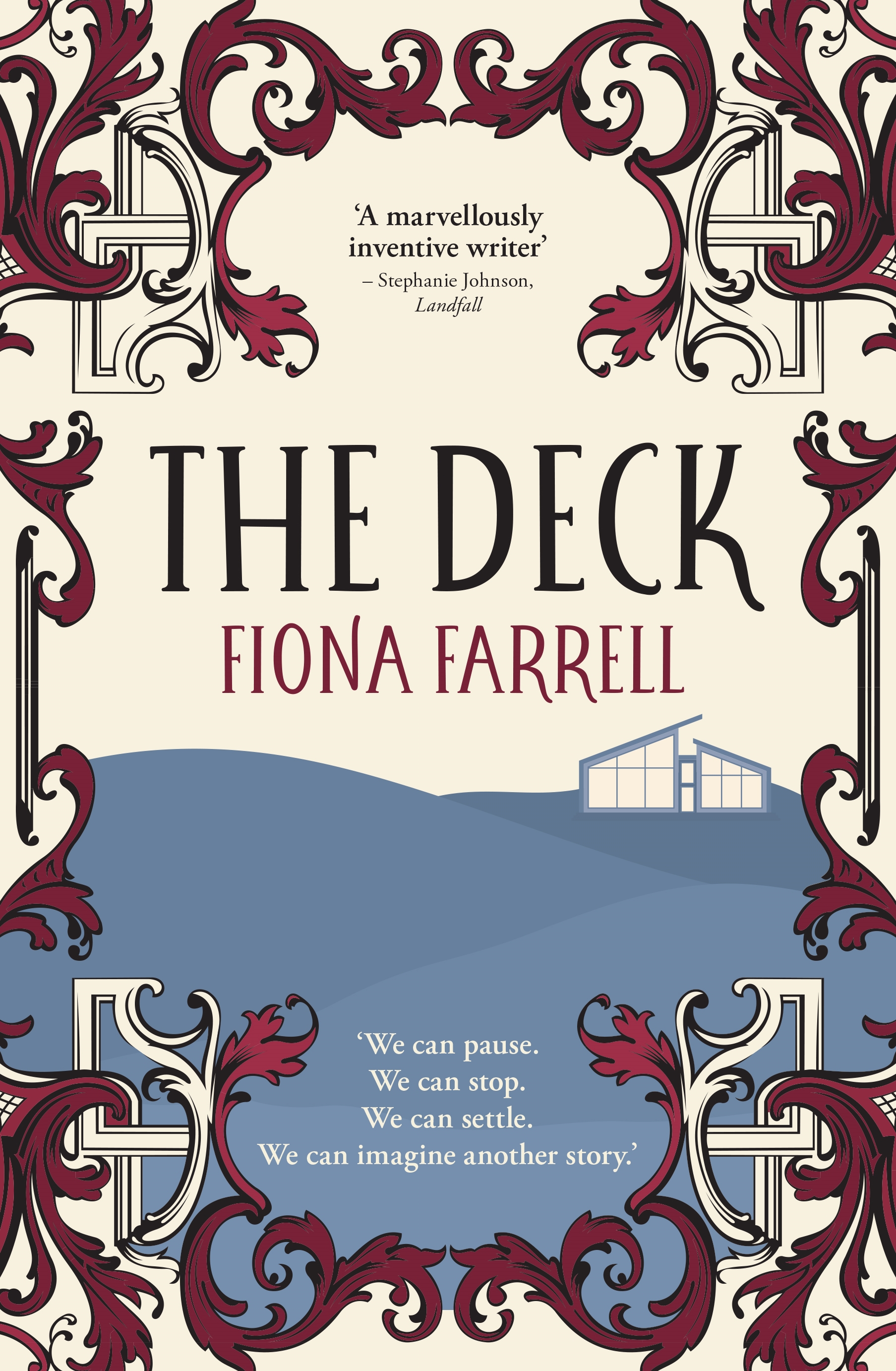
Poetry Shelf review: Fiona Farrell’s The Deck

The Deck, Fiona Farrell, Penguin, 2023

The novelist is about to step out onto the unknown ground that is every new book. She will make up characters and a setting and a plot and walk about in the imaginary land that always lies just offshore, alongside reality. She has no idea if her story will work. It’s always a bit of a gamble. Maybe making things up will feel ridiculous, irrelevant before the online deluge of fact. Maybe she’ll lose her nerve. Maybe her imagination will fail her, her characters will dwindle to dots. Maybe she will be be unable to settle to the daily grind at the computer, distracted by the news reports and their insistence on failure, collapse, shambles.

from ‘The Frame’

Fiona Farrell’s writing has enthralled and inspired me from the moment I fell into the freshness and delight of The Skinny Louise Book in 1992. Since then I have devoured her poetry, her novels and her nonfiction. Her writing prompted by the Christchurch earthquakes was humane, lyrical, layered and so utterly necessary. When I think of Fiona’s writing, I am reminded of the power of books, regardless of style or genre, to move us, nourish us, to challenge without ever losing touch with both heart and mind.

I recently read an essay in The New Yorker by a disgruntled critic who poured a wet blanket over our contemporary enchantment with and cravings for stories and storytelling. We are besotted with story. And yes, a story might not have the power to dismantle global warming or feed the hungry or put an end to violence, yet stories have mattered and continue to matter. It matters that the awkward child picks up the picture book and sees an awkward child dressing in a sparkling dress or singing out of key or kicking a football through a hoop. Or reading a book in a nest for an elephlion. It matters that I read stories that entertain me, lift me out of despair and maybe signal choices for the good of the planet. It matters that I can step into other points of view, close to mine, or at arm’s length. As the film-directors, the Tavianni brothers exclaimed when they first saw themselves and their stories reflected on the Italian cinema screen: ‘Cinema or death!’ We tell stories from the moment we get out of bed; to ourselves, to each other, to our friends, family, doctors, politicians, to strangers. Some of us crave to write. We might be plagued with doubt over sending our books in to the world and what difference that book will make. But stories represent how, where, who and why we are – and how, where, who and why we will or might be.

Fiona Farrell’s new novel, The Deck has made a difference to me.

The Deck steps off from Covid, borrowing the structure and motifs of Boccaccio’s The Decameron from the 14th century to re-present a novel that speaks from and to our contemporary plague. Boccaccio sets his novel, his sequence of stories and homage to the reach of storytelling, in the time of the plague in Florence. He opens with ‘La cornice’ (The frame), an autobiographical and nonfiction introduction to the scene and the situation. Fiona follows suit. I am catapulted body and heart to our time of Covid, to the new language that introduced bubbles and isolation, RAT testing and quarantine hotels, border controls and conspiracy theories, masks and hand sanitisers, the 1pm news gatherings and the daily statistics, teddy bears on fences and deserted city streets, online ordering and the stockpiling of flour and toilet paper.

For me, Fiona nails the uncertainty, the unreality and complexity of the situation, the daily reassessments and difficult choices, the willingness to work together for the good of the whole, the unwillingness by some to relinquish individual freedoms. The reevaluation of what mattered.

The Deck. When it looks like the country is about to collapse under another plague, Philippa makes a beeline for her beach house with her husband Tom and some friends. The retreat feels like a mini intermission, a temporary retreat from living in the thick of the plague, its consequences and the tough decisions. As in The Decameron, the group of friends pass the time drinking, eating, telling stories. So what stories get shared on the brink of catastrophe? In the frame story, Fiona speaks as the novelist, and asks what the point of writing fiction or a novel is, when the world is under multiple threats. She asks: ‘Is fiction no more than a brief solace, a distraction on our the way to our own extinction?’

On the third night, the friends debate China v America, war and famine issues, and then meander through best books, best movies (yes The Bicycle Thief!), places to visit, sports, philosophy. Each person takes a turn at spinning a yarn, drawing upon their own life, hinting at dark undercurrents, turning points, mis-turning points, yearnings. At times the story is a gut a punch to the listener, a secret revealed in public. Each story is headed by the epigraph: ‘A tale of one who, after divers misadventures, at last attains a goal of unexpected felicity.’

Ah. This is a book to read for yourself, to track and trace the impact on your own heart and mind as you are transported back to 2020 and the arrival of Covid, and into your own cache of stories, secrets and intimacies, your misadventures and felicities. I am struck by how we perceive things, how the protests at parliament were a sword in our side, when decades ago, the anti-Apartheid and Vietnam protests attracted so many more protestors. Ah. And how the image of the desecrated children’s slide at Parliament was so unfathomable. What on earth does this rebellious act stand for?

I am at the novel’s ending. I love the novel’s ending. I am transported back to the endings of post-war Italian neorealist films. I am there watching (think The Bicycle Thief and Rome, Open City) as the characters and a group of children walk down the road, down the road to the final frame, to the word HOPE, and even though I am wrung out and smashed to smithereens by planetary greed, I am strengthened by a collective impulse to write – as resistance, as solace, as illumination. There are multiple versions of who we are and there are multiple versions of who we might be. We need novels. We need stories. We need imagination and we need the mirror held up.

Fiona Farrell’s remarkable new novel, The Deck has made a difference to me.

Fiona Farrell, born in Oamaru, was educated at the universities of Otago and Toronto, and has published volumes of poetry, collections of short stories, non-fiction works, and many novels. Her first novel, The Skinny Louie Book, won the 1993 New Zealand Book Award for fiction. Other novels, poetry and non-fiction books have been shortlisted for the Montana and New Zealand Post Book Awards with four novels also nominated for the International Dublin IMPAC Award. In 2007 she received the Prime Minister’s Award for Fiction, and in 2012 was appointed an Officer of the New Zealand Order of Merit for services to literature. The Broken Book, a book of essays relating to the Christchurch earthquakes, was shortlisted for the non-fiction award in the 2012 Book Awards and critically greeted as the ‘first major artwork’ to emerge from the event. Her work has been published around the world, including in the US, France and the UK.

Penguin page
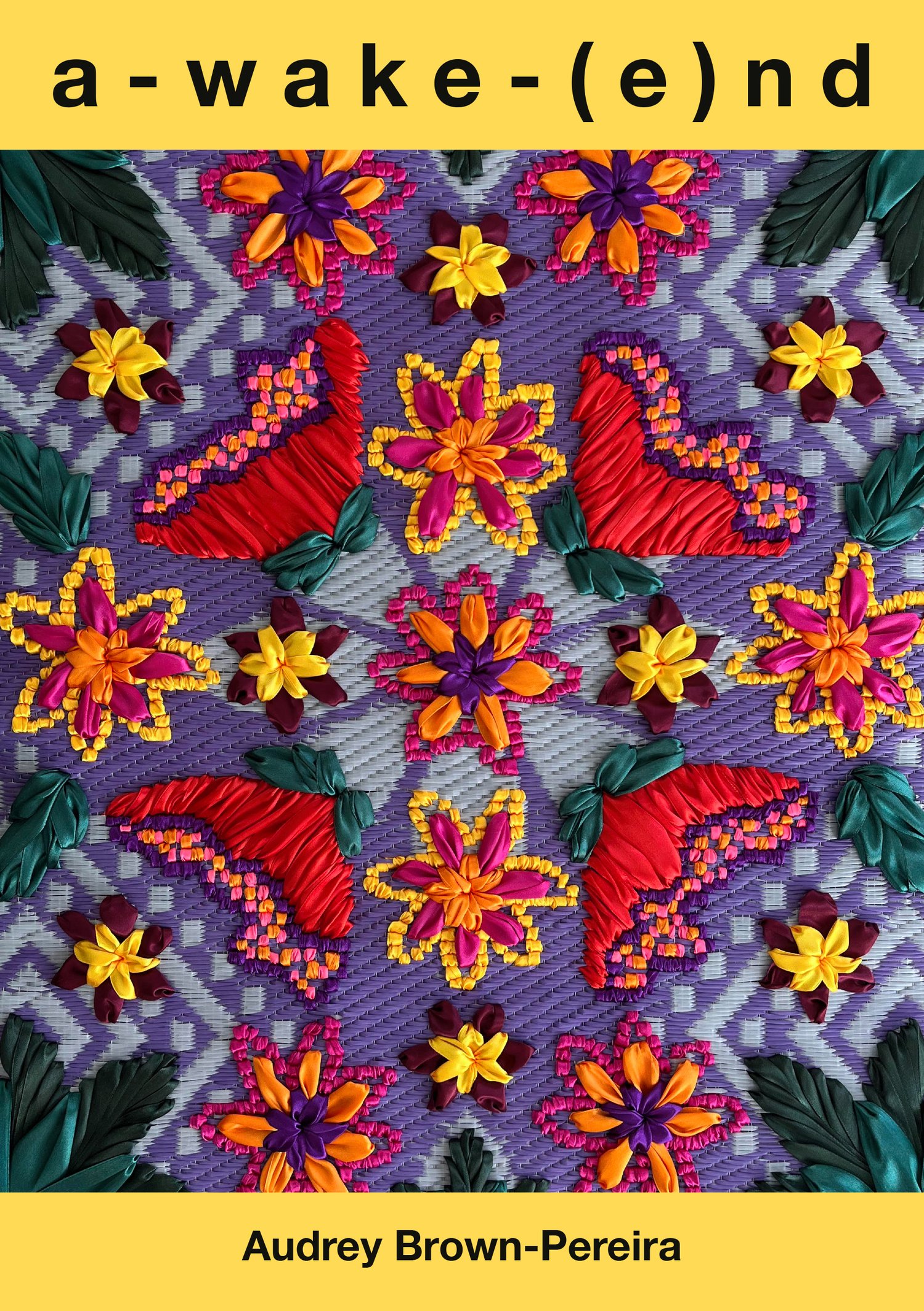
Poetry Shelf review: a – wake – ( e ) nd by Audrey Brown-Pereira

a – wake – ( e ) nd, Audrey Brown-Pereira, Sau’foi Press, 2023

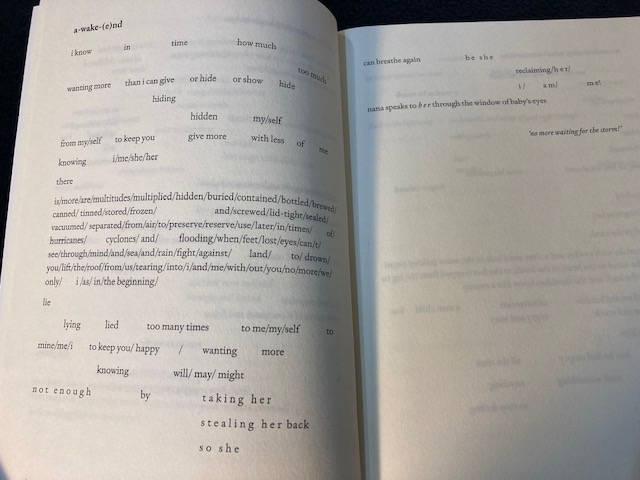
Audrey Brown-Pereira’s third poetry collection, a – wake – (e) nd, is a moving evocation of being, remembering and retrieving, of acknowledging and connecting. You move between fire and fever, ocean and silence, wind and light. There is breath and there is breathe and there is breathing.

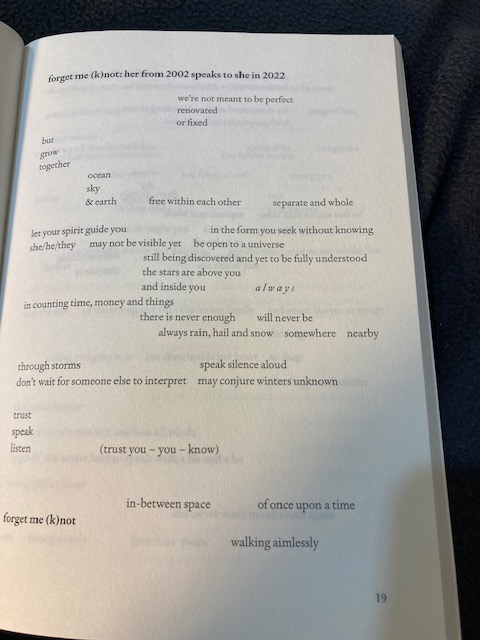
Audrey is writing the girl, the woman, she is writing a constellation of selves, she is writing she and I and me and you and we. She is rendering the voice of the woman audible, the woman visible. She is recognising self within self, writing to remember, writing to ‘forget me (k)not’ as one poem is entitled. It is for daughters. It is for her. It is speaking in poetic form to and with and by and for whanua and family, for poetry lovers.

It is political and it personal. It is raising the red flag on climate change and the effect our choices have had and are having on the Pacific Ocean and its inhabitants.

Audrey resists a seamless word flow for both eye and ear. Open the collection and you will fall upon the spaces along the lines, the gaps, the clearings, the intake of breath. These might be registered as silent beats or as rich gatherings. The space becomes bridge between this word and that word, this feeling and that feeling, this recollection and that idea. It is musical – think syncopation, harmony, melody. It is daydream and it is sidetrack. I am (a)float on these islands of words.

And there we go – carried to the i (s) land. The fractured word re-forms to sing of self and belonging and again, yes, of being. The reverberations are there too in the title poem, ‘a- wake – (e) nd’. Both revitalised and reclaimed words are windows, doorways, exquisite pathways into the collection – this writing and this reading is an awakening. A reforming of self. There is pain and there is a slow vital spacing out of self. Think heart and think body. Think loved and loving and loved ones. The writing is awake to or with or for or by: she and I and me and you.

Find a copy of the book – nestle into the clearings – tune in your ear and your eye. Listen to Audrey read from the collection here. Follow the wind and the light, the ocean and the land, as you are embraced by the rhythm and melody and remembering. This is a glorious book of her, of making woman girl she present. It is voyage and epiphany and talisman. It is to hold close and breathe in. I love it. So very much.

Audrey Teuki Tetupuariki Tuioti Brown-Pereira (1975) is an innovative poet who plays with text on the page and words in the air/ear. Poetry collections include Threads of Tivaevae: Kaleidoskope of Kolours (2002) with Veronica Vaevae, published by Steele Roberts and Passages in Between I(s)lands (2014) with Ala Press. Born in the Cook Islands and raised in New Zealand, Audrey lives in Samoa with her family. She is a graduate of Auckland University and the National University of Samoa.

Saufo’i Press page

Poetry Shelf favourite poems: James Norcliffe’s ‘Ichthyosaurus’


Ichthyosaurus

1

It nudges its long snout
through the dappled curtains of time.

In a green light its teeth shine;
they are sharpened emeralds 

wanting, waiting and momentarily  
there is no longer snatch gob and grab –

there is only the soft rise and fall,  
the even breath of a sleeping ocean.

2

There was a perfect arch 
from hill to shining hill,
the dark water between.

There was the smell of morning
coffee, a warm cup and toast
to ward off the autumn chill.

There is not one centimetre 
of human history in the
kilometres of its eyes.

It would have sensed
your uneven breath as 
you waited, warm and naked,

and as your rainbow body
arched with love, it would
have burst through the surface

of the ocean, its jaws stretched
beyond lex talionis, beyond reason,
streaming with saltwater, with lust.

James Norcliffe
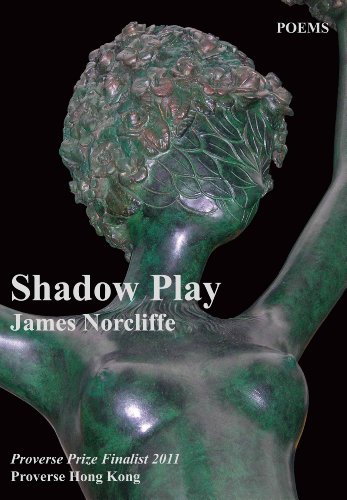
from Shadow Play, Proverse Press, 2011

Note

Over a dozen years ago, Vaughan Rapatahana prodded me to enter a manuscript for the Proverse Prize. Vaughan had entered the competition the previous year and had been a finalist and subsequently published by Proverse Press. His title was Home, Away, Elsewhere and Vaughan, an old friend and colleague from Brunei days, asked me to provide an introduction, which I was very happy to do. Proverse is a Hong Kong publisher run by expatriate New Zealander Gillian Bickley and her husband Verner Bickley. Apart from Vaughan they published the late Laura Solomon, another prize winner.

Accordingly, I submitted my ms Shadow Play which was a finalist and subsequently published by the press in 2011. I am very fond of this book, which, I feel, contains some of my best work. Perhaps, in retrospect, publishing a collection in Hong Kong wasn’t the best strategic move as the book had only minimal distribution in New Zealand and very few if any reviews here. 

I’ve chosen the poem ‘Ichthyosaurus’, originally published in Landfall. According to Richard Peabody of Gargoyle Magazine, who was one of a number who provided an encomium for the book, “(this) great poem exposes the slinky sinister undertow at work”. I imagine that is so. Many of the poems are layered and built on anxiety. We live near the sea, the sea where aeons ago the ichthyosaurus ruled. The imagined creature is pretty scary and not a bad – if over the top – simulacrum of our modern anxieties.

James Norcliffe is an award-winning writer of poetry and fiction and an editor. His eleventh collection of poetry Letter to ‘Oumuamua was published this year by Otago University Press. he has written many novels for young people and his novel for adults The Frog Prince was published last year by Penguin Random House. In 2022 he was awarded the Prime Minister’s Award for Literary Achievement for Poetry and this year was awarded the Margaret Mahy Medal.

Favourite poems is a series where poets pick a favourite poem from their own backlist and write a note to go with it.

Poetry Shelf audio: Megan Kitching reads from At the Point of Seeing

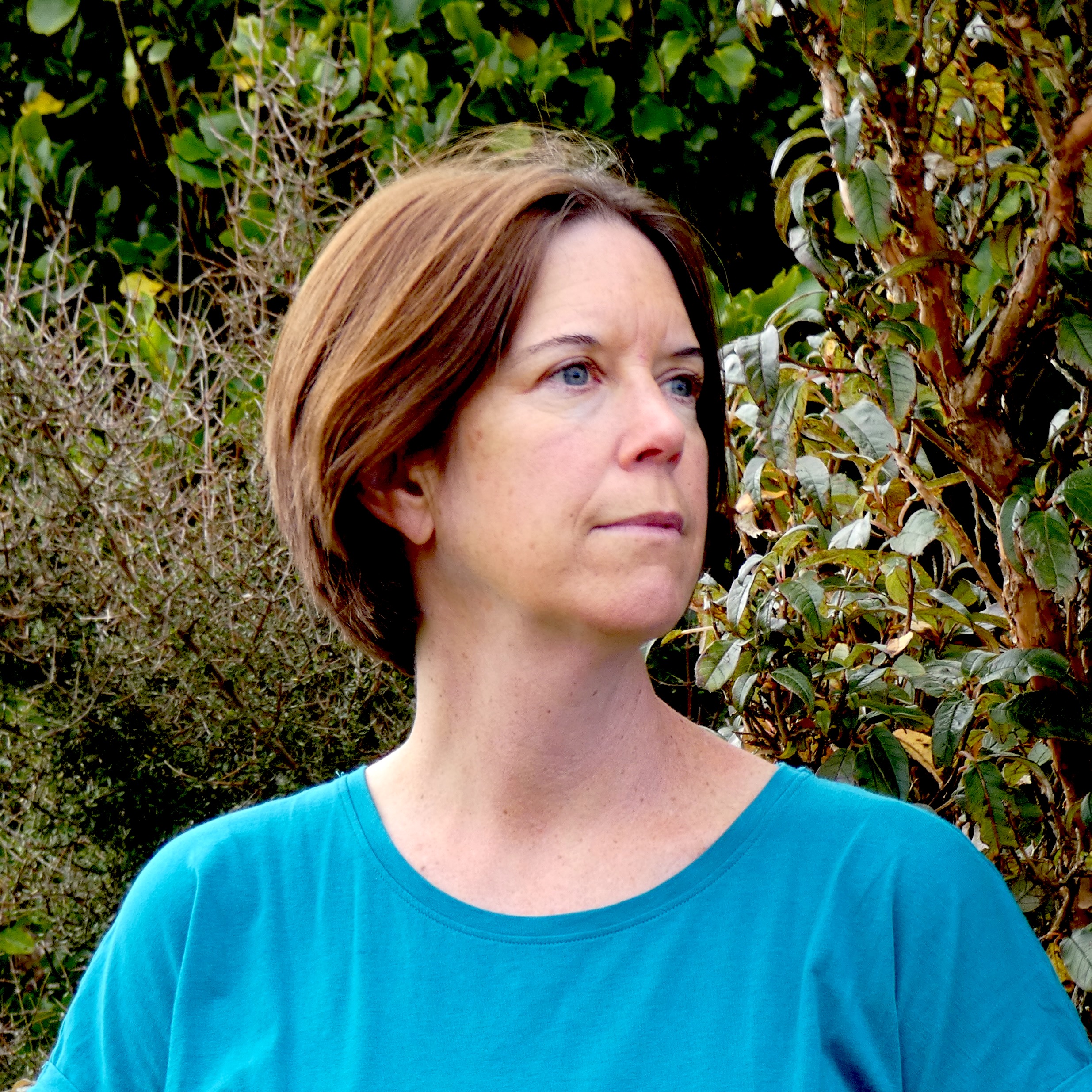
Photo credit: Claire Lacey

Megan Kitching reads from At the Point of Seeing, Otago University Press, 2023.

‘Headland’

‘Crematorium’

‘Houseplants’

Megan Kitching holds a PhD in English Literature from Queen Mary University of London, looking at the influence of the natural sciences on eighteenth-century poetry. She has taught English and creative writing in the UK and at the University of Otago. Her poetry has been widely published in Aotearoa New Zealand and international journals. In 2021, she was the inaugural Caselberg Trust Elizabeth Brooke-Carr Emerging Writer Resident. Her debut poetry collection is At the Point of Seeing (Otago University Press, 2023).

Otago University Press page

Poetry Shelf Monday Poem: ‘Into the Light’ by Michael Harlow

Into the Light

   for Laura Garavaglia, Como

We walk into the light
inside the poem we have become,
inside the house of poetry.
Your words flying to each other
with astonishing ease,
a constellation in the world-sky,
the moon a perfect accomplice.

Michael Harlow

Michael Harlow has written 14 books of poetry, and was awarded the prestigious Prime Minister’s Award for Literary Achievement for Poetry in 2018. In 2014 he was awarded the Lauris Edmond Memorial Prize for distinguished Contribution to New Zealand Poetry. He was awarded the Katherine Mansfield Menton Fellowship to France in 1987. He lives and works in Central Otago as a writer, editor, and Jungian Therapist.

Poetry Shelf poems: Michele Leggott’s ‘the days for Frances’ 

the days for Frances 

January 2022 

oh Frances 
bright wings 
at the corner of the barrel vault 
against a blue Tuscan sky  

or that big purple octopus 
curving along the underside 
of the pontoon where you wait 
for the ferry that will bring you 
to Devonport 
a big purple octopus 
for the start of rehearsals 
wind and weather 
never looked better 

and then there were the summer lunches 
breezes on the deck 
cuisine straight from the garden 
crisp white wine 
cat monitoring dog 
then into the car 
or the swim at Onetangi 

island life 
its purple octopuses 
and banked tomato plants 
in cans 
clear white wine 
and zucchini fritters surrounded 
by golden flowers 

here 

bells pealing from a dark throat 
in the tītoki  

here 

sticky white flowers 
pelting the deck 

here

a fantail hopping about
in the yellow ginger 

I come down the steps 
counting to fifteen 
and we make a progress around the garden 
arm in arm 
feet cool in the damp grass 
of the oncoming evening 
here is Senhor Palm his thick trunk 
one of two shooting four metres 
into the sky chinks  
below him the heliconia 
almost in flower 
bright red bract about to unfold 
two more palms though one is ragged 
and may have to go 
pink banana flowers 
so beloved of birds
a leaf the length of my arm
torn into soft strips 
then the four beds of provender 
wilding coriander 
basil coming on in ordered rows  
beans out of control on their towers 
bull’s horn peppers curling from stalks 
that can barely hold them 
three tomatoes 
from Taranaki seed 
sweet green shishito peppers 
for pan-frying 
feathery thyme clinging to fingertips 
then the feijoas  
and the disreputable bird of paradise 
whose days are numbered 
but not the cannas 
waving their red flags 
in a bundle of green spears 
the tall ginger plant with ivory flowers 
yellow and orange on the inside 
the boxed fig tree branching out 
tiny fruits on its 
extremities 
and the soft new foliage of the tītoki 
where berries of red and black are forming 
and the tūī comes to dive  
for insects in the evening air  
we circle back across the grass 
to the steps and ascend 
listening
to water pattering below

Michele Leggott

Michele Leggott’s eleventh poetry collection, Face to the Sky, was published recently (Auckland University Press). Her selected poems, Mezzaluna, was co-published in 2020 by Wesleyan and Auckland University Presses. Earlier titles include Vanishing Points (2017) and Heartland (2014), both from Auckland University Press. She is working on a study of archival poetics, provisionally titled ‘Groundwork: The Art and Writing of Emily Cumming Harris’. Michele Leggott co-founded the New Zealand Electronic Poetry Centre (nzepc) with fellow poet and librarian Brian Flaherty in 2001. She was the New Zealand Poet Laureate 2007–2009 and received the Prime Minister’s Award for Literary Achievement in Poetry in 2013. In 2017 she was elected a Fellow of the Royal Society of New Zealand.

Poetry Shelf pays tribute: Paula Harris RIP

We, the poetry communities in Aotearoa, are heart-smacked, gut-punched, unbearably sad, at the news that Paula Harris is no longer with us. Poets and friends are sharing personal heartbreak and pain on social media. It is a time to remember a woman whose poetry touched us, whose ongoing struggles with depression touched us, who wrote and spoke publicly of her illness, whose wit and sense of humour touched us.

Paula won the 2018 Janet B. McCabe Poetry Prize and the 2017 Lilian Ida Smith Award. Her writing was published in various journals, including Hobart, Berfrois, New Ohio Review, SWWIM, Diode, Poetry NZ Yearbook, The Spinoff and Aotearotica. Her essays have been published in The Sun, Passages North, The Spinoff and Headlands: New Stories of Anxiety (Victoria University Press).

Poetry Shelf is offering some of Paula’s poetry as a tribute. I hold out her words as a way to remember. I am mindful of a need to support each other, to open a space for connection, and it feels like poems have the power to do this. In 2019 I hosted an event at Palmerston North Library, where a bunch of local poets came together to celebrate Wild Honey, and more importantly, the writing of women across decades, across communities. It reminded me that poetry is always a cause for celebration. Even when it is laying down challenges, speaking of tough things, getting complex and difficult, opening up self. It is sound and it is heart and it is interlaced. Paula Harris was part of this poetry embrace. I am remembering this. Today I am holding her poetry close. In grief and in aroha.

everything changing

I never meant to want you.
But somewhere
between
the laughter and the toast
the talking and the muffins
somewhere in our Tuesday mornings
together
I started falling for you.
Now I can’t go back
and I’m not sure if I want to.


from woman, phenomenally

If you love me you’ll buy Bluff oysters and cook asparagus. Even though I don’t like either.

for Kirsten Holst, for feeding me many good things
and for Alison and Peter, for their Bluff oysters and asparagus

When I am no longer who I was
I can only hope that I will be loved by someone
so much that every day during Bluff oyster season
they will buy me a dozen Bluff oysters.

Even though they don’t like Bluff oysters
they will buy them for me
and every day I will exclaim
“I can’t even remember the last time I had Bluff oysters!”;
they will nod at the extreme length of time it has been.

When I am no longer who I was                                                                                      
and when Bluff oyster season is over
I can only hope that I will be loved by someone so much
they will cook me freshly picked asparagus every day.

Even though they don’t like asparagus
they will grow it for me and pick it for me
and lightly steam it
so that I can relish it served with hollandaise sauce
(although some days more lazily served with butter and lemon).

I will eat it with my fingers
and let the sauce (or butter) dribble down my chin;
no one will mind or tell me to be less messy
it will just be moments of edible joy.

In reality I don’t like Bluff oysters (or any oysters)
and I can’t stand asparagus (the taste and texture are disturbing);
I can only hope that maybe someone will love me enough
to buy and cook me the things that I love
even though they hate them, even though I won’t remember.

First published on Poetry Shelf

Our House

The roof drips rain beside my bed
The shower curtain hangs torn from a ring
The gate creaks unprotected from the wind

No drawers in the kitchen
A gap in the toilet window
A half-painted rainbow on my wardrobe

Our house is beautiful

First published in Spin 31 (1998)

Herakles phones the depression helpline at 1am, exhausted from crying and the inside of his head

it is easier to fold a fitted sheet than to get help from the depression helpline
easier to fold a fitted sheet with a partner who doesn’t listen to instructions
easier to fold a fitted sheet with one hand
easier to fold a fitted sheet made of damp tissue
easier to fold a fitted sheet while balancing one-legged on the end of a crocodile’s snout
easier to arrange finance and buy a fitted sheet factory and deal with the folding en masse of
   fitted sheets than to get help from the depression helpline

they tell him to take up a hobby
to have a cup of tea
to get some sleep

he folds into himself, holding the corner of a sheet in one hand
folds into himself and balances one-legged on the end of a crocodile’s snout

First published in Atlas Literary Medical Journal 3 (2018)

Marylynn Sitting Under The Apple Tree

The wise woman sits in the shade
With stuffing peeping out from her chair,
Looking like a watercolour of the writer
In her wide-brimmed straw hat
Dark glasses
And flower-laden dress,
While a black kitten plays
In her tossed aside straw bag.
Watching her through an open window,
With bees playing in the lavender bush
And spiders weaving their homes,
This is where she belongs
At the bottom of the garden
In full bloom.

First published in takahē 40 (2000)

today an editor told me that what I write isn’t poetry and so maybe I don’t know how to write a poem but I was thinking about you and wanted to write something; so here is your something

you are the bath filled with green marbles
I slip into at night to wash myself

you are the letterbox overflowing with sleeping ladybirds
I check compulsively for mail

you are the curtains of pink candyfloss
I pull closed after the moon comes up

you are the couch made of turnips
I lie on as I wait

you are the carpet made of ripe figs
I dance over on summer mornings

none of this makes sense so it’s possibly a poem
none of this makes sense so

you are the wheelbarrow full of silver bullets
I feed to the garden to make it grow

First published in Leon Literary Review 2020

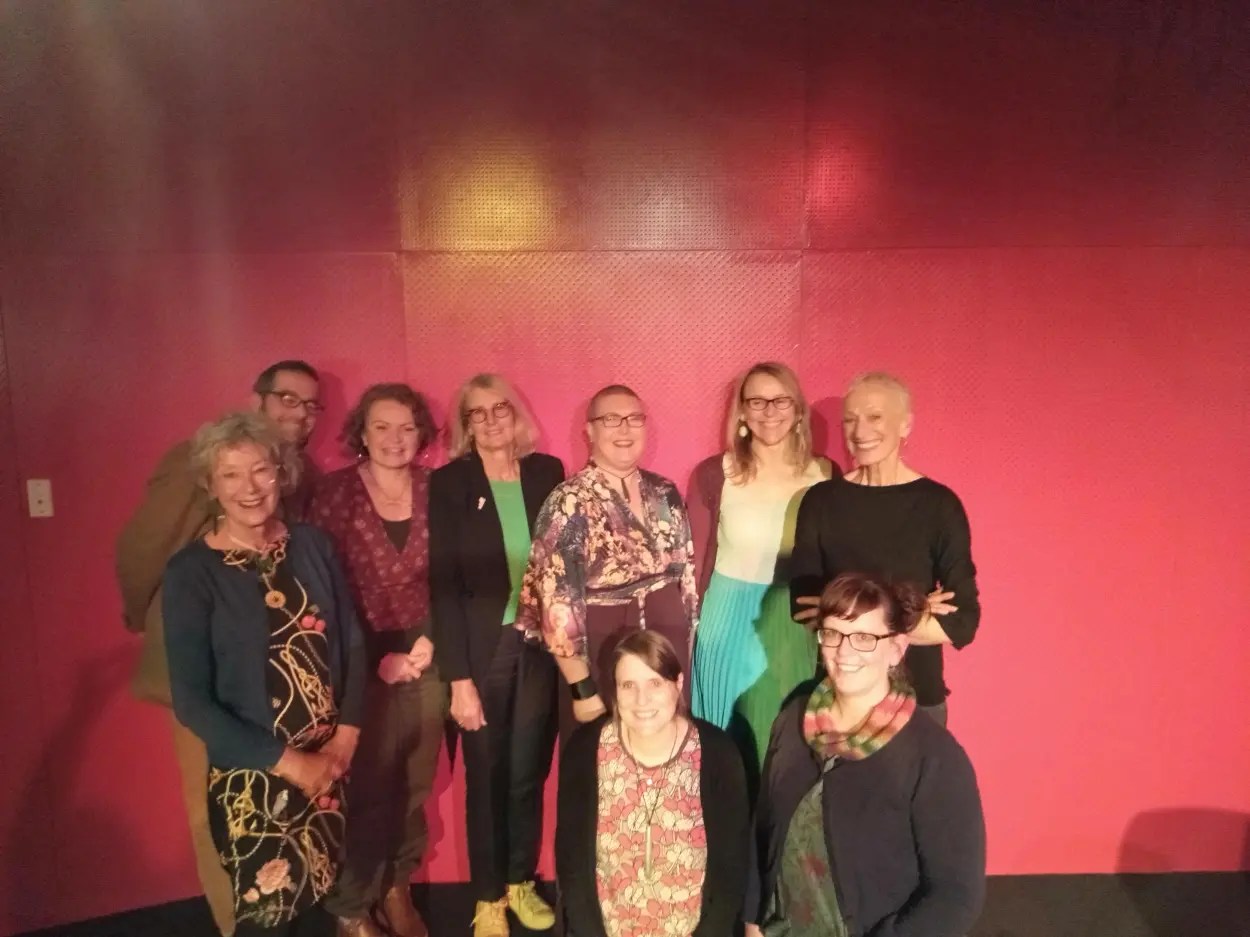
2019 Palmerston North Library and the writers: Johanna Aitchison, Paula Harris, Thom Conroy, Paula King, Helen Llehndorf, Marty Smith, Hannah A Pratt, Jo Thorpe, Janet Newman, Paula Green and Tina Makereti.

2019 Palmerston North Library: Paula Harris, Paula Green and Paula King

sharing the good stuff

my mother always told me
i had to save my good stuff
keep it for another day

so my prettiest colouring books
went uncoloured
my toys sat on their shelf

her best dresses stayed in plastic
her engagement ring hidden
in its box

what my mother never learned
was that if you save your good stuff for too long
one day there’ll be no one to share it with you

First published in Spin 32 (1998)

chamomile and lemon balm

in need of some healing
i drive and drive
until i reach a brick pathway
lined with lavender
gently waving and bobbing
as i pass by.
i sit on a bench
resting my feet
on the chamomile floor
and i breathe.
a honey coloured angel
lays her head on my knee
while i scratch behind her ears
and i breathe.
and when i have breathed enough
i walk back
the sea of lavender
parting before me
my angel loping behind me
and i smile.

First published in Spin 33 (1999)
Also published in Poems in The Waiting Room (2012)

The Twelve Lightbulbs of Janet Frame

I saw her in the supermarket
driving a runaway trolley
that dodged and charged imaginary opponents

I wonder if she was writing,
paused in the frozen foods
between the chicken legs and the harassed mothers

people want to know
– what was she buying
microwave lasagna,
toilet paper,
mouldy French cheese,
canned spaghetti and sausages,
sugary cereal,
green tomatoes?

a dozen lightbulbs
was all she had;
maybe they were on sale
super coupon special,
maybe she only buys them once a year,
maybe they all just blew at once
like mine do

First published in takahē 37 (1999)

small signs of hope

after years of not quite
getting it right,
knowing that i can’t
eat hot cross buns
my father brought me
two kit-kat bars

First published in The Listener (2000)
Also published in takahē 41 (2001)

gifts of love

a husband will bring
his wife
a stolen lettuce

a cat will bring
its owner
a beheaded mouse

a pauper will bring
his queen
half a pebble

i chop up my heart
mix it with roasted vegetables
and rice

hoping you will notice

First published in learning a language – New Zealand Poetry Society Anthology (2005)

the weight of pain

in 1945 Dr Lorand Julius Bela Gluzek of Cleveland, Ohio
developed a dolorimeter which could measure pain in grams
so maybe the weight I gained on antidepressants
wasn’t from sadness and an increased appetite
but my organs and glands – thyroid, pancreas, lungs, 
adrenal glands, ovaries, stomach, hypothalamus – 
each getting heavier from the consumption of black bile

the weight of the water inside the mouth of a blue whale
can weigh more than the whale itself
so if I dive into the ocean and convince a blue whale to swallow me
I will leave my sadness on its tongue and be weightless

First published in Anomaly 2021

home

even though the sign says
there’s still 27 kilometres to go
on the horizon
i can see a halo
at the bottom of storm clouds

through the driver’s window
the halo spreads into
a line of orange light

closer now until
the line becomes disjointed
into orange street lights
and white house lights
and one of those is home

First published in takahē 41 (2001)

Listen to Paula Harris in conversation with Jesse Mulligan RNZ National. Great interview!

Paula Harris website

Poetic Short films by Paula

You can find a number of essays by Paula at The Spinoff

Paula’s friend Anna Sophia remembers her extraordinary talent, wit, bravery and heart at The Spinoff

Read this poem: “when I was fucking a lot of men when I was 19 and 20 (and 18, and 21) I was fully aware that it was partly because I love sex and partly because–having grown up being told I am unlovable–I crave that feeling of being wanted, even for a few hours” at Passage North 2023

Photo credit: Tabatha Arthur

Poetry Shelf review: Robin Morrison’s The South Island of New Zealand – From the Road

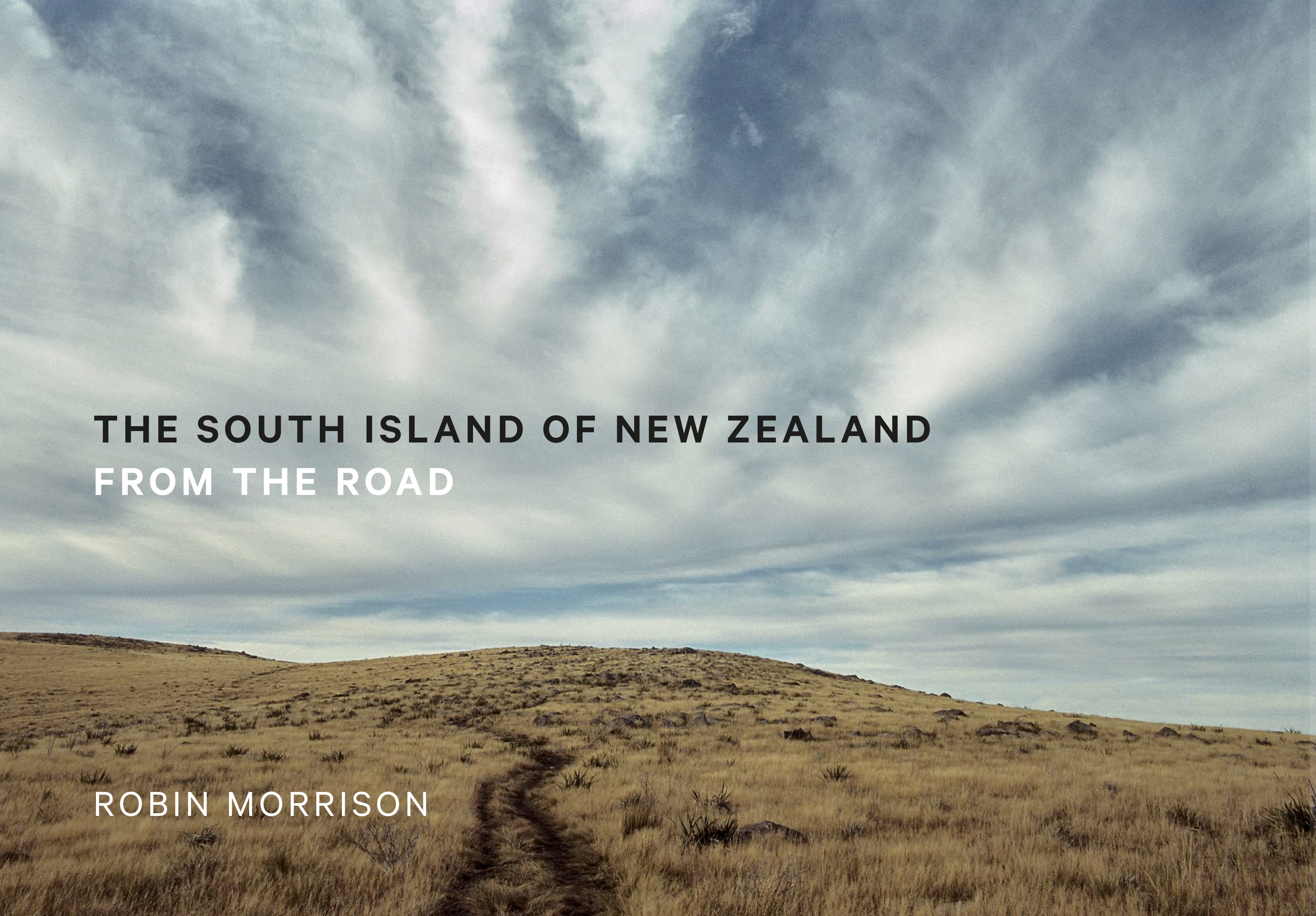
The South Island of New Zealand – From the Road, Robin Morrison
Massey University Press, 2023

Road trips take many forms. You can load up the car, check the map (or not), and head off into adventure and discovery, epiphany and delight. Who knows what beauty and mishap will unfold? Road travel is joy. Or you can do the kind of road trip where you swap a novel or an artwork or a photograph for the lure of a physical itinerary. That too offers adventure and discovery, epiphany and delight. Robin Morrison’s The South Island – From the Road offers the reader multifarious travel, retracing physical roads and then setting you within and beyond the photograph frame.

The documentary photographs of Robin Morrison (1944 – 1993) represent New Zealand land and townscapes with varying degrees of human traces and everyday settings. Like the movies of Vincent Ward and Jane Campion, the poetry of Bill Manhire and Anna Jackson, the songs of Aldous Harding and Tiny Ruins, the novels of Catherine Chidgey and Elizabeth Knox, Robin’s photographs have stuck light and dark, the physical and the ethereal, to my heart from the first encounter. To stand before a Robin Morrison photograph is to absorb the transcendental – to be both of the work and beyond the work. It is traversing the ordinary and gatecrashing the extraordinary. You enter the unsayable: how can I convey the uncanny feeling that sits next to flashes of recognition?

In his preface, Robin claims the 1979 project as a ‘personal view of the South Island’: ‘I travelled 18,000 miles with my family into most corners of the South Island but concentrated more on areas that held my eye – in particular Central Otago. We stayed in the holiday houses of friends and enjoyed the sense of space and sense of being on the edge that we so rarely have in the closeness of a city.’

This project resonates on so many levels, especially as I have lived with an artist for over three decades. We travelled much of the South Island as a family, as he searched for beehive ‘paintings’ on the landscape. Our physical road trips, affording beauty views along with the fascinating pull of found objects on the land, have instilled an ongoing relationship with space, the natural world, an inhabited world, the magnetism of elsewhere.

Thus to take road trips courtesy of The South Island – From the Road is both a reawakening of old itineraries and an ignition of the new. It is a form of travelling though time and place where the white bulging cloud hanging over the grey streaked ocean is as important as a reflection in the Post Office window or a snow dusted mountain. It is what the artist/documenter chooses to frame, the light he attends, the colours that have fallen into view, the trust he builds in the people photographed. Herein lies an alchemy of looking where composition meets colour meets light meets hidden narratives. Weather makes a difference. The general absence of people makes a difference. The pervasive presence of people makes a difference. The beekeeping couple standing outside their wooden villa in Blackball. The women with cream handbags at the race track. Traces of human endeavour and architecture make a difference. Interiors make a difference. The tea trolley with lace doilies and a cut glass vase resonates like a poem, the elderly couple framed by knickknacks, the family mementos. Shadows on walls or hills beguile, track marks on paddock or mountain passes divert.

Does it make a difference that Robin harnessed natural light to take the photographs, that he worked without filters and generally used Kodachrome film stock? I am no expert but for me it does. I have no interest in expanding upon what is missing from these South Island photographs – critics have mentioned grit and grime, a Māori presence, the new industries such as vineyards and hydro power stations, or the hubbub of the cities, dwellings that don’t adhere to Art Deco chic or colour palettes. The stream of thought as you look is paramount. I move from the nostalgic to old hierarchies to hand-knitted jerseys and socks on the line, from the kettle on the wood-fired stove to women in aprons and men in gumboots. Beer and cigarettes. Goats and dogs. To what is missing and missed, to what is missing and not at all missed.

To sit and gaze into the width and depth of Robin’s South Island photographs is to stockpile wonder. It is falling upon beauty in the everyday and the accruing stories. It is falling upon the everyday in beauty, and expanding on the way objects and human interventions fade from view, return to view, raise questions. I keep holding a page out to my family and starting up a conversation. We are road-tripping along an itinerary of anecdote, memory, visual images, affecting colours, mood enhancing light courtesy of Robin Morrison’s mesmerising photography. This elegant book is a treasure. No question. It is an extremely diverting road trip.

The South Island of New Zealand – From the Road was originally published by Alistair Taylor in 1981. After a long period out of print, the much loved book has been lovingly re-presented in a new edition by Massey University Press in association with Tāmaki Paenga Hira Auckland War Memorial Museum. The original Kodachrome slides have been digitised using up-to-date technology. There is also a comprehensive essay by Louise Callan, Robin’s friend and fellow journalist, with recollections by Robin White, Laurence Aberhart, Grahame Sydney, Owen Marshall, Ron Brownson, Dick Frizzell, Alistair Guthrie and Sara McIntyre.

Robin Morrison (1944–1993) was one of New Zealand‘s most significant documentary photographers.

Massey University Press page

Poetry Shelf favourite poem: Gregory O’Brien’s ‘At the Washaway’

At the Washaway

When you told me your hands
were fish—fuafua or pelepele, to be precise—I was

unmoved. And your neck and shoulders a school of
limu fua or trumpeter, I believed

neither you nor the yellows and pinks, the orange
afterglow. When you said

your heart was a fish
hiding behind a rock, I would have

none of it. Nor that your body was a pool
of hapi, hexagon groper, flutemouth

and cornetfish. I could not so much as
entertain the thought:  your elbows, forearms

and fingers as humu or hafulu
or fine-lined bristletooth. At least

not until Sally Lightfoot led me
      by the mottled hand
down the spiralling staircase of

this, her undersea forest
    her orchestra pit, my washaway.

Avatele, Niue

Gregory O’Brien

Note

‘At the Washaway’ was written on the island of Niue, where I spent a fortnight in November 2022 making etchings with my long-time collaborator and friend John Pule. With another friend, geographer and academic Robin Kearns, we visited the settlement of Avatele–one of very few sandy beaches on the island. Just above high-water mark, the overgrown remnants of a beach-cafe/bar, ‘The Washaway’, is still standing (but, sadly–post-covid–no long operating). The Washaway was once famous for its ‘honesty bar’. Customers were asked to list on a piece of paper any drinks procured from the self-help bar and then pay cash to someone-or-other before sauntering off into the darkness much later in the evening.

Mid-morning, on the reef at Avatele, I stood knee-deep in the crystal clear water and watched tropical fish dart past. I followed the precise manoeuvres of crabs and various kinds of shrimp. It was in the company of these aquatic species that this poem–a love poem to Moana Oceania–began. You might ask who is Sally Lightfoot, at the conclusion of the poem? As marine biologists will tell you, a Sally Lightfoot is a kind of urchin crab common on Pacific Islands. It was one of these exemplary sea-creatures that, Virgil-like, led me in the direction of this reverie, this poem.

Gregory O’Brien

Gregory O’Brien’s monograph on painter Don Binney is published in October this year. He is presently curating (with Jaqui Knowles) an exhibition based upon his book Always song in the water for the New Zealand Maritime Museum Hui Te Ananui a Tangaroa, where it will be on display from August 2023 until February 2024. A new, much enlarged edition of the book, Always song in the water–an ode to Moana Oceania, is being published by the Museum to accompany the exhibition.

Poetry Shelf audios: Diana Bridge reads from Deep Colour

Diana Bridge reads from Deep Colour
Otago University Press, 2023

‘Deep colour’, ‘In the New York Public Library’, ‘the candle’ and ‘Accommodations’

Deep Colour is the eighth collection by award-winning Wellington-based poet Diana Bridge. It follows Two or More Islands (Otago University Press, 2019). Bridge’s many accolades include the 2010 Lauris Edmond Memorial Award for Poetry, the 2014 Landfall Essay Competition prize and the 2015 Sarah Broom Poetry Prize. The chief judge, Irish poet Vona Groarke, described her work as ‘possibly amongst the best being written anywhere right now’. The same year, Bridge was the first New Zealander since Janet Frame to take up a residency at the Writers’ and Artists’ Colony at Yaddo in upstate New York. In the Supplementary Garden: New and selected poems (Cold Hub Press, 2016) was longlisted for the Mary and Peter Biggs Award for Poetry in the 2017 Ockham New Zealand Book Awards. Bridge has studied Chinese language, literature and art history and holds a PhD in Chinese poetry from the Australian National University.

Otago University Press page