Poetry Shelf review: As the trees have grown by Stephanie de Montalk


As the trees have grown, Stephanie de Montalk
Te Herenga Waka University Press, 2023

We heard neither

gasps of admiration
nor ecstatic interpretations

of radiance that afternoon—
only the sighs

of wind-blown sand
awakening our

desert thirsts
to the marvellous

from ‘Trance’

Many of the poetry collections I read, reinvigorate the idea of writing, plural rather than singular, expanding and refreshing the scope of what poems can do. Stephanie de Montalk’s new collection, As the trees have grown, is no exception. Writing becomes memory, elevation, diversion, celebration, uplift, grounding. Writing becomes heart, and all heart’s embedded words resonate within the poems: art, ear, tear, hearth, health, earth.

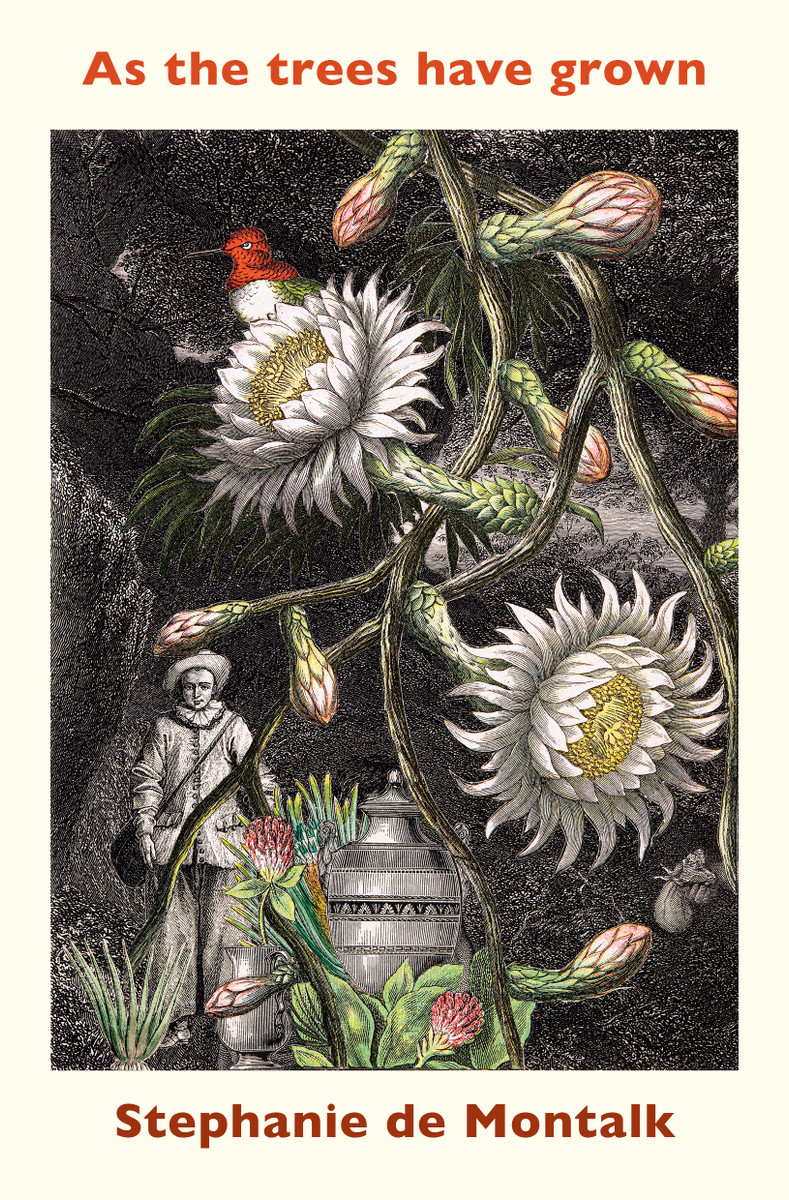
Art vibrates on the cover in the form of Brendan O’Brien’s terrific artwork, a collage made using 19th-century engravings with pencil and ink additions, with its intricate detail of bloom and mysterious dark. He created it after revisiting her poetry, having created covers for her first two collections. Inside, the art of the poet laces plants and wildlife, weather and luminosity with subterranean pain. It’s heart. It’s the allure of a physical moment that is transcendental in its physicality. In ‘Allurement’, you move from cobalt skies and bright hills to lawn sleeping cats to:

and all day there was
a deep, white light

and everything
with an edge to it.

A significant current, a vital skein, is that of health, as the poet negotiates physical challenges, ‘limitations’ as it states in the blurb, the tear and pain in daily equilibrium. Critical illness is an undercurrent, understated, there in signposts whiffs and analogies, as much as it is admitted, referenced, factored in. The opening poem, ‘Heartfelt’, lays down the threshold admission, introduces the impaired heart and its skew whiff music. Everything proceeds from this point. The writing. The absorbing. The living.

The rolling slopes and groves
of my lissom, evergreen heart,

struck by the dysfunction of left
ventricular damage—were at risk

of fatal erosion.

A poem, ‘Amor fati’, features a brown trout that allegedly accompanied a Scottish steam train driver on his daily trips between London and Edinburgh. I am musing how this found narrative stands in for the love of fate, amor fati, an embrace of the cards dealt, whether good or bad. And I am drawn back to the exquisite ‘Allurement’, and its pulsing beauty of an outdoor scene. Elsewhere an ailing lemon tree is watered to offer relief, or in ‘Events’, under the threat of flood and storm and power lost, plans are made: ‘What to do but bake bread and brew tea / before the occurrences peak’. Ah, how the doing is reinforcing the being. The imperative of trees and butterflies, sunsets and sunrises, earth in all its marvel and magnificence, is so vital.

Now I come to ear, the arrival of music, the longer lines, the shorter lines, the propensity for melody. Some poems favour length, but many accumulate short phrasings, a puff-breath syncopation, white space to savour, the measured beat, an economy that builds image, physical presence, nourishment. In ‘Imperium’, the poet bends her ear to the music of the bush, the pitch of tree, the operatic score of a physical view, and it is opening and it is open, as is the whole collection:

Massed choir

or spot-lit
solo performance?

The grace of long
gliding strides

or a glissandi
of light, rapid steps?

Stephanie de Montalk’s As the trees have grown is a rejuvenating map of bush tracks through living and breathing, seeing and sensing, where hospital ward becomes garden and garden becomes hospital ward, where each poem holds out ‘space and weight’, where the joy of words becomes the joy of unpackaging each day. The poetry so resonant. The poetry heart a marvel. The reading a gift of ‘hope and possibility’. This is a book to savour.

Stephanie de Montalk is the award-winning author of four collections of poems, including Animals Indoors, which won the 2001 Best First Book Award, the novel The Fountain of Tears, the biography Unquiet World: The Life of Count Geoffrey Potocki de Montalk, and How Does It Hurt?, a memoir and study of chronic pain. Described by Damien Wilkins as ‘groundbreaking and riveting and beautiful’, How Does It Hurt? was published to critical and medical acclaim, and received a Nigel Cox Award at the 2015 Auckland Writers’ Festival. It was published as Communicating Pain: Exploring Suffering through Language, Literature and Creative Writing by Routledge in 2018. Stephanie was the 2005 Victoria University Writer in Residence, and she lives in Wellington.

Te Herenga Waka University Press page
Poetry Shelf Monday Poem: Rachel O’Neill’s The new lives of my children

The new lives of my children

Gently agitating the fleshy island of my kneecap, I wonder at the new lives of my children. I remember the day we gave them to the hill, wrapping them in earth like gifts. The mist came and carried them away and I heard the god of silence bury the last sublime notes of music. In the first dream, my children were undefinable from the plain of disquiet. After seeing them shake themselves out of the sea floor it occurred to me they were waiting there to ambush their prey. I spoke. Their unmoving mouths sat curved and rigid. Only their eyes were a-ripple, smooth grey clay and cartilaginous. I don’t know, I said, I will learn your language and come back. So I set about getting a grasp of their incredible system of gaze-respiration, their expressive eye-mouths, which I know now are properly called spiracles. When I finally made my way back to the deep ocean as before my children surfaced. I went forward. They hesitated and swung back into the barren muteness. Still I waited. Eventually they returned to touch my face. Each spoke their name and took a breath.

Rachel O’Neill

Rachel O’Neill is a filmmaker, writer and artist based in Te Whanganui-a-Tara, Aotearoa. The author of One Human in Height (Hue & Cry Press, 2013) and Requiem for a Fruit (Tender Press, 2021), Rachel is the 2023 Creative New Zealand Randell Cottage Writing Fellow. For more, visit their website.

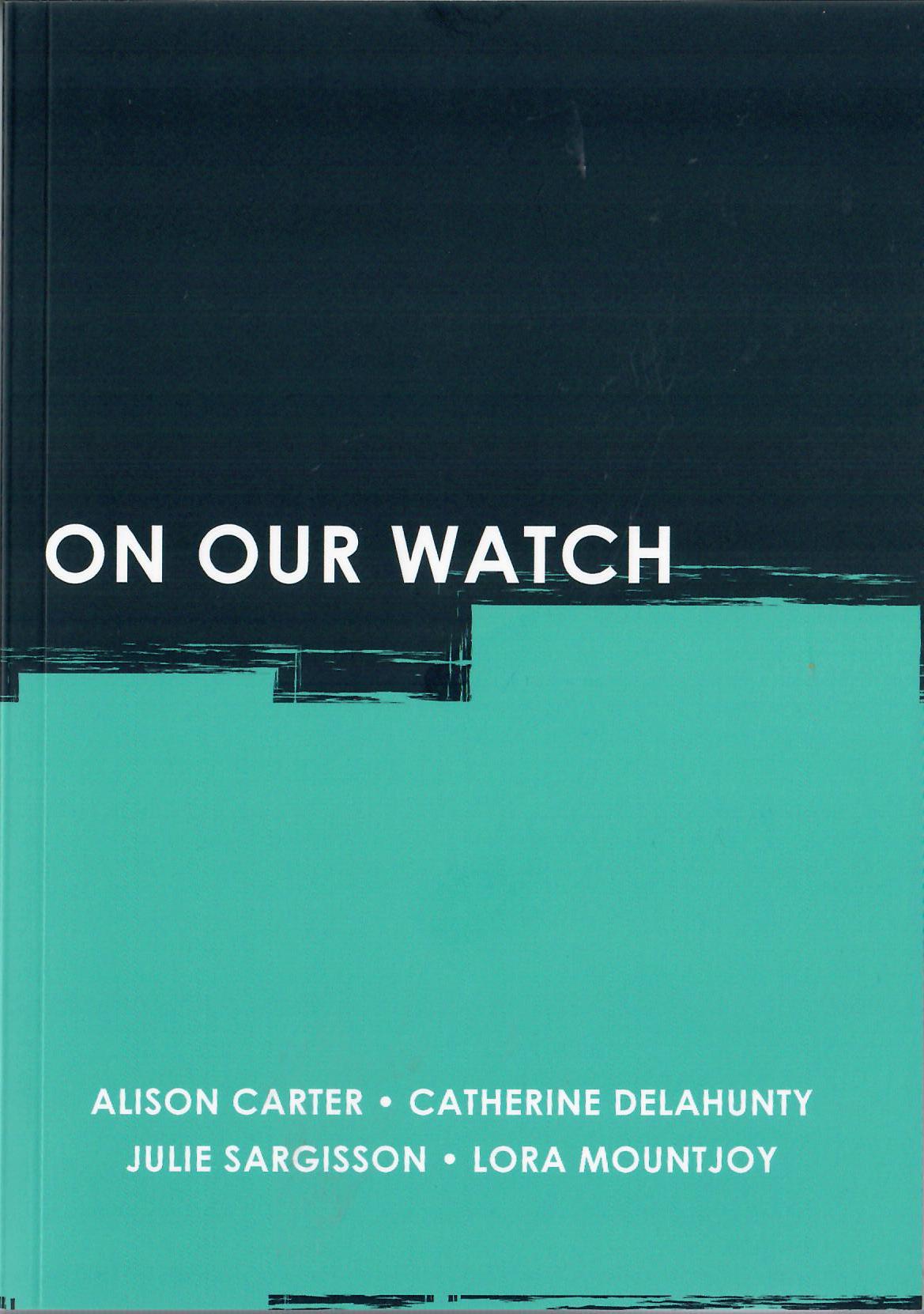
Poetry Shelf Cafe Readings: Alison Carter, Catherine Delahunty, Julie Sargisson, Lora Mountjoy – On Our Watch

On Our Watch, Alison Carter, Catherine Delahunty, Julie Sargisson, Lora Mountjoy
Outwatch Press, 2023

Four Coromandel poets who meet regularly to share and talk poetry, have published an inviting collection of their writing. The poems navigate a world close at hand and our world under threat. You enter the intimate and the personal alongside a deep-seated concern for our environment and the choices we make. This is poetry at its most connective, both celebratory and challenging.

So settle back into the Poetry Shelf Cafe and have listen to Alison Carter, Catherine Delahunty, Julie Sargisson and Lora Mountjoy read.

Alison Carter

‘Captured’

‘Victorian Fantasy’

‘Piwakawaka’

Alison Carter is a journalist, writer and documentary maker who lives on a native restoration block at Kikowhakarere Bay in Hauraki. She wrote and performed poetry in her twenties and has found returning to it, after many years in the world of fact, to be creatively and emotionally liberating.

Catherine Delahunty

‘Tax is Love’

‘The Detectorist’

‘Leaving Te Moehau’

Catherine Delahunty ( Pākehā) writes columns, fiction and poetry and is active in environmental campaigns and Te Tiriti education work. She lives in the Kauaeranga Valley in Ngāti Maru lands in Hauraki. She writes about the place she lives, adventures in politics and people who have touched her life. She notes that poetry is harder to write than opinions but also more liberating and random. She likes having a group to give feedback and set deadlines so that she had to stop pretending to do housework and actually write something! 

Lora Mountjoy

‘Everything Beeps’

‘Three-year-old Girls Love Pink’

‘Papatuanuku’

Lora Mountjoy is the author of two novels and has contributed poems to many publications over the years.  She has raised a family, worked as a journalist and taught creative writing in a community setting. From the late 1980s and into this century Lora enjoyed reading and performing her poetry, both in Wellington and Coromandel.   She had been focussing on other writing projects when Julie encouraged her back into poetry and is really delighted to have the chance to share writing with other women and to be part of On Our Watch.

Julie Sargisson

‘Tidal’

‘Inheritance’

‘It’s Time’

Julie Sargisson lives on the outskirts of Kapanga above a tidal salt marsh. She replants wetland areas and bare hillsides to help restore this environmental treasure. She walks the hills and shore lines, writes articles, poetry and essays. Julie is “often inspired to write by this wild finger of land, the Coromandel. The seasons, the light, the birds. But also the microcosm of tragic history; forests and people who were here before us and the long term consequences played out here.  I’m also fascinated by how poetry can go beneath the surface and echo ideas.”

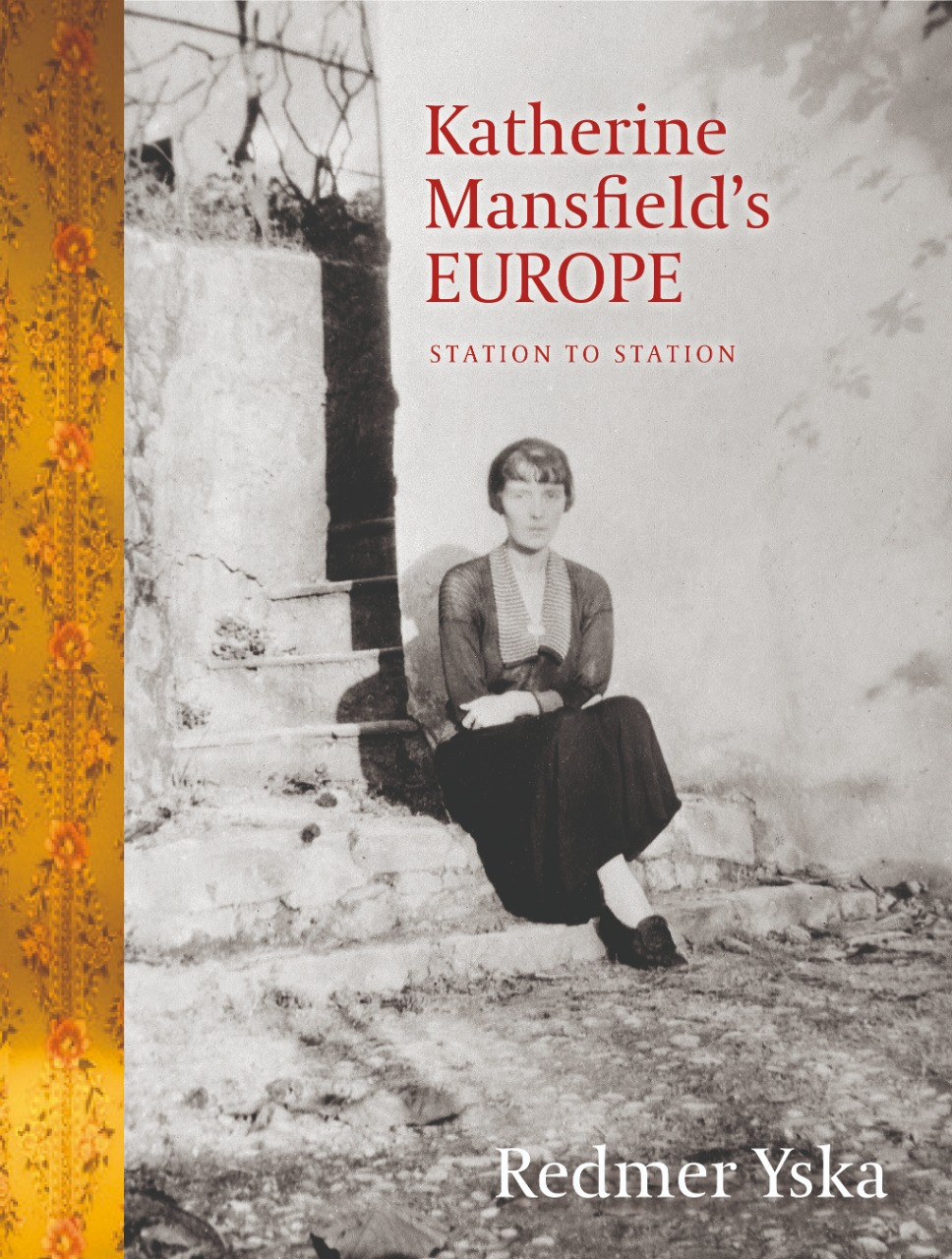
Poetry Shelf review: Katherine Mansfield’s Europe – Station to Station by Redmer Yska


Katherine Mansfield’s Europe – Station to Station, Redmer Yska
Otago University Press, 2023

Redma Yska’s Katherine Mansfield’s Europe – Station to Station is pitched as part travelogue, literary biography, detective story, ghost story. It is a postcard compendium, an intriguing homage to Katherine’s work, a heartrending navigation of the latter stages of her life. Redma travels in Katherine’s footprints, tracks, pit stops, he travels though France, Germany and Switzerland in particular, he voyages though the distortions, the myths, the sanitisations. He steps into the shoes of another by way of letters, short stories, notebooks, stations, cafes, hotels, train journeys, sanitoriums. He travels to Europe, he travels through the archives, especially when Covid prevents return visits to physical destinations. He journeys through the archives.

I read the book when ferocious winds had taken out our power, the cold was biting and the hail slammed against the windows. I read it when my long slow recovery road had been extended indefinitely and I was trying to remap my weeks and days. Reading Katherine Mansfield’s Europe made me intensely curious. What is the relationship between Illness and writing? Writing for oneself and writing for the public? Writing within a private hermit life, writing as social being who moves in the world? I am fascinated by how authors appear in pieces in letters, diaries, fiction, poetry, biographies, memoir, essays, criticism, reviews, photographs, word of mouth. The hardest question to ask is who is she? I think Redmer draws close to versions of Katherine by exploring how is she? and where is she?

This book gets under my skin, gets me thinking and gets me feeling. For the last six years of her life, Katherine endured, let’s say suffered, from TB and lung pain. She underwent a steady stream of ‘cures’ and health resorts, all the time taking the toxic, mind-altering cough medicine concocted by her London doctor. But no matter how challenged she was physically, she was drawn to writing, and it feels like writing was the greatest escape from pain and suffering:

When she was staying at the Beau Rivage Hotel, Katherine would go walking along the coast, along the rocky promontory – walking drew her closer to writing, and writing drew her closer to the world, whether remembered or observed:

Katherine Mansfield’s Europe is a remarkable book of openings rather than closures. Redmer presents links between Katherine’s short stories, biographical information, the letters and notebooks that evoke people, places, situations. He writes in the animated present tense of research and travel. He includes photographs and postcards that enhance his narrative, his reckonings, his discoveries, his challenges. He rebuffs the sanitising myths. He stays in places Katherine stayed. He undergoes the cold water cure that she endured at a treatment spa. He fires a pistol similar to the one Katherine used. He walks along the same promontory.

I am deeply moved by this book, by the way I become embedded in place, and how that place, through Redmer’s astute observations, draws me closer to Katherine. The book activates all your senses as you read, from the view from a window to food placed upon a table, from a hotel’s crisp bed linen to the lush garden in Menton, to his conversations with Katherine’s fans in Germany and France. This terrific writing feat, this ability to navigate and re-present versions of a life, is an essential addition to the wealth of material that critics, historians, biographers and fans have produced. Glorious.

Redmer Yska is an award-winning writer and historian based in Wellington. He has published books on a range of subjects, including New Zealand youth culture, Dutch New Zealanders (like himself), a biography of Wellington City and a history of the tabloid newspaper, NZ Truth. This is Yska’s second book about Katherine Mansfield. His first, A Strange Beautiful Excitement: Katherine Mansfield’s Wellington (Otago University Press, 2017), was longlisted for the 2018 Ockham New Zealand Book Awards.

Otago University Press page

Poetry Shelf Monday Poem: James Brown’s The Magic Show

The Magic Show

Owhiro Bay School Fair, first show 1pm.
The little kids sat on the floor
but I scored a front-row chair.
We sat staring at a small round table
with a dark red tablecloth while
mysterious music played from somewhere.

Mr Winkle swept in from the storeroom.
He had a red cape and drawn-on moustache. 
He made balls appear and disappear so swiftly
there was no time to be impressed.
He joined and separated silver rings.
But it wasn’t magic – it was a clever trick.

Then he removed his top hat and showed it
empty. Reaching in, he pulled out a
softtoy rabbit, which he presented to
Ruben’s little sister. He reached in again and
– ‘Hippity-hiphop’ – tipped out a real rabbit.
Everybody gasped. What if it hopped away?

As it trembled on the table, Mr Winkle passed
a small box to me, tapped it, and asked me to
open it. Cushioned inside was a white furry thing.
I didn’t know what it was. He pointed to the rabbit
and we saw it was missing a paw. ‘I wish to all of you
good luck,’ said Mr Winkle and bowed.

James Brown

James Brown continues in Wellington. ‘The Magic Show’ and ‘Love Poem’ will appear in a new collection of poems, provisionally titled Leadership Material, to be published by Te Herenga Waka University Press in 2024

Poetry Shelf Monday Poem: ‘Regret’ by Airini Beautrais

Regret

I’m in the stunt business and I just want to fall down.
But that’s not the way it works.
It’s storytelling, but I have comfortable roots.

And I was still trying to learn and define who I was.
And you’re waiting eight hours for a giant stunt.
And you don’t understand the reason.

Went through a character shift
from the ruthless aggression guy, to the rap guy,
to the non-rap guy, to the superman guy.

Feel free to be open with me.
I have no ego.
My ego is making an awesome movie.

These were the prime years
when things were catching fire, and the place
I really wanted to be was on that canvas.

No ego. Let’s make great moments
and how can we do that?
My ego lies with the finished product.

Life is always good no matter what.
We tell stories sometimes that are real close to the vest.
I learn from every single situation.

If this thing doesn’t fly I’m putting it on my shoulders
and I’m gonna figure out why and I’m hopefully
gonna get another chance to attack it again.

Man I don’t have a single regret in my life.
I’ve been on such a crazy ride.
I don’t regret a single thing man not one thing.

Airini Beautrais

Airini Beautrais‘s work has appeared in a range of journals and anthologies in Aotearoa and elsewhere. She is the author of four collections of poetry, most recently Flow: Whanganui River Poems (VUP, 2017). Her first collection, Secret Heart (VUP, 2006), won the Jessie Mackay Award for Best First Book of Poetry at the 2007 NZ Book Awards. In 2016 she won the Landfall Essay Prize. She has also been a judge for a number of awards, including the 2018 NZ Book Awards. Her most recent book is the short story collection Bug Week (VUP, 2020). She lives in Whanganui with her two sons and two cats. 

Poetry Shelf review: Landfall 245

Landfall 245, ed Lynley Edmeades, reviews editor David Eggleton,
Otago University Press, 2023

‘The body unfolds over time as music does. We need to be listening.’
Xiaole Zhan from ‘Muscle Memory’

Landfall 245 features ‘Five Lemons’, a striking pigment print by Gavin Hipkins, the results and winning entry of the Charles Brasch Young Writers’ Essay Competition, generous attention to book reviews, and an eclectic range of poetry, fiction and nonfiction.

The essay judge, Landfall editor Lynley Edmeades, pitches the qualities of the winning essays in her report. Her report is a gift for the reader as it not only introduces the winners, it offers an impetus to advance the craft, subject matter, innovations, lyricism and effects of the genre. The winning essay is by Xiaole Zhan. They have previously won the National Schools Poetry Award (2019) and was equal winner of the Secondary Schools Division of the Sargeson Short Story Prize (also 2019). Xiaole’s essay is everything Lynley says and more – such a potent piquant sharp sensual question-raising
idea-sustaining gender and body aware melodic exquisitely structured articulation and re-articulation on being. The title is genius: ‘Muscle Memory’. Xiaole is a writer to watch. They are more than that. They are a sign of the extraordinary range of voices emerging in this new generation of writers, writers you might encounter in cafe readings or through small presses, university presses or at Starling.

Literary journals are both a return bridge to writers you love and an open window on unfamiliar writers, especially new, scarcely published voices. The inclusion of artwork in Landfall is one of its strengths: this time the evocative vibrating hues of Gavin Hipkins’ work plus Anya Sinclair’s ‘flowers’ series (‘these portals of the present tense’) and Amanda Shanley’s ceramic pencil-scrawled bowl.

And there is the feast of writing to linger over. Here is a taste of my
reading so far.

Evangeline Riddiford Graham has had two poetry chapbooks published that have
escaped my attention (La Belle Dame avec les Mains Vertes, Compound Books and Ginesthoi hard press), and is the co-creator and host of the poetry podcast Multi-Verse. I want to track Evangeline’s books down and follow her next poetry moves, as her two poems are breathtaking. ‘Treatment Plan’ is a symphony of aroma and omission while ‘Hypothetical’ changes tack to become an undercurrent of dark and spike.

Jodie Dagleish is a writer, curator and sound artist currently based in Luxembourg, with work published in multiple journals. Her poem ‘The Edge of the Sea, or Sea Rose (1977)’ is dedicated to Joanna Margaret Paul and Imogen Rose (Feb – Dec 1976). As I read Jodie’s poem, I am transported back to Joanna’s paintings and poetry, and the grief she felt for her beloved daughter. The poem’s visual and aural detail, as it circles and amasses, as it
overlays and connects, is sublime.

As a long time fan of Airini Beautrais’ writing, I fall into the nonfiction piece, ‘The Beautiful Afternoon’; into the strata of an extended moment (the beach, streets, warm air, subtropical gardens). The moment becomes an extended sigh, an intake of breath, an appraisal of the now, the intimate bodies, the distant children, the solo tent. The movement through age and life and corners. Memorable.

Nafanua Purcell Kersel is a Samoan poet raised in Aotearoa and based in Te
Matau-a-Māui. She recently graduated with an MA in Creative writing from IIML. Her poem, ‘Rātapu/Aso Sā’, is a eulogy for Dr Moana Jacksona. It’s a flowing current of heart, a musical stream, an embrace of wāhine, an evocation of place and situation, of connection and loss, that rises above the page and holds you close.

Maria McMillan’s piece, ‘Sixteen Ways to Incite a Revolution’, like others in the issue is genre hopping, posited as poetry with a feel of essay and a spark of fiction. Revolution appears in many guises, maybe shifting in the eye/I of the beholder, trapped in a bear trap, stored in a Parisienne jar since 1968, hued in the most beautiful wondrous picture that aches for a world worthy of it. This poem-rich list is thought provoking, imaginative, downright funny, deadly serious.

Ah. Literary journal bliss. Usually I dip and delve, and leap frog from one poem that takes my fancy to the next, but on this occasion I am following the reading arc shaped by the editor, delighting in the structured melody with shifting tones, keys, subject matter. I am finding tonic and uplift, bemusement and inspiration. This issue makes me want to write, it makes me want to track down more work by writers new to me and return to work by writers I already love. There is glorious traffic between the intangible and the physical. The joy of reading Medb Chareton’s satisfying poem, ‘In Search Of’, that will fit in the palm of your hand, is a loop, a lyric, a surprise.

Such a feast of writing to linger over.

Ah. I am making way along the canals and channels of this terrific issue, eager to read new poems by Emma Neale, Gregory O’Brien, Bill Nelson, more voices new to me. Good too, to read well-crafted reviews that are thoughtful, and that open the book rather than close it down. Reading Jenny Powell’s terrific review of Laurence Fearnley’s Winter Time, got me tracking down a copy. Yes, Landfall 245 is a literary treat.

Lynley Edmeades is the author of two poetry collections, As the Verb Tenses (Otago University Press, 2016) and Listening In (Otago University Press, 2019), and a poetry and art picture book for adults, Bordering on Miraculous (Massey University Press, 2022), in collaboration with Saskia Leek. She has an MA in creative writing from the Seamus Heaney Centre for Poetry at Queen’s University of Belfast and holds a PhD in avant-garde poetics from the University of Otago. In 2018, she was the Ursula Bethell Writer
in Residence at the University of Canterbury, and she currently teaches poetry and creative writing on the English programme at the University of Otago.

Otago University Press page

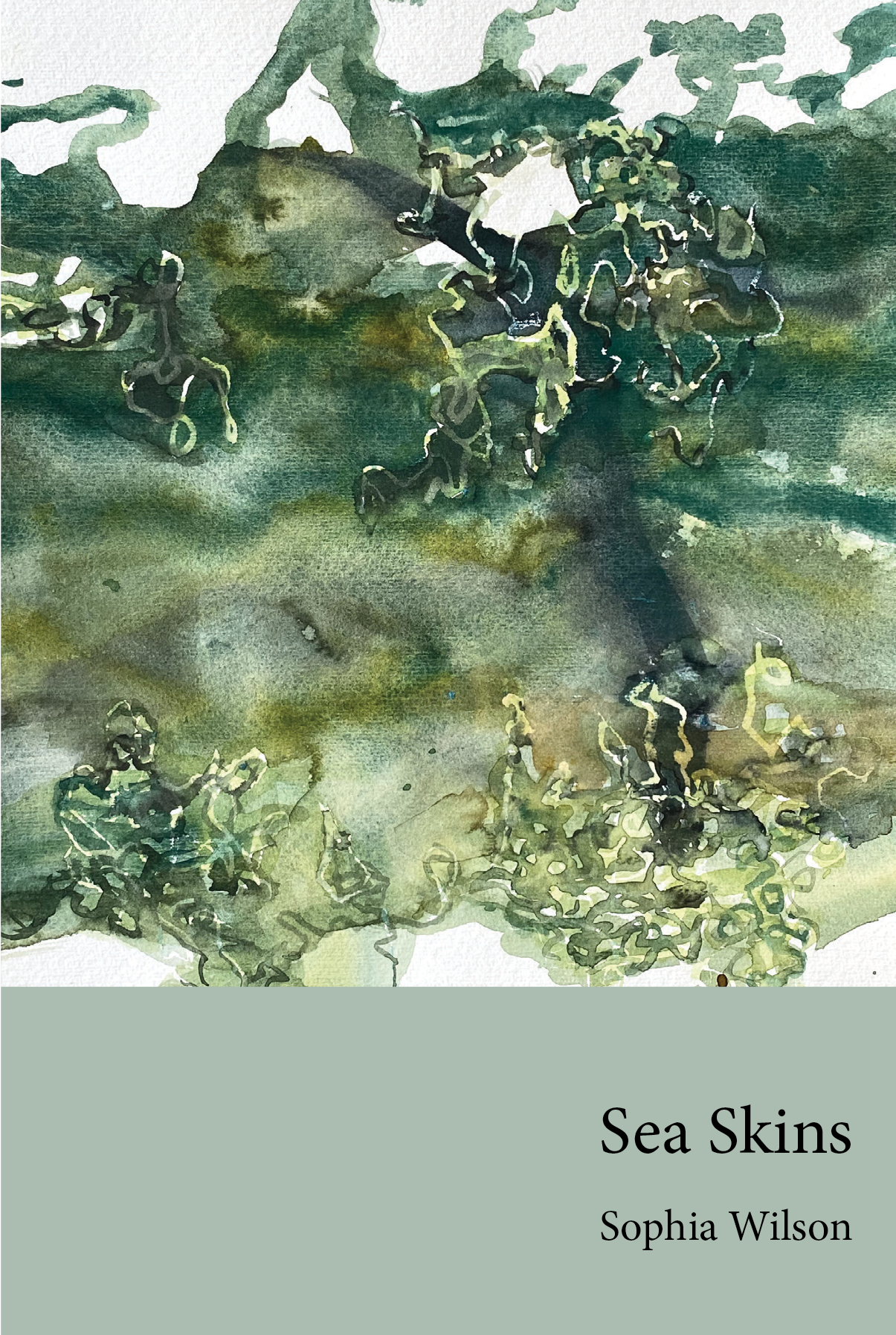
Poetry Shelf review: Sea Skins by Sophia Wilson

Sea Skins Sophia Wilson, Flying Island Books, 2023

In 2022 Sophia Wilson was the joint winner of the Flying Islands Manuscript Prize for Emerging Poets. That manuscript, or a version, now appears as Sea Skins. The poetry is a rich, layered offering for both ear and eye.

The title poem navigates multiple skins, along with tongues and teeth, ruins and ruination, illness and family, a spinning wheel, and a new poem that sets sail. It is the last poem in the collection but it is a perfect window onto poetry that builds bridges between the domestic and the wider world, the remembered and the uncertain, the catastrophic and the sad.

Notions of spinning feature in ‘Amygdaloid Knots’ where ‘we’ become yarn, raw fibre, neuroses, the smell of fleece. And it feels like the pronoun spins and shapeshifts through the collection as a whole, with the poet reflecting and refracting to embody we I or you or I. And always, there is the underlay of uncertainty and devastation:

We are bundles of raw fibre
spinning
uncontrollably

from ‘Amygdaloid Knots’

The word that resonates more than any other for me is ‘tongue’: as a motif, a theme, a vibrant idea. Sophia is a translator and a poet so language is significant. We are what we speak, I am musing. We are teeth and we are talk and we are tongue. Multiple languages make an appearance, especially te reo Māori and Italian. The children’s father’s tongue atrophies as he loses touch with his native dialect, the linguistic bridge between parent and offspring impaired. Sadly. Achingly. And then, yes, the writer is dreaming in multiple languages, like foreign mouth pieces on the page that we may or may not hear.

I dream in diverse languages
and when I wake
my tongue is like a map.

from ‘My tongue is like a map’

Take the word teeth: another connecting motif as it links nourishment to wound to weapon to food to chewing to body. Like tongue. Like poetry. Like I am musing the poem is teeth and tongue, like I am musing the poetry is also map.

In a section entitled ‘Medical Records’, disease becomes unease becomes procedure and diagnosis, in whiffs and hints, and then spins and speaks and recollects to draw in family, at the level of intimacy and divergence. I am so moved by ‘A Family History in Porridge’ where the narrator places the bowl of porridge on the figurative table in the form of a list poem, and we move from porridge that is detested to porridge that is prescription to China, fortune, aunt, eco and more. We move from this family member to that family member, from this wisdom to that ritual:

Celebration porridge:
raise yer parritch-bicker
lift yer kilt chopsticks!

Sun-rain-sky porridge:
Peace in the oat
and in the Earthly Bowl

from ‘A Family History in Porridge’

The terrific mother poem, ‘Taking my mother to the beach,’ is intimate, moving, sad. It is luminous with physical detail and has the incantatory drive that builds poetry. It is illness, it is connection, it is loss – both at a personal level and a wider global level. ‘Heritage’ can be maternal and it can be the beloved valley. Again there is the yarn (life? poetry? the world?) unravelling: the poem in which ‘the yarn unravels / along with we / will / when‘. And how crucial it feels when I read the poem embraces and presents ‘the heart of the family’. So poignant, so resonant, so touching.

This is the poem that chose to end in a coma;
the poem resisting sterile light
and the unbearable silence of asystole

This is the poem that conjures the long beach
we loved to walk; the poem in which I take my
mother’s arm and we face the ocean together

The land. How can we not speak of and for the land. How can we not write of and for the land? In this damaged and on-the-brink world? How can we write and speak of green fields and daffodils when our contemporary choices are unsustainable? Sophia weaves the thread, the weft and weave, of environmental challenge.

Sea Skins is a poetry collection that reveals and conceals, sings and mourns, challenges and lingers … long after you have put it down.

Sophia Wilson is an Australian-born writer and translator based in Aotearoa New Zealand where she runs a rural property and animal refuge with her partner and three daughters. Her poetry has appeared in journals and anthologies in Australasia and internationally, and won awards including the Robert Burns Poetry Competition, the Hippocrates Prize, and the Caselberg Trust International Poetry Prize. In 2022 she was joint-winner of the inaugural Flying Islands Manuscript Prize. More at here

Flying Island Books page

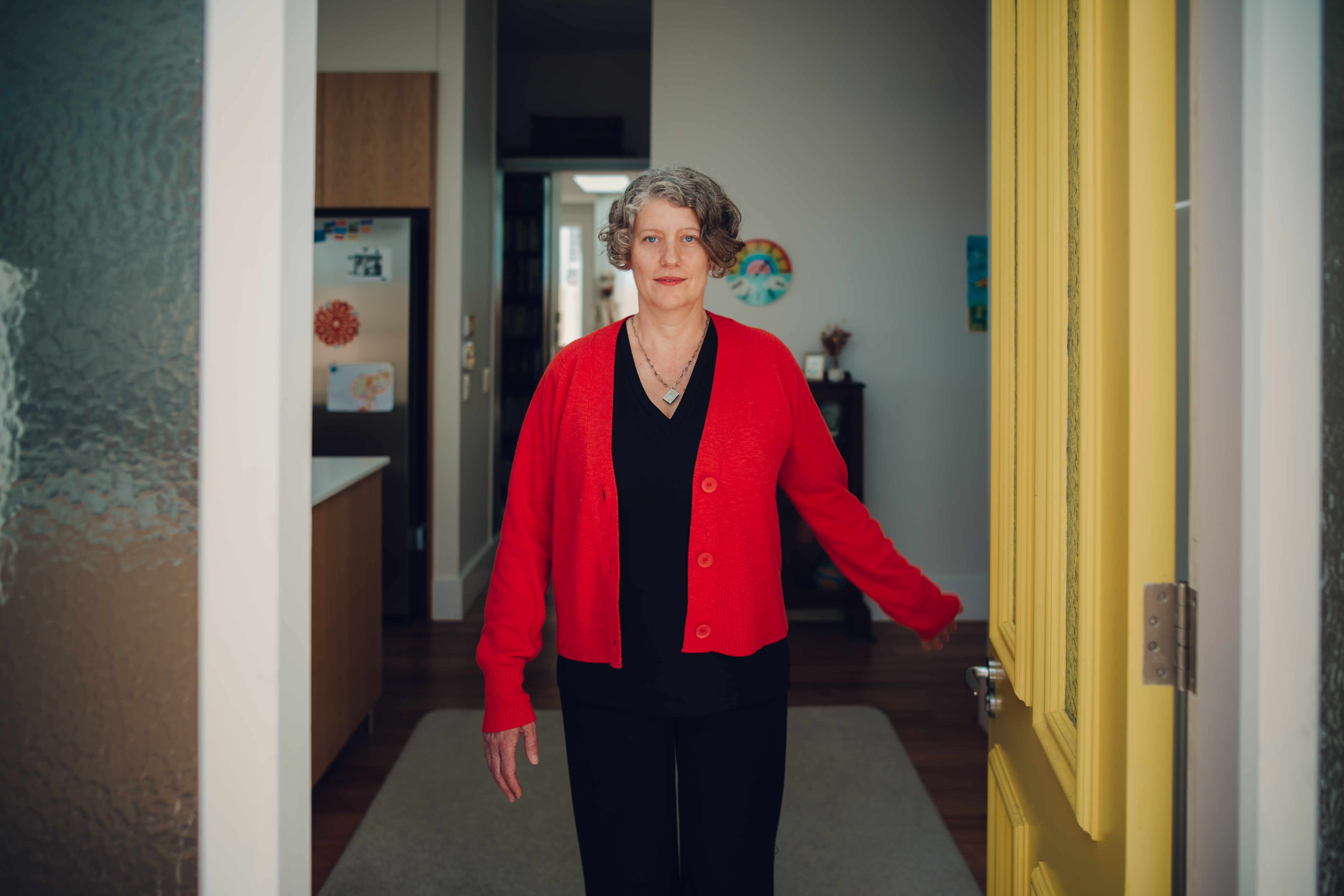
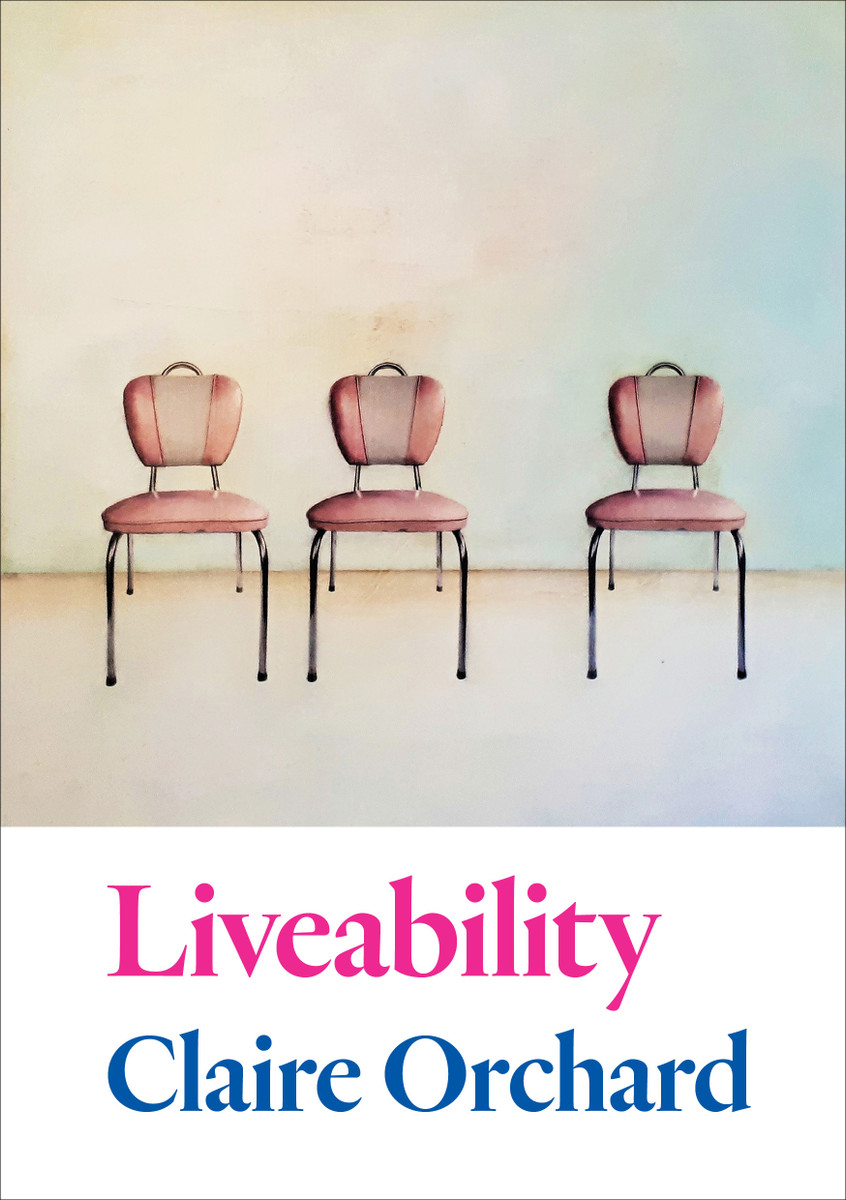
Poetry Shelf audio: Claire Orchard reads from Liveability

Photo credit: Ebony Lamb

Claire Orchard reads from Liveability, Te Herenga Waka University Press, 2023

‘Where duty lies’

‘December’

‘Our son of eighteen summers’

‘When I bring up advance care planning’

Claire Orchard (she/her) lives in Te Whanganui-a-Tara. Her second poetry collection, Liveability is now available from your local independent bookstore or direct from the publisher Te Herenga Waka University Press.

Te Herenga Waka University Press page
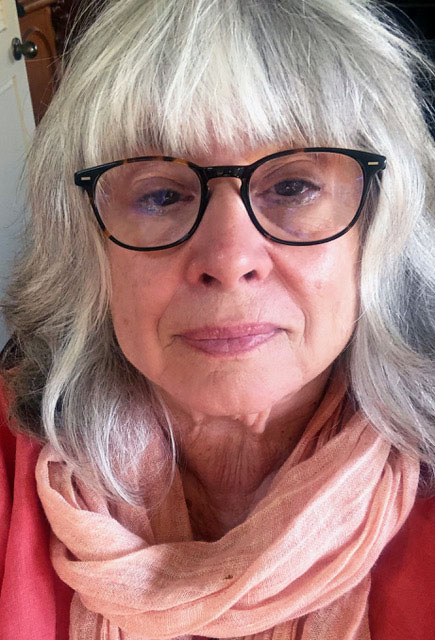
Poetry Shelf Monday Poem: ‘Bonfires on the ice’ by Harry Ricketts

Bonfires on the ice

It’s getting colder as the flames
rise from the bonfires, real and virtual.
See how they flicker in the darkling air.

What’s sending up such enormous sparks?
Lines that once lasted a lifetime.
Look, they show up clear, then disappear.

Here’s one: I have measured out my life with coffee spoons.
And another: A squirt of slippery Delight.
Now they’re coming thicker, faster.

Which watch not one another out of fear.
The art of losing isn’t hard to master.
You don’t want madhouse and the whole thing there.

A charred scrap settles on my hand
(Belinda smiled and all the world was gay)
flares for a second, is whirled away.

Eventually the ice will calve and dissolve;
the bonfires fade and crash.

Harry Ricketts

Harry Ricketts has published around 30 books, including literary biographies, personal essays and twelve collections of poems (most recently, Selected Poems, Te Herenga Waka Press, 2021).