Poetry from Aotearoa/New Zealand 15; Some good advice and a farewell (two poems by Tim Upperton) and a tailfeather
Here is the link to Tim Upperton and the final post. A timely reminder to go back and check all the pages I missed.

Here is the link to Tim Upperton and the final post. A timely reminder to go back and check all the pages I missed.

Launch of Puna Wai Kōrero: An Anthology of Māori Poetry in English Edited by Reina Whaitiri & Robert Sullivan (Auckland University Press)
Where: Monday, September 29 at 5:30pm
When: Waipapa Marae at The University of Auckland. Auckland.
Listen to Gregory O’Brien in conversation with Kim Hill about the book.
Gladstone School was the Auckland winner of The Third Fabulous Poetry Competition. So I am spending today and tomorrow at the school. Thanks to The Nw Zealand Book Council for supporting this competition and helping me pick the winners.
First up the Year One and Twos. Here are the poems we made up. They sat for a whole hour and were hooked on poems.
Gladstone Road Shoes
Rubber shoes
Slipper shoes
Velcro shoes
Sore Shoes
Sparkly shoes
Monkey shoes
Basketball shoes
Broken shoes
Running shoes
Dinosaur shoes
Blue shoes
Yellow shoes
Lightning shoes
Shoes are cool!
Lily
My Russian blue cat
scratches all the time
like a tiger,
sleeps and purrs
tricks,
frisky cat.
My cat likes
to eat tuna
lasagna
and cheese,
scrumple scrumple.
My cat likes
to sleep in my bed
on the sofa
on the cushions
on the table.
She does a somersault.
She brushes my tail.
My Kite
Rainbow kite
Kite flies
Fairy kite
Kite swishes
Disco kite
Kite twirls
Golden kite
Kite glazes
Butterfly kite
Kite races
I love my kite.
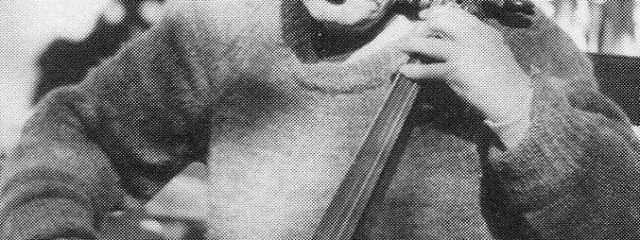
The Adulterators (Cliff Fell & John Newton) w/ Mahoney Harris
Wed Oct 8 at 7:30pm to Thu Oct 9 at 10:00pm
The Dog’s Bollix in Auckland, New Zealand
Three Chords and the Truth: an evening of music and poetry for grownups

Chain
Bright but distant lights shining faintly from a prison
Stars in the sky as though trapped in a prism
Not a car for days and days, nothing to be seen
Long strip of short-cut grass, splotchy brown and green
Letterboxes down the street draw a wandering eye
Trees bending in the wind, way up in the sky
Lying on the road at night, breathing in the air
Nothing else to see or hear, I am all that’s there.
Bio: Daniel Mathers is a 15 year old, Year 10 student from Lincoln High School. Originally born in Melbourne, Australia, he has been living in New Zealand for the last 10 years and currently resides in Rolleston, Christchurch. His hobbies include the likes of playing video games, spending time with friends and family and making short films for his YouTube channel.
Author’s Note: I hadn’t really written any poems before I wrote ‘Chain.’ Well, I mean not any that I had put any effort into. I did write the occasional poem in English class but those were just because I had to. My inspiration for ‘Chain’ came to me on the night of my 12th Birthday. I was bored and so my friend and I walked up my driveway to the road I lived on. It was so peaceful, there were no cars around and very little light. It was so peaceful. That memory stayed with me for a very long time until I was able to finally share it through my poem, ‘Chain.’
Paula’s note: I did a workshop with a group of students at Lincoln High and I was really struck with the mood of this poem. The way a sense of detachment, emptiness, time-standing-still invades its very core. The detail that aches with both fullness and vacancy. There are the musical chords that are slightly off key (prison/prism, bending/breathing, nothing/splotchy, stars/grass). It almost felt like a sonnet cut short. And at the heart, the poet absorbed in the moment. I like the enigma of the title. The way things are linked and continuous. The way things are linked and prison-like. That whole sense of entrapment in routine and the deeply familiar. It’s a haunting and evocative poem.
Here is the link to the first episode in the series.
https://www.youtube.com/watch?v=YLWXeBCpWTE&feature=youtu.be
Wednesdays at 8.30pm until 12 November – Sky Channel 83
New awards for young writers in the Auckland region are being launched by the Michael King Writers’ Centre this year, as part of the Michael King Young Writers Programme.
The Chris Cole Catley Writing Awards are open to all senior secondary students (Years 11, 12 and 13) across the Auckland region, with prizes for poetry, prose and lyrics.
The competition judges are Auckland University Press senior editor Anna Hodge, musician and head of the Play It Strange Trust, Mike Chunn.
Entries close on Tuesday October 14.
Winners of the poetry and prose categories will each receive a $150 cash prize, plus a selection of books. The winner of the lyrics category will have a recording session with Mike Chunn.
All entries will be considered for inclusion in Signals, the literary journal for young writers published annually by the Michael King Writers’ Centre. The winners of the awards will be announced at the launch of Signals 2014 at the National Library on December 6.
Rosalind Ali and Johanna Emeney, who run the Young Writers Programme, say they are excited about the opportunity to involve more young Auckland writers. They are looking for submissions that are fresh, original and have a distinctive voice.
The entry form and conditions are available on the Michael King Writers’ Centre website (www.writerscentre.org.nz) or email assistant@writerscentre.org
The awards are named in memory of Dame Chris Cole Catley, a pioneering journalist, author and publisher, who mentored many writers and journalists during her long career. She was a life-long friend of Michael King, a founding trustee of the Michael King Writers’ Centre and she established the centre’s first workshops for young writers. The Young Writers Programme, now in its third year, is offered thanks to funding from Creative New Zealand.
| For further information, please call Karren Beanland, Manager:Ph/fax: 445 8451
Email: manager@writerscentre.org.nz |
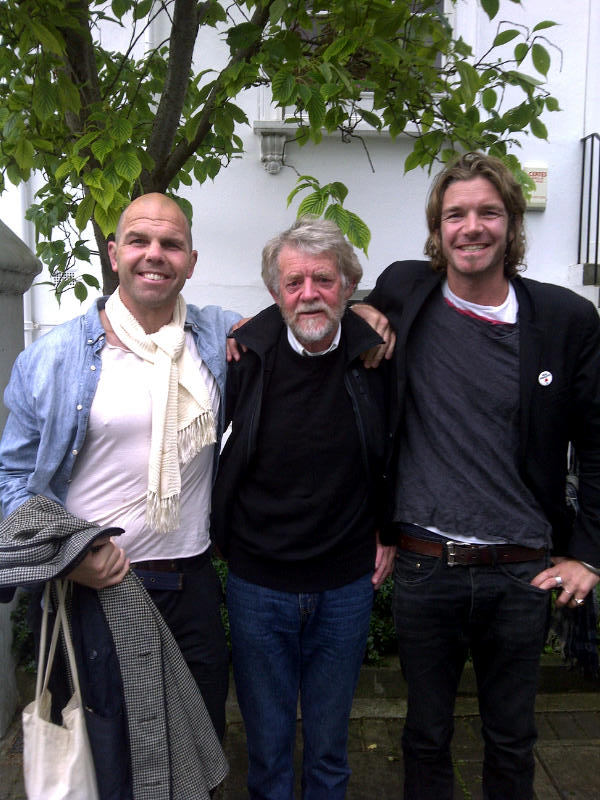
At What Stage
Here’s a big question: at what stage
do we ask, not how to live, but for what?
It wasn’t something that troubled you
when you lived in an old wooden house
in North Dunedin in the 1950s, before
puberty thrummed and most of your ilk
walked or rode bikes to school or down
to the river mouth and the wharves to fish
for trevalli and mullet in their thousands.
To many Christ was still our Redeemer
and All Blacks the epitome of manhood
without appearing naked and tanned,
except for tight-fitting jocks, in days
when only academics went on sabbaticals.
Days before you witnessed both men
and women weep, and you’d yet discover
what greed undoes and acquisitions bury,
and you’d still to learn just how destructive
being so-called constructive can be. And
that innocence precedes despair
and what follows comes at you bitter as sleet:
full-frontal foreboding, then fear.
Author’s Bio: BRIAN TURNER is a well-known New Zealand writer and a member of one of his country’s most famous sporting families – his brothers, Glenn (cricket) and Greg (golf), were distinguished sports internationals. I mention this because I think it has given me closer contact with a wider range of New Zealanders and others elsewhere than I would have experienced otherwise. It has allowed me access to a wider world than many writers I know have enjoyed. As a result it has broadened my understanding of my country, my homeplace.
Turner is a former New Zealand hockey player (also captain of Otago and Wellington) and has published best-selling sports biographies (with Colin Meads, Josh Kronfeld, Anton Oliver and Glenn Turner). His many other books include the autobiographical Somebodies and Nobodies: Growing up in an extraordinary sporting Family; Timeless Land (with Grahame Sydney and Owen Marshall); and numerous collections of poetry, including Ladders of Rain (joint winner Commonwealth Poetry prize 1978), Beyond (winner NZ Book Awards for Poetry 1993), and Just This (winner NZ Post Book Award for Poetry 2010). He was the Te Mata Estate NZ Poet Laureate 2003-05.
In 1994-5 he held an Arts Council Scholarship in Letters. He was Robert Burns Fellow at the University of Otago in 1984 and Writer in Residence at the University of Canterbury in 1997. He was awarded the Lauris Edmond Memorial Award for Poetry in 2009 and ‘The New Zealand Prime Minister’s Award for Literary Achievement in Poetry 2009’. He received an Hon D Litt from the University of Otago in 2011. His most recent books are the best-selling Into the Wider World (shortlisted for the 2009 Montana Book Awards) which focuses on his love of and concerns for the future of this country’s natural environment, Just This, winner of the NZ Post Book Award for Poetry in 2010, and a further collection of poems, Inside Outside (2011). A major collection of new and previously published work, Elemental – Central Otago Poems (with photographs by Gilbert van Reenen) was published in August 2012.
Author’s note: Re ‘At What Stage’, hard to answer where poems come from. I’m a product of my roots and my reading. It’s in part ‘about’ where I come from, what life was like back then for me (1940s and 50s) and how much has changed and what I’ve made of it. It’s about our passage from who knows where to whatever follows. I have concluded that humankind has lost the plot, that we’re resolutely ‘shafting the future to serve the present’ (as George Monbiot put it), and that wilful blindness and delusion dominates our thinking everywhere. As Margaret Atwood pointed out we’re using up nature’s capital too fast and nature’s calling in her debt. A considerable proportion of the people who run NZ aren’t leaders, they are followers of that which is failing us and destroying much upon which all things depend. And so on and on…
Paula’s note: Brian has the ability, more than any poet I know, to catch the New Zealand landscape within the economy of a poem. As you read these offerings, a richness of place unfolds; through light and dark, through the changing seasons. The poem becomes a transcendental point of contemplation. Beauty draws closes. Yet there is so much more to Brian’s poetry than the spectacular lift of Southern landscapes. Place might be fodder for the eye, but there is also that ongoing concern with how we occupy place. How we protect it and how we damage it. Thus amidst the homages you find the political edge across the spectrum of his work that highlights all shades of greed, apathy and ignorance. I love the way this poem reflects the way our relations and engagement with the world makes subtle shifts in our passage from youth to adulthood. The humour. The bite. The underlying notion that some things matter very much indeed.
I was at Otaki College this morning doing poetry with a group of Year 9 and 10 students. I was really taken with the detail and sound as this poem unfolded. Being a big fan big of Matapouri Bay, this poem took me right back there.
Matapouri Bay
Midday sun bears down on the bay
hair whips around in a sudden, fierce breeze
starfish in the lowtide pools
clusters of small white flowers in the undergrowth
edging the large open green in front of the baches
slow estuary leading through the small dunes
clouds floating in an azure sky
families drift off to sleep
lulled by the soothing hush and hiss
of the waves.
Izzy, Y9
Over the next few months, I am on the road a lot promoting poetry for and by children in all kinds of ways — most importantly with my Hot Spot Poetry Tour of New Zealand. So the stack of poetry books to read and review just keeps growing. One of the key aims of Poetry Shelf is to draw attention to New Zealand poetry from books to events to opinions. In order to highlight recent books that I have enjoyed, I aim to do a cluster of shorter snapshots along with some slightly longer pieces.
As I make my travels through schools, communities and various venues, I have been wondering about the divide and the overlap between children’s writing and adult writing. Is there a void or is there a fertile set of bridges? Are the kind of hierarchies that Margaret Mahy endured still at work? The more I think about the issue, the more complex it becomes.

