Poetry Shelf, Poet’s Choice: Rachel Bush makes her pick

c52510c0-ccf5-4568-88dc-14eed8f6eafe     c52510c0-ccf5-4568-88dc-14eed8f6eafe


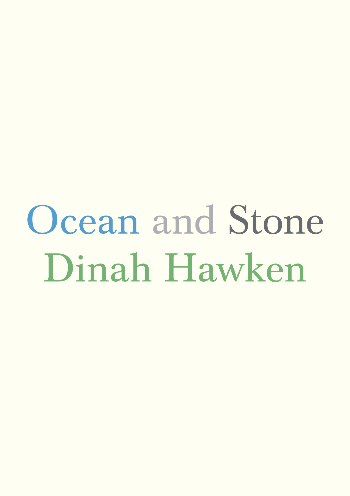
I was hooked by the couplet that begins the first poem in Ocean and Stone by Dinah Hawken (Victoria University Press 2015).

‘Here I am an old woman, sitting alone / on an outside chair in Maoriland,’ she writes. I am captivated by this concise and evocative sketch of herself. That word ‘Maoriland’ with all its nuances and baggage still turns over and over in my mind.

Dinah  writes beautifully about children, particularly in this book  about her grandchildren. There is none of the cuteness that can mar writing about little children. Hers are tiny in stature, but total and convincingly human beings.

She can be very funny, for instance when she writes about ‘the bloke’ who disrupts the lake and everyone peacefully round it by tuning a loud speed boat for hours on end. We all know him, alas.

She writes particularly well about the natural world. I find it difficult to say without sounding as though I am attributing to her some wise conventional pieties. And the very last thing she does is write things that sound good and ‘nice’. If I had to pick a favourite poem, today  I might choose ‘A screen is a screen’. Partly it’s a poem about climate change, but there is no hefty lecturing about it. The ubiquity of screens in our daily lives is countered with the strength and vitality of one bare tree, and with a the way a sense of community and family can  enrich our lives.

Rachel Bush

Poetry Shelf, Poet’s Choice: Emma Neale’s favourite poetry reads 2015


otago108004   7485719


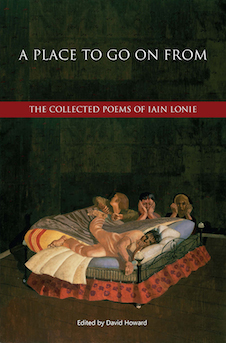
My poetry treasures for this year:  Some people say they’ve travelled, or fallen in love, or moved house, as the measure of a year’s alterations: for me, 2015 was the year I read Iain Lonie’s A Place to Go On From: The Collected Poems. The depth and frankness with which this plumbs love, grief and staring into the void is so unstinting that reading it has felt like a life event. As an act of scholarship from the editor David Howard and the author of the introduction Damian Love, it deserves to be celebrated.
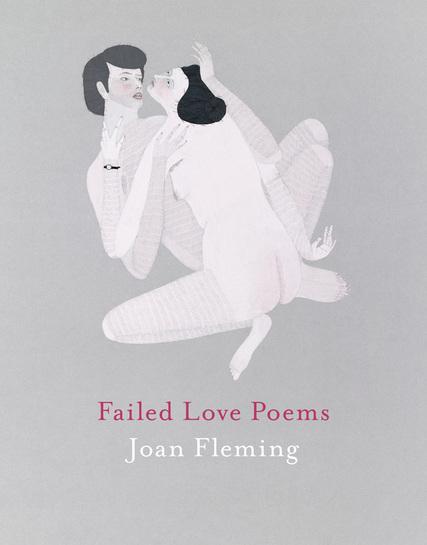
I also loved seeing the fresh direction Joan Fleming has gone in with Failed Love Poems and how quickly she takes up new role models (eg Mary Ruefle, erasure poetics) and rearranges and ‘re-aspirates’ these.

Because as a student I always used to write far too much and get reprimanded for exceeding the word limit, I have to add here Bones in the Octagon by Carolyn McCurdie – see particularly her poem about the Brothers Grimm – and oh please just one more to add – two Hungarian poets have dazzled me this year: Ágnes Nemes Nagy and Ferenc Juhász.

Emma Neale

Bones in the octagon front cover copy

Poetry Shelf, Poet’s Choice: Bill Manhire selects some favourite reads of 2015

23282023

The late R.F. Langley is still one of the secrets of recent poetry in English, though Carcanet’s new Complete Poems (edited by Jeremy Noel-Tod) will be doing something to bring him out of the shadows.  He looks a bit remote and narrow on the page – but in fact the poems are full of hidden rhymes: listen to him hard, sound him on the tongue, and you realise he’s one of the most musical poets going.  And if poems are, as someone said, acts of attention, then he’s also one of the most attentive you’re ever likely to come across.

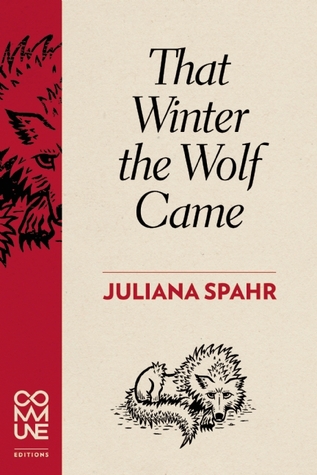
I like how Commune Editions, the publisher of Juliana Spahr’s That Winter the Wolf Came,  describe themselves: ‘purveyor of poetry & other antagonisms’.  There are plenty of antagonisms in this new book, which builds its effects into something bigger than the simple arithmetic of its individual poems. A poem called ‘Turnt’, online at the Poetry Foundation, gives a reasonable sense of how Spahr goes about things.

Though I’m late to the party, I’ve been reading Dan O’Brien’s 2013 collection, War Reporter (CB editions, 2013), which voices itself through the persona of the Pulitzer Prize-winning reporter Paul Watson – so that you’re both in the action and out of it at the same time.  As with Wilfred Owen et al, it will never be an easy time to read work like this – but just at the moment it feels especially challenging.

Finally, Zaffar Kunial is a poet I like a lot, though he hasn’t published a full collection yet.  He has the wonderful/weird distinction of once having worked as a writer for Hallmark Cards. Here’s a link to why – or part of why – I like his work. The page also includes a link to his poem ‘The Word’. It’s small and tidy, but is a sort of Tardis poem: bigger on the inside than the outside.

Bill Manhire

Poetry Shelf, Poet’s Choice: local poets share favourite reads of 2015

For the past two years I have posted an annual list of reading picks by poets and poetry fans to celebrate poetry. The lists turned out to be a sumptuous poetry guide for summer reading – with a few other reading treats thrown in for good measure.

This year I have invited some local poets to share favourite reads over the past year. Rather than assemble the enormous list of previous years, I plan to post them as they arrive.

Happy summer reading!

Poetry Shelf Book Review: Steven Toussaint’s The Bellfounder – It is an exquisite read

The+Bellfounder_CultSoc_COVER_v04-2-page-001


Steven Toussaint The bellfounder  The Cultural Study Society, 201B


Steven Toussaint was born in Chicago in 1986. He is the author of the chapbook Fiddlehead (Compound Press, 2014). He lives on the side of a volcano in Auckland, New Zealand.

Steven’s new poetry collection, The Bellfounder, is an exquisite read. The epigraph stands as a dedication to Eleanor Catton: ‘For you I have emptied the meaning/ leaving the song’. The ‘you’ widens to gift song to the reader as music is both first and last reading effect. A lexicon of musical terms amass: melody, pitch, chord, counterpoint, harmony, rhythm. I wanted to shut my eyes and absorb the musicality through the pores of my skin.

Each word chimes like a musical note, but the reward is in the aural connections – surprising, comforting, hair shivery – that produce the lift and skip of melody (‘brine seamed, milked at alpine view’). Your ear flutters to and fro along the track of the line catching sounds that twitch and oscillate and gel (‘alive as white aster, as stars’). There is both musical playfulness and musical craft. The little shift from ‘aster’ to ‘as stars’ sends gossamer threads to Gertrude Stein, Michele Leggott, Susan Howe. Melody is made more endearing by syntax that sidesteps, elides, eludes (‘hoove the ground/ each order othering’). Words hum on the ends of lines like a secret sidebone poem (whole formative cloud downgrowth longing parades embankments view is left stars ground othering bellow). (quotations are from ‘The Ground’)

At times, the language is demanding (I love this), when the words are obscure, not in everyday use, deliciously coined, twisted and shifting. At times, there is a sweet economy that counterbalances a governing richness. Always, at every crest and turn, phrases that cling to the ear (‘ore poured/ through ode// and hissed forth/ dread’ from ‘Analogion’).


What of meaning abandoned? After the initial joy of melody (song), I savoured the visual tussock; the way image is both ephemeral and grounded. Again I was reminded of Gertrude, Michele and Susan – and the playful energy of an image held in the mind. A point of contemplation. Transcendental, almost. At first, there is the allure of the image (‘quiet tangle/ of birchbark’ ‘Down along/ the frost encased// river little/ stinging reeds’). The images are little anchors in the overall mist of the poems. Yet that grounding enables the folds and creases of connection, personal associations and drifting thought (how to build that ice-cold river in mind’s eye?). Motifs, like the musical wordnotes, echo. The images tilt you. They act as little keys to drifting notions. Now and then, I felt like I was walking into sumptuous strata of Dante’s Inferno or the wet, kaleidoscopic thrill of a Tarkovsky film. I could almost hear Dante’s voice.

For me, the reading drift is the drift of a hiker locked into the rhythm of walking, where the natural world becomes music, music tethers image and image untethers thinking. Then thinking becomes still and still becomes raucous. Glorious. I love the way implanted image builds train of thought. The reading drift becomes a musing on poetry. On the possibilities of poetry. Take the poem, ‘Measure’: beautiful, enigmatic, poised, entrancing. The birchbark and river detail are the physical measure of melody, of viewing the world. Yet there is more, always more. Poetry becomes more than meaning, yet you are never left groundless. It is the mysterious movement that is travel and location and the laying of here and the layering of there.


Enormous funnels

of pitch a people


press on, tamp

the thicket’s


thickset quiet out

as if a current


of flame rouses

deep under boats


pitch-sealed

to carry them over.


(from ‘Measure’)


This collection is one of my favourite reads of the year. It transports you to the milky mists of nowhere and then feeds you the sublime ‘pitch’ and ‘drip’ of a somewhere that matters to you on a level both conscious and subconscious. Breathtakingly good.


Available in NZ from Timeout Book Store, or elsewhere via Small Press Distribution

Steven’s blog

Plainsong‘ on Poem Friday on Poetry Shelf

An excerpt from ‘Aevum Measures‘ on The Spinoff


Slam, slam … & thank you Mams – Vaughan Rapatahana’s take on Slam Poetry & NZ stalwarts

P1050079

Vaughan Rapatahana has just posted a piece on Jacket2 that casts a spotlight on various poetry activities in New Zealand. Great to see. Thanks, too, for the thumbs up Vaughan.

‘In this, my last commentary post of this series — apart from a brief Coda next week — I want to talk about two distinct areas of the Aotearoa-New Zealand poetry scene that I have alluded to previously, but nor really covered copiously as yet.

One is the vital and brimming Poetry Slam situation in this multicultural land — a scene that is really expanding fast, most particularly among younger poets, and certainly among Polynesian poets who tend not to live in stuffy urban areas, but more likely in places like Mangere, where I grew up. I reckon this bodes extremely well for the future of (their) primarily oral-delivery focussed work, for they seem less interested in being seen in print in established/mainstream journals and much more energized by the live performance, the audience, the competition, the sometimes Americano rap/hip-hop, often Pasifika, definite ngā mōteatea rhythms and beats running through their pieces. Mind you, some DO already have print collections out there … Kei te tino pai tēnei (This is very good.)’


and part two:


‘So I also want to focus on another essential aspect of New Zealand’s poetry scene — the Stalwarts, the people — very often women, thank you Mams, who keep poetry in this country alive and kicking via their commitment to writing about it; reviewing it as in the several online blogs, like The Tuesday Poem as organised by Mary [McCallum] and Claire Beynon, which ‘carries a poem and commentary on the poet’s work every Tuesday’; publicizing it; organising it — often  regionally: mostly unpaid and as dedicated labours of love.’


Full blog here

New Executive Director for The Michael King Writers Centre brings a wealth of experience

New Executive Director brings a wealth of experience

The Michael King Writers’ Studio trust is very happy to announce the appointment of Ka Meechan as the new Executive Director of the Writers’ Centre.

Ka has comprehensive knowledge of the international book trade from over 30 years of experience working in New Zealand, the UK and Australia. She has travelled extensively during her career working with clients and partners across the globe.

In August 2013 Ka left her role as Managing Director, Asia Pacific with Nielsen Book Services where she was responsible for revenue and client management across the range of  bibliographic information and retail sales monitoring services  in the Asia Pacific region encompassing Australia, New Zealand and the Asian countries bordering the Pacific.

For the past two years Ka has worked with the Publishers Association of New Zealand (PANZ). Most recently she organized the PANZ International Summit in May and the PANZ Book Design Awards in July. She also project managed the Visiting Author component of New Zealand’s Guest of Honour programme at the Taipei International Book Exhibition (TIBE) in February 2015.

Ka says:  I am very much looking forward to working with the Michael King Writers’ Studio Trust to build on the successes achieved over the last ten years.

Catriona Ferguson, Chair of the Trust says “Ka will bring energy and enthusiasm along with vast experience of the literature sector to the Trust. We are thrilled that she has accepted the role of Executive Director”.

As the first national writers’ centre in Aotearoa New Zealand, the Trust’s mission is to support quality New Zealand writing and the development of New Zealand writers. The centre is based in the old Signalman’s House on Takarunga Mt Victoria, Devonport, Auckland.


Ka will take up her appointment on Tuesday 01 December 2015.

Damien Wilkin’s launch speech for Bill Manhire’s short story collection: ‘I think of these stories as ludic on the outside but ferocious in their hidden centres.’

Great launch speech!

It’s not a bad way to approach this book – to listen for the tune as much anything. Because while it’s true that these beguiling, discomforting stories take many strange and sudden turns, I was struck all over again by how hummable they are, how they stick to the ear and the mind.’

Launch speech here

Amy Brown’s Ekphrasis Lessons – this is really useful

Amy Brown has provided an easy, approachable introduction to ekphrasis for students, teachers and anyone who wants to do some creative writing but isn’t sure where to start.

The project was supported by the Ian Potter Museum of Art – all the images come from their wonderful Grimwade ‘Miegunyah’ Collection.

Here’s the link.