Poetry Shelf, Poet’s Choice: Kerry Hines makes some picks


1415925155755 1430782455450


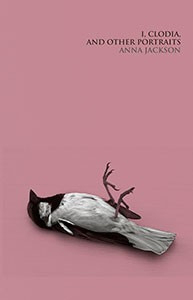
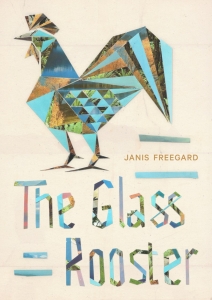
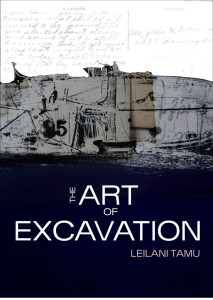
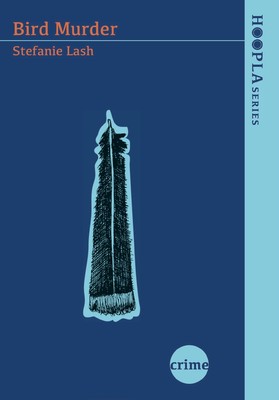
Some of the recent (2014/15) collections I’ve enjoyed, thought about and quoted in my reading notebook over the past year include Stefanie Lash’s Bird Murder, Leilani Tamu’s The Art of Excavation, Anna Jackson’s I, Clodia, Janis Freegard’s The Glass Rooster, and Mary Cresswell’s Fish Stories.


During the year I also had a couple of lucky finds at a chapbook festival. In 2009, CUNY’s ‘Lost & Found’ Poetics Document Initiative produced The 1963 Vancouver Poetry Conference: Robert Creeley’s Contexts of Poetry, with Daphne Marlatt’s Journal Entries. It provides a transcription of Creeley’s talk and Marlatt’s notes from her attendance at the conference – not a write-up, more moments of quotes and responses including phrases, diagrams, references to myth and psychology. The bio note for Marlatt included an extract from a 1979 interview in which she says, ‘I love that phrase, the body of language. And I’m trying to realize its full sensory nature as much as possible,’ going on to note her interest in ‘what it is to live in this world, to be mortal, which I take to be in the body’ – a sentiment I’m interested to find has become an emerging theme in other reading and discussion I’ve chanced on recently.

The second chapbook was Simone Muench’s Trace, published by Black Lawrence Press last year. All of its 26 poems are titled ‘Wolf Cento’, emphasising both their use of a form which incorporates lines and phrases from a variety of sources and the rich, multidimensional figure of the wolf which ranges through them. A very brief sample from the first poem follows – this and several others are included in a PDF on the publisher’s website

Their jaws open – coral

in the darkness. I do not know

who has opened the window.

They sing with their mouths full of earth.


Kerry Hines


Art_of_Excavation_cover-726x1024-213x300 large_9780473276492


Tuesday Poem draws a circle after five years of poems – and what of my blogs?

Screen shot 2015-12-16 at 9.24.31 AM

There are a number of unpaid people who work tirelessly and creatively to promote NZ books and authors.  I was sad to see the end of this wonderful project but completely understand that circles need to be drawn. Bravo on five wonderful years. We will miss you. Thanks Mary McCallum and the Tuesday Poem team.

Perhaps a fitting moment to salute Graham Beattie! Cheers for all your hard work! Wonderful!

Every December I face my blogs and question their survival – I assess the toll on me and my own writing. This year it seems worse as I need to protect time to write my big book in 2016/ 2017. Yet I can’t cope with the loss of the blogs. I see two black holes. Poetry gets so little attention in media in New Zealand whether for children and adults.

I can never review all the poetry books that come my way and that does not mean (as one anxious poet proposed) I do not love books I have not managed to feature. This is an anxiety for me at times.

To have so many poets respond to my recent letter to share  favourite reads, is a boost. It seems we have a vital poetry community that stretches beyond localised pockets.

On the one hand I want to reduce the time I spend on these blogs, but on the other hand I want to find ways to strengthen them. To widen the audience. To celebrate the length and breadth of poetry we produce. Hmm!


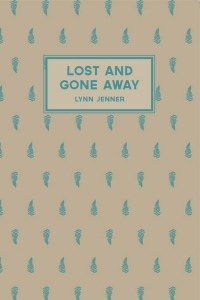
Poetry Shelf review: Lynn Jenner’s Lost and Gone Away — Lynn is unafraid to venture upon unstable ground in order to follow her trains of thought

1437428599707   1437428599707


Lynn Jenner  Lost and Gone Away  Auckland University Press  2015


Lynn Jenner’s new book, Lost and Gone Away, is a terrific read, a challenging, thought-snapping, sidetracking, stalling read. A must read. The book, as the title suggests, navigates and stretches towards lost things. It is a hybrid work that started life as a doctoral thesis, and is in turn, poetry, prose, essay, memoir, and a smudging of genre to the point that it is unimportant where one genre begins and another ends. ‘Things’ matter but this is a work that places people at its white-hot core, and from here radiates missing memory, experience, time, place, events.

The book is in four parts. Part One, ‘The ring story,’ pursues Lynn’s mother’s ring that went missing in the Christchurch earthquake. Part Two, ‘The panorama machine,’ is like a stream-of-conscious outflow of that which is lost. Part Three, ‘Point Last Seen,’ focuses on missing people. Part Four, ‘I ring the bell anyway,’ navigates The Holocaust.’ Writing becomes a way of reaching and tethering traces of what has gone. It is, and can only ever be, subjective, elusive, fleeting, partial. The generous white space that gives the text room to waver and shift heightens the allure of fragmentation — yet as you read you identify currents that link: the stream-of-consciousness movement, the concatenation of ideas.


Lynn trawls eclectic places for material: books, anecdotes, conversations with strangers, conversations with friends, museums, personal experience, invented experience, inherited experience, dreams, white space. The thinking and writing process is guided by acute contemplation, critical thinking, doubt, self-defensiveness, thought drifts, accidents, discoveries, questions. As she searches for her way into and through knotty issues, she identifies approaches she connects with and those she does not (Michael King is a stand-out example of the latter). The pieces accumulate and build a thought mosaic as opposed to a thought fresco. Always there is a taut wire to the personal –no matter where thinking leads, no matter how distant in view of time and place, this is an intimate and utterly personal inquiry.

For me, the book is a treasure chest of curious things, fascinating things — but it is not just a novelty box. This book takes you to essential human questions and reminds you that there is no singular response and no singular way to write your response. How do you face individual loss? How do you face national loss? How do you face the Holocaust? Global crimes against humanity? How do you write what you have not experienced? How do you listen to the voice that is other? A waterfall of questions.

The questions stick but little pieces of the book adhere, indelible upon your skin. The suitcase. The empty chair. The man in the Jewish museum telling his story, over and over. Finding beautiful words in the work of a prolific but unknown poet and using them in a poem. A dream’s impact on reading and writing. The carriages. The Polish children. The way you may unwittingly leave traces at a high-pitched frequency that readers may unwittingly pick up. The way Sappho appears and reappears.


Lost and Gone is an extraordinary read because it lays a gossamer net upon missing things and allows you to catch glimpses of what has gone, whether far from your life or close at hand. At work, and intensely present, is a mind foraging, delving, struggling, daring. Lynn is unafraid to venture upon unstable ground in order to follow her trains of thought — at times uncomfortable, at times surprising, always moving and shifting your point of view. This is a special book.


Auckland University Press page

Poetry Shelf,Poetry Picks: Emily Dobson shares some picks

3665135 tree_space__40939-1398819236-220-220


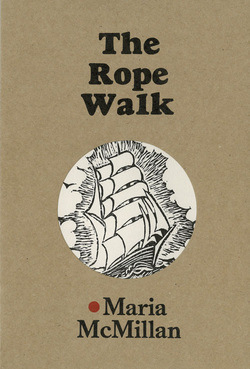
I don’t get much time to read poetry at the moment (well for the last 6 years really!) but whilst bouncing my #3 baby George to sleep in hammock for his naps rather than just sit there I have been pulling out some poetry and rereading it. I just read Maria Macmillan‘s Rope Walk again, and I love it so much, everything about it (it is a beautiful object to hold). I bought it after hearing Maria read from it last year on Poetry Day in Unity Books. Now I will have to re-read Tree Space too! Have just been re-reading Marty Smith‘s Horse with Hat also.

Emily Dobson

horse_with_hat_front_cover__77059-1385936731-220-220   horse_with_hat_front_cover__77059-1385936731-220-220   horse_with_hat_front_cover__77059-1385936731-220-220

Poetry Shelf, Poet’s Choice: Kerrin P Sharpe makes some picks


Hoopla Native bird web    work_full-cover

Poems on the Underground  edited by Judith Chernaik, Gerard Benson and Cicely Herbert. Penguin Books reprinted 2015
A collection of old and new poems that have appeared in London tube stations and trains since 1986.The books might fit in one hand but the poems are larger than life.

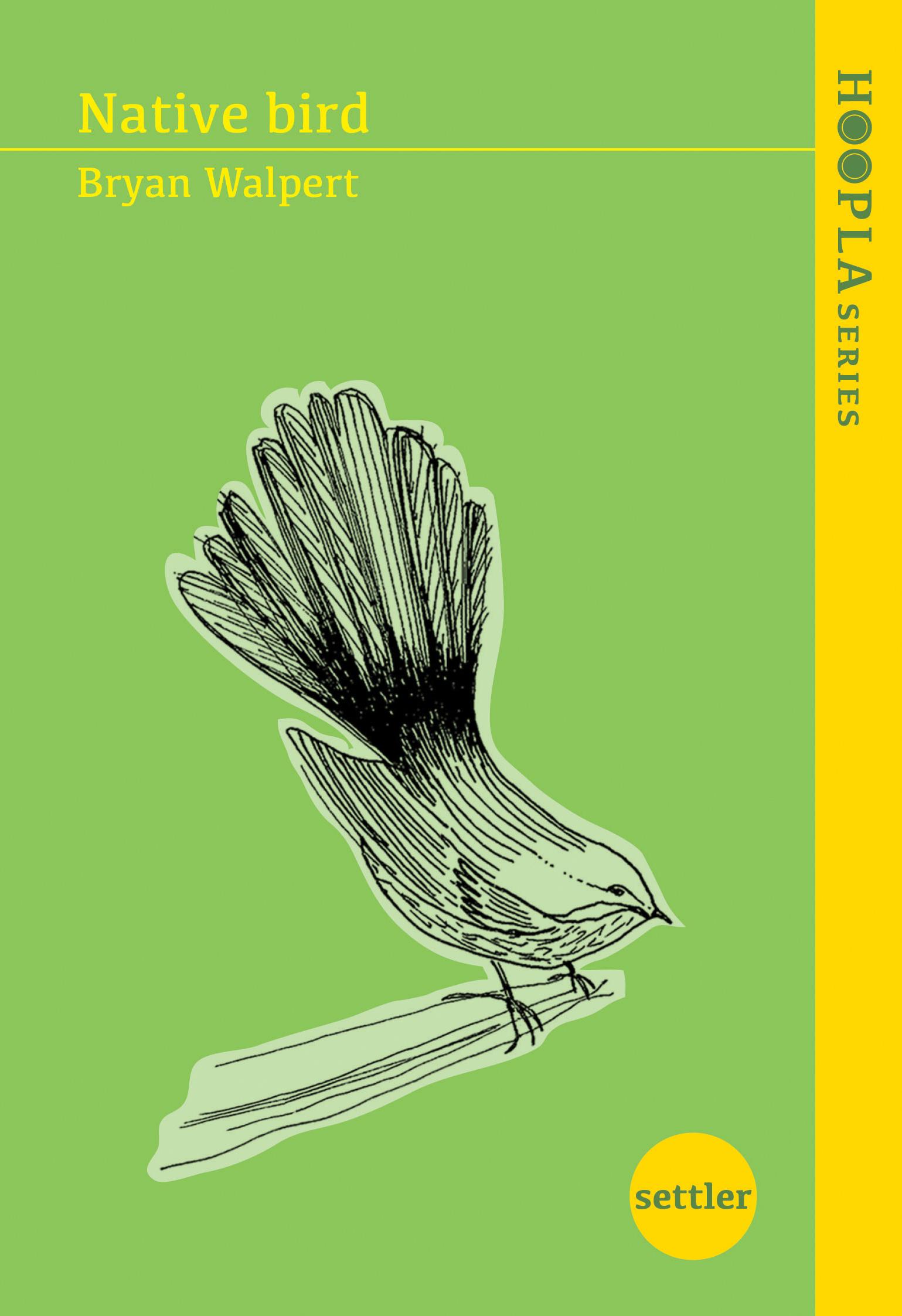
Native Bird Bryan Walpert.  Makaro Press Hoopla Series 2015
Memorably imagery.  An excellent eye and mind at work.

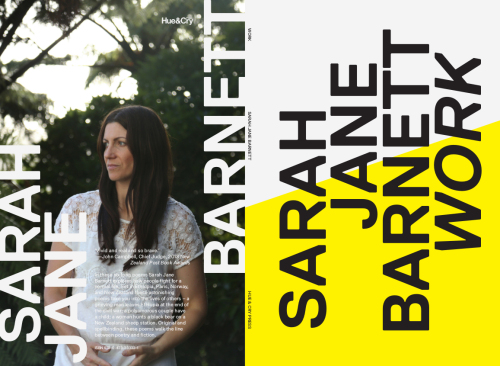
Work Sarah Jane Barnett.  Hue & Cry Press 2015
A beautifully constructed collection of six longer poems and prose poems that empower the reader with powerful lingering themes.

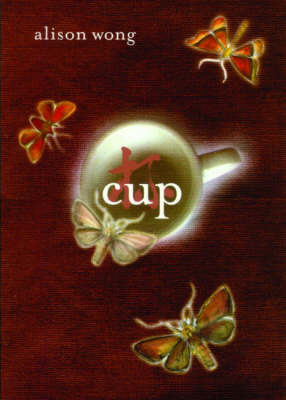
Cup Alison Wong. Steele Roberts 2006
A collection I’ve read often from the library and have finally purchased. Insightful poems about being Chinese in New Zealand. The included notes are both informative and beautifully written.

Kerrin P Sharpe

large_9781877338762


Poetry Shelf, Poet’s Choice: Diane Brown makes her picks

Being_Here_cover__66009.1423089464.140.215 Being_Here_cover__66009.1423089464.140.215Being_Here_cover__66009.1423089464.140.215


Most mornings my husband and I, (which sounds like the Queen, but I can assure you is not) read poems to each other. It’s a lovely way to start a day of mostly words and brings a focus back to the interior after reading the newspaper.

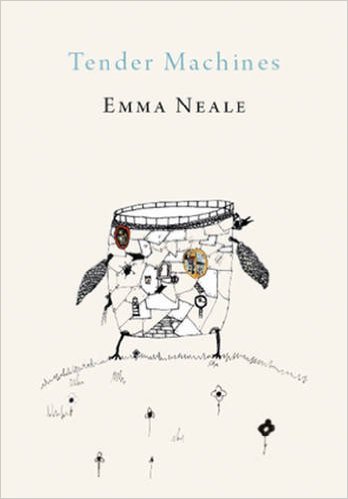
It takes a while to get through collections this way. You could call it slow poetry. At the moment we are reading Emma Neale’s Tender Machines and Vincent O’Sullivan’s Selected Poems, Being Here. They are Dunedin based poets at different ends of their poetry careers, but what treasures are contained in both books. Vincent’s cool, sardonic, intensely observational eye and Emma’s brilliantly executed white hot wordplay as she explores family life in all its intensity and moves into global and environmental concerns.


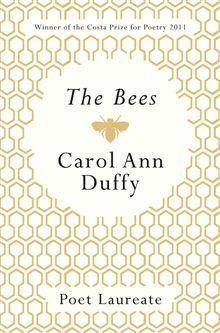
The book we have finished and both laughed and wept over from the first page to the last is The Bees by Carol Ann Duffy. It’s an amazing collection of poems with a wide variety of subjects: love poems; moving elegies to her mother; rollicking drinking poems; angry political poems and. throughout, bees hover, fragile life-givers, whose existence along with ours is threatened. And apart from the bees holding all these poems together is the way every poem sings a love of words, with internal rhymes, alliteration, repetition, but in a way that is completely natural, sometimes angry, sometimes joyous. If you know someone who is mystified by poetry, try them with some of these poems. Yes, she’s a popular poet who may not appeal to readers who laud the esoteric and experimental, but she writes intelligent poems about important subjects and issues, the stuff of life. In a short poem, ‘Spell,’ Duffy says, ‘I think a poem is a spell of kinds, / that keeps things living in a written line.’ Her poems are charming in the true sense of the word, burrowing into your brain and, most importantly, your heart as you breathe them in.


A few lines from the tremendously moving poem, ‘Water’, about her dying mother.


                                     Water.

What a mother brings

                                     through darkness still

to her parched daughter.’


Diane Brown

418MHC3lAEL._SX346_BO1,204,203,200_   the-bees-978033044245901

Poetry Shelf interviews Brent Kininmont: “Among other threads are those related to ‘drifting’ and ‘sleeping’”

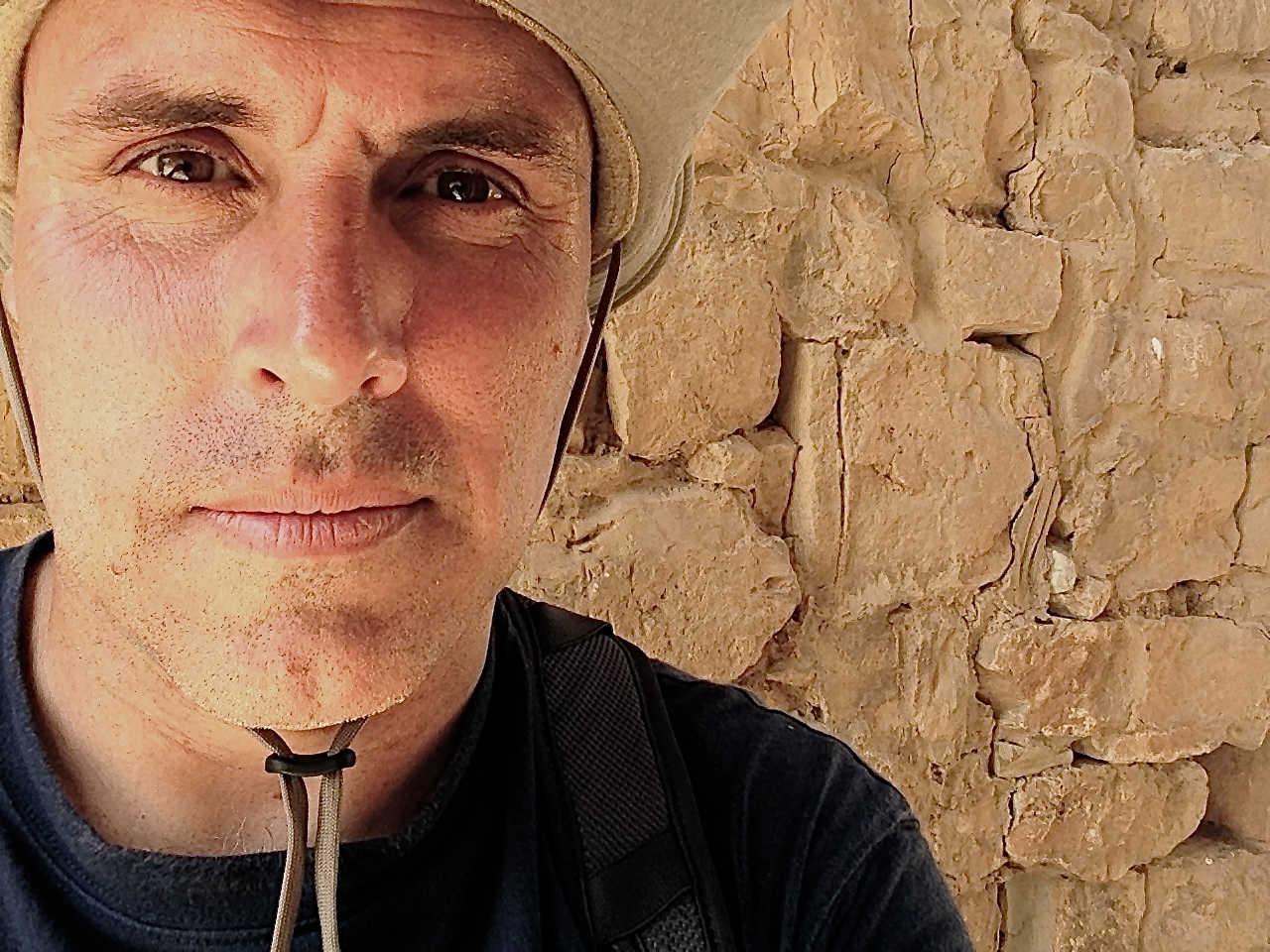
Brent Kininmont 

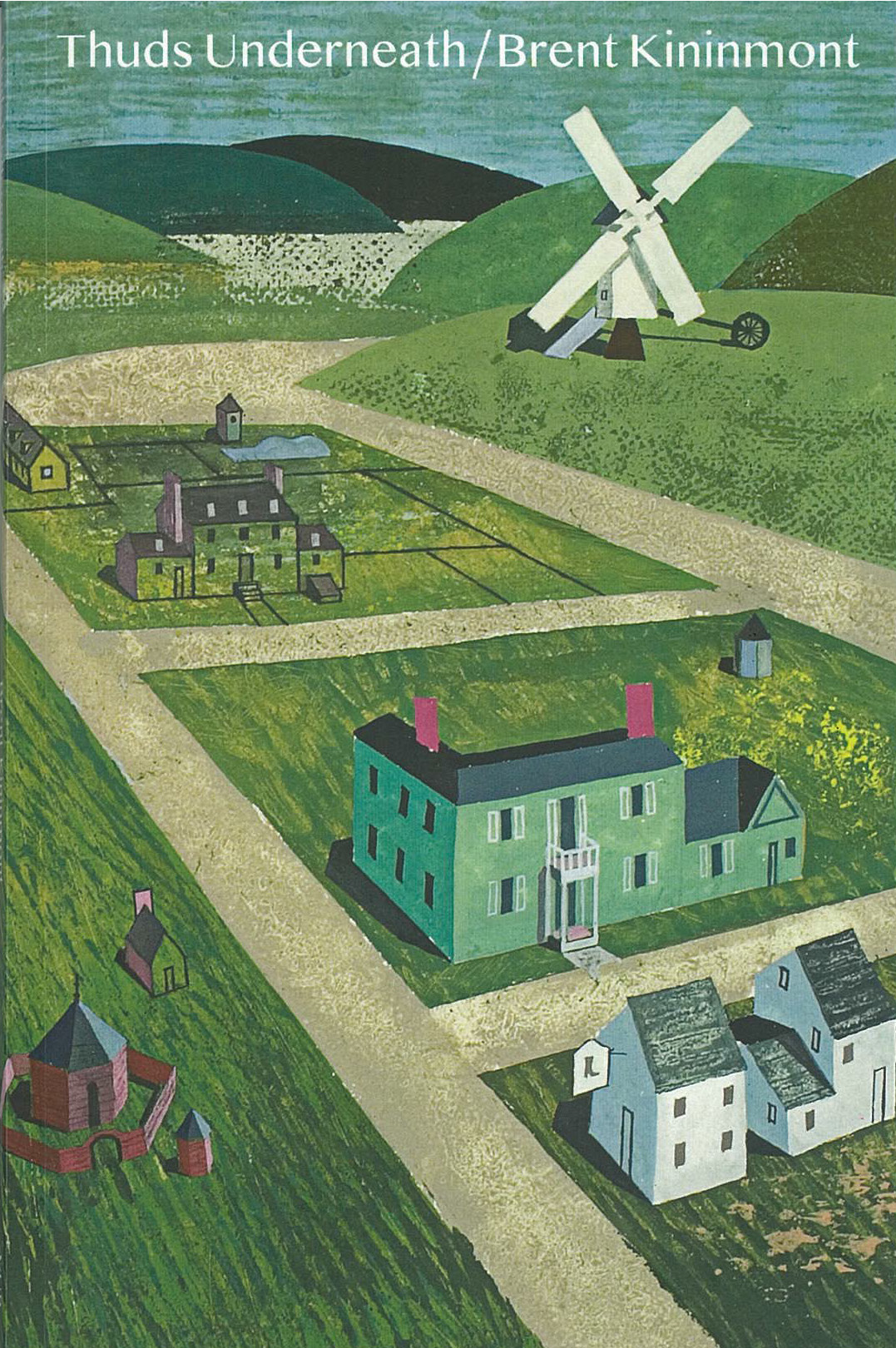
Brent Kininmont is originally from Christchurch. Except for a year in Wellington, he has lived for the past 16 years in Tokyo. He worked as a journalist at The Japan Times and Reuters news agency, and now teaches intercultural communication. His poems have appeared in JAAM, Landfall, Poetry NZ, The Press, Snorkel, Sport, Takahe, Trout, Turbine, and Best New Zealand Poems 2009 and 2011. His debut collection, Thuds Underneath, was recently published by Victoria University Press.


This is a terrific debut, and I am hard pressed to think of a New Zealand collection quite like this. At times there is a fablesque, dreamlike quality that fleetingly pitches camp in the surreal (whiffs of early Gregory O’Brien), while at other times the real is luminous. The effect is surprising, inventive, original. What sorts of things do you want your poems to do?

In Thuds Underneath I tried to not include poems that couldn’t stand alone, but there is always a danger that a poem will underwhelm, particularly if it’s composed of short lines and compact stanzas, as quite a few of mine are. In a collection, then, I would like the seemingly disparate poems to speak to each other. By conversing, they can help to justify each other’s inclusion.

It would be marvelous if readers noticed the intentional echoes in the book, especially those spaced quite a few pages apart. A blatant example is a title appearing at the start that is repeated towards the end of the collection, as the title of a different poem. That echo is significant, to me at least. Still, I don’t really mind if subtle reverberations do go undetected – it should be enough for me to know they are there, and hopefully a slight bonus for anybody who does notice. Besides, I’m not the ideal reader of my own book; I seldom read collections of poetry cover to cover in one sitting, so I can miss things. I can’t really expect more from the reader than I can actually offer as a reader myself.
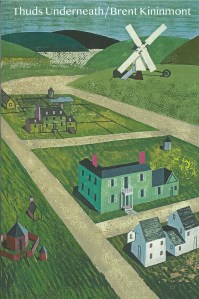
 

Thuds cover   Thuds cover


Right from the start the poems demonstrate a curious mind at work, as though the collection is a cabinet of fascinating things, anecdotes, observations. What feeds your curiosity as a poet?

The strands running through the collection suggest a preoccupation with transport, particularly aircraft, as well as temples and plains, and gaps of various kinds. How my daughter is schooled in Japan interests me ­­– when it’s not frustrating me; this crops up in the book’s final section. I’m also fascinated by the ancient Mediterranean, and that has found form in some of my poems. If I hadn’t ended up in Japan, which obviously has its own deep history of human occupation, I imagine pitching tent in Sicily or The Peloponnese. Recently I have been spending time with some of the key source texts from the classical world (Homer, Herodotus, etc.). Nothing may come of this in my future writing, though it would be nice if something did.


What I love about this debut is the way it offers such diverse and engaging reading routes. I also followed a vein of poetry of travel (not just via geography). The poems generate moments of stillness within the momentum of internal movement. And yes, the locations are global. How do the poems travel in your view?

There are routes I was conscious of while writing the book and others that revealed themselves during the long time spent arranging the poems. The collection is ordered into three locales: classical lands, the South Island, and Japan. I was quite alert to reversing the familiar narrative of leaving New Zealand then coming back; Thuds Underneath could be read as a coming home then departure again – the return is left open-ended. There is also a fairly standard transition from a sense of restlessness at the beginning to an embrace of some stability at the end (though somebody had to point that out to me). The arrival of a daughter seems to contrast with the passing of a mother; and a father keeps appearing, though he is somewhat detached. Among other threads are those related to ‘drifting’ and ‘sleeping’, and imposing structures with godlike attributes. It is those particular threads I was acknowledging with the two epigraphs I included at the beginning of the collection.


Does Japan have an effect upon how you write?

Probably the main effect is the objectivity that living there provides about my home culture and my own learned behavior. Differences seem magnified in a country like Japan, where the language is very dissimilar, but so are discussion styles, the nature of relationships, and the sense of formality. Silence also has a wider range of meanings, in verbal messages and on the written page. Japan, especially in the beginning, forced me to consider why I think and behave in certain ways, and that has likely seeped into how I write, though it is hard to cite specific examples. I have certainly embraced the opportunity that the physical distance from New Zealand has given me to step back and write about my upbringing and education, say, and their effects. Meanwhile, any sense of being culturally isolated from New Zealand is diminished quite a bit by yearly trips home and by the Internet, which allows me to plug into what is going on in local poetry.


One poem bears the epigraph, ‘after Maui and Manhire’. What New Zealand poets have influenced you?

Among the New Zealand books  tagged on my poetry shelves, those by Andrew Johnston and David Beach literally stick out. Beach’s first book of prose sonnets, the drolly titled Abandoned Novel, sparked my interest in the form. Although the sonnets I have written probably differ in style to his, they likely wouldn’t have appeared so prominently in my collection if I hadn’t admired his unique and witty perspectives. Beach’s work was one of my paths to the weighty James K. Baxter. And I got through The Iliad (even weightier) with help from his second collection, The End of Atlantic City, in which 24 sonnets are smart abridgments of the 24 books of Homer’s epic poem. After finishing each book, I would read the corresponding sonnet. It was my small reward for slogging through numerous, and not always engaging, battle scenes. (The fall of Troy in The Iliad niftily contrasts with another 24 sonnets in Beach’s collection, about the survival ­– or slow ‘fall’ ­– of the Wellington suburb of Te Aro.)

I first came across Beach’s work in 2007, the same year I was fortunate to meet regularly with Andrew Johnston, while I was doing the creative writing Masters at Victoria University. Andrew lives in Paris and was only back in New Zealand for that year (like me). Quite a few years earlier his debut, How to Talk, was the first book of poetry I ever bought, and he was the first poet I wanted to write like. His sharp, shorter poems had given me permission to keep trying to write stanzas trimmed of excess. In our regular talks, among many superb insights, he encouraged me to not fret about borrowing ideas from other poets ­– a revelation to me at the time. That he is also a former journalist who lives away from New Zealand could be another reason why I still rely on his poetry for occasional counsel.


Name three poetry books you have loved in the past year.

They would be among those I kept returning to while Thuds Underneath was coming together. Other than volumes by the two poets I mention above, these three stand out (plus two more):

Night Light, by Donald Justice

After the Dance, by Michele Amas

The Street of Clocks, by Thomas Lux

Milky Way Bar, by Bill Manhire

Bell Tongue, by Paola Bilbrough


With kind permission from Brent and VUP a poem from the new collection:


Hitch

after Maui and Manhire


It can be quite a stretch to haul

the north closer, given that great trench


in between. After lunch we

caught rides on a succession of


straights, a crooked thread line

of far peaks stitching our plains to sheets


of clouds. Only the closed mouth of

the evening vessel stalled us.


Now, among ponga overlooking

the sound, my torch shines on a slim


book she packed. It’s about our known

universe (her tutor said), how we all


live at its edge. In one poem

the word Coromandel really sticks out.


©Brent Kininmont 2015

Poetry Shelf, Poet’s Choice: Nina Powles makes her picks

7485719   8507862

Having just finished my MA in poetry, this year has been not just one of writing but of reading poetry hungrily and intensely.

One of the joys of getting to know 10 other writers so closely was the huge number of new writers I discovered thanks to them. Two books I might otherwise never have come across were the challenging but sonically beautiful The Dream of the Unified Field by American poet Jorie Graham, and Claudia Rankine’s powerful and experimental Citizen.

Thanks to one of our visiting writers Australian novelist Michelle de Kretser, I read The Deep by Canadian writer Mary Swan. The Deep is a dreamlike novella set during WWI and I think it changed my life in 71 pages.


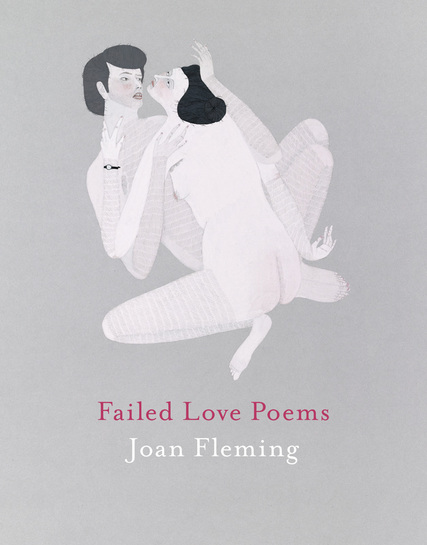
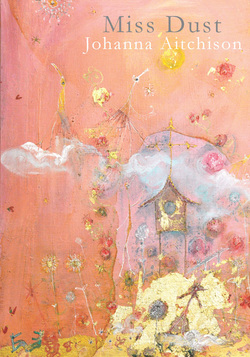
It was also an amazing year for new New Zealand poetry. I enjoyed falling into the spiky and surreal world of Miss Dust by Johanna Aitchison. And every single one of Joan Fleming’s Failed Love Poems made me feel breathless and lightheaded, a bit like being struck repeatedly by tiny bolts of lightning. From ‘Heathcliff’:

we know where to find the black tips / exquisite / of a soft tearaway / of what flew / and sang / we know the other is / best heard / in atmospheres / of howling


LEFT, edited by Wellington writer Jackson Nieuwland, is a book more people should know about. It’s heavy and enormous and full of fresh and startling art, fiction and poetry in glossy full-colour by New Zealand and American writers, including two of my favourite young poets Zarah Butcher-McGunnigle and Hera Lindsay Bird. From ‘Pain Imperatives’ by Hera Lindsay Bird:

You have to think ‘love has radicalized me’ and walk around like Helen of Troy

You have to walk around until the ships burn off


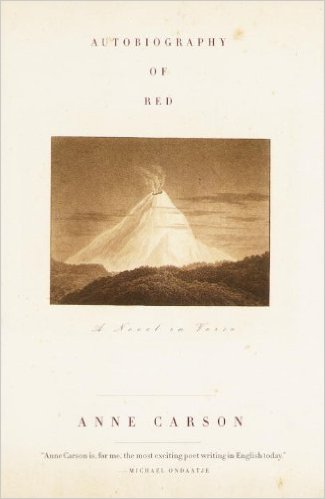
This year I also discovered the possibilities of the long-form poem, especially in Sarah Jane Barnett’s new book WORK, Alice Oswald’s Memoriam, and Anne Carson’s Autobiography of Red. I’d read Autobiography of Red before but this year it suddenly became important to me in a new and startling way. For months I carried it around with me, knowing I could open it on any page and it would floor me:


Herakles switched on the ignition and they jumped forward onto the back of the night.

Not touching

but joined in astonishment as two cuts lie parallel in the same flesh.


Nina Powles


41CVIU-VxLL._SX323_BO1,204,203,200_     work_full-cover


Poetry Shelf, Poet’s Choice: Siobhan Harvey makes some picks

Hoopla Native bird web 418MHC3lAEL._SX346_BO1,204,203,200_


Like a lot of contributors here I have adored reading Emma Neale‘s Tender Machines (Otago University Press). These are heartfelt, accomplished poems, buoyed by small details and big concerns.

Two other books which journeyed with me through 2015 were from the amazing HOOPLA series published by Makaro Press. Bryan Walpert manages to make the poems in his collection, Native Bird at once intimately familial and deeply contemplative encounters. I’m particularly in awe of how Walpert connects the personal to the universal, thematically linking migration to national ornithology.

I had the pleasure of meeting Jen Compton for the first time a few years ago when we were guests at the Queensland Poetry Festival. Her warm personality enshrines a magnificent poetic mindset as her latest Mr Clean and the Junkie proves. Like Neale’s Tender Machines, this book is presently long-listed for the Occam New Zealand Book Award. It’s easy to see why for it’s an astonishing mix of poetic dexterity, film scripting, examination of gender roles and a big story about everyday people connected to a seamy Sydney casino scam.

Siobhan Harvey


large_cleanjacket  large_cleanjacket  large_cleanjacket

Poetry Shelf, Poet’s Choice: Sue Wootton makes her picks

1423778022214-1  front-cover

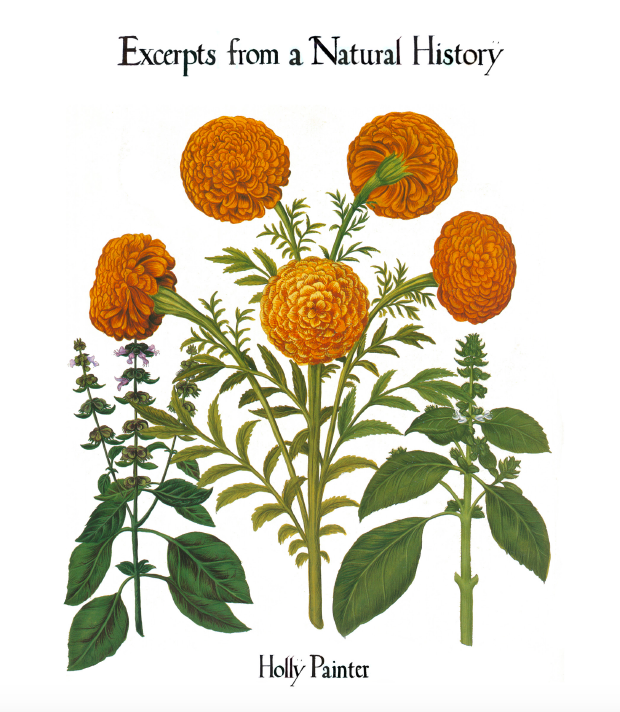
I really enjoyed Excerpts from a Natural History (Pokeno: Titus Books, 2015) by Holly Painter. A beguiling collection: witty, warm and smart. A beautifully designed book, too.

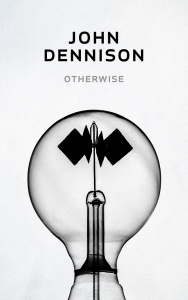
John Dennison’s Otherwise (Auckland: AUP, 2015) contains gentle, serious work. It’s refreshing for its calm and formal tone, as well as for its dedication to contemplation and celebration, both.

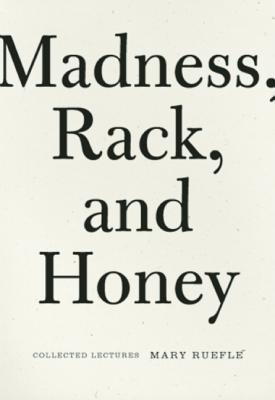
Recently I’ve been reading Mary Ruefle’s collected lectures: Madness, Rack, and Honey (Seattle/New York: Wave Books, 2012). Much here that fruitfully sustains, and just as much that fruitfully unsettles: “I suppose, as a poet, among my fears can be counted the deep-seated uneasiness surrounding the possibility that one day it will be revealed that I consecrated my life to an imbecility.”

Sue Wootton

13237099 13237099