I would be happy to post a piece if any one wants to write about this event.
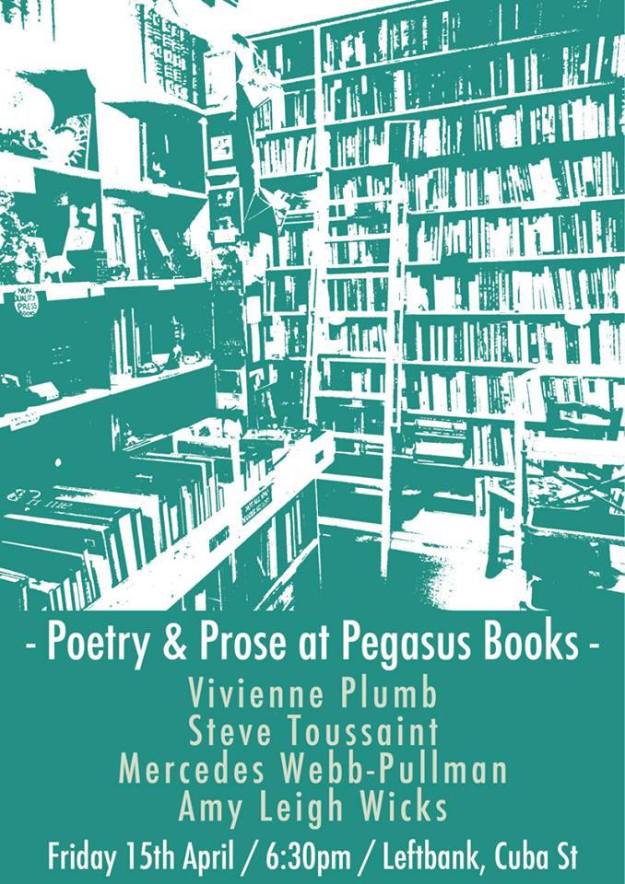

I would be happy to post a piece if any one wants to write about this event.
from AWF:
FOR THE POET IN ALL OF US
From poetical apothecaries to a hip hop verse off, this year’s Festival is rich with poets from New Zealand and around the world. Poetry Idol, in which the audience has the final say on who wins, is always a sell-out event. This year’s Honoured New Zealand Writer, Vincent O’Sullivan, is known for his lyrical, erudite poetry which has won him multiple national awards. And the three finalists of the Sarah Broom Poetry Prize will be announced very soon!
There are limited places left in James Sheard’s Unlocking the Poetry Door and Chris Price’s Creative Collisions poetry workshops. Do hurry if you want to learn from two of the best bards around.
How to Read the World for free…
Did you know that more than 30% of the Festival programme are free, un-ticketed events! Admission is on a first-in, first-served basis – you can browse the full selection here.
Check out the full programme now!
Mid-life crisis? Feeling blue? Don’t despair, Deborah Alma, the Emergency Poet, will be giving ten-minute consultations from a vintage ambulance parked in Aotea Square, Takapuna Library and Otahuhu Library, and prescribing a poem to fix any number of life’s ailments. Alma is expertly assisted by acclaimed poet and partner, James Sheard AKA Nurse Verse.
One poet for every year that Poetry Idol has graced the Festival stage takes to the mic in a bid to become Festival Champion and carry off the $500 prize in the finale of this iconic event MC’ed by Penny Ashton. This year’s judges include Jan Maree, Carrie Rudzinski and Zane Scarborough, with the audience having the final vote.
Send us an email now to signal your interest in entering the fray! Auditions held late April.
The US-based Irishman Paul Muldoon has won most poetry gongs going, including the Pulitzer Prize. He’s been described as “the most significant English-language poet born since WWII” by The Times Literary Supplement. The author of more than thirty collections, he has also written children’s books, libretti and songs. He held the post of Oxford Professor of Poetry from 1999 to 2004, has taught at Princeton University since 1987 and has been poetry editor of The New Yorker since 2007. We are thrilled and honoured to host him.
Named one of the Sydney Morning Herald’s Young Novelists of the Year in 2015, Omar Musa is an award-winning Malaysian-Australian author, poet and rapper. He has won the Australian Poetry Slam (2008) and the Indian Ocean Poetry Slam (2009). Omar has released three hip hop albums and two poetry books. His critically acclaimed debut novel Here Come the Dogs was long listed for the Miles Franklin Literary Award. Musa will address issues of migration, racism, violence, masculinity and loneliness in his trademark provocative style.
Prize-winning Australian slam-poetry champion Maxine Beneba Clarke doesn’t mince her words, as the title of her forthcoming memoir – The Hate Race – attests. Her poetry collections include the freshly minted Carrying the World (2016), Gil Scott Heron is on Parole (2009) and Nothing Here Needs Fixing (2013), with the latter’s titular poem winning the 2013 Ada Cambridge Poetry Prize. Of Afro-Caribbean descent, she talks about life and cultural amalgamations with internationally lauded local poet Tusiata Avia.
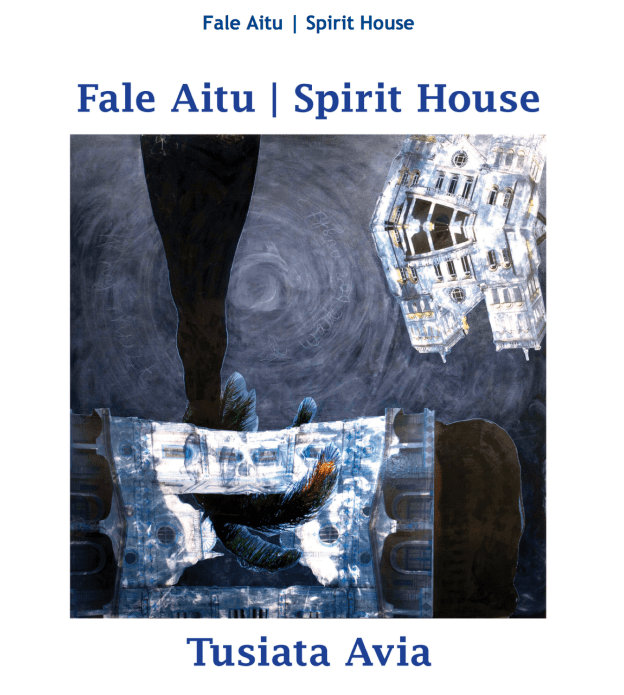
Leading Pacific poet, performer and children’s author Tusiata Avia has been travelling the world performing her one woman poetry show Wild Dogs Under My Skirt. She launches her highly-anticipated poetry collection Fale Aitu | Spirit House in a free, public event during Festival week, also appearing in conversation with Maxine Beneba Clarke at Spirit House, Foreign Soil, and in the New Zealand Listener Gala Night – True Stories Told Live: Altered States.
Discover more poetry at #AWF16


Press release from Mākaro Press:
The audacious new poetry series HOOPLA, which launches three poets every April, is three years old this year. And with two Christchurch poets in the 2016 line-up it is launching in the freshly opened Scorpio bookstore in Hereford Street.
The series with its bright Faber-like covers has been a hit on the local poetry scene where most poets make their way individually. HOOPLA launches a late-career, mid-career and debut poet at the same time, and is an imprint of Wellington’s Mākaro Press.
‘The idea,’ says publisher Mary McCallum of Mākaro Press, ‘ is that the poets and their books support each other out in the world: generating a combined energy at events, standing with each other at readings, providing a focus at bookstores. It’s a tough world out there for poetry, and so far we’ve loved the way the HOOPLA poets have worked together in their groups of three, and together as a wider whānau.’
The HOOPLA poets of 2014 and 2015 appeared together at Litcrawl in Wellington last year, in an event which saw them reading as a tag team on the theme of ‘love’. And the 2015 trio undertook a Melbourne road trip. There have been award nods too with Jennifer Compton’s Mr Clean and The Junkie long-listed for the Ockham prize this year, and Hoopla work selected for Best NZ Poems.
Much-loved Canterbury poet Elaine Jakobsson ( 87) is the late career poet for Hoopla 2016 with her book Withstanding. The theme of the collection is ‘age’. Wellingtonian teacher and activist Harvey Molloy is the mid-career poet with Udon by The Remarkables, theme: ‘worlds’, and the debut poet is Christchurch poet Ish Doney with Where the Fish Grow, theme: ‘leaving’. Ish returns from Scotland for the launch.
Previous HOOPLA poets are: (2014) Michael Harlow, Helen Rickerby and Stefanie Lash; (2015) Jennifer Compton, Bryan Walpert and Carolyn McCurdie. The 2016 launch is on Saturday, 16 April, 3.30 pm at Scorpio’s Hereford Street store in the BNZ centre, launcher James Norcliffe, with a Wellington launch the next day 17 April at the Fringe bar, Allen St, 4-6pm. The Hoopla series is designed by William Carden-Horton and available through all good bookstores for $25 each.


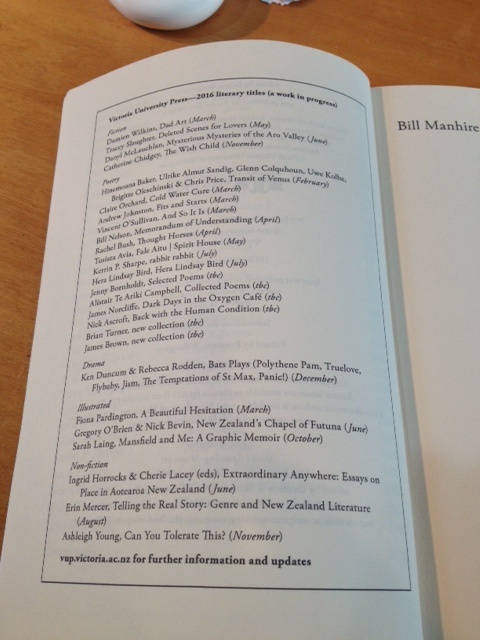
The new edition of Sport includes 8 essays along with the usual spread of poetry and fiction. At the start of the book is an impressive advertisement for Victoria University Press’s forthcoming publications. This Press is a consistent and exemplary supporter of New Zealand writing whether poetry, fiction or non-fiction.
Why I am singing VUP’s praises:
There are 15 poetry collections in the offing (okay some might not appear until next year, but still!). We are going to see books by Tusiata Avia and Hera Lindsay Bird over the next few months.
Sarah Laing‘s new book is out in October (Mansfield and me: A Graphic Memoir).
There are 4 works of fiction (Catherine Chidgey has a new novel out in November!)
And I am looking forward to the collection of essays Ingrid Horrocks co-edited having tasted some in Ruapehu and Ashleigh Young‘s essays (November).
Sport 44
some preliminary highlights:
Usually, I read all the poems first but this time I was in the mood for a bite of fiction so I dove straight into Kirsten McDougall‘s ‘A Visitation.’ The story responds to the collapse of the internet and the arrival of Clarice Lispector to make a batch of eggs to tempt an indifferent palate. I adored this story so much it made me want to take up writing short fiction. It is sweet writing; warm, witty, funny, thoughtful, polemical. I do hope there is a new collection in the pipelines. I read this on a plane with two hours sleep and it was such an uplift. ‘I saw anew the detritus in the house I had allowed to build up like a plaque to the heart.’
The journal always puts in me in touch with writers I am unfamiliar with. This time a glorious suite by Oscar Upperton: ‘The ship is a sort of dark undoing.’
And Philip Armstrong‘s utterly inventive narrative, ‘Life of Clay,’ which keeps you on your toes as you read: ‘I can tell you it began with nothing/ but the wide white bare and empty endless plain/ but there was something there already there.’
I have already posted some of Rachel Bush‘s poems here. Movingly, achingly beautiful. Written when life has fingertips against death.
Jenny Bornholdt‘s exquisite haiku: ‘It is eight degrees/and the Thorndon outdoor pool/ is swimming with leaves.’
Ashleigh Young‘s ‘Process’ which is sad and happy and a little bit witty and a little bit true: ‘On this day our city is a perfect haircut, its losses gently layered/ and what is left, falling gracefully.’ Oh word shivers!
Tusiata Avia‘s ‘Gaza’ which brings heart and politics together and rips your easy Sunday slumbering with poetic teeth: ‘I cannot write a poem about Gaza because I cannot eat a whole desert.’
The stillness, the extraordinary image, the enigmatic bridge between title and poem in Louise Wallace‘s ‘The body began to balance itself’. You just have to read the whole thing!
Hannah Mettner‘s ‘The day Amy died’ that takes a moment that pricks with sharp detail and pricks even deeper when the moment is declared and time and noise go haywire.
Maria McMillan‘s ‘The Ski Flier’ is a whoosh of a poem that sucks you up into story and music and is so evocative: ‘And/ there is a moment when they pass,/ the snow and the ski flier,/ each taking on the character of the other.’
Harry Rickett‘s ’14A Esmonde Road’ exudes the mood of place, that historic property where Janet and Frank lived; and you can just feel the phantoms stalking the poem until you get to the perfect ending.
The first poem, ‘Falseweed,’ is by Bill Manhire and was published as a little pamphlet by Egg Box Publishing in Norwich. It has a different feel to some of Bill’s recent poems. The words are scattered like seeds on the expanse of white page. Or pebbles. But I like the idea of seed as they are so fertile. I can see the roots and buds bursting out. There is linguistic inventiveness that boosts both music and image, particularly in compound words:
leafcandle pencilheart wintertwig scribblegrass anchorwhite tongue-true.
I felt like I was following a dandelion kiss and pausing to see where it landed. The poem is about childhood and writing and a mind floating, roaming. Words floating, roaming. It is beautiful and mesmerising: ‘I began to recall/ how the words came knocking.’ ‘Oh pencilheart –/ oh smudge of lead.’
And still much to read; more poems, more fiction and the bundle of essays. This is a terrific issue.
The VUP ad:
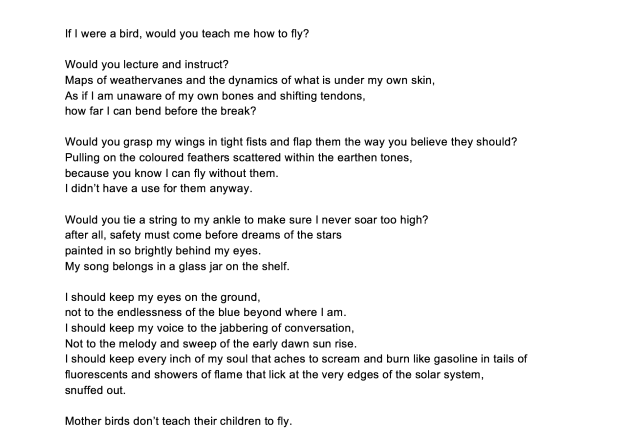
Local student, Michaela Tripp, was sick at The Poet Laureate event in Napier so her friend Sarah read the poem on the marae. We were so thrilled to hear it, I wanted to share the poem.I really like the idea that our New Zealand Poet Laureates have the freedom to do whatever they like during their tenure. They don’t have to write on particular topics. Thanks Michaela.


I am in poetry heaven. At the moment I am delving into the poetry of Jessie Mackay.
These just arrived in my postbox today. I am hoping to get two more by Jessie Mackay at an auction next week but I guess that is only a faint chance.
If I do, I am still on the hunt for The Spirit of the Rangatira and other Ballads. If you stumble upon a copy in a second-hand book shop let me know!
Or if you have a copy you want to offload.

 NZ Poetry Shelf