Poetry Shelf noticeboard: Michelle Elvy’s ‘the everrumble’ launching at the Flash Fiction Festival UK

Ad Hoc Fiction is honoured to be publishing the everrumble, “a small novel in small forms” by Michelle Elvy. It’s a wonderful and important work of fiction highly praised by the writers quoted below. The striking cover art is by acclaimed Ethiopian artist, Eyayu Genet.

the everrumble is a poetic imagining of intense focus and sweeping ideas. Zettie’s story is fluid and in motion, transcending geographies and time. She stops talking, at age seven, and starts to listen – to the worlds she finds in language and books, and to the people and places she encounters as she moves across continents. Her silence connects her to people, to nature and to the elemental world. Magical and beyond boundaries, this collection focuses on small fragments, taking Zettie, and the reader, inevitably to the place where human history began.”

We excited that the everrumble will be launched at the Flash Fiction Festival, UK on 28th-30th June where Michelle is running workshops, chairing a panel on Flash Around the World, introducing the latest Best Small Fiction anthology, and talking about flash fiction in New Zealand. And it will also be for sale from June from the Ad Hoc Fiction bookshop in paperback in several different currencies and in ebook formats from Kindle and Nook.


Poetry Shelf audio spot: Emma Neale reads ‘Affidavit’

9781988531687.jpg


‘Affadavit’ was published in the most recent Poetry NZ Yearbook and also appears in To the Occupant.


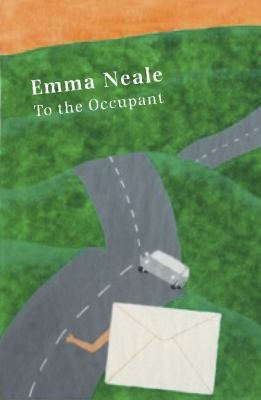
Emma Neale is the current editor of Landfall. Her new collection, To the Occupant, with cover art by Nick Austin, has just been published by Otago University Press.

Otago University Press author page


Poetry Shelf noticeboard: The Divine Muses invites entries for NEW VOICES – Emerging poets competition 2019

Screen Shot 2019-06-19 at 6.51.51 PM.png

CLOSING DATE: 2 AUGUST 2019

Results to be announced at Divine Muses Poetry Reading on National Poetry Day, 23 August 2019.

Judge – Poet & Editor, Elizabeth Welsh

First Prize: $200 in Unity Book’s book tokens
Second Prize: $100 in Unity Book’s book tokens

The competition is open only to writers considered ‘emerging’ i.e. have not published one or more books (fiction, poetry, nonfiction) with a New Zealand or overseas publisher, and is a current or former undergraduate (BA, Hons, BSc, BComm etc) or Masters student attending The University of Auckland, Auckland University of Technology, Manukau Institute of Technology and Massey University (Albany Campus, Auckland only) or student or graduate of Blue Haven Writers Workshops.

To view the complete entry details go here to download the entry form.

Either opt to print the entry form and then choose save as a PDF or export as a PDF. When you open the PDF click on edit and then in the header section select “T add Text” and fill in the form, save and email your entry as per instructions provided.

This year’s Divine Muses Reading and the announcement of the winners will be held at the Central Library, Auckland CBD.


Poetry Shelf Classic Poem: Johanna Emeney picks Michael Jackson’s ‘Green Turtle’


Green Turtle


Sam smashes its head in

with the same sledgehammer

I used this afternoon

to ram our tent pegs home.


A hemisphere turns

turtle; Sonny hacks

its mildewed, sea-marbled

breastplate free.


It recoils from the sky.

Head lolls.

A flipper feebly pushes

Sonny’s knife away.


They empty

the long gray rope of its life

onto the sand by the thudding boat

that holds two more


And its carapace is a vessel

filled with a wine lake

in which clouds

float, birds fly, leaves fall.


Michael Jackson

From Walking to Pencarrow: selected poems Cold Hub Press (2016)


This poem was occasioned during Jackson’s one-year stay with a Kuku-Yalanji family in the Bloomfield rainforest. The butchering of the turtle was carried out by his host’s brother and brother-in-law, and it was an incident that clearly raised conflicts within Jackson, both cultural and emotional. It is described in his nonfiction books The Accidental Anthropologist (Longacre, 2013) and As Wide as the World Is Wise: Reinventing Philosophical Anthropology (Columbia University Press, 2016). Jackson includes the poem in the memoir and the textbook.

The speaker’s complete vulnerability to the experience (not openness, vulnerability) is one of the main things that makes the poem so powerful for me. The narrative position of the speaker is that of an outsider endeavouring to be respectfully uninvolved in the spectacle. The reader can feel his reluctance to place judgement on this cultural encounter. However, it impossible not to intuit the initial shock of the first lines and the reverence of metaphor describing the turtle—I see him almost like an old general being denuded of his armour when “Sonny hacks/its mildewed, sea-marbled/breastplate free”. The diction and imagery create a perfectly credible awkwardness and humility to the speaker in the face of the turtle’s brutal death.

The other aspect of “Green Turtle” that I find very powerful is the transcendence of the final image. The last stanza is a distillation of everything that has gone before, and, as an ending to the poem, is exquisite, raising the narrative recollection of the killing of the turtle to a lyric contemplation of this event in the scheme of things, especially within a Western, Christian model. Here, in the final lines, is the shell of the turtle, a vessel containing a blood-wine, literally reflecting the things of the world that go on as normal despite the creature’s violent death just moments before. With this ultimate image, the poet invites his readers to undertake their own reflection on humankind and nature, on life and death, on religion and culture. The poem ends with such opening out, and such unexpected beauty.

Johanna Emeney


Jo Emeney holds a PhD in Creative Writing, and has taught at Massey, Albany, for the past nine years. She also runs the Michael King Young Writers Programme with Ros Ali.
Jo read English Literature at Pembroke College, Cambridge, and then taught senior school English Literature for twelve years. She has written two books of poetry (Apple & Tree, 2011; Family History, 2017), and one nonfiction book on the topic of lyric poetry and the medical humanities (2018). She has just finished drafting a chapter for Routledge on Disability and Poetry.

Michael Jackson is internationally renowned for his work in the field of existential anthropology and has been widely praised for his innovations in ethnographic writing. Jackson has done extensive fieldwork in Sierra Leone since 1969, and also carried out anthropological research in Aboriginal Australia, Europe, and New Zealand. He has taught in universities in New Zealand, Australia, the United States and is currently Distinguished Professor of World Religions at Harvard Divinity School. His most recent books include The Varieties of Temporal Experience (2018), Selected Poems (2017), and The Paper Nautilus: A Trilogy (2019). Cold Hub Press author page.
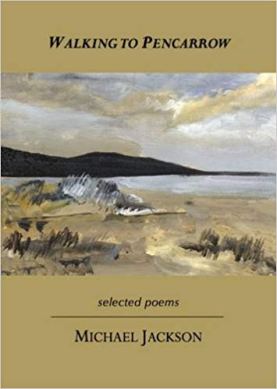
 

41cl-rF2JDL._SX353_BO1,204,203,200_.jpg


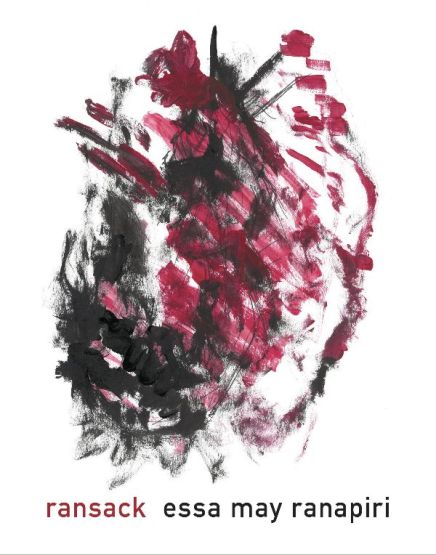
Poetry Shelf noticeboard: essa may ranapiri’s poetry launch

77ade6c9-0e68-45b0-99a7-95292b27fd80.jpg
You are warmly invited to the launch of

Ransack
by essa may ranapiri

on Thursday 18 July, 5.30pm–7pm
at Poppies, Hamilton, 307 Barton St.

All welcome.
p/b, $25

Poetry Shelf noticeboard: 10 Questions with Paula Green at MUP website

full piece here

I have barely touched on all the women poets I loved in these 10 Qs – it took a fair chunk of pages in Wild Honey and even then I didn’t have enough room. When I went to university I longed for an essay with enough room to go deep and wide so I stayed until I could write a PhD thesis. Now it is time for little tiny secret things.

I am so delighted to be celebrating the book with some of the poets at events in August and September. Watch this space!

Screen Shot 2019-06-18 at 9.26.37 AM.png


Q1: Now that Wild Honey is off to print, are you feeling proud of it?

Yes, a thousand times yes. But also a tad anxious.


Q2: It’s a huge book and it’s been a monster project. Where did the idea for it first come from?

My university degrees considered Italian women writers, but when I left university I focused on my own poetry. I carried the Wild Honey seed from those days because New Zealand women poets felt like an unwritten story. All roads — my university life and my poetry life — led to Wild Honey.


Q3: How long has it taken you?

Four years writing and researching, but decades germinating.


Q4: It must have been a massive process of discovery. Tell us about one poet you are pleased to have come across and to have shone a spotlight on?

There were so many discoveries. Familiar poets appeared in surprising new lights as I lingered over their work, such as Fleur Adcock, Robin Hyde, Ursula Bethell, Nina Mingya Powles, Karlo Mila, Hinemoana Baker, Tusiata Avia, Alison Wong, Fiona Kidman, Emma Neale, Anna Jackson. I wanted to write whole books about each poet. I loved the work of Evelyn Patuawa-Nathan, unfamiliar to me, but was disappointed I could find only one book published in 1978. I wanted more!

Shining a light on Blanche Baughan was a delight. At first her poetry felt impenetrable, but then as I spent time in the archives, and her biography unfolded, her poems sang for me. She wrote from both heart and intellect, daring and empathy. Her extraordinary life story hides in traces in her poems as do her strong political ideas.


Poetry Shelf Monday Poem: Kim Meredith’s ‘Summer’


Summer


I have eyes for the cake

rising slowly in the oven.

The sweet smell of vanilla

escaping, but there is talk

about the pond teeming

with Goldfish. Go see the fish.

Every visit goes like this.


Now my mother joins my

aunt, looking back and forth

to her sister and the gaggle

of us, her head nodding toward

the kitchen door that leads out

to the lush garden and pond.


On the steps I hear the kettle

whistling over my aunt laughing

as the two relax, swapping secrets

of forbidden love. Our ears deaf to

their native tongue.


Outside amongst the hedges we

reach between branches of Camellias

searching for treasure. The winner –

the first to hold up a fist with a cicada

singing for release.


The clouds move at great pace

animals drift in and out of view.

In the distance the wind carries

the sound of intermittent sobbing.

I cock my head to the left and

hear only the cicadas singing

freely on the wind.


Kim Meredith


Kim Meredith was raised in Glen Innes, Auckland; her works have appeared in journals and collections. She has collaborated with artists in New Zealand and overseas. A multi-media artist she is part of Auckland duo Marvellous with Kingsley Melhuish performing poetry and music, their compositions narrate urban sketches of New Zealand life. She is a businesswoman and also teaches at a Music Tertiary School.