Photo credit: Alison Glenny
Some poetry books catch you on the first page and you get goosebumps and your breathing changes and you know this is a book for you. I felt like that when I first read Alison Glenny’s sublime The Farewell Tourist with its luminous connections to Antarctica. There is something about poetry that takes risks, that never loses touch with heart, is unafraid of ideas, and is able to sing on the line. You just want to camp up in the book for days, with a thermos of tea, and all your devices unplugged.
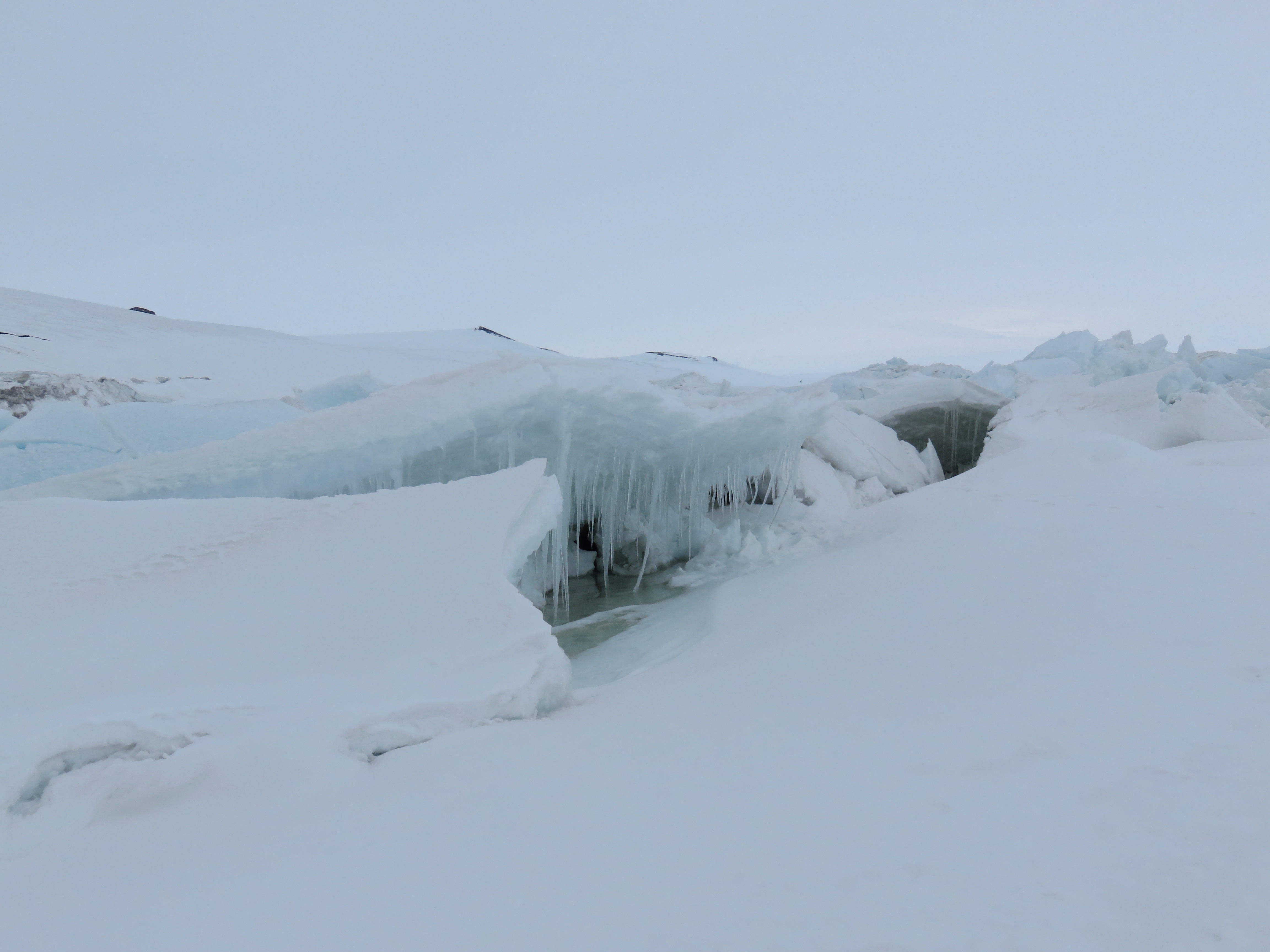
I felt the same way about Bill Manhire’s extraordinary poem ‘Erebus Voices’ (Lifted, Victoria University Press, 2005). You can read the poem at The Spin Off here and listen to Bill read the poem here. Thinking of Alison’s book and Bill’s poem, I knew ice had to be one of my themes.
Ice in poems: it might be a hint, a hurt, an underlying coldness, an icy image, a heart freeze, a trip to the snow-capped mountain, a melting ice-cream, an avalanche.
I am so grateful to all the poets who have supported my extended thematic poetry gatherings. Thank you.
The Poetry Shelf Theme Season runs every Friday until mid August.
In the morning the mountains beckon
Blue and clear like bells; glaciers feed upon
Light pouring from heaven brighter than ice-stone.
Ruth France (1913-1968), from No Traveller Returns: the selected poems of Ruth France, Cold Hub Press, 2020
Twelve poems about ice
Some afternoons a fog rolled down the hallway. On others, the staircase groaned with moisture. A finger laid carelessly on a bannister dislodged a ledge of rime. She lifted the hem of her dress to avoid the damp in the passageway, wore knitted gloves in the kitchen. She was lying in the bath when the glacier pushed through the wall. She sank deeper into the water to escape the chill that settled on her shoulders. Trying to ignore the white haze, to lose herself between the pages of her book.
Alison Glenny
from The Farewell Tourist, Otago University Press, 2018
He Manawa Maunga
We are dwarfed by a snow bank
that reaches beyond our eyes,
a single hole punctuating its white sheet.
Your hand covers my small eyes
and I feel you shielding me in the warmth of your jacket
as we move though.
I open them to a palace of ice and snow
meticulously carved by strangers
long gone down the mountain.
We sit together in silence,
deep in the mountain’s quiet heart.
Watching our breath melt away
the walls around us.
Ruby Solly
from Tōku Pāpa, Victoria University Press, 2021
Pencarrow Lighthouse
Mrs Mary Jane Bennet saw frost on the ground
circling the lighthouse where her children sleep.
At the cliff edge where wildflowers were,
gulls wash seafoam up the shore.
You, gulls, over hoofprints on the track,
over the dunes, over pearl beams ghosting
out from the lighthouse,
in your thousands over clean seashells.
The wind spins dead things in circles.
Collect up the wintertime, won’t you,
crack it on a rock,
drop it from a height.
But, you bird whose wing cuts the tops off waves,
shut your wings for the children
of Mrs Mary Jane Bennett.
Let loose a grey feather.
She will tuck it into the knot
of the blue satin ribbon
ion her eldest daughters hair, the one
who dreams of white things circling.
Nina Mingya Powles
from Girls of the Drift, Seraph Press, 2014
Wabi-sabi
I was thirty-three before I learned
people stuck in snow
can die from dehydration.
I would melt icicles
on my tongue for you, resist
the drinking down, drip it
into you. Then repeat, repeat
until my lips were raw.
Deep snow squeaks. We
stop on the Desert Road
because of the snow. You
throw snowballs at the
‘Warning: Army Training Area’ sign.
I take macro-photographs of
icicles on tussock.
When we drive up the Desert Road
we lost National Radio, we lose
cellphone reception, we lose
all hope. I was thirty-seven before
I considered not trying to always fix
things. I read an article in the New Yorker
about wabi-sabi – the beauty in the
broken and the worn. The integrity
of the much-used utilitarian object.
But then there was another article
about a woman flying to Mexico
to be put into a coma
so she can wake up mended. It is
like rebooting a computer, said the doctor.
Despite wabi-sabi, I want that.
To live in snow and not be thirsty.
I want good reception all the way
up the country. I want a shiny, clean
version of myself. Closedown,
hibernate, restart.
Helen Lehndorf
from The Comforter, Seraph Press, 2011
Girl Reading
She overhears the sound of things in hiding.
She bites an apple and imagines orchard starlight.
Each time she licks her thumb, its tip,
she tastes the icy branches,
she hears a sigh migrate from page to page.
Bill Manhire
from Zoetropes, Victoria University Press, 1981
Opa
They would ice-skate:
he worked the canals
with speed.
My grandparents,
between villages, on ice
above the level of the land.
*
Amsterdam in the fifties:
a row of white stone houses
on a paved street.
*
New Zealand’s blue sea
lapped at sloping shores,
knew its place
at the flank of land.
Wide stars, small shells,
the open span of sand.
*
A wooden villa
changed you.
Housed you.
Those years of good
morning, goodnight,
pudding and bread,
climbing in
and climbing out of bed.
*
Your skates
hang on the wall.
Blond varnished wood.
Braided laces.
Those blades, sweeping,
never shook off the ice.
Angela Andrews
from Echolocation, Victoria University Press, 2007
Island girl Tokoroa
ice-cream puddle licks bare feet
a sky so bright and blue
the sun rimming its yellow stain
make-believe it is summer
yet winter bites frozen fingers
gloves and scarves for some other child
in her hands she holds the key
a coin for lunch one Sally Lunn, miss
creamy pink-smothered bun
there is no word for luxury beyond
this daily walk in winter sun
she can almost taste it
morning flicks by chafing
children
head down she holds out her hand
winter may snow for all she cares
the skies can turn black
one Sally Lunn, miss
is heaven and blue
and forever
Reihana Robinson
from Her Limitless Her, Mākaero Press (Hoopla series), 2018
Ben Lomond
Three people in the snow
two linked by marriage
memorising fault line
by fault line
and every now and again the head of the summit
tails in
and out of sight
three people with backpacks and knees in the snow
threading the mountains with a silence
that once broken
would make you cry
and every now and again the head of the summit
tails in
and out of sight
like the early love of a June morning
first an accent and then the hearing
and the sky is a blanket wishing it gone
late on the summit a sparrow
whittling alone
and away
Modi Deng
from A Clear Dawn: New Asian Voices from Aotearoa New Zealand, eds Paula Morris & Alison Wong, Auckland University Press, 2021
Avalanche
There was the war on TV,
the snow, the people lying on plastic
in the snow, death arriving
with his suitcase full of tools,
the delivery out of this world
offers such a dazzling
variety, and the snow, forever this
white tableau becomes forged
with the recollections of your last
oncology visit
and the people lying on the plastic
in the snow.
At the doctor’s I sat with
my tiny hands held in my lap the way
I’d been taught, two lovebirds,
but the flesh was as cold as sheet ice
I was up to my elbows
in frostbite and snow.
There were stories in the news
each day and in the morning paper,
death can happen overnight, may
be in your house if you don’t move
fast enough, in a trench, or
the dreadful football-stadium one,
under the trees in a dark
wood, against a hedge, or even lying
on plastic in the wan snow.
Such soft subdued footfalls,
but a goodly advance
over a long stretch of time.
Others shift their seats away from me
leaving a pencil
-thin cavity, a subtle margin,
but you and I are crouched
together in the snow reading the
avalanche instructions;
they are torn and dirty, tacked to
the cobwebbed wall of some
wild and woody alpine mountain hut:
Construct earthen fortifications
Behind your village. In the case
of serious exposure it is
best to wait for rescue dogs.
We must read the instructions
we must read the instructions
but there are no instructions
I believe there are no instructions.
Vivienne Plumb
from Avalanche, Pemmican Press, 2000
The Icicles
Every morning I congratulate
the icicles on their severity.
I think they have courage, backbone,
their hard hearts will never give way.
Then around ten or half past,
hearing the steady falling drops of water
I look up at the eaves. I see
the enactment of the same old winter story
– the icicles weeping away their inborn tears,
and if only they knew it, their identity.
Janet Frame
from The Goose Bath: Poems, eds. Pamela Gordon, Denis Harold, Bill Manhire, Vintage, Random House, 2006, picked Hebe Kearney
You can hear Janet Frame read ‘The Icicles’ here
At Home in Antarctica
In this place, silence has a voice
wide-ranging as the continent.
Some say it’s on the cusp
of madness, the way it hums
and stutters, mutters to itself
in quietest tones.
In this place, the universe brims.
Inside absence, presence.
Inside distance, dust
and our sleeping earth
dreaming beneath her thin blue
mask of ice.
In this place, the necessity
of memory, recollections
of a loved one’s face, shape
of laughter, weight of breath.
In this place, nostalgia
roams patient as slow
hands on skin transparent
as melt-water. Nights are light
and long. Shadows settle
on the shoulders of air.
Time steps out of line
here stops to thaw
the frozen hearts of icebergs.
Sleep isn’t always easy in this place
where the sun stays up all night
and silence has a voice.
Claire Beynon
from Open Book – Poetry & Images (Steele Roberts, 2007).
Suggested by Jenny Powell. The poem has also been a prompt for various musical compositions, including a piece Antarctikos by US composer, Jabez Co (2010) and The Journey Home (2012) for soprano, tenor, baritone, choir and orchestra by NZ composer John Drummond.
Visiting Rita at Sydney Street West
Wellington rains in a cross-hatch tantrum.
Wind blasts batter everyone backwards.
Lost in a volley of ‘after the hill second street right
follow your nose’ I have taken the wrong hill,
veering left with an eye on the clock.
Landmarks stream down my spectacles,
couplets of directions waterfall out of my head.
Lost in a valley of paper map ink-splash,
folds between us disintegrate. In the if-only world
my fingers wrap a hot cup of tea, my coat dries by your heater.
Sticks torn from moorings shoot down white-water gutters.
Wind race of paper packets eddies in high-speed gusts.
I am lost in solitary panic.
An onslaught of sleet freezes my face.
Jenny Powell
from Meeting Rita (forthcoming June, Cold Hub Press)
Angela Andrews lives in Auckland with her family. Her PhD in Creative Writing at Victoria University examined the relationship between medicine and poetry. She has previously worked as a doctor.
Claire Beynon is a Dunedin-based artist, writer and independent researcher. She works collaboratively on a diverse range of on- and off-line projects with fellow artists, writers, scientists and musicians in NZ and abroad. These group activities are buoyed and balanced by the contemplative rhythms of her solo practice. Websites here and here.
Modi Deng is a postgraduate candidate in piano performance at the Royal Academy of Music on scholarship. Currently based in London, Modi received a MMus (First Class Honours, Marsden research scholarship) and a BA from Auckland University. Her first chapbook-length collection of poetry will be part of AUP New Poets 8. Her poems have also appeared in A Clear Dawn (AUP), Starling, the Stay Home Zine (Bitter Melon Press), and on NZ Poetry Shelf for National Poetry Day. She cares deeply about literature (especially poetry, diaspora), music, psychology, and her family.
Janet Frame (1924 – 2004), born in Dunedin, was the author of thirteen novels, five story collections, two volumes of poetry, a children’s book and a three-volume autobiography. She won numerous awards including the New Zealand Book Award for poetry, fiction and non-fiction titles, and the New Zealand Scholarship in Letters. She received New Zealand’s highest civil honour in 1990 when she became a Member of the Order of New Zealand. She was awarded the Prime Minister’s Award for Literary Achievement in 2003 and was named an Arts Foundation Icon Artist in 2004.
Alison Glenny’s collection of prose poems The Farewell Tourist, was published by Otago University Press in 2018. A chapbook, Bird Collector, is being published by Compound Press in 2021. She lives on the Kāpiti Coast.
Helen Lehndorf’s book, The Comforter, made the New Zealand Listener’s ‘Best 100 Books of 2012′ list. Her second book, Write to the Centre, is a nonfiction book about the practice of keeping a journal. She writes poetry and non-fiction, and has been published in Sport, Landfall, JAAM, and many other publications and anthologies. Recently, she co-created an performance piece The 4410 to the 4412 for the Papaoiea Festival of the Arts with fellow Manawatū writers Maroly Krasner and Charlie Pearson. A conversation between the artists and Pip Adam can be heard on the Better Off Read podcast here
Bill Manhire founded the creative writing programme at Victoria University of Wellington, which a little over 20 years ago became the International Institute of Modern Letters. His new book Wow is published by Victoria University Press in New Zealand and Carcanet in the UK.
Vivienne Plumb writes poetry, short and long fiction, drama, and creative non-fiction. She held the Creative New Zealand Berlin Writing Residency in 2018, and has held several other writing residencies (both in N.Z. and overseas), and has been awarded the Hubert Church Prose Award and the Bruce Mason Playwriting Award, amongst others. Her work has been widely anthologised. A new chapbook of her poems will be released in July, 2021.
Jenny Powell is a Dunedin poet and performer. Her work has been part of various journals and collaborations. Her next collection, Meeting Rita, is inspired by the artist Rita Angus, and is due from Cold Hub Press in June 2021.
Nina Mingya Powles is a poet and zinemaker from Wellington, currently living in London. She is the author of Magnolia 木蘭, (a finalist in the Ockham Book Awards and the RSL Ondaatje Prize 2021), a food memoir, Tiny Moons: A Year of Eating in Shanghai, and several poetry chapbooks and zines. Her debut essay collection, Small Bodies of Water, will be published in September 2021.
Reihana Robinson is a writer, artist and farmer living in the wilderness of the Coromandel. She has written two collections, Aue Rona and Her Limitless Her, has had work published in Aotearoa, Australia, France and USA. She is a contributor to the Dante-themed anthology More Favourable Waters and the just published Ora Nui Māori Literary Journal New Zealand and Taiwan Special Edition.
Ruby Solly (Kāi Tahu, Waitaha, Kāti Māmoe) is a writer, musician and taonga pūoro practitioner living in Pōneke. She has been published in journals such as Landfall, Starling and Sport, among others. In 2020 she released her debut album, Pōneke, which looks at the soundscapes of Wellington’s past, present and future through the use of taonga pūoro, cello, and environmental sounds. She is currently completing a PhD in public health, focusing on the use of taonga pūoro in hauora Māori. Tōku Pāpā, published in February 2021, is her first book.
Ten poems about clouds




 RSL Ondaatje Prize Shortlist
 NZ Poetry Shelf