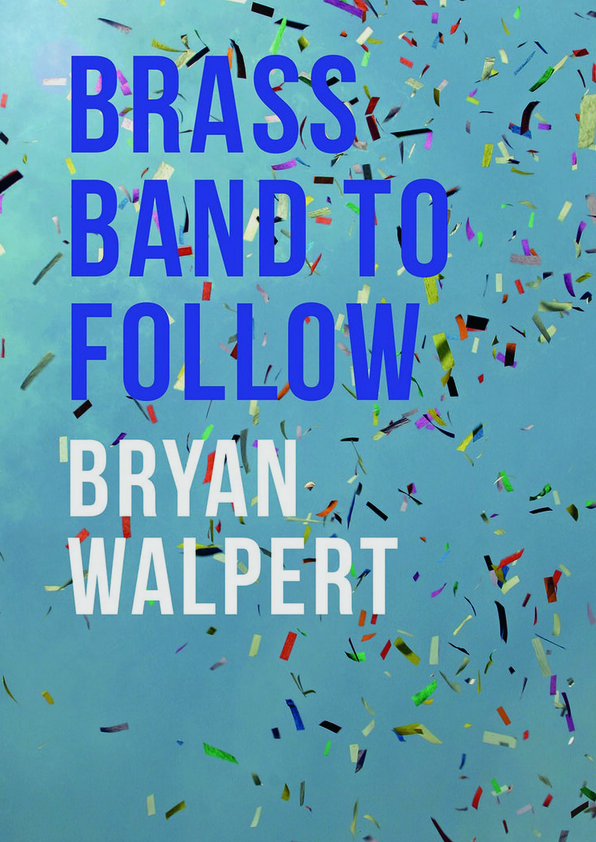
Brass Band to Follow, Bryan Walpert, Otago University Press, 2021
Bryan Walpert, professor of creative writing at Massey University, has published three previous poetry collections. His fourth, Brass Band to Follow, is a rewarding read with distinctive tones and exquisite layers. The book’s opening quotes suggest we are entering poetic engagements with middle age. Yes, age is a visible concern but the poems are alive with movement that includes but stretches beyond time passing.
The book is thoughtfully structured: you move in and out of dense single-verse poems along with airy multi-versed examples. A rocky outcrop on one page, thistle kisses on the next. It is like listening to music that favours both solo violin and the greater orchestra.
Cilla McQueen lives and writes in the southern port of Bluff. A recipient of multiple awards for her poetry, she eats oysters as often as possible. Cilla’s most recent works are In a Slant Light: a poet’s memoir (2016) and Poeta: selected and new poems (2018), both from Otago University Press.
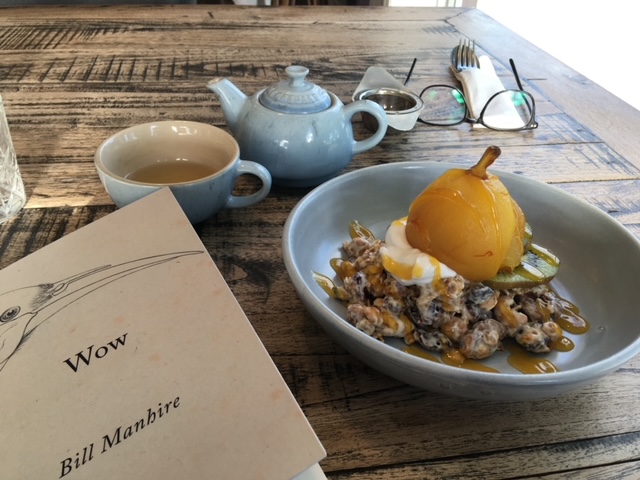
Breakfast is a lifelong ritual for me: the fruit, the cereal, the toast, the slowly-brewed tea, the short black. It is the reading, it is the silence, it is the companionship. It is finding the best breakfast when you are away at festivals or on tour, on holiday. This photograph was taken last year at Little Poms in Christchurch when I was at WORD. One of my favourite breakfast destinations. Breakfast is my gateway into the day ahead, it is food but it is more than food. It is the ideas simmering, the map unfolding, the poem making itself felt.
The poems I have selected are not so much about breakfast but have a breakfast presence that leads in multiple directions. Once again I am grateful to publishers and poets who are supporting my season of themes.
Unspoken, at breakfast
I dreamed last night that you were not you
but much younger, as young as our daughter
tuning out your instructions, her eyes not
looking at a thing around her, a fragrance
surrounding her probably from her
freshly washed hair, though
I like to think it is her dreams
still surrounding her
from her sleep. In my sleep last night
I dreamed you were much younger,
and I was younger too and had all the power –
I could say anything but needed to say
nothing, and you, lovely like our daughter,
worried you might be talking too much
about yourself. I stopped you
in my arms, pressed my face
up close to yours, whispered into
your ear, your curls
around my mouth, that you were
my favourite topic. That
was my dream, and that is still
my dream, that you were my favourite topic –
but in my dream you were
much younger, and you were not you.
Anna Jackson
from Pasture and Flock: New & Selected Poems, Auckland University Press, 2018
By Sunday
You refused the grapefruit
I carefully prepared
Serrated knife is best
less tearing, less waste
To sever the flesh from the sinew
the chambers where God grew this fruit
the home of the sun, that is
A delicate shimmer of sugar
and perfect grapefruit sized bowl
and you said, no, God, no
I deflated a little
and was surprised by that
What do we do when we serve?
Offer little things
as stand-ins for ourselves
All of us here
women standing to attention
knives and love in our hands
Therese Lloyd
From The Facts, Victoria University Press, 2018
How time walks
I woke up and smelled the sun mummy
my son
a pattern of paradise
casting shadows before breakfast
he’s fascinated by mini beasts
how black widows transport time
a red hourglass
under their bellies
how centipedes and worms
curl at prodding fingers
he’s ice fair
almost translucent
sometimes when he sleeps
I lock the windows
to secure him in this world
Serie Barford
from Entangled islands, Anahera Press, 2015
Woman at Breakfast
June 5, 2015
This yellow orange egg full of goodness and instructions.
Round end of the knife against the yolk, the joy which can only be known
as a kind of relief for disappointed hopes and poached eggs go hand in hand.
Clouds puff past the window it takes a while to realise they’re home made
our house is powered by steam like the ferry that waits by the rain-soaked wharf
I think I see the young Katherine Mansfield boarding with her grandmother with her duck-handled umbrella.
I am surprised to find I am someone who cares for the bygone days of the harbour.
The very best bread is mostly holes networks, archways and chambers
as most of us is empty space around which our elements move in their microscopic orbits.
Accepting all the sacrifices of the meal the unmade feathers and the wild yeast I think of you. Happy birthday.
Kate Camp
from The Internet of Things, Victoria University Press, 2017
How to live through this
We will make sure we get a good night’s sleep. We will eat a decent breakfast, probably involving eggs and bacon. We will make sure we drink enough water. We will go for a walk, preferably in the sunshine. We will gently inhale lungsful of air. We will try to not gulp in the lungsful of air. We will go to the sea. We will watch the waves. We will phone our mothers. We will phone our fathers. We will phone our friends. We will sit on the couch with our friends. We will hold hands with our friends while sitting on the couch. We will cry on the couch with our friends. We will watch movies without tension – comedies or concert movies – on the couch with our friends while holding hands and crying. We will think about running away and hiding. We will think about fighting, both metaphorically and actually. We will consider bricks. We will buy a sturdy padlock. We will lock the gate with the sturdy padlock, even though the gate isn’t really high enough. We will lock our doors. We will screen our calls. We will unlist our phone numbers. We will wait. We will make appointments with our doctors. We will make sure to eat our vegetables. We will read comforting books before bedtime. We will make sure our sheets are clean. We will make sure our room is aired. We will make plans. We will talk around it and talk through it and talk it out. We will try to be grateful. We will be grateful. We will make sure we get a good night’s sleep.
Helen Rickerby
from How to Live, Auckland University Press, 2019
Morning song
Your high bed held you like royalty.
I reached up and stroked your hair, you looked at me blearily,
forgetting for a moment to be angry.
By breakfast you’d remembered how we were all cruel
and the starry jacket I brought you was wrong.
Every room is painted the spectacular colour of your yelling.
I try and think of you as a puzzle
whose fat wooden pieces are every morning changed
and you must build again the irreproachable sun,
the sky, the glittering route of your day. How tired you are
and magnanimous. You tell me yes
you’d like new curtains because the old ones make you feel glim.
And those people can’t have been joking, because they seemed very solemn.
And what if I forget to sign you up for bike club.
The ways you’d break. The dizzy worlds wheeling on without you.
Maria McMillan
from The Ski Flier, Victoria University Press, 2017
14 August 2016
The day begins early, fast broken with paracetamol ibuprofen, oxycodone, a jug of iced water too heavy to lift. I want the toast and tea a friend was given, but it doesn’t come, so resort to Apricot Delights intended to sustain me during yesterday’s labour. Naked with a wad of something wet between my legs, a token gown draped across my stomach and our son on my chest, I admire him foraging for sustenance and share his brilliant hunger. Kicking strong frog legs, snuffling, maw wide and blunt, nose swiping from side to side, he senses the right place to anchor himself and drives forward with all the power a minutes-old neck can possess, as if the nipple and aureole were prey about to escape, he catches his first meal; the trap of his mouth closes, sucks and we are both sated.
just some huge rude dinner plate you left unwashed
now ascendant
brilliant with bioluminescent mould
how dare you rhapsodize my loneliness into orbit
I laughed
enraged
to the thought of us
halfway across the planet staring up
at some self-same moon & pining for each other
but now I long for a fixed point between us
because from here
even the moon is different
a broken bowl
unlatched from its usual arc & butchered
by grievous rainbows
celestial ceramic irreparably splintered
as though thrown there
and all you have left me with is
this gift of white phosphorous
dissolving the body I knew you in
beyond apology
to lunar dust
Rebecca Hawkes
in New Poets 5, Auckland University Press, 2019, picked by Aimee-Jane Anderson-O’Connor
everything changing
I never meant to want you.
But somewhere
between
the laughter and the toast
the talking and the muffins
somewhere in our Tuesday mornings
together
I started falling for you.
Now I can’t go back
and I’m not sure if I want to.
Paula Harris
from woman, phenomenally
Breakfast in Shanghai
for a morning of coldest smog
A cup of black pǔ’ěr tea in my bedroom & two bāozi from the
lady at the bāozi shop who has red cheeks. I take off my gloves,
unpeel the square of thin paper from the bun’s round bottom.
I burn my fingers in the steam and breathe in.
for the morning after a downpour
Layers of silken tofu float in the shape of a lotus slowly
opening under swirls of soy sauce. Each mouthful of doufu
huā, literally tofu flower, slips down in one swallow. The
texture reminds me of last night’s rain: how it came down
fast and washed the city clean.
for homesickness
On the table, matching tiny blue ceramic pots of chilli oil,
vinegar and soy sauce. In front of me, the only thing that
warms: a plate of shuǐjiǎo filled with ginger, pork and cabbage.
I dip once in vinegar, twice in soy sauce and eat while the
woman rolls pieces of dough into small white moons that fit
inside her palm.
for a pink morning in late spring
I pierce skin with my knife and pull, splitting the fruit open.
I am addicted to the soft ripping sound of pink pomelo flesh
pulling away from its skin. I sit by the window and suck on the
rinds, then I cut into a fresh zongzi with scissors, opening the
lotus leaves to get at the sticky rice inside. Bright skins and leaves
sucked clean, my hands smelling tea-sweet. Something inside
me uncurling. A hunger that won’t go away.
NIna Mingya Powles
from Magnolia 木蘭, Seraph Press, 20020
Serie Barford was born in Aotearoa to a German-Samoan mother and a Palagi father. She was the recipient of a 2018 Pasifika Residency at the Michael King Writers’ Centre. Serie promoted her collections Tapa Talk and Entangled Islands at the 2019 International Arsenal Book Festival in Kiev. She collaborated with filmmaker Anna Marbrook to produce a short film, Te Ara Kanohi, for Going West 2021. Her latest poetry collection, Sleeping With Stones, will be launched during Matariki 2021.
Amy Brown is a writer and teacher from Hawkes Bay. She has taught Creative Writing at the University of Melbourne (where she gained her PhD), and Literature and Philosophy at the Mac.Robertson Girls’ High School. She has also published a series of four children’s novels, and three poetry collections. Her latest book, Neon Daze, a verse journal of early motherhood, was included in The Saturday Paper‘s Best Books of 2019. She is currently taking leave from teaching to write a novel.
Kate Camp’s most recent book is How to Be Happy Though Human: New and Selected Poems published by VUP in New Zealand, and House of Anansi Press in Canada.
Tate Fountain is a writer, performer, and academic based in Tāmaki Makaurau. She has recently been published in Stuff, Starling, and the Agenda, and her short fiction was highly commended in the Sunday Star-Times Short Story Competition (2020).
Paula Harris lives in Palmerston North, where she writes and sleeps in a lot, because that’s what depression makes you do. She won the 2018 Janet B. McCabe Poetry Prize and the 2017 Lilian Ida Smith Award. Her writing has been published in various journals, including The Sun, Hobart, Passages North, New Ohio Review and Aotearotica. She is extremely fond of dark chocolate, shoes and hoarding fabric. website: http://www.paulaharris.co.nz | Twitter: @paulaoffkilter | Instagram: @paulaharris_poet | Facebook: @paulaharrispoet
Rebecca Hawkes works, writes, and walks around in Wellington. This poem features some breakfast but mostly her wife (the moon), and was inspired by Alex Garland’s film adaptation of Jeff Vandermeer’s novel Annihilation. You can find it, among others, in her chapbook-length collection Softcore coldsores in AUP New Poets 5. Rebecca is a co-editor for Sweet Mammalian and a forthcoming collection of poetry on climate change, prances about with the Show Ponies, and otherwise maintains a vanity shrine at rebeccahawkesart.com
Anna Jackson lectures at Te Herenga Waka/Victoria University of Wellington, lives in Island Bay, edits AUP New Poets and has published seven collections of poetry, most recently Pasture and Flock: New and Selected Poems (AUP 2018).
Therese Lloyd is the author of two full-length poetry collections, Other Animals (VUP, 2013) and The Facts (VUP, 2018). In 2017 she completed a doctorate at Victoria University focusing on ekphrasis – poetry about or inspired by visual art. In 2018 she was the University of Waikato Writer in Residence and more recently she has been working (slowly) on an anthology of ekphrastic poetry in Aotearoa New Zealand, with funding by CNZ.
Maria McMillan is a poet who lives on the Kāpit Coast, originally from Ōtautahi, with mostly Scottish and English ancestors who settled in and around Ōtepoti and Murihiku. Her books are The Rope Walk (Seraph Press), Tree Space and The Ski Flier (both VUP) ‘Morning song‘ takes its title from Plath.
Nina Mingya Powles is a poet and zinemaker from Wellington, currently living in London. She is the author of Magnolia 木蘭, a finalist in the Ockham Book Awards, a food memoir, Tiny Moons: A Year of Eating in Shanghai, and several poetry chapbooks and zines. Her debut essay collection, Small Bodies of Water, will be published in September 2021.
Helen Rickerby lives in a cliff-top tower in Aro Valley. She’s the author of four collections of poetry, most recently How to Live (Auckland University Press, 2019), which won the Mary and Peter Biggs Award for Poetry at the 2020 Ockham Book Awards. Since 2004 she has single-handedly run boutique publishing company Seraph Press, which mostly publishes poetry.
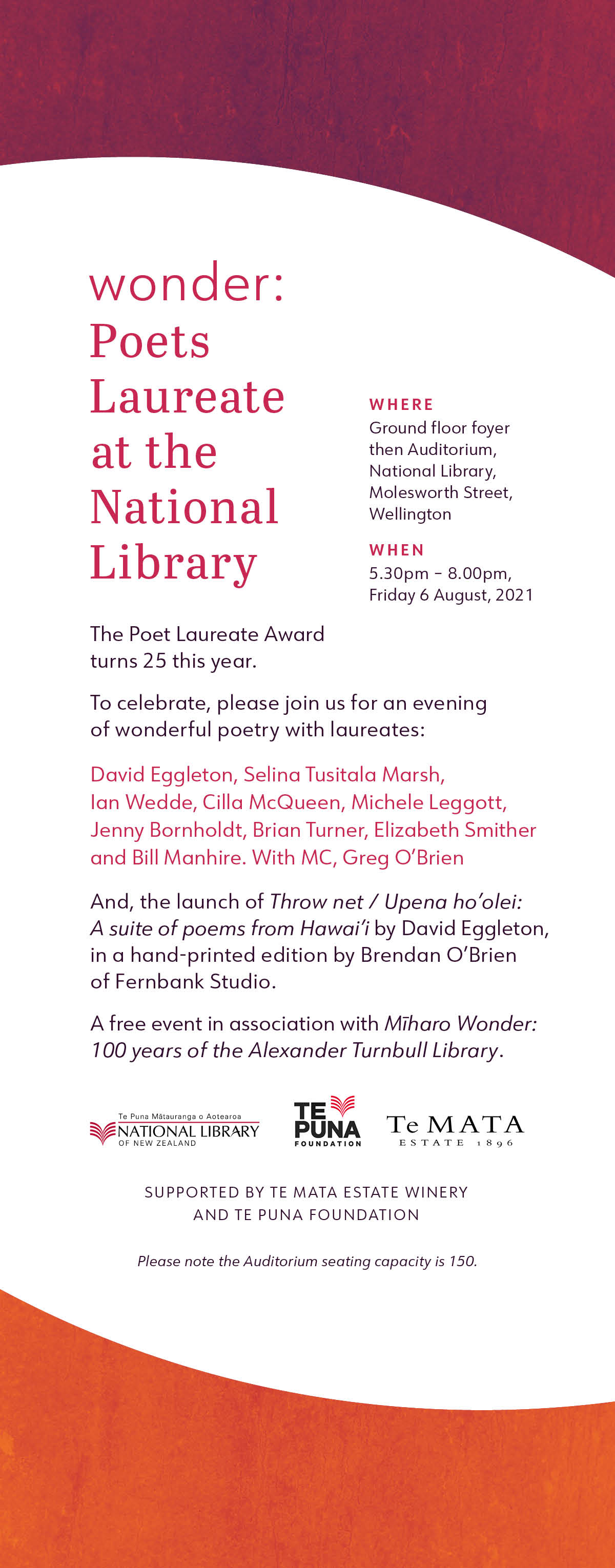
The iconic Meteor Literary Salon returns for a stellar Matariki at the Meteor!
A special Matariki focused salon will see four leading New Zealand poets dynamically performing their work!
The poets in question? Literary legends…
Hinewirangi Kohu-Morgan, artist, poet, and visionary, known as an important harbinger of Māori poetry written in English.
Te Kahu Rolleston, Ngaiterangi born writer, activist, battle rap artist, actor, scholar, educator, poet, and national spoken word champion!
Vaughan Rapatahana, poet, and author, known for often delivering his poems with a kōauau soundtrack backgrounding his words and having his works published in both his main tongues – te reo Māori and te reo Ingarihi.
David Eggleton, Aotearoa’s Poet Laureate, and recipient of the Prime Minister’s Award for Literary Achievement in Poetry!
Don’t miss your chance to see these four poets travel beyond standing still in an emphatic oral delivery of their work. Vaughan Rapatahana will be our MC and there will be some of our artists work available for sale at the event.
July 22, 7pm. Tickets $10 General Admission (including a glass and nibbles).
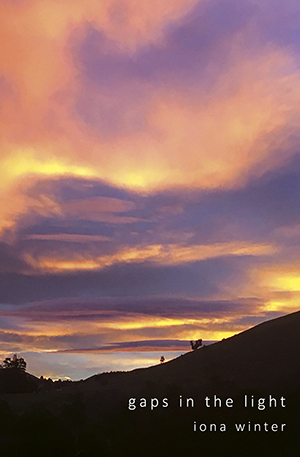
gaps in the light, Iona Winter, Ad Hoc Fiction, 2021
‘Gaps in the Light uses form in innovative ways to express deeply the experience of loss and joy in ways I can’t remember reading anywhere else. Nothing is binary here – everything feels multidimensional, so perfectly complicated, like echoes off multiple surfaces. It’s simply astounding!’
Pip Adam, author of Nothing to See, The New Animals, I’m Working on a Building, and Everything We Hoped For
Iona Winter, Waitaha/Kāi Tahu, lives on the East Otago Coast. She holds a Masters in Creative Writing and has published two previous collections, Te Hau Kaika (2019) and then the wind came (2018). Iona’s latest work gaps in the light comes with ‘advance praise’, tributes from other writers that include Helen Lehndorf, Kirstie McKinnon and Pip Adam. I so loved this suite of endorsements I have shared an extract from Pip Adam’s comments above. If I had read these words browsing in a bookshop, I would have bought the book, resisted all chores and distractions, and started reading. I too adore this book , and like Pip, know of no other quite like it. The slow-building embrace of loss and joy sets up long-term residency as you read.
The collection is dedicated to Iona’s son Reuben (20.5.1994 – 17.9.2020), and the dedication page becomes a pause a prayer a bouquet of sadness before you turn the page. I stalled here. I waited at this border between life and death. And then I entered a peopled glade: characters voices circumstances. Iona lays her own pain and loss beneath the surface of every scene, the hybrid writing stretching delving recovering above the subterranean ache. Writing becomes preservation, connection, ebb and flow, fighting against and fighting for. It is writing as lament and it is writing as meditation.
I dwell on the phrase ‘Streams of consciousness like gaps in the light’. What does it mean, but more importantly what does it feel? The writing is leaning in and listening to the dark without letting go of the framing light. A little like the mother and daughter in ‘Swallows’:
When we go walking, I tell our daughter what it means when the raupō are bent and spiders have crafted cocoons — white flags signalling peace. We inhale autumnal pine needle paths that smell of Christmas too early.
Little deceptions we tell one another make the intolerable less so.
When on the beach a heart stone is picked up, just one from the cluster, to hold and to carry. The sentence is smooth like the heart stone, but a few lines later the sound shifts and hits your ear sharply: ‘When mildew and salt scratched at my insides, and my back hit the stippled deck — life met decay once again.’ You will move from terminal illness to birdsong, from what you do to keep going to what you see out the window. There is a muscular thread of grandmother and grandfather wisdom. There is the way you get thrown off balance, expectedly, unexpectedly. The recurring thoughts of a loved one, the sight of the moon that startles: ‘it throws me off balance / that look of yours / an unexpected full moon in daylight showing herself on the horizon’ (from ‘Whorls’).
Iona is translating personal experience into hybrid writing and it is incredibly potent. I can’t imagine how hard this book was to write, but it is a gift, a glorious taonga, a gift of aroha. Thank you, Iona, thank you.
I prefer to expose the greying strands of my hair.
I prefer kōrero in person as opposed to communicating
via the Internet.
I prefer to sing aloud in the car.
I don’t prefer silent unspoken things.
I prefer non-martyred compromise.
I prefer to tend my wounds before creating them for
another.
I prefer compassion to witch-hunts.
I prefer to believe in the possibility of something
beautiful, rather than fear the inevitable pain of loss.
Brass Band to Follow, Bryan Walpert, Otago University Press, 2021
Bryan reads ‘In the lull’
Bryan reads ‘Brass Band to Follow’
Bryan Walpert is the author of four collections of poetry—Etymology, A History of Glass, Native Bird and most recently Brass Band to Follow (Otago UP). He is also the author of a novella, Late Sonata, winner of the Viva La Novella prize (Australia); a collection of short fiction, Ephraim’s Eyes; and two scholarly books: Poetry and Mindfulness: Interruption to a Journey and Resistance to Science in Contemporary American Poetry. A novel, Entanglement, is forthcoming with Mākaro Press in October. His work has appeared in New Zealand, Australia, UK, U.S., and Canada and has been recognized by, among others, the Montreal International Poetry Award, the New Zealand International Poetry Competition, the Royal Society of NZ Manhire Award Creative Science Writing Award (fiction), The Rattle Poetry Prize (US), and the James Wright Poetry Award (U.S). He is a Professor in Creative Writing at Massey University, Auckland. More on Bryan can be found at bryanwalpert.com.
The NZSO is throwing open the doors and inviting you to join us for a variety of free events for all ages.
Sat, 10 July, 10.30am-5.30pm Michael Fowler Centre
ALL EVENTS ARE FREE TO ATTEND
Open Doors is proudly supported by
Note some events require online registration due to limited spaces, see link below for details.
Storytime Live & Instrument Petting Zoo 10.30–11.30am Join us for a short performance of NZSO Storytime live –a selection of kiwi children’s book favourites accompanied live by members of the National Youth Orchestra.
Children of all ages can the explore the Instrument Petting Zoo, getting up close with various instruments and musicians of the National Youth Orchestra.
Words and Music 12.30pm – 1.30pm
With Stravinsky influenced by literature in much of his musical works, and Shostakovich’s Leningrad inspiring works of both non-fiction and fiction, NZSO with panelists Ariana Tikao, Tayi Tibble and Sam Duckor Jones partner withVerb Wellington to explore the connection between the two art forms through a discussion with New Zealand writers on how music has influenced their work.





 NZ Poetry Shelf