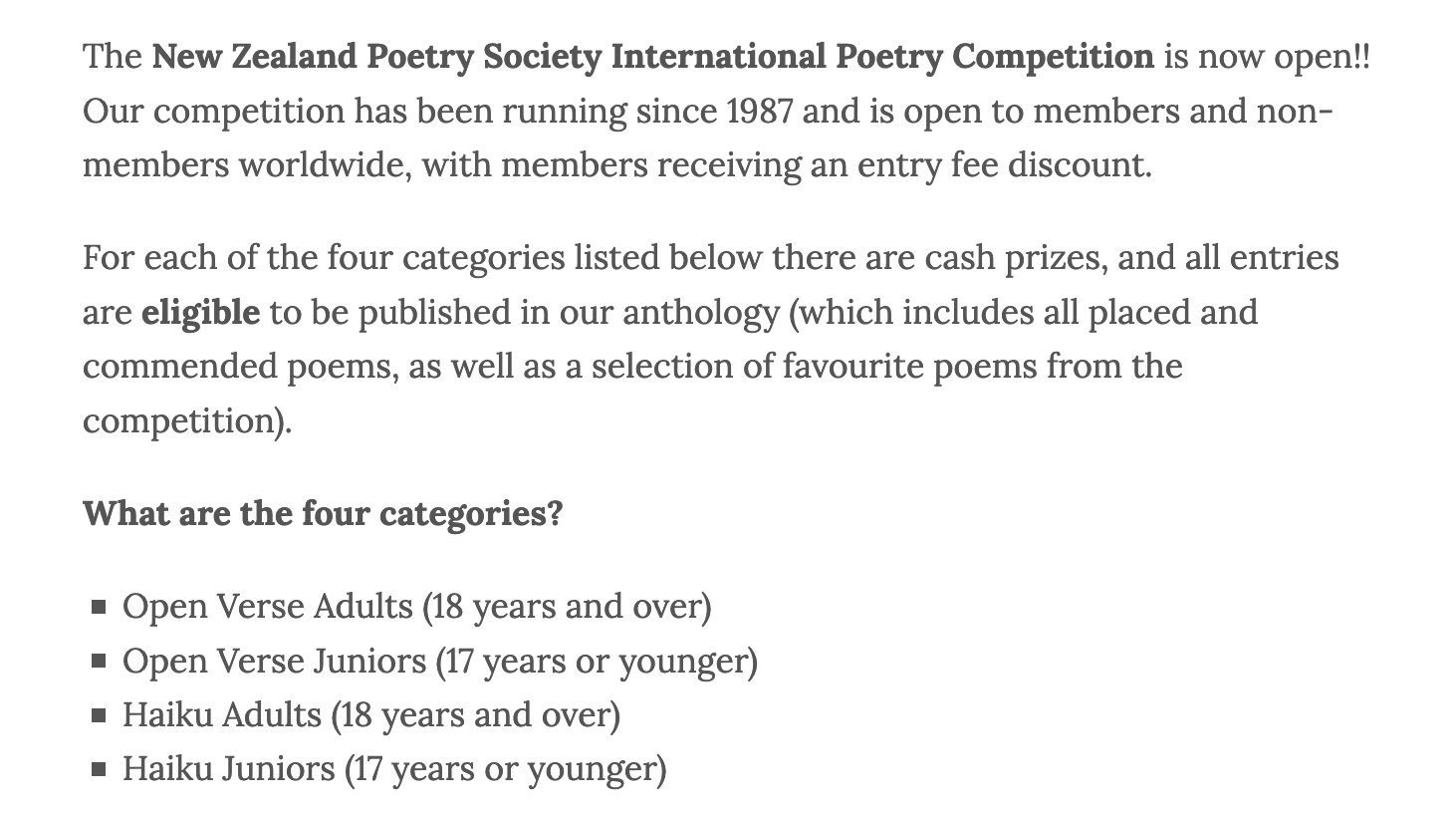
The competition opens Tuesday 1 June and closes on Saturday 31 July 2021. Entries are judged blind. First Prize is $500 (plus one-week stay at the Caselberg house at Broad Bay, Dunedin). Second Prize is $250; and there are up to 5 Highly-Commended awards (no monetary prizes).
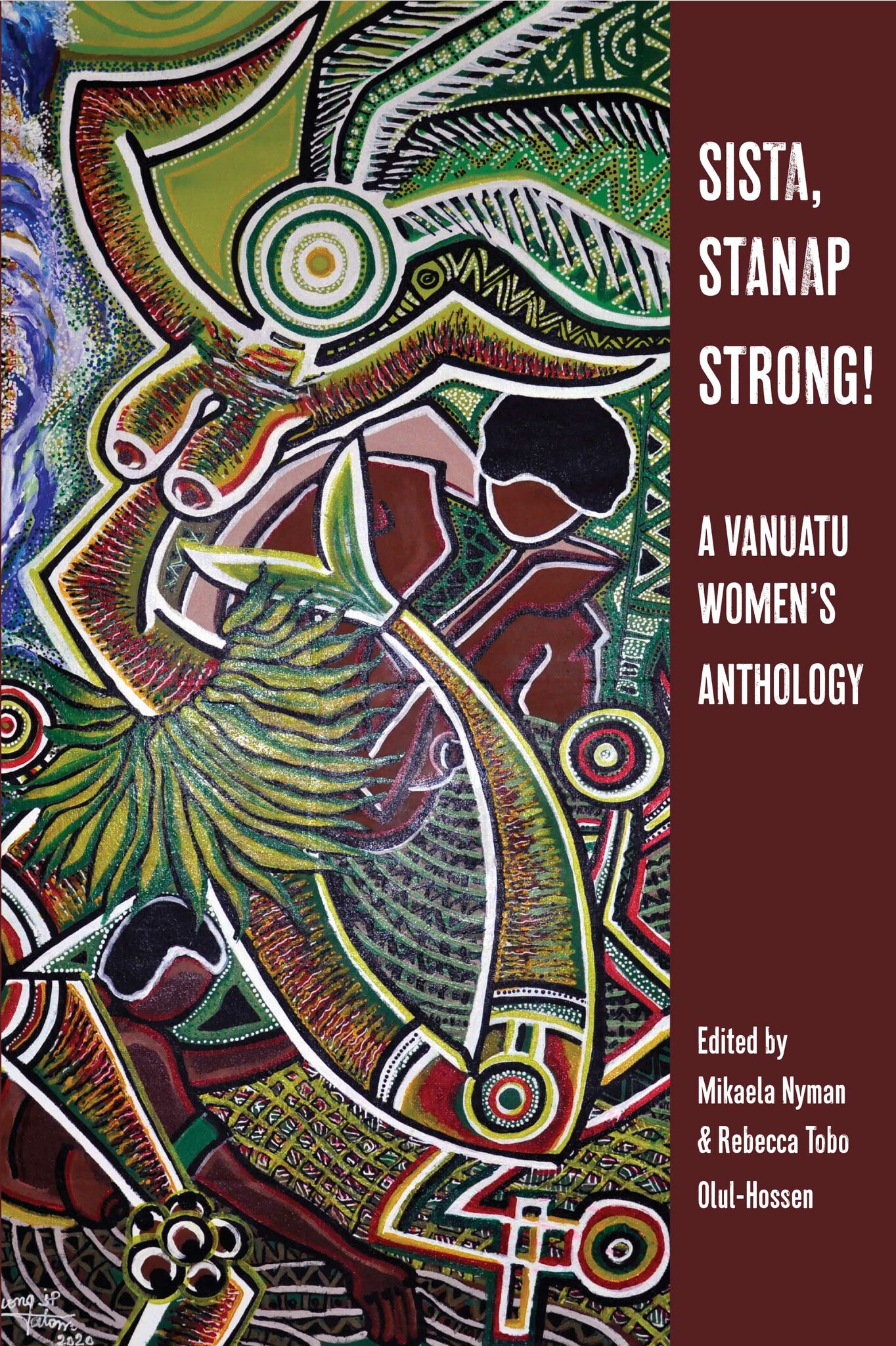
Sista, Stanap Strong! A Vanuatu Women’s Anthology, eds Mikaela Nyman and Rebecca Tobo Olul-Hossen, Victoria University Press, 2021
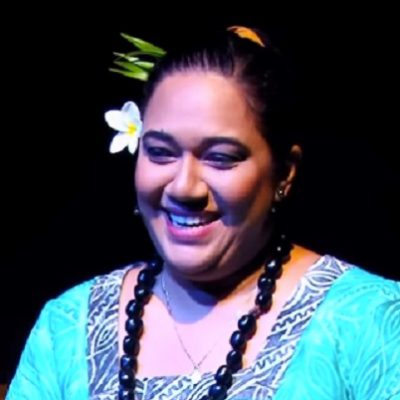
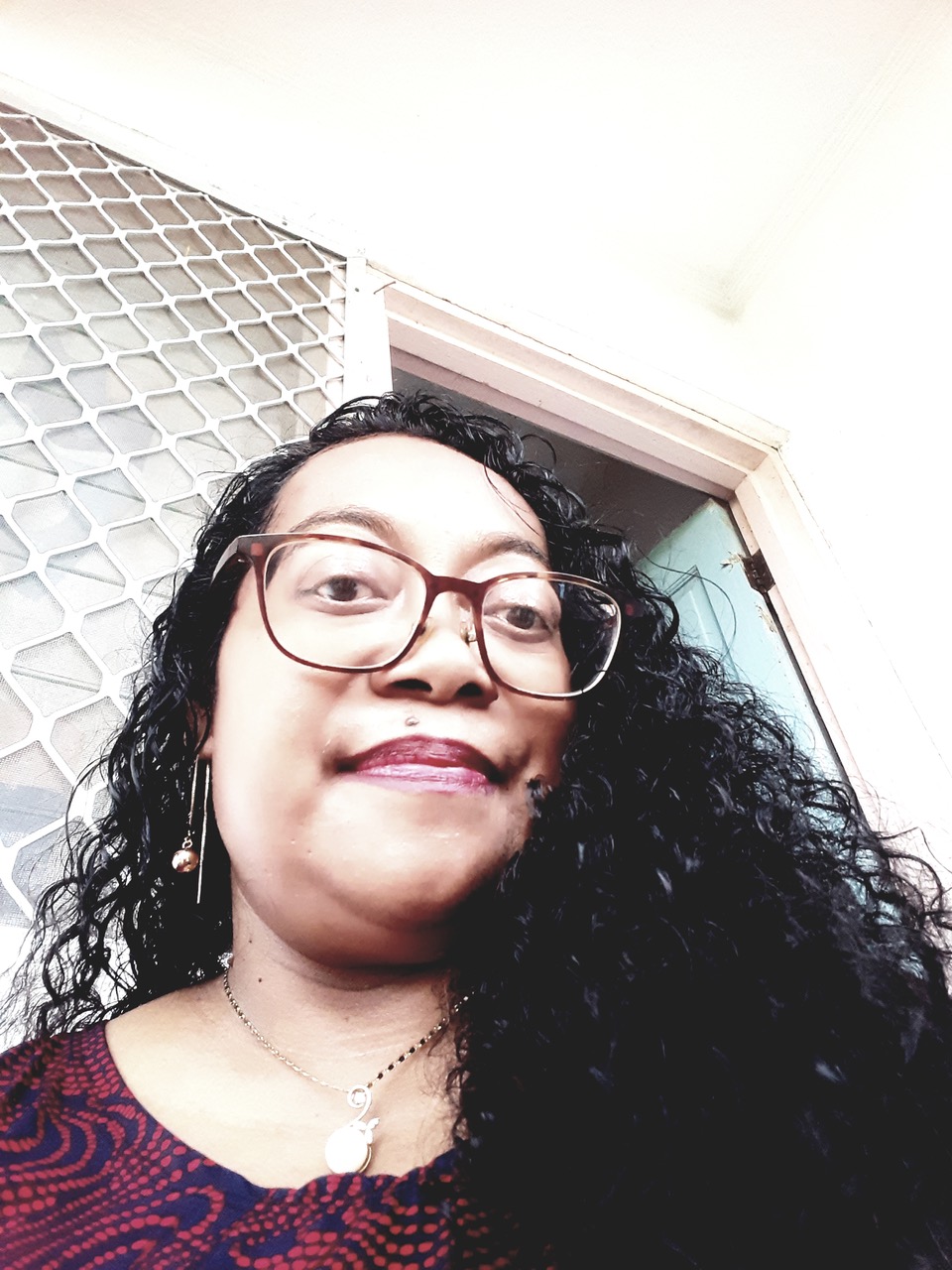
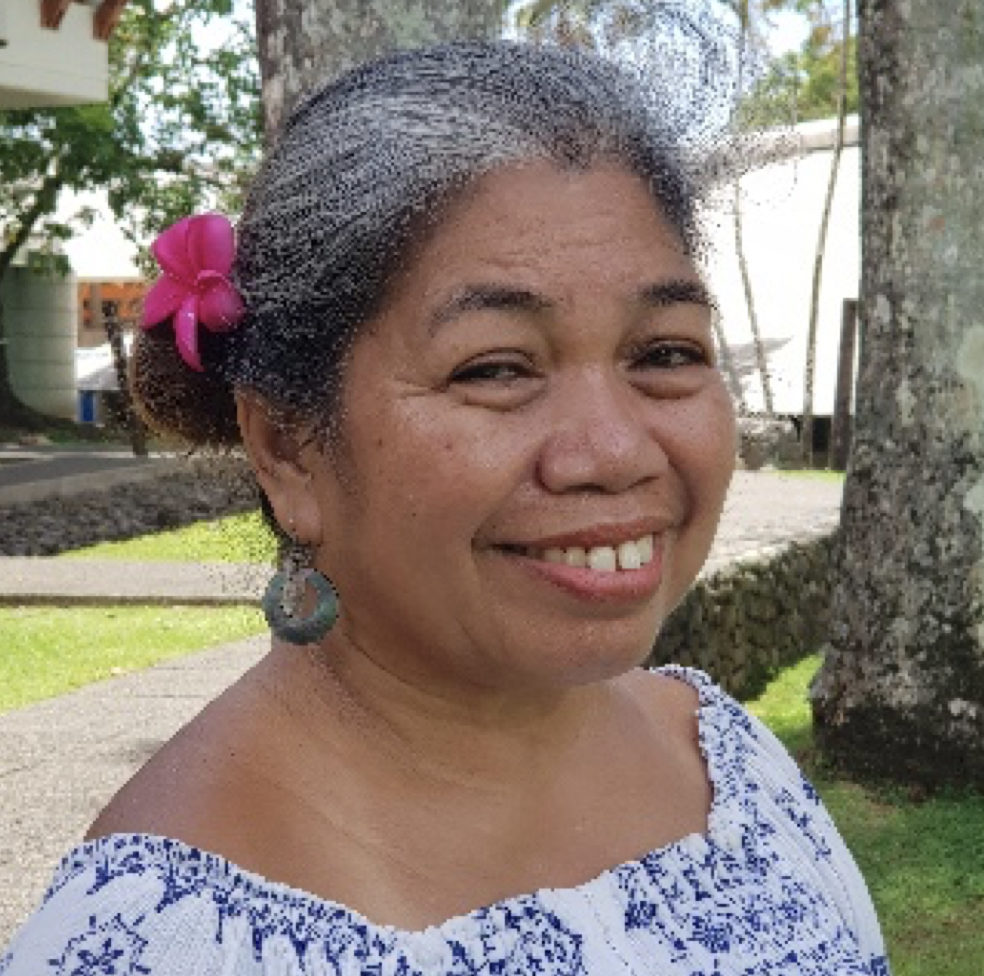
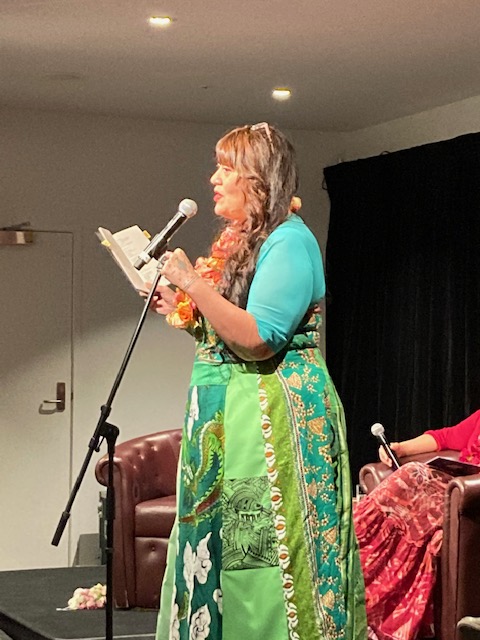
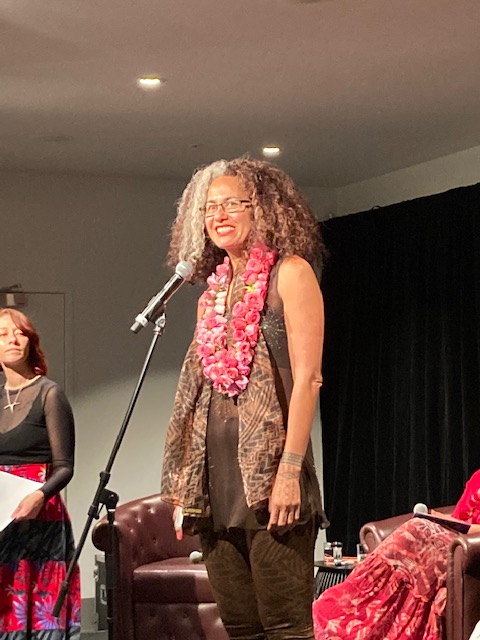
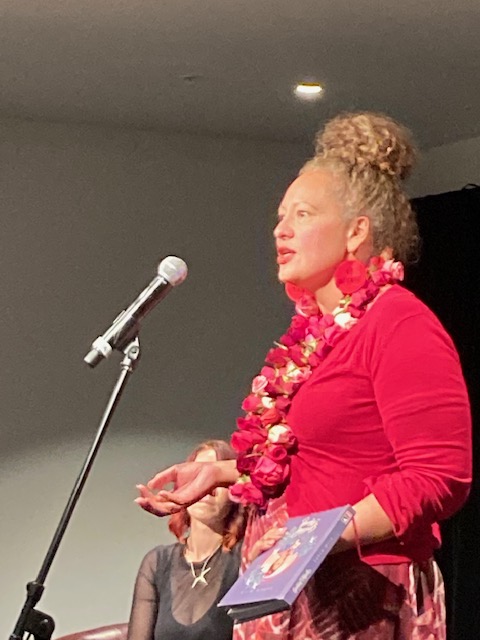
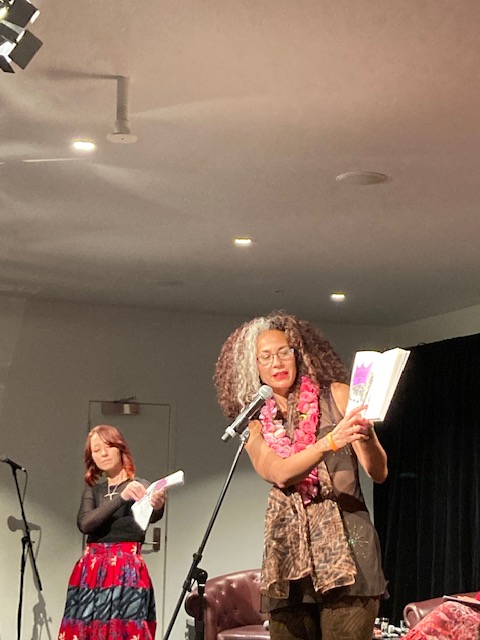
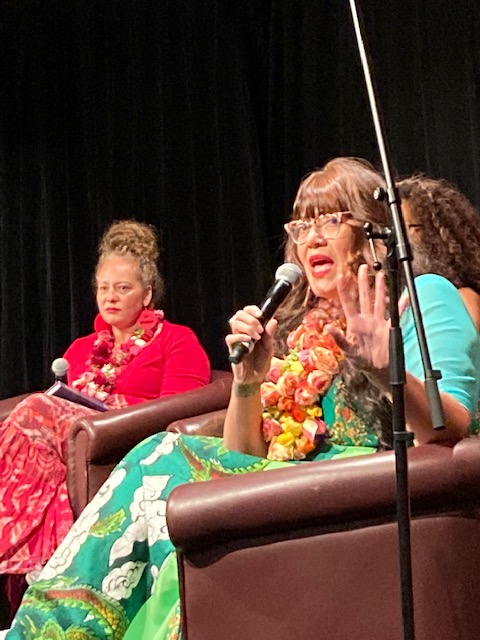
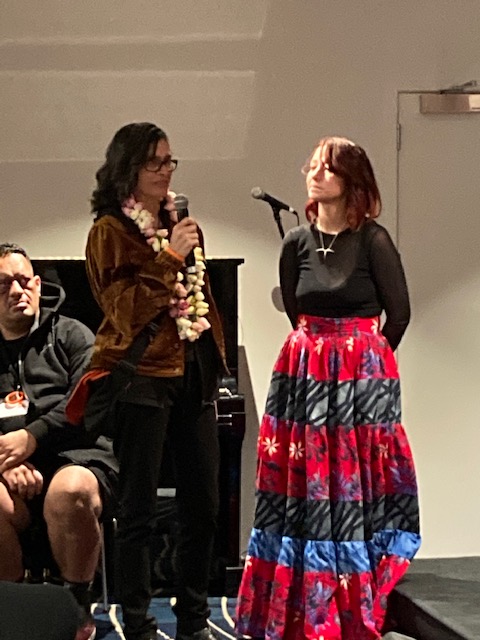
Sista, Stanap Strong!gathers new writing from three generations of Vanuata women. This groundbreaking book includes poetry, fiction, essay, memoir, and song. While most of the contributors are ni-Vanuatu living in Vanuatu, some live in New Zealand, Fiji, the Solomon Islands and Canada, and some were born overseas and have made a home in Vanuatu. The arrival feels special – the anthology assembled with love, the voices tender, fierce, probing, with vital connections to both Vanuatu and the wider world. In celebration, seven poets read their anthologised poems.
Grateful thanks to editor Mikaela Nyman for assistance in assembling this post.
The Readings
Sharon Wobur reads ‘A strong woman’
Rebecca Tobo Olul-Hossen reads ‘as you turn 2 weeks old, koko dearest’
Frances C. Koya Vaka‘uta reads ‘Leiniaru, the girl from Pele Island who picks the fruit of the Niaru tree’
Elsie Nalyal Molou reads ‘This body is mine’
Nancy Gaselona Palmer reads ‘And she wept’
Pauline Chang Ryland reads ‘WIFE ‘ Woman in Ferocious Environments’
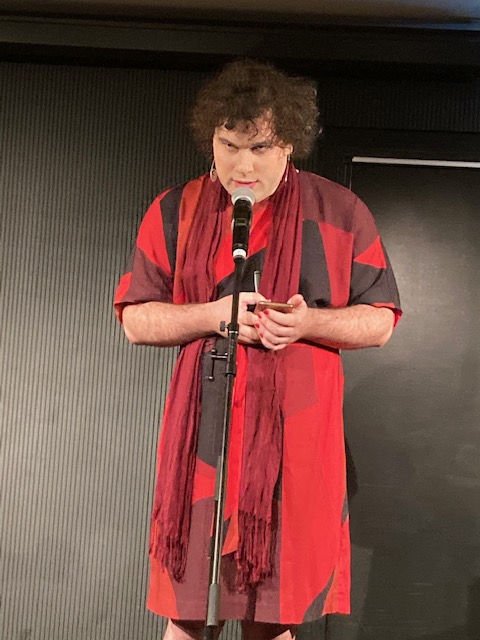
Ketty Dan-Napwatt reads ‘Givem wata lo olgeta’ and ‘For you today’
The Poets
Pauline Chang Ryland Having grown up in an environment where expressive arts was encouraged, I have been writing poetry, but have only recently begun to share my writing. My poetry is often written when I feel words spilling out of my heart, brain and lips and I just have to grab my pen and write. It’s my expression of what life dishes me and those around me, my significant memories and concerns about life and humanity, especially in the Pacific.
Ketty Dan-Napwatt: I began writing by accident and I still do it sporadically. Because I think a lot and mull over decisions that I have to make or plan something spontaneously, it makes writing my thoughts down easier. I love language and use it creatively for writing, especially when my children urgently request words to create a specific song for public and national events – from a capella to R&B to reggae/dub and spirituals. I write about everything I feel strongly about and more as a relief activity than something to be read by others.
Frances C. Koya Vaka‘uta – Of mixed heritage with links to Sāmoa, Fiji and Vanuatu. Artist and poet, her work explores what it means to be of and belong to the islands, and contemporary issues in the islands under the pseudonym 1angrynative. She’s published in journals and anthologies. Her poetry collections of schizophrenic voices (2002) and Fragments (2018) are available through the University of the South Pacific Book Centre. She is working on two collections.
Elsie Nalyal Molou As a young woman in a very cultural based and patriarchal society, it can be difficult to find a space to voice your views on certain issues, such as violence in relationships and particularly violence against women. Poetry, is not only an escape for me to reflect on these issues, but a way for me to point out to others that these are issues we need to address. And I’m thankful that I’ve been given this space to do just that, and I hope that other young women will find their own outlets to do the same.
Rebecca Tobo Olul-Hossen completed her undergraduate studies at Massey University in Palmerston North. She is co-editor of Sista, Stanap Strong! A Vanuatu Women’s Anthology together with Mikaela Nyman. Rebecca’s and Mikaela’s collaborative poem ‘I Love You?’ was published in Sport 47. In 2020, her collaborative poem with Ketty Dan-Napwatt appeared on Sista website and her poems were included in the poetry collection Voes (published by Alliance Française in Port Vila) and in the South Pacific Communit’s poetry anthology Rising Tides. She is one of the authors and editors of Vanuatu’s first non-fiction book for children, Taf Tumas: Different journeys, one people (2020). Rebecca lives in Port Vila with her husband, sons and daughter.
Nancy Gaselona Palmer is a poet and writer, she self-published her first book of poems Rock of Strength in 2019. She now is a contributor to Save the Children Solomon Islands project to write short stories for children below ages of 8. The stories are digitised and made available for little children on their mobile phones or tablets.
Sharyn Wobur – Works for World Vision and is originally from Gaua and the Solomon Islands. Poetry is her passion – a strategy to relieve stress where negative thoughts are written into positivity and she gains strength to soar.
Compound Press and Minarets Journal announce a call for submissions to our inaugural poetry calendar, edited by Craig Foltz. A functioning calendar for the year 2022 (should it happen), the calendar will feature one poem for each month.We ask writers to submit one poem to a specific month (though saying anything about said month is not required) that may hold a reader’s interest for 28 to 31 days. The A4 folding calendar will be printed at Compound Press in time for kitschy Christmas gifts.
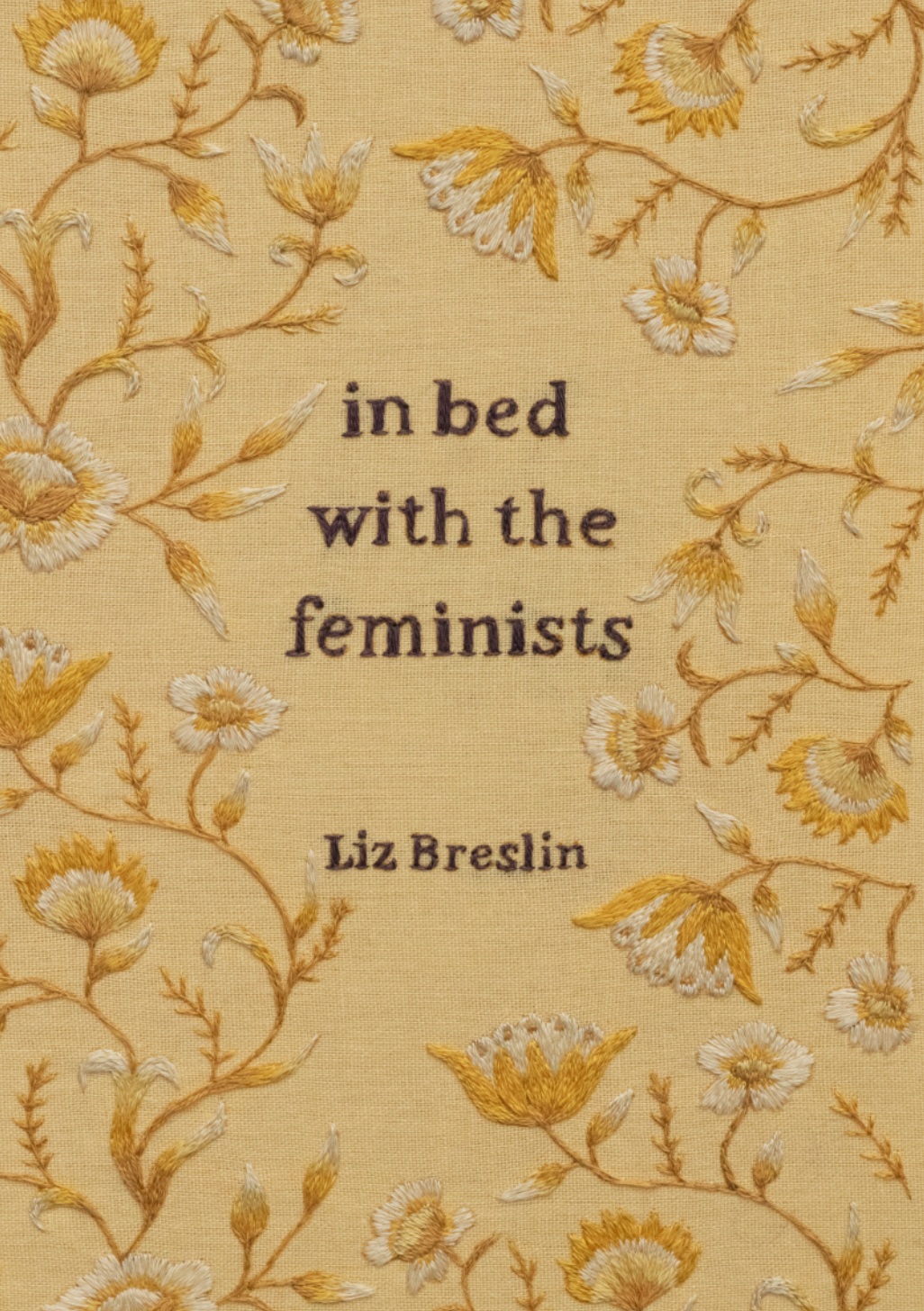
My book, In bed with the feminists, is officially pre-orderable today! It’s being published by Dead Bird Books, and has a stunning cover which started out as a hand-single-stitched piece by the amazing Lucinda King. Emer Lyons has been the editor with the mostess.
If you want to hear me read from it, we’re having launches in Wānaka (9th June – official release date!), Ōtautahi (18th June) and Ōtepoti (19th June).
In Wānaka, the very brilliant Laura Williamson will be launching the book for me at Creative Juices at Rhyme x Reason brewery. In Ōtautahi and Ōtepoti, Dominic Hoey from Dead Bird Books will be doing the launching. Not sure who is guesting yet at Space Academy in Ōtautahi but I’m already superexcited that Iona Winter will open in Ōtepoti at Adjø.
If you want to preorder the book or read a bit more about it, here’s the link.
‘You better marvel while you can – marvel and embrace the present.’ Brian Turner, AWF 2021
Dear Anne O’Brien and the AWF team
When the Auckland Writers Festival was cancelled in 2020 we felt such sadness at the loss after all the hard work and planning on your part, at the evaporation of those sessions we planned to attend or to participate in. (Although let’s remember we enjoyed a season of fabulous Paula Morris zoom sessions with various local and international authors.) It felt like a miracle that Auckland Writers Festival Waituhi O Tāmaki 2021 could go ahead with a strong and wide-reaching focus upon Aotearoa writers. To me 2021 was a festival of aroha and connection and, in this upheaval and damaged world, it makes it just that little bit easier to cope.
More than anything I welcomed the embrace of Māori, Pasifika and Asian voices, especially through the work of guest curators, Ruby Solly and Gina Cole.
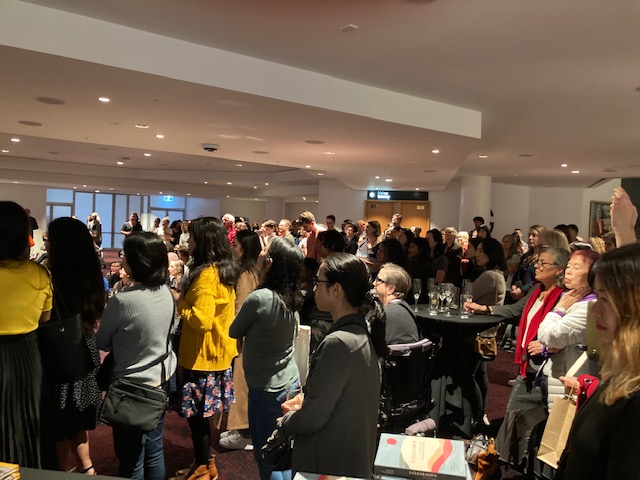
How good to see sold-out session after sold-out session, foyers thronged with readers and writers, ideas sparking, feelings connecting, books selling. The festival theme Look, Listen & Learn is so very apt. AWF 2021 gave us an extraordinary opportunity to listen to a rich diversity of voices. I loved this so very much. I loved taking time to stop and observe. I loved reflecting upon my own behaviour and biases, my joys and grief. But yes I was grief stricken at the Pākehā woman who vented her ignorance/ racism upon a guest. Do this in my company and I will challenge you. I want our eyes and ears and arms to open wide to make room for communities of wisdom and experience and grievances. It is utterly essential.
Thank you for AWF for caring for your writers and readers, for putting hearts on sleeves and creating space and time for us to listen and look and learn. I adored this festival. I drove home on Saturday night into the pitch black of the West Coast and I felt like I had breathed in love. I saw so many poets and chairs who filled me with a shared joy in the power and reach of words and stories, and quite frankly, the preciousness of each day. Inspirational, heart restoring, mind challenging. Anne O’Brien you are an Auckland Tāmaki Makaurau treasure.
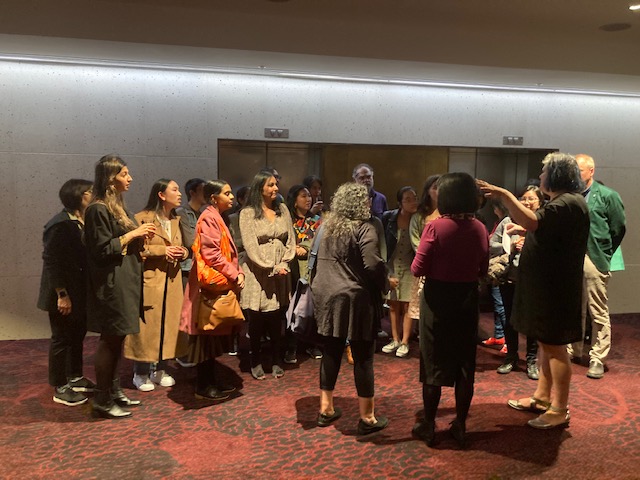
Thank you to every one who made this festival happen and run so smoothly (and yes for the divine food and green tea that kept the writers going). Sorry about the mixed quality of photos off my low-grade phone.
There has never been a festival quite like this one. Every session a gem. Extraordinary.
Paula Green
Some Poetry Highlights
I got to do a Magnetic Poetry workshop with children earlier in the week and once again felt that joy of working with young writers. To see the intense concentration and joy on their faces as their pens went scratching, as they shared poems, as they tried whatever challenge I lay down. I don’t say yes to many children’s workshops at the moment so this was special.
Doing my workshop meant I got a lanyard and so I got to go to loads of fabulous poetry events, to reboot in the Patron’s Lounge, and to catch up with much loved writing friends. So thank you for inviting me. I adored this festival.
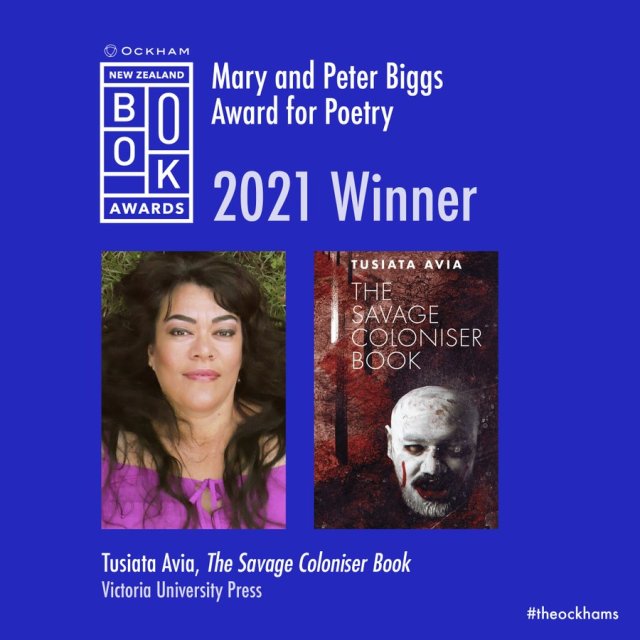
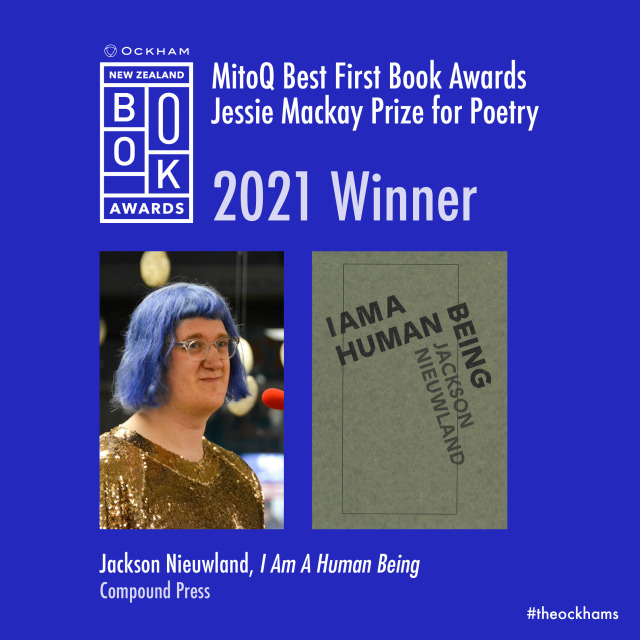
First up The Ockham NZ Book Awards – I live streamed it on FB so got to hear the readings and speeches. I talked about the poetry shortlist in a session at Featherston, and what awards are like when you are an author, and how when Wild Honey missed out last year I could say ‘fuck’ at home (in lockdown), and get drunk on bubbles and be really really sad for an hour and then just move on! Because all the new projects bubbled back to the surface and the fact that what matters more than anything is the writing itself. That said the 2021 poetry shortlist was sublime – four astonishing books (although I did mourn the equally astonishing Wow by Bill Manhire and Goddess Muscle by Karlo Mila, but I jumped for joy (yes Featherston I did!!) at Tusiata Avia’s win (The Savage Coloniser) and Jackson Nieuewland’s winning best first book. Check out my celebrations here and here.
I also leapt in delight that Airini Beautrais’s magnificent short story collection Bug Week won (even though I had adored Pip Adam’s and Catherine Chidgey’s novels). I haven’t read Sprigs by Brannavan Gnanalingam yet, but Marion Castree’s words at the Featherston award event has spurred me to get past the disclaimer at the start of the book and read beyond the violence.
Usually I go to as many events as possible on as many days as possible but this year I decided to circle poetry on the Friday and Saturday. I kept hearing people say ‘I was so gutted I missed …’ and I know the feeling. I was gutted to miss Patricia Grace – but I will make up for it by buying her memoir. I was gutted to miss Anne Kennedy and pianist Sarah Watkins on the Friday night. And not to hear Kyle Mewburn and Charlotte Grimshaw, Catherine Chidgey and Carrie Tiffany. Kazuo Ishiguro. Sue Kedgley. Alice Te Punga Somerville. The Purgatory Reimagined session. I had seen some writers at Featherston and at last year’s WORD so that wasn’t quite such a loss (Helen Rickerby, Pip Adam). Oh and Siobhan Havrvey’s launch for Ghosts. In fact when I look at programme I wish I could keep popping back – take a magical month so I could go to every single event.
Autumn salon series: Allende, Hassan, Li
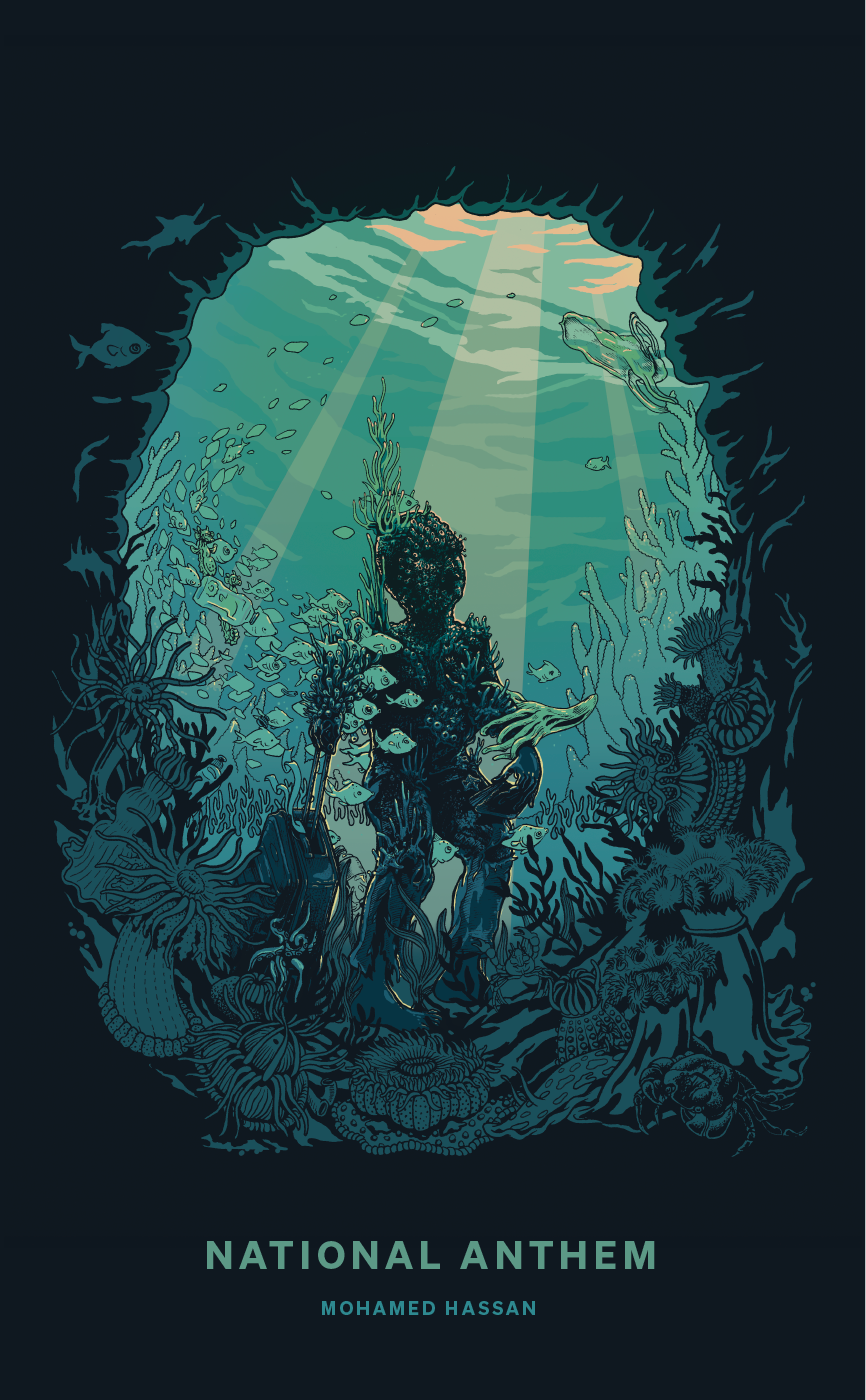
First morning session in the Kiri Te Kanawa room is packed with punters keen to hear Isabel Allende, Mohamed Hassan and Yiyun Li in a zoom conversation with Paula Morris. I had come to hear Mohamed because hearing him read and talk poetry is a rare treat for me. I hadn’t factored in Isabel Allende talking about power and feminism, and how articulate and feisty she is, and how every word that leaves her mouth is perfect, and how I just want to go back and read all her novels, and most definitely her new meditation The Soul of a Woman. I love the fact she rebels against how we see aging. I love the fact she recoils at the label ‘magic realism’ that gets dumped on South American writers whereas with European writers it is philosophy or religion. I love her for saying this:
Like the ocean feminism
never stays quiet.
If you get chance listen to Mohamad Hassan read his poems online. Buy his book National Anthem. Mohamed openly talked about what it is like to write having grown up in both Egypt and Aotearoa, and having lived in other places. About the ghosts that emerged after the Ōtautahi Christchurch mosque attacks, and the ghosts that remain after the settlement of New Zealand, about the increased visibility of Muslim communities after September 11, and monstrous and skewed Muslim identities that continue to be broadcast. Mohamed: ‘Do I apologise or do I try to make a difference and speak on behalf of those without a voice?’ Paula raised the thorny issue of home. Mohamed: ‘In many ways I am not really Egyptian, not really a New Zealander, but 100% both. You create familiarity for yourself in all these places: your work, relationships, writing, and that is what constitutes home.’
As a call out to the current unspeakable, heartbreaking and ongoing violence on the Gaza strip, Mohamed read from his poem ‘There are bombs again over Gaza, are you watching?’. Here’s an extract:
(…) but the bombs are still dropping on
on a Palestine that isn’t, I am a reporter but feel
silent, making news about house prices and a us
president that isn’t, talking about a Muslim ban
that isn’t, I am a Muslim on a bus leaving Auckland
and I’m trying not to read the news, talk to friends
in Denver who pray in terminals not made for our
skin and I tweet about Kayne and check my follows
check my shoes in the glass waiting for the
wrong bus, I wear Palestinian colours by accident
and no one notices, wear a beard by accident
and hope I don’t have to travel soon, watch the
skyline shrink and thank god for a hot meal
Mohamed Hassan, ‘There are bombs again over Gaza, are you watching?’ from National Anthem
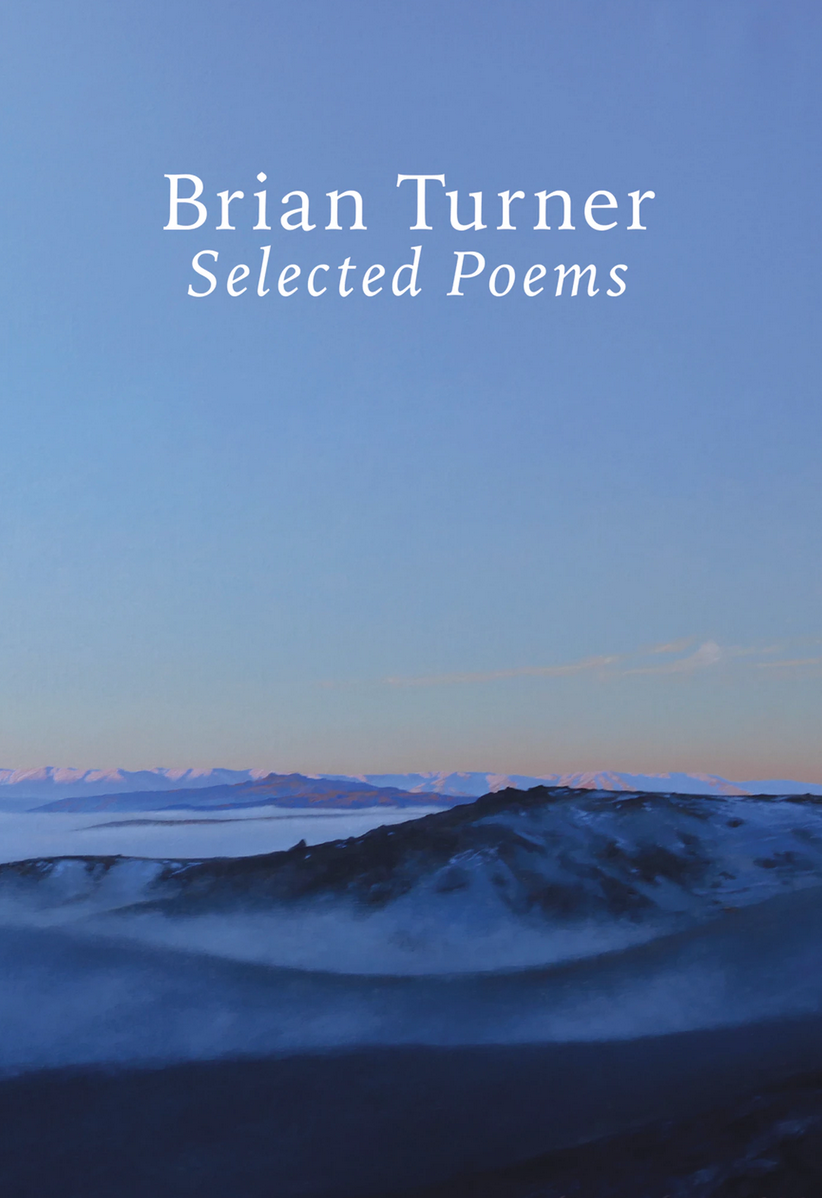
Honoured Writer: Brian Turner
Keep It Up
A farmer asked me
if I was working
and added
he didn’t mean
writing.
I said
I was sawing
and stacking wood,
tidying the shed,
pruning the hedge.
‘Is that work?’
‘Yes,’ he said,
‘keep it up.’
Brian Turner, Selected Poems, VUP, 2019
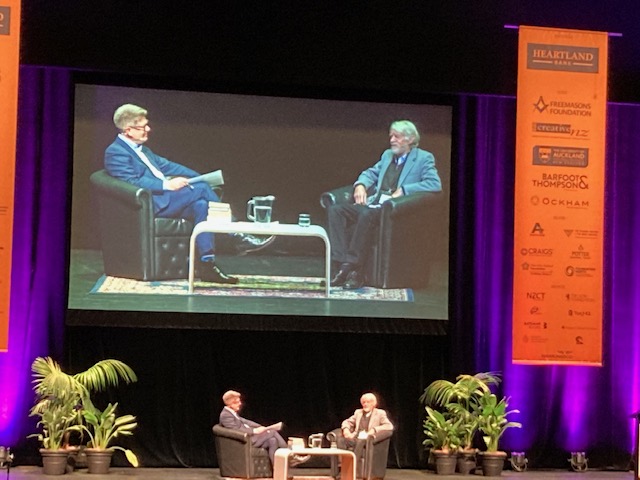
John Campbell – along with Bill Manhire, Grace Iwashita-Taylor, Paula Morris, Selina Tusitala Marsh and Emma Espiner – is one of my favourite chairs. He puts such diligent thought into both his introduction and questions. He reads the author’s work deeply, and clearly only accepts invitations where he feels the greatest empathy and engagement with the author and their writing. His conversation with poet Brian Turner was very special. With permission from Brian and his partner Jillian Sullivan, John shared the heartbreaking news that Brian has Alzheimer’s. We were privileged to listen to a conversation that paid tribute to a lifetime of poetry and wonder, a history of writing in multiple genres. The conversation struck so many deep chords with me.
I saw tussock, heard it
speaking in tongues
and chanting with the westerly:
What’s productive here
is what’s in your heart,
sworn through your eyes,
ears, the flitter of the
wind in your hair
Brian Turner, from ‘Van Morrison in Central Otago’, from Elemental: Central Otago Poems, VUP, 2012
John offered richly detailed thoughts on the writing and the living, the landscape and the lyrical line, and Brian was able to respond with sentences that shone out, and the reading of poems. It worked beautifully. In glorious tandem, they made the poetry so alive for us. On childhood: ‘Looking back we were hell of a lucky.’ On Alzheimer’s: ‘30% of my brain’s not working but I’m going to keep the rest of it going now!’ On what matters as a writer: ‘I like to listen to what other people have to say. Looking and listening always.’
John declares he will keep the poems centre stage and he does. Brian says roaming outdoors ‘suppress despair’: ‘I feel this is a wondrous place in all sorts of ways. I couldn’t live in a heavily populated city. I like to hear the cicadas. I like to hear fast clear cool largely clean water rattling on the stones. I like to roll over the stones and see if vertebrates are there, to see if fish might be there.’
We walk upon the earth, feast our eyes,
wonder at what we see in the skies;
listen to rivers and streams, stand
humbled by mountains and stare
in awe of oceans and their might.
Brian Turner, from ‘As We Have Long been Doing’, Selected Poems, VUP, 2019
On grandmothers and knitting: ‘Sometimes they knitted me the sorts of jerseys I didn’t want to wear.’ On self pity: ‘I always use the word luck.’ On learning: ‘I l always learn something from other people – but don’t fancy people a bit up themselves and ignorant!’ On what it’s like to write: ‘Will it hold up? Is it as good as I can make it? When writing a poem you never know what you are going to say next. I have drawers and drawers of poems. I am happy to write what I write and I don’t have to have it published.’
I totally agree about writing poetry for the sheer love of writing because all else is secondary. I also agree wholeheartedly with Brian on this:
‘You better marvel
while you you can – marvel and
embrace the present.’
Just Possibly
If home is where and with whom you long to be
you’re still looking for it. In the meantime
you’re in a room where the fire’s crackling
and you’re listening to a CD of a cellist, pianist
and violinist whose urgency’s insistent, persistent
and melodic; you’re somewhere where there’s
just you and the music and the flames
and your cat under a chair near the fire,
and you’re thinking of home and where it may
be as rain begins to drum on the roof
and a wind’s rummaging like a vagabond
and you wonder if perhaps the cat feels this is
his sanctuary and therefore sanctity’s present
too, and that, just possibly, all of that’s true.
Brian Turner from Selected Poems
Pasifika Marama QAQA: Avia, Marsh, Mila
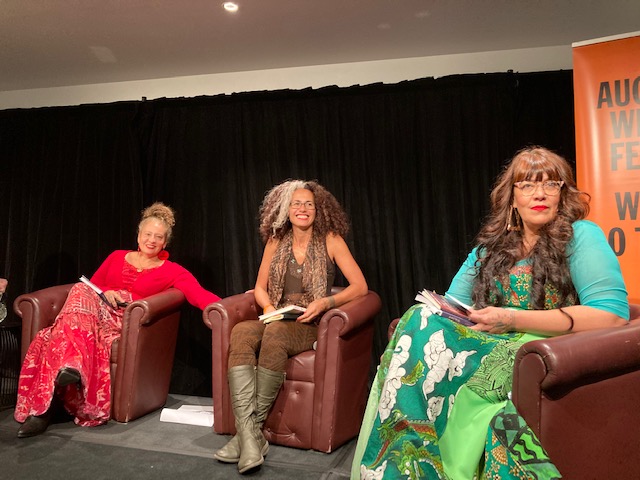
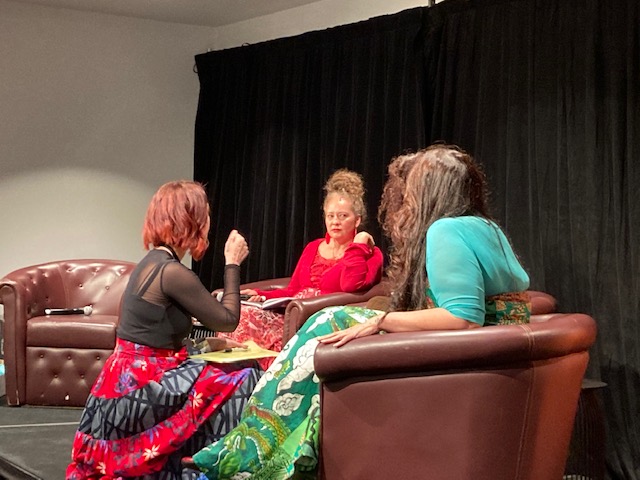
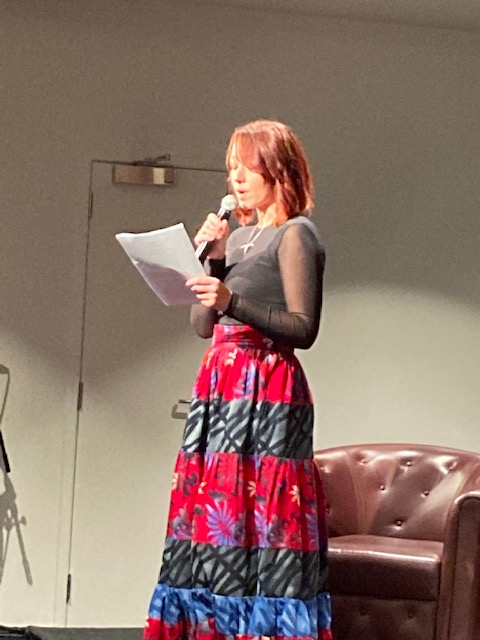
Tusiata Avia, Selina Tusitala Marsh and Karlo Mila read poems and conversed with poet Grace Iwashita-Taylor in a session that was part of the Talanoa series curated by Gina Cole. The room was packed to the gills and all those present witnessed something special. Getting Tusiata, Selina and Karlo to each read a poem that spoke to themselves was a genius idea. And then when Grace asked how they navigated their outsider status as Pasifika wahine, the most glorious conversation unfolded. This was a connective circle. This was ‘permission to be ourselves’. As Tusiata quoted from a poem by Karlo: it’s ‘the tapa of connected talk’. Tusiata talked about body shame at the book awards, Karlo about loneliness, everyone talked about the need to be seen and heard, about women’s wisdom, and women holding and shaping their spaces.
Karlo talked about poetry and a healing process: ‘Poetry is a way of allowing me to be me.’ And that comes through so clearly in Selina’s Mophead books that have touched people of all ages, in the extract she reads. She talked about making it niu, about bringing herself to Pasifika ways of being and doing and knowing, and how each touches upon and matters to the other. And then Karlo talked about remembering and forgetting, and ‘how we’ve all travelled through the bodies of so many to be here’. And Tusiata added: ‘My ancestors are trailing in a long line behind me like a wedding dress.’
Ah, and Selina talked about how Alice Walker and other women of colour influenced her, until the words of her grandfather shone through: ‘When you are ready you will see.’ And Karlo said: ‘The more I become myself the more I find myself – it’s a lifetime journey of shedding.’
‘When we write for deep clarity and to express our greatest truth to ourselves – everything else doesn’t matter’
Karlo Mila
Karlo: ‘Writing poetry is about clarity so I can hold it in my hands, so I can hold nana in my hands.’
An audience member thanked Grace and acknowledged she was also a great poet, and to date only Hawaii has published her work. Not Aotearoa. She made the important point: ‘Some of us can’t be numb to not being published. And we can’t go to university writing programmes.’
Grace acknowledged the three poets ‘as living breathing taonga, us together as a village’. It was a sublime session.
Holding the Tokotoko: Marsh & Eggleton
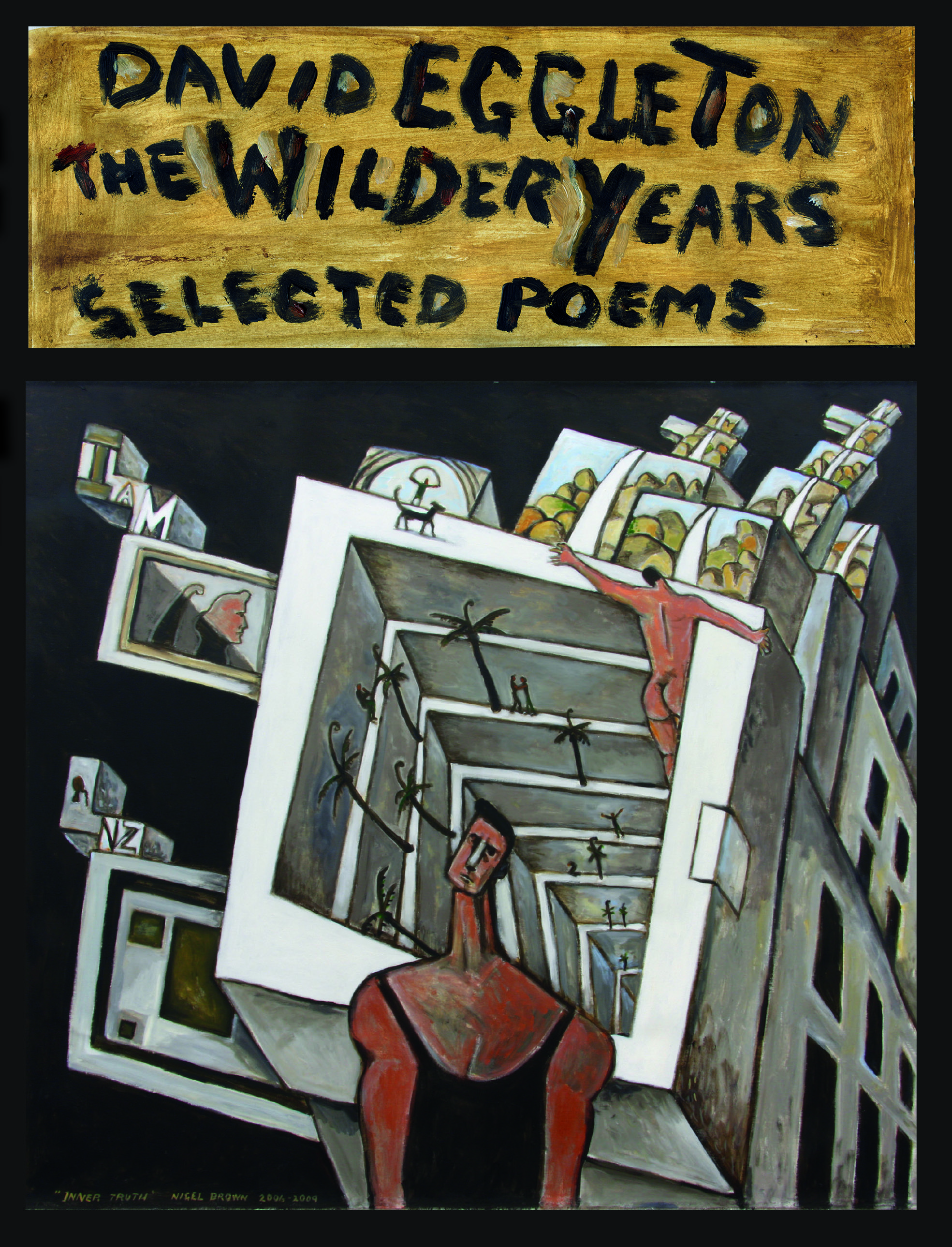
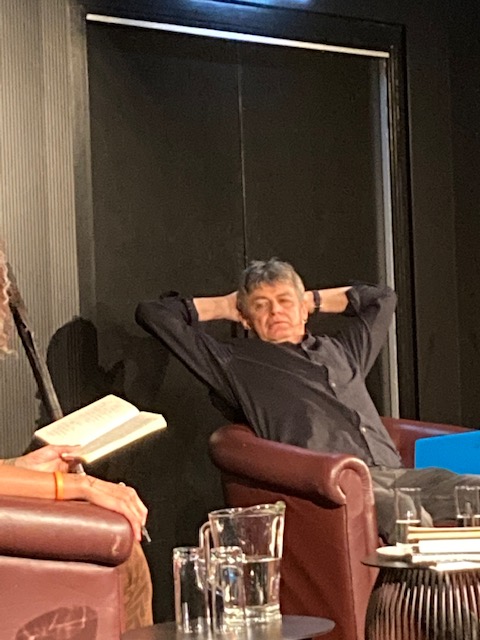
Curated by Gina Gole, David Eggleton joined Selina Tusitala Marsh – our current Poet Laureate and our previous Poet Laureate – to talk poetry and power, along with his new collection The Wilder Years (OUP). Selina began the session with a poem she had written for David:
Mr Eggleton’s Poetry Edges
Fledgling images wing
across space, time, paging
piles of concatenated anxiety
ridden, smidgen pictures rage on highways
then pile up against red traffic stop signs.
You go go go into rhythmic flow, the bump
and grind of razor edged objects rhyming
in bumper to bumper timing
street-signing their lines on roads,
byways, tracks, lanes and skyways
of Aotearoa.
You are a ton of eagle,
Mr Eggleton,
a feather in Aotearoa’s crown.
You are an egg
in all respects
and we love you
(yep, that’ll do).
Faiakesea’ea
thank you.
Selina Tusitala Marsh
The poem was like a mihi and you could tell David was chuffed at the way Selina riffed on his style. As she later said, David’s poetry ‘is bumper to bumper image and language – and I could listen to you all day’. David suggested he ‘uses the craft of English to find my way into myself’. His first poems might be seen as anti-poems, rants and raps. Now he is getting awards and recognition, he is seeing both his Palangi and Pasifika heritages, that can be in conflict, that can be a source of strength, that can render his poetry multi-faceted, that continue to draw upon ‘rap and chant and traditional rhythms’. You can hear it in ‘The Great Wave’, a poem he wrote after his mother passed in 2016, and he went to Suva to meet up with relatives.
I listen to the ocean chant words from Rotuma.
The Mariposa is a butterfly between islands.
A heatwave, fathoms green, whose light spreads
its coconut oil or ghee or thick candlenut soot,
twinkles like fireflies over plantation gloom,
and heart’s surge is the world’s deep breath.
I learn to love every move the great wave makes;
it coils you into each silken twist of foam,
blown far, all the way to salt-touched Tonga,
with mango pits, wooden baler, shells awash.
My uncle, swimming from New Zealand, wades
out of the sea and wades on shore at Levuka,
where my grandmother is staring out
from her hillside grove of trees waiting for him.
David Eggleton, from ‘The Great Wave’, The Wilder Years: Selected Poems, OUP, 2021
David underlined how important it is to advocate on behalf of other poets to be heard. When he first submitted to poems to Landfall he was rejected so he published his own broadsheets. Selina only got poems accepted when David became editor of Landfall. As Poet Laureate, David hopes to bring poetry to the people (as Selina did), to write poems about New Zealand events, to speak out against injustice (such as Myanmar), to try and maintain a balanced point of view, and to let his poems speak for themselves. To produce critical writing that resists the sneer and the put down. ‘You can use poetry as pure self expression,’ he says, ‘like doodles, to use words and diaphragm to express through mouths’. The power of poetry cannot be underestimated – he wants to be part of a tradition that reaches back to and moves forward from Hone Tuwhare.
This was a riveting session full of laughter and warmth and challenge. Each poet paid tribute to the gifts of the other, listening and applauding in the spirit of the festival. New Zealand is all the better to have the generosity, poetic dexterity and willingness to lay down crucial challenges from these two stellar Poet Laureates.
Humans Being Happy: Kate Camp
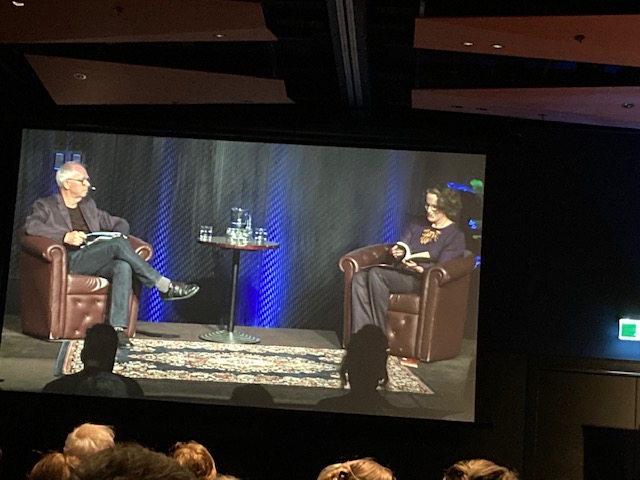
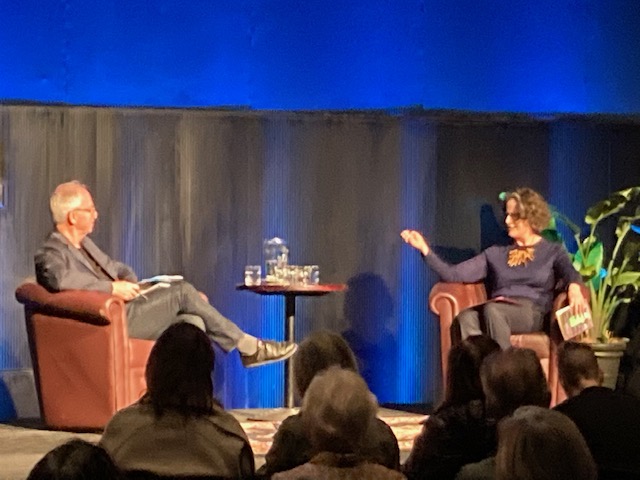
Before moving into a discussion with poet Kate Camp, chair Bill Manhire paid a sweetly rhyming tribute to two of our greatest and most beloved poetry patrons, Mary and Peter Biggs (sponsors of this session): ‘Mary and Peter do a huge amount for New Zealand poetry. They not only support it financially, they actually read it. They walk the talk. They’ve never been a failure at onomatopoeia. They step outside their mansion and they really do the scansion. They’re Mary and they’re Peter, and they dig poetic metre!’
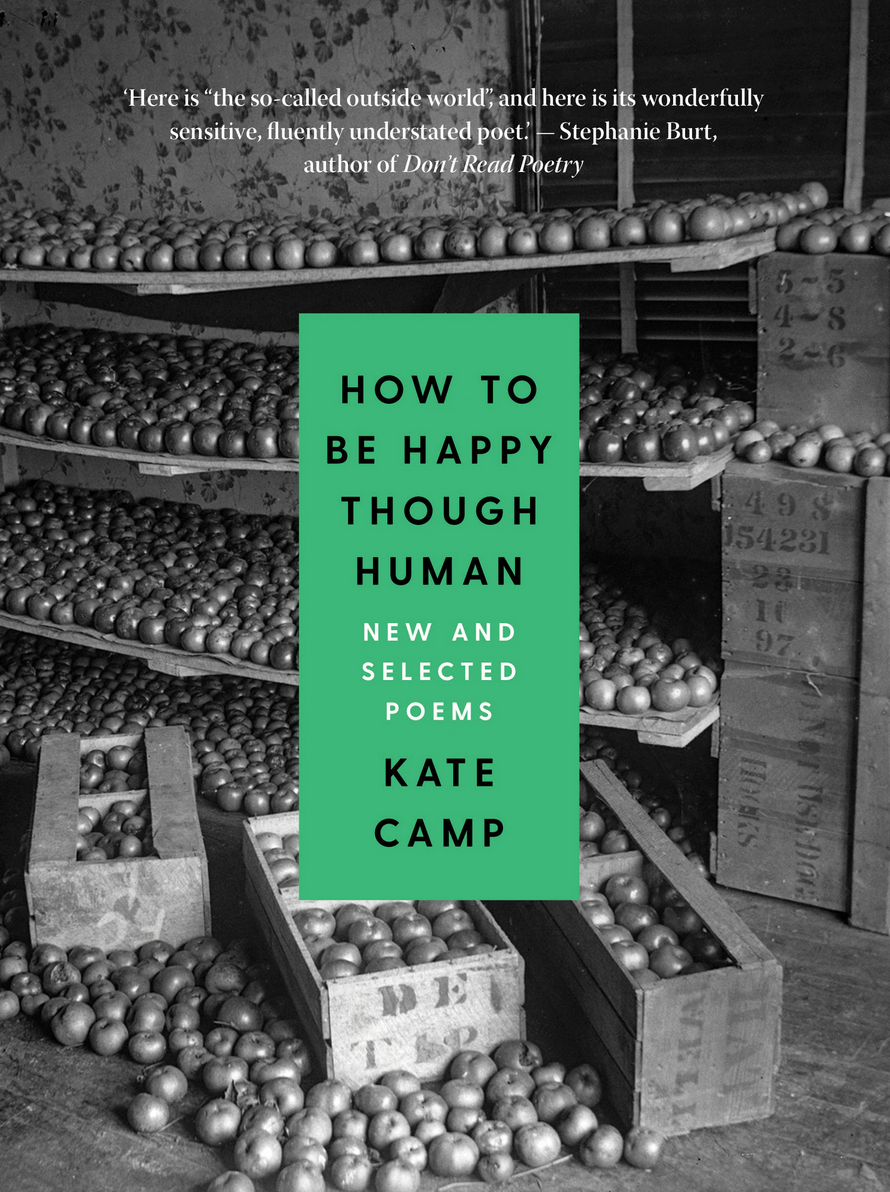
The title of the session makes reference to Kate’s How to Be Happy Though Human: New and Selected Poems (VUP, 2020). It is an excellent collection and deserving of spotlight attention at the festival. Yet, as Bill rightly pointed out, other books that came out in 2020 also missed on launches and/or widespread visibility (such as the terrific selected poems from James Brown and from Bernadette Hall). Kate’s book was joint NZ/ Canadian publication so she missed out on launching it in Canada.
I loved Bill’s introduction to Kate’s poetry: He claimed she had been viewed as ‘the Mae West of New Zealand poetry – deadpan, offhand, laconic, out the side-of-the-mouth aphorisms – but over time more reductive, as she got deepening enlarging, enriching.’ The session included scintillating poetry talk, poems, an extract from the memoir she is writing and the hilarious diary Kate penned at the age of fourteen.
I also loved the anecdote about sending her IIML submission portfolio to Damien Wilkins and discovering he read a couple of them to Bill: ‘Holy shit, I have peaked!’ Yet here we are in a packed room listening to Kate read poems all these years later, and it is an absolute treat. To celebrate Tusiata Avia’s win, she reads ‘Panic Button’, a terrific poem in which Tusiata makes an appearance with her facts on the Bedouin (they scarcely drink water and they bury onions in the desert sand). The middle stanza signals things can go wrong in any human life, and if you thought about everyone breathing in and out at night in the house, ‘you’d just throw up in terror’. Here is the final stanza:
Instead I have this button in my pocket
not like a panic button, just a button
that’s come loose, and it fits
into the curve of my thumb and finger
as I turn it over and over.
I keep it in my pocket
like you keep a pebble in your mouth
in the desert, to make the saliva flow.
Kate Camp, from ‘Panic Button, from How to Be happy Though Human
Kate grew up learning poems off by heart, with that memorisation allowing a completely different appreciation of a poem (I find this when I type out poems for the blog! PG). And when she reads poems out loud she will find the nerve, the trigger point. In writing poetry she wants to remain calm and to be funny, to navigate tension and despair, to keep in control. I love the idea of finding the ‘nerve’ of a poem. Wow!
The memoir sample hooked me: it’s a series of essays that are most definitely not an autobiography. She doesn’t want to hurt people, and if the territory is too tough, she will avoid it – then again, compromising the writing is out, sugarcoating is out!
This was another standout session.
A Clear Dawn
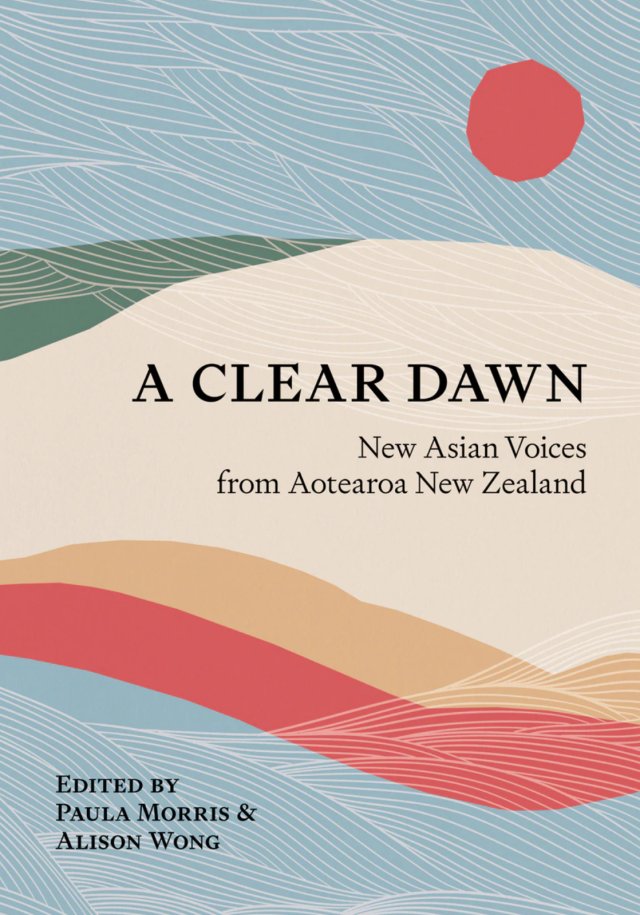
A Clear Dawn: New Asian Voices from Aotearoa New Zealand, Auckland University Press, 2021
The first-ever anthology of Asian New Zealand creative writing was launched by editors Paula Morris and Alison Wong, with a selection of readings of poetry and fiction, to a packed room, including a sizable number of the contributors. The specialness of the occasion, in the arrival of this ground-breaking book, was contagious. Auckland University Press have produced a beautiful book to hold in the hand, exquisite interior design, with the writing itself stretching out in multiple directions and styles. As Alison said in her speech, the subject matter might have an overt Asian focus at times but, equally and so importantly, it can traverse and go deep into anything. And I would underline, you can’t pin ‘Asian’ down to single definitions, experiences, opinions, locations as the anthology so brilliantly shows.
You can hear nine of the contributing poets read here – in a feature I posted on Poetry Shelf.
Ngā Oro Hou: The New Vibrations
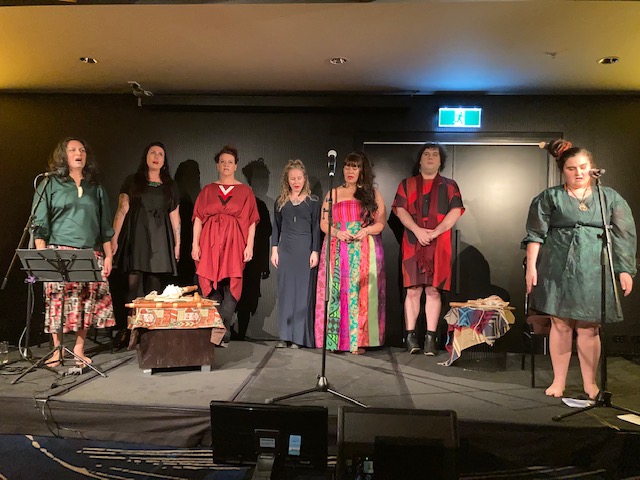
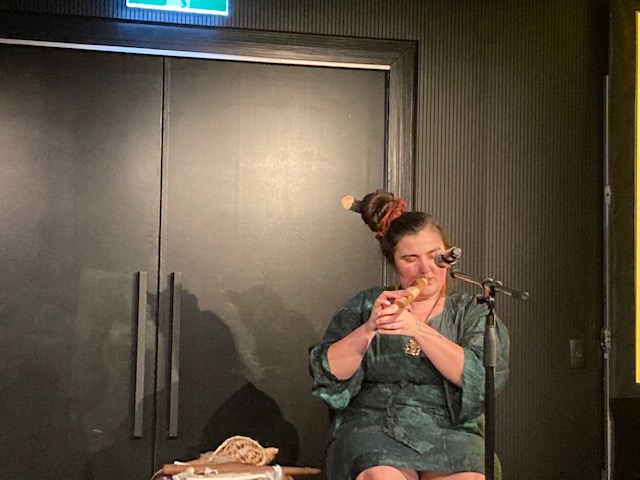
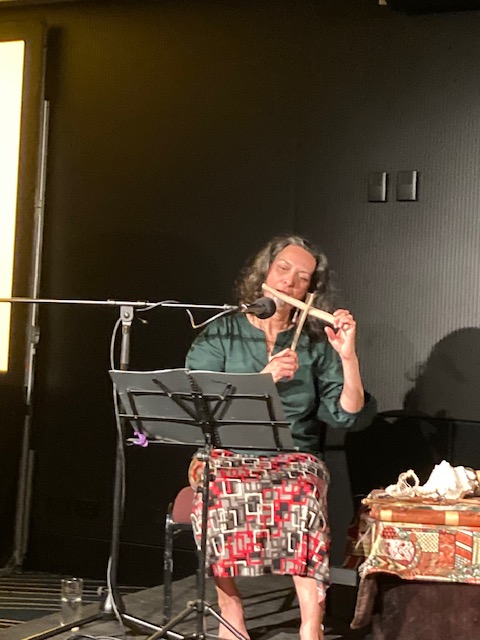
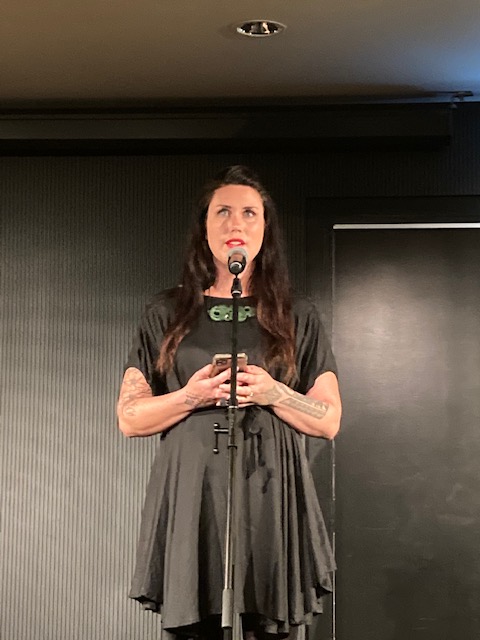
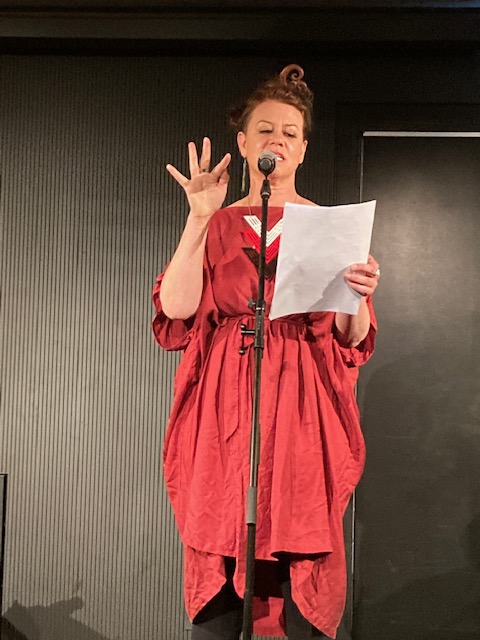
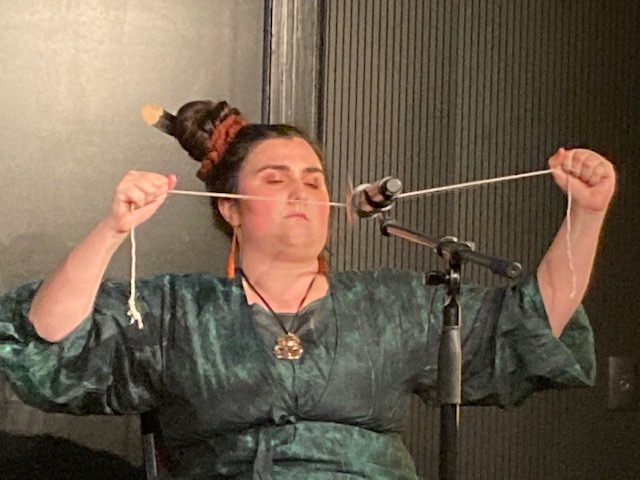
The programme announced this event: ‘An exceptional evening performance that brings together celebrated writers and taonga puroro practitioners in a lyrical weaving of language and song. Writers Arihia Latham, Anahera Gildea, Becky Manawatu, essa may ranapiri and Tusiata Avia joined poet/musicians Ruby Solly and Ariana Tikao. The session was curated by Ruby as part of her Ora series.
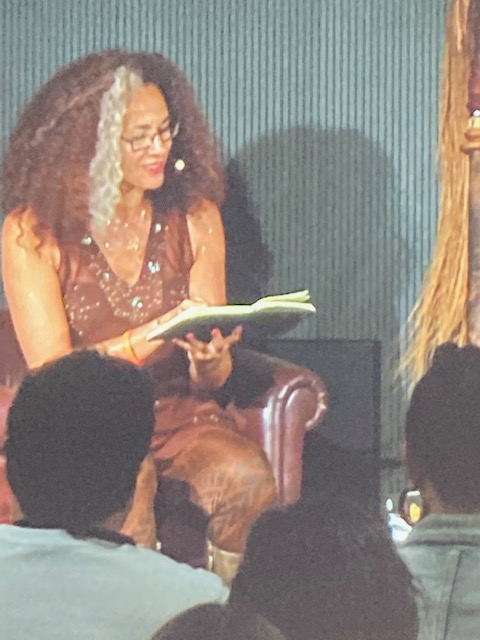
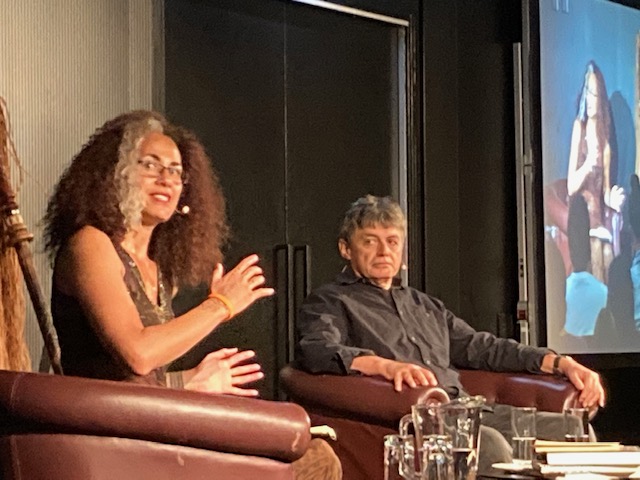
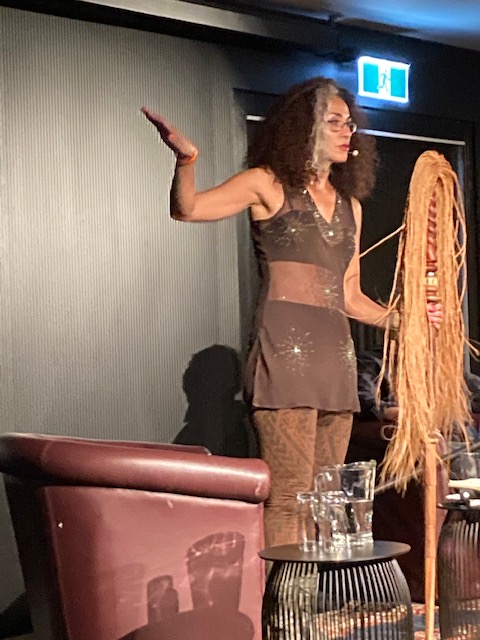
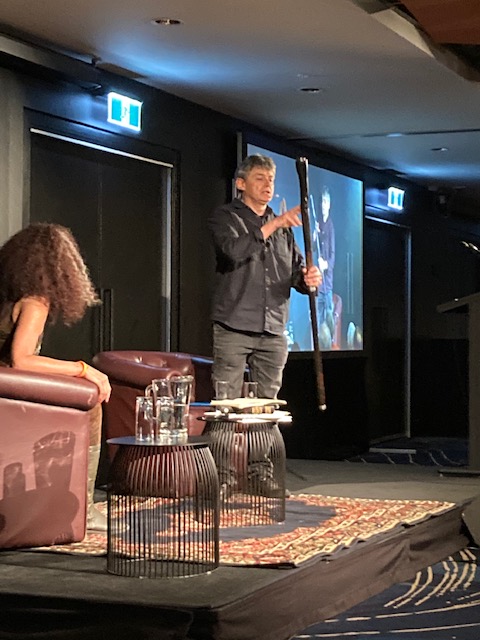
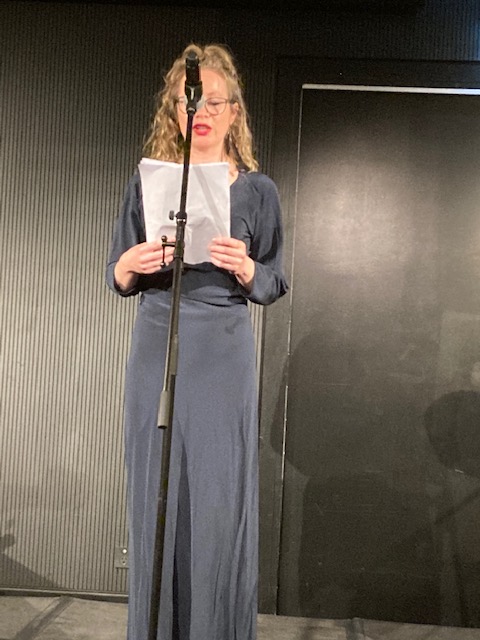
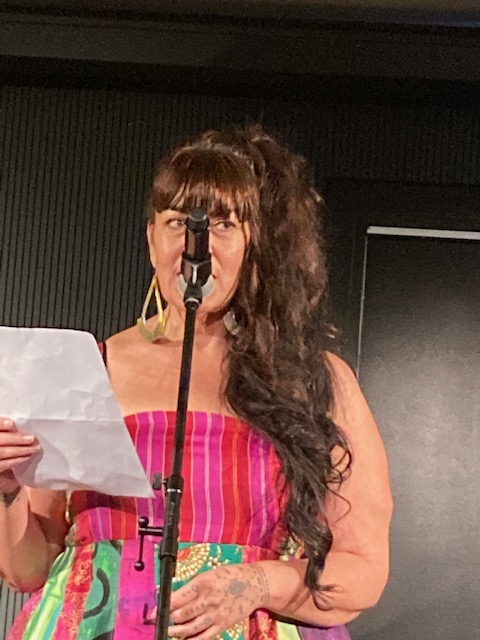
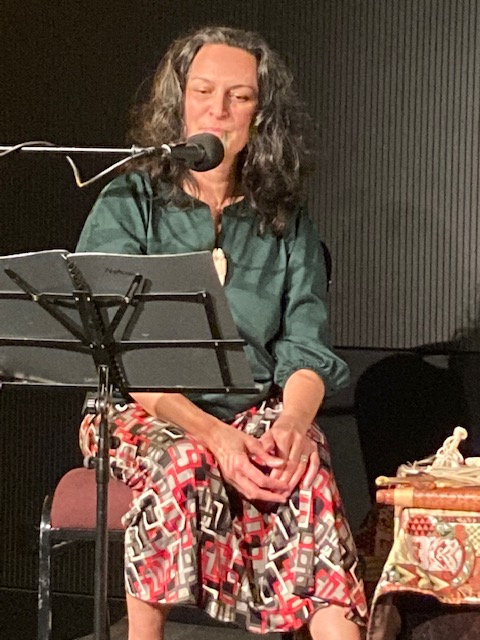
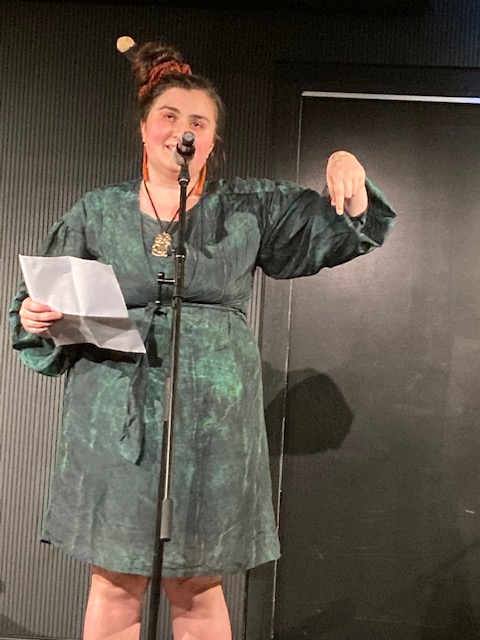
This was the final session I went to at the festival – sadly missing all the events I had circled on the Sunday. But what a sublime way to finish a festival of supreme love and connection, of listening, looking and learning. I didn’t write notes. I did take some photos. I wish I could have recorded the whole event so you too could breathe in the glorious flight of musical notes in harmony with musical word. The words were heart penned. I sat in the front row and breathed in and out, slowly slowly, breathing in edge and curve and pain and aroha and sweet sounds. It was like being in the forest. It was like being in the ocean. It was like being wrapped in soft goosebump blankets of words and music that warmed you, nourished you, challenged you. This is the joy of literary festivals that matter. This warmth, this love, this challenge.
And this was the joy of AWF 2021. I am so grateful to Anne O’Brien and her team for creating a festival that has affected so many writers and readers in the best ways possible. Really rather extraordinary. Thank you.







 NZ Poetry Shelf