New Zealand writers under 25, we are seeking submissions for the 14th issue of Starling! Send us your best poetry, prose, and anything in-between by 20 April 2022.
Full details here

New Zealand writers under 25, we are seeking submissions for the 14th issue of Starling! Send us your best poetry, prose, and anything in-between by 20 April 2022.
Full details here
Aotearoa’s countrywide celebration of poetry is preparing to mark its 25th anniversary with plans for the broadest range of events and promotions yet, as registrations open today for participation in Phantom Billstickers National Poetry Day on 26 August 2022.
National Poetry Day co-ordinator Erica Stretton says that after two years of largely online events, the NPD team, poets and organisers are all eager and optimistic about a return to the usual feast of in-person and community events across the motu.
She urges organisers to register their interest early in hosting an event on or around 26 August, in order to access the seed funding available and to be included in the heavily promoted official calendar of NPD events.
“We’ve all learned so much in the past two years about the power of the digital reach in showcasing poets and poetry, and online will continue to play an important part in our promotions. But we can’t wait to see poets and enthusiasts unleashing the power of poetry again in theatres, cafes, marae, bookshops and libraries, in parks and on beaches, pavements and public transport, anywhere and everywhere!”
In 2019 a massive 160 events took place nationwide, bringing together acclaimed poets, new voices, young writers and poetry enthusiasts of all ages.
This year also marks the 40th anniversary of NPD sponsor, Phantom Billstickers. CEO Robin McDonnell says the company has plenty planned to mark its special milestone, but that poetry will always be at the heart of what they do. “Phantom’s founder Jim Wilson was sharing the works of New Zealand poets on posters in New Zealand and around the world well before the company was even formed. We can’t wait to take the power of poetry to the streets of Aotearoa again in our 40th year, in a nationwide poster campaign in the lead up to National Poetry Day 2022.”
Interested organisers can access registration documents, templates and a full range of planning and promotional resources via the NPD website.Registrations for seed funding close at 5pm on 1 June 2022. The official Phantom Billstickers National Poetry Day 2022 calendar will be announced on 1 August.
For further information contact Erica Stretton at poetryday@nzbookawards.org.nz and to keep up with plans for NPD 2022, follow NZPoetryDay on Facebook, Instagram and Twitter.
Full details here
Motherchild
We see the bones through the skin.
In some lights, they’re like baby birds,
so delicate it scares us. In other lights,
they’re machines. Built to take over the world.
We see the skin that thickens, thins,
thickens, thins all the way till the end.
We see the bones that train the muscles,
then relent, redundant. So many
bones to be broken, so much skin to be torn,
delicate hearts to be ruined
by an accumulation of errors.
I was the child for most of my life.
I never felt able to give that up, to stop
writhing, in constant search
of the manual for living.
I’m not sure when I was at my most resilient
but it isn’t now, now you can’t
show me anything because it all
sucks my organs to the outside of me,
freezes skin, ruins heart.
Jane Arthur
Jane Arthur is a poet who lives in Pōneke, where she co-owns a small independent bookshop. Her first poetry collection, Craven (VUP, 2019), won the Jessie Mackay Prize for Best First Book of poetry in 2020.
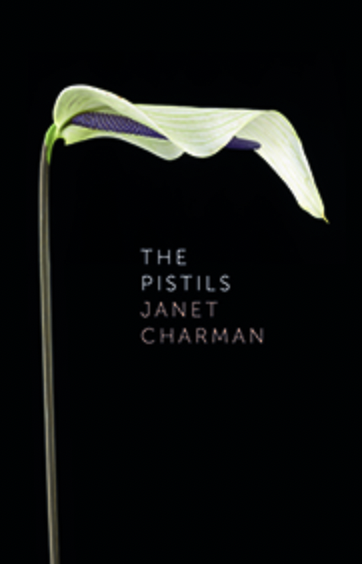
The launch of will be part of The Whau Arts Festival.
Dr. Mary Paul, specialist in Aotearoa NZ Literature, will officiate.
Here is the festival link where you can register to attend
Due to Covid gathering restrictions there will only be room at the venue for 25 guests, but the festival will keep a waitlist and advise people on it of any cancellations.
Venue:
All Goods community art gallery – behind the Avondale Library carpark.
99 Rosebank Rd
Avondale
Date: Thurs 31st March
Time: 5.30
All refreshments served individually.
Vax passes and registration checked at the door.
If you can’t attend but would like to know more about the collection here is a link to it at the OUP website
Janet Charman is one of New Zealand’s sharpest and most subversive writers. In 2008 she won the Montana Book Award for Poetry for her sixth collection, Cold Snack. In 2009 she was a Visiting Fellow at the International Writers’ Workshop of Hong Kong Baptist University. In 2014 she appeared as a Guest Reader at the Taipei International Poetry Forum. Her collection 仁 Surrender (2017, OUP) chronicles her writing residencies in Hong Kong and Taiwan. This is her ninth collection of poetry.
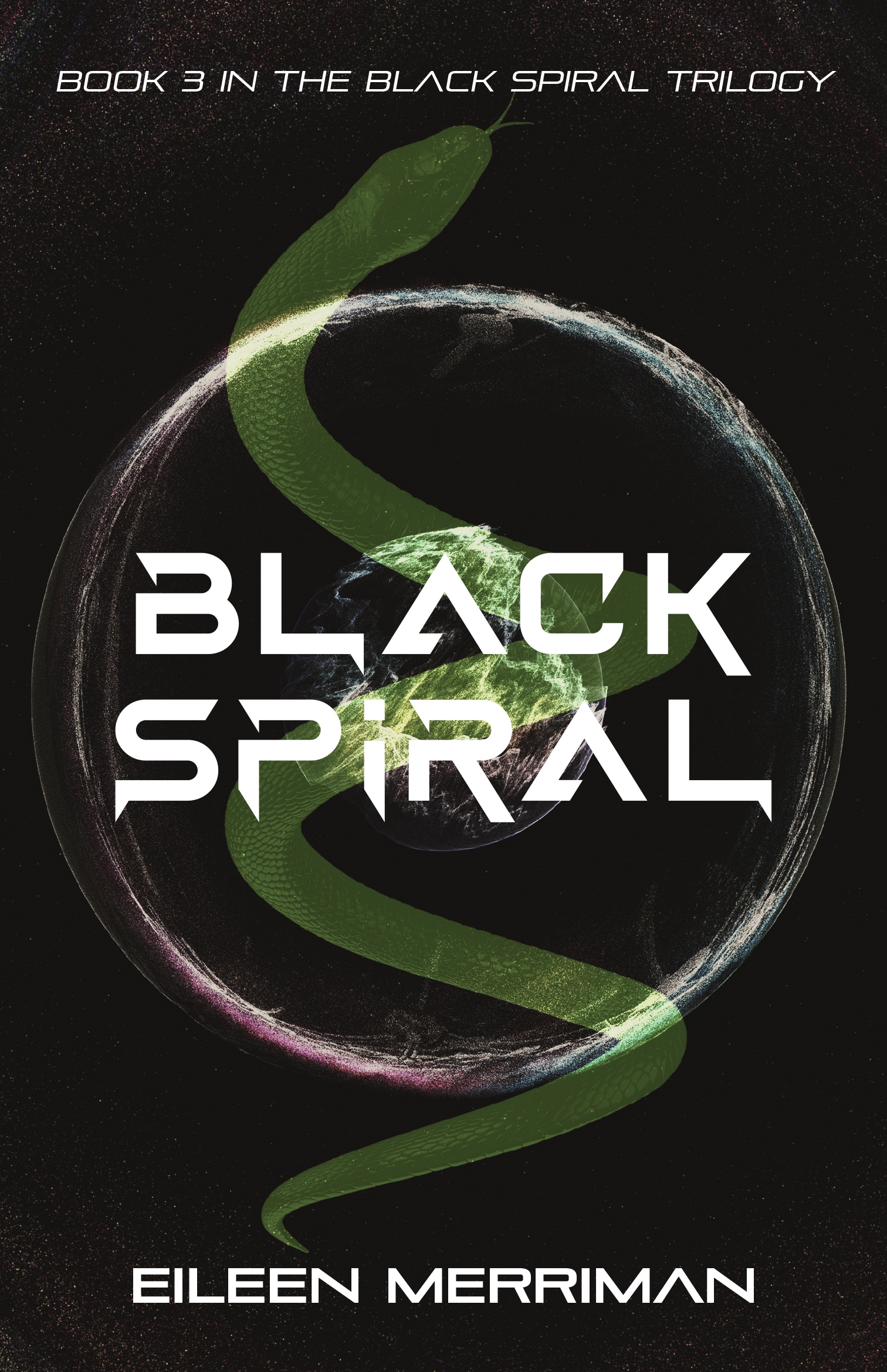
Black Spiral, Eileen Merriman, Penguin, 2022
I choose my books carefully in these tumultuous times. I want a book that transports, uplifts, lingers long after you put it down. A book that raises questions, that offers edge, but that leaves you anchored. That draws you in close to what is good in humanity as much as it might signal what is bad. I adored reading the first two volumes in Eileen Merriman’s The Black Spiral trilogy. My words grace the back of the third volume:
Characters matter, dialogue matters, real-life detail matters, significant issues matter and you are always held in the grip of a perfectly pitched narrative …This YA fiction at its life-crackling best.
This appraisal also applies to the third and final volume, Black Spiral because it resonates and grips on many levels. Like the first two books, it is exquisitely crafted at the level of both sentence and architecture. Violet and Johnno/ Phoenix have escaped the Foundation and what the Foundation might do to them, in its devastating commitment to virus experimentation on humans. The Foundation is especially keen to track the escapees down, to harness (hijack, manipulate) their skills at shape-shifting, astral travelling, telepathy. Especially as Violet is pregnant.
What makes the novel strike so deeply are the ideas. Follow the stench of corruption wherein those in power (not just the Foundation but across Governments and other organisations) use power to serve themselves as opposed to multiple communities. To serve the well-off, to dupe the vulnerable. What price human life? was a question running through my mind as I read. Ideas on biological warfare, vaccines, pandemics, human greed, percolate above and below the narrative surface. I am reminded how we need to insist on scrutiny, on speaking out, on maintaining solid, useful and indeed loving human connections.
Yet what also makes the novel are the characters. The way good and evil are not clear cut, easily discernible divisions. For example, Violet’s father’s choices. Or the way some characters are absolute, unadulterated evil and must be stopped. The protagonists, Violet and Jonno, along with the supportive crew that gathers around them, are prismatic. You look through their eyes, actions and thoughts, and see and feel the world differently. You feel their love and courage, their determination to never give up. And yes, this determination to continue and face all the challenges and sideswipes, no matter how tough, is gripping. I couldn’t put the book down.
Black Spiral clung to me as I ate, did chores, did my own writing. After I read the final page, I dreamed of the novel that night, and it stuck with me the next day. Like a shape shifter before my eyes. Like a phantom cloud of ideas, plot and epiphanies. The relationships, the connections. Eileen’s medical background adds gritty layers, ethical choices, questions about the babies we carry, medical interventions, using humans as guinea pigs, being transparent.
Black Spiral still clings as I work on my own novel, as I read the next poetry book, as I hang out the washing, listen to the latest Covid numbers, the catastrophic events in Ukraine, the twisted choices of the protestors. Novels as good as this offer retreat, reinforcement and uplift. Glorious.
Penguin page
Eileen Merriman’s first young adult novel, Pieces of You, was published in 2017, and was a finalist in the NZ Book Awards for Children and Young Adults and a Storylines Notable Book. Since then, she has published another nine novels for adults and young adults and received huge critical praise, with one reviewer saying: ‘Merriman is an instinctive storyteller with an innate sense of timing.’ In addition to being a regular finalist in the NZ Book Awards for Children and Young Adults, Merriman was a finalist in the 2021 Ngaio Marsh Award for Best Crime Novel and Moonlight Sonata was longlisted for the Jann Medlicott Acorn Prize for Fiction 2020. Editions of some of her young adult novels have been released in Germany, Turkey and the UK and three have been optioned for film or TV, including the Black Spiral Trilogy.
Her other awards include runner-up in the 2018 Sunday Star-Times Short Story Award and third in the same award for three consecutive years previously. She works as a consultant haematologist at North Shore Hospital.
Today is International Women’s Day. At breakfast, I read NZ Supreme Court Judge Susan Glazebrook’s terrific story about her ongoing ZOOM efforts to help get women Judges out of Afghanistan last year (with the help the International Association of Women Judges). The story is in the February issue of North & South and it is unmissable. It feels like we are living and breathing under such a blanket of darkness at the moment. We know the list: the pandemic and its ripple effects, misguided protests, impending war, human suffering under despots across the globe, misguided journalism, mis-and-disinformation, poverty, greed. At times it is too much. I switch off social media, the radio, the papers to avoid toxic voices creeping in with their destructive influences influencing the vulnerable and the disenfranchised. But here I am reading a magazine presenting good journalism under Rachel Morris’s astute editorship. Rachel is stepping back now from the role, but I am grateful for the issues she has presented (not forgetting worthy attention to books in Aotearoa).
It seems an eon since Wild Honey appeared in the world, yet it was only last year I was doing the online Ockham NZ Book Award celebration for it. But it is fitting to remember this project of love – I set out to celebrate and retrieve women poets in Aotearoa. The younger generations of women poets are vibrant, inspiring, active, revealing, political, personal, edgy, lyrical, path-forging and it is a joy to read them. To write about their work on Poetry Shelf. But I don’t write out of a vacuum. I write out of the women poets who preceded me. Who also wrote with vigour, with various connections to the personal and the political. And so to celebrate International Women’s Day, to celebrate women’s poetry in Aotearoa, I draw your attention to Te Herenga Waka University Press’s reissue of Ursula Bethell’s Collected Poems.
I have several copies of Wild Honey to give away. Email or DM or leave a comment if you would like a copy.
Let’s shine lights this week on all the wonderful things women are doing – but hey, not just women, everyone. Let’s shine lights on humanity’s goodness.
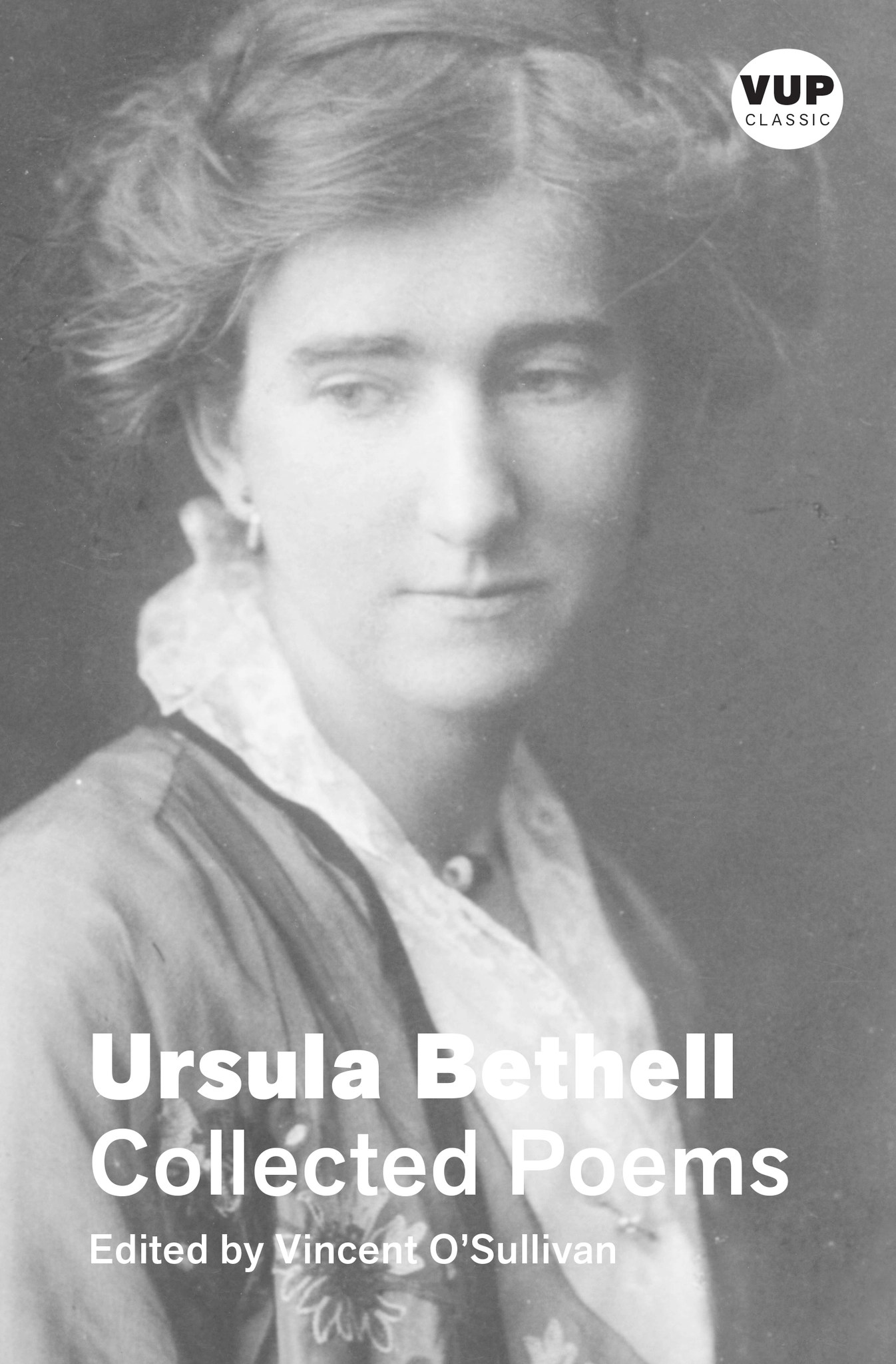
Ursula Bethell Collected Poems, ed Vincent O’Sullian, VUP Classic, 2021
Detail
My garage is a structure of excessive plainness.
it springs from a dry bank in the back garden.
It is made of corrugated iron,
And painted all over with brick-red.
But beside it I have planted a green Bay-tree
— A sweet Bay, an Olive and a Turkey Fig,
— A Fig, an Olive, and a Bay.
Ursula Bethell, From a Garden in the Antipodes, 1929
Ursula Bethell is the kind of poet I turn to when I want uplift, when I crave the poetic line as transport beyond ongoing despair at this sad-sack world. Ursula Bethell’s reissued Collective Poems is now a member of the VUP Classic series. Oxford University Press originally published the collection in 1985, and it was reissued in 1997 with corrections and a new introduction by editor Vincent O’Sullivan.
I utterly loved engaging with Ursula’s poetry in Wild Honey. I considered it in three parts:
“I want to approach her poetry as three distinctive garden plots with a memorial garden to the side: From a Garden in the Antipodes (1929), Time and Place (1936) and Day and Night (1939) and ‘Six Memorials’. You could consider the debut collection as poem bouquets for friends, the second as a poetry posy handpicked for Pollen after her death, while the final collection, a late harvest from the same ground, almost like a consolation bouquet for self. The memorial poems were penned annually on the anniversary, or thereabouts, of Pollen’s death.”
I wrote in my Wild Honey notebooks:
Bethell published three collections of poetry in her lifetime, all anonymously, with the poems chiefly drawn from a decade she devoted to writing, gardening and her cherished companion, Effie Pollen. For ten years, the two women lived in Rise Cottage in the Cashmere Hills, until Pollen’s premature death, at which point Bethell’s life was ripped to unbearable shreds. The more I read Bethell’s poetry and letters, and the more I muse beyond her characteristic reserve, I feel as though this is the woman to whom I would devote an entire book. She is a knotty collision of reticence, acute intellect, acerbic advice, crippling heartbreak and poetic dexterity. Bethell rightly counters the claim that she ‘knows no school mistress but her garden’, with the point that the garden was ‘a brief episode in a life otherwise spent’. Yet her gardening decade was the most joyous of her life, responsible for the bulk of her poetry, and a period she could not relinquish in letters and the grief that endured until her death. She moved back into the city with ‘no cottage, no garden, no car, no cat, no view of mountains’, no dearest companion and an impaired ability or desire to write poetry.
I was uplifted by individual poems and by the threads and luminosity as a whole:
“How can poetry ever match the joy and beauty a garden offers? Bethell brings us to the pleasure of words, the way words bloom and bristle. For Ruth Mayhew, a close friend to whom she dedicated a number of poems, Bethell builds her green garden symphony in ‘Verdure’: an abundant foliage of lemon, myrtle, rosemary, mimosa, macrocarpa. Without these variations, Bethell confesses she ‘should have, not a pleasaunce, not a garden/ But a heterogeneous botanical garden display’. The word, ‘pleasaunce’, is the spicy fertiliser waiting to explode the poem into new richness. Bethell favours flowers over produce, a pleasure enticement for the senses over fruit and vegetables for the kitchen (‘I find vegetables fatiguing/ And would rather buy them in a shop’. Her poetry ferments as a form of pleasaunce where the ‘plausible’, easily digested details of domestic routine, the house interior, daily conversations, intimate preferences and relations are sidestepped for words that provoke sensual and intellectual variegation in an outside setting.” from my Wild Honey notebook
To re-enter Ursula’s poetry is an act of restoration, just for a blissful moment, because it’s a way of feeling the warmth of the ground, the warmth of humanity (as opposed to its cruelty and ignorance). It is reminder that our literature offers so many rewards, on so many levels, and it is at times like these, poetry can be such necessary solace, respite, prismatic viewfinders, idea boosters. I am toasting the poetry of Ursula Bethell with thanks to Te Herenga Waka University Press.
Vincent O’Sullivan is the author of the novels Let the River Stand, Believers to the Bright Coast, and most recently All This by Chance. He has written many plays and collections of short stories and poems, was joint editor of the five-volume Letters of Katherine Mansfield, has edited a number of major anthologies, and is the author of acclaimed biographies of John Mulgan and Ralph Hotere.
Ursula (Mary) Bethell (1874-1945) was born in England, raised in New Zealand, educated in England and moved back to Christchurch in the 1920s. Bethell published three poetry collections in her lifetime (From a Garden in the Antipodes, 1929; Time and Place, 1936; Day and Night, 1939). She did not begin writing until she was fifty, and was part of Christchurch’s active art and literary scene in the 1930s. A Collected Poems appeared posthumously (1950). Her productive decade of writing was at Rise Cottage in the Cashmere Hills, but after the death of her companion, Effie Pollen, she wrote very little. Vincent O’Sullivan edited a collection of her poetry in 1977 (1985).
Te Herenga Waka University Press page
Thursday 10 March, 6pm
GOOD BOOKS, 2/16 Jessie St (Beside Prefab)
and streamed live online on Youtube
Vaccine passes and masks required. Very limited numbers, get in quick.
RSVP to maggie@at-the-bay.com
Pre-order your copy of Formica here for a copy signed live at the event.
Link to Youtube stream will be embedded on this page leading up to the event. Here
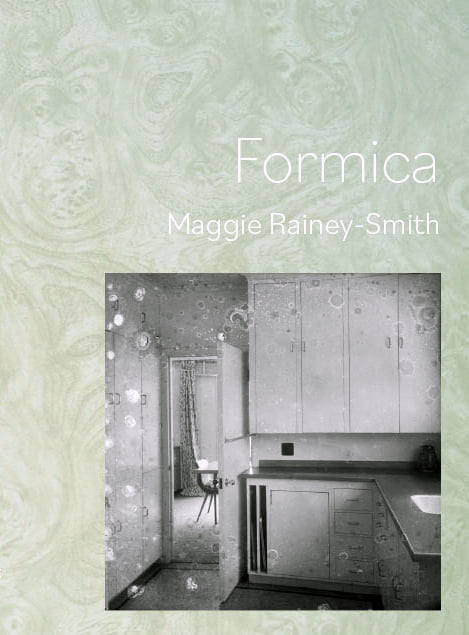
Formica’ begins in 1950s Richmond with the author’s family struggling in the aftermath of a war that took her father to Crete to fight and then Poland as a prisoner of war. At the Formica kitchen table, Maggie’s mother is reciting poems while chopping the veggies for tea. Maggie listens while tying her boots for marching practice. Poems follow her as she makes her way in the world – working as a typist, doing her OE, becoming a wife, a mother and grandmother …
An unsentimental writer of honesty and humour, Maggie nods to the lives of all women of her generation – too often defined by their fertility and kitchen appliances when there was fun and fulfilment to be had elsewhere. Not that Maggie doesn’t adore her Kenwood mixer, but it lines up with abiding friendships, granddaughters, travel, sex and the joy of words.
To be launched by Fiona Kidman.
Follow the link to pre-order your signed copy and watch the livestream on the night. Online sales will happen during the livestream as well.
below the 45th
Among the dark brood
of hills, I spot a landed square of kakapo-green,
a paddock’s grab of sunlight on grass
caught in one glance
just as noon strikes Dunedin’s western hills.
No matter where you go in Dunedin
there’s bound to be some hill’s flanks
to fix an eye on — a rock-shrouded cliff,
the bones of a quarry, the harbour’s overcoat-navy
smudge of peninsula, a slouching Mount Cargill
parked at the end of George Street.
Beyond this café’s window, hills loom
as the conversation moves and sways:
someone pointing out that here,
below the 45th parallel,
it’ll soon be time to plant courgettes,
celery and tomatoes. For today though,
under this present soar of clouds
in full sail, winter hills
are magma-heavy, slumped
into their own eternal weight
until by some quick trick,
a piece of trapped sunlight breaks free
to mark land from sea-light,
bend rock from mist.
Kay McKenzie Cooke
Kay McKenzie Cooke (Kai Tahu, Kati Mamoe) lives in Ōtepoti Dunedin. Her most recent collection of poetry is titled Upturned published in 2020 by Cuba Press. She is presently working on a manuscript for her second novel, as well as writing poems for her fifth collection of poetry.
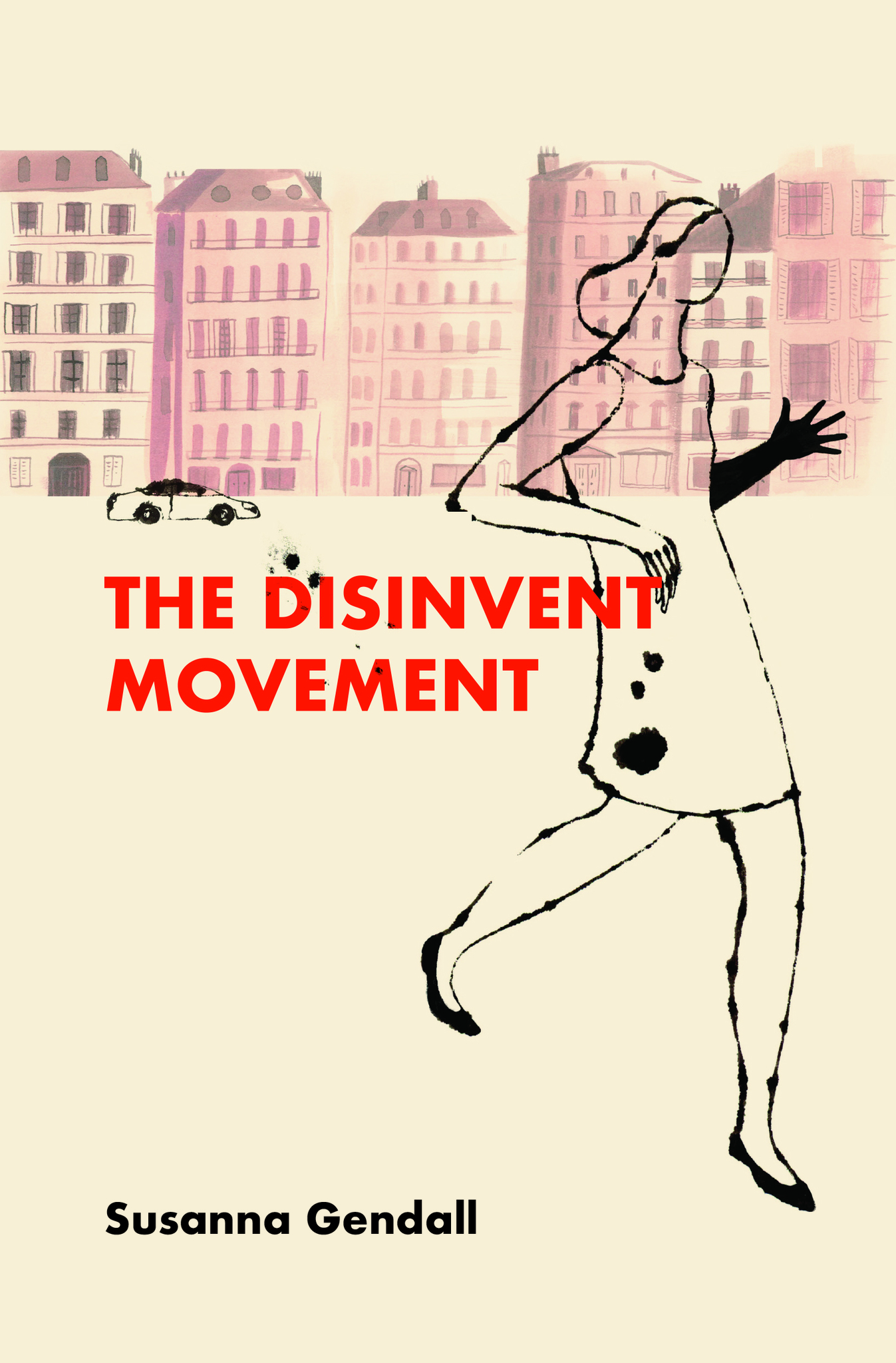
The Disinvent Movement Susanna Gendall, Victoria University Press, 2021
‘Every week we would disinvent something. This week it would be plastic. Next week it would be the aeroplane. I stood outside the supermarket and handed out flyers, which people kindly refused as they left carrying large packs of bottled water.’
Susanna Grendall’s short fiction and poetry have appeared in a number of journals in Aotearoa, in print and online. The Disinvent Movement is her first book. Presented as a novel, it might also be viewed as poetry or short fiction. The short chapters, the 81 vignettes, create a patchwork-quilt effect, exquisitely stitched pieces that fit together as both absence and arrival. One chapter appeared as a poem on The Spin Off‘s Friday Poem. Susanna (at the time of publication) lives in Wellington and Paris, and the novel bridges both cities, along with time spent in other countries.
The novel sustains the rhythm of the quotidian, almost as though we accompany a bricoleur strolling, collecting, musing, assembling, pausing. There is a plainness at work. There is a knottiness at work. There is the protagonist, both intimate and at a distant. She is in an abusive marriage, but that is held at arm’s link, so we only get squinty looks. She is vignetting her encounters with men (love affairs) that masquerade as encounters with self. She invents the Disinvent Movement as she craves substance, concreteness, attachment. More importantly she yearns to rid (disinvent) the world of unnecessary things (plastic, appliances). She holds so much at arm’s length: her children, her husband, her lovers, her friends. Yet in this swirl of daily existence she is exposing herself. It is poignant and it is unsettling. How do we survive the slam of life and living? Of finding a place in our mayhem world?
The protagonist’s Disinvent Movement acquires straggler fans who don’t necessarily get what disinvent means. Maurice does. Maurice wants to disinvent cars. To black out car windscreens, and to set them all on fire a week later. Mavis however wants to drive her car to pick up horse manure (sometimes). The windscreens get painted black, but such anarchy prompts the protagonist to flee.
She is working in an office not quite under her own name. Nothing feels stable, neither the people close at hand, nor the people at arm’s length. She asks near the end of the book: ‘What was identity except a bit of stitching?’ Indeed. I am reading this and as I read I am unravelling and picking up stitches, admiring patterns, threading yarn and inventing as much as disinventing. Catching the mistakes in living, the craft in living, the self garment in the making.
I read this in one compulsive swallow. It is unlike anything I have read (maybe whiffs of French and Italian writing) and is altogether glorious.
Te Herenga Waka University Press page
Susanna reads and talks about the book with Lynn Freeman RNZ National
 NZ Poetry Shelf