Category Archives: Uncategorized

Grace Taylor’s debut poetry collection is tender, strong and essential

1477428_10151783929738359_479190194_n-1

Grace Teuila Evelyn Taylor is an Afakasi poet, teacher, spoken-word artist and mother. Her father is from Glastonbury, England while her mother is from Moata’a and Apolima in Samoa. She is a mentoring presence in South Auckland where she co-directs Niu Navigations and co-founded both the South Auckland Poets Collective and the Rising Voices Youth Movement.

Grace’s debut collection, Afakasi Speaks, is a significant arrival. These poems have sung in the air at spoken word performances, where the poem is wrapped in the body’s movement, and the body’s movement is wrapped in the poem. Hearing Grace perform, it is not just a matter of entering a poem and all its rewards, but encountering a writer who occupies her space with dignity, integrity and compassion. This woman has the courage to stand up and speak out.

Now that the poems have been placed upon the page, where you can stall and back track, you encounter beauty, wit, edge, intelligence, empathy and above all, heart. It is the sort of poetry that takes you into unfamiliar rooms and changes you to the extent you view all that is familiar in a new light — particularly notions of identity.

At the red-hot core of the collection, as the title suggests, is Grace’s navigation of being Afakasi. Afakasi — the daughter of mixed heritage, both white and brown, both Samoan and European — is in-between. The writing (the poems) makes its way in and out of this space. At times it is a gap, a gap that trembles with the electricity of unbelonging. At times it is a braid, a plait, and the electricity of in-between ignites new ways of being. Grace as poet is searching for the words (‘They don’t carry dictionaries for Afakasi’) to take root in this space.

The music of performance is not lost on the page. The white space becomes the silent beat that punctuates the rhythm, the rhyme and the repetition. The white space absorbs the neighbourhood activity. It is where you stall to take on board the heart of speech. The voice.

The first poem, ‘Afastina,’ is dedicated to Selina Tustitala Marsh and Tusiata Avia. In this genealogy song, Grace acknowledges the presence of these writers in her writing lineage. These women. These ‘Afakasi are modern monarchs.’ There is beauty in the image of the butterfly; women are able to stretch their wings wide and find the freedom and skill to fly.

Other poems stand out because Grace seems to reach deep into an honesty of self to say out loud what it is like to be in-between. In ‘Afakasi has no name,’ Grace moves through examples of Afakasi not fitting into the skin of a name, and that poetic movement moves you. How to be Samoan or palangi or New Zealander are the simmering questions? Then, ‘Aunty is Afakasi wishing you would just shut-up/ stop talking about how in-between we are/ it is what is/ just move on.’ ‘The poem, ‘What is Afakasi’ has such energized heat it sears you as you read. This is poetry with its undulating music and chords that catch your ear, but it is also politics. This is a voice that is insistent and strong, a voice that has come from experience and doubt and vulnerability. Like many of the poems in the collection, it is utterly vital, because it can change how we see things. Like all the poems in the collection, it feeds off political ideas, but it never looses sight of heart.

There is an ode-like, tender poem to Grace’s father – she is missing him, and she misses him ‘the most/ when I see/ the weathered paint of our home flake/ when I hear the cold/ tired floorboards creak/ when I get/ a flat tyre on my car.’

The final poems are for and of her child – a different bloodline, where writer becomes mother. Like poetry, he too is a way of filling the in-between. Of finding ways of belonging.

This debut collection is an important entry on the New Zealand poetry landscape. The poems are strong, with wings set to fly and lead us out of misplaced preconceptions into revitalising connections. I loved it.

Afakasi Speaks, Grace Taylor, published by Ala Press, Hawa’ii, 2013
I say let’s invent, cultivate and nourish new ways to talk and write about poetry — Emma Neale raises a question

In a new post Emma Neale wonders if poetry reviews are ever obsolete. It’s a good question. She then posts reviews of two fabulous books.

Print media is in such strife these days poetry reviews have almost become an endangered species (which is partly why I started Poetry Shelf). Some newspapers such as The ODT and the Nelson Mail show a strong commitment to poetry and I still manage to get two or three published in The Herald. Landfall-on-line  is another source, as is the NZ Listener.

So perhaps we have to invent, cultivate and nourish new ways to talk and write about poetry (in new places). A blog like this is only ever going to hook the attention of our small enclave of poetry fans. A newspaper review might capture the attention of someone quite different (it happens!) and give a book a new readership.

What can we do?


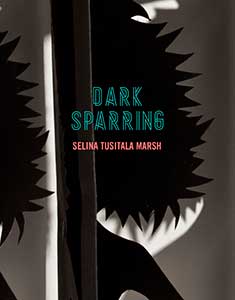
Giveaway copy of Selina Tusitala Marsh’s Dark Sparring results

Thanks to Auckland University Press, NZ Book Girl won the random draw to receive a copy of Selina Tustala Marsh’s Dark Sparring (2013).

My review here

The interview here

cp-dark-sparring

Link

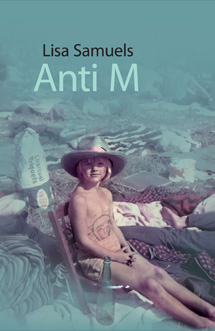
LisaSamuelsAntiM   LisaSamuelsAntiM

Lisa Samuels, Anti M, Chax Press, 2013

Lisa Samuels teaches Creative Writing, Literature and Theory at The University of Auckland. Born in Boston, she has also lived in the Middle East and Europe. She has a PhD from the University of Virginia and has published seven poetry collections and a recording of Tomorrowland with soundscapes (2012).

Lisa’s new book, Anti M, is presented as anti-memoir or omitted prose. Pick up the book, start reading, and you can use those labels as you will. For me, the writing wittingly or unwittingly navigates poetry as much as it does narrative, and yes, there is the governing rule of omission or erasure at work. You enter a realm of heightened or exaggerated selectiveness (bearing in mind an author is always selective), exclusion and perhaps even interference with memory. As you read questions arise, images surface and story and poetry produce electric connections. If the writer takes away, for example, what does she create?

Three terrific quotations provide gateways into the writing. I especially loved Bernard of Clairvaux (1140): ‘what keen edge can both clean my memory and keep it intact? Only the living and effective Word which is sharper than a two-edged sword …’

Holding the book, with that quotation ringing so beautifully in my ears, and flicking through the pages where the words float dreamlike, scattered, suspended, I am struck that the gap, the pause, the lure of silence will be a key part of my reading. Numerous other poets spring to mind: Michele Leggott, Susan Howe, Kathleen Fraser, Lisa Robertson, Lyn Hejinian, Gertrude Stein, the erasure art of Mary Ruefle.

Firstly, the gap or the pause. The opening lines of the book: ‘today we walk an outer ring/ around the borrowed house.’  A fitting entry into writing that is in so many ways (subversive or otherwise) an autobiographical passage. The ‘we,’ ambiguous at the outset, may be the poet, the reader, the narrator-I, Daisy, family. The book is divided into nine parts like nine concentric circles, but the passage is interrupted. There are syntactical  gaps, gaps of information or recollection. At times it is like a movie jump cut (‘the music makes people adult veil’), but for me it was as though I were listening to a story being told where the teller is reserved, circumspect or bumping up against pockets of amnesia. At times it is like poetry of the pause where an interruption (or withholding) in the narrative flow elbows room for the reader to stop and meditate (to fill in the narrative gap, to make personal connections, to tinker with the syntax, to sidetrack and daydream). For example: ‘The train robbery      in a balloon/ language before I could swear something fretted over.’ The omitted text also keeps altering the course of narration as though the circumspect narrator cannot maintain a single thread but keeps swerving from a single word or phrase to elsewhere. The gaps skew grammar, verb agreements go awry. Phrases are left dangling in mid air and questions  come to the surface. Is this a matter of concealment, shyness, artistry, craft, deferral, sidetracking? Is it a case where the writer re-enacts the inability of words to represent a life (a memoir) adequately? Would the book be better or worse (more comforting, more estranging) with the gaps filled in?

It might seem like this is a vertiginous book to read as you navigate cliffs and gullies, but it reminded me of standing in front of a patchy fresco in Italy. So much missing but somehow, in that prolonged moment of looking, you experience something coming together, gloriously, surprisingly. The reading isn’t disorienting, it doesn’t leave you bereft of anchor, it embeds you in a world that absorbs and moves. Lisa leaves gem-like clues to the writing that haunt and puzzle, such as ‘narrative order as/ the paint thinner of consciousness.’ Or ‘sometimes when one is unifying reality/ the patchwork humming outside the air/ communicates/ the bed contains.’ The word ‘patchwork’ leads to that Italian mosaic or patchy fresco, and signals the centuries-old ambition of unifying miniature pieces. What to do with these pieces? The word ‘humming’ leads us to the power of the musical note to work on the body and the heart. Another clue to the methodology of the writer: ‘a    little/assemble band/ which lyrics    blanked/ of independent words.’ And this, which suggests the process is not methodical but steered by intuition and gut feelings: ‘Tripping a little on the stairs of relation.’ ‘Relation’ makes a faint line to family connection but more importantly exposes an image of the making of story — in steps and stages with leaps and bounds and stumbles and falls (ah, the risk of reading and writing).

What is visible upon the page matters. You leapfrog the words. You manage the pauses. There is an attentiveness to sound (as there is with the other poets I listed), a sustained lyricism that might be intuitive or might be deliberately composed. There are shifting aural links, delicious and subtle shifts in sound that create harmonious chords. This is pleasurable — to read from ‘shock’ to ‘corral.’ There is sweet, compounding alliteration: ‘The shiny summer window sentences / stands to think.’ Or the way this ‘sound’ is caught in an aural fishnet with that ‘sound’: ‘swishing     looking with a     room/ the wall/ by day, and glistening.’ Phrases leap out at you and stick (whether musically or semantically): ‘People are the whole house.’ Words echo, again in semantic and musical ripples. For example, red. You move from red pills to red-like coals to red mouth to red dates.

Daisy is like a cypher, a puzzle. Is she the buried girl of the poet, the narrating-I? Or a white board to absorb memory in all its frailty and strength?

At intervals, there are luminous photographs that seem lifted from the past. Deep-set, colour images with a tangible sheen like lush memory pockets. They serve as a perfect metaphor for the writing. Lisa has served memory with a tangible sheen that attains poignancy, momentum, and audible lyricism. I can’t think of a single ‘anti’ word that suits my reading of this astonishing book. The final photograph (now black and white) is a baby on hands and knees looking at him or herself in a mirror. The surprise. The puzzlement. The mystery. The magic. The self discovery that is never complete, distorted yet vital.

In this book (however you choose to define it will depend upon your passage as a reader), the words are indeed keen. No cutting edge here though — instead a liveliness, an attentiveness to shades of change, a quickness. This luminous book represents the swoop and soar of memory through noise, silence, presence, absence, nostalgia, joy, interruption, love, longing, forgetting. The key undercurrent, and the one that keeps you attached to each line, is that this poet writes out of an unflagging and infectious love of words. For me, the gap (the omission, the white space, the ringing silence) transforms interrupted narrative into poetry.

Chax Press page

Rob McLennan’s interview

Spain Journey at ka mate ka ora

Shearsman Books page

epc at Buffalo page

nzepc Tapa Notebook page

Eleanor Catton Every now and then you get to read a novel that elevates you far beyond the bric-a-brac of everyday routine

BWpVIpJCQAAlo9p  BWpVIpJCQAAlo9p

Earlier this year I got a proof copy of Eleanor’s book to review for the Herald. It was, as my review attests, an extraordinary reading experience. It seemed to be a significant and vital contribution to the local literary landscape let alone the wider global setting. To sit glued to the TV this morning, with twitter alongside, to hear her announced as winner and to follow her speech (so composed, thoughtful, inspirational) was pinch-your-self-material. Even from this far, from out from the city and its hubbub of life, from bookshops and libraries and book chat, I wanted to leap for joy. This is a marvelous book, and its author inhabits this world with a rare mix of graciousness, humility, courage, outspokenness, daring, warmth and kindness. These qualities mark her as a person (as they did with Margaret Mahy), but they also mark her writing. In her speech, she contrasted the need to write for money and the need to write with other values in mind. Eleanor writes out of love — out of a love of writing and words, but equally importantly, out of a love of humanity, her close friends and family, and then beyond. Cheers!

_70501637_eleanorcatton_getty

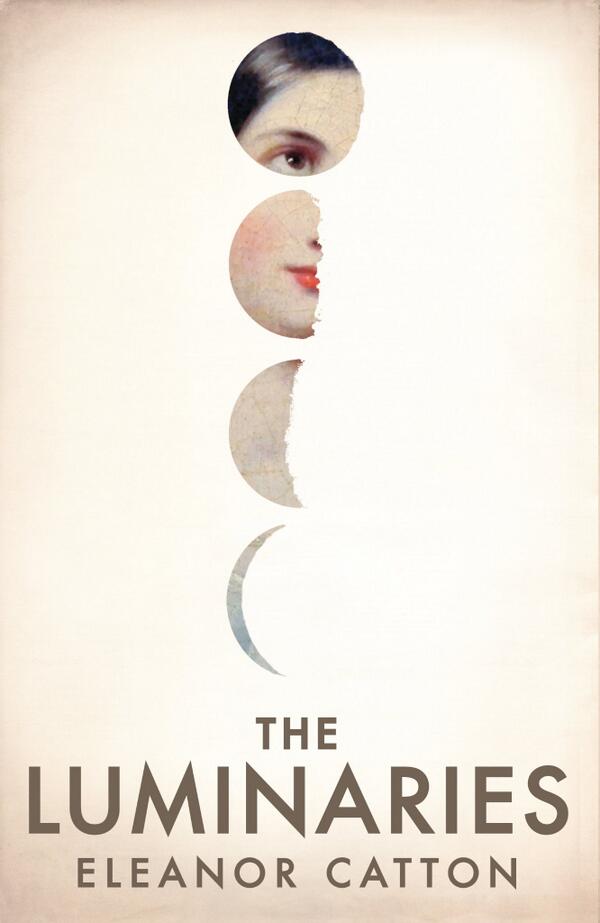
The Luminaries by Eleanor Catton
(Victoria University Press hardback $45/paperback $35)

Every now and then you get to read a novel that elevates you far beyond the bric-a-brac of everyday routine, takes you apart, reassembles you, and leaves you feeling as though you have been on holiday with a genius.

Eleanor Catton’s astonishing new novel, The Luminaries, does just that. It was no surprise to me, really, because her debut novel, The Rehearsal, was daring, fresh, beautifully crafted and award-winning. It has been translated into 12 languages.

Don’t let the hefty size put you off (more than 800 pages) because you enter the world of a novelist who, in her late 20s, writes with such wisdom, compassion, elegance and craft you don’t want to depart that world in a hurry.

See the rest of my Herald review here.

‘holding the line’ by Sarah Broom is an entry that unfolds

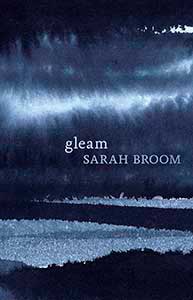
Having just posted a tribute to Sarah Broom, I now have permission to post one of her poems: ‘holding the line.’ Picking a poem from her new book, Gleam, was no easy task. In the end I picked the poem that opens the book, an entry that unfolds upon the page like an origami bird. It takes flight. It trembles, hovers, and shimmers with meaning and music and tiny little freedoms.

This is a poem of utter economy, every word poised and perfect in its location and resonance. The lines sound out with exquisite music, each musical note, a chime for the ear.

There is the homely gesture — a gesture that signals self care (the full moon placed on the brow). There is the way the moon shining bright and cool in the night sky is an object of beauty in which to restore oneself. There is the quiet hint at the moment of despair (‘my heart/ is clapping out of time’). There is the extraordinary leap of imagination that is a leap of fortitude (‘I take it out/ and throw it among the stars’). There is the depositories of wisdom (‘who know all there is to know’).

But what grips me, what haunts, what unfolds and refolds and unfolds again for me, is the line that both starts and finishes the poem: ‘holding the line.’

Reading this line in the context of the book and the context of Sarah’s life, I see this as holding onto the thread of existence, the ticking heart beat, the line that leads faintly, beautifully to a moon or to the ‘drag of the sea’ or to the arms that embrace her. It is the line that is an anchor, the blood line that is family and loved ones, it is the line that is the line and length of friendship. Above all, and movingly so, it is the line that the poet inscribes in her notebook and then wings through the air to a reader. It is the line that makes poetry — that the poet held close and then let go for all to see.


holding the line


when I feel feverish

I take the full moon

and place it on my brow

like a flannel


it is so cool because it has just

been swimming in the sea


when I feel that my heart

is clapping out of time

I take it out and throw it

up among the stars


who know all there is to know

about holding the line


© Sarah Broom Gleam (Auckland University Press, 2013)

cp-gleam