You can find it here

Moving from one world to another
is like dying in a dream
of hands and water.
Nothing is forgiven because
nothing is remembered
but the desires remain the same:
to be in a room with others
satisfied
tired of wonder
holding each other
with the good secret
of no longer having to insist on going
where we think we have to go.
©Gregory Kan
Gregory Kan’s work has featured in literary journals including Atlanta Review, Cordite, Jacket, Landfall, The Listener, SPORT and Best New Zealand Poems, as well as art exhibitions, journals and catalogues. His first book of poetry, This Paper Boat, was shortlisted for the 2017 Ockham New Zealand Book Awards. His second book of poetry, Under Glass, is forthcoming with Auckland University Press in 2019.
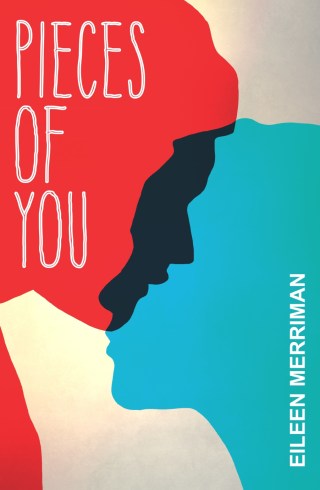
Pieces of You Eileen Merriman, Penguin Random House, 2017
Eileen Merriman’s debut YA novel Pieces of You is the kind of book you want to read in one sitting because it is so breathtakingly good. It is like a globe artichoke: sweet, layered, bitter. Fifteen-year-old Rebecca moves from Dunedin to Auckland, feels like a complete outsider, misses her friends, goes to a party and something awful happens that she can’t speak of, so cuts herself in order to get relief from pain. She meets her neighbour Corey and they fall in love. His dark secrets hide alongside her dark secrets. They write poetry together. They share their love of literature. They are good for each other but they don’t tell each other everything and that keeps the dark dark.
The chapter titles are titles of outstanding books (The Outsiders, One Hundred Years of Solitude, The Book Thief, Great Expectations, The Heart is a Lonely Hunter, The Catcher in the Rye and so on). Rebecca and Corey talk about books a lot and books become little anchors, bridges between each other, vital keyholes upon a wider world. Books are part of the fabric of their daily life and that matters. They write a poem, Rebecca writing a line and then Corey the next. I adored this book/poetry/love of words presence.
I am not going to spoil the story by telling you what happens. Read it for yourself. Just know that this is an acute reading experience. It feels utterly real. It does not smudge the tough stuff. It is kaleidoscopic in both emotion and everyday detail. Detail that animates that lives of two teens. There are countless examples of excellent books on the tough experiences that some teenagers face (drugs, alcohol, abuse, rape, cancer, suicide, the death of a friend or family member) but that is not to say such subject matter is now done and dusted. Far from it.
Eileen writes with such a flair for dialogue, for family circumstances, for teenage struggles and joys. This is the kind of book that will stay at the front of my mind all week and longer – I recommend it highly.
Eileen has also written Catch me When You Fall (2018). Invisible Breathing is out in 2019.
Eileen’s web site
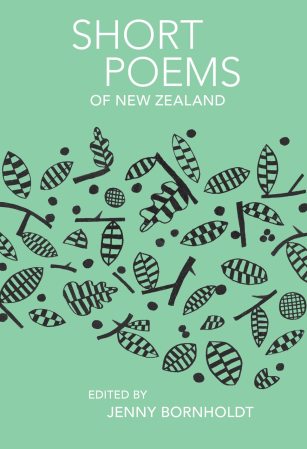
Short Poems of New Zealand, edited by Jenny Bornholdt, Victoria University Press 2018
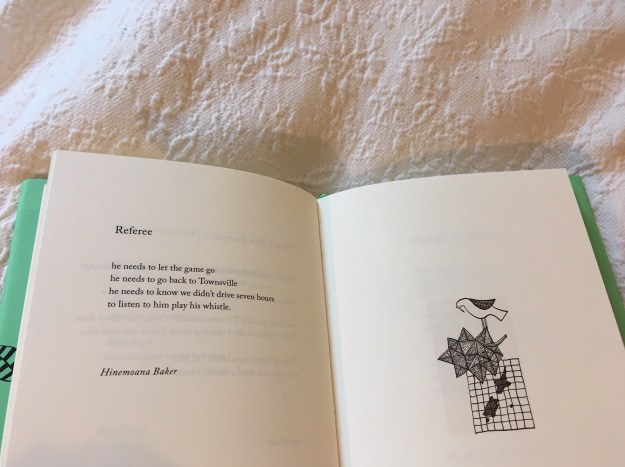
Jenny Bornholdt has edited an anthology of short poems illustrated by Gregory O’Brien. She began collecting short poems eight years ago and rediscovered her folder last year. In her introduction she likens short poems to the ‘small house movement’.
‘I’ve begun to think of short poems as being the literary equivalent of the small house movement. Small houses contain the same essential spaces as large houses do. Both have places in which to eat, sleep, bathe and sit; they’re the same, except small houses are, well, smaller.’
She gave herself a line limit (nine lines) because ten lines seemed to be that much roomier.
She favoured magnetic attractions in her arrangements.
I emailed Jenny and asked what had drawn her to the short poem.
‘They tend to offer one strong, memorable image or thought – it’s this concentration of language that appeals, I think. Short poems often work as the commas in a collection, so it’s interesting to pay them close attention and see what happens when you put a selection of such intense ‘pauses’ together.’
Why do I like short poems and consider this beautifully produced collection an exquisite object? Because I love poetry that has room to breathe – where white space is the silent beat, the clean sheet, the place to meditate. A short poem is like a complex note. It vibrates. Like a guitar string. Or wine. Or the ocean in the heat.
One of my favourite poems in the collection, ‘Night’ by Albert Wendt, epitomises the way a short poem becomes large. The image is strange and captivating. I never tire of reading this poem. You can hear Albert read it here. You will never tire of listening.
Some poems, like Hone Tuwhare’s ‘Haiku 1’, Bill Manhire’s ‘My World War I Poem’ or Angela Andrews ‘Grandparents‘ have been in a room in my head for ages. These tiny poems are perfect to savour when you have waiting moments. Again you will never tire of listening.
I recommend placing the book beside the bed and reading one poem before you go to sleep as a keepsake for the night – or one poem before you rise as a keepsake for the day.
Victoria University Press page
Jenny Bornholdt is the author of many poetry collections, including The Rocky Shore (Montana New Zealand Book Award for Poetry, 2009) and Selected Poems (2016), and many chapbooks. She has co-edited several notable anthologies, including My Heart Goes Swimming: New Zealand Love Poems. Her most recent book is The Longest Breakfast (illustrated by Sarah Wilkins, Gecko Press, 2017). She was the Te Mata Estate New Zealand Poet Laureate from 2005–6.
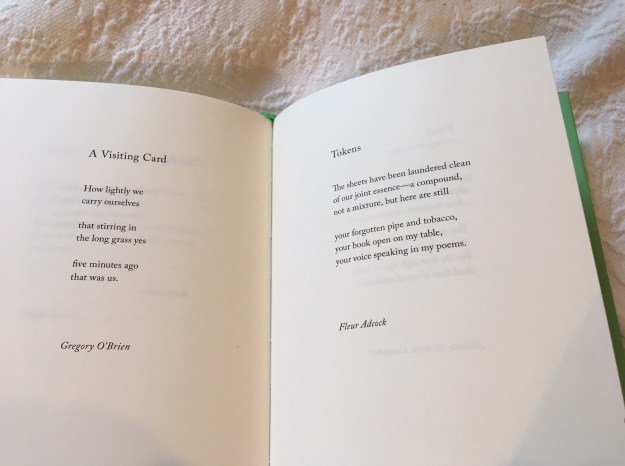
My feet, stained
black by the sand—and bare as pink paws—push into the spongy
sand and force away little pools of trill. A car. A blister of echoes.
A bird weeping in the mangroves. Two drunk women shrieking
names. The wind moves along the sand of this beach. There are
so many senses at work tonight. This one sound is a company of
horses cantering together across the darkness.
These voices I am hearing in my mind are ever changing, hot and
cold. I imagine them dangling from the sky as long drapes of silk.
I dance with them, yes, like we used to. I hang them on the edge of
the beach, where dirt meets sand, where Dog snivels a bird’s nest,
inspecting for play. I camped here last night and lit a fire to keep my
feet warm. So I could catch the night illuminating the bay again …
so I could hang the changing voices on this bright moon.
©Jamie Trower, A Sign of Light, The Cuba Press, 2018
Jamie Trower was born in Brighton, England, and immigrated to New Zealand in 1995 with his family. An Auckland-based poet and actor, Trower performs both on the page and on the stage, and has studied English and Drama at the University of Auckland. Anatomy, his debut poetry, was published in 2015 by Mākaro Press’s Submarine imprint.
The Cuba Press author page

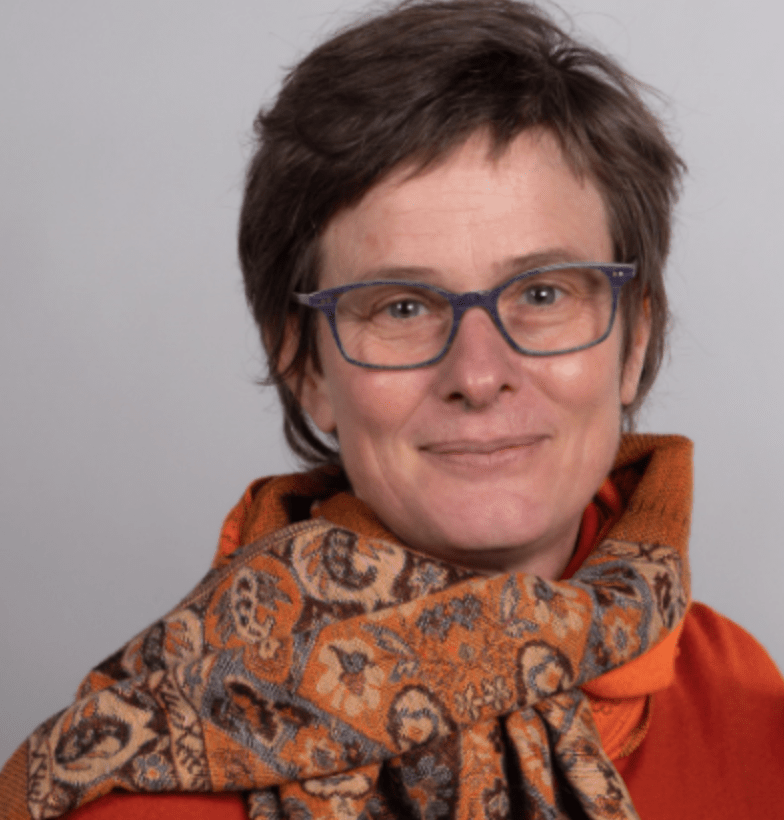
International Writers’ Workshop (IWW) is delighted to announce that the 2018 winner of The Kathleen Grattan Prize for a Sequence of Poems is Heather Bauchop of Dunedin.
The winning sequence, entitled ‘The Life in Small Deaths’, is described by Heather as a strangely-lengthed narrative poetry sequence that grew out of a 60,000 word manuscript banished to the bottom desk drawer several years ago as too long for submission to journals and too short for a full-length collection. It takes one of the characters and fills out their life; and in so doing, invents a whole new story in a whole new form. It is written as a narrative – to be read sequentially, but each poem has its own poise.
Stu Bagby of Auckland, who judged the $1000 prize, said at the prize giving that he looked for work that demanded to be read, and which surprised him with its use of imagery and description. He praised The Life in Small Deaths for its controlled, skilled writing of which the standard seldom flagged over what is a sizeable piece of work, and for its vivid imagery, slick word-play, and black humour. “It manages to be both amusing and thought provoking,” he said.
Runner-up is up-and-coming poet Gillian Roach of Auckland, a Masters of Creative Writing graduate from AUT who won the New Voices Emerging Poet competition earlier this year. Her sequence of 17 poems, She’s over there, love, is about family dynamics with a strong focus on the emotional labour required in caring roles. It is part of a larger collection she has been working on. It was praised by the judge for manipulating several themes with great skill and was almost the winner.
About the Prize
The Kathleen Grattan Prize for a Sequence of Poems has been made possible by a bequest from the Jocelyn Grattan Charitable Trust. It was a specific request of the late Jocelyn Grattan that her mother be recognised through an annual competition in recognition of her love for poetry and that the competition be for a sequence or cycle of poems with no limit on the length of the poems. It is one of two poetry competitions funded by the Trust, the other being the prestigious Kathleen Grattan Award run by the publishers of Landfall magazine.
About the Winner
Born in San Francisco to lost Scottish parents who migrated to Palmerston North via Aberdeen in 1972, Heather Bauchop is a public historian who has written on iwi history and historic heritage. She now lives in Dunedin. Her short fiction and poetry have appeared in a number of journals, including Takahē (she was the winner of the 2016 Takahē short story competition with ‘Helicopter’) Headland, Alluvia and Poetry New Zealand, and in the 2017 anthology New Ink. In 2018, she was awarded a mentorship by the New Zealand Society of Authors. Her first collection Remembering a Place I’ve Never Been was published by Cold Hub Press in October 2018. She can be contacted by email at hlb.writing@gmail.com.
Previous Winners
This is the 10th year the prize has been contested. Previous winners are Janet Newman (2017), Michael Giacon (2016), Maris O’Rourke (2015), Julie Ryan (2014), Belinda Diepenheim (2013), James Norcliffe (2012), Jillian Sullivan (2011), Janet Charman and Rosetta Allan (2010) and Alice Hooton (2009).
About IWW
International Writers’ Workshop NZ Inc was founded in 1976 by poet Barbara B Whyte and meets on the first and third Tuesdays of the month from February to November in the Lindisfarne Room at St Aidans Church, 97 Onewa Road, Northcote.
IWW’s main aim is to inspire writers by means of workshops and competitions across fiction, nonfiction and poetry.

The Brotherton Poetry Prize from the University of Leeds Poetry Centre
A new poetry prize aimed at nurturing previously unpublished poets is launched today by the University.
The Brotherton Poetry Prize from the University of Leeds Poetry Centre will be judged by Leeds’ Professor of Poetry Simon Armitage; writer, broadcaster and former University Chancellor Melvyn Bragg.
They will be joined by poets and University cultural fellows Dr Vahni Capildeo, winner of a Forward Prize in 2016 and Malika Booker, inaugural Poet in Residence at the Royal Shakespeare Company.
Poetry centre Director Professor John Whale and University Librarian Stella Butler complete the judging panel.
The prize is open to anyone over 18 who has not yet published a full collection of poems. Entries should include up to five poems. The winner will receive £1,000 and the opportunity to develop their creative practice with the poetry centre. Four runners-up will each receive £200.
The poems of the shortlisted poets will be published as an anthology by respected publisher Carcanet, and all five will be invited to take part in a series of readings and events at the University of Leeds and other Yorkshire venues.
Full details here
Mere Taito is a Rotuman Islander poet and flash fiction writer living in Hamilton with her partner Neil and nephew Lapuke. She is the author of the illustrated chapbook of poetry titled, The Light and Dark in Our Stuff.
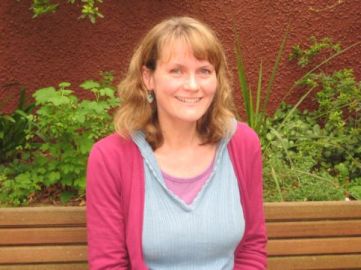
3.10 Thursday 29th November
Short Story Club
This week we discuss the poem Mere Mare by Emma Neale. It was first published in the Spinoff as one of its Friday poems and is in hte collection The Friday Poem edited by Steve Braunias – and we will give away a copy of that book to the person who writes us the most interesting email about Emma Neale’s poem.
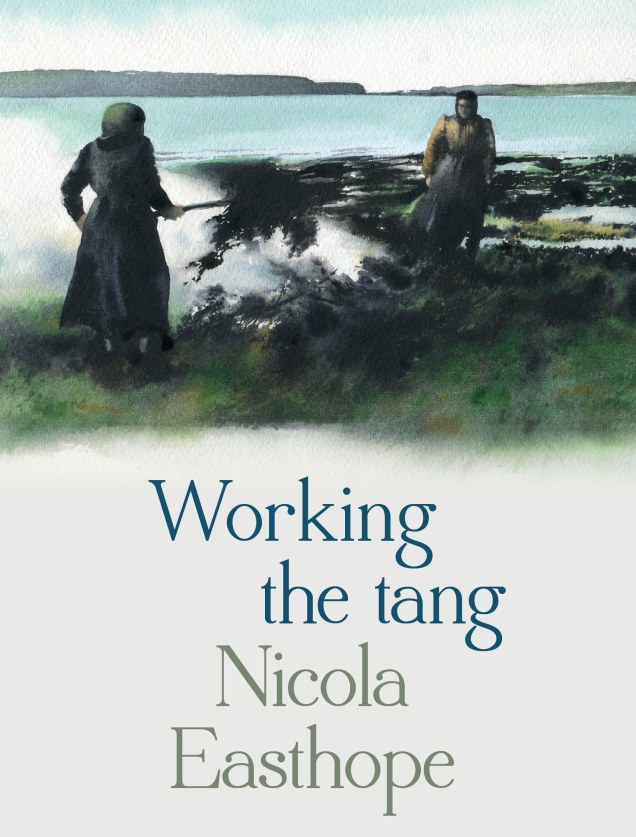
Working the tang, Birsay
These women are wrapped for the weather.
The fleece of long-nosed black sheep
so knitted into their skin, when their men
undress them there is often a little blood.
The weather wraps in gales of Arctic ice.
They gather seaweed: tremendous heaps
of tang and ware, dragged up the sloping beach
to the dry. These women burn
it steadily, crackling heather and hay in great pits
of stone until the white powder
of potash and soda is all that remains.
The men pound and pound,
cover with stones and turf. Leave overnight.
The ash shifts, cools, and lumps of toil
settle on their backs. They sleep with
the weight of a body on the chest.
Ghost dust drifts into livestock,
limpets. Fish are driven away.
The women are wrapped in the drapery
of ash, the cloak of salt, the taste of tang.
Their kelp-making for the laird’s gain.
Their backs spent for soap and glass.
©Nicola Easthope, from Working the Tang The Cuba Press 2018
Nicola Easthope is a teacher and poet from the Kāpiti Coast. Her first book of poems, leaving my arms free to fly around you, was published by Steele Roberts Aotearoa in 2011. ‘Working the tang, Birsay’ is inspired by her Orcadian roots and the etymologies and experiences of the Norse word for seaweed (among other things). She was a guest poet at the Queensland Poetry Festival in 2012, and last month, the Tasmanian Poetry Festival.
 NZ Poetry Shelf