Category Archives: Uncategorized

Poetry Shelf noticeboard: Book launch – novel by Vaughan Rapatahana

                   BOOK  LAUNCH

      NOVEL       BY   VAUGHAN  RAPATAHANA


2.00 pm SUNDAY 10 MARCH, 2019 @ Nectar Lounge, Kingslander Hotel, New North Road,            

AUCKLAND


FREE ADMISSION           Live band Any Day Now     MC is Roger Horrocks

                    Performance poetry – Michael Botur

Full restaurant and bar facilities available.


NOVEL by Vaughan Rapatahana

Published by Rangitawa Publishing, 2018.

ISBN 9780995104662

320 pages trade paperback or on Kindle.


The rapidly developing action in ‘Novel’ straddles Aotearoa New Zealand, Hong Kong SAR, Philippines and beyond. In our contemporary world of increasing electronic surveillance from hegemonic national administrations, several diverse characters struggle to survive to resist in a variety of ways. At the same time the so-called established methods of writing fiction undergo deconstruction.

“With its range of exotic settings and even more exotic characters, ‘Novel’ is a switchback ride written in Rapatahana’s inimitable switchblade prose. A violent murder in a rural New Zealand meat works is the catalyst for a series of fast-moving events that ultimately have geopolitical consequences involving the struggles of dispossessed people and the shady efforts of the powers that be to thwart them.” James Norcliffe.

“A blazing tale of international politics and murder, and the people entangled in it, by design or accident, told in a style that detaches the reader from comfortable reading and a comfortable world, or even a comfortable reading of the world.” John Gallas

“Novel is an innovative and complex creation, both a thriller with fast-moving pace and a meditation on today’s and tomorrow’s world. It is an absorbing read, a journey to diverse cultures…The story weaves back and forth through a multiplicity of unfolding situations both gripping and thought provoking. Be afraid. Or not.” Alan Chamberlain

“The novel has a highly visual cinematic quality to it, cutting quickly from scene to scene while letting the action speak for itself. Its uncluttered narrative held my attention to the last page. It deserves a wide readership.” Bob Orr


“I’ll see you at the launch, eh.” Vaughan Rapatahana


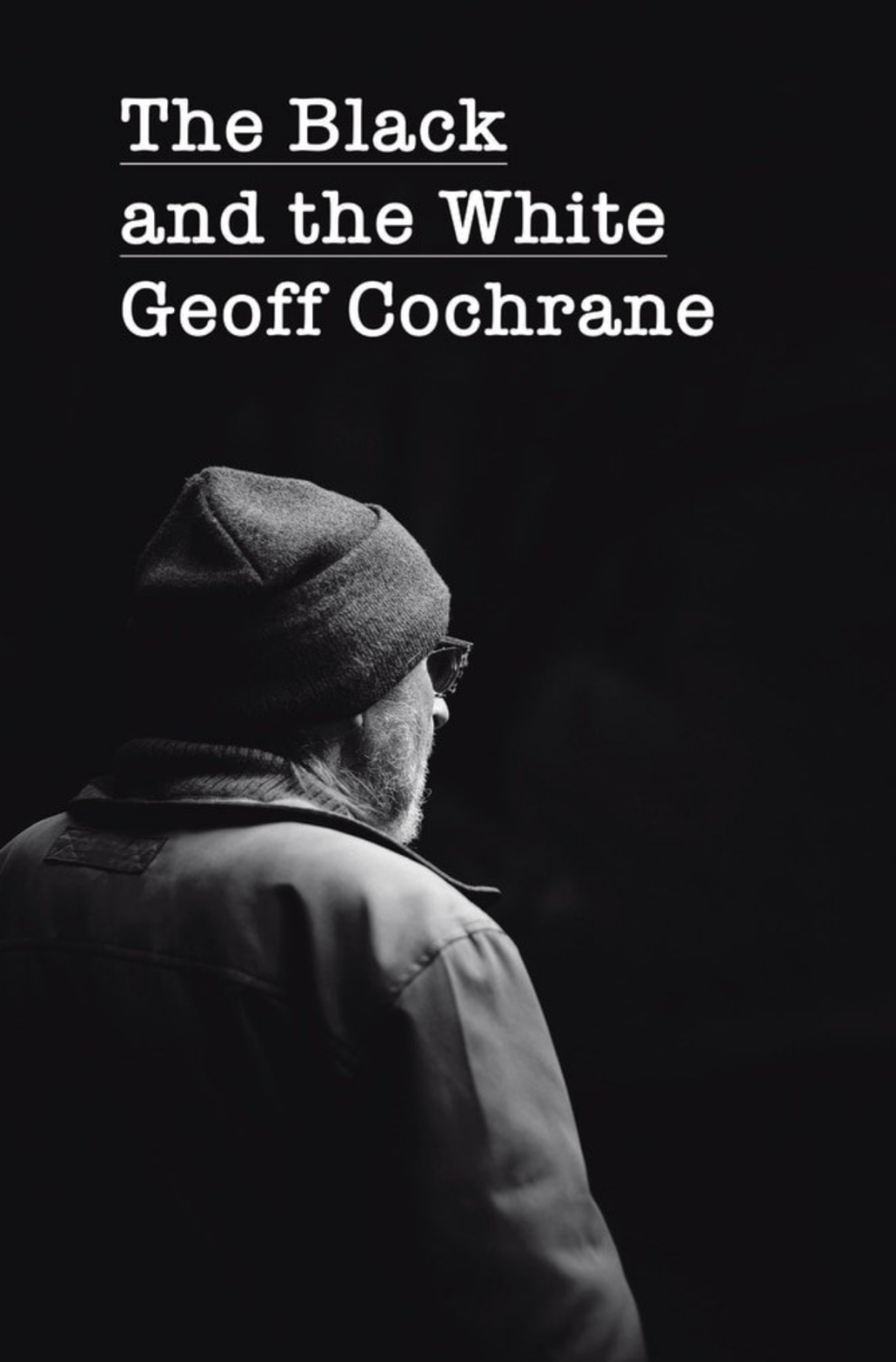
Poetry Shelf noticeboard: Geoff Cochrane launch


Screen Shot 2019-03-01 at 11.06.51 AM.png


Unity Books & Victoria University Press warmly invite you to hear Geoff Cochrane discuss his new poetry book ‘The Black and the White’ with fellow author Carl Shuker.

‘The Black and the White’ is a new work – witty, fearless, formidably concise – from one of the most distinctive voices in New Zealand poetry.

Geoff Cochrane is the author of seventeen collections of poetry, two novels, and Astonished Dice: Collected Short Stories (2014). In 2009 he was awarded the Janet Frame Prize for Poetry, and in 2010 the inaugural Nigel Cox Unity Books Award. Geoff received an Arts Foundation of New Zealand Laureate Award in 2014.


Screen Shot 2019-03-01 at 11.06.01 AM.png


Poetry Shelf Friday talk spot: Leilani Tamu on the departure of poetry


About eighteen months ago, poetry deserted me. I had just emerged from a period of deep grief, where the shock and trauma of losing a loved one was just beginning to ebb. And yet, at a time in my life when I needed the words more than ever, they were gone. I remember reaching out for them, initially tentatively, carefully. And I remember that first initial deep feeling of shock – and grief – at finding: Nothing.

It felt like an injustice, like I’d been robbed of something precious and irreplaceable. I reached for those same words again. I scoured the cognitive neuron-scape of my mind, and while tattered images and scattered thoughts were found here and there, the raw content – the stuff that had always been there when I needed it and wanted to transform it into poetry – was gone.

I didn’t realise it then, but reflecting on that time now, I understand it to be both beginning and end. Few people get to witness a momentous shift within and across a season in their cognitive evolution with such clarity. Most of us experience seasonal changes that shape our brains as surprising, often gradual, incremental observations that suggest change has occurred. Yet for me the change has been absolute. In a very strange way, writing about this helps to shape up the relativity of that loss; helps to put words to what I have known for eighteen months and been unable to share.

I will always be a poet, but the season in my life within which I wrote poetry, has ended. And within this new beginning, something beautiful – that I could never have dreamed of or fathomed – shaped from the humus of the cognitive tatters of the little that has been left from that season in my life – is just starting to emerge….


Leilani Tamu lives in Aotearoa with her husband and two children. Her first book of poetry, The Art of Excavation, was long-listed in the 2015 Ockham-NZ book awards.


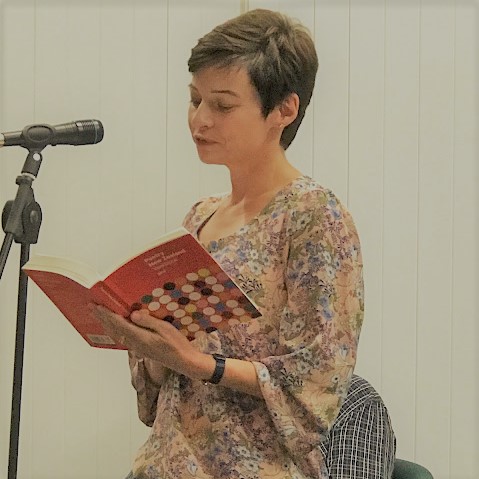
Poetry Shelf audio spot: Johanna Emeney reads ‘Favoured Exception’


Poetry NZ Launch Bronwyn Lloyd photo.jpeg

Photo credit: Bronwyn Lloyd


‘Favoured Exception’ previously published in Poetry NZ 2017


Johanna Emeney has a background as a senior school English Literature teacher — a vocation which she enjoyed for thirteen years. She is the author of two books of poetry: Apple & Tree (2011, Cape Catley) and Family History (2017, Mākaro Press). In 2017, she also wrote a nonfiction book called The Rise of Autobiographical Medical Poetry and the Medical Humanities (ibidem Press). Jo is currently a senior tutor at Massey University, and she co-facilitates the Michael King Young Writers Programme with Rosalind Ali. She is married to David, with a demanding family of two goats and six cats.


Poetry Shelf noticeboard – Words from Here: Karori Writers in Conversation

Screen Shot 2019-02-28 at 8.35.19 AM.png


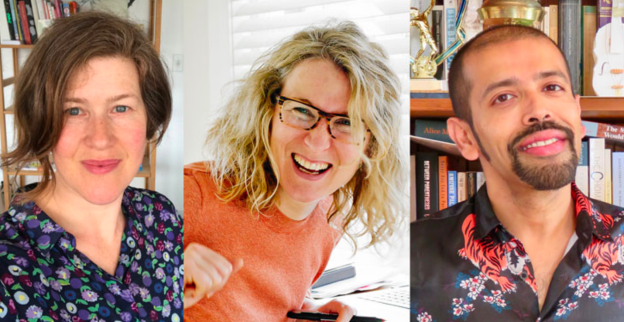
If you’re interested at all in the inner life of the writer, come along to Karori library on February the 28th between 6 – 7:30 p.m. and listen to three of Wellington finest writers — Sarah Laing, Rajorshi Chakraborti and Leah McFall — discuss their celebrated written works, inspirations and writing process.


Food and drink will be provided, and Marsden Books will be selling books on the night.

Leah McFall is an award-winning columnist for Sunday magazine and published her first collection, Karori Confidential, last year.

Rajorshi Chakraborti is an Indian-born novelist and short story writer whose latest novel, The Man Who Would Not See, takes place largely in Wellington and Karori.

Sarah Laing is a cartoonist, novelist and short story writer. Her most recent book, Mansfield and Me, is a graphic memoir about Karori’s most famous writer.

Need more information? Contact Karori library on 476-8413


Poetry Shelf Classic Poem: Emer Lyons on Heather McPherson


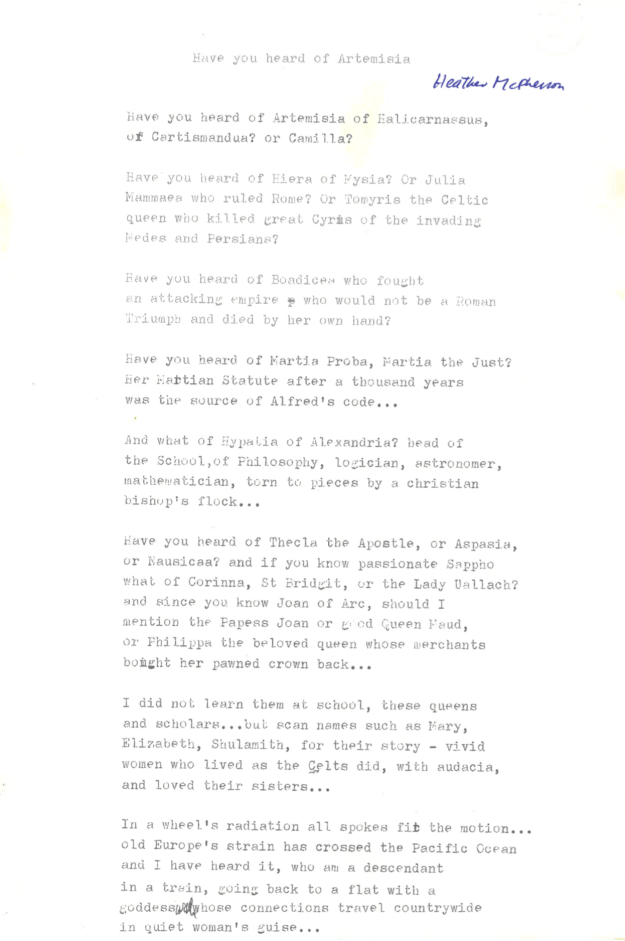
Have you heard of Artemisia?


Have you heard of Artemisia of Halicarnassus,

or Cartismandua? or Camilla?


Have you heard of Hiera of Mysia? Or Julia

Mammaea who ruled Rome? Or Tomyris the Celtic

queen who killed great Cyrus of the invading

Medes and Persians?


Have you heard of Boadicea who fought

an attacking empire – who would not be a Roman

Triumph and died by her own hand?


Have you heard of Martia Proba, Martia the Just?

Her Martian Statue after a thousand years

was the source of Alfred’s code . . .


And what of Hypatia of Alexandria? head of

the School of Philosophy, logician, astronomer,

mathematician, torn to pieces by a Christian

bishop’s flock . . .


Have you heard of Thecla the Apostle, or Aspasia,

or Nausicaa? and if you know passionate Sappho

what of Corinna, St. Bridget, or the Lady Uallach?

and since you know Joan of Arc, should I

mention the Papess Joan or good Queen Maud,

or Philippa the beloved queen whose merchants

bought her pawned crown back . . .


I did not learn them at school, these queens

and scholars . . . but scan names such as Mary,

Elizabeth, Shulamith, for their story – vivid

women who lived as the Celts did, with audacia,

and loved their sisters . . .


In a wheel’s radiation all spokes fit the motion . . .

old Europe’s strain has crossed the Pacific Ocean

and I have heard it, who am a descendant

in a train, going back to a flat with a goddess

wall, who connections travel countrywide

in quiet woman’s guise . . .


dedicated to Elizabeth Gould Davis and Max Jacob


Heather McPherson, from A Figurehead: A Face (Spiral, 1982)


Have you heard of Heather McPherson?

Emma Neale asked me this question when I was searching for lesbian and queer poets for my PhD research. I hadn’t which is hard to imagine now.

‘Have you heard of Artemisia?’ was painted on the outside wall of the Women’s Gallery on Harris Street, Wellington in 1981.

As I typed the poem it became apparent that Microsoft Word had not heard of Cartismandua, or Hiera of Mysia or Tomyris. Neither had I. My middle name is Bridget. A name I share with many women in my family. Every year in my Catholic primary school in Ireland we weaved St. Bridget (most commonly spelt Brigid) crosses on her saint’s day, the first of February. Nobody mentioned Darlughdach, Bridget’s apparent female lover and soulmate. Catholic forums online call this a conspiracy theory.

Heather was the first out lesbian to publish a poetry collection in New Zealand.

I’m not a “gold star lesbian” (watch Hinemoana Baker explain the term here). It took me a long time to own my feminism. The Guerilla Girls came to my university in Cork sometime in 2007 (or 2008 or 2009 . . . ) and when they asked the crowd, “How many people here tonight call themselves a feminist?”, I did not raise my hand. I didn’t think then that it mattered that men always won the Oscar for best director, or that women feature in the Met predominately as nudes not as artists. I believe my religious upbringing ensured that the patriarchal domination of society remained unquestioned within me for far too long. I did not learn to question at school.

There are ten question marks in this poem. I encourage you to ask yourself ten questions today. And to ask ten people, “Have you heard of Heather McPherson?”


Emer Lyons is an Irish writer who has had poetry and fiction published in journals such as TurbineLondon GripThe New Zealand Poetry Society AnthologySouthwordThe Spinoff and Queen Mob’s Tea House. She has appeared on shortlists for the Fish Poetry Competition, the Bridport Poetry Prize, the takahé short story competition, The Collinson’s short story prize and her chapbook Throwing Shapes was long-listed for the Munster Literature Fool For Poetry competition in 2017. Last year she was the recipient of the inaugural University of Otago City of Literature scholarship and is a creative/critical PhD candidate in contemporary queer poetry.

Heather McPherson (1942–2017) was a poet, editor, teacher and feminist activist. In 1974 she founded Christchurch Women Artists Group and Spiral, a woman’s art and literary journal. She published five collections of poetry, with her poems appearing in numerous journals and anthologies. Figurehead: A Face (Spiral, 1982) was the first poetry collection by an out lesbian in New Zealand. Janet Charman selected the poems for McPherson’s posthumous collection, This Joyous, Chaotic Place: Garden Poems (Spiral, 2018).


Screen Shot 2019-02-20 at 6.49.06 PM.png


Poetry Shelf Monday Poem: Albert Wendt’s ‘Packs’


 Packs


We try to breath as long as technology

and medicine can stretch it

and don’t know why we are wretched with anxiety


Every dawn in Samoa the neighbourhood packs of dogs

cracked open our sleep:  barking  howling  yelping  screeching

Theirs was the desperation of hunger and ill-treatment

I needed to quench the undeniable accusation in their howling


Now back in our safe Ponsonby bedroom the spring dawn sprawls

across our bed and refuses to leave but it will be swallowed up

eventually by the morning and our need to walk out

into the embracing routines of our tidy lives


The packs will continue to stalk us with their slow howling


No set plan or final intention

Just let go – just let it go  all of it

even the accusing packs


It will not come again


©Albert Wendt  (August-Sept, 2017)  (November 2018)


Albert Wendt has published many novels, collections of poetry and short stories, and edited numerous anthologies. In 2018, along with four others, he was recognised as a New Zealand Icon at a medallion ceremony for his significant contribution to the Arts.