Category Archives: Uncategorized

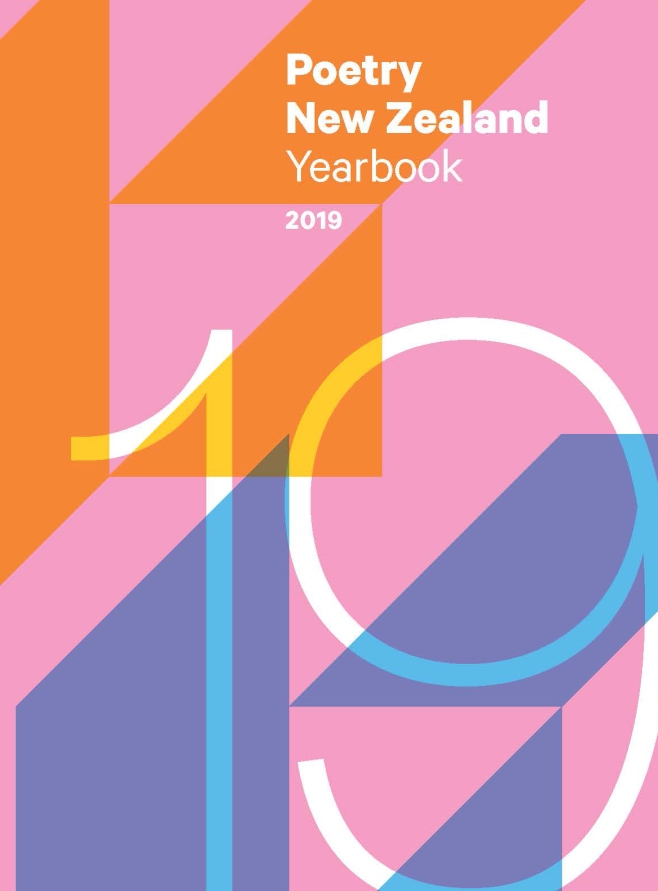
Poetry Shelf review: Poetry New Zealand Yearbook 2019


9780995102965.jpg

Poetry New Zealand Yearbook 2019 

editor Jack Ross, published by Massey University Press


Poetry New Zealand Yearbook always offers a substantial selection of poetry. This issue includes essays, reviews and the results of two poetry competitions, along with poems from new and established poets. I started reading the issue – I always dip and dive into literary journals – and made notes, gathering the poems that ‘spoke to me’. But then I hit the rest button and realised I was running on empty post big project. I have lain on a couch for a week and stared at the sky and after the horrendous terrorist event in Christchurch everything feels different. Because everything must be different. What happens when I pick up this journal again with a raucous bust-up of questions in my head: How to live? How to speak? How to connect? How to write a poem? How to run a blog? How to widen us and make room for past, present and future, to celebrate the good things and challenge the rest?

I picked up Poetry New Zealand again and started at the first page. No dipping and diving. Just tracking an alphabet of voices and letting poetry work its magic.

Certain poems set me musing. Marisa Cappetta‘s ‘Homeless like bones’ is both an anchor and a kite. This poem is worth the buying the book for, as a keepsake, a drifting catalyst.


My house is like a thing that flies

a warm bodied creature with wooden wings and moss

stuffed in the cracks to keep out

the draft at high altitudes.

Every night I burrow into its feathers.


Ria Masae’s magical ‘Children’s Eyes’ takes me back to a childhood looking, to stepping off from the knowable physical world to a world without limits or rules, a world bright with colour and possibilities. The poem is the thread that stitches child to adult.


In autumn

I would walk from school

under a canopy of different shades of Papatuanuku.

The flakes of her skin

drifted gently from her offspring trees

and whispered the earth’s secrets

into my childish ears

before playfully licking my cheeks

and falling to the ground

paving my golden-leaf road home.


Emma Neale’s poetry always catches hold me because its musical effects equal the craft of a silversmith – intricate, alluring, bright. However Emma’s ‘The TastiTM Taste Guarantee’ leads me in a different direction as the poem showcases her ability to write wit in all seriousness. She explains why, in the form of a letter, she has eaten the museli bar destined for her child’s lunchbox. The ending is a knockout – you get wit and seriousness with her characteristic deft musical touch.


All of which I guess

is just to say

(hey WCW, still got it!)

since you asked, I would like to know

how closed-grained and sweet-glazed

is the happiness of the future

assuming there is happiness in the future?

Because sometimes, when I do catch a glimpse

of time’s webbed, oil-black wings,

its tangerine-stained, crazed-bullet teeth,

I’m so stunned and dread-run

that even eating a candy bar

in Supergrain disguise

seems to be a legitimate opposite

to inaction.


Vaughan Rapatahana has poetry here in te reo along with a poem, ‘Rangiaowhia, 1864’, that takes us back to a massacre, an event we should become aware of in school, an event that returns us to the pronouns we and us. Again the questions compound. How to link the past to the future in order to understand the present?  How join hands and stand and listen. What to do with the breaking hearts?


who knows about the murders at Rangiaowhia?

not the majority in this country nowadays.

who remembers the burned children?

not the majority in this district.

who believes the word of the survivors?

only a minority outside that town.

alas

alas

alas.


I read Tracey Slaughter’s ‘archealogical’ and I just wanted to hear her read it aloud because it is such a sumptuous aural display of what words can do in a poem. The sound effects are as effective as the detail and the mood, and the surprising arrival of individual words; I am right back in the fumbling sexual awakenings of adolescence. I can’t wait to read Tracey’s debut collection out this year with VUP.


When the bell rings we are archealogical, cutting

through the harbour home, shins uprooting litres of slush

& levelling bubbles & barbs of creatures triggered back

into their chinks of flood. Their pinprick beds turn the sand

grid silver before your ranchslider shines up the low slope – beyond

your scalp the view’s not a bad excuse for stars. Inside we crumble

from the waded calves, the tight-knit glisten of mud scuffed

off by inches, the silhouette of grains slid of our sip.


Sue Wootton also draws me into the musicality of her writing, the luminous detail and the rendering of miniature stories and settings. ‘Anywhen’ is an electric read – taking me back to the 1960s and a foreign magazine sent to me by my French penfriend with Mary Quant products and miniskirts and velvet every way you looked.


Anywhere and anywhen

you unzip the hip-knock swing-along

to see what pops up

to hear what’s blowin’ in the wind.

You write past midnight on the blue machine

with your Mary Quant eyelashes a-droop

and the moon watches you and you watch

the moon. You’d like to land on the moon

but in colour. Page after page comes back to earth

with a crumpled thump


I have never read any poems by Sigred Yamit before and now I am keen to track down more because ‘Sweater’ blew the top off my head off (to borrow from Emily Dickinson) and really this skinny poem is sharp and sweet and utterly original and you have to read the whole thing to get the effect so I will just give you the start.


I’m supposed to write

something poignant

earth-shattering

eradicate cancer

but all I can think of

is my itchy red sweater

and how I fucking love it

and sad I get

when a boy is more

beautiful than me


I also loved Zuo You’s poem ‘I accepted His Apologies’ because it made me laugh out loud. Just two verses. Here is the second one.


The cold noodles I ordered

turned into hot ones

as if by magic.

After lunch

I posted a five-star review on the food.


Of all the finalists in the two poetry competitions I was hooked by Wes Lee‘s winning tour-de-force of a poem, The Things She Remembered #1’.   Phrases accumulate like a rollercoaster memory pulling you along in a blaze of sharpness and surprise. I was equally gripped by secondary school winner, Aigagalefili Fepulea’i-Tapua’i’s ‘275 Letters to Southside’. The poem, also sharp and rhythm rich, makes it clear that ‘Auckland is not the same place as South Auckland’.


Such is the strength of anthologies and literary journals: they can poke your skin and make you feel things – reading these poems I got sad, I laughed out loud and I got lost in trains of thought. Not everything hooked me but there is superlative poetry on offer. It was just what I needed. Now for the essays and reviews ….


Massey University Press page


Poetry Shelf noticeboard: Landfall essay competition

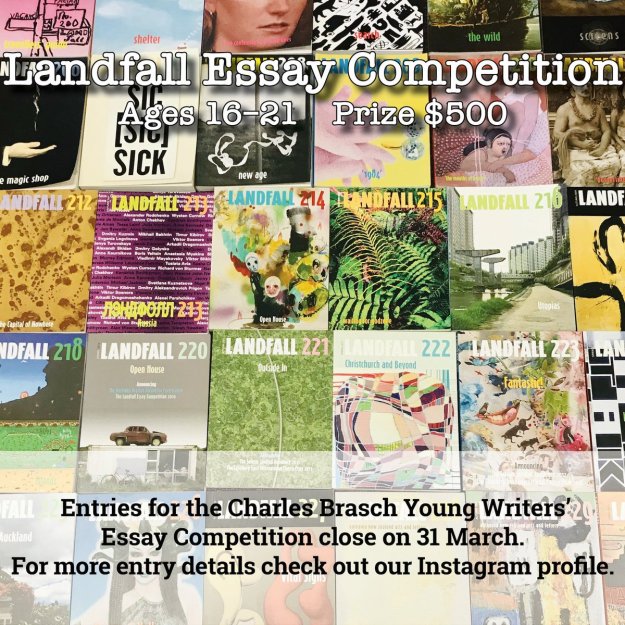
Young people, rangatahi, talavou, gente joven, les jeunes, 年轻人, alshabab, translate the world for us through your voices! Please send your essays in to the essay young writers competition.

Rules and details here


D2YuyuoU8AAD4Vo.jpg


Poetry Shelf Monday poem: from Amy Brown’s Neon Daze

Excerpt from Neon Daze


8th December 2016


A friend warned me months ago

that my baby would start to smell

of other people – perfumes, creams,

colognes, sweat – your baby’s head

will press against strangers’ throats

and décolletage, held close and warm.

Sure enough I recognised the musky,

woody scent of our family friend in his hair

and skin yesterday long after she’d left.

Babies are olfactory creatures, happiest

emanating their own or their parents’

odour. We squirt Johnson’s shampoo

under the running tap for the manuka

sweetness it leaves behind his ears.

Now, he is strapped against me and

I am afraid the sunscreen on my chest

will distract from the baked tussock,

sandy fragrance fresh and familiar

as a wave [1], blue and white as the baby’s

eyes. We walk along Ocean Beach towards

Cape Kidnappers, which is only ever a haze

of coast in the distance, past macrocarpas,

painted black in the Dick Frizzell print

on my parents’ bedroom wall. We walk and

the baby’s sleeping cheek sticks to my skin.


—————————————————


[1] To Wave

To move to and fro, from the Old Norse vagr meaning billowing water. Waves, Robin, look! I told him today, both of us squinting into the glare of the mid-morning horizon, paddling along the edge of the Bass Strait. His right hand lifted and twisted back and forth, to and fro at the breakers.

I am wavering between then and now. This is our third time at Skene’s Creek. The first was the first weekend away with my partner – my first conventional weekend away with any partner. He booked a cabin whose view from the bedroom window was dense and private with eucalypts and which was all sea and sky from the balcony, where I sat typing away at my thesis with a beer while he barbecued us fresh fish. I had about $36 in my bank account then and was both luxuriating in and anxious about the incongruity of this experience. In the spa bath we sucked each other’s toes and played lavishly with the jets. The photos I took were all of us – our feet the same size and sandy, only distinguishable by my red nail polish; him on the swing, a joyful blur of beard and beer.

The second time we came to this beach we stayed at the same cabin, but the weather was miserable. I photographed the food we made and the special bottle of wine we drank and my partner’s back as he walked away from me in his red jacket along the deserted beach. We brought our yoga mats and held postures together while rain hung white in the trees, obscuring the sea. I had just got my period for the twelfth time of hoping it wouldn’t come and was allowing myself to drink the wine, which tasted of nothing. We still didn’t know why I wasn’t getting pregnant, or how to fix it, or how lucky we would be when the weeks of injections started.

This time we are staying in a family’s beach house. I move the bowls of shells and driftwood ornaments to higher ground. My partner blocks the steps from the deck to the wild garden with three chairs. We coax our toddler to not use the length of timber dowel locking the sliding door in place to drum on the glass coffee table. We find empty snail shells, stones of all varieties and point at the sulphur-yellow underside of the wings of the cockatoos, which shriek en masse as they fly. I photograph the baby in the hammock, the baby in the sea, the baby scooping sand into his bucket; his face is always behind a broad-brimmed sunhat patterned with leaves. After seven, when Robin is asleep, we play quiet games of Scrabble and Monopoly at the outdoor table, drinking wine and eating chocolate to keep warm. On every visit I’ve forgotten how cold the beach gets at night and pack inadequately. This time I bring socks but no shoes, and many T-shirts but no heavy jersey. Like an eighteen-month-old I wear socks and sandals and eccentric layers. To warm up after swimming in the sea, we all shower together. I show Robin how I wash my face by closing my eyes and dipping my head under the stream. Nick demonstrates how he washes his face, carefully with a flannel. We both applaud when Robin’s wet eyelashes open and he smiles.


9th December 2016


There are creases in the back

of my father’s tanned neck, like

Hemingway’s old man. He spends

two hours longer than usual out

in his boat, trying to catch enough

kahawai for our dinner. It is filleted,

barbecued and served with a Persian

marinade from a cookbook I gave

my mother two Christmases ago.

The recipe calls for dried rose petals.

She laid them out in the sun (and

later microwave, to speed the process)

herself, picked from her own garden.

She lets the baby take handfuls

of petals off the aging bunch in

the dining room. He scatters them

romantically across the floorboards.

Later, I find one still clutched, bruised

perfumed and bright as blood in his fist.


Amy Brown


Amy Brown lives in Melbourne, where she teaches literature and philosophy. Her first poetry collection, The Propaganda Poster Girl (Victoria University Press, 2008), was shortlisted for a Montana New Zealand Book Award in 2009. Her next work of poetry, The Odour of Sanctity (Victoria University Press, 2013) was the creative component of a PhD on contemporary epic poetry. Her next book, Neon Daze, will be released by Victoria University Press in 2019.


Poetry Shelf noticeboard: Thank you The Spin Off and Pantograph Punch


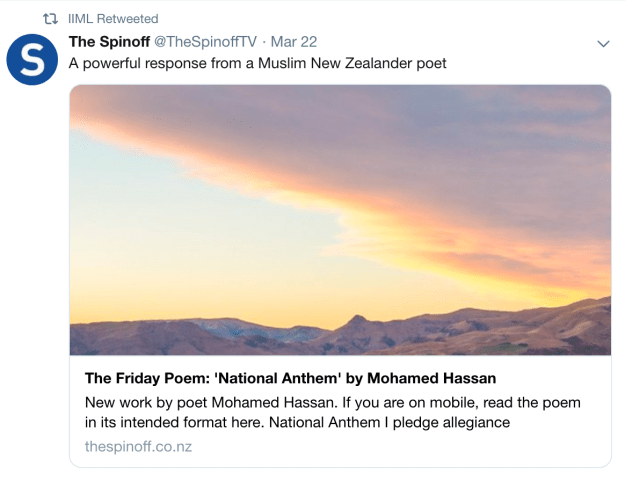
Social media is rightly coming under scrutiny. Jacinda Ardern told Cashmere High School students that social media can be used for good. Yes. We can do this while the government and other agencies work hard to eliminate the bad.

The Spin Off and Pantograph Punch have posted excellent material over the past week or so – material that helps find avenues into understanding and new lights. Thank you.

This was one example. A poem amidst the diverse voices they have offered.


Screen Shot 2019-03-25 at 8.33.17 AM.png


see Mohamed Hassan’s poem here


Poetry Shelf Friday words: Airini Beautrais on poems she’s found helpful


A few words about some poems I’ve found helpful


In dark times it seems inappropriate to make any claims for the efficacy of poetry, or any art form, in effecting social and political change. It might also seem too soon or too difficult, or impossible, to express an immediate response to violent and traumatic events through words. But there are also innumerable instances of poetry being a vehicle or outlet at times of heightened emotion: funerals, commemorations, public events, tragedies. The artwork, or the poem, is not a solution to a problem, or a proposal for a better world, but a way of comprehending or addressing an issue. Some of the poems by New Zealand poets I come back to time and time again were written in the twentieth century in response to the nuclear threat. Like Dinah Hawken’s sequence ‘Writing Home:’


. . . The U.S has gone obsessively

ahead with another nuclear test. Crudely, profanely


they gave it a name. ‘Mighty Oak.’ Do they truly believe

they are doing something beautiful?


Or Hone Tuwhare’s ‘No Ordinary Sun’:


Tree let your arms fall:

raise them not sharply in supplication

to the bright enhaloed cloud.


Over the last week I have been thinking a lot about the poems and the music I have found comfort in during times of deep distress. I have struggled to make it through, and make sense of, the entirety of Ezra Pound’s Cantos. However, during a period of trauma in my own life I read and re-read Canto 116. These lines in particular stand out:


I have brought the great ball of crystal;

Who can lift it?

Can you enter the great acorn of light?

But the beauty is not the madness

Tho’ my errors and wrecks lie about me.

And I am not a demigod,

I cannot make it cohere.

If love be not in the house there is nothing.


Why turn to such a complicated and politically conflicted poet as Pound, and why the Cantos, which has been described as a ‘fascist epic’, when looking for threads of humanity? Because there in those lines is the recognition of failure to comprehend or to put pieces together: ‘I cannot make it cohere.’ And the inescapable reminder ‘If love be not in the house there is nothing.’


Or there is another great American long poem, Walt Whitman’s Song of Myself, which constantly reaches out to the community, nation and world around the speaker. What a weird, and nowadays odd-sounding, piece of writing Song of Myself is. And yet it’s full of passages that are profoundly comforting, like:


I pass death with the dying and birth with the new-wash’d babe, and am not contain’d      between my hat and boots,

And peruse manifold objects, no two alike and every one good,

The earth good and the stars good, and their adjuncts all good.


How can we think of the earth and stars as ‘good’ in a time like this? But how useful, not to be contained between one’s hat and boots: to invoke the communal spirit.


Or, perhaps conceived more in reference to the natural environment, but also relevant to human concerns, is Gerald Manley Hopkins’s ‘God’s Grandeur’, which even in bouts of committed atheism I’ve deeply loved:


And for all this, nature is never spent;

There lives the dearest freshness deep down things

And though the last lights off the black West went

Oh, morning, at the brown brink eastward, springs –


In similar vein is Philip Larkin’s poem ‘The Trees.’ I’ve been thinking of this one in particular this last week, because I saw it painted on a wall last time I was in Christchurch, in October of last year. Tim Upperton and I had gone to Christchurch for a poetry reading Tim was involved in. We walked around town and found Tim’s old house, and looked at all the pop-up gardens that people have planted in the spaces left by the quakes. There’s something about community gardens I find always raises my spirits. The idea of people growing something together goes against all antisocial tendencies. There’s also something subversive about planting shared, not-for-profit vegetables in an area traditionally kept aside for commerce. On a corrugated iron wall adjoining a plot of raised beds and worm farms somebody had painted, in big splashy letters, in test-pot colours, Larkin’s poem. Larkin is another poet it seems odd to turn to for solace. A lot of his poems have the opposite effect. Perhaps the simple force of ‘The Trees’ comes in part from a contrast with the poems that surround it. If Larkin’s collected poems were all about trees coming into leaf and other such subjects it might sound naff. But a darkness creeps into the poem in the first stanza:


The trees are coming into leaf

Like something almost being said;

The recent buds relax and spread,

Their greenness is a kind of grief.


And it goes on, and ends, and the poem painter’s letters got bigger and bigger towards the last line:


Begin afresh, afresh, afresh.


This must have seemed pertinent to the person who painted it, making a communal space in the wake of the earthquakes. Like the other poems I’ve quoted, it doesn’t give us an answer. It gives the reader a place to rest. In discussions of poetry and politics, people often quote W.H. Auden’s line from ‘In Memory of W.B. Yeats’, ‘For poetry makes nothing happen’. As is often the way with popular quotes, the next bit gets sidelined, but it’s the good bit:


. . . it survives

In the valley of its making where executives

Would never want to tamper, flows on south

From ranches of isolation and the busy griefs,

Raw towns that we believe and die in; it survives,

A way of happening, a mouth.


Airini Beautrais grew up in Auckland and Whanganui. She studied ecological science and creative writing at Victoria University of Wellington, and worked for several years as a science teacher. Her first book Secret Heart (VUP, 2006) was named Best First Book of Poetry in the Montana New Zealand Book Awards 2007; it was followed by Western Line (VUP, 2011), Dear Neil Roberts (VUP, 2014) and Flow: Whanganui River Poems (VUP, 2017). She lives in Whanganui.


Poetry Shelf noticeboard: VUP launches Nikki-Lee Birdsey’s Night As Day

6b3afea5-b4af-4f1d-8fa4-e8c9807c4a42.jpg


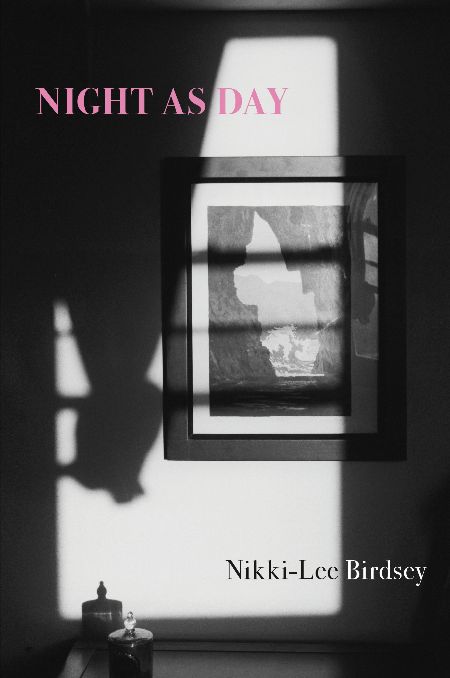
VUP warmly invites you to the launch of

Night as Day
by Nikki-Lee Birdsey

at Unity Books, 57 Willis St, Wellington
on Tuesday 9 April, 6pm–7.30pm

Night as Day will be launched by Anna Smaill.
All welcome.
p/b, $25.


Poetry Shelf noticeboard: Let us create beautiful things: an open invitation from Creative NZ

This letter from  Stephen Wainwright Chief Executive – Pou Whakahaere Creative NZ

extends an open invitation to create beautiful things #CreateAroha


Poetry can play a part.


Kia ora tātou katoa
As – Salaam – Alaikum

The hate, gun violence and crimes directed against the faithful at the Masjid al Noor and Linwood Islamic Centre in Christchurch have left us bewildered, feeling vulnerable, struck to the core. We have had to accept that an act of terrorism has been inflicted on our people and our national innocence has been lost. We are hurt; we are grieving.

Our thoughts are with the affected Muslim families, and their communities in Christchurch, in Aotearoa and around the world. We hold dear the people of Christchurch, who have already endured so much but have responded with warmth and love, and acknowledge that our country is in mourning. In time, this tragedy will be marked by formal commemorations.

Right now though, we are feeling raw or numb. It’s not a situation we are familiar with or could prepare for, and people are thinking about how to respond. Some are finding a way.

You may have seen some beautiful examples of creative expression in the past few days, including Wellington artist Ruby Jones’ image “This is your home and you should have been safe here”, Māori artist Akoni Pakinga’s tribute to the Muslim community “Kotahitanga”, a beautiful collection of poems “I keep walking”, and the many other examples outside mosques and in public spaces. Just this morning we heard renowned novelist Witi Ihimaera’s heartfelt karakia for Christchurch.

These are reminders of the power of the arts and the impact creative expression can have on our individual and collective wellbeing. Turn to your creative skills. Take comfort from them. Share them if you think it would help others.

We invite you to share words, images, videos of your creative expression and related events using the hashtag #CreateAroha. We, in turn, will share them on our social media platforms. Nothing is too small or too big. I see each creative expression as a thread denoting dignity and mana, woven into a digital korowai to nourish and protect us, and demonstrate our unity, in solidarity against hatred.

While discussion and debate continue about the roles these platforms play in spreading hate, let’s fill them with positivity.

In time, our country’s artists and creatives will express their response to this tragedy through major works. These too will help us reflect and grapple with this difficult kaupapa. To grieve. To make sense of our fractured world. To come to terms with what has happened. To challenge. To push for a better future.

Professor Peter O’Connor put it beautifully when talking about the role of the arts in healing traumatised communities, and particularly children, on Radio NZ: “I would hope in the coming days that we make beautiful things in defiance of the acts of ugliness that were created on Friday. Every time we make something beautiful, either as individuals or as communities, we act in defiance. We reject the hate of Friday.”

The deeper extremist agenda is to divide and conquer, and pull us apart so that we lose faith in our shared humanity. Let’s instead embrace what unifies us. Let’s embrace this necessary work together. We need to make every effort to be part of a community that stands up for diversity and tolerance, where unity and peace are the norm.


Mā te kotahitanga e whai kaha ai tātau
In unity, there is strength


Stephen Wainwright
Chief Executive – Pou Whakahaere


Poetry Shelf noticeboard: Poetry Day registrations are now open


image006.jpg


Kia ora organisers, poets, librarians, teachers, book clubs, creatives and lovers of poetry.

It is with heavy hearts we contact you in the wake of such terrible events. We can only hope you are determined, like us, to promote and rejoice in ALL New Zealand voices, louder than ever. As poet, Paula Green says, “poetry connects us to human experience, to how we live and love and mourn. It is a window, it is a balm and it is an eye-opener. This is a time to reach out and make connections, to listen.”

Welcome to Phantom Billstickers National Poetry Day, 23 August 2019. Registrations are open.

Returning 2018 organisers: Last year was huge – let’s do it again!

To those returning after a break: Welcome back.

To the newcomers: Phantom Billstickers National Poetry Day is an annual celebration of the power of poetry – in all its manifestations. Open to all ages, it is a chance to make poetry accessible, inclusive, and to showcase how extraordinary it can be. Events, activities or competitions can be large or small, from handing out free poems, making a Poet-Tree, or chalking on pavements, to larger-scale events such as workshops, readings with guest poets and book launches. At every level, Phantom Billstickers National Poetry Day is a chance to make poetry soar.

Registrations and applications for seed-funding remain open until 5pm, Wednesday 22 May 2019.

Visit our website for more information on how to register and/or apply for seed-funding, how to run an event, and for general guidelines and templates here.

Or you can follow this link straight to our …

Registration Form 2019

We look forward to unleashing the power of poetry across Aotearoa and beyond on Friday, 23 August 2019.


If you have any queries, reply on a separate thread to: National Administrator | Jacqui Hammond | poetryday@nzbookawards.org.nz. Otherwise we look forward to receiving your registration!


image007.jpg