Category Archives: Uncategorized

Poetry Shelf poses a question to poets: Why write poetry?


This is an occasional series where I invite a group of poets to respond to the same question. First up: Why write poetry? I selected this question because a number of writers have mused upon the place of poetry when facing catastrophes that devastate our human roots. I pondered that question. I then asked myself why I have written poetry for decades regardless of whether it is published or applauded. It is what I love to do. It is my way of making music and feeling and translating and being happy no matter the life challenges. I also feel poetry is thriving in Aotearoa; at all ages, in multiple forms and in myriad places, many of us are drawn to write poems.


Albert Wendt

I write poetry because I can’t stop doing it: it demands that I do it, and it is ‘language’ that I feel most passionately about. When I’ve deliberately tried not to write poetry, I’ve ended up feeling unfinished, incomplete. When the poetry is shaping itself well in my tongue and throat, I feel healed, and healing.


Emer Lyons

I talk too much. A male Irish poet visited last year and said my poetry had none of the “jerkiness” of my personality. In writing poetry I find silence and the ability to give that silence space. After drinks with two men from the university last week, the one I had just met sent me a message on Twitter to ask me if I, like him, had Borderline Personality Disorder. Speaking in non sequiturs is not nearly as convincing as writing in them. As women, there are expectations about how we should speak, how we should take up space, how we should be more silent, more stable. Writing poetry is a minor release from social constraints, and the voluntary application of others. I can bind my breasts and write sonnets. On the page, I can be enough.


Erik Kennedy

I write poetry for the same reason that architects draw up concepts for floating cities: 1) to see what a better future might look like before it is possible, 2) to make the blueprints of progress public so that others can avoid making the mistakes that I have.


Therese Lloyd

Poetry remains mysterious to me. It’s such a strange beast and to be honest, sometimes I wish I had been bitten by the fiction bug instead. But I’ve been writing poetry for a long time. I think the first poem I ever wrote was when I was about 6. The poem was about fireworks and I remember the last line was “beautiful but dangerous”. Even at 6 years old I had a dark turn of mind! It may be a total cliché, but for me, poetry is a way to figure out how I feel about something. Writing poetry, especially that first thrilling draft, is an exercise in bravery. I love the feeling of having only the slightest inkling of what might appear on the page, and then to be surprised (sometimes pleasantly) by the string of lines that emerge.

Why write poetry? Because it’s confounding and liberating in turn. Because, as Anne Carson so famously says:

It is the task of a lifetime. You can never know enough, never work enough, never use the infinitives and participles oddly enough, never impede the movement harshly enough, never leave the mind quickly enough.


Michele Leggott

Why write poetry? To sound distance and make coastal profiles, to travel light and lift darkness. I go back to what I wrote about these and other calibrations: A family is a series of intersecting arcs, some boat-shaped, others vaults or canopies, still others vapour trails behind a mountain or light refracted through water. None is enclosed, all are in motion, springing away from one another or folding themselves around some spectral inverse of the shape they make against sea or sky.


essa may ranapiri

I write poetry because I love what poetry can be and can do. With poetry you can create these rather dense language objects that have the ability to confront many realities very quickly without sacrificing complexity. It is a space where I feel the English language can be at its most decolonised and queer and wonderful. And it also a space I feel most comfortable exploring the language of my tīpuna te reo Māori, a language I have only really just started learning. Poetry’s capacity for fragmentation and error, gives me permission to try out who I am and who I want to be. It also encourages in me a radical imagination about the society we live in and the societies that we could live in. A poem can be built in a day and take years to understand, it can both encapsulate and be the moment. A poem can give people who are marginalised a space to really embody their voice, make the air vibrate with their wairua, and in so doing provide an opportunity for community for those that struggle to find it wherever they are.


Bernadette Hall:

Why write poetry? Why not write poetry? Why should a poem choose you to be its vehicle? ‘Poetry is a terminal activity, taking place out near the end of things’ wrote John Berryman in a review article in 1959. I feel a great excitement when I read his words. An enchantment.  Since childhood, I have been immersed in language that’s not my own. In fact it’s dead. Or so the old school rhymes used to say about it, about Latin. And every now and then, a kind of ‘speech’ would emerge, in my native tongue, English, well out of the range of my everyday talking, things I would write down on paper. Secrets. Janet Frame has been quoted apparently as saying that her writing wasn’t her. Which would give you a huge amount of freedom, wouldn’t it, that embracing and distancing at the same time.  Berryman went on to say of poetry, ‘And it aims …at the reformation of the poet, as prayer does.’  The re-formation. No wonder I’m hooked.


Cilla McQueen

It seems healthy for thoughts to have an outlet into the real world.

Thinking is in the poem and is the poem.

You attend to the material and the spiritual. You perceive humanity, see inside yourself and other people, listen to the language of insight, catch words from the deep layers of consciousness.

Writing something down in concentrated form is mental exercise. The elastic syntax inside language asks for attention and skill so that it can be used with subtlety, to contain many shades of meaning and feeling.

Writing is a pleasure. Whether it ends up as a poem or not doesn’t really matter.

Words can unblock. The complete absorption in writing, in silent concentration, can provide a psychic release. A poem both releases energy and generates it.

The act of writing can be a refuge and comfort, also a way of talking things out in order to understand. The page is always listening, a patient companion in times of solitude or loneliness.

Don’t know what I’d do without it. I’ve spent most of my writing life thinking about poetry, but am still wary of defining it (this is part of its charm).


Albert Wendt has published many novels, collections of poetry and short stories, and edited numerous anthologies. In 2018, along with four others, he was recognised as a New Zealand Icon at a medallion ceremony for his significant contribution to the Arts.

Emer Lyons is an Irish writer who has had poetry and fiction published in journals such as TurbineLondon GripThe New Zealand Poetry Society AnthologySouthwordThe Spinoff and Queen Mob’s Tea House. She has appeared on shortlists for the Fish Poetry Competition, the Bridport Poetry Prize, the takahé short story competition, The Collinson’s short story prize and her chapbook Throwing Shapes was long-listed for the Munster Literature Fool For Poetry competition in 2017. Last year she was the recipient of the inaugural University of Otago City of Literature scholarship and is a creative/critical PhD candidate in contemporary queer poetry.

Erik Kennedy is the author of Twenty-Six Factitions (Cold Hub Press, 2017) and There’s No Place Like the Internet in Springtime (Victoria University Press, 2018), and he selected the poetry for Queen Mob’s Teahouse: Teh Book (Dostoyevsky Wannabe, 2019). Originally from New Jersey, he lives in Christchurch, New Zealand. There’s No Place Like the Internet in Springtime is shortlisted for the 2019 Ockham and New Zealand Book Awards – he will be appearing at the Auckland Writers Festival in May.

Therese Lloyd is the author of the chapbook many things happened (Pania Press, 2006), Other Animals (VUP, 2013) and The Facts (VUP, 2018). The Facts has been shortlisted for the 2019 Ockham New Zealand Book Awards and she will be appearing at the Auckland Writers Festival in May.

Michele Leggott has published eight collections of poetry, most recently Vanishing Points (Auckland University Press) and has edited and co-edited a number of anthologies including the poetry of Robin Hyde.She was the inaugural Poet Laureate (2007-9) under National Library administration and in 2013 received the Prime Minister’s Award for Poetry. She founded the New Zealand Electronic zPoetry Centre and is professor of English at the University of Auckland. She recently contributed the introduction to Verses, a collection of poetry by Lola Ridge (Quale Press).

essa may ranapiri is a poet from kirikiriroa, Aotearoa and are part of the local writing group Puku. rir |Liv.id. They have been published in many journals in print and online, most recently in Best New Zealand Poems 2018. Their first collection of poetry ransack is being published by Victoria University Press in July 2019.

Bernadette Hall lives in a renovated bach at Amberley Beach in the Hurunui, North Canterbury. She has published ten collections of poetry, the most recent being Life & Customs (VUP 2013) and Maukatere, floating mountain (Seraph Press 2016). In 2015 shereceived the Prime Minister’s Award for Literary Achievement in Poetry. In 2016 she was invested as a Member of the New Zealand Order of Merit for services to literature.  In 2017 she joined with three other Christchurch writers to inaugurate He Kōrero Pukapuka, a book club which meets weekly at the Christchurch Men’s Prison.

Cilla McQueen is a poet, teacher and artist; her multiple honours and awards include a Fulbright Visiting Writer’s Fellowship 1985,three New Zealand Book Awards 1983, 1989, 1991; an Hon.LittD Otago 2008, and the Prime Minister’s Award for Literary Achievement in Poetry 2010. She was the National Library New Zealand Poet Laureate 2009 -11.  Recent works include The Radio Room (Otago University Press 2010), In A Slant Light (Otago University Press, 2016), and poeta: selected and new poems (Otago University Press, 2018).



Poetry Shelf noticeboard: Charles Olsen’s essay in Cordite responds to the Christchurch mosque attacks

On Being Sanguine: Two Years of Panic and a Response to Terror in Christchurch


Self-portrait by Charles Olsen in Wellington, NZ (1991)

One Sunday, when I was an art student in London, I got on my bicycle and left my parents’ vicarage in Surrey for my room in Murray Mews, going along the River Thames and through London’s parks: Bushy Park, Richmond Park, Hyde Park and Regents Park. I was stung by a bee or wasp somewhere around Shepperton which got my blood up and I raced towards the city, perhaps a little too fast for my own good; a reaction to adversity.

*I didn’t know how to respond to the Christchurch shooting. It was so out of the blue. By chance a few days after the attack happened to be the launch in Wellington of a collection of poems by migrant and refugee poets in New Zealand called More of Us from Landing Press. It includes my poem ‘When you least expect’, about a series of terrorist bombings near places I was staying in London, Cairo and Madrid. The most devastating for me was back in 2004 where I live in Madrid, about six months after I’d moved to Spain. A series of explosions on the local train network during the morning rush hour killed 193 people and injured around 2,000. I was on a train heading out of Atocha station as the backpacks containing the bombs were abandoned on packed trains heading towards Atocha. I must have heard one of the explosions in the distance lost in the noise of the train but it was only when I arrived at 8.00am at the company where I gave English classes and found my students huddled around the radio and online, searching for the news, that I learned what had occurred. They were surprised I’d managed to get to work. We didn’t have the class that day and I made my way into Torrejón de Ardoz and found where to catch a bus back into Madrid.

Charles Olsen, 1 May 2019


Read the whole piece here


‘”I didn’t know how to respond to the Christchurch shooting. It was so out of the blue. By chance a few days after the attack happened to be the launch in Wellington of a collection of poems by migrant and refugee poets in New Zealand called More of Us from Landing Press.”


Poetry Shelf noticeboard: Voicing Māori issues for the world through slam poetry

details and video  here


Screen Shot 2019-05-02 at 12.57.14 PM.png

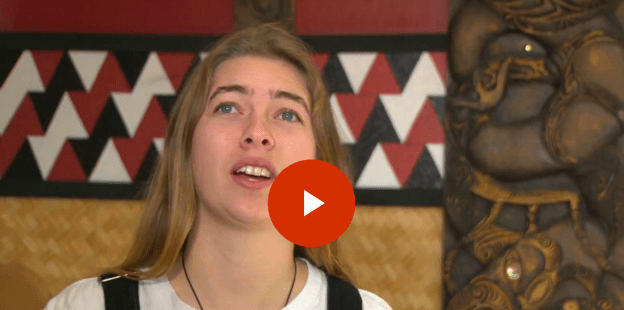
Colonisation, cultural oppression, abuse, depression and mental illness- some of the issues that the four young wahine Māori of slam poetry group Ngā Hine Pūkorero are taking to the world.

The group are representing Australasia at the 2019 Brave New Voices (BNV) Youth Poetry Festival in the United States, the largest international Youth Poetry Slam Festival in the world.

Matariki Bennet (Te Arawa) says, “There are a number of issues throughout Aotearoa that afflict Māori like poverty, mental illness, depression.  Most of the time the only thing that is seen by the world is the beauty on the surface.”

Ngā Hine Pūkōrero use waiata, karakia and te reo Māori throughout their poetry to confront stereotypes and voice the challenges that their generation face.

Arihia Hall (Tūwharetoa, Ngāti Tūkorehe) says, “It’s too easy for youth to be affected by depression and relinquish our culture and our language because we want to make a living in this world.”

After being crowned gland-slam champions at the Aotearoa and Trans-Tasman poetry slam competitions, the group are now fundraising to travel to LA for the BNV competition.

Te Rina Wichman-Evans (NgāPuhi, Ngāti Whātua) says, “[People] need to know that they’re not the only ones facing challenges, that there are different challenges around the world, including Aotearoa…such as with Māori language and learning the history of other cultures, while our own history is overlooked,” says Manaia Tuwhare-Hoani (NgāPuhi, Ngāti Wai).

This is the first time anyone from Australasia will compete at BNV.

“We’ve seen the strength of our grandmothers, our aunties, our mothers, we’ve learnt how to carry ourselves as strong women in this world of men,” says Matariki Bennet.

The group has set up a Givealittle page to fundraise for the trip in June.

Poetry Shelf noticeboard: Whiskey and Words

details here


Wellingtonians are invited to develop their palate for poetry at Poquito Cafe & Bar on Sunday the 23rd of June.

Whisky & Words offers an array of spirited delights from Poquito Cafe & Bar and some of Wellington’s most exciting poets. On the night, each poet will present a whisky from the night’s tasting flight and perform a poem inspired by their drink (plus a few of their best pieces). You will be served a range of five whiskys and five poets and are sure to find some new favourites of both! There will also be nibbles.

Whisky & Words is produced and MC’d by local poetry legend and whisky lover Kate Spencer (NZ Fringe Tour Award Winner, 2019). Her curated line-up features more than a tipple of talent; with poetry from Jordan Hamel (NZ Slam Poetry Winner 2018) Alayne Dick, Sharn Maree, Tarns Hood (Wellington Slam Poetry Finalists 2018) and Sara Hirsch (UK Slam Champ 2013).

There are only 32 tickets for this winter warmer, so get in quick.

Screen Shot 2019-05-02 at 4.53.35 PM.png

Poetry Shelf audio spot: Erik Kennedy reads ‘Another Beautiful Day Indoors

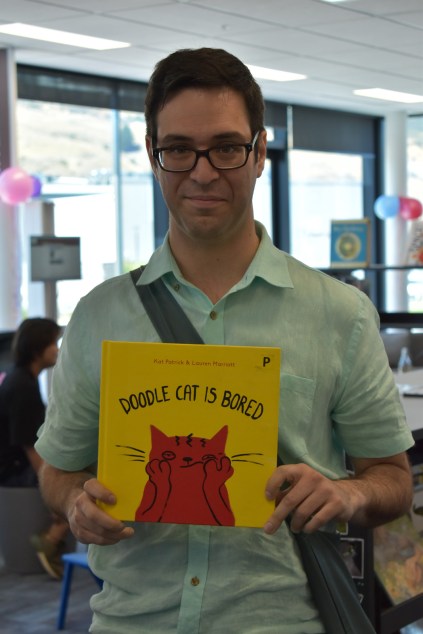
Erik Kennedy - Frankton Library, 2 March 2019 - websize.jpg


Erik Kennedy reads ‘Another Beautiful Day Indoors’;  it originally appeared in The Moth, No. 35, Winter 2018


Erik Kennedy is the author of Twenty-Six Factitions (Cold Hub Press, 2017) and There’s No Place Like the Internet in Springtime (Victoria University Press, 2018), and he selected the poetry for Queen Mob’s Teahouse: Teh Book (Dostoyevsky Wannabe, 2019). Originally from New Jersey, he lives in Christchurch, New Zealand.


Poetry noticeboard: time to submit writing to Sport and to Poetry NZ


Poetry NZ

Please submit work for our single annual issue only between the dates of 1st May and 31st July each year. The reason for this policy is to avoid a long wait before your work is accepted or rejected. You should hear back from us within, at most, three months of the date of submission.

Editor: Johanna Emeney

Deadline: July 31

Details here


Sport

Deadline: June 1

Editor: Tayi Tibble

Submit to: Victoria-Press@vuw.ac.nz

Details here

Poetry Shelf classic poem: Lynley Edmeades picks Lauris Edmond’s ‘Epiphany’


Many years ago I was working two jobs to save to go overseas. One of these two jobs was an early morning shift in a coffee cart, just off Courtenay Place in Wellington, outside a building that housed corporates of many kinds. I worked at the coffee at cart with Jenny, who became a good friend.

Jenny was everything I thought going overseas would make me: effortless artistic, politically informed, culturally savvy. Her parents were both artists, and her uncle was once a Labour Prime Minister. Unlike me, she didn’t need to go overseas; she already knew about the world. In fact, when I told her I was saving to go to India, she just shrugged and said, sweet. No bravado, no interest in impressing. The opposite to me.

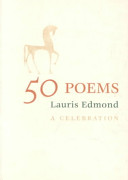
Jenny knew I was interested in poetry and that I’d been trying to write for a while. She knew I’d been reading people like Simone de Beauviour and Anaïs Nin, and that I carried this deep-seated belief that real life happened beyond these shores. Probably in France in the 1960s, but that didn’t stop me from going in search of it. Instead of challenging me on this warped idea, she simply slipped a beautiful cream paperback into my hands the day before I set sail; a parting gift. The book was 50 Poems: A Celebration, by Lauris Edmond. As if to say, there might just be some life here too.

I took Edmond with me in my rucksack, and together we would travel through India, Nepal, Bangladesh, and later, onto the UK, where I met up with Jenny in Glasgow some years later. I never said anything to Jenny, but even now, twenty or so years later, as I write this from my home in Dunedin, I still think about that parting gift and what it taught me.

There are several poems from this book that I have continued to come back to over the years. Including this one:


Epiphany

for Bruce Mason


I saw a woman singing in a car

opening her mouth as wide as the sky,

cigarette burning down in her hand

– even the lights didn’t interrupt her

though that’s how I know the car

was high-toned cream, and sleek:

it is harder for a rich woman…


Of course the world went on

fucking itself up just the same –

and I hate the very idea of stabbing at

poems as though they are flatfish,

but how can you ignore a perfect lyric

in a navy blue blouse, carolling away

as though it’s got two minutes

out of the whole of eternity, just

to the corner of Wakefield Street –

which after all is a very long life

for pure ecstasy to be given.


Lauris Edmond


Who was Bruce Mason, and why was Lauris Edmond writing a poem for him? More importantly, who was Lauris Edmond, and how could she write a poem that had the lines “the world went on/fucking itself up just the same,” in such close proximity to “Wakefield Street”? In my extraordinary naïvety, this poem took me by the hand and said: see, there are people here that think. Here was the poet, looking and noticing, thinking carefully, trying to understand, playing, slowing reality down a little … There was a form of existential enquiry happening in New Zealand, right under my nose — I’d just been too ignorant and ill-informed (and religiously adhering to a stereotype) to take notice. Which seems to me the whole point of the poem — there is stuff happening right in front of us all the time, we’re just too egotistic or preoccupied to see or hear it.

Lynley Edmeades


‘Epiphany’ is from 50 Poems: A Celebration (Bridget William Books, 1999) and was originally published in New & Selected Poems (Oxford University Press, 1991) and is posted with kind permission from the Lauris Edmond Estate.


content.jpg


Lauris Edmond (1924-2000) completed an MA in English Literature with First Class Honours at Victoria University. She wrote poetry, novels, short stories, stage plays, autobiography and edited several books, including ARD Fairburn letters. She received multiple awards including the Katherine Mansfield Menton Fellowship (1981), an OBE for Services to Poetry and Literature (1986) and an Honorary DLitt from Massey University (1988). Edmond was a founder of New Zealand Books. The Lauris Edmond Memorial Award was established in her name. Her daughter, Frances Edmond, and poet, Sue Fitchett, published Night Burns with a White Fire: The Essential Lauris Edmond, a selection of her poems, in 2017.

Lynley Edmeades is the author of As the Verb Tenses (Otago University Press, 2016), and her second poetry collection, Listening In, will be published in September this year (with Otago University Press). She is also a scholar and essayist, and currently teaches on the English program at the University of Otago. Her writing has been published widely, in NZ, the US, the UK and Australia.


Poetry Shelf noticeboard: Pegasus Books Poetry Reading#3 May 3rd


Screen Shot 2019-04-30 at 2.47.28 PM.png


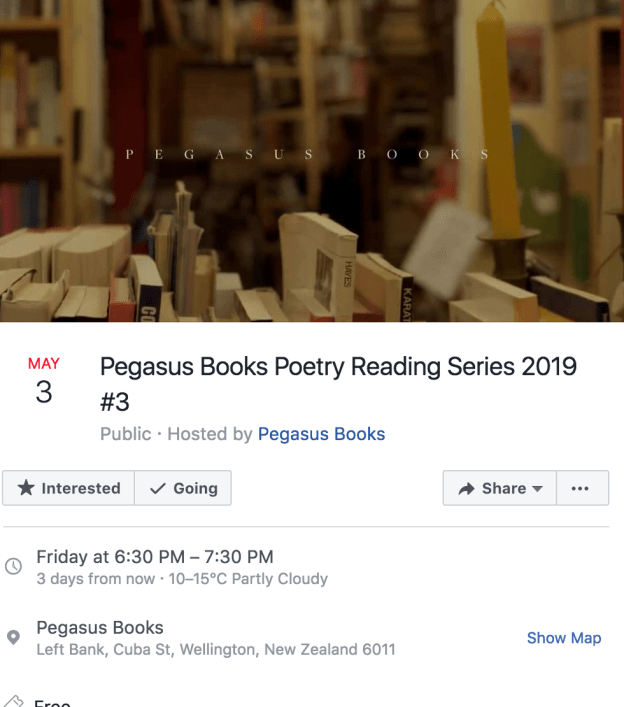
The third reading of the 2019 Pegasus Books Poetry Series is happening on Friday May 3rd at Pegasus Books, Cuba Mall, Wellington. 6.30pm start.

Featuring: Sam Duckor-Jones, Tim Jones, Chris Price, and Chris Tse.


I would love to be in Wellington for this!!


Poetry Shelf in conversation with Gregory Kan

GK_BWIMG_4290.jpg

Photo credit: Time Out Bookstore


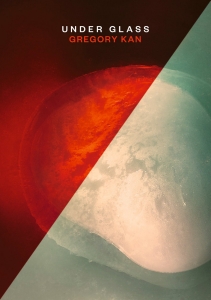
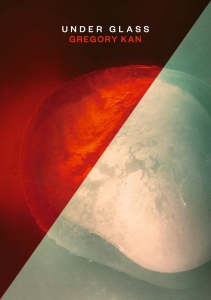
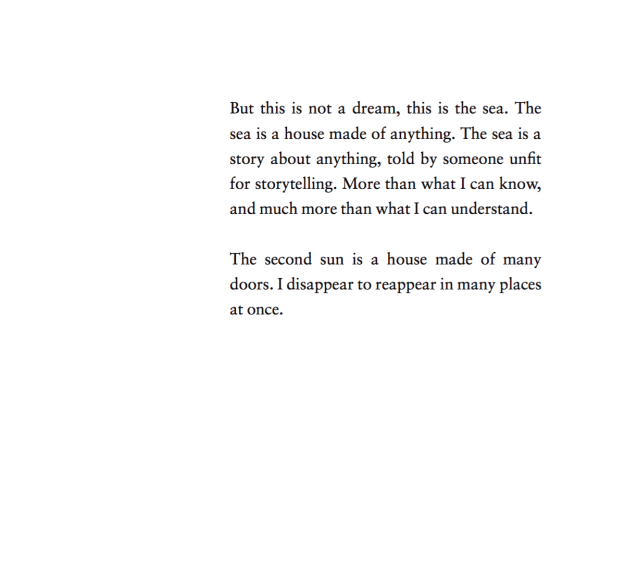
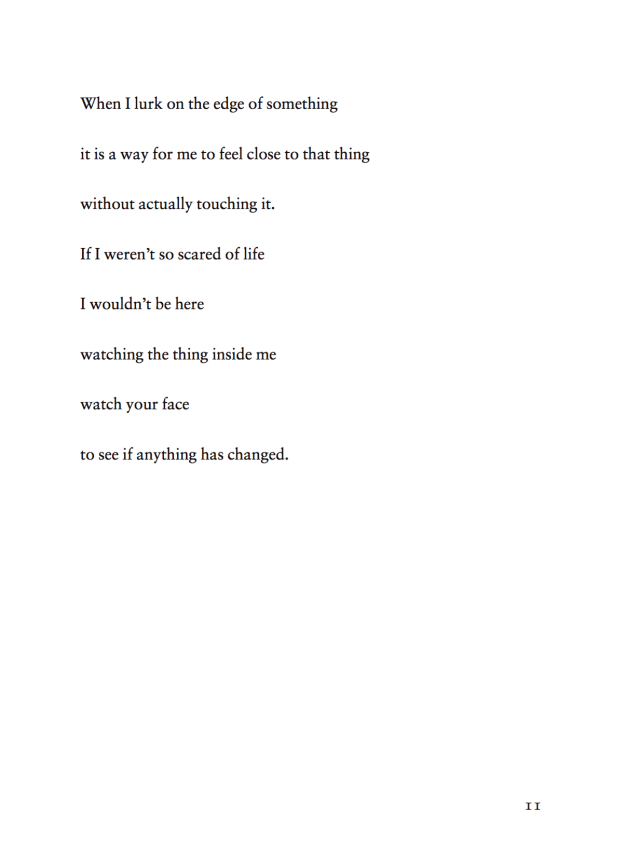
Gregory Kan’s poetry has featured in various literary journals including Atalanta Review, Cordite, Jacket, Landfall, The Listener and Sport, in the annual Best New Zealand Poems, and in art exhibitions, journals and catalogues. His debut collection, This Paper Boat (Auckland University Press, 2016) was shortlisted for the Ockham New Zealand Book Awards. His new collection, Under Glass, has gripped me as much as his debut. While his first book was unified by themes – he contemplated the poet Robin Hyde, his family, ghosts – Under Glass is also unified by form. A dialogue develops between a sequence of prose poems and a sequence of verse poems. The former features a protagonist moving through a strange and at times estranging landscape with its blazing sun. The latter establishes an interior landscape where the speaker struggles to make sense of things in a glorious interplay of gaps, knots, silence, physical things, ideas, yearnings, dream, hinges, contact, light, dark. The title underlines the way everything trembles and meaning is both prolific and unstable. The glass is a barrier, a way through, transparent, a longing to see, breakable, dangerous, a distortion, a view finder. I loved this book, this poetry haunting, and set about an email conversation with Gregory over nine weeks with pleasure.


1552353128013.jpg   1552353128013.jpg

Gregory Kan, Under Glass, Auckland University Press, 2019


Screen Shot 2019-04-29 at 7.40.21 PM.png


Paula: Your new book is beautiful,  mysterious and haunting, I really like the idea of skirting its edges rather than breaking through the ‘glass door’ of its making. What psychological, physical and heart states did its writing place upon you?

Gregory: Writing the book was a process of discovery from start to finish. For me, writing poetry involves a set of transactions or exchanges with the unknown. It is a fragile but ecstatic space to inhabit. I was privileged enough to be on the Grimshaw-Sargeson Fellowship when I wrote the bulk of it. I bounced a lot between our place in Wellington and the Sargeson Centre in Auckland. Perhaps that complemented the liminal, the interstitial states that come to characterise a good portion of my work: in-between, incomplete, on-the-edge-of, peripheral, fragmentary, perforated with holes. Radically finite. Distant but not disconnected. The Sargeson Centre is a beautiful but haunting place in and of itself. There’s a long bookcase in the apartment lined with portrait photos of all the previous fellows. At night there is nobody around except for passers-by and the occasional reveller in Albert Park. Ghosts everywhere. There is sometimes nothing more haunting than the process of writing, and the artefacts of writing. The overwhelming sense of the past in the present meant that my sense of linear time dissolved severely. I went looking for things to see if I could escape them.


Paula: Hmm. I wonder if all writer’s residences are like this? I had a similar experience at the Robert Lord cottage in Dunedin.

As I read the various hauntings in your collection three motifs stood out: the map, the mouth, the maze: ‘I started marking the walls with my knife / so I’d know where I’d been.’

The reading of the poetry took me into a maze of sea, land and self. I got ‘lost’ in reading. And that was a joy. The unconventional ‘maps’ were the navigational points. I am reminded of the blurb on Hinemoana Baker’s book, waha | mouth: ‘I’d like to think that opening this book to read is like standing at the mouth of a cave, or a river, or a grave, with a candle in your hand.’ So much for skirting the edges! Here I am drawing in close on a stanza like this:


Today the world overwhelms me.

I feel a garden

growing in my mouth

and eventually touch stone.

I am afraid of appearing sentimental about sentimental things.


Was the mouth also important as you wrote? Along with the maze and the map?

Gregory: Thanks for sharing that image from Hinemoana Baker’s book/blurb. I love it. Yes, I suppose the mouth marks several interrelated ideas for me: gap/hole/gate, threshold/limit, transition/passage, entry vs. exit, inside vs. outside, private vs. public, and a lot more. Someone, I can’t remember who, writes about the mouth being a place where the soft inside opens up to meet the outside. At the same time, I should qualify that this wasn’t part of any conscious or conceptual intent when I was writing the book. It’s something that I can see in hindsight. On the other hand, the map and the labyrinth were both entities I was conscious of letting loose in the strange game of writing the book. In retrospect, I think of all these entities constitute the problem-space of finite agents, with finite resources and knowledge, trying to understand a volatile and alien world.

It’s always fascinating to me, the differences between what one anticipates, speculates and discovers, when writing. I look forward to hearing about what other people notice when they read the book!


You think I don’t know you anymore

and I never read your emails

but I wonder if we have the same nightmare

about some final thing

for which there is no forgiveness.


Paula: I think the movement between the unconscious and conscious that a poet leaves in a poem contributes to the way a poem is both fertile and open. And that is exactly why Under Glass is a joy to read; mysterious yes, musical yes, multilayered yes. The movement is also heightened by the open pronouns. Who speaks? Who is playing? Who hides? In your last collection you engaged in self-revelations by way of Robin Hyde. Do you do so here by way of ambiguous pronouns? Or are the speaking characters both porous and invented?

Gregory: Yes, the “I” and “you” in the book are varying mixtures of real, imagined and abstract. I’ve been interested in the fragility of the address and of the self for a long time.

Both the “I” and “you” in the book are fluctuating identities. Some of the poems involve addressing real individuals in my life to begin with, but then depart from them. Sometimes they are completely abstract and/or imaginary addressees. The “I” also shifts within and from each poem. In all these ways (and many others besides), there is an intense fragility to the transmission of information and intent. I wanted to challenge the transparency of the lyric poem and the lyric “I” and “you” in this particular way. I wanted to push it to a kind of limit, to de-privatize the self. I wanted something both incredibly personal and incredibly abstract.


Paula: Such movement, such uncertainty, fluctuations, flickers. Reading this has sent me back to the book to follow those tremors. Conversely, do you think a poem or a line or even a word can offer a temporary but comfort-rich anchor? For me: ‘Every day the coast looks the same, as/ though I haven’t moved’.

Gregory: In order to write, I need to believe so. I need to believe that hope and overcoming are as universal as hardship. We have seen how a single event can completely rewrite the way we see the past, and the future. Despite such an event, some good things persist, and some new good things can even grow. While a lot of my poems imply a world of flux and uncertainty, where little can be taken for granted, I hope they can also provide a sense of solace, of possibility. The exceeding of limits and thresholds. The possibility of change and doing some good. The strength of being together and moving with others. The relief from pain.

In an idealised model of the world, there is an answer to every question. There is a reason for every event. Things can always be explained, if not anticipated. Everything is as it seems. But this is not the world I know. I think many of us experience a world far in excess of this idealisation. Flux and stability, pain and comfort, despair and hope, uncertainty and understanding – they walk together. The book is in a constant dialectic between entrapment and escape.


Paula: Indeed. The event in Christchurch tilted us at such a human level. I am a great believer in hinges as opposed to confrontation, connections rather than disconnections.  For me that is what marks the pleasure of my reading experiences, such as your book. What poetry books have offered you solace or connection or breathtaking possibilities over the past year or so, but at any point in your life?

Gregory: I agree. The world can be seen in terms of its disconnections, animosities – its radical otherness. But I see that as the enabling space for bridges, for empathy and understanding. This is the condition for knowledge and for being together with others, for the grasping mindsoul looking for an island to rest on, awash in a dizzying ocean.

As for poetry books, there are so many! Since we’ve been talking about my book, I’ll use that as my constraint. Reading and writing are almost indistinguishable for me (you gotta eat to live), and these books were absolute pillars when I was writing Under Glass

Tusiata Avia’s Fale Aitu | Spirit House. Soul-slaying. I often lament the lack of action and politics in New Zealand poetry. I sense a general sentiment that politics in poetry is “too prescriptive” or “ham-fisted” but I think that’s a cop-out. Those are not reasons to remain silent. My opinion is that our poetry community needs to speak up more, to do more work, to not be lost in the complacency of this privileged bubble of liberal high (and white) culture. Race, class, gender – they’re all here, beautifully woven into Tusiata Avia’s work. She’s not fucking around.

Anne Carson’s Nox. A sparse and fragmented work. Grief and memory. Love. Such a beautiful object, too. What she makes of the scant traces of her brother.

Raul Zurita’s Dreams for Kurosawa. Otherworldly. Heartbreaking. A very strange combination of elements: traces of trauma under the Pinochet dictatorship in Chile, homage to Akira Kurosawa’s Dreams, and ghosts everywhere.

Mary Burger’s Sonny. This book has been very influential to me – even since my first book, This Paper Boat – in form, in diction, in tone, in subject matter. I think it was Zarah Butcher-McGunnigle who recommended it to me. It showed me the power of plain prose and diction, and the power of arrangement and organisation. Like me, Burger is invested in interrogating and pushing the limits of the writing of selves. Like me, she is also invested in interrogating the conditions and limits of knowledge. The writing about her past collides with that of J. Robert Oppenheimer, the American physicist who was credited for being the “father” of the atomic bomb.


Paula: This is a terrific list. Thank you. I have been thinking about the fingertip traces your book has left on on me – that sometimes act as tiny questions and that sometimes resemble little melodies. Did writing this book raise a question for you – large or small? In the process of writing or upon completion?

Gregory: All kinds of questions. A lot of self-centred ones, especially if I’m in an anxious mood. Will people accept this book as poetry? Is it even any good? Did I do my best? What constitutes success for this book, and for myself? What does my poetry mean to me? These are questions that have no real answers, and I’ll be taking them to my therapist, ha.

And some bigger, more difficult questions, after the book’s release and after Christchurch. What are the possible functions of poetry in our contemporary world? At one of its lowest points, poetry, for me, is so often an institutional and institutionalised form of nostalgia and conservatism. Why is it so enamoured with its own past? I don’t know if I’ve encountered another medium that is as hell-bent on dogmatically validating itself based on historical precedents and norms. At another low point, poetry is a site of postmodern whimsy, irony and impotence. If I were being charitable, I can understand that perhaps this is driven by the belief that almost everything can be and is subsumed under the totality of capitalism, and that resistance involves finding the most non-utilitarian, non-functional gesture possible. At other times, I think that this is simply a sneering cynicism. And I find that to be incredibly lazy and dispiriting. When our world is confronted by planetary annihilation and the increasing visibility of fascism and white supremacism, these attitudes are unacceptable to me. So what does it mean for poetry to adapt, and move forward?

What should the New Zealand poetry community be asking itself? I am afraid of particular kinds of silence. The silence of grief and shock, and the impossibility of witness and testimony, is of course understandable. But why do I also have the sense that there is also the silence of privileged complacency and passivity? The roots of colonialism – and the conditions of white supremacism – run deep, and I believe it’s our responsibility to start digging in our own backyards. It is a necessary labour for all of us.


Paula: I utterly agree. A necessary labour for all of us.

What do you like to do as a counterbalance to poetry?

Gregory: I work as a programmer and that offers me a world with a lot more certainty. There is still a lot of creativity and imagination involved in programming, especially in how you approach a problem. There is a caricature of programming that implies there is always a correct way to do things but that isn’t accurate. There are many possible solutions to any one problem. However, in the context of my work, the ends of programming are often certain – the problem itself is usually fairly determinate. What you are trying to get out of the program is usually fairly determinate. With poetry, utility and ends are always in question, and I may never know ultimately what “purpose” or function a poem serves. So having this kind of existential stability in my working world as a programmer can be a real comfort, as a point of difference. At the same time, there is such a thing as speculative programming, but I don’t yet have the intent, vision or skill to get there. In saying all of that, sometimes programming and poetry can feel very similar to me, both language-driven, both world-building. From that perspective my escapes become more recreational and indulgent ones. I love hanging out with my partner and watching Netflix. I love playing video games. I love watching trashy horror movies. Also activities that involve my body to a greater degree than the mind – swimming, cooking, listening to music, playing with the cat, eating, sleeping!


Screen Shot 2019-04-29 at 7.39.38 PM.png


Screen Shot 2019-04-29 at 7.39.24 PM.png


Auckland University Press page


Poetry Shelf noticeboard: The Sarah Broom Prize Finalists 2019


Jessica Le Bas.jpg  Michael Steven  Nina Headshot (32 of 72).jpg

(Nina Mingya Powles: Photo credit Sophie Davidson)


The three finalists for the Sarah Broom Poetry Prize 2019 have been announced.

Warm congratulations to:


Jessica Le Bas’s first collection of poetry, incognito (AUP 2007), won the Jessie Mackay Best First Book Award. Her second collection, dealing with adolescent depression, Walking to Africa (AUP 2009), was a finalist in the Ashton Wylie Book Awards. She worked for the UN during the Balkan War, and later in the Beehive. In 2012 Le Bas went to Rarotonga for a year, returning again in 2017. Her current job takes her into the Pa Enua, the outer islands of the Cook Islands: Pukapuka to Mangaia, Aitutaki to Mauke. Large Ocean Islands is a growing sequence of poems arising from living in the cultural wealth and wisdom of the extraordinary people of the Cook Islands. She lives in Nikao, Rarotonga.

Nina Mingya Powles is of Pākehā and Malaysian-Chinese heritage and was born in Wellington. She is the author of field notes on a downpour (2018), Luminescent (2017) and Girls of the Drift (2014). In 2018 she was one of three winners of the inaugural Women Poets’ Prize.  She is poetry editor of The Shanghai Literary Review and founding editor of Bitter Melon苦瓜, a new poetry press. Her prose debut, a food memoir, will be published by The Emma Press in 2019.

Michael Steven was born in 1977. His poems have previously appeared in brief, IKA, Landfall, Jacket2, and Poetry NZ Yearbook. He is a graduate of the BCA programme at Manukau Institute of Technology. In 2018, Otago University Press published his first full-length poetry collection, Walking to Jutland Street, which was longlisted for Best Poetry Book in the 2019 Ockham Book Awards. He is the recipient of the 2018 Todd New Writer’s Bursary. He lives in West Auckland.


The finalists were selected from over 300 entries for this year’s prize, by the 2019 guest judge and Auckland Writers Festival guest, Anne Michaels. An award-winning poet, novelist and essay writer, Anne Michaels is Toronto’s current Poet Laureate. Her multiple awards and shortlistings include the Commonwealth Poetry Prize for the Americas, the Orange Prize, the Governor-General’s Award and the Griffin Poetry Prize. Her latest poetry collection, All We Saw, was published in late 2017.


Anne Michaels will announce the winner of the Sarah Broom Poetry Prize 2019 at a special Prize event at the Auckland Writers Festival on Saturday 18 May, 1-2pm in the Waitākere Room, Aotea Centre. She also appears

This is a free event.


Anne also has a feature event on Friday 17th May, 10 – 11 am, ASB Theatre, Aotea Centre.

The novel Fugitive Pieces is a work of art. It brought author Anne Michaels accolades, and the Orange Prize for Fiction. Michaels has not rested on her laurels, however. She is currently Toronto’s Poet Laureate, and her latest collection of poems All We Saw has garnered rave reviews. Her non-fictional Infinite Gradations is a meditation on art and death. She discusses her life’s writing with Michael Williams.

Supported by Sarah Broom Poetry Trust and Canada Council for the Arts.