Category Archives: Uncategorized

Poetry Shelf review: Reading Mary Kisler’s Finding Frances Hodgkins

hodgkins_cvr.jpg


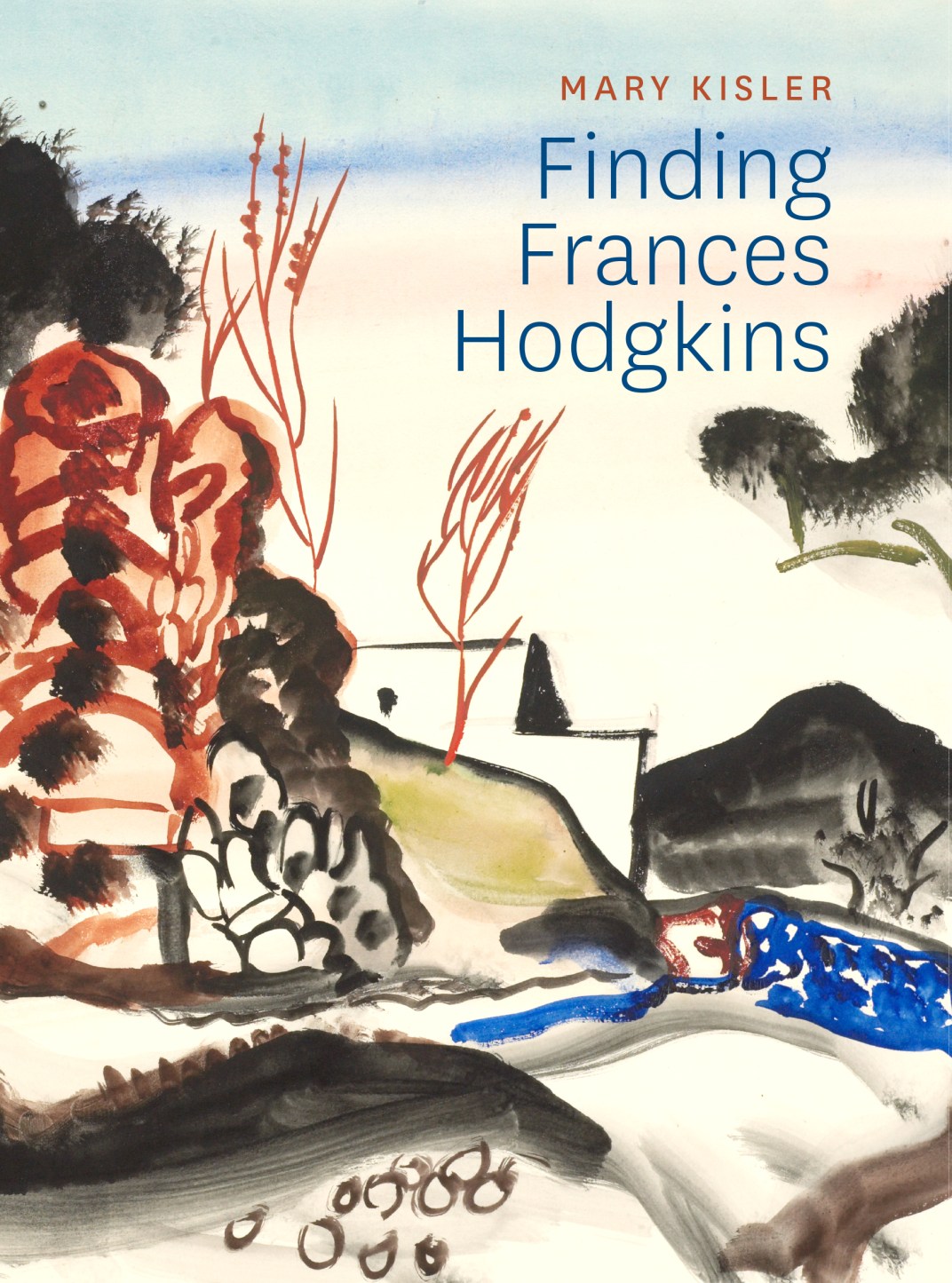
Mary Kisler Finding Frances Hodgkins Massey University Press, 2019


At First Glance


At first glance you are a bird in flight

wings flapping and paper flailing

feet above the cobbled bridge

ready to land on a blank page

as happy as the lark,

Dorothy behind with strings let loose.


At first glance you carry a pigeon on your head

a thousand pictures and a thousand words

colours to cry for and lines to settle on

the tools of art tucked tight beneath your arm

in the blackest of winters and the blackest of springs,

Dorothy behind with her feet on the ground.


At first glance you are a moth to the flame

wings beating and cloth shivering

feet above the water

ready to land on windmills and cabbages

the cloud effects magnificent,

 Dorothy behind with an eye on the light.


Paula Green

from Making Lists for Frances Hodgkins Auckland University Press, 2007


One summer I was invited to write something for a Frances Hodgkins exhibition – I lay on my bed surrounded by catalogues of her work and pitched deep into her paintings. It was a curious experience, because the more I looked, the more I became entangled in her artwork and the more her artwork became entangled in me: my back story, my obsessions, my predispositions, my failings. I ended up writing a poetry collection that I named Making Lists for Frances Hodgkins.

All these years later I am lounging back after finishing Wild Honey and find myself entangled in Frances’s paintings again; but this time it is a little more intricate – thicket like – because I am entering the artwork by way of Mary Kisler’s terrific new book Finding Frances Hodgkins. The book is beautifully produced by Massey University Press, with a generous serving of Frances’s paintings and drawings, and photographs from the archives and from Mary’s travels. Mary is the Senior Curator, Mackelvie Collection, International Art at Auckland Art Gallery Toi o Tāmaki.

In 2013 Mary was updating an unpublished catalogue raisonné of the works of Frances, and it proved a challenging task solving the unnamed titles and places. Keen to track the changes in style and subject matter in the work of such a nomadic artist, Mary decided to trace Frances’s travels through Italy, France, Spain, Morocco and Britain. Armed with the artist’s work on her iPad and her letters, Mary journeyed through Europe. The final result is a little treasure; a book that stitches you as reader to Mary as traveller/memoirist and to Frances as artist. It is a concertina booklet; Frances’s paintings folds onto Mary’s vivid descriptions, musings and anecdotes which fold onto Frances’s anecdotes which fold onto Mary’s photographs which fold onto your own experiences which fold back onto the paintings themselves. Unfold the whole sequence and your breathtaking absorption of a painting is rich and surprising.

Mary immerses you in the world of Frances – her daily routines, the physical scenes, the painter’s observations –  the writing culled from letters, the lexicon of paint and from standing in places where Frances once stood/painted. A particular painting, Hill Landscape (1936), with its juxtaposed motifs and borrowed elements, is described as ‘a memoir, so pleasing and much richer than a postcard or a photograph that captures only a single place in a single moment’.  Herein lies the joy of the book – the way Mary’s engaging travels have produced a book that offers postcards and photographs yet is so much more. It is travel guide, art guide and twinned memoir that draws you close to place, both past and present. As much as it illuminates the workings of an artist does it illuminate the workings and preoccupations of a scholar. Everything seems to bound off and rebound against each other. I love that.

Take Frances on truth and how she is perceived:

I wish the papers wouldn’t make me out a sort of freak artist. I am really a very sober minded thoughtful sort of person with nothing slapdash or offhand about my work. Every stroke I put down comes from real conviction & is a sincere aspect of truth – if not the whole truth. If I can only live long enough the world will have to acknowledge me – I am horribly stubborn & I haven’t lived these long years of privation & hard work for nothing.’

By 1929 Frances is pleased to be in the news and exhibiting alongside Len Lyre and emerging modernists Henry Moore, Ben and Winifred Nicholson and Paul Nash. In a letter to her brother Bert she writes:

It is about time they realise I exist and am doing something a little more significant than the usual ruck of artists who come to Europe – even it is unpopular now people will in time grow used to the strangeness of my technique, a “handwriting” unfamiliar to them and therefore ‘eave a brick at its ‘ead!

To view the paint stroke as a form of handwriting is genius – with its subjective gestures and colour palette. Her autobiographical script was affected by the art of others, as Mary often points out, but Frances was always forging her own visual voice. It affects me as spectator at the level of both feelings and ideas. I am reminded of Robin Hyde’s pull to flee New Zealand and her ache to write. Frances was also pulled to Europe (and Africa) but in her ‘ache to paint’ she navigated what she felt and witnessed in front of her. She would stick to her own painting impetus but she would also wipe her canvases clean when her galleries saw ‘flaws’ and demanded new work. ( Interestingly I have lived with an artist for over 30 years and have never witnessed such gallery demands). She was both alone and not alone – alone in the moment of putting brush on canvas but often touring with friends or teaching students to earn money.

Behind any painting (or poem or movie etc) is the narrative and context of its making. Sometimes traces are glimpsed in what is disclosed or hinted at but often it is impenetrable. Frances’s life-long struggle to survive for example. This was a matter of finances, of crippling contracts with galleries and of maintaining her own ‘painting voice’ regardless of the ‘isms’ she rubbed against and the scant recognition back home. Mary highlights this independence: ‘Other English modernists were constantly battling over the right “ism” to follow, but Hodgkins kept her head down and followed her own path, sometimes weaving certain surrealist elements into a partially abstracted tapestry of motifs.’

I am drawn to the way Frances produced a strong bond between place and objects. Sometimes place took the form of an armchair, at other times a Mediterranean vista. The objects were often dreamlike and mnemonic, often a potent symbol. In this sense her paintings become poems – rich in visual chords that activate multiple engagements. This is what attracted me when I was lying on my bed with her catalogues. Mary comments on ‘Self Portrait: Still Life’:

(..) we know what she physically looked like, but encompassed in her self-portrait are aspects of everything that was important to her: objects she loved and which held particular symbolism for her, her favourite scarves reflecting her love of pattern and design, and her ability to construct a work rather than simply paint what was in front of her. It states clearly: judge me by what I do and what I believe, not by how I look.

Finding Frances Hodgkins is a book to linger over, savouring sumptuous detail, along with joyful discoveries and sidetracks. It is kaleidoscopic in its reach, it enhances viewings of Frances’s paintings and the real/imagined woman painting. I love this book because it resists straitjacketing the artist within specific theories in order to explicate her work. The way we write about art, the way we ‘find’ art cannot fit into a single reductive box. We can critique within the critical climate of our time but we can also choose independent paths (whilst brushing up and absorbing traces of contemporary thinking, styles, tastes).  Mary has followed in the path of Frances but she has made that path her own.

Of course no one really ‘finds’ Frances Hodgkins, because she will never fit comfortably into a single box. But what I hope to have done on this journey is cast some light on how important place became in her search for modernity, and her individuality as an artist, respecting the work of others but always taking her own path. (Mary Kisler)

This is a book I will treasure for a long time.


Massey University Press author page

Mary Kisler in conversation with Kim Hill on RNZ Saturday morning


Evening


Between the skeletal tree and the blue grape, my ears ring.

Between the black roof and the soft drape, my skin yellows.

Between the support of the loggia and the altar table, my voice holds back.

From the pink hill to the fallen leaf, and upon black sand, my limbs burn.

From the little windows to the muddy goblet, I make out the women dying.

From the white wall to the sensual fruit, my hands seek slim comforts.

Between the streamy clouds and the blue jar, I rest upon crisp sheets.

Between the blood shadows and the chalky highlights, my stomach empties.

Between the eye of the house and your eye, I am in limbo.


Paula Green from Making Lists for Frances Hodgkins


Poetry Shelf Monday Poem: Maringikura Mary Campbell’s ‘How we loved’


How we loved

for Meg and Te Ariki Campbell


i always wondered why
the dogs never pissed inside the house
How the house gripped onto the hill
the wind
and how we never fell
How you lived even though
you wanted to die, my mother
How we loved and hated
but mostly loved
How we doubted the sincerity
of those whose lives seemed easier
How we hated the Nats
because they hated the poor
How we tolerated those who voted for National
because they thought their wealth would rub off on
them
How our family, our mokopuna, surpassed all others
and how every time we looked at each other we saw
out Tupuna
staring right back at us
How we loved our parents right to the end
of their lives and ours
My beloved parents
How we loved.


Maringikura Mary Campbell


Maringikura Mary Campbell lives in the family home in Pukerua Bay. She is a mother of three and has one mokopuna whom she adores. She published Maringi in 2017. She also published Smells like Sugar – poems by rangatahi young people in psychiatric care and What it takes to fly – poems by mental health consumers from around New Zealand.

You can listen to Maringikura Mary Campbell read another poem (for her grandmother), ‘Ethell Mary’, here


Poetry Shelf Friday talk spot: Saradha Koirala on Teaching Poetry


In Praise of Teaching Poetry


English teachers are often condemned for ruining poetry for everyone. For making poetry seem harder than it needs to be, flogging a dead verse and generally turning people off it. We’re told we teach too much haiku, too many “dead white guys” or that we look too closely for meaning that’s probably not actually there. If teachers are destroying your love and enjoyment of poetry, then I’m deeply sorry. On behalf of all teachers everywhere, I apologise because I can assure you, the last thing we’re trying to do is ruin something we hold in such high regard.

Most English teachers I know are secret poets anyway, many with our own published work. We have our favourite poems that we like to wheel out on special occasions, we recite lines to each other over mugs of instant coffee in the staffroom, we gasp involuntarily when we see Keats or Plath or Eliot on the latest book list. If anything, we’re trying not to appear too excited, too beguiled by the magic of language and metaphor and that we get to read, pore over, discuss it in our working days.


When I started my current job two years ago, I was sent the outline for the coming term. Every year level in English was studying poetry in some form. We had lovely NZ/Australian writer Lia Hills as our poet in residence doing workshops with the Year 7s and 8s, culminating in a poetry evening for parents. The Year 10s were writing a poetry portfolio based on close studies of the work of Darwish, Neruda, Transtromer, Akhmatova, Yeats, Heaney, Hughes, Bobbi Sykes, Eliot and Dylan Thomas. I added a few more women to the list – Grace Taylor, Grace Nichols, Dorothy Porter, Kate Tempest, Sarah Holland-Batt – and couldn’t believe my luck.

But what of the students? I’ll admit some struggled to write their own poetry. Lia Hills talked a lot about gathering “raw material”, having something to say and crafting words purposefully. Students learnt about the power of line breaks and moving a poem away from a narrative retelling to something more suggestive. Many of them created things you probably wouldn’t have expected from 13 year olds.

The Year 10s completed their portfolios and while some relished the opportunity – compiled their work into titled anthologies and ordered them carefully beneath beautifully designed covers – others squeezed out the bare minimum. But isn’t that just teaching for you? My main concern was, having studied poetry for a term, did they now hate it?

Poetry, like Maths, is often one of those things that young people have a fixed mindset about. They might have encountered something tricky early on and decided it wasn’t for them, but the teacher’s job is to open their minds and to help them find a way back in. It’s therefore almost surprising when I hear students say they love poetry and enjoy reading, studying and writing it. It seems I too have been conditioned into thinking teaching poetry is an up-hill battle.

I’m very lucky to teach at a school that values poetry. We have staff members with PhDs in poetry and translation, we are writers, we are daily readers of poetry. In previous schools, I’ll admit I’ve had to go down the haiku route a bit, but for some young minds having a formula, a rule and something to count out on fingers while writing makes the whole process more manageable, while not detracting from the magic of language.

I started this year again with poetry all round. The Year 7s wrote their own version of Carl Sandburg’s ‘Wilderness’, the Year 8s studied a range of poetry about ‘outsiders’ and created amazing digipoems with stop motion animation and cleverly edited soundtracks using software I had never seen before. My Year 11 Literature class enthusiastically read the work of Gwen Harwood. I didn’t once hear anyone groan at the idea of poetry and can only hope that when they encounter it in another form next year and the year after that their eyes will light up like a newly recruited English teacher looking over her poetry-filled syllabus.


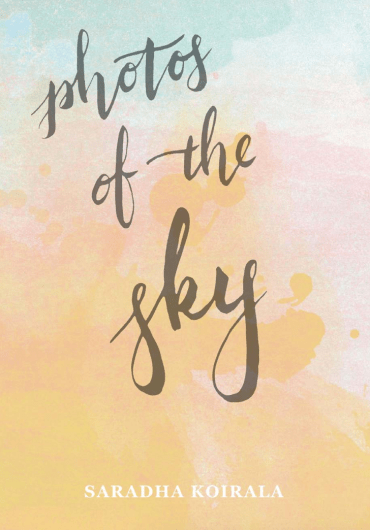
Saradha Koirala’s latest collection of poetry is Photos of the Sky (The Cuba Press, 2018). She teaches English and Literature in Melbourne.


Screen Shot 2019-06-21 at 8.55.36 AM.png


Poetry Shelf noticeboard: Michelle Elvy’s ‘the everrumble’ launching at the Flash Fiction Festival UK

Ad Hoc Fiction is honoured to be publishing the everrumble, “a small novel in small forms” by Michelle Elvy. It’s a wonderful and important work of fiction highly praised by the writers quoted below. The striking cover art is by acclaimed Ethiopian artist, Eyayu Genet.
the everrumble is a poetic imagining of intense focus and sweeping ideas. Zettie’s story is fluid and in motion, transcending geographies and time. She stops talking, at age seven, and starts to listen – to the worlds she finds in language and books, and to the people and places she encounters as she moves across continents. Her silence connects her to people, to nature and to the elemental world. Magical and beyond boundaries, this collection focuses on small fragments, taking Zettie, and the reader, inevitably to the place where human history began.”

We excited that the everrumble will be launched at the Flash Fiction Festival, UK on 28th-30th June where Michelle is running workshops, chairing a panel on Flash Around the World, introducing the latest Best Small Fiction anthology, and talking about flash fiction in New Zealand. And it will also be for sale from June from the Ad Hoc Fiction bookshop in paperback in several different currencies and in ebook formats from Kindle and Nook.


Poetry Shelf audio spot: Emma Neale reads ‘Affidavit’

9781988531687.jpg


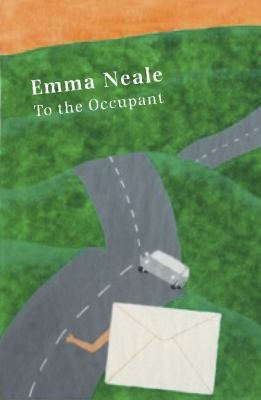
‘Affadavit’ was published in the most recent Poetry NZ Yearbook and also appears in To the Occupant.


Emma Neale is the current editor of Landfall. Her new collection, To the Occupant, with cover art by Nick Austin, has just been published by Otago University Press.

Otago University Press author page


Poetry Shelf noticeboard: The Divine Muses invites entries for NEW VOICES – Emerging poets competition 2019

Screen Shot 2019-06-19 at 6.51.51 PM.png

CLOSING DATE: 2 AUGUST 2019

Results to be announced at Divine Muses Poetry Reading on National Poetry Day, 23 August 2019.

Judge – Poet & Editor, Elizabeth Welsh

First Prize: $200 in Unity Book’s book tokens
Second Prize: $100 in Unity Book’s book tokens

The competition is open only to writers considered ‘emerging’ i.e. have not published one or more books (fiction, poetry, nonfiction) with a New Zealand or overseas publisher, and is a current or former undergraduate (BA, Hons, BSc, BComm etc) or Masters student attending The University of Auckland, Auckland University of Technology, Manukau Institute of Technology and Massey University (Albany Campus, Auckland only) or student or graduate of Blue Haven Writers Workshops.

To view the complete entry details go here to download the entry form.

Either opt to print the entry form and then choose save as a PDF or export as a PDF. When you open the PDF click on edit and then in the header section select “T add Text” and fill in the form, save and email your entry as per instructions provided.

This year’s Divine Muses Reading and the announcement of the winners will be held at the Central Library, Auckland CBD.


Poetry Shelf Classic Poem: Johanna Emeney picks Michael Jackson’s ‘Green Turtle’


Green Turtle


Sam smashes its head in

with the same sledgehammer

I used this afternoon

to ram our tent pegs home.


A hemisphere turns

turtle; Sonny hacks

its mildewed, sea-marbled

breastplate free.


It recoils from the sky.

Head lolls.

A flipper feebly pushes

Sonny’s knife away.


They empty

the long gray rope of its life

onto the sand by the thudding boat

that holds two more


And its carapace is a vessel

filled with a wine lake

in which clouds

float, birds fly, leaves fall.


Michael Jackson

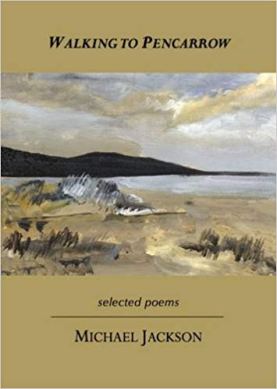
From Walking to Pencarrow: selected poems Cold Hub Press (2016)


This poem was occasioned during Jackson’s one-year stay with a Kuku-Yalanji family in the Bloomfield rainforest. The butchering of the turtle was carried out by his host’s brother and brother-in-law, and it was an incident that clearly raised conflicts within Jackson, both cultural and emotional. It is described in his nonfiction books The Accidental Anthropologist (Longacre, 2013) and As Wide as the World Is Wise: Reinventing Philosophical Anthropology (Columbia University Press, 2016). Jackson includes the poem in the memoir and the textbook.

The speaker’s complete vulnerability to the experience (not openness, vulnerability) is one of the main things that makes the poem so powerful for me. The narrative position of the speaker is that of an outsider endeavouring to be respectfully uninvolved in the spectacle. The reader can feel his reluctance to place judgement on this cultural encounter. However, it impossible not to intuit the initial shock of the first lines and the reverence of metaphor describing the turtle—I see him almost like an old general being denuded of his armour when “Sonny hacks/its mildewed, sea-marbled/breastplate free”. The diction and imagery create a perfectly credible awkwardness and humility to the speaker in the face of the turtle’s brutal death.

The other aspect of “Green Turtle” that I find very powerful is the transcendence of the final image. The last stanza is a distillation of everything that has gone before, and, as an ending to the poem, is exquisite, raising the narrative recollection of the killing of the turtle to a lyric contemplation of this event in the scheme of things, especially within a Western, Christian model. Here, in the final lines, is the shell of the turtle, a vessel containing a blood-wine, literally reflecting the things of the world that go on as normal despite the creature’s violent death just moments before. With this ultimate image, the poet invites his readers to undertake their own reflection on humankind and nature, on life and death, on religion and culture. The poem ends with such opening out, and such unexpected beauty.

Johanna Emeney


Jo Emeney holds a PhD in Creative Writing, and has taught at Massey, Albany, for the past nine years. She also runs the Michael King Young Writers Programme with Ros Ali.
Jo read English Literature at Pembroke College, Cambridge, and then taught senior school English Literature for twelve years. She has written two books of poetry (Apple & Tree, 2011; Family History, 2017), and one nonfiction book on the topic of lyric poetry and the medical humanities (2018). She has just finished drafting a chapter for Routledge on Disability and Poetry.

Michael Jackson is internationally renowned for his work in the field of existential anthropology and has been widely praised for his innovations in ethnographic writing. Jackson has done extensive fieldwork in Sierra Leone since 1969, and also carried out anthropological research in Aboriginal Australia, Europe, and New Zealand. He has taught in universities in New Zealand, Australia, the United States and is currently Distinguished Professor of World Religions at Harvard Divinity School. His most recent books include The Varieties of Temporal Experience (2018), Selected Poems (2017), and The Paper Nautilus: A Trilogy (2019). Cold Hub Press author page.


41cl-rF2JDL._SX353_BO1,204,203,200_.jpg


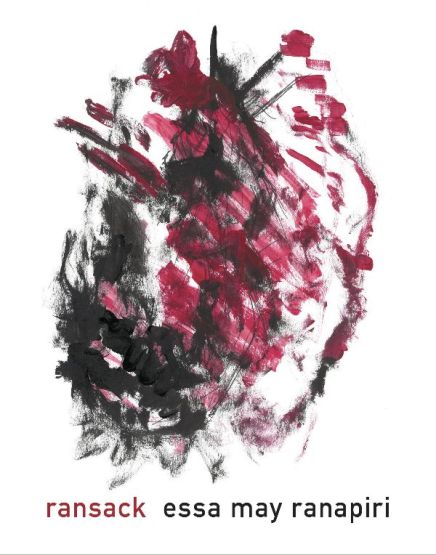
Poetry Shelf noticeboard: essa may ranapiri’s poetry launch

77ade6c9-0e68-45b0-99a7-95292b27fd80.jpg
You are warmly invited to the launch of

Ransack
by essa may ranapiri

on Thursday 18 July, 5.30pm–7pm
at Poppies, Hamilton, 307 Barton St.

All welcome.
p/b, $25

Poetry Shelf noticeboard: 10 Questions with Paula Green at MUP website

full piece here

I have barely touched on all the women poets I loved in these 10 Qs – it took a fair chunk of pages in Wild Honey and even then I didn’t have enough room. When I went to university I longed for an essay with enough room to go deep and wide so I stayed until I could write a PhD thesis. Now it is time for little tiny secret things.

I am so delighted to be celebrating the book with some of the poets at events in August and September. Watch this space!

Screen Shot 2019-06-18 at 9.26.37 AM.png


Q1: Now that Wild Honey is off to print, are you feeling proud of it?

Yes, a thousand times yes. But also a tad anxious.


Q2: It’s a huge book and it’s been a monster project. Where did the idea for it first come from?

My university degrees considered Italian women writers, but when I left university I focused on my own poetry. I carried the Wild Honey seed from those days because New Zealand women poets felt like an unwritten story. All roads — my university life and my poetry life — led to Wild Honey.


Q3: How long has it taken you?

Four years writing and researching, but decades germinating.


Q4: It must have been a massive process of discovery. Tell us about one poet you are pleased to have come across and to have shone a spotlight on?

There were so many discoveries. Familiar poets appeared in surprising new lights as I lingered over their work, such as Fleur Adcock, Robin Hyde, Ursula Bethell, Nina Mingya Powles, Karlo Mila, Hinemoana Baker, Tusiata Avia, Alison Wong, Fiona Kidman, Emma Neale, Anna Jackson. I wanted to write whole books about each poet. I loved the work of Evelyn Patuawa-Nathan, unfamiliar to me, but was disappointed I could find only one book published in 1978. I wanted more!

Shining a light on Blanche Baughan was a delight. At first her poetry felt impenetrable, but then as I spent time in the archives, and her biography unfolded, her poems sang for me. She wrote from both heart and intellect, daring and empathy. Her extraordinary life story hides in traces in her poems as do her strong political ideas.