The Urban Walking Festival is seeking poets to perform at a poetry walk through Takapuna responding to its literary history.
The walk will start at Frank Sargesson’s house on Esmonde Rd and finish at the Soap Box in Killarney Park.
Writers along the route include Janet Frame, Karl Wolfskehl and Bruce Mason. We will stop at 38 Hurstmere, a open air community space that speaks to the urban change in Takapuna and the Soap Box, a sculpture as platform created in response to women’s suffrage.
We are looking for 6 performance poets to create poems responding to these sites. The poems will be performed by the poets on the day. We are also interested in publishing the poems as posters at 38 Hurstmere.
Participant Fee: $150
Walk Date: 9 May, 2 – 4pm
Applications close midnight, 19 March
For more about Takapuna’s literary history download heritage walks
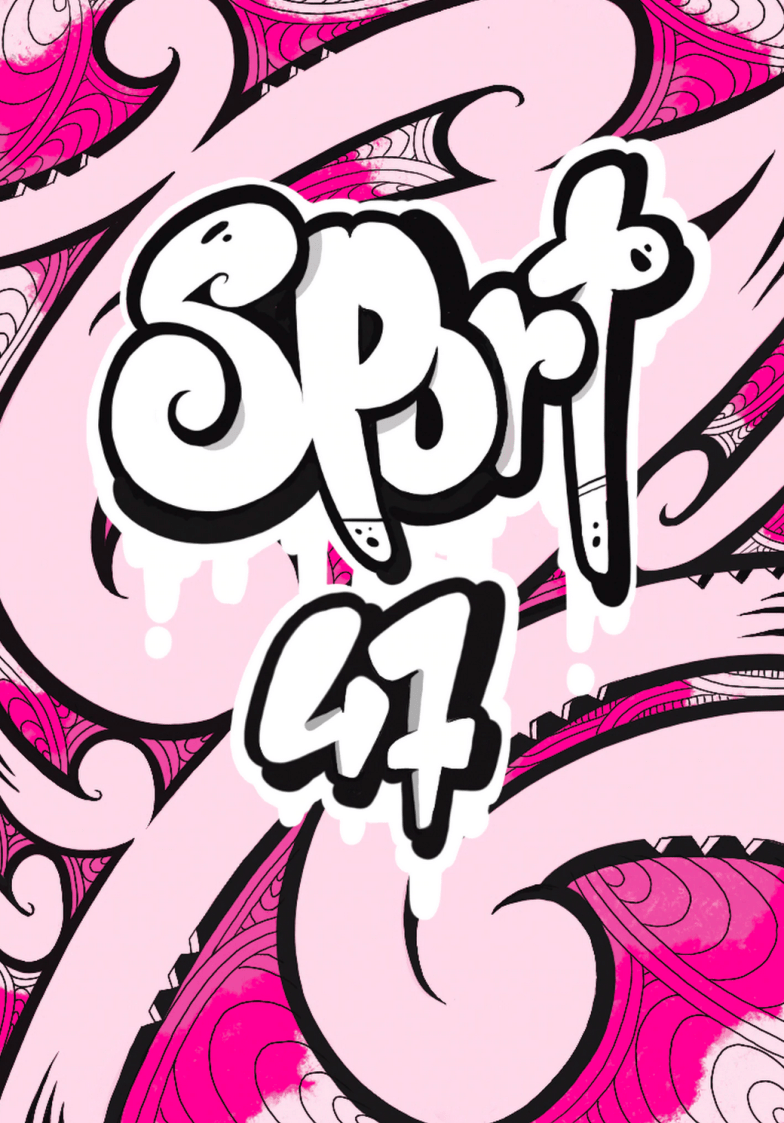
Hard to believe we are moving into a change of season and here I am still celebrating books from 2019 in my summer reading. Sport 47 appeared last year and was much loved on social media. I can see why.
The editor is Tayi Tibble – her debut collection Pōukahangatus won the Jessie Mackay Award for Best First Book of Poetry in the 2019 Ockham NZ Book Awards. Apparently this is her debut in Sport, it’s as editor and she has done a cracking job. The eye-popping cover by Miriama Grace-Smith is the perfect hook for the ear-popping, heart-sizzling, mind-flipping content. I love the different effects on me as reader. It’s a shake-up, it’s balm, music, politics, self exposure, and I love love love it.
So many poets thrilled (I want to follow up on some of these that are new to me): Aimee-Jane Anderson-O’Connor, Hana Pera Aoake, Airini Beautrais, Vanessa Crofskey, Sam Duckor-Jones, Eliana Gray, Rebecca Hawkes, Nicole Titihuia Hawkins, Joy Holley, Talia Marshall, Fardowsa Mohamed, Aiwa Pooamorn, Meg Prasad, Ruby Solly, Anne Marie Te Whiu, Chris Tse, Eefa Yasir Jauhary.
Apart from the exquisite blast of poetry, two other features stood out: Tayi’s introduction and Anahera Gildea’s conversation with Patricia Grace.
Reading Tayi’s deeply personal intro reminded me there are neither wrongs nor rights when it comes to poetry. Heart and mind are active ingredients, writing and speaking from one’s experience and choices will never be redundant. It is ok to embrace confidence. I was especially moved by the importance Tayi gifted the writers and mentors that preceded her. In Tayi’s case: ‘a wise tohunga (my mum)’. And women writers, especially and above all Māori writers. If you haven’t yet read this glorious piece of writing, hunt it down now. Hold it to your heart.
The second treasure is the warm, generous, insightful conversation between Anahera and Patricia. It travels deep into reading and writing, into reading, writing and facing challenges and epiphanies (and everything in between) as a writer who is Māori. If you haven’t yet read this glorious piece of writing, hunt it down now. Hold it to your heart.
essa may ranapiri’s tribute to their kuia is luminous with love.
There is a blinding scene (excuse the pun as blinds do get spotted) in Anne-Marie Te Whiu’s ‘hood/ie’. I held my breath as I read.
Ash Davida Jane’s ‘hot bodies’ is poetry with the thermostat turned up. Wow!
Sam Duckor-Jones’s ‘Night’ and ‘Gut Health’ and are visual and sound triumphs.
I can’t get the last line of Eliana Gray’s poem (which is a version of the title) out of my head: ‘You’ve got to write like your life depends on it.’ That’s exactly how I feel sometimes.
The whole book is just glorious.
We are all the better for Sport 47 arriving in the world. Sport 48 must be just around the corner!
Jordan Hamel reads ‘Tammy the Briscoes Lady Plans my Funeral’ (published in the Poetry NZ Yearbook 2020)
Jordan Hamel is a Pōneke-based poet and performer. He was the 2018 New Zealand Poetry Slam champion and competed at the World Poetry Slam Championships in 2019. He has poems published or forthcoming in Sport, takahē, Poetry NZ Yearbook 2020, Mimicry, Mayhem, Queen Mob’s Teahouse and elsewhere.
Last year after ten years in this house we got some screens on windows to keep the mozzies out. Wow! A cool house even in this string of hot days. It took us over a decade to do this simple miracle task.
It has taken me even longer to realise I need to check my junk mail folder. I have just discovered a swag of emails that arrived there in February (crikey how long have I been sending emails? I hate to think how many I have missed and not responded to).
I always answer emails from adults and children so if you have sent me one and got no reply please do resend.
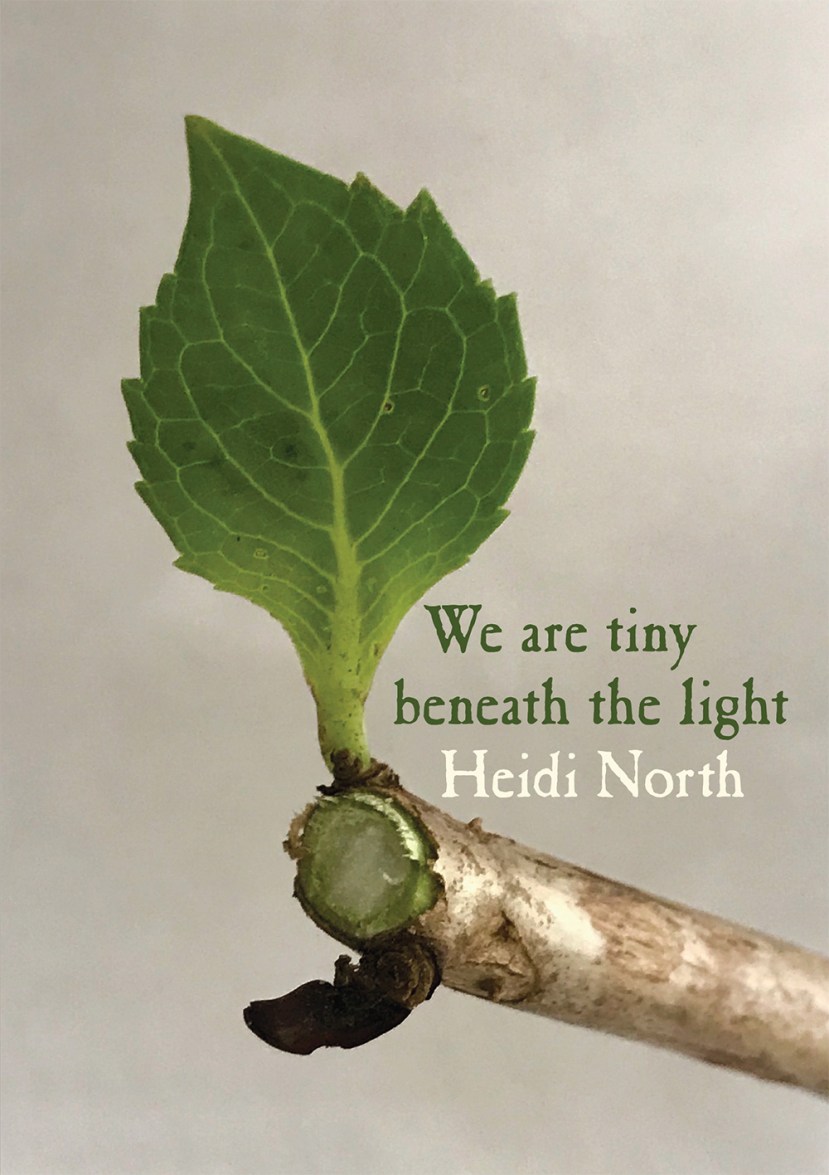
We are tiny beneath the light, Heidi North, The Cuba Press, 2019
Muscle memory
I don’t know how to let you go
into a future where you don’t turn
as if by muscle memory, as if by heart
to take my hand
I can still feel the beat under your palm
the dry square next to your thumb
crescent moons rise on your fingernails
the tiny red freckle sparking up
Heidi North, from We are tiny beneath the light,
Heidi North has won awards for both her poems and short stories, including an international Irish prize, and has published work in local and overseas journals. She was the New Zealand fellow in the Shanghai International Writers programme in 2016. She was awarded the Hatchette/NZSA mentorship to work on a novel and has a MA in Creative Writing from the University of Auckland. Her debut poetry collection Possiblity of Flight was published by Mākaro Press in 2015. U2 chose ‘Piha Beach, two years on’ from her new collection We are tiny beneath the light to screen at its Joshua Tree Stadium concerts in New Zealand. I find her poetry both economical and rich in effect, the self-exposure moving, the gaps equally significant.
Paula: I loved your debut collection Possibility of Flight. How do you look back upon that book?
Heidi: Oh thank you, that’s very kind of you to say. While I think there are things I would change if I published that collection today, I will always be fond of Possibility of Flight. It feels like a first book to me, in that I’d been working on some of those poems for a long time – some 10 years, so it felt so good to get them out there. This next book is quite different because it covers a relatively short space of time and I knew it didn’t have to contain the whole world. So they’re different collections. Possibility of Flight spans childhood, and leaving New Zealand to go on an OE to London, and ends with getting married and having a baby. Saying this, I realise you could read We Are Tiny Beneath the Light as a sequel of sorts.
Paula: Your new collection, with its evocation of both pain and joy, charts the end of a marriage. How difficult was it translating the private experience in poetic form and allowing it to go public? Does poetry aid the hard-to-say?
Heidi: I think that if I’d set down to write a book solely about the end of my marriage I would never have done it, but by working through the creative process and shaping the collection with my excellent editor and publisher, Mary McCallum at The Cuba Press, I allowed myself to be more vulnerable and go deeper, to strip away the poems that weren’t adding to this story, add in some more that did, and I let it become more of a narrative collection, which I think makes it stronger. I didn’t want people to think I was self-indulgent, and I didn’t want people to find it depressing. To counter that, I focused on the craft, and the book as its own entity, separate to me, and I hope that’s come through. But of course, there was a large part of me that was nervous to publish it – there is no escaping that this is an intense, personal book and I knew it was a risk. But yes, in general I think poetry aids the hard to say, and forces an honesty on ourselves as writer and reader that is at once liberating and terrifying. That’s the thrill of a poem.
There were three red apples
on the tree for weeks
and only today did you brave
the undercurrent of weeds
to find steady ground
to stand on to pick them.
from ‘Autumn’
Paula: Things matter gloriously in your poems. A window, dust, a rose, old photos, the sky resonate profoundly as I read and affect the way I inhabit a poem as reader. Were there particular things that you kept returning to? That were essential poem aides.
Heidi: There weren’t conscious things, but focusing on details, everyday things, is a way of dealing with the impossible. Poetry is a form of paying attention and slowing down. I use it to force to me do so, anyway – both when reading and writing poetry. When I think of myself writing this book, I have a sense of me grappling with the poems, they’re alive, wild and slippery, and I’m trying to button them down with concrete things rather than let them escape and run with the wind.
Paula: The three-section structure works well as you move from a specific place through despair and rupture to repair and joy. What effect did you want for the reader?
Heidi: I wanted to make sure I didn’t leave the reader in despair! Both because that’s an awful reading experience, and because that’s the truth of this story. I hoped to take the reader on a journey and that they would find grief and solace and joy in it, too. Because that’s the juxtaposition of life, isn’t it?
Paula: What are key things when you write a poem? When you read a poem?
Heidi: There’s the language, the musicality and muscularity of it. I want the poem to look right on the page. I spent a long time on that, the silence of a space, the punctuation – I could spend days on punctuation and how the words knit together – and I want to be startled and surprised with imagery. And I want all of this to come together with a clarity that feels like magic – I want to hear what the poem is singing and hear it ringing out clear. I don’t want the note the poem is sounding to be muddied with layers of complexity or cleverness for the sake of it. This is what I love reading in poetry and what I’m always aiming for.
The trouble
He’s wrapped his arms in muslin gauze
broken bird wings pressed close to his chest.
We pass without pecking
at the dried blood.
He’s been doing the washing in the communal machine.
He’s been doing a lot of that lately.
Heidi North
Paula: Did you read any poetry books that captured you as you wrote this collection?
Heidi: When I’m actively writing or editing poetry, I tend to stay away from reading too many other poets as it can influence me too much, but I came across Anne Michaels (she was at the Auckland Writers Festival in 2019) and when I heard her read I knew I needed to read more. She is an incredible poet and writer. Her collection, All We Saw, is so bold and unapologetically seeped in loss, and reading it gave me the courage to let We Are Tiny Beneath the Light be what it is – short, intense and quite raw. I often listen to music while I’m writing, often the same song over and over. For my first collection, Possibility of Flight, the song for that book is ‘England’ by The National and that was clear early on. This book took me longer to find the exact song, but in the end it is ‘Skin’ (live version) by Rag’n’Bone man.
Paula: Yes Anne Michaels was a festival highlight. I read all her books before she came and also especially loved All We Saw.
We Are Tiny Beneath the Light must have been a challenge. What kind of writing challenges do you see next?
Heidi: I have two novels kicking around and I think it’s time to finish them. One of them is a light-hearted novel about two sisters embarking on their OE to London and the other researched while I was in Shanghai on the Shanghai Writing Program in 2016, and wrote the bulk of while completing my Master’s at University of Auckland in 2017, with the inspirational Paula Morris. It’s the story of a runaway bride from Auckland who goes back to the last place she remembers being happy – Shanghai – after running out her wedding. Perhaps 2020 is the year to finish both of them!
From the top we survey our domain
the sand, the sea, those hills –
for an instant each soft blade
of tussock is picked out in brilliant sunshine
the world sharpened by tiny shadows
from ‘Burst’
Heidi North reads ‘The chickens’ from We are tiny beneath the light
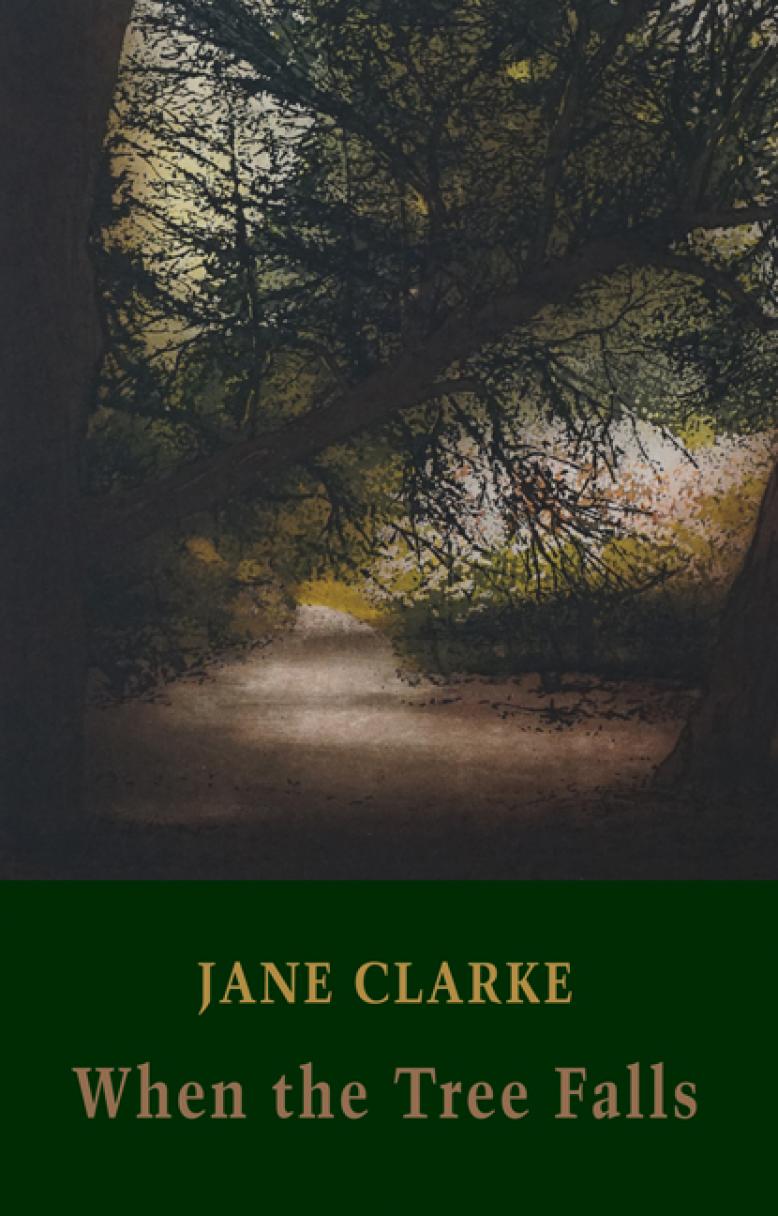
When the Tree Falls by Jane Clarke (Bloodaxe Books, 2019)
I first came across the work of Irish poet Jane Clarke in October of last year, when her poem ‘When Winter Comes’ was published as The Guardian’s poem of the week. On the strength of this encounter I ordered a copy of her second collection, When the Tree Falls, and this slim volume quickly became a poetry highlight of my summer; I was not surprised to hear that this accomplished collection has been shortlisted for this year’s Irish Times Poetry Award. This is one of those books that I want to press upon all my friends, but also really don’t want to allow out of the house for fear it will not return.
This is a collection with family at its heart, with much of the book devoted to a sequence of poems about the final illness and death of the poet’s father. These poems are lyrically deft, poignant, moving, but also pragmatic in their depictions of decline and loss, and of the ways in which the speaker, her father, and other family members deal from day to day with the situation they find themselves in. The father is a farmer, and this is a family deeply rooted in the land, with the poems often set in or referencing locations around the farm. As a dyed-in-the-wool city dweller I sometimes struggle to engage with poetry that has a rural setting but in this collection the farm landscape feels like another character, moving through time alongside the family.
Other poems extend into the poet’s family history – her relationships with her parents and her brothers – and some of my favourite poems are these clear-eyed observations of situations and interactions. Grandparents and other ancestors also feature and yet, although the collection is clearly deeply personal, it succeeds in feeling universal. As Clarke writes in ‘Polling Station’: “every family has stories, left like ploughs / and harrows among thistles behind the sheds.” There are lines that blend quiet strength with sorrow, as in the opening of ‘Ryegrass’, the first poem in the book: “his time is precious as a dry spell / when there’s silage to be cut”, poems where the characters who populate the book are given vivid voice and form, as in ‘Cypress’:
he suddenly struggles
to sit up.
Will you open the curtains
so we’ll see the dawn when it comes?
He gazes out
at the cypress
that in his lifetime
grew higher than the house.
In others, the poet effectively sketches remembered scenes in the space of a few lines, as in “Camping at Bearna”:
The groundsheet rips, the milk
turns sour, someone drops the eggs
and more often than not
we wake to the pock, pock, pock
of raindrops.”
Other poems are devoted to Clarke’s friend and fellow poet Shirley McClure, who died in 2016. One of these, “Metastasis”, employs “the way couch grass takes hold of a garden” as a metaphor for the insidious nature of cancer spreading in the body, the lines “slips silent under fences, colonises beds / and gets itself entangled through agapanthus” sending a chill of recognition and dread down my spine.
In this eloquent, reflective collection, Clarke wields language with enviable delicacy and a quiet intelligence, creating an immensely satisfying and ultimately uplifting book, one that tackles loss by celebrating love, that acknowledges pain and fear, but also points to the difference compassion and care for one another can make to the close of a good life.
Claire Orchard
Claire Orchard lives in Wellington and is the author of poetry collection Cold Water Cure (VUP, 2016). You can find out more about her at her website
Jane Clarke grew up on a farm in Co. Roscommon and now lives with her partner in Glenmalure in Co. Wicklow. Her first collection, The River, was published by Bloodaxe Books in 2015. Her second collection, When the Tree Falls,was published by Bloodaxe Books in September 2019. All the Way Home,an illustrated sequence of poems in response to a soldier’s letters from the Front during World War 1, was published by Smith|Doorstop in April 2019, in collaboration with the Mary Evans Picture Library, London.
Walked back through the park. All year we’ve sat adjacent
in private losses individual lack of sleep
which has manifested as a shared engagement
in mutual insults and off colour jokes
Oi what are these flowers That’s no way to greet me
Like a common prostitute (Me? Or you?)
You tell me soldier’s buttons. Makes sense,
dropped at the water’s edge. I look them up.
Cotula: little cup. Bachelor’s buttons, yellow buttons,
water buttons, brass buttons, buttonweed.
Gondwanan flower that’s scattered the world.
Makes sense, strewn like indiscriminate histories
coins shining on shut eyelids, minutes, millennia.
Anyway, we should treat sex workers with respect.
But don’t lift bullshit when under it’s
more shit and under that more painful
than can be looked at. Little cup, can’t fill it.
Goes on flowering like a useless need.
Airini Beautrais
Airini Beautrais is a writer and teacher based in Whanganui. She writes poetry, short fiction, essays and criticism. Her work has appeared in a range of journals and anthologies in NZ and elsewhere. Her first book Secret Heart was named Best First Book of Poetry in the Montana New Zealand Book Awards 2007; it was followed by Western Line (2001), Dear Neil Roberts (2013) and Flow: Whanganui River Poems (2017).
I have had a number of queries about the Sarah Broom Poetry Prize. I am no longer involved with this (must get my photo taken down off site!). I do know that it is not happening in conjunction with the Auckland Writers Festival 2020, but beyond that I have no up-to-date information. I recommend you get in touch with the Trust here. I will post any new information should I receive any.






 NZ Poetry Shelf