Mere Taito is a Rotuman Islander poet and flash fiction writer living in Hamilton with her partner Neil and nephew Lapuke. She is the author of the illustrated chapbook of poetry titled, The Light and Dark in Our Stuff.

Mere Taito is a Rotuman Islander poet and flash fiction writer living in Hamilton with her partner Neil and nephew Lapuke. She is the author of the illustrated chapbook of poetry titled, The Light and Dark in Our Stuff.
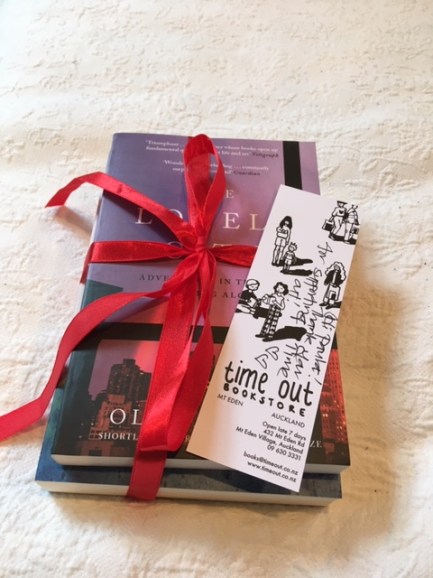
Before we moved into Level 4 lockdown, I decided I would phone a NZ bookshop each week and get them to recommend a book and I would pick one to get sent out to me.
I didn’t get very far as bookshops had to close! But the day before lockdown I phoned Time Out Bookstore in Mt Eden and spoke to Kiran Dass. I so appreciated Kiran talking when the shop was packed with people stocking up on books.
I have saved the parcel until today because I wanted to hear that my big children’s poetry anthology I have been working on is ok. And it is! So I am very happy. And now I have my treat!
The books seem entirely perfect to be reading now.
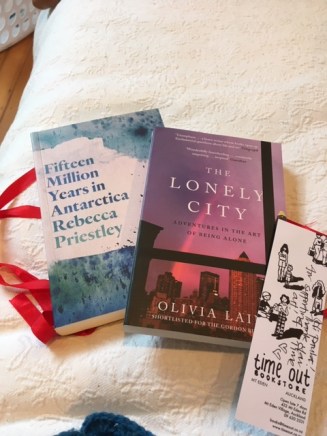
In the middle of night recently I heard Rebecca Priestly in conversation with Kim Hill on RNZ National about her new book, Fifteen Million Years in Antarctica (VUP), and it was breathtaking. It was a podcast of their session at the VERB Wellington Writer’s Festival. I can’t wait to read this book. I can’t seem to find a link to the podcast – will add if I do!
Kiran recommended Olivia Laing’s The Lonely City (Allen & Unwin). Very excited about this book.
Like many bookshops, Time Out will start doing online orders from next week when we move into Level 3.
This is a time to go gently on ourselves, for some it is a time to read, and for some it is not, and that is ok.
Some of us are in positions to support small businesses again, and I plan to resume my support of independent NZ bookshops.
Here is the latest advice from Time Out:
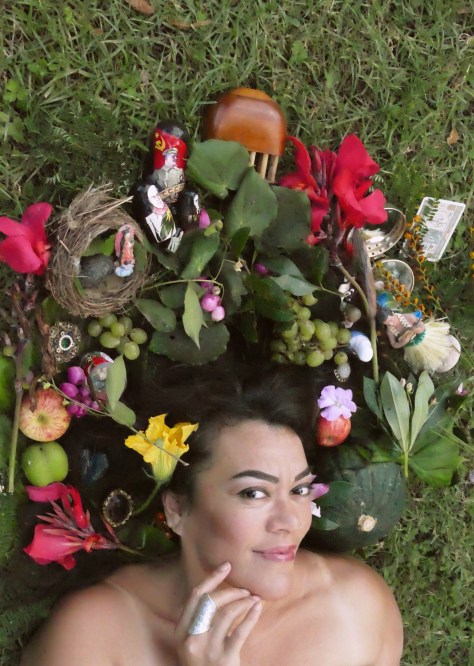
Tusiata Avia reads ‘Massacre’
The poem and audio appear in Best NZ Poems 2019.
Tusiata Avia is a poet, performer and writer. She has published three books of poetry, a chapbook, three children’s books and is included in over 100 anthologies, journals and online publications. Tusiata has held a number of writers’ residencies and awards, including the CNZ Fulbright Pacific Writer’s Fellowship at University of Hawai’i and the Janet Frame Literary Trust Award. Known for her dynamic performance style, she wrote and then performed Wild Dogs Under My Skirt as a one-woman show (2002-2009). In 2016 it became a multi award-winning play for 6 women, directed by Anapela Polata’ivao. In January 2020 Wild Dogs Under My Skirt made its American debut, Off-Broadway.
the landscape of longing
in memory of Gerry Melling, poet and architect 1947-2012
I shall explain herein the arrangement and symmetry
of private buildings from the position of the heavens in respect of the earth,
the inclination of the zodiac and from the sun’s course
just the cold left now like a smooth glove on the top of my hand
though the joint between my fingers is still warm
an object under the eye will appear very different from the same object in an open space
think of the shell as part of the architectural setting, a shallow canopy
over the Madonna who, with her child, has been gathering raspberries
the injury which nature would effect is evaded by means of art
take, for example, the more tensile forms of tiny fish that dart,
a little more weighted with their body mass,
more straightforwardly down, slewing side to side like footballers
shaping new subtleties of line to distract the eye
it is the part of a skilful (wo)man to consider the nature of the place,
the purpose of the building and the beauty of it
think of the falcon and the falconer,
of words in circular and ovoid shapes like the seventy-one
cervical vertebrae that held up the neck of the plesiosaur
think of Beethoven’s Quartet No. 15 in A minor
think of the Sky Box overlooking the West Bank in Wellington
think of Gerry and Geoff and Celeste and all the other beautiful people
Bernadette Hall
italicised text taken from the writings of the Roman architect, Vitruvius 80-15BC
Bernadette says: Here is my lockdown poem. Some of the lines have been floating around for a while. I’ve long wanted to write something for Gerry. How good that this week Geoff Cochrane and Celeste should join him. I’ve no idea who Celeste is. She appears in one of Geoff’s poems. She sounds beautiful. All I can say is, here’s to love and friendship, they are timeless. And thank you to all who are working to keep us all safe.
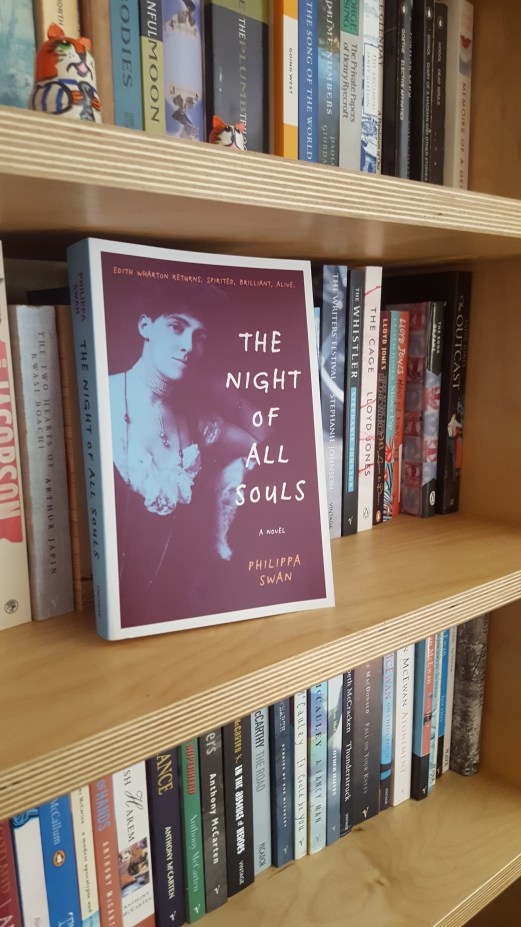
The Night of All Souls by Philippa Swan,
Although April is rather a challenging month for its release, I’m very proud to be publishing this novel.
It is a Tardis of a book, for within its covers are various intriguing stories, a modern novella with an unusual love-hate triangle, a visit to the afterlife, biographical details of Edith Wharton, including the revelation of a secret love affair and indeed walk-on parts for Edith and a number of her circle, a tour through the gardens Edith wrote about and visited in Italy and created in America and France, plus snippets from Wharton’s own novels, poetry and memoir, and a whole lot more besides – all of which is integrated into a wonderfully upbeat and enthralling novel.
Philippa is indeed a literary Dr Who, taking us through time and space. We watch the young Edith in a rowing boat, waiting for a marriage proposal that never comes, we visit the Mount, the mansion she went on to build in Massachusetts, we drive with her, Henry James and a dashing rogue through the snowy countryside, we travel to modern-day Hyères in the south of France, and we are flies on the wall of a seedy hotel room in London.
When I used to picture Edith Wharton, I’d think of an amalgam of Gillian Anderson playing Lily Bart in the film of The House of Mirth, the wonderfully pompous characters that people Wharton’s novels and often deliver the acerbic and hilarious one-liners that would give Jane Austen a run for her money, and the photographs of Wharton that generally capture very grand settings and clothes but so often a rather wistful expression that has always made me wonder what the real woman was like. Thanks to The Night of All Souls, I now reckon I know her rather well. She’s come alive again in this novel and is someone I’m very reluctant to say goodbye to.
In fact, everyone who worked on this novel expressed reluctance at having to pass it on – we all wanted to stay in these multiple worlds, getting to know this fascinating woman. You can sample a chapter here
and look out for the Penguin Facebook page for Philippa’s launch speech and her daughter reading an extract.
You can access a copy through numerous online channels
Marsden Books in Karori was going to launch The Night of All Souls, so a big shout-out to them. As soon as bookshops open again, you can of course also purchase physical copies, and I urge you to do so as it is well worth making the acquaintance of Edith Wharton.
Harriet Allan, Fiction Publisher
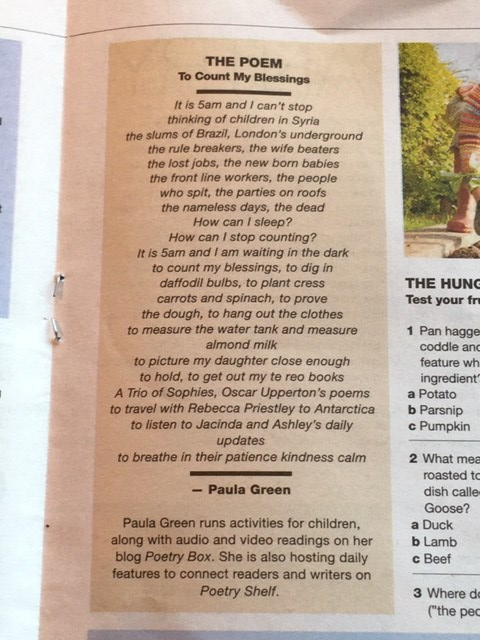
Very happy the Herald will be posting a poem of mine for awhile. I am not sure if they are poems. They need a new word. Lockdown writings. Maybe it is a nocturnal diary. They arrive in the middle of the night and spin in my head during the day and then hit paper. Karyn Hay talked about writing in her contribution to the comfort reading list I posted on Friday 17th April. I so identified with it. There is no model at work here. There are different urgencies and stasis, multiple ways of connecting. But I do feel an urgent need to write before the sun comes up. Some of us are writing and some of us aren’t, some of us are reading and some of us aren’t, some of us are baking bread and some of us aren’t, and I think the last thing we need is pressure to do anything that does not aid our well being.
My poem has lost all the spacing between sections and I don’t care. I do care that after almost giving up hope the cress and the spinach have poked through the earth. And peas. And something else, the rain washed my writing away. Now I wait for other little miracles as I do what I can.
Thanks Herald !
an extract from
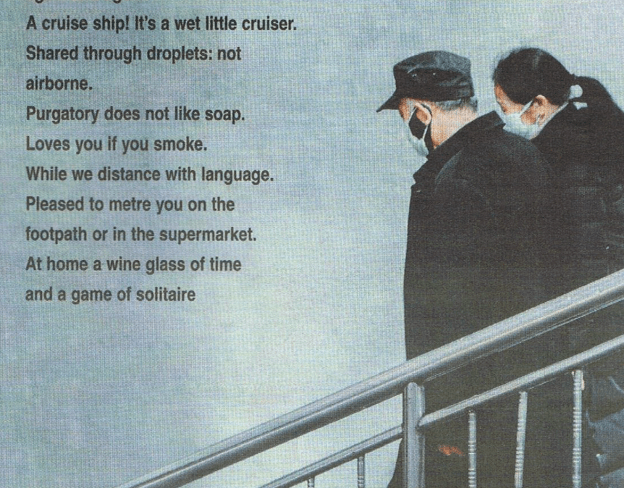
Purgatory Doesn’t Say Do I Stop OR DO I Go
(after ‘The Entrance to Purgatory’
by Ian Lonie)
Purgatory begins slowly, slowly.
We watch and wait for information
There is Purgatory One:
Then Purgatory Two.
And Spain was Purgatory Three.
Oh Purgatory, Purgatory we
cannot believe this.
Now here from behind a
desk as far as we thought
we could be (but there is
no escape).
Like a wartime announcement
Purgatory within the borders of our
own hills and valleys and cities;
streets and parks, the beaches,
the theatres, the meeting places.
Benita H. Kape
You can read the whole poem at The Gisborne Herald
Benita H. Kape is Gisborne (Tairawhiti) poet with an interest in Haiku. As well as The Gisborne Herald my work has appeared in NZ Poetry ‘a fine line’: Kokaho, a NZ Haiku and short form journal, and in online websites including NZEPC: OBAN 06 and FUGACITY 05; Also Simply Haiku (a Haiku Journal). In 2003 I was invited by American academic William J Higginson to participate in a Kasen Renku, “On The Road To Basra” protesting the Iraq war. Again with haiku in 2002 I was awarded an honourable mention in Manichi Daily News a long running Japanese newspaper. My work has also appeared in Manifesto Aotearoa: 101 Political Poems and again in USA in Whitmanthology: On Loss and Grief. A short story appeared in New Women’s Fiction 3.
In truth, a purgatory of sorts began for my family and myself in April last year when my second daughter was diagnosed with meningitis. We lost her twice but she fought so strongly and came back to us; deaf in one ear, and with amputations to parts of some fingers and toes, she still suffers pain and some scarring but remains so uncomplaining and her same sweet self.
As Sandra came out of two weeks of comma and delirium I was admitted to hospital for a stent. A second small stent was found at the time and successfully dealt to but while doing the larger stent the inserting wires broke, not once but twice, necessitating a 4 hour emergency operation. At one time Sandra and I were in the same hospital ward.
One continues to write poetry even in such times. I included here the first poem I wrote when I returned home; Blue Moon.
Blue Moon
There are reasons singing is good for you.
I sing because it makes me feel good.
This is a story about
an ultra-sound; ordered
due to some post-op complication.
I went into the ultra-sound singing Blue Moon.
Don’t ask me why.
Halfway thru the ultra-sound
I thought why am I doing this
so I ceased singing at such
a strange time.
And then a voice; from where
I couldn’t say; not above, so
it wasn’t God. (And I wasn’t
that far gone though I sure
could have been – long story.)
The voice said “Don’t stop;
we were enjoying that.” (Truth being;
so was I, both the effort and sound.)
So I went back to the ward singing.
Now I read that singing
is good for the heart.
I’ll keep singing:
not the cure
but a remarkable tool.
Benita H. Kape (c) 12.6.2019
11 – 30 April 2020
Join us as we collect Possibilities!
In Wisława Szymborska’s poem ‘Possibilities’, translated from Polish by Stanisław Barańczak and Claire Cavanagh, the winner of the 1996 Nobel Prize in Literature writes about what she prefers – as an individual and in the world. Our own Liz Breslin wrote a poem in response while on a Cities of Literature residency in Kraków. We invite you now to listen to these poems and write yours from home, to add to Dunedin UNESCO City of Literature’s permanent record of our preferences, our possibilities, our world.
If you’d like to ‘workshop’ your poem with Liz by email on its way to completion, let us know. Please send queries and your completed poems to CityofLiterature@dcc.govt.nz as a Word file/pdf and an audio/video file (such as a recording from a mobile phone). If you’d like somebody else to record your poem, we can arrange that too. The invitation is open to all ages, and poems are welcome any time before 30 April 2020. Your poem may be proudly published during that time on the City of Literature website and social media. We want to read, hear, see and share all the possibilities!
Go here for more details and to listen to the poems


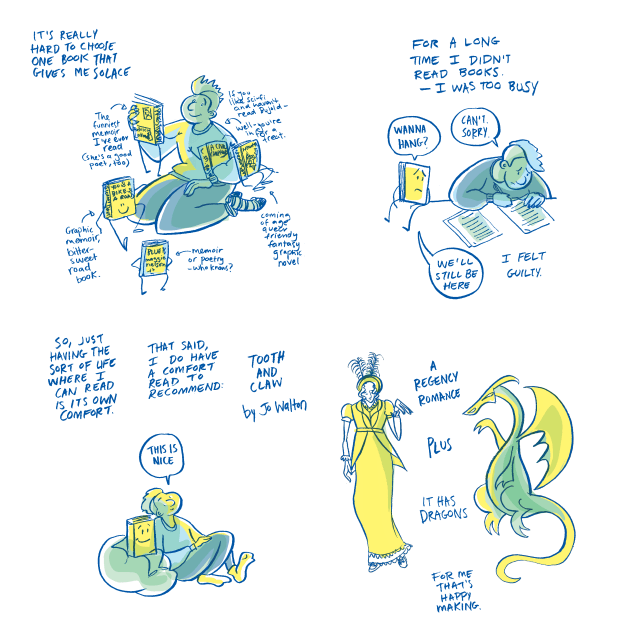
This week I decided to invite a variety of New Zealanders to pick a book that has given comfort or solace during lockdown or at any point in their lives.
I do this but I feel like a butterfly adrift in my home – alighting here, stalling there, resting here. It is hard to settle. Writing gives me continued comfort, keeping both my blogs up, as does my stack of books. I have found Poetry New Zealand Yearbook 2020 has given immense solace as I linger upon poems, essays, reviews. The whole issue is a tonic, so much so I invited a handful of poets to read one of their poems for a virtual reading. I am also reading Richard Powers’s The Overstory – a mammoth book! – but I am reading it slower than a snail’s pace because I am so in love with the sentences. A single sentence fills me with joy. Then there is the thematic and crucial presence of trees. I can walk through this book like I am walking through the track on our land. Again it is just so restoring. I love what Bryan Crump says below about discovering his pick in a London bookshop and falling into the joy of the book in a cafe. You can just loose yourself in the bush tracks of your reading. Just what we need at the moment, like little cafe breaks.
Thank heavens for books. And thank you everyone who responded in these challenging times with a book and some thoughts, when all we might want is to drift like the clouds.
Tara Black (comic maker)
Juliet Blyth (CEO ReadNZ)
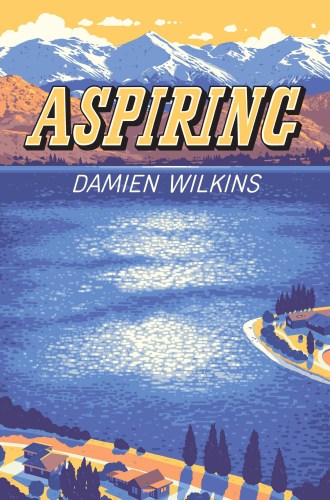
My early reading in the lockdown was erratic, I found it hard to settle on one thing so to get me started I read Damien Wilkin’s new novel for young adults Aspiring (Massey University Press). Damien has so much empathy for his male characters and I thought this book portrayed with heart and humour the inner workings of the male teenage brain. That led me to reread his novel from 2016 Dad Art. Again the male characters are sensitively told and this book is both laugh out loud funny and really sad! Damien writes so tenderly about the relationship between his main character and his elderly father. Finally I liked Lloyd Jones comment in a previous post of yours about reading not for comfort but preferring something that rattles his cage. For me this book has been Halibut on the Moon by David Vann. This is a powerful and moving book but proceed with caution – this is a book about suicide and may be challenging for some readers. Despite the subject matter the author makes room for some dark humour and the utterly frank conversations between the main character and his parents were artful, making for some very uncomfortable but necessary reading.
Paula Browning (CE of Copyright Licensing NZ & Chair of WeCreate)
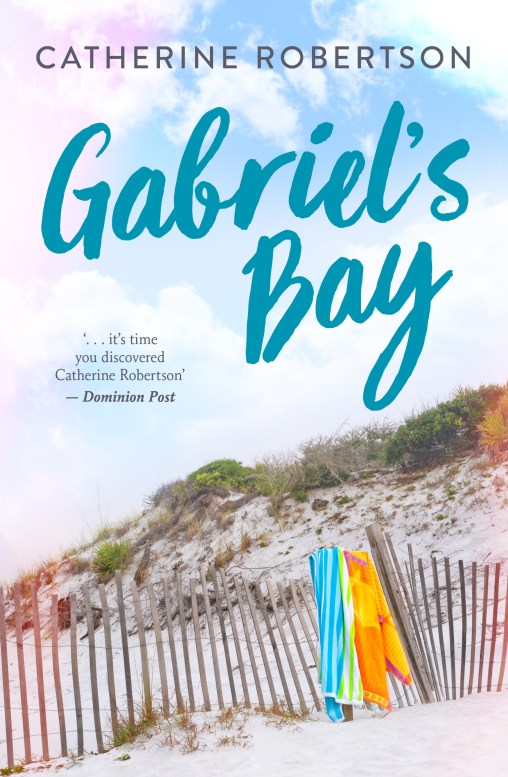
Gabriel’s Bay, by Catherine Robertson (Penguin)
Our family of 4 came to New Zealand in the early 70’s and left the rest of the relatives back in the UK. This meant that holidays, particularly the long summer break, didn’t have to be spent staying with family, we could go anywhere we wanted, and we did. We spent those wonderful, carefree, childhood summers in small-town New Zealand – just like the setting for Gabriel’s Bay. Even though (according to the author) it’s a fictional town, there are hundreds like it all over the country and as you’re reading images of various places around the country will come to mind. The same is true of the characters. There’s a familiarity (stereotype is too harsh a word) with Mac, the GP’s militant receptionist who’s got a heart of gold she’s careful not to let too many people see. There’s Sidney, parenting alone (and doing a damn fine job) but beating herself up about what her boys might be missing out on. There’s lots of NZ-ism’s and glorious descriptive writing that takes you to another place – which is exactly what we need at the moment – to travel without traveling. Gabriel’s Bay will take you there and, when you’re ready to go back for more, What You Wish For (the second Gabriel’s Bay) is just the thing.
Bryan Crump (Presenter Nights RNZ)
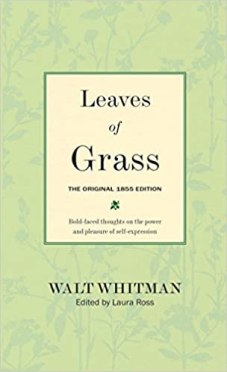
Leaves of Grass by Walt Whitman
I was living in London at the time (1994) and was in singing with the London Philharmonia Chorus. We’d been performing Ralph Vaughan Williams’ “Sea Symphony”; a setting of some of Whitman’s poems. The music drew me in first, but one day, with nothing to read, I wandered into a second-hand shop on Charing Cross Road and came across an 1897 edition of Leaves.
I wandered off to the Leicester Square McDonalds, or some cheap pizza joint. I can’t recall exactly now. I do remember sitting there, devouring the poetry; turning page after page, like no poetry I’d experience before. I heard this voice sing out like a secular preacher, celebrating the spiritual in everything “for every atom belonging to me as good as belongs to you”.
Clumsy? Yes! Repetitive? Again and again! Cheer leader for the rapacious American dream? Yes. But that idea, linking the quantum to the cosmic, nothing else in poetry has moved me like Walt did then.
Lynn Freeman (Presenter Standing Room Only RNZ)
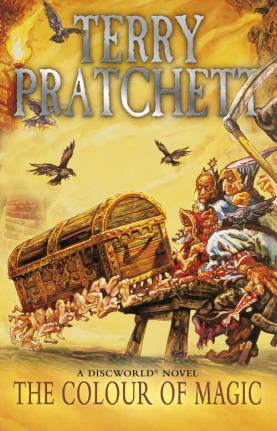
The Colour of Magic by Terry Pratchett
I once met British Fantasy writer of Discworld fame in person, clutching a stack of his books for signing.
“Thanks for Discworld,” I whispered. Remember, I interview famous people for a living.
“Thanks for the money,” he quipped. I mentioned this exchange to him the first time of several times I interviewed him for RNZ.
Terry and his occasional co-writer unleashed dozens of titles in this world. I’ve read most of them, but not in order. So during the lockdown, I’m starting with the Colour of Magic and laughing my way through his satirical fantasy series from start to finish.
Karyn Hay (author and broadcaster)
I have to confess I never read for solace or comfort unless it’s some sort of spur of the moment self-help book that I’ve picked up in an airport and generally regret spending money on before the plane’s even taken off. Twenty chapters telling me something I already know and didn’t need to part with $39.95 to confirm. It depends on the nature of one’s distress of course. Poetry is always good for heartache, and I quite like quotations centred on the topic of one’s despair but, as these can both be googled, I don’t really need the hard copy.
If I was reading for a child I would look for something to take their mind off things, but then you always tend to do that with children, virus or not. (Mostly you’re just trying to take their mind off the fact that you’re about to turn the light off at any second.)
My advice when needing solace or comfort is to write something yourself. This is the greatest consolation of all.
John Gow (Gow Langsford Gallery)
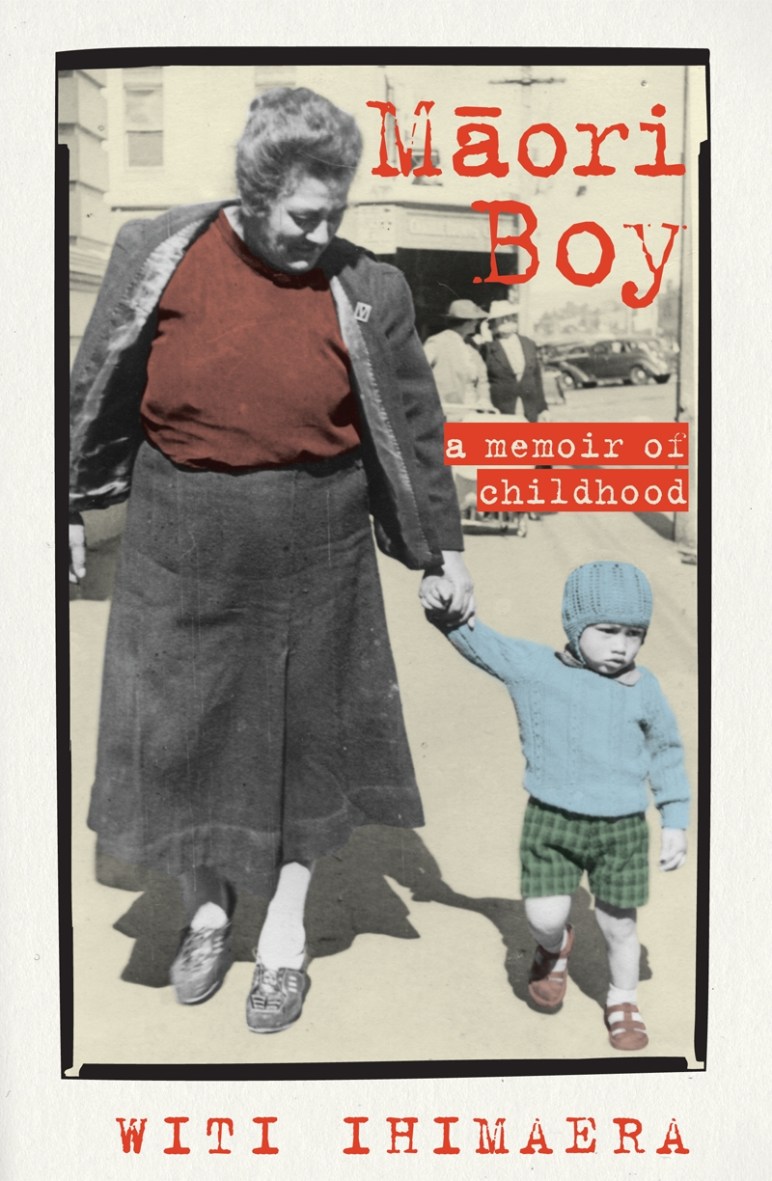
I just finished reading Witi Ihimaera’s Māori Boy – a memoir of childhood. Published by Random House in 2014, it is a book which I have been meaning to get to for quite some time.
In this strange isolation environment it was great to read a book so New Zealand focused, remind one of the treasures hidden in our country such as the amazing meeting house ‘Rongopai’ which is the Ihimaera house at Waituhi, Poverty Bay. I very much enjoyed feeling the Māori names of people and place rolling off the tongue and being mentally located in and around Gisbourne in the 1950’s 60’s. One is reminded that there is so much history to read about, Te Kooti, Rua Kēeana, Sir Āpirana Ngata, and the like and Witi, gives a great personal take on on Māori mythology and the importance of Whakapapa within Māoridom. He also reminds us of the many injustices, the racial prejudices and the hard road Māori have had since colonisation. All done in a way which is not confrontational, not offensive, but very much a reminder of our (the colonisers) less than auspicious roots in New Zealand Aotearoa.
Thoroughly enjoyed the read and now want to buzz off to the Gisborne regions and explore the landscape which was so beautifully laid out before me in this very personal biography.
Claire Mabey (Director of Verb Wellington)
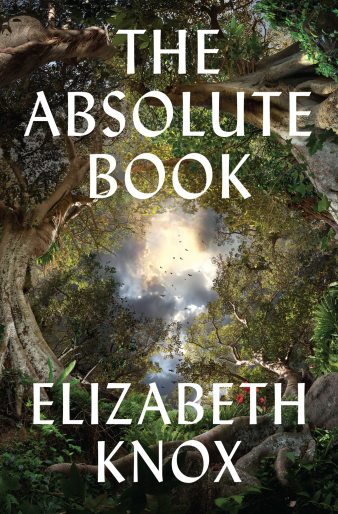
I have been re-reading The Absolute Book (Victoria University Press) by Elizabeth Knox lately. I felt a real urge to be back inside that world and I have loved every page of it. I think even more than the first time I read it because this time around I feel like I have more space to think about all of the aspects and layers of the characters, places and the happenings. While the book takes you off into other planes of existence, it also feels so real. I think that’s because Elizabeth has poured so much passion into the keystones of this story: Libraries, family, the environment, and our ability to figure all of the mysteries out and improve on ourselves.
Judy Millar (artist)
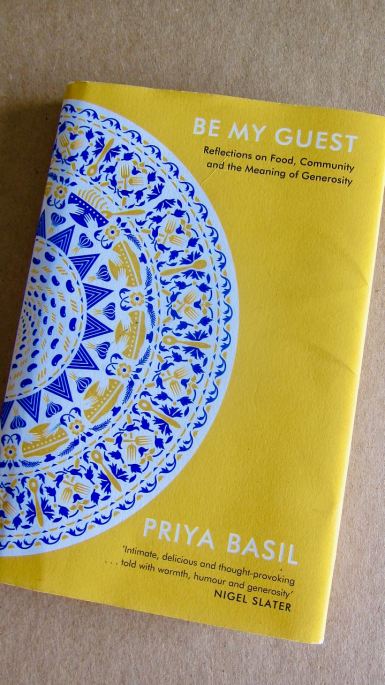
Be My Guest – Priya Basil
“The dinner table, among friends, is where the best conversations take place.” These are the opening lines on the inside jacket of a small book sent to me earlier this year by author Priya Basil.
And of course, it is true that conversations fuelled by the simple act of sharing a meal are always memorable, special. But here we are part of a global lockdown, separated one from another.
So reading Priya’s small book has taken on special meaning as she explores food, race and family – asking what the simple act of hospitality means for our culture focused on selfishness and greed.
A timely read for sure. And an engrossing one by an author who was born in London to Indian parents, grew up in Kenya and now lives in Berlin. Her book takes you on a hurtling ride across cultures – spices, hard to pronounce ingredients, familial love, loss and the strangeness of living in communities other than your own. A small book filled with generosity.
Jesse Mulligan (Host Afternoons with Jesse Mulligan RNZ, host of The Project, restaurant critic)
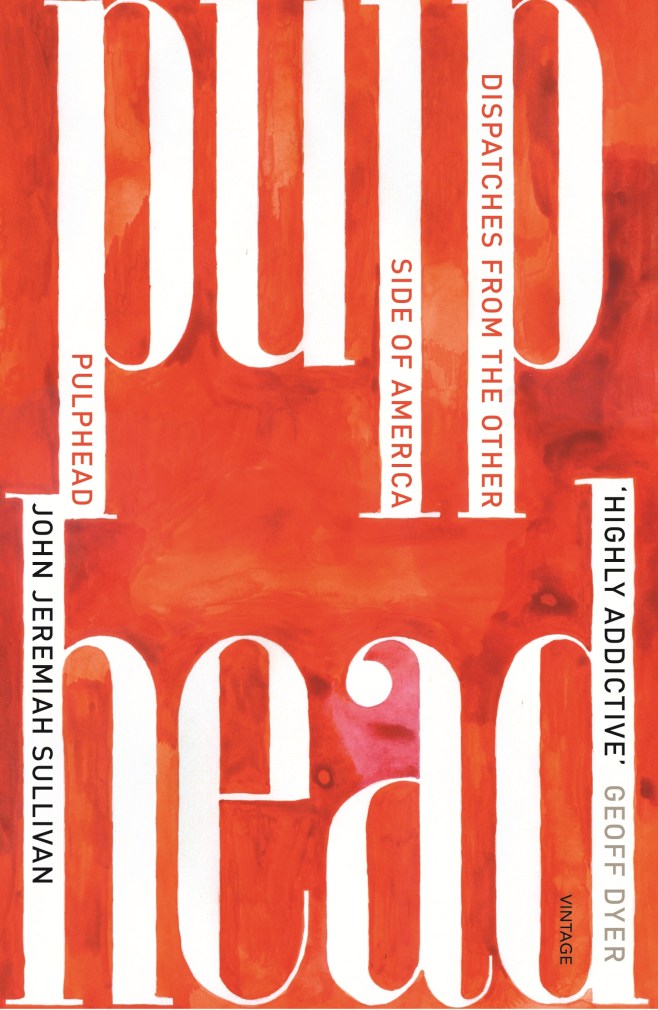
My favourite book is not even my book. It’s social suicide to admit this on a literary website but somebody gave it to me (Tim Wilson gave it to me) and I didn’t give it back. Not for the usual reasons – laziness or forgetfulness – but because I love the book so much I have convinced myself it’s mine.
The book is Pulphead by John Jeremiah Sullivan – a collection of essays (my top ten books are all collections of essays) each of which is both factually dense and personal, vulnerable. After each piece you think “wow, how lucky was he, a writer, to be that closely associated with this remarkable thing/person/event” but of course that’s the trick of a great writer – she makes the commonplace urgent and the invisible luminescent. There’s a little celebrity in here too, as you’d expect from a guy who made his living writing essays for GQ, but even familiar, famous names are written about based on what’s interesting about them, not on what we already know. One profile begins “How do you talk about Michael Jackson except that you mention Prince Screws?” then gives you a brief history of the singer’s great great grandfather before concluding the opening section of the essay with this beautiful line: “so the ridiculous moniker given by a white man to his black slave, the way you might name a dog, was bestowed by a black king on his pale-skinned sons and heirs”. This sort of line is everywhere in the book and many nights, when I want something to read but don’t want to commit, I’ll pick up Pulphead and open it almost at random to remind myself how good writing can get and, more depressingly, how far I still have to go.
Sam Orchard (Queer and Trans Illustrator, Comic Creator and Designer)
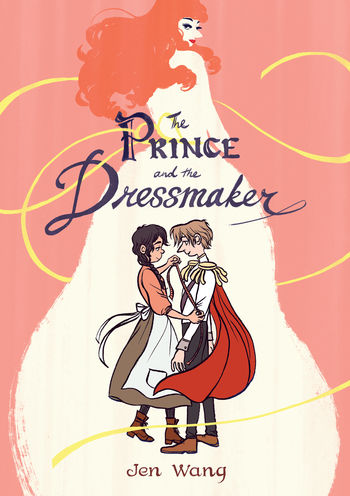
A beautifully drawn graphic novel about a young dressmaker and her prince employer. It’s a refreshing story that takes the best elements of fairy tale storytelling (centering beauty and human kindness), and the best elements of queer storytelling (valuing ambiguity, fluidity, and queer relationships) and weaves them seamlessly together. It’s beautiful visually and emotionally.
Nadia Reid (musician, songwriter)
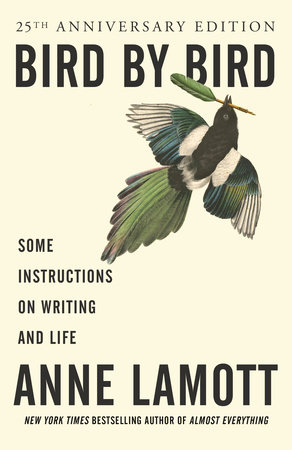
My recommendation would be a non-fiction book called Bird by Bird: Some Instructions on Writing and Life by Anne Lamott.
Something about her writing just gets me right where I need it. This book is a book about writing ultimately and also about Life. I found it quite relevant to songwriting too. She talks about ‘getting your butt in the chair’ and just turning up. My favourite quote from the book:
For some of us, books are as important as almost anything else on earth. What a miracle it is that out of these small, flat, rigid squares of paper unfolds world after world after world, worlds that sing to you, comfort and quiet or excite you. Books help us understand who we are and how we are to behave. They show us what community and friendship mean; they show us how to live and die.
O and this quote! This is actually my favourite:
You own everything that happened to you. Tell your stories. If people wanted you to write warmly about them, they should have behaved better.
Victor Rodger (journalist, actor, playwright)
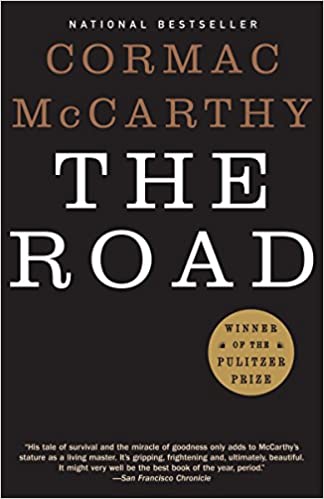
Cormac McCarthy’s The Road may seem like a strange choice.
It’s a pitch-black post-apocalyptic dystopian nightmare which follows an unnamed father trying against seemingly insurmountable odds to get his young son to something resembling safety.
But for all the unspeakable horrors that father and son must endure throughout The Road – and there are many – the father never gives up on his quest. As per Churchill’s edict, even though he knows he’s going through hell, he keeps on going, fuelled by the love he has for his son.
As bleak as much of The Road is, I ultimately find this to be one of the most moving books I have ever read.
David Slack (Auckland writer, columnist at large)
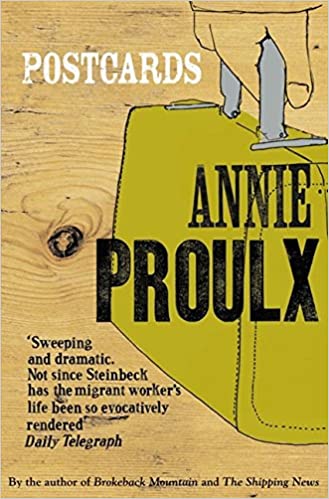
Postcards by Annie Proulx
I find comfort and solace in a book about a man whose life dwindles away to nothing. Postcards was Annie Proulx’s first novel. I love them all but this one is special to me. I’ve read and reread it more than any other book I can think of. Why would I take comfort from a book about a man who makes a mistake and in living with it leaves his home and family behind, makes his way across America, now and then gains some purchase but always eventually is moving again and just when he’s down to almost nothing people back their truck up to the trailer that contain what’s left of his worldly life and tow it away?
I don’t read it to punish myself. I do it to delight in her writing. She can draw the arc of a life in a single paragraph, sometimes even a single sentence. She will find the interior life of a character in a name and a few words and you will sense their foibles, their sound, the tilt of their head, the smell of their clothes. So much vividily familiar humanity: the failings; the inconsistencies; the recognisable in life that is not so often set out in a sentence.
There’s a vividness and power to episodes she will set up, a kind of set piece that comes upon you unheralded; his mother in a car on a hill getting into trouble that escalates in the most astonishing and dismaying way. And even at this astonishing pace you find yourself resigned to the truth of it, the inevitability of misfortune in life in the smallest and largest ways.
The dwindling away is a metaphor for Vermont, his home state – her home state too – a commentary on the dwindling of American life. I know this because I asked her the stupidest of questions at a writers session in Auckland. Did it have to be that way, could she see another fate for him? No, she said, this was tracing the fate of the state. I said it was just so sad to see it happen. She smiled kindly.
Nicola Strawbridge (Programme Manager AWF)
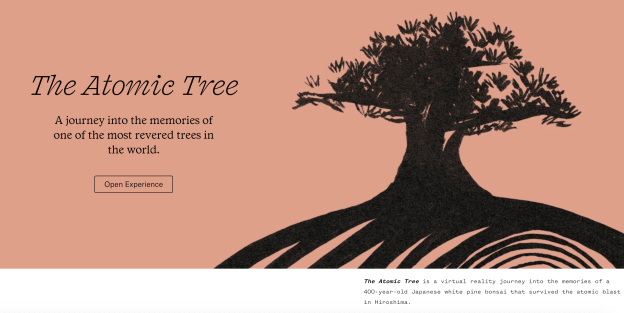
I’ve found consolation in the trees in my neighbourhood since Level 4 kicked in, looking forward to passing certain trees on my daily walks, lingering in the shade of a copse of Puriri and Pohutukawa in my local park. And by extension, writing that explores the natural world has provided much needed ballast in these uncertain times. Emergence magazine and their February ‘Trees’ issue has been one of my lockdown discoveries. There I found British writer David George Haskell’s Eleven Ways of Smelling a Tree – both in written form and as a podcast complete with short original violin compositions. The magazine also introduced me to American poets Wendell Berry and WS Merwin and has whet my appetite for work by our nature writers. I’m on the lookout!
Jennifer Ward-Lealand (actor and director )
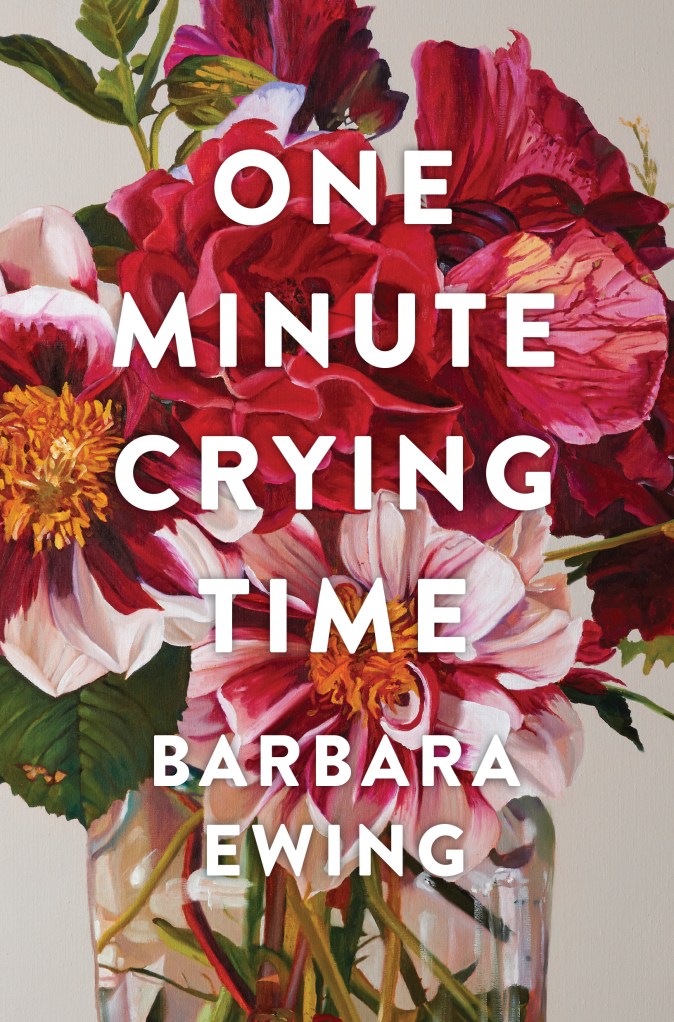
One Minute Crying Time by Barabra Ewing (actress, novelist and playwright)
(Massey University Press)
I’ve been a fan of Barbara’s writing for a long time – The Actresses being my favourite. Her new book is a vivid memoir of growing up in late 50s early 60s Wellington. What touched me so profoundly was her discovering a window into te ao Māori through her studying of te reo Māori – something I have experienced too. She worked alongside people at the Māori Affairs Dept that I’ve been fortunate enough to have been taught by – and of course through all of this was pursuing her love for the theatre, again a great love of mine. There were so many “YES!” moments for me as I read this book – and that has been comforting when a lot of doors have been closing for those of us working in the arts.
Catherine Woulfe (Books Editor, The Spinoff)
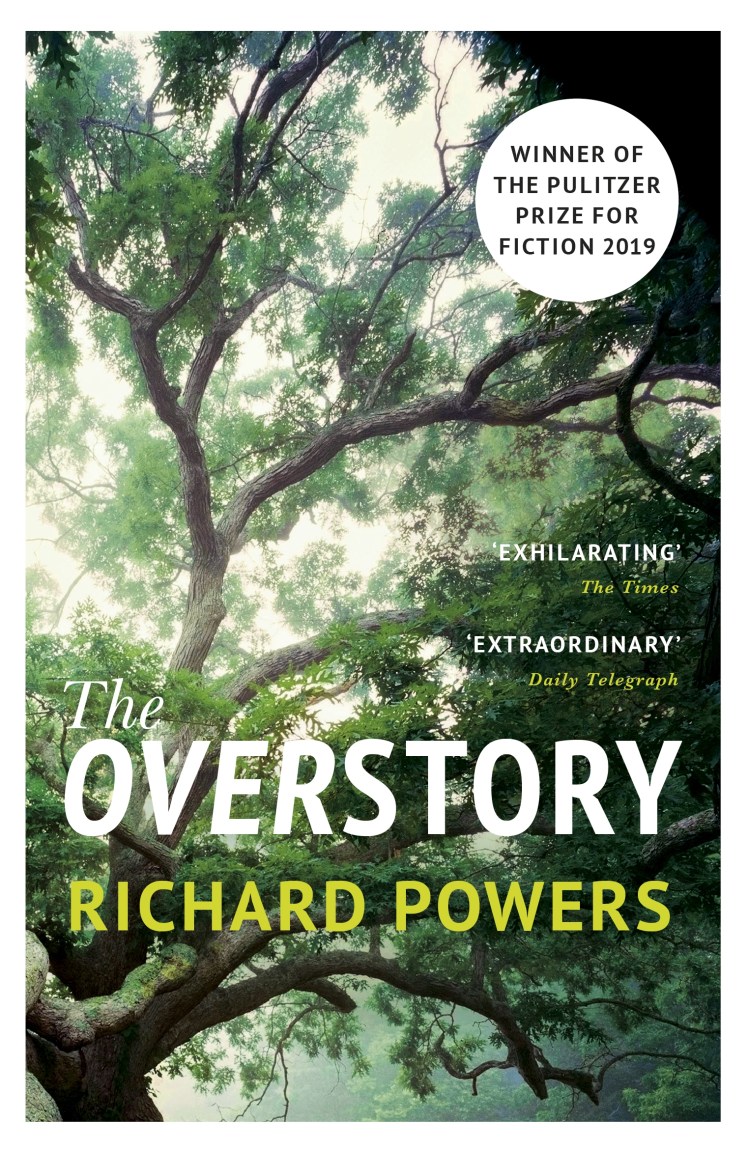
When I’m scared or sad or shocked I like to read about plants. I read Richard Powers’ The Overstory late last year and it is an enduring comfort. It is a book about trees, and it works like a centrifuge, spinning your perspective out by a few millennia, until everything happening now seems somehow fine and minor. This too shall pass; life will find a way, etc. It also made me get back into the vege garden properly. (Bokashi is the way, the truth and the light.)
Xanthe White’s The Natural Garden (Random House) is another backstop. Beautiful photographs and very doable NZ gardens, even on horrible old clay. As a kid I used to spend hours pottering through Mum’s gardening books and watching Maggie’s Garden Show with her, so it’s very much a nostalgia thing.
Last weekend I read Wendyl Nissen’s upcoming A Natural Year: Living Simply Through the Seasons (Allen & Unwin) and I swear I could breathe more deeply after about 10 pages.


kia kaha
keep well
keep imagining
 NZ Poetry Shelf