Category Archives: NZ Poets

Truth or Beauty: Poetry and Biography — a little chapbook of poems

truth-or-beauty-cover

In 2014, Helen Rickerby and Anna Jackson organised a conference at Victoria University entitled Truth or Beauty: Poetry and Biography. It drew poets and scholars from across New Zealand and Australia. Over three days the participants shared readings, papers, panels and informal discussions.

To celebrate the event, the organisers have released a gorgeous chapbook containing poems by the participants that highlight meeting points between poetry and biography, truth and/or beauty.

In the introduction, the editors (Anna and Helen are joined by Doctoral student, Angelina Shroma) suggest that  some of the poems ‘are more straightforward retellings of a life, but most take a poetic twist — are impressionistic, episodic, mythic, abstract or undermine the very idea of being able to know factual truth.’

Seeing the line-up of poets included gives some indication of the stretch and vitality of ideas exchanged along with poetry shared: Jordie Albiston, Airini Beautrais, Amy Brown, Geraldine Burrowes, Zarah Butcher – McGunnigle, Max L Chapnick, Majella Cullinane, Toby Davidson, Joan Fleming, Janis Freegard, Maureen Gibbbons, Helen Heath, Kerry Hines, Anna Jackson, Shari Kocher, Saradha Koirala, Bella Li, Vana Manasiadis, Karlo Mila, Robynanne Milford, Vivienne Plumb, Jenny Powell, Nina Powles, Chris Price, Helen Rickerby, Harry Ricketts, Jack Ross, Erin Scudder, Anna Smaill, Marty Smith, Robert Sullivan, Leilani Tamu, Chris Tse, Jessica Wilkinson, Karen Zelas.

Some of the poems took me back to books I have already loved (Autobiography of a Marguerite, Dear Neil Roberts, I, Clodia, and Other Portraits, Crumple, Girls of the Drift, My Iron Spine, Just Then, Horse with a Hat, How to be Dead in the Year of Snakes, Captain Cook in the Underworld) while previously unpublished poems were miniature temptations of new works to come (Joan Fleming’s ‘New Margins,’ Helen Heath’s ‘Radiant,’ Chris Price’s ‘A natural history of Richard’) and some poems and poets were new to me and are now on my radar now (Shari Kocher, Robynanne Milford). I haven’t read many poems by Erin Scudder but her deliciously inventive word play in ‘Hollywood Hills Woman’ catches at story, character, language, space and life. This was a gem.

This is a beautiful hand-bound book; I got to the end and just wished I had been able to attend the conference. This makes up for it slightly.


Web page here

Copies are available for purchase for NZ$20, plus NZ$5 for overseas postage. Email Helen.Rickerby@paradise.net.nz to order and arrange payment.


About the editors

Anna Jackson, associate professor at Victoria University of Wellington, has published six collections of poetry, most recently I, Clodia, and Other Portraits (Auckland University Press, 2014). The first half of this collection is based on the life of Clodia Metelli, the ‘Lesbia’ who was the subject of the most passionate poetry written by Catullus in late Republic Rome.

Helen Rickerby has published four books of poetry, most recently Cinema (2014), which includes biographical poems about film-makers and her friends. Her 2008 collection, My Iron Spine, features biographical poems about women, many of whom have been neglected by history. She is the managing editor of Seraph Press, a boutique poetry publisher, and is co-managing editor of JAAM literary magazine.

Angelina Sbroma is a doctoral student in English literature at Victoria University of Wellington. Her thesis focuses on children’s fantasy literature.


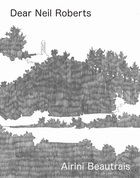
Airini Beautrais’s Dear Neil Roberts: Connections and disconnections forge poetic static that makes that lamp crackle, that bald wire hiss

airini beautrais      dear_neil_roberts_210x165__56483.1408338557.140.215

Airini Beautrais’s debut poetry collection, Sacred Heart was a little beauty and won Best First Poetry Book at the Montana New Zealand Book Awards in 2007. This was followed by the superb, Western Line. Her latest collection, Dear Neil Roberts, explores an inclination to prose-like poetry in a new way. You could say this is a long narrative poem or you could say this is a series of individual poems that contribute to a narrative arc.

Neil Roberts was a real person, an anarchist. In 1982, he blew himself up outside the Whanganui Police Computer Centre in the middle of the night. Airini’s new book has a central thesis at its core: history belongs to the shadows as much as it does to the great men and the great women. In other words, individuals who get misplaced and misremembered in the side lights of the grand historical narratives do have something to contribute to the way we view the past. The poetry is in part surrogate documentary but generic boundaries are blurred as the poet uses tools of invention and imagination as much as she uses tools of research and political inquiry. What gifts the book another fascinating layer is the way the poet steps into the narrative herself. She shows us how time and place and event affect her. This choice is reinforced in the title, ‘Dear Neil Roberts’; this poetry collection is also part epistle. Letter writers leave traces of their own lives as well as addressing the life of the recipient.

The poems draw upon story-telling techniques but these poems are primarily driven by poetic options: white space, building rhythms, terrific line breaks. Together the poem-pieces form a mosaic that you can step back from and view as an intriguing whole (exploring notions of history on one level, and the life of individual on another, along with the effect of an event like a stone rippling through time and place). ‘Time’ sets the scene with keen detail of a historical moment from the Falklands unrest to protests in Poland, from Rocky III to redundant clothing workers. Then, the ironic reference to a newspaper editorial that suggests fireworks will one day be banned.

If this book is a poetic mosaic, it is a mosaic sumptuous in detail and issues raised. Both moving and provocative. In ‘Clean-up’ the body never becomes more than the gory detail to wash away from the street. Or in ‘Monuments,’ testimonies from Pacificism and from war jostle (Norm wrote in jail, ‘What I have done with my spared life/ while better men lie dead?’; or the veteran war pilot, ‘War is useless and achieves nothing.’). Beneath the surface of this poem lies questions on the merits of war, the necessity or war, the cost of the dead. In ‘Investigation’ (this in 1982), the explosives Roberts used dominate the news, while the anarchist, ‘with razor blades in his ears’ and steel-capped boots’ is chiefly missing.

[ .. ] There is a dryness in the news,

like grief has been squeezed out,

As a mosaic, it is a glinting selection of points of view, invented, factual and personal. ‘By way of an explanation,’ for example, is composed of quotes from Senior Sergeant Rob Butler that Airini gleaned from various newspapers of the time. Brought together in the form of a poem they disturb.

He was one of those people whose human frailty

leads them to join a cult or sect like the punk rockers.

They do some very strange and unusual things by our standards.

He did not seem to have any great concern for his own life.

Another example is the poet’s confession to her own line crossing which in turn subtly rubs against the grain of Neil Roberts (in ‘Out the window’):

Here I am, with blond-haired child,

with my rounded belly, in my hand a set of car keys —

the remote-locking kind, which I never would have imagined.

It’s been awhile since I did anything subversive

with a can of spraypaint, with a billboard, with a naked human body,

with anything. But I’ve known Jonah since the days

when I did. I wonder out loud, what it would be like

if you kept living the same life you lived at twenty-one.

Or the way the contemporary writer makes room for different stories from the past in ‘History books’ in a way that recovery is uncertain, dangerous, shadowy, with faulty connections:

Room is made in the present.

The past is just left traces; paper, newsprint, film, tape, silicon.

The old lamp of the past clicks and crackles;

bald wires, an overheated bulb.

Or the way in ‘Waiting for death/ waiting for birth’, as the poet is waiting for the birth of her second child (‘The first time, I thought I was dying’), she retreats momentarily into her history of protest (‘Protests gave me something to exist within’). This complexly moving poem is aching with overlap:

and seeing cyanide pellets, or crossing an overbridge,

hearing trucks roar, thinking, ‘This is my chance.’

I am here because I didn’t take it.

On Pyramid Farm, you found your chance

in the back of a truck: the gelignite

and accessories. To go out with a bang.

Airini’s new book takes risks as it unstitches a sutured wound of the past, of self even, and dares to imagine grey lines, the long reach of historical events, small or otherwise. The poet is boundary crossing as she overlays historical transparencies, blurring this version upon that version upon that version and in that overlay getting deeper into who and how we are (humanity). You can admire the swing and shape of each poem, but the impression that makes the deepest most affecting mark is the book as a whole. Connections and disconnections forge poetic static that makes that lamp crackle, that bald wire hiss. This is narrative poetry at its very best.

Victoria University Press page

Airini’s thoughts On Poetry for Poetry Shelf

Poetry Live: Kirsti Whalen & Brendan and Alison Turner

Where: Thirsty Dog Tavern & Cafe  469 Karangahape Road Newton
When:  Tuesday 3rd March 7pm until 11pm
Guest Poet: KIRSTI WHALEN

Kirsti Whalen is from Auckland by way of Melbourne, Scotland, Austria and a couple of pit stops on the side. Though once employed as a camel farmer and laughing yoga instructor, she now studies creative writing and works in disability support and advocacy. Her work has been widely published across the world, but she’s most proud of her work at The Pantograph Punch, and a 2014 shortlisting for the Sarah Broom Poetry Prize.

Guest Musicians: BRENDAN & ALISON TURNER

There might be something wrong with Brendan & Alison Turner. As former members of Bond Street Bridge and The Bitter Years, they developed a strange love of driving long distances across the country, playing a mix of Americana/Folk/Country/Blues, with sweet bluegrass harmonies and songs where everybody gets shot. All of this to small crowds of people for very little money. This seems to keep them happy and mostly out of trouble.OPEN MIC

KOHA ENTRY

MC: KIRI

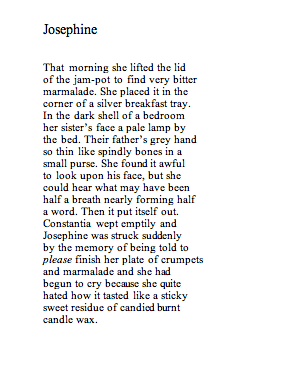
Poem Friday: Nina Powles’ ‘Josephine’ — This is a poem of curvature and overlap


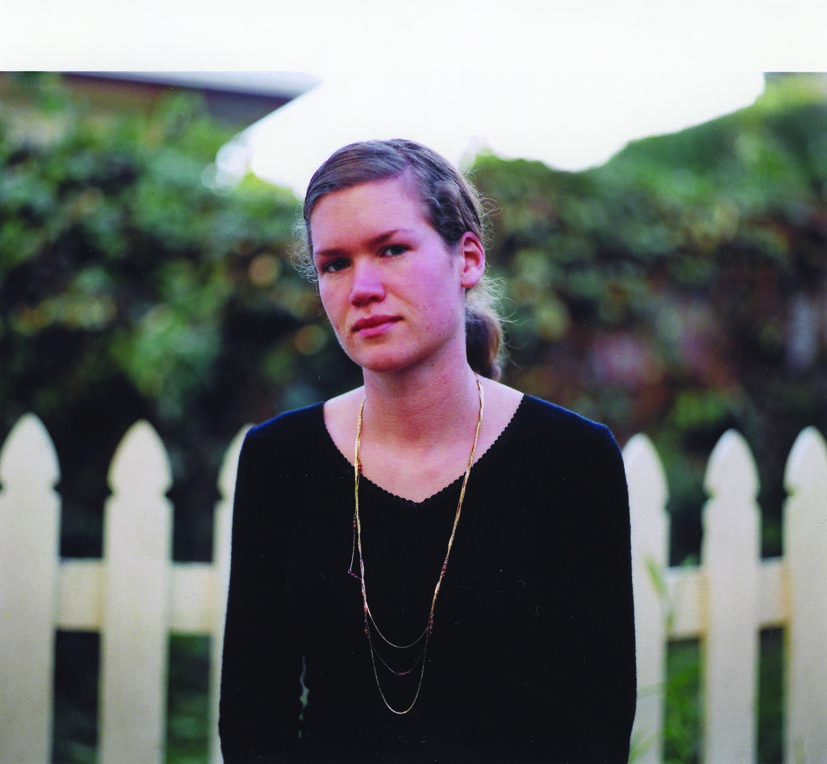
Nina


Screen shot 2015-02-27 at 11.44.48 AM


Author bio:  Nina Powles studied English literature and Chinese at Victoria University, where she is now studying towards her MA in Creative Writing at the International Institute of Modern Letters. Her poetry and non-fiction has appeared in Salient, Turbine and Sweet Mammalian. Girls of the Drift (Seraph Press 2014) is her debut poetry collection. She will spend the upcoming year working on a new collection of biographical poems.


Author note: ‘Josephine’ is one of a pair of poems that I wrote in response to my favourite short story by Katherine Mansfield, ‘The Daughters of the Late Colonel’. The two sisters, Josephine and Constantia, have only ever known a life of duty and obedience to their father, until he dies, and then the world begins to open itself up to them in a series of small moments of colour and brightness. In my reading and writing, I always find myself thinking about people and places stuck in the in-between, caught in phases of transition. So I think I wanted this poem to sit on the verge of brightness. I wanted to crawl into the dark bedroom where Josephine feels trapped—and maybe start to show her the way out.


Note by Paula: I read this poem out of context, without linking it to Katherine Mansfield’s story, and I was struck by the luminous detail that sets the poem in marvellous shifting lights. The adjectives pulsate (‘the dark shell’).  I love the jarring counterpoint of expectation and discovery in the opening lines. I love the way the beginning and end take hold of each other in that sticky, candied link. This is a poem of curvature and overlap. Time folds in on itself as it does like rock striking rock to produce a spark of elsewhere. So the marmalade leads you to the core of the poem and core of memory with its emotional kick. And the image of the hand (‘thin like spindly bones in a/ small purse’) with its little potent bite,  again leads to small child and old father. Poems can reach you in small, perfectly formed packages such as this, and the joy is in the alluring rustle of tissue paper. This detail shining through here, that discovery shining through there. I use the word, ‘rustle,’ as this is a poem of sweetly composed music; there is the rustle of vowels and consonants that lifts beyond meaning, beyond feeling and then adds to each. I read Nina’s note after I wrote this and smiled at the notion of ‘small moments of brightness.’


Seraph Press page here


100 Metre Poem Mystery — a poem to be saved!

10968524_1548883512037742_8595195903299195031_n

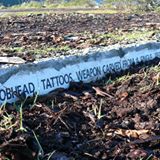
Hidden in the middle of Wellington is New Zealand’s largest artwork, a poem on the foreshore that is 100 metres long. Who wrote it? Can it be saved before it perishes?

Thanks to the sleuths at the Dompost we now know the name of the poem and the author. It is ‘Ruamoko Crescent’ by David Eggleton. It was installed by Stewart Griffiths in 1994. So the mystery is solved. But now we need to muster support to save the poem from imminent destruction by – literally – time and tide.

To help raise awareness of this hidden art please go to this YouTube link and this Facebook page and share.

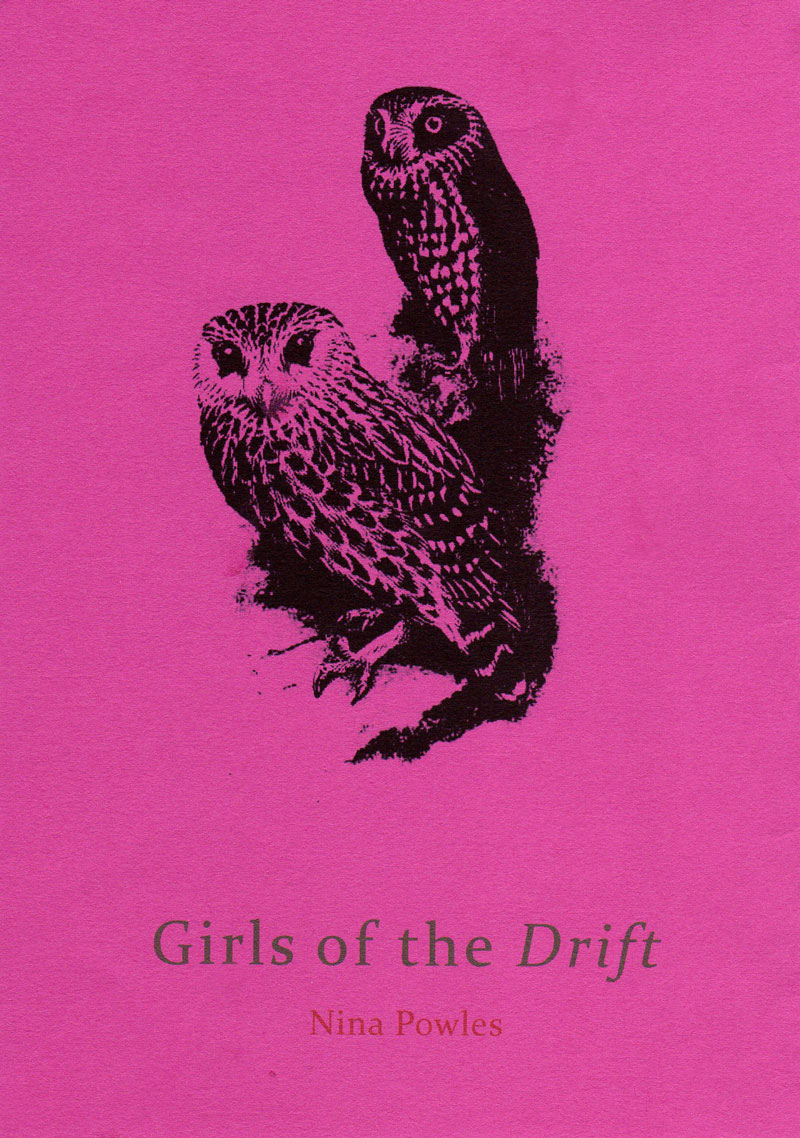
Nina Powles’ Girls of the Drift – I love the way lines turn a corner and surprise you


Girls-of-the-Drift-cover-web   Nina

Nina Powles, Girls of the Drift Seraph Press 2014

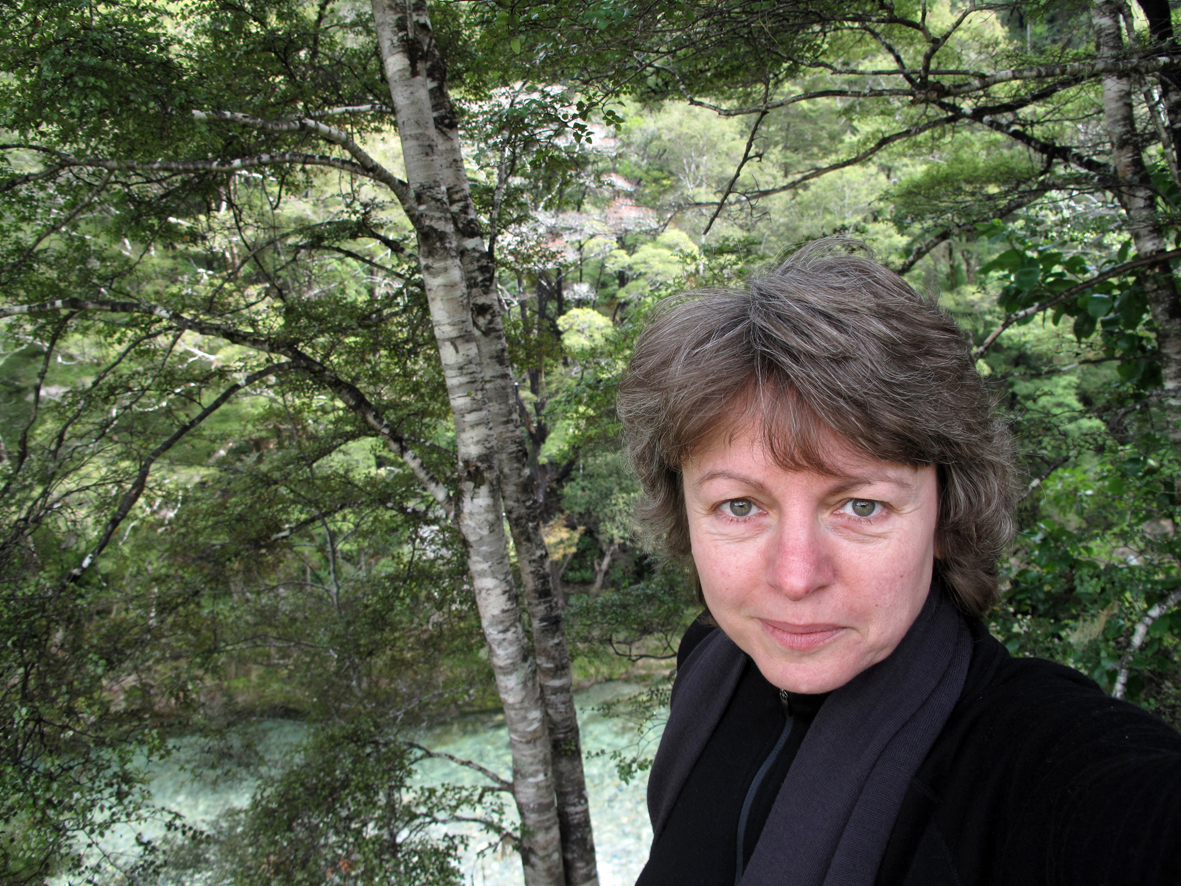
Nina Powles was the Books Editor for Salient last year, has an Hons Degree in English Literature and Chinese from Victoria University and is about to commence an MA in Creative Writing at the International Institute of Modern Letters.

Nina’s debut chapbook is handbound and in striking pink with owls peering off the cover. Eye-catching. Exquisite. Borrowed from a poem in the book, the title, too, is eye-catching. It takes its name from a pamphlet Jessie Mackay wrote and published in 1928 on the social and moral responsibilities of young women (Girl of the Drift). Nina’s endnote discusses the passion that Jesse and fellow poet Blanche Baughan felt for social justice. Nina’s poems also seem to be sparked by a passion for writing, living and navigating the world beyond the doorstep, that is paradoxically the doorstep itself.

This is a collection of poems that engages with the lives of women, fictional or otherwise. Holding this book, I am reassured we write out of the women (and men for different reasons) who paved the way for us, not just in the pioneering poems and stories they wrote, but in the lives lived that stepped out of the norm (the first female lighthouse keeper for example). Nina also acknowledges her ENGL422 Modern Poetry class of 2014 run by Anna Jackson and the Alexander Turnbull Library with its storehouse of letters and documents. While the poems feel light and refined on the page, you also get a sense of the wider world — a world of books, thinking, discussions. A bit like what Blanche and Jessie engaged in.

I love the richness of context of the poems (Katherine Mansfield and her characters, a ghost at an old school, real things and invented things, a history of the poet’s reading), but I also love the way lines turn a corner and surprise you.


from Pencarrow Lighthouse

The wind spins dead things in circles.

Collect up the wintertime, won’t you,

crack it on a rock,

drop it from a height.


The glint of detail is so mouthwatering, it is as though the poems become miniature packages  of story — of this place and that woman, of this weather and that ocean. The detail, so good at animating poetry, augments the life of the poem, visually, aurally, emotionally.


from Volcanology

[ … ] I keep

pieces of the volcano on my

windowsill, next to the honey

jars, so they don’t forget.


Nina’s collection stretches with the agility of a wordsmith who knows just where to break a line, shift a point of view or the pitch of a phrase. The poems take flight from the reading and research that a university offers, and the experience and insight you bring to that reading. I loved this collection and to celebrate its arrival I am posting a poem from it, with notes by both Nina and me, as my first Poem Friday of 2015 on February 27th.


Seraph Press page


Kerry Hine’s Young Country: a sense of humour and a fearless inventiveness

1415925058226    Hines-kerry-2

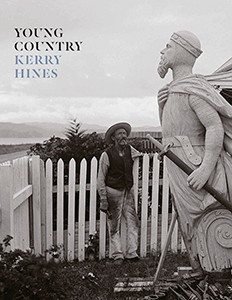
Kerry Hine, Young Country, Auckland University Press, 2014

Kerry Hine’s debut poetry collection is an offspring of her doctoral thesis, ‘After the Fact: Poems, Photographs and Regenerating Histories’ (Victoria University, 2012). Her thesis considers the photographs of William Williams amongst other things and these alluring photographs act as prompts for her poems. William was a well-regarded, nineteenth-century photographer with a passion for the outdoors, and for railways in particular.  He walked and camped and canoed. He photographed both rural and urban settings. Kerry’s poetry comes out of scholarly endeavour; the research is acknowledged at the back of the book in the bibliography and the extensive notes on both image and text. The thesis title, ‘After the Fact,’ resonates with intellectual and poetic movement. The writer takes a step back into history (to view the images, read material), yet she steps off from the fact of the matter (the staged scene, the fallible anecdote) to her own territory. The photographer has framed a set of circumstances selectively with his own eye/slant, and the poet does likewise. You could say the poem, ‘after the fact,’ is a second framing where invention rubs shoulders with historical records. Reading the poems in this context raises questions. What links are made to history/histories? Can we spot the personal predilections of the poet? Do we need facts? Can poetry reframe history in a way that draws us deeper into the past. Can we track both minor and major narratives in image and poem?

Before I started reading the book, I decided I had three options. First option is to read the photographs and follow the melancholic edge of the dead scenes, the fascination of the frozen moment, without the poems. I did this a little and loved the movement that each image ignited, belying both death and the stoppage of time. Always that trace of melancholy though. Second option is to read just the poems and try and ignore the mesmerising flicker of image in the corner of my eye. That was tough as the photographs tugged me away. Yet to stop and enter the heart of the poems was rewarding. I got carried into the territory of elsewhere. Third option is to read page by page, poem and photograph, and enjoy the flavoursome link and sidesteps. This is what I did in the end.

Young Country is a beautifully produced book with its sheen of paper, white space, terrific reproductions, inviting openness of font and internal design. Auckland University Press is exemplary in its book design and this book is no exception.

Kerry’s poems do take you back in time where men are catching eels, felling trees, smoking pipes, drinking whiskey, tenting, pondering the meaning of life, being alone. What of the women? I especially loved the multifaceted portraits  of the women. There are the wives, the mothers — but then, the surprise of the butcher’s wife who darns a man’s hand. Or the rising  questions of the new wife (‘Not doubts. Little questions.’). Or the woman whose ‘bed has grown around her,/  trying to accommodate// her illness.’ An illness defined as feminine hysteria with the cure a prescription to breed, constantly breed. Or the little resistance of the widow:


The Widow

An apple is an apple

is a simple fruit.


What women are supposed to need

I can do without.


What men can do

I can do without.


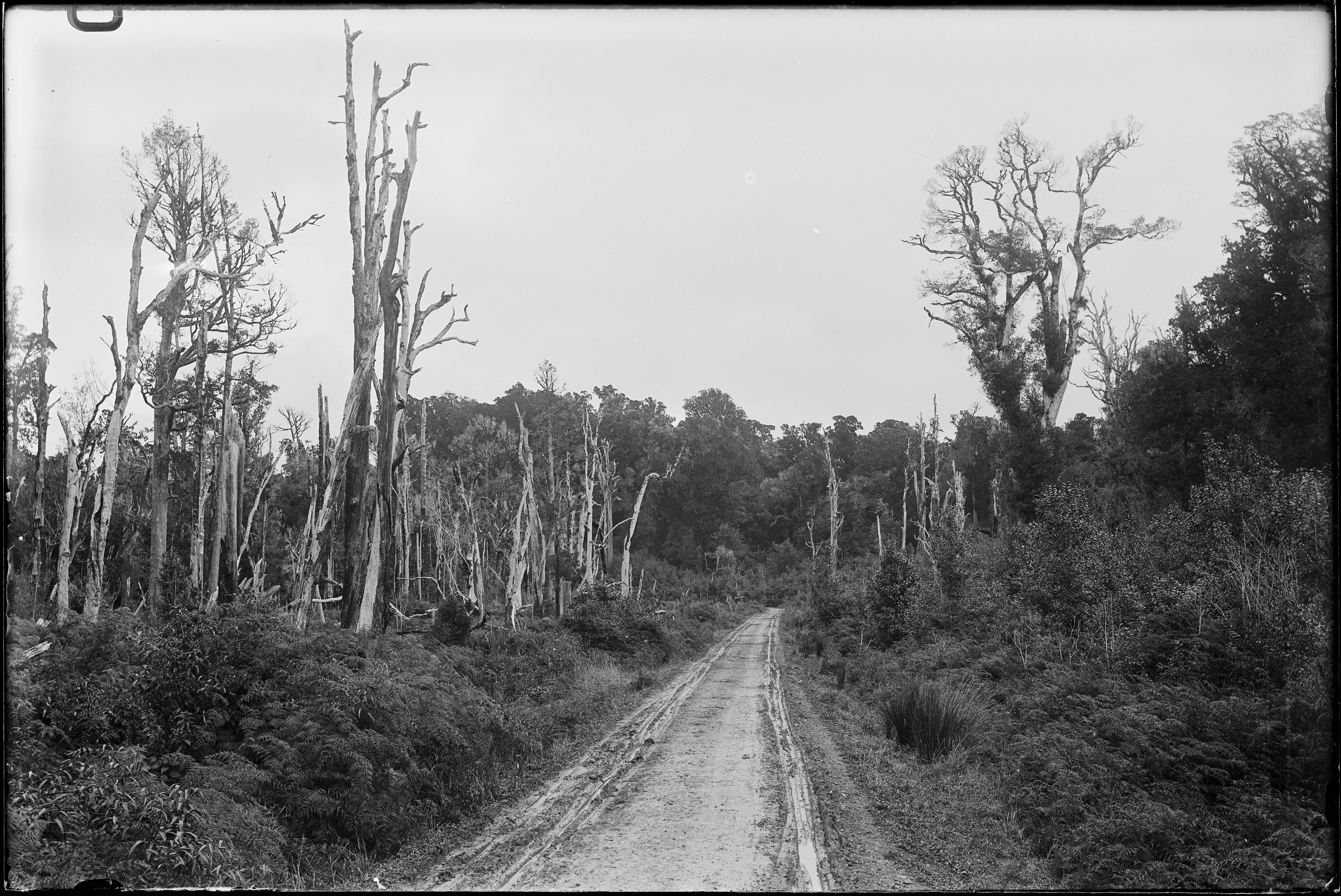
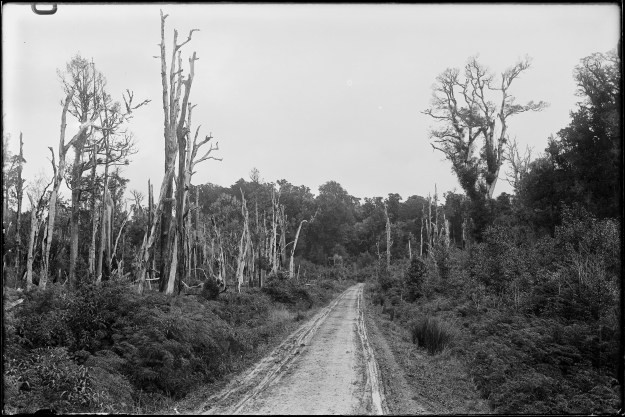
The photograph opposite this poem is an empty, gravel road heading into the bush in Masterton. A scene awaiting the pitch of the axe, the hearty yarn, the doing and the not-doing, and the needed and the not-needed.
 

26854-025950.tif

Photo credit: Forty Mile Bush, Masterton William Williams c1885 (1/1-025950-G)

There is both elegance and economy at work in the poetry; a judicious use of detail that is like the  visual snag of a photograph. Context becomes enlivened. In ‘Wellington,’ the scene is set perfectly in the opening lines: ‘Young men in bowler hats/ spring up like weeds.’ Or this in ‘After the Flood’: ‘Over our heads, debris in the trees.’ In the same poem, a scholarly observation adds historical detail: ‘Geometry gave way to geography. The settlement found its own course.’ In ‘Sarah,’ the detail of living: He writes of ‘his eel and/ spinach pie, cooking/ with gorse,’ while she answers ‘with trees/ blown down, a bee-stung/ tongue.’ The weather, too, refreshes the page with inventive detail (the best weather lines I have seen in ages!): ‘The absence of moonlight/ a kind of weather.’ ‘The river, rinsed of sunlight, is running/ clean along the bank.’ ‘[T]he scraped canvas of the sky/ the sky dropped and put back before/ anyone could notice.’ ‘Rain stings the window,/ rattles the wall.’ ‘The rain snaps at house./ The house recoils as if bitten.’

Detail animates the terrific extended sequence, ‘Settlement.’ The detail accumulates satin lining on upside down spout, grown boys  on the smell of grenadine. This is the portrait of a woman, a wife and mother that moves and astonishes. Always the achingly real detail that ties interior to exterior, man to woman, place to person. Some lines are quick to the bone as you read:


No stepping stones, but

rocks in a river.


A storm of summer insects,

lightning birds.


She says the things that

someone ought to say.


The water’s arguments run

for and against.


The cold is shocking

but she keeps her feet.


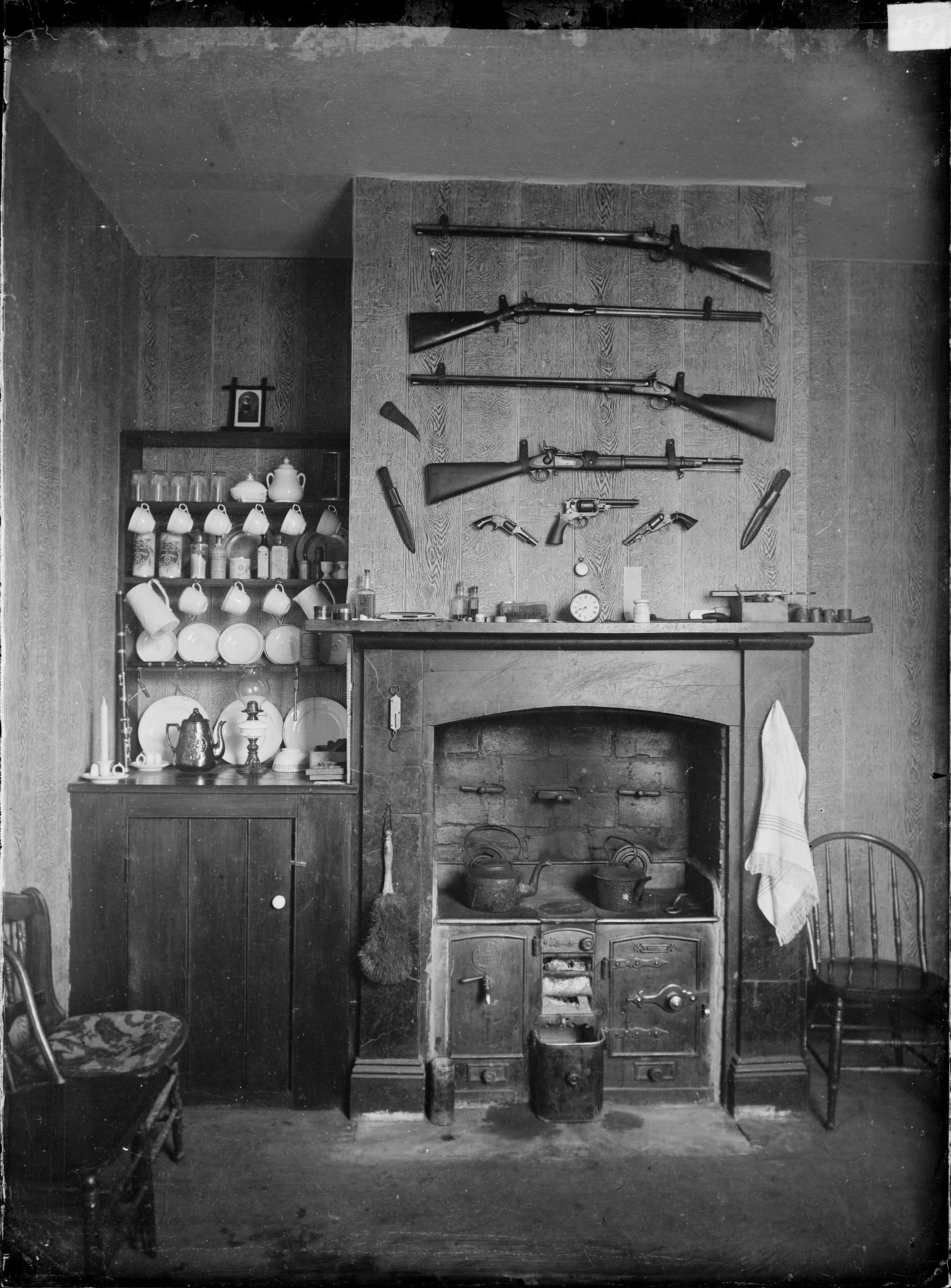
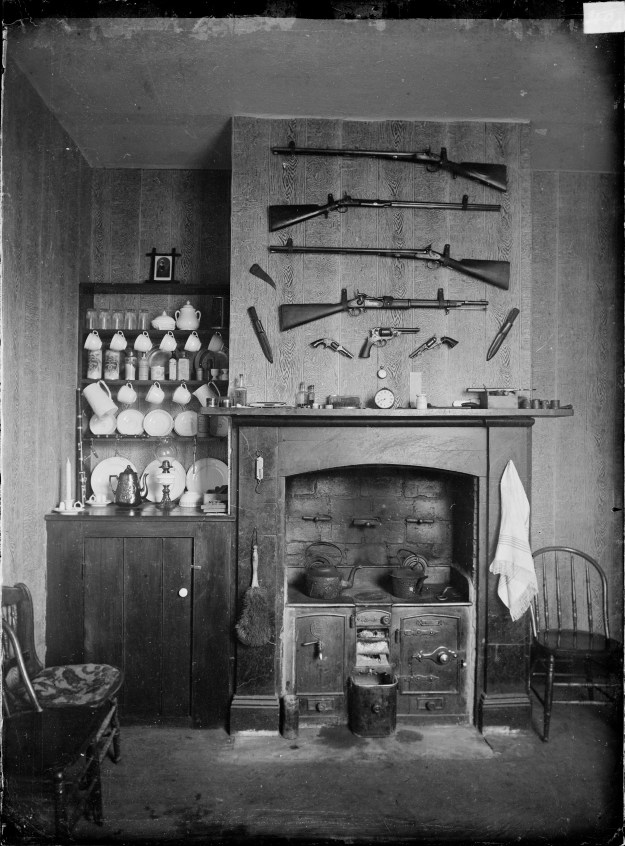
William’s photograph a few pages earlier, with the empty chairs,  the tea cups in the dresser and the guns on the wall, is also a portrait of the woman (a woman). You fall into this photograph and you fall into a thousand household stories. The chores, the time passing, the world outside, order, expectation, internal and external means of survival.
 

26750-140288.tif

Photo credit: House Interior William Willams 1888-? (1/2-140288-G)


As much as I loved the way the poems transport me back within a historical frame, to those men and women bending into the strangeness and toughness of new lives, two things stood out for me in this collection: a sense of humour and a fearless and inventive use of tropes. Many contemporary poets hold tropes at arm’s length as they seek out a plainness of line (although other complexities and delights take hold of the ear). Kerry’s tropes so often fan the visual impact of a poem. Crackling with visual impact. Deliciously fresh. Here are a few of my favourites: ‘The bush grows back/ like a balding man’s hair.’ ‘He sang like an organ making up the fire.’ ‘The breast-stroking sea/ turns at the wall.’ ‘Night surrounds her like mint cake./ She feels its grit in her teeth.’ ‘[H]is consciousness of her/ was like a trunk of empty/ clothes; he was embarrassed/ to be caught holding them/ against himself.’ Glorious.

The humour is another gold vein. Sometimes it is a mere word. In ‘Tom at Board,’ a new word is coined that wickedly catches the sameness of dinner: ‘served up with/ muttononous regularity.’ Or the irony  of the lost pipe: ‘For the others’ sake/ he tried to keep it safe// between his teeth.’ Or the way humour takes root in the familiar in this case of insomnia: ‘the ill-mannered sheep/ have forgotten how to be sociable/ except with rocks and bushes.’  Humour is one way Kerry sidesteps from the photograph. It is way of ensuring her poems are visually and emotionally active.

Yet this collection is not all humour and eye-catching tropes — in this astutely crafted collection there is balance. You fall upon a line here and a line there that shows you the poet viewing the world and our myriad ways of inhabiting it. Now the poet becomes part philosopher: ‘Home is a road/ in a glen.’ ‘We have no seasons,/ only tides.’ The oxymoron: ‘A land of opportunity, a land of/ narrow possibilities.’ ‘The photographer’s wife’s sister/ is a kind of sum.’

I loved too the epigramatic poems. Without titles they act as delightful poetry interludes in the way Bill Manhire’s billowy couplets do. Here a few favourites:


he sings the old songs,

enjoys a couple of good notes


Or:

afterwards he waited as

she sewed his buttons back on


Or:

Three in the morning. Tui,

morepork. No, but. No, but.


Kerry’s debut collection is haunting and complicated. Down to earth and resonant. One line is like an entry point to the whole collection: ‘She had been thinking something other,/ out of the photograph.’ Reading my way out of the poem, is a prismatic experience. Into history yes, but the poems are also a way back into the present. How we live now overlays how we lived then. Still labour. Still love. Still loss. Still hunger. Still narratives. The poems are held against the light. Luminous. With shifting points of view. This wife and that husband. This river bank and that shingled street. This suffering and that loneliness. This bridge and that glass in hand. I am hard pressed to recall a collection quite like it — a whiff of John Newton or David Howard or Jeffrey Paparoa Holman perhaps. Angela Andrews. Chris Price. Marty Smith. This is worth reading.


Auckland University Press page

Kerry Hine’s page

National Radio interview with photographs


Ashleigh Young finds much to admire in the poetry of Tim Upperton and that admiration is infectious!

Ashleigh Young has posted an engaged reading (a not-review) of a poetry collection by Tim Upperton on her blog, eyelashroaming. It makes you want to go and buy the book, and read the book, if you haven’t already. It is a matter of semantics what you call it when you share your enthusiasms and entry points into poetry books. In my mind the best reviews do in fact ‘talk’ about the writing and the effects of the writing in a way that re-illuminates the content and its myriad possibilities. Bravo Ashleigh!

You can see Ashleigh’s full post here.

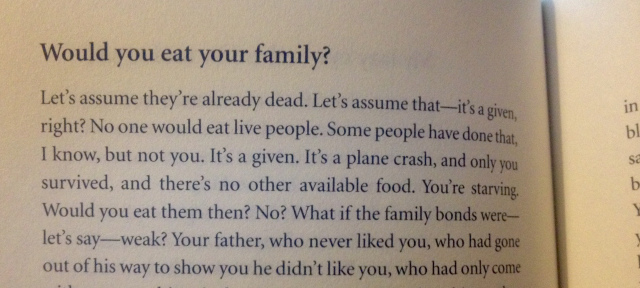
would-you-eat-your-family

‘Tim Upperton is the kind of poet who tends to have his poems shared without people asking his permission or paying him money. They’re the kind of poems that you want to share with another person immediately. So you do, which I can’t help but feel is a kind of stealing. I have done it often. I tell people they should buy the book, but how can you be sure they’ll follow through? When it comes to poetry, people don’t follow through. I need to repay my debt to Tim Upperton somehow, and rather than giving him money like a decent human being, I am going to write about his book The Night We Ate the Baby, like a writer. His book has been reviewed in only one place, briefly. Why hasn’t it been reviewed elsewhere? Probably because of shrinking arts review coverage on all fronts, or maybe because it was published by a small press, but a more interesting theory is: because it’s too good.

This isn’t a review. If it was, it would be effusive and dull. I actually just wanted to talk about the book. The first time I read these poems I thought of Larry David saying to Jeff Garlin that the Larry of Curb Your Enthusiasm is a fantasy – an embodiment of the things the real Larry would like to say. ‘I cannot tell you the pleasure, the pleasure that it gives me to have a moment of honesty in my life, albeit fictional. There is nothing that feels better to me!’ I’ve always thought there’s beauty in the way this honesty is delivered on the show, and watching it feels cathartic at the same time as it feels slightly unbearable. Because outside of that moment of honesty, ‘We’re full of shit all the time! It can’t be helped, you have to get along in this world, that’s the way to do it.’ In the end it’s always Larry against the world, holding his small triumphs close and being swallowed by a mob of Michael J. Fox fans. Anyway, my point is, it sometimes feels a bit like that in a Tim Upperton poem, especially when he’s not going easy..