Category Archives: NZ poetry journal

Submissions open for next Sweet Mammalian

15b020_ee7e44c71b3c4841aabfb6028a4deb81.jpg

SUBMISSIONS

Send us your writing, be it a roar, purr, or pip-squeak.

Sweet Mammalian aims for diversity and inclusiveness—we want all different kinds of poetry, from all different kinds of writers. In order to make this possible we need your submissions, so send us your thrilling writing!

Submit up to 5 poems of any length. Please send your work in a single word doc attachment to , and include a short bio note and the titles of your poems in the body of the email.

We are now accepting submissions for Issue Five. The submission deadline is 31 December 2017.

Issue Five will be published in the early months of 2018.


See here


Ora Nui 3 – a symphonic treat of art and writing


1727982512-Cover_OraNui-3_front.png


Ora Nui is a journal edited by Anton Blank devoted to Māori experimental literature;  writing that pushes the borders of identity as much if not more than it pushes the ‘how’ of writing. The latest issue draws upon issues of identity, nationhood and migration and includes a diversity voice.  Amy Leigh Wicks and Jan Kemp, for example, place European perspectives alongside those of Vaughan Rapatahana, Reihana Robinson, Robert Sullivan, Jacqueline Carter, Apirana Taylor and Marino Blank.

I think Ora Nui takes apart the whole notion of experimental and transforms it; I am thinking of writing that is testing something out, that might be tethered or prompted by experience, that doesn’t necessarily demolish stylistic traditions, and might have productive talks with them. Experimental writing is often aligned with the avantgarde, however this journal refreshes the experimental page. The journal promotes conversation that tests who and how we are and gives space for voices – some with traditions of marginalisation – to speak from the local and converse with the global. Anton Blank writes: This collection is a glorious celebration of diversity and change.

The cover showcases an image from from Lisa Reihana’s astonishing art installation, Pursuit of Venus (she has assured me we will get to see this again in New Zealand). I have propped the journal on a shelf so I can fall back into her mesmerising work. The image is the perfect gateway into writing that navigates questions of identity and belonging from multiple vantage points.


What I love about this journal though is the utter feast of voices and sumptuous artworks –  I cannot think of anything that has challenged, inspired or awed me in such diverse and distinctive ways. The poetry is symphonic in its reach and shifting keys. Here is a small sample of some of the poetry treats – I am till reading! I have just flicked to the back and got hooked on the lines of Robert Sullivan’s fruit poem, Reihana Robinson, Apirana Taylor, Briar Wood …. and then still sipping breakfast coffee, back to the dazzling currents of Reihana (especially ‘What is a nation?’).  I just bought a book of Reihana’s poetry – I am so hoping there is more in the pipeline.


Jacqueline Carter‘s  poetry often tenders a political edge. The poems included here underline her ability to get you rethinking things. These poems dig deep and resonate on so many levels.


‘The paepae

of the city’s children


is littered

with waewae tapu


people

who haven’t


been welcomed  on


people

in fact


who aren’t welcome at all’


from ‘Aotea Square’ (you just have to read the whole poem!!)


Rangi Faith pays homage to Janet Frame as he imagines the seat she sits in on a train; I have never read a portrait of Janet quite like this, and I love it.


‘When I was six years old

& running around the backyard

of our brick house in King Street,

a train steamed across the old airport

between us and the sea

carrying Janet Frame the poet.’


from ‘Janet Frame Passes through Saltwater Creek’


Rangi moves further south to pull Hone Tuwhare into a luminous rendering of place.


‘this place was always good for a waiata

to sing softly, or loudly if you preferred,

andto drum your tokotoko in time

to the incoming tide

on the earth’s Jurassic skin.’


from ‘To Hone at Kaka Point Seven Years On’


This is my first encounter with Teoti Jardine‘s poetry and I am struck by its clarity, its fluidity, its striking images.


.My Great Great Grandmother

wove her korowai with clouds.

and braided bull kelp lines

to hold the tide.’


from ‘Kuihi’


Kiri Piahana-Wong ‘s lyrical poetry holds the personal close, with both movement and stillness, little pockets of thought. I was drawn to her recounting Hinerangi’s broken heart and death.


‘On the day I died

it rained. Not just any rain,

but rain accompanied by

a sapping, brutal wind

from the southwest, the

kind that wrenches doors

from their hinges,

breaks down trees

and fences.’


from ‘On the day I died’


Two essays really struck a chord with me:

Dr. Carla Houkamau’s  ‘Māori identity and personal perspective’

Paula Morris’s ‘Of All Places: A Polemic on “International Book Prizes”‘


This is a substantial journal, a necessary journal, a must-read issue, and I have still so much left to savour. Bravo, Anton Blank for getting  this writing and this artmaking out where we can see it. I wish I could linger and share my engagement with every piece but must get back to writing my big book. I now have some new women to bring into my writing house. Thank you.


Poetry Shelf reviews Mimicry 3 – a cracking good mix


Mimicy 3 is edited by Carolyn DeCarlo and Jackson Nieuwland, is published by Holly Hunter and features a cracking good mix of poetry, prose and images.

Find Mimicry at Unity Auckland, Time Out, University Bookshop Auckland, Unity Wellington, Vic Books, Volume (Nelson), Scorpio Books (Christchurch) and University Bookshop Otago, or order online with dirt-cheap NZ postage.

I love the way you can’t pin the mix of voices, sometimes young, sometimes a tad older, sometimes familiar, sometimes not, sometimes widely published, sometimes just emerging, sometimes lyrical, sometimes not, into a singular style.

As usual I read my way through the poems before slipping elsewhere (bar the arresting red pages ‘Tear sheet – Red’).


I am simply going to give you a taste of the poetry static that this suite of poems generates by quoting you the first lines of the poems (you can track the prose and images yourself).

This is the kind of journal that just makes you want to write.


A very fine first-line sampler from Mimicry 3


Stacy Teague from ‘ko au te awa, ko te awa ko au / i am the river, the river is me’

you could love wide-open / against the natural framework  / of this forever


Ruby Mae Hinepunui Solly from ‘Custard’

When I was smaller than the family dog


Aimee Smith from  ‘This is where first-year friendships come to die’

Aro Valley is haunted by ghosts,


Holly Childs from ‘Closing websites’

She said I said, ‘I can’t store energy inside me, can’t retain it, so it makes sense I’


Rachel O’Neill from ‘The good bastard’

I hope Mother and Father buzz around me till Kingdom Come.


Chris Stewart from ‘fluff’

I used to lick damp fluff


Nina Powles from ‘Dialectal’

this dialect has no written form / only hands feeling for the sound / only wings


Nina Powles from ‘Yellow notebook fragments’

#5c85d2 | smoke blue made of melting clouds


Annelyse Gelman from ‘Excerpts from Heck Land, a series of centos culled from William Burroughs’s Naked Lunch [note it’s cut and paste]

I can feel the heat closing in And I luuuuuuuuve it !


Courtney Sina Meredith from ‘eye’

drove to your house            parked across the road        ‘m n town


Courtney Sina Meredith from ‘the night sky is an immigrant coming from somewhere unknown’

half the group went into the past


Joan Fleming from ‘The optimism of our generation’

Dear X. Ruin porn


Eleanor Rose King Merton from ‘narcissus’

on a beach which is the edge of another planet


Eleanor Rose King Merton from ‘this is also how ownership is indicated’

why not just welt me up and vacate the area with a pillar of salt in each of my corners


Helen Rickerby from ‘Time and I’

The thing is, I have problems with time. Time and I, we just


Maria McMillan from ‘Snow, the reflective properties of’

You grow up, the city you grew up in and left,


Briana Jamieson from ‘Light’

Sun seeped into the van


Amy Leigh Wicks from ‘Log no. 1’

There is no blanket of fog. I am running through the woods today. Last night,


Anna Jackson from ‘Surprising news about your hairstyle’

Is it possible to sail through the air out


Anna Jackson from ‘Hurricane lamp’

Erin invites me to supper (thank you) and the heat


Caroline Shepherd from ‘fog girl’s diary’

how to tell my mother that yes, I did say that I could that thing and


Caroline Shepherd from ‘love lies’

my friends all had grand ambitions of love filling


Freya Daly Sadgrove and Hera Lindsay Bird from ‘Big time talk show with Freya and Hera’

Life is like a sad bucket, old men

The latest Starling: fresh young voices, new poems by Chris Tse and a Bill Manhire interview


Ruby+Joy+Eade.jpg

The Starling Issue 4


Ok, I am a big fan of this.

This is an excellent issue. Featured writer, Chris Tse’s poems are rich in direction and effect.

Most importantly, the editors are adept at selecting fresh young voices that make you hungry for poetry (and short fiction ) and what words can do. I was going to single a few out – but I love them all! Eclectic, energising, electric, effervescent.


Screen Shot 2017-07-25 at 4.27.11 PM.png


Bill’s interview is a good read:

On rhyme: ‘On the other hand I think sound patterns are at the heart of poetry – they tug words away from meaning and towards music. And one bizarre thing is that the need to find a rhyming word can force you to move in directions you might not have otherwise imagined. Rhyme can make you surprise yourself.’

On needing a dose of humour: ‘The greatest danger for poets is self-importance. Some poets really do believe themselves to be wiser and more perceptive than the rest of the human race.’

On getting students to bring poems by published poets to share in class: ‘The main thing would be that no one in the class would have their minds made up beforehand; or be trying to bypass the poem in order to find out ‘what teacher thinks’. It’s much better for the students to bypass the teacher and get to know the poem directly. Paradoxically, a good teacher can help this happen.’

Mimicry 3 is open for submissions

Screen Shot 2017-06-27 at 12.34.08 PM.png


Video here


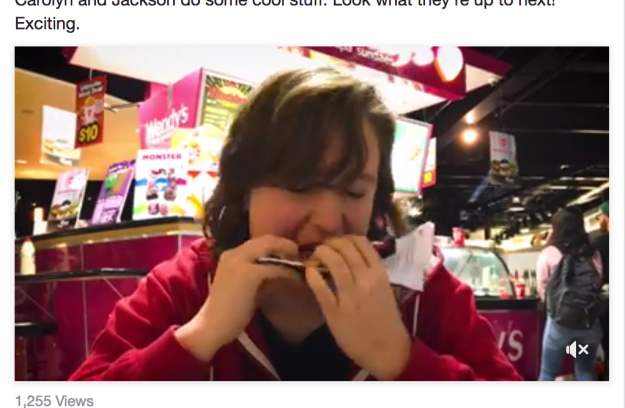
We’re hungry! Submissions are now open for issue three of Mimicry, guest-edited by Carolyn DeCarlo and Jackson Nieuwland of the zine ‘Food Court’.

Calling art, design, photography, music, poetry, fiction and nonfiction. Submit up to three pieces; for writing, 2000 words max per piece.

Email your submission to mimicryjournal@gmail.com with a personal bio of around 20 words.

Deadline 1 August 2017.

Video:
Starring Freya Daly Sadgrove
Song (edited from): Jalapeño by Hans Pucket
Video by Holly Hunter and Todd Atticus

My SST review of the refreshed Poetry NZ Yearbook

Book review: Poetry New Zealand Yearbook 2017 edited by Dr Jack Ross

Dr Jack Ross.

Supplied

Dr Jack Ross.

Poetry New Zealand Yearbook 2017

edited by Dr Jack Ross

Massey University Press, $35

Poetry New Zealand Yearbook 2017 
edited by  Dr Jack Ross

Poetry New Zealand Yearbook 2017 edited by Dr Jack Ross

Wellington poet Louis Johnson established the Poetry New Zealand Yearbook in 1951. It has just received a well-deserved makeover by Massey University Press. The new design is eye-catching, the writing has room to breathe and the content is eclectic. With Victoria and Otago University Presses publishing Sport and Landfall, it is good to see a literary magazine finding a home in Auckland. It is the only magazine that devotes sole attention to poetry and poetics, with an abundant measure of poems, reviews and essays.

Editor Dr Jack Ross aims to spotlight emerging and established poets and include “sound, well-considered reviews”. There are just under 100 poets in the issue, including Nick Ascroft, Riemke Ensing, Elizabeth Smither, Anna Jackson, Michele Leggott and Kiri Piahana-Wong. When I pick up a poetry journal, I am after the surprise of a fresh voice, the taste of new work by a well-loved poet, the revelatory contours of poetry that both behaves and misbehaves when it comes to questionable rule books. The annual delivers such treats.

A welcome find for me is the featured poet: Elizabeth Morton. Morton’s debut collection will be out this year with Makaro Press, so this sampler is perfect with its lush detail, lilting lines and surreal edges. My favourite poem, Celestial Bodies is by Rata Gordon (‘When you put Saturn in the bath/ it floats./ It’s true.’). Fingers-crossed we get to see a debut collection soon.

Mohamed Hassan’s breath-catching poem, the cyst, is another favourite: “In the small of my back/ at the edge of where my fingertips reach/ when I stretch them over my shoulder/ it is a dream of one day going home for good.”

You also get the sweet economy of Alice Hooton and Richard Jordan; the shifted hues of Jackson and Leggott (‘She is my rebel soul, my other self, the one who draws me out and folds me away’); the humour of Smither.

To have three essays – provocative and fascinating in equal degrees – by Janet Charman, Lisa Samuels and Bryan Walpert is a bonus.

Ross makes great claims for the generous review section suggesting “shouting from the rooftops doesn’t really work in the long-term”. A good poetry review opens a book for the reader as opposed to snapping it shut through the critic’s prejudices. However on several occasions I felt irritated by the male reviewers filtering poetry by women through conservative and reductive notions of what the poems are doing.

Ross’ review of Cilla McQueen’s memoir In a Slant Light highlighted a book that puzzled him to the point he did not not know exactly what she wanted “to share”. In contrast I found a poignant book, ripe with possibility and the portrait of a woman poet emerging from the shadows of men.

Poetry New Zealand Yearbook, in its revitalised form, and as a hub for poetry conversations, is now an essential destination for poetry fans. Not all the poems held my attention, but the delights are myriad.

 – Stuff

2 poets star in Mimicry’s very cool submission invite

Screen Shot 2016-10-26 at 8.40.35 AM.png


If you are from New Zealand, it’s time to submit up to three things, not just writing, to Mimicry journal (2).

poetry   fiction   nonfiction   music   comics   jokes   art   design   photography

no more than 2,000 words

by 20th November

Watch the best submission invite ever

Plucky young upstart: An interview with Holly Hunter about Mimicry by Sarah Jane Barnett


13582111_855436247934556_6405324545644315713_o.jpg


For the complete interview on Sarah’s blog go here.

Mimicry is a new Wellington-based literary and arts journal with poetry, fiction, nonfiction, visual art, and even music. It’s the brainchild of Holly Hunter, Assistant Editor at Victoria University Press. This week I had the pleasure of talking to Hunter about the journal, editing her friends, and what she sees happening in young writers’ work.

Sarah Jane Barnett: The journal’s opening page states that ‘Mimicry 1 is an act of nepotism,’ and that your contributors are your ‘incredibly talented and creatively driven friends.’ Tell me where the idea for the journal came from, and about the process of putting Mimicry together. I think many creative people have late night ideas, but most don’t go ahead. I’m glad you made this one happen – it’s a great read. What inspired you to make it happen? Was it difficult to edit and select work from your friends?

Holly Hunter: The opening page is as much a joke as it is a disclaimer, because I think most New Zealand journals are cliquey and nepotistic. In fact the journal was almost called Nepotism, but I backtracked when I realised that poor, well-meaning contributors would forever have it on their record that they were ‘published in Nepotism’—which isn’t exactly an impressive addition to a bio. If nothing else, I want to make a habit of pretentious, grandiose and controversial opening pages that either make the reader laugh or slam the journal shut. Journals could do with more character, I reckon, to live and breathe in their own right alongside the work.

The drive behind Mimicry was less calculated than how I think it’s been received. More than anything it was born from a sappy place of admiration for the people I know who live and breathe their creative side-hustles and deserve a space to display their work. But Mimicry also partly comes from a place of frustration with what I sometimes worry is a vortex of a literary environment. I like reading things that feel raw and contemporary, like they could spin out of control and off the axis, or that don’t care how they’re read but, at the same time, are tight and controlled. Mimicry’s approach isn’t entirely new; the chapbooks, journals and zines of Jackson Nieuwland and Carolyn de Carlo have been doing edgy, fresh things for years. One of their chapbooks, Bound: an ode to falling in love (Compound Press), is a diary of love poems from the perspectives of Kim Kardashian and Kanye West. Zines like theirs, and journals like The Lifted Brow, showed me what something like Mimicry could look like. It probably also helps that I’m a plucky young upstart with no sense of responsibility or consequence.

Starling now open for submission for writers under 25

STARLING CONSIDERS WORK FROM NEW ZEALAND WRITERS UNDER 25 YEARS OLD AT TIME OF SUBMISSION.

Material must not have been published elsewhere in any form previously, and please do not send us simultaneous submissions (material you have submitted or intend to submit to more than one journal/competition at the same time).

Starling is published twice yearly. Submissions may be made at any time to be considered for the next issue, so the best time to send your work is when you feel it is ready. The editors will read and respond to all submissions as soon as possible, and in any event no later than 8 weeks following the cut-off date for the issue. The editors are unable to enter into correspondence regarding individual submissions or selections.

Cut-off dates for work to be considered for each issue are 20 April for the July issue and 20 October for the January issue.

Poetry: send up to six poems.

Prose: Send up to two pieces, each up to a 5,000 word maximum. Prose may include short stories, creative non-fiction, personal essays or anything else you can surprise us with.

Please send all work as a single document. Pages should be numbered with your name on each page, and work set out at 1.5 line spacing.

Email submissions to editors@starlingmag.com as Microsoft Word or PDF attachments, and include the phrase “Submission for Starling” in the subject line followed by your name. Please do not use unusual formats or paste your submission into the body of your email.

In the body of your email please include your full name, date of birth, place of residence, email address and phone number. Please also include a short bio of no more than three sentences.

Starling is unable to offer payment to contributors. Copyright remains with the author. By submitting to Starling you also agree to be added to our mailing list, so that we may inform you of deadlines for future issues.

see here