Preparing for death is a wicker basket.
Elderly women know the road.
from ‘Memoir II’ Blood Ties
To celebrate the arrival of two new poetry books—Blood Ties: New and Selected Poems 1963 – 2016 (Canterbury University Press, 2017) and Dylan Junkie (Mākaro Press, 2017) —Jeffrey Paparoa Holman agreed to answer some questions for Poetry Shelf.
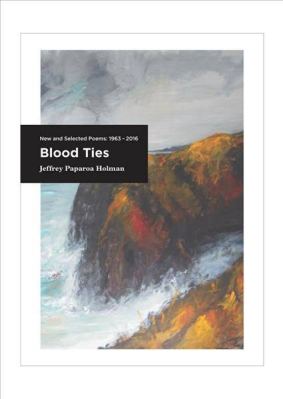
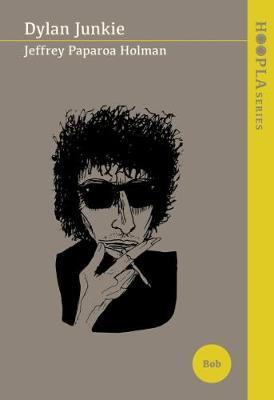
Jeffrey Paparoa Holman was born in London in 1947. He writes poetry, memoir and history. His most recent works are The Lost Pilot: a memoir (Penguin, 2013); Blood Ties: New and Selected Poems 1963-2016 (Canterbury University Press, 2017); Dylan Junkie, a collection of His Bobness fanboy poems (Mākaro Press) is released in May 2017.
Pantograph Punch review of Blood Ties by Vaughan Rapatahana
Two Poems at The SpinOff
Radio interview
Dylan Junkie will be launched in Wellington at 4pm Sunday 21st May as part of the 2017 Hoopla Series
Mākaro Press page
Canterbury University Press page
The Interview:
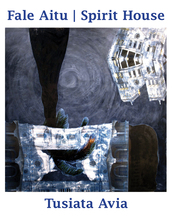

PG: Name a poetry book you have read in the past year or so that has really inspired you.
JPH: I think Tusiata Avia’s Fale Aitu/Spirit House is the book of the past year for a myriad of reasons and you’d have to create a special category for Hera Lindsay Bird’s eponymous dark horse sensation – but I’d give my heart to The Collected Poems of Alistair Te Ariki Campbell. Trying to review the book for Landfall reminded me that no-one can really capture a life in letters that spanned such width and such depth; in his generation, he was the Pasifika pou in a house of words held up for Māori by Hone Tuwhare, and for Pākehā by James K Baxter.
Squid-fat chicks in the baleful wind hunker
and wait, outwitting winter on Taiaroa’s
broad back.
from ‘Toroa feeding – Tairoa Heads’ Blood Ties
PG: Your poetry is musical, thoughtful, sustained by deep attachments and thematically active. What matters when you write a poem?
JPH: I don’t know if I can answer that easily, as many poems that speak to me come from a wide compass; whatever hits me when one of mine is coming might depend on mood, or some conviction, an itch or good old fashioned heartache. I do have to restrain myself sometimes from getting overtaken by insistent metrics (some would say not enough), but I am affected by music. I think poetry is embodied, it’s physical to me. On my own at home, sometimes I’ll play a Dylan track and make my own kind of dance moves. There’s a poem in my latest book from Mākaro, Dylan Junkie where I’m riffing on his World Gone Wrong album from 1993, when I was still in London and he was seen wandering unannounced around Camden, mere blocks away from where I lived. In the series of poems that take biographical snapshots in the first part of the book, that moment in his life and mine is remembered with me dancing around our council flat, “croaking away to those Akai speakers/with blood in my eyes for you”.
I guess that’s an example of a deep attachment to a man whose music and songs, whose poetry, kicked me off in 1964; then the mining town of Blackball where I heard songs like Only a Pawn in Their Game is another deep strata for me, the bookish boy in a tough, outdoor workingman’s world where women did it hard to just to survive, like my mother and her friends. I got a lot of my songbook from the request sessions on 3YZ (no TV, thank God!) and my politics just from living in that consciousness, of a history of struggle to get fair conditions in a dangerous world underground.
We had a Hospital Request on Sunday morning, in the days when there were no private rest homes and the old people’s homes were attached to the four West Coast hospitals. Many of the oldies were Scots, Irish and English, born elsewhere in the 1880s and the 1890s, so we got lots of longing for lost homelands, melancholy ballads and such like. I was schooled in true nostalgia, meaning “the pain of exile”. And we were an immigrant family too, though I hardly realised it at the time.
It’s all down there somewhere when I write, like the Irish song, Galway Bay: “So the strangers came and tried to teach us their ways/And they scorned us just for being what we are…”. The women gathering potatoes in the song, “speak language that the strangers do not know”, I was hearing the bitterness of the Cromwellian history, the seizing of Ireland by the English and the cruel history of colonisation that followed. The Coast was a sectarian domain, the Catholics, the Protestants, the Communists and all.
I suppose today I’m a bit of a throwback. I hate it when I hear ingrates who have no idea of where we come from, forget the sacrifices my parental and grandparental generations made to get kids like me a house, a hospital, a school, a job and three square meals. That’s the root of a lot of my thinking and it comes out in some of the poems, true – but I’m a broken human too, I can do love, loss and laughter. One of the things that got to me about John Key was how he – a Bryndwr state house kid like me, at one time – fashioned his story as a kind of rags to riches, self-made man, yet seemed happy to watch the culture that sheltered him degrade. For me now, it seems like the reverse: from enough security for all to ensure social cohesion back then, to now, every one for themselves, insecurity, inequality and selfies all round. I guess that makes me a political writer in many ways, but not all.
memory is
the braille of buildings
threading the labyrinth
from ‘Memory is a place’ Blood Ties
PG: I am drawn to the shifting musical effects in your poetry. Which poets catch your ear?
JPH: You’d have to find Baxter and Hone Tuwhare in there for sure, and later on, Jack Gilbert, who all get a nod in Blood Ties, the new selected. Back in the ’70s when I was starting off, I was reading Lowell and cummings, studying Eliot and Pound, falling in love with Neruda and Vallejo, very few women poets then I confess, Emily Dickinson and a nodding acquaintance with Sylvia Plath, overshadowed by Ted Hughes. We had a small group of writers and actors in Christchurch in 1973 and we did public readings in the new Town Hall and out at Teachers’ College. I got to love the idea that page and stage could work together; I always test what’s written with reading, as the poems come on in the making.
I heard Baxter read here the year he died, outside the old UCSA at the town site, early ’72. He was a prophet. I think I picked up the sermonising aspect of some readings I heard and never liked it. I wanted a kind of handmade vernacular, you know, what I found ten years later in Raymond Carver. Poems that were poems that didn’t look like poems, but when you read them aloud, they came alive. Hearing the Czech poet Miroslav Holub read in London in 1991 blew me away: a second language speaker of English, the accents of his Czech made the surreal poems he articulated with some effort simply transfixing, like you were being marinated in a thick black coffee soundscape.
I’m well aware now that what is merely personal “soon rots, it must be packed in ice and salt”, as Yeats told us – but that’s more than just technique he’s talking about, that’s a soundprint of the self the poet has got down somehow, whether it’s Jenny Bornholdt’s subtleties or Glenn Colquhuon’s list variations. Anyone who has heard David Eggleton read has got the whole package: intelligence with invisible guitars, a scalpel for a baton.
There’s always been something ineffable in the English translations of Osip Mandelstam that makes me sad I have no Russian; but he’s always in my heart, since I was pointed his way in 1971 by my American mentor and friend, the late David Walker. “What has held out against oxidation/and adulteration, burns like feminine silver,/ and quiet labour silvers the iron plough/and the poet’s voice.” 353, Voronezh (1937), trs. Clarence Brown and W.S. Merwin. I have no way of knowing what it cost this man and his devoted wife and editor, Nadezhda (who memorised his entire body of work to save it for the future), to survive as long as they did as internal exiles in the midst of Stalin’s purges. His poetry has remained with me ever since my first readings, a tutelary angel of courage and brilliance.
Knit me back together
when time stops to roar
for eternity and everywhere
is water and all is an ear –
resurrect me in the rain.
from ‘ Resurrect me in the rain’ Blood Ties
PG: Your new Selected Poems is arranged in thematic clusters rather than chronologically. What factors were important in collating the book? What difficulties did you face?
JPH: The collection has a history of changes. I roughed out the idea in early 2012 with the working title, My Culture is my Songbook – which is still an implication in what we have now. Then in my time in Iowa at the IWP later that year, I worked up a draft list of poems from the previous collections and some published elsewhere, some unpublished. I also wrote an essay to preface the collection, which hasn’t survived.
One publisher looked at that iteration in the following year and kindly declined; another in 2014 said maybe it was a bit early for me to be doing a selected. Nil desperandum: I was busy with The Lost Pilot, my Japan kamikaze memoir at the time, so probably wasn’t as focussed as I needed to be. But I had an idea, and was happy to wait. I gave the collection a new title (Paparoa Hotel) and shelved it. Working with John Pule and Catherine Montgomery of Canterbury University Press in 2013 for the re-issue of his great poem, The Bond of Time gave me the impetus to approach her in the following year and see if she was interested in looking at the manuscript.
Once Catherine agreed, I had another look, dropped the essay, gave it a new title and winnowed some, added a few others. Her reader came back to us with a positive report but suggested the thematic structure instead of chronology alone as a guide. She also felt that given the amount of darkness in much of the subject matter, ending on some of the more intimate and tender works might be helpful. I thought about this and decided, why not?
That left me to decide where the pieces fitted into which jigsaws, which wasn’t that difficult and resulted in poems from different collections now sitting side by side. The aeroplane poems selected from Fly Boy now found themselves in the opening section on childhood, Only Yesterday; the bird poems from the same 2010 book sat much later with the love poems near the book’s end, in Lovers and Feathers. Ancestors of the flesh and those of the written word rub shoulders: we see my terrified grandmother watching V-1 flying bombs streaking overhead, while on the next page, a salute to the composer and onetime Spitfire pilot John Ritchie takes off in Old Flyers, then a page or two on, an elegy on the death of Hone Tuwhare.
So it goes: the mining poems in Old King Coal, the poetry of wounding in Traumata Dreaming and Other Tongues where work on Māori language and history sits alongside a lament to dead kamikaze and their families. This will work for some and not for others, as the times of composition are necessarily out of joint (the editors did suggest dating the poems in the Acknowledgements, so it is possible to get a timeline, if one is bothered).
I do not want another father: old man, now
dead, cancer faded
and swelled you, speechless at the door, yellow
feathered fingers.
from ‘Father and son’ Blood Ties
I lost him the first time
before I could grasp
who he was, what he did, where
he fitted with her
from ‘As big as a father’ Blood Ties
PG: Do you think your poetry has changed over the course of time?
JPH: I can see it has changed even more so than was obvious before, now we have this group to ponder. Just take one set of poems for example: my father and his war. I’ve been aware that my elegy for Dad, ‘Father and Son,’ written in 1973 in the year following his death was echoed in many respects by what seems to have become a signature poem, 1993’s ‘As Big as a Father,’ written in London twenty years later.
The early poem has little in the way of formal structure, held together by the force of feeling and a linked set of images: starving children and cancer patients, the RSA and the bottle of port, the toilet flushing, the doctor leaving after pronouncing sentence. As Big as a Father, two decades later, grief having subsided into regret and amputation, falls back onto form and metaphor: my father is a lost ship that finally sinks when torpedoed by death itself. The stanzas are regular and repeat, the conceit playing variations on the four times loss of a father, each descending tercet ending with “father”.
Yet none of this was consciously planned, any more than was the early poem; it all arose from an idea of the impossibility of losing anything as big as a capital ship (I was musing on the expression, “one of our battleships is missing”). Yes, so how could you lose anything as big as a father? The thought just slid across my bows. The poem ran from there. It seems that the less apparently personal of the two elegies, the more distanced one, has the greater power to reach others who know what is being spoken of here.
Two later poems – ‘Father war, 2012’ and ‘Wall, 2013’ – are similarly distanced and even more stripped down, unplugged. Father war eschews musicality for a series of jabs to the body, like a boxer hitting over and over in the region of the heart, to demonstrate the brutal ongoing effect of PTSD, kicking survivors of combat when they are down, returned home, but never free of the invisible wounds. Wall, the poem just stares into the abyss of addiction, alcohol, gambling and invisibility.
On this subject at least – warriors and their wounds – I can clearly see changes. I’m more confident now to have a go, try something, a ballad if one is called for, or something more playful like ‘The Writing Teacher.’ I’ve been reading Max Sebald’s poetry: given his sense of history and landscape, both regarding us from their buried secrets, I’ve written some work in imitation.
(iii)
the fieldfares
of Norfolk
flock on autumn
stubble, on the old
airfields
from ‘After Sebald’
It helps to know that the great German novelist – a migrant, to England in the 1960s – lived and died in Norfolk, teaching for many years at the University of East Anglia. He was a frequent walker and wanderer; he would often have seen this large migratory thrush, the fieldfare, wintering over in Norfolk on the flint speckled fields after harvest. The area was the home of other migratory birds: the bombers of the 8th Air Force in World War Two and their crews, American airmen who came to bomb Sebald’s Germany where he was born in the midst of their raids in 1944. So yes, I am aiming now at a little more indirection, suggestion, aware the world is writing me as much as the reverse.
It’s not every day you can find a guide
to show you around a working graveyard.
from ‘Inferno (Strongman Mine 1967)’ Blood Ties
PG: The title is particularly resonant. How important are blood ties as you write? Do they go beyond the familial?
JPH: The title as I mentioned earlier came late and so is retrospective. I think I was looking for something that caught the feel of what was gathered, but it was pretty instinctive. The poems in the book do relate stories of whakapapa, some of blood, others of influence. I can feel some kind of familial connection to writers who connect with me, many of them dead of course, others I’ll never meet.
There are also a number of poems that come out of the connections my family has with war and survival: my father, mother and grandmother especially, but also the poems about mining disasters and that community where I grew up. Relationship as in a shared culture: to me they are ties of blood, as much as those of immediate family members. Noel Prescott, one of my classmates at high school died in the Strongman Mine disaster in 1967, he was 19 years old.
I went to the 50th anniversary of Strongman in Greymouth and up at the mine site itself, earlier this year. Pike River hung over the whole three days, but nobody mentioned it publicly, as if that would take away from the solemnity of this gathering. Pike is so raw still, seven years on in November. This is where my heart is, down in the roots of childhood and adolescence where blood ties equal whakapapa to me.
We had a West Coast launch for the book after Christchurch, in the Bonzai Café in Greymouth a few weeks ago; again, I had family there and miners as well. Two of the people who were the last to leave were a father and son: Les Neilson, retired miner – son of my old neighbour in Blackball, Les senior – and Kirk, his son, a fourth- generation miner. Les had worked in Strongman after the explosion and was one of those who closed it down in 1993. Kirk is working for Solid Energy, closing Pike River. These men know about blood ties and coal; I was honoured they came for the poetry that night.
PG: I like the design of the book with the left-hand side generally blank. Tell me about the design choices.
JPH: I should pay tribute here to the staff of CUP, the reader and my editor, Emma Neale who saw all this through, as well Aaron Beehre and Gemma Banks who designed and printed the book at Ilam Press, based in the University’s School of Fine Arts. They made this format work with their outstanding production values: it is a beautiful artefact, like all the books they make. The reproduction of John Madden’s painting from Karekare on the cover is a crowning glory for me; he too is a West Coast coal miner’s son.
They do this special thing with one page poems getting a whole sheet to themselves; poems that run over do get printed on both sides, but it means a fatter than average poetry book. It’s on art paper too, and then you have section inserts in another colour and the titles picked out in red: classy. The title on the cover is strip overlaid by hand, all finished off with the folding flap.
It makes me feel privileged to have this workmanship where I’ve chosen the poems I think I want to remain behind me when I’m gone. It’s like a waka huia, those intricately carved treasure boxes where Māori kept the precious feathers of rank. I deliberately included my earliest published poem and a couple of juvenilia, because this is my life: the production here is a joy to me. He tino taonga te pukapuka nei!
The last time I lost him
I lost him for good:
the night and the day
the breath he was breathing
and death’s head torpedoes
blew out of the water
the skiff of my father.
from ‘As big as a father’ Blood Ties
PG: The father poems are so beautifully textured, both emotionally and musically. What are the difficulties and what were the joys in writing of your father?
JPH: People might rightly observe that I’ve made a career out of mining my father’s and my relationship, but you have to play what’s in front of you. In some ways, I had little choice, as we were so entangled. I spoke a bit earlier about how my writing him changed over time; as for emotions, I guess I felt cheated by his early death and our all our unresolved stuff. I know I’m not alone here.
I’m writing this on Anzac Day and I was down at the Dawn Service in Cranmer Square this morning (where in early 1973 I’d stood up and read a poem of James K Baxter’s in the memorial service held there for him). I know I was grieving my Dad’s death and my broken marriage too that day, reading ‘He Waiata Mō Te Kare,’ Baxter’s love poem to Jacqui Sturm.
This morning, watching the sailors march in with the other armed forces, singing The Sailors’ Hymn, “Eternal Father, strong to save,/ Whose arm has bound the restless wave…”, I was touched by his memory again, through the metrics of the hymnody and those bloody uniforms! I cried a bit: not even I’m sure, just for him but like in a poem I read years ago and forgot the writer, “we weep for our strangeness”.
I’m a writer, it’s what I am and what I do, however well, however badly and so if I need to address somebody or something that’s got to me deep down, I have to find a language for it. I might forget the odd name these days, but I don’t forget people, the ones in my life that have touched me. Dad is top of the list, mostly because he was there but not there, always, like I write him in the poem Father war, “gone but not gone/back but half cocked/alone and alone/the war for a self”.
It makes me cry when I think of how alone he was, addicted to alcohol and adrenaline, how I have come to understand him a little more now, inheriting his tendencies to run on chemicals (I have long since sought help, but he never did). The dead are just the dead at first, our parents who disappear, but over time they become stories we tell to keep them alive and finally, they’re mythical beings. Poverty, depression, war, migration, addiction, it’s a God-given epic, isn’t it? It would be churlish not to sing about my parents’ lives and times, to refuse the gift.
After the tremor the neighbour
after the terror the stranger
after the stranger the doctor
after the doctor the soldier
after the soldier the looter
after the looter the vulture
from ‘After the tremor’ Blood Ties
PG: Your earthquake poems are also very affecting to read. I was pondering over the way catastrophe can either freeze or impel writers. How did the quakes affect your writing?
JPH: Well, the quakes were affecting, that’s for sure, but I guess it doesn’t follow writing about them will be. Your observation about catastrophe having the power to “freeze or impel” is very true – of everything, not just writing. You get the adrenaline to react, the fight-or-flight booster, but it’s how you use it, I think (well, in the moment at least).
I know some people freeze so hard they can’t think; so far, I’ve managed in the aftermath to stay focused, but I wonder if that’s partly because as you age, your system is slower anyway? I learned to put my shoes on before blundering around a darkened house (broken glass); to photograph everything right away, for insurance purposes; to text loved ones (and by extension, in a series of quakes, keep your phone charged).
Lots of learned experience, yes, but when it comes to writing about it, I was slow to do anything much, really. I wrote one poem about our cat disappearing, which The Press published shortly after the September event; that ended up opening what became Shaken Down 6.3. The title tells you that the book really begins after the deadly 22 February quake in 2011 that killed 185 people, including my dear friend and neighbour, Tetaki Tairakena, an English teacher killed in the CTV building collapse with many of his Asian students.
That year I’d been awarded a University of Waikato Writing Fellowship, so I spent much of it coming and going, including a trip to Japan in April in the course of writing The Lost Pilot memoir. I managed to come home regularly and caught many of the major shakes, including the February killer and a bad one in June. We were all PTS, shaken up and burned out over that year, including for many of us, our broken impoverished sleep.
That was how the poems arrived, in the middle of my wakeful nights in Hamilton. I’d wake at one, two or three in the morning and it was hard to go back to sleep. My vestigial childhood hyper-vigilance, formed in response to my father’s late night home-from-the-pub rages woke up again: I’d be on the alert automatically, ready to run if another shake came.
how can I find
my way through myself
with the past torn down
the road of dreams
with my compass
smashed
from ‘Memory is place’ Blood Ties
Your brain doesn’t care if you’re in another city, another country – this is what we’ve come to call in Christchurch “quake brain”. As I woke and lay there, sometimes a line would come, a half-conscious thought, as in the poem, ‘Memory is place.’ I’d be in my deep mind somewhere and words would come to match a stumbling thought, like how with the city half destroyed and broken down, we didn’t know where we were anymore. It was disorienting to feel you no longer knew your own city, or knew where you stood.
Some of the poems came as broken pieces (when all you) or chants and incantations (after the tremor), and for most, they were night birds, except for the three I wrote in Japan reflecting their experience of tsunami horrors in Fukushima, back in March. In some ways, the book is like reportage, written under pressure in one year and published the next; the use of photographs was a choice there too, giving readers visual information, along with a reflection, an essay that ends the book.
Jim Norcliffe, one of our kaumātua in the poetry scene here for years was at the time poetry editor of The Press and he tells of how he was inundated with up to a thousand poems by Christchurch citizens, over the next year or so. It seems that when the chips were down and we wanted to tell each other what it felt like, a poem was the weapon of choice. I used to say that we all, with our quake stories were now characters in a giant multi-faceted novel, never to be quite finished, authored by Papatūānuku herself.
I found no trace of your vital signs.
I stopped the car at Poerua.
Your image stained the lake.
Your signature dripped in the bush.
from ‘Re-reading you (Peter Hooper, 1919 – 1991)’ Blood Ties
PG: There are a number of poems that pay tribute to poet, Peter Hooper. Are there other poets that have sustained you in view of both reading and conversation?
JPH: Yes, Peter my high school English teacher and later, a lifelong friend was always going to figure. I mentioned a few earlier in answer to another question, but I think the next influence was David Walker, who taught literature papers in the American Studies programme at Canterbury when I came back to study in 1971 after dropping out in 1966.
I was starting to write again after what I might like to style as my “Woodstock years”, when I ran away to country (not to escape fame of course, just growing up). I met Gary Langford who had a flat downstairs and he was writing and publishing, very much a presence in the university lit scene. It was David though who helped me step up to the mark. I saw he was publishing poetry in Canta, so after a tutorial one night, I gave him a few of my ‘prentice efforts.
The cold bath he gave them should have put me off, but I persevered; he pointed me towards the Russian and South American writers I mentioned earlier, as well as rarities like Georg Trakl and Goncharov. I guess he steered me into the wider world, out of the claustrophobic Anglophilia which still gripped the English Department in those days (Patrick Evans is good on this subject).
David and I corresponded, were published together by Fragments Press in 1974 in a shared volume (Two Poets: Fragments 5) and stayed friends thereafter, swapping poems and books. He kept the flame alive for me, I think that’s true; after I dropped out of university again, I wrote fitfully but published nothing until 1998, back at varsity for a third time lucky, self-publishing a stapled booklet called Flood Damage.
I met a few poets working in London bookshops in the 1990s (I even heard Stephen Spender read, in a tiny community centre for the arts in north London, in Torriano Avenue, N7). I took a course at the legendary City Lit adult education centre in Stukeley Street not far from my work in Charing Cross Road, tutored by Alison Fell.
I was reading everything I could get my hands on and writing daily, even if only a diary entry: short stories, an abandoned novel and poetry, poetry, poetry. That’s where As Big As A Father came from, that time; like fishing, if you bait a line and cast every day, sooner or later, you’ll get a bite. I was reading Raymond Carver and I think in the end, it was the example of his life, even more than his style that empowered me. Carver was a recovering alkie like me, a working-class kid from the sticks, who’d found the self-belief to keep writing.
Back in New Zealand, at university in 1998, I took Rob Jackaman’s creative writing paper for poetry. I got to know him well and he helped me – along with Patrick Evans – take writing seriously and look to publication, long term. The year before, As Big As A Father had won the Whitirea poetry prize so I had Sam Hunt cheering me on after that (he was the judge).
James Brown I met that night in Porirua was writer in residence at Canterbury in 2001 and he read a manuscript I’d got together, edited by Bernadette Hall and encouraged me to send it so Roger Steele of Steele Roberts. That was breakthrough I needed. The resulting book, As Big As A Father (2002) was shortlisted in the Montana New Zealand Book Award the following year and the faith, the support of all the foregoing writers had a public reward. What matters though as always is the next poem, the being awake in the moment.
I filled my heart with as many tears as I could
possibly carry and saving them for life, skedaddled.
In the pub in Dunoille, knocking back beer after beer
celebrating a visit to hell with a man who works there.
from ‘Inferno (Strongman Mine 1967)’ Blood Ties
PG: Is there a poem that has really lasted the distance for you?
JPH: I thought about this and while it seems obvious ‘As Big As A Father’ will survive me, for a while anyway. I still have a heart for ‘Inferno (Strongman Mine 1967).’ I wrote it in London, during those years when I was isolated from all it speaks of physically and culturally and not getting published much at all, seemingly whistling in the dark.
Somehow, it just turned up and rolled out: the first couplet is a memory of my old Blackball friend David Hibbs in 1978 when I was back living on the Coast, in Runanga, offering to take my wife and me down into Strongman. It was a potent journey: her father had died there in the explosion with eighteen other miners, 19 January 1967.
The image of Virgil guiding Dante down into the underworld just sat there for me and everything else seemed to follow. This is where reading informs and sustains us; without thinking, I was diving down into the Western tradition for guidance. The memory of our trip to Greens Dip where the explosion took place, and the final point where you can go no further in that section, where two bodies still remain buried deep, spooled out of me like a film.
I knew I had it almost straight away. I know it will stay around as it relies on whatever power it has for the buried emotion in the measured pauses at of each couplet. It was well that we took that trip back then; the mine was finally closed and sealed up in 1993; there is no way down there now, to offer alms to the dead.
But I would put in an honorary mention for one lesser known: The Iconography of Birds (for Les Murray). I wrote this I think in 1998, after hearing Les Murray read at the university, where he spoke of birds perching on a dead tree in a dam on his farm in New South Wales. The poem he read was a graphic dramatization on this scene.
I love birds, I’ve been watching them all my life. I went home and wrote this poem as if in reply, fuelled by my studies in medieval iconography and a recent essay on stained glass windows in the great cathedrals. I was in full flight in Rob’s poetry classes, writing on steroids, so the imagery of Christ as a pelican feeding his young on blood from his own breast came straight from my essay, reflecting on a window that held this image.
From there, the sky was conceived as “the Gothic vault” filled with migratory birds, especially the godwits, who had not long departed the Heathcote Estuary on their incredible, world-girdling flight to Alaska and summer feeding grounds. The birds became Greek voyagers in Homer’s myths and without thinking too much, I’d joined the two great streams of Western literature: the pagan Greeks and the biblical writers, the Jews.
The birds fly out into the Pacific night, driven by that mysterious migratory instinct that tells them it is time to go, star-farers as wise as those who navigated their way here to Aotearoa, Māori first, and later, Pākehā. I was a late arrival to these southern waters, a migratory bird like these early travellers, albeit I sailed here on my mother’s back, so to speak. Below the line, I think the poem was trying to tell me something and I like that.
it started out of sight and out of mind
too dark to see too hard to think
it began with the world made flesh
on the backs of tiny bones
from ‘Child labour’ Blood Ties
PG: Which new poem especially delights you?
JPH: I like ‘Child Labour’ in its simplicity and its rage, and ‘Dark With Nouns’ too. Very different offerings and both pretty fresh, they were written last year. Catherine Montgomery encouraged me to include something recent. That reading at the ICA with those giants of poetry on a raised stage in front of me: phew! Like Mount Rushmore in the flesh, and I try and capture something of that in the salute to Brodsky, who made the remark somewhere I was reading about how if you covered all the adjective and verbs, a poem should be “dark with nouns”. I like poems to be full of the material world, the word made flesh (small ‘w’).
But I’ll go for ‘Child Labour,’ because it’s a song, like one of William Blake’s Songs of Innocence and Experience: here, the innocent get to have a cruel experience, the kind of image I saw in my fifth form history books, tiny, emaciated kids pulling coal tubs in tunnels little more than burrows for moles. It still goes on today, everywhere children and those with less power are exploited for somebody else’s profit, for my smart phone, my T-shirt.
I’ll put my hand up: the poetry of witness is necessary still, whether we look back to Chaucer pointing out ecclesiastical corruption, fast forward to Neruda skewering US companies and their tame dictators enslaving peasants in South America, or Miroslav Holub holding his nose over the rotten Communist bureaucracy in Czechoslovakia, while seemingly talking about a Chinese emperor embalmed stinking fish – we can speak up, when it matters.
It’s great to see that Emma Neale and Philip Temple have just published the anthology Manifesto with Otago University Press, a collection of political and protest poetry. We have a broad church to speak into, it doesn’t have to be one thing or the other; let’s not miss the chance to stand up and be counted.
Look what happened when Eleanor Catton made her opinions known on the back of her public profile, post-The Luminaries afterglow. She took a serve from John Key and a few others, but good for her. That meant was she’d hit them where it hurt. How the hell did we get to be a country where families sleep in cars?

so anger pushed you back to the river/back again to
the fish that flew/a world made by words over
from ‘When the thin wild mercury music came’ Dylan Junkie
Dylan Junkie is a tantalising weave of Bob Dylan and Jeffrey Paparoa Holman. When you caught Dylan’s first single, ‘Subterranean Homesick Blues,’ on the radio in 1965, it struck a chord. What initially gave you the Bob-Dylan goosebumps?
JPH: Whew, that’s tough to recall. I say in the first poem, ‘When the thin wild mercury music came,’ “sixty can’t call back sixteen”, an admission that when I’m trying to source the feel of those goosebumps, it’s kinda too late? So in the poem, I make it up, “hearing him was like wind over water” – it was shocking in a way, exciting.
When we did the Christchurch launch at Scorpio Books on Thursday, I gave a brief mihimihi and for my waiata, played that song from my iPhone through a very small battered twin speaker set the size of a TV remote. It was tinny but loud, a bit like the primitive PYE record player we had at the time in Blackball, or the Columbus valve radio. I really wanted to jig about for the two minutes sixteen seconds it took to blast it out to the audience.
I think it was just the sheer energy of the stolen Chuck Berry riff and the beat rap of lyrics fired off like machine gun volleys, with a sneer. It was like somebody had let a noisy opinionated teenager into a room full of retirees, he was running around swearing his head off, warning the kids his age that the squares and their thought police were out to get you. It was the sound of somebody smashing the window of the Readers’ Digest HQ, throwing a brick through the windows of respectability. Yeah, I’m making this up now: I was damaged goods and pubescent right then, so his arrogance and his confidence were intoxicating.
PG: Were you writing at the time?
JPH: In 1963, I’d written that poem for Peter Hooper that starts off Blood Ties, and one about the Great War after reading A.J.P. Taylor’s The First World War: an illustrated history. I was a good history student and the book, richly illustrated with often sarcastic photo captions affected me deeply. That one got in the School Magazine the following year, when I met Dylan’s music. I wrote one about my grandmother’s ageing too, since lost but snatches remembered.
PG: Did Dylan influence your poetry when you first began writing?
JPH: The high school poetry didn’t follow me beyond the classroom. I was in sawmills and shearing gangs by 1965 and can recall clearly listening to Like A Rolling Stone on jukeboxes in Pahiatua (I was the only one playing it). That’s in the first poem too, “in a jukebox milkbar chasing a girl/the shock of the snare drum smashing!”. The music, the organ, the sneer, the howl of the chorus, “how does it feel, how does it feel?” bypassed the brain’s resistance and shot you in heart. But it didn’t make me write then; I kept a few diaries and wrote to my mother, that was about it.
A brief romance had me writing to the girl a declaration of something I felt, but nothing like Dylan was doing. He was an inspiration amongst many others: the Beatles, the Stones, Procul Harum, Manfred Mann, the Animals. Once I got out in the country away from the towns, I somehow lost contact with his music after Bringing It All Back Home in 1965. I’d eaten up Mr Tambourine Man and the ‘B’ side, Subterranean Homesick Blues (I bought the single). I’d heard ‘Only a Pawn in Their Game’ from The Times They Are a-Changing album, an angry, powerful song about the 1963 murder of Mississippi civil rights’ activist, Medgar Evers – and many others.
if not for
Only a Pawn in their Game
ripsaw hillbilly prophet man
West Coast white boy like me
from ‘If not for you’ Dylan Junkie
That’s in the poem, ‘If Not For You,’ in the History Lessons sequence in the book, where I have poems for songs that sing into years of my life, in sequence. I somehow worked backwards in discovering Dylan: I never knew the songs in the eponymous first album, and only a few in The Freewheelin’ Bob Dylan of 1963, like Blowin’ in the Wind. A lot Dylan fans tell this story: how they picked him up somewhere along his career, got hooked and worked back through the catalogue.
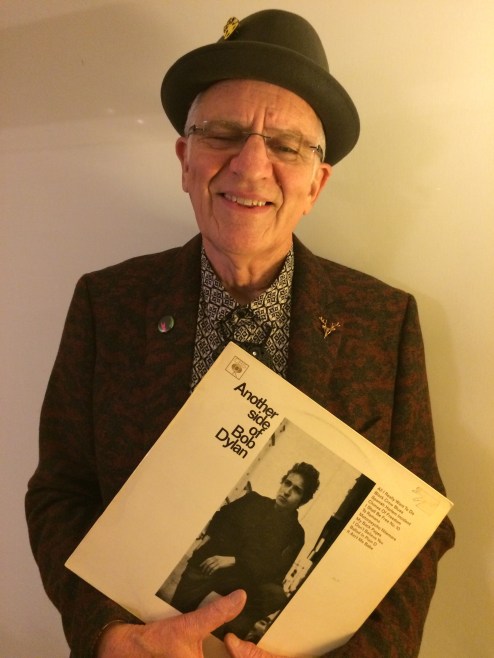
My first – unforgettable – album purchase was Another Side of Bob Dylan, in early 1965 after Subterranean shot me through the heart. I never bought another Dylan album till 1973, I missed the entire explosion of genius from1965 onwards for one good reason: I was out of town in a world of farmers, shearers and petrol heads. I heard Lay Lady Lay plenty on airplay in West Australia, but I always associate it with the Vietnam War – how weird is that? Feminists hate it, but to me it carries the melancholy of death. Local Aussie farmers’ sons were getting killed over in Vietnam, so the two things are locked my memories of that time, 1968 to 1970.
Dylan left the country behind just as I went out there to find and test myself, I guess. But the early songs never left me and once I took him up again, back in the city in 1972, he’s never been far away. Somebody gave me Pat Garrett and Billy the Kid in 1973 and flatmates were playing Blonde on Blonde. I bought Planet Waves, a forgotten album now as he’d left Columbia and it came out on Asylum; it’s a favourite with me as it plugged me back; that one did influence my poetry in ’73-74 as I was getting a collection together. Once Blood on the Tracks got to me in 1974 that was it, then I went back and bought more, including the despised Self Portrait from 1969. The Basement Tapes was a revelation in 1975, and then Desire. I was crashing and burning all through the 70s and so was he.
PG: On the one hand, the collection delivers traces of Dylan so you replay lines in his gravelly, off-pitch voice, while on the other hand you are transported back to the younger self where certain experiences shine out along life’s uneasy learning curve. Do you think this fertile knit has produced poetry in a different key?
JPH: I think if you asked my long-suffering adult kids they would say Dylan is in my DNA; my first wife and I would sing songs or recite lines on long car trips or anywhere, really (my son is a fan now, my daughter’s agnostic). I could probably do a medley of lyric snippets anytime, a mashup. I know he tunes my voice somewhere, deep down. There’s plenty of other people’s songs and poems and sounds down in the mix, too.
But it’s kinda physical, you know? I sensed in some way how these poems might go. The first series I wrote, Lines from Hard Rain comes second now in the book we see here. I riffed on single lines from A Hard Rain’s a-Gonna Fall just to kick things off. I wanted to do a Dylan album, if you like – for example, his “twelve misty mountains” became my “twelve mountains” – but I filled his line out with my world, my take on things. It’s the West Coast, it’s the Paparoa Range, but it’s also Old Testament prophets and a battered wife – a world I knew, transformed into an incantation with rhymes. So it’s a song, really.
Some are biographical – like, poet in gutter, a sweet little wordplay about kids floating sticks in a ditch in the rain – but many are chants, or rages, a weeping that wants to be singing. The lifelines, the bios are in the History Lesson section but there too, as with Most of the Time and Tempest, there are lyric forms and rap sheets like the ones in Hard Rain.
Long slow bend, I’m nursing sixty, the world
just rips in half. water that’s flat as the eye can
bear meets sky, meets air, a blue that leaps
without perspective, seas of space stretch
out to nowhere and throw the world aside.
from ‘Heading to Hibben’ Dylan Junkie
‘Heading for Hibbing’ is a road poem, vignettes of a journey I took to his hometown 500 miles from Iowa City where I was in residence for the International Writers’ Program in the autumn of 2012. It’s much more prosey and conversational, like where I fill up with gas just north of the town of Zimmerman (yes!) on I-169 and the blonde counter clerk loves my Kiwi accent, she wants to go to Hobbiton.
A note of the surreal is the undercurrent in this sequence but not the language, the form. Dylan is a storyteller, a klezmerin, a wandering Jewish minstrel deeply linked to that European tradition beyond American folk, country and rock. Lasting classics like Desolation Row (the all-American nightmare), Brownsville Girl (America the Movie) and Blind Willie McTell (the curse of race and slavery) make this man what I called him at a welcome party for the overseas writers in Iowa City that year, “The American Shakespeare”. They seemed to look at me blankly, in reply.
It’s a little like the concept in the Blackball bridge sonnets of 2004: a visit to another world, a lost time, a different kind of people to those in cities and suburbs today, where the land and rivers and the mountains rule and the music has roots in those immigrants and radicals who worked the mines. I felt deeply, subjectively, that in hearing Dylan as a teenager, I’d somehow heard where he came from, a place not unlike my tūrangawaewae. Is that wishful thinking? Who knows.
PG: I rather liked the fact there are no endnotes. Were you tempted to include any? Like a Dylan song-map to overlay the poems?
I wrote blogs on the four days of the Hibbing trip and planned to include one, like the essay appended in the earthquake poems in Shaken Down 6.3, but Mary wasn’t keen so it fell off. That was good thinking, in retrospect. The songs are flagged in the History Lessons section and the lines from Hard Rain become titles, edited so they’re not quotes and we don’t risk the wrath of Sony. Highway 61 Revisited shows up at the end of Heading for Hibbing, but I don’t think endnotes or anything like that were considered.
Some of the History Lessons poem have the names of songs for titles (No time to think, that’s from Street-Legal, 1978), others have albums (Time out of mind, 1997). Often, it was a mood or a memory I was hooking into: Bill Mathieson in 1978 grief-stricken at the drowning of Abel Salisbury near White Horse Bay on the Coast Road; or my best friend Frank Pendlebury who loved the 1997 album, especially Not Dark Yet. Sadly, he killed himself ten years later; we played the song for him as we said goodbye at his funeral.
some roads I’m cruising like a king
on some she’s boiling dry again
some hills the clutch just slips so bad
in the rain the vacuum wipers stall
from ‘Time out of mind’ Dylan Junkie
PG: Is there a poem that particularly resonates for you either in terms of experience of the Dylan connections? (can we post it?).
There are a few with deep, ongoing hooks, but if I was going to choose one, it would be ‘Time out of mind.’ The album was another of his “back from the dead” records, like Oh Mercy (1989) and World Gone Wrong (1993). He was always being deserted by one group of fans or declared dead and buried by the industry, then popping up later, reborn: electric, country, born-again, Americana, and now, the crooner of standards.
The poem itself is a kind of West Coast hillbilly movie short with its two-line bridges, couplets maybe Bob might like? It’s a road poem too, so he’d be into that. Ikamatua: a nowhere town you drive through heading to Reefton and almost never stop, except for petrol and tobacco. It’s where I drove my old Chev in 1968 on a pub crawl with my mother’s boss from Internal Affairs in Greymouth, the old man who ran a string of cleaners in all the government buildings. Must have been before I headed off to West Australia, just me and Mr Cosgrove on the car’s vast leather bench seat, getting high. He loved his beer and whiskey chasers, Cossie did, another true Coast original straight out of The Basement Tapes cast list.
Time out of mind
1997
everybody’s got a different brain
mine’s an old juke box
some days it plays you Frank running
like a frightened deer in the dusk
across the flood-wracked Blackball bridge
buckling underneath
everybody’s got a twisted heart
mine’s a ’52 Chevrolet
some roads I’m cruising like a king
on some she’s boiling dry again
some hills the clutch just slips so bad
in the rain the vacuum wipers stall
everyone gets a shot at beauty
everyone sees a distant star
here we are on a dusty road
something nagging maybe grace
low on petrol out of smokes
heading for Ikamatua
©’Time out of mind,’ from Dylan Junkie, Jeffrey Paparoa Holman, Mākaro Press (Eastbourne, 2017). Used with permission.





 NZ Poetry Shelf