Category Archives: NZ poetry

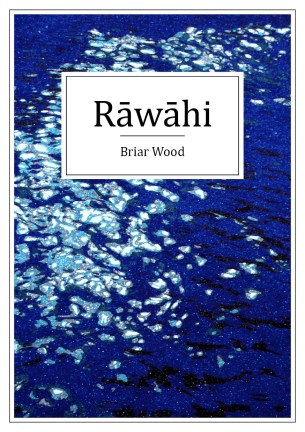
Two poems from Briar Wood’s Rāwāhi

Diptych


We walk the long sea shore to pick

scallop and cockle while she flicks

shells from her pocket

hinged like a locket

where poems appear, like tricks.


A child is quoting limericks

while I search the shore for lyrics.

We sort words—rocket,

pacific,  quick, stich.

Jamie loves tongue-twister music.


Paewai o Te Moana


The sea at night is blacklit,

kikorangi, kōura, topazerine, pango,

a haul of images pouring from nets,

darker than oil underground


at the edge of Parawhenuamea

rave streams, jostling yachts,

brown iris flags, meadowfoam, puka


Tai Timu, Tai Pari, arawhata ki


pocket beaches of pebble shell rock

meaning a joining of waka

across the slanted playing field


virtual beaches on imaginary roads

where poetry and geometry are almost

compatible, wai weld, creolerie,


ocean patter in ngā kupu,

tūātea, ngaru mata, rahopē


moana waiwai, karma moana,

beforeglow and sonar,


like finding


whakaea


©Briar Wood, Rāwāhi   Anahera Press, 2017


Briar Wood’s poetry collection gathers, with a wide embrace, details of travel and living, and as the lived-in world grows on the page, the poems set up all manner of conversations. This book draws upon whakapapa, love, relations, ecology, the past and the present. Its warmth and its empathy are infectious. I love the way you can take two poems, such as these, and listen to the talk across and beyond their bridges.

Briar grew up in South Auckland and has returned to Northland places where her Te Hikutū ki Hokianga, Ngāpuhi Nui whakapapa resonates with ecological concerns.


Rawahi-Front-Cover_high-res.jpg


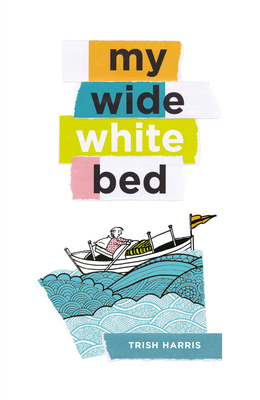
Trish Harris’s My Wide White Bed is an astonishing uplift


large_my-wide-white-bed-front-cover.jpg

The Wide White Bed Trish Harris  Landing Press 2017


Trish Harris spent eight weeks in the Orthopaedic Ward at Hutt Hospital as people – visitors and patients – came and went about her. Someone brought her a journal and that became both her private room and the subsequent resource for My Wide White Bed.

The poetry is airy, with acute observations, luminous things, and an awareness of community experience rather than a single perspective. It is immensely readable; I gobbled it in a flash, loving the sweetly crafted lines, the wit and the reflection.

The sequence comprises untitled poems that begin with the idea of a ship:


The hospital sails

like a tall ship

down the crease of the valley.

I am stabilised

mid-mast

laid out on a wide white bed

head facing east.


The book struck such a cord with me because it took me right back into the thick of hospital stays where intimacy thresholds dissolve, discomfort displaces comfort and walls and windows are unsteady.

This is not a bitter grim read but an essential read in the light of the current state of hospital care. The politics are subtle and various:


They arrive

as elderly women with

broken bones

strained muscles.

Back home

they are the strong ones

caring for senile husbands

sick sisters

dying mothers.

They come to this place

of illness

for a rest.


Trish pulls us into the lives of others as much as she exposes her own story, and that is what elevates the reading experience. Names are changed but the dialogue, the situations and the revelations sound out as vital human truths. This is poetry of connection, of empathetic relations in tough circumstances. Single lines glow:


Merle is doing crosswords.

That’s why she buys the newspaper.

At home her husband grows daisies and dementia.


The book should be in the drawers beside every hospital bed, and in the gift shop, because the book, like the boat with the wind in its sails, is an astonishing uplift. Plus I recommend placing a journal and pen in bedside drawers, so patients can open up their own privates rooms to write or doodle windows and doors and secret sails.


Then again pick up this book for a wet Sunday and savour the rewards. I love it.


All night long I ease

the white blanket over shoulder

across belly and over hip

dreaming of transformation.


In the morning the nurse says

You look like a cocoon.


I smile. The covers bulge

with antennae buds and

the scratching of wings.


©Trish Harris The Wide White Bed

Trish Harris has a BA of Applied Arts (Creative Writing) from Whitireia New Zealand. She has worked with words – editing, writing, creating and tutoring – for over thirty years. In 2016, Escalator Press publisher her memoir, The Walking Stick Tree. Her poetry has appeared in various journals.


Better off Read: Pip Adam talks with Nina Powles


nina-powles.jpg

Episode 51: Pip Adam talks to Nina Powles about her new work LUMINESCENT

Listen here.

‘In this episode I spoke with one of my favourite Wellington poets Nina Powles. I first spent time with Nina around Helen Rickerby’s table where a group of us were hand-binding copies of her first collection Girls of the Drift.

Nina is an outstanding poet, non-fiction writer and zinemaker. She is half Malaysian-Chinese, half Pākehā. Nina has an MA in creative writing from Victoria University of Wellington and won the 2015 Biggs Family Prize for Poetry for the first draft of Luminescent. She is the author of the chapbook Girls of the Drift (Seraph Press, 2014) and several poetry zines.

Nina’s new work Luminescent is an extraordinary work.’


Paula: I love this collection so much. Here is my review.


luminescent-cover-low-res.jpg

Courtney Sina Meredith airs new poems at a very good Ladies Litera-Tea – here are two for you


IMG_8173.JPG   IMG_8170.JPG

This year, The Women’s Bookshop hosted two Ladies Litera-Tea events. I didn’t make the first one, but the one on Sunday was perhaps the best one I have been to. The range of voices was inspired programming. I needed toothpicks to hold my eyes up when I left home, but Dame Fiona Kidman had me sitting up listening to the sonnets she wrote for her mother, Kirsten McDougall mesmerised with an extract from the must-read Tess, Heather Kidd showed the diverse creativity and ambitions of rural women (wow!), Michalia Arathimos spoke of the gut-wrenching origins of her debut also must-read novel Aukati, Fiona Farrell’s extract from Decline & Fall on Savage Street had me sitting on the edge of my seat, the sentences were so good (now have a copy!). Hearing how Eat My Lunch came into being from Lisa King underlined the difference one person can make (with help from friends!). 

The first half was a glorious rollercoasting brain-sparking heart-warming delight.

By this stage no vestiges of tiredness. I thought I might flag in the second half but the immune-system boost continued. Wow! Hearing Sue Wootton read poems was a bit like hearing Anne Kennedy read and I just wanted more (please can she come to AWF?), Annaleese Jochems had me gasping every time she read an extract (also now on my table), Diana Wichtel’s account of Driving to Treblinka and her missing Polish Jewish father was so moving I was in awe of her tenacity and ability to bring that story to life on the page, Tina Makereti made abundantly clear why Black Marks on the White Page matters and why this collection is compulsive reading. I actually loved the way – rather than read her own award-winning ‘Black Milk’  – she picked ‘Famished Eels’ by Mary Rokonadravu to read (it had won the 2015 Commonwealth Short Story Prize for the Pacific Region).

We tell stories and we write poems in so many different ways – and that matters.

I came home with four new novels and so much more! Thank you Carole Beu, her team and the authors. I so needed that pick-me-up. Seriously I felt like I had come back from a month at Sandy Bay after reading novels and swimming.

Somewhere in the glorious mix, Courtney Sina Meredith read some new poems – which is no easy thing. I loved hearing her half sing/half speak an early poem,  ‘Brown Girls in Bright Red Lipstick’, and I loved hearing the new poems. There is the same musical lift, the same political undercurrents, the same heart that beats along every line – yet there is also a stepping out, a tasking risks, a renewed self exposure with vital attachments to the world. Courtney kindly agreed to let me post two new poems that make a rather good pairing. Just so you can have a taste. I feel rather lucky as I an read them with her performance voice taking over.

I just adore the way these two poems make conversations with each other.


The poems


How about being a woman?

How about being a young woman?

How about being a young brown woman?

How about being a young brown queer woman?

How about being a young brown queer single woman?

How about being a young brown queer single educated woman?

How about being a young brown queer single educated professional woman?

How about being a young brown queer single educated professional creative woman?

How about being a young brown queer single educated professional woman?

How about being a young brown queer single educated woman?

How about being a young brown queer single woman?

How about being a young brown queer woman?

How about being a young brown woman?

How about being a young woman?

How about being a woman?


I have stolen away into the secret room

mothers build inside their daughters

I am feeding on a dowry centuries old

the bones sucked dry

a feast of bright quiet.


My mother’s dreams are here

beside the red gold river

born of shame and laughter

the shifting bank won’t hold.


Her mother’s wings are here

wild shimmered iridescent

girl to bird to prophet

an angel killing time.


And there is her mother

at the top of the sky ablaze

lighting the islands below

into a string of tears.


©Courtney Sina Meredith


Michele Leggott’s glorious new poetry collection: a launch speech and some poems


IMG_1043.jpeg  GetFileAttachment-1.jpg


2017 seems to be the year of enviable launch speeches. Gregory O’Brien did a cracking job launching James Brown’s new book; Greg had taken the poems up to Palmerston North to read before writing his speech.

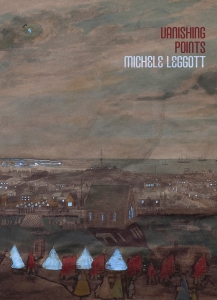
Jack Ross has launched Michele Leggott’s Vanishing Points (Auckland University Press) with similar incandescent word flare. I have read the book twice so far and he is right on point: this is one special poetry collection.


The Speech

Well, needless to say, I felt very flattered when Michele Leggott asked me to launch her latest book of poems, Vanishing Points. Flattered and somewhat terrified. It’s true that I’ve been reading and collecting her work for well over 20 years, and I’ve been teaching it at Massey University for almost a decade now, but I still felt quite a weight of responsibility pressing down on my shoulders!

One thing that Michele’s poetry is not, is simple. It’s hard to take anything in it precisely at face value: what seems like (and is) a beautiful lyrical phrase may be a borrowing from an unsung local poet – a tangle of Latin names can be a reference to an obsolete star-chart with pinpricks for the various constellations.

The first time I reviewed one of her books, as far as I can see, in 1999, I ended by saying “the reading has only begun.” At the time, I suspect I was just looking for a good line to finish on, but there was a truth there I didn’t yet suspect. Certainly, I’ve been reading in that book, and all her others, ever since.

But how should we read this particular book? “Read! Just keep reading. Understanding comes of itself,” was the answer German poet Paul Celan gave to critics who called his work obscure or difficult. With that in mind, I’ve chosen two touchstones from the volume I’m sure you’re all holding in your hands, or (if not) are planning to purchase presently.

The first is a phrase from the American poet Emily Dickinson, referred to in the notes at the back of the book: “If ever you need to say something … tell it slant.” [123] The second is a quote from the great, blind Argentinian writer Jorge Luis Borges: “I made a decision. I said to myself: since I have lost the beloved world of appearances, I must create something else.” [35]

With these two phrases in mind, I’d like you to look at the cover of Michele’s book. It’s a painting of the just-landed Imperial troops, camped near New Plymouth in August 1860. The wonderful thing about it is the way the light of the campfires shines through the painting: little holes cut in the canvas designed to give the illusion of life and movement.

“War feels to me an oblique place,” wrote the reclusive New England poet Emily Dickinson to Thomas Wentworth Higginson in February 1863, at one of the darkest points of the American Civil War. Higginson, a militant Abolitionist, was the Colonel of the 1st South Carolina Volunteers, the first officially authorized black regiment in American history. He was, in short, a very important and admirable man in his own right. Perhaps it’s unfair of posterity to have largely forgotten him except as the recipient of these letters from one of America’s greatest poets.

New Zealand’s Land Wars of the 1860s may have been on a much smaller scale, but they were just as terrifying and devastating for the people of Taranaki – both Māori and Pakeha – in the early 1860s. In her sequence “The Fascicles,” Michele transforms a real distant relative into a poet in the Dickinson tradition. Just as Emily Dickinson left nearly 1800 poems behind her when she died in 1886, many collected in tidy sewn-up booklets or fascicles, so Dorcas (or Dorrie) Carrell “in Lyttelton, daughter of a soldier, wife of a gardener” [75] provides a pretext for “imagining a nineteenth-century woman writing on the outskirts of empire as bitter racial conflict erupts around her.” [123]

There’s an amazing corollary to this attempt to “Tell all the truth but tell it slant” (in Dickinson’s words). Having repurposed one of her family as a war poet, Michele was fortunate enough to discover the traces of a real poet, Emily Harris, the daughter of the Edwin Harris who painted the picture of Taranaki at war on the wall over there, whose collected works so far consist of copious letters and diaries, but also two very interesting poems. “Emily and her Sisters,” the seventh of the sequences collected here, tells certain aspects of that story.

It’s nothing but the strictest truth to say, then (as Michele does at the back of the book), that one should:

walk away from the painting when it is lit up and see how light falls into the world on this side of the picture surface. Is this what the artist meant by his cut-outs? Is this the meaning of every magic lantern slide? [124]

I despair of doing justice to the richness of this new collection of Michele’s – to my mind, her most daring and ambitious work since the NZ Book Award-winning DIA in 1994. There are eight sequences here, with a strong collective focus on the life and love-giving activities which go on alongside what Shakespeare calls in Othello “the big wars”: children, family, eating, painting, swimming. One of my favourites among them is the final sequence, “Figures in the Distance,” which offers a series of insights into the world of Michele’s guide-dog Olive – take a bow, Olive – amongst other family members, many of whom, I’m glad to see, have been able to come along here tonight.

This is a radiant, complex, yet very approachable book. It is, in its own way, I’m quite convinced, a masterpiece. We have a great poet among us. You’d be quite crazy to leave here tonight without a copy of Vanishing Points.

Jack Ross


[Jack and Michele then had a discussion on how the book came into being. I am going to do an interview with Michele so Poetry Shelf readers can also get different entry points into the collection.]


1503612399072.jpg


The poems:


from ‘Figures in the Distance’


18

In he comes, bouncing and sweaty, to borrow a towel and go swimming at Duders. Voice out front, key in the lock, just passing through. A voice on the phone from an airport far away, saying early morning is the time to go and see the ruins outside the city when there’s no one else around. One heading for the beach each morning with a thermos of coffee and that same ragged towel. Breakfast. The other drinking something from a coconut on a beach in Mexico. One in this city, one in that city, two brothers crossing the sea. Camper vans gather down at the bay. Two people sit with their feet in the waves, looking out to sea and drinking wine from glasses they fill from the bottle hung off the side of their aluminium deckchairs. The house at the corner has been flying a tricolore since the Paris attacks. The house next to it is flying a flag that says Happy New Year. Here’s a man walking up the street dripping wet and asking if he can stick his nose into the buzzing magnolia flowers at the gate.


29

I saw the Maori Jesus walking on Wellington Harbour but his pool in the shadow of the museum was drained for repairs and the words were no longer lapped in fishscale light. I saw John Baxter in the pool ecstatic in arcs of water he was splashing over his father’s words on the day the writers’ walk opened. I heard the mihi that was sending Wellington Harbour over the father’s words. I heard the camera catch water light and send it to the eyes of beholders who were a great crowd on the waterfront that day. We took the train as far as Woburn, crossed the platform and came back along the side of the harbour. We took the ferry to Day’s Bay and back riding on the top deck and talking about other excursions. We had a dance at the mardi gras and kept walking along the waterfront to Roseneath. When we turned back there was the young woman walking towards us with bags full of produce from the market. Look, holes, she said.


30

We know what the dog of tears will do next, he who has been trailing the woman standing on the balcony looking up at the sky. She is the woman who wept, he is the dog who licked away her tears. They have gone on like this for some time, the only woman who can see and the dog who is now more human than he wants to be. His nails scratch the wooden floor. His belly is as empty as everyone else’s but he does not mind. He is walking towards the woman on the balcony. When he reaches her she will bring her eyes down to look at the ruined city and become blind. Everyone else will have their eyes back. She will have the dog of tears. The dog will bark holes in the last page of the book and lead her through one of them. There they are, the dog of tears and the woman who wept. His nails click on the rough stones. She who can no longer see begins to tell a story. They pass the street of crocodiles, the pool of tears, the hill of forty days and the hill of forty nights. They pass the little seahorse in its salty pool. They pass a white rose, a black swan, a blue biddy. The dog kills another hen and they roast it over a small fire. They can hear the sea, its fronding on smooth sand, its talking against rocks, its clapotis bouncing off stone walls. What might we not do with the hot bones dripping fat, she says. Two birds rise into the air on wings the colour of ash. Did you hear that she asks the dog licking away the salt on her cheeks.


32

The boy in his green turban the girl in her purple tunic dancing around each other under the old clock on the waterfront. Voices float in the morning air. One says, I had always imagined Paradise as a kind of library. The other replies, It is a bowl that one fills and fills.


©Michele Leggott, Vanishing Points Auckland University Press 2017


Auckland University Press page

Jack Ross’s blog The Imaginary Museum – his extended launch coverage


Poetry Shelf – Spring Season’s poetry fans: Catriona Ferguson picks Janet Frame


Wet Morning


Though earthworms are so cunningly contrived
without an opposing north and south wind
to blow the bones of Yes apart from the flesh of No,
yet in speech they are dumbly overturning,
in morning flood they are always drowned.

This morning they are trapped under the apple tree
by rain as wet as washing-day is wet and dry.
An abject way for the resilient anchorage of trees,
the official précis of woman and man,
the mobile pillbox of history, to die!


©Janet Frame, The Pocket Mirror (New York: George Braziller, 1967) posted with kind permission from Janet Frame Literary Trust.


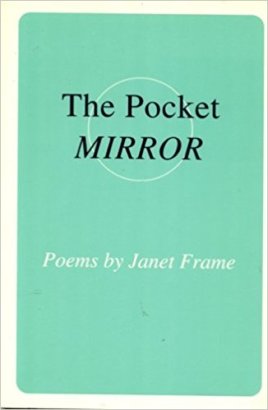
Note from Catriona: Having been promised non-stop glorious weather in New Zealand I arrived from the chilly northern hemisphere to an unimpressive, soggy spring. I was taken aback by the Auckland rain; I grew up in Scotland and thought that I knew a thing or two about weather but apparently not. Happily, the first gift I received on arrival was a copy of The Pocket Mirror by Janet Frame. Frame’s ‘Wet Morning’ still reminds me of that time.


Catriona Ferguson is Director of the Publisher’s Association of New Zealand, which represents book, educational and digital publishers in New Zealand. She was formerly the Chief Executive of The New Zealand Book Council and has also worked for Creative New Zealand and the British Council.


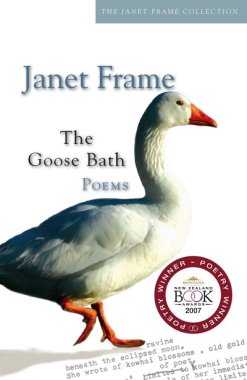
Janet Frame, one of New Zealand’s most beloved authors, both at home and abroad, wrote in various genres, but one of her chief loves was poetry. She published one collection The Pocket Mirror, but wrote copious poems across the course of  her lifetime. With the prior blessing of Janet, and the help of her literary estate, Bill Manhire edited the posthumous The Goose Bath. The collection went on to win the 2007 New Zealand Book Award for Poetry.


9781869790172.jpg                41ymMCH+owL._SX324_BO1,204,203,200_.jpg


Poetry Shelf Spring Season’s poetry fans: Peter Ireland picks Bill Manhire


Kevin


I don’t know where the dead go, Kevin.

The one far place I know

is inside the heavy radio. If I listen late at night,

there’s that dark, celestial glow,

heaviness of the cave, the hive.


Music. Someone warms his hands at the fire,

breaking off the arms of chairs,

breaking the brute bodies of beds, burning his comfort

surely to keep alive. Soon he can hardly see,

and so, quietly, he listens: then someone lifts him

and it’s some terrible breakfast show.


There are mothers and fathers, Kevin, whom we barely know.

They lift us. Eventually we all shall go

into the dark furniture of the radio.


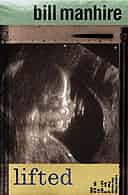
©Bill Manhire from Lifted (Wellington: Victoria University Press, )


Note from Peter:

Between the earth and sky of my 1960s Ashburton was the radio; a New Zealand-made Ultimate complete with earth and aerial wires. I remain in the dark about what you were to do with the earth, but the aerial provided passable reception when attached to the wire wove base of my bed.

The Ultimate was a budget model, suffering in comparison with those radios with a short-wave function that I coveted, but I should have known better than to paint it white in a moment of teenage idleness.

In a house without books and lacking the wit to utilise the local library the radio was my source of stories, together with those told by my father and relations.   I went to bed early most nights to listen to the serialisation of books like Nevil Shute’s A Town like Alice, or Alistair Mclean’s Ice Station Zebra and South by Java Head and was transported.

How could one not feel addressed by Kevin?

In this wondrous poem, Bill makes some stabbing observations in that last ravishing verse, about mothers and fathers we barely know, lifting us, and dark furniture of the radio as ultimate destination. Whether the mothers and fathers are truly those we don’t know, or those we did and couldn’t know, I am more saddened than heartened at the thought. As destination I wouldn’t book to go there, but I do keep returning to Bill’s poem and the transcendent possibilities of its ‘celestial glow.’


Peter Ireland works at the National Library in Wellington where, among other things, he looks after the Poet Laureate. And still listens to the radio.

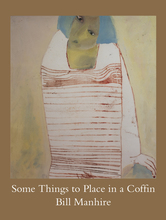
Bill Manhire, inaugural New Zealand Poet Laureate, has published award-winning poetry, edited anthologies, written short story collections and founded IIML. Lifted won the Poetry Category in the 2006 Montana New Zealand Book awards.  This year he released a new collection of poems, Some Things to Place in  a Coffin, and in collaboration with musician Norman Meehan, published Tell Me My Name, a book of poem riddles (or riddle poems) set to music.


somet_things_to_place_in_a_coffin__40224-1482273596-220-2202.jpg   tell_me_my_name_front__47436-1482273132-1280-1280.jpg    lifted.jpg


Poetry Shelf Spring Season’s poetry fans: Ros Ali picks Elizabeth Smither


Spring bulbs

Plant them carelessly. The earth straightens them.
Already they have divided and multiply.
They stand straight up like pencils

among last year’s survivors, also thicker
for a year’s disregard, a feeble weeding
an intention to reform as a gardener

knowing nothing will change: the philosophy
is too broad, too many variants
the huge tree, the little viola

one shivering, the other sending shivering down
on a white head near the ground, sheltering
its tremulousness a little, in its shadow.

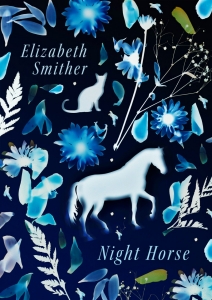
©Elizabeth Smither, Night Horse (Auckland: Auckland University Press, 2017).


1497223465774.jpg


Note from Ros: Delving into Elizabeth Smither’s special new collection, Night Horse, when it was released in June, the poem ‘Spring bulbs’ was an arresting reminder of the fresh green shoots of random bulbs surprising my winter garden, and the all too familiar failure to reform. Significantly, the poem deftly and tenderly shifts its focus, into a deeper contemplation of the vulnerability, beauty and power of the natural world.

Rosalind Ali is a teacher of English and Writing, and Director of Libraries at St Cuthbert’s College in Epsom. She is a member of the Michael King Writers’ Centre Trust and co-facilitates the Michael King Young Writers’ Programme with poet and teacher, Johanna Emeney.


Elizabeth Smither has written five novels, five collections of short stories and seventeen poetry collections, the most recent of which was The Blue Coat (2013).  She has twice won the major award for New Zealand poetry and was the 2001–2003 Te Mata Poet Laureate. In 2004 she was awarded an honorary DLitt from the University of Auckland for her contribution to literature and was made a Member of the New Zealand Order of Merit. She was given the Prime Minister’s Award for Literary Achievement in 2008. In 2016 she won the Sarah Broom Poetry Prize, New Zealand’s most valuable poetry award, judged by Paul Muldoon, and those poems are included in Night Horse.


Poetry Shelf Spring Season’s poetry fan: Marion Castree picks Louise Wrightson

Wood

(for Dave Russell)


I have lived on this quarter-acre

of clay longer than the trees.


The tī kōuka are the exception

and they are crumbling inside

their long reptilian trunks.


The elderly kowhai still

conjure up their gold nuggets

but the wood is moody; it sulks

and smolders in the fireplace.


It’s the wood from the big gum

that warms and entertains us;

every night is Guy Fawkes,

all flare, crackle and spicy scent.


Twelve cubic metres of Mac

keep us warm in winter;

there are stashes under the trees

among the pop-up seedlings.


The red eye of the fire

transforms us; we soften

under its gaze, swap news,

try to make sense of things.


Our house started as a cottage

that was sawn in half.


The four rooms were trundled

across paddocks, two at a time,

and dumped here on a slope.


The floors were tawa boards,

the walls were lined with scrim

and newspapers from 1886.


I won’t get started on the renos

but one of our many builders

came from Bucharest.


Dave thought he was a con

because his apron was so new

it creaked and his tools

were sharp and oiled (like him).


He muttered pisses of vood,

bluddy selly pisses of vood

because the houses in Romania

are made of brick or concrete.


He didn’t show for work

one day: he just rang and said

vood is too much feedle.


It can be—but when we ripped

up the cork tiles in the kitchen

and found the floor was matai

a friend said wistfully;

I’ve always wanted

to be that sort of person.


I’ve lived here forty years—

Forty years and not yet found 

a cure for being human—

James Keir Baxter wrote that;

he lived next door for a while.


This table I write on is rimu;

it hosts a kauri salad bowl,

steak knives with olive handles

and ironwood salad servers.


At a very posh party I saw

a woman help herself to some

decorative, coloured wood

shavings in a bowl and scatter

them over her chicken salad.


I watched, mesmerized,

while she chewed them up.


I should have told her the truth

but she had eaten them

by the time I remembered—

Better a cruel truth than a

comfortable delusion—

Edward Abbey said that;

I wish he’d lived next door.


Anyway, here is the thing;

when I am fed into the flames

(inside a plain plywood box)

please think of trees and vood;

they mean the world to me—


Breathe out and in.

Keep warm.


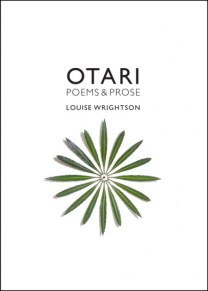
©Louise Wrightson Otari Poems & Prose Otari Press, 2014


cv_otari.jpg


Note from Marion: This poem is for Dave Russell and also a love poem to wood and all that it can mean to us in our world, particularly in our home patch. The wood in all it’s manifestations is a pleasure to behold.

I have allowed this poem to idealise home for me. Home of course requires give and take from its people but the presence of wood offers so much unconditionally. This is a magnificent poem, perfect in form and also in parts, very funny.

Marion Castree is a Wellington bookseller, NZ book buyer and staff manger at Unity Books.

Louise Wrightson has an MA with Distinction in Creative Writing from the IIML (The International Institute of Modern Letters) Victoria University, Wellington. She lives and writes near Otari-Wilton’s Bush, a 100-hectare reserve of regenerating forest. Her work has appeared in numerous anthologies and journals.


Louise Wrightson has an MA with Distinction in Creative Writing from the IIML (The International Institute of Modern Letters) Victoria University, Wellington. She lives and writes near Otari-Wilton’s Bush, a 100-hectare reserve of regenerating forest. Her work has appeared in numerous anthologies and journals.

Poetry Shelf Spring Season’s poetry fans: Elizabeth Caffin picks Allen Curnow


A Busy Port

I

My turn to embark. A steep gangplank
expects me. An obedient child,
I follow my father down.

It happens that the sun will have topped
a black hill beside the time-ball tower,
and found the spot of a fresh

tear on Bob Hempstalk’s cheekbone, whose wet
red eyes blink back seaward where he leans
for’ard at the wheel-house glass;

one hand wipes an eye, the other shakes
a half-hitch loose, unlashing the wheel.
A man’s tears, obscene to me

caught looking. Too late now. The time-ball
drops. Quayside voices (not for my ears)
discuss the dead, bells repeat

ding-ding across the wharf. Brightwork traps
the sun in brass when I next look up,
following my father down,

who made the trip himself many years
past. The old rust-bucket gets up steam.
Frequent sailings from where we live.

II

Winched aboard still warm over the for’ard
hatch the morning’s bread hangs by a breath
of its own. It smells of bed.

An enriched air. The urinal under
the wharf drip-feeds, the main steam below
sweats. Darky Adams, deckhand

engineer stoker bangs his firebox
open, slings in a shovelful, slams
the insulted flame back home,

thick acrid riddance topples the way
smoke rolls by its own weight, in an air
that barely lifts, off the stack.

One jump clear of the deck the plank dips
with a short uneasy motion, deep-
sea talk to the paddler’s foot

out of my depth, deeper yet, off the Heads,
our Pillars. Pitching like a beer-can.
I’m hanging on tight, can’t hear

clashes from the stokehole for the wind
yelling, crossed on the wheel he’s yelling
back, ‘Ay, bit of a stiff breeze’.

Eyes that last I saw in tears can read
abstruse characters of waves, on course
between them, our plunging bows.


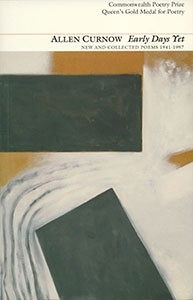
©Allen Curnow Early Days Yet (Auckland University Press, 1997) published with kind permission from the Curnow Estate.


1448418925728.jpg


Note from Elizabeth: This is one of the wonderful poems recalling moments of his childhood that Allen Curnow wrote in the last years of his life. They move me especially because I too had a Canterbury childhood and can also remember sailing out from Lyttelton through the Heads, ‘our Pillars’. Curnow captures the excited anticipation of this birthday treat with his father but at the same time the child’s perplexed and disturbed glimpses of grief and death. (It seems the skipper’s wife has just died.) The voyage becomes the voyage we all make from birth to death; he ‘follows [his] father down’ not only into the bowels of  ‘the old rust bucket’ but also towards death, ‘who made the trip himself many years/ past’.  The famous time ball drops as it always did at 1pm but also to signal the passing of time, the course of his life and of his father’s. The two perspectives of small boy and elderly poet merge; precise details of sight, smell, sound blend with an almost mythic vision in this great poem.

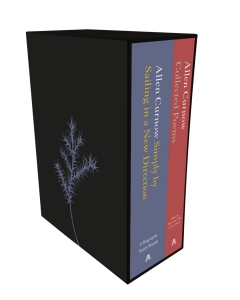
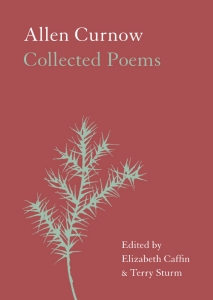
Terry Sturm’s biography of Allen Curnow, Simply by Sailing in a New Direction, and Curnow’s Collected Poems were published at the end of September.


Elizabeth Caffin was formerly director of Auckland University Press, which
published Allen Curnow’s poetry over many years. She is also the co-editor,
with Terry Sturm, of the recently published Collected Poems of Allen Curnow (Auckland University Press, 2017).

Allen Curnow (1911 – 2001) published numerous poetry collections – from his debut with Valley of Decision (1933) to The Bells of St Babel (2001). He also produced criticism, plays and anthologies that contributed at both national and international levels. Among numerous awards, he received the Commonwealth Prize for Poetry and the Queen’s Gold Medal for Poetry.

1505692801947.jpg    1506300705951.jpg