Category Archives: NZ poetry

Poetry Shelf on Poetry Day: On launching Wild Honey


EBeW2gFVUAARgPb.jpg


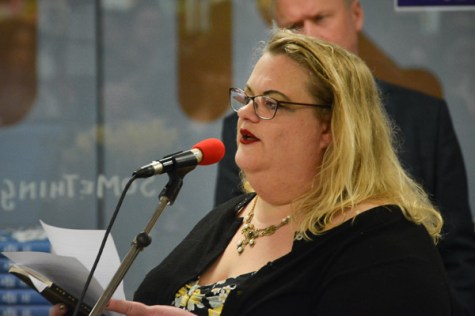
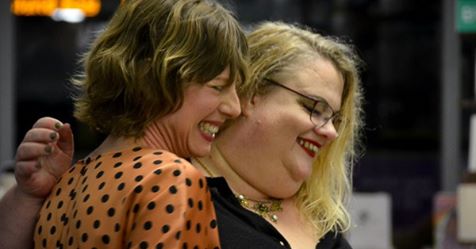
Last week I launched Wild Honey in Auckland and Wellington and I have never experienced anything like it. It was a long time in the making – four years writing and researching – and several decades reading New Zealand poetry and germinating ideas. I faced all kinds of hurdles – notably a string of accidents and illnesses – that made the project tougher. But ever since I was a young girl words have been a primary love. Writing gives me energy, it makes me feel good, it connects me with the world when I am primarily drawn to a quiet, private life. Through my schooling years you would have to say I was misfit – for all kinds of reasons – and I had little confidence in what I could do. To be an awkward teenager and have my Y12 English teacher tell me in front of the whole class I would never get anywhere in the world writing as I did was a cruel blow. I pretty much failed school and all my writing was stored in secret notebooks.

A turning point for me was going to university in my thirties and studying Italian. I first thought I would do one paper but I ended up doing full degrees until there were no more to do. Moving into another language was the best thing I could have done. I loved reading Italian literature, watching Italian movies, spending time with the ideas and art of the Renaissance, and the women poets, but the language itself was an essential joy. To speak in different rhythms and musicalities (always rhyme) was an epiphany.  To read Dante, Calvino, Ramondino, Durante and copious women poets and novelists refreshed my relationship with English. I just had to write poetry. I still didn’t feel like I belonged anywhere but writing was both my anchor and my sails. I discovered the poetry of Dinah Hawken (Small Stories of Devotion in particular), Fiona Farrell and Michele Leggott, and so began my personal quest to read as much New Zealand poetry as possible. I read poems regardless of gender but I was committed to reading poetry by women because poetry by women had been served so badly throughout the twentieth century.

I want to thank my extraordinary Italian lecturers with whom I studied, wrote theses and taught – Bernadette Luciano, Mike Hanne and Laurence Simmonds – who allowed an awkward nonconforming student to find her way and excel. Wild Honey is in such debt to you. My Italian years shaped me as a writer unlike any other.

And now Wild Honey is out in the world. I have created events to celebrate its arrival,  done interviews with attentive reviewers and am watching the book find its way into the hands of readers. It is both wonderful and overwhelming. Nerve wracking. Exciting. Exhausting. Energising.

I don’t know how to explain it but there is still a bit of that shy awkward girl in me – who favours staying at home with family and having one-on-one conversations with friends rather than big social / public occasions.

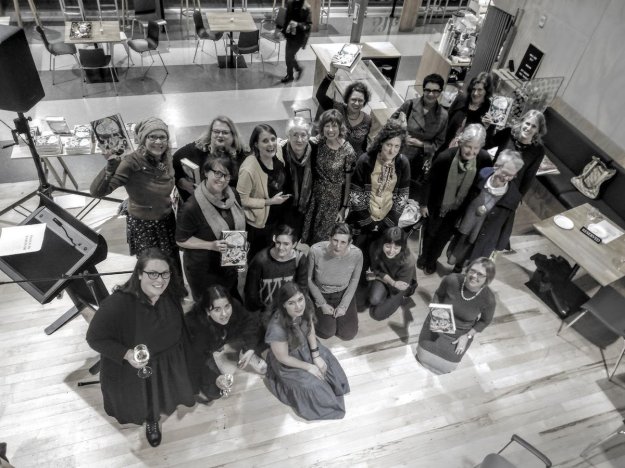
At my launches I invited around twelve poets to read one of their own poems and a poem they love by a local woman. In the middle I had a brief conversation with Selina Tusitala Marsh (Akld) and Helen Heath (Wtn). In both cities the poets reading offered a kōrero: for me, for the book, but most importantly for women. And they were all speaking from the heart; starting with the book but going beyond the book. Helen suggested that Wild Honey was just the beginning. More books would be written. More houses built. I love the prospect of different perspectives, different houses, different structures, different voices.

Dinah picked out the word ‘household’ and talked about the way Wild Honey was ‘holding’ women together. To me it felt like the whole room was ‘held’. In Wellington the readers crossed generations: from Fiona Kidman, Rachel McAlpine and Dinah Hawken to Sugar Magnolia Wilson, Tayi Tibble and Gregory Kan (reading one of his magnificent Robin Hyde poems). I can’t underestimate how significant this was: to have our poetry elders embracing our young voices and to have our young poets blown away by women who have paved the way. The audience too was a terrific gathering of poets of multiple generations.

It made me want to do more – to bring poets together across generations, cultures, styles, schools, cities and so on. To pay attention to the way poetry is multiple conversations, connections, communities.

In Wellington, mid event, Anahera Gildea got on her phone and asked Hinemoana Baker to send her Ihumātao poem from Berlin. Hinemoana was now in the room. We loved that. We were crossing oceans and then being carried to the whenua where poets are gathering. A similar thing happened when Grace Iwashita Taylor read in Auckland.

A key point with Wild Honey is that poetry establishes many resistances, homages, repetitions, discoveries, existences, differences, residencies. It is ‘an open home’ to borrow a phrase from Sally Blundell’s terrifically attentive Listener review.

At my Wellington launch I confessed I had deleted all the toxic anecdotes from Wild Honey – the scenes where men have muted or sideswiped me or other women – because I wanted my book to work differently. I wanted my book to lay down a challenge, not through toxic attack and deconstruction, but by writing out of love and connection. Is it possible? Can you write a book that challenges authority and injustice by writing out of kindness? Can you refresh the academic page by creating hybrid books that call upon scholarship, research, autobiography, biography, history, close reading, a resistance to vapid jargon and women-deleting theory? My time with Italian women writers and philosophers showed me you can think and write outside the academy as well inside it.

That night, the night of my Wellington event, I was awake pretty much until dawn, overwhelmed by the aroha in the room and musing on my book and its intentions. I started crying without knowing why. I was thinking that sometimes we do have to challenge authority and injustice in strident voices. I should have said that out loud. I was also mourning the exceptional women who aren’t in my book – the rooms and objects I had to leave behind. In the middle of the night it feels unbearable.

In the light of day when I am still overwhelmed and astonished at what I have written, I keep returning to the idea that Wild Honey comes out of the awkward girl and the love she felt for words and their power to restore and energise and connect.

In Auckland we were running over time (not excessively!); everyone was saying things that needed to be said but, because we were in Auckland Central Library with an 8pm closing time, I felt I needed to ditch my conversation with Selina. The kōrero to that point was heartlifting. Young Pasifika women acknowledging their place in the room, in Wild Honey and in poetry communities. Courtney Sina Meredith began the event by reading a  poem by her favourite poet, her mother Kim who was in the room. Johanna Emeney concluded the event by reading a poem that pays tribute to her mother, no longer with her, and Elizabeth Smither’s ‘My mother’s house’. A maternal full circle. Breathtaking, evocative, moving. Each poet invited another woman into the room through the poems they picked (Tusiata Avia, Lauris Edmond, J C Sturm, Robin Hyde, for example).

At the mid point, when I told Selina we needed to ditch our conversation, she stood up, pulled me next to her heart and said we were going to talk. She said, however, before we talked, she and I would stand in silence for 30 seconds and then invited everyone to send me their love. I have never experienced anything like it. A packed room looking back at me with warm, loving faces. People I didn’t know. People I did. I was reminded that when I was in the radiotherapy machine I had imagined a cocoon of light spinning around me and I attached each hug I had received to the spinning light and the cocoon became one of love and when I left the room I felt light and enlivened.

Wild Honey is bigger than me. On the day of my Auckland launch I baked a loaf of bread as I usually do each day (I bake grainy seedy breads in a bread maker and sour dough loaves).  But I had forgotten to put in yeast, sugar and salt so I baked a hard brick! I began musing on how Wild Honey was like a sour dough loaf. l gathered flour, salt and water but it was activated by the wild yeast in the air. There is something in the air – I’d say globally – voices that are insisting women are brought into the light: in politics, sports, comedy, music, literature, film, law, human rights, equity, equality, education, positions of power, on airspace and so on.

Wild Honey is not just a matter of what, as Selina said, but a matter of how. If we are trying to govern out of kindness, we can also critique out of kindness. There is a woman holding the pen and her ink is imbued with her story, her imagination, her vision of what a poem might do, of what the world can be. I want to move closer to that woman. I don’t like all the poetry I read, I might not understand all the poetry I read, but I will slow down and  find ways to move through a poem. I refuse the position of authority – I am an author minus the ‘ity’ bit.

That reviewers such as Kiran Dass (The Herald) and Sally Blundell (New Zealand Listener) have slowed down and read Wild Honey on its own terms has moved me profoundly.

Soon I hope to sleep through the night again – but today on Phantom Billstickers National Poetry Day I want to acknowledge everyone who made Wild Honey possible. Massey University Press and Nicola Legat who worked with such passion and patience to make the best book possible. My friends and family who got me through all manner of hurdles with enduring support. I hit rock bottom writing this book as my friends know and the end result would not be possible without their aroha and backing.

But most importantly, on this day when we celebrate poets and poetry in Aotearoa, I raise a glass of champagne to all the women who have written poems before me, all the women who write alongside me, and to the poets of the future, whatever their gender. My book is in debt to your wild honey. Today I toast you. Happy National Poetry Day!

Aroha nui

Paula


Poetry Shelf on Poetry Day: essa may ranapiri’s ‘it’s 2019 and things like this are still happening’

it’s 2019 and things like this are still happening

pull the rock wall down in large chunks
the calendar didn’t make
that which hangs over the whenua
just disappear did it?
this nation state of
white-is-right
of slash-and-burn of
divide-and-conquer

New fucking Zealand
in all its truest colours

five years of struggle
or is it two-hundred-and-fifty-five years
without end without end without
a single word from the mouth of power
that can be trusted

(Jacinda I hope you didn’t think you could escape the poem unscathed)

fighting against a company that keeps a name of an honest job
to mask the fact they’re colonisers chasing a profit motive
scaffolding a claim out of iwi-consultation
gone gold-panning for the first race traitor they can find

on this land?!

where the sky has come down to hide our whereabouts
in the fog
Ranginui weeps at the sight
we have always belonged
in the āke ake ake! that pushes solidarity through the mist
we are connected to so much more than a margin

the pigs have some nerve to suggest
we’re trespassing here

and the drums

and the drums
are going and they’re standing crisp in blue uniform
all ordered to be here
just doing their jobs
what is the labour value of guarding a paddock
what is the bonus you get from terrifying our tamariki?

and the drums are going
and we’re singing
mana motuhake
we’re standing arms locked together
in the spirit of Parihaka
the pole of a flag to hold onto
our independence
in the disappointment it’s still happening here
on the land
we are kaitiaki
and we will not let you exchange Her mauri for a paycheque
in 2019 and every year after that
until you fucking stop
until you understand
where we stand is where we will always
stand
on the whenua that we are
and are one with


essa may ranapiri


essa may ranapiri is a river full of run-off and a mountain that is money-gated, tangata takatāpui trapped in a colonised world. Their first book ransack is out from VUP now., please buy it they’re so poor. They write these poems to honour their tūpuna, they will write until they’re dead.


Poetry Shelf classic poem: Jordan Hamel picks Ria Masae’s ‘Jack Didn’t Build Here’


Jack Didn’t Build Here


This is the house that Dad built.

Foundation laid with stories

from sitting under the ulu tree

to learnings from palagi scholarship:

for wife, for offspring, for aiga.

Sunday School teachings echo in his mother-tongue

dotted with Oxford Dictionary words.


This is the house that Lange built.

Southside Prime Minister. The only home

in the hood with a pool. He invited the locals

– his Mangere locals – over to swim

and understood the pressures of fa’alavelave,

cos he brown on the inside like that.


This is the house that Mum built.

Chandelier hangs over the heads of churchy

poker players, cheating and laughing on

the woven fala. Celebration trestle tables

laden with islands of sapasui, oka,

fa’alifu taro, palusami, and umu pork

surrounding a pavlova cheesecake.


This is the house that Key built.

Double-glazed windows within a security code gate.

His pool stretches across his Parnell palace

where riff raff are never invited to take a dip,

instead he swims regular laps to drown the reality

of midnight figures huddled inside torn sleeping bags

outside glaring high-fashion mannequin stores.


This is the house that I built.

Now in State House central. Wallpaper designed with parents’ language

smudged into Samoglish. One post carved from

the ancient va’a of bloodline ocean wayfarers.

Other post, a mighty kauri etched with Hans fairytales,

and Chinese script I feel but I can’t translate.


What house will Jacinda build?

Will her house accommodate the next generation?

Will it enable my daughters to build their own homes

of tangata whenua foundations and fa’a Samoa roofs

in this palagified City of Sales?


Ria Masae, originally appeared in Landfall


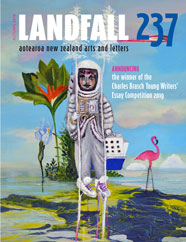
poem appeared in latest Landfall 237


Note from Jordan:

I was lucky enough to see Ria Masae perform poetry last year and I’ve been a fanboy ever since.  I fell in with love this poem when I read it in Landfall instantly because of how it delineates the relationship between the personal and political. While those with power have the ability to create structures and systems that shield them from one or the other, the two spheres of experience are inherently and inevitably reciprocal.

Ria shows us the house as a place of learning, eating, sharing, a place to nurture Whanaungatanga. But she also shows us the house as something unattainable, surrounded by barriers and surveillance, somewhere that can spread fear, otherness or indifference. We spend our whole lives as house guests: we consciously and subconsciously pick and choose experiences and lessons as we build our own, deciding who to invite in, how we speak inside, what wallpaper to put up. Ria has built a house that is a sum of her, her knowledge, her language, her whakapapa, her space within a nation, where the treatment of its guests fluctuates with the whims of those sitting at the head of the table. Ria ends with a question:

What house will Jacinda build? Will it enable my daughters to build their own houses/of tangata whenua foundations and fa’a Samoa roofs/in the palangified City of Sales?

This ending resonates in a time where Aotearoa is asking more of it’s leaders, asking how they will allow rangatiratanga to flourish, how they will create a sustainable future and undo the harms of colonialism and capitalism, how they will celebrate and protect the unique experiences and histories of all its guests, how they will rectify their positions of power and privilege with the whenua they stand on. Ria will have an answer to her question sooner or later. In the meantime, I’m getting a grappling hook, a balaclava, a bottle of whisky and going for a midnight skinny dip in John Key’s forbidden pool, who’s coming with me?


Jordan Hamel is a Pōneke-based poet and performer. He was raised in Timaru on a diet of Catholicism and masculine emotional repression. He is the current New Zealand Poetry Slam champion and has words published or forthcoming in Takahē, Poetry NZ, Mimicry, Sweet Mammalian, Glass Poetry, Queen Mob’s Teahouse and elsewhere.

Ria Masae is a writer, poet and a spoken word artist. Her work has appeared in various writing outlets such as, Landfall, Circulo de Poesia / Circle of Poets (Mexico), and Best NZ Poems 2017. She is a member of the South Auckland Poets’ Collective.

This year Ria was accepted for the 2019 New Zealand Society of Authors Mentorship Programme in which she is working on new material for her sole poetry collection. She is also compiling poetry to be published by Auckland University Press, alongside two other emerging poets in a book series, New Poets #6. This is due to be released next year.


otago708667.jpg

Landfall page

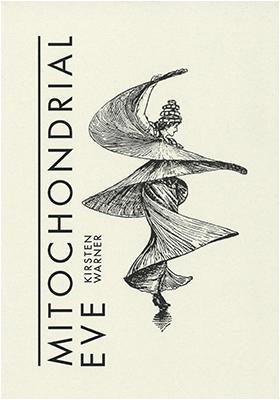
Poetry Shelf review: Kirsten Warner’s Mitochondrial Eve


mitochondrialeve_webcover.png


Kirsten Warner, Mitochondrial Eve, Compound Press, 2018


Kirsten’s Warner is a writer, poet, journalist and musician and former chair of the Auckland Society of Authors. She graduated with an MA in Creative Writing with Distinction from AUT and won the Landfall essay competition in 2008. She performs as a musician with partner Bernie Griffen in the folk-blues band Bernie Griffen and The Thin Men. Makāro Press published her debut novel The Sound of Breaking Glass in 2018. Her poetry has appeared in a number of journals and  anthologies. Her debut chapbook Mitochondrial Eve also came out in 2018. This slender collection is the kind of book you can spend ages with. I read it on the plane to Wellington and once I got to the end of the book I returned to the beginning and read it again. Goodness knows what the passengers either side of me thought. They wouldn’t have known I was poetry rich with a stack of books waiting to be read in my bag.

The six poem titles resemble a narrative framing device: beginning with heartbreak, then moving through dailiness and despair, to a degree of release:


The Location of Heartbreak

Plant a Red Hibiscus

Channel Surfing

S. O. S.

In a Nutshell

Off the Leash


Each poem is exquisitely layered as things are held at arm’s length, obstacles loom, the real world intrudes bright and harmonic, words are lithe on the line. Here is the first stanza of the first poem that pulls you into threat and challenge through the rhythm of walking with its pauses and asides:


I surface dismantled

heart-sore here in the area of the left breast,

certain the most meaningful part of life

is lived while dreaming

and that to awake is to fail to fall

into an abyss of light.


from ‘The Location of Heartbreak’


The heart-threatened core (of the poem, of self), unsettling and hard to reach, is like an insistent pulse that keeps me reading:


I step over cracks so I won’t marry a Jack

resist walking out into traffic

we don’t have a bath and I’d have to find blades

and it’s an end I want not intensification

someone to find me before I drift away.


The second poem, ‘Plant a Red Hibiscus’, returns to the rhythm of ‘feet on the pavement’, but changes pace as the speaker takes charge of a bulldozer. Always the incandescent  core, like a burning wound, enigmatic, exposing; the poet never still. Here is the musing speaker at the bulldozer’s helm; I am holding my breath as I read:


Things that also might be worth living for are

small dark orphan babies who need arms to hold them

I would sit for hours.

Gathering fallen leaves,

we are all compost exchanging molecules and air.

Plant a red hibiscus.


Spread good dark soil, pick up dry leaves, hold a baby.


I don’t make assumptions about the speaker in the six poems. She might be the ‘Egyptian Goddess stalking the town!’ She might be part poet, part invention, part delight in different voices. The poem ‘In a Nutshell’ samples role hopping from Eve with mitochondrial disorder (misbehaving cells that can’t burn food and convert oxygen to energy) to Katherine Mansfield in her German pension, Suzie Wong getting STDs, Carmen Miranda breaking into song, Mata Hari watching time flying over rooftops, until the final glorious, puzzling stanza that hooks the stitches of everyday into the whip and pain of existence:


When I eat nuts

I am Nut

the whole shebang

born of ululation

moisture and fire crackers.

I have no consort

he’s outside

drinking

fagging

shooting up

hocking my starry dress

trying to get back up me.

I bear down

without drugs

swallow the night

virgin again

every morning

to make school lunches

and hold up the sky.


This hallucinogenic, rollercoaster, gut punch of book runs through me like fire. I love it.


Kirsten Warner WordPress page

Selina Tusitala Marsh celebrates her Poet Laureateship tenure with a poem and a power point


Dear Selina

You have given us so much  as Poet Laureate – you have sparked poetry and poets all over Aotearoa and beyond its shores – you have shared poems, your own experience and opened up what poetry can do. Poetry matters to so many more people because of you. Thank you three times thank you. I look forward to reading your new books, hearing you perform again and talking poetry. Meanwhile enjoy your time as Poet in Residence at the Queensland Poetry Festival – you deserve this time with a much clearer calendar! I embrace you dear friend, dear poet.

Aroha nui

Paula


Poetry Shelf Monday Poem: Brian Turner – an unpublished poem and a new book


In the Middle of Nowhere


On a late winter morning when driving east towards Ranfurly

pale grey fog’s smothering most of the land from Wedderburn

to Naseby, Kyeburn, Kokonga, Waipiata, Hamilton’s, Patearoa

and beyond. And I’m thinking how often we’re told we live

in the middle of nowhere: that nowadays people everywhere

are categorised, seen as somewheres, anywheres, or nowheres,

and that, in particular, this place is empty, needs more people.

So it goes. In ‘Furl’ I shop at the corner Four Square, pluck

some cash from a money machine, buy a long black and two

thick egg and chive sandwiches at the E-Café, fill up with gas

at the garage and set off homewards. Then, when re-entering

the Ida Valley and emerging into sharp sunlight, and wondering,

yet again, whether what is ever present always feels burdened

by the past, everywhere one looks – north south east and west –

bulky hills and shining mountains glisten with heavy snow.

And, oddly perhaps, so-called nowhere’s nowhere to be found.


Brian Turner


Brian Turner was born in Dunedin in 1944. His debut collection Ladders of Rain (1978) won the Commonwealth Poetry Prize. He has published a number of collections including Just This which won the NZ Post Book Award for Poetry in 2010. He has received the Prime Minister’s Award for Poetry (2009) and was NZ Poet Laureate (2003-5).  He lives in Central Otago.

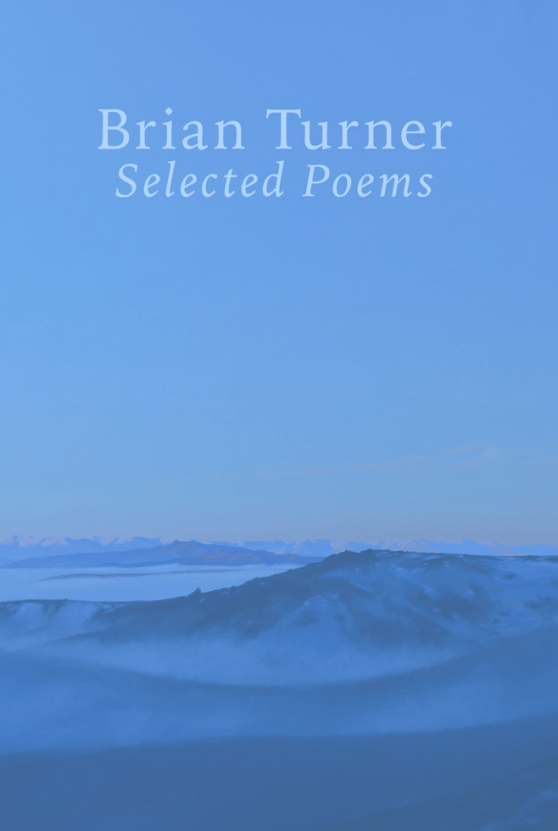
In April Victoria University Press published Brian’s Selected Poems, a hardback treasury of poetry that gains life from southern skies and soil, and so much more. When I am longing to retreat to the beauty of the south, I find refuge in one of Brian’s poems. The economy on the line, the exquisite images, the braided rhythms. Read a poem and your feet are in the current of a gleaming river, your eyes fixed on a purple gold horizon line.


Once in a while

you may come across a place

where everything

seems as close to perfection

as you will ever need.

from ‘Place’


Yet the joy of reading the Selected Poems is also in the diverse subject matter: the acerbic political bite when he considers a world under threat, the love poems, poems of his mother and his father, the elegies, the humour, the storms, the seasons. In ‘The mixing bowl’ the mother is kneading, she feeds her son cakes and scones, along with ‘a rough and tart / unstinting love’. The final stanzas catch my heart:


But I did not know

it would be so hard

to watch her grow,

enfeebled, toward oblivion,

her hands and face

yellow as floury

butter, her arms

white as gentled flour.


I love ‘In Ladbroke Grove’: a woman in a London cafe is surprised he is writer because she didn’t ‘know there were any in New Zealand.’ When she asked where New Zealand was ‘he refused to answer that because too many know anyway’. Ha!

I emailed Brain earlier in the year to see if had any new poems -and he said he had hundreds. ‘In the middle of nowhere’ is one of them – a Turner taste before you read the glorious Selected Poems. His poetry might carry you to the middle of nowhere (a fiction of course!) but his poems are rich in the sumptuous experience of somewhere. His poetry somewhere is vital, humane, illuminating. His Selected Poems is an essential volume for me and I want to keep quoting poems to you because they are so rewarding. Instead I  recommend you pack the book in your bag and take time out for a Turner retreat.


The dead do

sing in us, in

us and through

us, and to themselves

under their mounds of earth

swelling  in the sun, or in their

ashes that shine

as they depart on the wind.

from ‘After’ for Grahame


Victoria University Press page


Screen Shot 2019-08-19 at 9.59.03 AM.png

Poetry Shelf review: Starling 8 Winter 2019

Screen Shot 2019-07-23 at 9.10.16 AM.png


Read the journal here

I have poetry interviews on the go, poetry reviews on the go, a leaning tower of poetry books to read (this morning it toppled), questions for me to answer for my new books, a study that needs sorting after four years of intense work ( it needs to be like the clean sheet before I begin again), a house that needs spring cleaning, a veggie garden that needs weeding, fruit trees that need planting, novels that call to be read, doodles that need doodling ….. and after being awake for hours with the marine forecast and Jeffrey Paparoa Holman’s pilot memoir on RNZ National all I feel like doing is making a lemon honey and ginger drink and reading the brand new Starling.

Starling is edited by Starling founder Louise Wallace and Francis Cooke and publishes the work of writers under 25 which is a very good thing. Starling always exposes me to new voices that I am dead keen to read more from.

This issues includes the work of 20 writers, an eye-opening interview with Brannavan Gnanalingam and the extra cool cover art of Jessica Thompson Carr. It is women rich, there is fire and cut and lyricism. I loved every piece of writing – no dull grey spots. Just an inspired and inspiring celebration of what young writers are doing


Here are a few tastes to get you linking.

Tate Fountain is a writer, actor and student in Auckland. Her tour-de -force poem ‘Dolores’ busts up form, ‘you’,  expectation and what good is poetry. It gently kicks you in the gut with ‘ashes in the back of a car’ and shakes your heart with ‘maybe craft is love and love is attention’. The pronouns are adrift as the lines stutter and break;  F Scott Fitzgerald makes an appearance, and Kandinsky. Sheez this poem electrifies. I am now on the hunt for Tate’s Letters; she describes it ‘perhaps [..] blasphemously as an extended chapbook’.

Nithya Narayanan is currently doing a conjoint degree (BA / LLB) at the University of Auckland. Her poem ‘Hiroshima’ held me in one long gasp as the mother / daughter relationship links the title to the final ‘bomb’ stanza. This is confession at its most radioactive (excuse the pun) with a rhythm that pulls and detail that hooks.

Rose Peoples is a student at Victoria University. Her poetry has appeared in Mimicry and Cordite. Her extraordinary poem ‘The Politics of Body Heat’ begins with a woman pegging washing on a line, then moves through cold and sexism, female syndromes and disappearances. You just must read it.

Think –
Have they forgotten the fear
of a cold hand on the back of the neck?
The dread of an icy whisper?
Remember this –
It is easy to disappear in the cold.


Morgan McLaughlin is an English lit graduate and describes herself as a fierce feminist. It shows in her poem ‘1-4’, four prose-poem pieces that subvert numerical order as clearly as they lay down a challenge to patriarchy. The writing is lucid, sharp as a blade and deliciously rhythmic.  I would love to hear this read aloud. I want to read more.

Meg Doughty recently completed an Honours degree in English at Victoria University of Wellington. She says she is a reactionary writer who is fascinated by the everyday mystic. Her poem is like two heavenly long inhalations that pick up all manner of things, herbs, birds, cats, fire, and I am caught up in the idea of poetry as breath (again, see today’s Herald!!). Then I reach the end of the poem and here is the poet breathing:

I stir
hover over the steam
and breathe in
I know how to live in this world


Mel Ansell is a Wellington poet whose brocade-like poem ‘Cook, Little Pot, Cook’ (I have used this term before) shimmers and sparks with surprise arrivals as I read. Ah poetry bliss where food and love and place and home rub close together.
Rebecca Hawkes is in the recently published AUP New Poets 5 with Sophie van Waardenberg and Carolyn DeCarlo. She has a cluster of poems here that show her dazzling word play, the way images and detail build so you are swimming through the poetic layers with a sense of exhilaration (it was like that when I heard her read at the launch). Her poetry is so on my radar at the moment.

I want to read more from Danica Soich.

Joy Tong is a Year 13 student at St Cuthbert’s College. ‘Tiny Love Poem‘ is pitch perfect.

Hebe Kearney is from Christchurch but is currently studying to complete her Honours in Classics at the University of Auckland. Her poem ‘Bukit Ibam, 1968’ is so divinely spare but opens up inside me, like an origami flower that unfolds family:

a story in a cage. dad,
you recount my grandmother
through the mosquito netting baking
tiny raised cakes.


Thanks Louise and Francis. This is a terrific issue. Now I need to head back to my long list of jobs to do before I head back down to Wellington for National Poetry Day.


Poetry Shelf audio spot: Frankie McMillan reads ‘The Honking of Ducks’

Screen Shot 2019-08-14 at 6.53.58 PM.png


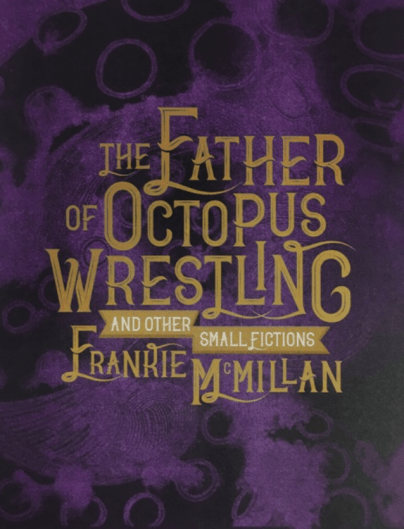
‘The Honking of Ducks’ is a prose poem from Frankie’s new collection The Father of Octopus Wrestling and other small fictions, Canterbury University Press, 2019.


Frankie McMillan is a poet and short fiction writer. She has published five books including My Mother and the Hungarians and other small fictions, long listed for the 2017 NZ Ockham awards. In 2018 she co edited Bonsai best small stories from Aotearoa New Zealand. She has won a number of awards and in 2014 held the Ursula Bethell writing residency at Canterbury University. In 2017 she held the University of Auckland/Michael King writing residency. Her forthcoming book The Father of Octopus Wrestling and other stories will be launched by Canterbury University Press on August 31st 2019.


Canterbury University press author page


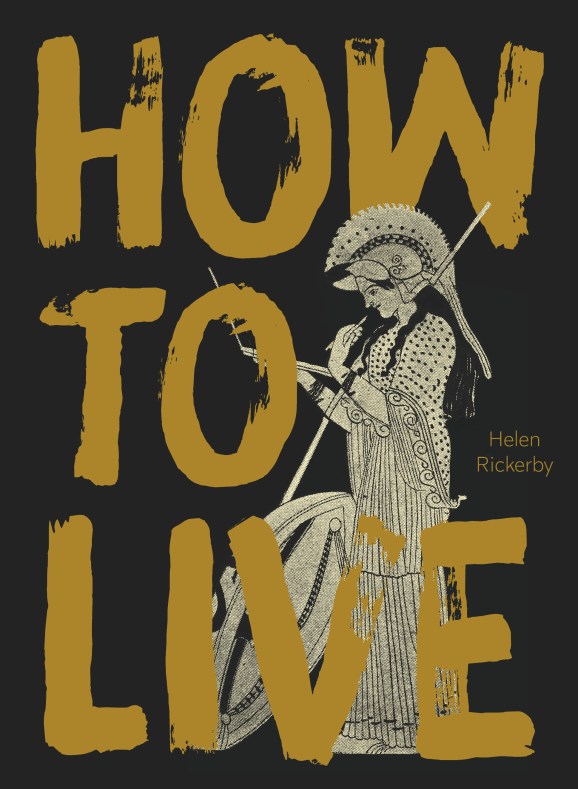
Poetry Shelf noticeboard: Anna Jackson’s launch speech for Helen Rickerby’s How to Live


Rickerby_How to Live.jpg


Helen Rickerby, How to Live

 Helen Rickerby’s ‘Notes on the Unsilent Woman, Note 2’: ‘Perhaps the first thing you need to know is that women in ancient Athens didn’t get out much. No dinner parties, no debate, no public life. Unless you were already ruined. Or unless you were Hipparchia.’

Times have changed – and here we all are – to launch Helen Rickerby’s How to Live alongside AUP New Poets 5.

Before I talk about How to Live, I want to thank Sam Elworthy for supporting my wish to see the AUP New Poets series relaunched, for sharing my enthusiasm for poetry and projects generally, and for all he does for New Zealand poetry. I’d also like to acknowledge Elizabeth Caffin’s role in launching the series of AUP New Poets in 1999, and Anna Hodge’s support of the series under her editorship, and I’d like to thank the whole AUP team for everything they have done to support this beautiful collection of poems I love so much from Rebecca Hawkes, Sophie van Waardenberg and Carolyn DeCarlo. Most of all I want to thank the poets themselves for the extraordinary poetry which is setting this series back in motion.

I first knew Helen Rickerby when we were both fairly new poets ourselves, and I knew her poetry before I met her. I was very taken by her Theodora character in her first collection Abstract Internal Furniture, and the way the whole collection glitters with dark comedy, rapid shifts of scene, and exuberant detail. ‘I think I’ll edit out those long   silences’, she writes in one poem from that book, though even back then she was deciding to ‘leave in some of the shorter ones for effect.’

Now – several books of poetry and many years later – we have the book-length considered take on silence – and outspokenness – of How to Live: book-length because the ‘Notes on the Unsilent Woman’ which opens the book sets up questions and ideas that resonate all through the collection.

Notes on the Unsilent Woman, Note 53:

Hipparchia wrote treatises such as Philosophical Hypotheses, Epicheremas and Questions to Theodorus. Letters, jokes, philosophical refutations. All are lost. (Crates wrote Knapsack and Praise of the Lentil.)

A small note can say a lot, and it is a characteristic Rickerby move to pair the loss of intellectual history represented by Hipparchia’s lost treatises with the pointed addition of the titles of the work of Hipparchia’s more famous philosopher husband, to whose life she typically appears as a footnote, at best. His place in this note, in parentheses, after the main point is made, is just one of the many lightly undertaken total overhauls of intellectual history this book of poetry offers.

Its own title – How to Live – indicates its philosophical reach: this is a book that asks the biggest questions. The title poem references Susan Sontag, Helen Keller, Empedocles, Adorno and other philosophers and writers, alongside friends discussing the big questions in person and on facebook – ‘I am forever putting my friends in’, Helen confesses, and her friends are forever finding themselves caught up in extended conversations that take in the details, big and small, of their own lives.

The collection as a whole takes in questions such as how to choose a good fork or how to choose a house; how to read and how to listen; when we choose to suffer – ‘It all depends on / what the other choice is’ – and the question of what poetry is for, what is poetry? It is an urgent question for a poet constantly questioning her own practice, constantly experimenting with form: about the prose-like appearance of some of these poems on the page, she says, ‘I have long struggled against the tyranny of the line break. Am I afraid that if I let the words leak out, they’ll mix with oxygen and become prose?’

What happens in fact is a collection which rewrites the boundaries of poetry and prose to dazzling effect, as, for instance, the interest in portraiture that goes right back to the Theodora character of her first book now gives rise to entirely new forms of biography – the sharply comic, occasionally personal, often poignant and brilliantly illuminating verse essay on George Eliot, in thirteen numbered sections (with sub-sections); the ‘poem for three voices’ moving between the perspectives of Mary Shelley, Victor Frankenstein and the monster himself; the meditation on the life of Ban Zhao as palimpsest, pillow book and personal essay.

If Helen Rickerby is New Zealand’s most intellectually exciting writer (and I think she is), it is not although but because she writes always as a poet, with a poet’s interest always in form.  And it works just as well to turn the equation around to say she is one of the most formally innovative poets in New Zealand, because her interest in formal innovation is always driven by the intellectual ideas she grapples with.

And she’s funny. For all its formal interest and intellectual brilliance, what I really most love about the book is the voice – but for that, I can do no better than to hand over to Helen herself.


– Anna Jackson, 7 August 2019


DSC_0295-7.jpg


69231481_896457350741162_5031697055056134144_n.jpg


Poetry Shelf Classic Poem: Sugar Magnolia Wilson picks Hera Lindsay Bird’s ‘ Kiss me harder, Abraham Lincoln’


Kiss me harder, Abraham Lincoln


In poems you can do anything you like. You can start fires, or break the law. You can break the law by starting fires. You can set fire to the house of your worst enemy. In poetry, you can have worst enemies. In real life, I’m still working on it. In terms of candidates there’s that dickhead at the salad bar, not to mention the girl who used to ring me up and scream at me, but I’ve got a new phone number now and as much as I hate the salad guy, I’d like to think that I’m a contentious citizen who wouldn’t intentionally try to burn his house down. Besides, I don’t have his address. But I’m totally onto you, salad man! In poems you can make out with whoever you like, even if they died forever ago. In poems you can say, ‘Oh Abraham Lincoln, kiss me harder.’ I have a friend who’s angry at poetry because he says it makes life more beautiful than it really is, which is a dumb reason to hate anything. Hating poetry because it makes life more beautiful is like hating ketchup on your burger because it makes your burger more delicious than it really is, or hating the swans on the lake, for making the lake seem more peaceful. Fuck off swans! How am I supposed to make an accurate emotional assessment of the lake with you gliding around like a toilet paper commercial? Sometimes all I want is a poem that feels like real life. Something directionless and frightened, without any literary subtext, or clever double meanings. Clever double meanings are like those magic eye puzzle. You can get really good at seeing the hidden picture, but in the end you’re still the asshole sitting in the library at lunchtime saying ‘I can’t believe you guys can’t see the dolphins,’ to no-one, because your friends all left hours ago. Sometimes all I want is the poet to come clean and say, ‘I have no idea how to live.’ Sometimes I just want to list some things that I like. That song ‘In the Hall of the Mountain King.’ The names of lipsticks. Poached eggs on a stack of potato cakes. Houses. Flowers. Swamps and the monsters who live in them.  The internet.


Hera Lindsey Bird

The poem originally appeared in Sport 40, 2012 in a slightly different version.


Sugar Magnolia Wilson on ‘Kiss me harder, Abraham Lincoln’

I had a dream a few weeks ago that I asked Hera why she’d changed the line “Fuck off swans! How am I supposed to make an accurate emotional assessment of the lake with you gliding around all serene?” to “Fuck off swans! How am I supposed to make an accurate emotional assessment of the lake with you gliding around like a toilet paper commercial”. The first iteration comes from an issue of Sport back yonky-donks ago, I think 2011 or 2012. So, I assume it was a poem written in her MA year at the IIML. It was the first time I’d read anything by Hera, and I think the first time I’d really read anything by a young New Zealand poet that really spoke to me. In fact, I’m not sure I even knew that people under 300 could have poems published in New Zealand.

I think the toilet paper version is what’s in her book, and I feel like that line got snazzed up, but, I wish it hadn’t been snazzed. I love how not loud this poem is, how it’s almost bored. I read this line in a book once that said all beautiful girls are bored. And I think this is the poem version of that, a beautiful, bored girl. I love how it’s not trying to prove anything big or deep, but at the same time it stands up and says ‘you fucking know what? Poetry can be whatever the hell you want it to be” – it hits right at the heart of what old white dudes have been telling us poetry shouldn’t be since forever. But I’m totally onto you, poetry book guy! I think I took this poem too literally. I literally wrote a poem for my MA manuscript which was JUST a list of things I liked – my friend Ada, miso soup, small glittery things in dusty corners. No one in my class liked it. But I did and it was a confusing time.

I also love that this poem is like Dorian Gray, and Keats is Dead so Fuck Me From Behind is like his bloated painting in the attic. Or maybe this poem is like Charlie Sheen in Two and a Half Men, and Keats is Dead is like his coked-out body lying on a velvet bed with a neon orange party hat on? See? It’s way harder than she makes it seem.

Anyway. It’s one of my all-time favourite classic NZ poems. It’s changed the way I write and I am so grateful to have encountered it when I did. I also love the poem Hooting, but Paula says I’m only allowed to write about one (she didn’t, I’m just too lazy). But read it here


Sugar Magnolia Wilson is from a valley called Fern Flat in the Far North of New Zealand. She completed her MA in creative writing at the International Institute of Modern Letters at Victoria University of Wellington in 2012. Her work has been published in literary journals such as Turbine, Shenandoah, Cordite, Landfall and Sport. She is co-editing an anthology of the new generation of New Zealand poets with Hannah Mettner for AUP. Auckland University Press published her debut collection Because a Woman’s Heart Is Like a Needle at the Bottom of the Ocean earlier this year.


Hera Lindsay Bird is a poet from Wellington. Her debut collection Hera Lindsay Bird was published with Victoria University Press in 2016, and Penguin UK in 2017, and a Laureate’s Choice Pamphlet ‘Pamper Me to Hell & Back’ came out in 2018. She is an Arts Foundation new generation recipient, winner of the 2011 Adam Prize, the 2017 Jessie McKay Prize for Best First Book, and the 2017 Sarah Broom Prize.