Harry Ricketts reads ‘Prep School Days’ and ‘The Writing Life’ from Selected Poems, Victoria University Press, 2021
Harry Ricketts teaches English literature and creative writing at Victoria University of Wellington. He is a literary scholar, biographer, essayist, reviewer, editor and poet. His publications include the internationally acclaimed The Unforgiving Minute: A Life of Rudyard Kipling (1999) and Strange Meetings: The Lives of the Poets of the Great War (2010). His previous collection of poetry is Winter Eyes (2018).
‘Selected Poems showcases the work of one of our beloved poets. His poetry embraces humour, the necessity of books and reading, the ability of poetry to dance from melancholy to exquisite sheen, from plain speech to elegant soundings, to the whip and caress of life. This is an anthology to treasure.’ Paula Green, Kete Books
What a delight to see Selected Poems from James Brown arrive in 2020 (Victoria University Press). Like a number of poetry books out in the first year of COVID, I am not sure it got the attention it deserved (see below for some reviews and poem links). James’s debut collection, the terrific Go Round Power Please (1995), won the Jessie Mackay Best First Book Award for Poetry, and like so many recipients of this award, he has published a number of further collections and has gathered a significant fan club. Me included. Pick up a James Brown collection and expect to laugh out loud and feel a heart twinge in the same glorious reading breath. He has edited Sport (1993 – 2000), an issue of Best New Zealand Poems (2008) and The Nature of things: Poems from the New Zealand Landscape (Craig Potton, 2005). He teaches creative writing at the International institute of Modern Letters.
The interview
Paula: Reading your Selected Poems has been like catching up with old friends. I have loved moving through samples from your terrific debut collection Go Round Power Please (1995) through Lemon (1999), Favourite Monsters (2002), The Year of theBicycle (2006), Warm Auditorium (2012) to the most recent Floods Another Chamber (2017). Plus the nonfiction booklet Instructions for Poetry Readings (2005). I kept wanting to tap someone on the shoulder and say, hey listen to this!
What were the delights and challenges in making the book?
James: It was mostly a challenge. I was hellish busy at the time and it was difficult to immerse myself in the process, which probably wouldn’t have made that much difference to the end result, but would’ve been more fun for me. Nothing like a good wallow in your own missteps. There were a few delights. ‘University Open Day’. And, much to my surprise, I was pleased with Warm Auditorium and Floods Another Chamber, which I’d kind of turned on. I was disappointed by ‘The Language of the Future’, which is a flagship poem in Lemon.
People kept saying Vet was the best.
It had the cow with the glass panel.
Actually, the panel wasn’t that interesting,
sort of dark and red. The cow
was eating hay in a small concrete room.
Mostly it just ate. but now and then
it would look sadly round at everyone,
and that’s when I got to thinking
about Philosophy.
The department wasn’t easy to find.
It turned out to be a single office
down a badly lit corridor.
A faded note on the door said
‘Back in 10’. And so
my education began.
from ‘University Open Day’
The process confirmed for me that what I enjoy most about poetry is writing it. And I’m happy for that process to take forever. I even updated a stanza about the Palmerston North Panthers stockcar team in ‘I Come from Palmerston North’. My past self would’ve written poems and sent them to literary outlets and they wouldn’t have become quite real until they were published. My present self is content with the writing.
Paula: I feel the same way. Patricia Grace said a similar thing at AWF this year. It is the writing that matters. In your first collection you were a whizz at similes. I liken them to picnic clearings. I just wanted to let them reverberate visually, semantically, surprisingly. And then they become less and less of a feature in your writing. Do you think your poetry has changed over the decades?
Now the light breaks
across his shoulders like
pieces of some great glass elevator
he may have been waiting for
for years.
from ‘Creation’
James: It surprises me to hear that because I’ve never thought of myself as a simile poet – in fact, quite the opposite. So much so that when I do drop one in I feel all pleased and writerly, like wow, a simile, I’m a proper writer. I’m sometimes a bit suspicious of similes because you can link almost anything to an abstraction. The poem ‘Their Feelings’ you published plays on that: feelings can be like anything. I once wrote a long poem called ‘Small Obligations’ (Sport 9) that was an endless list of similes which all joined to each other. It’s a catastrophic failure. Hera could probably make the idea work.
What was the question? Has my poetry changed? Some earlier poems were obsessed with notions of representation – postmodern stuff I’d studied at uni. Compiling the Selected, I was shocked to see how often self-referential moments appear in my poems. Power relations – how power doesn’t always flow in clichéd, expected directions – were another early interest. I’m still fascinated by power, but less so about representation.
I’ve always loved narrative and I think I’ve got better at it. A lot of my poems are little stories. Stuff happens.
Humour is also an important part of my poetry. There are so many things jokes can teach writers. I worry my poetry has become less funny. Maybe I’ve become sadder.
But my poems don’t always reflect my feelings or attitudes. People always assume poems are autobiographical, but mine are a mixture of my life, other people’s lives, and pure invention. My relationship poems often involve fictional characters, but try convincing people of that. More of my later poems are autobiographical – and I worry they’re the worse for it.
Paula: I find humour is a constant. So many times I laugh out loud. As Bill Manhire says, you are adept at being funny and serious in the one poem (take ‘Willie’s First English Book’ for instance). So many examples – loved ‘Loneliness’ in which the speaker spots Elvis walking across the quad; ‘Identifying New Zealand Birdsong’ with not a bird to be heard; or the wicked lesson with wine gums in ‘Capitalism Explained’. And I laughed out loud at the small poem ‘Flying Fuck’.
James: Thank you, it’s nice you see the humour as a constant. I worry it’s diminished. I’ve sometimes purposely structured poems as jokes (eg, ‘Maintenance’). ‘Willie’s First English Book’ is actually a found poem, and I’ve transcribed the 100 Mahi from two of William Colenso’s books, and think they’d make a great little book of found prose poems. ‘Flying Fuck’ struck a chord with people. One good thing about writing different styles of poems, which I do, is that some throwaway experiment or off-quilter gag might become someone’s favourite poem!
Paula: I love Emma Barnes’s recent debut I Am in Bed with You that is funny, serious and surreal in equal measures. And Erik Kennedy. Any New Zealand poets who make you laugh?
James: Ha – I took a simile of Erik Kennedy’s and built a poem called Liking Similes around it. At first, I found his simile ‘Here, the cicadas sing like Christian women’s choirs / in a disused cotton mill’ slightly ridiculous, so I decided to unpack it, to try to make it work, and by the time I got to the end of the poem, it did! Now I can’t hear cicadas without thinking of Christian women’s choirs in a disused cotton mill. Very annoying.
I can reel off some overseas poets who’ve make me laugh recently: Louis Jenkins (Where Your House is Now), Miles Burrows (Waiting for the Nightingale), Kimmy Walters (Killers), and Joe Dunthorne (O Positive).
Ashleigh Young’s poems are very funny! Bill Manhire’s latest book Wow. Hinemoana Baker’s funkhaus juggles humour and seriousness without dropping either. That’s a sign of a good, funny poem: if I read it and think it’s hilarious, then I read it again another time and think it’s actually really sad or serious. Nick Ascroft. Tayi Tibble. Sam Duckor-Jones. Am eagerly awaiting Rangikura and Party Legend (love the title poem!) to arrive in my letterbox.
The sun was clouded
—but it wasn’t gonna rain.
The sky was the colour of water
far off.
from ‘Statement After the Fact’
Paula: I like the continuing presence of rain and birdsong – little anchors no matter what else the poem is doing. Any motifs that persist?
James: Rain is probably ubiquitous in poetry. I like weather generally. As I am a carless person, I have to deal with it directly. Cars maybe – because I’m not a fan of them. Water is probably a big recurring element. Light, for sure. But these are hardly exceptional to me. I’m not that conscious of my motifs. Each poem has its own world that requires its own details. As I become an older poet, ahem, I’ve become aware of maybe writing a poem similar to one I’ve already written, which is maybe why I like to take on different characters and forms.
The day I stopped writing poetry
I felt strangely serene.
Back when I started, I had no idea
what I was trying to do: get something out, perhaps,
and I suppose ‘art’ had something
to do with it. There’s a tempting simplicity
about poetry; you don’t necessarily need
the room, the desk, the glowing typewriter
—a scrap of paper and pencil will suffice.
Some of my tidier lines often came to me
on the bus or while I was just lumping along;
they’d be dancing or singing away in my head
while I grinned helplessly at the passing world
until I could arrange to meet them somewhere.
from ‘The Day I Stopped Writing Poetry’
Paula: I also like the way the making of poetry is not kept hidden. I just love ‘The Day I stopped Writing Poetry’. I got curious. What do poems need? Any rules? Anything?
James: Hmmm. Poems have no rules, and yet they set up their own rules, usually really quickly – as in the first few lines. Things like tone, layout, punctuation. It’s quite hard for a poem to deviate too far from its initial ‘rules’, and if it does, it either feels wrong or abrupt shifts in register become one of its rules.
What do poems need? Can I take that back to the source and answer what do poets need? An ear for the intricate registers of language. The ability to read and be moved by poetry. If you don’t like reading poetry, how can you write it? So writing poetry is as much about being able to hear as it is about making yourself heard. Some poets perhaps focus too much on the latter …
Paula: Sometimes you question whether a particular poem is actually a poem. I so know that feeling even though I am trying not to follow in a long line of self-doubting women. Is it a playful choice suggesting poetry can be anything or perhaps a signpost to doubt?
James: The Guardian once posed this question to readers:
Can anyone
tell me if this
is a poem
or not?
My answer is, yes (it has line-breaks), but it’s not a particularly good one. The line between poetry and prose is blurred, and some of my efforts certainly lean more toward prose. It’s not possible to say whether something is or isn’t a poem. Sometimes I read prose poems and think they’re actually prose, whereas sometimes I read prose (eg, Willie’s First English Book) and hear poetry. Lots of odd books get called poetry simply because publishers are unsure how to categorise them. Kenneth Goldsmith’s, for example. Finally, there’s just good writing and bad writing, by which I mean writing you like and writing you don’t like and the vast continuum between those poles.
‘Son,’ he kept saying, ‘son’. Then he turned to me to see
how I was doing. I was concentrating on the fogged up world
out the fogged up window, but his wet, hopeless face
somehow found a way through and got deep inside me, and,
try as I might, I have never been able to shake it out
my whole life long.
from ‘The End of the Runway’
Paula: I was really affected by the poems that get personal but are all quite different. Take ‘The Bicycle’ for example, a poem that highlights a beloved childhood gift. Am I imagining this but did you once compare writing a poem to riding a bicycle? I love the poignant scene of parents tending to a wet toddler in ‘Feeding the Ducks’. Oh and the glorious comic / raw-edged thread in ‘Family Planning’. And more than anything, the heart ripping ‘The End of the Runway’. OMG this poem tore. I have no idea what the personal – fiction mix is but it is a little beauty.
Do you have no-go zones when it comes to personal subject matter? Confession?
James: I have compared riding up a hill to writing poetry – the link being suffering. There are lots of things I wouldn’t write about. I feel it’s unfair to write about friends and family in ways that might hurt them. Well, I might write a poem, but I wouldn’t publish it. I’ve certainly got poems I think are good that I’ll never publish.
As said, my poetry is less autobiographical than people think. ‘The Bicycle’, for example, is based on experience, but isn’t entirely true. I did not love my bicycle as a kid, but I had one I really liked as an adult. The feelings in ‘The End of the Runway’ are genuine, but many of the details I use to generate them are imagined.
My new book that VUP are publishing next year is anchored around three long, confessional poems. They were hard for me to write. I’d tried to write about one incident on and off for years. I’m very reliant on VUP as to whether they’re successful as poems because for me writing them was really a kind of therapy.
Paula: Anne French likens you to a bricoleur and I can see why. Under your guidance a poem can hold many things. I wonder how it could possibly work and then the poem becomes an effervescent tablet on the tongue. Are you still drawn to this?
James: Do you mean am I still drawn to bricolage? Well, I think the English language is a bricolage. Sometimes I set out to hijack certain registers – like the official names of Barbie dolls in ‘Ken, Barbie, and Me’. ‘Alt. Country’ mimics the ‘straight talkin’ voice of Americana music. Perhaps my poems are bricolages because my own voice is an assemblage of different language registers – song lyrics, advertising speak, clichés, and very occasionally an original turn of phrase.
Paula: Perhaps the funniest piece was the booklet, Instructions for Poetry Readings. I kept thinking of excruciating occasions where a poet hogs everyone else’s time, or has no idea what they are going to read so have to shuffle through pages and books, or spends twenty times longer on an intro than the poem itself. What prompted you to write this booklet?
James: I wrote it at a time when I was going to a lot of poetry readings. They are, as I’m sure you know, strangely ritualistic events. No matter where you are in the country, they follow similar formats, and the characters you meet are strangely familiar. The haiku writer, the political poet, the lustful poet, the poems about cats. You encounter the same highs and lows, so I thought it was about time someone wrote a booklet outlining how everyone ought to behave. So I created a pseudonym, Dr Ernest M. Bluespire (after the James Tate poem ‘Teaching the Ape to Write Poems’), and Fergus published it as a chapbook. Some people thought the author was Steve Braunias because the publisher we concocted was Braunias University Press. I somehow forgot to put any of this in the Notes in the Selected Poems.
I’m actually a big fan of poetry readings and those who organise them.
Paula: Have you been to memorable poetry readings (in a good way)? I am thinking of Bill Manhire at Going West (sublime!). Tusiata Avia (I just get split into heart atoms). Listening to Emma Neale (the music mesmerising).
James: They start to blur now. Bill Manhire is always worth crossing the road for. I was transfixed by Mary Ruefle’s reading; it was like an incantation. James Fenton was great. Robert Hass. Dinah Hawken brings a quiet power to her readings. Tusiata Avia is a great performer of her poems. I’m not usually a fan of performance poetry. The poetry needs to stand on its own.
Paula: Oh envious of hearing Mary. This feels like an impossible question but any poems in the selection that have really hit the mark for you over the decades?
Paula: Are you a voracious reader? Any poetry books that have affected you in the last few years?
James: I dunno about voracious. Actual Air by David Berman really affected me. It took me a month to read it. Pins by Natalie Morrison. There’s a new poetry book by Tim Grgec called All Tito’s Children that has the most beautiful, effortless writing.
Paula: Ah Pins is sublime. When you first started writing?
James: Do you mean influences when I first started writing? Bill Manhire and Jenny Bornholdt. Charles Simic. Lots of people.
Paula: Any books in other genres you have loved in the past year?
James: A couple of novels I’ve liked: Elif Batuman (The Idiot) and, less so, Jenny Offill (Weather). I reread John Steinbeck’s novella ‘The Pearl’ over the weekend, and thought it a masterful piece of storytelling. The tension! Also The Things They Carried by Tim O’Brien. And I’m a secret member of the South Wellington Branch of the Magnus Mill’s Fan Club.
Paula: If you were able to curate a poetry reading inviting poets from any time or place who would you line up?
James: Joe Dunthorne, Emily Dickinson, Philip Larkin, Jorie Graham, Alice Oswald, Gertrude Stein. Which is why I’d never be allowed to curate a poetry reading.
Paula: Oh i would go to that one in a flash! There is more to life than poetry. What else gives you comfort, stimulation, mind and heart boosts?
James: I still get out for a mountain-bike ride once a week, though in the last few years I’ve exchanged mountain-biking at weekends for walking with friends. I listen to a lot of music and odd audio. I read, but not enough. I find reading hard to do around other things because for me it’s immersive. I work from home so spend my days by myself, which I don’t mind, but it does mean I get out of practice speaking.
Paula: Of all writing forms poetry is least likely to put food in the cupboards, pay a mortgage (as you muse on in poems). It is scantly reviewed, is side-staged at festivals, sells less. Yet on the other hand I find our poetry communities are thriving. Exciting. Any thoughts on life as a poet in 2021?
James: The Wellington poetry communities (and I love that there are a number of them) are abuzz with activity. Anyone who writes poetry for fame and/or fortune has taken a wrong turn. So poets need jobs. But poetry is easier to fit around a job than longer forms of writing. Yes, you might work on a poem for years, but they sometimes arrive in your head almost fully formed. Mostly though, poetry is hard work. I suspect life as a poet in 2021 isn’t that different from life as a poet in 1991 (when I was finding my feet), except for rent. New Zealand’s investor-encouraging property market and extortionist rents are probably impacting on reading and writing by forcing people to work longer hours. A lot of New Zealand’s problems go back to land in the end.
20 May 2021: Winners in the 2021 Hippocrates Prize for Poetry and Medicine were announced by live webcast on Wednesday 19th May to an international audience from North America, Europe, Asia and Australia.
First Prize in the FPM-Hippocrates Open Awards went to Fran Castan, former magazine editor, freelance writer and teacher of writing and literature from New York City, USA for Voice Mail. About her poem she said: “When my friend, the poet Siv Cedering, was suffering from pancreatic cancer, I would visit frequently. I wrote Voice Mail as witness to our experiences during her heroic struggle.”
First Prize in the FPM-Hippocrates Health Professional Awards went to Sophia Wilson from Dunedin in New Zealand for The Body Library. Sophia has a background in arts, medicine and psychiatry.
She said: “The Body Library is a mélange of memories of the anatomy and pathology museums at Sydney University. I recall in particular the enormous sense of privilege, the bizarreness of human body parts being presented and objectified in this way, and the relief of exiting the hallowed rooms into daylight.”
‘The Body Library’ first published in Hippocrates Prize Anthology 2021, hippocrates-poetry.org
Sophia Wilson has recent writing in Mayhem, Blackmail Press, Intima, Australian Poetry Anthology, Shot Glass Journal, The Poetry Archive, Landfall, A Fine Line, Not Very Quiet, Ars Medica, Hektoen International, Poetry New Zealand, Flash Frontier, Best Microfiction 2021 and elsewhere.She was runner-up in the 2020 Kathleen Grattan Prize for a Sequence of Poems and her poem ‘The Captive’s Song’ won the 2020 Robert Burns Poetry Competition. Sophia has a background in arts and medicine and is based in Aotearoa New Zealand.
Paula Green, from Cookhouse, Auckland University Press, 1997
My theme-season introductions seem like miniature self confessions on life and poetry. Crikey! I always have much to say about food and poetry because I love cooking and I love writing. My first book Cookhouse got scathing reviews either for being too domestic or forbeing too experimental. I walked around the supermarket on a Sunday morning reading the first review of my first book saying OMG OMG OMG. It was my first lesson as a writer: leave reviews with the person who wrote them. Just get on with what you love. A few weeks later I opened the Listener and there was a photograph of Cookhouse on the recipe page with a Marcella Hazan cookbook ( I loved her recipes!). Plus one of my poems, sitting on the page like a recipe. That was my second lesson as a writer. Your books and poetry find their way into surprising places and you will never know how your poetry touches people. Although sometimes you get an inkling: a stranger might walk up to you, or send an email or a card, and surprise you (in a good way!).
I can’t keep food out of my poetry and I am equally drawn to writers with similar intent. It is one reason I am such a fan of Nina Mingya Powle’s poetry. Her poems lead in multiple directions but the sensual hooks are often sparked by food. Ian Wedde is the same. I adore The Commonplace Odes. It has always mattered what food I put in my body, and it is a bit the same with with poetry. I want to cook a meal that tastes good and I want poetry that satisfies my reading tastebuds whether I am writing or reviewing. In fact don’t call me a reviewer please. And I am not actually very kind. I simply love reading poetry and sharing my engagements. Just as I love cooking a meal every night for my family.
The poems selected are not so much about food but revel in a presence of food to varying degrees. Grateful thanks to the publishers and poets who continue to support my season of themes.
The Poems
De-stringing beans
A mountain of runner beans
to top and tail and de-string.
She decides to do it for them: her sons
so they will be eaten this evening
sliced into green splinters
with pink seeds showing through.
Easier to sit than stand. Her best profile
towards the door when her son appears.
She wants to disguise how content she is.
The stringy edges, tops and tails, in a dish
the beans growing, like a mountain of shoes
later to be wrapped in tinfoil
roughly divided into two.
No one else in the family will eat them.
In an article it says they are underrated
almost despised as a vegetable
underestimated on two counts
or three: first the vigorous way
they climb, clamber to the sun
second they are rich in iron
and last and best: this contentment
so rarely found, except in
a painting of a woman pouring from a jug
someone bathing someone in a tub
this mountainous-seeming task
calming with each stroke of the knife.
Elizabeth Smither
little walnuts
served from across the seas
in a tin or a jar, fished from suitcases
presented
with grandmotherly dimples
little walnuts – xiao he tao
proudly, good for brain.
except neurons are firing
in staccato, half-
forgotten Mandarin.
they manage xie xie and dutifully
I eat them.
I forget why I ask for these –
the carnage of shells
scraps of brown meat
and a strange invasion staged
on my tongue – slow
and clumsy muscle.
I am quick to rise – you do not get to comment on what’s in my lunch box –
but just as quick to pick
the yolks of my too-dry lotus mooncakes –
discarded suns
of a world in hieroglyphs.
and when I have counted
waves of sleep – yi, er, san –
I don’t dream in the same vowels.
what can I bring back for you?
her smile like furls of steaming jasmine tea
amidst clamouring children
hawking their wants like roadside wares
or suitcase wheels clicking on concrete
destined for smog and skyscrapers.
I always ask for my little walnuts.
*Little walnut or xiao he tao is a particular kind of Chinese walnut with a distinct sweet-salty flavour.
Joy Tong
from A Clear Dawn: New Asian Voices from Aotearoa New Zealand, eds Paula Morris and Alison Wong, Auckland University Press, 2021
from A Clear Dawn: New Asian Voices from Aotearoa New Zealand, eds Paula Morris and Alison Wong, Auckland University Press, 2021
With Nectarines
to Claire Beynon
A cob loaf rests on a surface,
perhaps a table, an altar, a jetty,
that reaches over a shoreline toward dark water
and the approaching edge of night.
Out there an indigo quiet where the sky lowers to sea,
clouds shouldering weight of storm to come;
a hint of beach, airborne flicks of white,
where seabirds swoop for fish and scraps.
On this side of a sill,
the bread, and a bowl of tawny nectarines
occupy foreground that’s human with light,
with hearth-glow in the corner,
tended against incoming cold.
The bread is warm from the oven,
the fruit ripe, and the room that extends
from the canvas edge into my lived space
where the painting hangs, included as offering
to the sombre air,
to anyone who comes to this threshold, empty.
Carolyn McCurdie
Super Wine
The news is early or his clock is slow,
so he grabs his mug of tea and pops
a biscuit in his pocket,
the top pocket of a faded old coat.
It’s a wreck of a thing, this coat of his.
a shamefully limp and grubby article,
but he wears it through the news and Campbell Live
and on into the night,
and he wears it when he leaves his little flat
and slips up the lane and out into the park
and lights a cigarette
(his skinny nine-o’clocker
and the last of the day).
And he smells the smells of mown grass and woodsmoke,
and he walks across the park towards the lights,
the lights of the houses on the hill,
secular stars of silver and orange,
and he walks beneath the frosty stars themselves,
this unmarried, unmended man,
this unmarried, not-unhappy Earthling,
A Super Wine forgotten in his pocket.
Geoff Cochrane
from Pocket Edition, Victoria University Press, 2009
If you love me you’ll buy Bluff oysters and cook asparagus. Even though I don’t like either.
for Kirsten Holst, for feeding me many good things
and for Alison and Peter, for their Bluff oysters and asparagus
When I am no longer who I was
I can only hope that I will be loved by someone
so much that every day during Bluff oyster season
they will buy me a dozen Bluff oysters.
Even though they don’t like Bluff oysters
they will buy them for me
and every day I will exclaim
“I can’t even remember the last time I had Bluff oysters!”;
they will nod at the extreme length of time it has been.
When I am no longer who I was
and when Bluff oyster season is over
I can only hope that I will be loved by someone so much
they will cook me freshly picked asparagus every day.
Even though they don’t like asparagus
they will grow it for me and pick it for me
and lightly steam it
so that I can relish it served with hollandaise sauce
(although some days more lazily served with butter and lemon).
I will eat it with my fingers
and let the sauce (or butter) dribble down my chin;
no one will mind or tell me to be less messy
it will just be moments of edible joy.
In reality I don’t like Bluff oysters (or any oysters)
and I can’t stand asparagus (the taste and texture are disturbing);
I can only hope that maybe someone will love me enough
to buy and cook me the things that I love
even though they hate them, even though I won’t remember.
Paula Harris
the great pumpkin war
standing in the kitchen crying
beaten by a vegetable
thought by now it would be easier
people have suggested this (people i trust)
the myth of progress
you do something every day it gets easier
in reality each day the dirt accrues
it multiplies between cupboard doors
i am running out of resources
i am getting further & further into
the ten-year warranty on the fridge compressor
one day soon i will have to pick up the knife
& address the pumpkin in the room
bought so cheaply from the farmers’ market
now growing larger by the day
taking up all the bench space
i fear for the fruit bowl
my mother says to drop it from a height
she throws hers down the stone garden steps
my previous attempt resulted in
20 minutes lost to searching for an unscathed pumpkin
trying to break open a pumpkin at night
is like starting a winter war in russia
i am letting everything get out of control
i sleep knowing it is getting worse
i do not think i can win at this
i do not think i can carry on in any capacity
Rhys Feeney
from AUP New Poets 7, ed Anna Jackson, Auckland University Press, 2020
The Cheese Scone Recipe as Promised
What’s the secret, people ask,
why do your students return
year after year to your class?
Cheese scones, I say, crisp
on the outside, soft inside
like all good characters. First,
turn up the heat, 200 degrees
should do it. Next, sift two cups
of self-rising flour, holding the sieve
high, letting the flour fall like snow
in the air, then add a heaped half
teaspoon each of salt, mustard powder
and a good pinch of cayenne for a lick
of fire. Stir and rub in 30 grams
of butter. If in a hurry, as I usually am,
you can grate the butter or cheat
with the food processor,
but do not go all the way, stop
at the crumbly stage, add 75 grams
of grated cheese, then beat a large egg,
with about 75 mils of buttermilk,
(if you have none, add lemon juice to milk,
rest it for ten minutes). Breaking
the drought pour into the dry ingredients,
mixing first with a knife, then lightly
with your hands to bring the soft dough
together. If it seems too dry
add more buttermilk, but like
it’s a newborn and precious, go easy
with your handling, remembering
scones and poems need a light touch.
Cool hands, my mother said,
though mine have always been hot.
Roll the dough out in a rough circle,
not too thin, about 2.5 cm thick.
With students due any minute,
I usually take the lazy way, divide
it roughly into 8 triangles but you might
be wanting to impress your mother
or daughter-in-law, and have the time
and the aesthetic sense for fluted cutters.
Appearance improves the taste
so brush the tops with milk, sprinkle
on a little grated cheese, and a dusting
of cayenne. Bake on a high shelf
for about 15 minutes till golden
and irresistible. Making scones
is not dissimilar to crafting a poem,
you need to pay attention to detail,
measuring, mixing, letting in air,
but there the recipe ends.
What I haven’t talked of can not
like metaphor, be quantified, the secret is
to bring to the process, a little of you.
Diane Brown
the children open their
lunch boxes to each other
a ham sandwich
for a Fijian fried egg and three cassava sticks
a mini feta quiche
for a South Indian roti parcel stuffed
with cumin and okra
a tub of yogurt
for a Middle Eastern pouch of semolina
sautéed in ghee and cardomens
a celery stick
for a Tongan plantation ladyfinger banana
a juice box for
fresh Kiribati island toddy
the wooden decks approve
their slats on standby to suck evidence
of sharing and spit them into the crawl space
beneath the salivating joists
it’s the allergies
the adults
the food policies
and
the way fear feeds us all
Mere Taito
P r o p e r t i e s
You’ll need oil – For your forehead on Ash Wednesday, for the insides and outsides of your palms. For sore inner ears and lifeless hair. For removing the evil eye – that’s the most important. Though not one in the family knows the ritual, better to be with, than without.
Grapes and leaves – For your rice and pinenuts, for your grape jelly.
And ash – For the grape jelly – vine cinders to be precise. For holy crosses over the front doors of your houses or workplaces. For the bottoms of incense holders – hubris to clear it out.
Rose petals – For gravestones, but mostly for the preserve that fits into a spoon followed by icy water.
Water – From the priest, for drinking in the first month of the year and sprinkling in every room. For keeping in the fridge thereafter. For putting chamomile into – tea or warm compresses.
Garlic – For everything. For mashing up and applying with honey to sores. For rubbing on styes. For wrapping in bread and swallowing whole when feverish. For shooing away evil by saying the word alone – along with a spitting sound.
Vana Mansiadis
from Ithaca Island Bay Leaves: A Mythistorima, Seraph Press, 2009
1.2 To the cookbook
Turning east, I drove towards blue grey
Mountains down which cloud crawled
From summits which were already sky. High in it
A glare like grubby porcelain told me that morning
Was advanced. The nibbled winter paddocks were over-
Written in a language no one had ever taught me:
Glottal, almost choking, wet. Lines
Of leafless shelter-belt enwrapped the shorter
Rows of berryfruit trellises in need
Of pruning. My destination: an art gallery.
My mission: to speak about art and poetry.
It was going to be all over before I got there.
Quintus Horatius Flaccus, help me
In my hour of need, help me turn my back
on landscape that wants to be art, on poetry with feet
Of clay. The lovely world has everything I need,
It has my kids, my sweetheart, my friends, it has a new book
With mouth-watering risotto recipes in it,
The kind of plump rice you might have relished,
Horace, in the Sabine noon, yellowed with saffron.
‘The zen poet’ is another of you, he wrote a poem
About making stew in the desert which changed my life.
A good cookbook is as good as a book of poems
Any day, because it can’t be more pretentious
Than the produce you savour with friends as night falls.
Ian Wedde
from The Common Place Odes, Auckland University Press, 2001
Custard
When I was smaller than the family dog,
Dad would tell Mum
that he was taking me to kōhanga.
Then we’d go to the bakery
and get as many custard pies
as we could handle.
Park up by the river,
talk,
eat,
listen to the radio a while.
He’d light one up
as fat as the mighty brown trout,
captured and killed
and lull me to sleep
with a puku full of custard
in his red van
with all his windows up.
Now I am grown
and you ask me to explain something you said.
My eyes glaze
and all I can see is that
red van,
pastry flakes resting
in the corners of my sleeping mouth.
Ruby Solly
from Tōku Pāpā, Victoria University Press, 2021
The Poets
Diane Brown is a novelist, memoirist, and poet who runs Creative Writing Dunedin, teaching fiction, memoir and poetry. She is the Poetry Editor for ‘The Mix’ in the Otago Daily Times. Her latest book is a poetic novella, Every Now and Then I Have Another Child, Otago University Press 2020.
Geoff Cochrane is the author of 19 collections of poetry, mostly recently Chosen (2020), two novels, and Astonished Dice: Collected Short Stories (2014). In 2009 he was awarded the Janet Frame Prize for Poetry, in 2010 the inaugural Nigel Cox Unity Books Award, and in 2014 an Arts Foundation of New Zealand Laureate Award.
Rhys Feeney is a high school teacher in Te Whanganui-a-Tara. You can buy Rhys’ debut collection, “soyboy,” as part of AUP New Poets 7
Paula Harris lives in Palmerston North, where she writes and sleeps in a lot, because that’s what depression makes you do. She won the 2018 Janet B. McCabe Poetry Prize and the 2017 Lilian Ida Smith Award. Her writing has been published in various journals, including The Sun, Hobart, Passages North, New Ohio Review and Aotearotica. She is extremely fond of dark chocolate, shoes and hoarding fabric. website: www.paulaharris.co.nz | Twitter: @paulaoffkilter | Instagram: @paulaharris_poet | Facebook: @paulaharrispoet]
Vana Manasiadis is Greek-New Zealand poet and translator born in Te Whanganui-a-Tara and based in Tāmaki Makaurau after many years living in Kirihi Greece. She is 2021 Ursula Bethell Writer-in-Residence at Te Whare Wanaga o Waitaha Canterbury University. Her most recent book was The Grief Almanac: A Sequel.
Carolyn McCurdie is a Dunedin writer, mostly of poetry and fiction. Her poetry collection ‘Bones in the Octagon’ was published by Makaro Press in 2015.
Neema Singh is a poet from Christchurch of Gujarati Indian descent. Her work appears in Ko Aotearoa Tātou: We Are New Zealand(2020) and A Clear Dawn: New Asian Voices from Aotearoa New Zealand (2021) and she is currently working on her first collection of poetry, a series of poems unfolding the layers of culture, identity and history contained within ordinary moments. Neema is an experienced secondary school English teacher and holds a Master of Creative Writing from The University of Auckland.
Elizabeth Smither ‘s new collection of stories: ‘The Piano Girls’ will be published in May by Quentin Wilson Publishing.
Ruby Solly (Kāi Tahu, Waitaha, Kāti Māmoe) is a writer, musician and taonga pūoro practitioner living in Pōneke. She has been published in journals such as Landfall, Starling and Sport, among others. In 2020 she released her debut album, Pōneke, which looks at the soundscapes of Wellington’s past, present and future through the use of taonga pūoro, cello, and environmental sounds. She is currently completing a PhD in public health, focusing on the use of taonga pūoro in hauora Māori. Tōku Pāpā, published in Februrary 2021, is her first book.
Mere Taito is a poet living and working in Kirikiriroa.She is interested in the way poetry can be used to revitalise minority Indigenous languages like Fäeag Rotuạm ta.
Joy Tong picks wildflowers from neighbours’ fences, pets strangers’ dogs and chases stories in the streets. She’s a student, musician and writer from Tāmaki Makaurau and her other works can be found in Landfall, Mayhem and Starling, as well as A Clear Dawn, an anthology for NZ-Asian voices.
Ian Wedde was born in Blenheim, New Zealand, in 1946. He lives with his wife Donna Malane in Auckland. ‘To the cookbook’ is from a sequence called The Commonplace Odes, published as a book by Auckland University Press in 2001. He was New Zealand Poet Laureate in 2011.
Foxstruck and Other Collisions, Shari Kocher, Puncher & Wattman, 2020
The cover of Foxstruck and Other Collisions reminded me of an astral vista (my partner said a Rothko painting not knowing there’s a Rothko poem inside!), but the image is in fact Kate van der Drift’s artwork, a camera-less photograph. She buried large format sheet film in the Piako river between the ebb and flow of low and high tides. What looks like a stellar view is the alchemy of pollution and nutrient by-products of intensive farming. Enter a poetry book and already nothing can be taken for granted. The title Foxstruck and other Collisions is equally fascinating. Enigmatic but rich in possibility.
Shari Kocher’s collection is a sumptuous read. It is structured in seven sections moving from the weight of lead, through the practicality of tin and iron, and the preciousness of gold, copper and silver, to the liquid toxicity of mercury. I am no alchemist but each element feels prismatic with poetic connections, shifting perceptions, uses, misuses. What bridges will form between one element and the other? Would I gain more from reading, if I were an elemental whizz? How will the elements interact with the properties of a poem? The properties of an element with a poem’s movement? All this musing and I am on full alert.
Here I am entering an alchemy maze and all I can think about is fabric as I read. I am always suspicious of academic criticism that stretches a poem to fit a premise or theory, but I am (no way an academic critic) falling upon words, phrases, ideas, details, motifs that give my approach zing. Let me be clear: a poetry book will always offer myriad pathways, frames, devices that refract, reflect, dissolve, connect. I guess I always want to put my finger upon a poem and discover its pulse.
Why fabric? Shari’s poems resemble brocade (full of sheen and intricacy), the rustling texture of silk, hard-wearing everyday denim and the coolness of cotton against skin. Glorious! There are weaves and tucks and fasteners and stitching. I am thinking of the loom behind the line, the handwork and the handiwork, and never forgetting the heartwork. I am thinking of threads and buttons and agile sewing needles. Because this poetry is rich in craft and artistry. The visual matters as much as the aural. Motifs glint. Story is intricate thread.
The collection has been slow in the making, composed over five years, and walked into being as much as written. In her endnote, Shari shares the question that might well have been there from the start: ‘In light of this task set before me, which I take as the task to love, how am I to live?’ Each poem came to life on foot, a rule set by the poet, with the walking rhythms nurturing first seeds through the many drafts.
Take any poem and the rewards are numerous. I particularly love ‘Fritter the Fat Then Fry It’. The fabric of the poem is intricate with sound and image. The poem brings to mind a feminist folktale that will bite your ankles as you walk. Corpse, Narrator and Belovèd speak, with overlapping voices, sharp stitching. Here is the opening of the poem, the Narrator speaks:
Once upon a time a house
all the modcons, etcetera but she flits
vagrant as a dandelion’s flimsy puff
blowing about in a yard
empty of air and light a hole
shucked to the floor like a skin
all that space shut-up
the chimney sealed
against birds
smoke and one
homeless soul
chewing her finger
nail outside the door slipped
sideways into maternity
ward of the state where she once laboured
abandoned to her fate under the weight
of sixteen generations of women
who lived to be fed to the dogs
day after day without complaint.
The soundtrack of the collection is sublime: words loop and repeat, with rhyme, with connecting vowels and consonants heightening the music. Such rich delight in the ear. This from ‘Girl in the Mirror’, a poem dedicated to poet Joan Fleming:
sound of her gentling
mind on me each plate
washed as if to placate
the place I’d become (from)
the shower wiped free
just sketch she said just
sketch what you see
the grain of the wood
on the windy deck the scab
on the knob of your knee
Expect restraint and exuberance. Expect rawness and polish. Expect lutes and ladders, saltspray and violins. Expect rose oil and valleys, kitchens and throats. Cosmic glitter. Questions. Breath. An alphabet unskinned. A grounding in land. The natural world with all its challenges and beauty. As Joan Flemming says on the back of the book, ‘This is dazzling poetry.’
I am just hoping my little piece will connect with readers who want to track the book down and read it for themselves, because yes this book dazzles in its love of language, its love of life, its joy in discovery.
Shari Kocher is a poet, creative writer, thinker and therapist. Foxstruck and Other Collisions (Puncher & Wattmann, 2021) is her second poetry collection, following The Non-Sequitur of Snow (Puncher & Wattmann 2015), which was shortlisted for the Anne Elder Award. Recent accolades include The Peter Steele Poetry Prize (2020), The Venie Holmgren Environmental Poetry Award (2018), and The University of Canberra Health Poetry Prize (2016). Shari holds MA and Doctorate degrees from Melbourne University, and works in a supervisory and remedial capacity.
Their feelings are like a mosquito sliding its proboscis into a freckle. Their feelings are like light through blinds in an 80s music video. Their feelings are like techno under aurora in Norway. Their feelings are like swimming in sunlit sea and seeing a shadow. Their feelings are like when they’ve taken bath salts that turn out to be bath salts, and they end up in A&E and their mothers have flown in from Hamilton and are holding their hands and crying, but all they can think about is how their lives have become a TV hospital soap which they could have been written out of or out of which they could have been written. Their feelings are like a Mindful Self Compassion course when someone asks where the hyphen goes in the title and the convenor says ‘Anywhere’ and the person says ‘I don’t think this is what I am looking for.’
James Brown
James Brown’sSelected Poems was published by VUP in 2020. He is working on a new book.
So many poets have written walking poems. So many poets have commented on the relationship between walking and a poem gathering momentum in the pedestrian’s head. Just for a start, I am thinking of Jenny Bornholdt’s magnificent poem ‘Confessional’, Michele Leggott’s walking blind, a vital thread, with different insight and senses on alert in her poems, and of course Blanche Baughan’s love of hill walking. A poem itself is a form of walking with its various rhythms and absorptions. The poet becomes walker, bricoleur, observer, mind-drifter.
My most recent collection The Track (Seraph Press) was written as I walked the third day of the Queen Charlotte Track with a broken foot in a wild storm. To keep walking I used the alphabet to compose poems and returned home with a book-length sequence. Whenever I have read from it, I am right back in the storm diverting pain with words. A strange feeling indeed. But I also have the early mornings at Te Henga Bethells. Walking on the near empty beach in the early morning light is an opening for poetry. Glorious.
I am currently reading Foxtrot and Other Collisons, Shari Kocher’s sublime second collection. In her endnote she says the poems were written over a five-year period. She wrote:
No poem in this collection was written before it was walked: arbitrary or otherwise, the rule I applied to the book’s organic growth was that each poem was to be ‘discovered’ on foot, and many continued to be composed peripatetically across many drafts while out walking in ways dedicated to that terrain.
The poems I have selected are not so much about walking but have a walking presence that leads in multiple directions. Many of the poems are longer rather shorter and take you on glorious excursions. Once again I am grateful to publishers and poets who are supporting my season of themes.
The Poems
Travelling light
She is walking at the edge of the sea
on the wet shining sand.
The bright sky is behind her.
She is travelling
on a sheet of grey light.
We pass, and I wave.
She laughs. Of course.
A woman who walks at the edge,
on light, would laugh.
Adrienne Jansen
Madeline McGovern’s ‘Enchanted forest’, source of Rose People’s poem
A path of stars
There are many things
I would like to tell you,
my darling
My darling,
I would like to tell you
in this life
everything will be okay
I would like to tell you
that you will walk upon a path of stars
that you will travel through the forest
and never lose your way
I would like to tell you
to look only at the stars
and not the gaps between them
to look at the sun
and not the clouds.
My darling, I would like to tell you all these things
for the same reason we read fairy stories to children
and weave their years with mythologies
because there is comfort is such lies
because I want the world you live in
to carry more magic
and less sharp edges.
But, on this dark night
I have run out of comforting lies.
My darling,
I cannot promise you a path of stars.
some days you will walk upon
unforgiving concrete or sharp-edged gravel
some days you will wade through quicksand.
Tonight, I cannot conjure stars
without the black between them.
My darling, I can only wish
when you walk through the dark and tangled forest
and lose your way a thousand times
that one day
you come across a clearing
where you can sit
and where the sun will find you
and warm your face
and where you can rest.
My darling
you can rest.
Rose Peoples
My Maunga
we’re monitoring pests at the Maungatautari reserve
gluing bait to ink slick cardboard with peanut butter
extracted from a single hole in the finger of a latex
glove bulging with the breakfast spread
our hands were all sticky fingers and dirt
made it to the first true slope
gorse brushing our knees the angle necessitating
a fuck-this what-are we doing crawl upwards
the trees move back and forth
poles caught in a tide
swinging long ways
between sickly white clouds
and glare-blue sky
a miromiro sitting plump on a ponga
squeaking like a mouse
then fluttering caught blurry on a camera
there are no edgerleyi in sight
Māhinaarangi’s perfume a ghost in the clouds
replaced by sweat-stink
the trip back down is a chorus of snaps
and low groans from wood and soil
giving way under our weight grown careless
with exhaustion
then we’re back through the mechanical gate
one shuts and locks for the other to unlock and open
pull it back on its squealing hinge
to leave the reserve behind
it’s a short trek down the hill back to the car
the air made pungent by cowpats
essa may ranapiri
from Ngā Kupu Waikato: an anthology of Waikato poetry, ed Vaughan Rapatahana, Waikato Press, 2019, selected by Aimee-Jane Anderson-O’Connor
A Walk with Your Father
Before you do anything else, check your lungs.
Are they the right size for you, are you the right size for them?
Are they nice and snug against your ribs and spine?
Don’t worry if they’re a bit big for you, you’ll grow into them.
They must be full, however; you don’t want them empty.
You have a long way to go.
Put your hand inside your mouth and make sure
everything’s in it’s place, check that all the pipes and hoses
leading from your lungs into your mouth are in position and in good nick.
You don’t want any leaks or sudden explosions
this is your air we’re talking about.
Close your mouth securely around this apparatus.
Next check your weight. If you are too heavy
or too light you won’t get anywhere. By the way
there’s no need to take a whole lot of extras with you.
Some people strap expensive knives to their legs and wear protective gloves.
There’s no real need for any of this – an ordinary old sharp knife
from the kitchen drawer will do. And just your bare hands.
You may need to signal to each other.
Now pay some attention to your skin.
It should feel secure and warm
but also allow plenty of room to move freely.
There are any number of colours available nowadays –
they all do pretty much the same job.
Your feet, are they the right size?
If they’re too large you will tire quickly,
too small and you’ll be left behind.
You’re probably looking at feet
about the same size as his.
Your eyes – spit in them.
It keeps everything clear.
That step you’re about to take
will have to be wider than you’re used to.
Don’t forget to move forwards, not backwards.
Keep your hand on your mouth so everything stays in place
when you break the surface.
Mihi to Tangaroa. Mihi to Hinemoana.
Now get yourself in under there,
immerse yourself.
Do it now, go.
He’ll be right behind you.
Hinemoana Baker
from mātuhi / needle, Victoria University Press, 2004
When I Head Home I Like To Be On The Left Side Of The Road SoAs To Be Closer ToWhere I Am Heading
I walk home with a bouquet of flowers held up
like an explorer holding up a torch,
in the early days of these days.
The flowers do not emanate
light, but they do catch the eyes of the people
I might like. The flowers will sit by my bed
waiting for when I open my nose from sleep.
Maeve Hughes
from horse power, printed by Fernbank Studio, 2019
The verb ‘to be’
It is foggy.
There is a mountain.
I am climbing the mountain.
She is climbing the mountain.
The path is slippery.
She says, ‘It is all right.
It will all be all right.’
She is right.
There are people behind us.
They are climbing the mountain.
They are in the fog.
Their voices are broken.
There is a shout.
There is laughter.
We are all climbing the mountain.
She is climbing ahead of me.
There is fog in her hair.
Her hair is glittering.
The wind is cold.
There is a man with a walking stick.
There are names scratched on the stick.
He carries the names as if they were eggs.
They could fall and smash.
We are carrying names too.
They are carved on bone.
They are scratched on skin.
We are all carrying names up the mountain.
There is a chapel at the top.
It is locked.
Its walls are damp.
There is broken timber.
There are fallen stones.
It is cold here.
Now we are turning.
We are going down.
She is running.
She is sliding down the mountain.
I am following her.
She is running ahead in the fog.
That is how it is now.
That is how it will be.
That is how it will be
till she is and I am not.
She will be.
I will not be.
The verbs slip under our boots,
like small changeable stones.
Fiona Farrell
from The Pop-Up Book of Invasions, Auckland University Press, 2007
A note about ‘The verb ‘to be’’
This poem was written when I had a writing fellowship in Ireland. My younger daughter took leave from her job working with kakapo recovery on Codfish Island and came to stay for a month. We climbed the high hills.
We climbed Croagh Patrick, up the slippery path from the enormous carpark and visitor centre to the crest where the fog was thick and the chapel was closed and a chill wind tore at the flimsy remnants of shelters built to give some protection to the thousands who come here each year. Toward the top we met a man who was climbing using a camán (the stick used in hurling or the women’s version of the game, camogie) as a support on the stony ground. He showed us some names written on the flat head of the camán. ‘You’ll recognise these’ he said. We didn’t, and felt awkward for not knowing. It was an All-Irish champion camogie team he had coached, his daughter’s name among them. Some time after their victory she had become ill and was now in hospital, and he had made a vow to climb Croagh Patrick 30 times, if only she could be made well. He carried the camán each time. This was his 29th pilgrimage.
We climbed Errigal, a steep-sided hill in Donegal. Irish is still spoken around here and the man who ran the hostel was passionate for the language. It is subtle, he said. There are, for instance, two verbs meaning ‘to be’: one suggests permanence (‘this is the floor’). The other suggests transience and is used, for example, when speaking of the weather (‘it is sunny’).
I walked up the tracks behind my daughter with her strong legs, her dreadlocked hair. Not that long ago, I led her. I can still feel the weight of her in my arms, carrying her when she didn’t want to walk any more between banks of tussocks and flowering hebes on the track at Tongariro, or through the bearded bush at Dawson Falls, or on some sunny Sunday walk near Pohangina. The feel of her little duffel coat and her red tights and her feathery hair, usually chopped into a jagged fringe by herself using the toenail scissors. Now she takes the lead and I’m following, and behind us, there’s that long queue of people, living and dead, stretching back down into the fog.
Fiona Farrell
Pacing Poem
Past the green flowers
past the red stool
past the drying towels
past the letter from school
past the newspapers
past the glass fruit bowl
past the decanter
past the ‘Hoptimist’ doll
and into the kitchen.
Past the oven
past the breadbin
past the broken dishwasher
past the empty tomato tin
and towards the table.
Around the red chair
over the floorboards
past the stairs
and onto the rug.
Past the lamp
past the outside world
past the radio
past the Argentinian print
and around the bassinet.
Past the novels
past the poetry
past the proteas
past the pottery
and into the sun.
Past the breeze
past the ottoman
past the unwrapped cheese
past the pestle
past the wine rack
and nestled
under my armpit:
two deep eyes
still shining wide,
so we keep circling
until sleep arrives.
Amy Brown
from neon daze, Victoria University Press, 2019
Travelling
How normal it feels to get around new places— how basely, physically normal it is for our feet to touch the ground and propel us forward, step after step exactly as they do anywhere.
And if these roads home one day become the rivers they once were— though we might have to pedal the currents or steady our soles on pebbles— we’ll soon get used to it.
A flavour’s only new at first taste; and common sights become invisible; and love dulls into something necessary; and in grief we think this new lack is impossible to live with but we do.
Jane Arthur
from Craven, Victoria University Press, 2019
By the Bosphorous Strait I sat down and wept
Breathe in
when Istanbulites woke to find the water a bright turquois they thought
the worst, a curse had taken over the city or toxins seeped from textile
factories but scientists agreed it was just an explosion of plankton migrating
from the Black Sea, a milky blessing heralding the summer calm, I am told
it’s serene.
breathe out
I did not find out I was colour blind until they tested our class at the library
in Form 2, it explained so much, why I always coloured grass in brown and
tree bark green, why I’d clash my outfits and no one is impolite enough
to tell me, my parents must have thought I was stupid or acting out, the
scientists agreed it was neither
breathe in
my manager told me that things can be difficult here, but when you walk
along the Bosphorous it makes it all worth it, sometimes I think this
city is magical, other times I’m sure it is cursed, a dark pact signed in its
catacombs centuries ago threatening to explode, most of the time it is sad,
mourning a lover lost or a friend it couldn’t save
breathe out
everyday at 12.30pm I walk out of the office and stand at its mouth waiting
for a sign, for the air to return, the explosions in my lungs to subside, the
panic attacks are a daily occurrence, a striking in the middle of a meeting, a
hungry mall, a dolmus packed with strangers and I tense my abdomen and
squeeze my shirt with my hands and try not to remember
for the life of me all I can see is blue, even the scientists are at a loss on this
one, they tell me to relax my shoulders and focus on my breathing, not
worry about time I can’t unwind
it’s amazing how something can be right in front of you and you just can’t see it
Mohamed Hassan
from National Anthem, Dead Bird Books, 2020, selected by Alison Wong
Locus
as you walk you become the vanishing
as you walk you lose the point
as you walk you snow
though autumn
the ranges hold the storm
the ranges bite the neck
and night and day unfix
and night and day turn stone
snow monkeys sit with ice on lashes
coast monkeys pick snails from pools
shop monkeys flip fish in milk and flour
as you walk through autumn, the ranges
unfix snow, and pool you lose
ice-pick, milk-lash, snail-bite—
turn your neck to the day—
Nicola Easthope
from Working the tang (The Cuba Press, 2018).
Duet
I became an old woman
age eleven
Doctor and physio
circling my fingers
around a stick
bone on wood
Swinging my legs
to a new rhythm
wood on bone
bone on wood
Instructing me
in the art
of walking a duet
heel toe
bone wood
stick stick
Trish Harris
published NZ Listener, 1999
Crunch
(i)
She collected broken things: fragments of a delicate speckled eggshell she found on the gravel driveway, a starfish arm from the beach. She kept them in a leadlight box, along with her imaginings.
(ii)
He was the one who knew the way back: just to the left of the forked piece of driftwood standing upright on the shore. Over the bed of African daisies and ice plants. Past the clump of marram and close to the flat patch of sand where they’d lain together that time. That time he hardly thought about any more.
(iii)
She walked briskly, in a way that made you think the act of walking was the purpose of the walk. Not the view of the island, nor the chirrup of pipits camouflaged in the dunes. Not the way a shoe sinks into the sand, nor the sight of a collie hurtling after a stick. No, her walk was for the sake of walking and she’d dressed accordingly: the sneakers, the sun visor, the sensible orange windbreaker.
(iv)
The sheets were so bright against the dull sky, he almost couldn’t bear it. He wanted to take a pot of red paint and throw it against them. He wanted to tell her, you bring out the red in me.
(v)
She lay on top of the duvet being a starfish, each of her hands touching an edge of the bed. She thought how nice it would be, not to have to share.
(vi)
He found himself walking up and down the gravel driveway, just to hear it crunch underfoot as the stones scraped against each other. When he noticed her watching him from the bedroom window, he just kept crunching.
(vii)
She lifted the speckled egg from its cotton wool cradle in the leadlight box and fitted the pieces together to make it whole again. There was one piece missing. She turned the shell so she couldn’t see the gap.
(viii)
Pounding the driveway. Grinding the stones. He supposed he could do it all day. His heavy tread. His trample. He didn’t see her leave the house.
(ix)
The beach was a beacon, making her way clear. She could feel the island’s solid presence, even when she couldn’t quite see it.
(x)
He recognised her footsteps, getting louder. There she was at his shoulder, joining her crunching pace to his. His foot, her foot. Stamping together on a firm earth. Her foot, his foot. Two in step. A two-step. She smelt like biscuits. He reached for her hand.
Janis Freegard
from Kingdom Animalia: the Escapades of Linnaeus Auckland University Press, 2011
Hill walk
We often wonder what moves us in a day – was it words in a sequence that surprised us
or notes played by someone who kept their mouth closed & let the sound leave their broken body
or maybe after years it was the sight of your brother nursing his leg down the hill catching up with you
so you could walk on together to discuss what bird that was in the bush making the sound
neither of you were certain of.
Richard Langston
from Five O’Clock Shadows The Cuba Press, 2020
walking with Dorothy
a dog bothers the scraps
of food around the compost bin
it howls at the murmur of the village stream
ignoring the voice calling from the hill
the trees gleam with overnight rain
each tree, taken singly, was beautiful
the bees emerging
from their wooden house
mistake me for
a flower and for
a moment I am one
hopelessly lacking in pollen
swaying in the breeze
and taking up space
standing still in the mud
unmaking myself amid
leaves I’ve seen a thousand times
and never wondered the names of
some trees putting out red shoots
query: what trees are they?
a fantail flits from branch to branch
something bigger than language
in its movements
which lose
their sheen when captured
and later the sky between
apartments and streetlamps
empties but for the full moon
and Venus striving to be seen
as brightly
all the heavens seemed in one perpetual motion
grit on the footpath like glitter
the roads very dirty
a morepork somewhere in the dark
oblivious to me and better for it
Ash Davida Jane
from How to Live with Mammals, Victoria University Press, 2021
The Poets
Jane Arthur lives in Wellington, where she is the co-owner and manager of a small independent bookshop. Her debut poetry collection, Craven, won the Jessie Mackay Award (Best First Book) at the 2020 Ockham NZ Book Awards.
Hinemoana Baker is a poet, musician and creative writing teacher. She traces her ancestry from Ngāti Raukawa, Ngāti Toa Rangatira, Te Āti Awa and Ngāi Tahu, as well as from England and Germany (Oberammergau in Bayern). Hinemoana’s latest poetry collection Funkhaus (VUP, 2020), was shortlisted for The Ockham NZ Book Awards 2021. She has edited several online and print anthologies and released several albums of original music and more experimental sound art. She works in English, Māori and more recently German, the latter in collaboration with German poet and sound performer Ulrike Almut Sandig. She is currently living in Berlin, where she was 2016 Creative New Zealand Berlin Writer in Residence, and is completing a PhD at Potsdam University. Hinemoana’s website
Amy Brown is a writer and teacher from Hawkes Bay. She has taught Creative Writing at the University of Melbourne (where she gained her PhD), and Literature and Philosophy at the Mac.Robertson Girls’ High School. She has also published a series of four children’s novels, and three poetry collections. Her latest book, Neon Daze, a verse journal of early motherhood, was included in The Saturday Paper‘s Best Books of 2019. She is currently taking leave from teaching to write a novel.
Nicola Easthope (Pākehā, with roots in Orkney, Scotland, England and Wales) is a high school English and psychology teacher, and mentor of young activists and writers. Her two books of poetry are: leaving my arms free to fly around you (Steele Roberts, 2011) and Working the tang (The Cuba Press, 2018). She has appeared at the Queensland, Tasmanian and Manawatū poetry festivals, as well as LitCrawl in Pōneke. Nicola’s very occasional blog is gannet ink.
Fiona Farrell publishes poetry, fiction, drama and non-fiction. In 2007 she received the Prime Minister’s Award for Fiction, and in 2012 she was appointed an Officer of the New Zealand Order of Merit for Services to Literature. Her most recent publication, Nouns, verbs, etc.Selected Poems (OUP 2020) has been warmly reviewed as ‘a Poetry Treasure House…a glorious book’ (Paula Green, Poetry Shelf), and ‘an excellent retrospective… remarkable for drawing small personal realities together with the broad sweep of history.” (Nicholas Reid, The Listener). After many years in remote Otanerito bay on Banks Peninsula, she now lives in Dunedin.
Wellington-based Janis Freegard is the author of several poetry collections, most recently Reading the Signs (The Cuba Press), as well a novel, The Year of Falling (Mākaro Press). She was the inaugural Ema Saikō Poetry Fellow at New Zealand Pacific Studio and has previously won the Katherine Mansfield Short Story Prize and the Geometry/Open Book Poetry Prize. She grew up in the UK, South Africa and Australia before her family settled in Aotearoa when she was twelve. ‘Crunch’ was placed third in the Manawatu Festival of New Arts Poetry for Performance competition and performed in Palmerston North.
Trish Harris has written two books – a poetry collection (My wide white bed) and a memoir (The Walking Stick Tree). She teaches non-fiction on the Whitireia Creative Writing Programme, is co-founder of Crip the Lit and edited their 2019 pocketbook, ‘Here we are, read us: Women, disability and writing’. She says she’s a part-time crane operator…but maybe she’s dreaming?
Mohamed Hassan is an award-winning journalist and writer who has lived in Egypt, Aotearoa and Turkey. He was the winner of the 2015 NZ National Poetry Slam, a TEDx fellow and recipient of the Gold Trophy at the 2017 New York Radio Awards. His poetry has been watched and shared widely online and taught in schools internationally. His collection, National Anthem, was shortlisted for the Ockham New Zealand Book Awards, poetry category.
Maeve Hughes is a recent graduate of English literature with a minor in creative writing. She lives in Wellington where she loves to walk home.
Ash Davida Jane’s poetry has appeared in Mimicry, Sweet Mammalian, Starling, The Spinoff and elsewhere. Her second book, How to Live with Mammals, was published by Victoria University Press in April 2021. She lives and works in Wellington.
Adrienne Jansen writes fiction and non-fiction for both adults and children, but for her, poetry is where the magic is. Her fourth collection of poetry, All of Us, published in 2018, is a series of poems, with carina gallegos, around the themes of migration and refugees. She is the co-founder of Landing Press, a small Wellington poetry publisher. She lives at Titahi Bay, north of Wellington. Website
Richard Langston is a poet, television director, and writer. Five O’Clock Shadows is his sixth book of poems. His previous books are Things Lay in Pieces (2012), The Trouble Lamp (2009), The Newspaper Poems (2007), Henry, Come See the Blue (2005), and Boy (2003). He also writes about NZ music and posts interviews with musicians on the Phantom Billstickers website.
Rose Peoples is from Te Awakairangi/Lower Hutt. She is a student at Victoria University and, having finished her law degree last year, decided that the logical next step was to embark upon a Masters in Literature. She is a bookseller at Good Books. Her work has previously appeared in Cordite, Mimicry and Starling.
essa may ranapiri (Na Guinnich, Ngaati Wehi Wehi, Highgate, Ngaati Raukawa) is a Tainui poet from Kirikiriroa living on Ngaati Wairere land / they want everyone to know that the Echidna they write about isn’t a spikey mammal but a lady with two long snake tails instead of legs / go figure / tino takatāpuitanga 4eva
Min-a-rets 10, Compound Press, editor Sarah Jane Barnett
Poetry Shelf has put me in the sublime position of receiving pretty much every poetry book and journal published in Aotearoa NZ – but I never have enough time or energy to review everything. Yes I only review books I love, but I don’t get a chance to feature all of them. There is always a hopeful pile of books and journals that have enchanted me but that I have not yet shared. I guess it is even worse this year as I have cleared space for my own writing in the mornings and I don’t want to encroach upon that. I am really grateful that most poets don’t badger me and expect superhuman efforts on a blog that runs on the currency of love and my fluctuating energy levels. I have decided to make little returns to that hopeful stack and, every now and then, share something that you might want track it down.
I sometimes pick a poetry book hoping it will offer the right dose of rescue remedy – a mix of poetic inspiration along with heart and mind sustenance. My return to Min-a-rets10 did exactly that. Poet Sarah Jane Barnett has edited an issue that is supremely satisfying. In her introduction she expresses anxiety at not being ‘cool’ or young enough to edit a journal that is to date cutting edge, experimental, younger rather older. But once she had read the 100 or so submissions, her fears were allayed. I totally agree with her summation of the Min-a-ret gathering:
In the end I had nothing to worry about. The poems I’ve selected are beautiful, painful, challenging, thought-provoking, heartbreaking and funny. They reminded me that good poems shine no matter their genre or when they were written. They make life feel intense and bright. While this issue includes mid-career poets, there’s definitely a new generation stepping forward, and I have admiration for their commitment to craft, and to sharing an authentic experience—to not conforming. That’s cool.
10 poets with art by Toyah Webb. A slender hand-bound object published by Compound Press. Within a handful of pages, the poetry prompts such diverse reactions, it is like the very best reading vacation. I laughed out loud, I stalled and mused, I felt my heart crack. Above all I felt inspired to write. That exquisite moment when you read the poetry of others that is so good you feel compelled to write a poem.
essa may ranapiri has written a counting poem from tahi to iwa, with deep-rooted personal threads that underline there are myriad ways to count self and the world and experience. Memory. Then the honeyed currents of Elizabeth Welsh’s mother poem that free floats because motherhood cannot be limited. And yes Erik Kennedy made me laugh inside and then laugh out loud as the ending took me by surprise. Aimee-Jane Anderson-O’Connor transports me from the optician leaning in to staring at strangers to probability to ‘wow’. I am so loving the little leaps that intensify the scene.
Oh the aural genius of a Louise Wallace poem, especially when she pivots upon the word ‘trying’.
Or Joan Fleming’s line ‘Some confessions stick like stove filth’. Or Travis Tate: ‘Love is the sky, pitched black, radiant dot / of white to guide young hearts to this spot’. Or Eliana Gray’s: ‘We can’t save the people we love from drowning when it / happens on sand’.
Two list poems from Jackson Nieuwland, a witty serious funny precursor to their sublime award-winning collection I am a human being (Compound Press). And finally the laugh-out loud glorious prose poem by Rachel O’Neill where reason becomes raisin: ‘If only there was one good raisin left in the world, you think.’
Read this body-jolting issue and you will surely be inspired to get a subscription.
Jordan Hamel is a Pōneke-based writer, poet and performer. He was the 2018 New Zealand Poetry Slam champion and represented NZ at the World Poetry Slam Champs in the US in 2019. He is the co-editor of Stasis Journal and co-editor of a forthcoming NZ Climate Change Poetry Anthology from Auckland University Press. He is a 2021 Michael King Writer-in-Residence and has words published in The Spinoff, Newsroom, Poetry New Zealand, Sport, Turbine, Landfall, and elsewhere.
Poetry is a way of bridging the faraway and the close at hand. A poem can make the achingly distant comfortingly close. Poetry can be a satisfying form of travel, whether to the other side of the world, to the past or to imagined realms. Reading poems that offer the faraway as some kind of presence, I feel such a range of emotions. Moved, yes. Goose bumps on the skin, yes. Boosted, yes. This is such a fertile theme, I keep picturing a whole book moving in marvellous directions.
I am grateful to all the poets and publishers who continue to support my season of themes.
The Poems
Remembering
if you can you can try to recall
the sun across the roof and you
knee-deep in childhood playing
near the fence with the storm
of daisies still impressionable
in the way of dreams still
believing leaves had voices
and you might then remember
curtains drowned in burnished light
how at night the sky emptied
into a field of stars leaching out
the guilt you’d soon forget unlike
the woman you called Nana who kept
knitting you hats while you kept not
writing back and maybe then you’d know
the injustices you had no part in
the lady who bought your house how
she ravaged your kingdom while
you were away oh these memories
spiralling into memories into
nothing this helter skelter art of
remembering this bending
over backwards running out of light
Anuja Mitra
from Mayhem Literary Journal, Issue 6 (2018)
Drifting North
Acknowledgement to David Eggleton
She said we discussed post
structuralism in a post modern
context. She said in order
to remember such crucial
poetic phrases she had bought
a small exercise book in which
to record them.
It was, she said, a book
of semantic importance.
She said we considered
the deception of disjointed
parody and the fragmentation
of shallow consumer culture.
I can only remember
a girl
in her pale blue cardigan
drifting north
in a zither of light.
Jenny Powell
from Four French Horns, HeadworX, 2004
apricot nails
I want to paint my nails apricot as an homage to call me by your name and the fake italian summer I had last year —
fake because I didn’t cycle beside slow streams or in slow towns
Instead I lay on a 70 euro pinstripe lounger and couldn’t see the water only other tourists
And the apricots I ate came from peach spritzes at sea salt restaurants and clouded supermarket jars
But all the shops are shut and the closest nail colour I have is dark red
I want to be somewhere in northern italy with light green water and deep green conversations
I want to pick fresh apricots from drooping branches and kiss a boy I shouldn’t on cobblestone paths against cobblestone walls
I want to lick a love heart on to his shoulder so that when he gets on a train my hands shake like a thunderstorm
and I can’t cycle home past the fields we held each other in and mum has to pick me up from the station
I want to walk down a staircase with winter at the bottom waiting to sweep me into snow
I want the phone to ring when the sky is white and hear an apricot voice ripe and ready to be plucked from the tree
he’ll say how are you and I’ll slowly leak
Rhegan Tu’akoi
from Stasis 5 May 2020, picked by Aimee-Jane Anderson-O’Connor
Wearing Katherine Mansfield’s Shawl
Seventy years on, shut
in a cardboard box in the basement
of City Hall, you might think
the shawl would have lost
its force to charm, the airy fragrance
of its wearer departed, threads
stripped bare as bones,
yet here it is, another short story:
it felt like love at the Hôtel
d’Adhémar the moment you placed
the silk skein around my shoulders,
the dim red and rusty green fabric
and a fringe gliding like fingertips
over my arm, a draught of bitter
scent – Katherine’s illness,
Virginia’s sarcasm – and
yes, a trace of wild gorse
flowers and New Zealand, not
to mention the drift of her skin
and yours during the photograph,
the stately walk through the town.
Fiona Kidman
from Where Your Left Hand Rests, Godwit, Random House, 2010
Sparks
On the occasion of the Sew Hoy 150th Year Family Reunion, September 2019
Here in this earth you once made a start
home treasure watered with sweat, new seeds
a fire you can light and which gives off sparks
the gleam of gold glowing in darkness
an open door, warm tea, friendships in need
here on this earth you once made a start
sometimes you imagined you left your heart
elsewhere, a woman’s voice and paddies of green
a fire which was lit, remembering its sparks
but even halfway round the world, shoots start
old songs grow distant, sink into bones unseen
here in this earth you can make a new start
with stone and wood you made your mark
built houses of diplomacy and meaning
a new fire was lit, with many sparks
flame to flame, hand to hand, heart to heart
150 years, sixteen harvests of seed
here, in this earth, you once made a start
A fire was once lit. We all are its sparks.
Renee Liang
Heavy Lifting
Once, I climbed a tree
too tall for climbing
and threw my voice out
into the world. I screamed.
I hollered. I snapped
innocent branches. i took the view
as a vivid but painful truth gifted
to me, but did not think to lay down
my own sight in recompense.
All I wanted was someone to say
they could hear me, but the tree said
that in order to be heard I must
first let silence do the heavy lifting
and clear my mind of any
questions and anxieties
such as contemplating whether
I am the favourite son. If I am not,
I am open to being a favourite uncle
or an ex-lover whose hands still cover
the former half’s eyes. I’ll probably never
have children of my own to disappoint
so I’ll settle for being famous instead
with my mouth forced open on TV like
a Venus fly-trap lip-synching for its life.
The first and last of everything
are always connected by
the dotted line of choice.
If there is an order to such things,
then surely I should resist it.
Chris Tse
from he’s so MASC, Auckland University Press, 2018
My city
drawing blank amber cartridges in windows
from which we see children hanging, high fires
of warehouse colours, a reimagining, my city fluttering
far and further away with flags netted
and ziplining west to east, knotted
and raining sunshine,
paving cinder-block-lit-tinder music in alleys
where we visit for the first time, signal murals
to leapfrog smoke, a wandering, my city gathering
close and closer together a wilderness
of voices shifting over each other
and the orchestra,
constructing silver half-heresies in storefronts
to catch seconds of ourselves, herald nighttimes
from singing corners, a remembering, my city resounding
in and out the shout of light on water
and people on water, the work of day
and each other,
my city in the near distance fooling me
into letting my words down, my city visible
a hundred years from tomorrow,
coming out of my ears and
forgiving me,
until i am disappeared someways and no longer
finding me to you
Pippi Jean
Looming
I call it my looming
dread, like the mornings I wake
crying quietly at the grey
in my room, like whispering to my sleeping
mother – do I have to
like the short cuts I can’t take
like the standing outside not breathing
like my hand on the doorknob
counting to twenty and twenty
and twenty.
Tusiata Avia
from Wild Dogs Under My Skirt, Victoria University Press, 2004
mothering daughter
I am coming home to myself
while watching
my mother going away from herself.
Every move you make
an effort
so much slower now, mother
like your body is trying to keep pace
with your mind
everything about you reads as
tired
but sometimes I read as
giving up
FUCK THIS! silently salts my tongue
a tight fist slamming the steering wheel
gas under my foot
tears choking my ears
smoke swallowing my chest.
I am a mother:
Mothering her son,
a motherless daughter mothering her mother.
It’s hard somedays not to be swallowed.
Grace Iwshita-Taylor
from full broken bloom, ala press, 2017
Memoir II
Preparing for death is a wicker basket.
Elderly women know the road.
One grandmother worked in munitions, brown
bonnet, red stripe rampant. the other, a washerwoman:
letters from the Front would surface, tattered.
You must take the journey, ready or not.
The old, old stream of refugees: prams
of books and carts with parrots.
Meanwhile the speeches, speeches: interminable.
When the blood in your ears has time to dry: silence.
The angel will tie a golden ribbon to the basket’s rim.
You will disappear, then reappear, quite weightless.
Jeffrey Paparoa Holman
from Blood Ties: New and Selected Poems 1963- 2016, Canterbury University Press, 2017
fever
moving away from the orchard plots,
laundry lines that sag under the macrocarpa.
moving away from the crystalline skies,
the salt-struck grasses, the train carts
and the underpasses. i astral travel
with a flannel on my head, drink litres
of holy water, chicken broth. i vomit
words into the plastic bucket, brush
the acid from my teeth. i move away,
over tussock country, along the desert
road. i chew the pillowcase. i cling
my body to the bunk. the streets
unfurl. slick with gum and cigarettes.
somebody is yelling my name. i quiver
like a sparrow. hello hello, says the
paramedic. but i am moving away from
the city lights, the steel towers.
and i shed my skin on a motorway
and i float up into the sky.
Elizabeth Morton
from This Is Your Real Name, Otago University Press, 2019
Black Stump Story
After a number of numberless days
we took the wrong turning
and so began a slow descent
past churches and farmhouses
past mortgages and maraes
only our dust followed us
the thin cabbage trees were standing
in the swamp like illustrations
brown cows and black and white and red
the concrete pub the carved virgin
road like a beach and beach like a road
two toothless tokers in a windowless Toyota
nice of you to come no one comes
down here bro – so near and
yet so far – it takes hours
not worth your while –
turned the car and headed back
shaggy dogs with shaggy tales
Murray Edmond
from Fool Moon, Auckland University Press, 2004
The Poets
Tusiata Avia is an internationally acclaimed poet, performer and children’s author. She has published 4 collections of poetry, 3 children’s books and her play ‘Wild Dogs Under My Skirt’ had its off-Broadway debut in NYC, where it took out The Fringe Encore Series 2019 Outstanding Production of the Year. Most recently Tusiata was awarded a 2020 Arts Foundation Laureate and a Member of the New Zealand Order of Merit for services to poetry and the arts. Tusiata’s most recent collection The Savage ColoniserBook won The Ockham NZ Book Award for Best Poetry Book 2021.
Murray Edmond, b. Kirikiriroa 1949, lives in Glen Eden. 14 books of poetry (Shaggy Magpie Songs, 2015, and Back Before You Know, 2019 most recent); book of novellas (Strait Men and Other Tales, 2015); Then It Was Now Again: Selected Critical Writing (2014); editor, Ka Mate Ka Ora; dramaturge for Indian Ink Theatre. Forthcoming: Time to Make a Song and Dance: Cultural Revolt in Auckland in the 1960s, from Atuanui Press in May, 2021.
Jeffrey Paparoa Holman is a Christchurch poet and non-fiction writer. A poetry collection, Blood Ties: selected poems, 1963-2016 was published by Canterbury University Press in 2017. A memoir, Now When It Rains came out from Steele Roberts in 2018. He makes his living as a stay-at-home puppy wrangler for Hari, a Jack Russell-Fox Terrier cross. Hari ensures that little writing takes place, while psychogeography and excavating parks happen daily. Recent work has appeared in Poetry New Zealand Yearbook 2021, an essay on prison reform, and poetry; also, an inclusion in The Cuba Press anthology, More Favourable Waters – Aotearoa Poets respond to Dante’s Purgatory.
Grace Iwashita-Taylor, breathing bloodlines of Samoa, England and Japan. An artist of upu/words led her to the world of performing arts. Dedicated to carving, elevating and holding spaces for storytellers of Te Moana nui a Kiwa. Recipient of the CNZ Emerging Pacific Artist 2014 and the Auckland Mayoral Writers Grant 2016. Highlights include holding the visiting international writer in residence at the University of Hawaii 2018, Co-Founder of the first youth poetry slam in Aoteroa, Rising Voices (2011 – 2016) and the South Auckland Poets Collective and published collections Afakasi Speaks (2013) & Full Broken Bloom (2017) with ala press. Writer of MY OWN DARLING commissioned by Auckland Theatre Company (2015, 2017, 2019) and Curator of UPU (Auckland Arts Festival 2020).
Pippi Jean is eighteen and just moved to Wellington for her first year at Victoria University. Her most recent works can be found in Landfall, Starling, Takahe, Mayhem, and Poetry New Zealand Yearbook among others.
Fiona Kidman has written more than 30 books and won a number of prizes, including the Jann Medlicott Acorn Fiction Prize for This Mortal Boy. Her most recent book is All the way to summer:stories of love and longing. She has published six books of poems.In 2006, she was the Katherine Mansfield Fellow in Menton. The poem ‘Wearing Katherine Mansfield’s shawl ‘is based on an event during that time. Her home is in Wellington, overlooking Cook Strait.
Renee Liang is a second-generation Chinese New Zealander whose parents immigrated in the 1970s from Hong Kong. Renee explores the migrant experience; she wrote, produced and nationally toured eight plays; made operas, musicals and community arts programmes; her poems, essays and short stories are studied from primary to tertiary level. In recent years she has been reclaiming her proud Cantonese heritage in her work. Renee was made MNZM in 2018 for Services to the Arts.
Anuja Mitra lives in Auckland. Her writing has appeared in Takahe, Mayhem, Cordite Poetry Review, Starling, Sweet Mammalian, Poetry Shelf and The Three Lamps, and will appear in the AUP anthology A Clear Dawn: New Asian Voices from Aotearoa New Zealand. She has also written theatre and poetry reviews for Tearaway, Theatre Scenes, Minarets and the New Zealand Poetry Society. She is co-founder of the online arts magazine Oscen.
Elizabeth Morton is a teller of poems and tall tales. She has two collections of poetry – Wolf (Mākaro Press, 2017) and This is your real name (Otago University Press, 2020). She has an MLitt in creative writing from the University of Glasgow, and is completing an MSc in applied neuroscience at King’s College London. She likes to write about broken things, and things with teeth.
Jenny Powell is a Dunedin poet and performer. Her work has been part of various journals and collaborations. She has a deep interest in music and used to be a french horn player.
Chris Tse is the author of two poetry collections published by Auckland University Press – How to be Dead in a Year of Snakes (winner of Best First Book of Poetry at the 2016 Ockham New Zealand Book Awards) and HE’S SO MASC – and is co-editor of the forthcoming Out Here: An Anthology of Takatāpui and LGBTQIA+ Writers From Aotearoa.
Rhegan Tu‘akoi is a Tongan/Pākehā living in Pōneke. She is a Master’s student at Victoria and her words have appeared in Turbine | Kapohau, Mayhem and Sweet Mammalian. She has also been published in the first issue of Tupuranga Journal

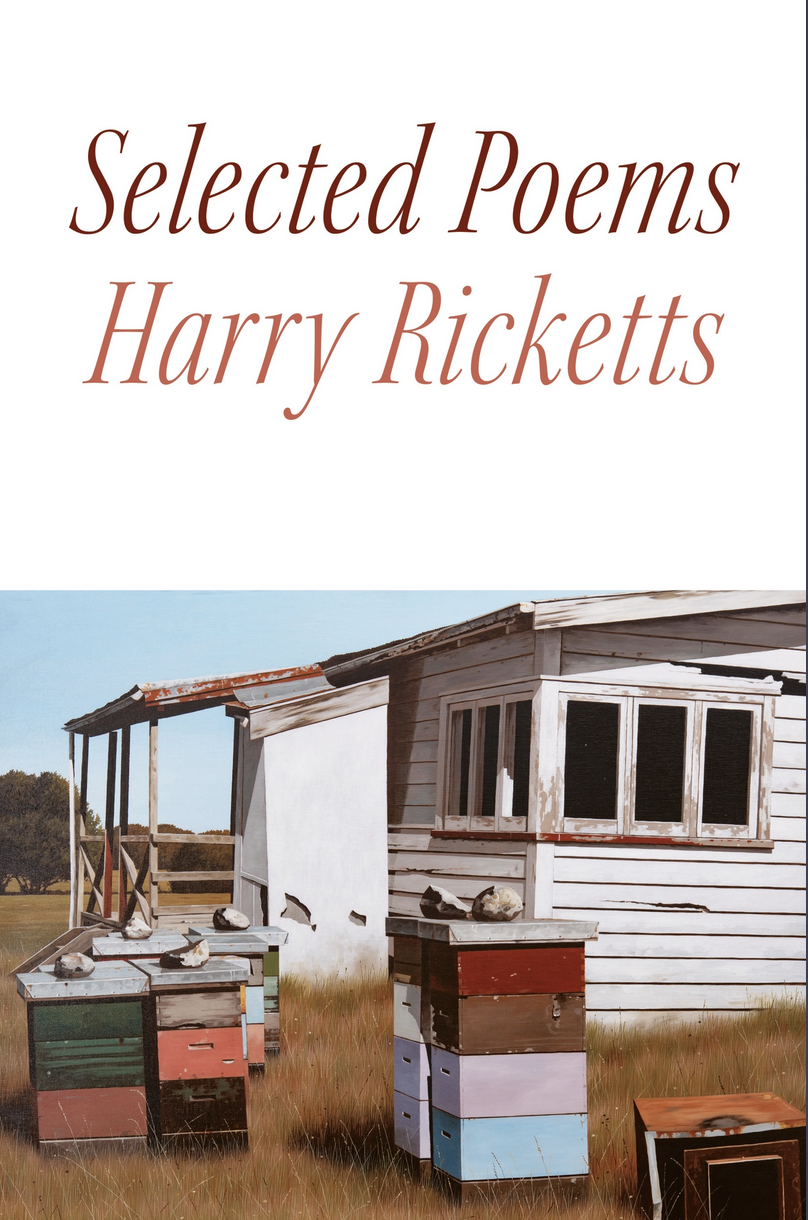


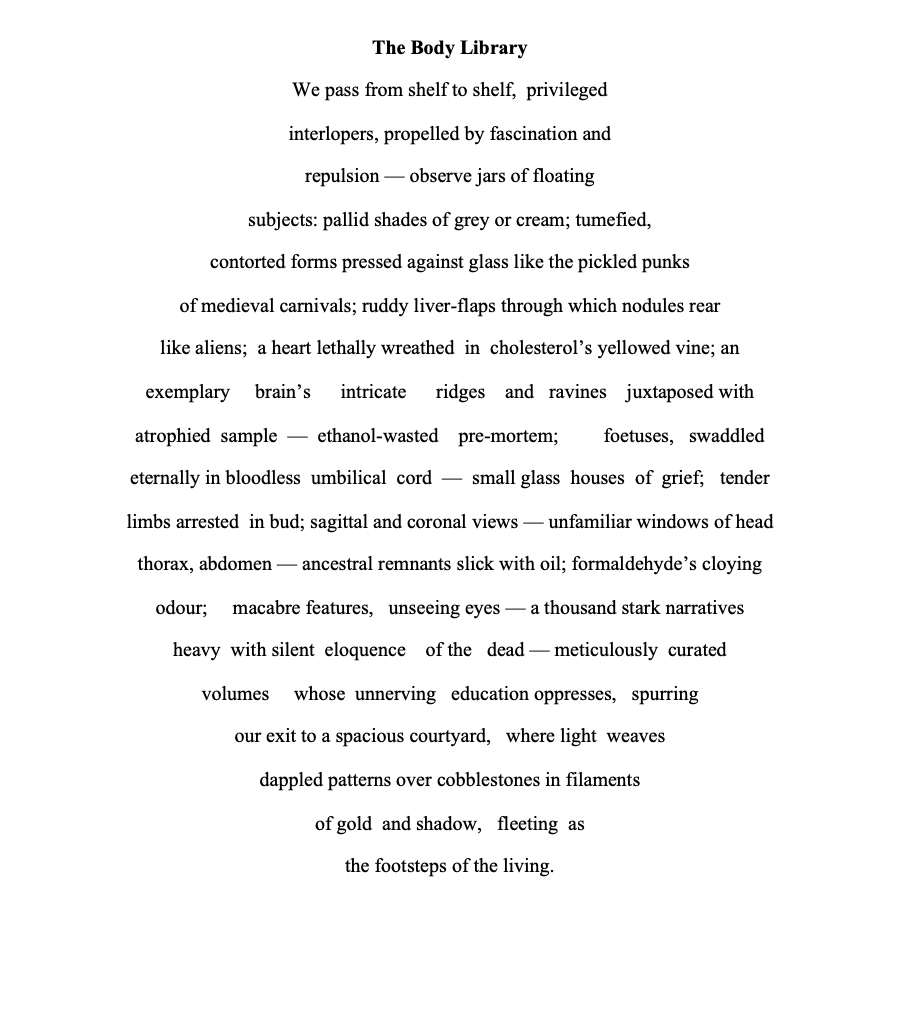
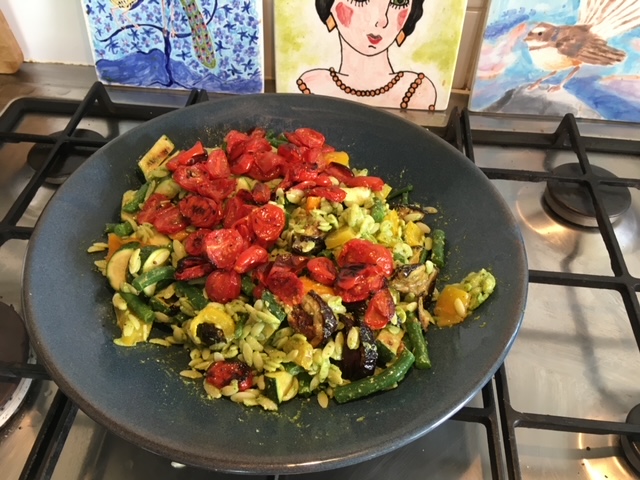

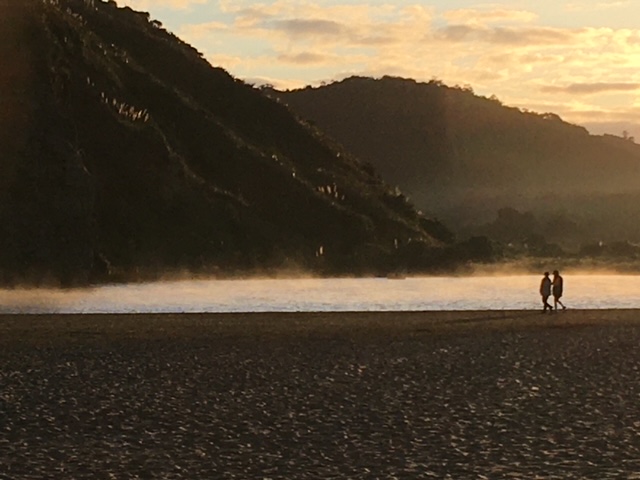
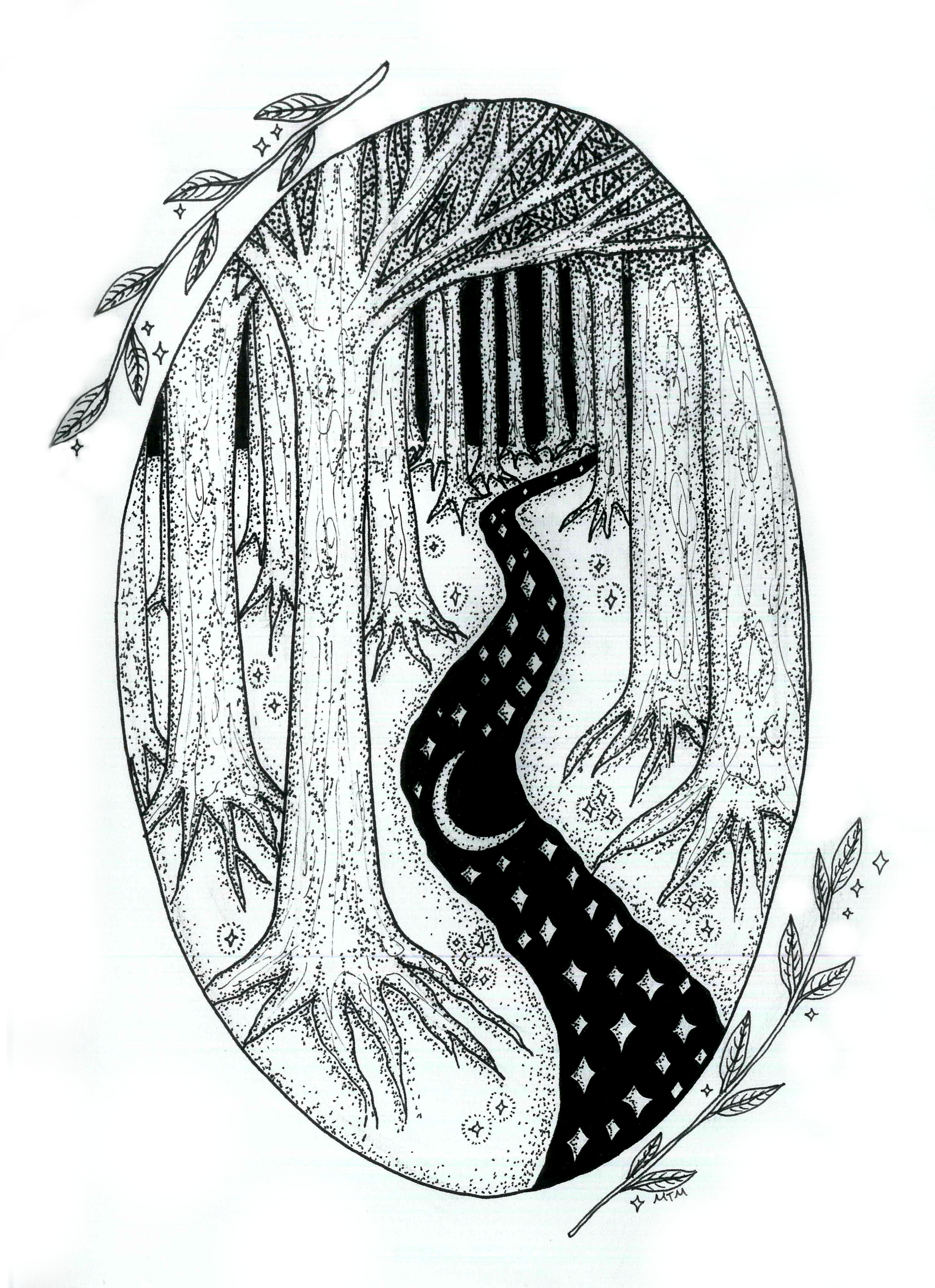

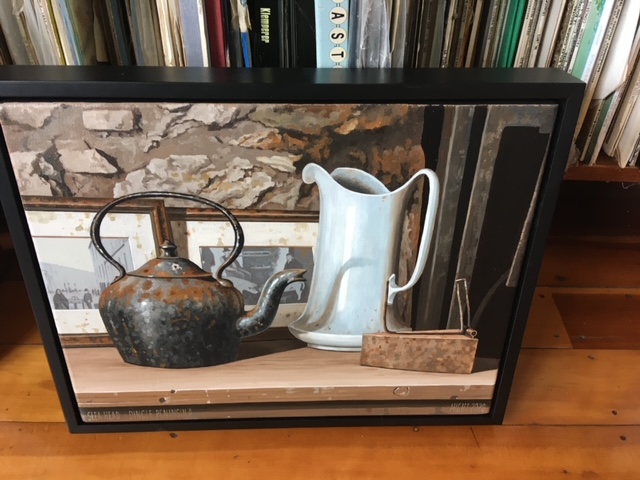
 NZ Poetry Shelf